
29 Front Yard Landscaping Ideas for 2026
Pulling into your driveway should bring a smile to your face, not remind you of another project you keep putting off.
Many front yards look boring not because they need a great expenditure but because they lack a clear concept.
Even small things like changing the shape of flower beds, putting plants in layers or delineating paths may totally transform the look and feel of your property from the street.
Great curb appeal doesn’t have to be pricey landscaping or a professional staff. All you need are concepts that work together and match your location.
In this article, I will show you 29 Front Yard Landscaping ideas anyone can recreate at home.
Let’s jump in!
How Do You Make A Front Yard Look Beautiful?
A gorgeous front yard doesn’t need a great budget. It just a basic strategy.
Decide what you want people to notice first, before you buy plants or decorations.
It can be your front door, a curving flower bed or a stone walkway.
Once you have a focal point, don’t fill every empty area, but build around it with a few well-chosen plants, colourful flowers and neat edging.
Fresh mulch, trimmed plants and layered landscaping may frequently make a bigger impact than pricey features.
Concentrate on balance and keeping things tidy.
When each feature works together, your front yard seems inviting, organized and much more expensive than it really is.
Curved Pathways
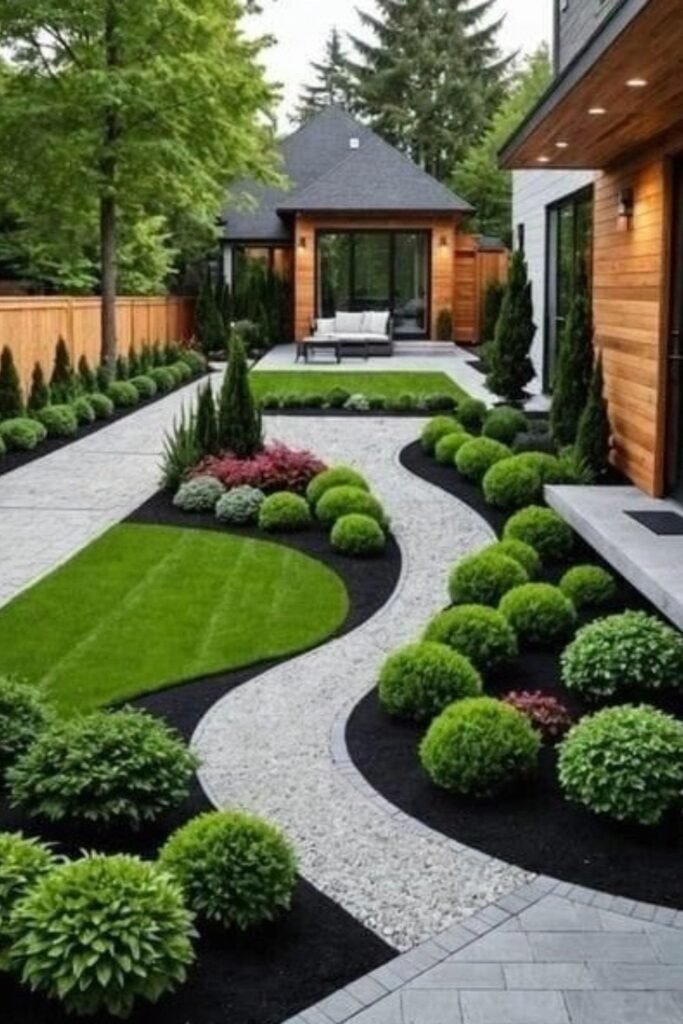
Curved gravel pathways can make a front yard feel larger by creating movement instead of a straight, flat walkway.
Use soft curves to direct guests across the landscape to your entryway, patio or garden area to create a more natural flow to the environment.
Use landscape edging as a base to hold the gravel in place, then create layers of rounded shrubs, evergreen plants or low flowers around the route.
Dark mulch beds complement lighter gravel nicely, as they are contrasting and help each plant pop.
This works well in modern, minimalist and contemporary homes, but you may change the materials to brick or stone to suit a historic taste.
Line the perimeter with pathway lights to keep the area appealing after dark.
Rock Garden
Mixing different rock textures can give your front yard a modern look while reducing the need for constant lawn care.
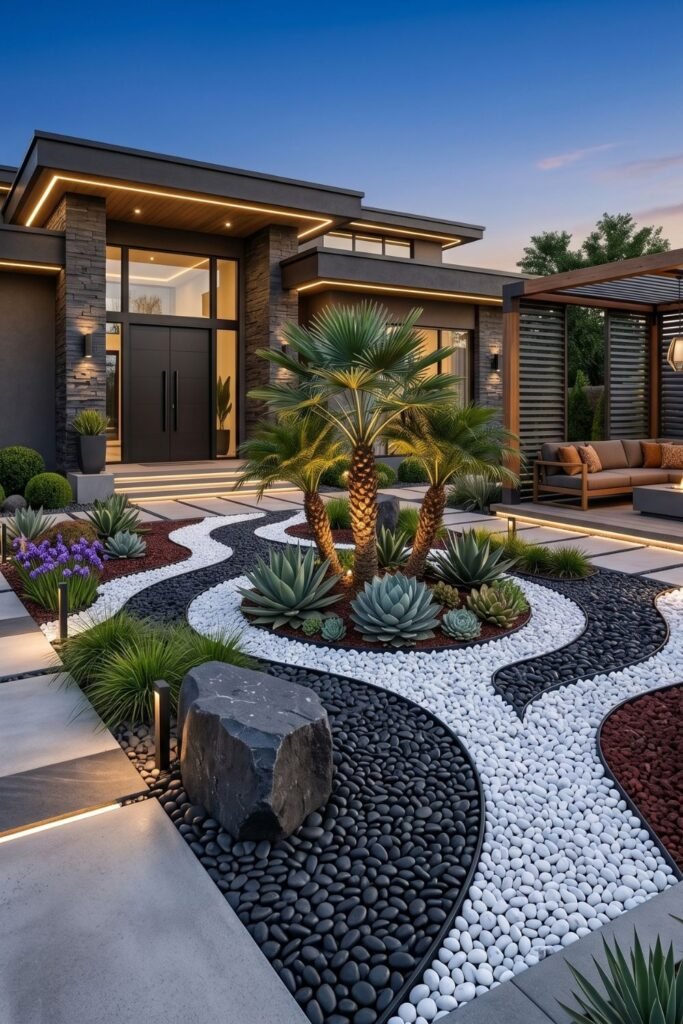
Use contrasting shades of gravel, such as black and white stones, to create crisp portions that will guide the eye around the landscape.
To soften harsh surfaces, grow drought-tolerant plants like succulents, decorative grasses or small palms between the rock sections.
Large rocks may be great natural focus points, especially in open situations where you need height and stability.
This style is most suited for contemporary homes, but you can mix and match stone colours and plant choices to complement your home’s façade.
Finish the theme with discreet pathway lighting to accent the textures and keep the yard looking good after dark.
Mailbox Garden
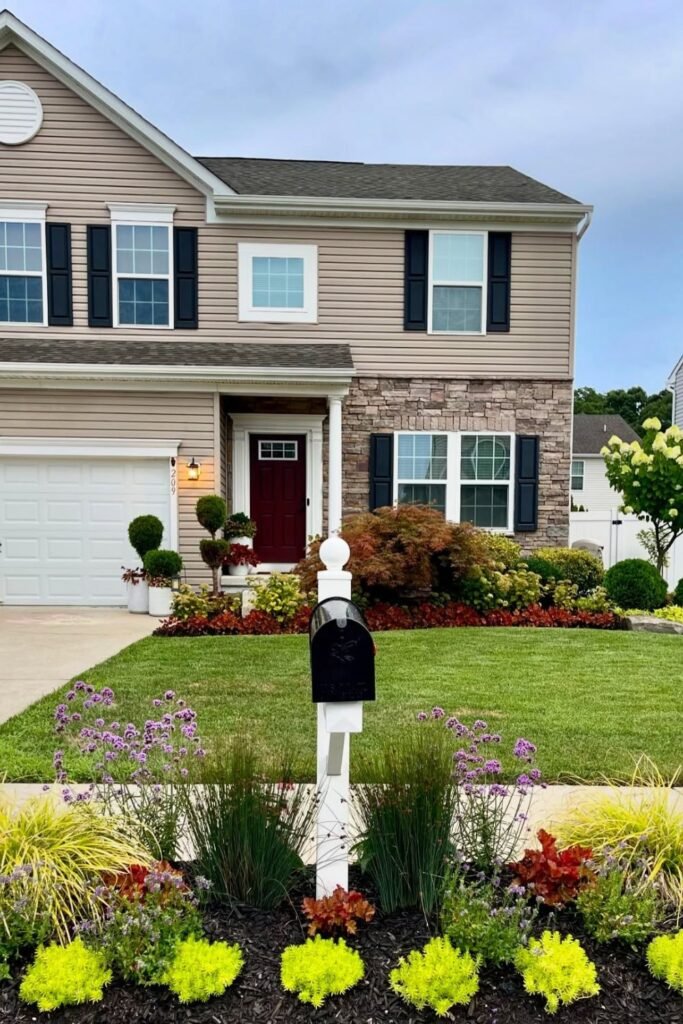
Turn an ordinary mailbox into a front yard focal point by surrounding it with a small, well-planned garden bed.
Select a variety of bright flowers, low-growing shrubs and ornamental grasses that look good without obscuring the mailbox or making care difficult.
Spread dark mulch around the plants to help keep down weeds and let those bright blossoms stand out from the street.
This concept works especially well for suburban homes with open lawns in that it adds personality without affecting the entire environment.
Arrange taller plants at back and shorter flowers in the front so you can still easily go to the mailbox.
Or you can add seasonal flowers or evergreen plants to keep the space looking polished year round.
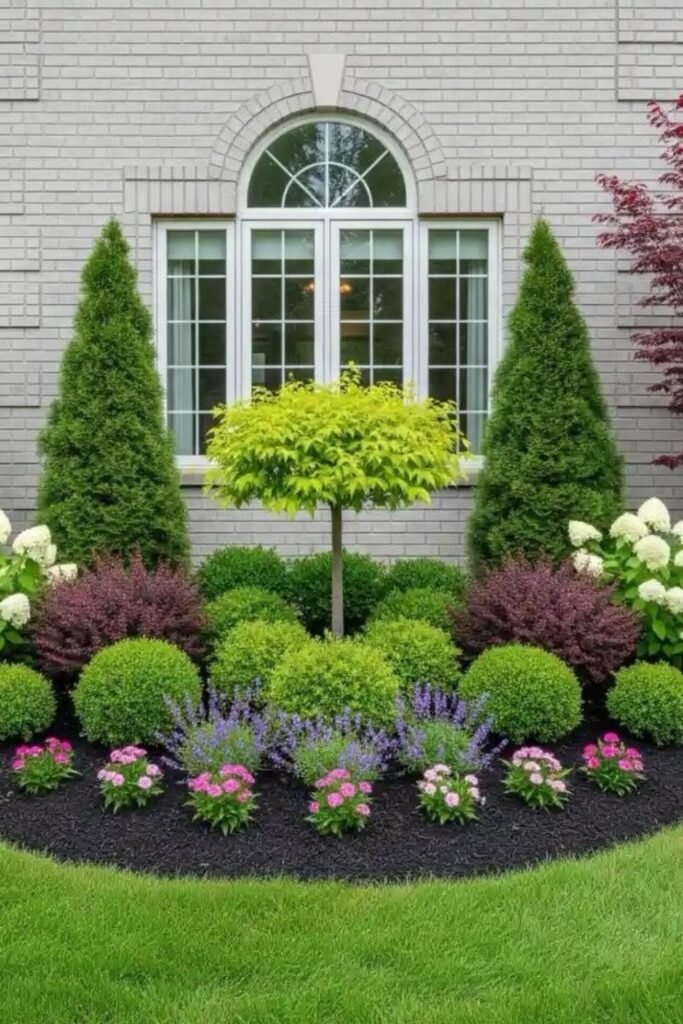
Layered Beds
Layering different plant heights can make a front yard feel fuller and more professionally designed without adding expensive features.
Plant taller evergreen shrubs next to the home medium bushes in front of those, and finish the edge with colorful flowers or ground covers.
This gives depth and allows you to see each plant, rather than the little blossoms disappearing behind larger vegetation.
The dark mulch helps to divide each layer and reduces weeds yet keeps moisture near the roots.
This style is especially effective around home foundations, softening harsh walls and providing structure year-round.
Pick plants with diverse textures and bloom times and your garden will be interesting through shifting seasons without continuous updating.
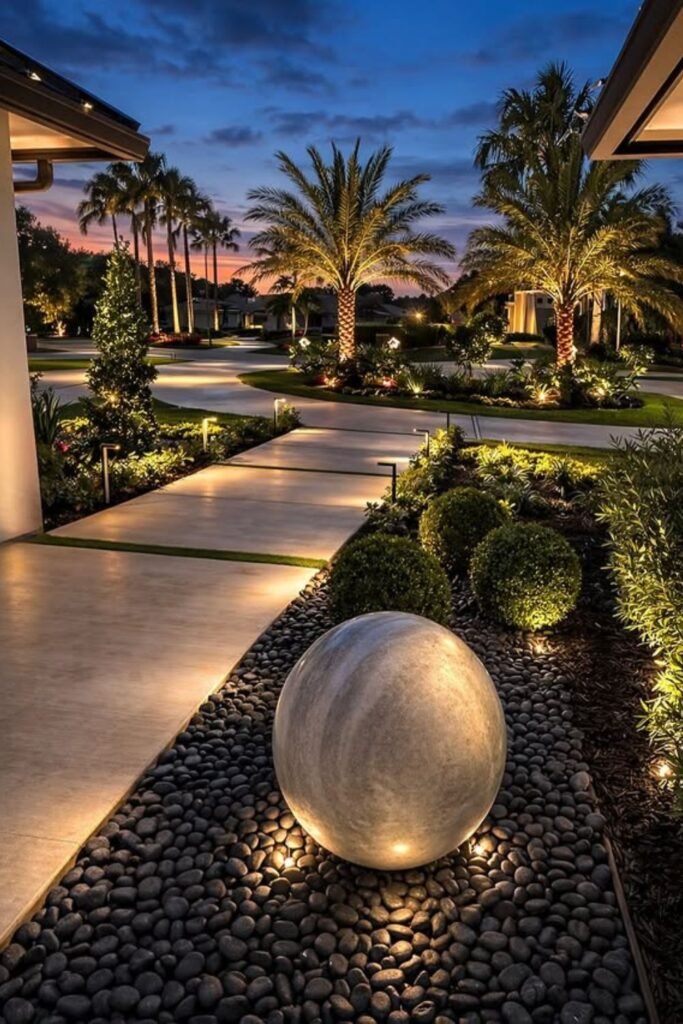
Landscape Lighting
Good lighting can completely change how your front yard feels after sunset by highlighting the features you already have instead of adding expensive decorations.
“Add small path lights along walkways, uplights near trees or statement plants and soft fixtures around garden beds to add depth.
The best is warm lighting since it makes the plants look inviting and gives your property a professional look.
This design fits for modern homes, tropical landscapes and huge entryways where you want to make the external environment seem connected to the inside.
Don’t try to illuminate every nook and cranny; instead, highlight key locations like steps, paths, and prominent plants.
A few well-placed lights can create a welcome entry, enhance safety and make your landscaping pop at night.
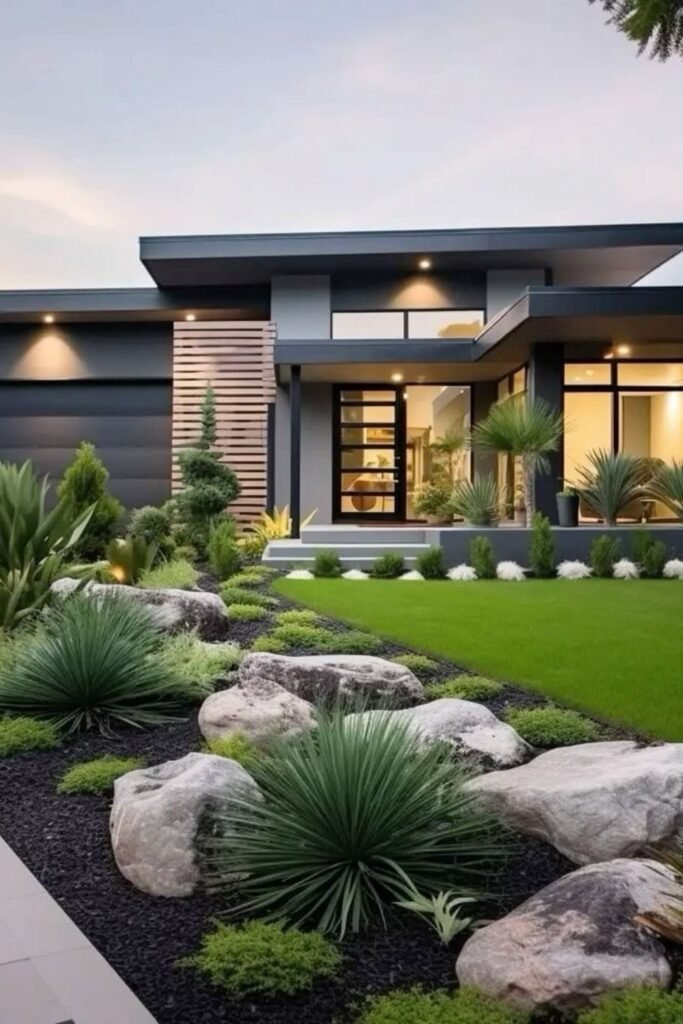
Modern Rocks
Large decorative rocks can add structure to a front yard while keeping the design simple and low maintenance.
Use big stones around drought-tolerant plants, ornamental grasses or tiny shrubs to create natural focal points without cluttering up the space with too many ornaments.
This technique works especially well on contemporary homes with clean lines, since the roughness of rocks is a nice contrast to the sleek external finishes.
Apply black mulch or gravel around the stones to reduce the weeds and accentuate the greenery more. Select plants of varying forms and heights to give the environment a layered look rather than a flat appearance.
A few nicely placed boulders may define garden spaces, substitute for more lawn and make a neat presentation that looks good year round.
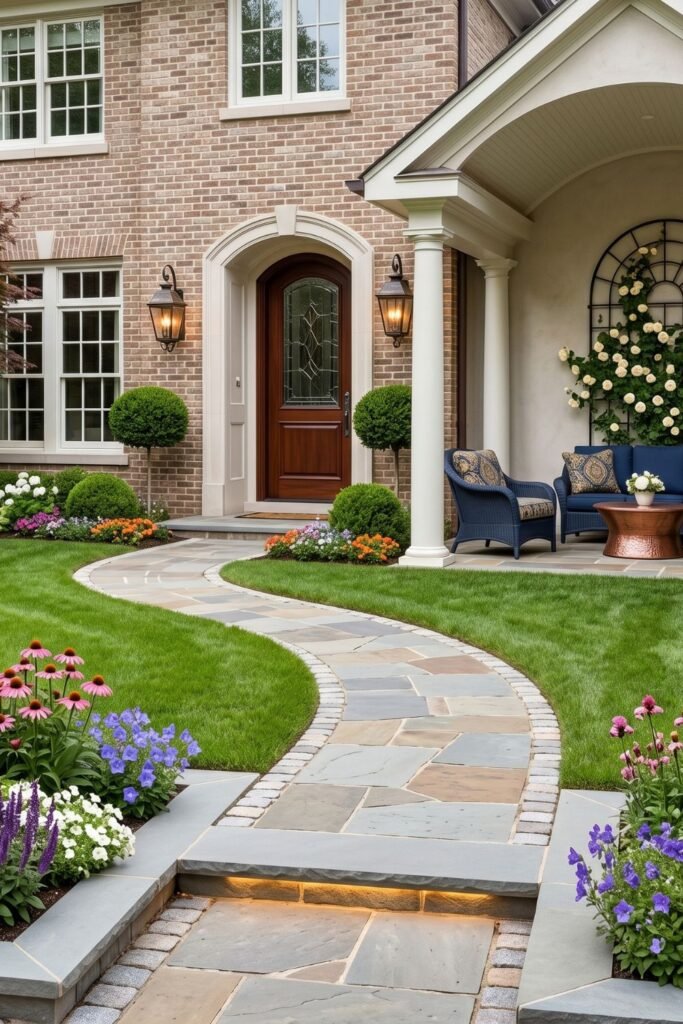
Welcoming Walkway
Create a front walkway that guides visitors naturally toward your entrance while adding structure to the entire yard.
Curved stone paths are very good in traditional, cottage and farmhouse design homes, since they soften straight architectural lines and create a more friendly approach.
Use hardy materials such as pavers, flagstone, or brick borders, then layer around the edges with vibrant flowers, low shrubs, or ground covers.
Keep taller plants away from the path so the entry remains open and accessible. Stringing lights along the walkway adds safety and emphasizes the garden design at night.
A thoughtfully designed pathway does more than link spaces together; it becomes one of the key aspects that boosts the curb appeal of your home.
Cottage Borders
Soft flower borders can make a home’s entrance feel warmer by blending colorful plants with the existing architecture.
Use curving beds along walks, steps or porch areas to make a seamless transition from your lawn to house.
Mix in some floral plants with evergreen bushes so the landscape will hold its shape when the seasonal flowers die out.
This style is perfect for cottage, farmhouse and classic houses if you want a casual and inviting ambiance. For a larger effect place taller flowers in the back, medium-sized plants in the middle and smaller blossoms on the perimeter.
Add a layer of the mulch or small stones around the plants to keep the beds clean and save upkeep, and give the whole front yard a more finished aspect.
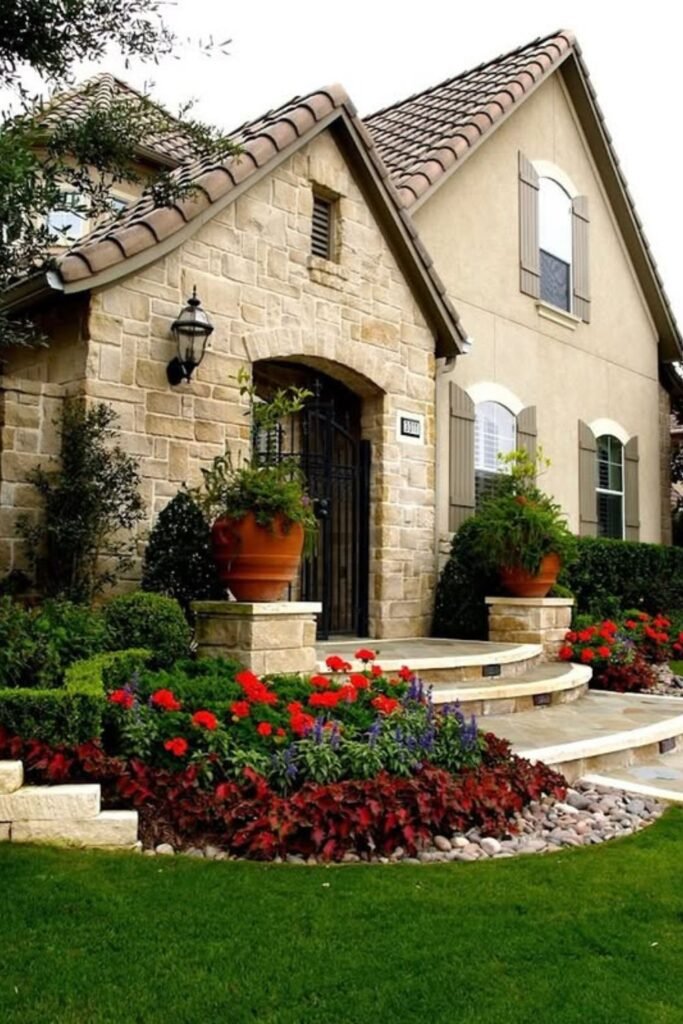
Shrub Layers
Combining shrubs with flowering plants creates a balanced front yard that feels full without looking overcrowded.
Begin with rounded evergreen shrubs and then fill it with seasonal flowers and bright ground coverings to give variety throughout the year.
This is great for homes with open grass areas, as it will fill in the empty places while still being easy to manage for the landscape.
For a natural layered impression, taller plants should be placed near the house or fence, medium shrubs in the middle and lower growing plants along the border.
Adding a few decorative stones around the planting space helps to define the garden and protect the margins.
Select plants with varied textures and colors so your front yard will still be fascinating when some of the blooms are out of season.
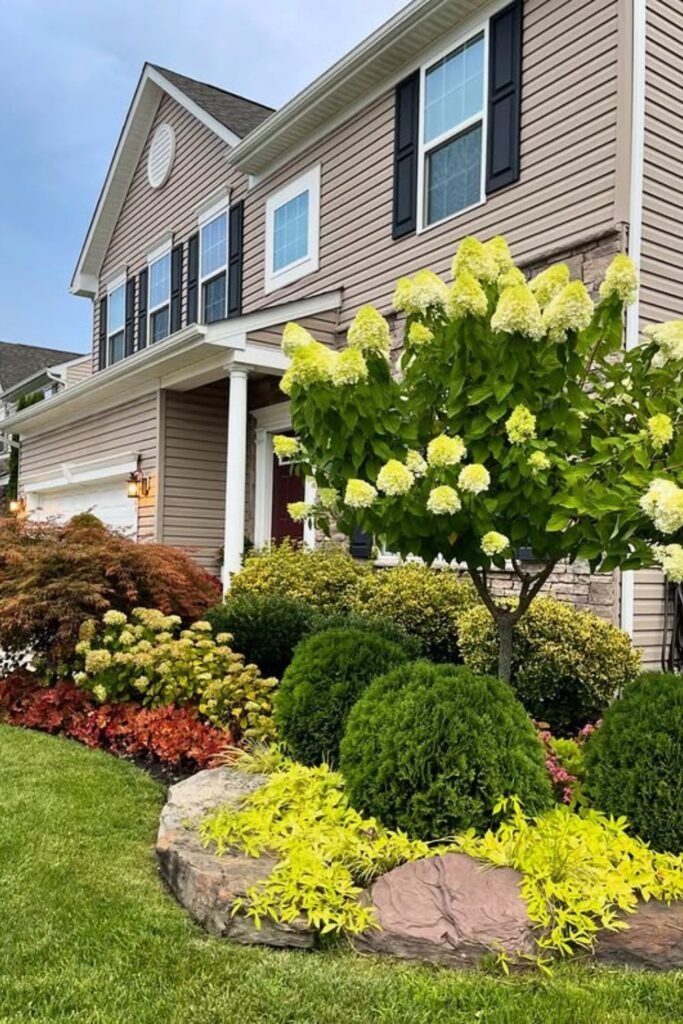
Tropical Plants
Bring a vacation-inspired feel to your front yard by adding tropical plants that create height, texture, and a fresh outdoor atmosphere.
Bold lush foliage, banana plants and palm trees look best in warm climes where they can grow organically, in pool areas or in modern homes.
Use a variety of tall plants near the walls and windows, then offset them with shorter shrubs and ground covers at the base.
To maintain the design tidy and reduce maintenance, place gravel or smooth stones around the planting beds.
Choose plants with varying leaf types and don’t just rely on flowers, as tropical landscaping is beautiful with foliage alone. Spacing is key so let each plant plenty of room to grow without crowding the area.
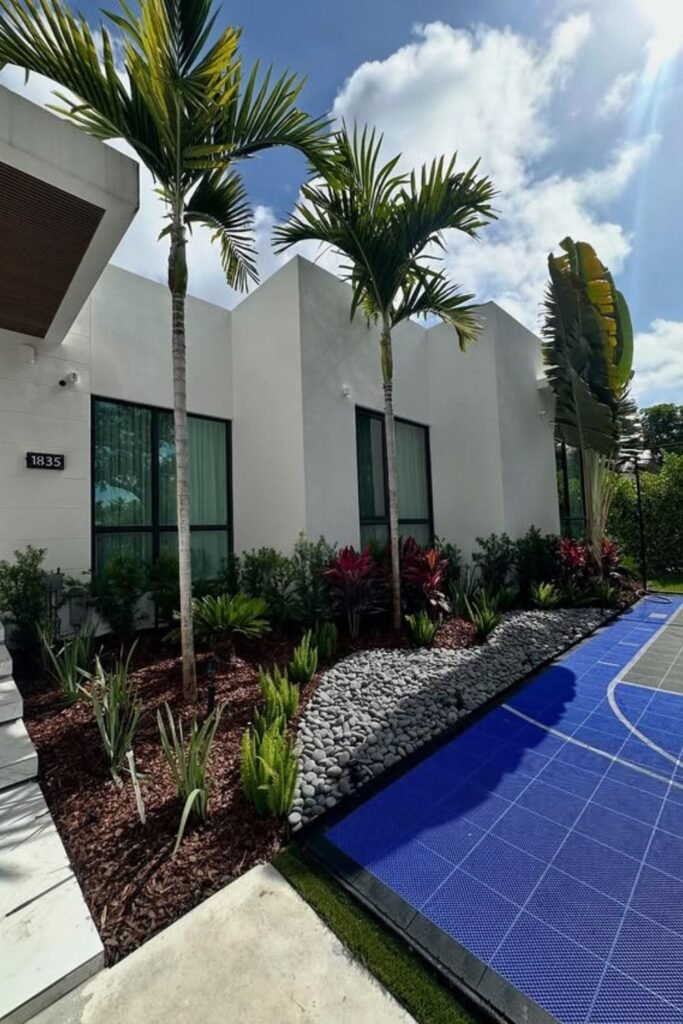
Rock Borders
Using rocks around planting beds can give your front yard a cleaner shape while making the garden easier to maintain.
Mark the border with smooth river stones and plant shrubs, hostas, blooming plants or decorative grasses in the space for a variety of texture.
It’s great for conventional and suburban homes, because it adds structure without being too formal for the landscape.
Use larger boulders around corners or focal points and smaller rocks to create a nice transition between plants and grass.
Adding mulch within the planting area helps to retain moisture and keeps weeds down.
Select plants with varied colors and leaf forms so that the stone border is part of the design rather than a decoration surrounding the garden.
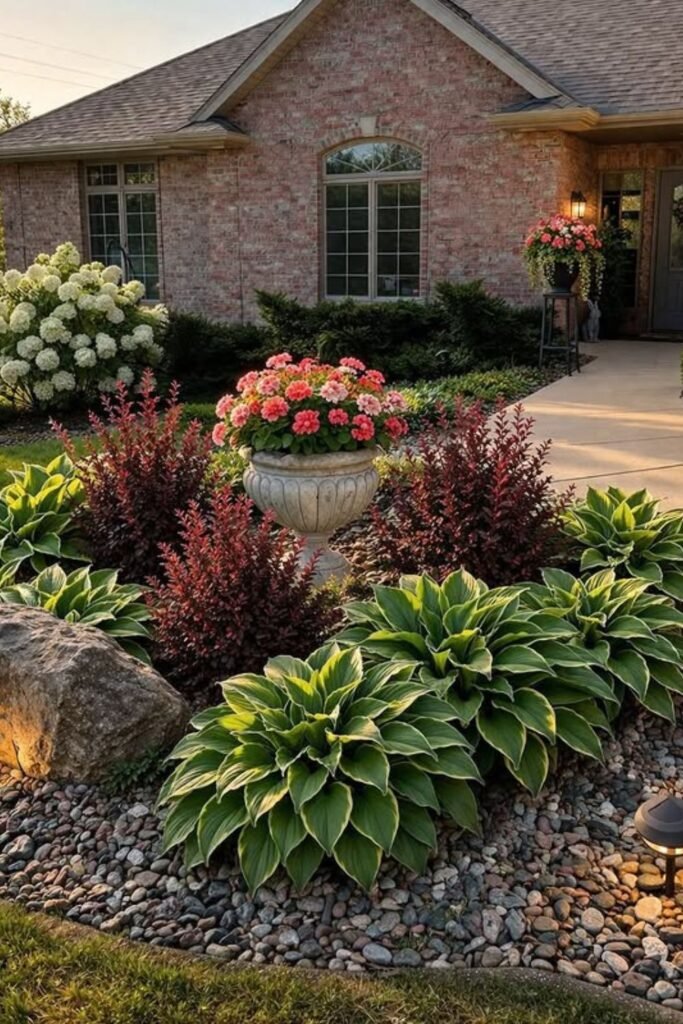
Front Walkway
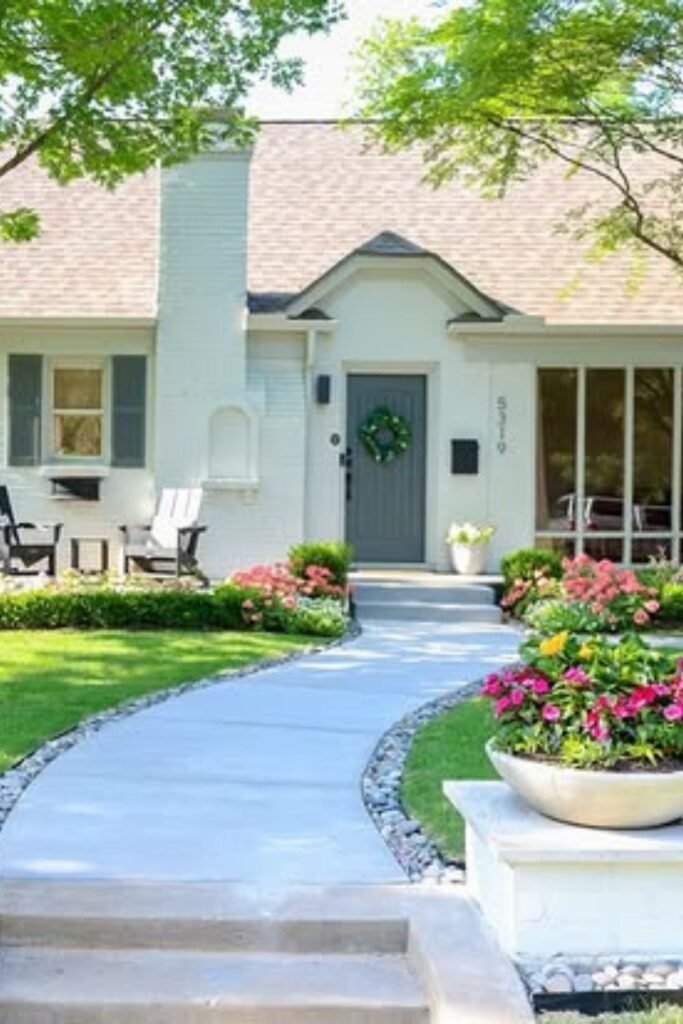
A well-designed walkway can make your entrance feel more inviting while giving your front yard a clear structure.
A curved walk of concrete or stone can soften the straight lines of your lawn and lead guests to the door in a natural way.
Create a smooth transition from the walkway to the rest of the yard by adding flower beds, low bushes or decorative gravel around the margins.
This is a good option for smaller homes, because it creates a focus point for the pathway without adding a lot of unnecessary decorations.
Repeat a few of the flower colors or plant varieties on both sides for a balanced look.
Keep the planting simple. Place pots at the door to add seasonal color and to make the whole front yard look more friendly.
Layered Greenery
Mixing leafy plants with different heights can create a rich front yard design without relying on too many colorful flowers.
Start with large foliage plants such as hostas and broad leaf shrubs and position taller bushes behind them and smaller blossoms around focal points to achieve balance.
This works well with brick homes and traditional landscapes, since the softness of the foliage is a nice contrast to the warmth of the outside textures.
Plant strong leafed plants along paths and garden boundaries for visual interest even when flowers are not in bloom.
Add river stones around the planting bed to make the space tidy while lowering care.
End the space with a statement planter or a small tree to create a focal point for the garden and make the whole front yard feel more purposefully created.
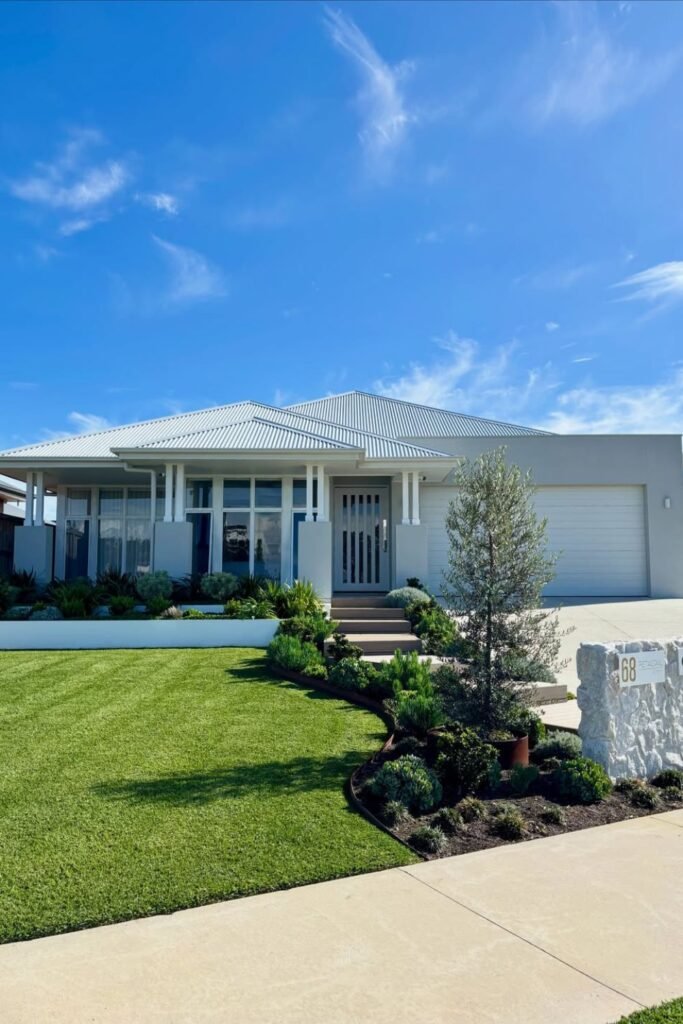
Clean Edges
Sharp garden edges can make a simple front yard look more organized without adding expensive landscaping features.
Use metal edging, stone or brick to outline the layout of each area, creating distinct borders between your grass, planting beds and walkways.
This style is especially great for modern and minimalist homes where clean lines tend to mirror the home’s architecture.
Keep it simple by mixing a few evergreen shrubs, attractive grasses and low-maintenance plants rather than filling every space in the planting arrangement.
Having a clean border also makes mowing easier as it gives a clear boundary between grass and garden areas.
If you use dark mulch inside the beds, it will add contrast against the green lawns, but you will still have a fresh and low maintenance look.
Flower Island
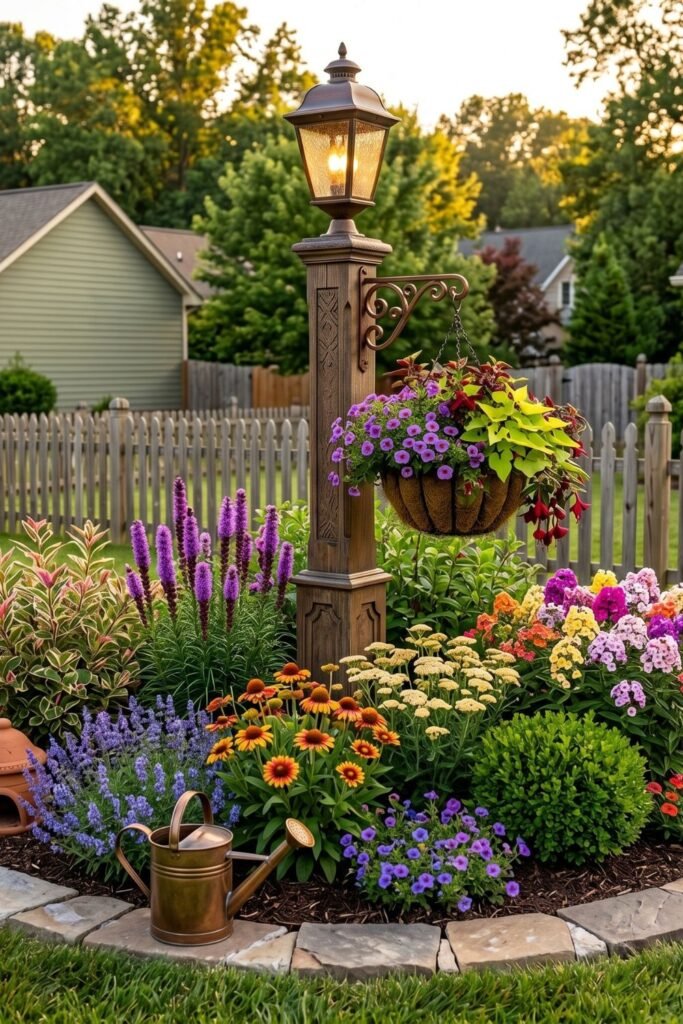
Create a dedicated flower island when your front yard needs a strong focal point without redesigning the entire landscape.
A circular planting bed in the lawn can break up vast open spaces and give you a spot to try out bright flowers, shrubs and ornamental touches.
Use stone edging to keep the shape defined, then plant taller plants toward the center and shorter blooms around the outside for a fuller look.
Adding a mailbox post, garden light, birdhouse or planter can give the island more character and a sense of purpose.
Good concept for bigger lawns when the middle seems wasted space. Combine seasonal flowers and evergreen plants to keep the landscape attractive for more than one blooming season.
Minimal Beds
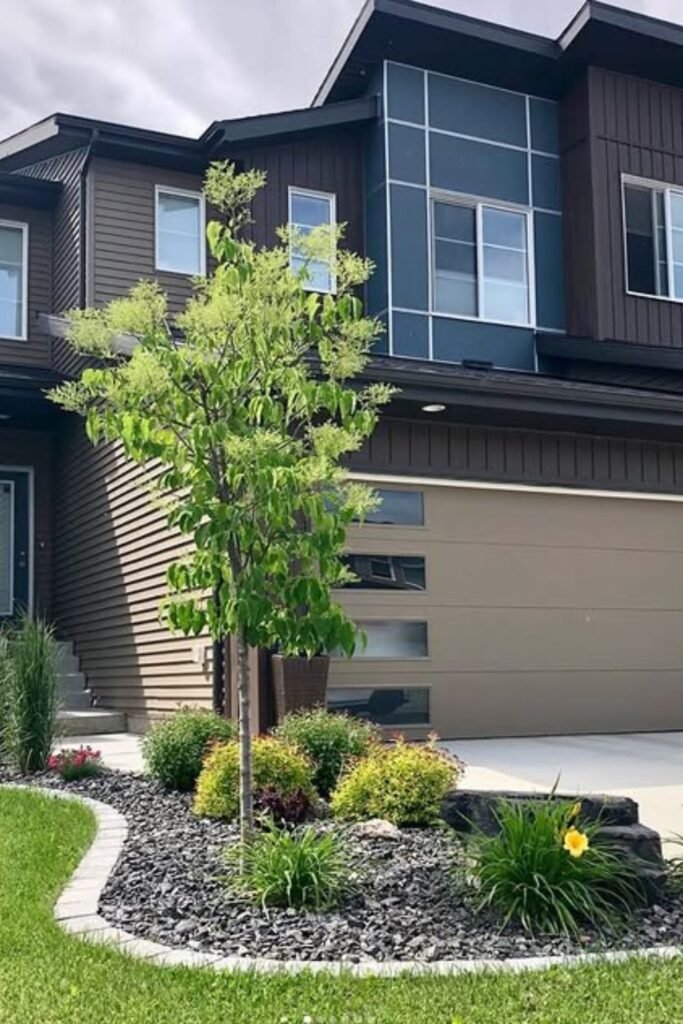
Keep your front yard simple by using a minimal planting bed that focuses on clean lines and a few well-chosen plants instead of filling every corner.
On a dark gravel or mulch base bring in a small tree, decorative grasses and low shrubs for structure with little upkeep.
This style works particularly well for modern home as the minimalist layout complements sharp architectural aspects and maintains the entrance looking tidy.
Select plants of varying heights and textures so that the space feels balanced, yet not crowded.
A stone border around the bed can divide it from the lawn and make the design easier to maintain.
A basic landscape has a greater impact, each plant and each element has enough space to stand out.
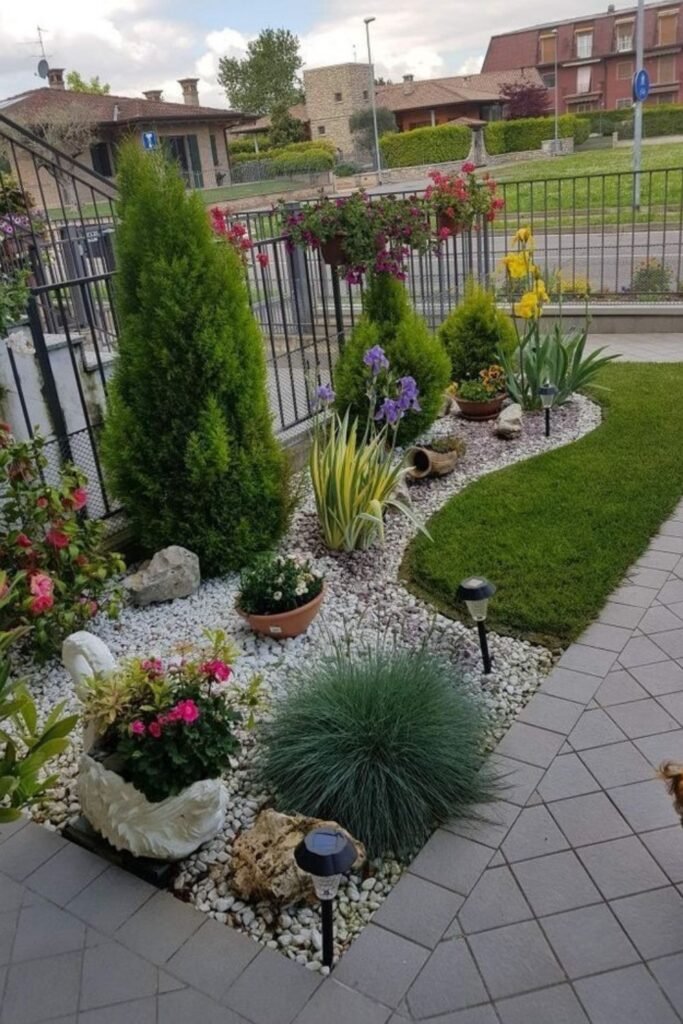
Gravel Garden
Replace large sections of lawn with a gravel garden when you want a cleaner look that requires less watering and upkeep.
Use a base of white gravel or small stones and then add evergreen shrubs, ornamental grasses and seasonal flowers to create texture and colour in the space.
This is a great option for narrow front yards, side spaces and homes where you want a low-maintenance landscape but yet want to have visual appeal.
To create discrete planting zones, cluster plants together instead of scattering them randomly on the gravel.
Add larger boulders, simple pots or solar lights to create focus points and add depth to the design.
Choosing plants that can manage your local climate will help keep the garden looking good and cut down on the time you need to spend on upkeep.
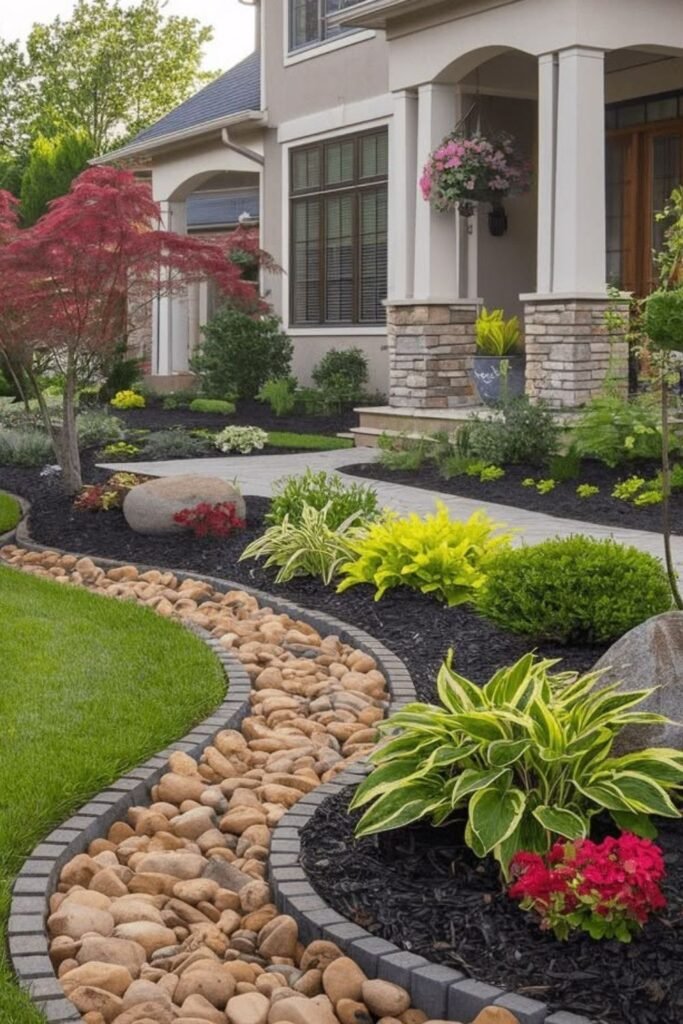
River Path
Create a river rock pathway when you want to add natural texture while keeping your front yard easy to maintain.
Lay a curved pathway of smooth stones, then line both sides with black edging or pavers to keep the design crisp and the pebbles from spreading.
This is a great concept for larger front yards, garden entrances and homes with a more natural or traditional appearance.
Pair the pathway with leafy plants, shrubs or decorative grasses to soften the hard surface and create a more cohesive transition between lawn and garden.
Mix up the stone size for a more natural look, and make the path wide enough to walk on comfortably.
A simple rock walkway can provide character without the expense or maintenance of a full concrete path.
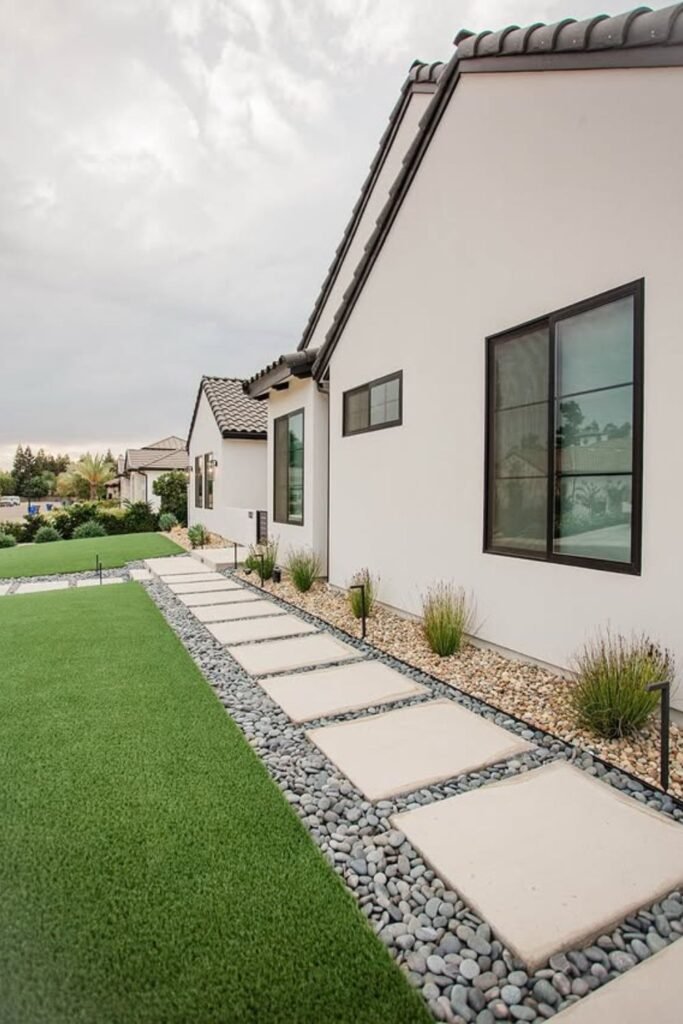
Stepping Stones
Use large stepping stones to create a clean walkway that adds structure without making your front yard feel too formal.
For a basic, modern looking path that’s easy to maintain, set wide concrete slabs through gravel, small rocks or ground cover.
This concept is ideal for modern homes, slim side yards, and places where you want a path without laying down concrete everywhere.
Space each stone evenly so the path looks deliberate and is pleasant to walk on.
To soften the rough lines and add more life to the design, add some low-growing plants or ornamental grasses around the edges.
Combining stone walks with gravel increases drainage as well. It creates a clean minimalist appearance in your front yard.
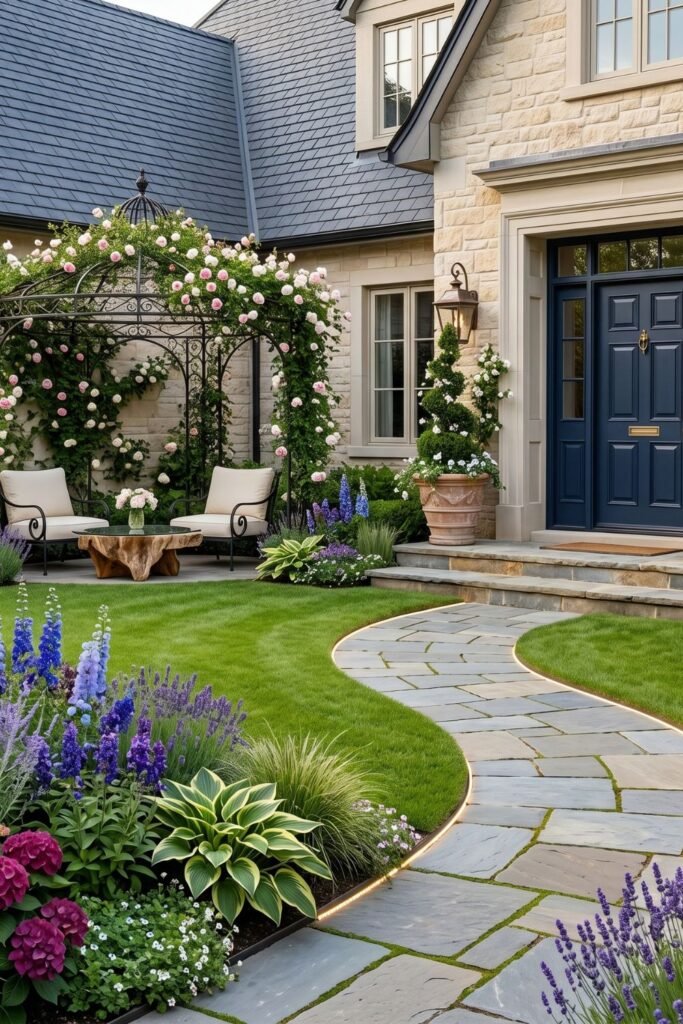
Cottage Pathway
Bring a softer, more inviting feel to your entrance by combining a curved stone pathway with colorful garden borders.
Use natural stone pavers to create a smooth movement toward the front door, then surround the walkway with flowers, decorative grasses, and low bushes to make the route feel connected to the landscape.
This style is ideal for cottage, farmhouse and classic homes where you want your yard to seem warm and inviting.
Plant layers of varying heights so the pathway has depth but does not obscure the view of your entry.
Try adding climbing plants on arches, pots on steps or warm pathway lighting to increase the attractiveness.
Repeat flower colors around the garden will help the whole front yard feel balanced and well designed.
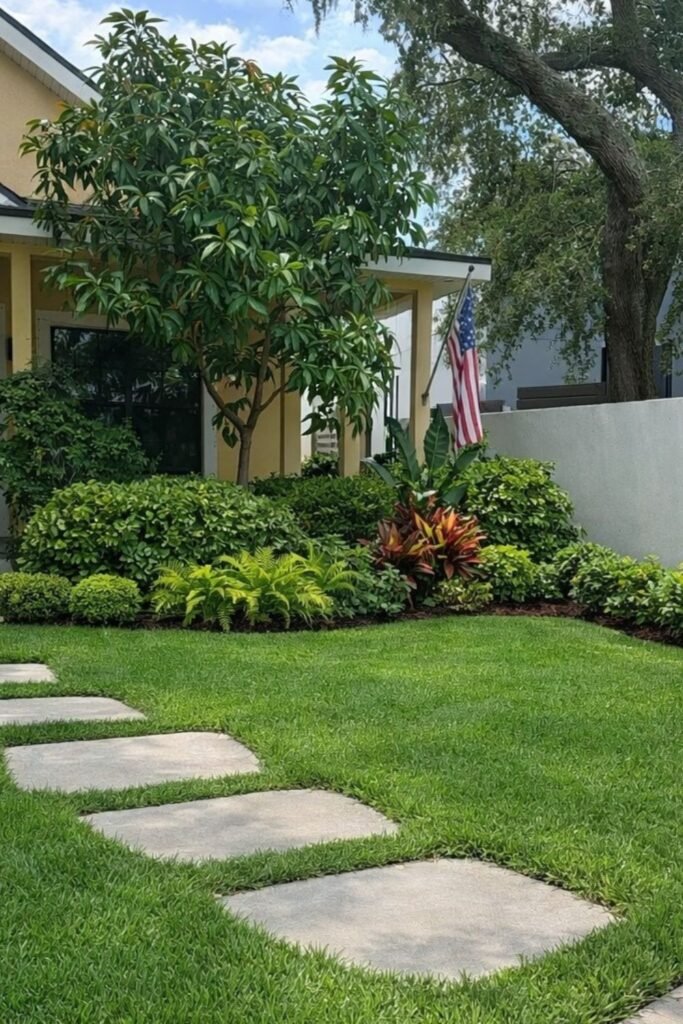
Stepping Stones
Use individual stepping stones to create a relaxed walkway that blends naturally with your lawn instead of separating the garden into different sections.
Lay a path of large flat stones, spaced evenly apart so that it is comfortable to walk on but with enough grass between each piece to give a softer look.
This concept works great for informal front yards, smaller homes and landscapes where you desire a simple improvement without big building.
To make the pathway feel like part of the yard, you can plant low shrubs, ground covers or flower beds along the margins.
Pick stones that complement the colors on the outside of your house and keep the yard around it mowed nicely to make it appear good.
A modest stone path can be charming and still make your landscape budget-friendly and low-maintenance.
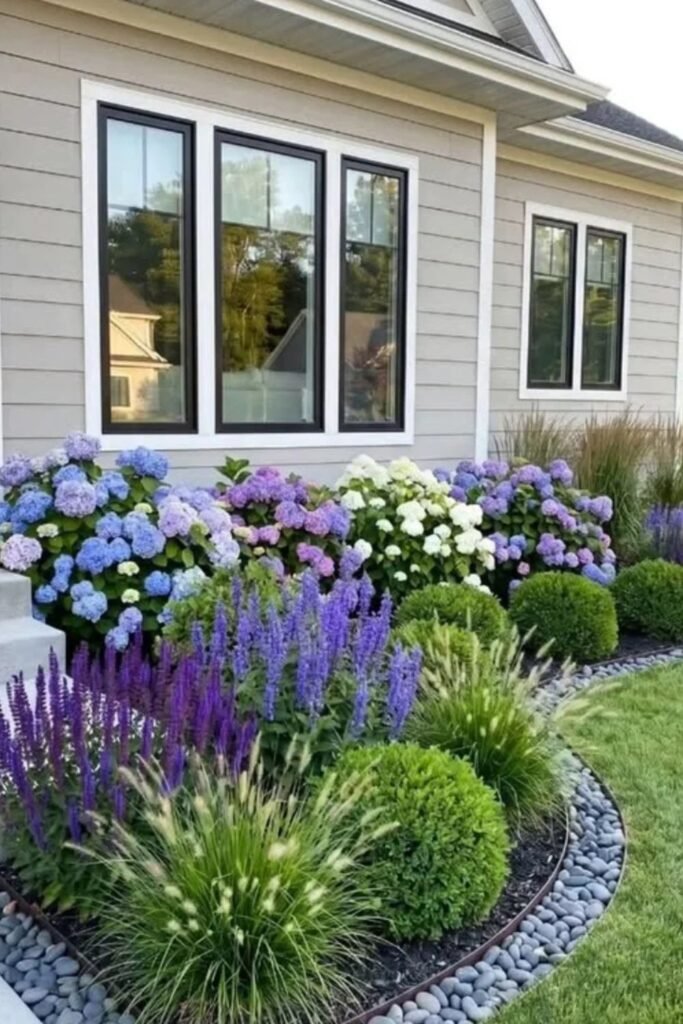
Hydrangea Beds
Add hydrangeas along your front wall or foundation beds when you want big seasonal color without creating a complicated garden design.
Their big blossoms can soften basic outside walls and make a welcome border around your house.
Plant them behind smaller shrubs, attractive grasses or low flowers so that the garden has varied strata and doesn’t look flat.
This design is especially good for cottage, farmhouse and modern homes since hydrangeas offer a new appeal while keeping it simple.
Mulch or tiny stones around the plants to retain moisture and keep the bed tidy.
Pick types that are suited to your sunshine circumstances and then mix and match bloom colors with evergreens to give your landscape appeal when the flowers are gone.
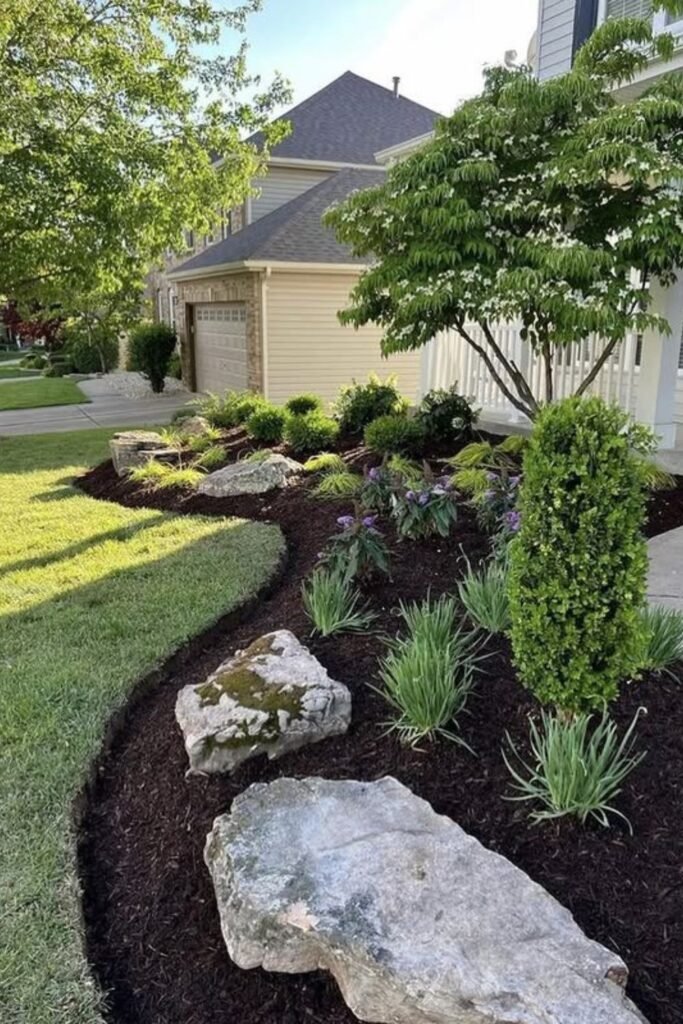
Natural Rocks
Use large natural rocks to bring structure and a more organic feel to your front yard without adding extra maintenance.
Instead of scattering plenty of little ornaments, place a few large stones around planting areas and design the environment around them with shrubs, attractive grasses and ground coverings.
This design works great for suburban homes, sloped yards and locations where you want the garden to feel linked to nature.
Place taller plants behind the rocks, and use softer vegetation around the borders to create a balanced transition between harsh and soft textures.
Dark mulch will make the stones pop while controlling weeds and making the garden easier to maintain.
Choose rocks that are a natural form and color, which will make the landscape feel more settled and merge better into the yard.
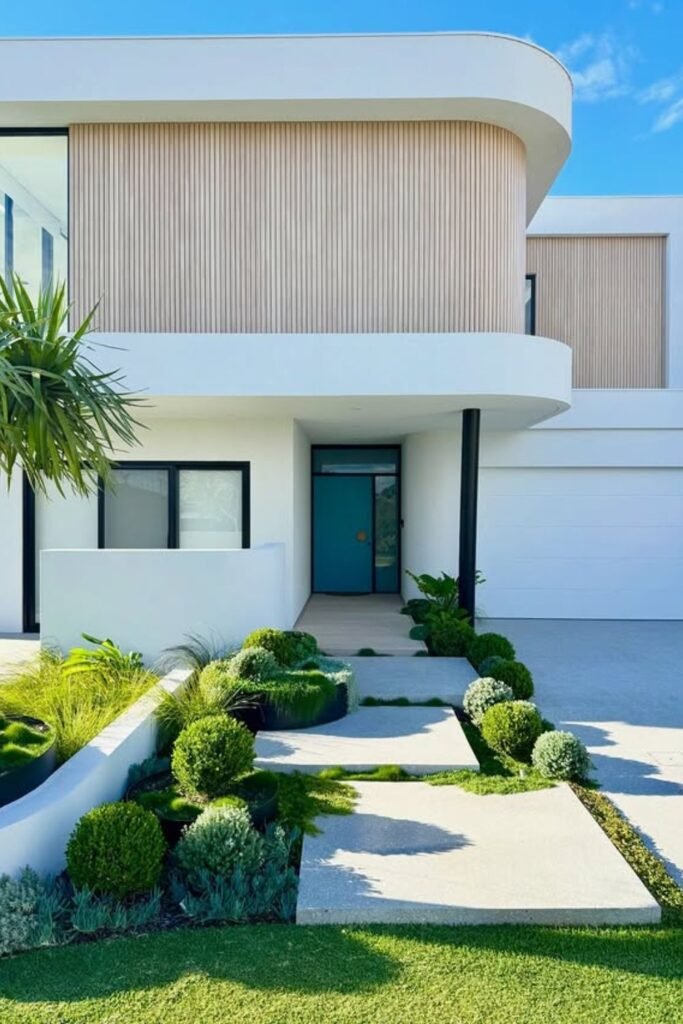
Modern Minimalism
Create a modern front yard by focusing on clean lines, simple plants, and open space instead of filling every area with decorations.
Add texture with structured shrubs, ornamental grasses and low growing foliage but make the design tidy and easy to manage.
This style is best used in contemporary residences because the landscaping should enhance the building, not compete with it.
Keep your color pallet to several shades of green and then add materials such as concrete, gravel or smooth stones to keep things sleek.
Group plants together and place them in ordered groups, especially around paths and entrances, to balance a cluttered look.
A simple design with well-selected elements can sometimes have more curb appeal than a cluttered garden with too many items.
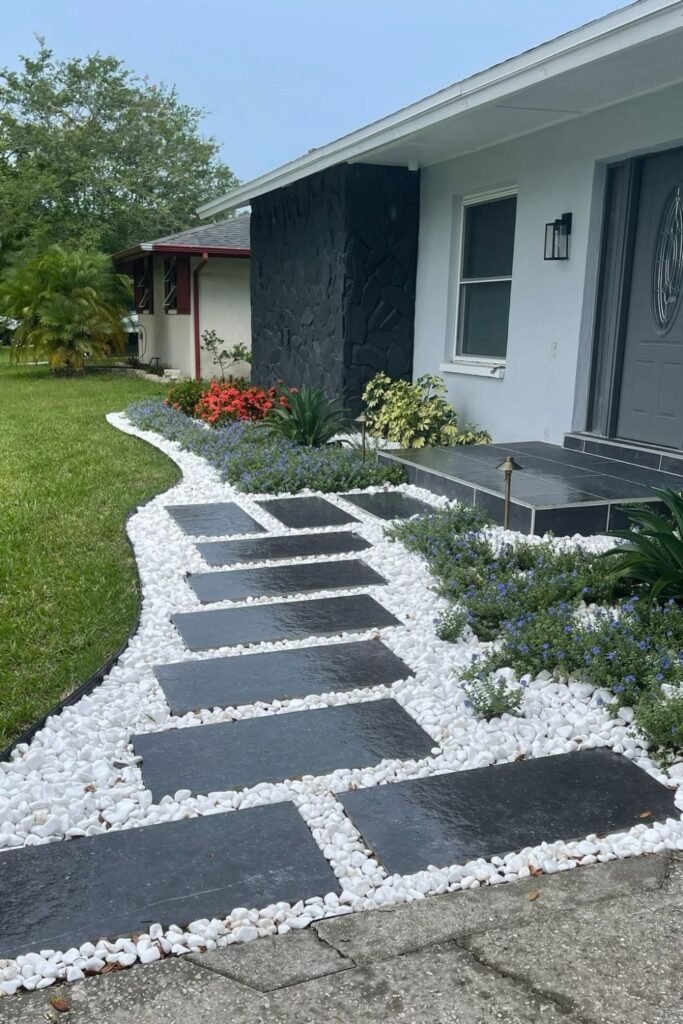
Pebble Walkway
Combine large stepping stones with white pebbles to create a front walkway that feels modern, clean, and easy to maintain.
Use wide stone slabs for the main route, and fill in the gaps surrounding them with beautiful gravel for better drainage and less maintenance of extra lawn.
This is a wonderful concept for contemporary homes or smaller yards if you want to add a chic entryway without complicated landscaping.
Use low growing plants, ornamental grasses or tiny shrubs on the margins to soften the rough surfaces and provide more texture to the design.
For a balanced look, select a pebble color that matches the exterior of your home.
A simple combination of stones and gravel may turn a dull walkway into a powerful curb appeal element on a modest budget and with little maintenance.
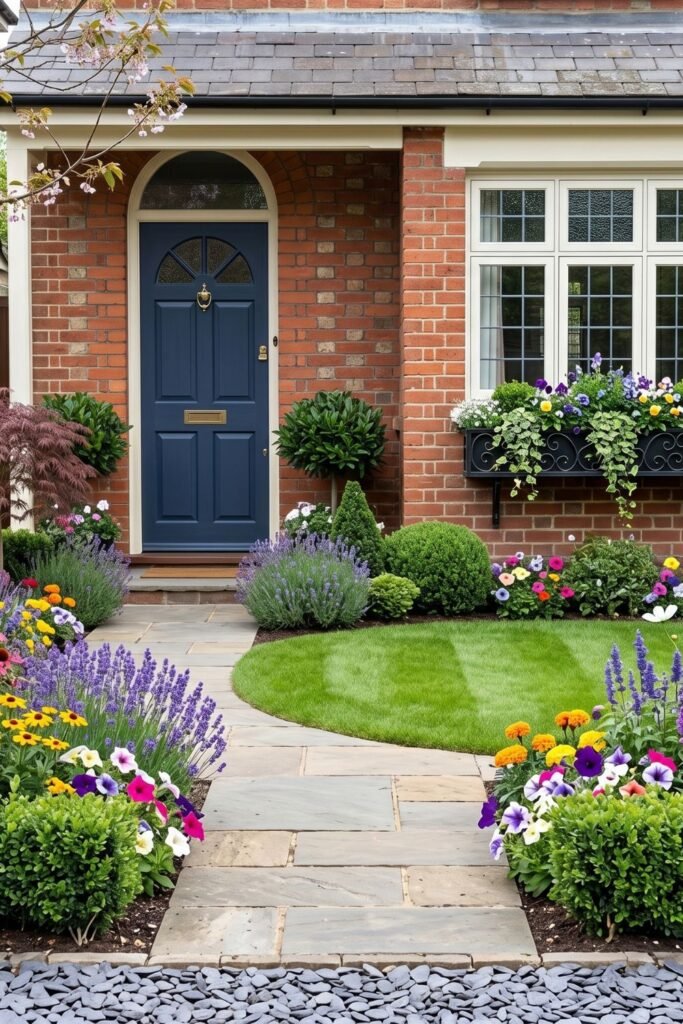
Cottage Garden
Create a cottage-style front yard by mixing colorful flowers, soft greenery, and natural pathways that make your entrance feel warm and welcoming.
Don’t plant everything at the same level, but build up layers with a mixture of flowering perennials, small shrubbery and properly manicured bushes.
This design works great for brick homes and historic houses, since the casual garden style plays well with classic external details.
Add window boxes, curving beds, or stone paths for a touch of flair without costly additions.
Pick flowers that bloom at different times so your yard is always changing over the seasons.
A basic color theme, such recurring purple, white and pink blooms, will make the garden feel full, but still ordered.
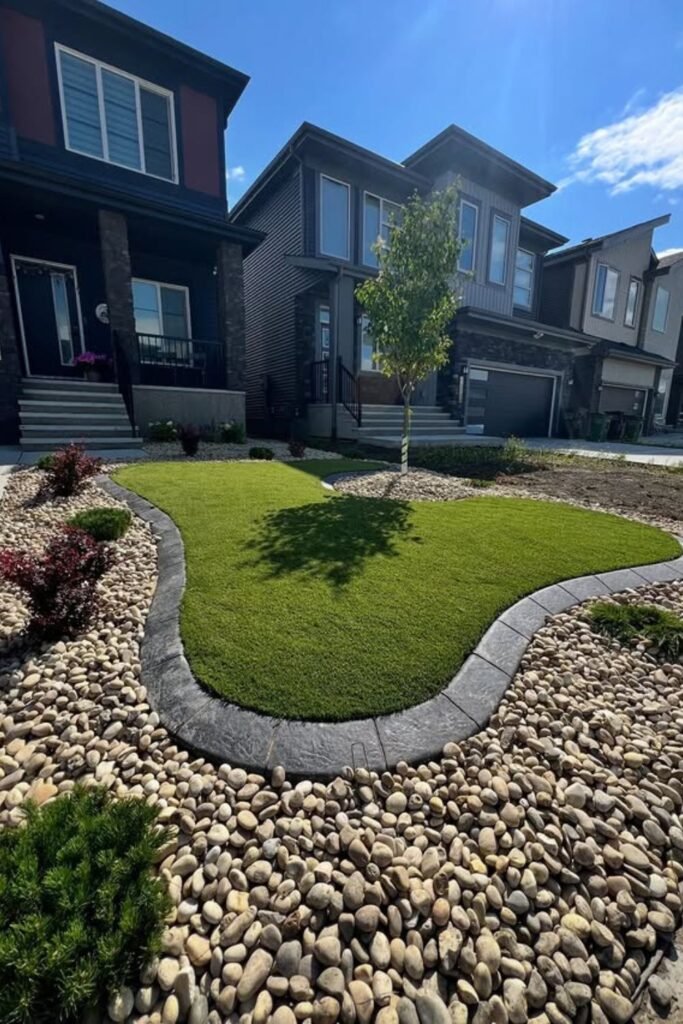
Pebble Landscape
Use a pebble landscape when you want to reduce lawn maintenance while keeping your front yard clean and structured.
Cover bigger areas with smooth stones, then add contrast with small areas of grass, bushes or a few statement plants.
This method works especially well with newer homes, dry areas and homeowners that want a design that does not need to be watered often.
The curved borders between the lawn and the pebble portions give the space a more deliberate air, rather than a dispersed one.
Select plants with bold shapes like attractive grasses, evergreen shrubs or tiny trees to soften the rough surfaces.
Sticking with a limited color palette can keep the yard looking polished and make the landscaping easier to keep up with throughout the year.
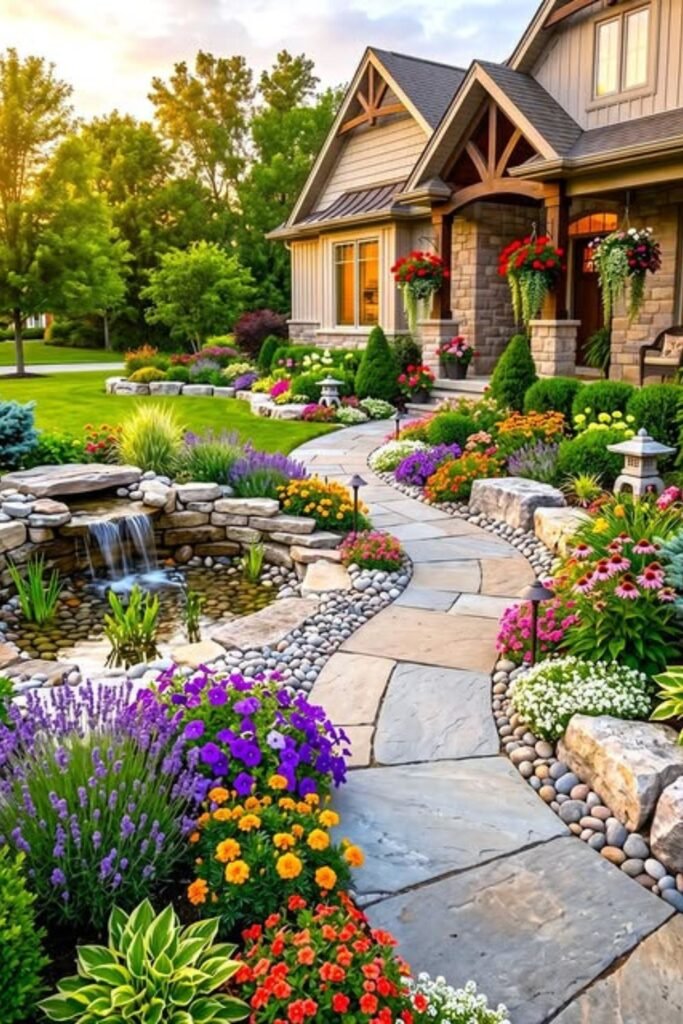
Water Feature
Add a small water feature when you want your front yard to feel more peaceful and create a memorable focal point near the entrance.
Stone fountains or ponds work well for bigger yards where you may surround them with plants, paths and natural textures.
Surround the water basin with rocks of various sizes and then add flowers, grasses and leafy plants to merge the feature into the landscape.
Position the water feature where it can be viewed from the walkway or porch but not in a way that blocks the view of your home.
Select low-maintenance plants for the periphery and consider adding gentle lighting to accentuate the water movement in the evening.
A well-designed water feature can help your yard feel more soothing without needing you to overhaul your entire landscape.
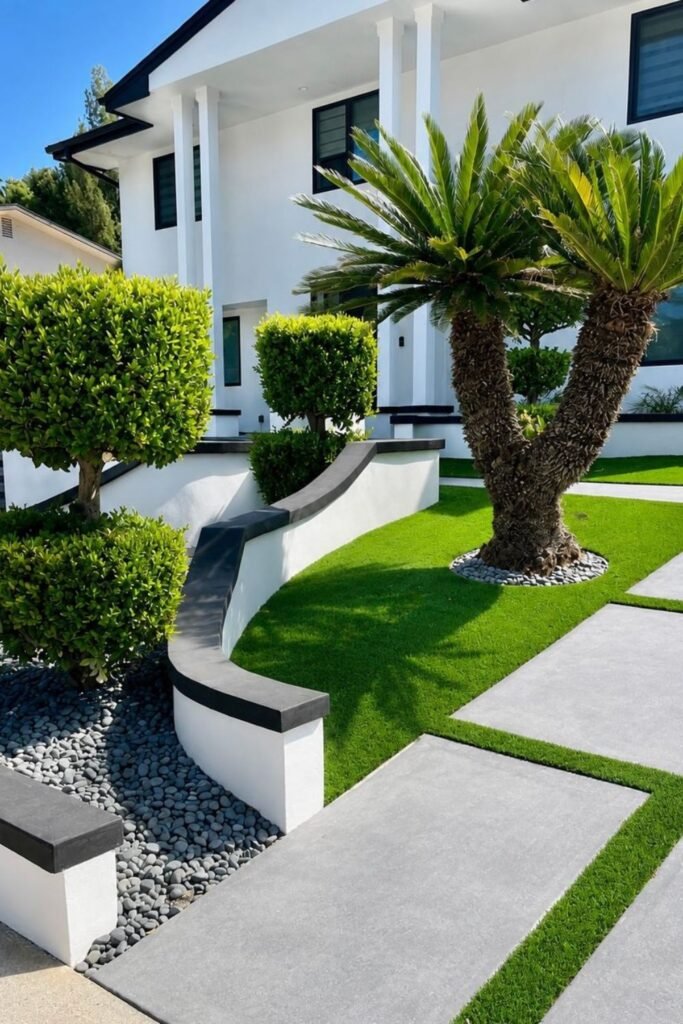
Palm Accent
Add a statement palm tree when you want to give your front yard a strong focal point without filling the space with too many plants.
Tall palms add height and offer a laid-back, resort atmosphere that pairs well with modern, coastal and warm-climate residences.
Keep the area around the tree simple with modest plants, gravel or smooth stones so the palm stays the prominent feature.
Repeat a few green tones across the yard and use crisp planting lines to keep the look finished. The idea works well in broad spaces where the tree has room to flourish and is not in competition with other huge plants.
Pair palms with manicured plants and modest paths for a harmonious landscape that feels fresh and is easy to maintain.
FAQs
How Can I Make My Front Yard Look Expensive On A Small Budget?
Simple changes can make your front yard looks more expensive and the focus is on a clean and tidy design.
Begin with fresh mulch, defined garden edges, clipped bushes and a clear walkway as these elements instantly boost curb appeal.
A few statement plants, outdoor lighting or ornamental pebbles can also give a professional effect without an entire landscape overhaul.
What Are The Easiest Front Yard Landscaping Ideas To Maintain?
The finest low maintenance landscaping comes from choosing plants that work in your climate and that cut down on the need for frequent maintenance.
Evergreen shrubs, attractive grasses, native plants, gravel areas and mulch beds: Watering should be minimal and frequent trimming is necessary.
The specified planting zones also make the care easier, since each zone has a specific purpose.
