
23 Rain Garden Ideas for 2026
Heavy rain can create muddy spots in areas of your yard, leave standing water for days and wash away mulch or soil every time another storm comes through.
We have seen many homeowners try to improve drainage quickly, only to wind up with an ugly ditch or a damp garden with no solution.
A well-designed rain garden is more than a way to catch runoff; it allows water to sink into the ground and adds color, texture and life to your environment.
the matters is the location, the kind of plants, and the design that will allow the water to flow properly.
In this article, you’ll explore 23 rain garden Ideas that combine smart drainage with beautiful landscaping.
Let’s jump in!
How Can You Build A Rain Garden That Improves Drainage?
Don’t just dig in the first low spot you see. Begin by following the path the rain currently takes over your yard.
Water needs to be able to enter the garden, sink into the ground in a day or two, and have a safe way to drain away in strong rains.

Build a gently sloped basin, plant species that can manage wet and dry, and place rocks only where they will aid in slowing down moving water or preventing erosion.
Don’t plant your garden too close to your home’s foundation or in ground that is always wet.
As all the pieces work together, your rain garden provides an effective drainage solution and blends in as a natural element of your environment.
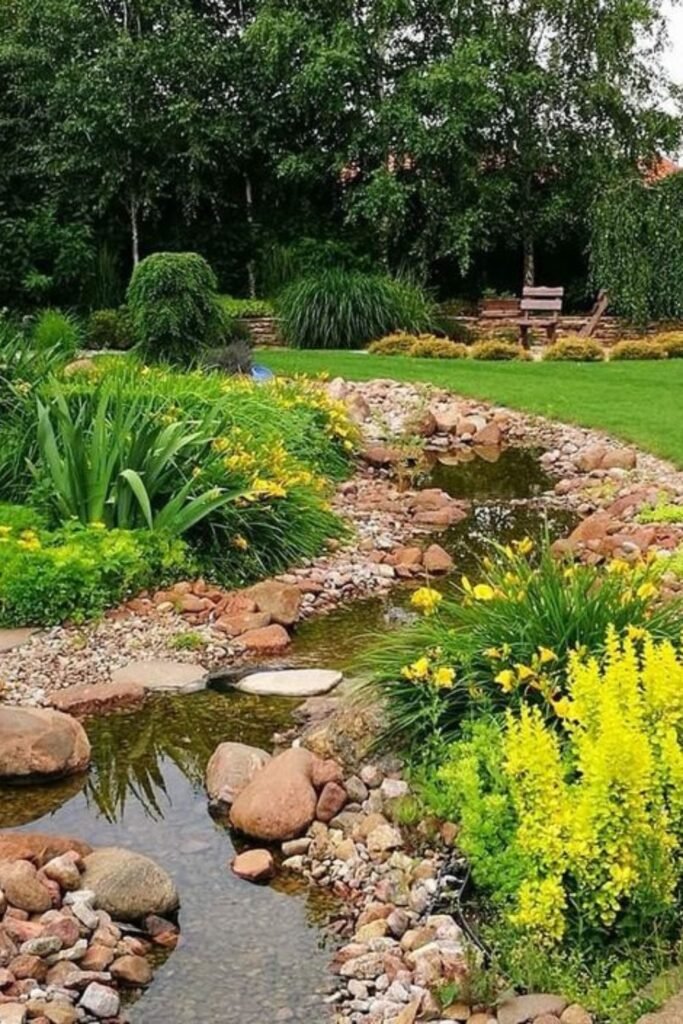
Creek Flow
Natural water movement can become the highlight of your landscape when you combine a shallow rain garden with a stone-lined creek bed.
The gentle curves moderate the flow and the river rocks assist direct the water through the basin after each rainfall and minimize damage.
Surround edges with moisture-loving flowers and ornamental grasses to soften rocks and give seasonal color.
Open lawn surrounds the plants, giving the space a balanced sense. This is a terrific idea for large backyards that need drainage and visual appeal to function together.
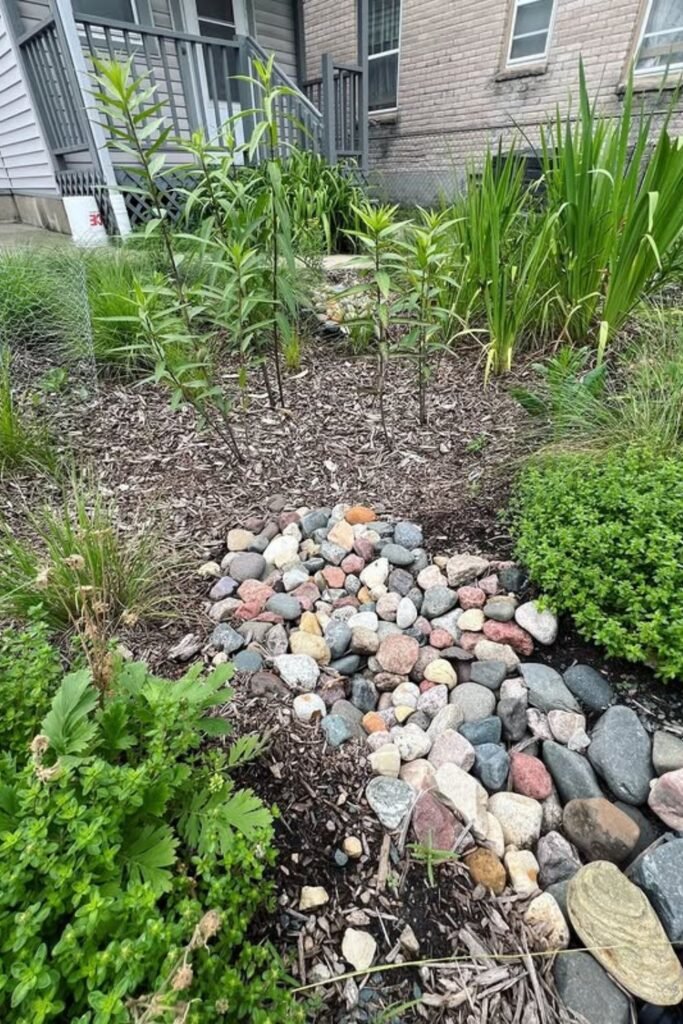
Neighborhood Oasis
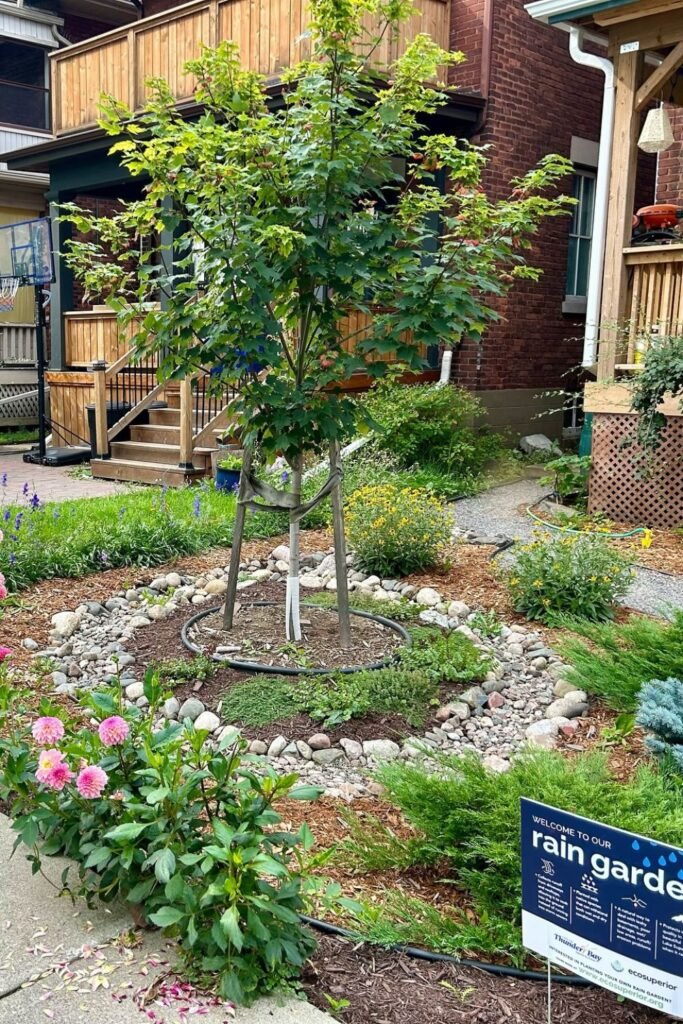
Small front yards can handle stormwater beautifully when every element has a purpose. Place the rain garden.
Where downspout runoff naturally flows into the garden, then surround it with native perennials, low evergreen shrubs and a small decorative tree for year-round structure.
Smooth river rocks line the edge, slowing the water before it enters the planting area and defining the basin without feeling harsh.
Leave mulch open between plant groupings to give young plants space to spread.
Creating a low-maintenance garden that adds curb appeal and helps pollinators as it matures.
Rock Channel
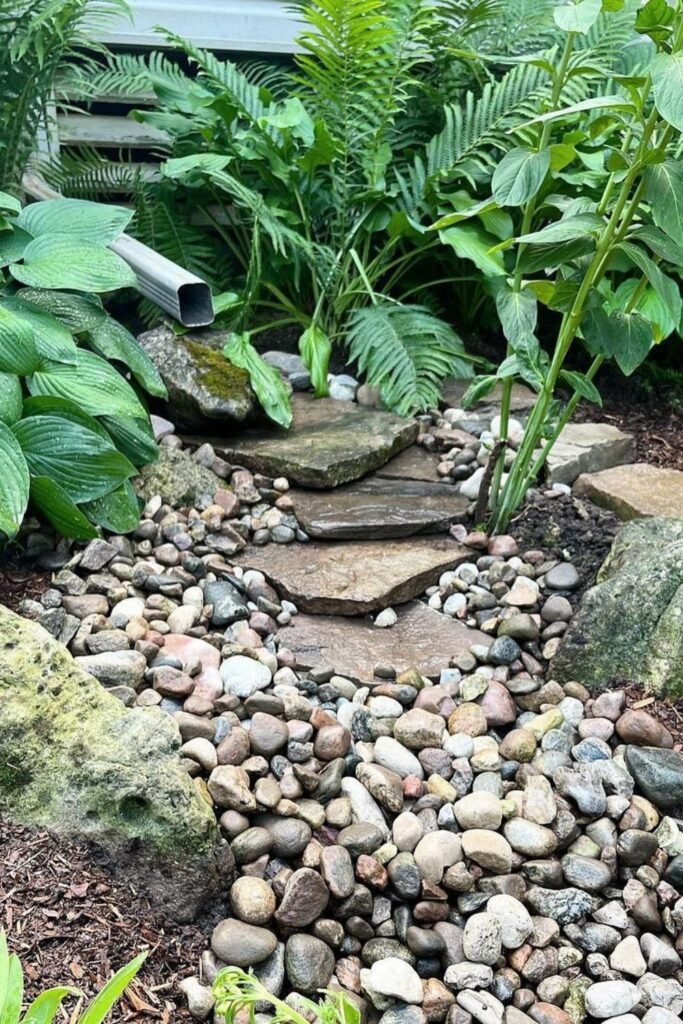
Guide roof runoff through a stone-lined channel before it reaches the rain garden to reduce erosion and keep water moving naturally.
The flat stepping stones are easy to maintain and the mixed river rocks slow down the flow and help filter out waste.
If the space is shady or next to the house, surround the basin with shade-loving plants such as hostas and ferns.
Using larger boulders around the perimeter gives the channel a polished aspect and helps hold soil in place during downpours, without making the garden feel too constructed.
Stone Swale
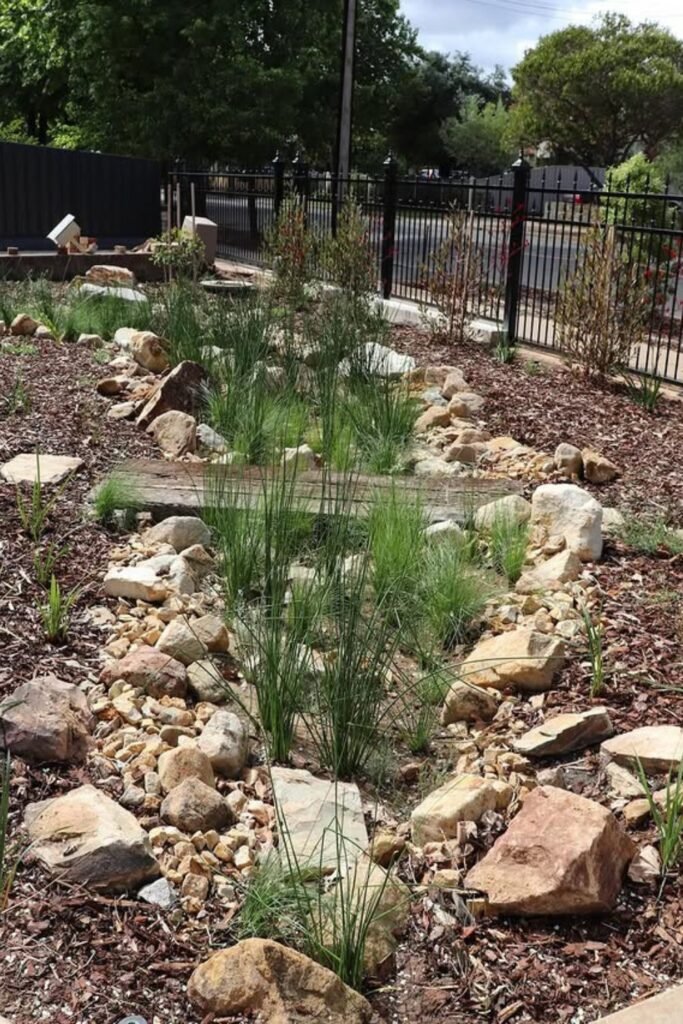
Strong drainage starts with giving rainwater a clear path instead of letting it spread across the yard.
Create a shallow swale of mixed rocks, gravel and erect ornamental grasses to restrict the flow while letting water soak into the surrounding soil.
Plenty of mulch around the planting beds will cut down on weeds and keep the design looking tidy all year round.
Build a feature like this along property margins, wide front yards or communal landscapes.
Where greater overflow areas need a natural solution that integrates into the garden instead of seeming like a drainage channel.
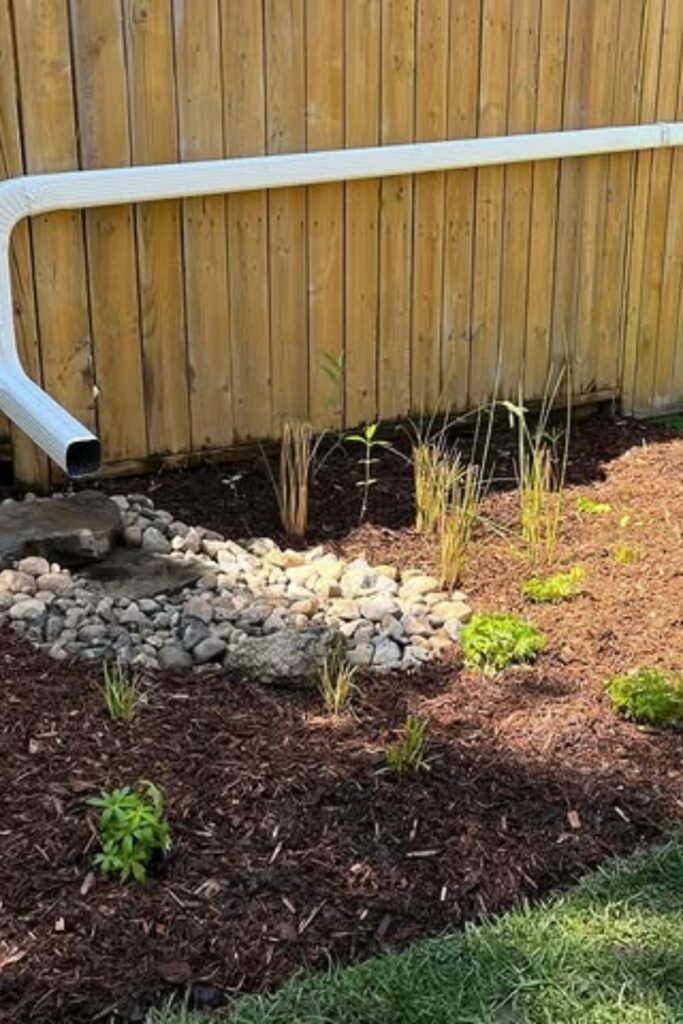
Downspout Basin
Rainwater coming straight from a downspout needs a place to slow down before it reaches your lawn.
Position a shallow stone splash under the outflow and let the water disperse into a mulched rain garden planted with moisture tolerant grasses, perennials and young shrubs.
Leaving plenty of space between new plantings provides them room to mature, and also keeps upkeep simple throughout the initial growing season.
Set along a fence or property line, a design like this gives a neglected corner a useful drainage feature that blends in organically with the rest of the landscape.
Native Basin
Choosing native plants makes a rain garden stronger with every growing season because deep roots help water soak into the soil while reducing erosion.
Create a tiny inlet lined with rocks for runoff to flow into, then plant it with moisture-loving grasses.
Flowering perennials and compact shrubs to create layers that look full from spring through fall.
The plant clusters are separated by plenty of mulch to help keep the weeds down and the soils hydrated during dry times.
This pattern is particularly effective next to patios or pathways where drainage is an issue but not a detriment to the home’s overall exterior appeal.
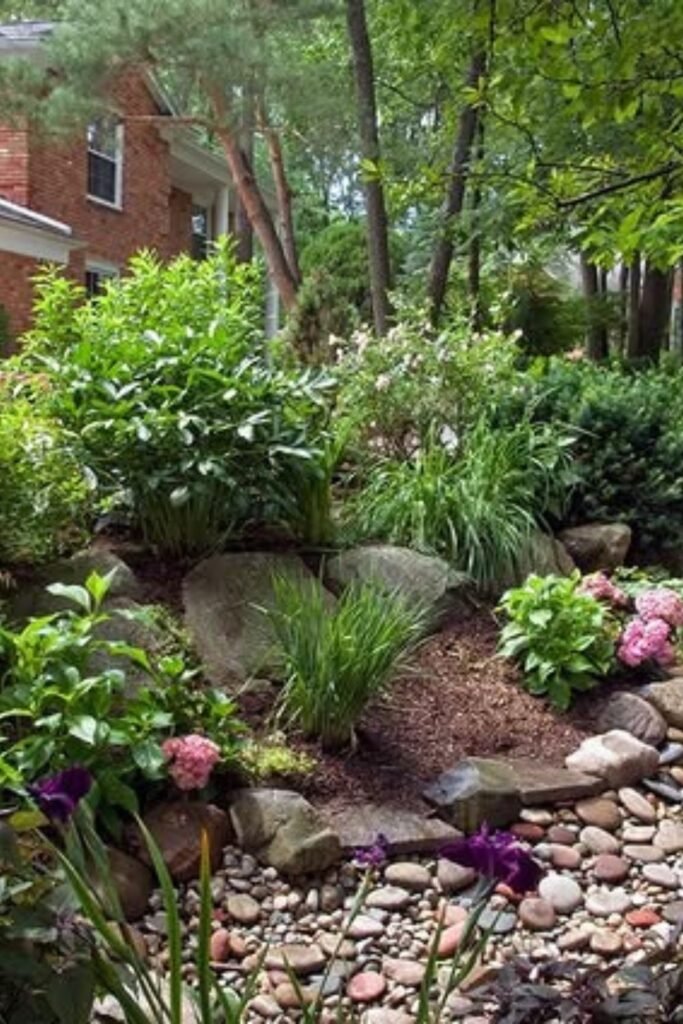
Woodland Curve
Curved rain gardens blend naturally into wooded landscapes while slowing runoff before it reaches lower areas of the yard.
Layer taller shrubs behind moisture-loving perennials and use river rocks to create a meandering channel that directs water through the planting bed without washing away soil.
Large rocks help anchor the boundaries and make the transition from garden to surrounding trees seamless.
Lots of shade will keep the space cool, so it’s a good way to go if you have old trees but grass is struggling and native woodland plants are thriving.
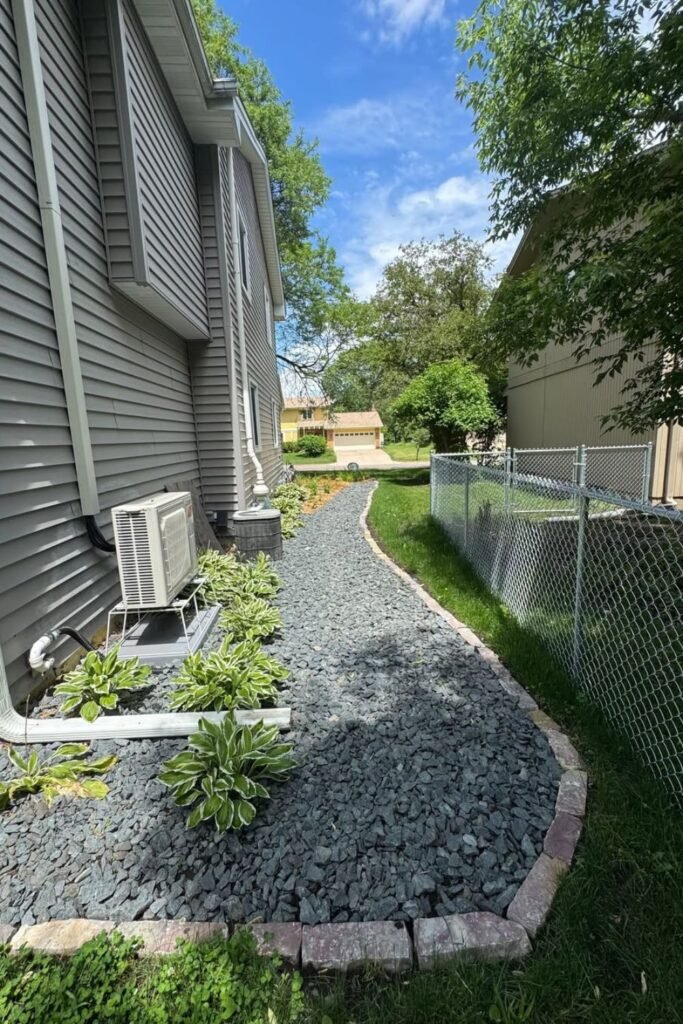
Side Drain
Long, narrow spaces beside a house can solve runoff problems without becoming wasted ground.
Redirect the water from the downspout into a channel of rocks that gradually leads the water to a planted rain garden farther away from the foundation.
Set the boundaries and contain the gravel with pavers, and between drainage points, plant low-growing plants to soften the hardscape.
By leaving the center free for water passage, maintenance is made easier and leaves or debris are prevented from blocking up the flow during strong storms.
Boulder Basin
Large stones can do more than add character when you use them to shape a shallow basin that slows fast-moving runoff.
Use spherical gravel to fill the center, allowing water to distribute evenly before it soaks into the ground.
And then border the perimeter with attractive grasses and long-blooming perennials to create texture throughout the year.
Helps maintain the planting areas tidy with fresh mulch. Helps hold moisture between storms.
Place a design like this at the bottom of a gradual slope or below a downspout where you need a small rain garden that handles water without taking over the area.
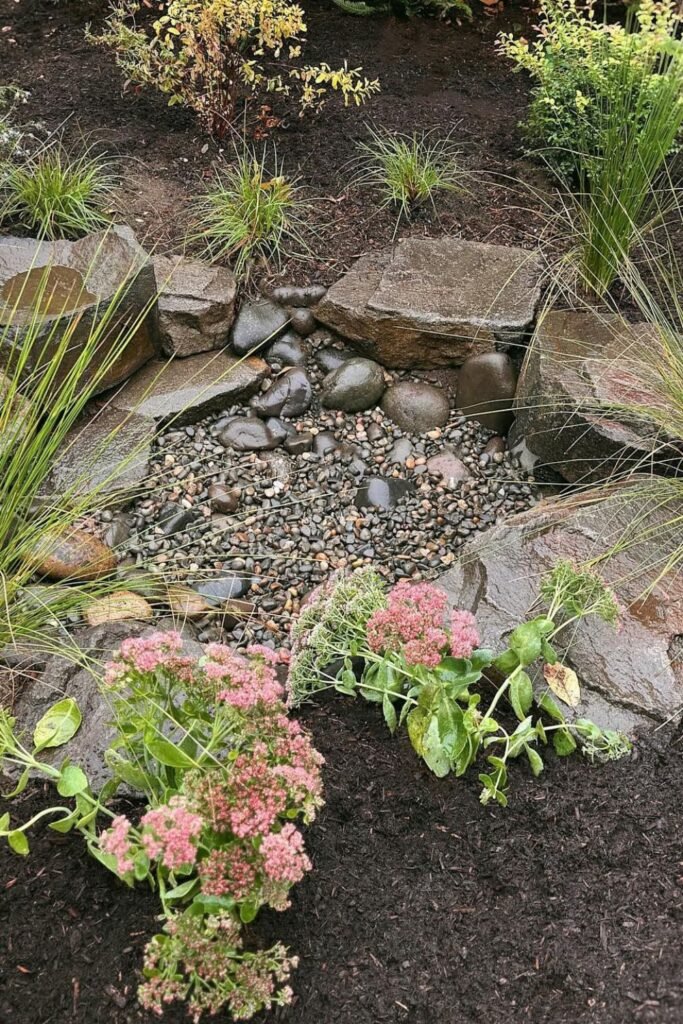
Foundation Prep
Successful rain gardens begin long before the plants go in. Shape the basin first create gentle berms to hold runoff.
And install the drainage pipe before covering the channel with river rocks.
At this point, checking the water flow makes it much easier to correct low places or uneven grading before everything is planted.
Once the framework is in place, you’ll want to add mulch and moisture-tolerant plants to help stabilize the soil.
And cover the engineering with a natural-looking landscape that will work well during every wet season.
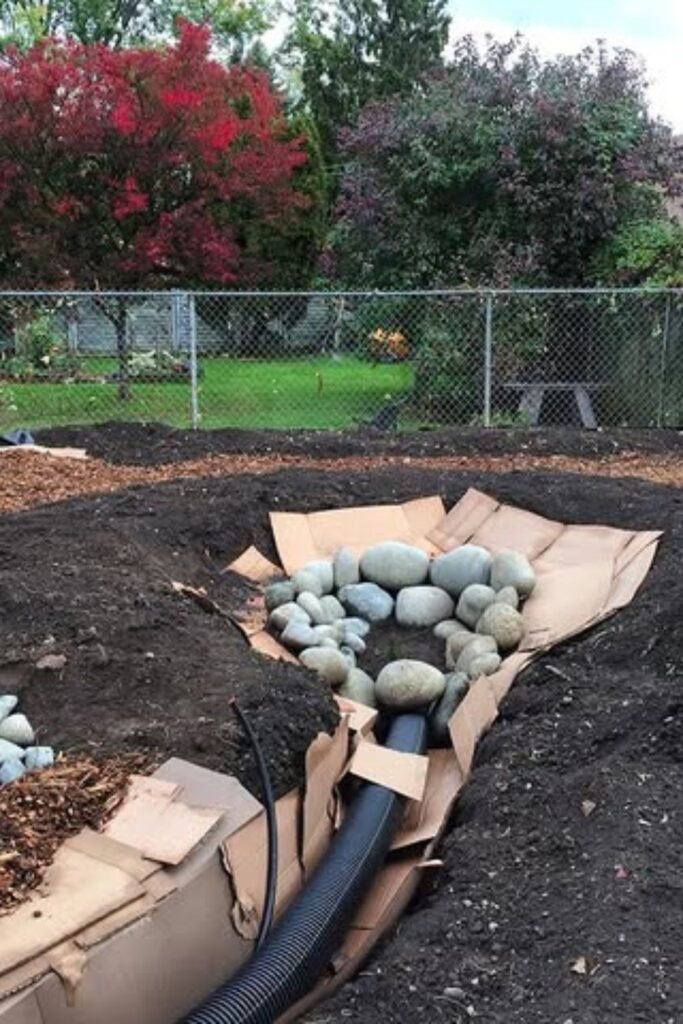
Hillside Catch
Sloped yards need a rain garden that slows runoff before it gains speed and washes soil downhill.
To protect exposed ground during establishment, create a wide, shallow basin with mulch.
And then use smooth river rocks at the water entrance sites to cut down on erosion after heavy rain.
Over time young native plants will fill in to create stronger roots that hold the soil together and improve drainage organically.
The design of this near the bottom of a gentle slope serves to catch runoff before it reaches lower portions of the property, turning a tough space into a healthy planting bed.
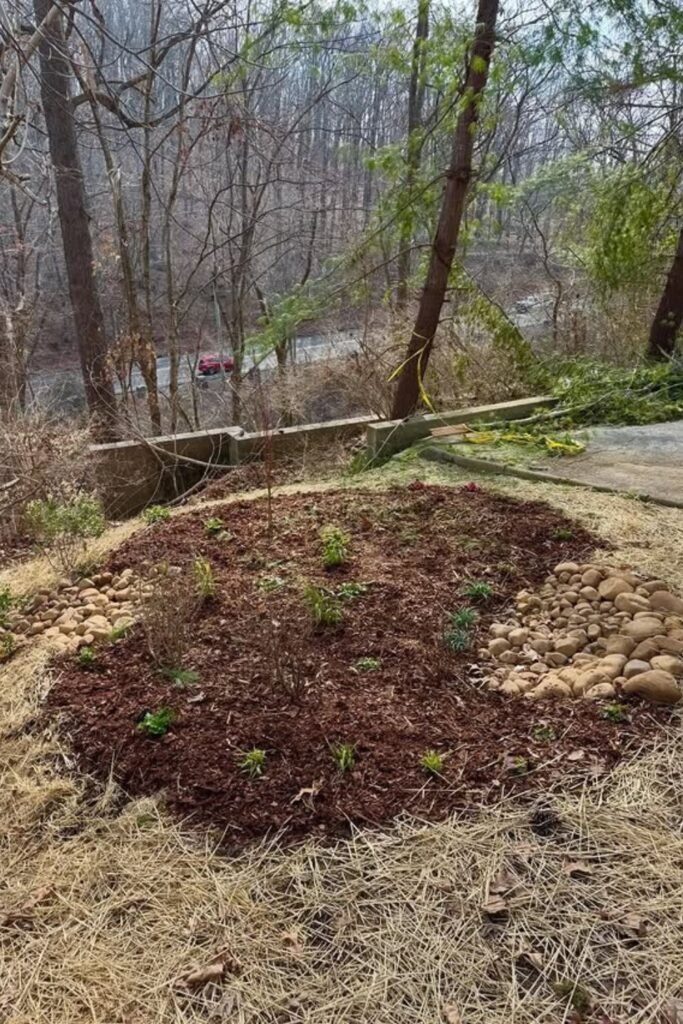
Natural Wash
Water always needs somewhere safe to slow down, especially in larger landscapes where runoff travels a long distance.
Build a wide rain garden with a rock-lined canal that leads to a small basin, and surround it.
With native shrubs and moisture-loving plants that will complement the trees that are already there.
Leave room around the bowl so strong rain can spread out and sink into the soil rather than cutting through the landscape.
This kind of design works brilliantly in wooded gardens or on sloped estates where natural drainage may be an appealing feature rather than a constant nuisance.
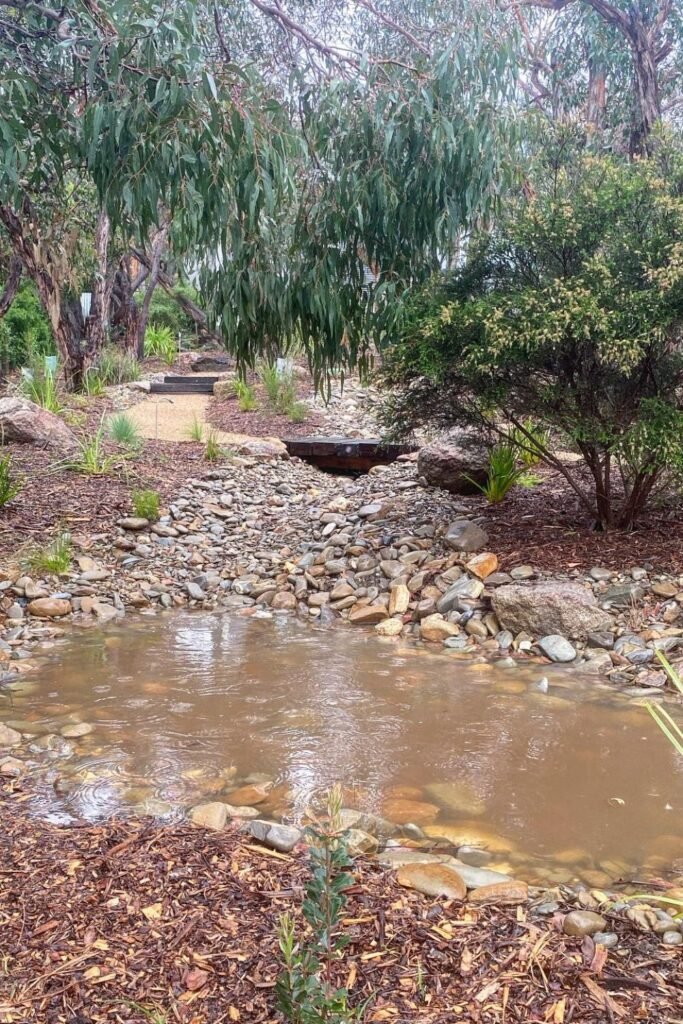
Dry Creek
Nothing ties a front yard together better than a dry creek that doubles as a drainage solution.
For direct runoff, use a meandering channel with assorted river rocks, anchoring the borders with massive boulders to hold everything in place during heavy rain.
Plant shrubs, decorative grasses and colorful foliage plants around the channel to soften the masonry and provide interest year-round.
Wide mulch beds keep weeds down and make each plant pop. Stepping stones provide easy access without impeding the natural flow of water.
This pattern is particularly helpful in front yards where curb appeal and stormwater management are both concerns.
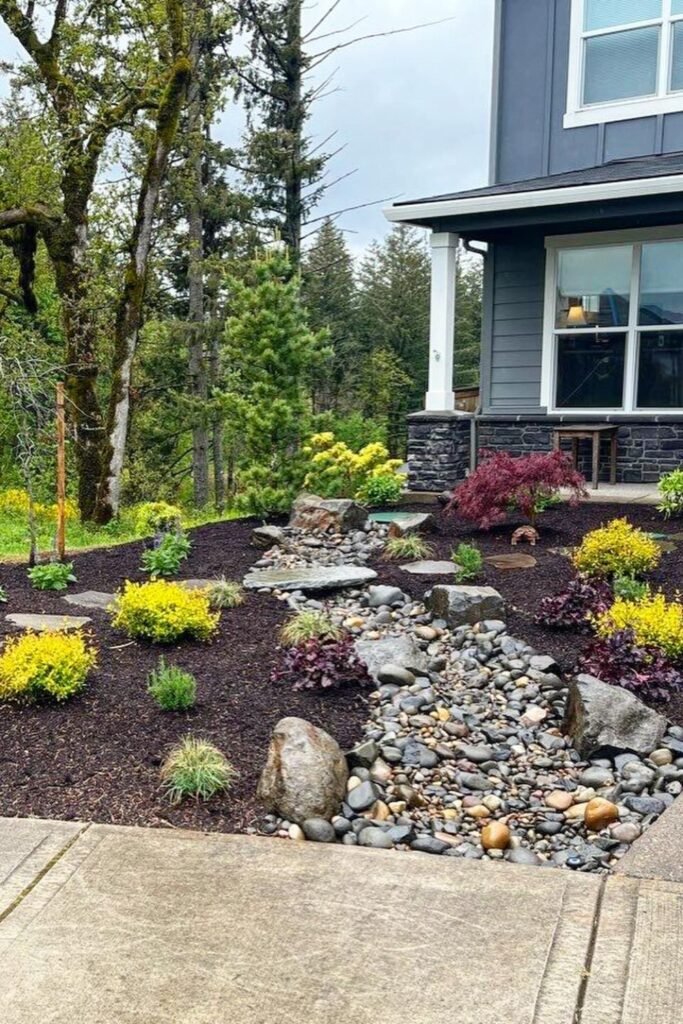
Curb Channel
Front-yard drainage can become part of the landscape instead of something you try to hide.
Build a small rock channel to take the runoff away from the home, and soften the edges by planting it with decorative grasses, evergreen shrubs and groundcovers.
It provides depth by having taller plants to the back and lower foliage in the front, but also allows the drainage path to stay open during heavy rain.
This design works particularly well on gradual slopes when you want to protect the lawn, enhance curb appeal and direct water naturally without a conspicuous drain.
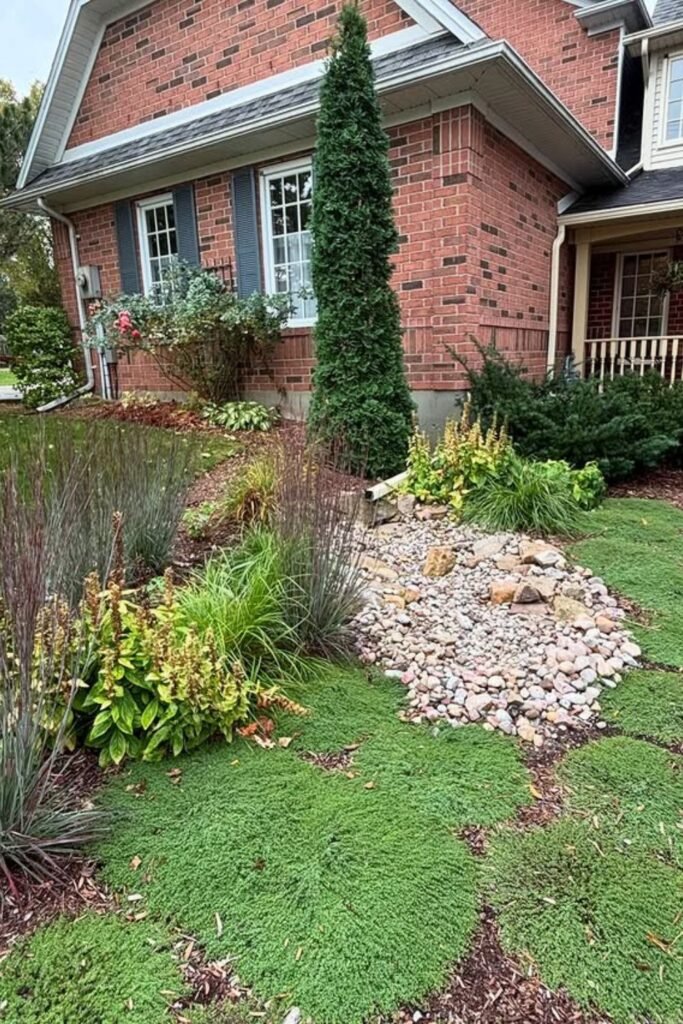
Slope Stream
Fast-moving water can quickly wash soil down a hillside unless you give it a controlled route to follow.
Construct a dry creek bed from mixed river rocks and large boulders to restrict the flow.
Then mulch the surrounding slope and plant deep-rooted native plants that maintain the soil as they grow.
This type of setup works especially well next to elevation residences where runoff flows downhill after a strong rain.
Plant on either side of the rock channel to keep water flowing smoothly and turn a tough slope into an appealing feature of your landscape that protects your yard year after year.
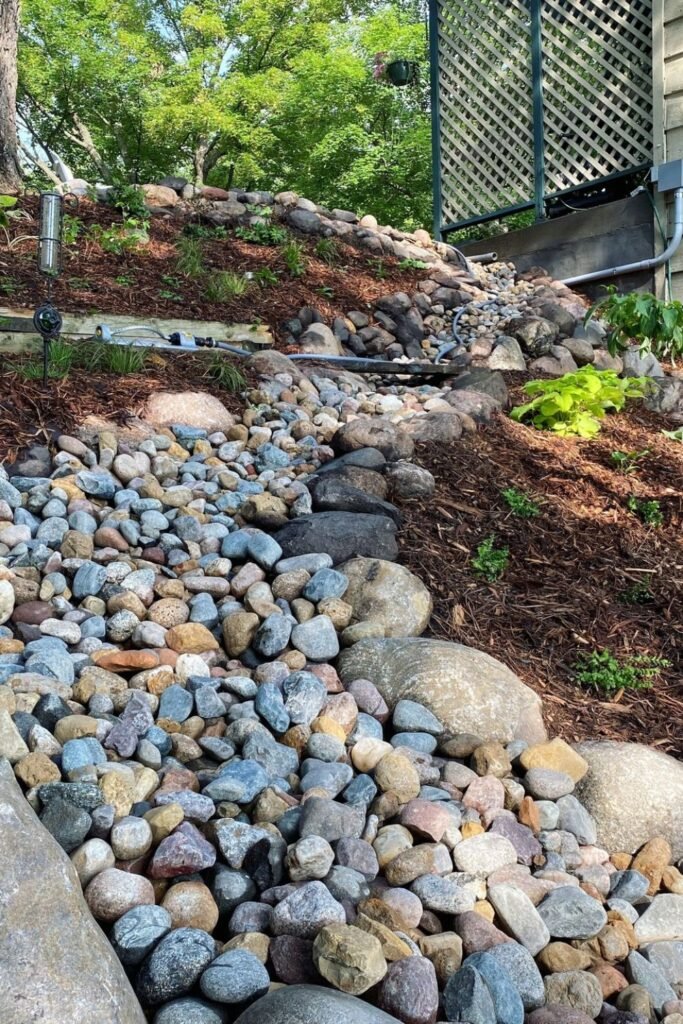
Patio Spillway
Directing downspout runoff into a small stone spillway protects both your foundation and planting beds during heavy rain.
To reduce the force of the water, place flat stones under the exit and then channel the water down a shallow rock channel before it enters the rain garden.
Ornamental grasses and moisture-loving perennials can be planted along the path of the drainage, with mulch between plants for weed control and moisture retention.
When built next to a patio or pathway, this type of feature will keep the area clean and neat.
Help with drainage naturally, and turn a narrow side yard into a lovely section of your landscape.
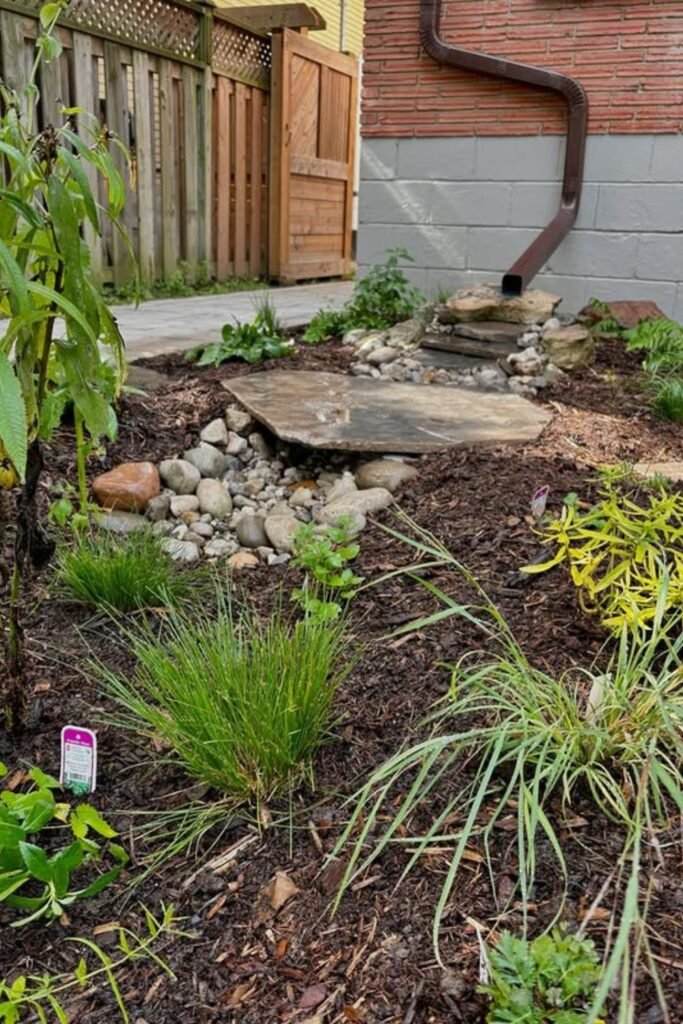
Pathway Stream
Walking paths and drainage can work together when you weave a shallow stone channel through the landscape instead of hiding it.
Anchor the stream with a few huge boulders and then fill in the edges with drought tolerant shrubs, ornamental grasses and native perennials that can tolerate periodic runoff.
The large mulch beds around the plants assist to discourage weeds and make all of the textures pop against the smooth river rocks.
This type of plan works well in contemporary front yards, creating a natural path for rainwater runoff.
And an attractive center point that guests see long before they reach the front door.
Four-Season
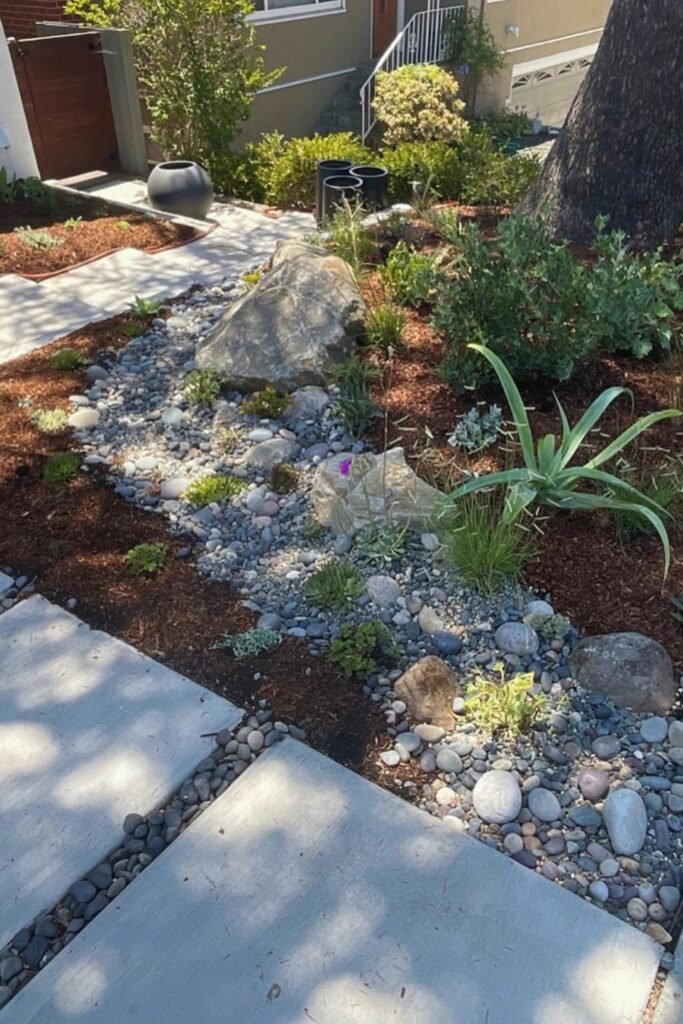
Gardens that stay attractive beyond spring rely on texture as much as flowers. Mix ornamental grasses, large natural boulders.
And a serpentine rock-lined basin so the landscape retains its character long after the blooms are over.
Instead of having the water run straight through the planting, let the water meander.
This allows for a more natural flow during heavy rain. This type of design works great in medium to large backyards.
If you want consistent drainage, year round structure and a quiet setting that grows more lovely as the plants mature.
Curb Appeal
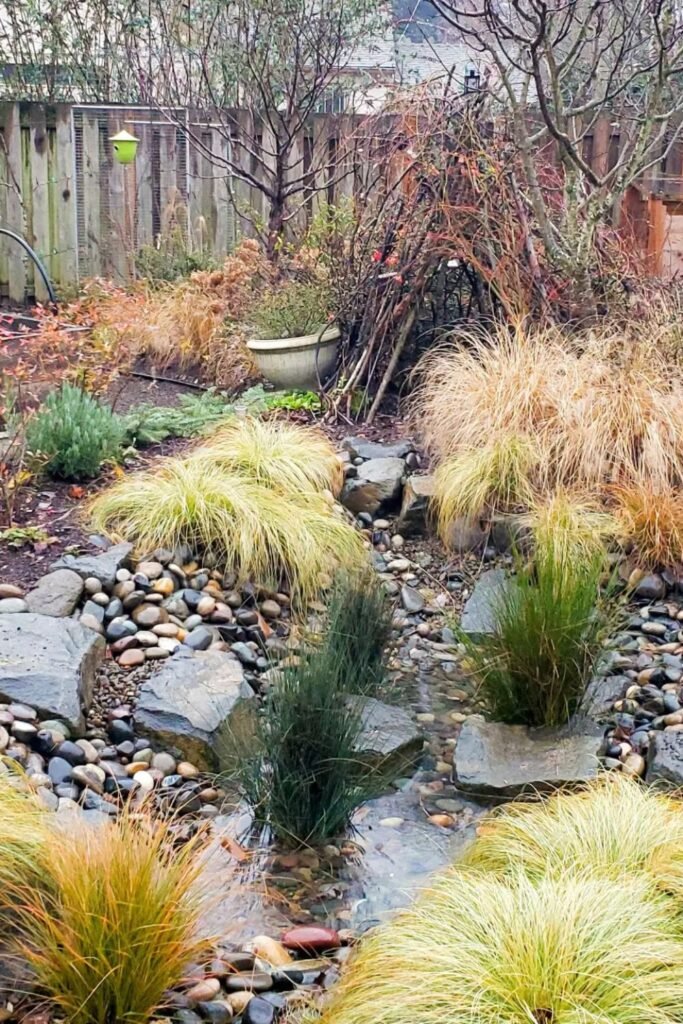
Every inch of a small front yard can work harder when drainage becomes part of the landscape instead of an afterthought.
Place the stone in an attractive rock bowl and frame it with compact shrubs, colorful perennials and low groundcovers, leaving the middle open for storm water.
Curved planting beds give it a more natural flow and make the room feel larger than it is.
Place a design like this near sidewalks or street drains, where runoff naturally accumulates.
Choose plants with staggered bloom dates to keep the garden attractive from spring through fall, while still handling rainwater effectively.
Meadow Border
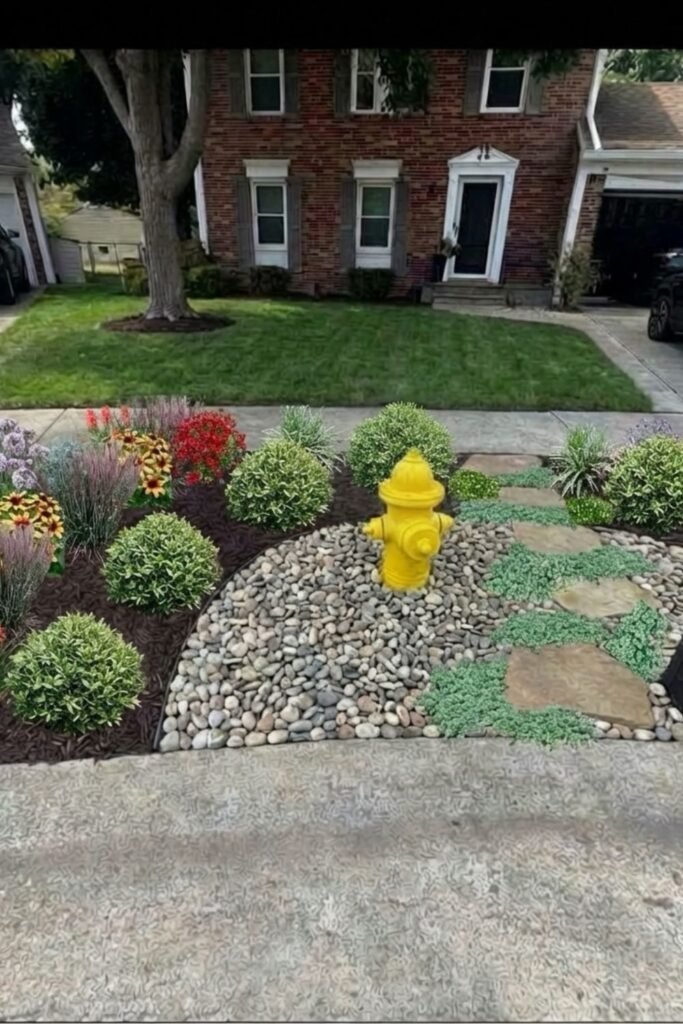
Layering plants by height creates a rain garden that feels full without looking crowded.
Place decorative grasses and tall native flowers in the back then fill the middle with long blooming perennials.
And line the front with low growing plants that blur the transition to the lawn or gravel road.
This type of looping layout is perfect for a fence or backyard seating area where runoff needs to be absorbed organically.
A variety of plants with varying bloom dates will keep the garden colorful throughout the seasons and deep roots will aid improve drainage and decrease erosion after heavy rain.
Pollinator Circle
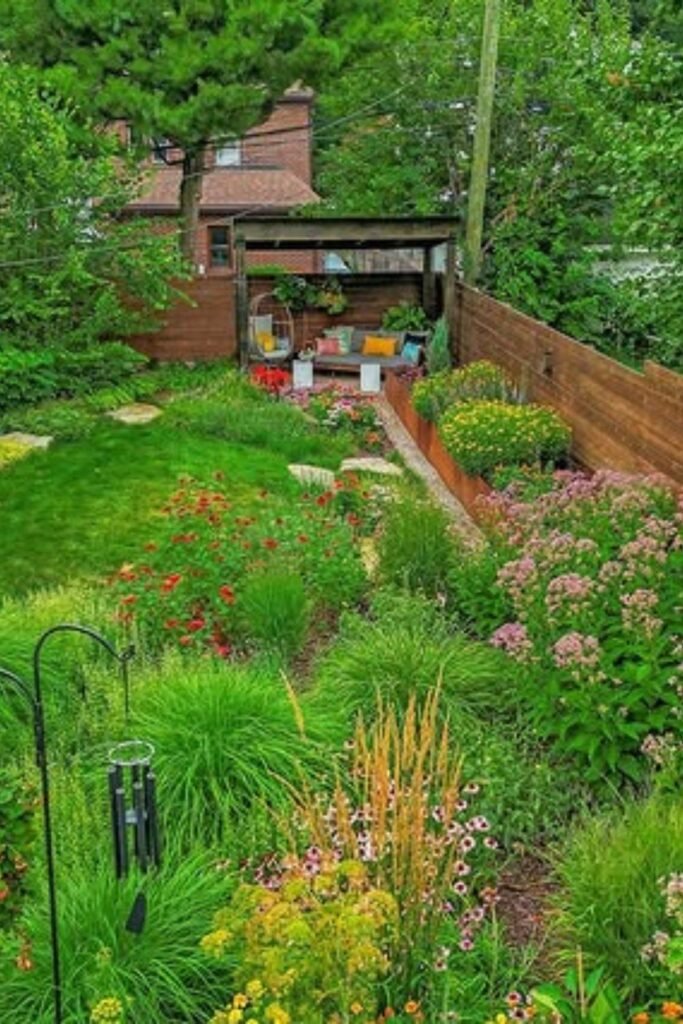
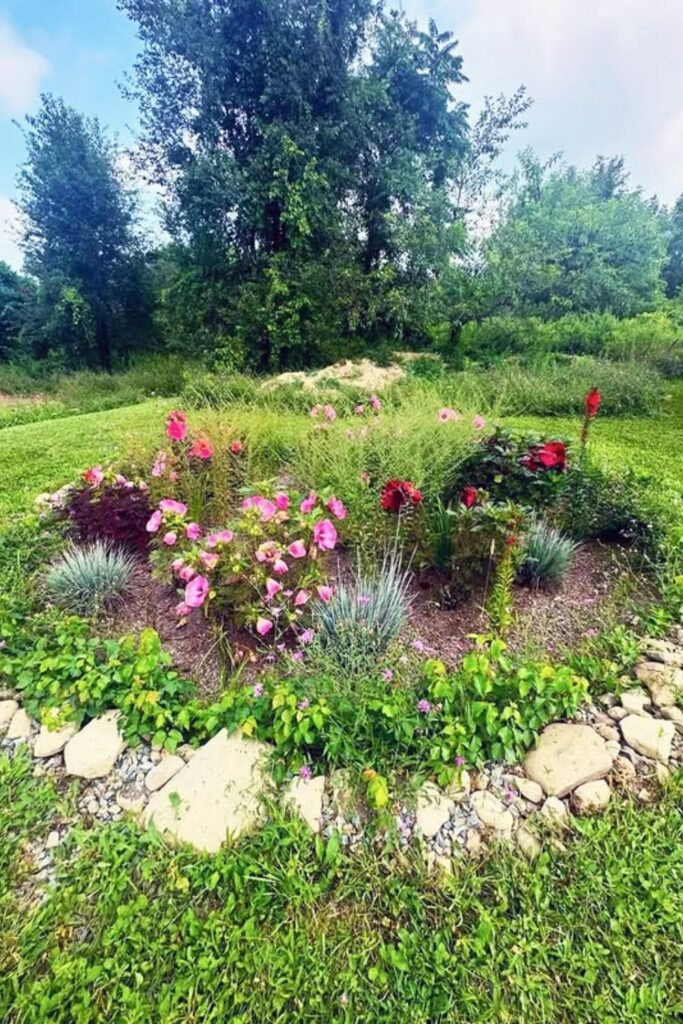
Circular rain gardens make excellent focal points in open lawns while capturing runoff from the surrounding landscape.
Use natural stone to edge the basin to hold the mulch in place and define the planting area.
Then combine beautiful grasses with bright native flowers that bloom at different times of the year.
Leave enough room for each type to grow to maturity without competing for light or air flow.
It’s a beautiful concept for large backyards that want better drainage, more pollinators and a lively, colorful garden everywhere you look without taking over the surrounding land.
Porch Border
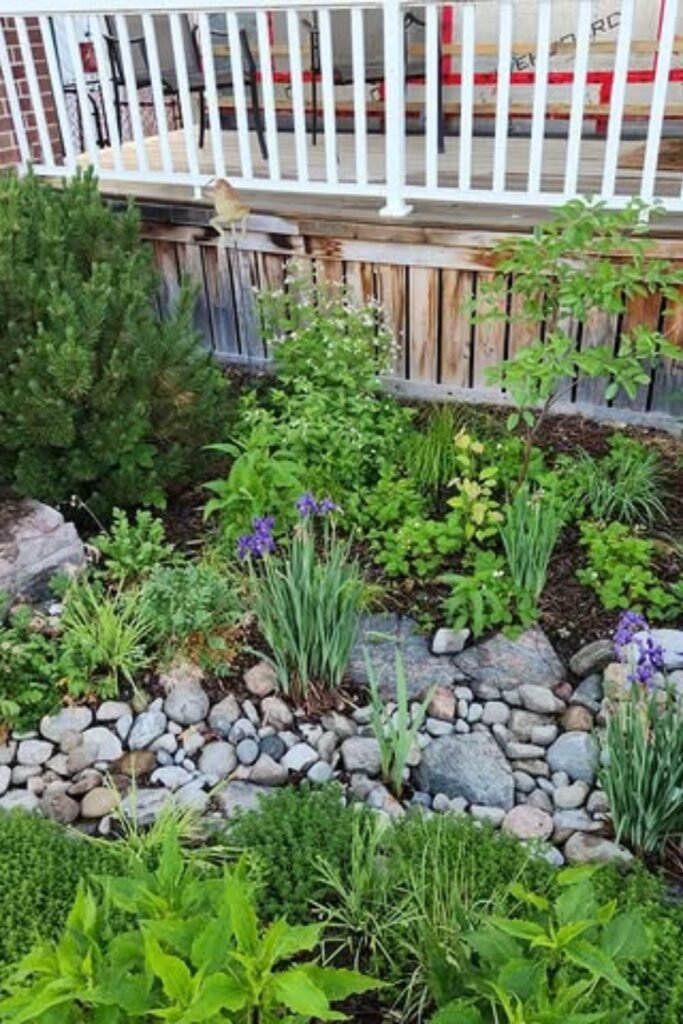
Rain gardens don’t need a large footprint to make a difference. Tuck a shallow rock basin beneath a porch or along the front foundation.
Find a spot where water from the downspout naturally pools and plant native perennials.
Compact shrubs and attractive grasses that can withstand the fluctuating moisture conditions around it.
Rounded river rocks delay the water before it gets to the planting bed, helping to decrease soil erosion after heavy rain.
This layered and well-spaced plant selection makes for a neat, low-maintenance border that helps improve drainage and gives the front of your home a lush, welcoming look throughout the growing season.
Blooming Creek
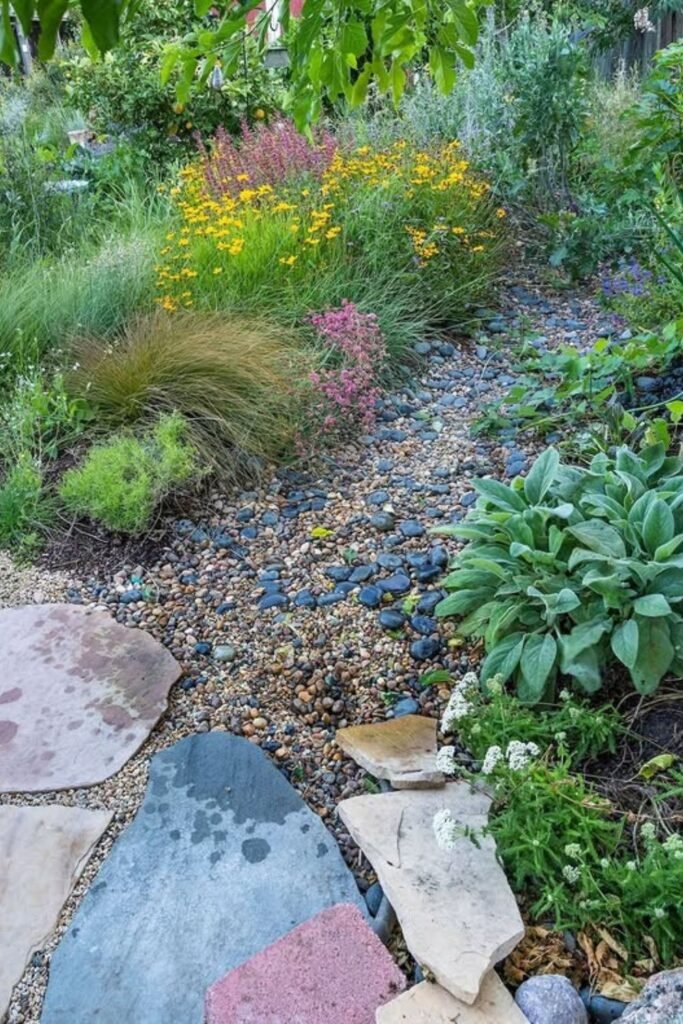
Bright flowers can make a working rain garden feel like the centerpiece of your backyard instead of a drainage feature.
Let a narrow river rock channel snake through the planting bed and then border it with attractive grasses.
Native perennials and long-blooming flowers that can deal with the fluctuating moisture levels.
Flat stepping stones give easy access for maintenance and do not interfere with the natural flow of water.
This kind of plan is great for cottage style gardens or pollinator gardens, building layers of color and letting runoff settle down and sink into the soil after every shower.
FAQs
Can A Rain Garden Still Work If My Yard Doesn’t Flood?
Yes. Rain gardens aren’t just for serious drainage issues. Even if a downspout, driveway.
Or patio just sometimes runs off into your yard, it can slow the water down before it runs across the lawn.
Selecting the proper site and planting species with deep root systems will allow more rain to percolate into the soil and provide color and texture to your landscape during the growth season.
How Do I Keep A Rain Garden Looking Neat Instead Of Overgrown?
Begin with a basic planting design that allows each shrub, grass and perennial ample space to flourish.
Renew the mulch annually, pull weeds before they get out of control, and cut down ornamental grasses at the end of winter for healthy new growth.
The combination of evergreen shrubs and seasonal flowers helps maintains the garden’s appeal during dormancy of some species.
