
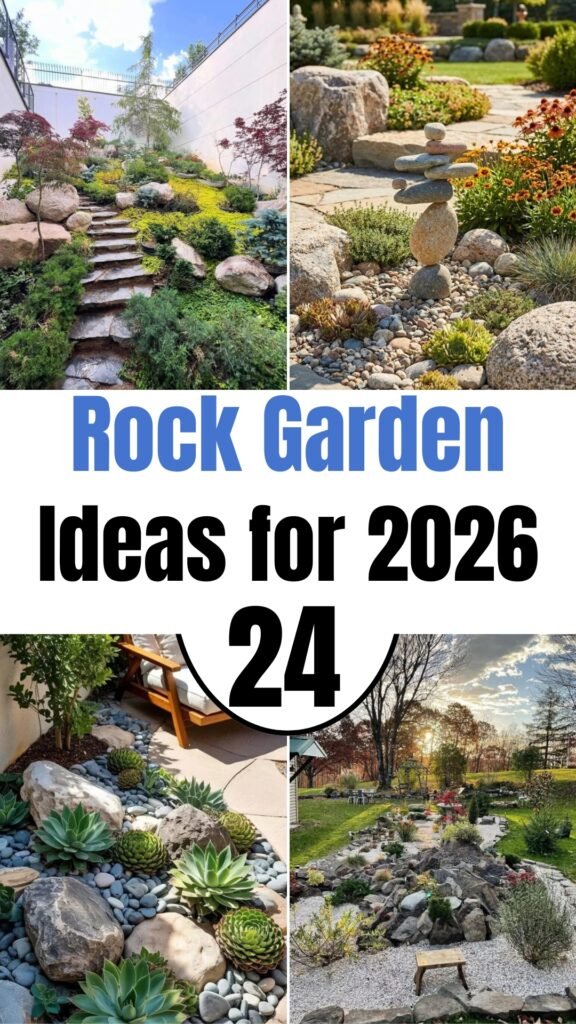
24 Rock Garden Ideas for 2026
Many rock gardens are begun with the greatest of intentions, but end up looking like a yard where someone dropped a bunch of rocks.
Choosing the right rocks, plants and layout is not as easy as it sounds, especially when you’re looking at an empty corner, a tough slope or a spot where grass refuses to grow.
When you understand how height, spacing, plants and rocks relate to each other the whole design starts to make sense.
In this article, you’ll discover practical tips to build a rock garden that feels intentional.
Let’s jump in!
How Do You Make A Rock Garden Look Natural?
The secret isn’t buying expensive rocks, or filling up every empty spot with plants. When all the pieces are in place, the result is a natural-looking rock garden.
Select a type of stone and then experiment with various sizes, avoiding stones with identical appearances.
Start with the larger rocks and then sink each one part way into the ground so it looks like it has settled in, not dumped on top of the ground.
Leave space between groups of plants so the stones can shine and use the same plants in a few spots so there is balance.
Lastly, make use of the natural lines in your yard and don’t be tempted to force straight lines.
It’s these little touches that make the difference between a random pile of pebbles and a landscape that feels like it’s always been there.
Hillside Path
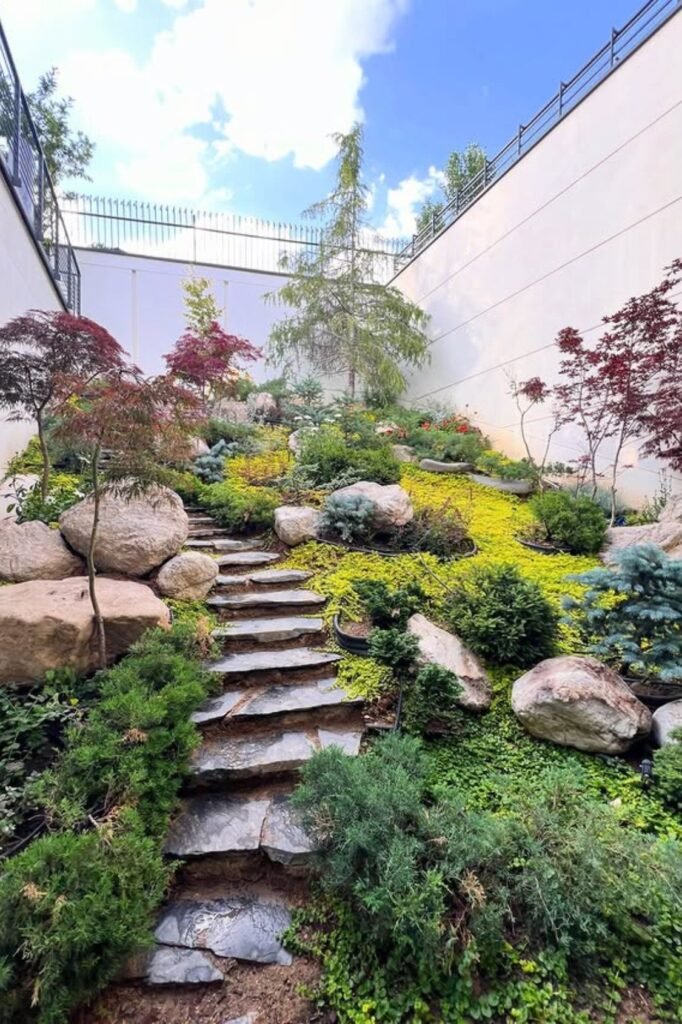
Walking through your rock garden should feel like part of the experience, and a winding stone pathway instantly creates that effect.
Broad, natural stone steps combined with huge boulders tame a steep slope and give the environment a mature, established look.
Low-growing ground covers soften the gaps between the boulders, while evergreen plants keep the garden looking good all year round.
To replicate this design on a sloped backyard or raised landscape, place the largest rocks first, and then weave a stone path through rather than constructing a completely straight staircase.
End with multi-tiered trees and compact conifers to give height, texture and depth without crowding the hillside.
Stone Balance
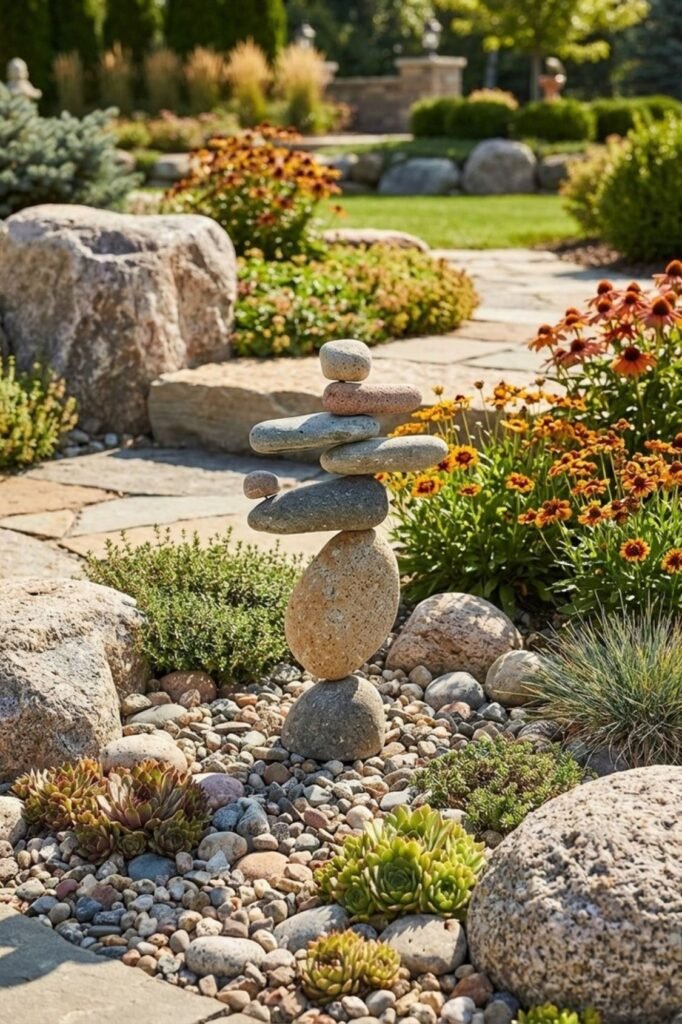
Unexpected details often become the reason guests stop and admire a garden. A simple stacked stone sculpture adds personality.
It won’t compete with the surrounding nature, especially when placed next to a pathway or tucked amid river rocks and succulents.
Fill the rest of the space with a mixture of rounded rocks, flowering perennials and dense ground covers so the stone stack is the main focus.
Select rocks that have flat natural surfaces to make the sculpture more stable, and place the sculpture in a location where people can see it from several perspectives.
The serene, natural quality of a rock garden is preserved but small creative touches like this make it feel intelligently constructed.
Rocky Island
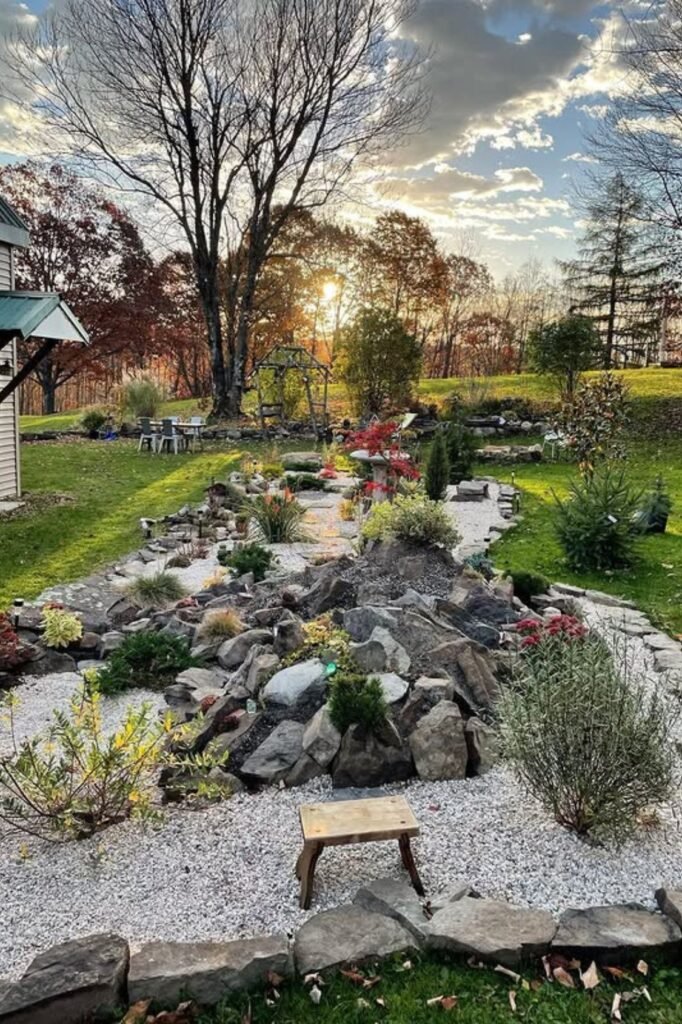
Turning the center of your yard into a raised rock island instantly creates a focal point without adding a large structure.
Layer medium and large natural stones first then weave flowering perennials, ornamental grasses and evergreen plants into the gaps to maintain the display colourful across seasons.
A border of pale gravel helps define the garden and makes the darker rocks pop even more.
Put a small bench or garden accent nearby so guests instinctively stop to appreciate the vista.
By spacing each planting well apart, the island doesn’t look too crowded and each rock and plant may take part in the overall design.
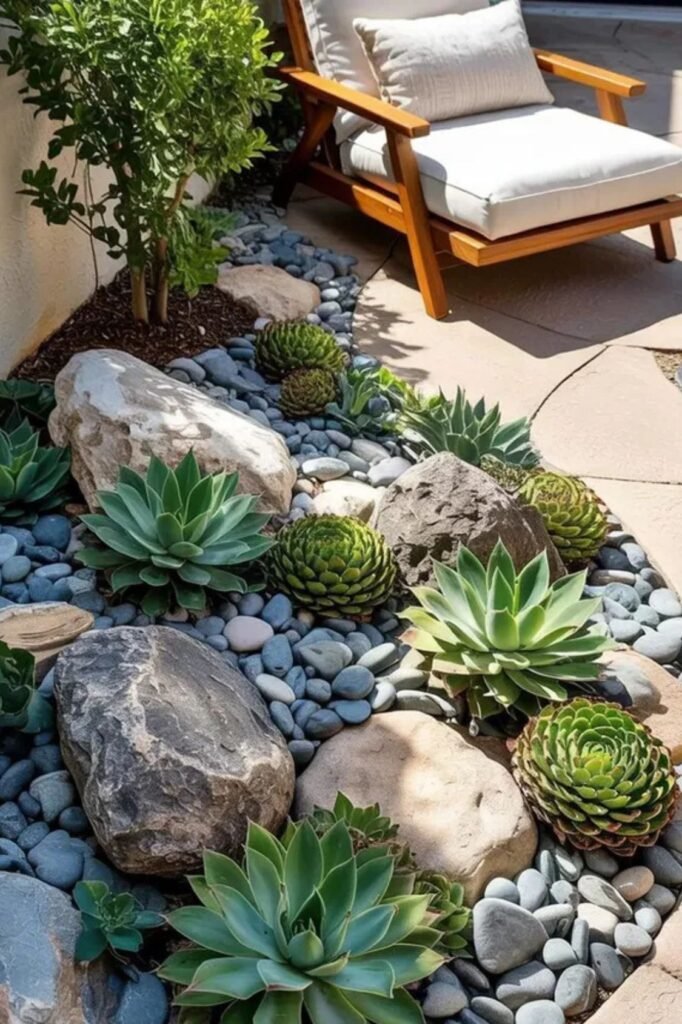
Succulent Border
Bringing a patio edge to life becomes much easier when you combine smooth river rocks with sculptural succulents.
Instead of filling the space with mulch alone. Large accent pebbles break up the planting.
And recurring rosette-shaped succulents provide a clear rhythm that feels modern without looking naked.
Copy this pattern next to a dining area, sidewalk or courtyard where the plants will get lots of sunlight and good drainage.
Select stone colors that complement each other within the bed for a unified design, and provide ample space around each succulent to ensure it stands out as it grows.
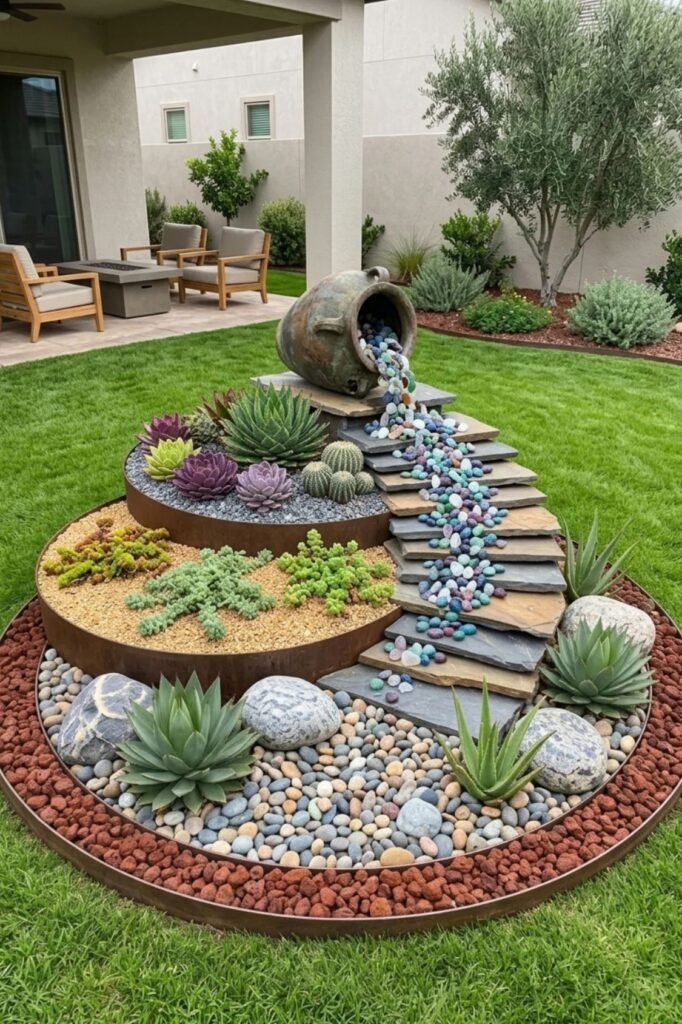
Cascade Feature
Nothing grabs attention faster than a centerpiece that tells a story, and this cascading pebble design does exactly that.
A clay pot that is slanted and piled stone stairs can give the idea of a flowing stream without actually installing a water element.
This makes it perfect for a front yard, courtyard or grass island. Surround the centerpiece with succulents, cactus and decorative boulders to keep the show balanced from all angles.
There’s circular metal edging between the planting levels, which gives the whole garden a polished look.
Choose a narrow color palette for the gravel and plants so that the flowing pebbles are the star and don’t compete with too many bold features.
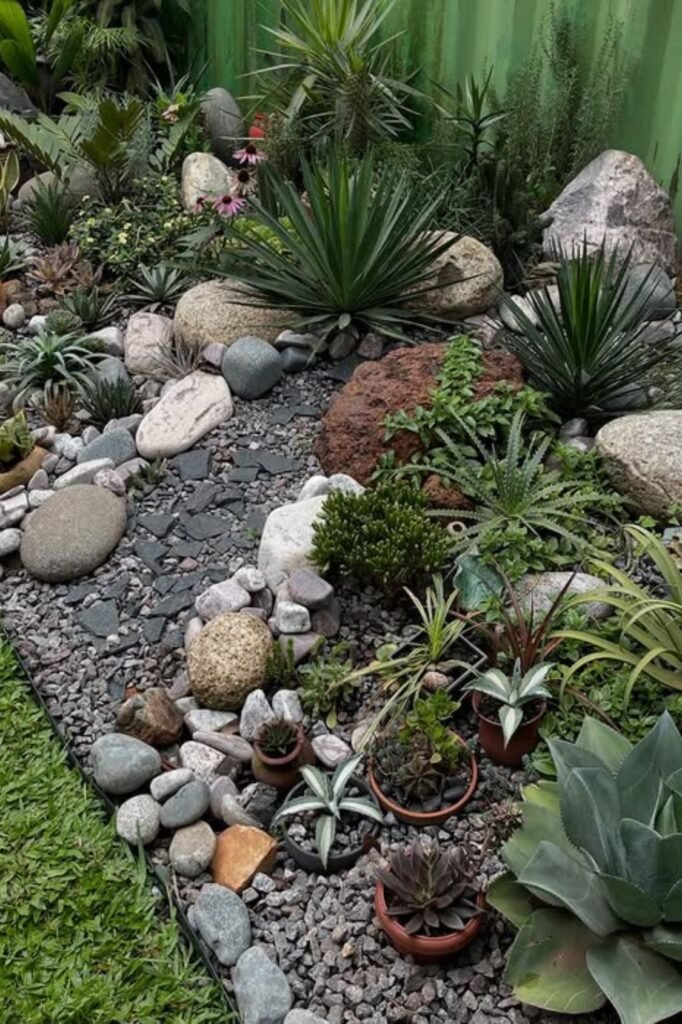
Desert Mix
Creating a rock garden with lasting texture doesn’t require dozens of flowering plants when contrasting foliage can do the work year-round.
A mix of agaves, yuccas, compact succulents and rounded rocks lend depth to the environment, while varied sizes of gravel offer a natural transition between planting sections.
Recreate this appearance along a fence line, side yard or sunny backyard where you may grow drought tolerant plants with little irrigation.
“Scatter a few potted succulents among the larger stones to add extra character without making the bed feel crowded.
Using the same forms of plants across the garden unifies the whole design and keeps each region visually related.
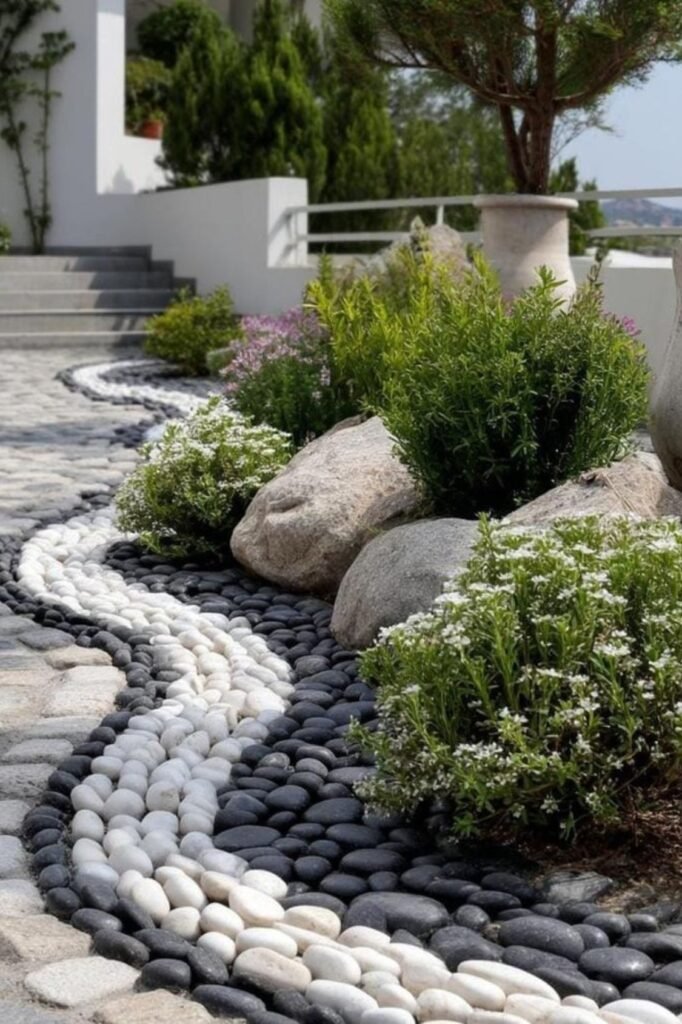
River Contrast
Color alone can turn a simple border into a standout landscape feature, and the flowing pattern of black and white river pebbles proves it.
Curved bands guide the eye naturally through the garden while large boulders and compact flowering shrubs soften the bold stone design.
Recreate this look along a front walkway, driveway, or entry path where the contrasting colors remain easy to appreciate from a distance.
Keep the curves smooth instead of sharp, and repeat the same pebble colors throughout the border to maintain a clean, cohesive finish.
Limiting the plant palette prevents the striking stone pattern from competing with too many textures.
Pebble Stream
Following the natural slope of your yard instead of fighting it creates a landscape that feels effortless.
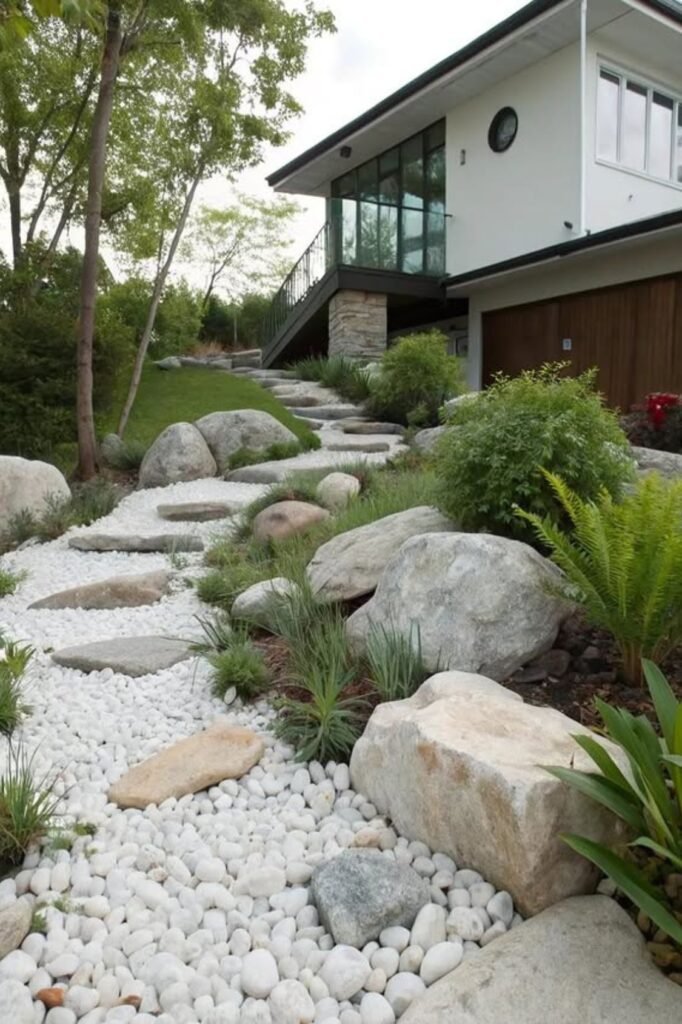
The entry is approached along a winding bed of white river rocks, large boulders and irregular stepping stones, which also adds texture to what would otherwise be an open lawn.
Position this design near a driveway, a sloped front yard, or a long side path where subtle curves soften the straight lines of the property.
Ornamental grasses, ferns and small shrubs can be planted in between the rocks to maintain the area lush without hiding the stonework.
Uneven spacing of the rocks gives the garden an established aspect and makes each step down the walk feel more natural and inviting.
Blooming Border
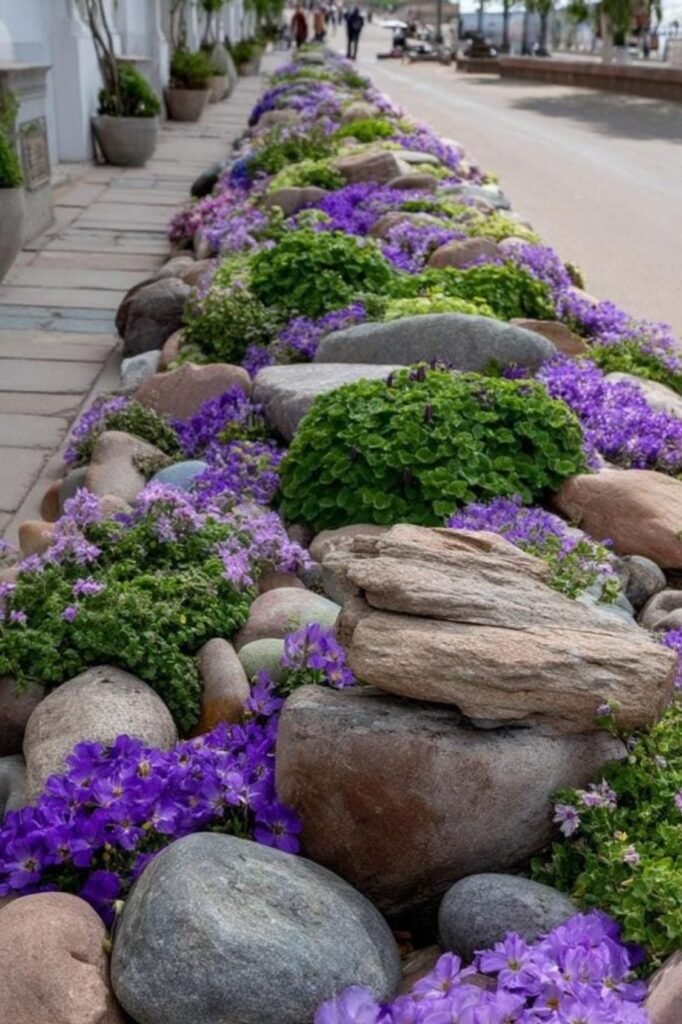
Long, narrow spaces often become overlooked, but filling them with flowering ground covers and natural boulders.
It turns an average roadside strip into something that people truly notice.”
Repeating bursts of brilliant purple flowers between smooth rocks create a flowing ribbon of color.
Rounded green shrubs offer structure and balance throughout the bed. Recreate this idea beside a sidewalk, driveway or property boundary so the planting can run freely without interruption.
For a softer look, vary the rock size and allow the blooms to cascade softly around the stones instead of stacking similar stones in a row.
Using the same flower color along the border makes the design feel connected from end to finish.
Floral Steps
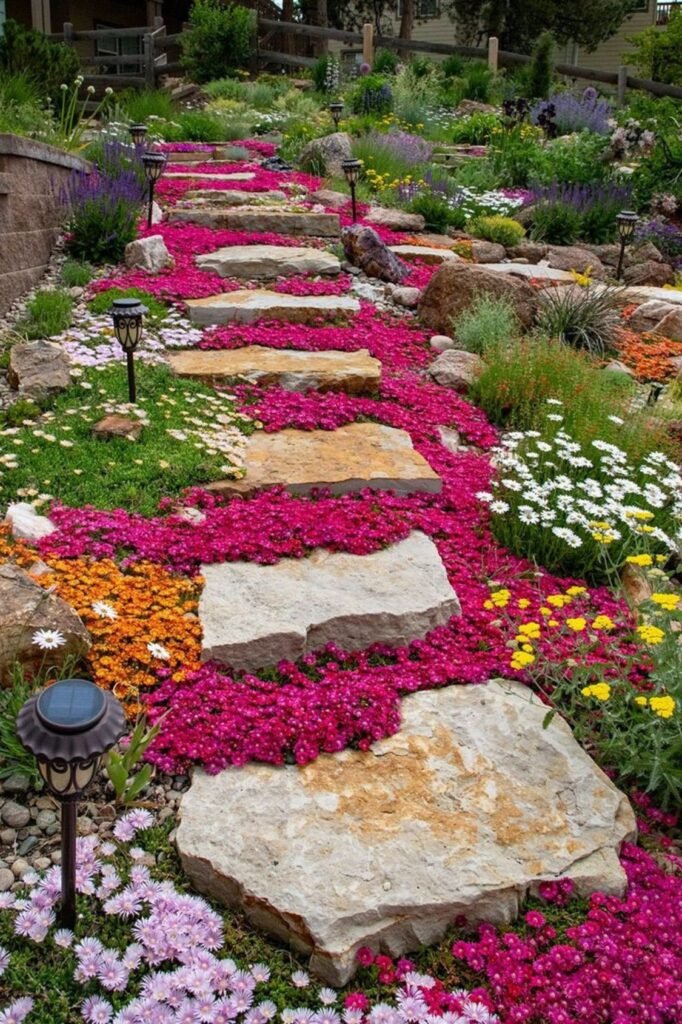
Color can completely change the feel of a rocky hillside, and masses of flowering ground cover create that impact without hiding the stonework.
Wide natural stepping stones guide visitors up the hill, with brilliant blossoms spilling out every edge.
Making the path feel like it belongs in the scenery rather than on top of it.
You may replicate this idea in a sloped front yard or terraced garden by planting low-growing flowers between larger boulders, allowing plenty of space for them to spread out over time.
Small solar lights line the path along the walkway making evening walks safer and showing off the layered texture after dark.
Garden Retreat
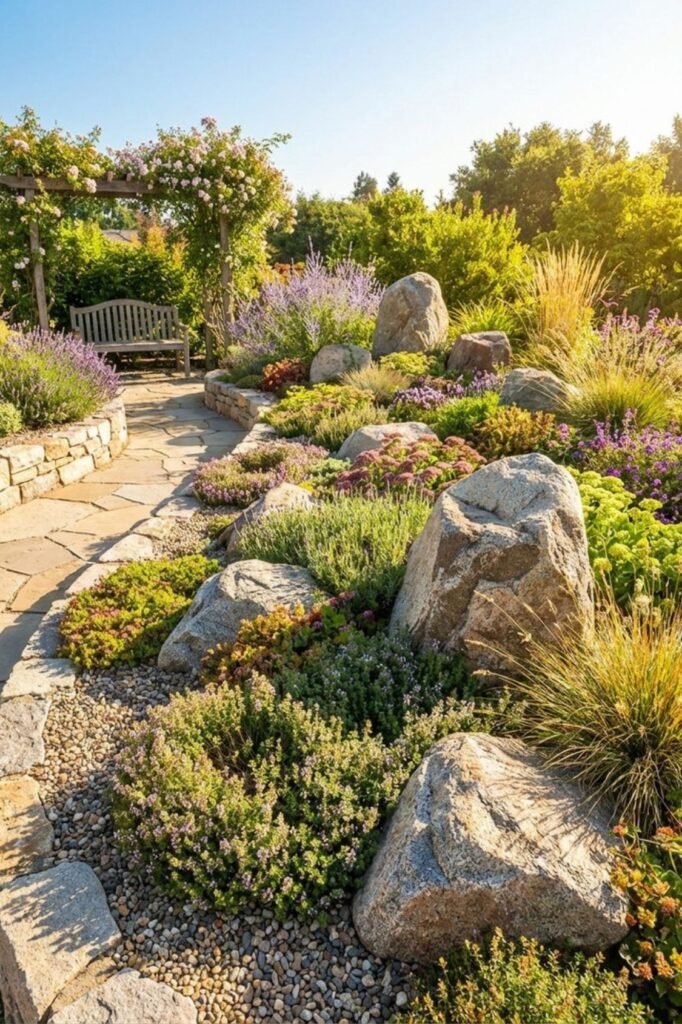
Peaceful corners become even more inviting when a rock garden surrounds the seating area instead of separating it from the landscape.
Large natural boulders anchor the planting, while layers of lavender, ornamental grasses, sedums, and flowering perennials create soft transitions between the stone path and the garden beds.
Recreate this design beside a patio, pergola, or backyard bench where you can enjoy the changing colors through every season.
Use gravel as a mulch around the plants to improve drainage and keep the stone textures visible.
Choosing plants with staggered bloom times ensures the garden stays vibrant long after one flower finishes its season, making the space feel alive from spring through fall.
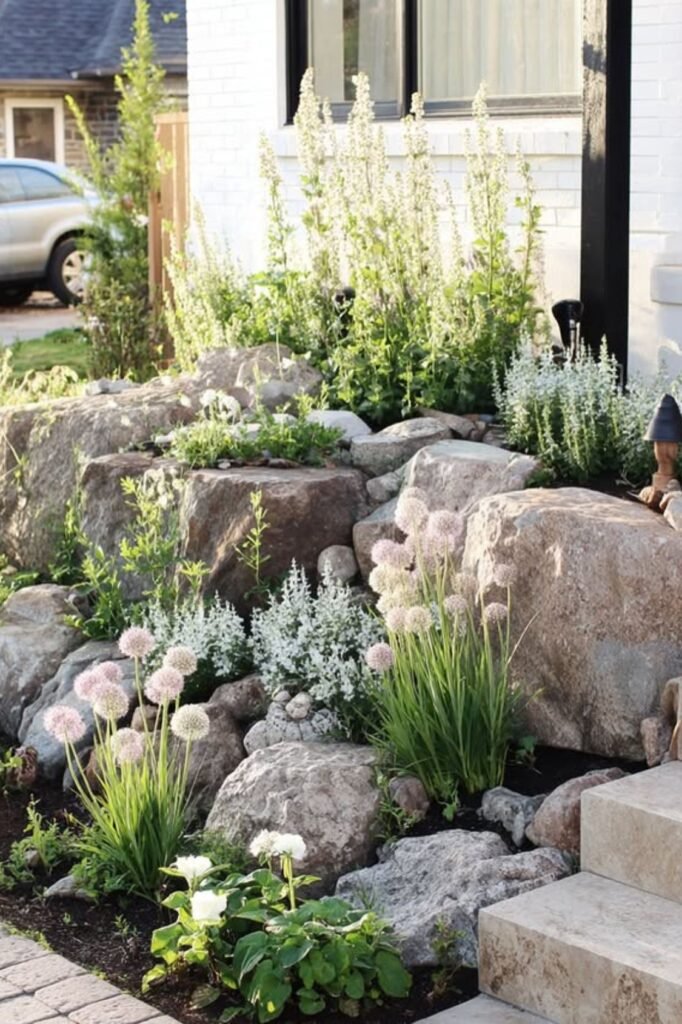
Boulder Layers
Strong curb appeal starts with giving your front yard natural height instead of relying only on flowers.
Oversized rocks arranged in gentle strata create the depth, while tall white flowering perennials and elegant alliums soften the harsh stone without hiding it.
Try recreating this appearance next to entry steps or along a foundation, where huge pebbles can frame the architecture and help merge the house into the landscape.
Gaps between boulders should be filled up with dense groundcovers and recurring white blossoms for a clean, elegant palette.
A few low landscape lights surrounding the rocks will provide texture after sunset and make the entrance feel warm and inviting.
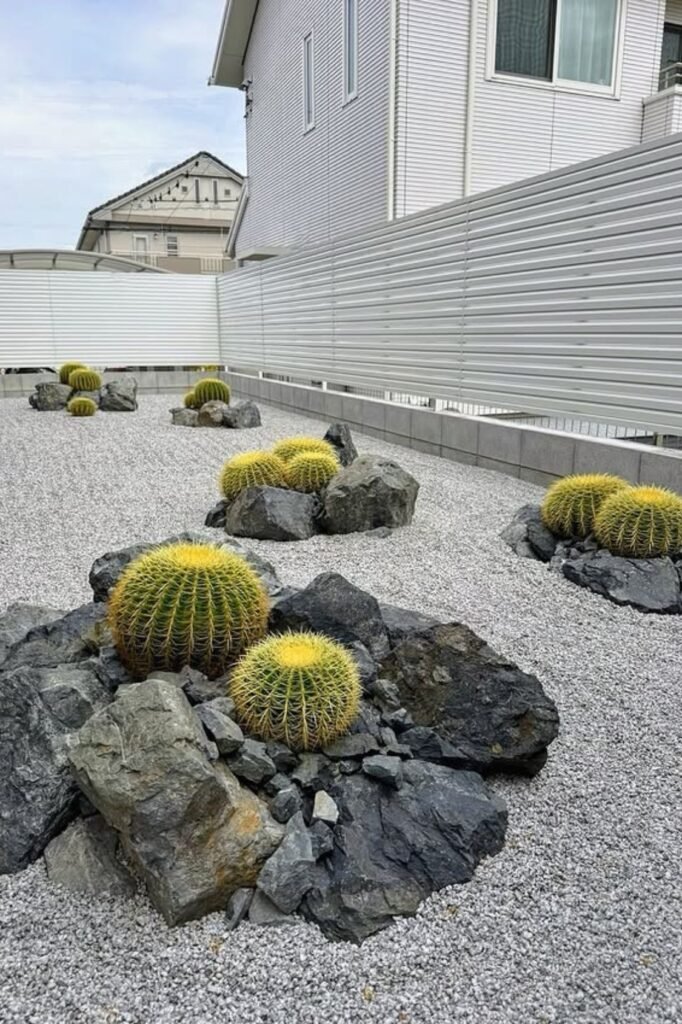
Desert Clusters
Less can create a stronger impact when every element has room to stand out. Grouping bold barrel cacti with dark natural boulders.
“The landscape is over a bed of light gravel, and has a clean, sculptural look. It loves sunny, low-water spots.
Replicate this design in a front yard, side yard or modern minimalist garden by generously spacing each rock cluster rather than filling each corner with plants.
Using the same kind of cactus across the space gives a visual rhythm, while the contrast of white gravel.
And black stone maintains each and every planting island neat, ordered and easy to maintain year round.
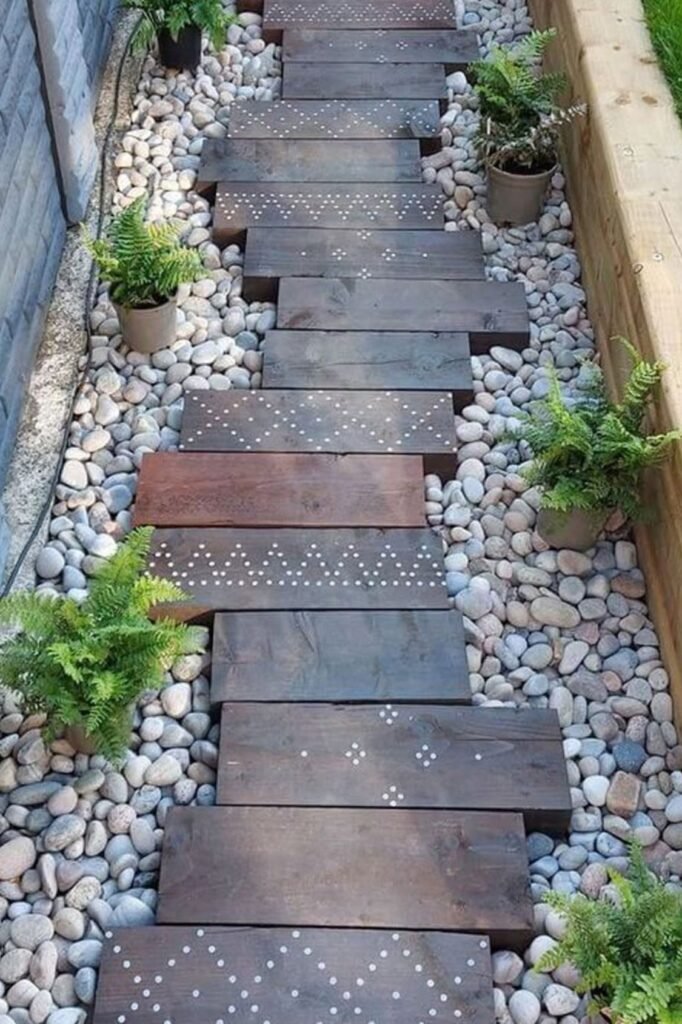
Pebble Walk
Narrow side yards don’t have to become forgotten spaces when the pathway itself becomes the main feature.
Staggered hardwood planks are bordered by smooth white river pebbles to create a sleek, modern promenade that feels much broader than it actually is.
Small potted ferns soften the straight lines and add fresh greenery without taking up significant space.
Recreate this design in the space between your house and a fence, alongside a garage or along a side entry where grass doesn’t grow well.
Use one pebbled colour along the route to make it bright, organised and easy to maintain. Space the timber planks evenly apart for comfortable walking.
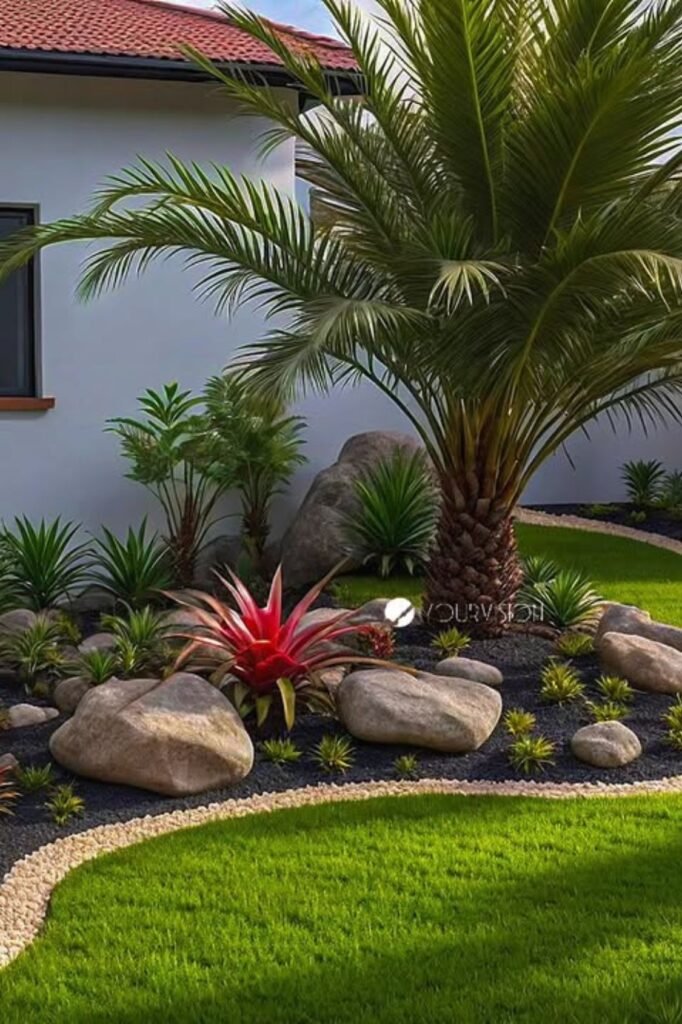
Tropical Oasis
Bold tropical plants can make a rock garden feel lush without covering every inch of the landscape.
The large palms are the main focus and layers of smooth pebbles, black mulch and compact ornamental plants all around the base give depth and harmony.
Replicate this arrangement in a sunny front yard or across a curving lawn border where the arching edge invites the eye through the space.
Add a splash of color without going over board with one or two bright accent plants, such as the red bromeliads pictured above.
Finish the border with small decorative pebbles to provide a sharp edge between the rock garden and the lawn, and to give the look of a professionally completed landscape.
Boulder Focus
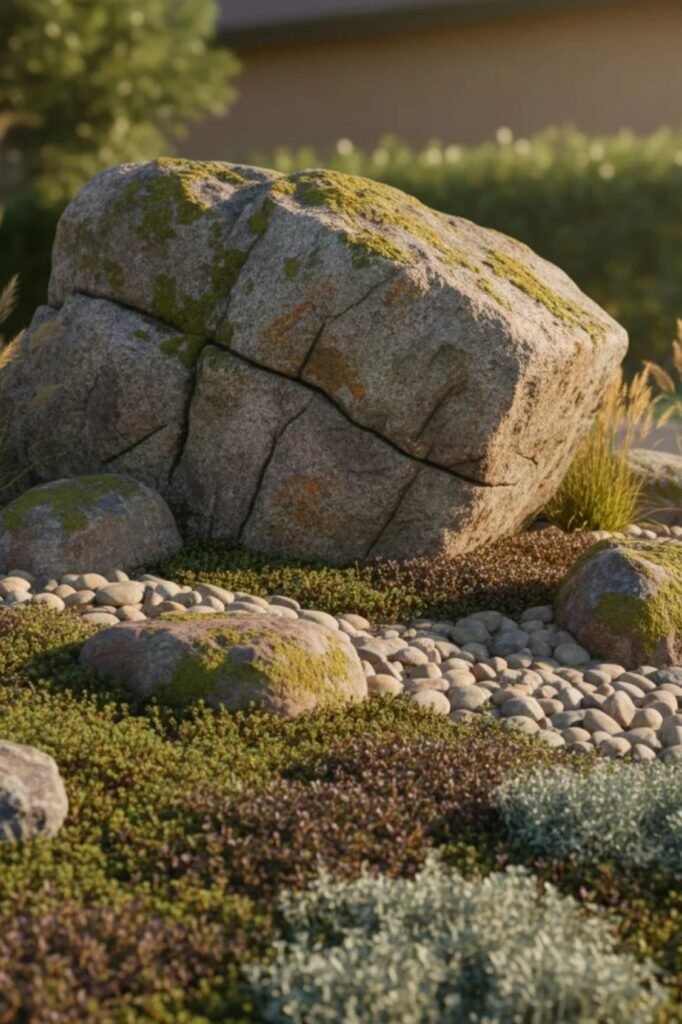
One impressive boulder can create more impact than dozens of scattered stones when it becomes the centerpiece of the landscape.
Surround the transition with smaller boulders, soft ground covers and ornamental grasses to make it feel natural and not sudden.
Try this design in a front yard, open grass or entry garden so the feature can be appreciated from different angles.
Planting different shades of green adds texture without detracting from the stone itself and a thin band of river pebbles creates a gentle movement through the bed.
Do not scrape or clean the boulder, but leave spots of moss or natural weathering; the nuances help make the garden feel established, not newly made.
Kitchen Garden
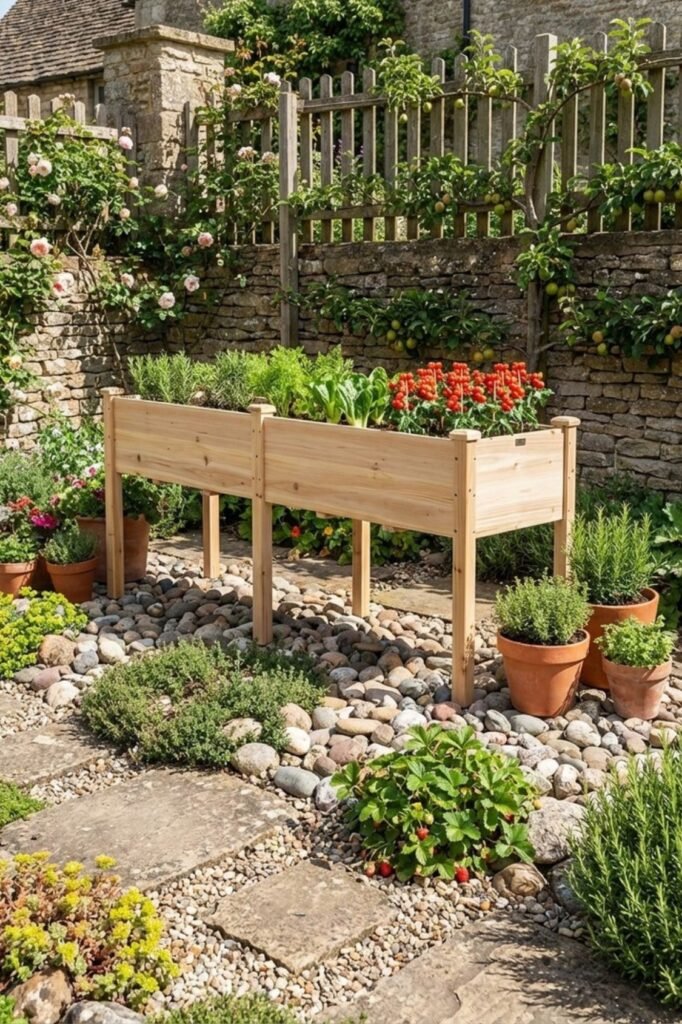
Growing food and creating an attractive landscape can happen in the same space when rocks become part of the design instead of just a border.
A quaint cottage garden, productive and beautiful, is formed by a raised wooden planter, surrounded by river pebbles, natural stone pavers, herbs and compact fruiting plants.
Recreate this thought in a bright garden or courtyard with veggies getting tons of light and plants nearby to soften the edges.
Add a few different sizes of pebbles in with larger stepping stones to give the area an established sense.
And then add terracotta pots for more texture and versatility as you work through the seasons with your planting.
Zen Window
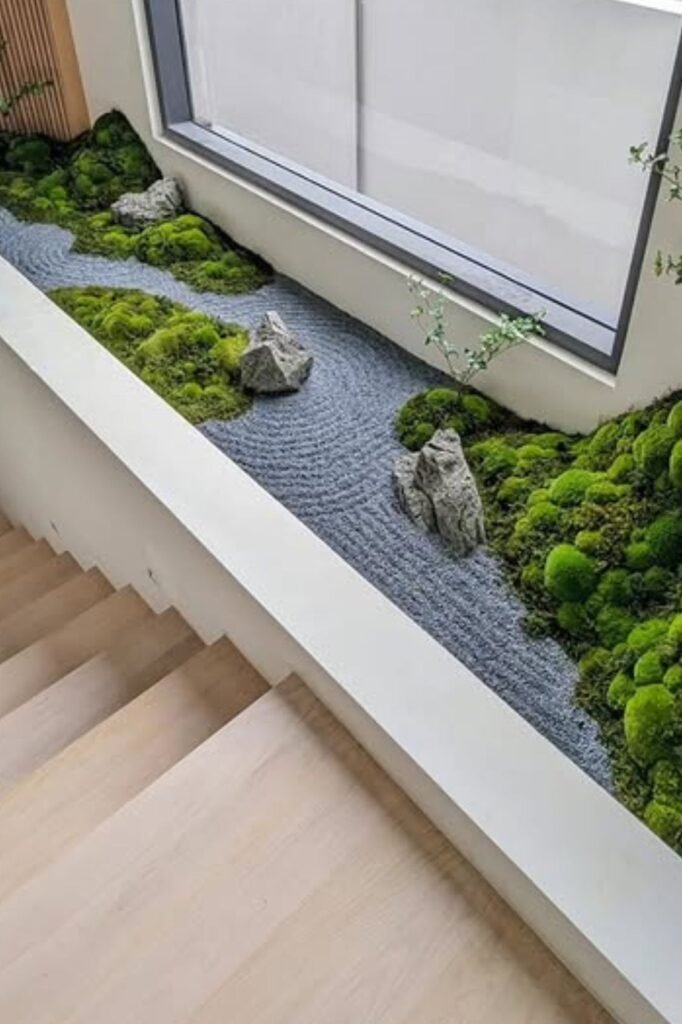
Looking outside becomes part of the landscape when a slim indoor rock garden runs beneath a large window.
Upright stones set with care, mounds of soft moss and gray gravel nicely raked, create a serene scene that bring nature into a modern home without the need for a vast garden.
Try recreating this idea on a stair landing, hallway or huge window where the natural light keeps the moss looking fresh.
Keep the pebbles to a minimum so each one is a feature. Add one or two little trees for a bit of height without losing the minimalist effect.
Every now and again, raking the gravel pattern helps keep this room quiet and Japanese-inspired.
Gravel Flow
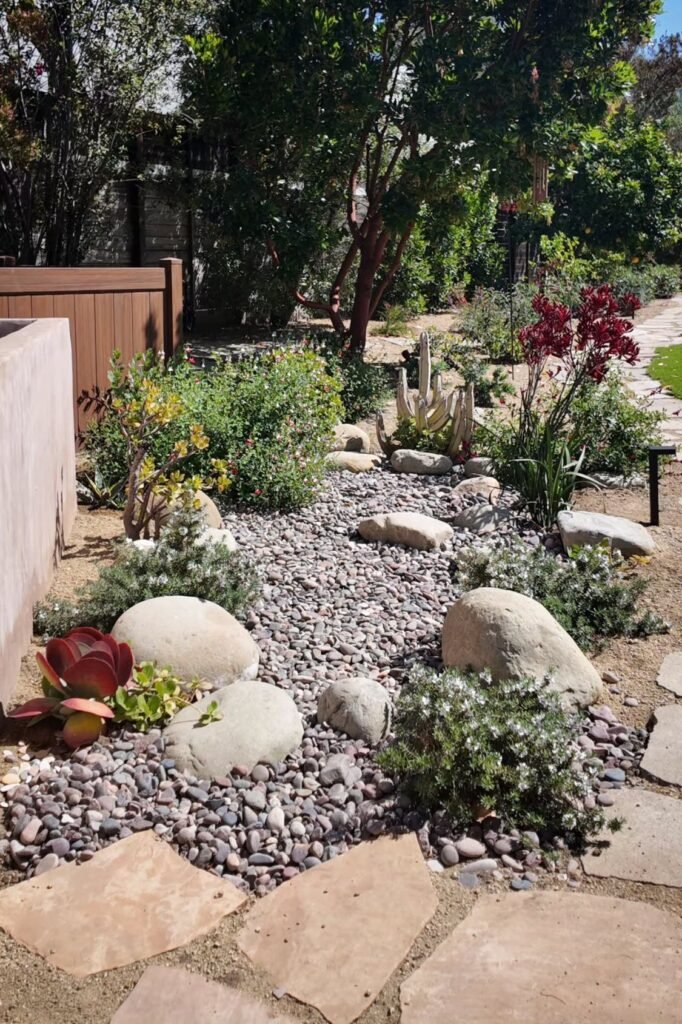
Natural movement makes even a simple rock garden feel professionally designed, and this winding ribbon of gray river pebbles does exactly that.
Layered textures of rounded rocks, drought-tolerant shrubs, succulents and a few cactus.
Make a good design statement and allow enough of room to show off each plant.
Re-create this design next to a front walkway, driveway or side yard where a curved gravel bed can soften straight edges and lead the eye across the landscape.
Keep your garden in balance by limiting your stone colour palette and repeating the same plant kinds in tiny groups.
After dusk a few low landscape lights along the route will highlight the rocks adding subtle evening appeal without overwhelming the natural setting.
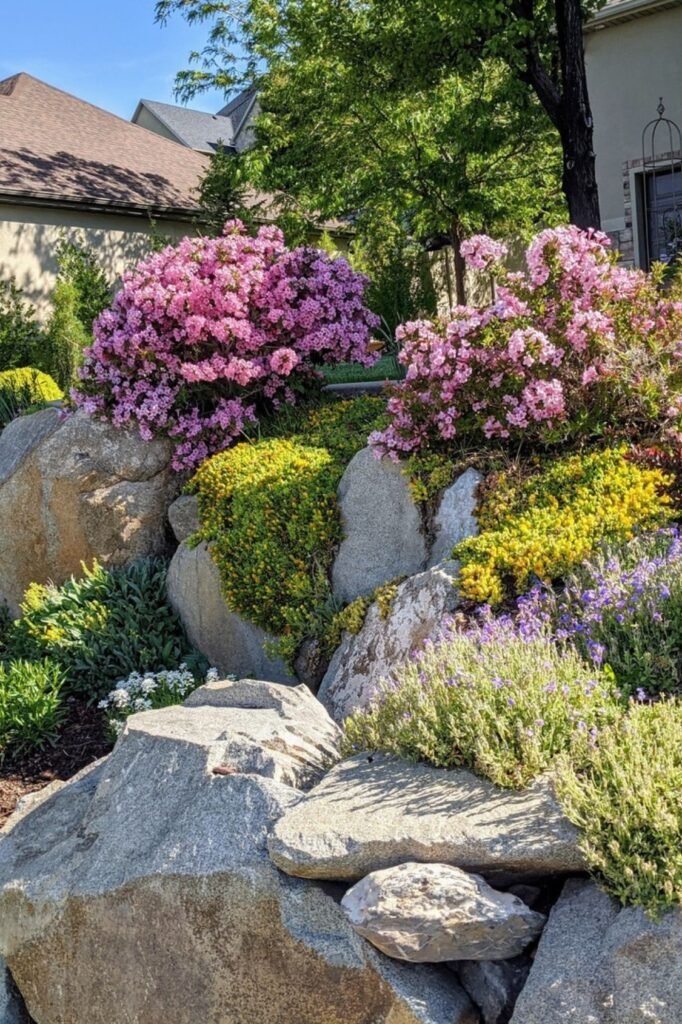
Color Layers
Layering shrubs and flowering plants around large boulders creates a hillside that stays attractive long after one season ends.
Pink flowering shrubs become the main focal point while low-growing purple blooms, evergreen mounds, and golden foliage fill the gaps to add depth and contrast.
Recreate this design on a sloped front yard or raised foundation bed where natural elevation helps showcase every planting layer.
Place the biggest rocks first to anchor the hillside then tuck compact plants around them instead of lining flowers in straight rows.
Adding organic mulch between the plants keeps the soil moist, highlights the stone textures, and gives the entire landscape a neat, professionally finished appearance.
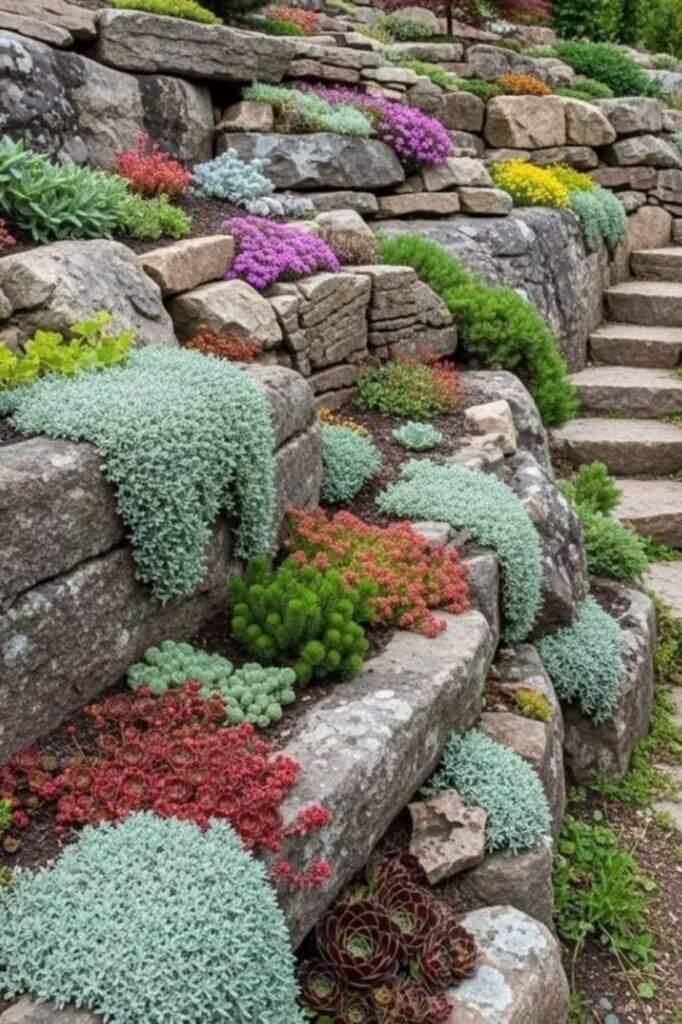
Terrace Layers
Building upward instead of outward transforms a steep slope into a landscape full of texture and seasonal color.
Cascading ground covers, colorful sedums, succulents, and small evergreens soften every edge without obscuring the rockwork, which features stacked natural stone terraces creating strong planting pockets.
Construct this design on a hillside or raised backyard where erosion is a worry and additional planting space is required.
Rather than a separate plant everywhere, fill each level with repeated plant species so the colors flow smoothly across the terraces.
The stone steps connecting the levels provide for an easy-to-maintain garden, and lend the entire hillside a timeless, handcrafted aspect.
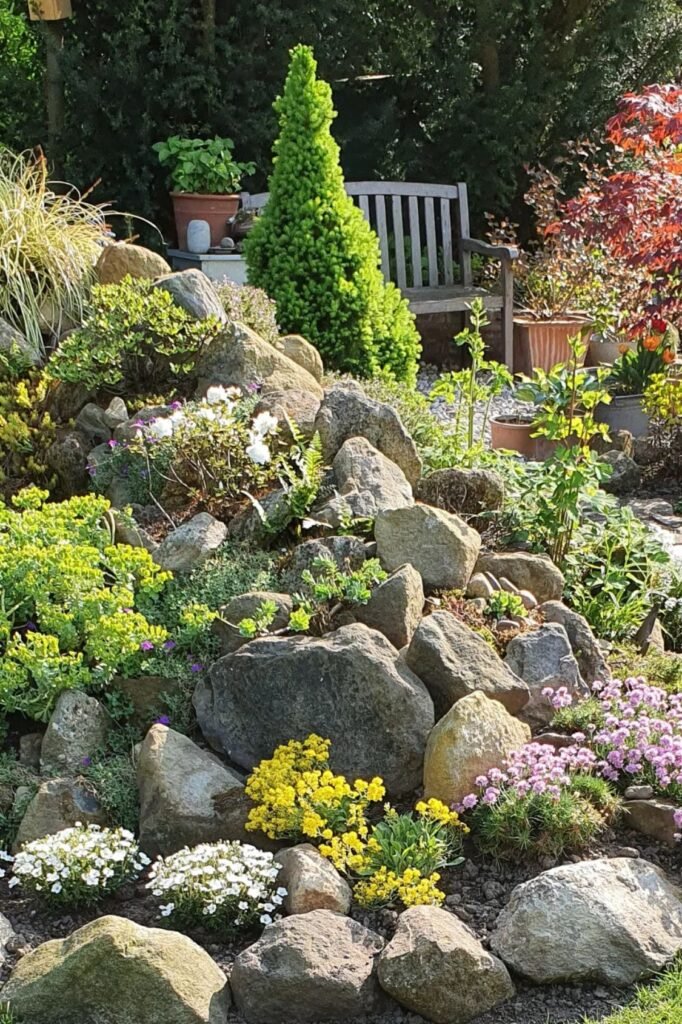
Cottage Charm
Mixing rocks with colorful blooms creates a garden that feels collected over time instead of freshly installed.
The backbone of the design is large and medium boulders, with flowering ground covers, evergreen shrubs.
Decorative grasses and a Japanese maple providing layers of color and texture from spring throughs fall.
Create this appearance around a seating spot, garden boundary or quiet refuge where visitors can experience the changing seasons up close.
Allow plants to spread naturally between the rocks rather than in straight lines, and vary the height with shrubs and small trees to create a full, established look without feeling crowded.
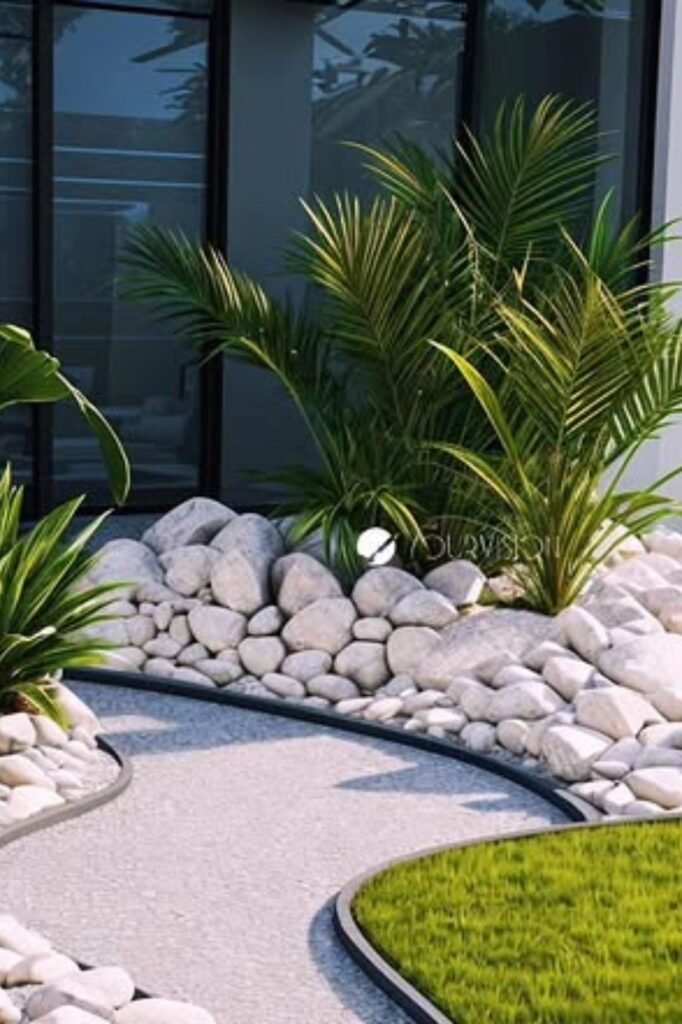
White Harmony
Keeping the color palette simple can make even a modern landscape feel warm and inviting.
The lawn is bright, and the black windows form a clean background for the smooth white river rocks and tropical foliage.
The curved pathway softens the home’s harsh architectural features. This pattern would look great in your front yard or around a modern entryway.
Begin by gathering together bigger white rocks and fill in the spaces with smaller pebbles for a smooth finish.
Choose a few striking foliage plants instead of lots of various species to keep the design basic.
And tuck unobtrusive landscape lights between the rocks to highlight the textures after dark without detracting from the exquisite simplicity.
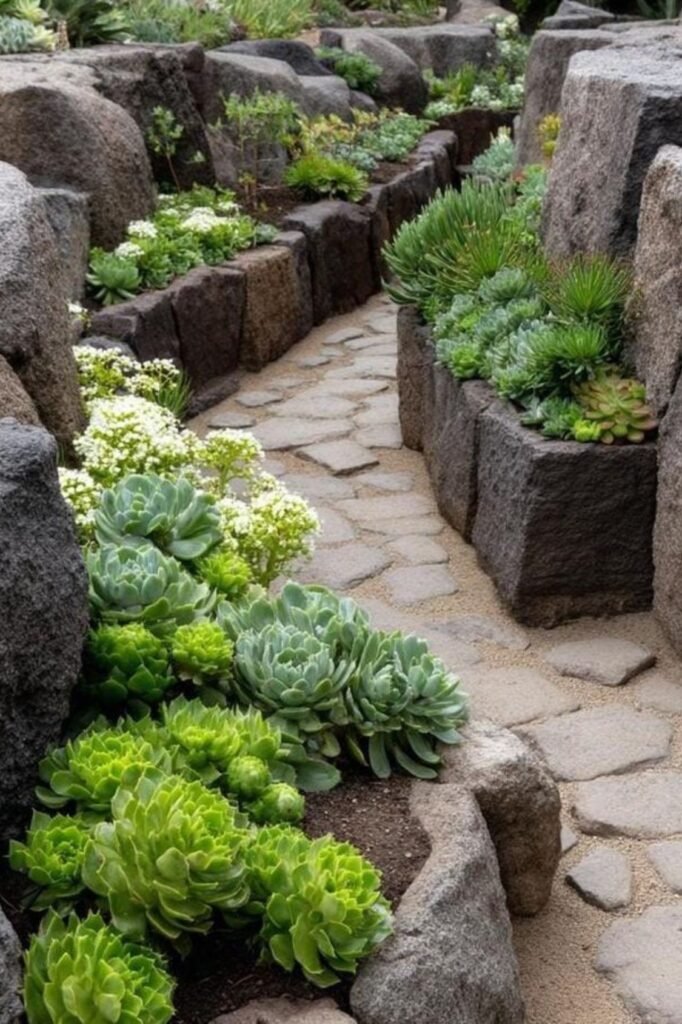
Stone Passage
Walking through towering natural rocks creates a dramatic experience that instantly makes a garden feel larger and more immersive.
Thick stone blocks create raised planting niches for succulents and small floral plants, while the curving cobblestone road encourages visitors to slow down and savor each segment.
Recreate this concept in a sloped backyard, a terraced landscape, or a tranquil garden retreat where big rocks can naturally bookend the walkway.
Fill the gaps with drought tolerant succulents and trailing plants to soften the harsh edges of stone yet not hiding its charm.
The garden is easy to explore if you leave enough open space along the trail so that each rock formation remains the genuine center of attention.
FAQs
How Do I Choose The Right Rocks For A Natural-Looking Rock Garden?
Start with just one sort of rock rather than blending many hues and textures. A mix of giant boulders, medium stones and little pebbles gives a sense of depth and equilibrium.
Put the larger rocks in first, then bury them partly so they look as though they belong in the terrain.
Repeating the same stone across the garden gives it a unified pattern that looks naturally created rather than arbitrarily assembled.
How Can I Keep A Rock Garden Attractive Throughout The Year?
Build your garden with plants that shine in different seasons, rather than relying only on flowers.
Mix evergreen shrubs, decorative grasses, succulents and seasonal blossoms to keep the landscape full of texture and color.
Keep weeds out before they take over, change decorative gravel when necessary, and cut back plants now and then so you can see the rocks.
