
27 Vertical Garden Ideas for 2026
You don’t have to stop adding greenery just because you’re running out of garden space.
Perhaps your balcony is crammed with pots, your backyard is tight or an empty naked fence is gaping while you try to squeeze in herbs, flowers and foliage.
Growing up can help alleviate that problem, but finding a solution that works for your space, sunshine and watering schedule is important.
In this article, I’ll show you 27 vertical garden ideas you can use right away to refresh your outdoor space.
Let’s jump in!
What Plants Actually Thrive Best In Vertical Garden Systems?
Pick plants for your light, planter depth and watering configuration, not just for their appearance.
If you want an edible wall, thyme, basil, parsley, mint and other herbs are great. Strawberries and leafy greens can help make limited spaces more fruitful.
Succulents are ideal for sunny drier walls, or shade-loving foliage and ferns where direct sunlight is limited.
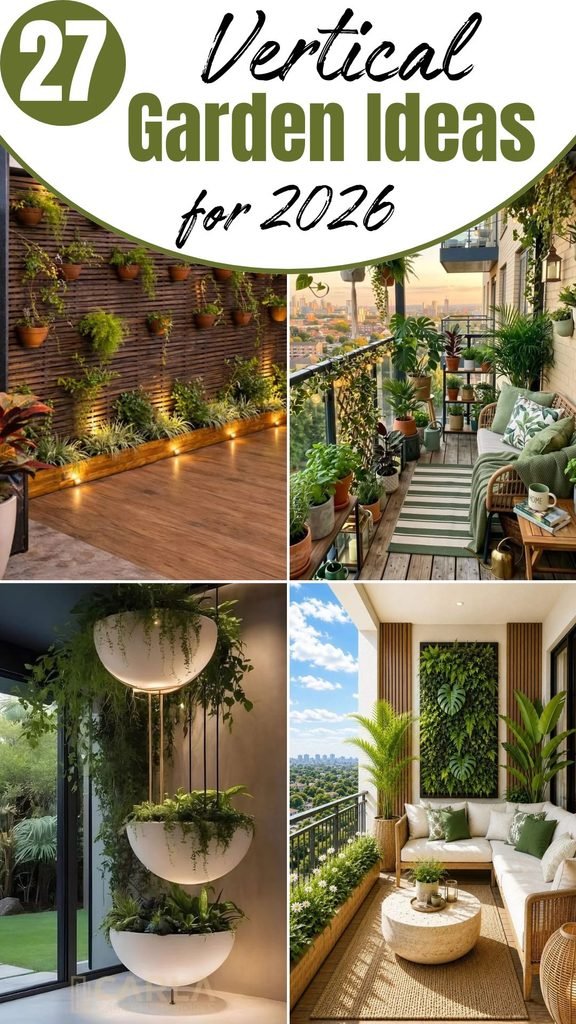
Climbing plants like jasmine, clematis, are better off with a trellis than small planting pockets.
Group plants with similar water needs together, especially in stacked systems.
One plant may require constantly moist conditions while its neighbor prefers dry soil, and soon the wall will be harder to keep going than it has to be.
Balcony Wall
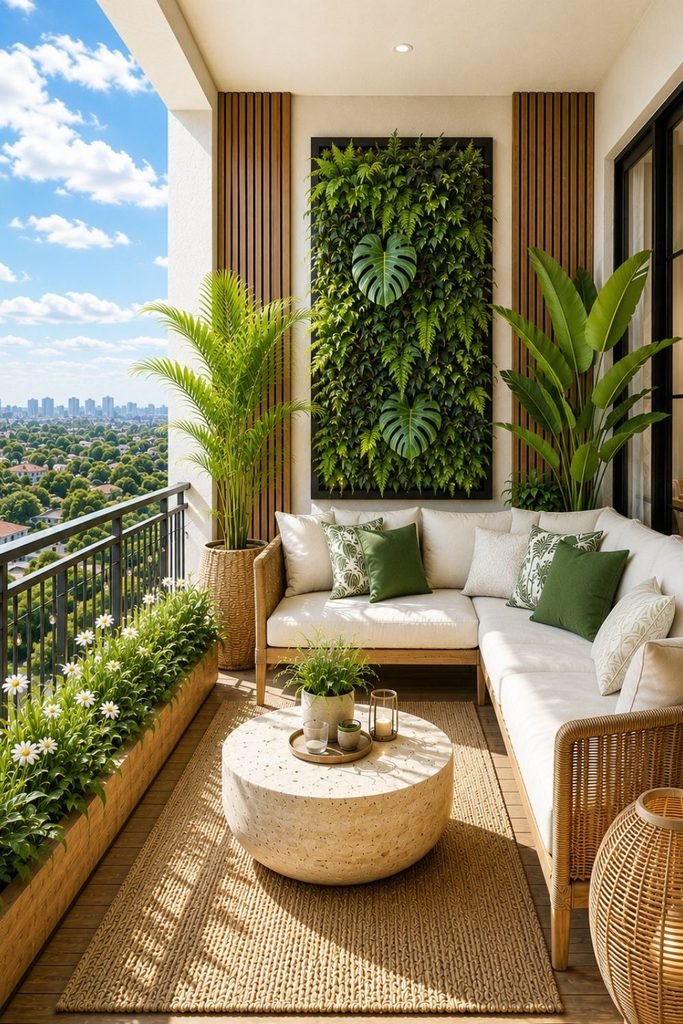
Give a small balcony more growing space by turning one blank wall into a dense vertical garden instead of filling the floor with extra pots.
Place a framed planting system in a location with bright but not too intense light and pair leafy plants with trailing ones for depth without overwhelming the dining area.
Group plants with similar watering demands together and if the wall has a lot of planting pockets add a drip irrigation system.
Allowing some room behind the frame also assists drainage and keeps moisture away from the final wall.
Floating Planters
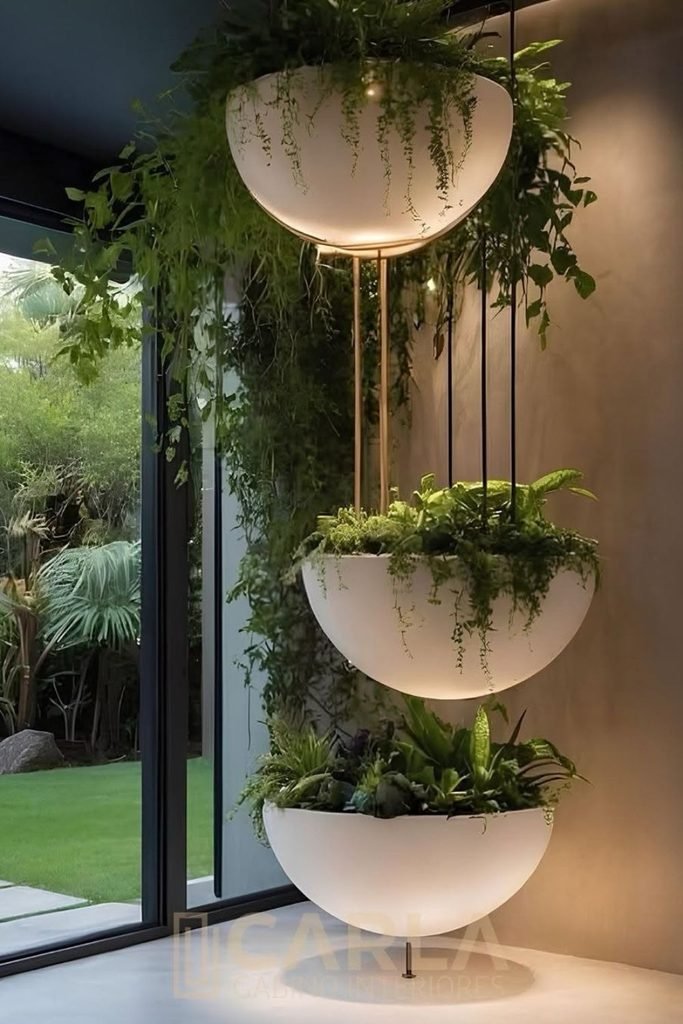
Bring greenery into a narrow indoor corner by suspending rounded planters vertically instead of lining the floor with containers.
Fill each level with ferns, trailing vines and other plants that like comparable moisture conditions, letting softer stems tumble over the sides for a richer look.
Attach each planter to a ceiling support that is rated for the combined weight of the container, wet soil, and mature plants.
Place the arrangement in spot with bright indirect light with adequate space between the tiers so that the lower plants will still grow light while the top greenery grows.
Fern Gallery
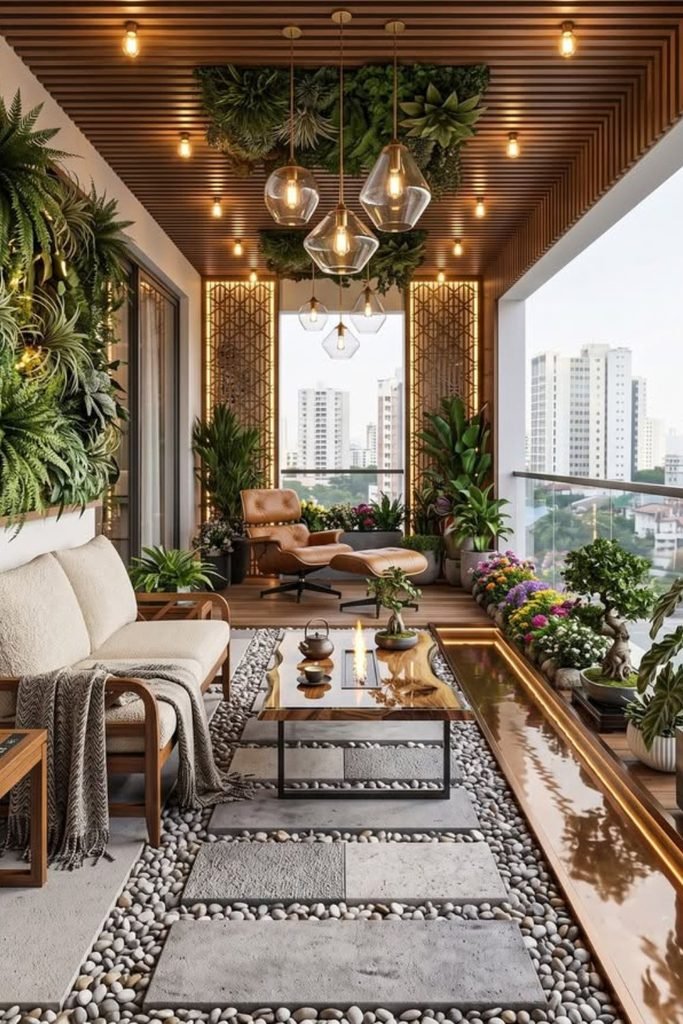
Turn a long balcony wall into the main growing zone by filling a framed vertical system with ferns and other foliage that enjoy similar conditions.
This is great on a covered balcony where the strong afternoon sun won’t burn the fragile leaves.
Mix the leaf shapes and sizes so the foliage looks layered, not flat. Keep the finished wall clear of the planting frame to control moisture.
Inspect the upper sections more frequently in warm weather since elevated pockets may dry out more rapidly than plants nearer the floor.
Spotlight Greenery
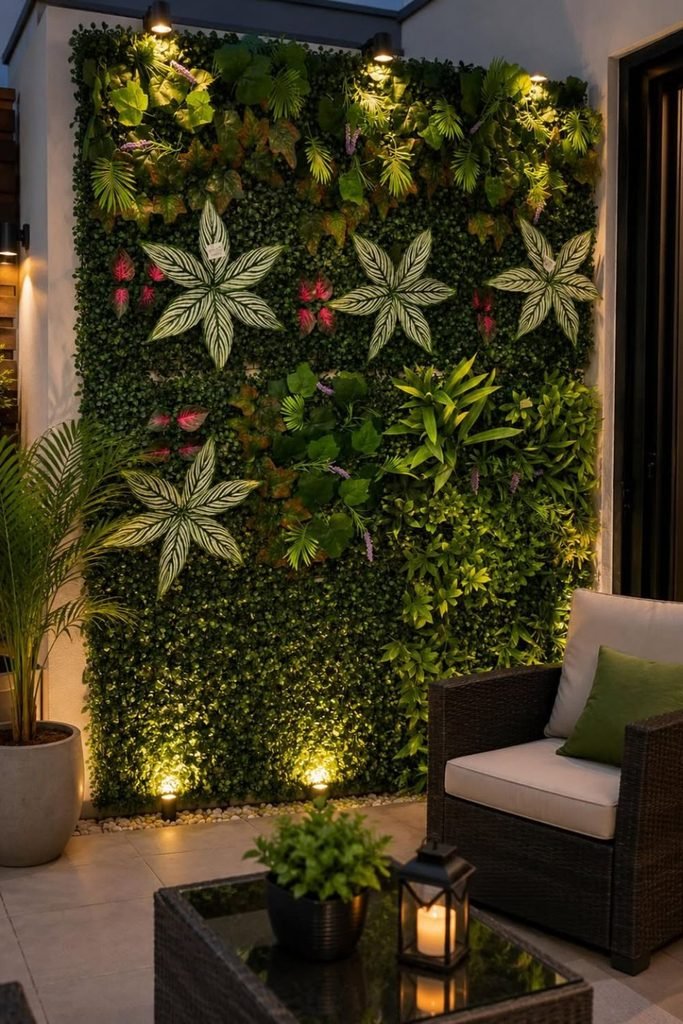
Make a compact patio feel deeper after sunset by pairing a dense vertical garden with focused lighting instead of adding more floor plants.
Make the planting in big clumps of leaves with different leaf shapes then put mini spotlights above and below to show texture instead of washing the full wall with light.
Choose plants that have similar waters and light requirement so that care isn’t too hard.
Use weather-rated fixtures for outdoor installation and keep electrical connections segregated from irrigation and drainage systems.
Pot Grid
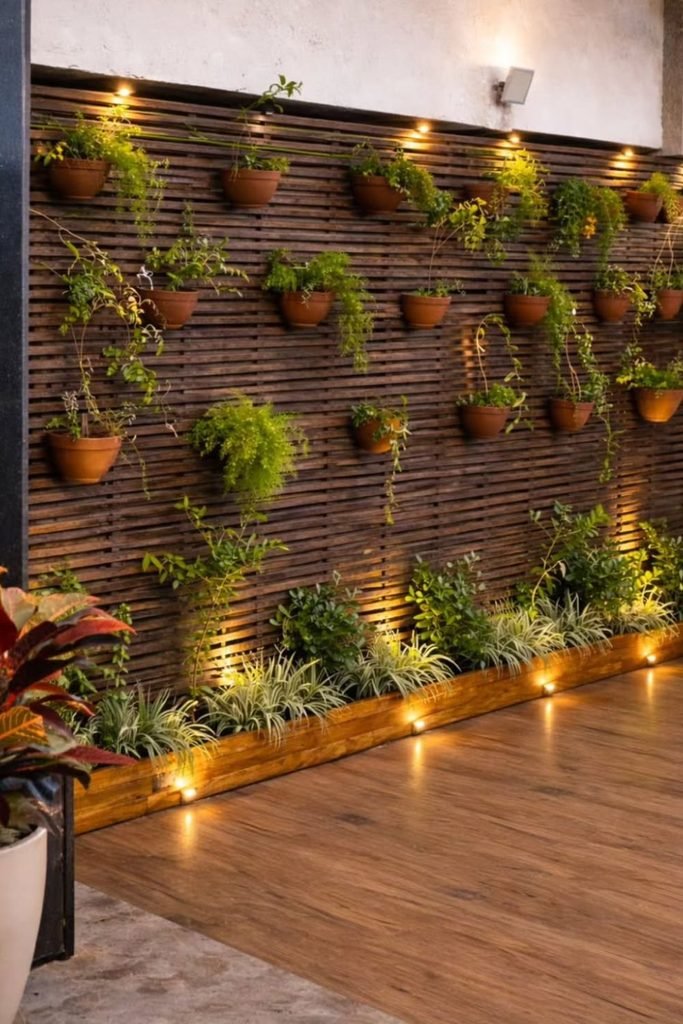
Skip a complicated living-wall system when individual pots can give you more control over planting and replacement.
Fix a robust wooden slat panel to a patio or courtyard wall and place small containers at varying heights so trailing plants have space to cascade.
Removable containers also allow you to exchange struggling plants without upsetting the entire garden.
Add a thin planted bed along the base to soften the lower edge.
Make sure that each pot drains freely before installing it above finished flooring.
Layered Balcony
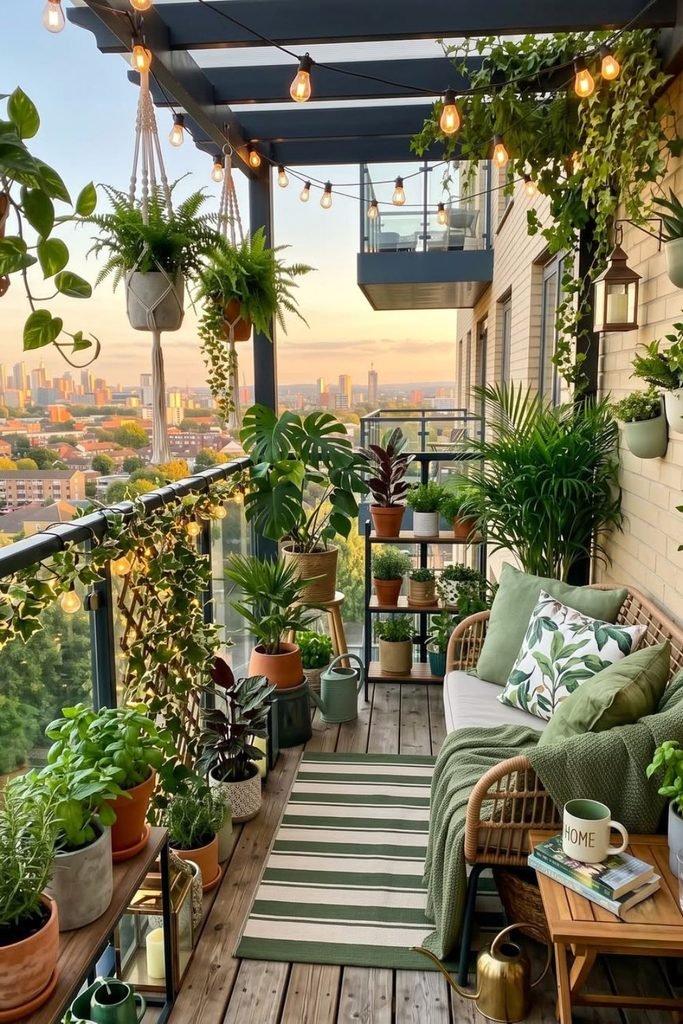
Stretch a narrow balcony garden upward by mixing wall pots, hanging baskets climbing vines and a slim plant shelf instead of crowding every container onto the floor.
Keep herbs and plant that need frequent watering within reach and use higher spots for trailing kinds that can pour downward without impeding the sidewalk.
Train climbing vegetation along the railing or above frame to take advantage of yet another layer of growing space.
Group pots by sunshine and watering needs so it’s not a daily juggling act, making it easy to care for a plant-filled balcony.
Hanging Rows
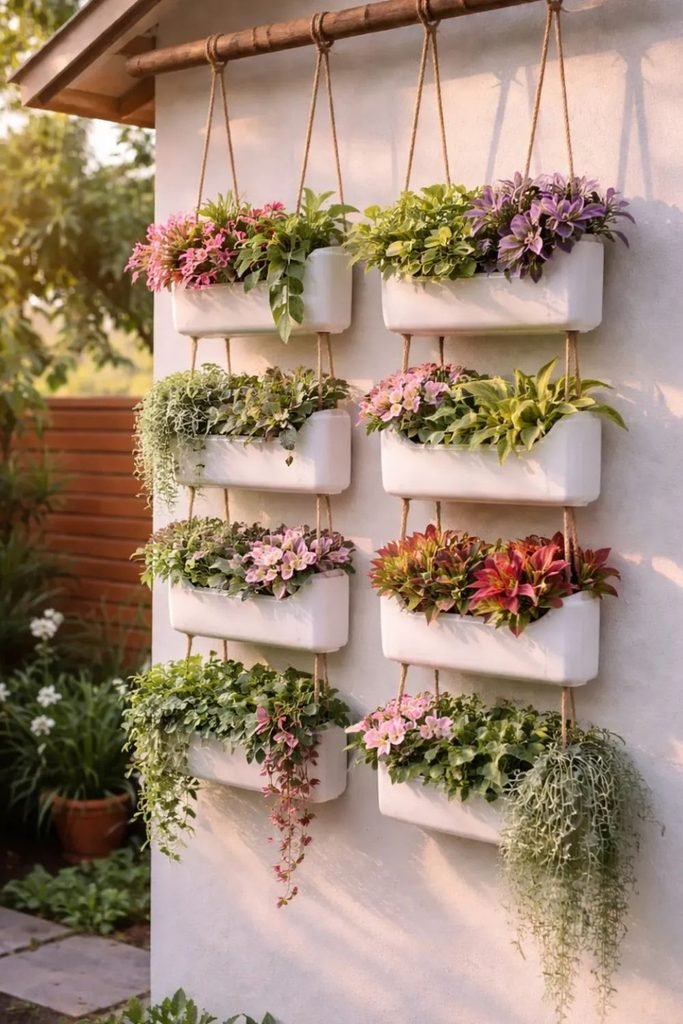
Use a sunny exterior wall to grow more flowers without giving up planting space at ground level.
Hang lightweight rectangular pots from a strong horizontal bamboo or timber rail, placing them in offset rows so that trailing vegetation can fall freely.
Mix compact flowering plants with softer cascading kinds to fill the pot without crowding the roots.
Check the rope and support points often, especially after rain, and use containers with sufficient drainage.
So that surplus water cannot gather around the roots or run constantly down the wall.
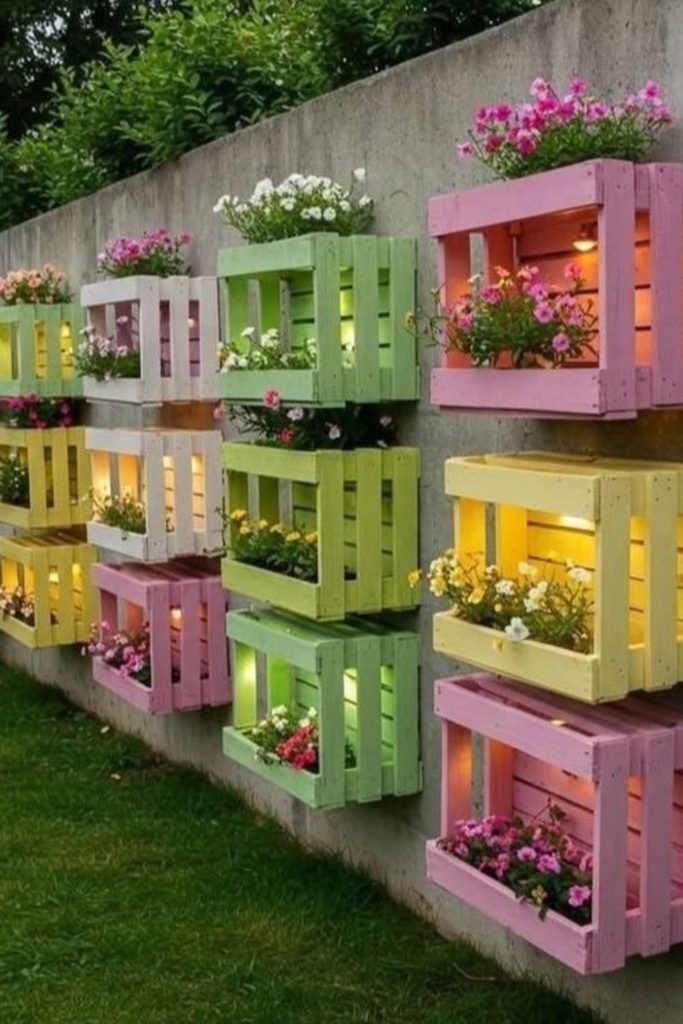
Crate Blooms
Give a plain boundary wall a playful garden purpose by turning shallow wooden crates into individual flower boxes.
Mount them at varying heights instead of lining them up in exact rows, and then tuck small planting containers within so the wood is never touching soil.
They perform especially well with compact flowering plants that retain their color inside each open frame without being overly heavy.
Seal outdoor timber before installation. Secure each crate for its wet weight. Leave extra space between boxes for watering and seasonal plant changes.
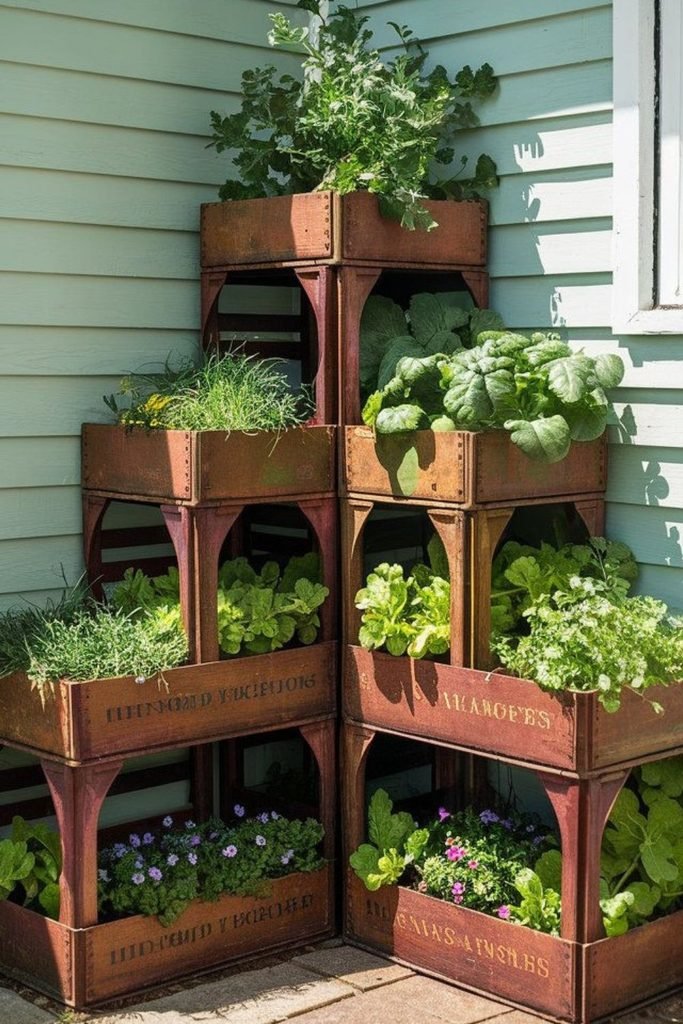
Corner Harvest
Put an awkward sunny corner to work by stacking raised wooden planters upward and filling each level with edible plants.
Use the deeper boxes for more green crops and the shallower boxes for herbs, lettuce or small flowers that attract pollinators.
Alternate the stages so they’re not all exactly beneath the one above, and all the planters will get enough light.
Line wooden boxes with plastic before adding potting mix and allow drainage at every level.
Place regularly gathered herbs around waist height, so you can clip them without bending or reaching.
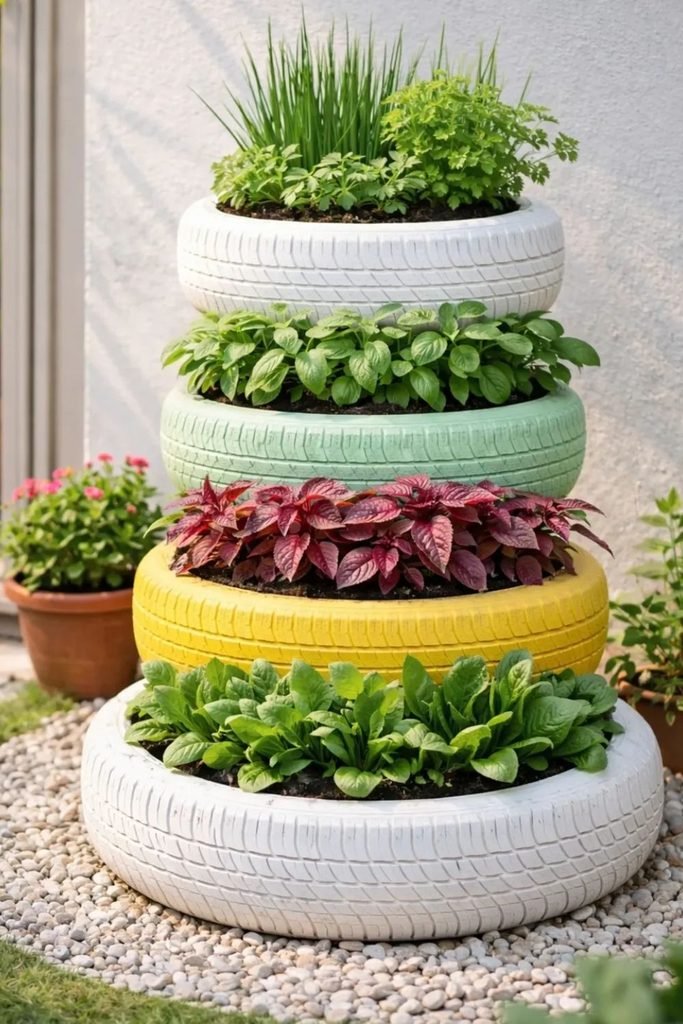
Tire Tower
Recycle old tires into a compact growing tower when you want several planting levels without building a wall-mounted system.
For stability, put the largest tire at the bottom, then work your way up decreasing the size progressively, leaving each rim available for planting.
Fill the levels with herbs, leafy greens or ornamental plants that fit the available sunlight.
Drill sufficient drainage holes before adding soil.
Place the tower on a solid surface where excess water can freely escape rather than gather beneath the lowest planter.
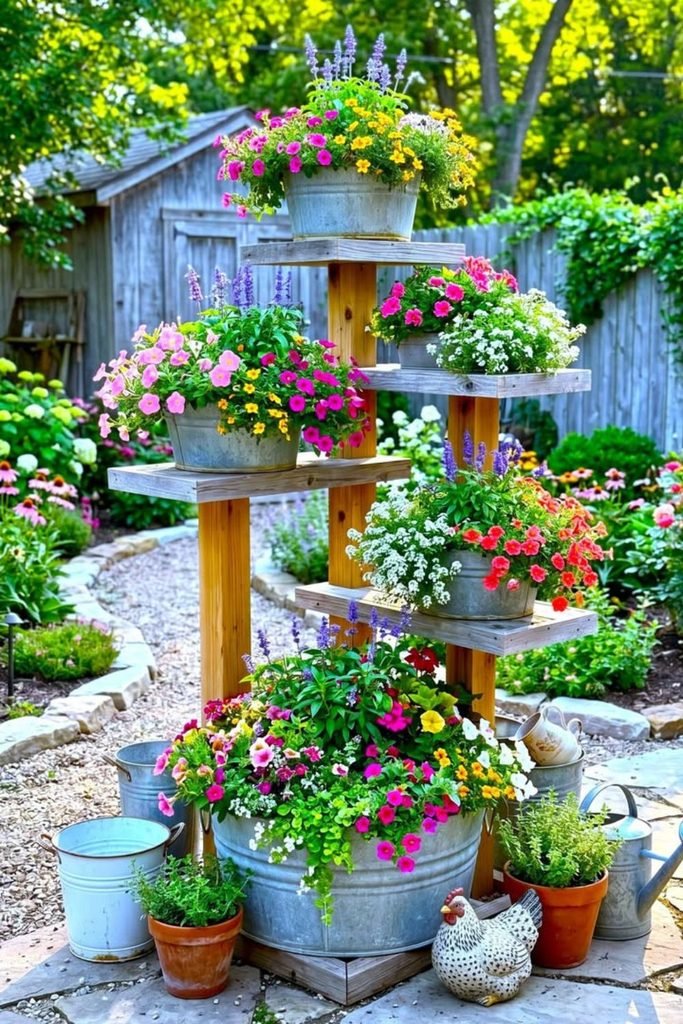
Flower Tower
Lift seasonal color above crowded garden beds by building a freestanding wooden tower with staggered shelves for planted tubs.
Start with the biggest pot at the bottom to give a visual anchor to the structure, then add smaller flower pots, at varying heights so each may get sunlight.
Mix erect flowers with trailing ones for a richer effect, but place among kinds with similar water requirements.
The pillars should be on solid footing and heavier containers should be lower so that the finished tower is balanced in wind and rain.
Corner Shelves
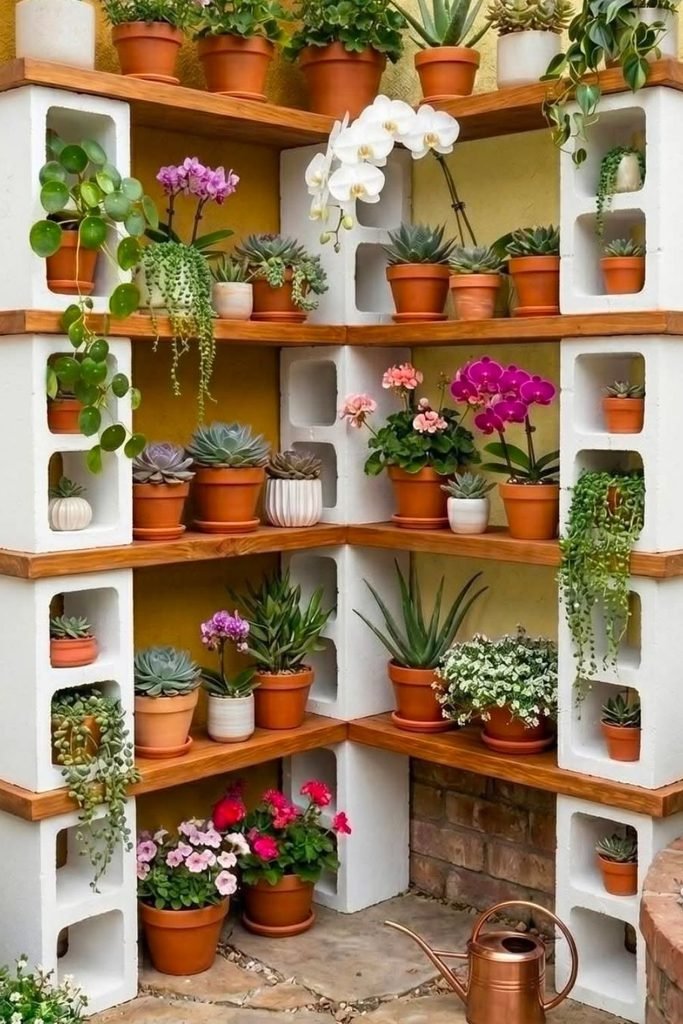
Claim an unused garden corner by building upward with sturdy block supports and wooden shelves instead of spreading pots across the patio.
Use each level by putting little succulents into the block holes, and placing larger plants on the open shelves.
If the variety is a trailing one it can be placed at the outer edge and allowed to trail naturally.
If the corner is unevenly lit, keep sun-loving plants higher up.
Use sealed timber and strong, flat supports so that repeated watering does not damage or shift the structure.
Kitchen Harvest
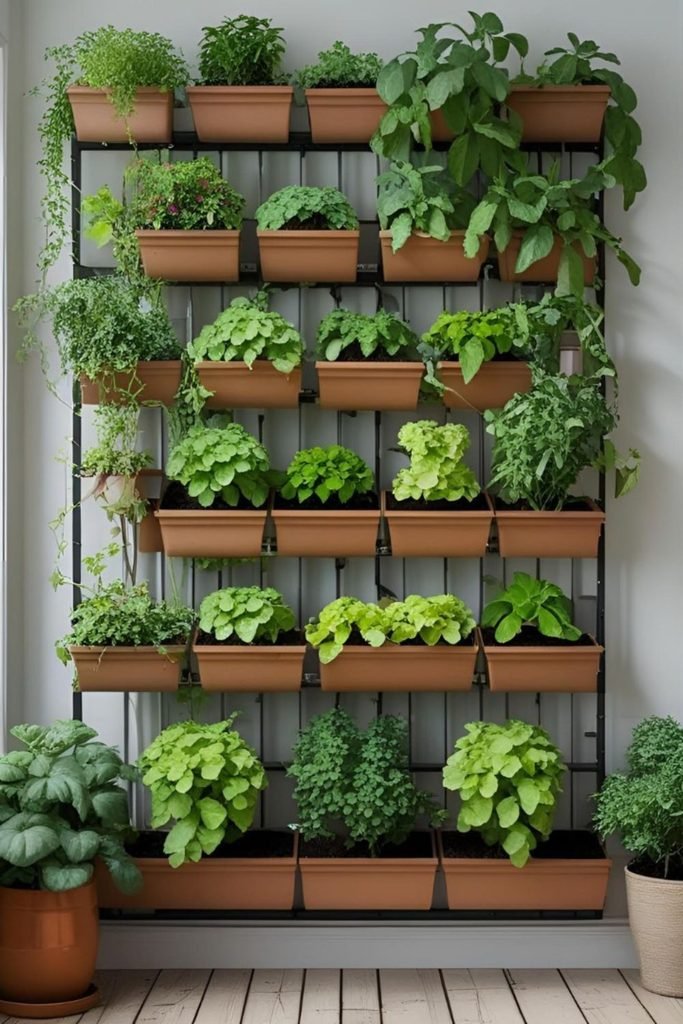
Keep everyday herbs close to where you cook by turning a bright kitchen wall into a tiered edible garden.
Mount long planter boxes on a sturdy metal frame. Separate basil, mint, parsley, leafy greens and other compact edibles so each variety has ample root area.
Place the herbs you use most often at chest height for easy reach, and put larger plants in the roomier higher areas.
Keep the floor free from drainage, turn the pots if the light from the window is stronger on one side and don’t crowd them so that the air can travel.
Balcony Pockets
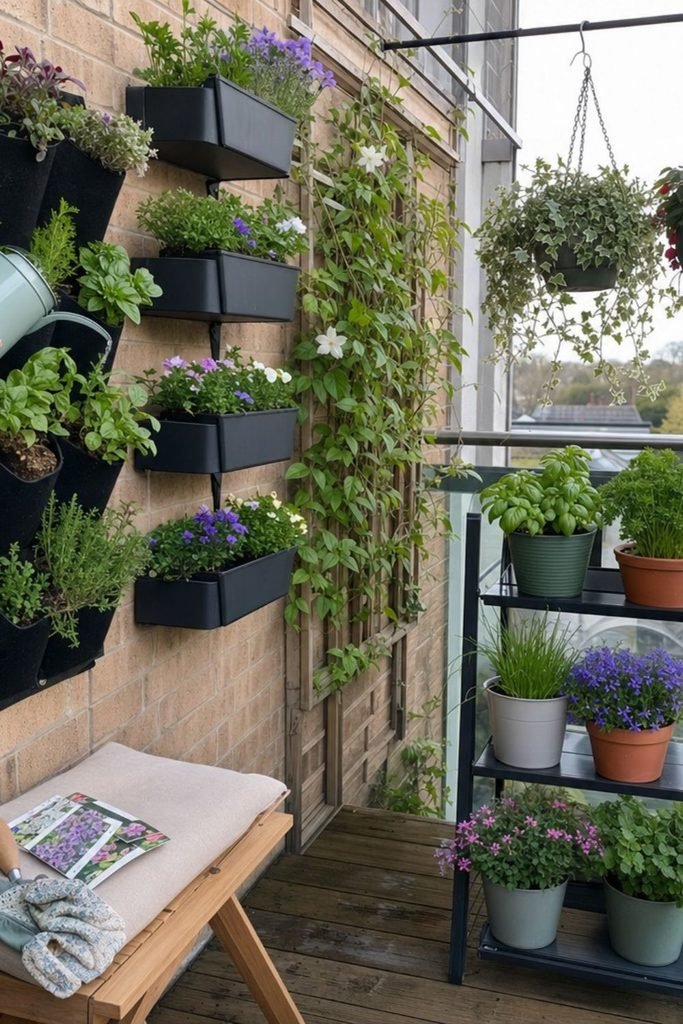
Mix shallow wall pockets with compact planter boxes when a tiny balcony needs more growing room but still has to stay easy to walk through.
Save the pockets for herbs and tiny plants and then provide flowering kinds with deeper boxes to allow their roots more room.
Train a single climber up a tight trellis to get height without adding additional container to the floor.
Instead of soaking everything evenly, water each portion according to its size, smaller pockets tend to dry considerably faster than the larger planters.
Spiral Garden
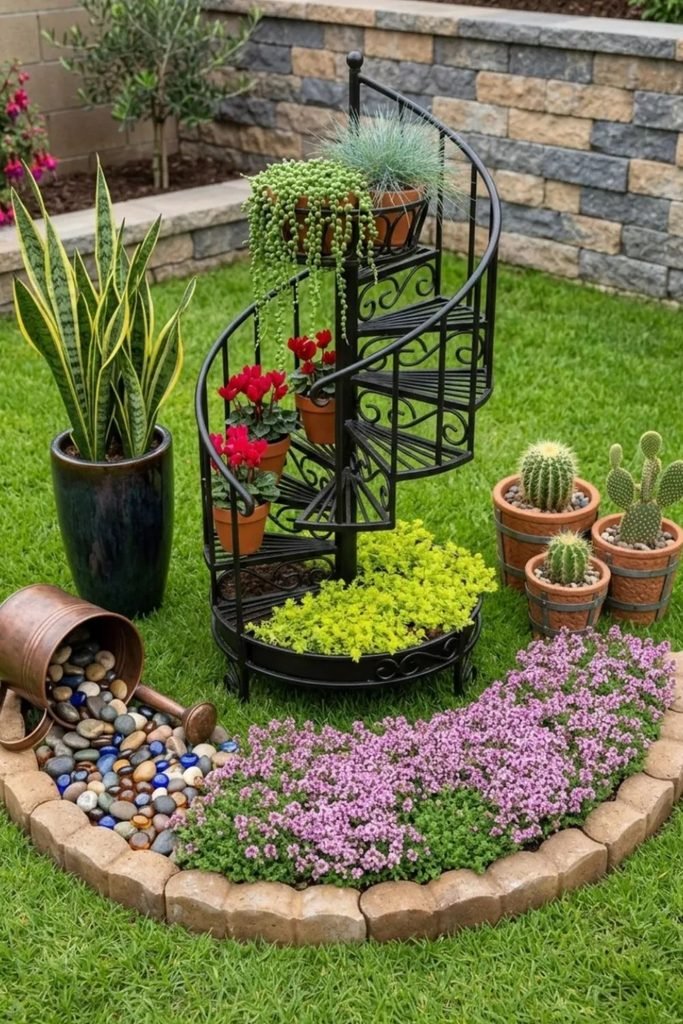
Add height to a small flower bed with a spiral plant stand that turns several pots into one compact vertical feature.
Use the higher stairs for trailing succulents or grasses, then lower down colorful blooming pots so that their blooms are easy to see and maintain.
For the building to be steady, especially in an exposed yard, keep heavier containers toward the base.
Some low groundcover around the planting can visually link the vertical element to the rest of the bed without competing with the upward form.
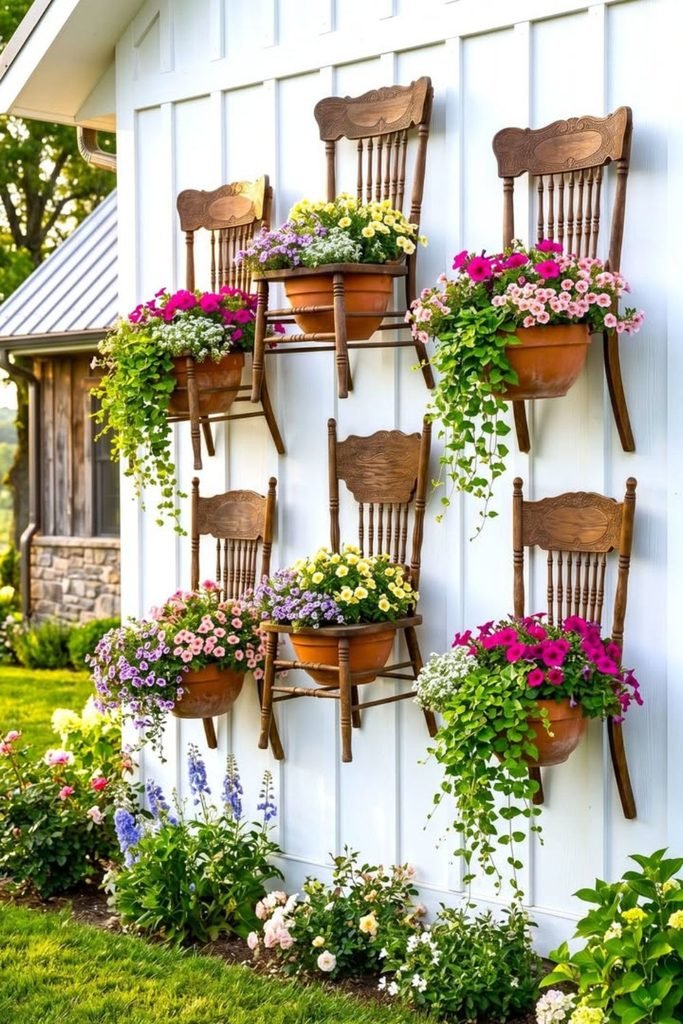
Chair Planters
Turn old wooden chairs into wall-mounted flower holders when you want a vertical garden with more character than standard planter brackets.
Secure each chair to a shed or garden wall for stability, then fill the seat gaps with lightweight pots and let trailing flowers tumble over the edges.
Position the chairs unevenly so that each plant can develop and to prevent it from shadowing the plant below.
Opt for weatherproof or sealed wood, and position the heaviest pots toward the lower levels, to lessen the strain on the wall fixings.
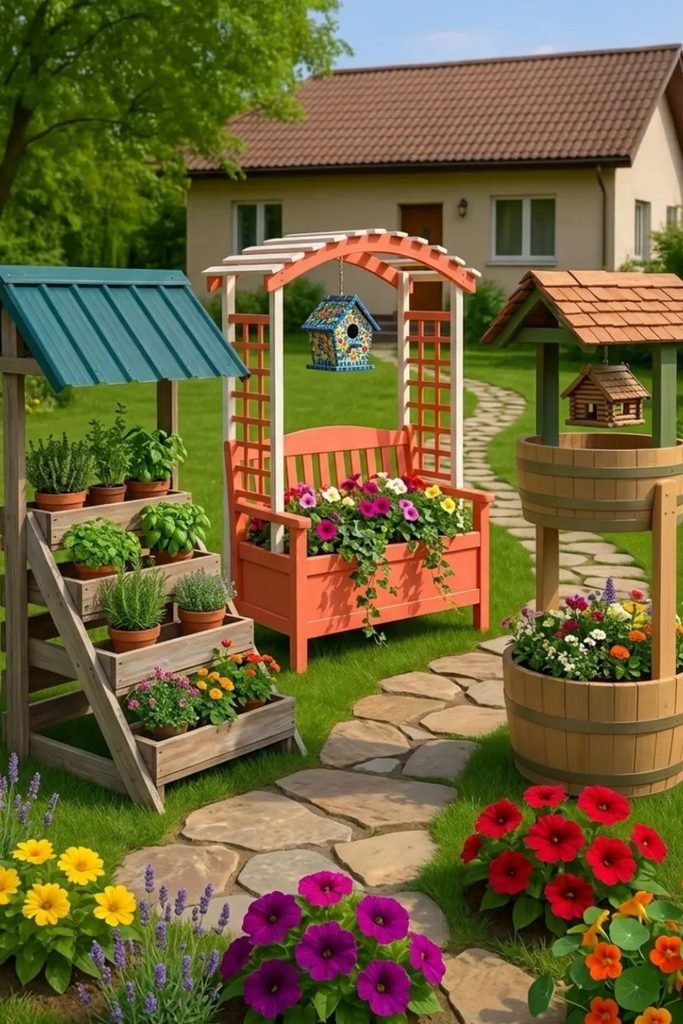
Ladder Garden
Bring herbs and flowers together in one freestanding setup by using a stepped wooden planter where every tier stays easy to reach.
The upper levels are for herbs harvested often, basil, thyme, rosemary, while the wider lower boxes are left for more colorful blooms or bigger plants.
The open staircase shape lets the sun hit more than one level and makes watering easier than with containers that are piled securely.
Position the frame on the ground, drill drainage holes in each box and treat the wood so that regular watering doesn’t reduce its life.
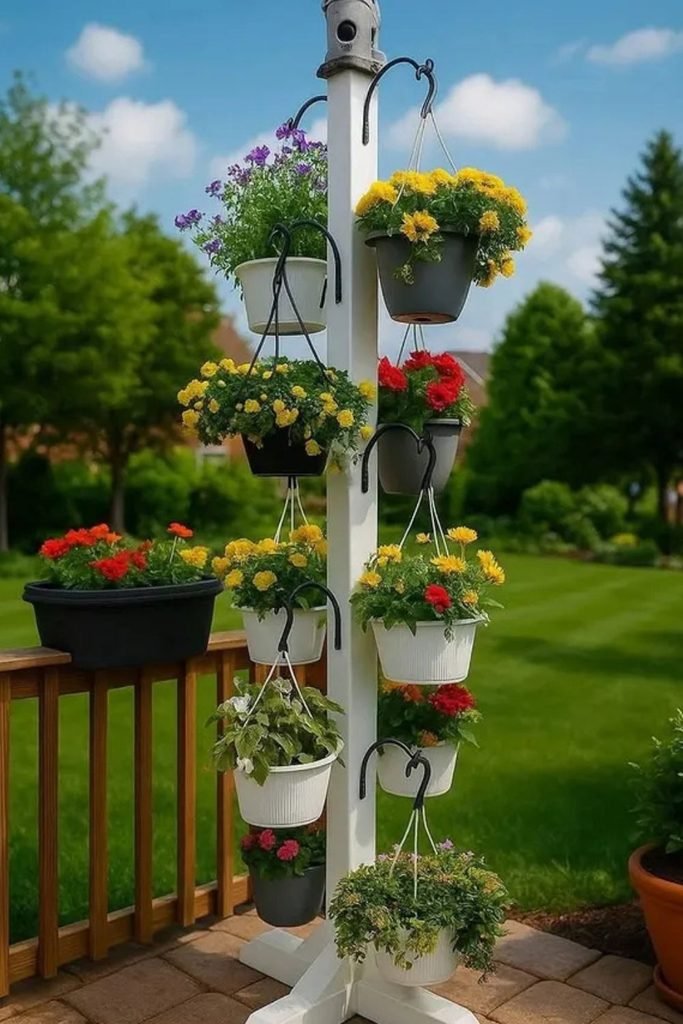
Basket Pole
Save patio floor space by turning one sturdy post into a multi-level flower display with hanging baskets on both sides.
Attach strong quality hooks at alternating heights to give mature plants ample room to expand without becoming tangled in the basket below.
Plant the containers with compact blooming plants and a few trailing plants to soften the edges.
Before adding anything, be sure the post is stable, as damp soil makes a number of baskets rather heavy.
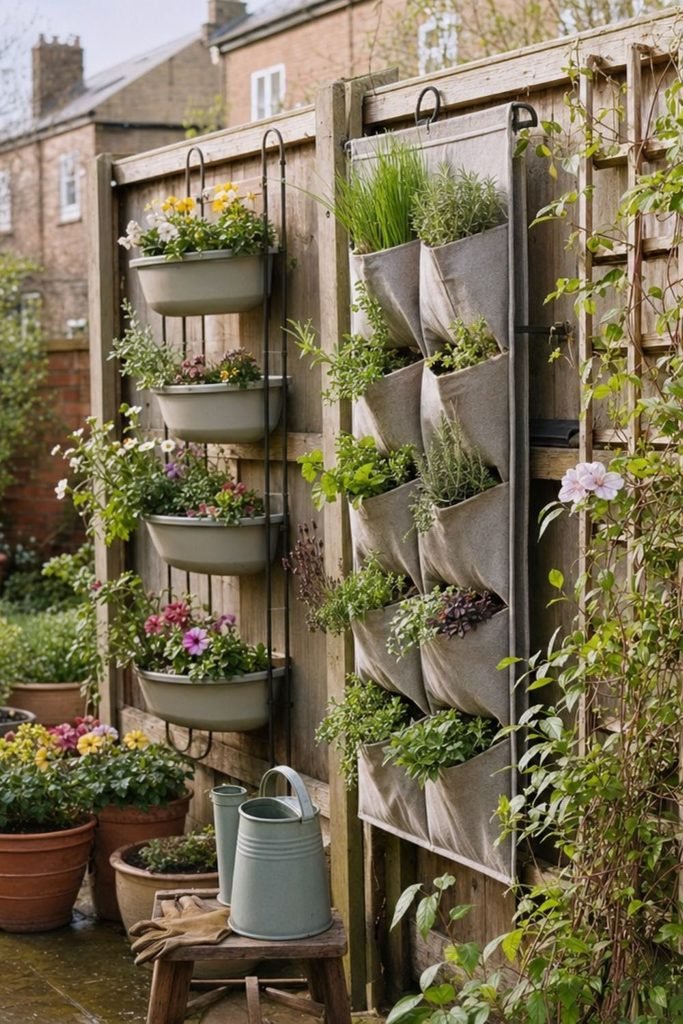
Fence Pockets
Turn a long fence into productive growing space by combining fabric planting pockets, hanging containers, and a simple trellis instead of relying on one planter style.
For compact herbs that can be harvested often, use the pockets, and for flowering plants, the deeper hanging pots.
Give climbing vines their own length of trellis so they don’t choke out smaller plants as they spread.
Place moisture-loving types in lower elevations where they may receive runoff, and check fabric pockets often in hot weather because their little volume of soil can dry out quickly.
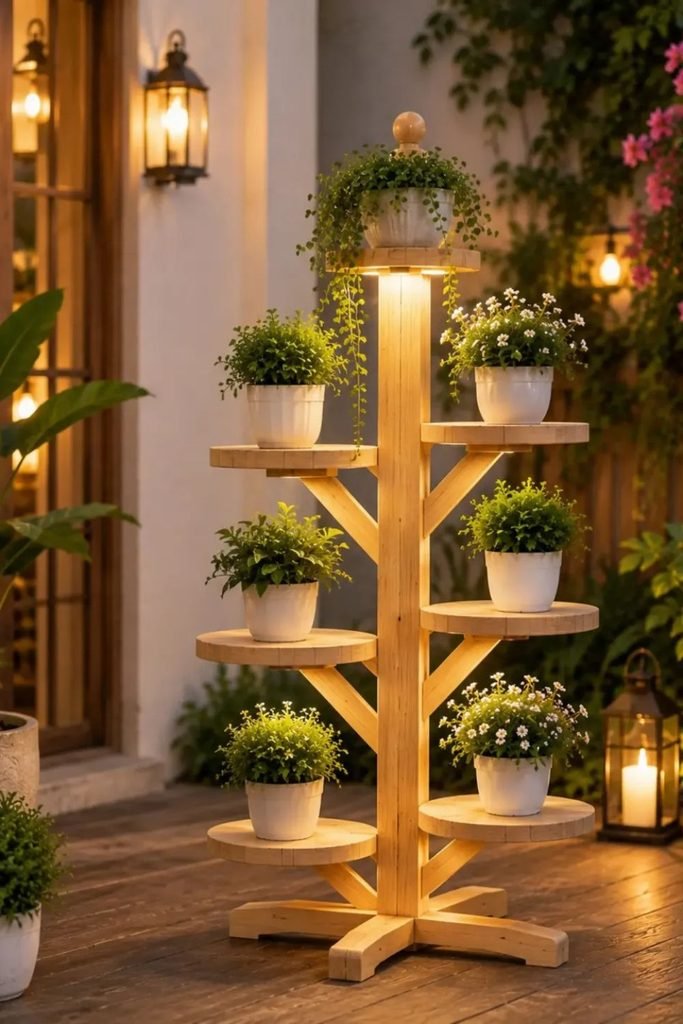
Branch Stand
Bring a vertical garden onto the patio without drilling into walls by building a freestanding wooden post with small shelves branching from both sides.
Use small pots at varying heights so each plant has its own space to develop and finish off with a cascading kind to soften the straight lines.
Use this configuration in seating spaces where floor space is a premium but you still want greenery.
Make a broad, balanced foundation so it doesn’t tip over, then seal the wood before you start watering it normally.
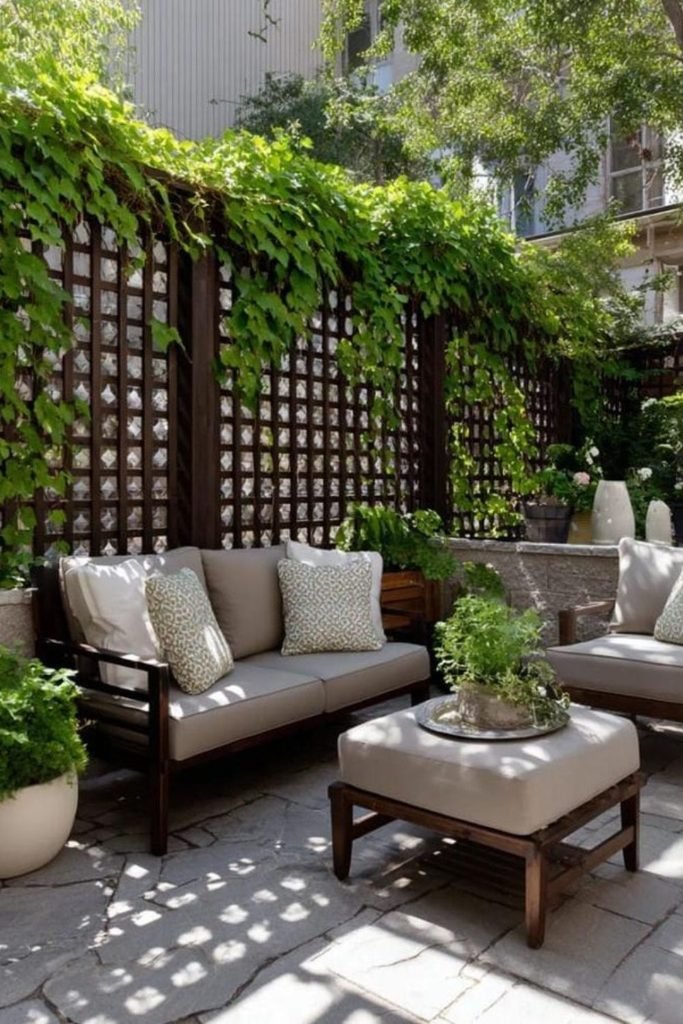
Privacy Trellis
Screen an exposed patio without planting a bulky hedge by training climbing vines across tall wooden lattice panels.
Plant climbers at the base and run young stems through the apertures until they cover the higher parts keeping a few gaps so the space still feels open.
Select vines based on the amount of sun the boundary receives and be sure to examine their mature size before planting.
Regular trimming will stop aggressive growth spilling into surrounding spaces and help retain leafy privacy around your dining area.
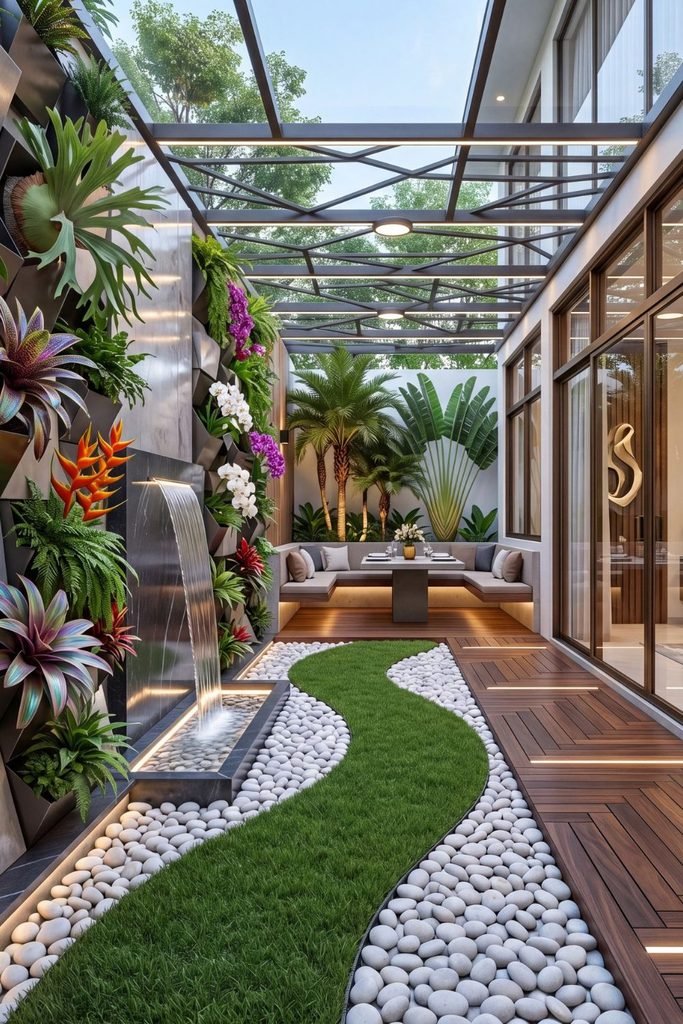
Pocket Wall
Give a narrow courtyard maximum planting space by covering one side with deep geometric pockets instead of using bulky floor containers.
Fill larger areas with robust foliage such as philodendrons and ferns, then add interest to the greenery with orchids, bromeliads or other colorful plants.
Place moisture-loving types below, where irrigation naturally runs down.
Back the pockets with a waterproof backing and good drainage so that repeated watering will protect the roots as well as the final wall.
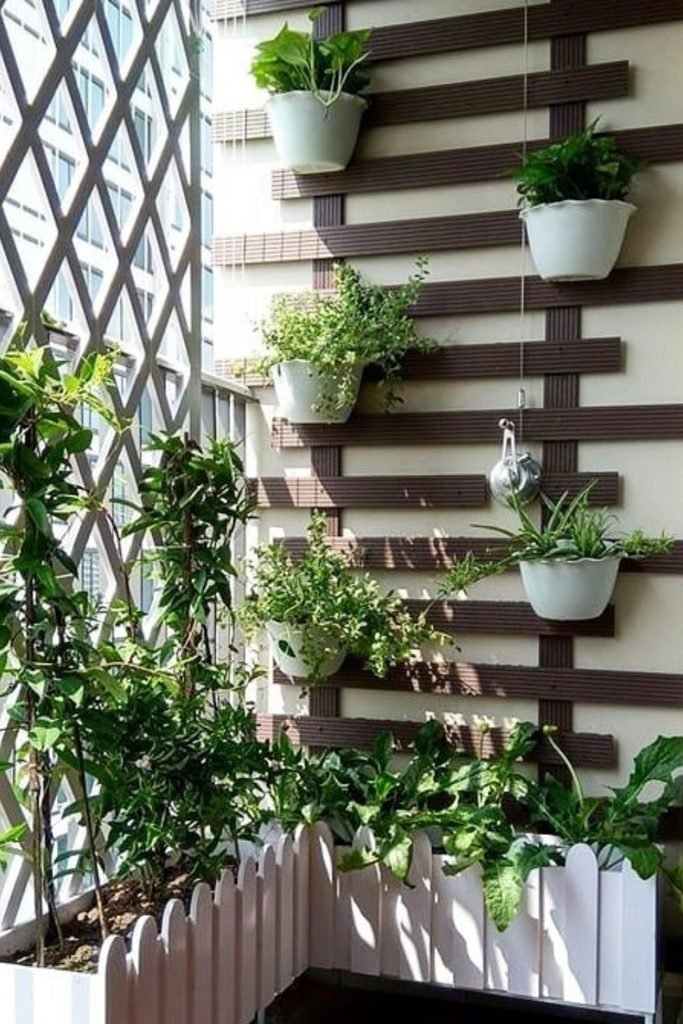
Slat Planters
Free up a tight balcony corner by mounting individual pots across horizontal wooden slats instead of filling the floor with containers.
Space pots far enough apart for leaves to spread. Use compact herb and tiny leafy plant where they stay easy to water and trim.
To effectively utilize the corner keep the foliage continuing below with a thin raised planter.
Fix the slats into sturdy supports rather than decorative wall panels and provide drip trays or controlled drainage to prevent water marks under each pot.
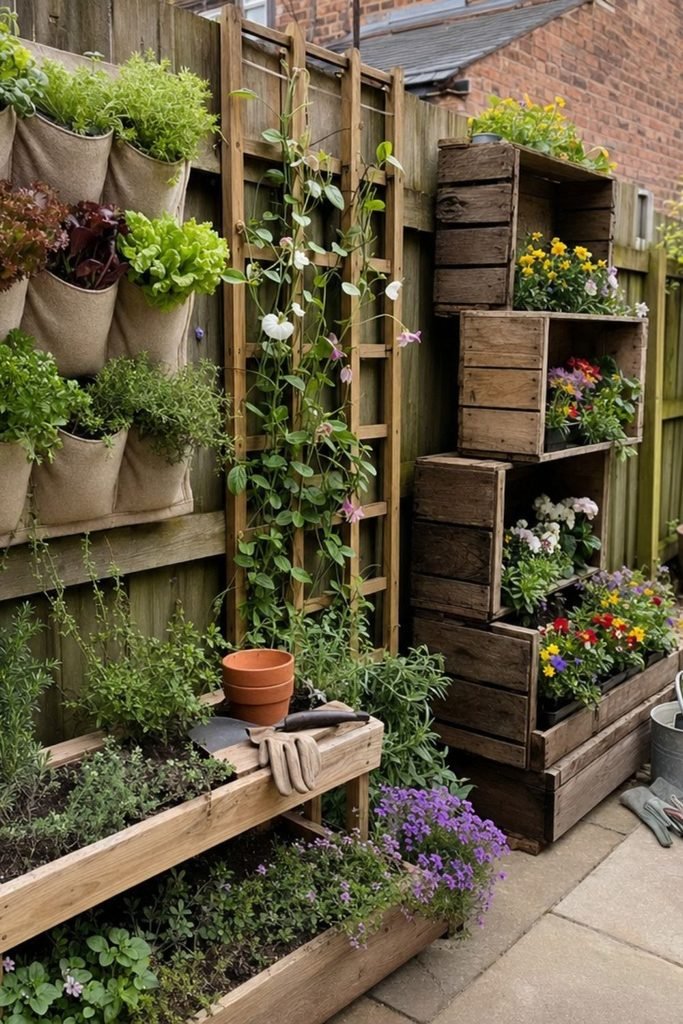
Fence Harvest
Make one garden fence handle several growing jobs by combining fabric pockets, a climbing trellis, raised herb beds and stacked wooden crates.
Grow shallow-rooted herbs and leafy greens in the pockets and train peas or flowering vines up the central support, saving deeper compartments for plants.
Position often plucked herbs around waist height so plucking remains convenient.
Leave enough space between portions for circulation and line wooden containers as needed to reduce moisture damage.
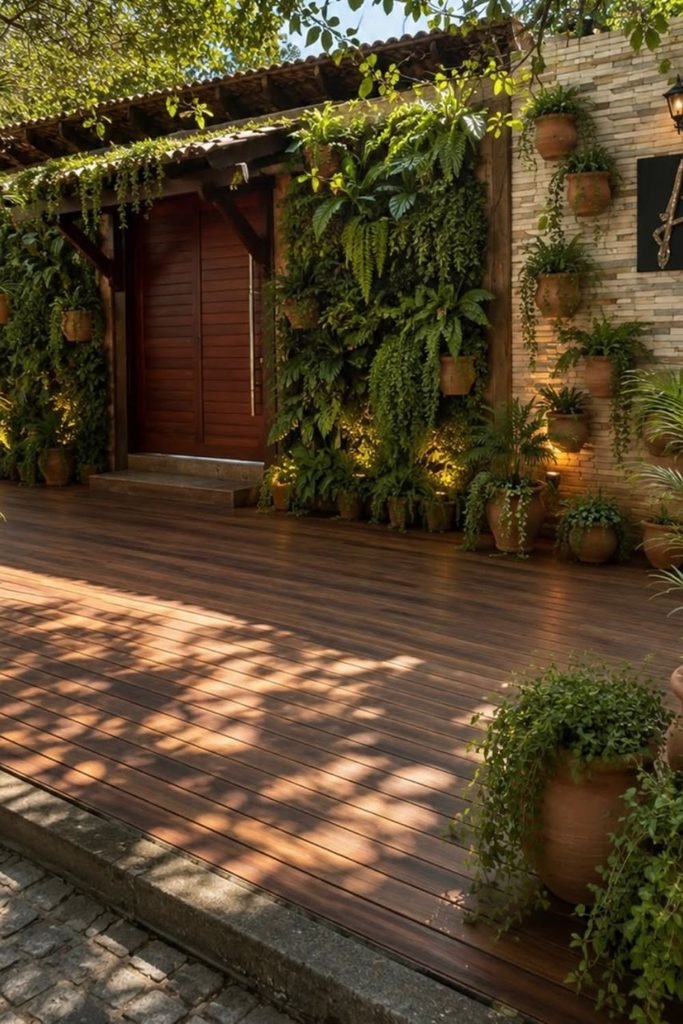
Entry Greenery
Frame a garden entrance with vertical planting to make greenery feel part of the architecture instead of adding more pots across the walkway.
Grow ferns and trailing foliage in wall-mounted portions around the doorway, then run smaller plants in terracotta pots down the next wall.
If there’s shade from trees or rooftops, choose species that can take filtered light.
Keep watering off the door frame and trim hanging growth frequently to keep the doorway open and the plants to achieve a luscious layered finish.
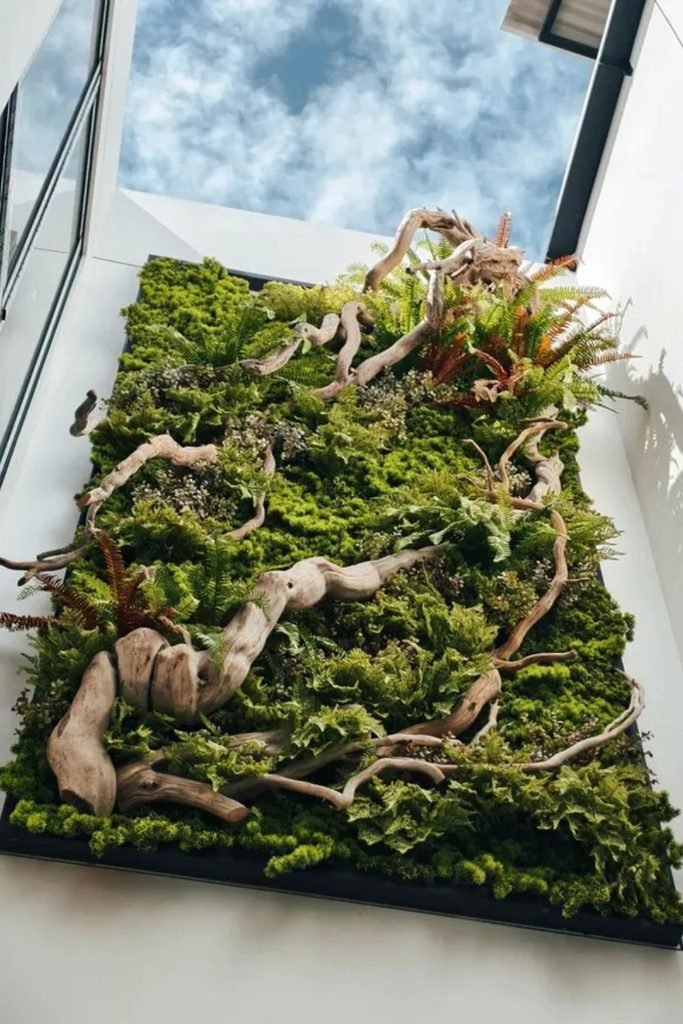
Moss Canvas
Bring a natural woodland feel to a sheltered courtyard by building a vertical garden around moss, compact ferns, and textured foliage rather than large leafy plants.
Work bits of worn driftwood through the planting to bring depth and an organic, established character to the wall.
Select a site away from hot afternoon sun, as moss and many ferns prefer cooler, humid environments.
Use a moisture-retaining growth medium that drains well. Mist or irrigate evenly so that the tops do not dry out faster than the base.
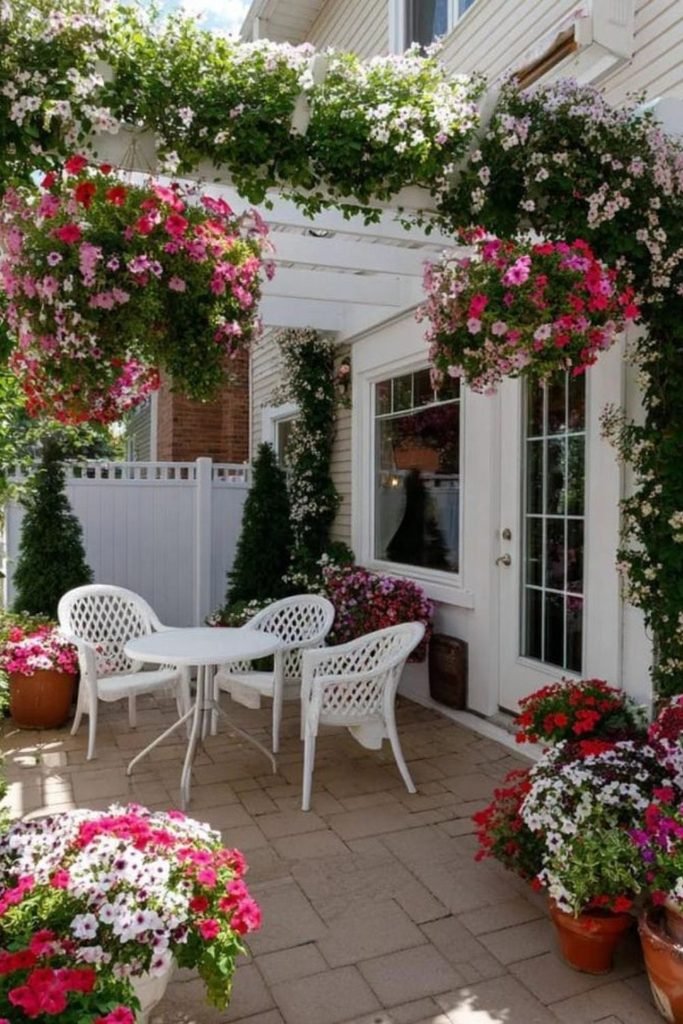
Floral Canopy
Carry a vertical garden overhead by training flowering vines across a pergola and pairing them with hanging baskets packed with cascading blooms.
Use this method around a tiny patio when you want greenery but don’t want to lose seating space below. .
Train climbing stems up the posts and upper beams, then place baskets where they can get sufficient sun without obstructing movement.
Select plants with similar light and watering requirements, deadhead often to promote continuous bloom, and inspect hanging baskets frequently.
FAQs
How Can I Keep A Vertical Garden Easy To Maintain?
Select plants that have the same light and watering needs so you don’t treat every pocket differently.
Position thirsty plants lower, where moisture clings, and drought-tolerant kinds higher.
If you have many rows in your wall, a simple drip line can save you time and maintain watering more even.
What Is The Best Vertical Garden For Small Spaces?
Use a setup that climbs upwards, without restricting the area you still need to move in, sit in or work in.
Wall pockets, narrow trellises, stacked planters, ladder shelves and hanging pots are good options for limited spaces.
Choose an alternative that suits your sun exposure and if you can drill into the wall or require a free standing choice.
