
21 Pollinator Garden Ideas for 2026
You put flowers expecting bees and butterflies, but a few random blooms don’t usually generate the active pollinator garden you envisioned.
The hardest aspect was choosing plants that bloom at different times, spacing them out.
So the yard didn’t appear disheveled and giving them food and shelter beyond the summer.
You also have to work with the sunlight, soil and space you have too.
In this article, I’ll show you 21 pollinator garden ideas you can use right away to create a thriving garden.
Let’s jump in!
How Can You Make Pollinator Gardens Look More Intentional?
Define your bed shape instead of just planting pollinator plants wherever you have space.
Group similar flowers in little drifts, repeat those drifts around the bed and position shorter plants at the front with taller perennials and grasses behind them.
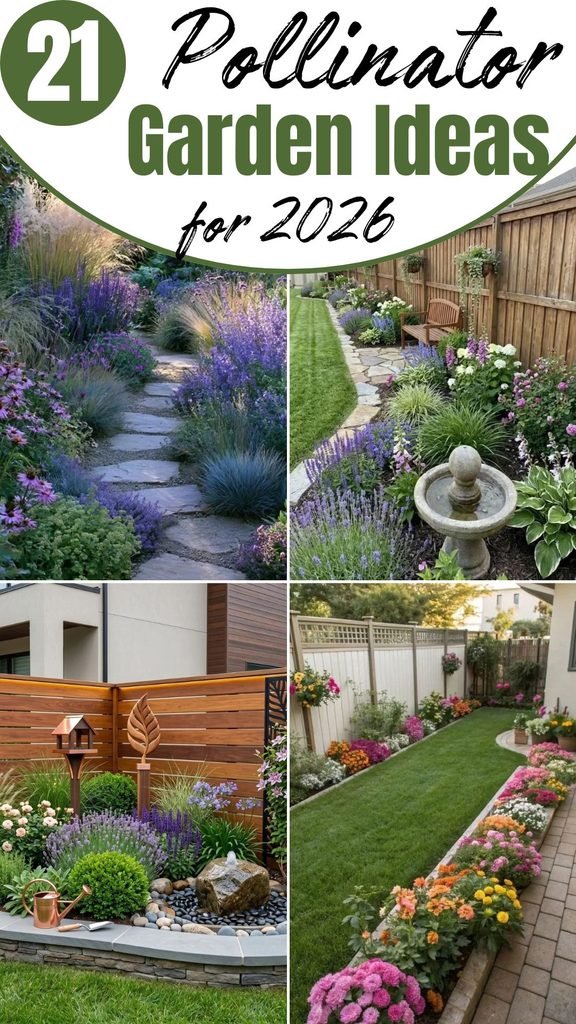
For a natural style that doesn’t look unkempt, define the borders with stone, brick, gravel or a nicely cut lawn edge.
Show the way and link parts with one or two repeating plants. You may still leave stems, leaves and small nesting sites for pollinators.
Just place these features to the back or less busy parts of the garden where they will provide habitat without dominating the garden design.
Fence Border
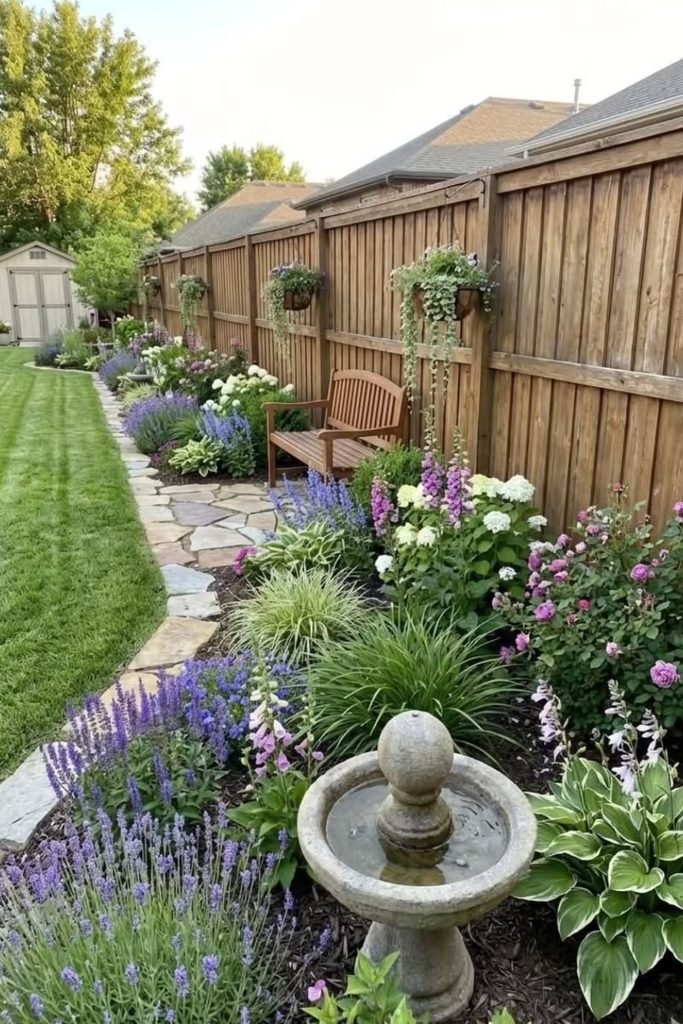
Turn a long fence into productive pollinator space by running a layered flower bed along its base instead of leaving the boundary bare.
Position taller flowering plants next to the wood panels and choose compact nectar rich flowers and soft grasses around the lawn edge.
The planting is structured by repeating groups of purple, pink and white flowers throughout the border,offering visiting bees and butterflie multiple opportunities.
Make a small water feature with the plants and leave enough free space so you can water, trim and divide crowded perennials without having to upset.
Pollinator Pathway
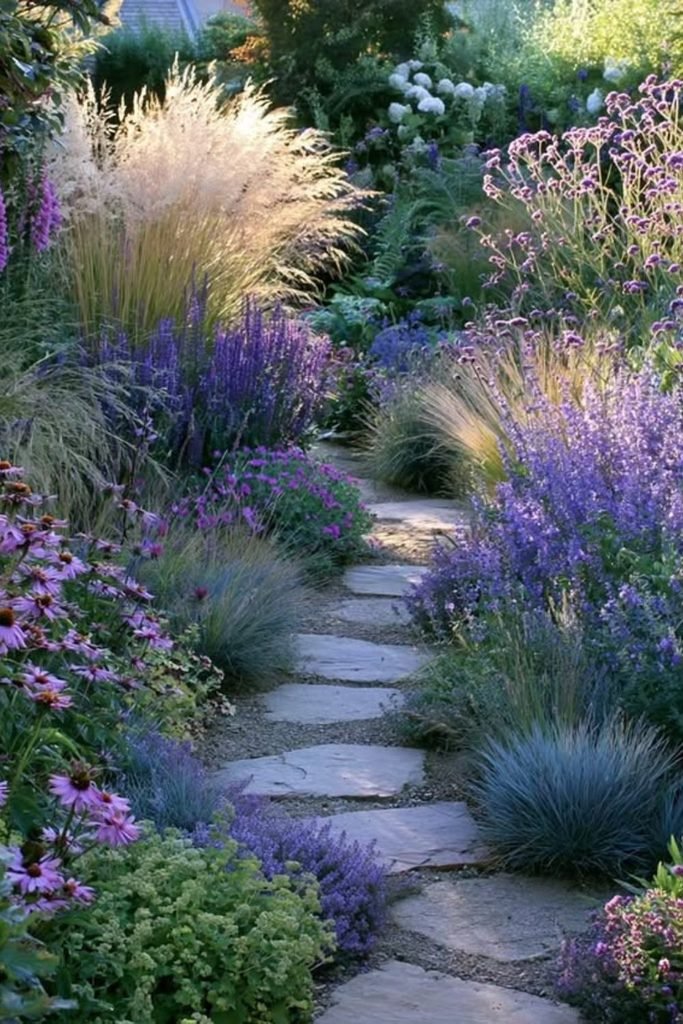
Let flowers spill toward a stepping-stone path when you want pollinator planting to feel immersive without losing a clear route through the garden.
Build both sides with repeated drifts of airy flowering perennials, coneflowers and beautiful grasses.
Keep low growth nearest to the stones and higher blooms farther back. Combining numerous flower forms.
Gives a wider variety of food choices for different pollinators and grasses break up huge blocks of color.
Water Corner
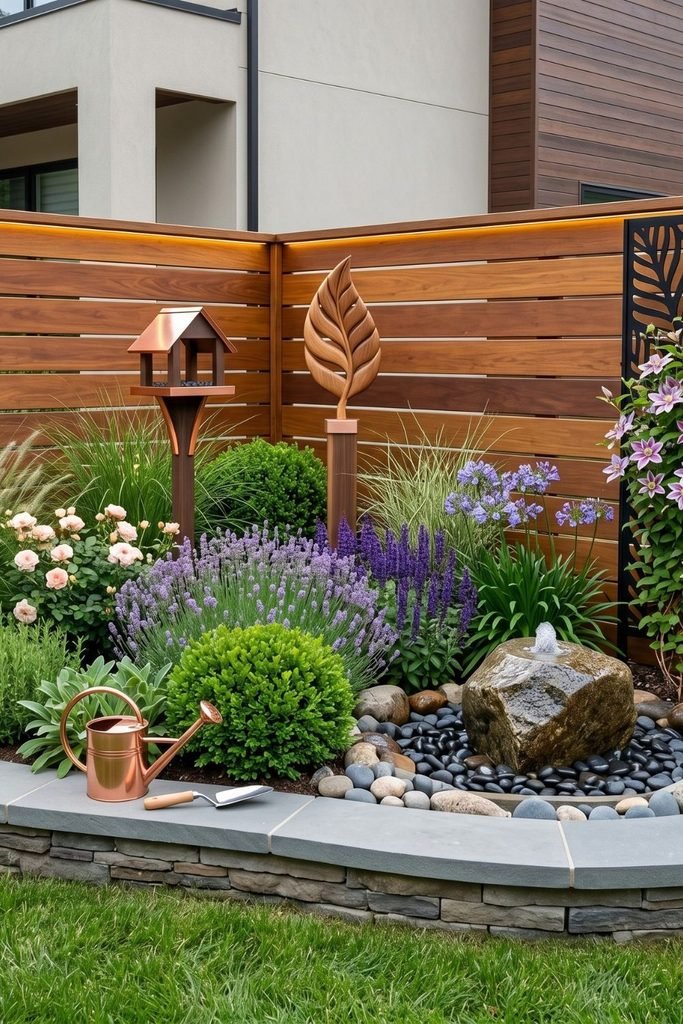
Tuck a shallow bubbling feature amid smooth stones, then surround it with flowering herbs, lavender-like blooms, climbing flowers.
Choose a shallow water source instead of a deep open bowl, and place stones in it so insects can land without falling into the water.
Keeping taller grasses and climbers toward the fence also provides protection while maintaining the front planting short and neat.
This configuration is especially handy when you want wildlife value without losing a polished garden design.
Give pollinators more than flowers by building a small water stop into a sunny garden corner.
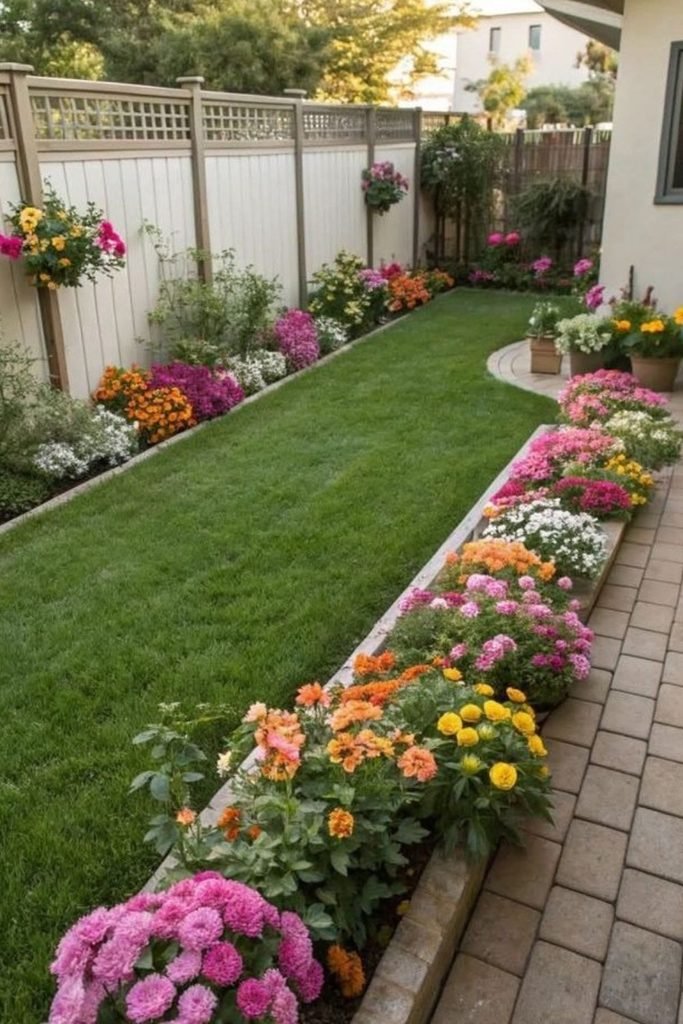
Color Borders
Keep a narrow backyard useful to pollinators by packing the outer edges with repeated clusters of nectar-rich flowers while preserving open lawn.
On each side mix pink, orange, yellow and white flowering groups, choosing varieties that flower at different times so the border does not climax all at once.
Defined edging gives a neat appearance to dense planting, making this a practical choice near patios, fences and tiny urban lawns.
Extend planting by adding a few flowers containers near seating areas without losing walking or entertaining space.
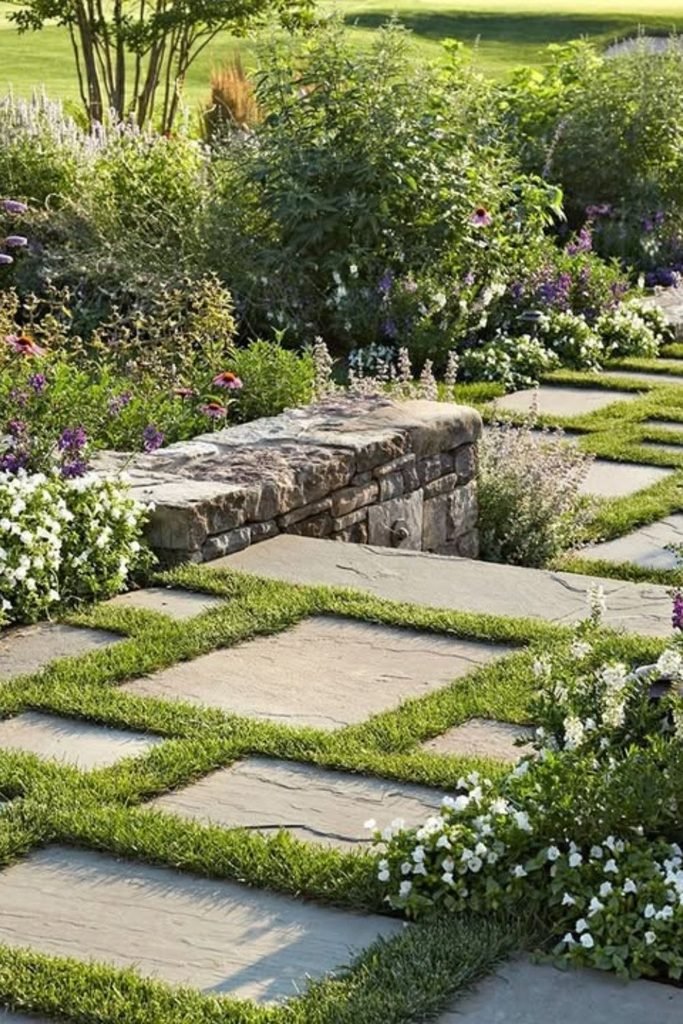
Structured Meadow
Break up a large pollinator planting with stone paths and low walls when you want abundant flowers without letting the garden feel uncontrolled.
Fill the beds around with wide groupings of coneflowers, flowering shrubs, airy perennials and low border blooms and repeat a few species in different places.
The hardscape provides definite limits, yet the plants are allowed to grow closely enough to provide plenty of feeding room.
Plant taller species in the outside beds, and shorter flowers along the walkway so guests may walk through the garden without brushing against every bloom.
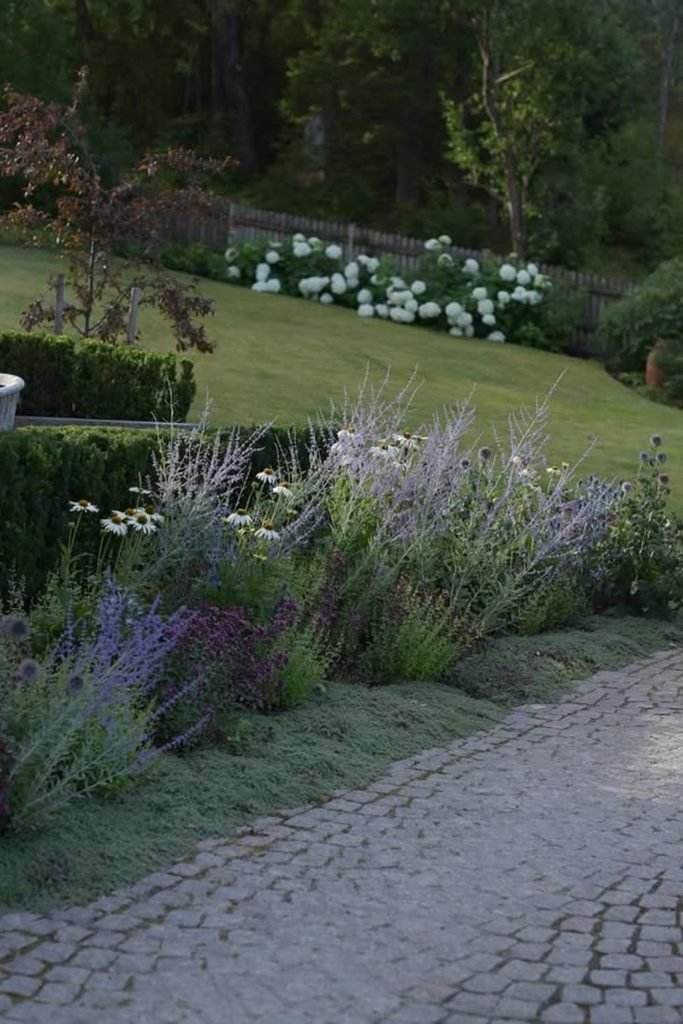
Layered Edge
Soften a paved driveway or walkway with a deep planting strip that gives pollinators several flower heights within one compact area.
Let low groundcovers nestle into the pavers, plant purple and white flowering perennials across the middle, and save the taller airy blooms for the back.
Selecting plants that flower at slightly different times means this narrow border is great for more than one short burst of color.
The repeated use of the same few groups of flowers also makes the bed look calm and ordered, and is a sensible choice for formal yards.
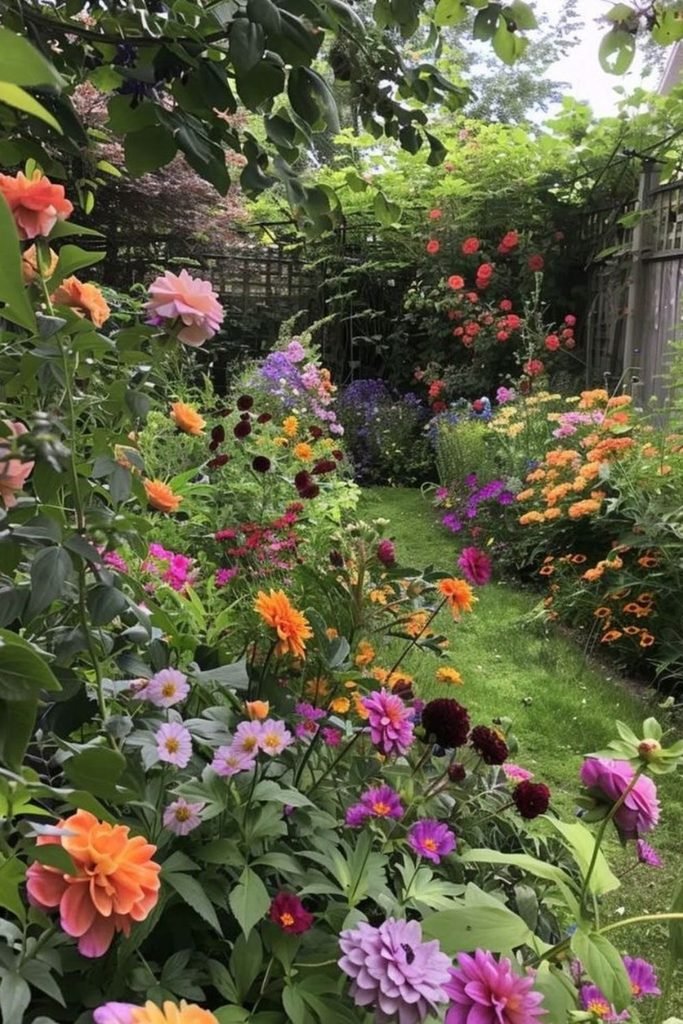
Cottage Haven
Pack a sheltered garden corner with overlapping flower shapes when you want steady pollinator activity without creating a formal planting scheme.
Toward the lawn, place open-centred blooms, compact nectar plants and medium-height perennials.
Plant tall roses and climbing flowers along the edges. Don’t separate each species, but let the plants next to each other interact a bit, and leave small grass.
diverse food supplies to a range of pollinators, due to the diversity of flower kinds and staggered bloom times.
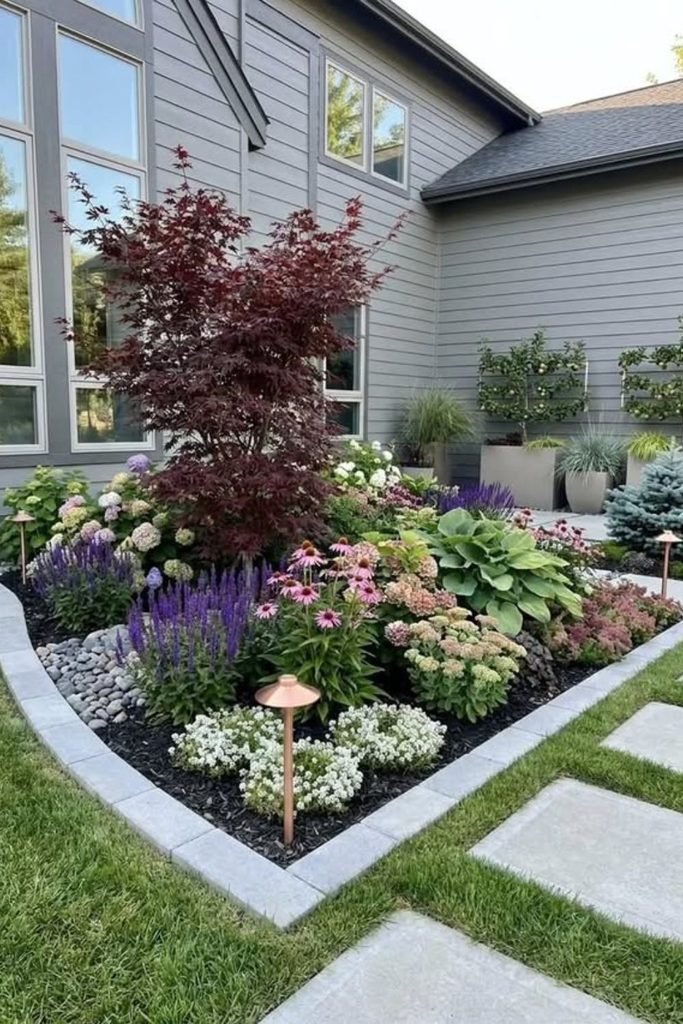
Corner Island
Use an awkward house corner as a compact pollinator island instead of filling it with lawn or decorative shrubs alone.
Anchor the bed with one tiny tree, then in repeating groupings around it place coneflowers, erect purple blooms and low white flowers and rounded perennials.
A sharp, curving edge provides a structured finish to dense planting, while varying heights make it simpler to pile nectar-rich flowers.
Leave plenty of space between mature clumps for air flow and select substitutes that are appropriate to your local conditions if any of the decorative plants.
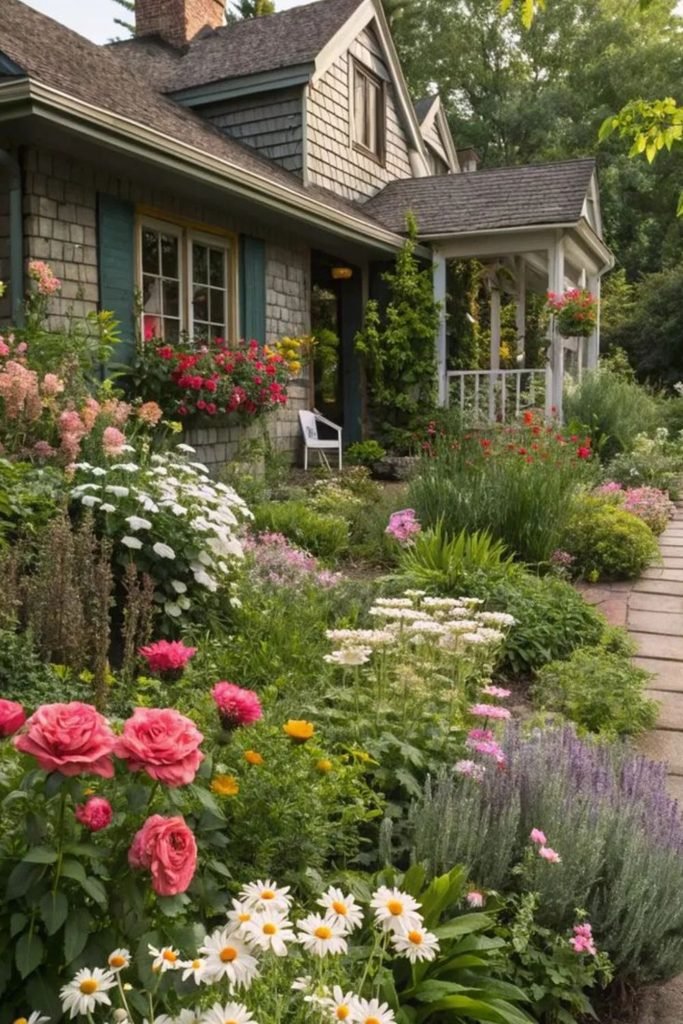
Porch Border
Bring pollinator planting right up to the house when you want the front garden to feel welcoming instead of separating flowers from everyday living areas.
Plant a deep border along the edge of the porch and path, combining open daisylike flowers with upright flower spikes, roses and compact fillers.
Keep the path edging low so flowers never block entry and allow taller plants to build fullness closer to the house.
Repeating some of the flowering groupings along the way gives pollinators dependable feeding spots and enough rhythm to the informal cottage planting.
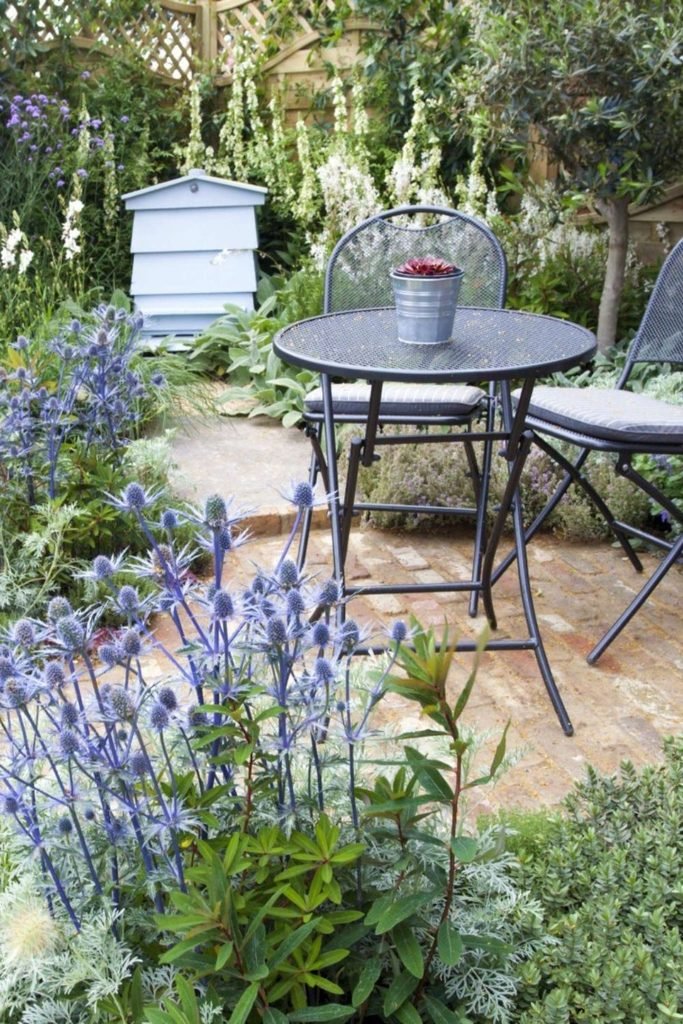
Patio Habitat
Tuck a small seating spot inside the planting instead of keeping your pollinator garden at the far edge of the yard.
Plant nectar-rich flowers at a variety of heights around the patio, with low-scented plants near the paving and taller flowers toward the back.
A modest bee shelter can provide nesting support, but natural hollow stems and neighboring undisturbed plant debris also serve as beneficial additions.
Simply adding flowers near seating allows for easy observation of visiting pollinators, and even a small courtyard can become an active garden habitat.
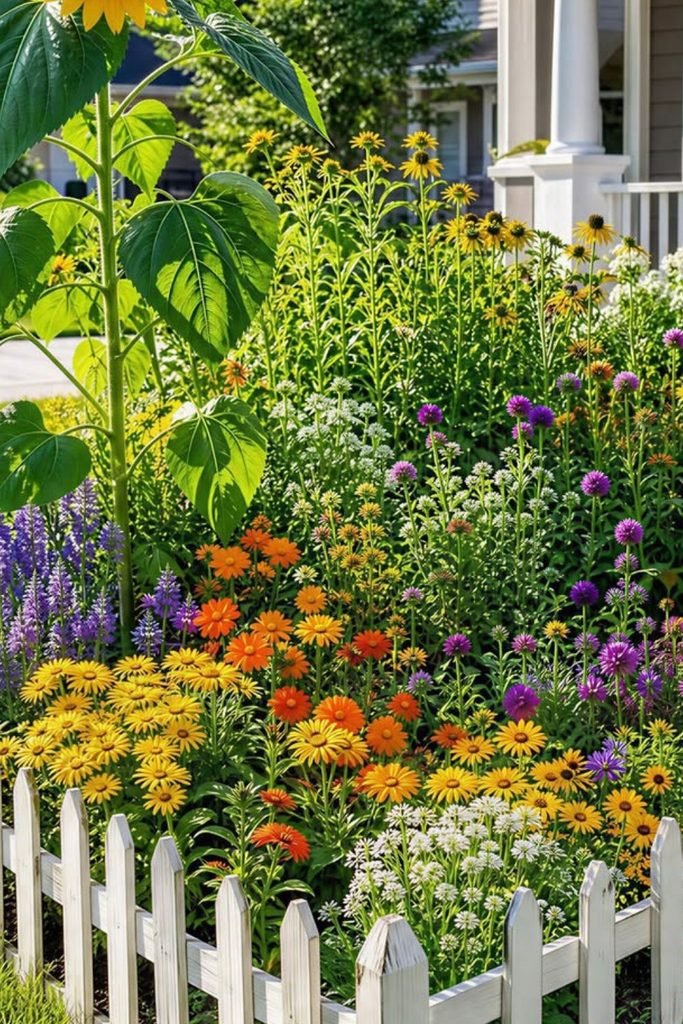
Sunny Pocket
Claim one sunny patch of lawn for pollinators instead of converting the entire front yard at once.
Use a tall sunflower at the rear as a strong vertical anchor and then fill below with generous drifts of yellow, orange, purple and white blooms rich in nectar.
A mixture of tall branches with medium and low flowers ensures that feeding regions are open at different heights, so that one type does not dominate bed.
Complete the perimeter with a simple low fence or sharp edge it divides the dense planting from the lawn and gives an enthusiastic combination of flowers.
Evening Oasis
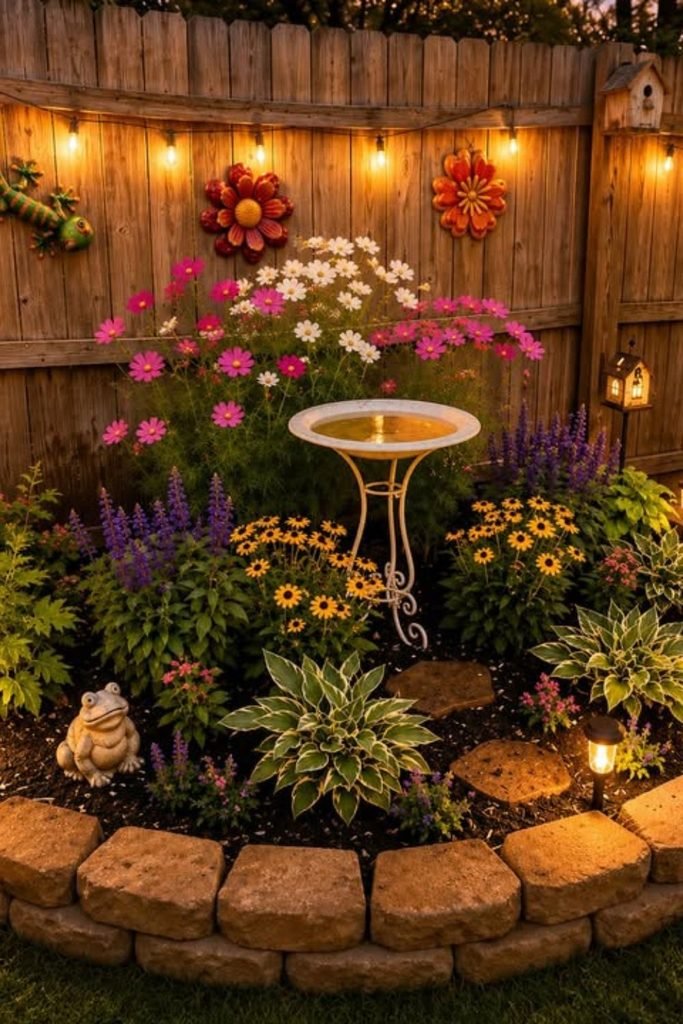
Keep a pollinator corner useful during the day and inviting after sunset by pairing dense flowering groups with a simple water source and gentle garden lighting.
For a finished border, create a background of taller daisy-like flowers along the fence, a middle-height nectar plant in the middle and lower foliage.
Place the shallow water dish in a location where insects may safely reach it, adding stones if necessary for them to settle on.
Decorative lighting should be warm and gentle, not shining directly on the flowers, and the nocturnal ambiance should not overshadow the ecosystem.
Island Habitat
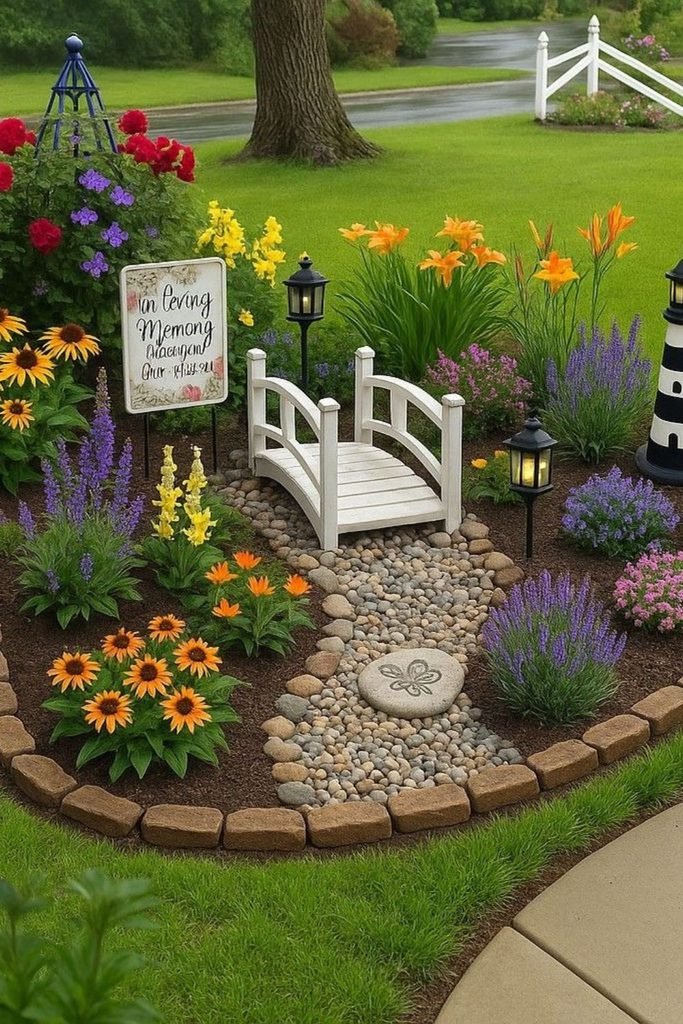
Carve a defined island out of open lawn when you want pollinator planting to become a clear focal point instead of blending into the yard.
Use a curving stone border to manage the shape, then repeat yellow, orange, purple and pink flowering groups rather than planting each kind once.
A gravel path down the middle provides access for weeding and watering without having to step between plants.
Keep decorative features to a minimum so that flowers remain the main attraction.
Playful Planters
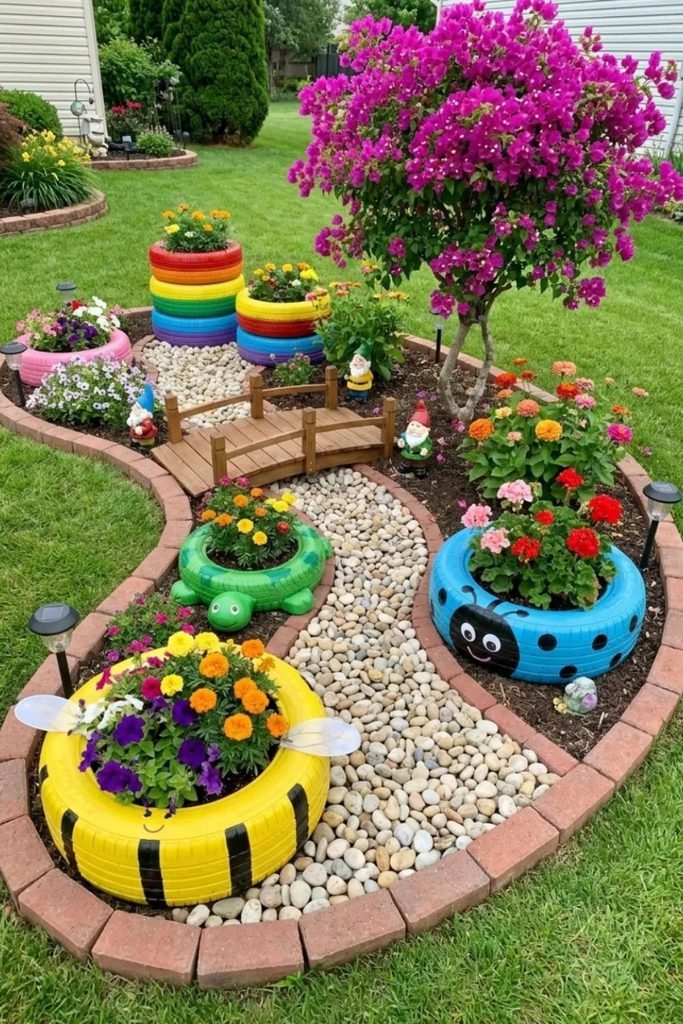
Turn recycled containers into bright pollinator stops when you want a garden that feels fun without giving up useful planting space.
Old tires can be painted like bees or ladybugs or just solid colors. Fill with well draining soil.
And plant some compact , nectar producing flowers that are appropriate for your area .
Place the planters in between in-ground flowers, not only in containers, to allow pollinators to migrate between larger food sources.
Teacup Trail
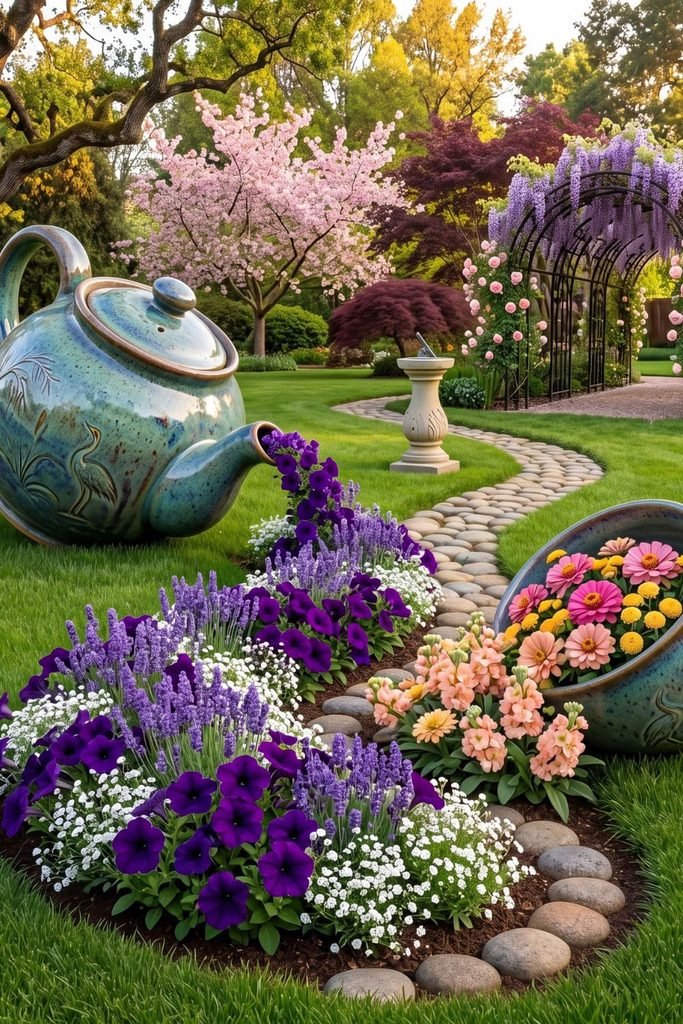
Give a pollinator pathway its own personality by using oversized garden containers as focal points between long ribbons of flowers.
Go for the curve of a pebble path, then fill huge decorative pots with nectar-rich flowers instead of leaving them just ornamental.
Repeat purple, white and pink blossoms. Continuous groupings of most plants make feeding pauses easier for visiting insects.
Scale down the feature for a real home garden using regular porcelain teapots or cup-shaped planters and select locally appropriate flowers that bloom.
Bloom Layers
Build depth with overlapping flower heights when you have a sunny border that needs to support pollinators with out relying on one dominant plant.
Begin with small daisylike flowers at the front sprinkle medium pink and orange blossoms across the middle then let tall globe-shaped and upright flowers.
Different insects find it simpler to feed when you hold a few flower forms together .
Leave a small path of grass or mulch next to the bed for upkeep, and choose species appropriate to your area that bloom at different times.
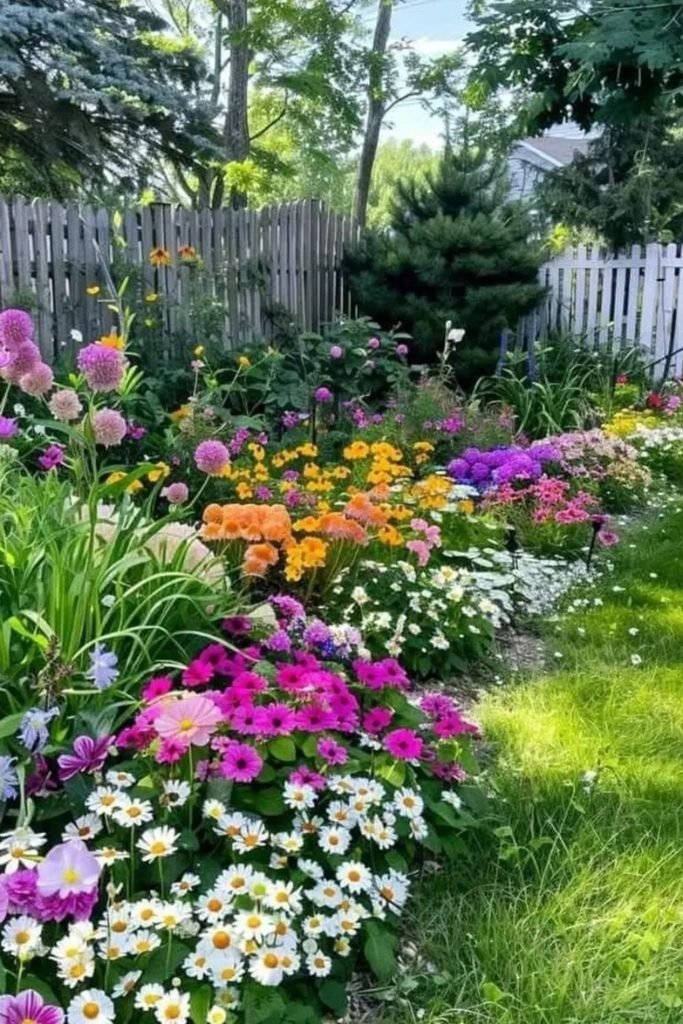
Living Path
Replace empty joints between large stepping stones with low flowering groundcovers to squeeze more pollinator value from a narrow side yard.
Fill the gaps with creeping blooms, making sure the walking surfaces are totally free.
Then continue planting with yellow flowers, airy perennials and higher grasses along the margins.
Adding groundcovers that can withstand the occasional foot traffic makes maintenance easier and softens the rough asphalt.
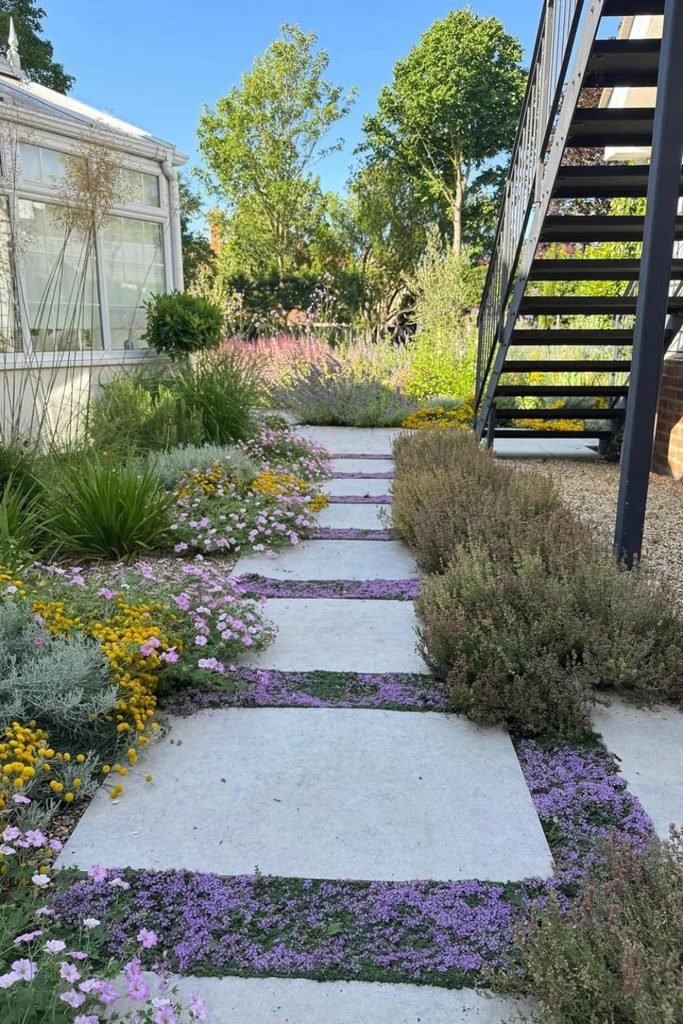
Pond Retreat
Pair a quiet seating nook with a small pond when you want the pollinator garden to support wildlife while still functioning as a place to relax.
Add flowering plants, ferns and higher foliage surrounding the river and stones at the edge where insects can land safely.
Rather than driving nectar-rich blossoms into deep darkness under trees, place them on the sunnier side.
Dense foliage provides cover behind the chairs and the pond is a reliable water element.
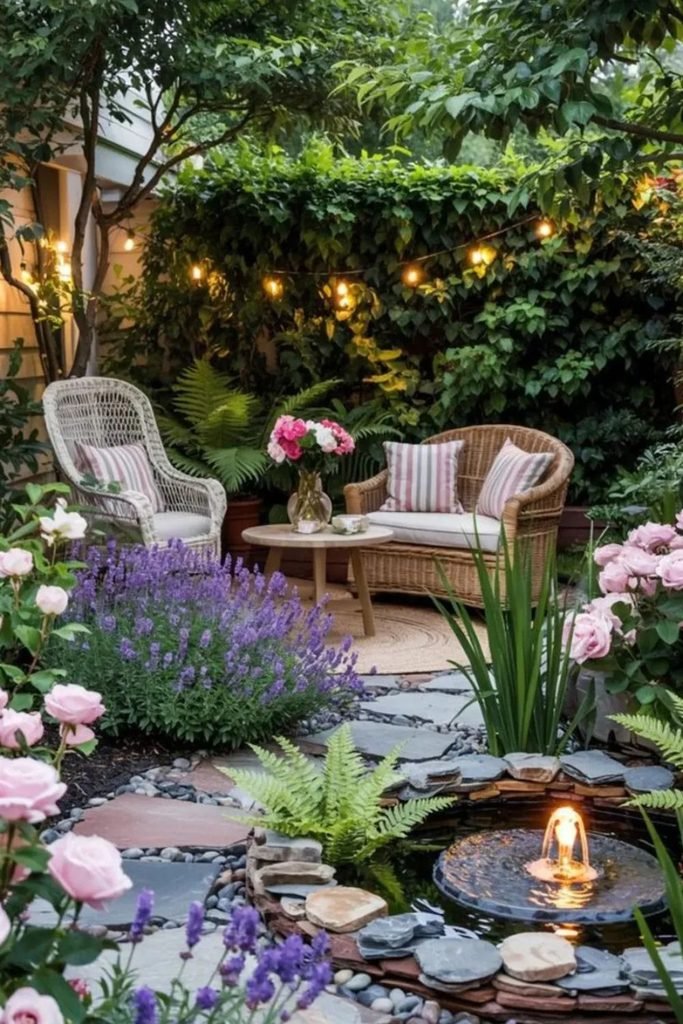
Meadow Borders
Frame an open lawn with deep flowering beds when you want plenty of pollinator habitat without giving up the grassy space completely.
If you want large borders around the perimeter these can be made of loose drifts of purple, pink, white and red blossoms, with shrubs and small trees.
An open center keeps the dense planting on the edges from feeling overbearing, giving the design a sense of equilibrium.
Pick a handful of species suitable for your place that flower at different times from spring to fall, and repeat important plants in different beds.
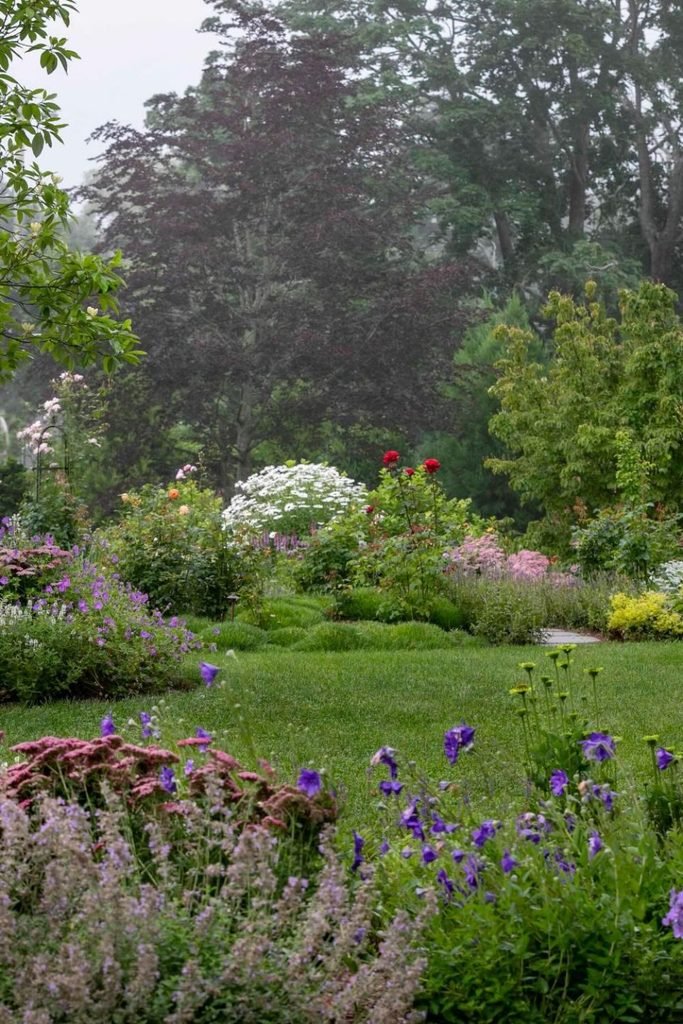
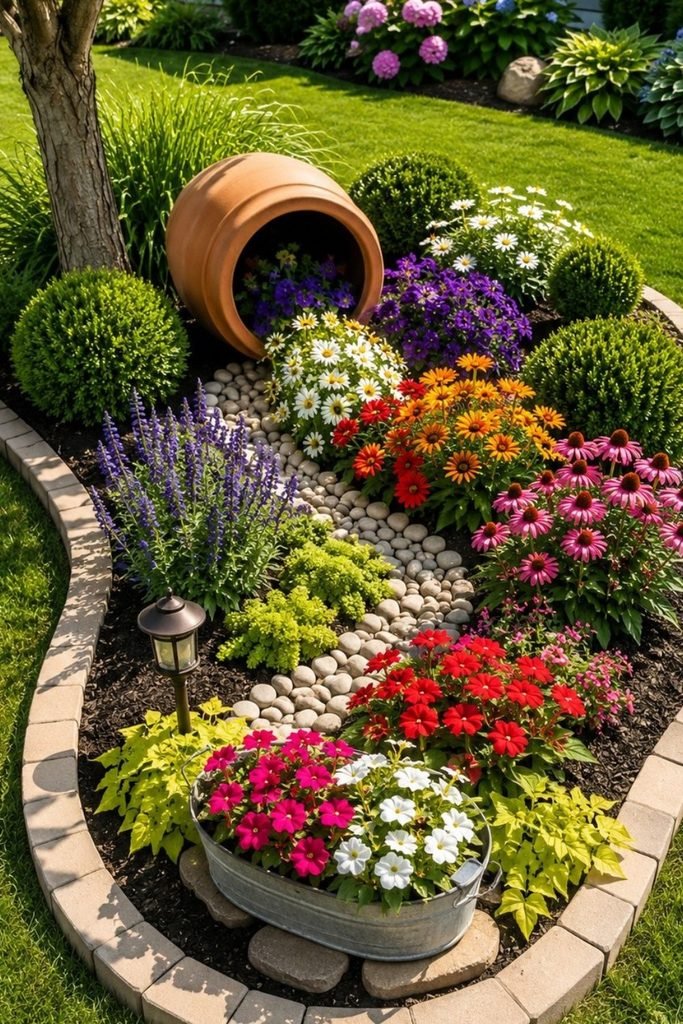
Spilled Blooms
Make a compact pollinator bed feel playful by tipping a large terracotta pot on its side and letting flowers appear to spill into the planting.
Instead of singles scattered, keep the flow going with clusters of daisylike blooms, coneflowers and erect purple flowers.
A narrow, pebbled stream can direct the eye through the bed while leaving minor gaps for maintenance access.
maintain pruned shrubs to structural points and let blooming plants occupy most of the sunny space; choose nectar-rich types with varied bloom times to maintain.
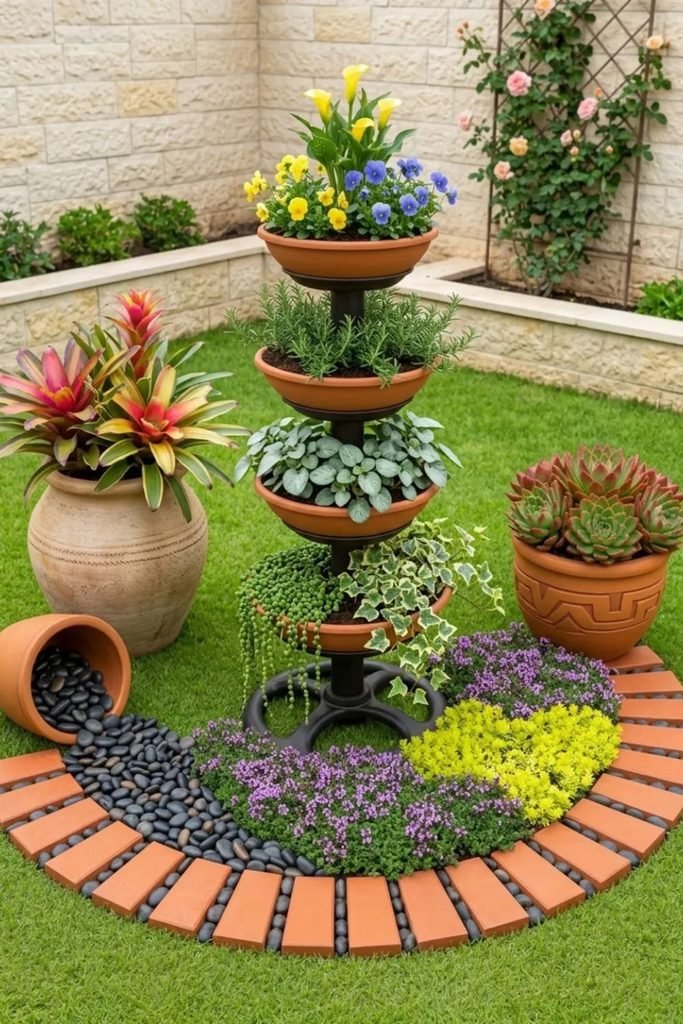
Tiered Planters
Stack planting space upward when a small lawn cannot spare room for another wide pollinator bed.
Fill a tiered stand with flowering herbs and tight nectar plants reserve the top tiers for sun-loving blooms where they will get the strongest light.
Let trailing plants soften the lower stages and surround the base with low-flowering groundcovers to tie the structure into the landscape.
If you’re trying to attract insects, select more pollinator-friendly flowers than foliage plants.
FAQs
Which Plants Attract the Most Pollinators?
Native flowering plants tend to offer the most valuable food to local bees, butterflies and other pollinators. .
Pick a few flower shapes and cluster similar plants together rather than dispersing solitary blooms here and there.
Plant a mix of spring, summer and fallsbloomers to ensure a constant supply of nectars and pollen throughout the growing season.
Can Small Gardens Support Enough Pollinators?
When the area offered is used correctly, even a little garden can be a vital source of food and shelter.
Plant nectar-rich flowers in sunny borders, pots, along the side of a pathway or in a corner of the lawn and add host plants and a safe water source.
Many designed planting enclaves may be more useful than a big landscape primarily devoted to turf.
