
24 Flower Garden Ideas for 2026
You see your yard and you anticipate vibrant flowers filling up the empty spots, but knowing where to start might be intimidating.
Perhaps your flower beds look random, your plants never seem to bloom together.
The appropriate layout, plant choices and simple design ideas may make a room that feels welcoming and easy to care for.
In this article, you’ll find 24 flower garden ideas to help you transform your outdoor space into something beautiful.
Let’s jump in!
How Can You Create A Low Maintenance Flower Garden?
Before you plant, you can make intelligent decisions that will result in a low-maintenance flower garden.
The most common mistake is selecting flowers for their beauty, without determining if they will fit your yard.
If a plant needs more sun, water or care than your location can supply, it will be more effort.
Begin by selecting flowers suitable to your soil, climate and amount of sunshine.
Plant similar requirements together, mulch to suppress weeds, and choose dependable perennials that come back each year.
A little planning now can let you enjoy a bright garden without spending every weekend working in it.
Pond Blooms
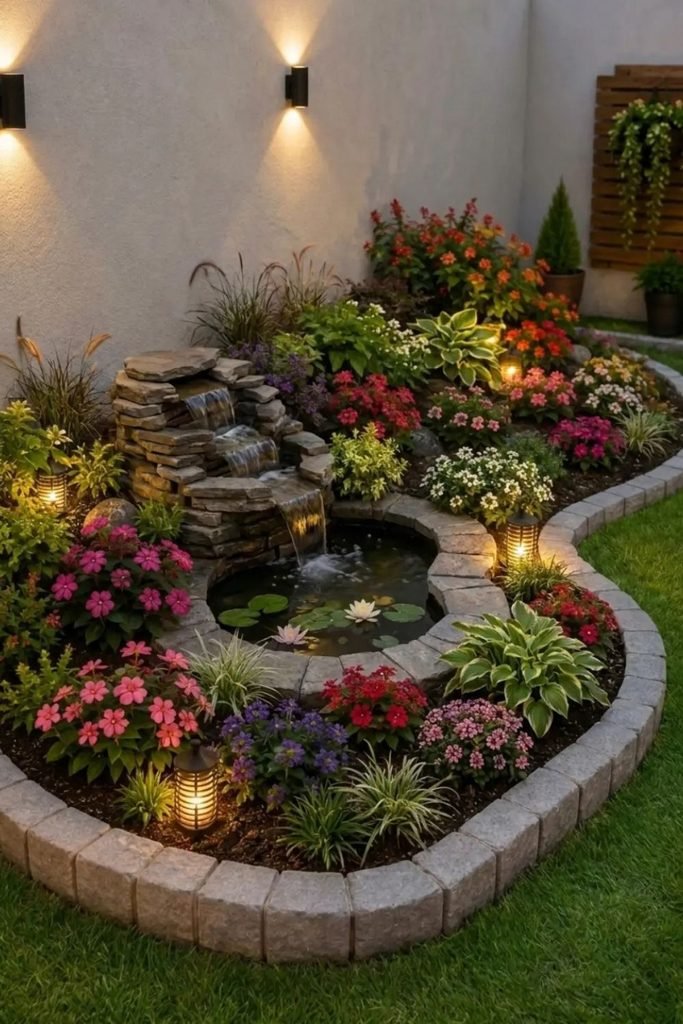
Bring water into the planting plan when you want a flower garden to feel peaceful without giving up valuable growing space.
Build a tiny pond in the middle and then connect it with the surrounding bed in a natural way with curved stone edging.
Plant flowers in loose clusters around the water with shorter flowers in front and taller types in the back.
Water lilies can bring color to the pond itself.
Low garden lights along the border will add accentuate the water and flowers after dark.
Wagon Planters
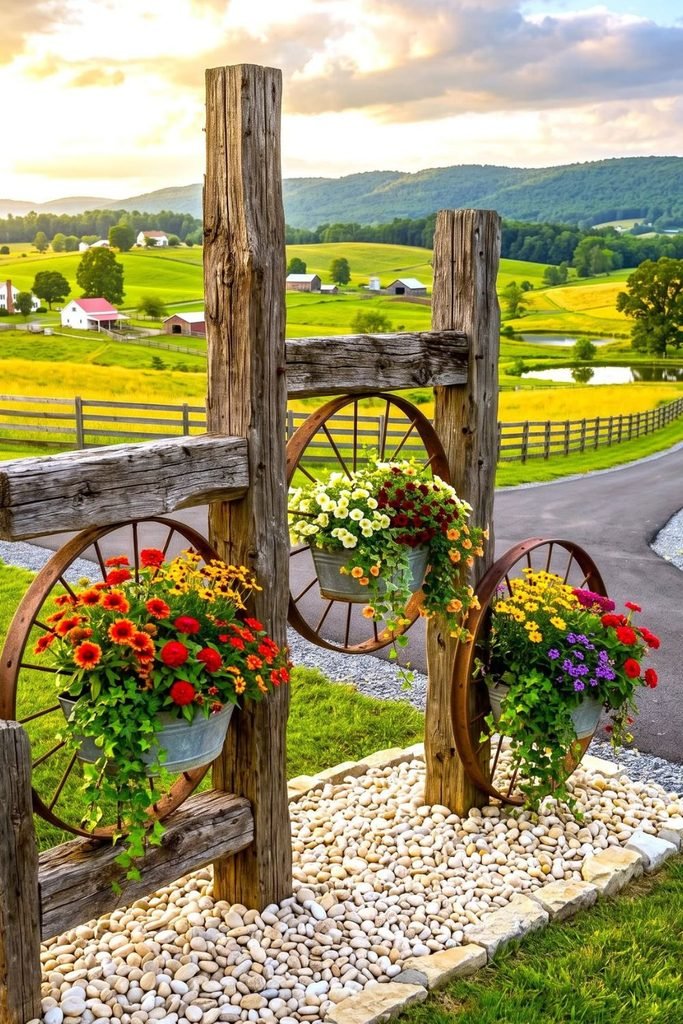
Turn an open lawn edge into a flower feature by giving your containers some height instead of lining pots along the ground.
Old wagon wheels, timber stakes or other salvaged items hold the galvanized planters at varying heights so the blooms can be seen from further away.
Add a few complimentary flowers in each pot and allow one trailing plant to fall over the edge.
The gravel base beneath keeps the weeds down and separates the display from the surrounding grass so mowing around it is much easier.
Pathway Layers
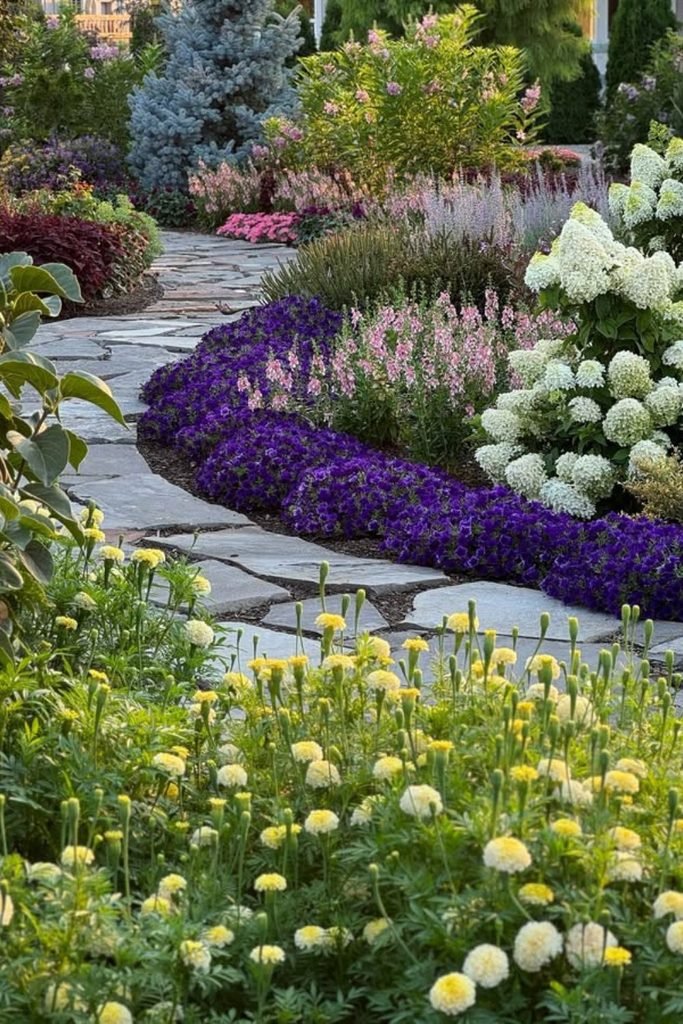
Guide the eye through a larger flower garden by letting curved planting beds follow the path instead of keeping every border straight.
Plant low-growing flowers around the edge of the stone so they soften the walkway without overflowing over too much.
Then create height with medium flowers and flowering shrubs behind them.
One vivid flower color along the route helps tie distinct planting areas together.
Taller evergreens in the background help provide structure to the garden when fewer flowers are blossoming.
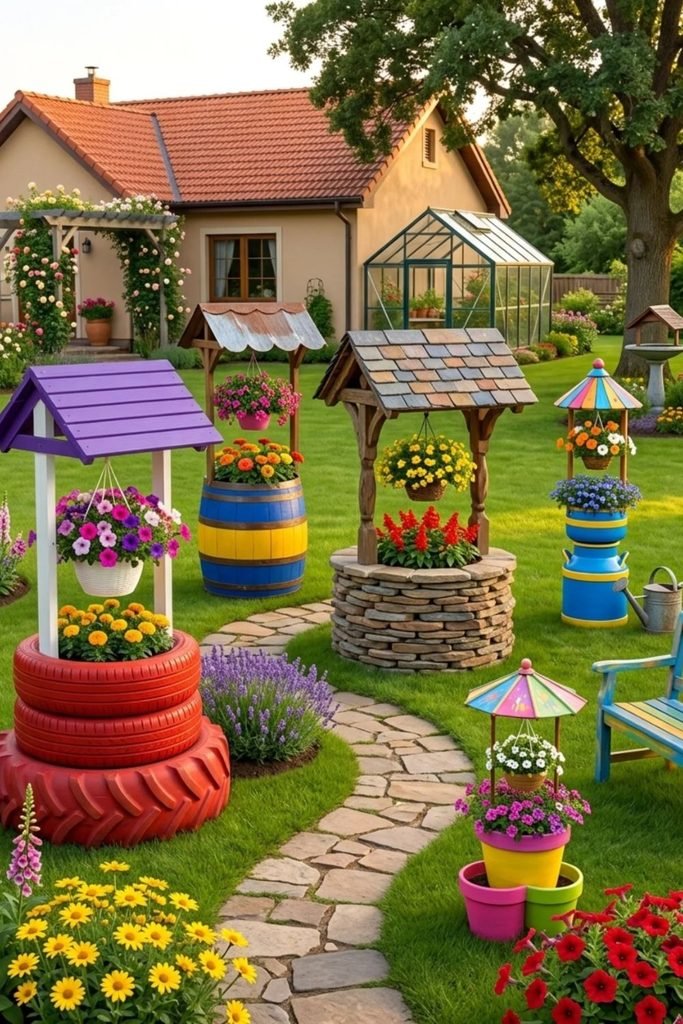
Playful Planters
Give a family garden more personality by turning everyday objects into raised flower displays instead of filling every open patch with another ground-level bed.
This method can be ideal for a large lawn or a children’s garden, where painted tires, old milk cans or simple timber structures can hold pots at varying heights.
Tie the containers together with recurring flower colors so the collection still feels organized.
Drill out drainage holes, if needed, and select easy annuals that you can replace quickly to create a new seasonal display.
Circular Layers
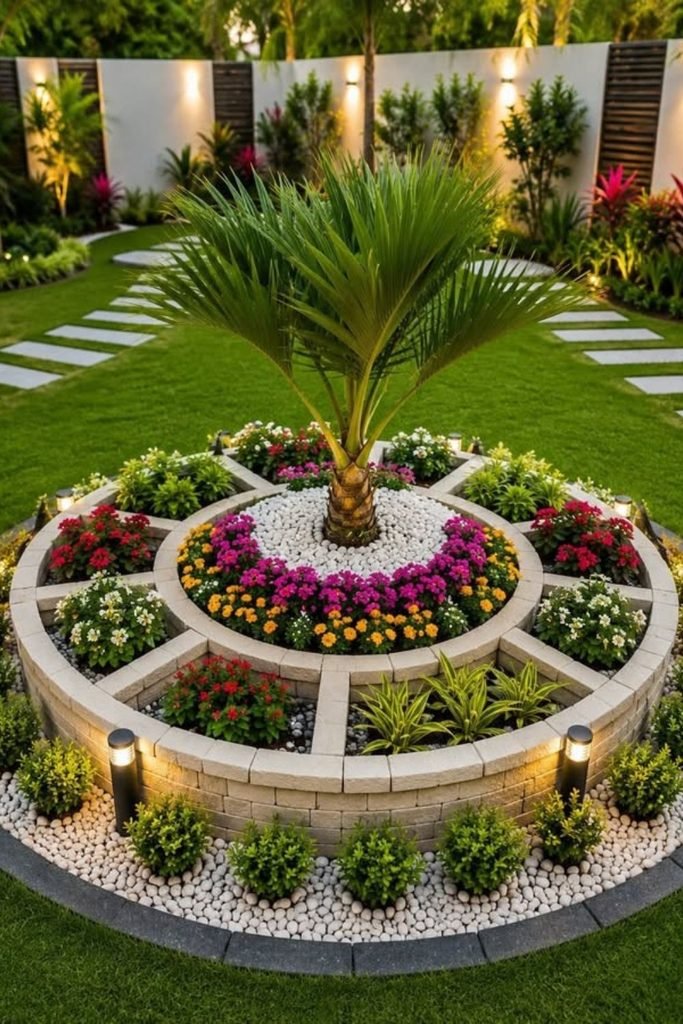
Make a wide lawn feel less empty by placing a round flower bed where it can work as a central focal point.
Instead of mixing too many varieties together, repeat compact flowers around each part, and use stone edging to divide the garden into pieces.
Put a taller plant or a tiny ornamental tree in the middle to head the design up.
White gravel in between the planting zones can help reduce muddy borders and help with upkeep. Low border lights maintain the circle form visible at nite.
Fountain Rings
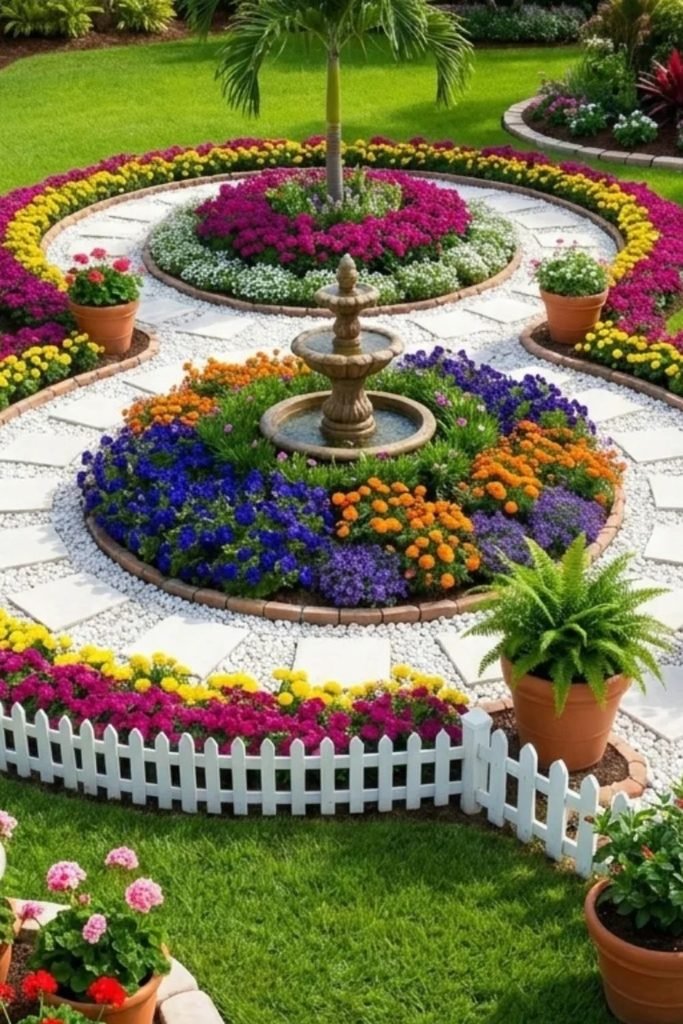
Build your flower garden around movement when a flat lawn needs a stronger destination.
Place a small fountain in the center and then encircle it with curved planting rings reachable by a simple gravel or stepping stone pathway.
Plant each part in broad swaths of color, instead than spreading individual flowers, which helps the pattern read from a distance.
The same flowers repeated in the outer border help to tie things together and a few mobile pots allow you to refresh seasonal color without digging up.
Seating Border
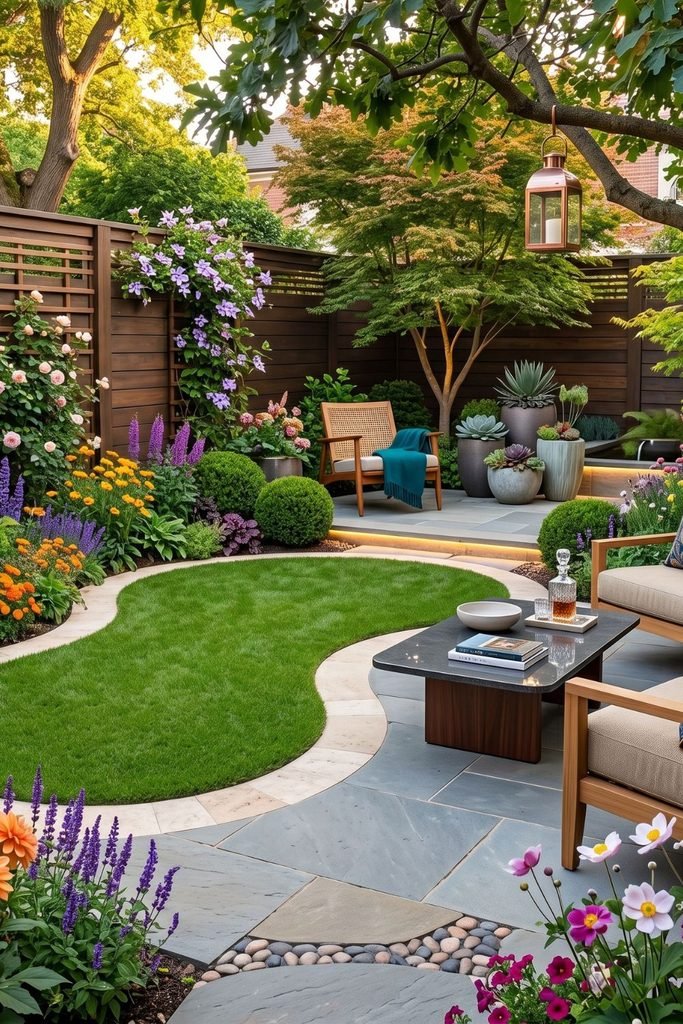
Let the flowers frame the places where you actually spend time instead of pushing every bloom to the far end of the yard.
Create a seating area by leaving a small lawn or patio, then surround its perimeter with curved beds of taller flowers toward the fence.
Climbers can be grown on trellises to give color without taking up much ground space. .
Repeat a few flower varieties around the seating area to keep the garden together, and use shrubs between the blooms to give structure.
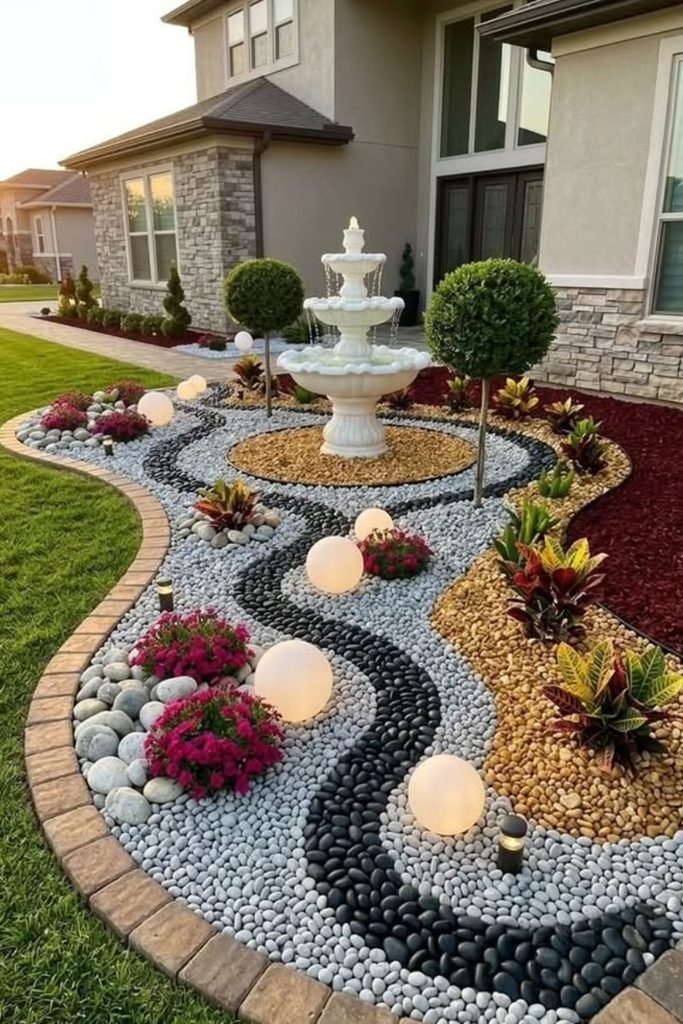
Pebble Blooms
Cut down on weeding without leaving the front garden short on color by using decorative stone as the main ground cover.
Where applicable, lay landscape fabric and add contrasting pebbles to distinguish flowing parts.
Leave dedicated planting pockets for compact blooming plants and foliage.
Smaller recurring groupings of blooms are easier to water and replace without disrupting the whole bed.
Let a fountain or cut evergreen take center stage, with flowers providing little pops of seasonal color surrounding it.
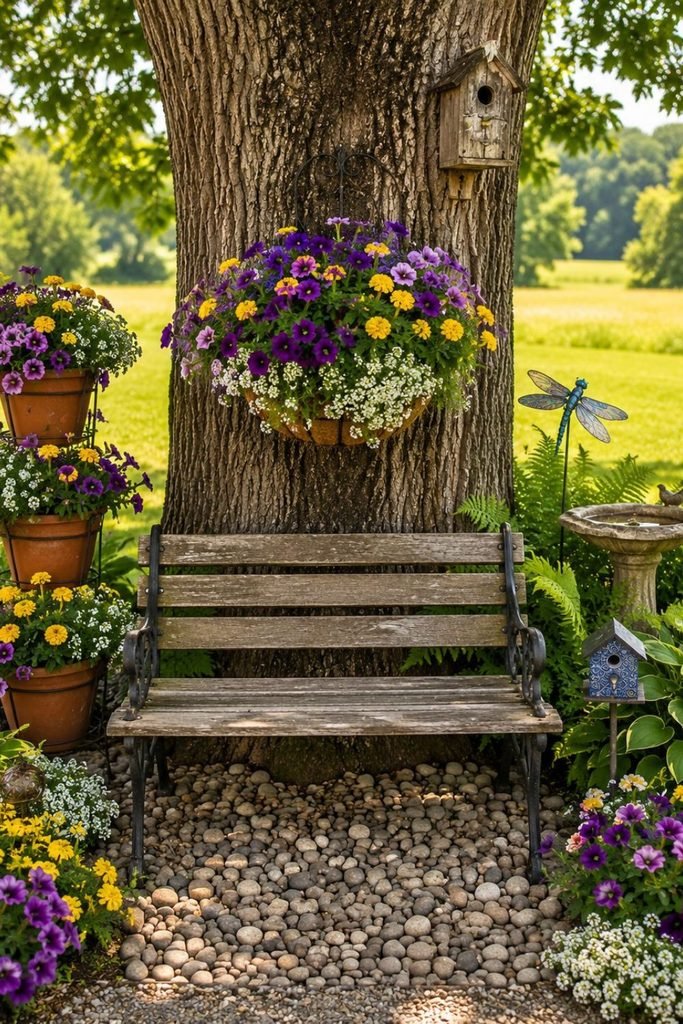
Tree Retreat
Use the cool space beneath a mature tree as a resting spot instead of struggling to grow a full flower bed directly under its canopy.
Place a basic bench near the trunk, then bring color closer with pots of flowers suitable to the light.
More blooms can be added using tiered pot stands without damaging tree roots, and planting shade tolerant plants around the outer area helps soften the transition into the yard.
Turn the corner into a tiny wildlife friendly garden with bird bath or bird house.
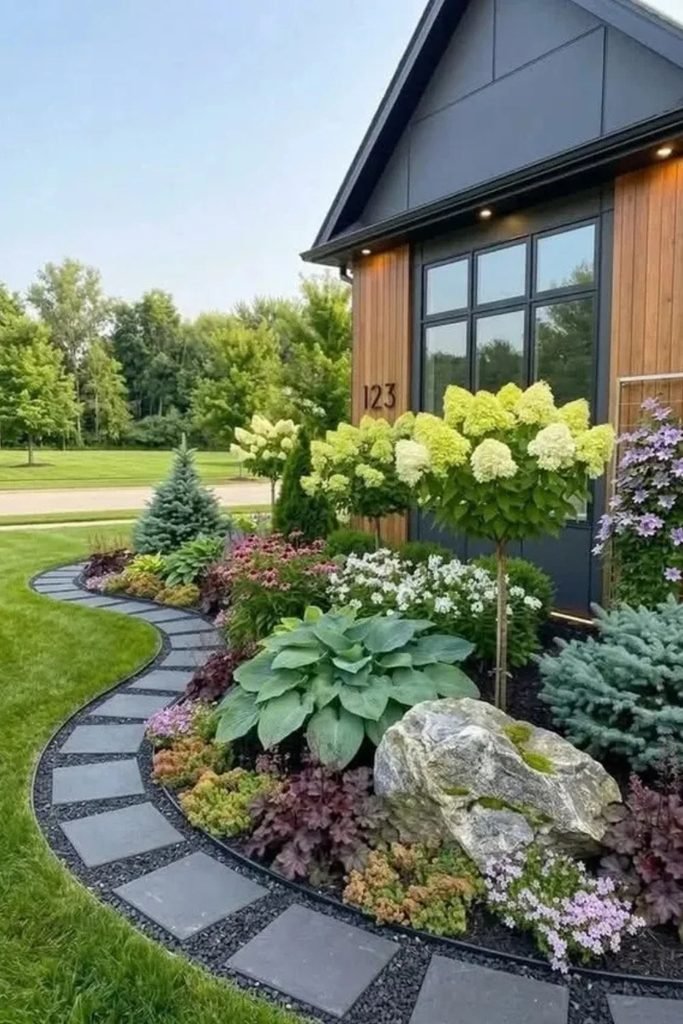
Foundation Layers
Soften a tall house wall by building the flower garden in layers rather than planting one short row along the foundation.
Begin with flowering shrubs or small decorative trees nearest the building, bring in broad-leaved plants across the middle and conclude.
Pruning should not be a constant effort, so allow each plant to attain its mature size.
A curving stepping-stone border can help separate the bed from the grass and make the planting feel connected to the entry of the home.
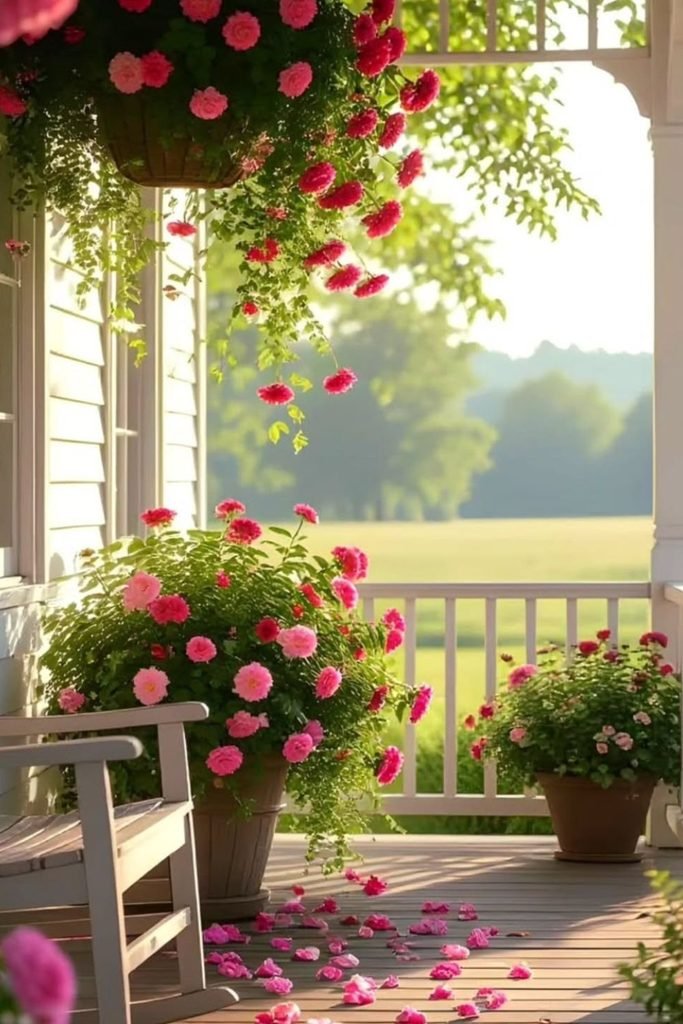
Porch Blooms
Skip digging another flower bed when your porch already gives you plenty of room for color.
Group large containers near benches and railings and then add hanging baskets above to disseminate the flowers at different levels without filling the floor.
Matching bloom colors between pots and baskets helps keep different containers feeling like one garden.
Pick flowers that go with the amount of everyday sun the porch gets, and use big pots so the soil will retain moisture longer when the weather is warm.
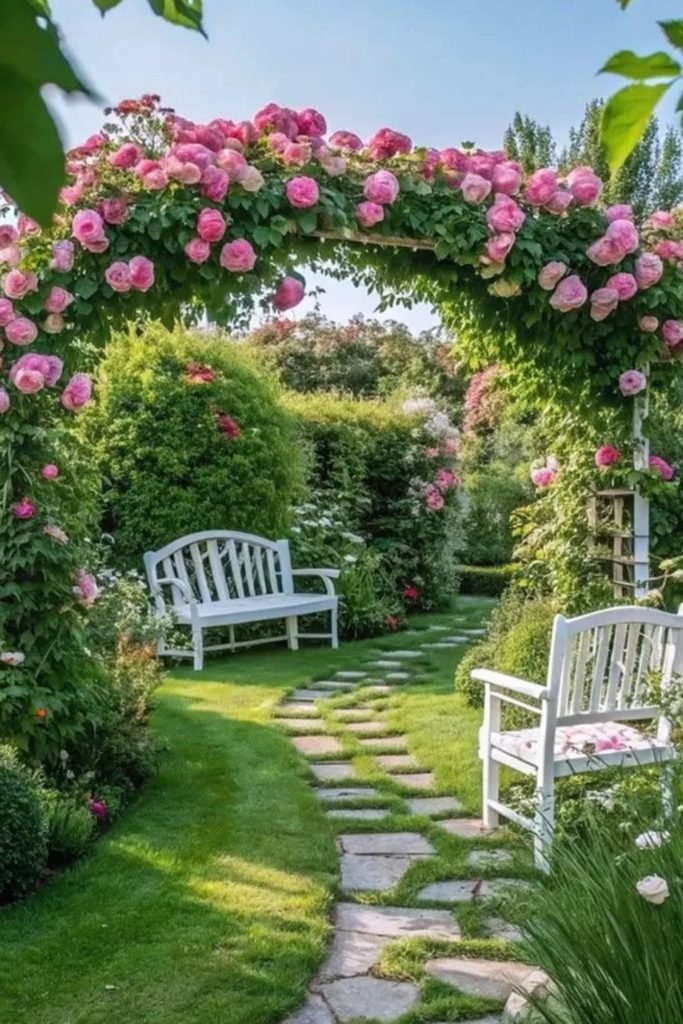
Rose Gateway
Turn the entrance to a quiet garden corner into part of the flower display by training climbing roses over a sturdy arch or pergola.
Give the climbers several hours of sufficient light, gently tie-in new canes to the supports and assist the development across the top as it develops.
And if the vegetation under the arch is kept basic, it will not crowd the space.
Visit a stepping stone path around the gateway and install a bench close by so that the rose become a destination rather than a stand alone display.
Tulip Row
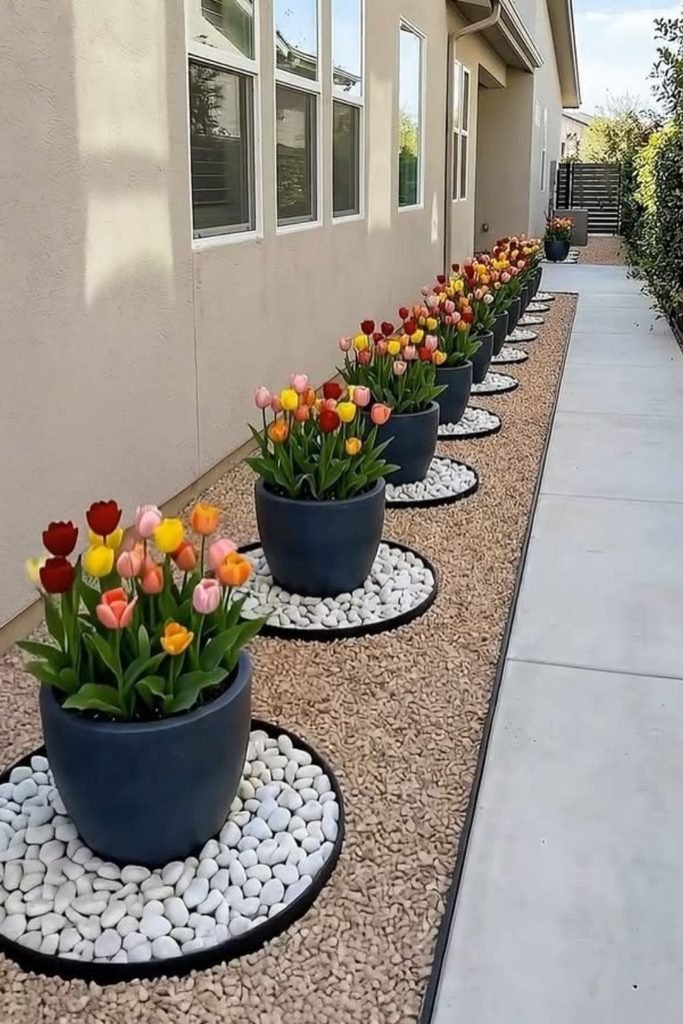
Make a narrow side yard feel intentional by repeating matching flower pots instead of squeezing traditional bed beside the walkway.
Space containers evenly along wall and fill with tulips or other seasonal bulbs in limited mix of colors.
To keep the pots separate and the arrangement clean, set each one on a small circle of gravel in a contrasting color.
Once the spring exhibit is over, replace the containers for summer flowers, bringing fresh color to the same little space without reconstructing the garden.
Entry Border
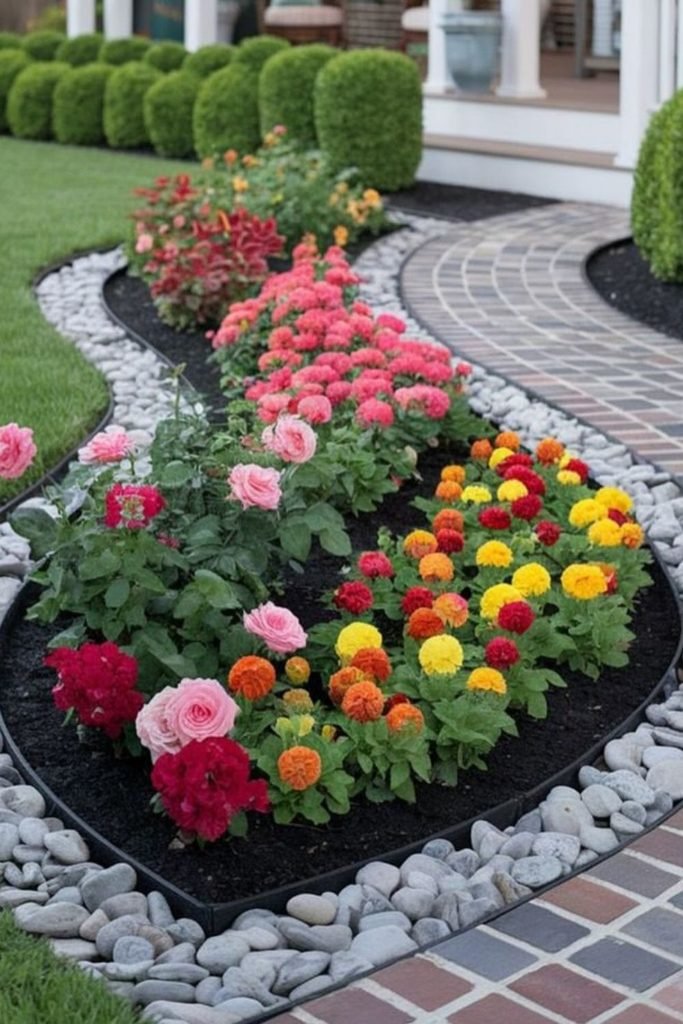
Welcome guests with flowers before they even reach the porch by running a curved bed beside the main walkway.
put the smallest flowers nearest the route, and put slightly larger roses and blooming plants behind them so that nothing overhangs the walkway.
Repeating small sets of two, three colors offers the border lots of variety without feeling dispersed.
Finish the outer edge with smooth stones or any other neat material to keep the dirt away from the lawn and make it easier to trim around the bed.
Hydrangea Walk
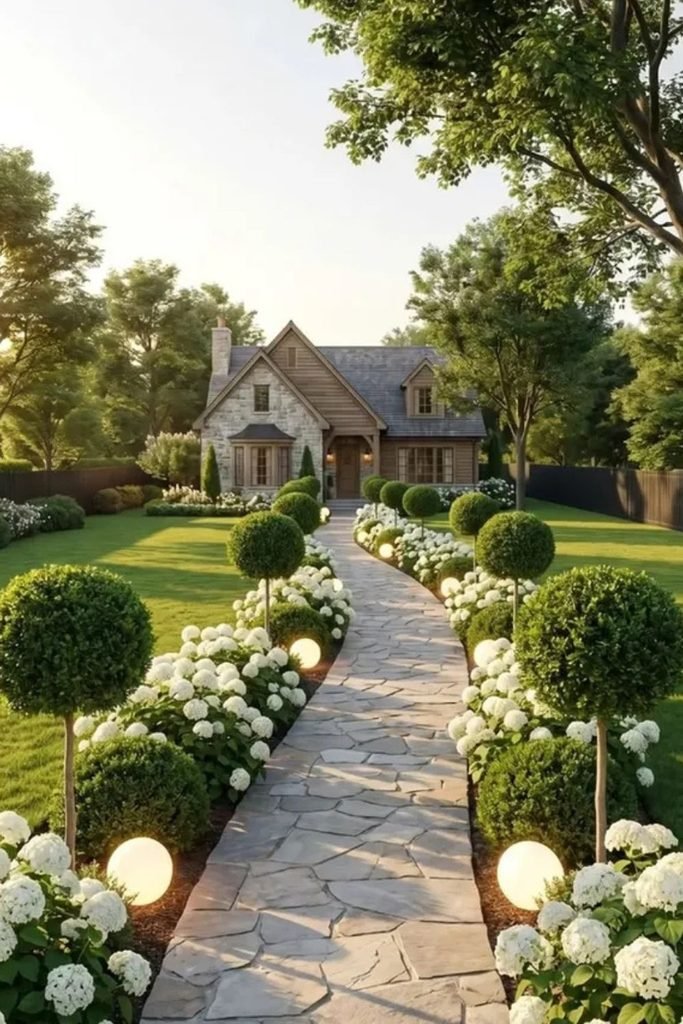
Create a calmer front garden by limiting the flower palette and letting repetition do most of the work.
Line the main walkway with white flowering bushes and then place clipped evergreens between them to maintain the shape of the entry after the flowers.
This is especially effective in bigger front yards where a lot of flower varieties may make a lengthy walk look busy.
put hydrangeas with plenty of room to grow and make sure the spot where you put them provide the light and moisture your variety needs.
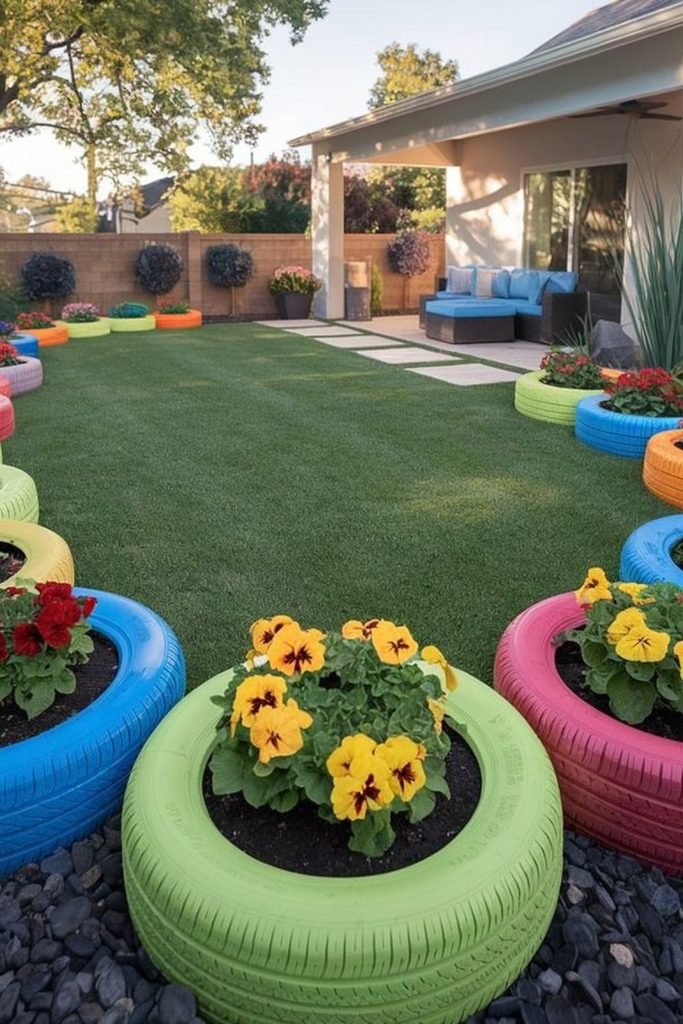
Tire Borders
Give the edge of a backyard a playful flower border without building permanent raised beds.
Old tires can be cleaned and painted, then arranged in a loose line around the lawn with fresh potting mix in each one.
Add compact seasonal flowers. Place taller plants in the back so they don’t block smaller blooms.
Plus, with individual tire planters, you can swap out the flowers as they fade, instead of messing up an entire area, so seasonal changes are much easier.
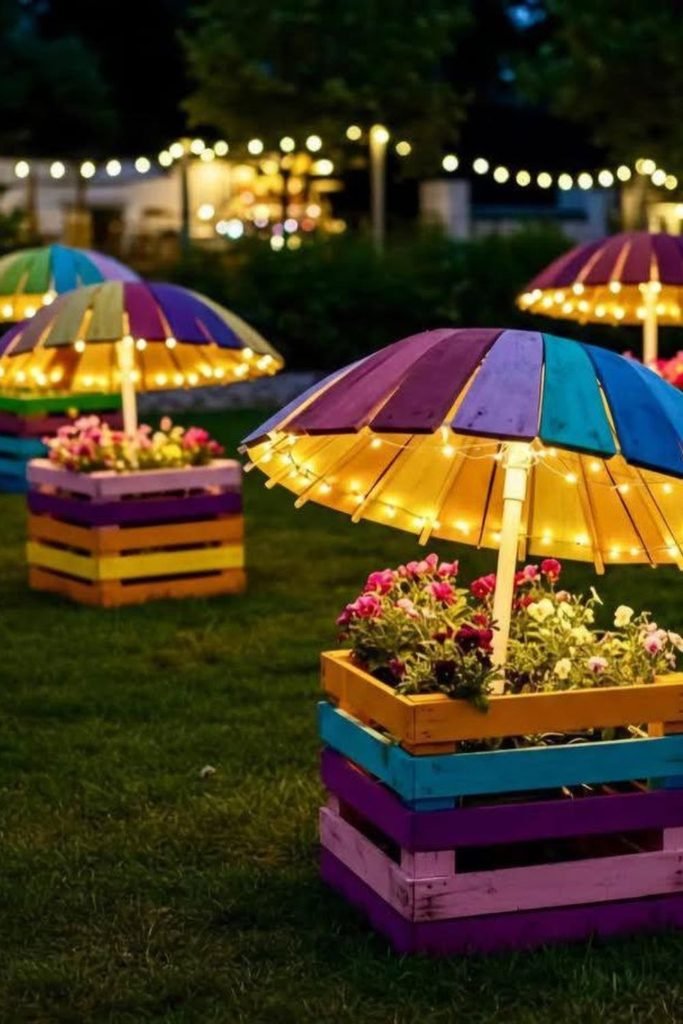
Lit Planters
Keep flower containers working after sunset by turning them into small lighting features around the lawn.
Build basic wooden planter boxes, place small blooms near the top and hang a light canopy over each to accommodate warm outdoor string lights.
If you have a large backyard, you are able to place multiple planters about to create pockets of color without having to dig permanent beds.
Use weather-proof lighting and allow enough room around the flowers for watering and air circulation so the beautiful setup never makes ordinary plant.
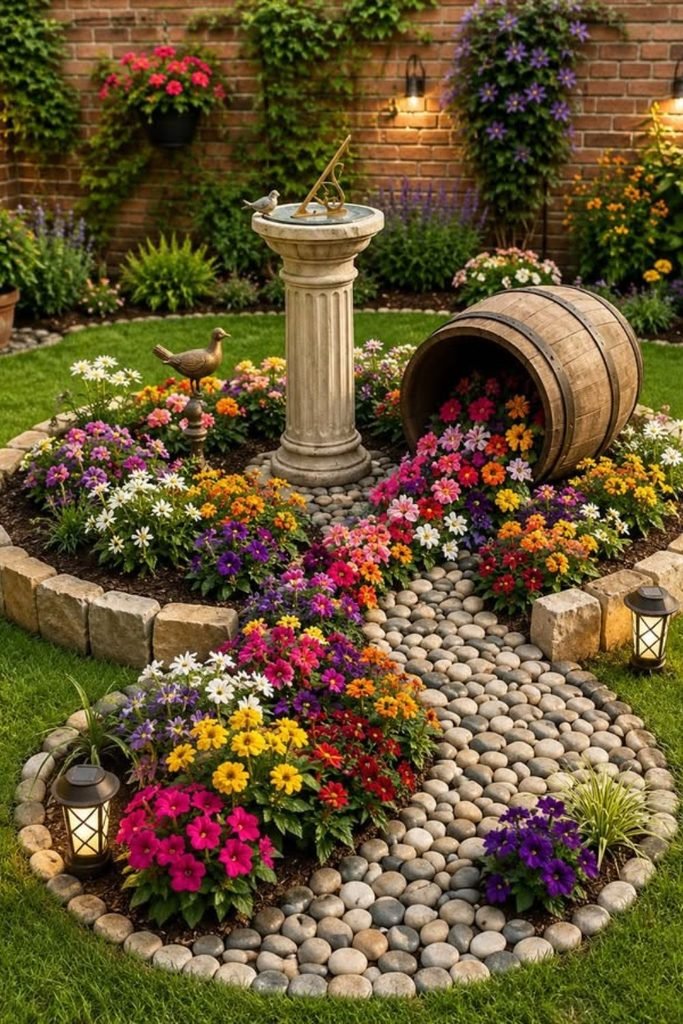
Barrel Spill
Turn a plain patch of lawn into a playful focal point by laying an old wooden barrel on its side and letting flowers appear to spill from the opening.
Plant out in a loose stream, using repeating colors to make the effect easy to follow.
Center for contrast & to eliminate exposed dirt, a pebble strip can go through.
Keep the surrounding bed nicely edged, and if you want the feature to feel like a complete garden destination, install a birdbath.
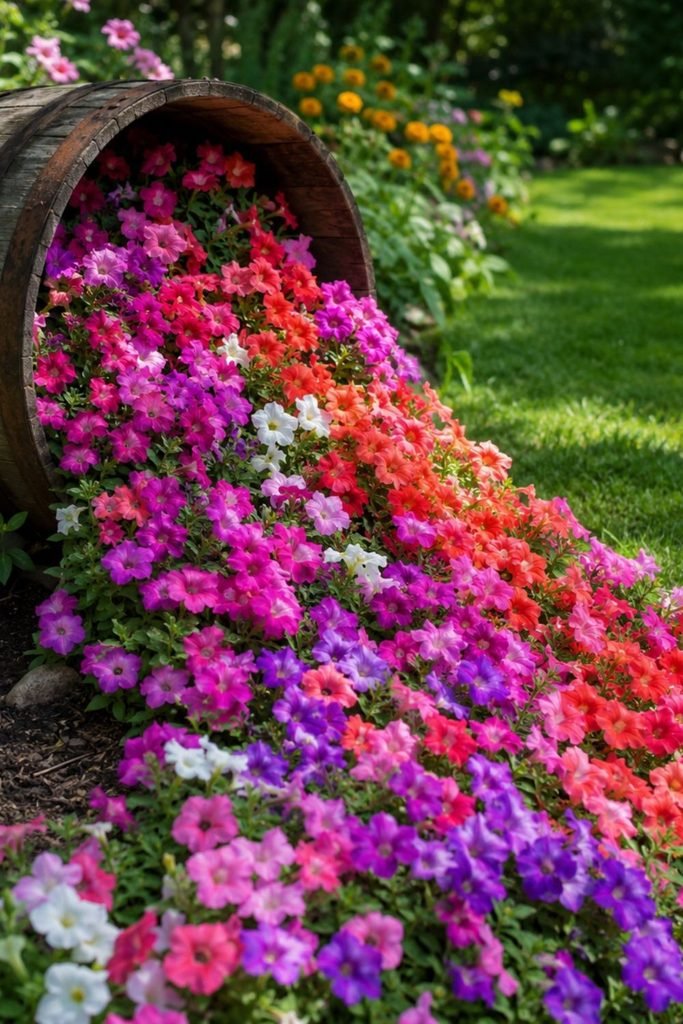
Flower Cascade
Make an old barrel feel like part of the planting by letting a thick ribbon of flowers flow directly from its opening into the garden.
Pick low, spreading blossoms with like sun and water requirements, then plant them near enough to obscure most of the dirt as they fill in.
Instead of breaking each shade into rigid blocks, blend a few related hues throughout the stream.
Set the barrel near a tree, fence or bed edge so the cascade begins naturally without taking over the yard.
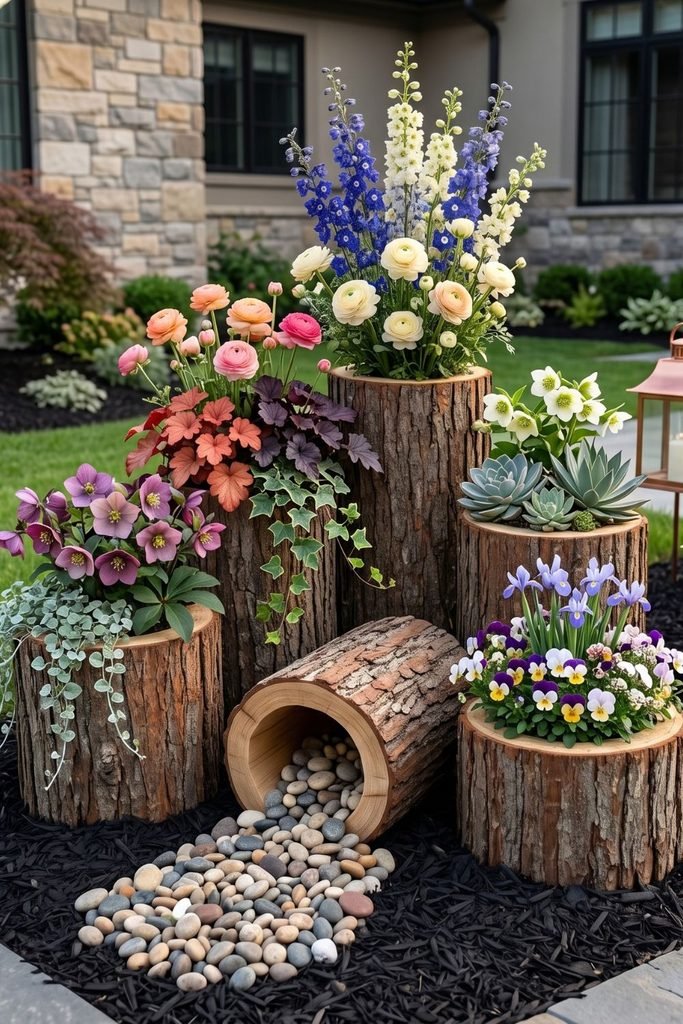
Stump Planters
Bring height into a flat flower bed by turning hollow logs or sturdy stump sections into natural raised planters.
Plant a few at different levels, fill the planting holes with good draining soil and give each a different flower combination while repeating a few colors.
Trailing plants are perfect on taller items to soften the harsh edges of the wood.
Place the group on mulch near a patio or front walkway, where the wood can offer support without the need for another permanent garden area.
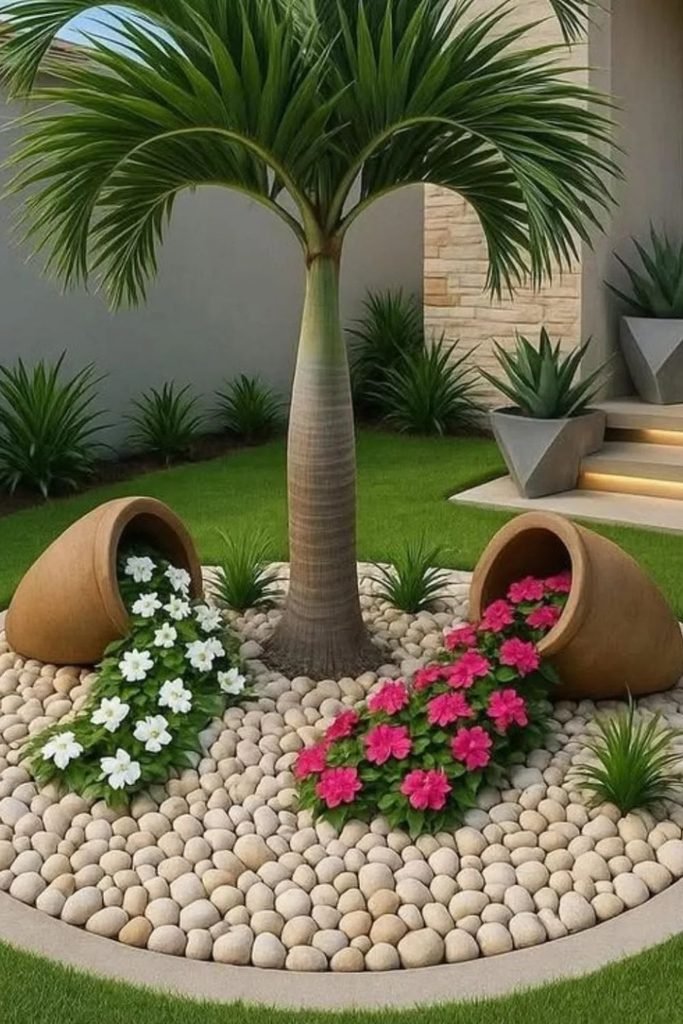
Pot Streams
Fill the bare ground around a feature tree without creating a crowded flower bed by using tipped pots as the starting points for narrow bloom trails.
Bury large clay pots partially so they stay stable, and then extend each color outward with low growing flowers that can expand into a dense strip.
To inhibit weeds and visually distinguish the flowers, top off the rest of the soil with pale pebbles.
Two opposing bloom colors work especially well here,because each stream is easy to follow rather than merging into one chaotic planting.
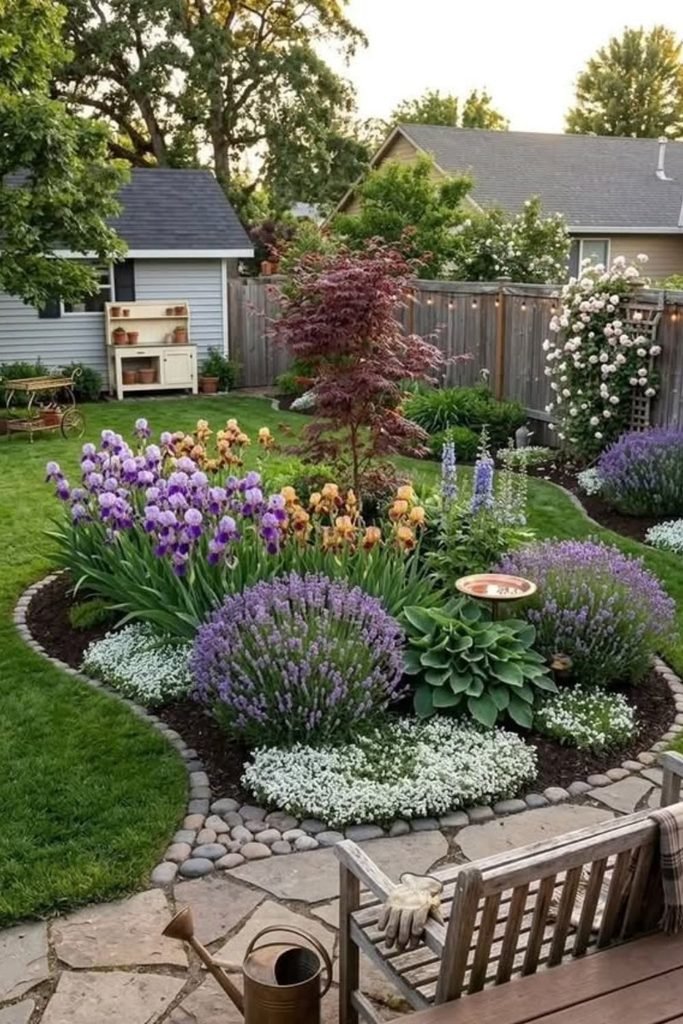
Island Garden
Break up a wide lawn with a freestanding flower bed that can be enjoyed from every side.
Put the tallest element in the middle, such as a small decorative tree or upright flowers, then step down via medium perennials to low edging blooms.
Repeat hardy perennials such as irises, lavender, hostas and compact groundcovers to provide color and texture to the bed.
A smooth stone edging around the island keeps grass out and makes mowing straightforward.
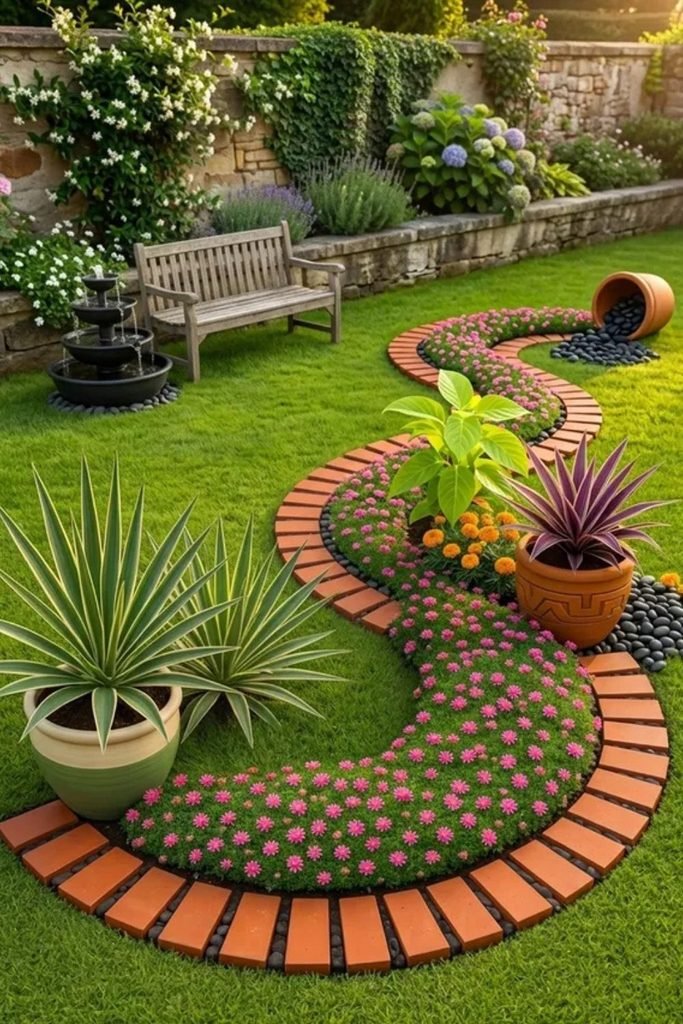
Ribbon Garden
Make a large lawn more interesting by running one narrow flower bed through it in a long, sweeping curve instead of adding another bed around the perimeter.
Outline the design with brick edging, then plant most of the strip with a single low-growing flower, so that the curve remains clear to observe.
In the bigger areas, break up the pattern with a few taller plants or containers.
Limiting your planting palette can also make deadheading, watering and seasonal clean-up much simpler.
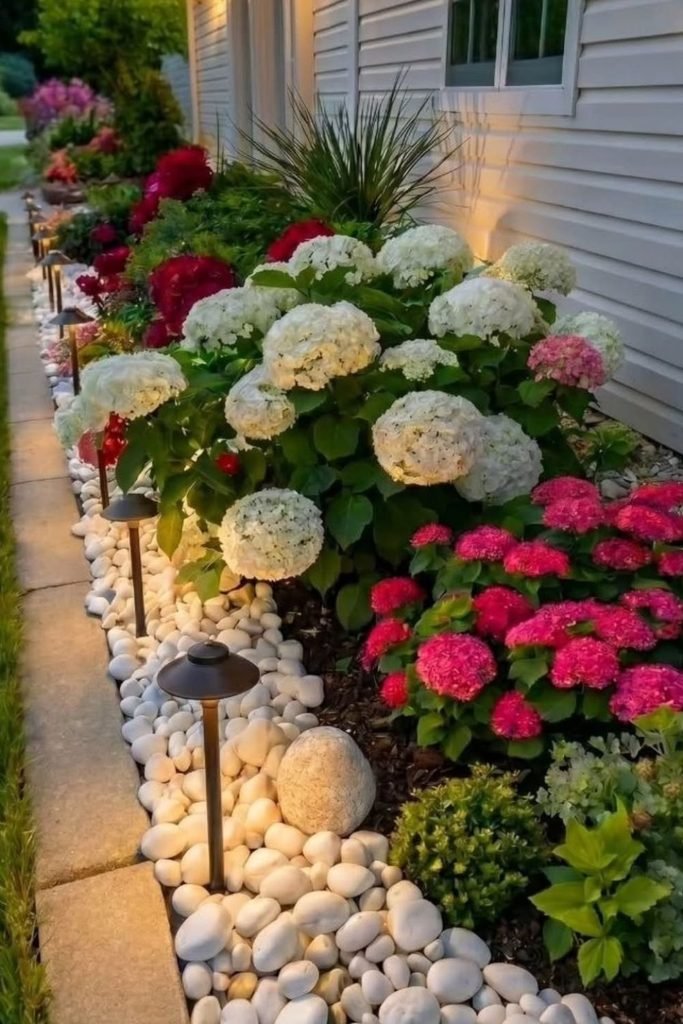
Hydrangea Border
Brighten a plain foundation bed by letting hydrangeas provide most of the flower power instead of mixing many high-maintenance varieties.
Group plants in generous clusters, leaving space for mature growth, and use smaller foliage plants between groupings to avoid the border.
The front is finished with white pebbles to provide a neat separation from the walkway, and to help avoid muddy splashes on lower foliage;
If you want the flowers to continue to make a statement after dark, place low path lights among the stones.
FAQs
How Can I Keep My Flower Garden Blooming Longer?
Choose flowers that bloom at different times so that as one set of blooms starts to fade another set begins to flower.
Many plants will also continue flowering longer if they are regularly deadheaded, watered correctly and fed when necessary.
Which Flowers Work Best for Beginner Gardeners?
Opt for forgiving flowers such as marigolds, zinnias, coneflowers, daylilies or geraniums.
Start by selecting types that fit your local climate and sunshine conditions. A suitable plant in a suitable site will require far less maintenance.
