
24 Drought Tolerant Landscape Ideas
Reducing lawn sounds easy enough, until you consider what will fill that vacant area.
You want to save water but a yard of heated gravel and some sparse plants is probably not what you had in mind
In this article, you’ll find 24 Drought Tolerant Landscape Ideas that can transform your outdoor space.
Let’s jump in!
How Can Drought Tolerant Landscaping Stay Beautiful Without Grass?
Take off the grass and you don’t have to fill every patch of open ground with gravel. Instead, build it in layers if you want to keep the yard full.
Start with a small tree or taller shrubs for height, then add appealing grasses and flowering perennials in the middle, and low groundcovers to hide any barren soil.
Rather than growing a different variety in each area, plant several of the same plants across the yard for a more orderly look.
Perhaps some mulch or stepping stones or a gravel path between planting areas would give the yard some breathing room.
Select plants that are suitable for your local climate and group plants with comparable water needs to save water without making your garden look dry.
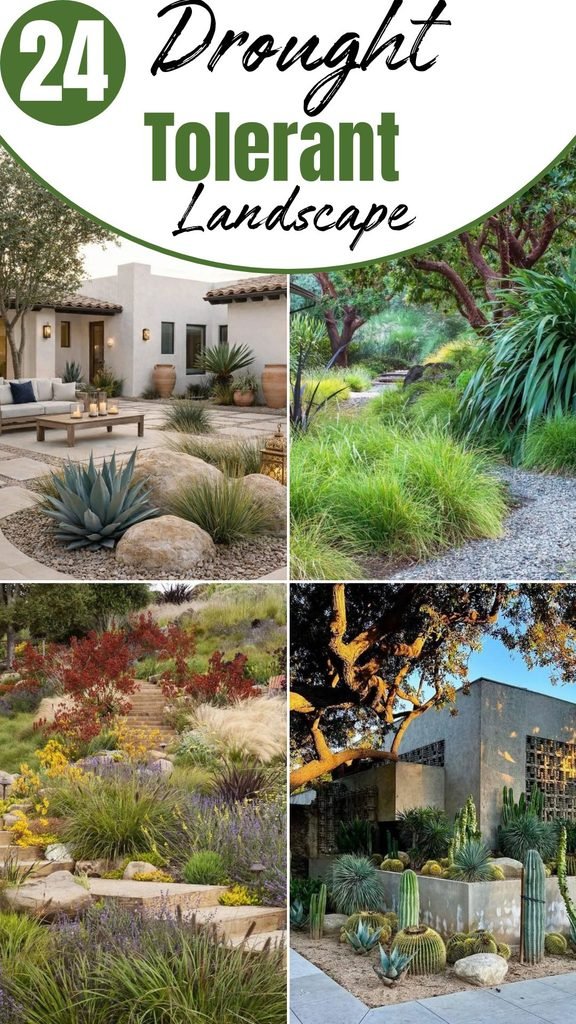
Desert Courtyard
Turn a sunny courtyard into a low-water retreat by letting bold plants and natural stone carry most of the design.
Place a huge agave in the middle of rounded boulders, then soften the hard edges with clusters of drought-tolerant ornamental grasses.
Gravel Between Oversized Pavers Keeps the Thirsty Lawn Out of the Plan, While Giving You Clear Walking and Seating Zones Where possible.
Leave one mature tree for shade, and repeat smaller xeric plants near the walls so the courtyard reads as connected and not excessively rocky.
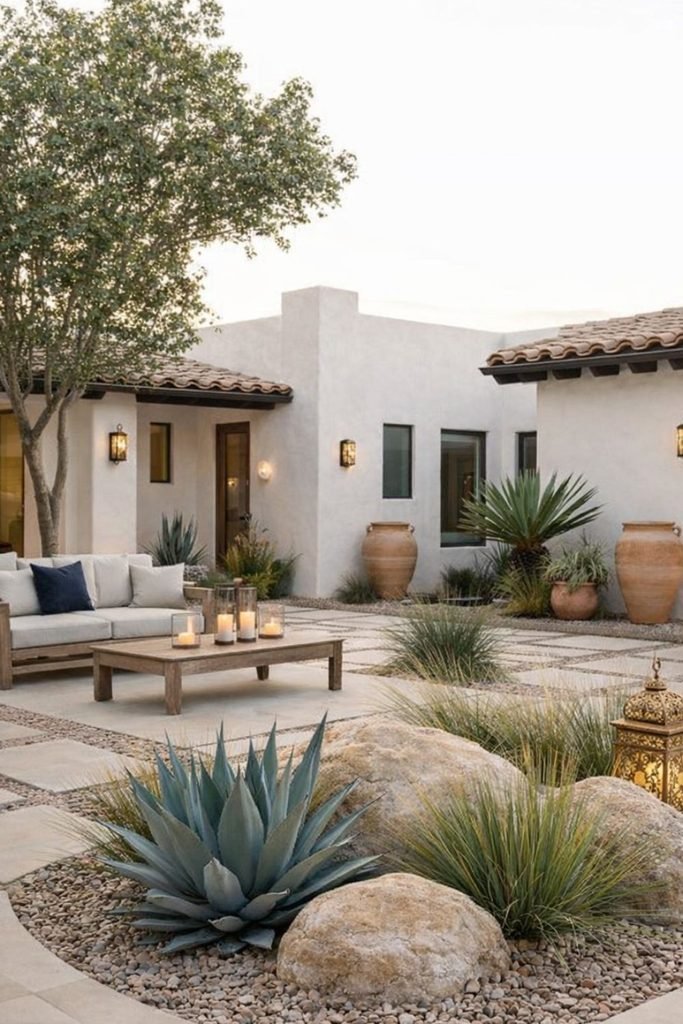
Grassy Layers
Skip the bare gravel-yard effect by filling larger spaces with repeated clumps of drought-tolerant grasses and bold strappy plants.
Mature trees can provide useful shade overhead and grasses at lower levels cover exposed soil and bring subtle movement around the garden.
A narrow gravel road runs through the planting masses so you may navigate across the space without adding turf.
For a natural full look, select plants that are regionally suitable and have similar water demands and vary the heights rather than mixing too unrelated varieties.
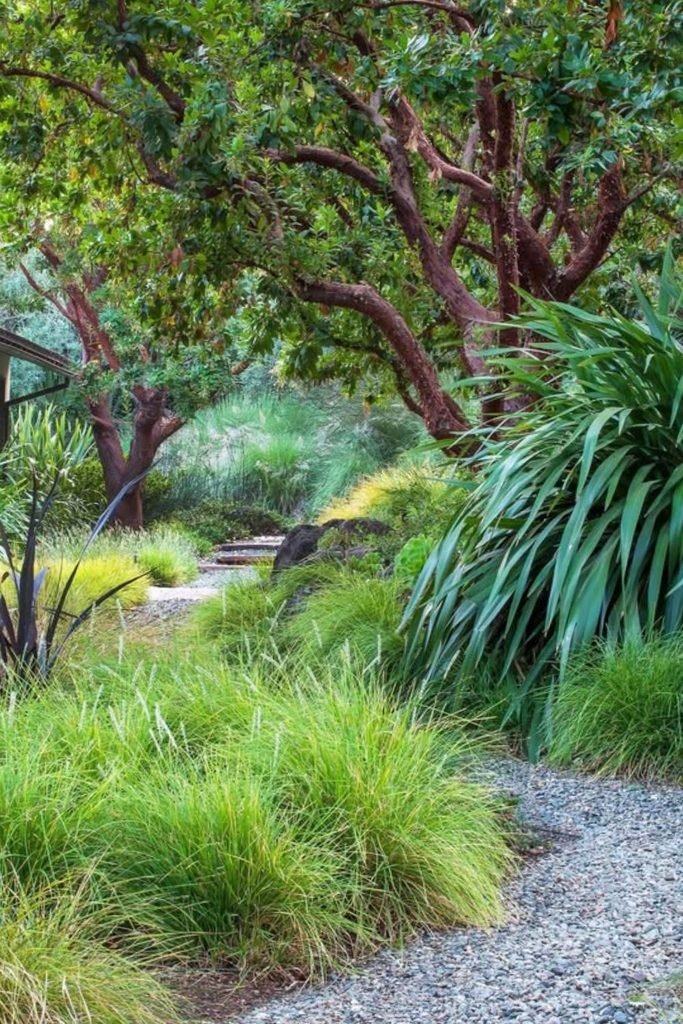
Colorful Slope
Bring a dry hillside to life by planting in broad sweeps of color instead of relying on thirsty lawn to cover the grade.
Combine drought-tolerant flowering perennials with airy grasses, low ground covers and a few taller shrubs.
The roots will assist to retain the soil in place and the varying heights will keep the slope looking full.
Create stone steps across the center to ease access, and tuck boulders around planting pockets to break up the elevation.
The garden is not dispersed, but vibrant, by repeating purple, yellow, red and green in distinct groupings.
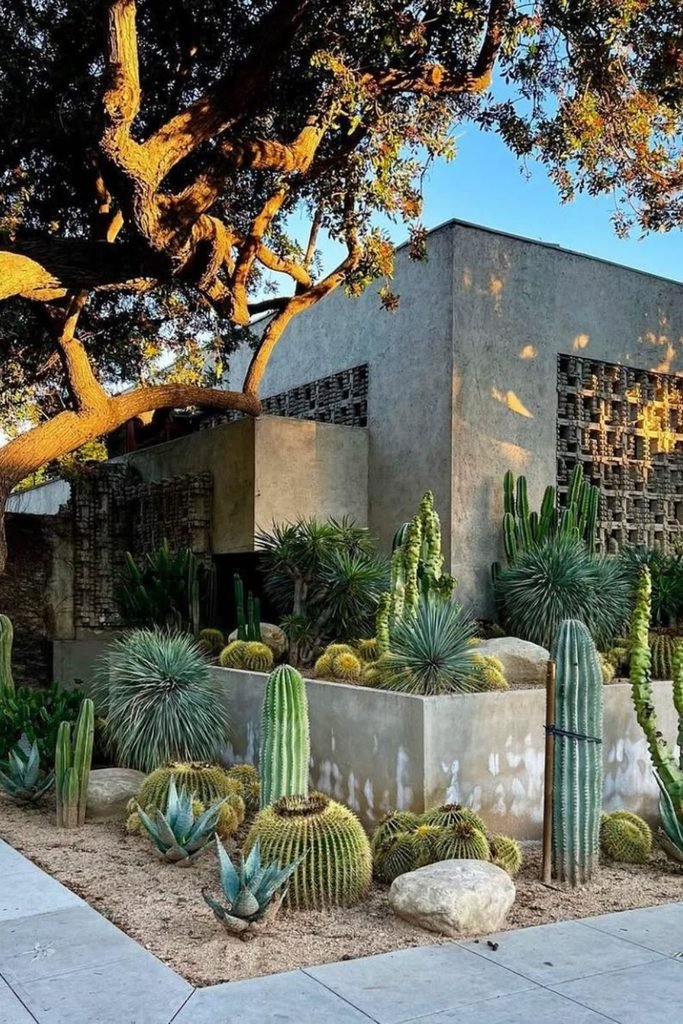
Cactus Layers
Give a hot front yard strong character by mixing cactus shapes instead of depending on flowers for interest.
Tall columnar species make good vertical anchors, spherical barrel shapes in the middle, low agaves along the sides for clear layering.
Open soil might be associated visually with pale gravel and a few huge rocks. 6.
If possible, save a mature shade tree to balance the exposed desert bed. Consider mature spacing before planting especially near walkways.
Layered Border
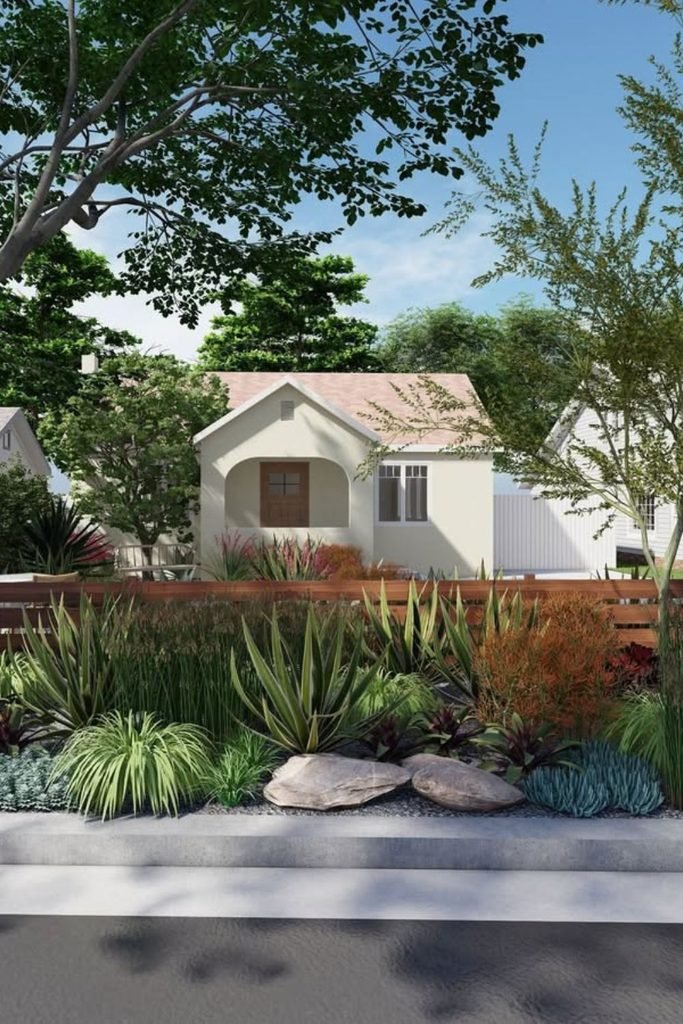
Use a deep roadside border when you want drought-friendly planting to provide color without leaving the front yard exposed.
Place taller architectural plants and erect grasses in the back, medium shrubs in the center, and finish the curb with spreading succulents and soft grass clumps.
Big flat rocks can break up the planting and provide the eye a place to stop.
By repeating a few plants across each layer, the border appears bigger and more structured, but yet has enough area for everything to grow to maturity.
Lit Walkway
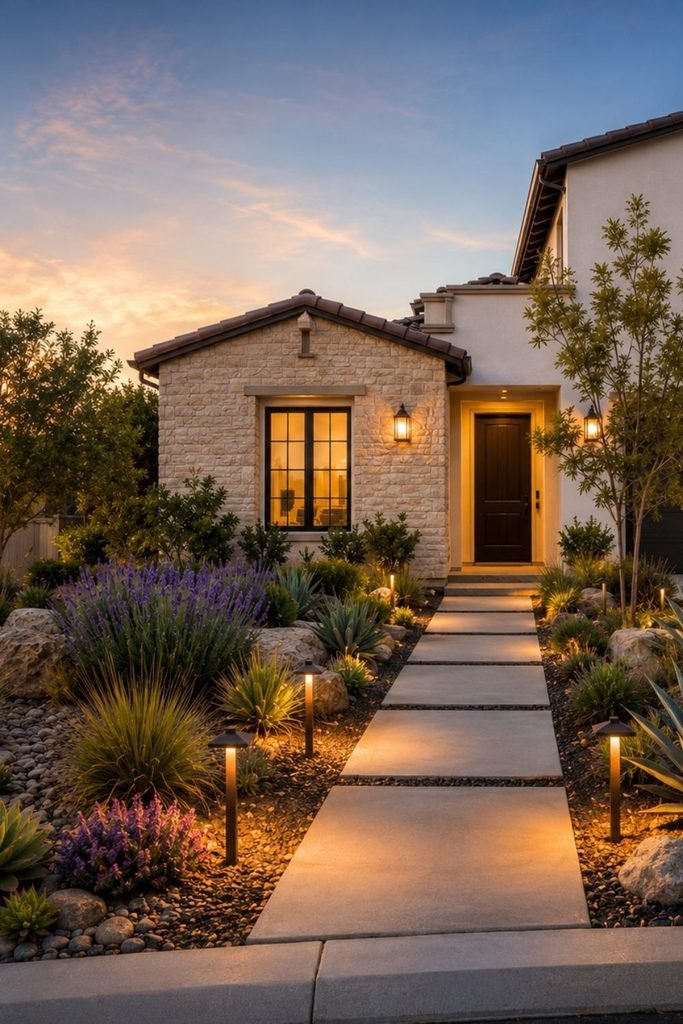
Guide attention straight to the entrance by running wide stepping slabs through drought-friendly planting instead of lawn.
Plant the taller agaves and flowering shrubs slightly back from the path, and fill the lower spaces with low succulents, grasses, gravel.
Small path lights highlight plant groupings, making for a safer walk after dark, and drawing attention to their shapes and textures.
For a cleaner appearance repeat the same few plants on each side without making the arrangement absolutely symmetrical.
Meadow Retreat
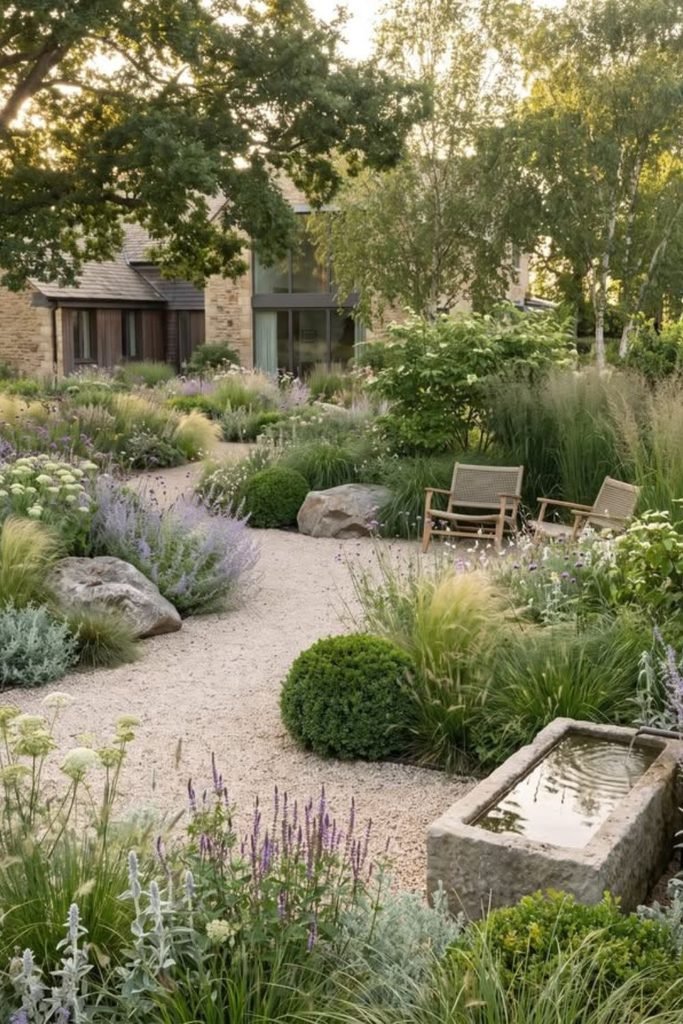
Trade a wide lawn for a loose meadow garden when you want the yard to feel soft rather than obviously xeriscaped.
Sweep gravel walkways through large clumps of attractive grasses, silvery leaves, flowering perennials, and rounded evergreen shrubs.
Tall trees overhead make the space cooler and a small seating pocket gives the planting a function.
Choose types suitable to your location and with overlapping bloom dates so you’ll have color and texture for more than one, fleeting season.
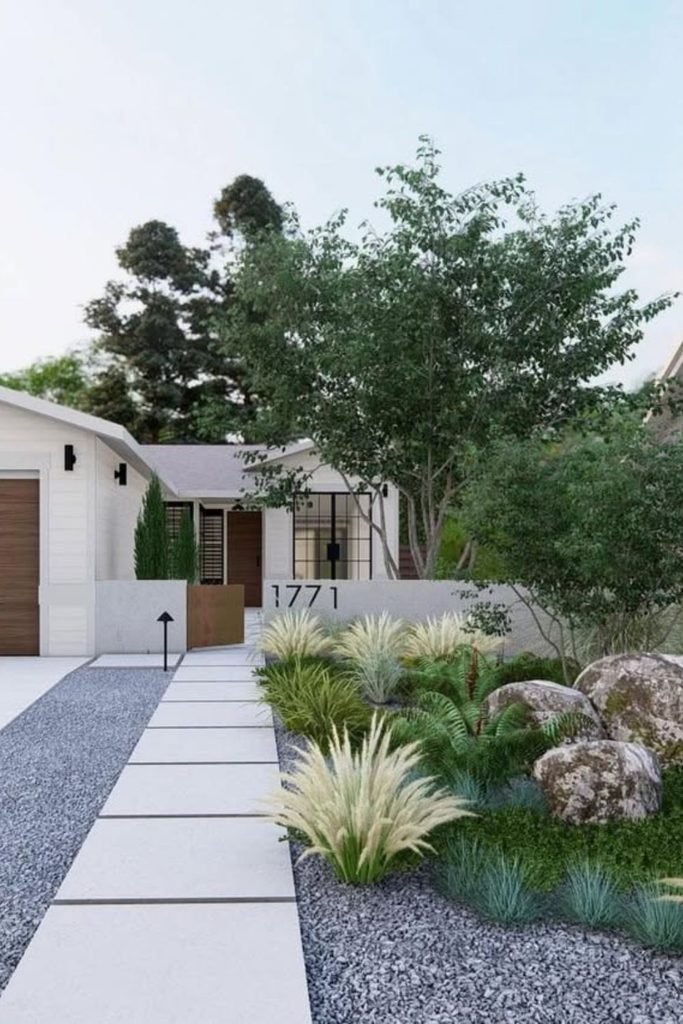
Boulder Entry
Make a narrow front yard feel established by pairing oversized boulders with soft drought-tolerant planting instead of filling the strip with lawn.
Use a small shade tree to anchor the bed, and tuck in flowing decorative grasses and compact groundcovers around the stones to reduce their weight.
The entryway is maintained clean and modern with a straight slab walkway and gravel fills the rest of the open land.
Give young plants enough of space so that they can spread freely and not eventually choke the way.
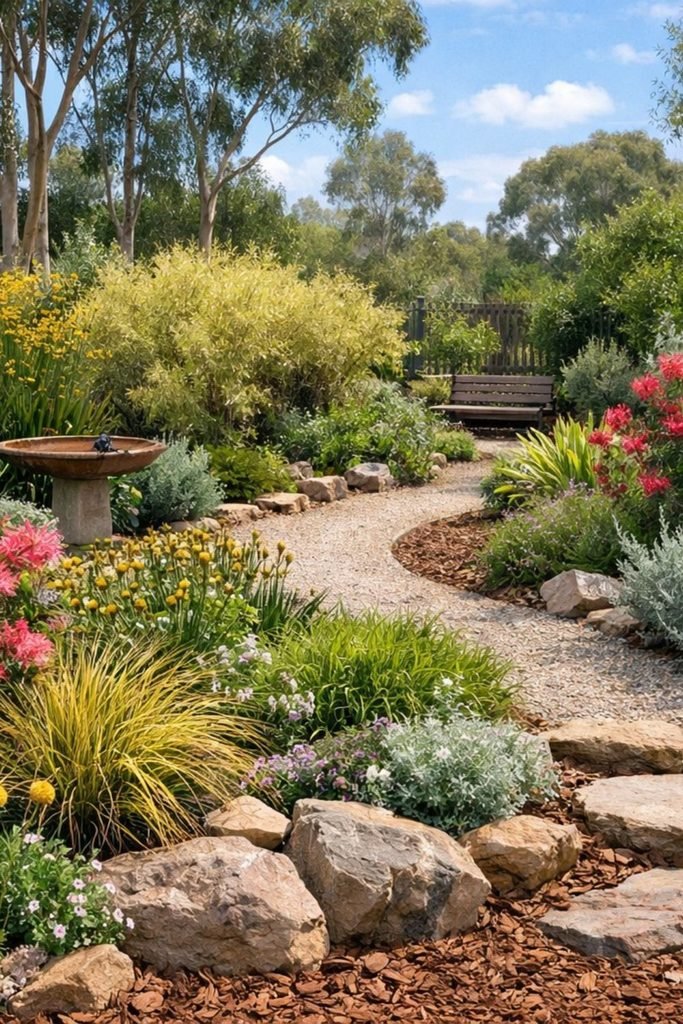
Pollinator Path
Bring more life into a low-water garden by lining a winding gravel path with long-blooming, pollinator-friendly plants suited to your climate.
Combine flowering shrubs and perennials with silver foliage and fine grasses, then repeat a few hues farther down the road so the planting feels connected.
Loose beds are well defined and the mulch is retained by natural rocks.
If appropriate, add a modest birdbath, away from where foot traffic is strong, to give visiting birds and insects still another reason to use the garden.
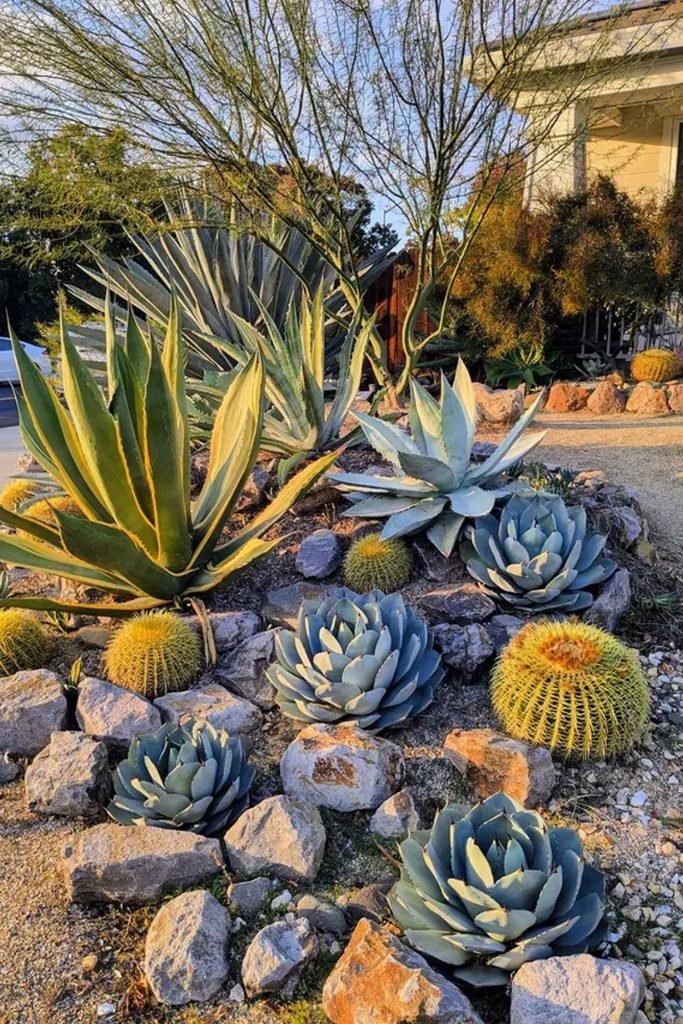
Succulent Mounds
Build a dry front bed around strong plant shapes when flowers are not the main attraction.
Group giant agaves with smaller rosette succulents. Sprinkle circular barrel cacti in between for major height and shape changes.
Rough boulders put around each group make the planting feel nestled into the ground rather than lined up in rows.
Provide plenty of room for each specimen to develop fully and save this technique for sunny locations with good drainage.
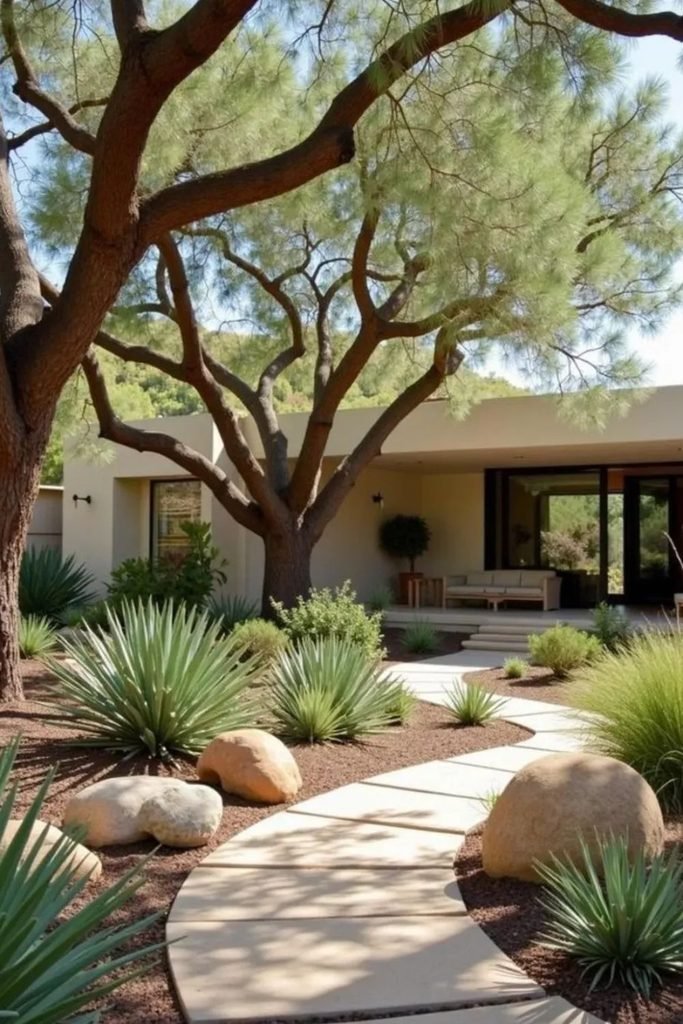
Shaded Xeriscape
Keep mature trees at the center of your plan when you want a low-water yard that still feels cool and comfortable.
Plant drought-tolerant yuccas, small shrubs and airy grasses under the canopy, being sure to choose types that can take the shade you have.
Reddish gravel or mulch can substitute lawn, and rounded rocks offer shape without overwhelming the plants.
Create a basic paved path through the bed to give the open ground a clear purpose and water established trees separately.
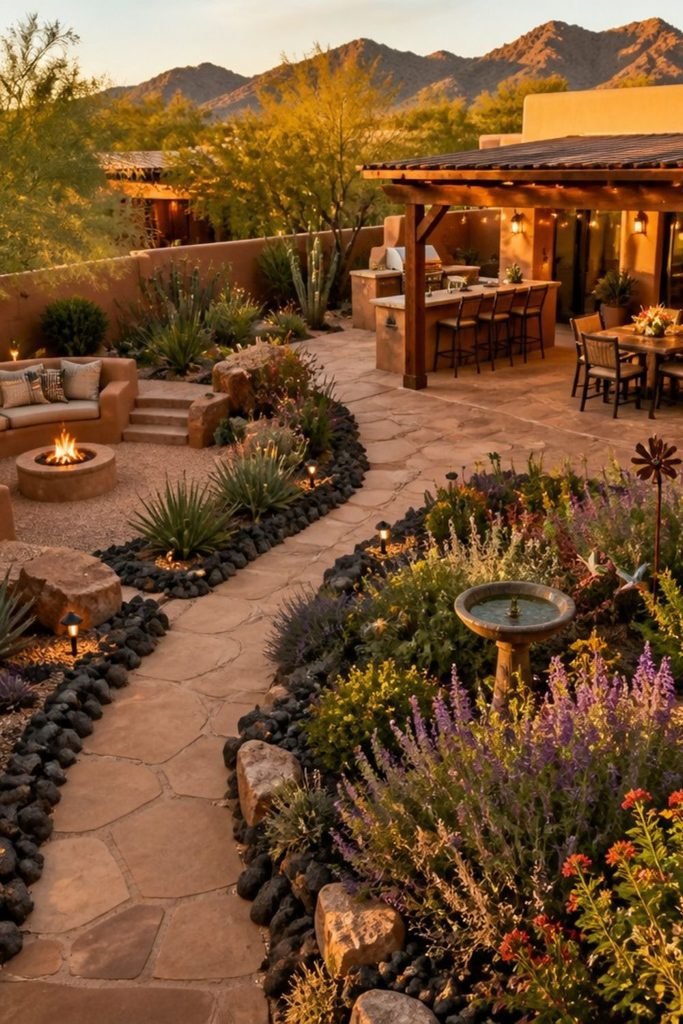
Desert Entertaining
Let the planting frame your outdoor living space instead of using lawn as empty filler around it.
Keep eating and sitting areas on stone paving, and border them with drought-tolerant flowering perennials, agaves, barrel cacti and airy desert shrubs.
The beds can be defined with dark rocks, and the brighter blooms can show out without broad gravel fields.
Provide drip irrigation in planted zones to give water to each group at the roots rather than over the whole patio.
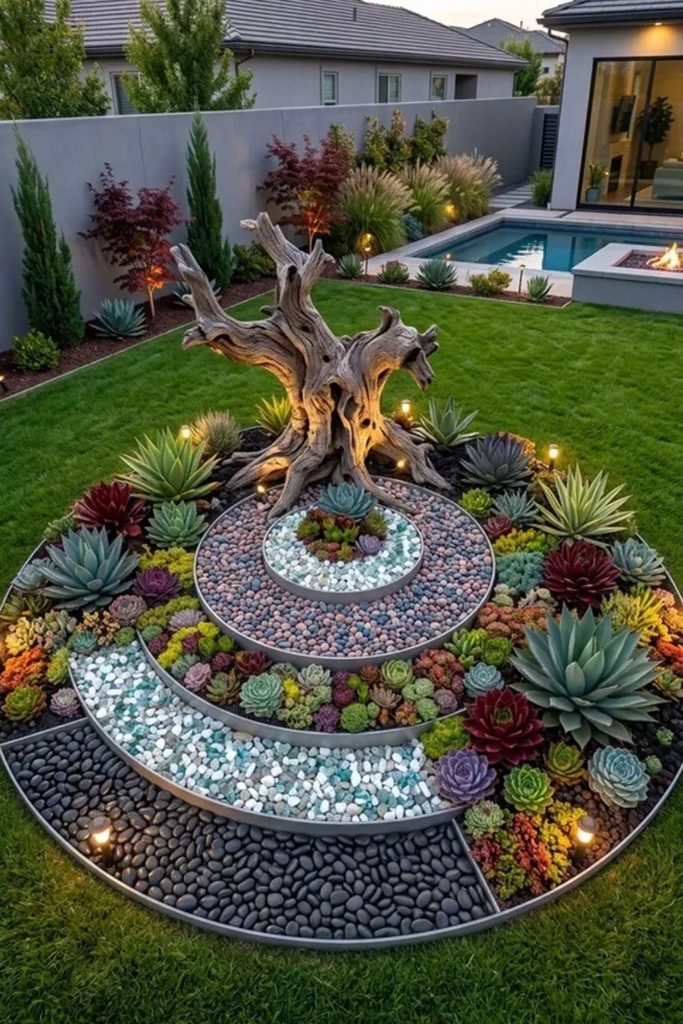
Succulent Spiral
Turn a small section of the yard into a focal garden by arranging drought-tolerant succulents in curved, layered bands.
Start with a sculptural centerpiece in the center then repeat agaves and smaller rosette succulents around it.
Using varied pebble sizes to differentiate each planting zone. A metal edge keeps the spiral sharp as the plants spread.
Choose types with different leaf colors and mature sizes so the pattern remains evident rather than becoming a solid mass.
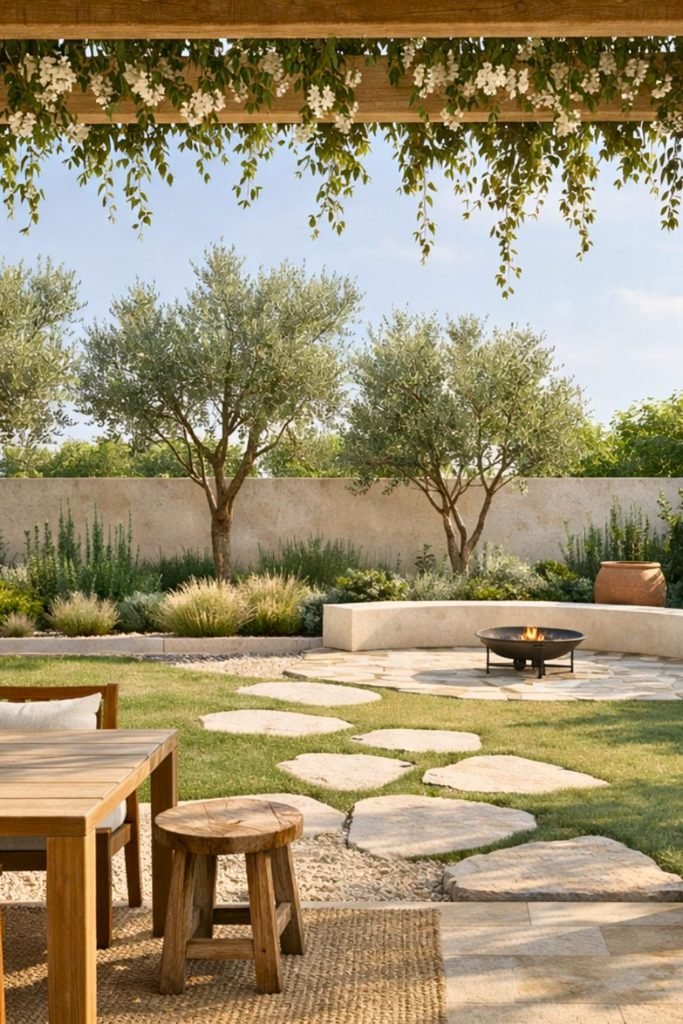
Mediterranean Shade
Keep the backyard cool without giving up the dry-climate style by using small drought-tolerant trees as the main planting layer.
Plant along the edge for filtered shade and fill in underneath with rosemary-like shrubs, soft grasses and low silver-green plants with comparable water demands.
Pale stone surrounds the seating area to keep the space bright and a few stepping stones connect outside zones without requiring a full grass.
If you keep grass, keep it to the part you use and let plants take over the rest of the ground.
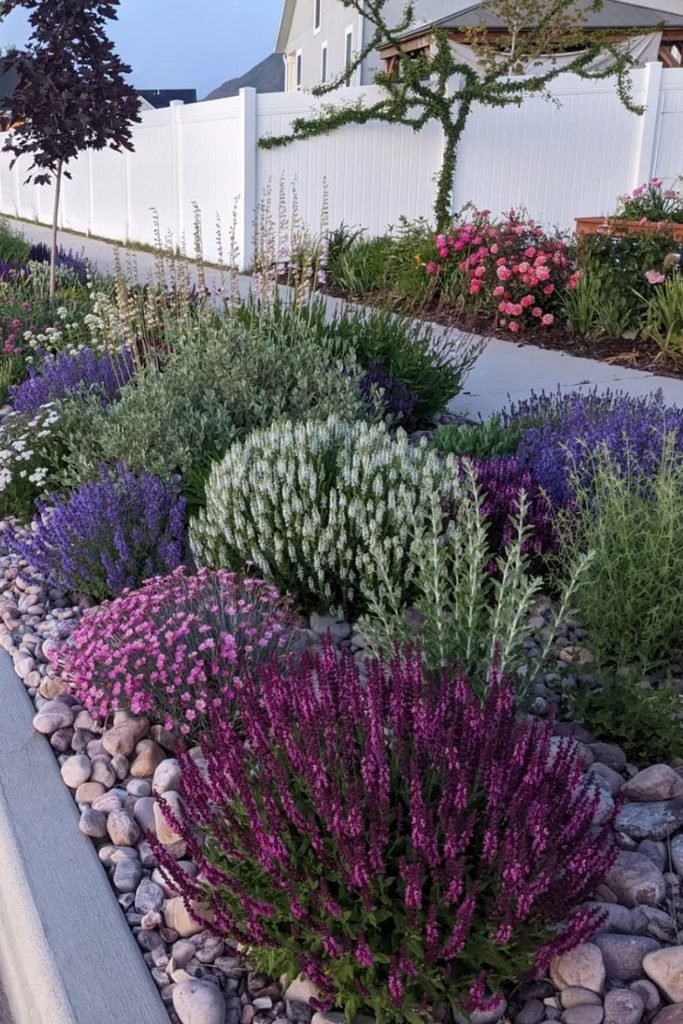
Blooming Border
Pack a sunny roadside bed with drought-tolerant flowers when you want water savings without losing the feel of a traditional garden.
Repeat circular groupings of purple, pink and white blossoms, then intersperse silver-leaved plants to break up the intense colors.
River stones around the plants keep the border appear neat and allow room for each clump to spread.
Select perennials that are suited to your local conditions and have varying bloom times so one group can take over as another begins to fade.
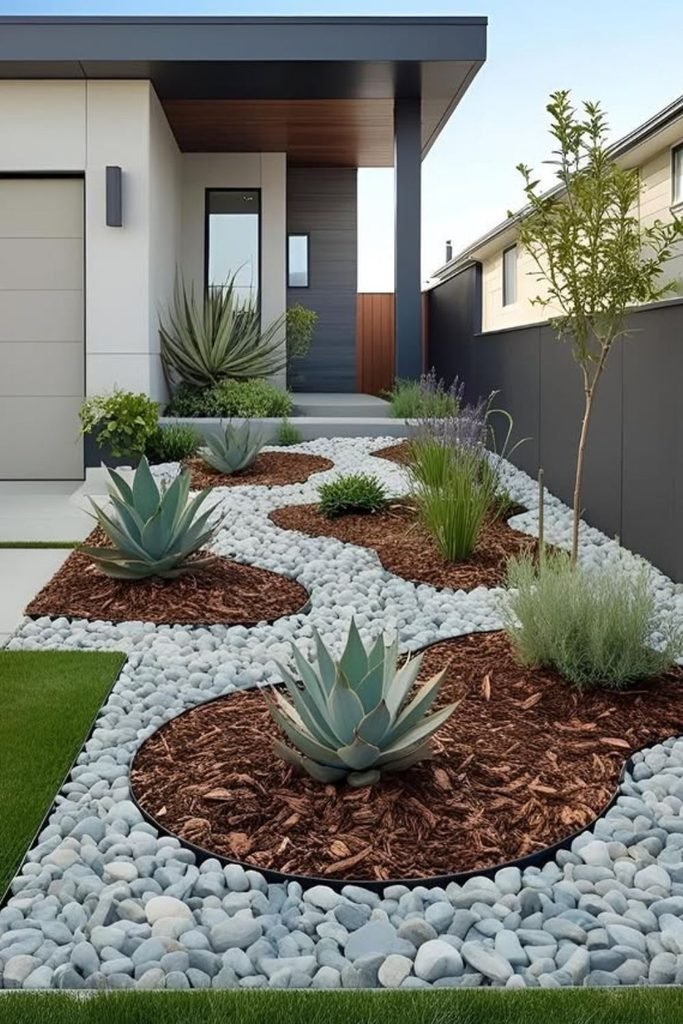
Mulch Islands
Break up a rock-heavy side yard with curved mulch pockets that give each drought-tolerant plant its own growing zone.
Sculptural agaves are placed on the broader islands, with compact grasses, lavender-like plants and one little tree to add softer height through the space.
Light pebbles can flow between the beds for contrast. Dark edging prevents the mulch from seeping into the stone.
Grouping plants with similar water needs will also make setting up drip irrigation easier, so you won’t have to water every square foot of the garden.
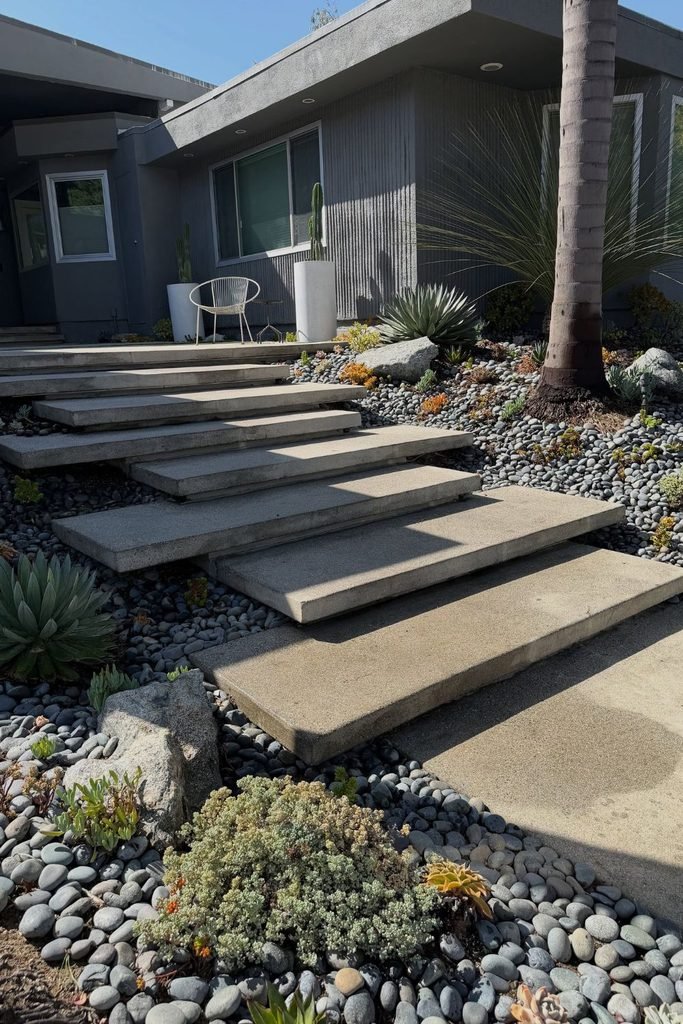
Rock Steps
Make a sloped entrance easier to manage by turning the grade into broad concrete steps surrounded by low-water planting.
Fill in the areas around each level with compact succulents and agaves, and sprinkle in a few boulders to let the hardscape blend organically with the garden.
Dark pebbles hide exposed soil and provide greater contrast for little plants.
Save taller architectural plants for the upper bed, where they will add height without obstructing the walkway or crowding the lower stairs.
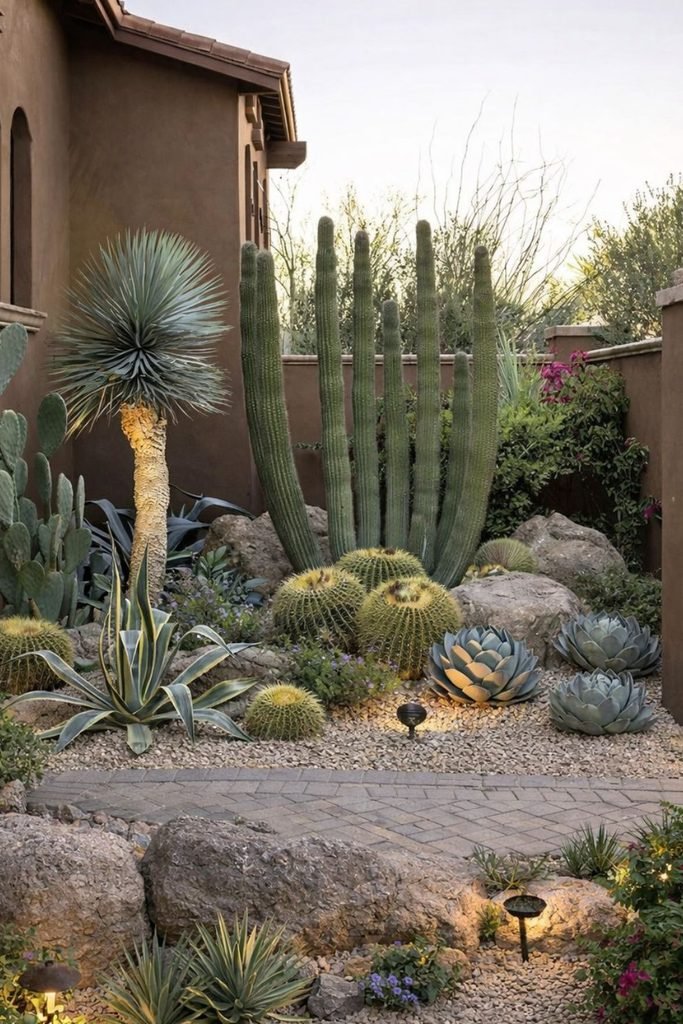
Sculptural Cacti
Use bold plant shapes to make a tight courtyard feel designed without filling every corner with greenery.
Use tall columnar cacti to add height at the back, balance with round barrel cacti and put agaves and rosette succulents closer to the path.
Large natural rocks separate the figures, while pale gravel simplifies the landscape.
Give spiky plants lots of room, especially near walkways, and always check the mature width before planting to keep the garden safe and open as it matures.
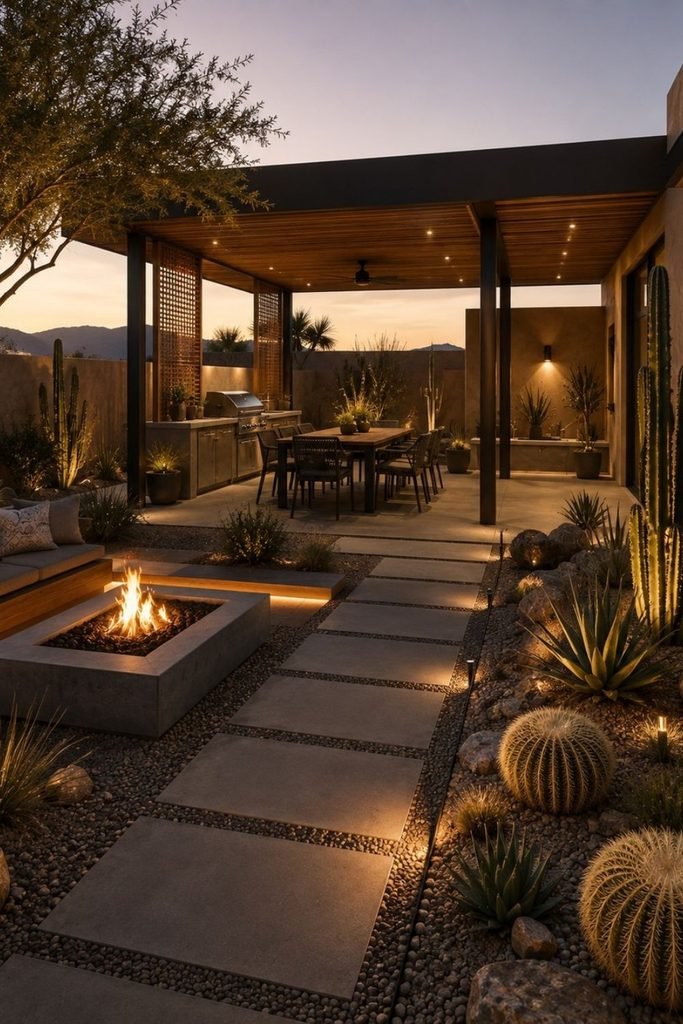
Firelit Patio
Extend a drought-tolerant yard into an evening hangout by keeping planting low around the main seating and dining zones.
Large stepping slabs through gravel. Flank trail with barrel, columnar cactus, agaves, boulders and compact grasses.
The open area is given purpose with a built-in fire feature, no turf added.
Nestle low path lights into the rocks, add recessed pergola lighting and soft wall lights to keep plant shapes apparent after dark.
Pebble Ribbons
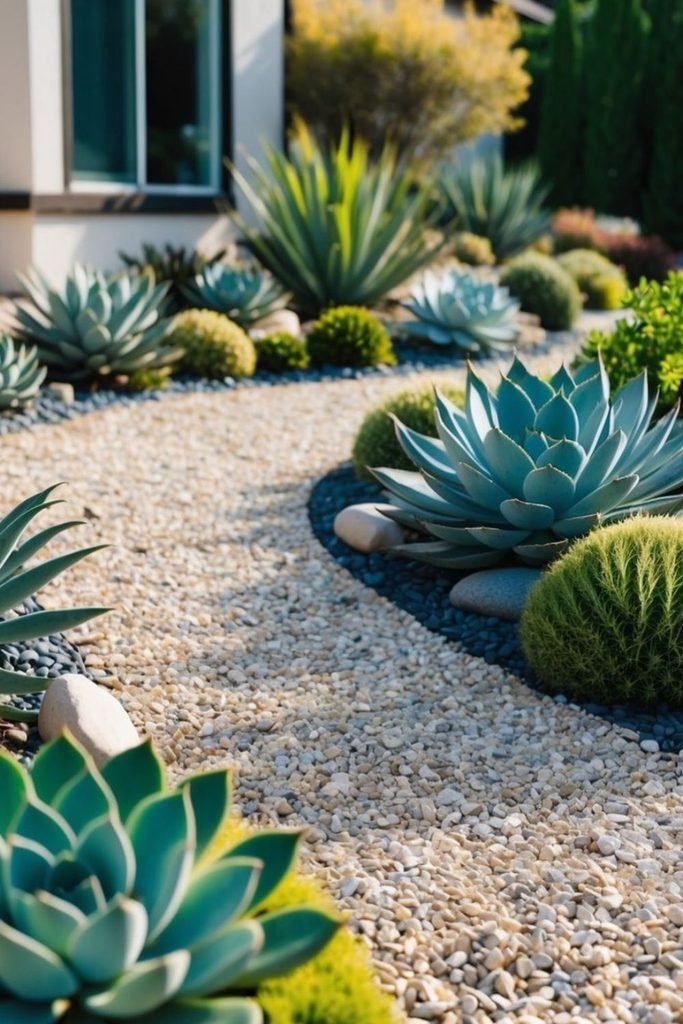
Create movement through a flat planting bed by letting pale gravel curve between groups of drought-tolerant succulents.
Larger agaves at the bends support the pattern, with compact spherical plants and low succulents filling in smaller spaces.
A thin band of darker pebbles surrounding selected plants provides definition, preventing the shapes from bleeding into one another.
Try this technique in sunny, well-drained front or side yards where you want a clean design with no grass to detract from the visual appeal.
Dry Stream
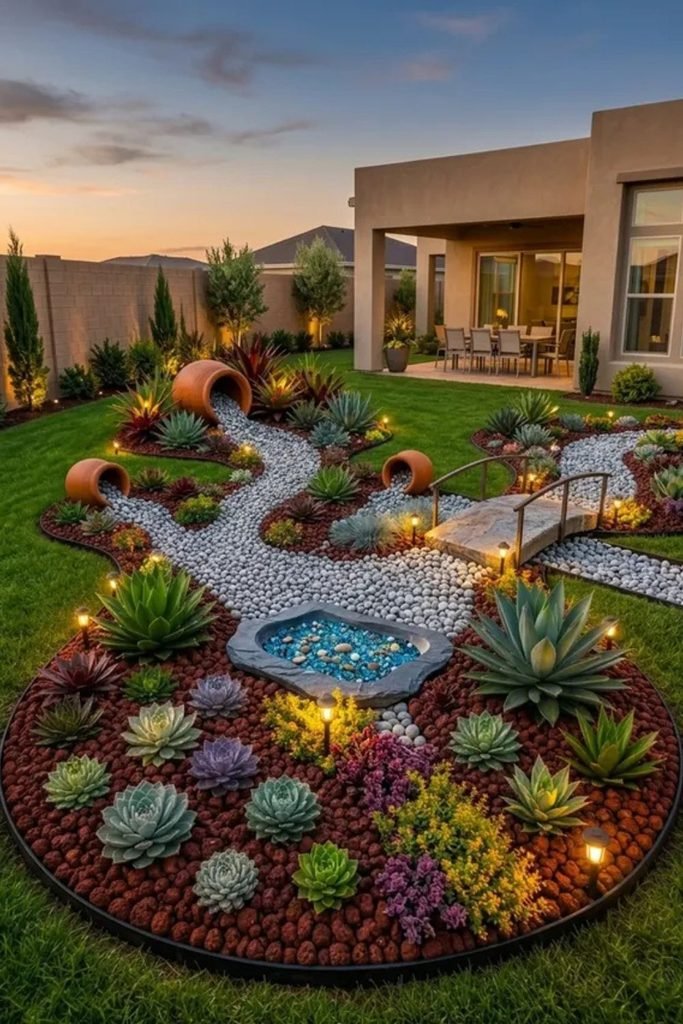
Turn a decorative succulent bed into a stronger landscape feature by running a winding pebble stream through the planting.
Don’t space colorful succulents, agaves and low groundcovers evenly along the channel rather group them.
Partially buried clay pots can be clues that water was flowing into the channel, and a little bridge makes for a fun crossing.
If you would also like the feature to help direct some rainwater through the yard, keep it a bit lower than the surrounding beds.
Lavender Lounge
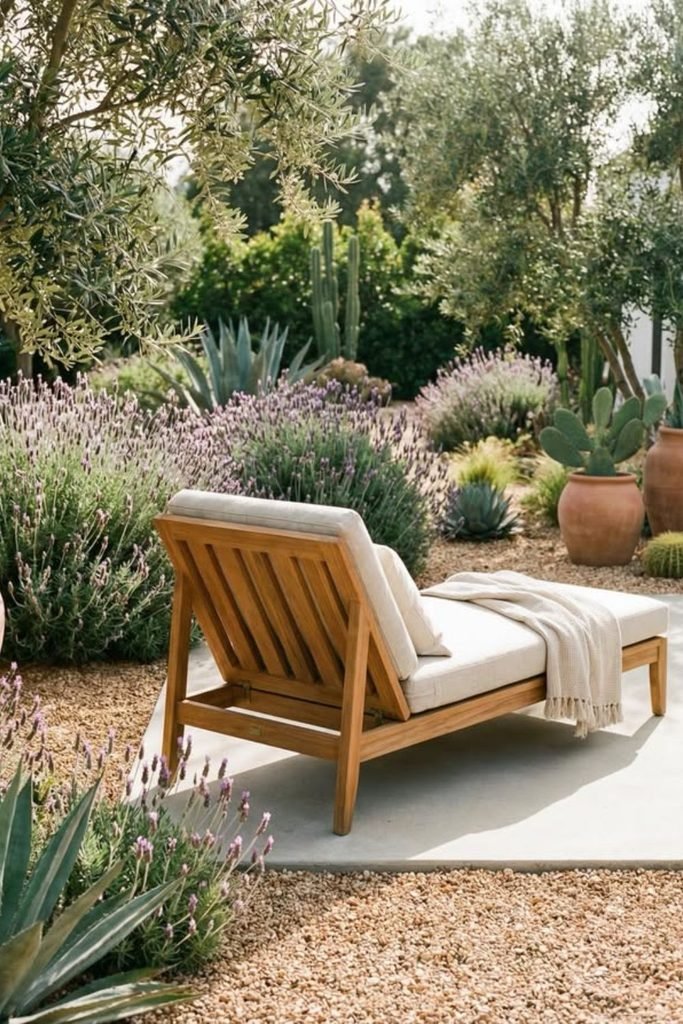
Soften a sunny seating area with broad drifts of lavender instead of surrounding it with thirsty turf.
Plant many clusters of lavender together for more color and smell, then break them up with agaves, cactus, ornamental grasses and drought-tolerant trees.
Fine gravel keeps the ground looking light and fits the dry Mediterranean look.
Add a small paved lounge pad to the planting so you can enjoy the garden without constructing a big hardscape area.
Succulent Tapestry
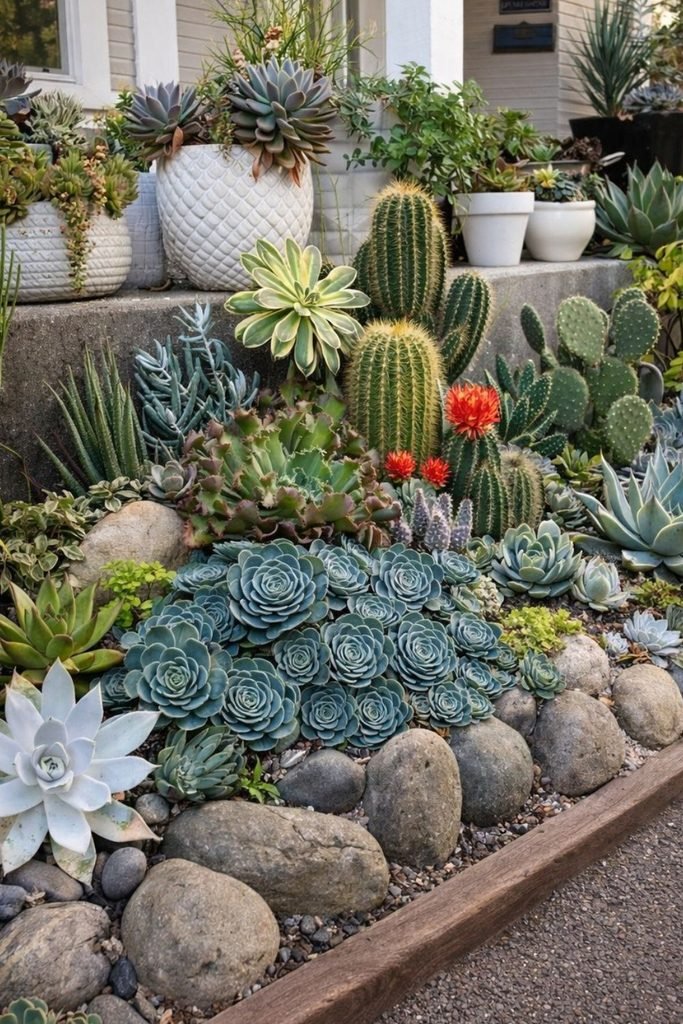
Fill a small foundation bed with contrasting leaf shapes when you want plenty of detail without depending on seasonal flowers.
Make the front a carpet of spreading rosette succulents, and build upward with barrel cactus, paddle cacti and taller upright kinds near the wall.
Round stones can weave among the plants to prevent the crowded arrangement from appearing cluttered.
For added height add a few container succulents on surrounding steps, but organize everything by comparable sun and watering needs.
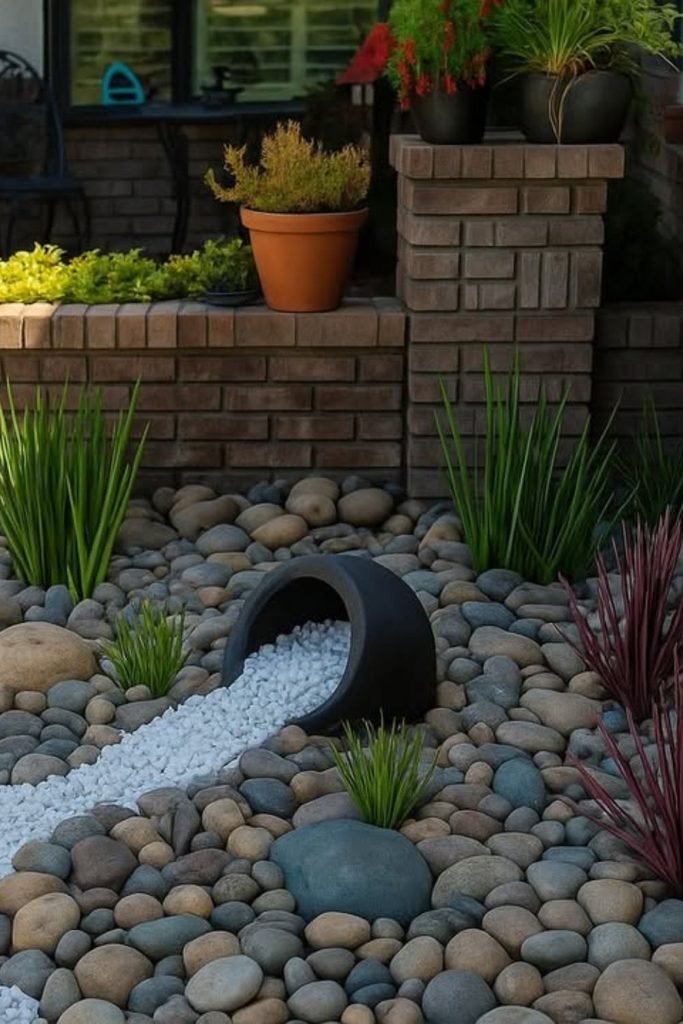
Pebble Stream
Turn an awkward foundation corner into a dry-stream feature instead of leaving it as bare soil or thirsty planting.
Fill the larger river stones with white gravel to simulate running water and put a tipped pot at one end to give a definite starting point.
sparse clumps of drought tolerant grasses add height but do not obscure the stone design.
Keep the gravel channel open and have edging along the curves so different sizes of stone stay separate and the design is easy to maintain.
FAQs
Do Drought Tolerant Landscapes Still Need Regular Watering?
Drought tolerant plants still require regular watering until they are established.
Once grown many can cope with lengthier dry times although their needs can vary depending on your climate, soil and plant choice.
Group plants with similar water needs together. Use drip irrigation to irrigate the roots instead of the whole yard.
Can Drought Tolerant Landscaping Look Lush Without Grass?
Sure. Fullness is achieved by layering plants instead than filling every crevice with rocks.
Combine tiny trees, blooming shrubs, attractive grasses and succulents and low groundcovers at varied heights.
If you give them enough room to develop, they can fill in the gaps over time without overwhelming the scene or falling back on a conventional lawn.
