
21 Shade Garden Ideas for 2026
Your grass is getting thinner, the flowers don’t appear cheerful, and every barren patch makes it look like the yard is unfinished.
You may have tried adding more water or growing fresh grass, only to end up with the same problem a few months down the line.
In this article, you’ll find 21 shade garden ideas to help you fill bare spots and make darker parts of your yard feel complete.
Let’s jump in!
What Grows Under Trees Where Grass Always Struggles Most?
If the grass continues to die off under your trees, seeding more usually won’t cure the root problem.
The tree canopy shades the sun and tree roots compete with grass for water and nutrient so the turf thins out and weakens over time.
Instead of struggling to get that perfect grass, make that tricky patch a planted bed.
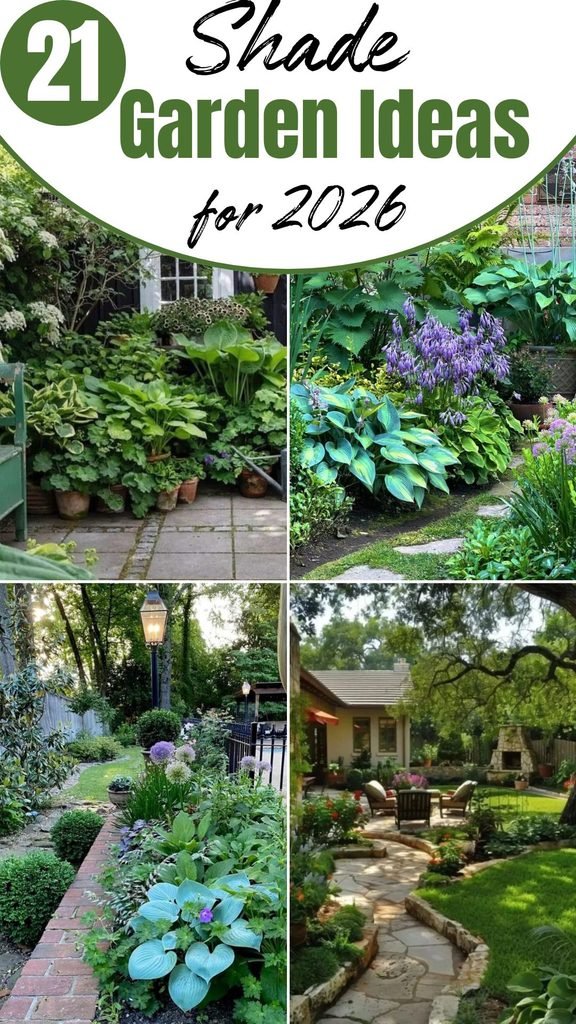
Shade-loving ground coverings, ferns, hostas and other woodland plants can cover bare soil without needing the same conditions as grass.
You don’t even have to force plants everyplace, for really dry or very shady locations.
Use organic mulch under the canopy, but not against the trunk. Plant only where appropriate.
You are able to construct a wider garden without endangering the tree by working around the current roots instead of cutting through them.
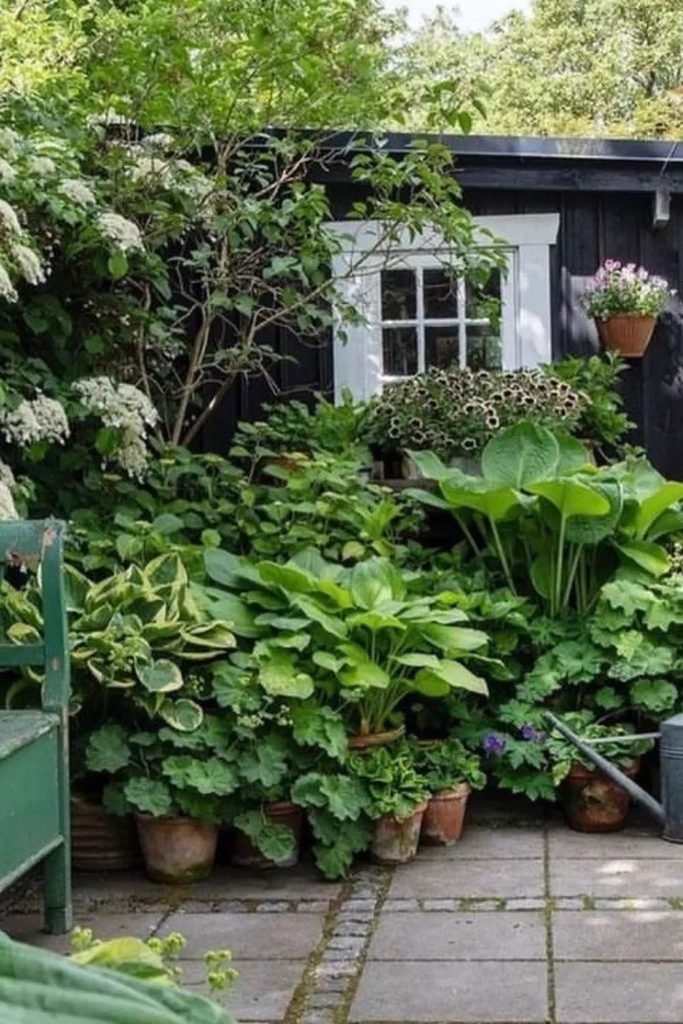
Potted Layers
Skip digging into crowded roots by building your shade garden with containers instead.
In pots of varying heights group hostas and other leafy shade plants with the greatest leaves in the back and smaller variety in front.
It works especially well next to sheds, patios or cemented areas where you have little planting soil.
mix large, spherical leaves with ruffled and variegated foliage to prevent the vegetation from blending into one.
If the plant is unhappy where it is, simply shift the pot to softer light rather than redoing the whole garden.
Bloom Layers
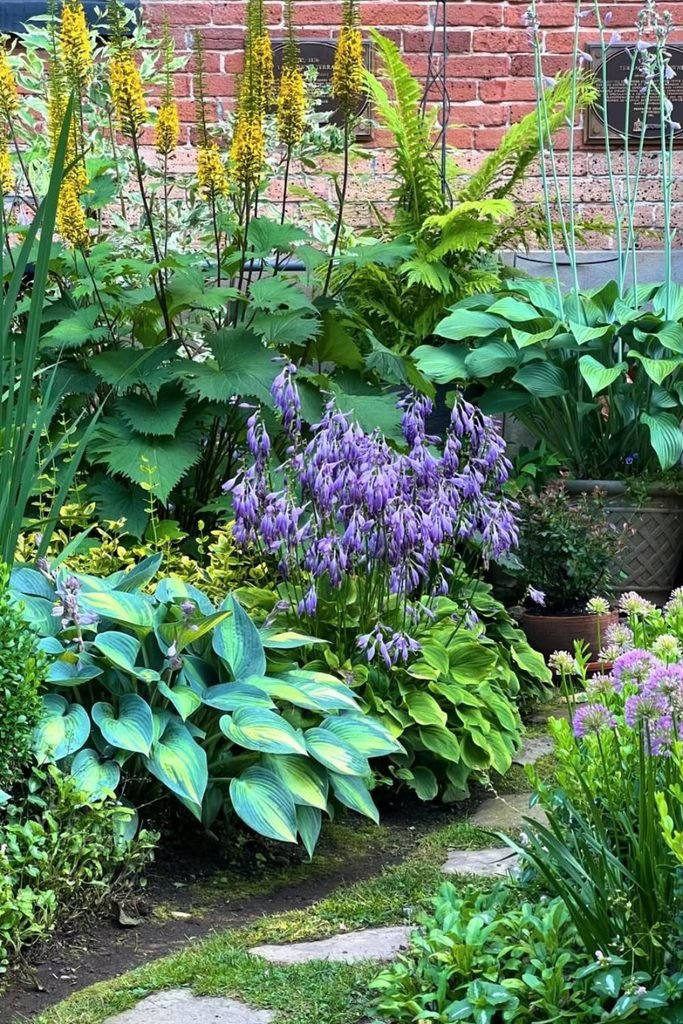
Bring flowers into a shady border by mixing bloom heights instead of keeping all the color near the ground.
Place tall yellow flower spikes behind ferns, sprinkle in purple bell-shaped blossoms, and use hostas to form broad leafy masses surrounding their stems.
It works well next to a shaded wall or along garden walks where you can see each layer clearly.
Plant similar moisture demands together and repeat a few flower colors throughout the bed so the planting feels connected.
Brick Border
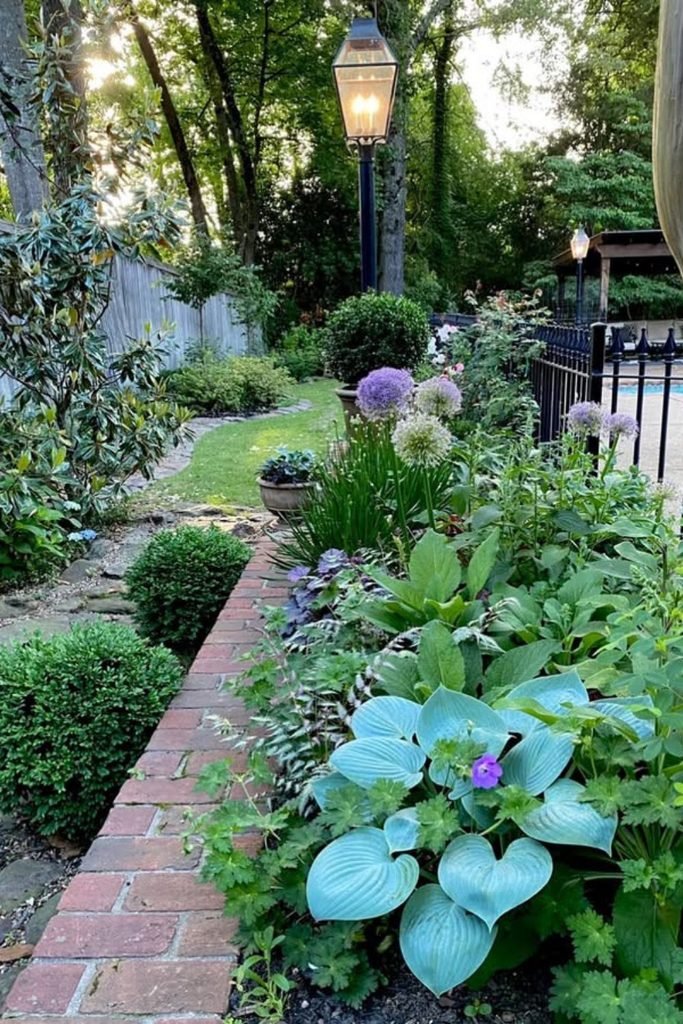
Give a loose shade garden more structure by running a narrow brick edge between the planting bed and walkway.
Behind it, dense hostas, rounded shrubs, leafy perennials, and towering purple blossoms can remain at ease, and the straight brick line.
This is a particularly nice arrangement for shaded fence lines, pool surrounds or long side beds.
Arrange the larger foliage toward the back, and let a couple of bold hostas to find a place at the edge.
Where their blue-green leaves will enliven the darker planting without requiring continual blooms.
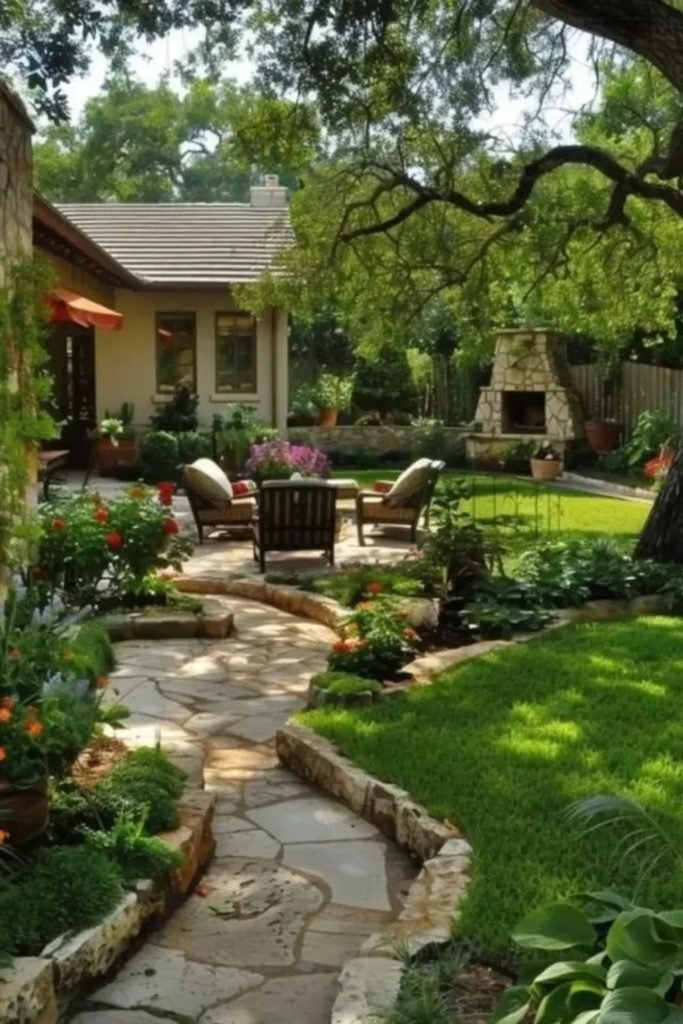
Shaded Retreat
Turn the coolest part of your yard into a place you actually use by building seating around the existing tree canopy.
Keep the mature trees for natural afternoon shade and connect the seating area to a gently curving stone path so it feel independent without being secluded.
Low hostas and leafy perennials can soften the route margins and a few flowering plants can offer color closer to eye level.
This design works especially well in big backyards where thick shade makes creating typical flower beds difficult but provides a comfortable environment.
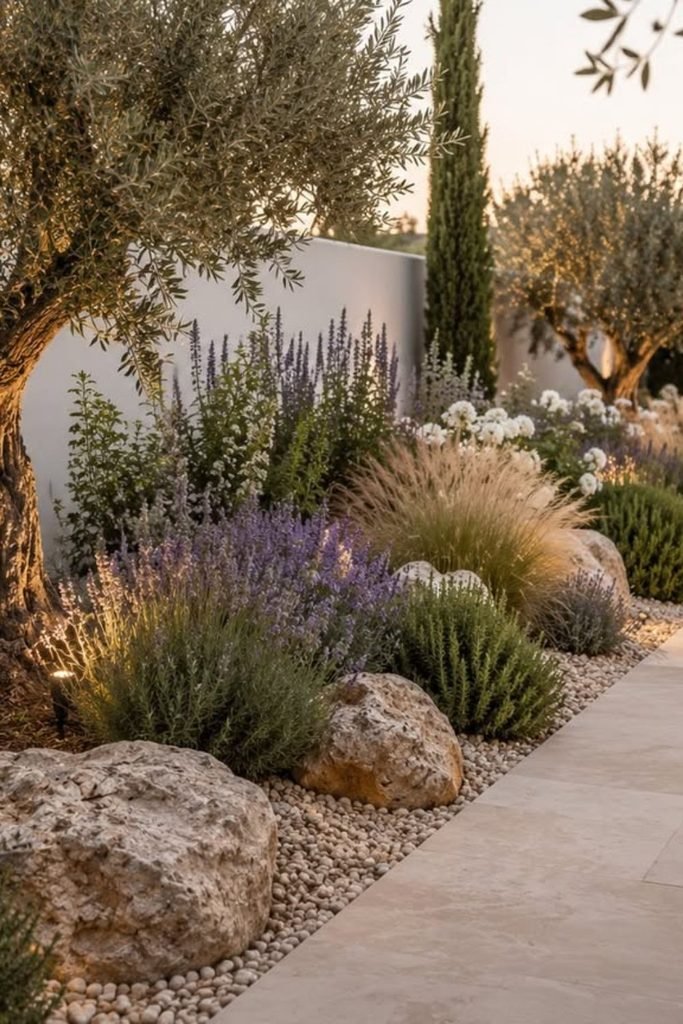
Gravel Understory
Let gravel handle the driest ground beneath mature trees instead of forcing thirsty plants into every gap.
Spread a layer of light gravel around the bed, providing breathing space around the trunks.
Break it up with pebbles and groups of plants suitable to your actual light level.
Where there is adequate sun for the bed, ornamental grasses, small shrubs and flowering perennials can form delicate layers.
This works particularly well in warm dry gardens because the stone maintains the planting visually connected but cuts down on the quantity of bare soil.
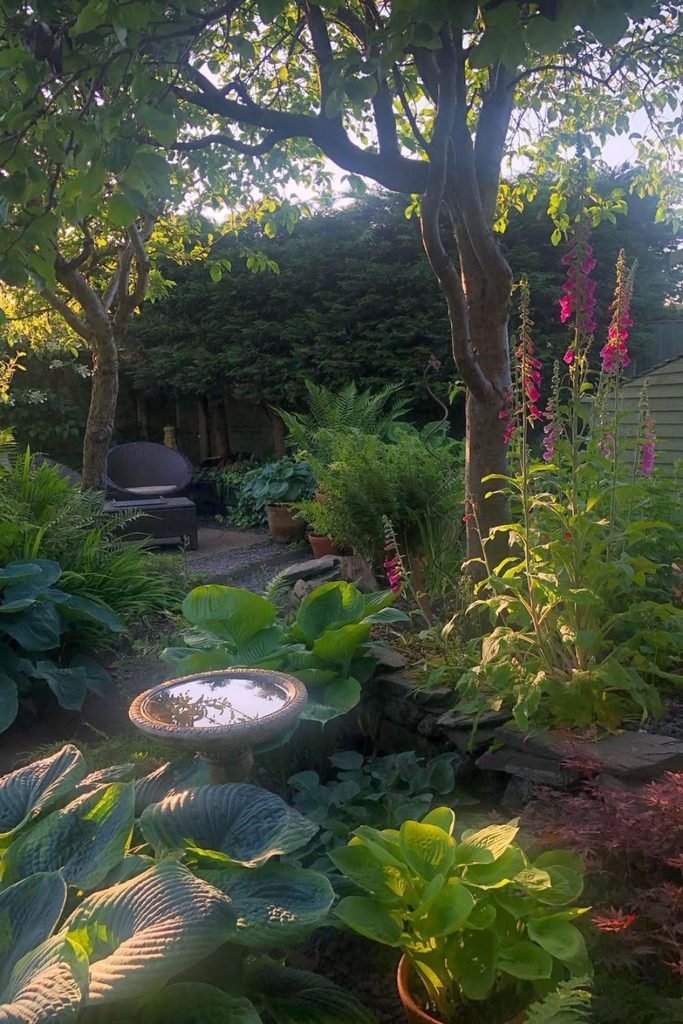
Woodland Color
Use small pockets of filtered sunlight to bring flowers into a mostly green shade garden instead of expecting the whole bed to bloom equally.
Place taller flowering plants where the canopy opens up, and fill in the deeper shade with hostas and ferns that depend more on foliage for interest.
A birdbath is a modest centerpiece between planting layers without taking up much space to flourish.
This setting works nicely under mature deciduous trees, especially if you desire a real woodland garden with obvious seasonal color.
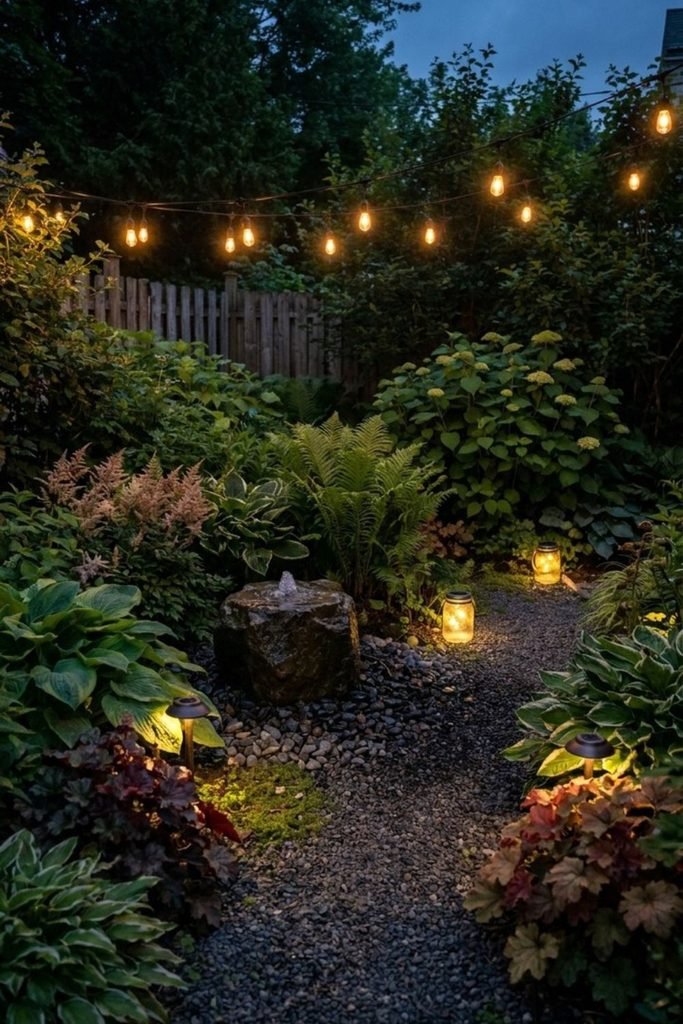
Twilight Path
Keep a shady garden useful after sunset by lighting the route instead of flooding the whole planting bed with brightness.
Lay a thin gravel road between hostas, ferns, heucheras and blooming bushes.
Set low solar lights by the margins to guide each step.
String lamps overhead can give a softer ambient light, yet keeping the foliage organically dark and layered.
This is a good scheme for enclosed corners of backyards, and a small fountain or birdbath near the path adds a center of attention during the day also.
Foliage Contrast
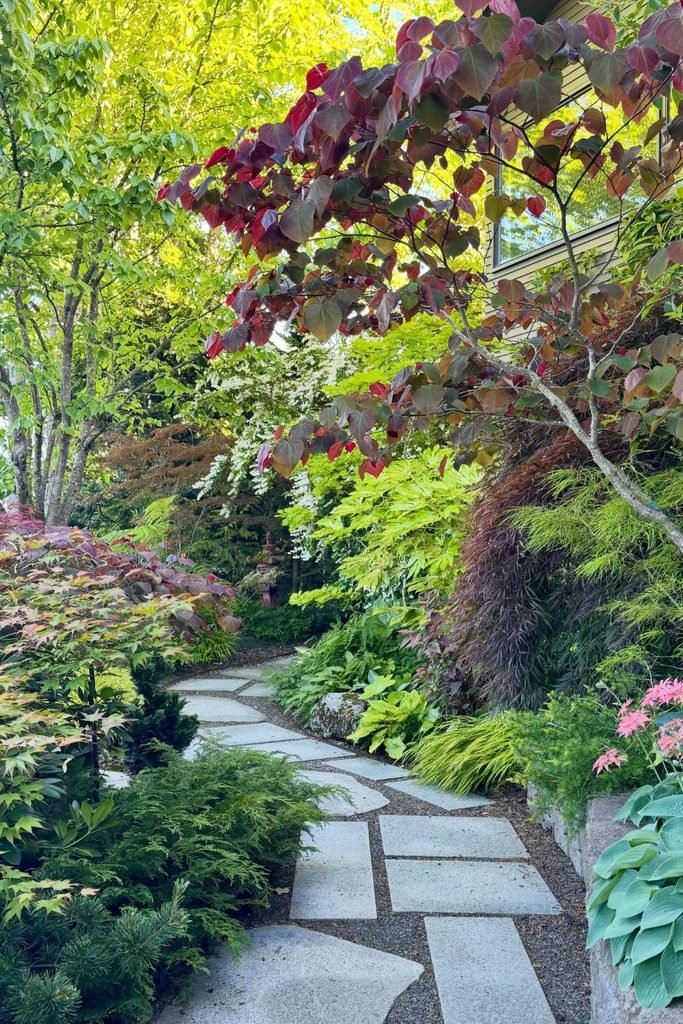
Color can come from leaves just as easily as flowers, which is useful when heavy shade limits blooming.
Mix little trees with burgundy leaves with lime-green foliage, blue hostas, delicate ornamental grasses and darker evergreen plants, so that each layer is distinct.
This works great especially on a side walk that is shady where you view the planting up close.
Put the palest greens with darker plants, then repeat the burgundy tones farther down the bed.
When not much is flowering, if you combine leaf color, size and texture, the garden still is fascinating.”
Courtyard Shade
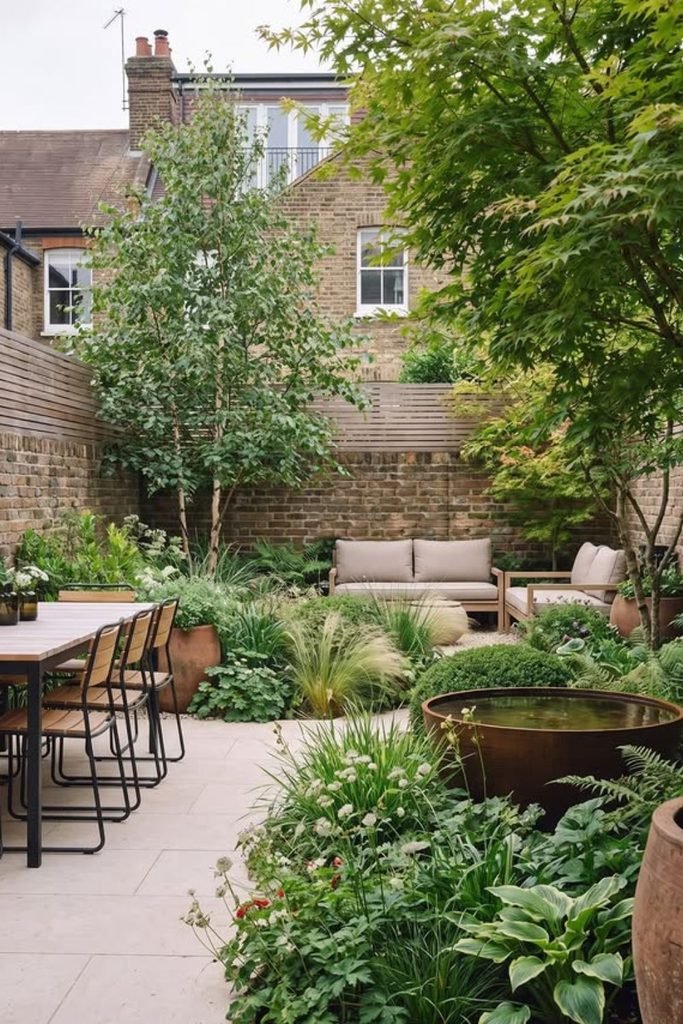
Make a small enclosed garden feel useful by letting the planting wrap around spaces you already need for sitting and dining.
Leave the middle open with pale paving and create softer edges with ferns, hostas, ornamental grasses, compact shrubs and tiny trees that complement.
A large basin of water will help to break up the vegetation and provide a tranquil centerpiece in the garden without dominating the space.
The technique is particularly effective in enclosed courtyards, because the surrounding structures cast different shadows at different times of day.
Flowering Border
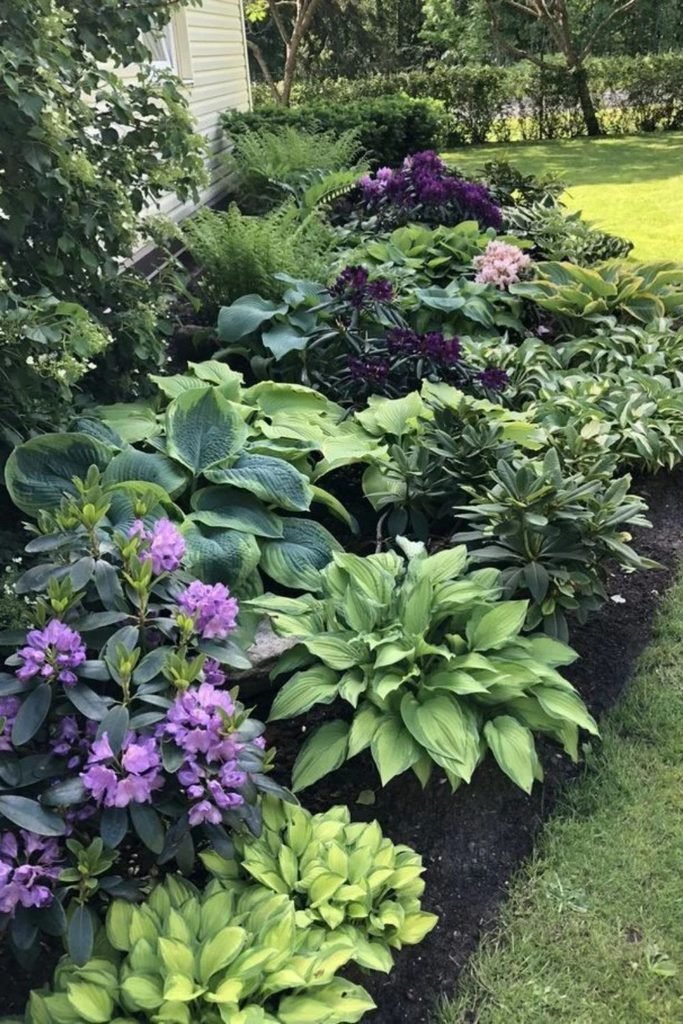
Break up a foliage-heavy shade bed with flowering shrubs that can handle filtered light, rather than relying only on small seasonal flowers.
Put rhododendron type plants in the middle layer, surrounded by hostas in varying greens and ferns toward the colder back edge.
This mix works well along a home foundation or lawn border, with taller plants behind shorter leaves.
If you plant them too close together, make sure there is plenty of room for the shrubs to reach their full size, otherwise the bed will soon become crowded.
Color Pockets
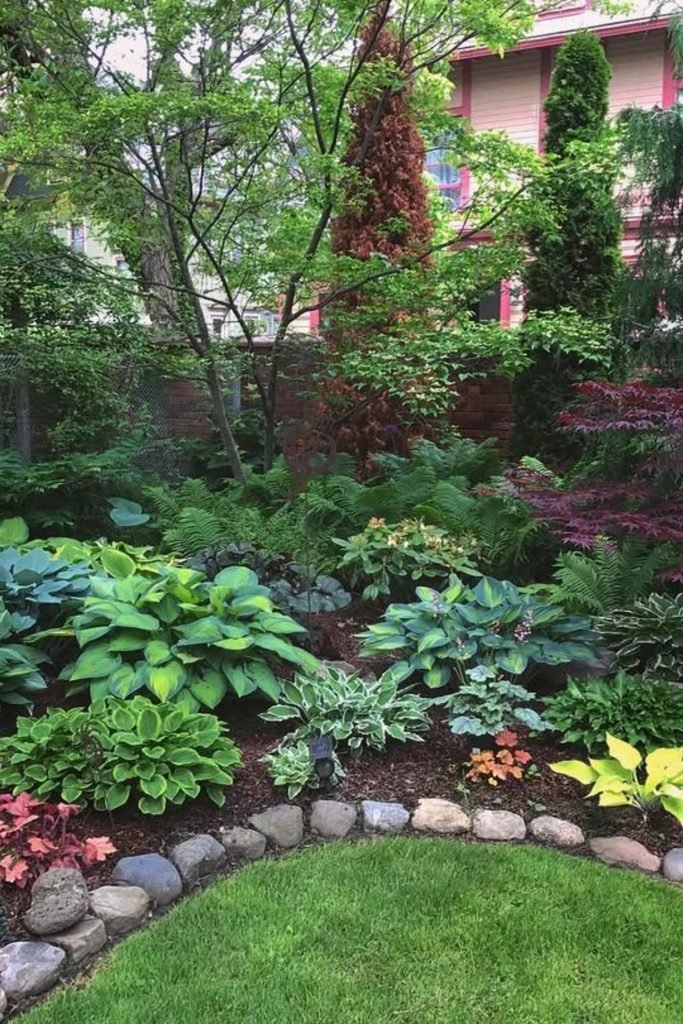
Let foliage do most of the work when flowers are unreliable in heavy shade.
First, build the bed with repeating hostas and ferns, then tuck in burgundy, golden, blue-green and variegated plants between those bigger groups.
It is especially good in mature deciduous woods where the sun moves during the day.
The contrast will create the illusion of depth and will prevent a large shade bed from looking like a single, flat wall of green.
Fern Canopy
Give a deep shade bed height without depending on flowers by letting tall ferns form the main middle layer.
Border them with hostas in lime, blue-green and white-edged sorts, then tuck in a few burgundy leaves among the greens for contrast.
This combo is particularly effective under little trees or on the outskirts of woodlands when filtered light reaches the ground.
Different leaf size and color makes definite layers even when the whole garden is mostly greenery.
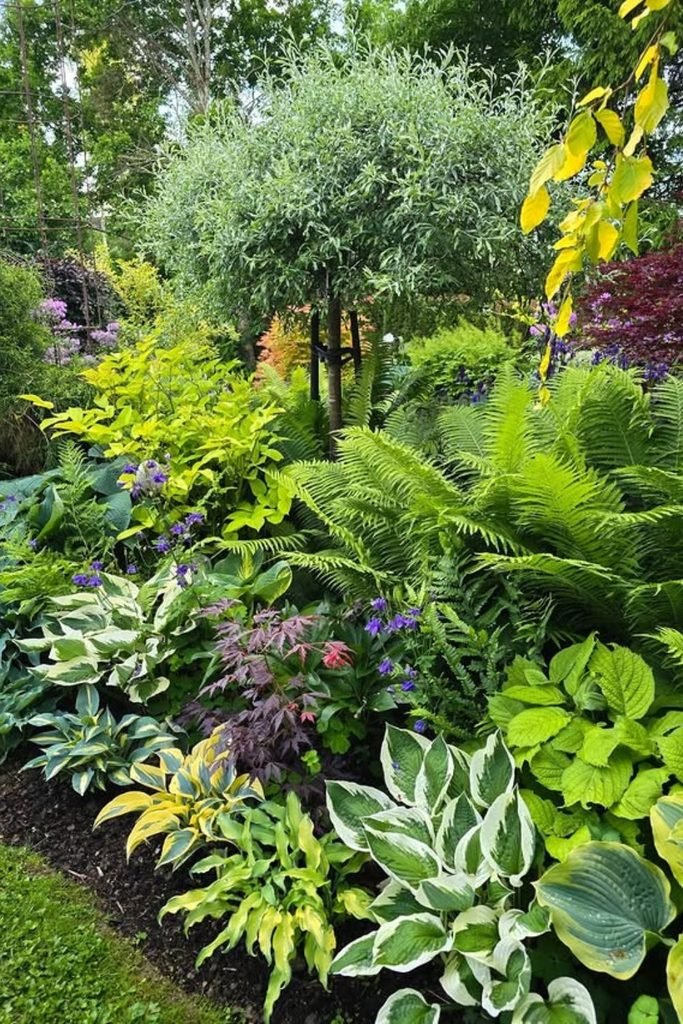
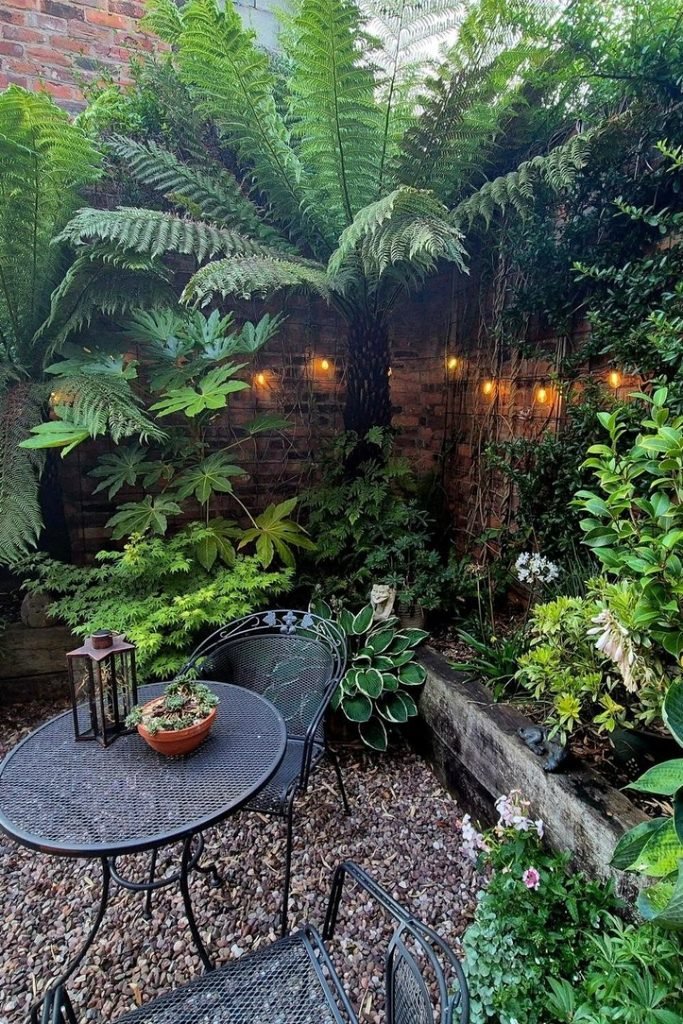
Fern Courtyard
Lean into deep shade by using plants that make low light feel intentional rather than trying to brighten every corner with flowers.
Tall tree ferns can form an above layer hostas and broad-leaved plants cover the bottom beds, and climbing greenery softens stark walls.
This design works well for tiny enclosed courtyards where buildings and fences shade much of the direct sun.
Gravel on the open ground offers a practical place to sit, while a short row of warm wall lights keeps the dense flora welcoming after dark.
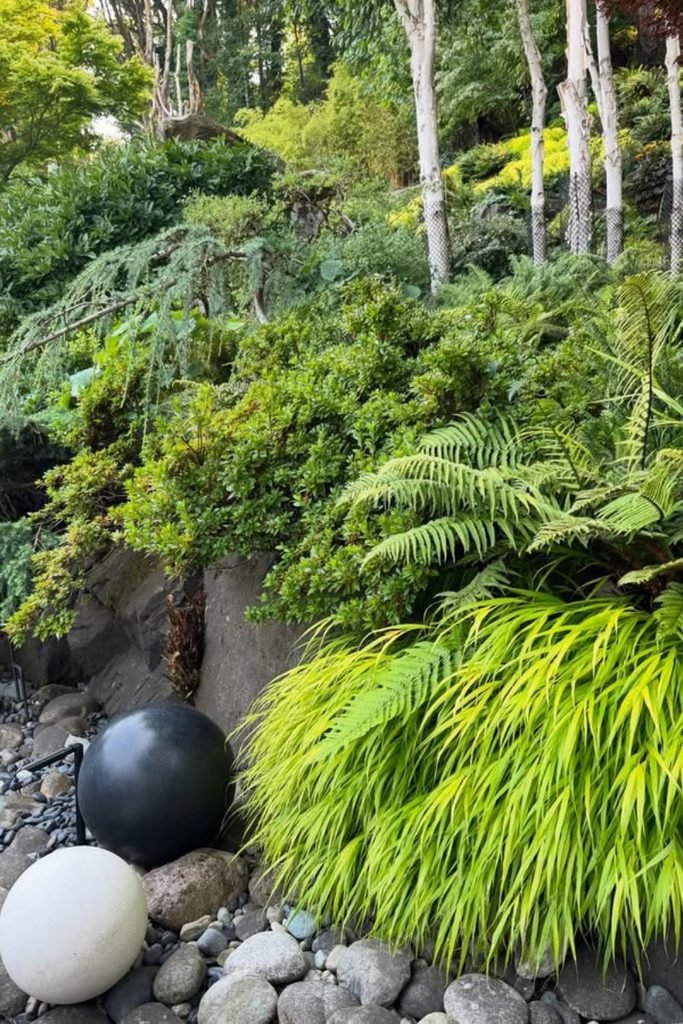
Fern Slope
Stop fighting a shaded slope with grass when layered foliage can cover the ground more naturally.
Use mass ferns in the steeper areas, then try cascading Japanese forest grass near rocks or retaining borders so its brilliant leaves spill down.
Compact evergreen plants can help hold the top layer together, and maintain some structure through quieter seasons.
Best used on chilly, partially shaded banks where mowing seems awkward.
Use stones along the lowest edge to work in the transition and provide the border for the loose planting.
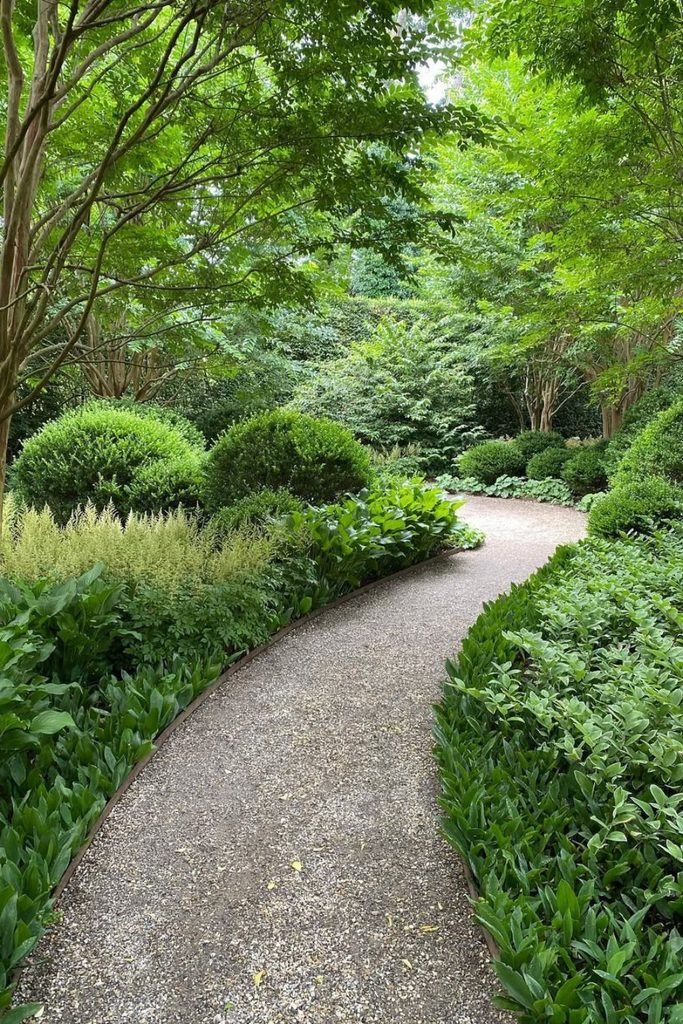
Curved Groundcover
Replace weak grass beneath a leafy canopy with broad sweeps of groundcover that can handle the available shade.
Put in a gently curving gravel path through the middle, with low spreading foliage on either side, and rounded evergreens further back for height.
This is a particularly use ful method for larger forest gardens where you wish to have convenient walking access but avoid leaving bare soil between trees.
Keep the plant palette limited and repeat the same varieties in generous groups; repetition makes a highly planted shadow garden appear tranquil.
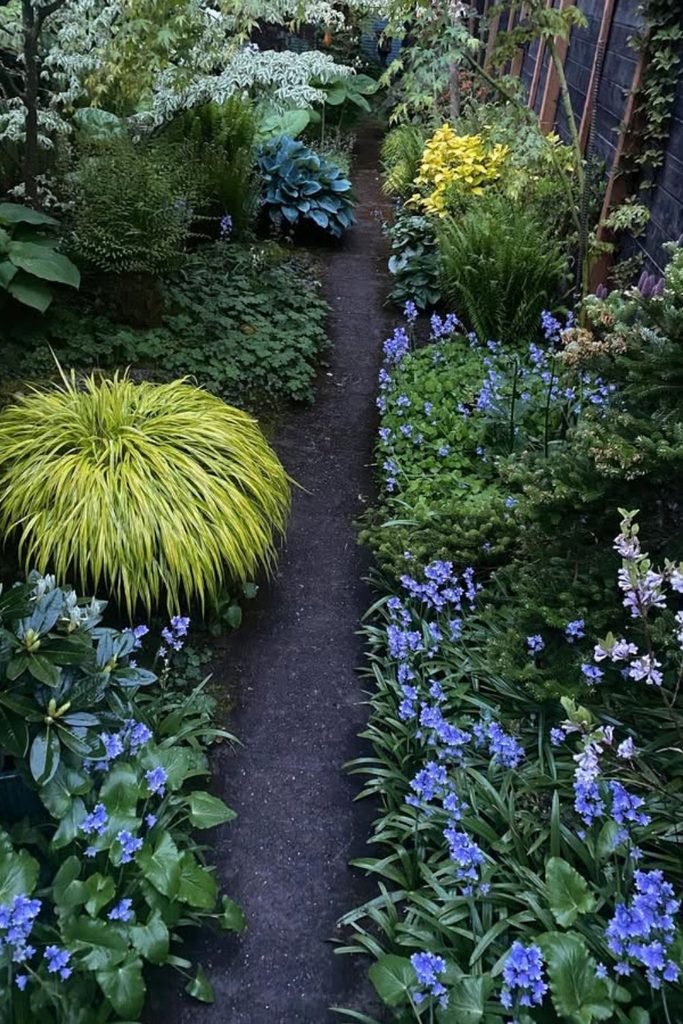
Blue Passage
Turn a narrow shady side yard into a garden feature by keeping a slim walking path open and letting cool-toned flowers lead you through it.
Repeat the blue forest blossoms on both sides, then add in ferns, compact evergreens, hostas and one area of golden grass to keep the planting.
This works very well between home and fence where you do not get direct sun.
Place taller bushes on the edges and lower-growing plants near the path to maintain comfortable and open passageways as things grow.
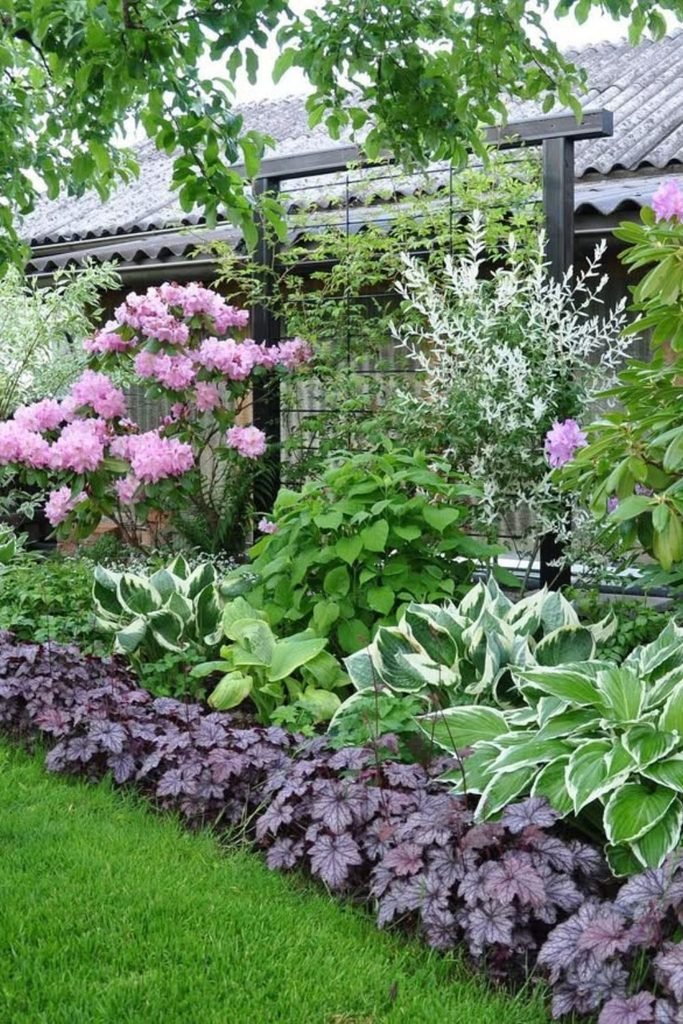
Burgundy Edging
Frame a leafy shade bed with a low ribbon of burgundy foliage to give the planting a clear finish without adding hard edging.
Behind, mix white-edged hostas, pink blooming shrubs and a few lime-green plants so each hue shows out against the darker border.
This works effectively where a shaded foundation bed meets lawn and requires a stronger border.
Rather than sprinkle the same burgundy plant around the bed, repeat it throughout the front.
One continuous sweep keeps the varied foliage in line and helps the lighter leaves appear brighter.
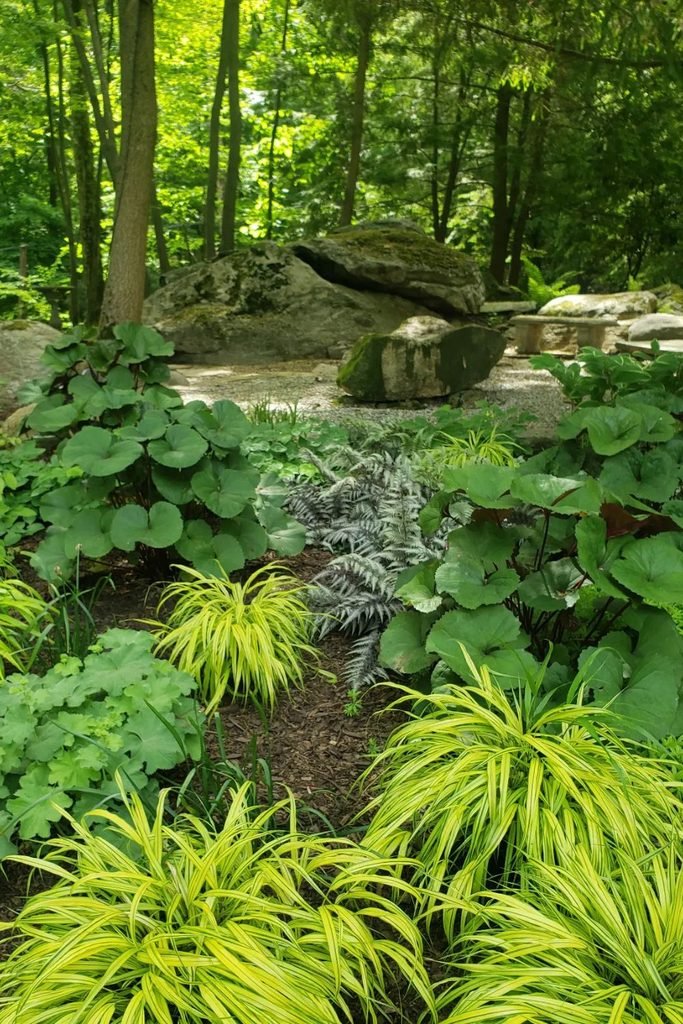
Golden Groundcover
Brighten the forest floor with golden Japanese forest grass where flowers struggle to make much impact.
Plant it in loose clumps near broad-laved shade plants and silver-toned ferns so that the slender arching blades contrast with their bigger rounded leaves.
This combo is especially good under deciduous trees where blocked light makes the yellow-green foliage pop.
While the plants are establishing leave a strip of mulched ground between the groupings and, if you want the bed to feel like a part of a woodland environment.
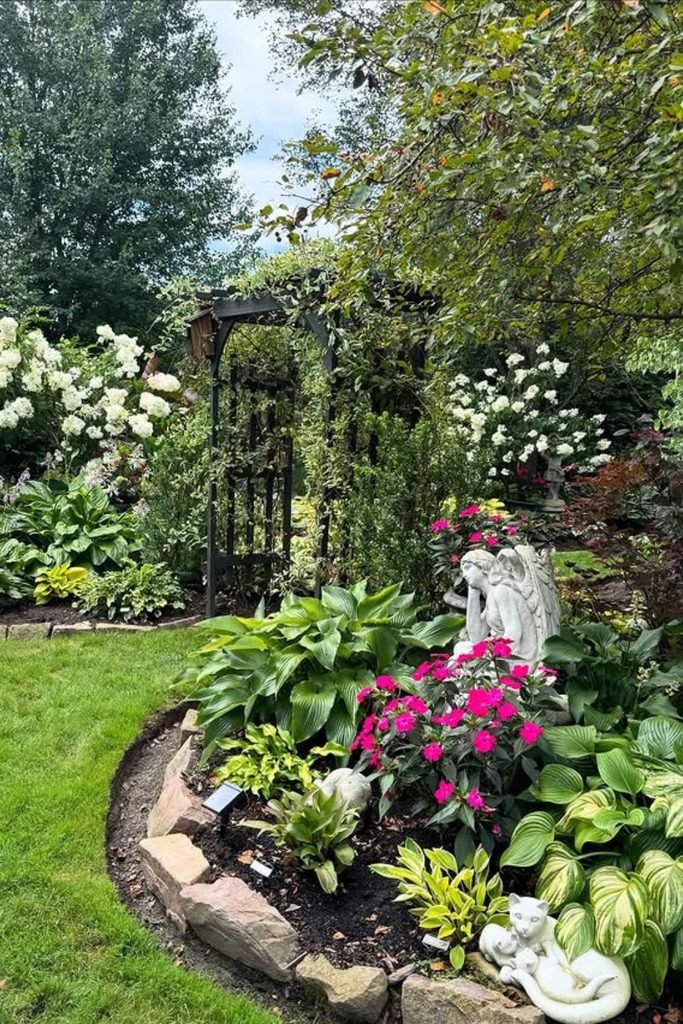
White Blooms
Pull a dark garden corner forward with white flowering shrubs that catch more attention against deep green foliage.
Then put them to the back for height.
Fill the lower bed with hostas and a few bright pink flowers where the filtered light is strong enough for them to blossom.
This combination works nicely along edges of woods or under a high tree canopy where the garden needs color without losing its shaded character.
Tuck ornamental elements into plant groups rather than scattering them all around, so they create little centers of attention.
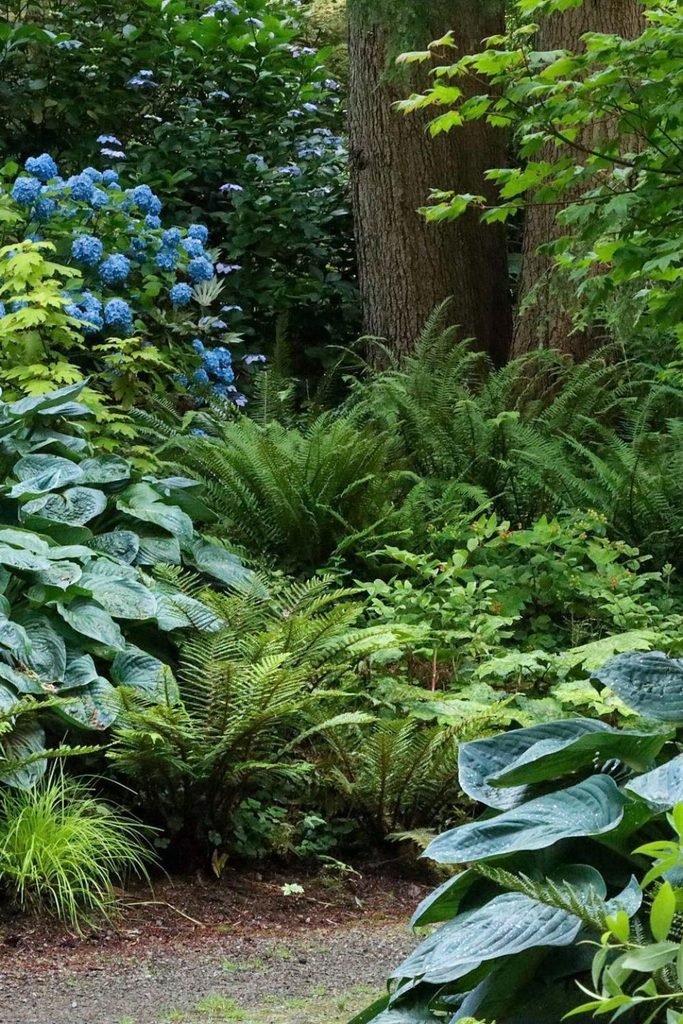
Hydrangea Woodland
Save the brighter edge of a shaded bed for flowering shrubs, then let tougher foliage plants handle the deeper shade beneath mature trees.
Blue hydrangeas provide a dramatic seasonal block of color where they get appropriate filtered light, and ferns and big blue-green hostas.
This layout works nicely in mature woodland yards based on the shifting sunlight across the bed.
Instead of scattering flowers everyplace, concentrate blooms in the lighter pocket; color stands out more while the darker areas are still lush.
Hosta Sweep
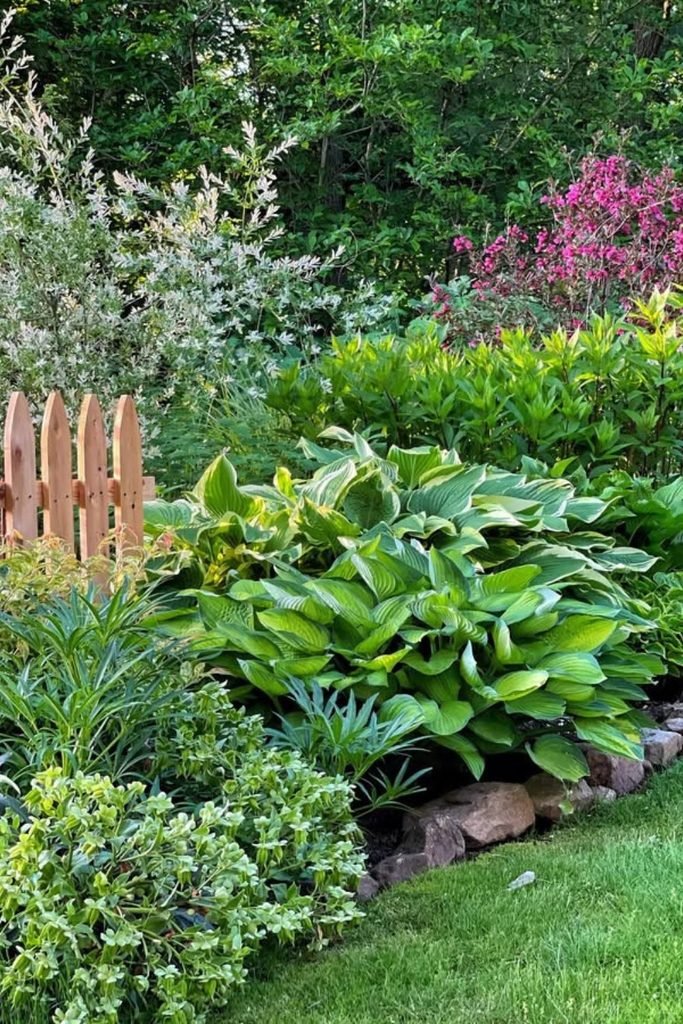
Make one shade plant feel intentional by repeating it in a generous sweep instead of scattering single specimens around the bed.
To create a progressive shift in height, mass broad hostas in the middle, then frame them with smaller leafy plants in front and taller shrubs behind.
This arrangement works particularly well along a grass edge where the planting needs a strong contour from a distance. Rough stone edging to divide bed.
Use one flowering shrub at the back to give seasonal color without competing with the hostas.
Stone Walkway
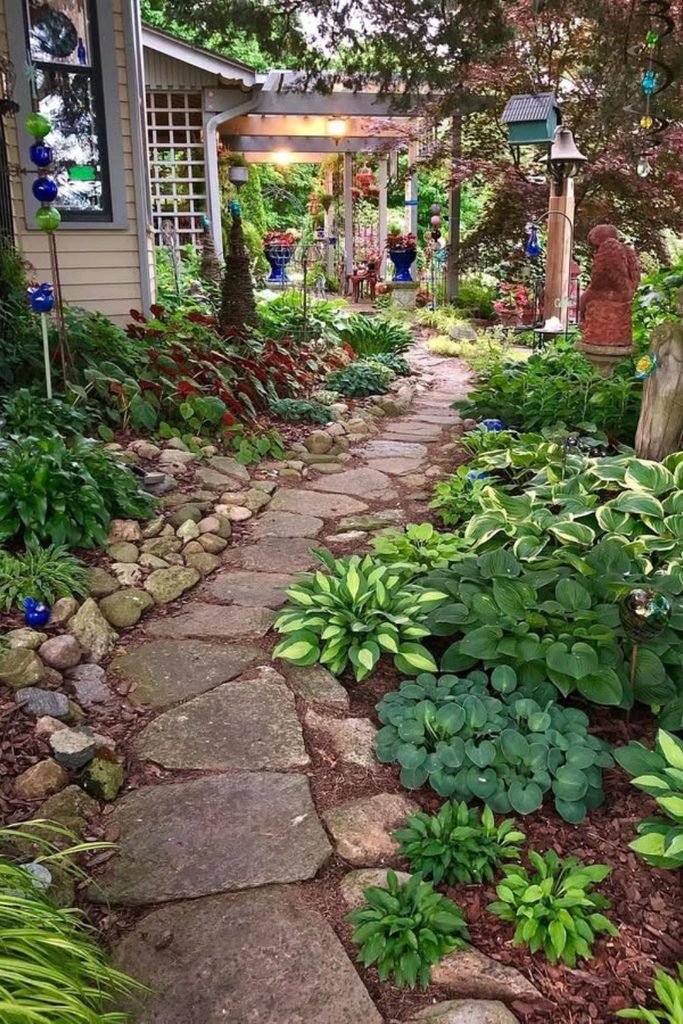
Guide people through a heavily shaded side garden with flat stepping stones instead of trying to maintain a strip of grass.
Create a soft, irregular line of stones and then soften the edges on both sides with hostas, low groundcovers, Japanese forest grass, and other foliage plants.
This works especially effectively beside a house or behind mature trees where roots and poor light make lawn maintenance a pain.
add mulch to break up planting groups and to keep bare ground covered, and add loose stones along one side to make the path feel naturally connected.
FAQs
How Can I Brighten A Shade Garden Naturally?
Color foliage before you color flowers. Darker beds can be lightened with cream-edged hostas.
Golden Japanese forest grass and plants with silver-toned leaves and lime-green foliage through the growing season.
Use the brightest foliage against dark green plants, and then repeat those light shades around the garden, and not all in one place.
What Should I Plant Where Grass Cannot Grow?
Start by noticing how much light and moisture the room truly gets. Reseeding problematic grass over.
And again may not work as well as hostas, ferns, shade-friendly groundcovers and woodland plants.
If the ground is very dry or deeply rooted, apply organic mulch and plant pockets only where plants have adequate space to establish themselves.
