
23 Garden Corner Seating Ideas for 2026
Every day you look at that vacant place in the garden, and nothing you plant there looks quite right.
Awkward corners are difficult. You can put furniture in them but they are not useful.
You need seating that fits in the room, faces the appropriate way, offers you a reason to really sit there.
In this article, you’ll find 23 Garden Corner Seating Ideas that can turn overlooked corners into cozy outdoor spots.
Let’s jump in!
How Can I Use Awkward Garden Corners For Seating?
Before you buy any furniture, try to figure out why the corner seems odd. When two fences meet in a narrow place.
Put a bench against them, rather than adding separate chairs that waste walking room.
If the corner is uneven, first level a small area with gravel, paving or decking for a stable seat.
also check the sun at the time you would ordinarily utilize your garden; afternoon heat might make a charming corner miserable.
If the neighbors can’t see the spot, put a trellis, tall plants or a slatted screen behind the seat.
Most crucial, sit in the corner before you put it up. And you’ll soon know where the seat should face and how much room you truly have.
Covered Retreat
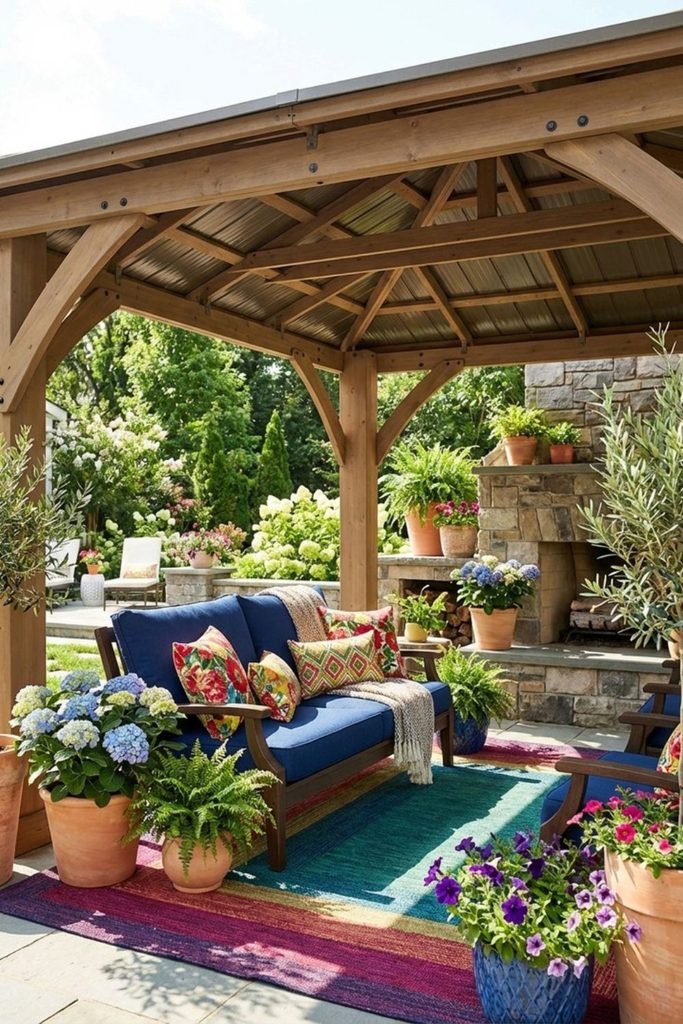
Rain or harsh afternoon sun can quickly make an open garden corner useless, so adding a solid roof gives your seating much more usable time.
Construct a timber pavilion over a paved corner, leaving the sides open so that you still feel part of the surrounding garden.
Comfortable cushioned seating works nicely below and pots of hydrangeas, ferns and other plants soften the pillars and harsh flooring.
If it seems too bare, set an outdoor rug beneath the furniture to define the sitting area without the addition of walls.
Privacy Lounge
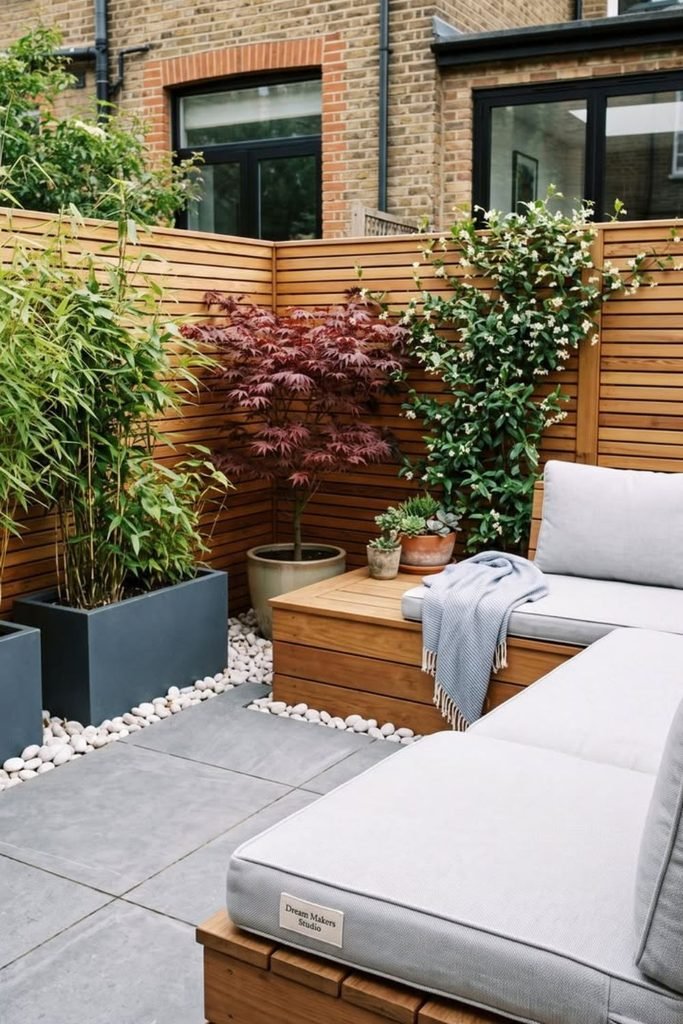
Overlooked corners feel much more comfortable once the boundary starts working as part of the seating area.
Use horizontal timber screening on both sides to block direct views, and then position low corner chairs against it, leaving the middle open for mobility.
Tall bamboo in narrow planters gives another level of privacy without overwhelming the patio, while a small Japanese maple adds color at a lower level.
Instead of filling every space with plants, finish off the margins with pale stones and a few compact pots.
You’ll have a private spot to unwind and maintain a small garden feeling neat and open.
Maple Hideaway
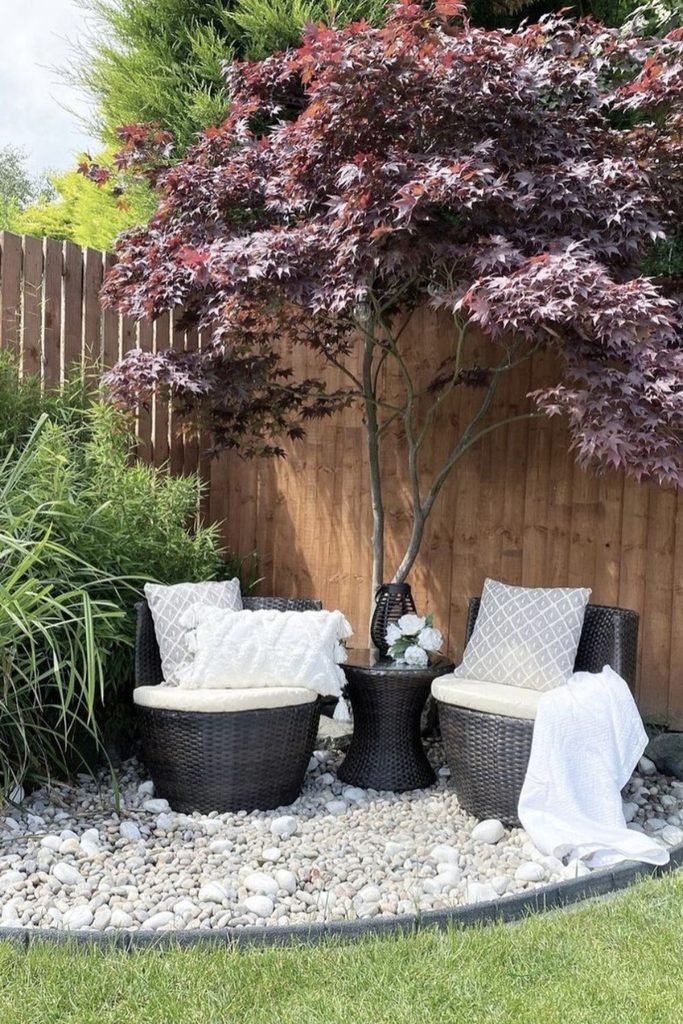
Turn a quiet fence corner into a two-person escape by letting an existing small tree provide the structure.
Put two small compact chairs under its umbrella, with a thin table between them.
Keep the arrangement small enough that it doesn’t compete with the lawn.
River stones work especially well for the bottom since they isolate the nook from the surrounding grass and eliminate the need to mow around the legs of the furniture.
For more enclosure, plant tall grasses or leafy plants on one side.
You’ll have a basic coffee or reading location that feels snuggled into the landscaping, rather than plonked against the fence.
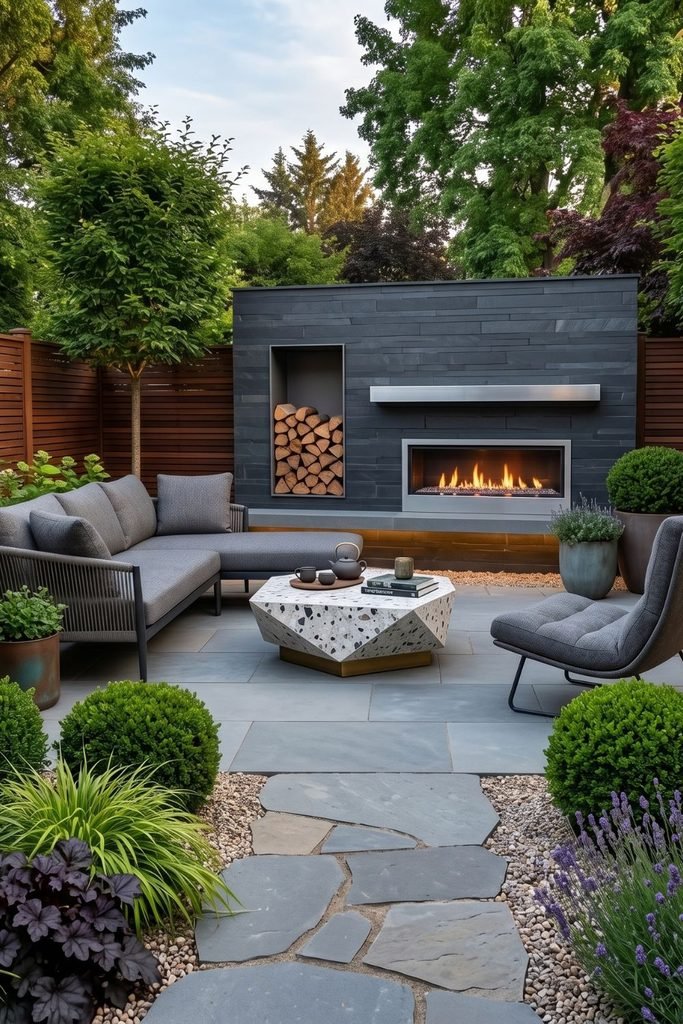
Fireside Lounge
Cool evenings become much more inviting when the corner has its own source of warmth.
Instead of putting furniture along the edges, make the seating arrangements center around an outdoor fireplace so all the chairs face the fire.
Big stone pavers create a good basis for sofas and chairs, while modest vegetation surrounding the patio links the space to the garden.
Leave enough free space between fireplace and furnishings so people can walk safely and keep plants around away from the heat.
If you want to entertain add a central coffee table so beverages and snacks are within easy reach.
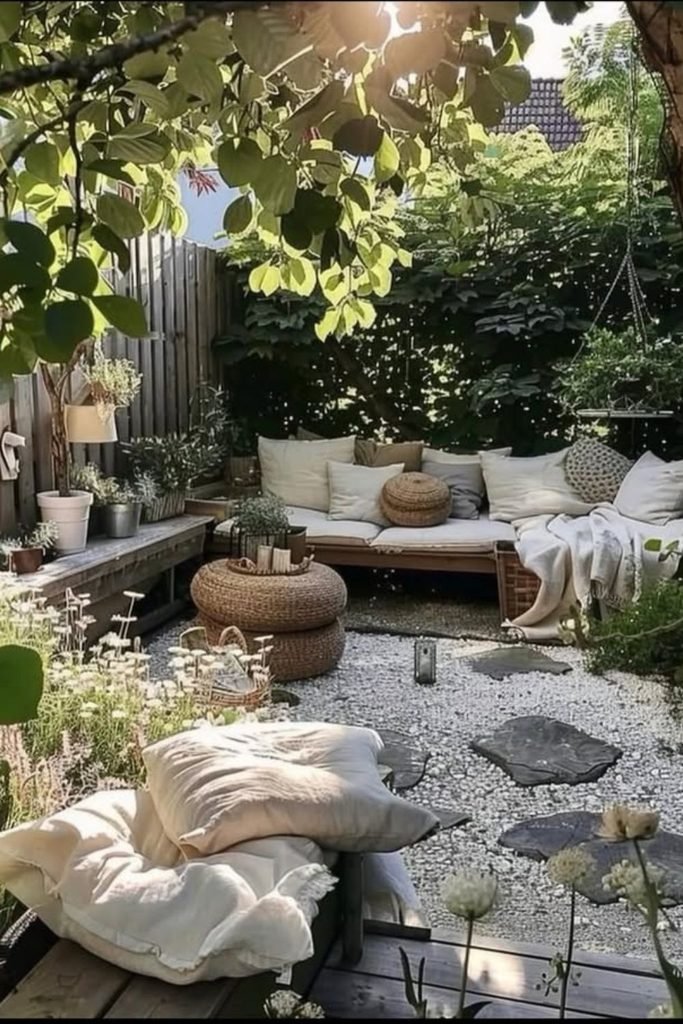
Gravel Retreat
Skip a formal patio when you want the corner to feel tucked naturally into the garden.
Instead of paving the whole area, lay a level bed of compacted gravel, then place a few flat stepping stones to form an easy way across it.
Low seating pushed to the boundary gives plenty of open space in front, and mature trees and dense shrubbery offer shade and enclosure without screens.
Add neutral pillows to keep the furniture soft and relaxed. Add a lightweight table that can be moved aside when you need extra room.
It is especially appropriate for a peaceful garden end where you want the chairs to melt into the flora.
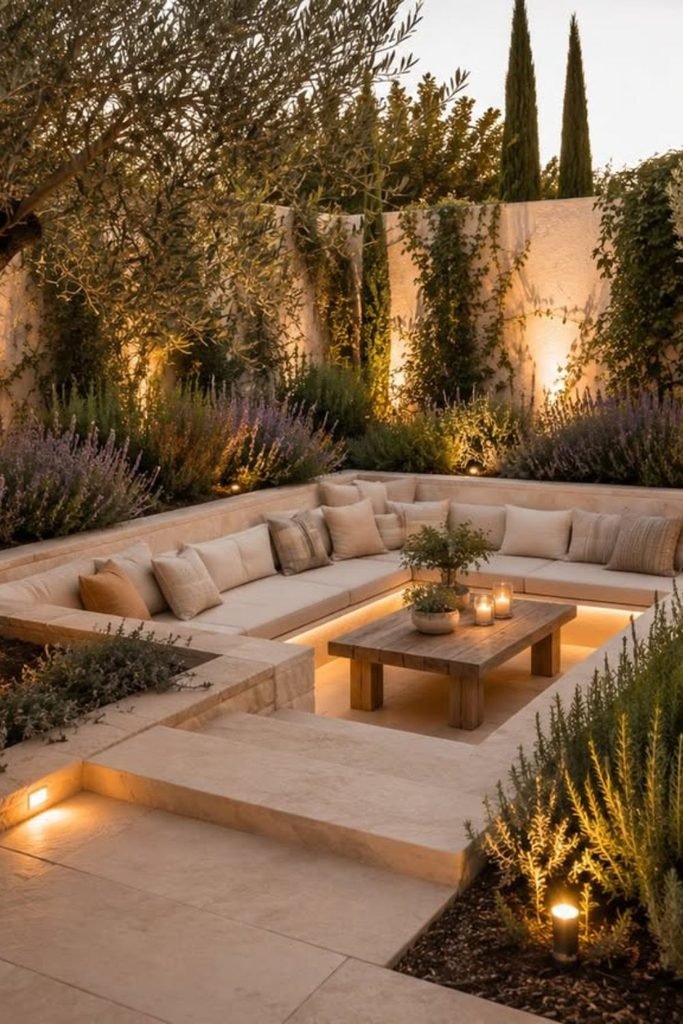
Sunken Seating
Lowering the seating slightly below the surrounding garden can make a large open corner feel private without adding tall screens.
Make a shallow sunken area with wide stone sides, then line the inside with padded bench seating so various people can sit.
Lavender, rosemary, olive trees and climbing plants soften the stone whilst keeping the planting pretty regimented.
If you want to use the area after dark, put low garden lights around the beds and under the borders of the benches.
Make the steps broad and well lit so you can go in and out comfortably.
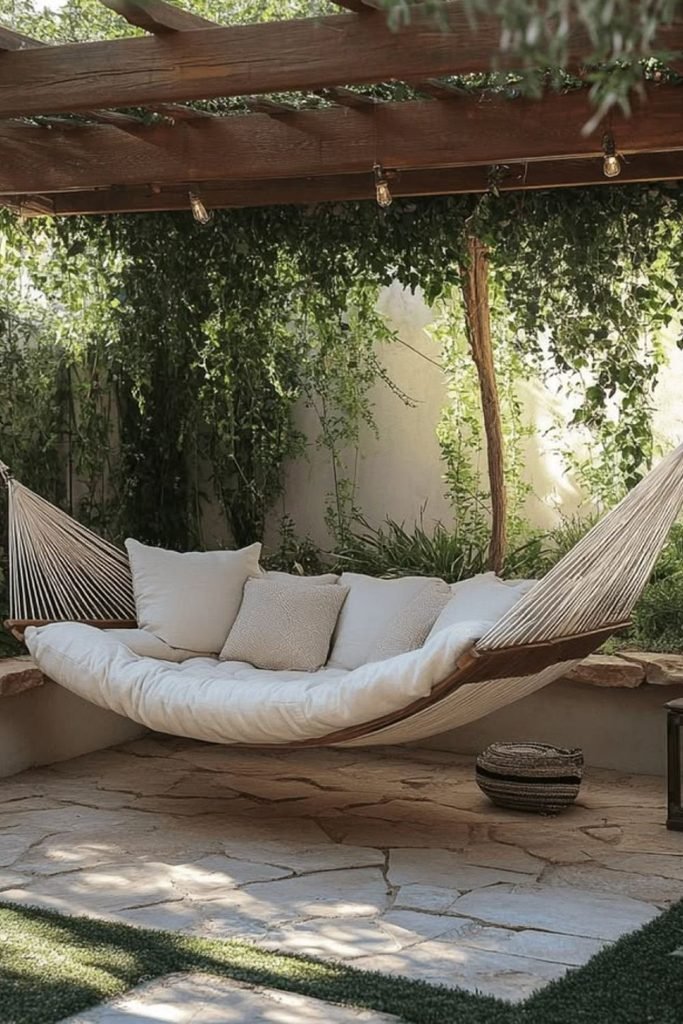
Hammock Haven
Give a deeply shaded corner a purpose by turning it into a hammock spot instead of forcing conventional furniture into the space.
Hang it between strong structural posts or other supports rated for the load, and allow adequate clearance for the hammock to swing without touching walls.
A pergola is especially good overhead, since growing foliage will shade strong sunlight but make the nook airy.
Opt for stone paving underneath to avoid worn grass and top up with ample patio cushions for comfort.
A lantern and discreet string lights can make the same nook useful for quiet evenings as well as daytime reading.
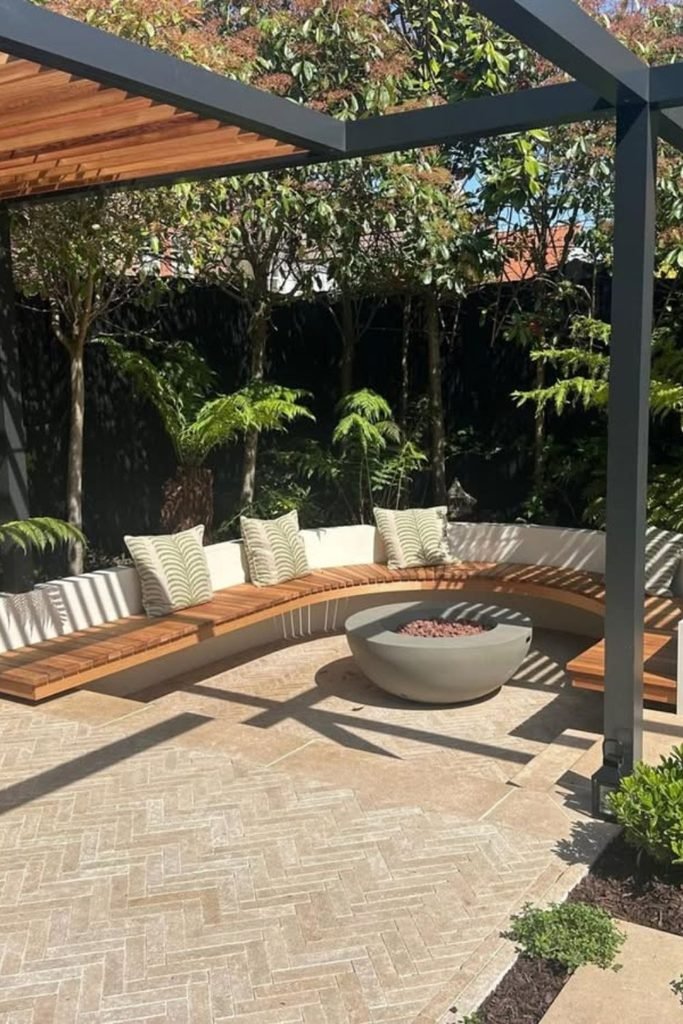
Curved Gathering
Straight benches can waste space in a wide corner especially when you want several people to sit and talk comfortably.
Instead, run a curving built-in seat around the perimeter leaving the open side toward the garden, so guests naturally face each other.
The round fire bowl creates a clear center without the need for a large table, and timber seat tops warm up a brick foundation.
If the location gets heavy noon sun, add a pergola above and plant taller behind the bench for privacy.
Don’t block the pavers in the front so people may move between seats without having to squeeze behind stuff.
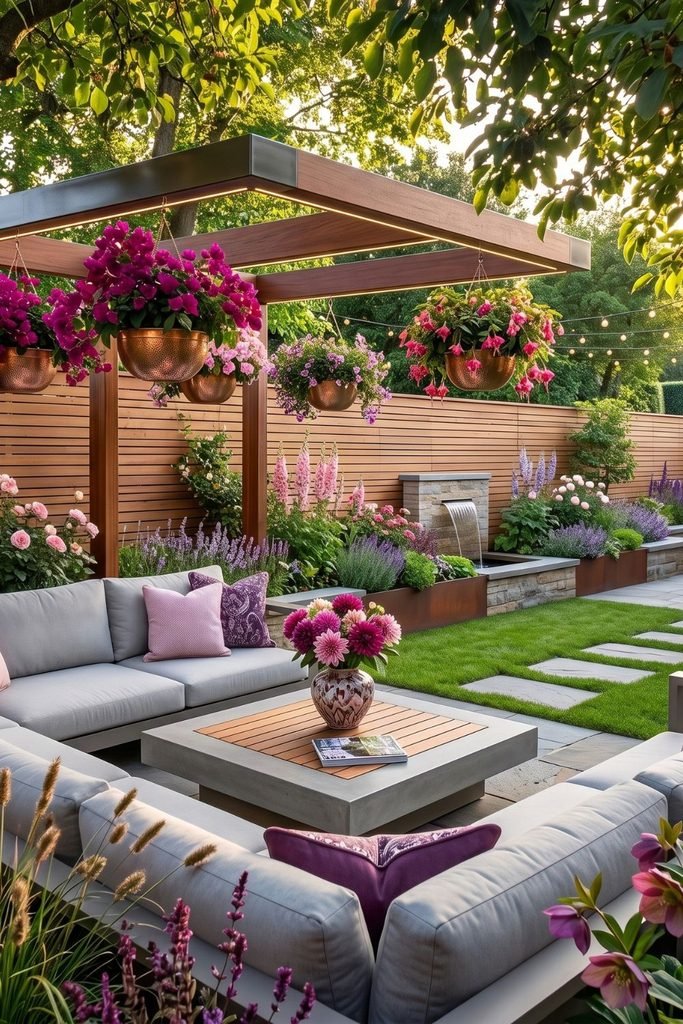
Floral Lounge
Let flowers do more than decorate the edges by bringing them above and around the seating too.
A basic open pergola scores points for strong hanging baskets, while keeping the nook bright and breezy.
Positioned matching flower hues in beds along the fence beneath the deep couch seats so the whole space seemed cohesive.
To prevent making the space feel closed in, place taller blooms and shrubs along the borders and lower plants toward the seating.
If you like the corner after sunset, run soft lighting around the pergola frame and add a few string lights beyond for soothing evening illumination.
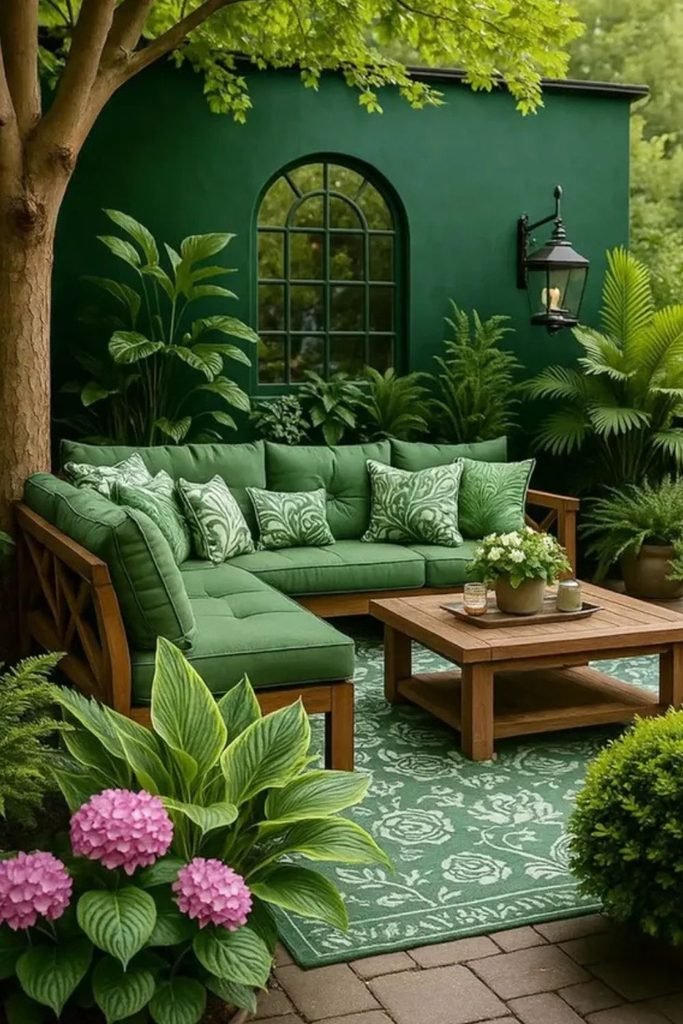
Evergreen Escape
Deep shade becomes an advantage when you build the corner around plants that already enjoy lower light.
Put an L-shaped wooden sofa under a mature tree and fill the area around it with ferns, hostas and other leafy plants to provide privacy.
Keep the chairs close to the perimeter so the center is easy to walk through and use an outside mat to divide the lounge from the surrounding pavers.
If you’re already getting a lot of color and texture from the planting, go basic with the furniture and cushions so the nook feels calm, not busy.
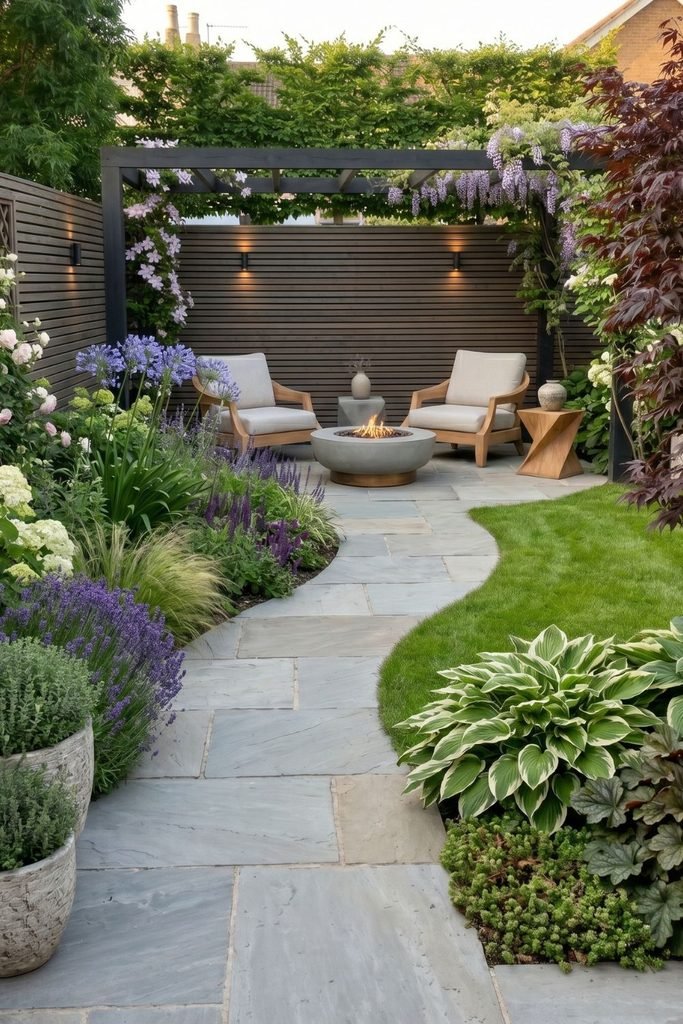
Pathway Retreat
Make a far garden corner worth walking toward by giving it a clear path and a reason to stop.
Bring the stone pavers from the main garden to a pair of comfortable seats framing the destination with a pergola without enclosing it.
Soften the above structure with climbing wisteria or another appropriate vine, and layer flowers down the path to make the seats feel part of the rest of garden.
Plant larger bushes behind the seats so they can shade neighbors’ views without obscuring the entrance to the nook.
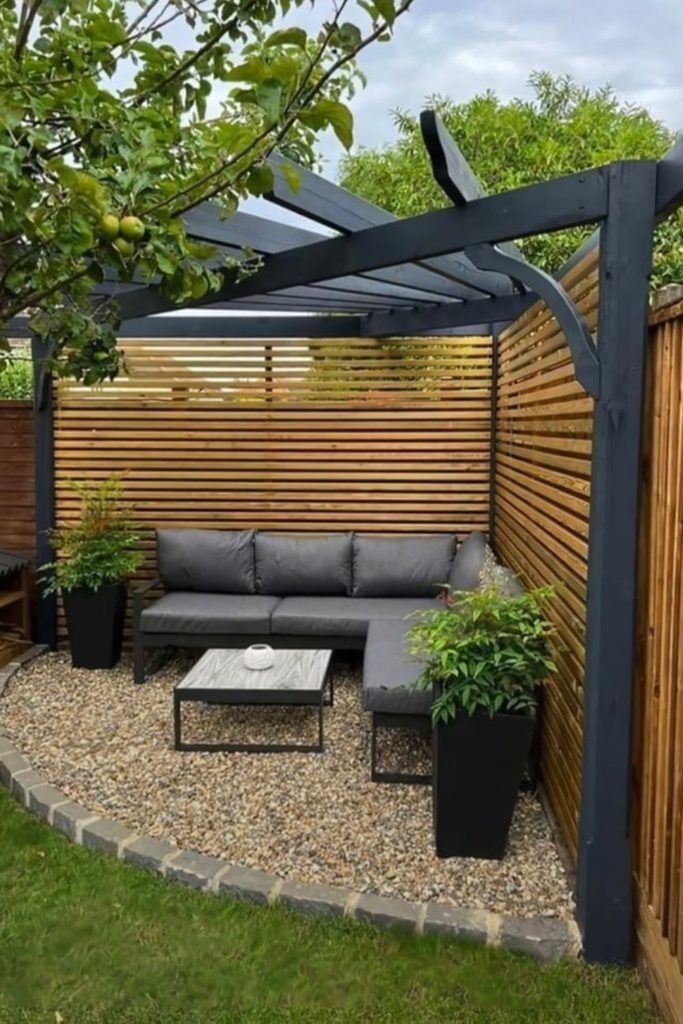
Screened Pergola
Open fencing can leave a seating corner feeling exposed even when the furniture fits perfectly.
Put horizontal timber slats between the pergola posts to screen the back and side, with small spaces to let in light and air.
Then an L-shaped sofa may be placed snugly against the borders, leaving the front clear for an uncomplicated table and easy access from the grass.
Gravel makes a good base here, as it will handle an uneven corner without needing a concrete patio all the way around.
Instead of large beds, finish it off with a few tall plants to soften the structure with vegetation without eating up precious seating area.
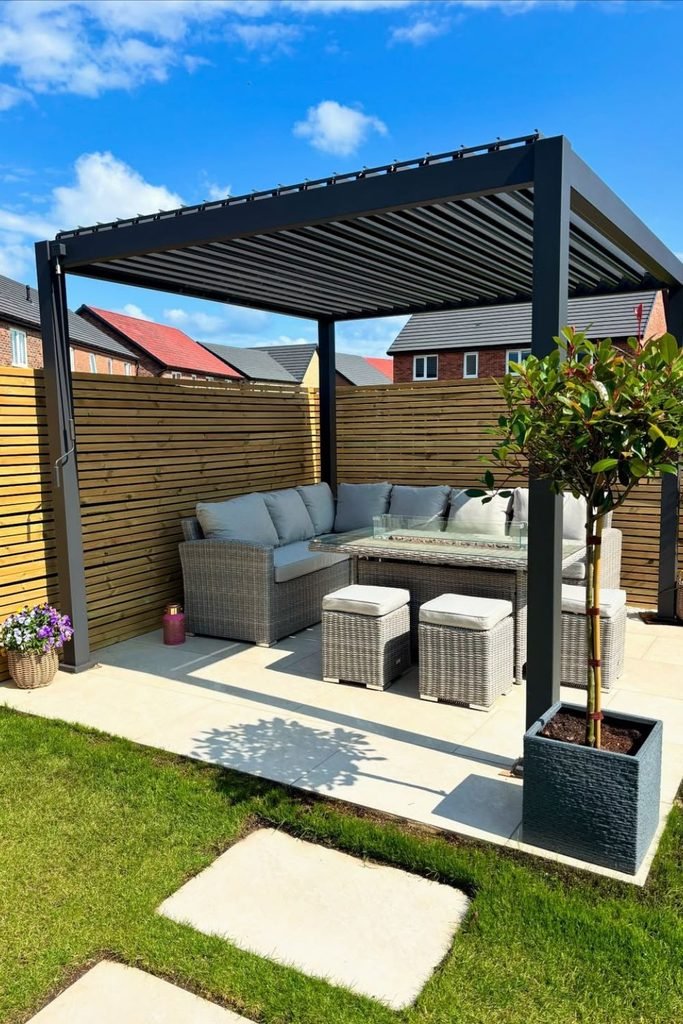
Adjustable Shade
Strong midday sun doesn’t have to make a corner dining area unusable.
Instead of full shade all the time, put in a louvered pergola over the seating area to manage how much sun the table gets.
An L-shaped sofa set against two screened sides provides you lots of seating but leaves the open side easy to get to from the lawn.
So, lay down a base for the whole thing to keep the stools and table legs from moving, then keep the planting simple with a few containers along the sides.
This is especially useful if you want to use the same corner of the yard for casual lounging, outside dinners and entertaining visitors.
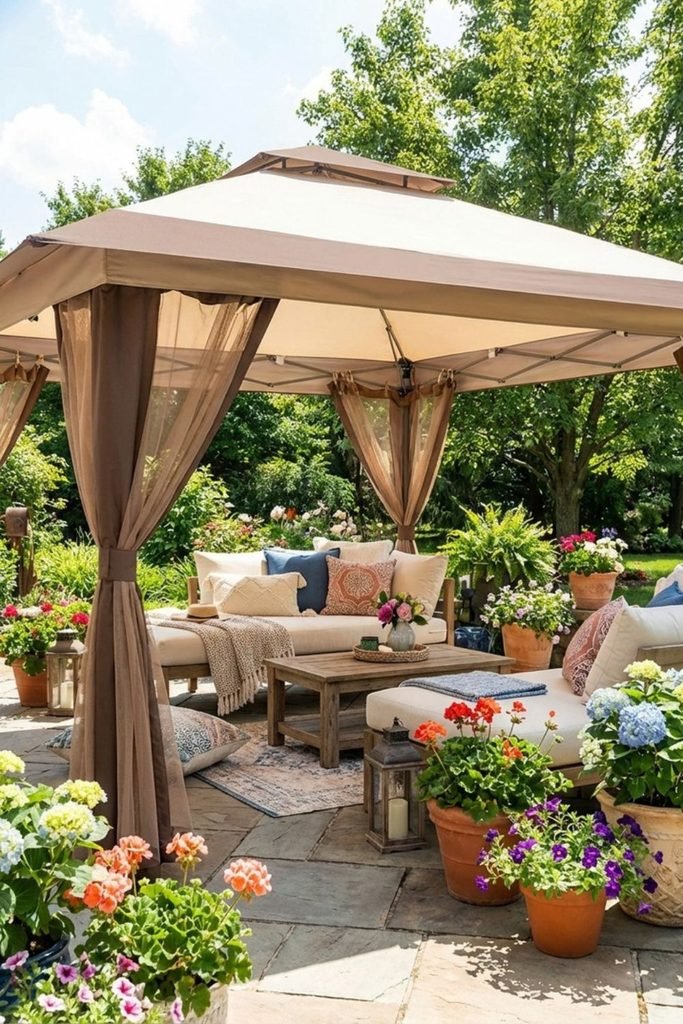
Curtain Gazebo
Blazing sun and light breezes can make an exposed garden corner uncomfortable, so a fabric gazebo gives you more control.
Put it on a paved area and put the sofas around a table in the middle, providing enough space to move smoothly between them.
On nice days, pull the curtains back and close the sun-facing side when you need a little seclusion or some extra shade.
Containers overflowing with flowers around the outside allow the structure sit into the landscape and not look apart from it.
Lanterns around the seating help keep the corner functional when daylight begins to diminish.
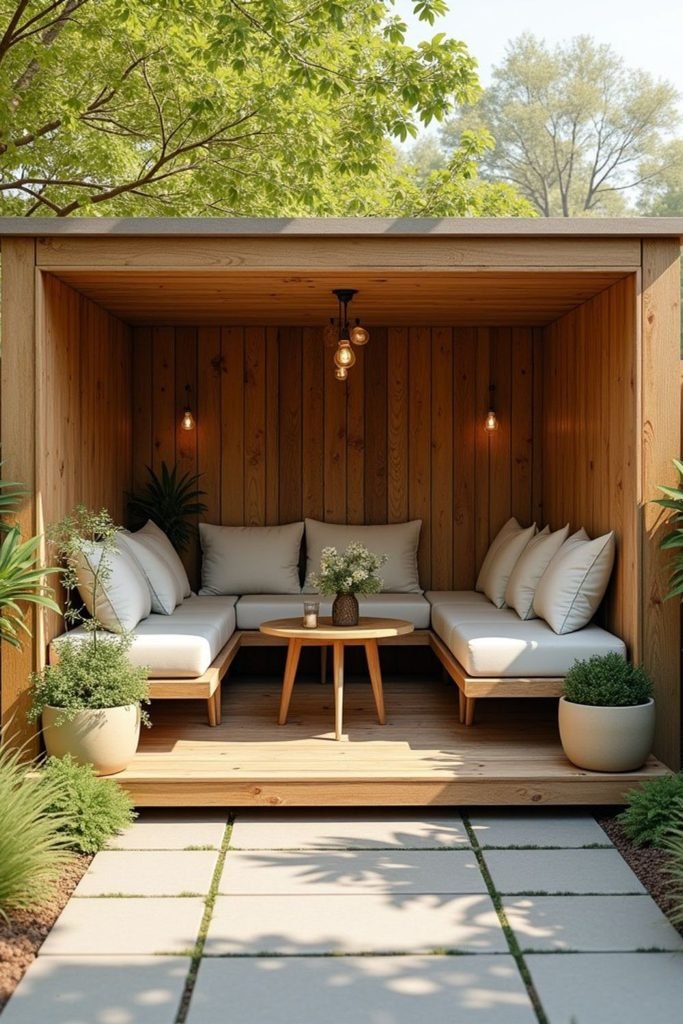
Wooden Hideout
Give the far end of your garden a stronger sense of separation by enclosing the seating on three sides instead of leaving it exposed against the fence.
A modest timber shelter can accommodate two benches on opposite walls, leaving the middle open, providing pleasant face-to-face seating for conversation.
Extend the roof enough to create beneficial shade, then add a few warm hanging bulbs so that the nook is still usable after dark.
Plant leafy plants and decorative grasses around the door, not inside the narrow footprint.
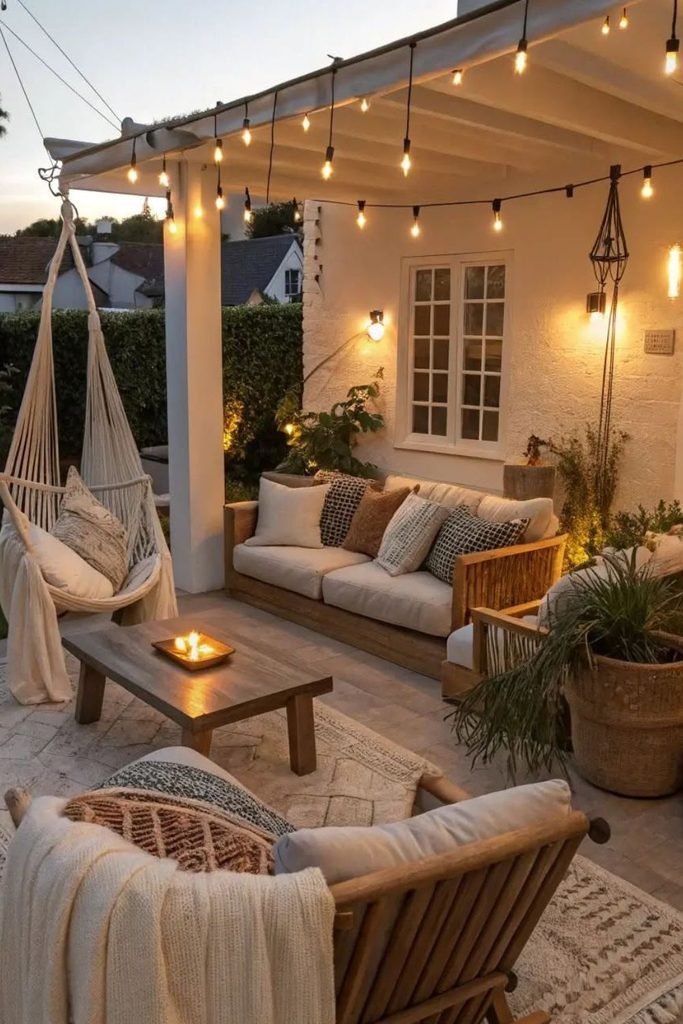
Evening Glow
Extend the hours you can enjoy a sheltered corner by planning the lighting around the seating instead of adding one bright fixture later.
Run warm string lights overhead for soft general light then use wall lights near doors or steps so you can move around safely after dark.
Keep sofas and chairs facing inward around a low table to make conversation easier, while a hanging chair can fill a narrow outer edge.
An outdoor rug helps pull the separate pieces together, making this setup especially useful for a covered patio corner used for relaxed evening gatherings.
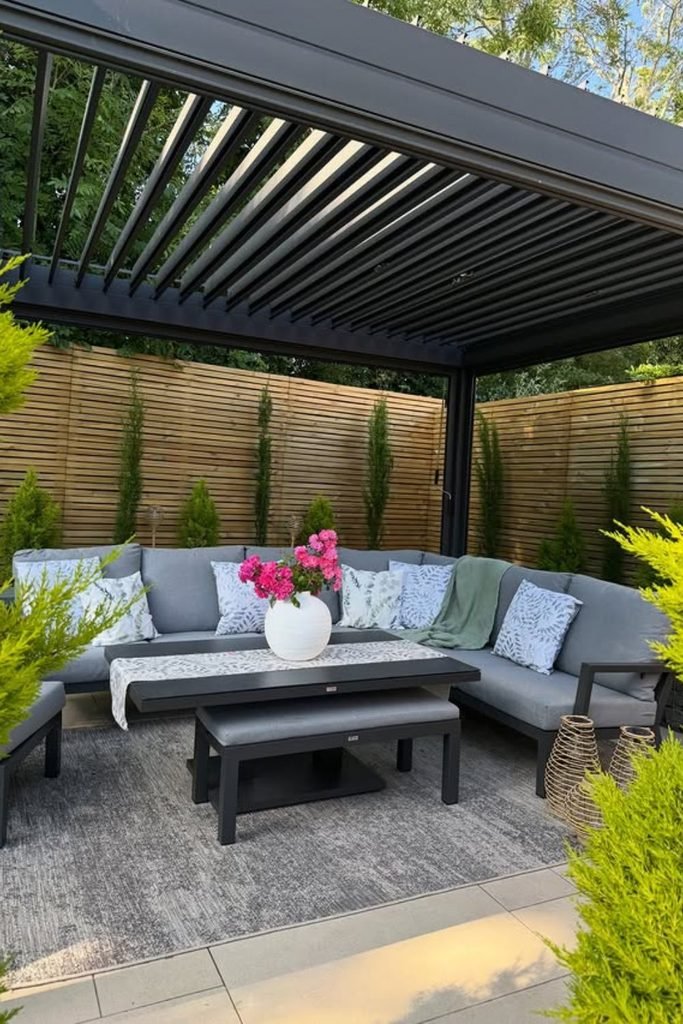
Louvered Lounge
Changing sun angles can make a fixed roof frustrating, so adjustable louvers give you shade only when you actually need it.
Use modular seating around the back and side boundaries to gain more seats without blocking the entry.
Slim ever green plants against the timber screen give height and seclusion and use very little floor area.
Maintain a functional center with a table and tuck-away bench that may give additional seating for larger events.
A rug underfoot defines the outdoor lounge and makes the rough asphalt feel more comfy.
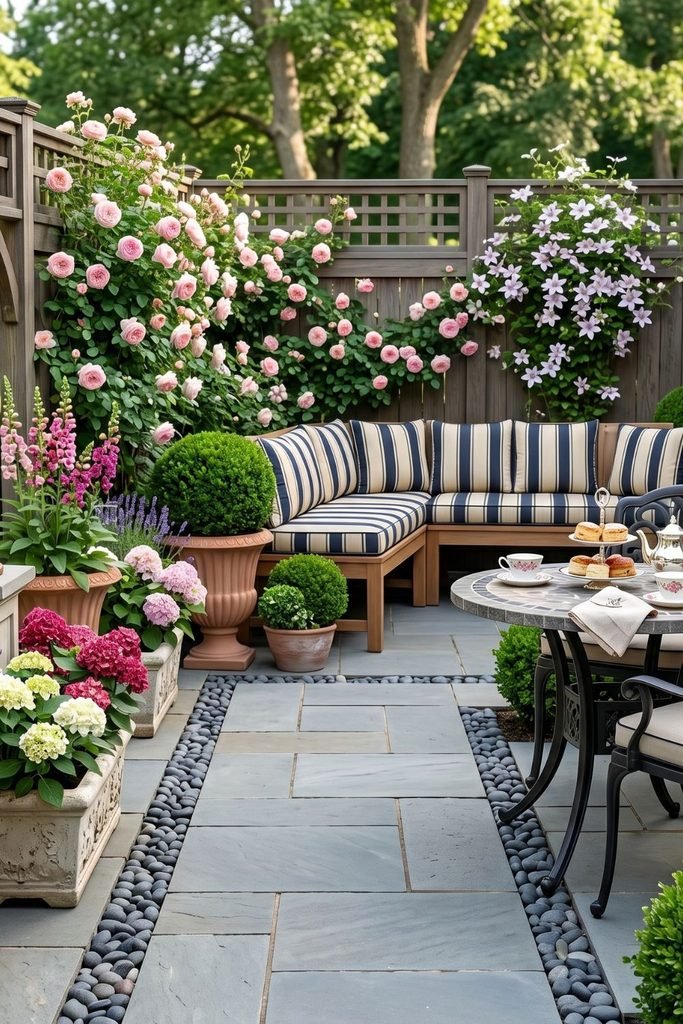
Tea Corner
Turn a flower-filled corner into a place you can actually use by combining relaxed lounging with a small table for tea, coffee, or snacks.
Place an L-shaped bench against the fence so it doesn’t compete with the dining chairs for walking area, and let climbing roses or clematis to grow upward rather than cluttering the floor with more pots.
Use large pavers for a sturdy surface and small strips of pebbles to soften the rough edges.
If you love dense planting plant taller flowers along the edge, and leave the path between the table and bench clear so the garden still feels easy to travel around.
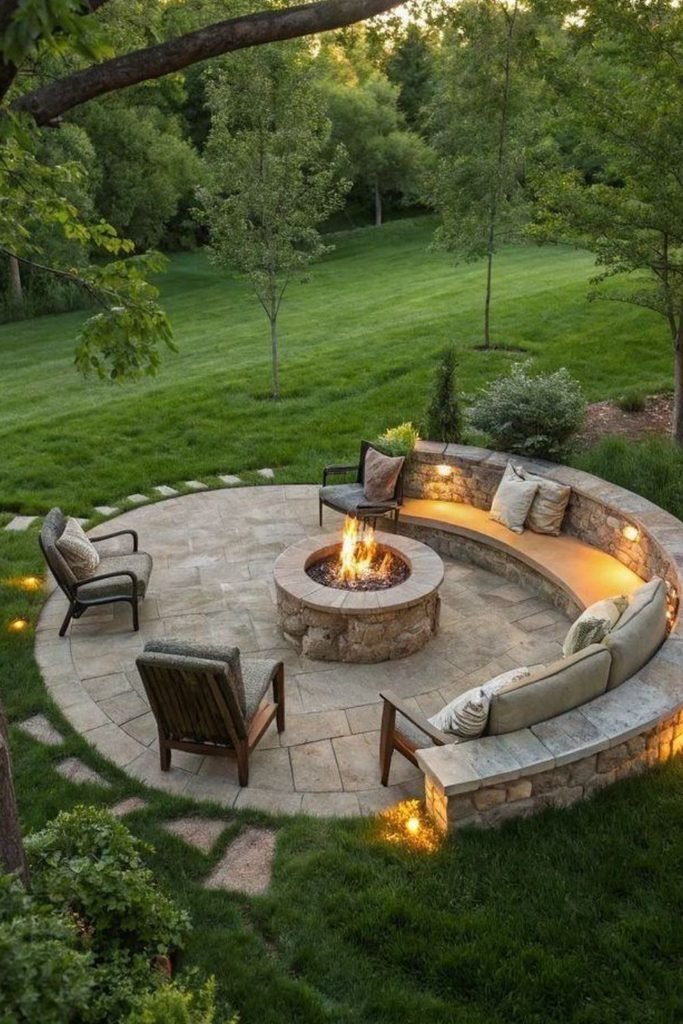
Firepit Circle
Wide garden corners can handle more than a small bench, so use the extra room to create seating that brings everyone toward one focal point.
Build a curved stone bench around part of a paved circle with the fire pit in the middle and an open section for moveable seats and easy access.
In a sloped landscape, the retaining wall can act as the base of the bench, rather than having to build another structure.
Low lights in the wall make the sitting edges visible in the dark.
Choose the final spot, avoiding adjacent trees and planting outside the fire-safe zone, according local clearing rules.
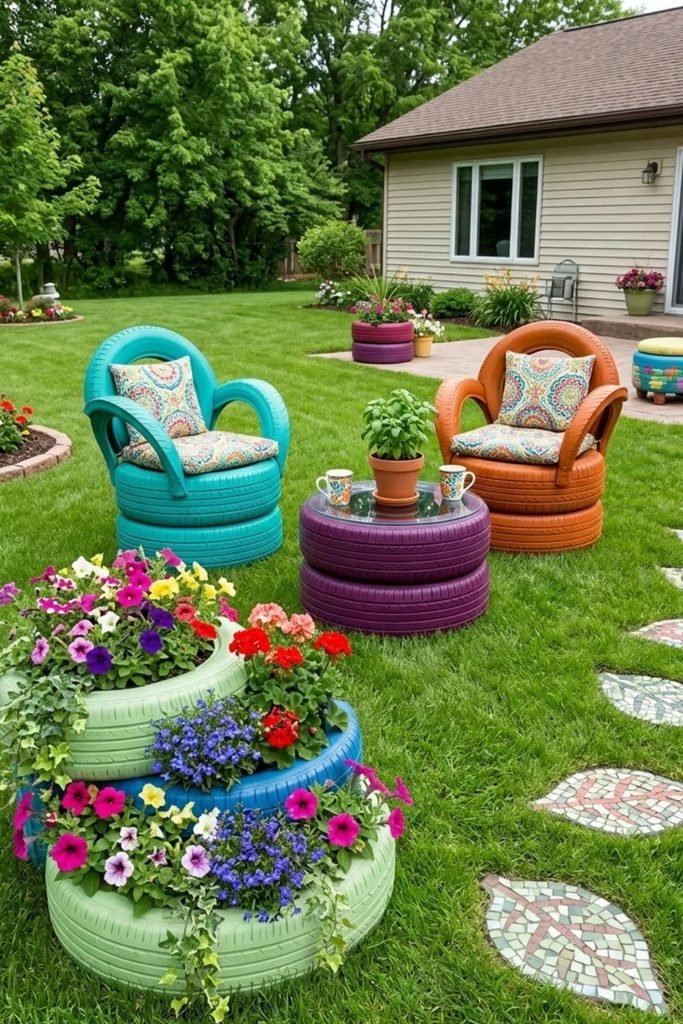
Tire Seating
Old tires can become useful garden seating when you want a low-cost corner with more personality than standard outdoor furniture.
Stack up a few tires for each chair and tie them together. Paint them with exterior safe paint and add fitted seat and back cushions for comfort.
A smaller stack can be used as a matching table with a solid top nailed down.
Carry the same idea across to adjacent tire planters so the seats look like something that was meant to be there instead of scrap.
This is great for a casual family garden or colorful backyard if you want a cheap place to sit that doesn’t require building a permanent patio.
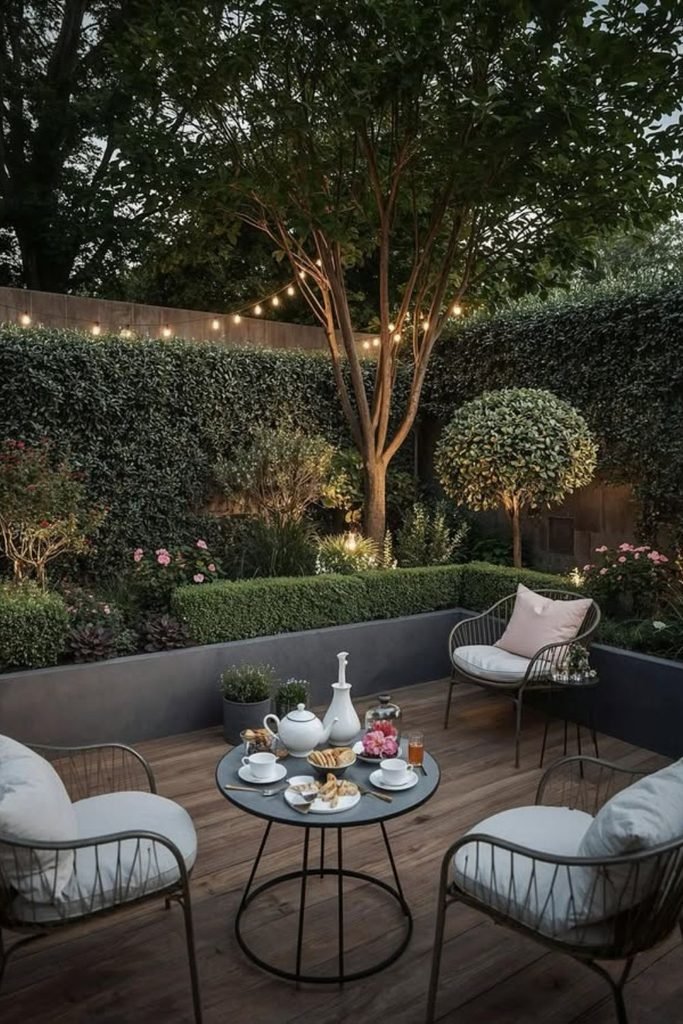
Twilight Corner
Evening seating works better when light comes from several gentle sources instead of one harsh outdoor lamp.
Surround a tiny table with some featherweight chairs, and then use the trees and shrubs around for natural privacy in the corner.
Overhead string lights provide just enough lighting for discussion, and modest garden lights near plantings help define the margins and make paths easier to see.
In small spaces, choose for open-frame furniture that takes up less visible space than bulkier sofas.
A basic deck or flat cemented base can keep chairs steady and make the area a comfortable place for evening tea or quiet dinners.
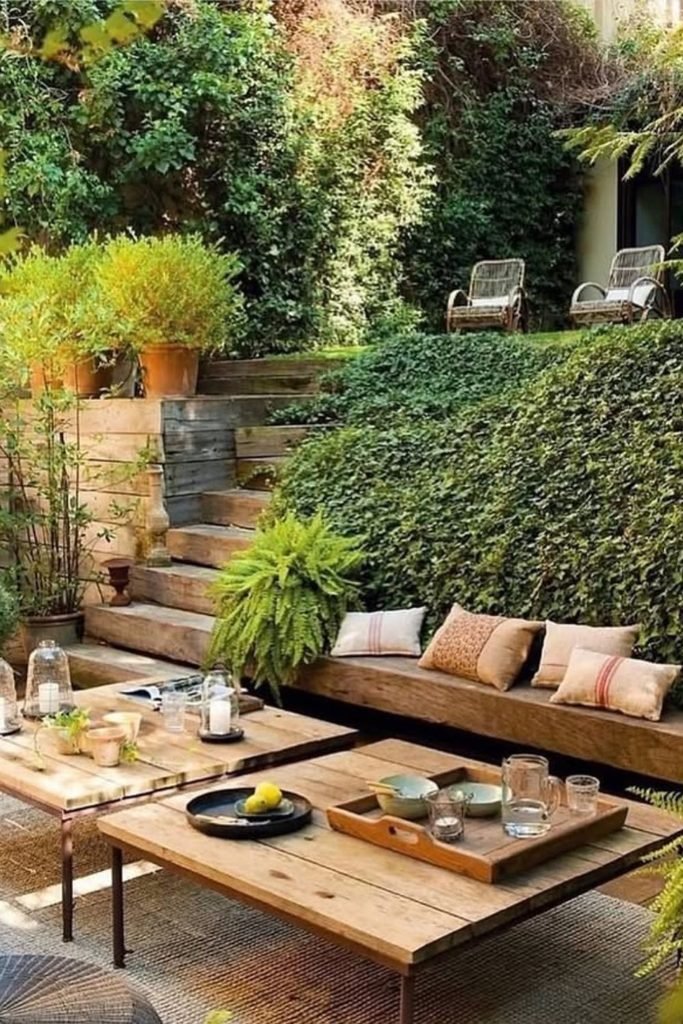
Tiered Retreat
Sloped corners become easier to use when you stop fighting the different levels and turn them into separate seating zones.
Place the main lounge on the lower terrace and then line a long timber bench against a planted retaining wall so it takes up little more floor space.
Climbs to a smaller set of chairs above, another peaceful space without adding to the patio.
Keep tables low and furniture on the perimeter so that you may move through the center.
The slope is also softened by dense groundcover, so that the retaining structure and seats seem to be embraced by the garden rather than boxed in by walls.
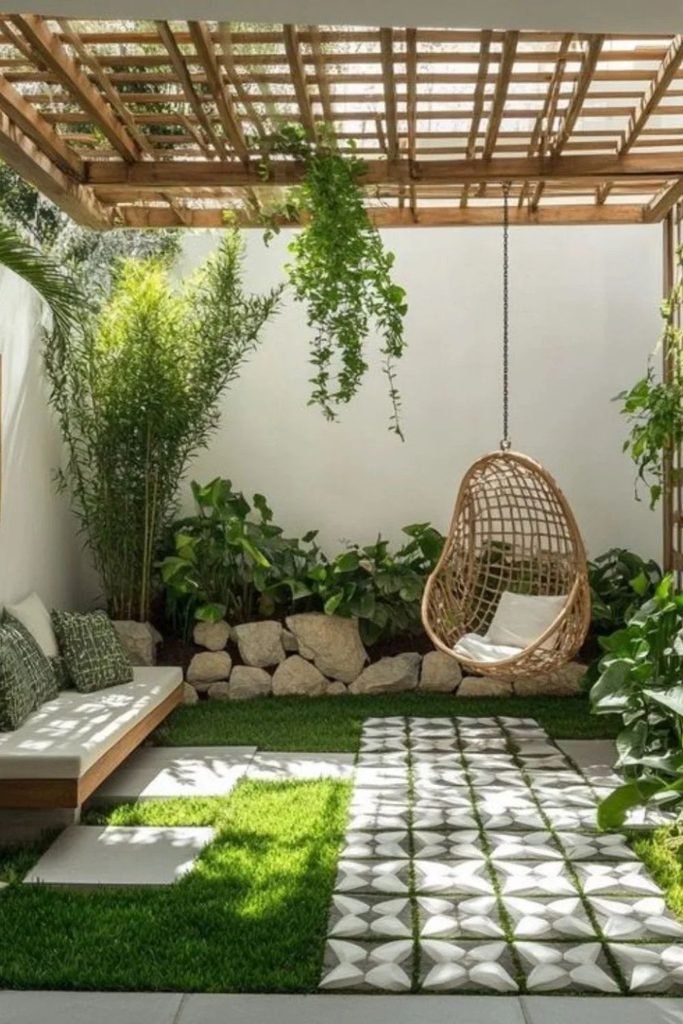
Swing Corner
Narrow garden corners often work better with seating that uses vertical space instead of filling the floor.
Hang an egg chair from a pergola beam rated for it and add slender wall-mounted bench adjacent for extra seating with out eating up the middle.
The timber lattice can hold climbing plants on one side and provide some privacy for the nook.
Keep the ground simple with pavers and grass between them so the area still feels connected to the garden.
Around the edges, leafy plants soften the look, while overhead, hanging greenery helps the pergola feel like less of a barren construction.
FAQs
How Can I Make Corner Seating Feel More Private?
Consider the lines around your chairs instead of obtrusive privacy structures.
Tall shrubs, climbing plants, trellis panels or horizontal screens can hide undesirable views still keeping the corner open.
Allow for some space to breathe and for light to filter in, so the seating seems private without being dark or claustrophobic.
What Seating Works Best For Small Garden Corners?
Small corners are usually better served by built-in benches, compact L-shaped sofas and two-chair arrangements than by multiple separate pieces.
Before you buy anything, measure the corner and mark the imprint of the furniture on the ground.
You’ll immediately find out if people can sit comfortably without blocking paths, entrances, planting or access to the rest of the garden.
