
21 Corner Garden Ideas for 2026
You know that odd garden area, the one where the fence feels too barren, the grass won’t grow properly.
Every plant you add just looks out of place. Often, putting more plants in to fill it does not solve the problem.
What it needs is a defined goal and a layout that plays to the available light, space and soil.
In this article, you’ll find practical ways to plan difficult corners first, followed by 21 Corner Garden Ideas.
Let’s jump in!
How Can Awkward Garden Corners Feel More Intentional Naturally?
Buy plants first, start by deciding what you really need out of the corner. If your fence looks a little bare, add in some taller bushes or climbers for height.
If it feels empty, pick one tree, large planter or feature and use it as an anchor to develop around.
Troubled plants will make a decent arrangement look incomplete, so check on the amount of sun that hits the spot.
For a layered bed, place taller plants toward the back and bring lesser ones to the open edge.
A curved edging helps soften a severe fence corner, while planting repeats create a sense of unity.
Most importantly, provide room for plants to grow to their full size and don’t fill every vacant space all at once.
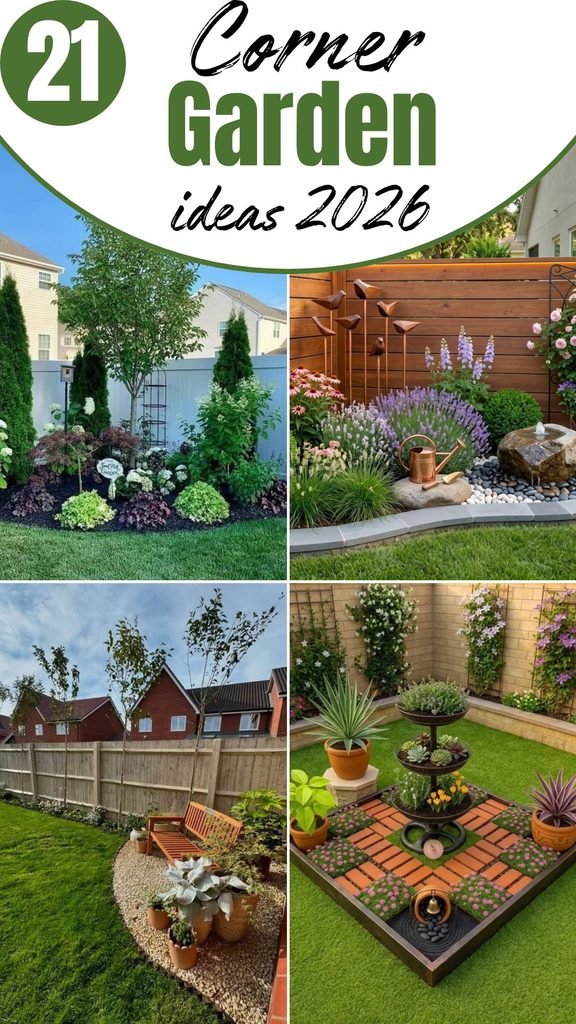
Layered Hydrangeas
Give a wide fence corner more depth by building the planting around one small ornamental tree, then stepping the height down with hydrangeas and compact.
If you desire privacy plant taller evergreens along the boundary and smaller ones along the lawn edge to avoid making the bed feel heavy.
Dark mulch is great here, it gives a nice separation between the foliage and lawn.
Give enough room between shrubs for their mature spread; don’t cram them in for rapid fullness, since this will create trimming problems later.
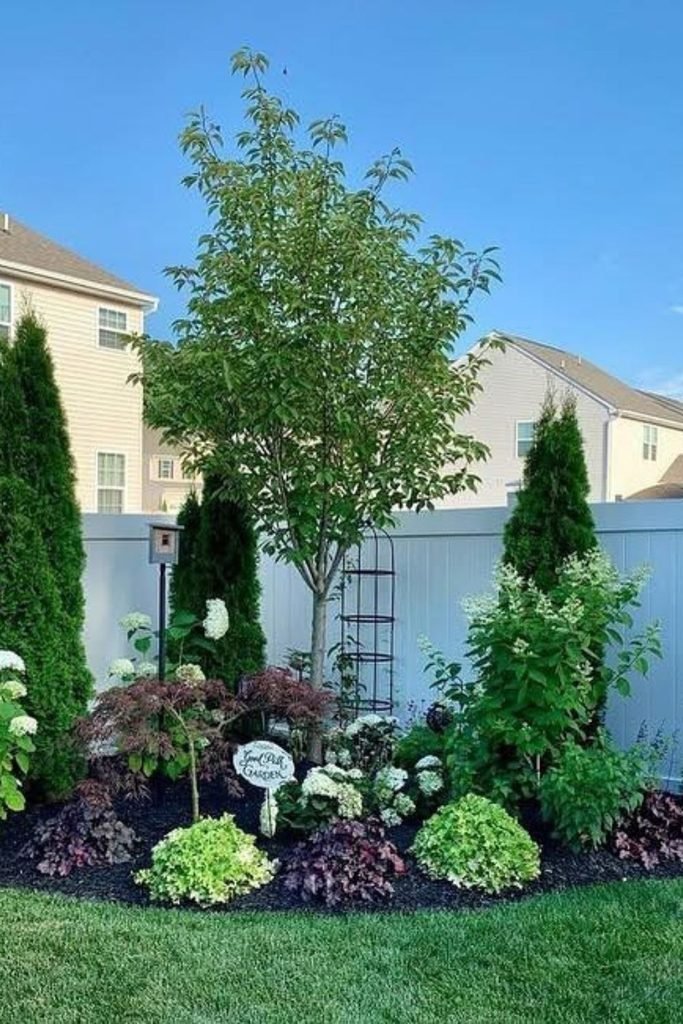
Fountain Corner
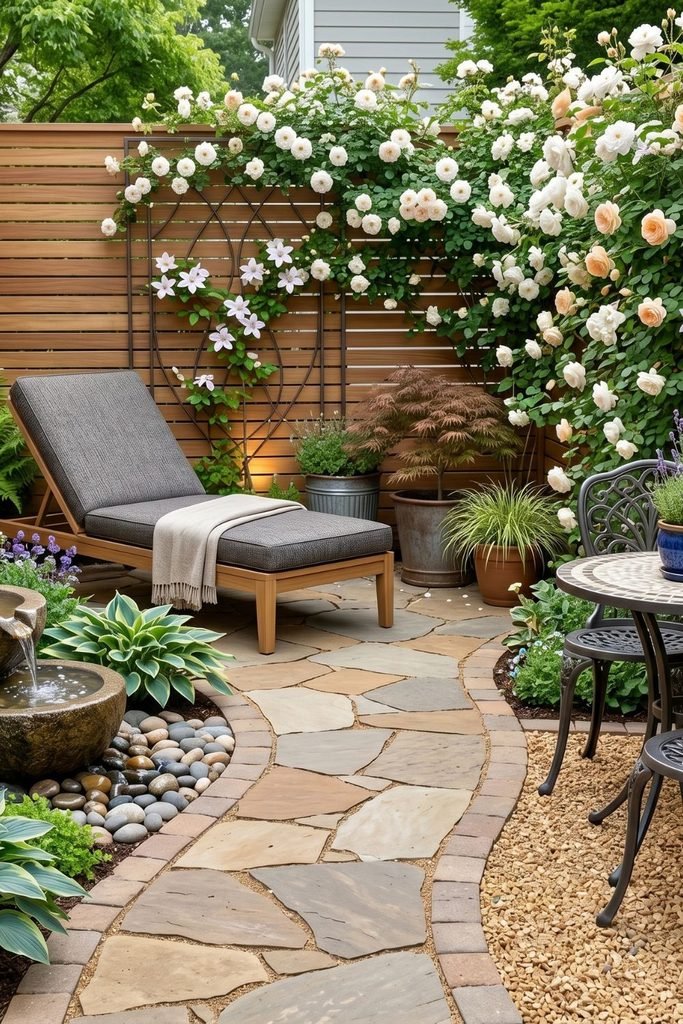
Turn a private fence corner into a calming focal point by combining a compact stone fountain with flowering plants and rounded evergreens.
Rather than pressing everything up against the fence, place the fountain a bit forward and soften the stone border around it with low grasses.
A climbing rose or clematis on a slender trellis offers some height without taking up much ground area.
Surround the fountain with pebbles so that the wet feature is separated from the planting soil and clean-up is easier.
This design works really well next to a patio or lounging area where you can really enjoy the sound of running water.
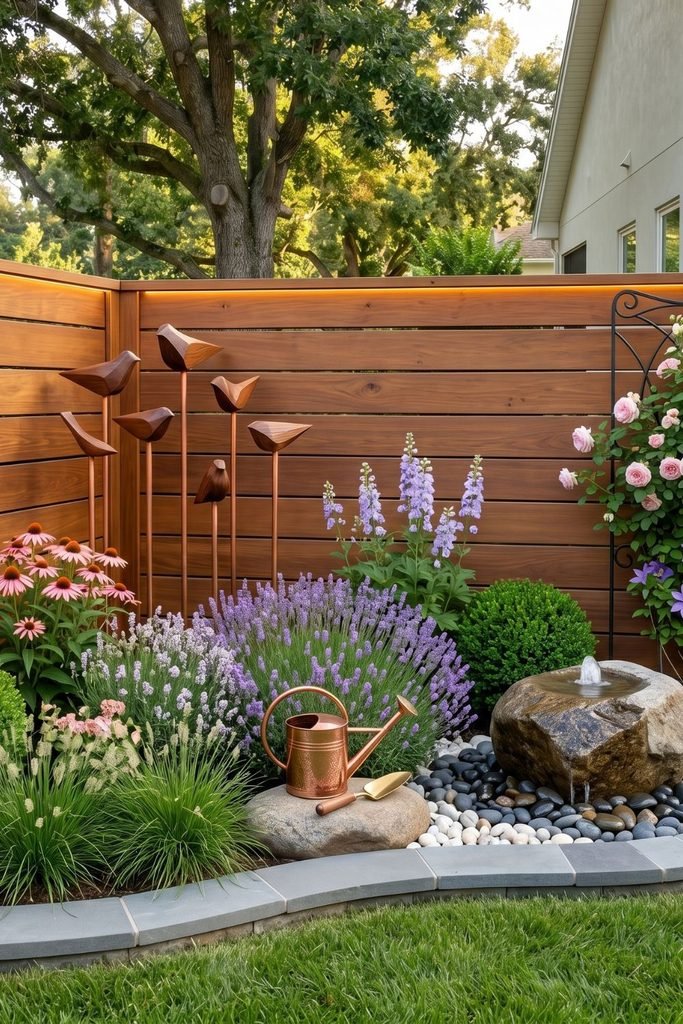
Gravel Retreat
Skip another deep flower bed when the corner sits beside the house and turn it into a small gravel garden instead.
Put down a tidy gravel surface. Put a basic bench where it gets comfortable morning or evening light.
Arrange a group of pots around the bench, for swapping plants depending on the season without disturbing the earth.
By varying the height of the pots, the planting feels fuller, yet there is still enough open gravel to reach.
This is especially desirable if you have a small backyard and want a useful garden corner without sacrificing a lot of turf.
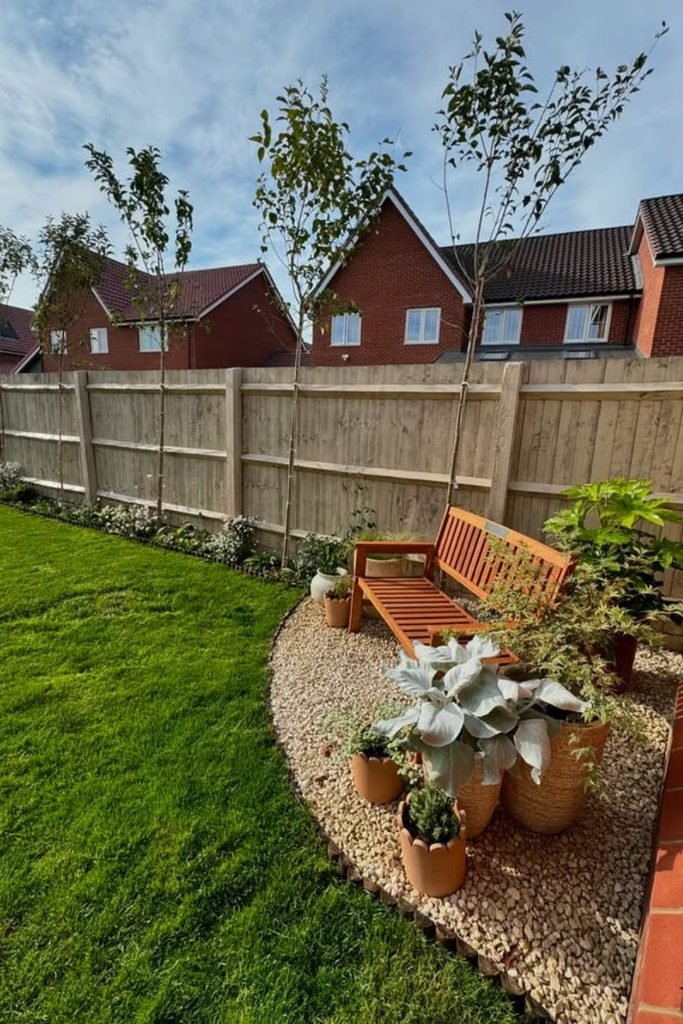
Geometric Planter
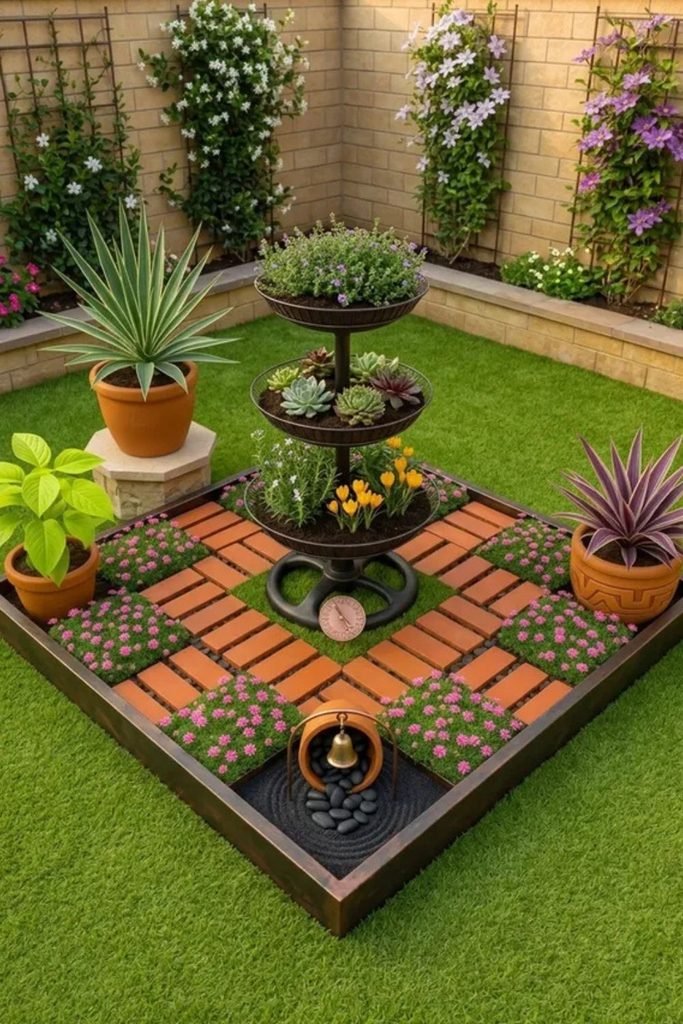
Bring order to a plain lawn corner with a structured raised planter that mixes brick paths, low flowers, succulents, and one tiered centerpiece.
If you want your garden to look clean rather than loose and cottage-like, the bold square shape works best.
Keep plants low around the outer parts so the pattern is still evident, then add height with pots or tiered planting, without cluttering the scheme.
When you copy this, make sure you provide narrow access points between planting sections for watering and trimming.
Climbing plants on the adjacent walls can help to soften the hard geometry and link the feature back to the garden around.
Tiered Containers
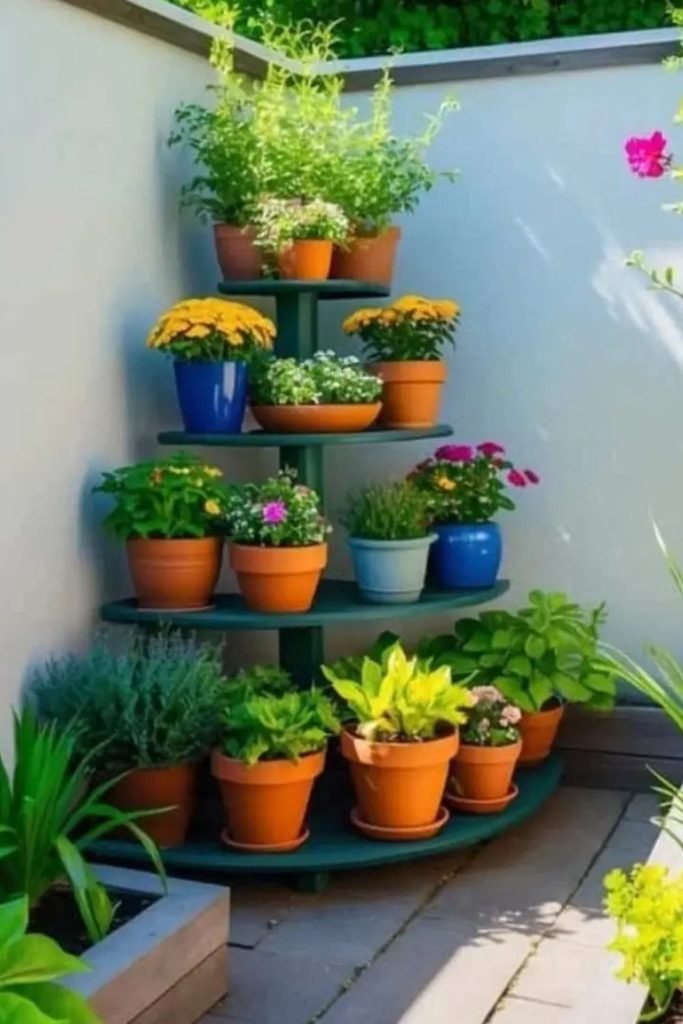
Make a tight paved corner work harder by stacking container plants upward instead of spreading them across the floor.
A tiered corner stand provides flowers, herbs and leaves their own levels while keeping the walkway clear, making it particularly handy on small patios.
Larger or heavier pots should be on the lower shelves, with lighter flowering pots higher up for greater balance.
Pick plants with similar light requirements but different heights and leaf forms to make an interesting display.
Containers dry out faster than garden bed and so check the higher pots more often in hot weather.
Pergola Retreat
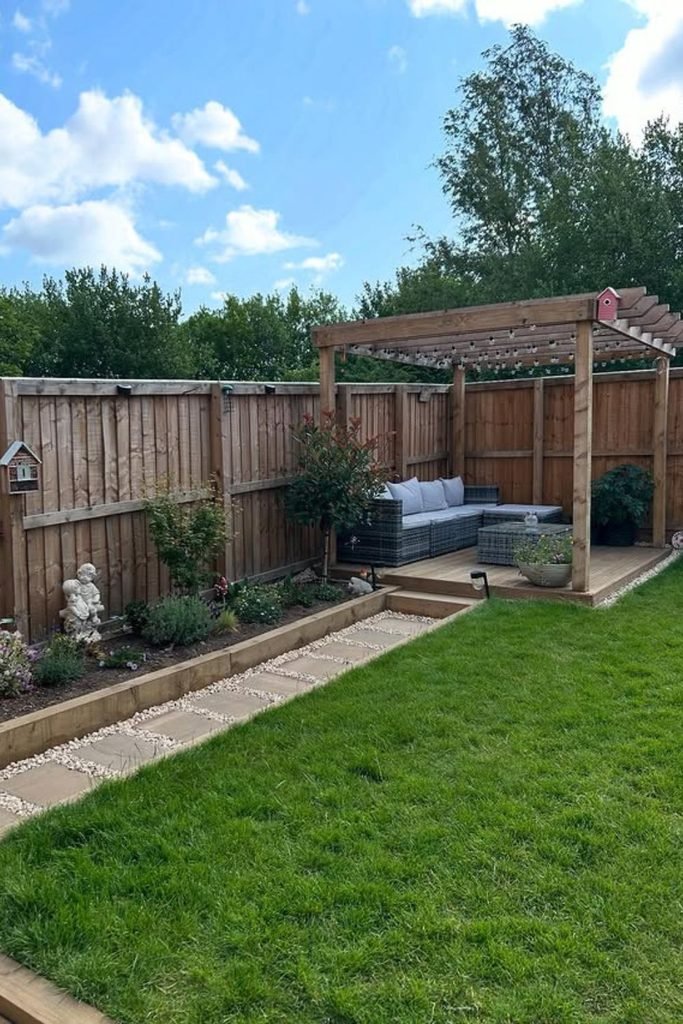
Claim a far backyard corner for relaxing instead of letting it become another unused strip of lawn.
Add a basic pergola over a small deck, then add comfortable seats under it, and connect the area with a stepping-stone path.
Narrow planting beds along the fence soften the timber limits without taking much space away from the lawn.
Surround the seating area with a few bushes for some foliage and added privacy, but avoid plants that will eventually jam the walkway.
You can train climbing plants over the pergola later for shade and overhead string lights can make the corner functional after nightfall.
Illuminated Planter
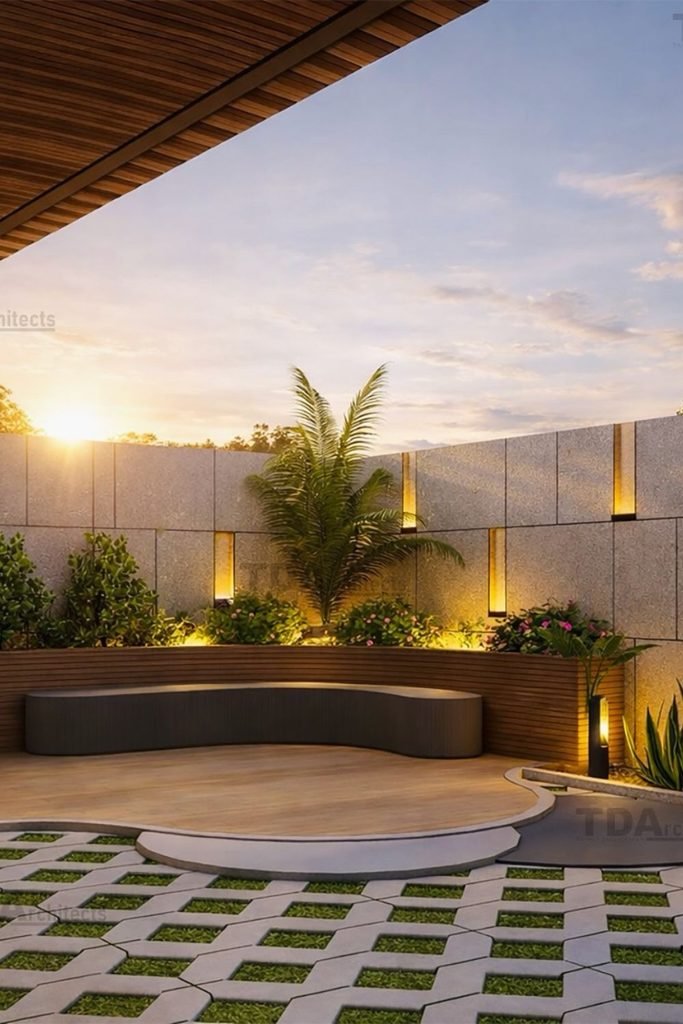
Let lighting do part of the design work when a corner is used as much in the evening as during the day.
Build a raised planter along both walls, with a taller architectural plant near the juncture, surround it with compact shrubs and flowers to soften rough surfaces.
You can use warm wall lights and low uplights to illuminate vegetation without lighting up the entire yard.
The curving bench in front makes the planting feel part of the seating area rather than pushed against the barrier.
Place the tallest plants away from any wall fixtures so that new growth doesn’t obstruct the light later.
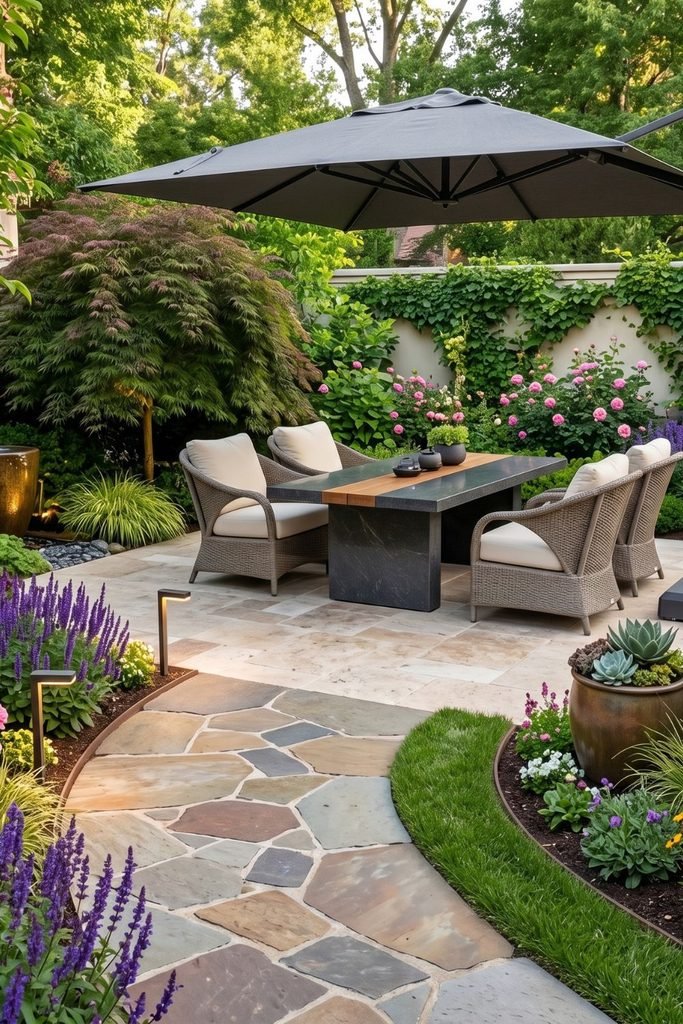
Garden Dining
Make a generous corner earn its space by turning it into an outdoor dining area surrounded by planting instead of placing furniture on an exposed patio.
Create curving flower beds around the asphalt and combine shrubs, flowering perennials and one small ornamental tree to give a sheltered sense.
An adjustable umbrella delivers shade only when needed, which is perfect for places where the sun is not constant all day.
Keep plants lower by walkways and seating edges and build height closer to the boundary.
If you add garden lights point them to pathways and to the main plants so the area is comfortable for evening meals but not too dazzling.
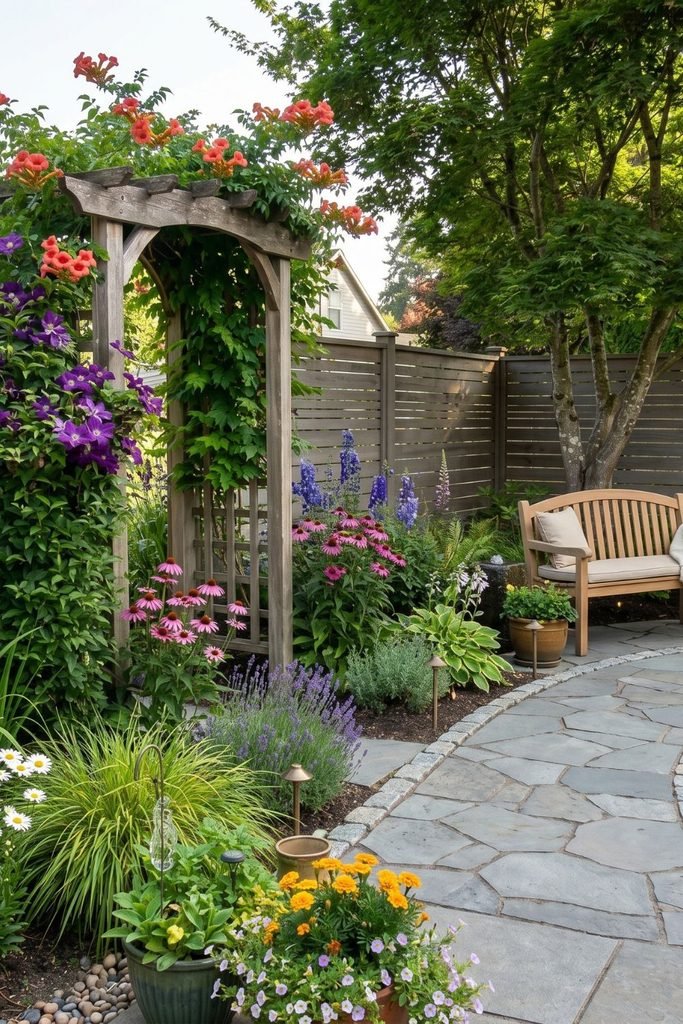
Arbor Hideaway
Frame a quiet garden corner with a climbing arbor before adding the seating and the space will feel tucked away rather than simply furnished.
Train flowering vines up the building for height, then continue the planting with perennials and ornamental grasses along a curving path.
Place a basic seat beneath a mature tree, or next to a taller planting where the natural shade allows comfortable sitting.
Keep plants along the walkway low enough so they don’t spill out onto the walking surface.
This is a good technique for larger corners where you may make slow transition from the open lawn to a more secluded garden escape.
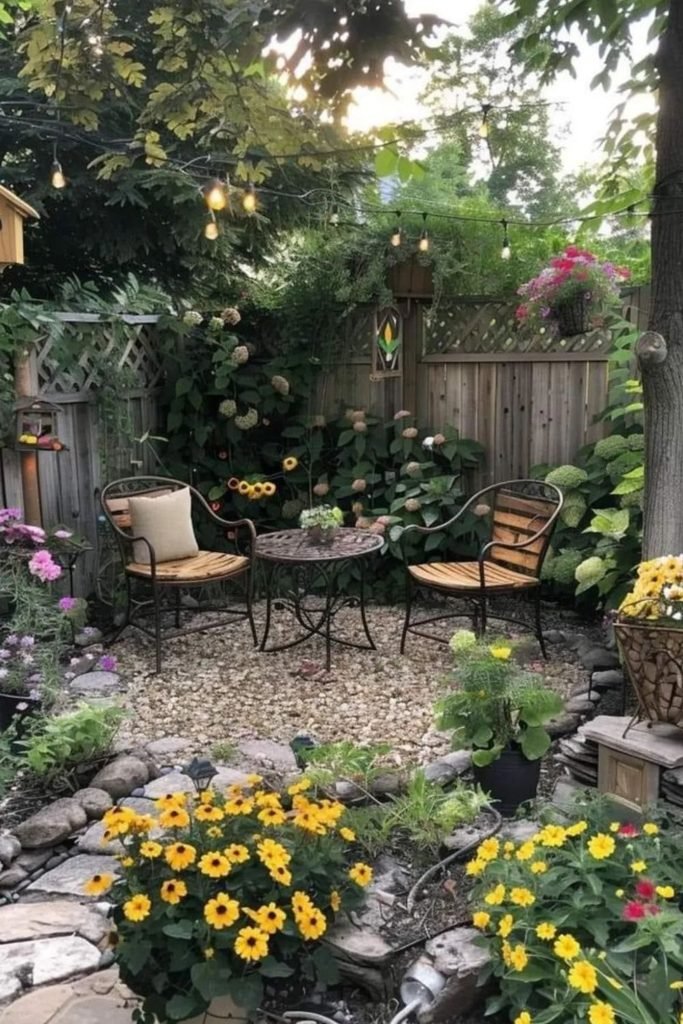
Woodland Bistro
Use the natural shade of a mature tree to create a tucked-away bistro corner instead of fighting the lower light with sun-hungry plants.
Cover the sitting area with gravel for an informal, easy-to-walk surface, then surround it with shade-tolerant shrubs, hydrangeas, and seasonal flowers.
Two lightweight chairs and a small table are enough to give the corner a purpose without making it feel packed.
String lights overhead can extend its use into the evening, while birdhouses and flowering plants add life around the edges.
Keep the center open so the planting feels lush without closing in the seating space.
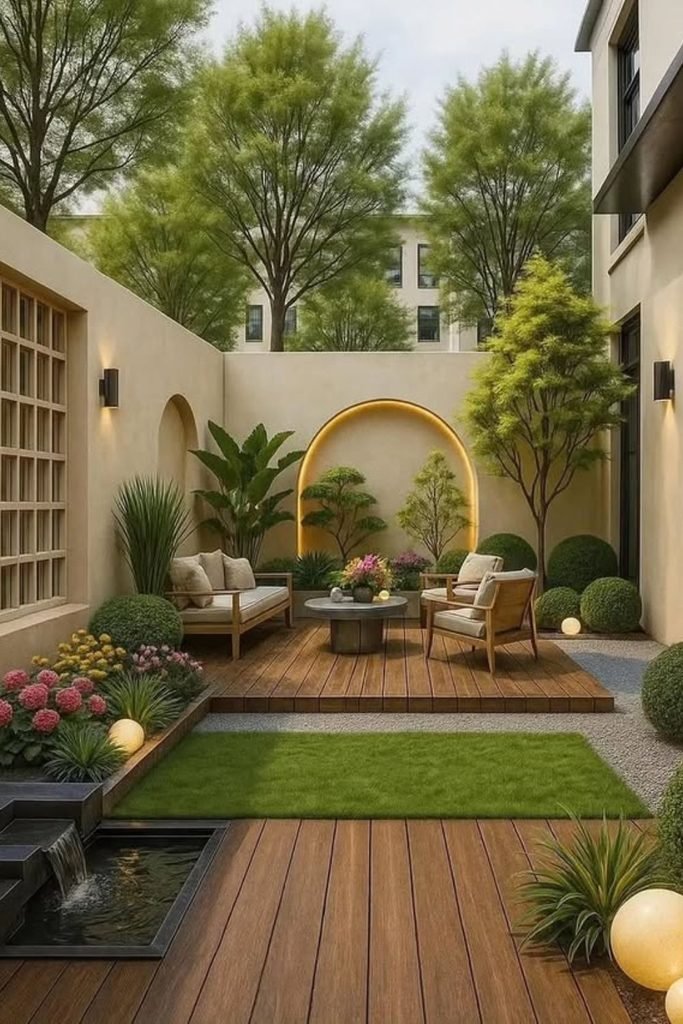
Courtyard Balance
Give a narrow enclosed corner breathing room by keeping the center simple and pushing most of the planting toward the boundaries.
Tall walls can be softened with rounded bushes, tiny ornamental trees and a few flowering plants, without overcrowding the courtyard.
Build an elevated wooden platform to sit on to give a feeling of separation between the leisure area and the garden beds and then run the timber through to the walkway to join the two spaces together.
For a green look without the congestion, choose a limited number of plant shapes and repeat them across the courtyard.
Soft garden lighting near the ground and walls will also highlight the planting after dark without taking up valuable space.
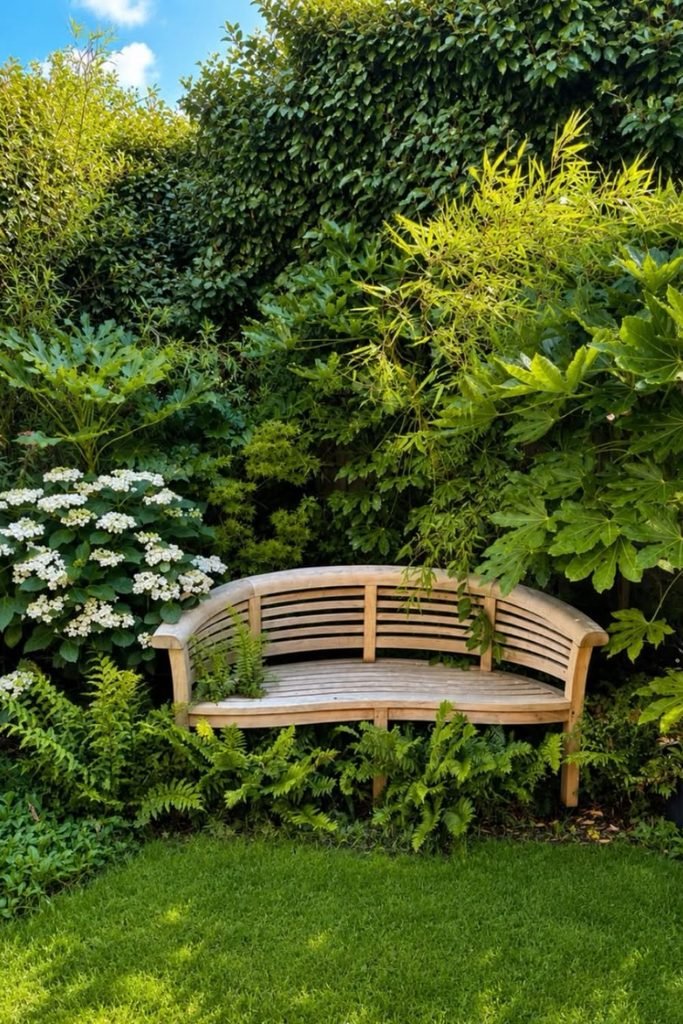
Foliage Retreat
Lean into greenery when a corner gets filtered light and flowers are harder to maintain.
Add a basic curved bench and pack it with plants that provide a range of leaf types, from large tropical-style leaves.
To fine ferns and dense shrubbery, and the space will still have lots of interest without requiring continuous flowers.
Use taller plants as a backdrop, and soften the base of the seat with ferns and low groundcovers.
You can have seasonal color from a flowering shrub without dominating a design.
Leave space around the bench for trimming and air circulation, particularly as the more leafy plants get older.
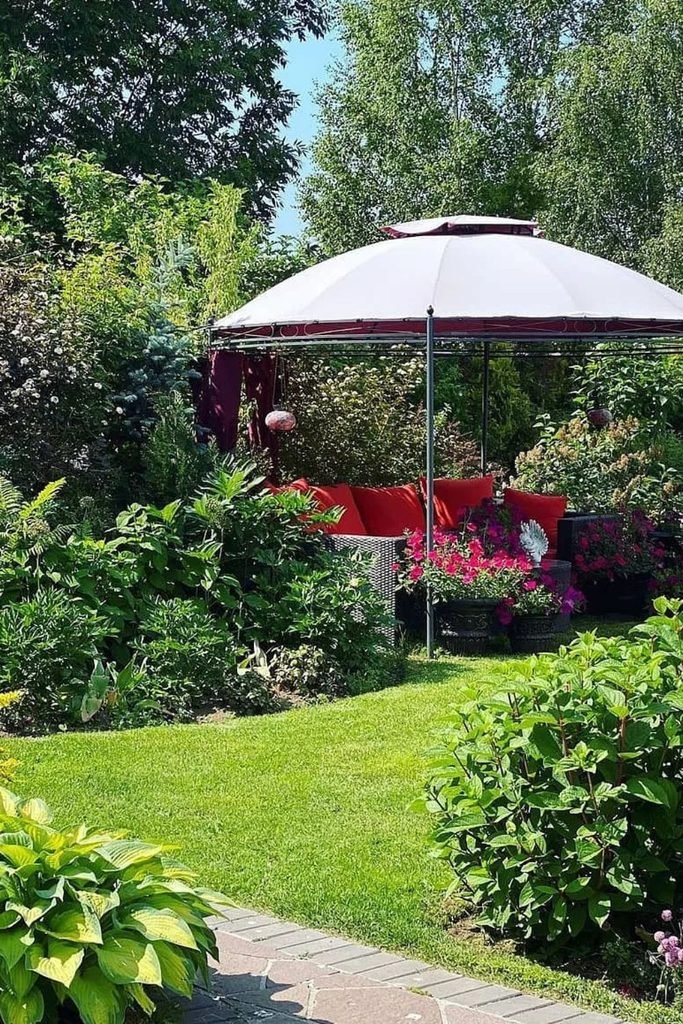
Gazebo Hideaway
Save a larger garden corner for a covered gazebo when you want a relaxing spot that still feels surrounded by plants.
Place the structure behind the main grass, then soften it into the garden with shrubs, hydrangeas, ferns, and blooming perennials around the perimeter.
Keep the entryway open and don’t plant big plants right in front or the seating area can start to feel hard to access.
The roof offers excellent midday shade, and container flowers near the chairs bring color closer without requiring another bed.
The approach is especially effective in places where existing green cover already provides privacy along the boundary.
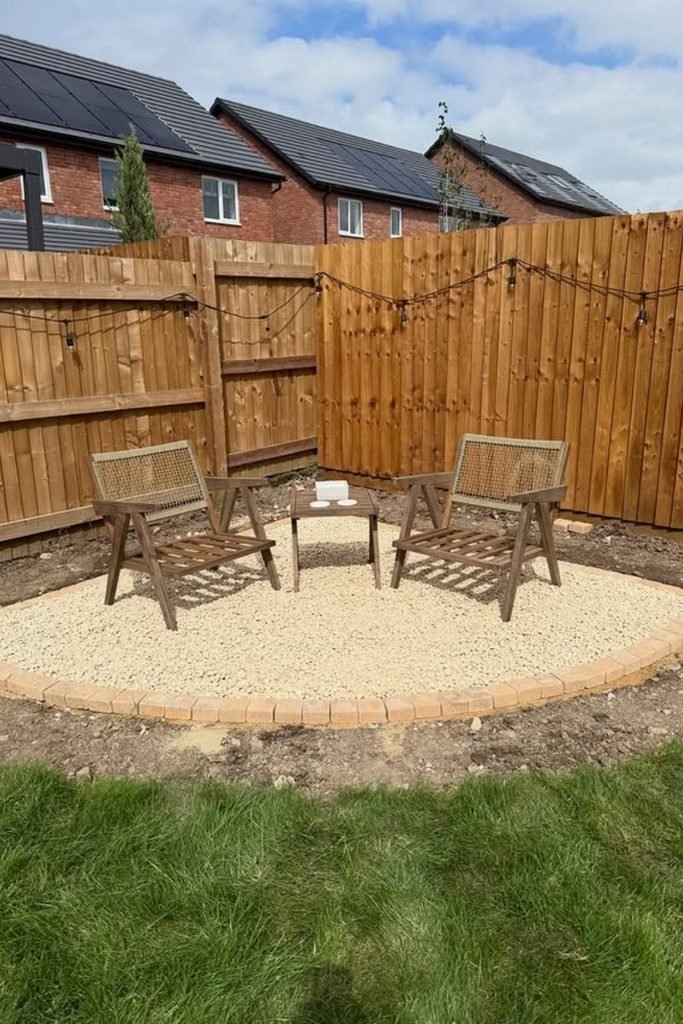
Gravel Seating
Keep the setup simple when an empty fence corner needs a purpose more than another planting bed.
Create a curving seating area, add a strong base and top it with ornamental gravel. Include two lightweight chairs and a small table.
Brick edging helps prevent gravel from migrating into the lawn and provides a polished edge to the corner.
String lights around the fence make the place more welcoming after dusk without taking any floor space.
If you want greenery down the line, cut down the seating space but leave tiny planting pockets around the outer edge for grasses, compact shrubs.
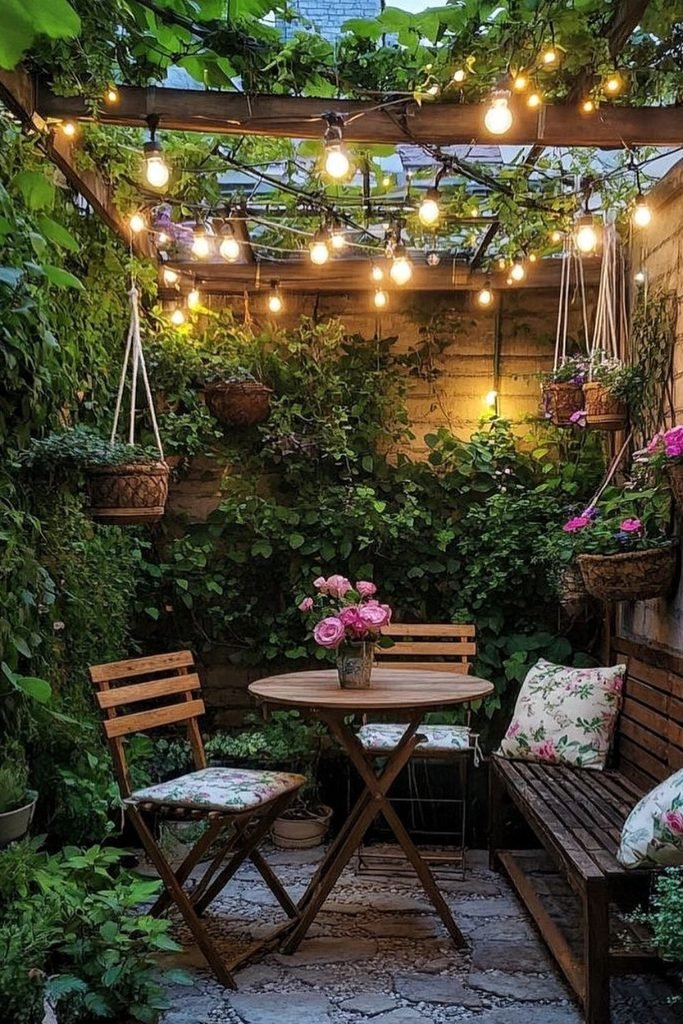
Vine Canopy
Turn a narrow walled corner into a leafy escape by using the space overhead instead of crowding the floor with more plants.
Train vigorous climbing vines up a sturdy pergola or wire structure then arrange floral baskets along the edges where they still get enough light.
A narrow bench and folding table make the center functional but still leave room to maneuver.
Warm string lights weaved beneath the vines make the canopy usable after nightfall, and emphasize the vegetation overhead.
Inspect the climber frequently, trimming off any excess growth so it does not overwhelm the structure or shade the plants below too much.
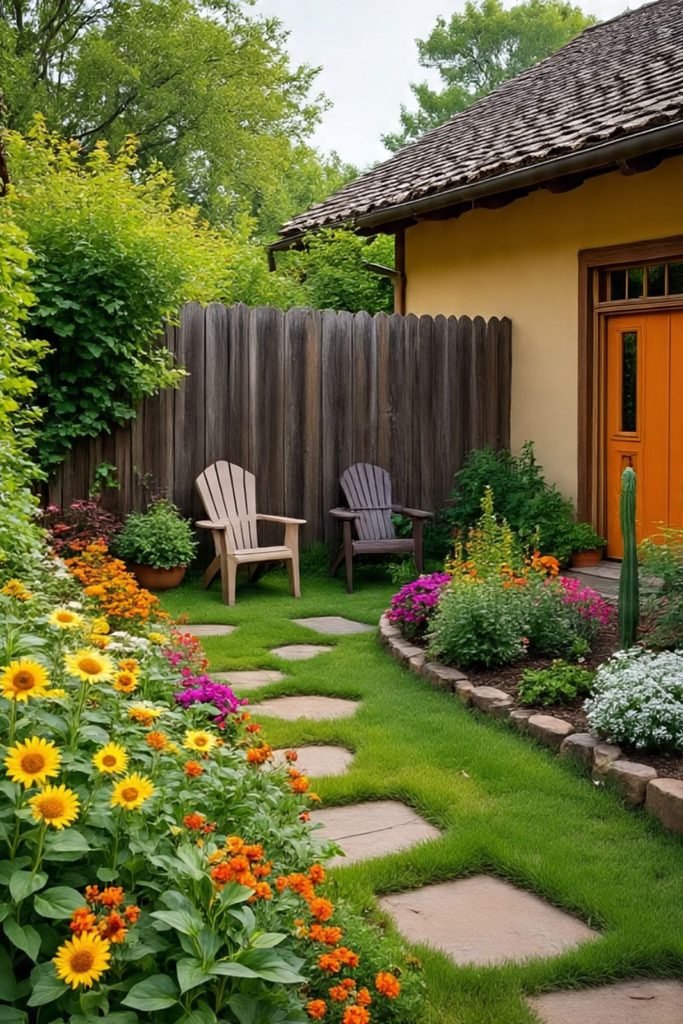
Flower Passage
Guide the eye toward a tucked-away corner by turning the approach into part of the garden itself.
Set stepping stones through the grass then run flower beds along both sides with taller blooms toward the walls and shorter plants near the path.
Repeating a few flower colors keeps a narrow space lively without making it feel chaotic.
This layout works especially well between building or along side yards where you want to keep access open while using every available planting edge.
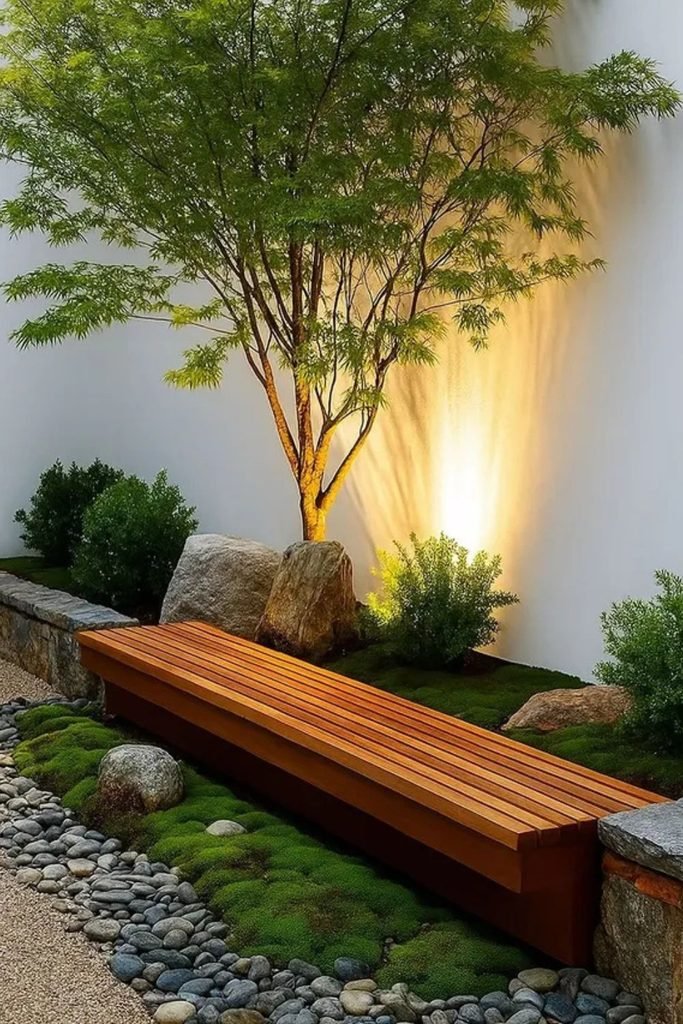
Zen Corner
Create a quieter garden corner by cutting back on flowers and letting texture carry the design.
Select one modest decorative tree as the centerpiece, and then surround it with rounded bushes, mossy groundcover, natural rocks, and smooth river stones.
A basic wooden bench makes the area functional without competing with the planting.
It works especially well next to a simple wall where uplighting behind the tree can produce soft branch shadows and add extra depth to the corner at nite.
Keep the plant palette modest and allow space between rocks and shrubs so the finished scene feels peaceful rather than crowded.
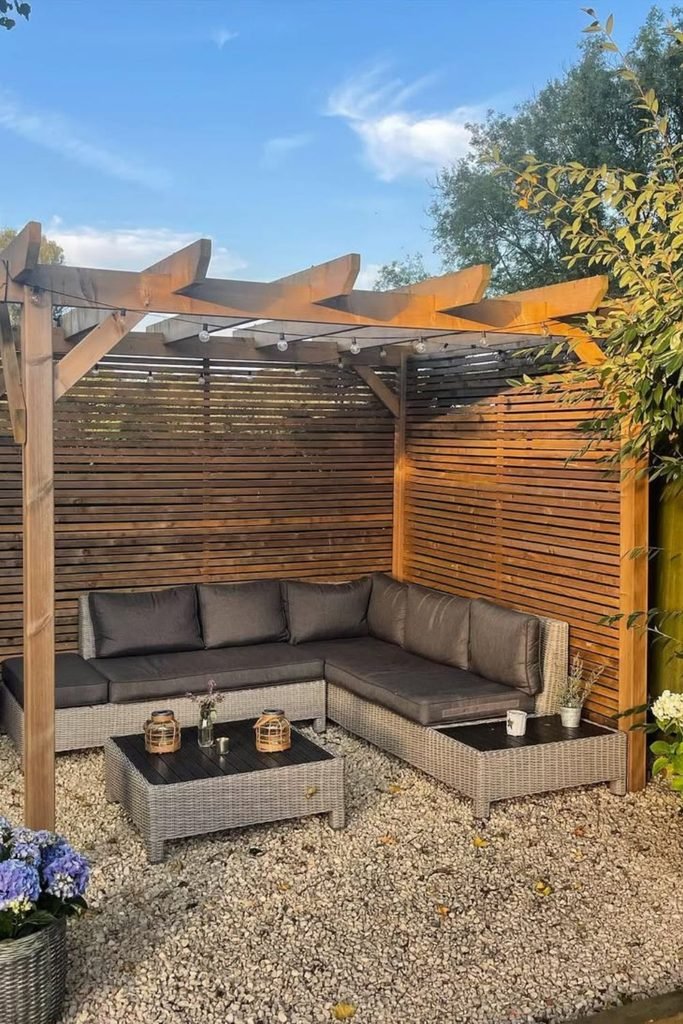
Screened Lounge
Block an exposed corner without building a completely solid enclosure by adding timber slat screens behind an L-shaped sofa.
The thin openings in the screens provide the seating area seclusion, but not a boxed in effect.
Create the area with a straightforward pergola overhead and gravel underneath for a no fuss surface that drains well.
At the margins larger containers can bring hydrangeas or evergreen foliage closer to the lounge area without sacrificing seating space.
If you plan on using the corner at nite, string lights across the beams.
Make sure there is room for neighboring bushes to develop without becoming part of the structure.
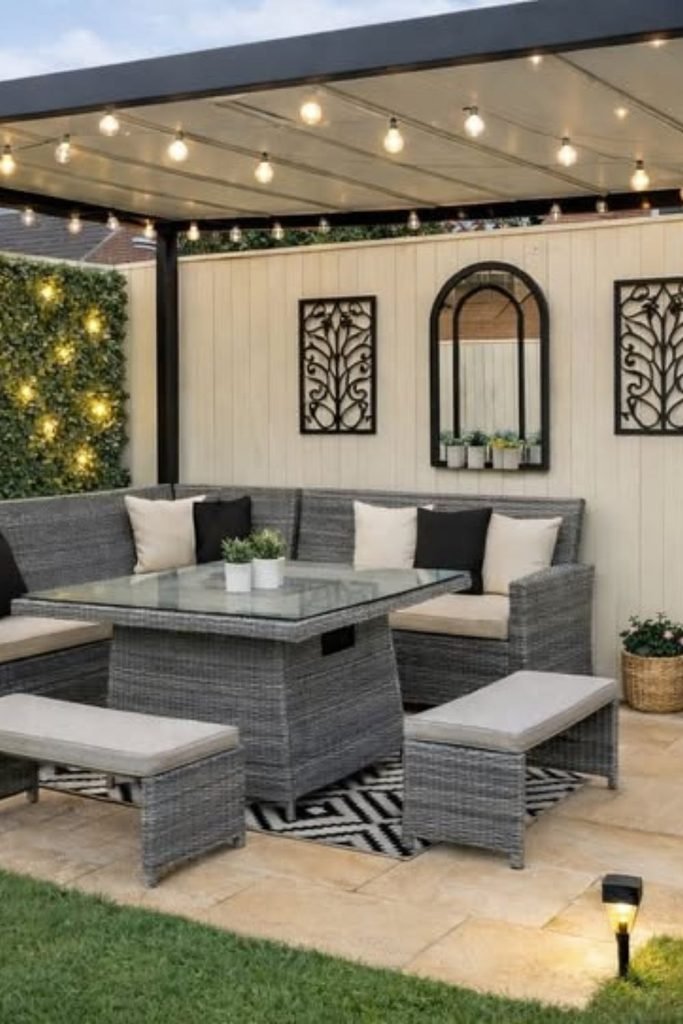
Covered Dining
Give an open corner more purpose with a roofed dining setup that can handle both sunny afternoons and light rain.
Place an L-shaped sofa around the back edges to use the corner efficiently, then keep the table and benches toward the center so people can move around comfortably.
Instead of filling the floor with garden beds, use large containers and a green privacy screen to bring planting into the space without losing valuable seating.
Layer string lights overhead and small path lights around the patio edge for evening use.
Choose compact trees or shrubs for containers so their roots and mature growth remain manageable.
Rose Sanctuary
Let climbing roses take over the vertical space when you want a small enclosed corner to feel lush without sacrificing the patio below.
Build strong trellises on the privacy screens and, as the main stems grow, train them outwards to allow the blooms to spread across the wall.
Balance roses at ground level with ferns, hostas, lavender and container plants, selecting each according to the light it will receive.
There is a tiny stone path which makes the plants accessible and compact seats which makes it a peaceful location you can truly use.
Tiered Blooms
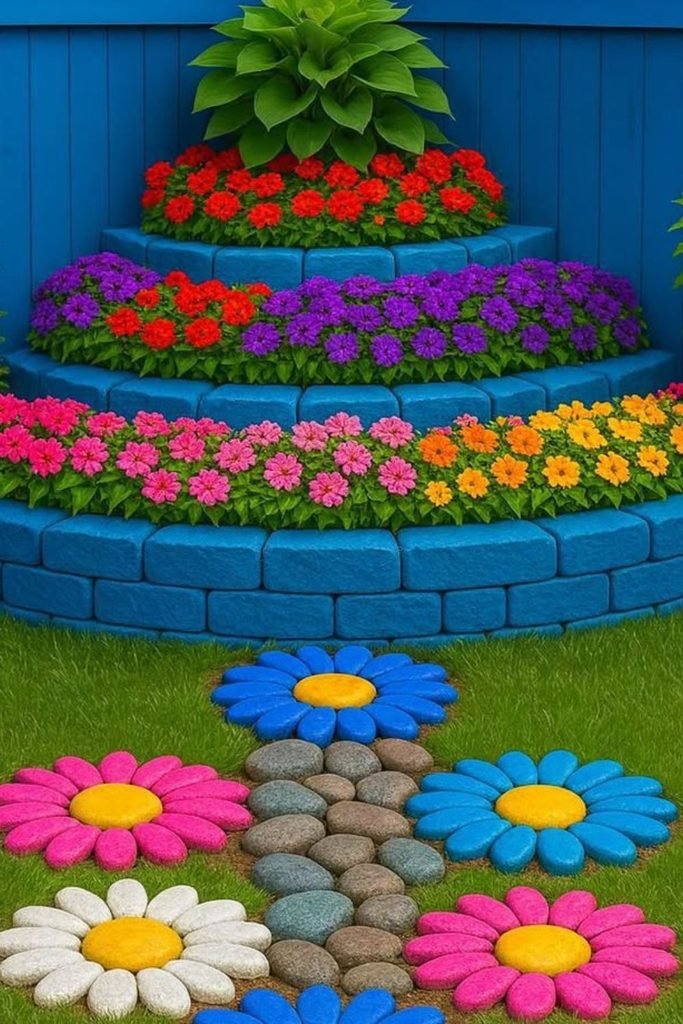
Use a stepped flower bed when a flat corner needs more height but you do not want to rely on large shrubs.
Assign a ring of tiny blooms to each layer so the colors remain in sequence instead of blending haphazardly.
To anchor the arrangement and draw the attention up, place one beautiful foliage plant in the tallest position.
It is ideal to have this in sunny parts of the garden where flowering plants will have plenty of chance to flower.
Plant the trailing or low-growing types at the front edges, and choose plants with similar watering needs so it’s easy to keep each tier.
FAQs
How Do I Keep A Corner Garden Low Maintenance?
Choose plants that suit the light, soil and moisture of your corner, rather than trying to force plants to survive in the wrong conditions.
Plant some dependable shrubs or perennials, mulch the bare areas, and allow room for the plants to grow to their mature size.
If watering is a regular chore, try grouping plants with comparable moisture demands together.
What Makes A Small Corner Garden Feel Bigger?
Leave the middle or foreground open, build height at the boundary.
Taller plants, climbers or a slender trellis bring the attention up without taking up floor space.
Keep the plant palette small and repeat a few kinds rather than stuffing in everything you like.
Curved edges and a clearly defined center of attention can help add depth to a compact corner.
