
27 Garden Pathway Ideas for 2026
A garden might be really beautiful until you try to walk across it. Muddy shortcuts, sinking stepping stones.
Loose gravel and weird paths that lead nowhere can quickly make your yard more difficult to utilize.
Even a gorgeous walkway can become annoying if the stones wobble after rain, or if plants begin to encroach on the walking space.
In this article, you’ll find 27 Garden Pathway Ideas to help you create a more beautiful, practical outdoor space.
Let’s jump in!
How Can I Stop Stepping Stones From Sinking Down?
If your stepping stones keep sinking the trouble usually begins underneath them.
Soft soil, a loose base and retained water can drag stones down slowly, even if they looked perfectly level on day one.
Do not put stones directly on garden soil if you want to keep them level.
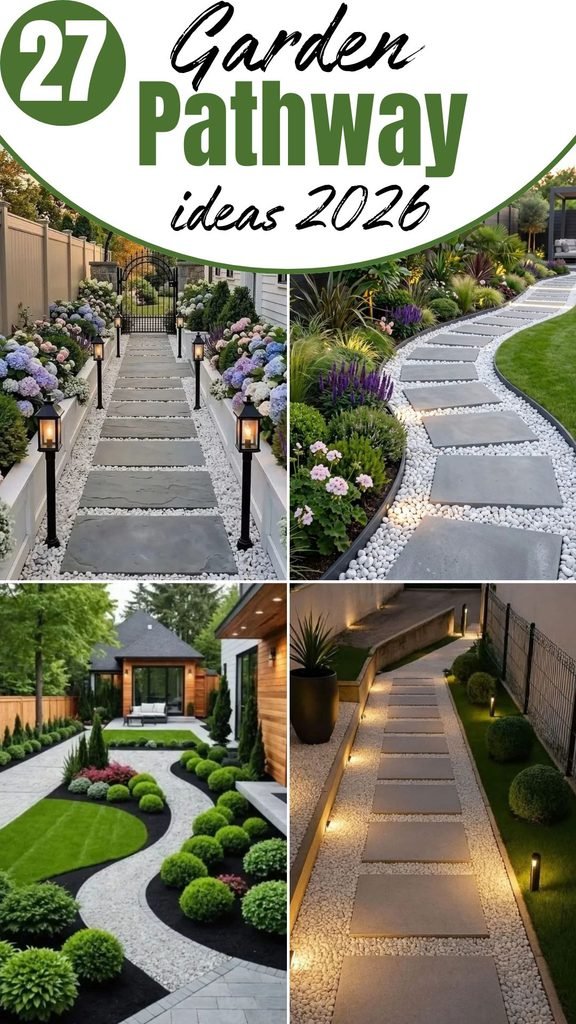
First take away any loose dirt and grass and then lay down a hard base of compacted crushed stone with a thin layer of leveling on top.
Compaction is important as loose material will settle later under your weight.
Also, watch where the rainfall goes. If water continues to build up under the trail it can soften or wash away the structure beneath.
Floral Passage
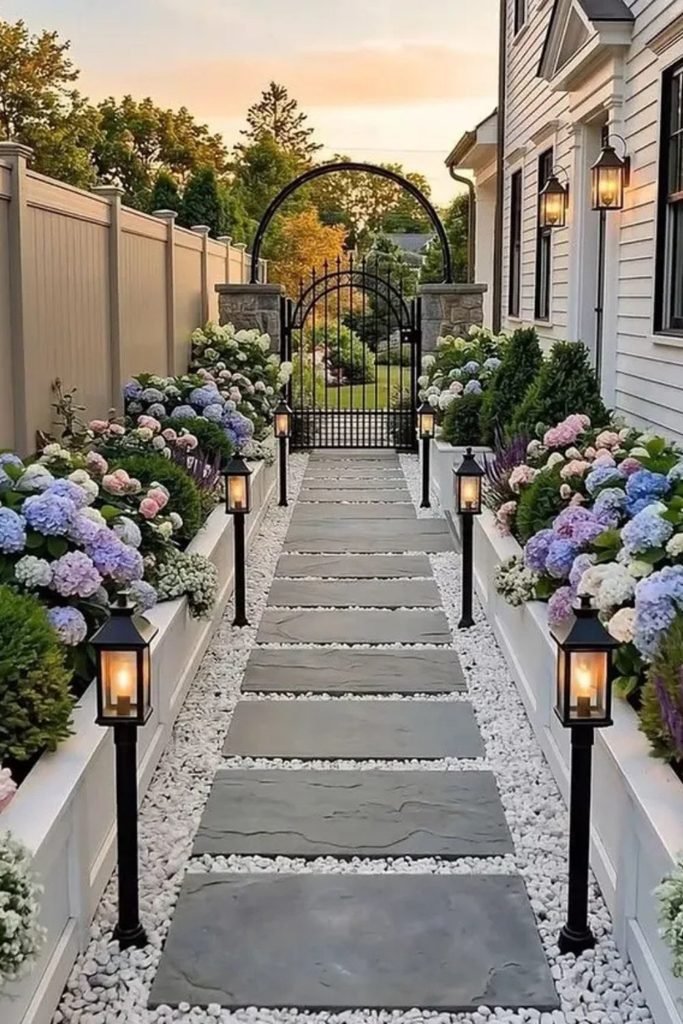
Turn a narrow side yard into a garden destination by running large rectangular stepping stones through a bed of small gravel.
Spacing the stones sufficiently for easy stride, mark the walkway with raised borders from dense hydrangeas and evergreen bushes.
The gravel around the slabs helps to carry water away, but also gives the path a neat finish.
Finish the route with a gate or arch so the walkway has a defined conclusion rather than terminating aimlessly.
Pebble Curve
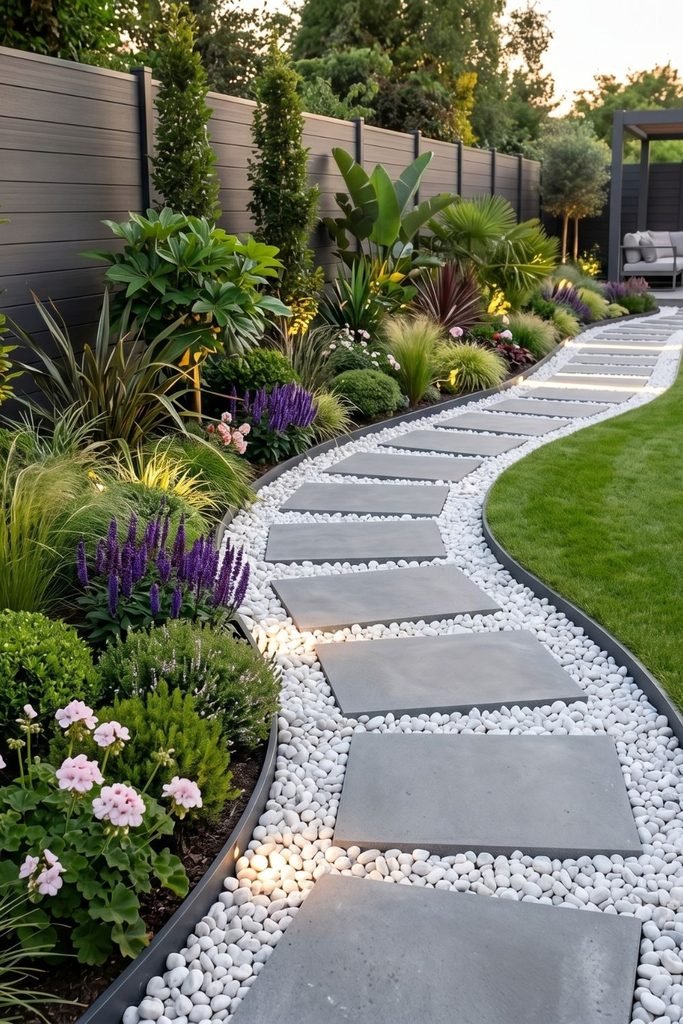
Guide movement around a lawn without cutting through valuable green space by letting the pathway follow its outer edge.
Large square pavers cover each step for a sturdy surface, and white pebbles make it simple to distinguish the path from the darker planting bed.
Fit flexible edging on either side before you lay the pebbles. It will keep the curve tight and prevent loose stones spilling out into the soil or grass.
Leave some space between neighboring plants and the walk to prevent grown foliage crowding the route later.
Small ground lights planted in between the stones can also help define the curve after nightfall.
Winding Walk
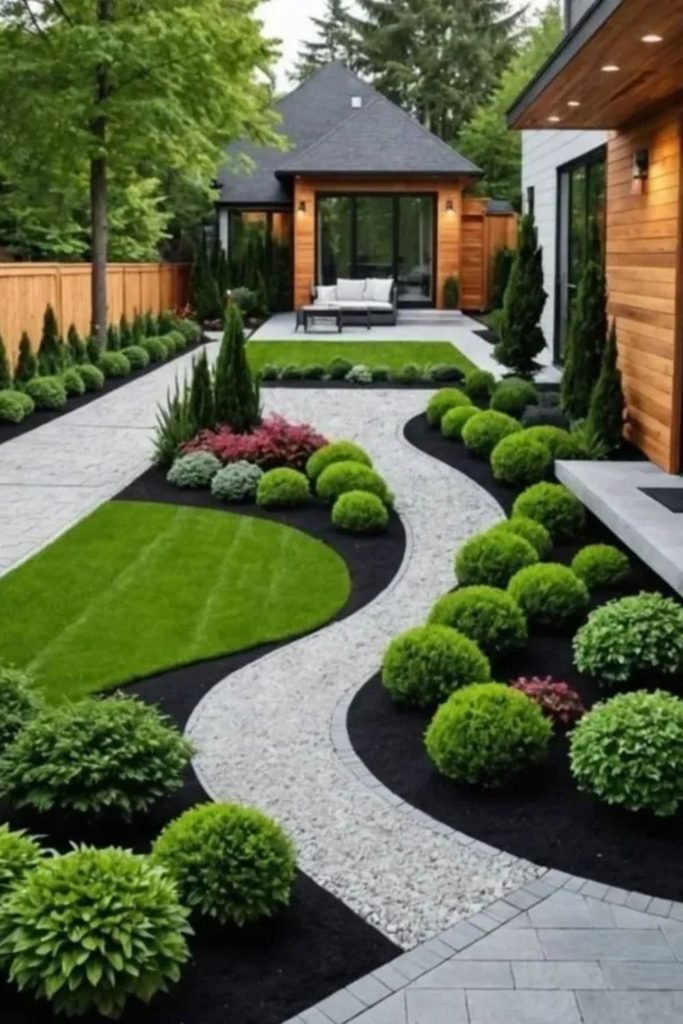
Break up a boxy backyard by letting a pale stone path sweep gently between lawn pockets and planted beds.
Make each bend wide rather than a series of tight twists, because curves are easier to walk along and provide a more planned feel to the garden.
Keep the contour of the walkway with a good edging material, then fill the center with compacted gravel or small stone.
Rounded evergreen plants perform nicely along this style of walkway as they reflect the curves without spilling into the walking area.
Make the path link key places like the house and the back seating area – so each turn has a reason.
Lawn Steppers
Skip a full paved walkway when you want to keep most of your lawn open and green.
Flat stepping stones planted straight into the grass can give a basic path along flower borders without the yard looking highly groomed.
First mark out your natural walking stride, then set down each stone before cutting out the turf underneath it.
Keep the tops near to the lawn level so that mowing around the walkway is straightforward, and the stones are not a tripping point.
To create a vibrant border, position taller flowers and climbing plants well off the path to frame the pathway without stepping on your steps.
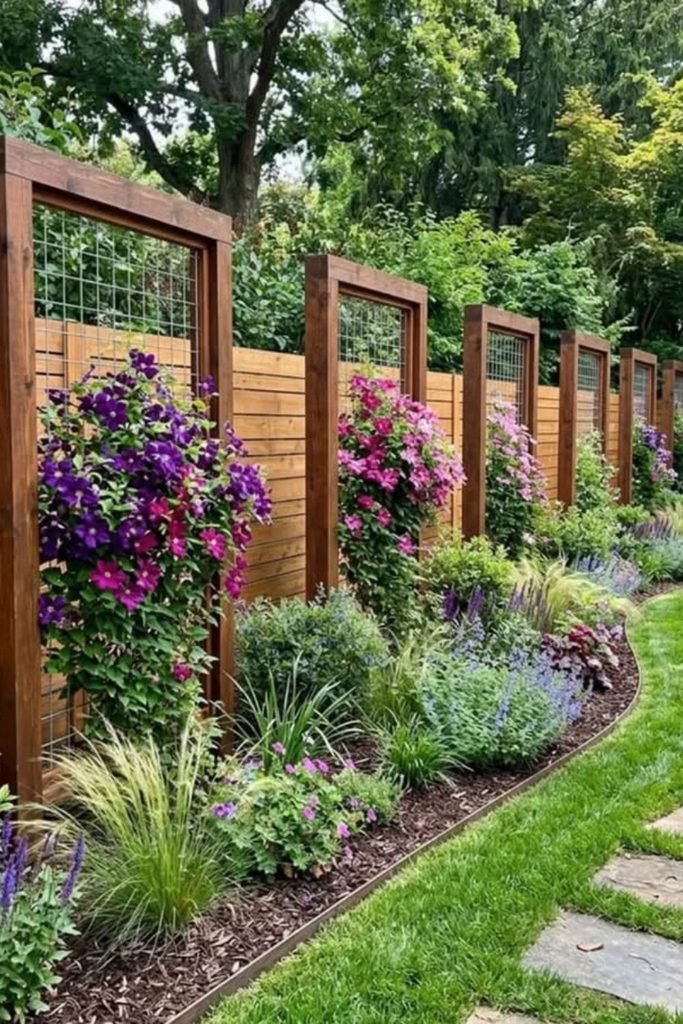
Illuminated Steps
Bring pathway lighting into the design from the beginning if you regularly cross your garden after dark.
The wide rectangular pavers are safe stepping stones, and little lights along alternate edges help estimate each gap at nite.
Install the pathway on a compacted base and then add decorative pebbles to keep the slabs level and prevent them from progressively sinking into softer soil.
Use low, spaced lamps. Too many strong lights can make a small entry feel harsh.
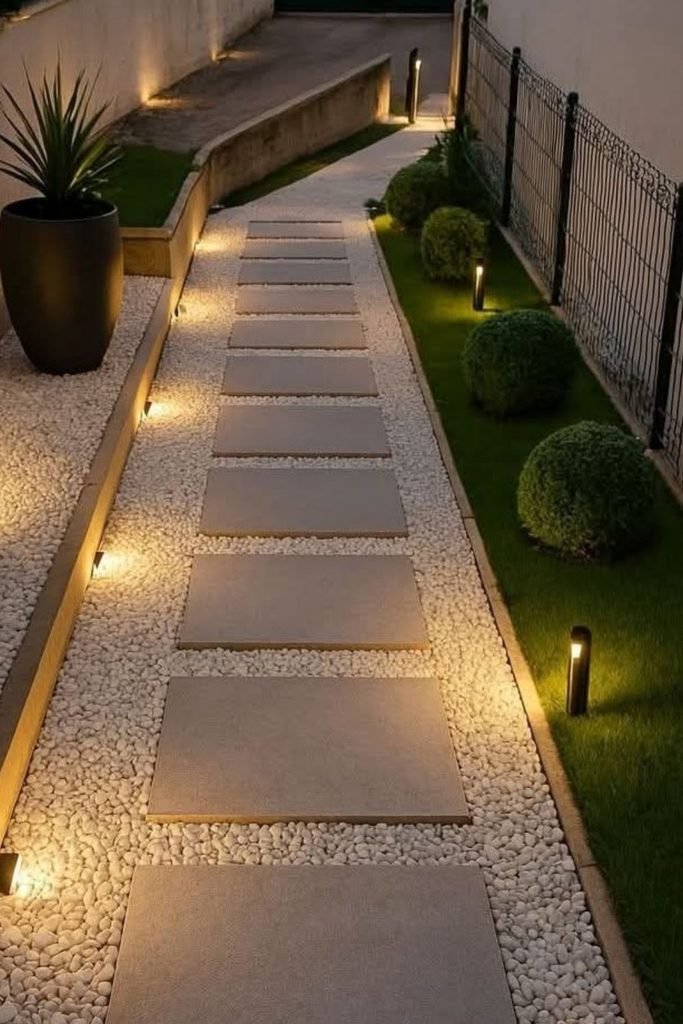
Paver Mosaic
Mixing several paver sizes can makes straight garden route feels less rigid with out forcing unnecessary curve into the layout.
Begin with huge slabs along the primary walking route, then fill in larger areas with smaller pieces to make sure each step is comfortable.
Put strong edging in first so loose stuff stays in place, then fill the cracks with fine gravel to give drainage and an obvious break between each slab.
This plan is especially good between the home and an outdoor eating area, as it allows a wide, usable path.
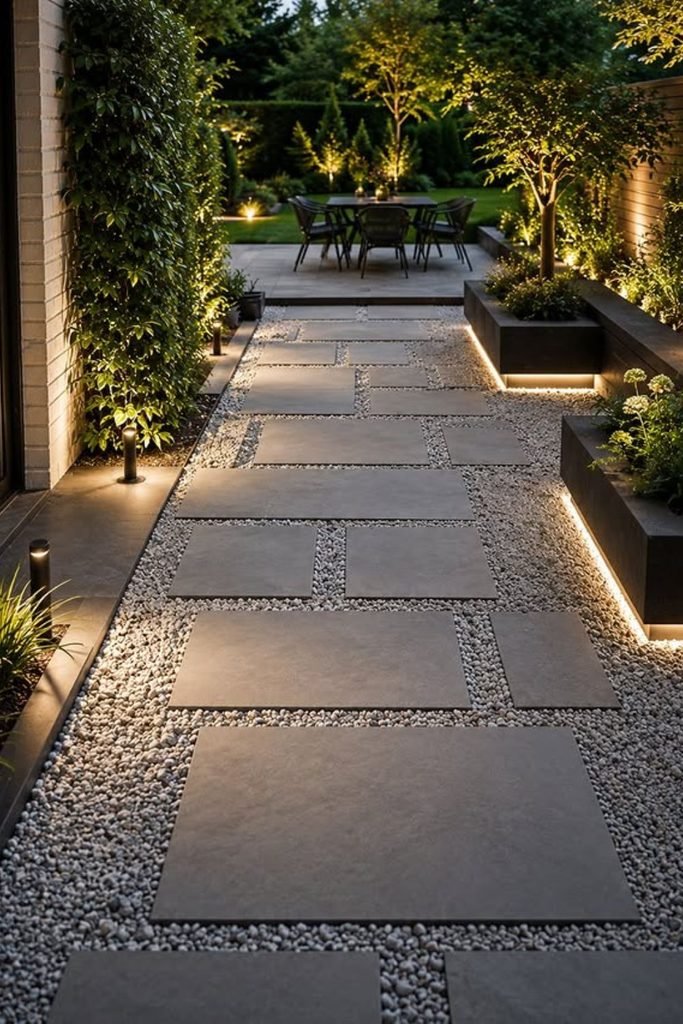
Leaf Steppers
Bring a playful garden detail into a casual backyard by using leaf-shaped stepping stones instead of standard square pavers.
They get on particularly well next to hostas, floral borders and other leafy plants, where the path feels connected to the planting around it.
Place the stones along the path that you naturally walk rather than forcing them into a precisely straight line.
This gives for a stable, level base for each piece, with the top near to the surrounding grass.
By changing the angle of each leaf you are able to produce relaxed flow but still make for a comfortable landing position for each step.
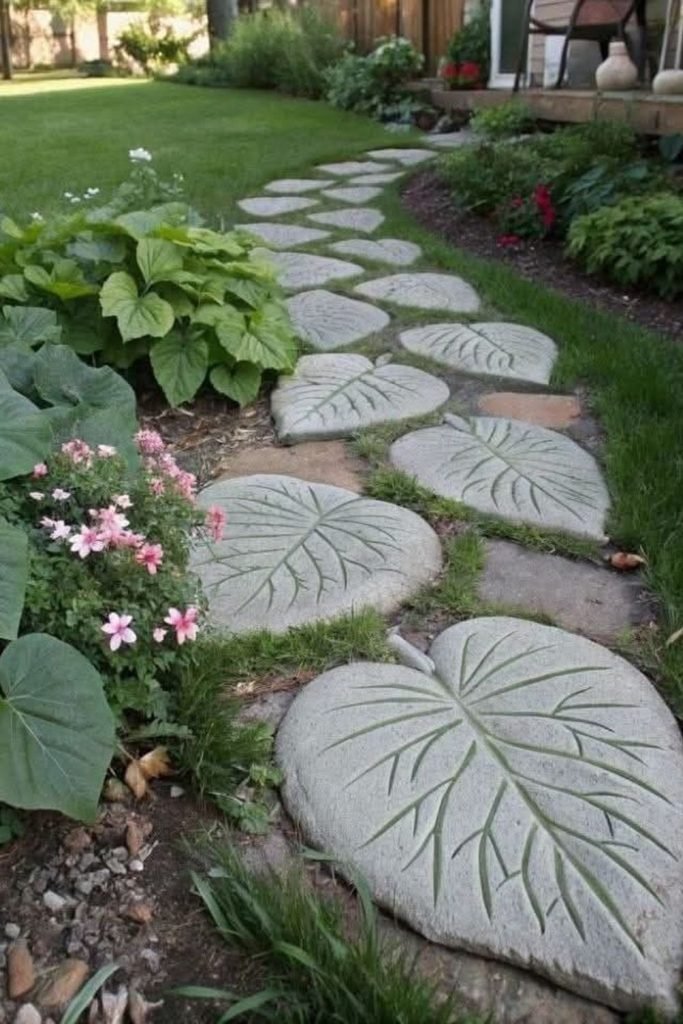
Rose Walk
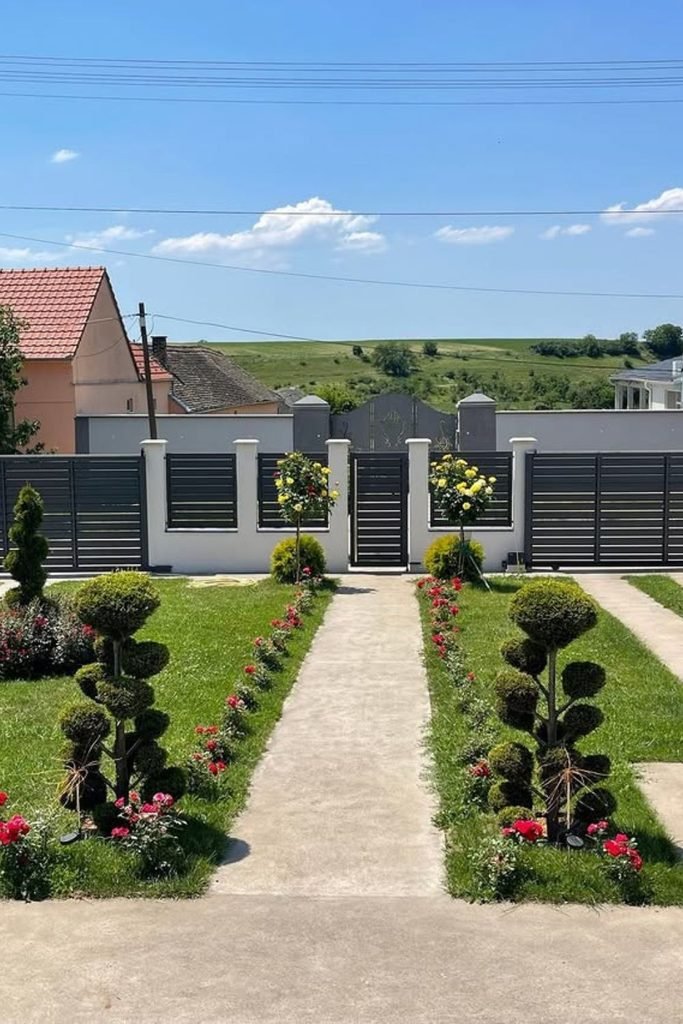
Give a plain front walkway more character by planting a narrow flower strip along both edges instead of widening the hardscape.
Low roses or small flowering plants are good since they give color without covering the walking surface.
Leave space for plants to grow between the plants and the concrete and repeat the same flowers down both sides for a tidy, balanced entry.
Evergreen plants, spaced wider apart, can increase the effect without crowding the path.
This method works especially well with an existing straight concrete path since you may improve the look of the walkway without removing or replacing it.
Border Trail
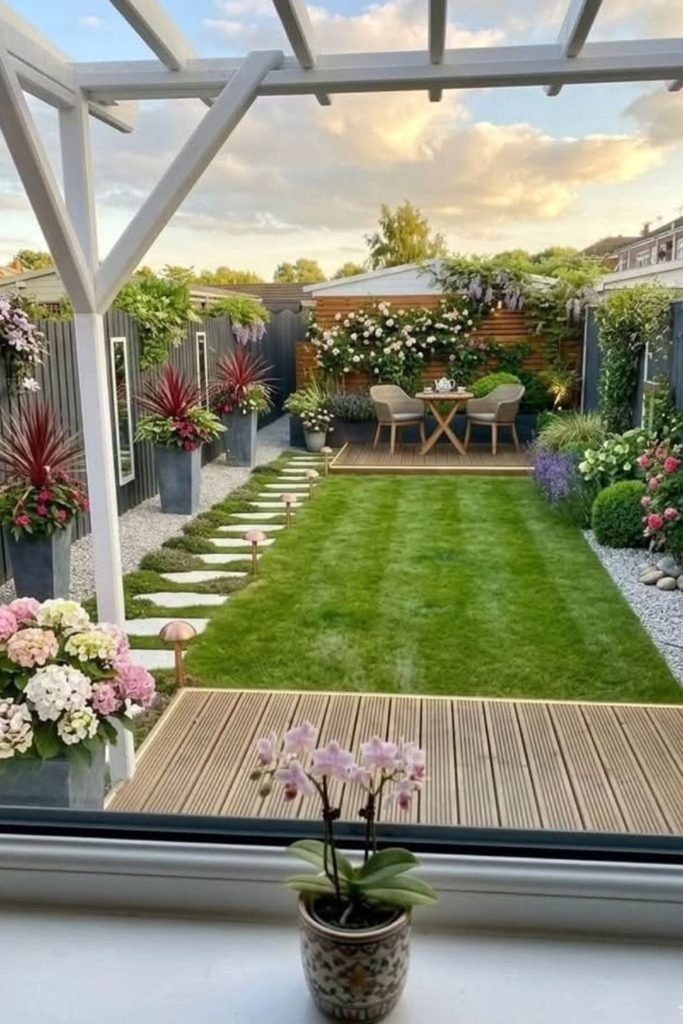
Save the center of a small backyard for lawn by pushing the walking route along one boundary.
Irregular stepping stones are a good idea here as they provide access to a rear seating area without turning the garden into one enormous paved space.
Position stones near enough for an easy stride and set them in gravel where grass would be difficult to keep.
After nightfall low path lights can mark the way and the tiny strip seems connected to the rest of the garden by pots and flowering plants along the fence.
If the route is kept close to the border, more unbroken lawn is available for everyday use.
Trellis Walk
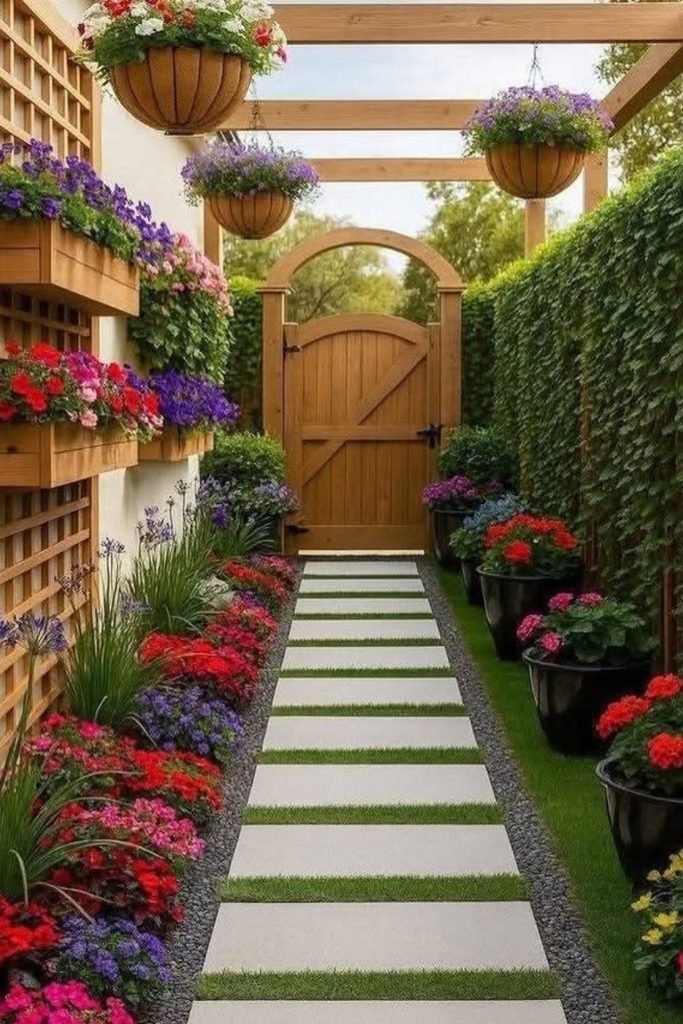
Make a tight side passage feel like part of the garden by pairing evenly spaced pavers with vertical planting.
Leave narrow green joints, between the slabs, to soften the straight walkway, then transport flowers upward with trellises, climbing plants.
This is especially good where the planting width is narrow between a home and a fence.
Keep pots and flower beds out of the main walking line so that the way remains comfortable as plants grow.
Finishing the trail at a wooden gate also provides the eye a distinct endpoint, and makes the confined space feel more purposeful.
Grass Steps
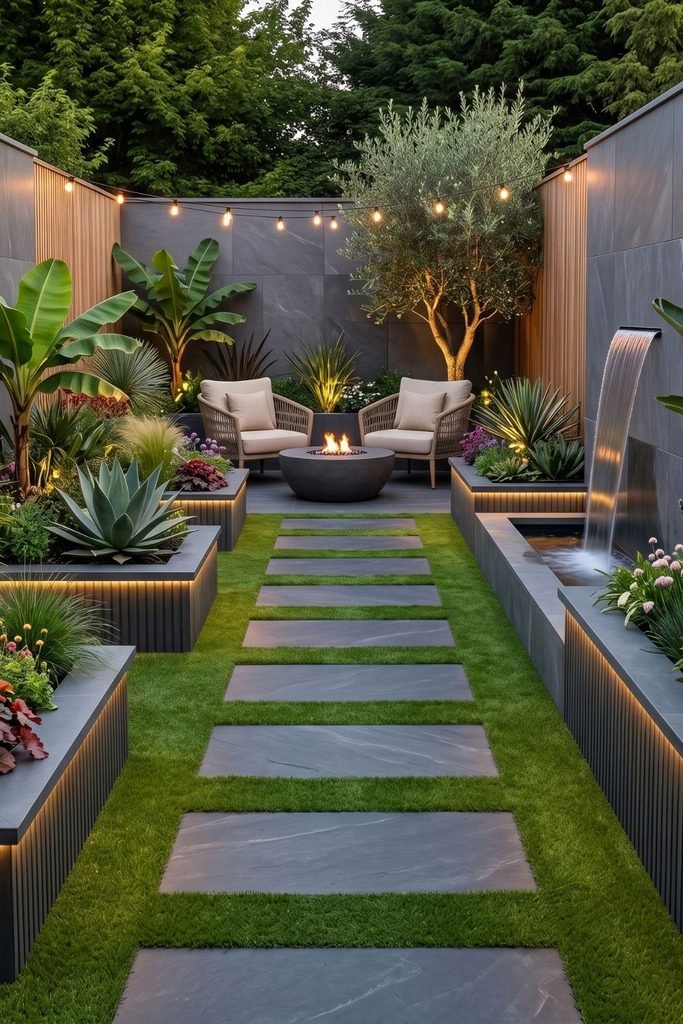
Keep a modern garden from feeling overloaded with hard surfaces by setting large stone slabs directly into a strip of grass.
Space each slab approximately a comfortable walking stride then leave generous green joints between them so the route feels softer next to raised beds.
This technique work particularly well in long narrow gardens where the path has to lead you to a seating area but without visually breaking the yard into two halves.
Lay each slab on a firm basis and ensure the tops are level with the grass around.
Low plantings around the sides keep the walking line open while allowing bolder features like a water wall or fire pit to act as the destination.
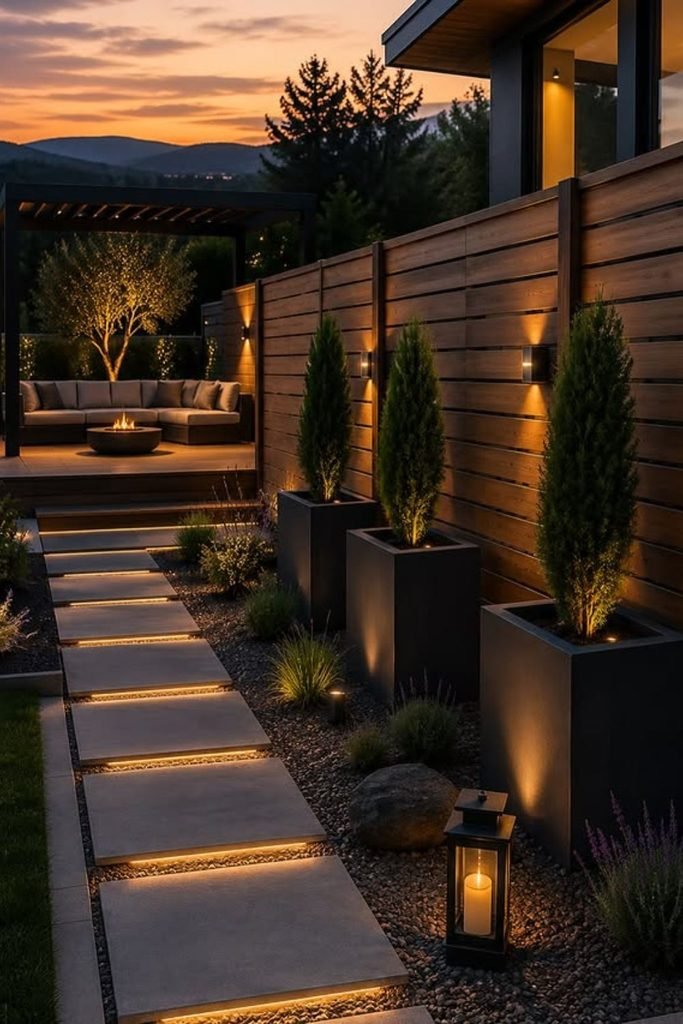
Glowing Pavers
Lighting the gaps between stepping stones can turn a simple route into a useful evening pathway with out filling the garden with visible fixtures.
Choose wide, rectangular slabs for comfortable footing, then maintain the even spacing as the path leads to a patio, fire pit or other seating area for nighttime.
Hide cables by placing low-voltage lights along or under the edges, to make light soft.
Dark gravel surrounding the pavers helps to define each slab and allows water to drain through the surface.
Keep adjacent plantings low along the walking path so leaves do not conceal the lights or create hidden trip points.
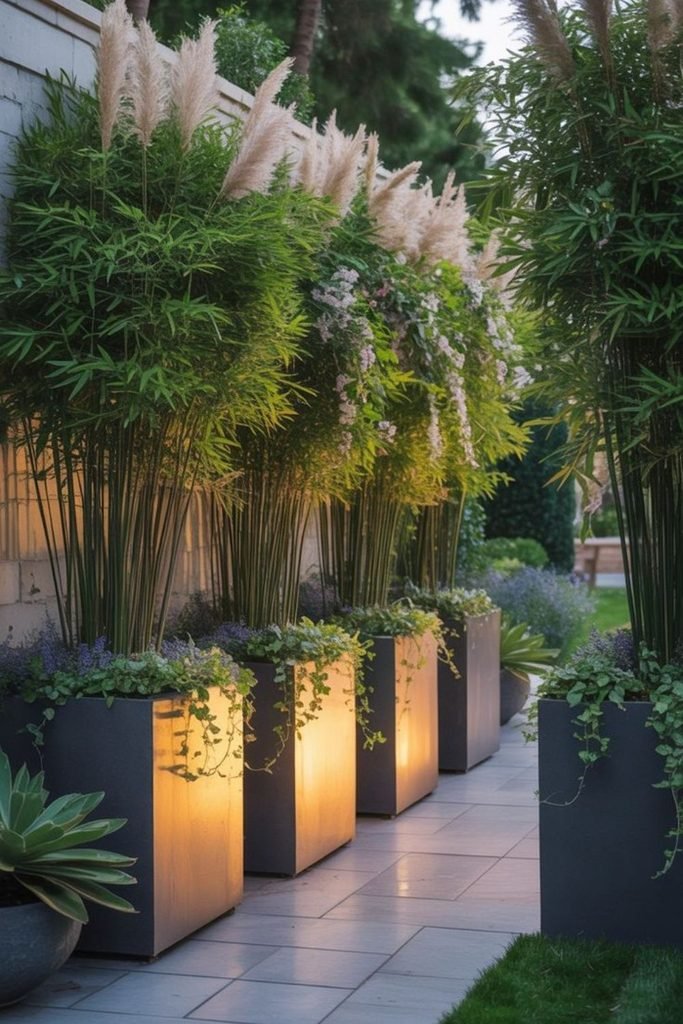
Bamboo Passage
Tall container plants can turn an exposed walkway into a sheltered garden route with out digging new planting beds.
Use upright plants such as clumping bamboo or decorative grasses to add height and keep the walking area open.
This method is particularly good for areas adjacent to fences, patios or narrow garden borders where you need privacy and don’t have much room in the soil.
Add trailing plants along the sides of the planter to soften the containers.
If the walkway is utilized at nite, tuck warm lights between the pots to direct movement and light the vegetation from below.
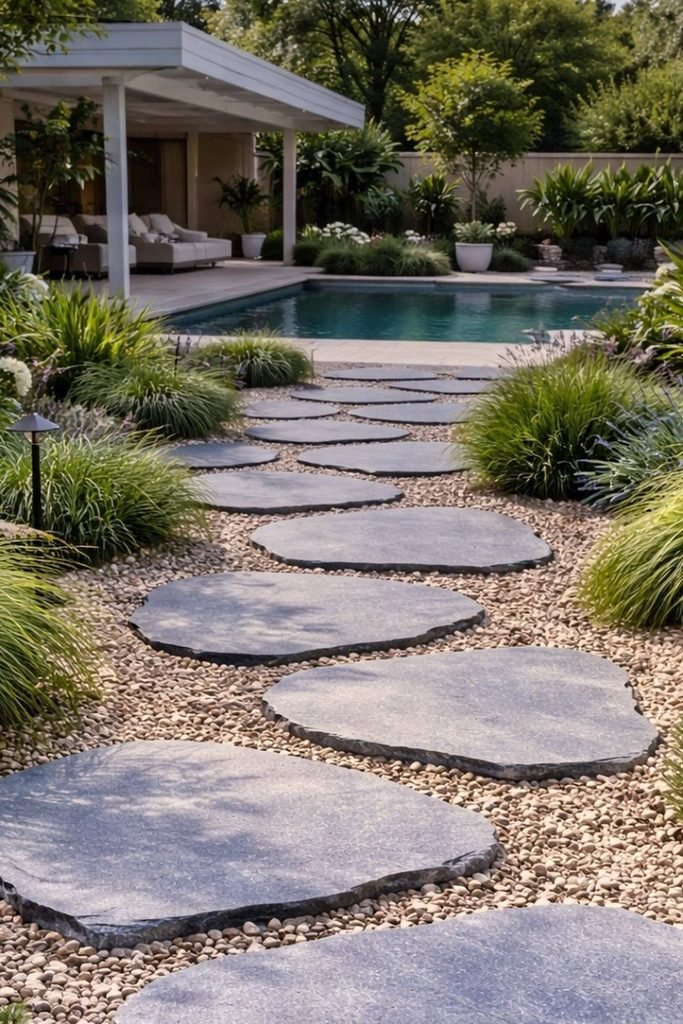
Pebble Steppers
Large irregular stones can give a garden path a relaxed feel while still providing solid footing through loose gravel.
Lay the slabs in the pattern of your natural stride, and build up a compacted base under each slab so that their weight does not gradually force them into the dirt.
Instead of a muddy strip, little pebbles can fill in the space around and let rainwater run off.
Ornamental grasses suit the edges well for their gentle shape, balancing the massive stone without impeding the route.
This configuration works best when connecting a lawn or garden bed to a pool, patio, or other outside destination.
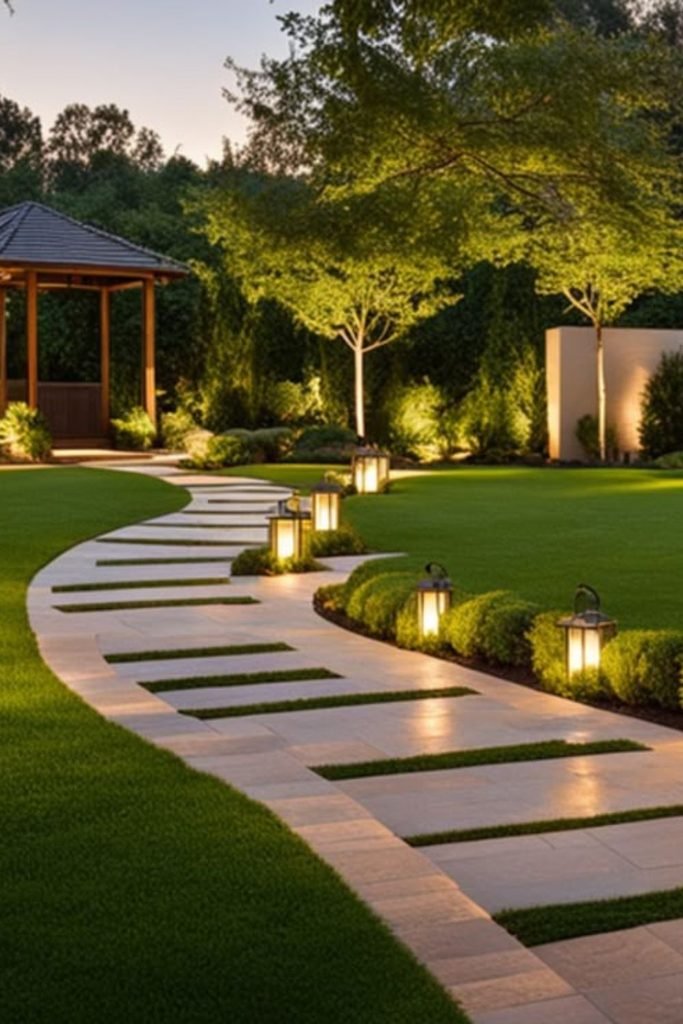
Lantern Curve
Long garden routes feel more inviting when the path bends gently toward a destination instead of crossing the lawn in one hard straight line.
Use wide pavers for the primary walking surface leaving tiny grass joints between selected areas to tie the walkway back into the lawn.
You can put lanterns down one side only or alternate them so the lighting will lead you but not clutter the way.
This plan works particularly well in bigger gardens leading to a gazebo, pergola or hidden seating space.
Forms should be wide and sweeping, and low-border plants should be used to define the path but not to obscure its borders at nite.
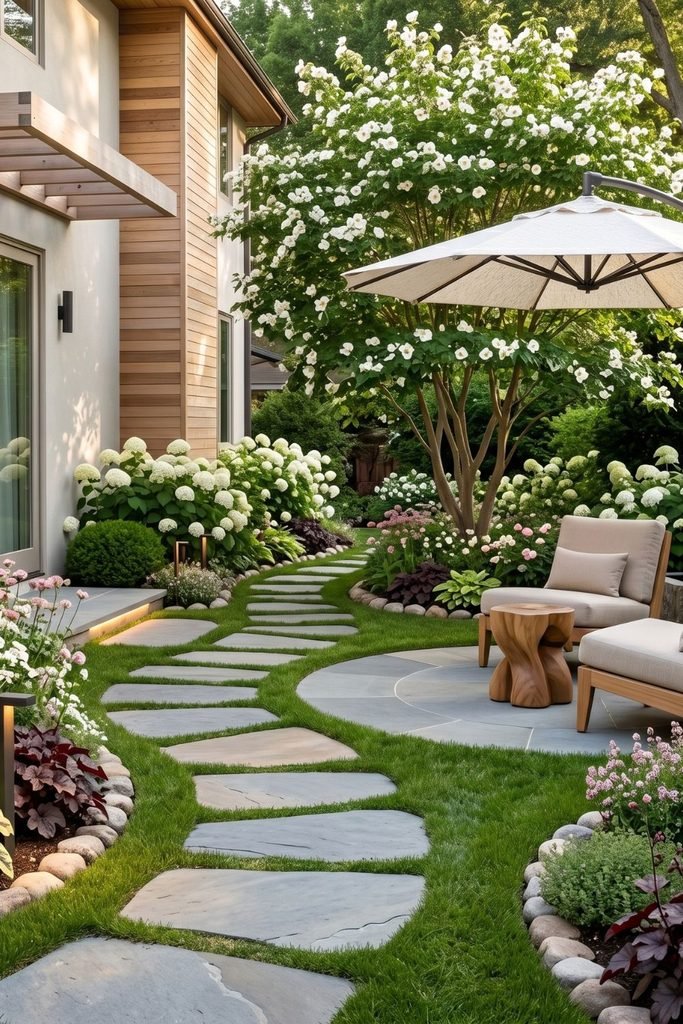
Meadow Stones
Let the pathway move through the planting instead of separating the garden into hard sections.
Broad uneven stones laid into grass work particularly well around flower-heavy beds and tiny seating spaces because the green gaps keep the route gentle.
Then position each stone where your foot would naturally fall, and set it near to lawn level.
Rather than making random curves, wrap the walkway around existing shrubs or flowering trees.
Rounded border stones and overwrought perennials can soften both sides, but provide enough clearance.
Sunset Trail
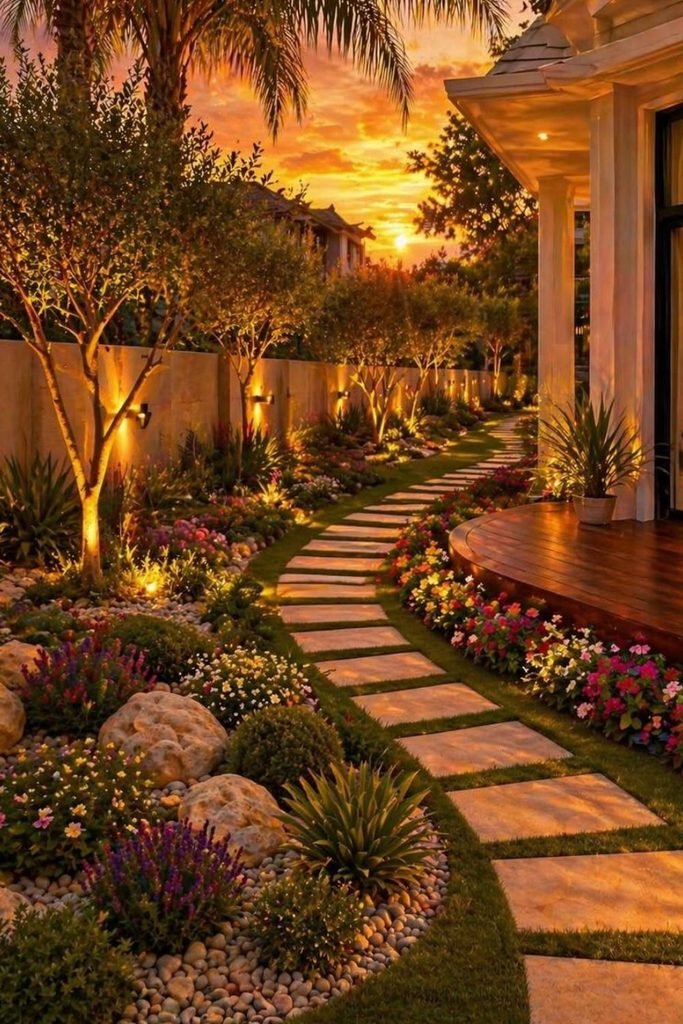
Use a narrow strip of lawn as the pathway itself when you want stone and planting to blend instead of forming separate zones.
Lay rectangular stepping stones in a gentle curve leaving the grass joints wide enough to soften the route but short enough to take an easy stride.
This is particularly effective next to patios or on the edges of houses where flower beds already occupy much of the available ground.
Place low flowers, compact plants and some larger rocks along the route to keep the edges interesting and not obstruct mobility.
Then, when daylight fades, warm wall and tree illumination may naturally guide the route.
Tropical Passage
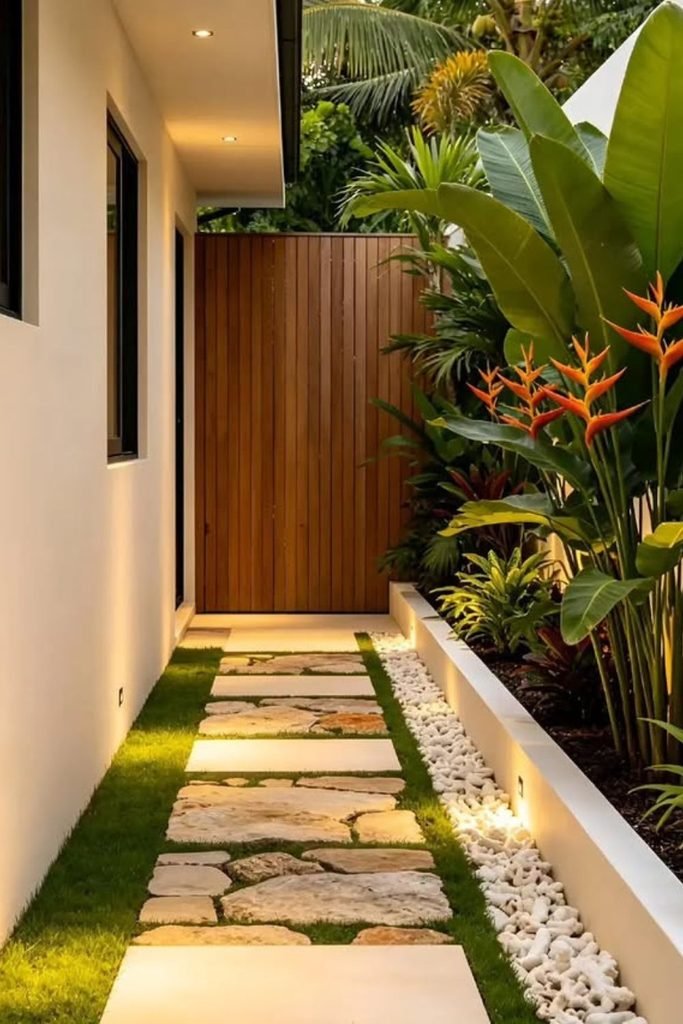
Turn the narrow gap beside your house into a useful garden route by mixing natural stone with simple rectangular pavers.
Grass between the pieces softens the hard surfaces, while alternating between the two materials keeps a straight walkway from becoming too boring.
Reserve one side for a raised tropical bed so that big-leaved plants can give you privacy without taking over the walking space.
A thin line of white pebbles separates the bed from the path, keeping the loose soil from your feet.
If the route links locations you use after dark add low wall or border lights close to the ground.
Timber Walk
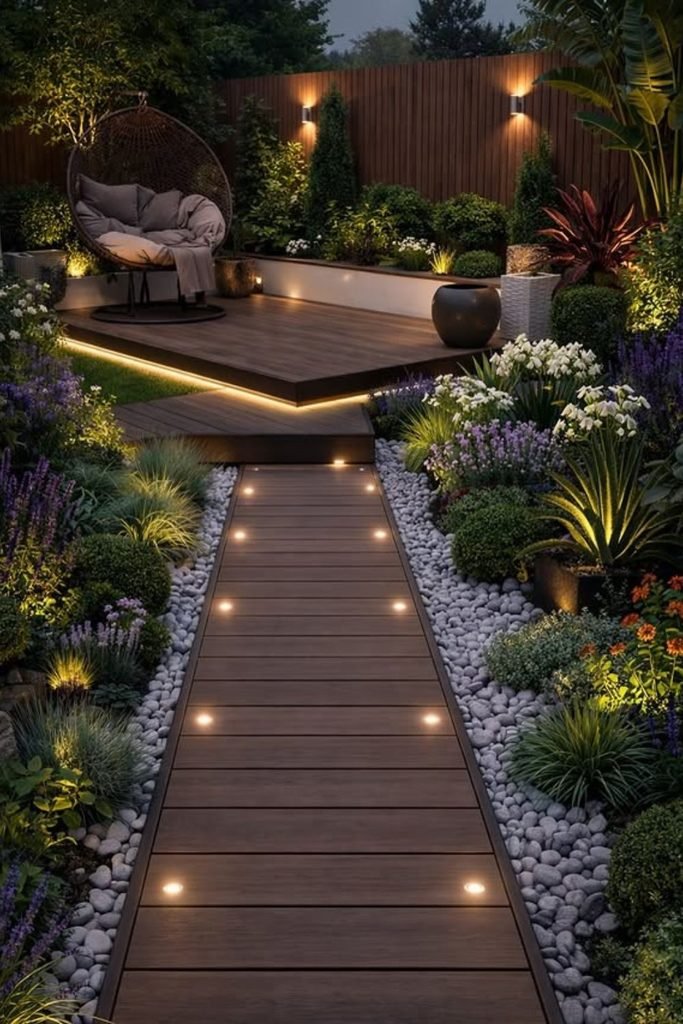
Choose a raised timber style walkway when you want a clean route through dense planting with out filling the garden with stone.
Composite decking is a real plus because it offers the warmth of wood yet handles external dampness with fewer maintenance.
Make a walkway broad enough for easy passage and line it with pebbles to prevent soil and plants from spilling over the edges.
The boards themselves can incorporate recessed lights to indicate the pathway, without additional fixtures taking up planting area.
Guide the path to a deck or a seating nook so it creates a clear connection, not just another ornamental piece.
Ribbon Path
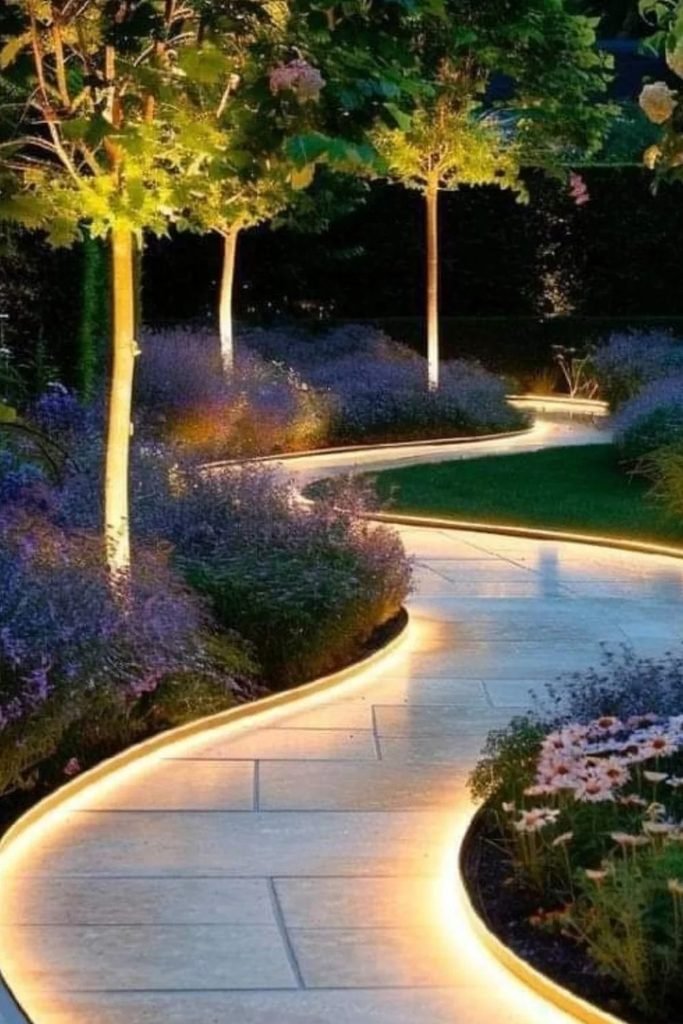
Continuous edge lighting can make a long pathway easier to follow without placing lamps throughout the flower beds.
Position a flexible outdoor light strip under a raised path edge or a recessed channel so the illumination highlights every curve.
Wide paving works well here, giving you a smooth walking area between dense plants.
Allow the path to curve around mature trees, flower gardens or pockets of lawn so that every turn appears deliberate.
This is particularly a good idea for larger gardens because the walk may continue out of sight from the house and needs a clear guide after dark.
Mosaic Stream
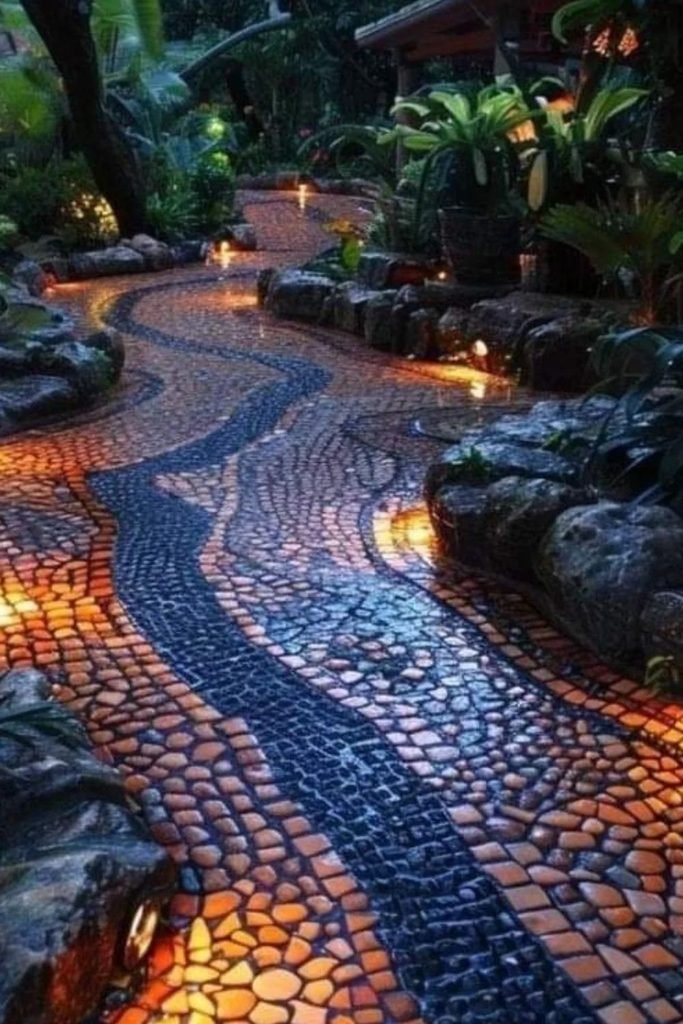
Turn the pathway itself into a garden feature by arranging small pebbles in flowing bands instead of using one uniform paving material.
Curvy designs work particularly effectively in tropical, wooded or highly planted gardens as they can mirror the movement of a natural stream.
Build up the mosaic on a well prepared, solid basis, so that hundreds of little stones will hold their position, and the surface does not become uneven.
Use pebbles of contrasting hue to make the pattern recognizable.
Frame the edges with larger boulders and dense greenery.
lnstead of putting the lights in the walking area, you might put low lights next to the border to showcase the stonework at nite.
River Walk
Create the feeling of water moving through the garden without adding an actual stream by shaping a pebble path into long, flowing curves.
The primary surface should be of smooth river stones with the bends defined by darker edging so the road holds its shape.
Best suited to Japanese-style or naturalistic gardens, where a backdrop of rock, clipped shrubs and small trees already offers a peaceful environment.
Make the curves wide enough to be comfortable to walk on, not just for decoration.
Recessed lighting along one edge can follow the trail in the dark and make the flowing pattern easier to see.

Lawn Loop
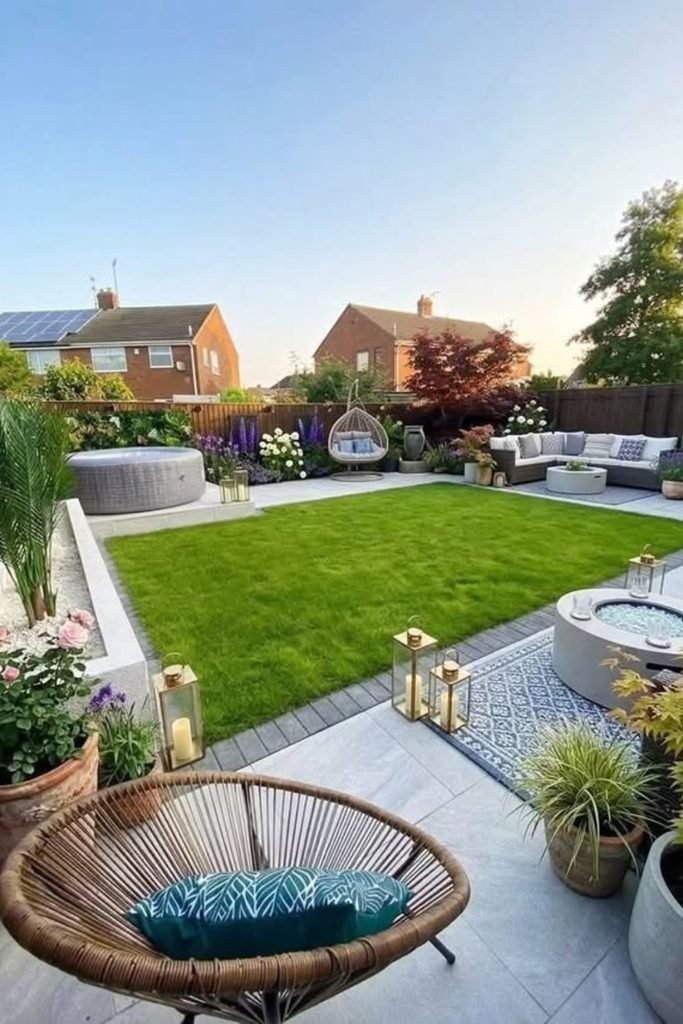
Preserve a generous patch of grass by running the pathway around its outer edge instead of cutting directly through the center.
To provide a sharp finish to the grass and help define the walking line, the smooth path between separate seating spaces is made of large-format pavers.
This arrangement works well in family backyards when you want open grass for everyday use but also want dry access around the garden.
Ensure the width of the paving is the same at busy points, especially near seats and tables, so people can move comfortably.
Plant flowers and containers along the outer boundary to soften the hardscape, without limiting usable lawn space.
Gravel Treads
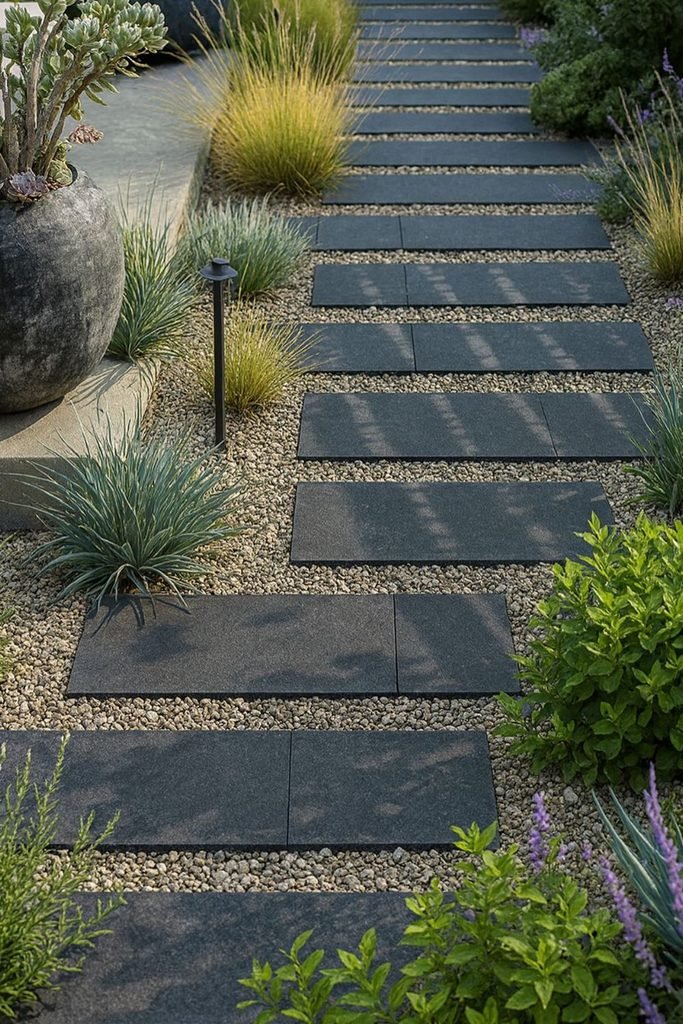
Give a dry garden a strong walking line by pairing dark rectangular pavers with small neutral gravel.
Make each slab big enough for a complete step and then space them evenly so you never have to lengthen or shorten your stride.
Make sure the pavers are level on a compacted gravel base to help prevent them from sinking and moving after rain.
Close to the edges, drought-tolerant grasses, lavender, and tiny shrubs can thrive without crowding the path.
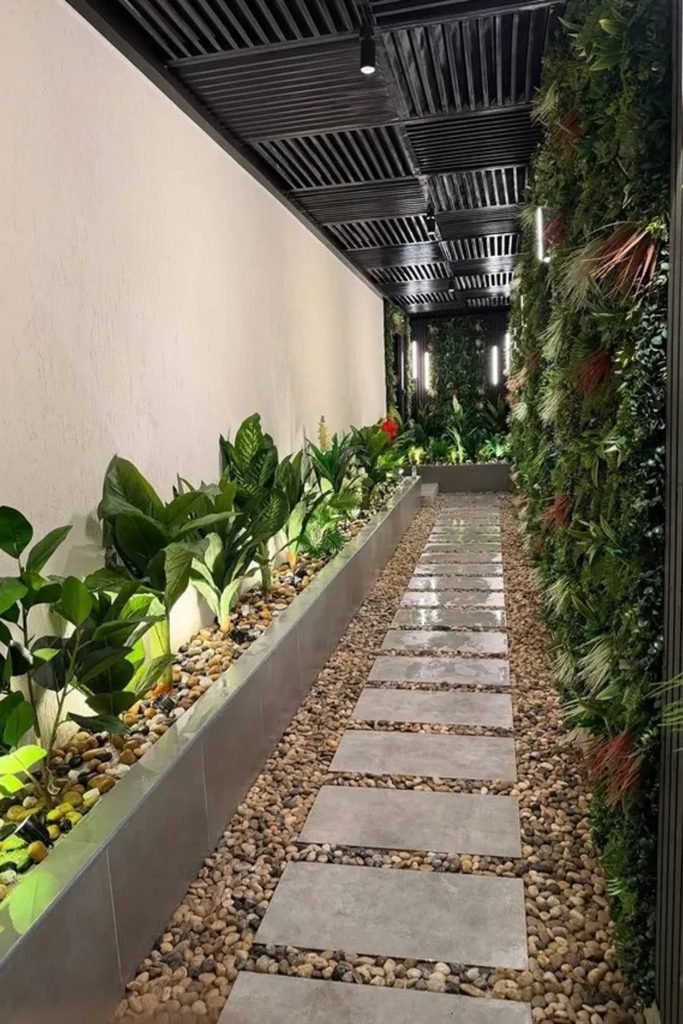
Vertical Passage
Use the walls when a narrow side yard leaves almost no room for traditional garden beds.
A basic walking line can be made by centering rectangular stepping stones over loose pebbles.
This preserves the foliage around you and doesn’t let the plants take over the route.
If the walls block direct sunlight, use compact or shade-tolerant plants, and consider the mature size of the plants before filling the beds.
Targeted lighting will enhance plants and make the enclosed passage simpler to use at nite.
Brick Ribbon
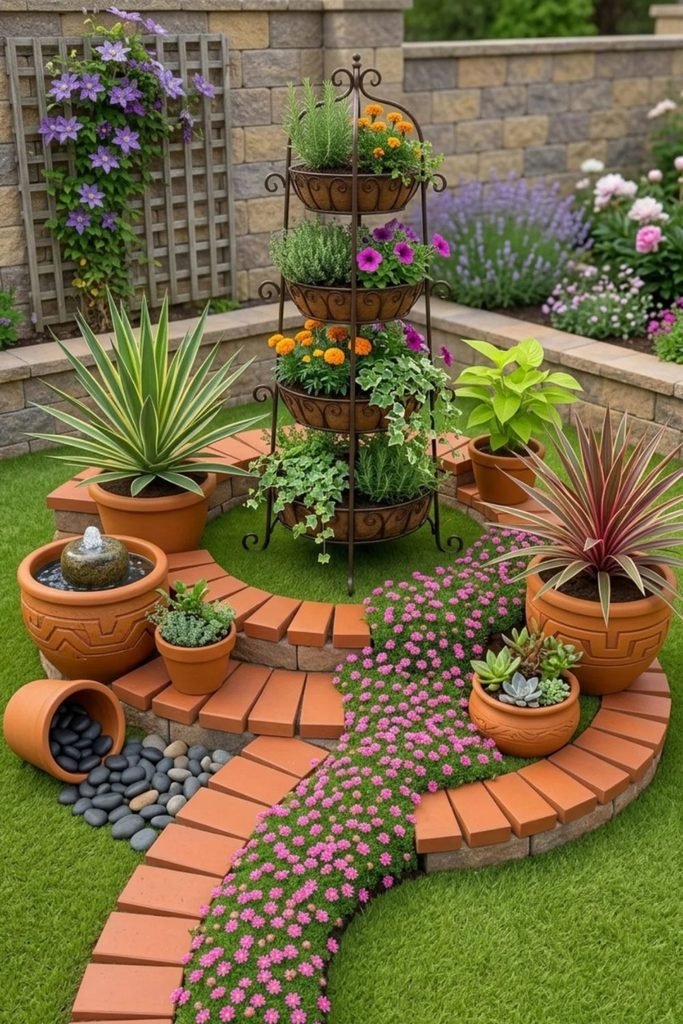
Bring a playful path into a small lawn by shaping narrow brick edging into a loose curve around a planted focal point.
Create an easy-to-walk track, then let some low groundcover to spill out a bit and add a softer garden feel toward the brickwork.
This is particularly effective around container plantings, fountains or tiered planters where you want the path to draw the eye to the center.
All bricks should be laid into a compacted base so that the curving edges stay level and don’t move over time.
Mixing terracotta pots with flowering groundcovers can echo the warm brick tones and make the whole corner feel connected.
Lawn Pavers
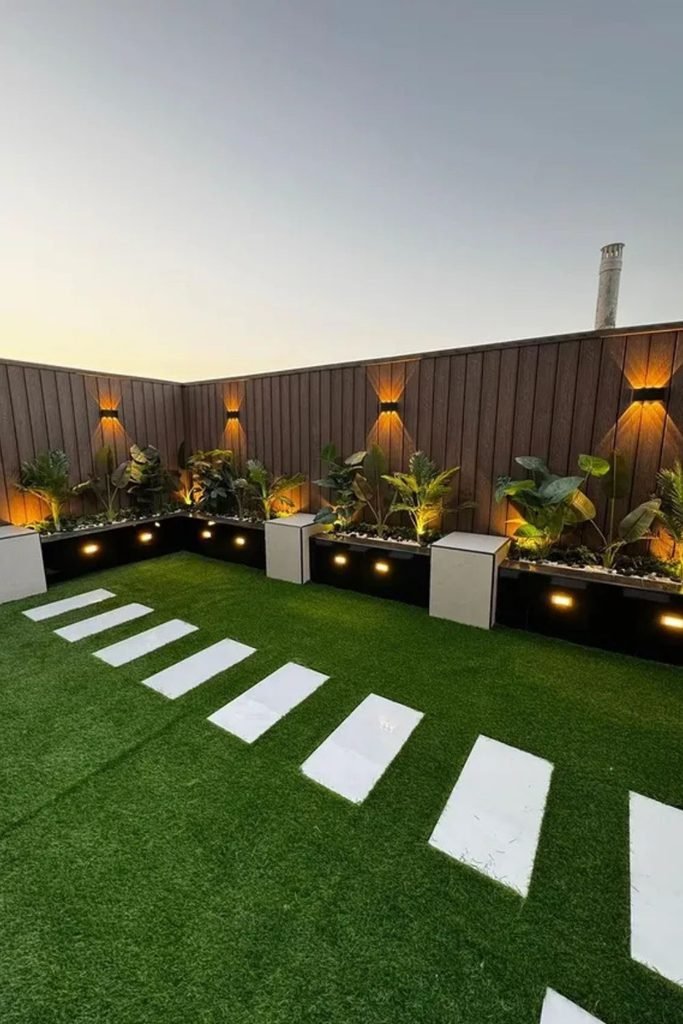
Keep a small garden feeling open by laying bright rectangular pavers directly through the lawn instead of building a wide solid walkway.
Curve gently to the elevated planting beds so the route feels like it is part of the garden, not going through it.
Space each slab a comfortable stride apart and make the surface flat with the grass to minimize trip points and make it easy to mow.
This method works exceptionally well on artificial turf or well kept lawns where clean lines count.
Tropics planted high around the perimeter can give height and privacy while allowing the center to remain open for movement and daily use.
FAQs
How Wide Should A Garden Pathway Be For Walking?
For a comfortable everyday garden path, aim for enough width to walk without brushing against plants on either side.
Around 3 feet works well for one person, while a wider route is better if two people regularly walk together.
Remember to consider mature plant size too, especially when shrubs, grasses, or flowers grow close to the pathway.
Which Garden Pathway Material Requires The Least Maintenance?
Large concrete pavers, natural stone, and brick that are correctly built are often easier to maintain than walks made of grass or loose gravel.
Whatever material you choose, be sure to lay down a compacted base and put in good edging first.
But if they aren’t done right, pavers might sink, weeds can grow between the joints, and gravel can end up in the beds or on the lawn.
