
26 Potting Bench Ideas for 2026
You shouldn’t have to wind up with soil all over the patio, equipment scattered everyplace and a sore back from working on the ground.
But without the right setup, even a fast gardening task can become a mess.
A well-planned potting bench gives you one comfortable area to work, and keeps pots, soil, tools and everyday supplies close at hand.
The correct design can even fit into a small patio, greenhouse, shed or disused garden corner.
In this article, you’ll find 26 Potting Bench Ideas to help you create a more organized, and practical gardening space.
Let’s jump in!
How Can I Keep Tools Accessible Without Countertop Clutter?
Keep the tools you use most regularly at arm’s reach, but don’t let them live on the worktop.
Hooks on the wall, a pegboard or a small tool rail behind the bench for your trowel, pruners, hand fork and gloves.
Keep smaller supplies like plant labels, twine and markers in a shallow drawer or labeled container so they don’t get lost under plants.
The lower shelf is for heavier materials such as sacks of soil, watering cans and additional pots.
If your bench has side panels, then put hooks or little hanging buckets on them as well.
Shelf Storage
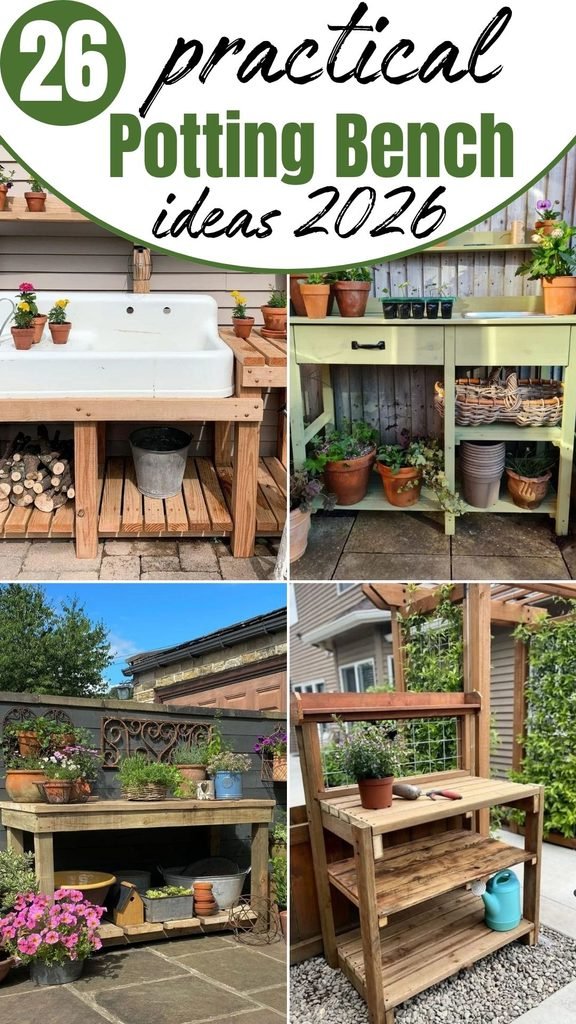
Keep your main work surface free by moving finished pots, small planters, and frequently used supplies onto a raised shelf behind the bench.
Place the bench next to a fence or the wall of a shed where vertical storage won’t take up additional yard area.
Install a strong shelf above the worktop for light pots, and use the open shelves below for stacked containers, baskets and heavy gardening materials.
Having enough free counterspace in the middle provides you room to repot plants or start seedlings without having to move anything else around first.
Basin Station
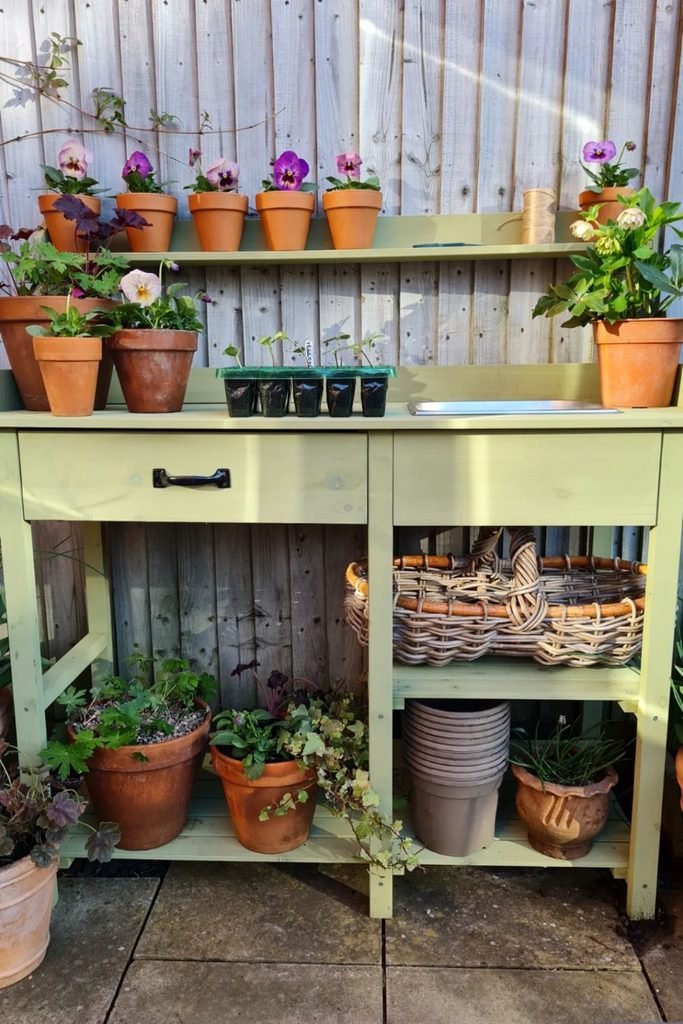
Turn messy repotting jobs into easier cleanup by building a deep basin directly into the work area.
Place next to a flat slatted area so you may work soil and roots over the basin, moving finished pots to a dry surface.
An old utility or farmhouse sink can work nicely even without permanent plumbing if you just need it to catch loose soil and rinse pots.
Site this arrangement near the home, greenhouse or garden tap, and prepare for drainage before you connect any running water.
Display Bench
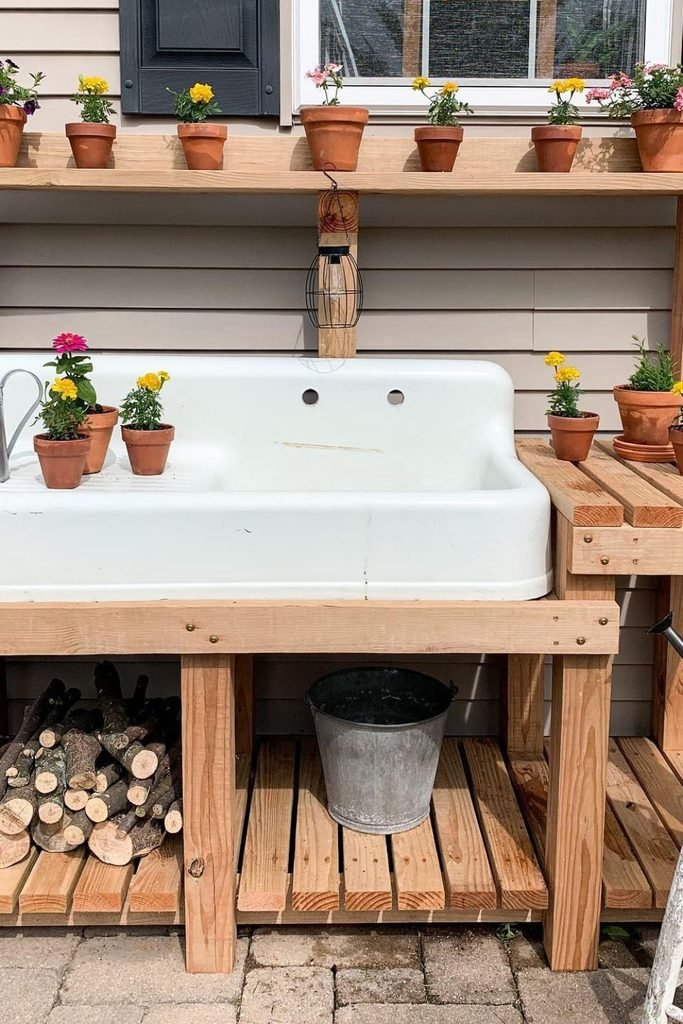
Let your potting station earn its space even on days when no repotting needs doing.
The wide top is for grouped herbs, seasonal flowers, or newly potted plants, with tubs, extra containers, and heavier supplies remaining on the open shelf below.
This is especially effective if the bench is against a plain fence as the plants will soften the background without necessitating additional garden space.
Keep the middle of the worktop easy to clear though, so the display can instantly revert to a practical planting surface whenever you need it.
Tiered Workspace
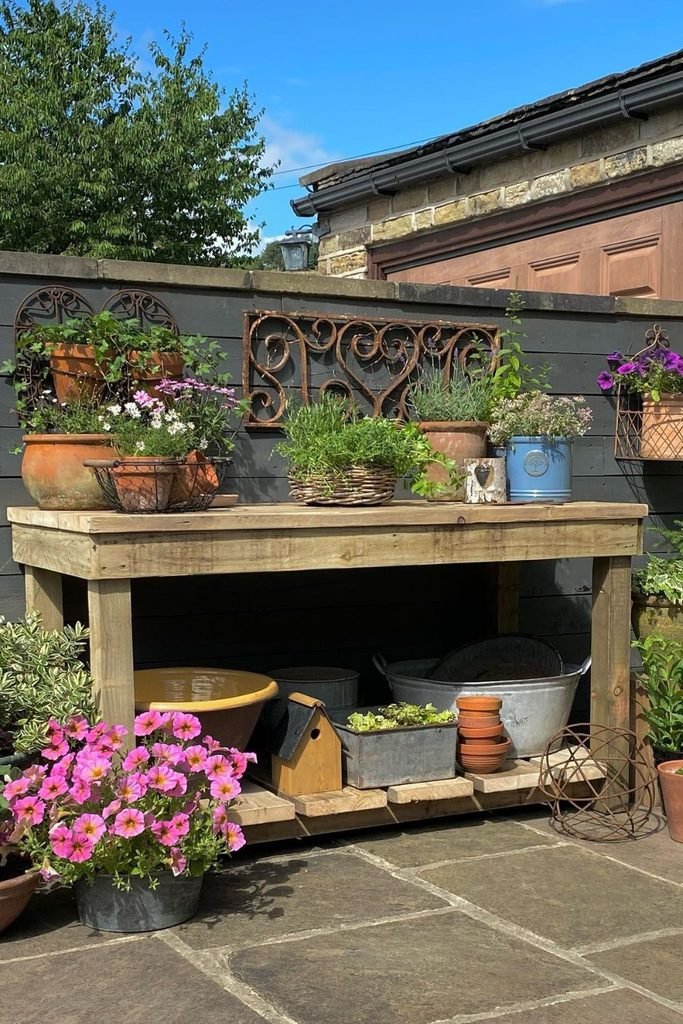
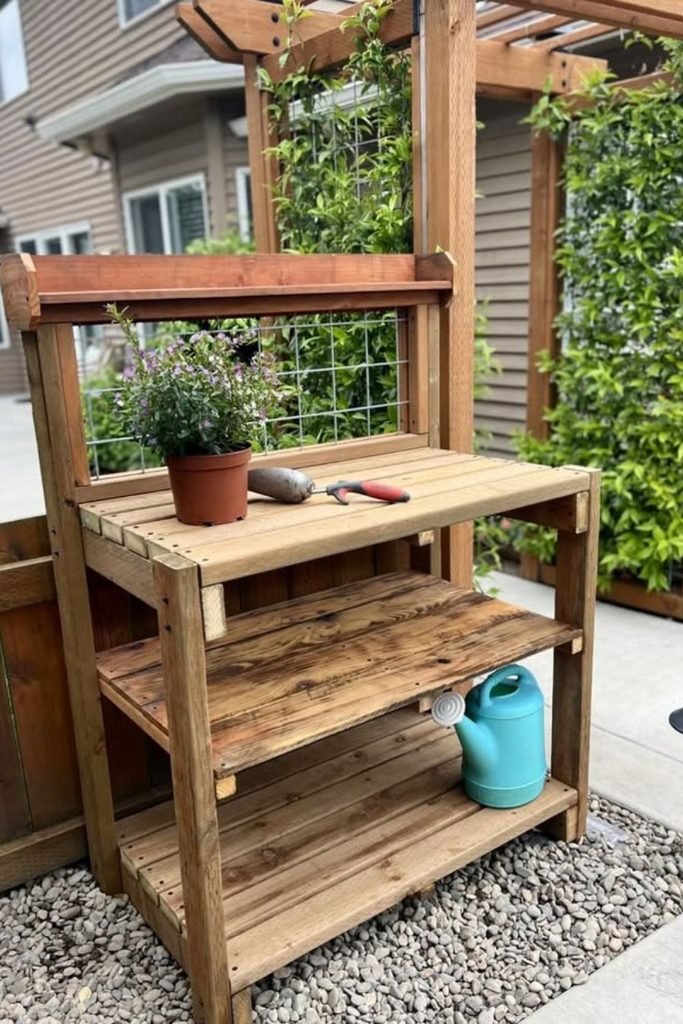
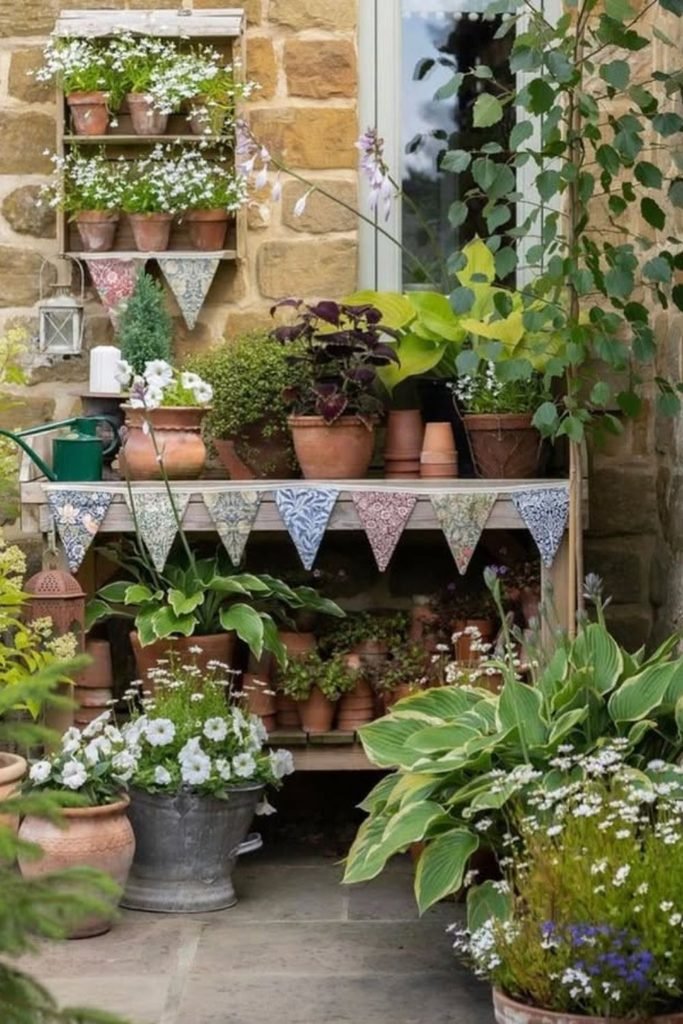
Give a narrow garden corner more function by building storage upward instead of making the bench wider.
The top is accessible for repotting and tiny hand tools while the center shelf is perfect for routinely used trays, soil containers or pots.
Bulky things, like watering cans, can stay on the lowest level so they don’t crowd your hands as you operate. ,
This compact arrangement is nice next to a fence, pergola or patio edge and exterior-grade or sealed wood will enable the structure withstand regular watering and outside dampness.
Rinse Counter
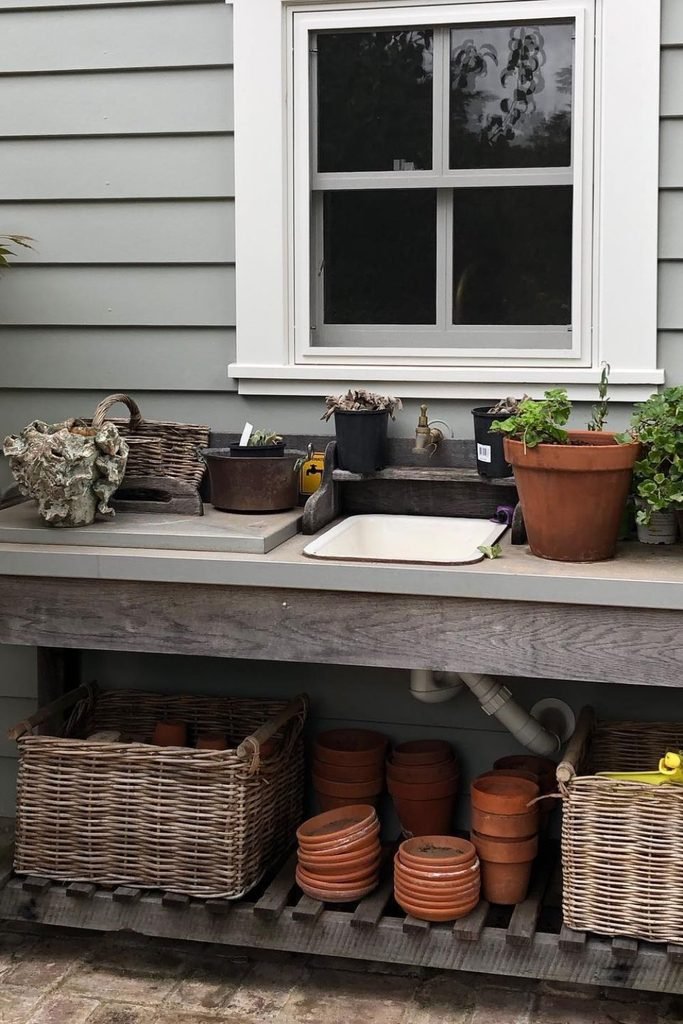
Bring water directly into your potting routine when the bench sits close to an exterior wall with easy plumbing access.
Provide a small sink in one portion of the counter, with plenty dry space next to it for dividing plants, filling containers and standing finished pots.
Open storage underneath allows stacking of terracotta pots, and baskets keep gloves, hand tools and other materials from spilling across the surface.
Before you add the sink, though, plan where the wastewater will go so you don’t end up with a wet space under the bench from rinsing pots and cleaning muddy.
Open Storage
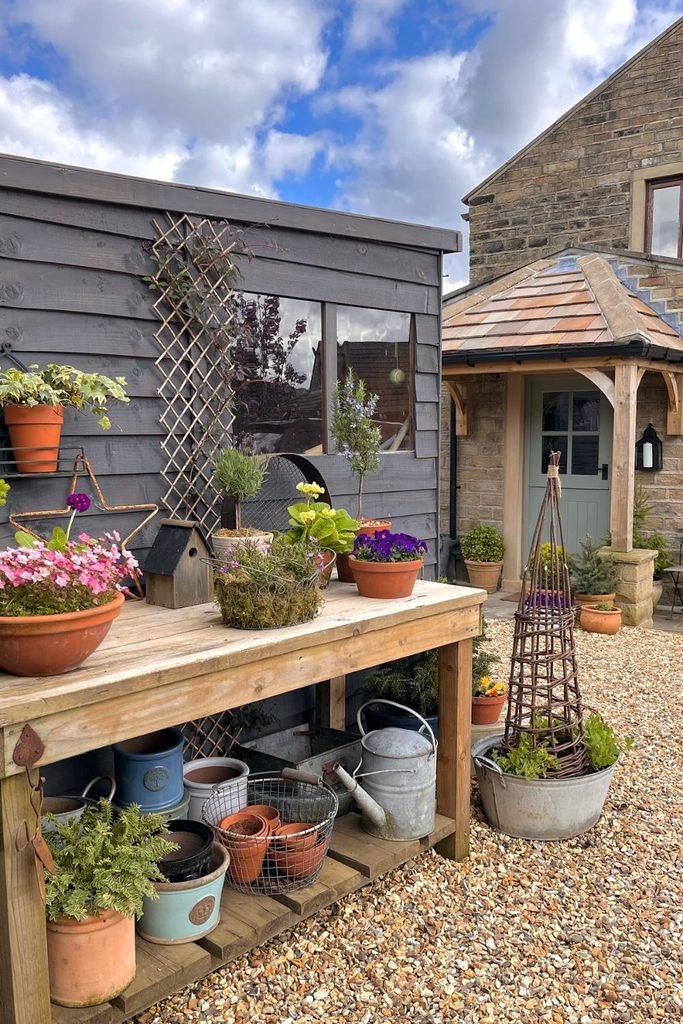
Skip closed cabinets when you want muddy garden gear to stay easy to grab and simple to put away.
Make a single broad slatted shelf under the worktop for watering cans, spare pots, baskets and containers, with adequate height for bulkier items.
This layout works especially well next to a shed or beside a gravel garden where a bit of soil dropping out won’t be a cleanup problem.
Place most-used goods near the front and put smaller pots inside wire baskets so they don’t take over the shelf.
Double Counter
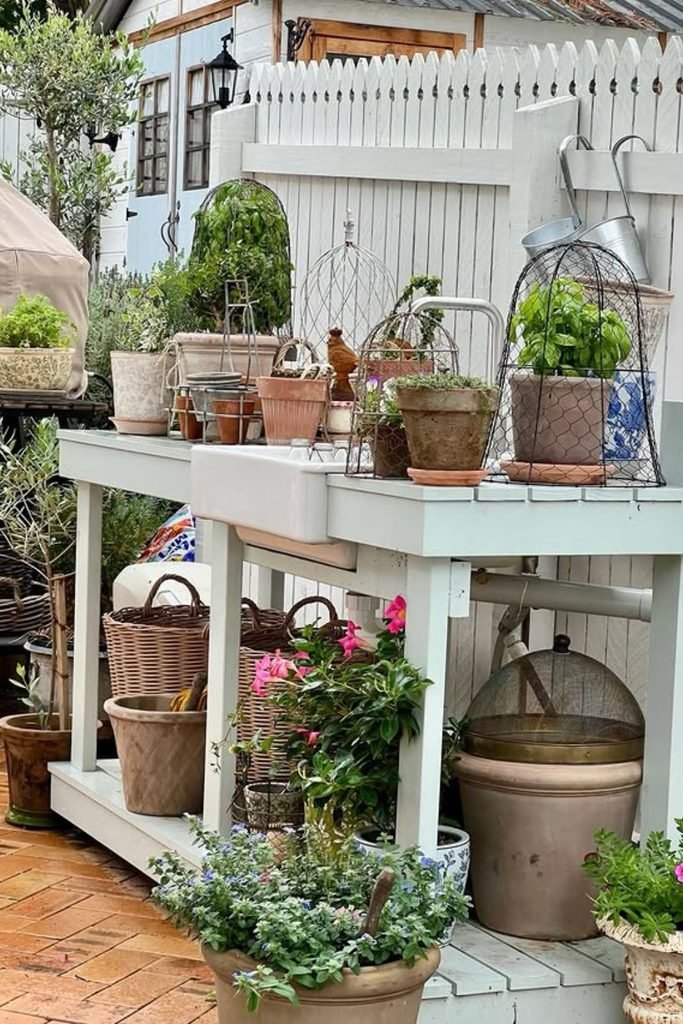
Separate wet jobs from dry potting when several gardening tasks tend to pile up at once.
One for mixing soil and re-potting, the other for plants waiting to be watered or cleaned.
Long benches like this are good against a patio or garden fence if you have lots of wall length but want to keep the walkway clear.
Below, store baskets and everyday pots, with enough open space around the sink to brush away spilled water without soaking supplies.
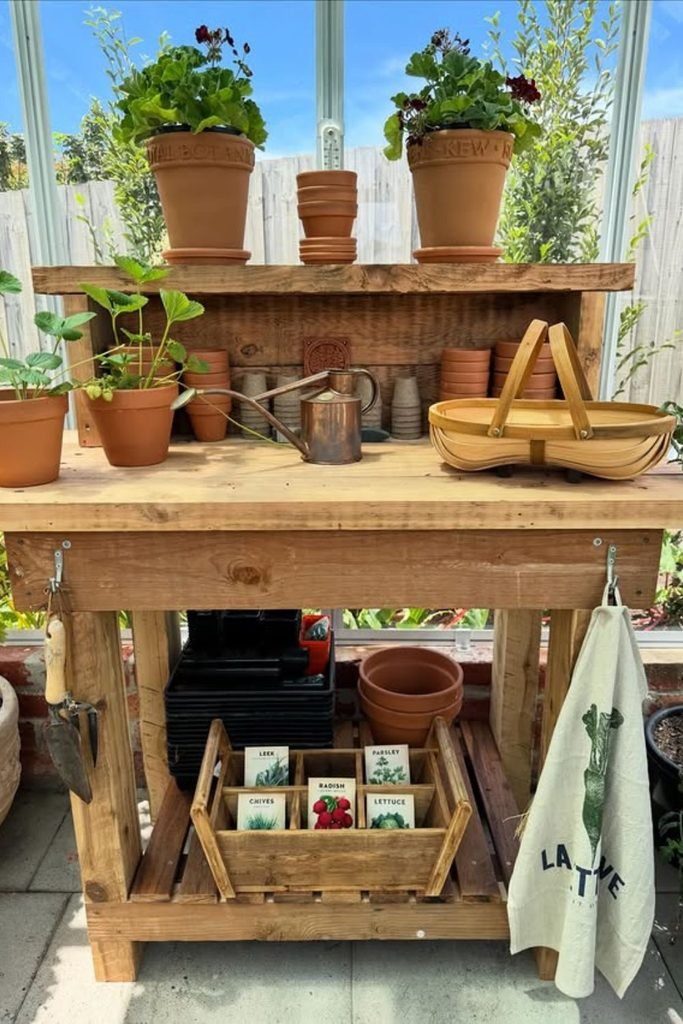
Seed Station
Give seed-starting supplies a permanent home instead of searching through drawers every time planting season begins.
Keep seed packets upright in a divided box on the bottom shelf and arrange them by vegetable, herb, flower or month of planting.
Use the counter for filling small pots and labeling seedlings, and the elevated back shelf for spare terracotta pots and plants requiring regular attention.
This set up works particularly well in a greenhouse or covered growing area as it keeps seeds, labels and other paper supplies dry from rain.
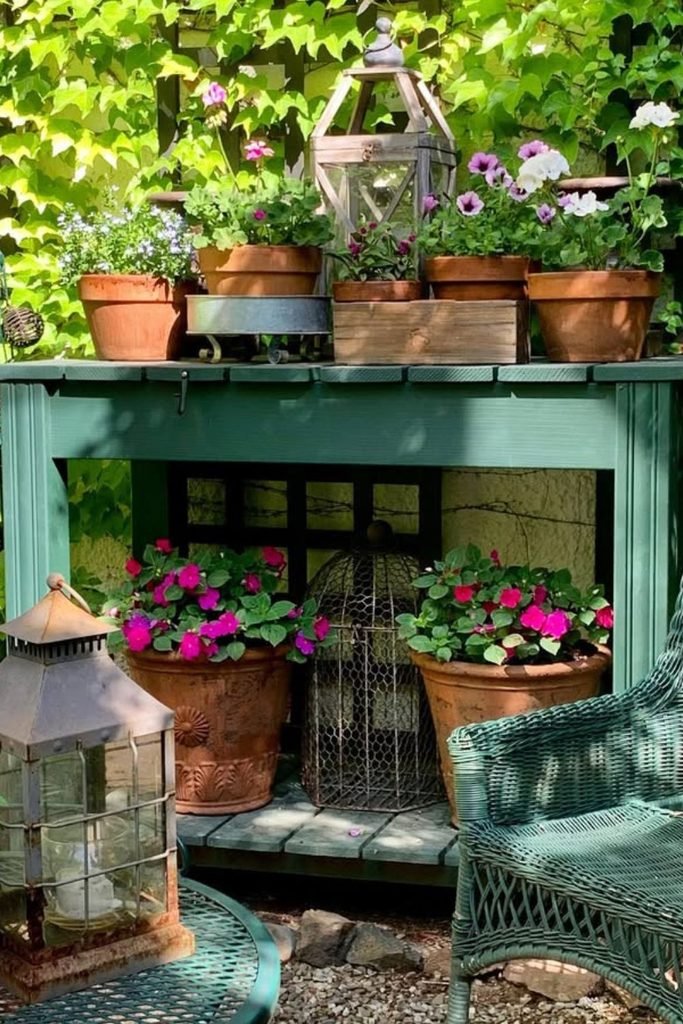
Patio Display
Turn a potting bench near your seating area into part of the garden instead of leaving it looking like a work zone.
Group blooming pots on top and on the bottom shelf when not repotting, choosing plants to suit the light available in that area.
Keep pots on trays or saucers to cut down on water marks and don’t fill every inch so the surface can still be swiftly removed for gardening activities.
Painting or sealing the seat to match other outdoor furniture might help the workstation merge easily into a patio or covered garden nook.
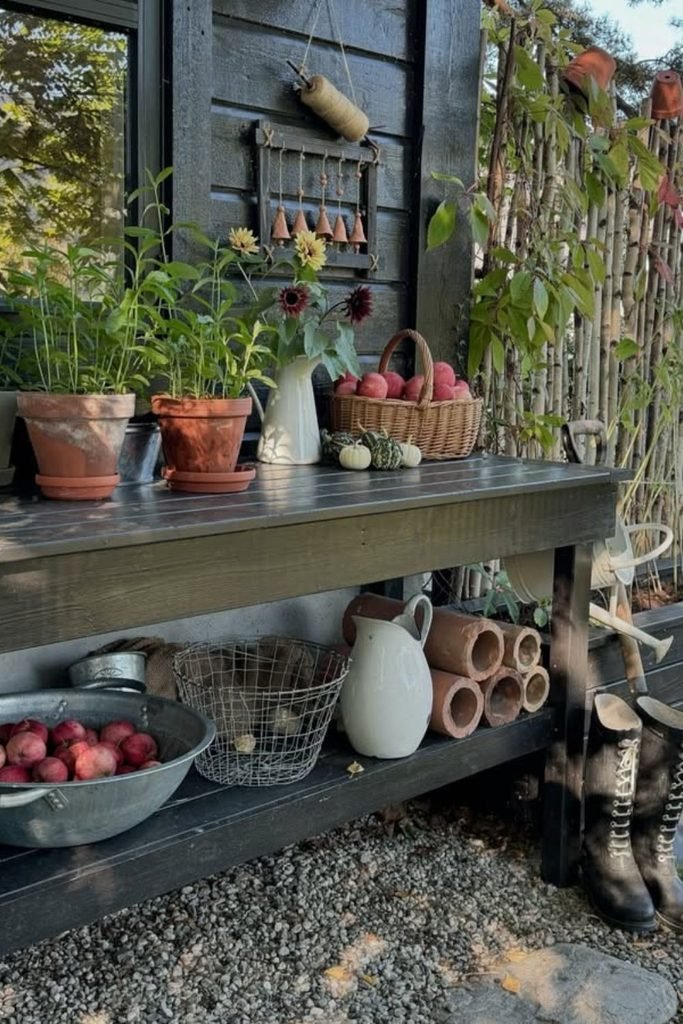
Harvest Station
Make the bench work harder during harvest season by keeping it close to vegetable beds, fruit trees, or a kitchen garden.
Use the large counter to sort out fresh vegetables, discarding any damaged pieces, and putting aside anything that needs washing before it comes indoors.
Separate harvests can be kept in baskets and shallow tubs. The lower shelf keeps spare pots and watering gear out of your way.
Leave one portion of the counter clear for frequent repotting so the station stays functional long after harvesting is done.
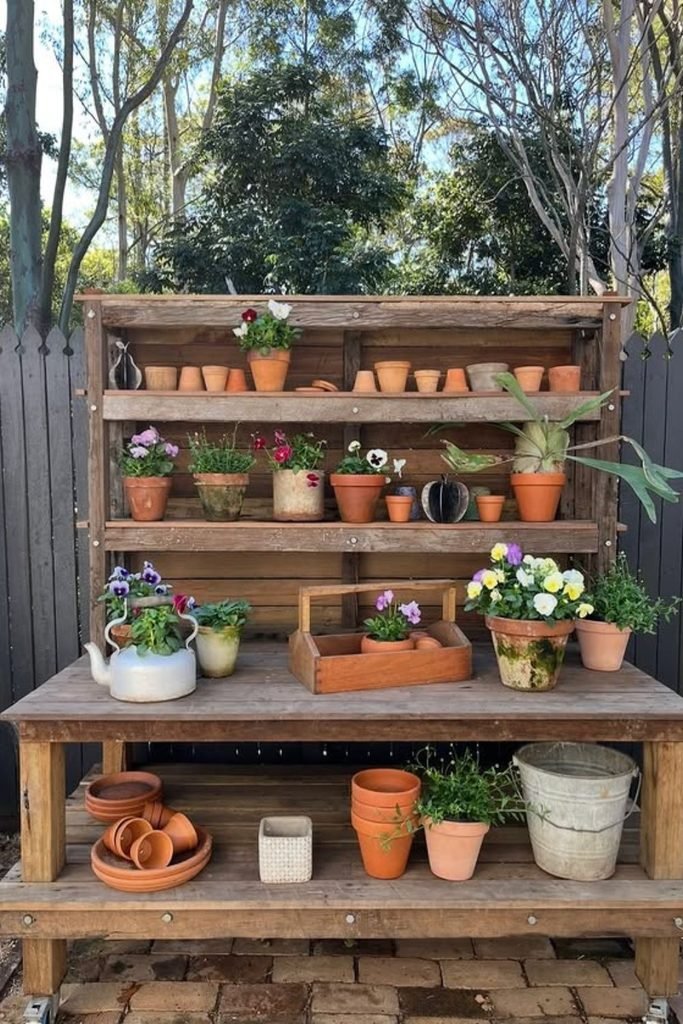
Pot Library
Stop hunting for the right container by giving spare pots their own organized section above the worktop.
Mount two shallow shelves on a fence or shed wall and organize empty pots by size so you can easily retrieve what you need without digging.
Place larger containers on the lower level and lighter terracotta pots higher up to make lifting safer.
The open counter can then be left free for repotting, the bottom level taking care of buckets and heavier supplies.
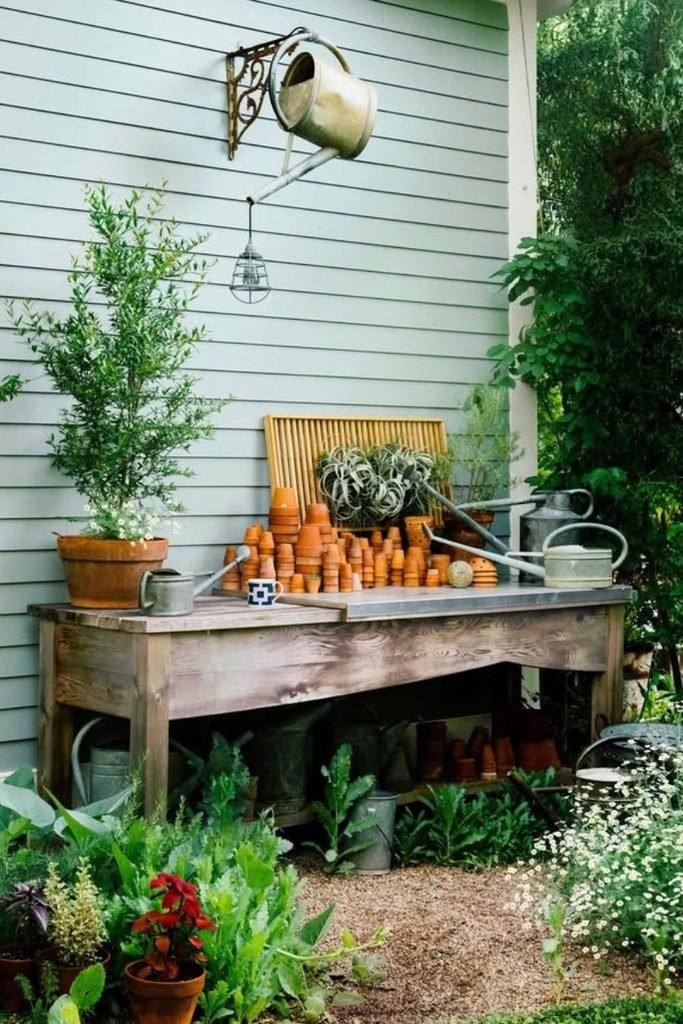
Metal Worktop
Choose a metal topped bench when spilled soil, wet pots and frequent watering make bare wood hard to maintain.
Place a piece of galvanized or stainless sheet on the primary work surface so that you can brush off loose potting mix and wipe it clean after a dirty task.
Place the bench by the house or near your main container garden for easy access to watering cans and extra pots.
Keep the metal edges smooth and well fastened to the hardwood frame and keep cumbersome watering gear underneath.
Tool Wall
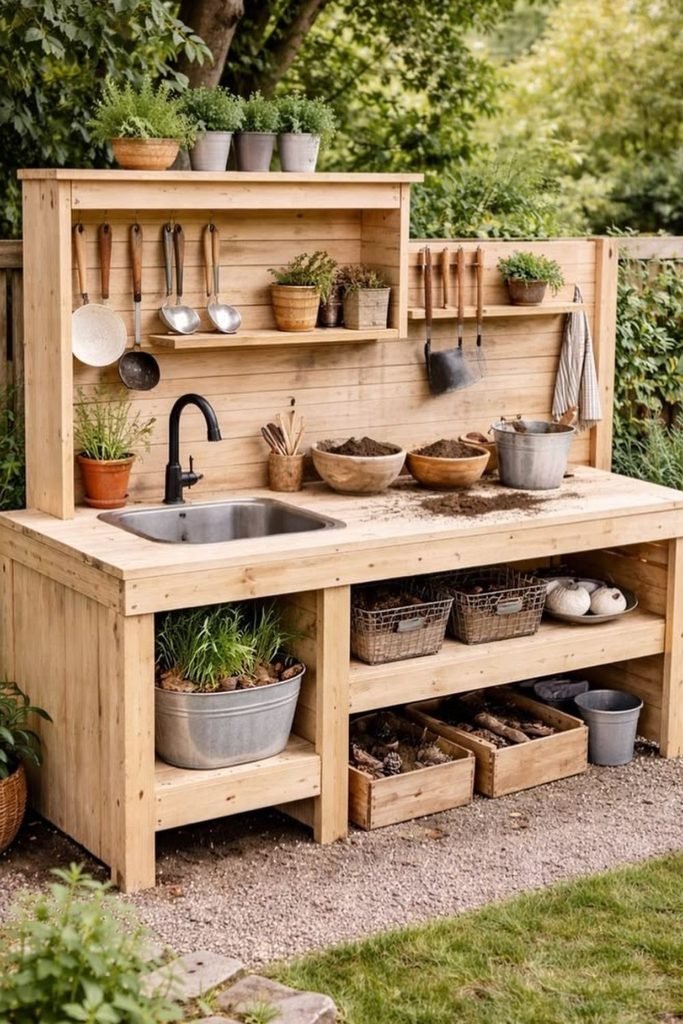
Put everyday hand tools on the backboard instead of letting them disappear beneath pots and soil bags.
Hang strong hooks within easy reach for trowels, scoops, pruners and other equipment you use on most planting operations.
This layout is particularly nice for a permanent garden workstation because you want to be able to see everything in front of you before you start.
Keep heavier items in baskets or boxes underneath and allow a clean space next to the sink for repotting.
When you’re finished with each tool, put it back on its own hook, and clutter won’t take over the counter.
Flower Station
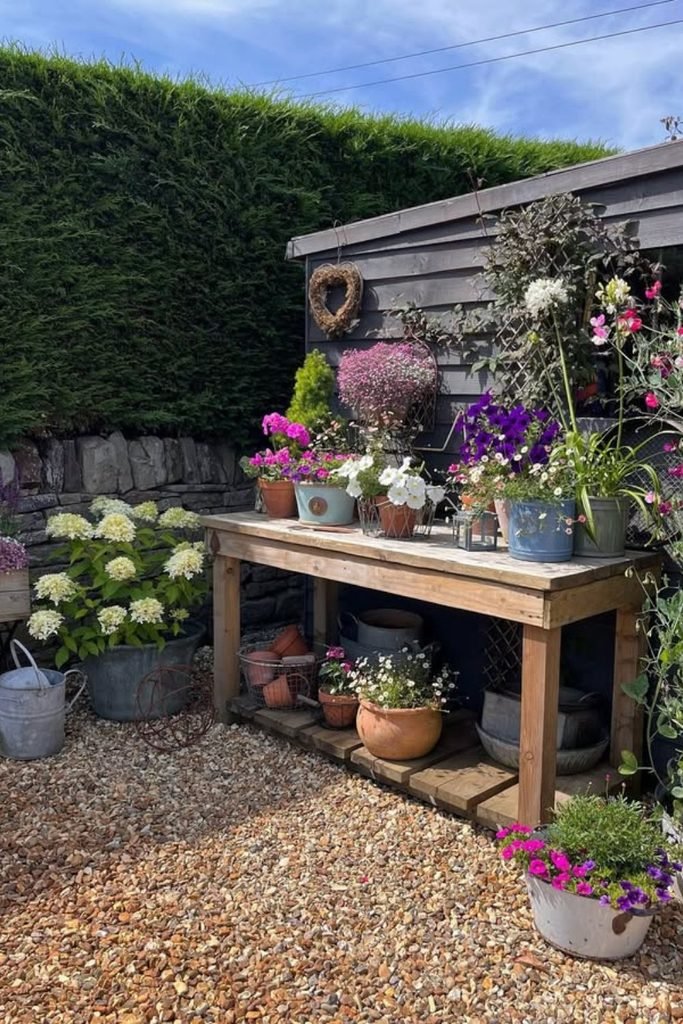
Use your potting bench as a seasonal flower hub when you grow lots of containers around a patio, shed, or garden seating area.
Keep plants that require deadheading, splitting or repotting on the worktop to look after numerous pots at once rather than hauling them about the yard.
Keep backup containers and mixing tubs beneath, so they are handy without interfering with your working space.
When upkeep is done, organize several flowering pots on top by height instead of occupying the full surface, allowing adequate space for the next work.
Porch Bench
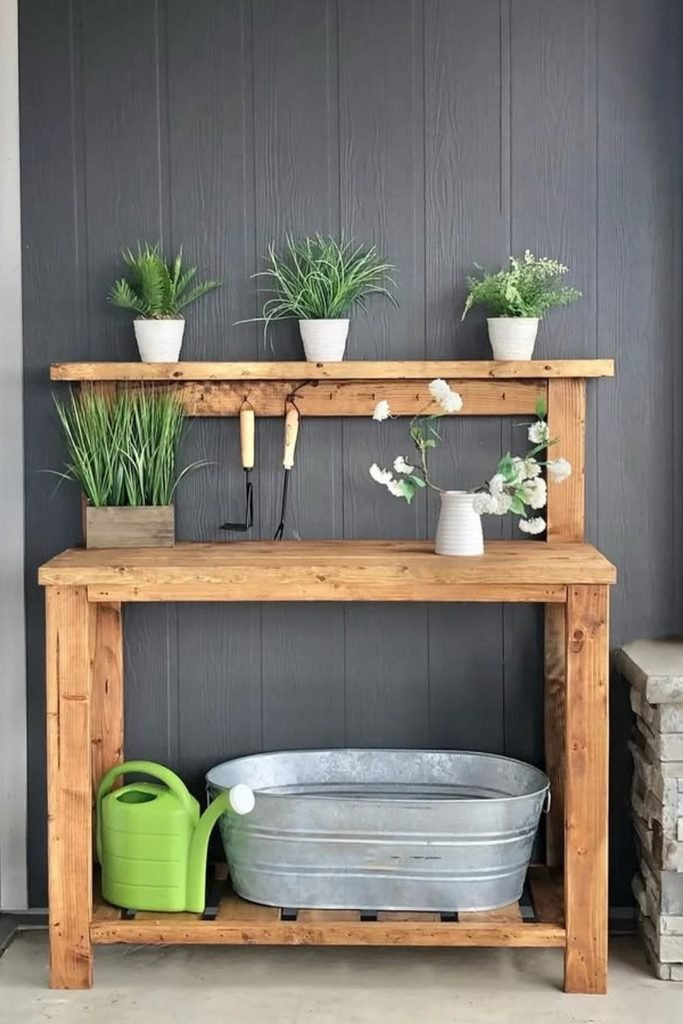
Claim a sheltered porch wall for potting when you want a workstation close to the house but protected from heavy rain.
Keep the design narrow and simple with one raised shelf for small plants and hooks underneath for the hand tools you reach for most.
A large galvanized tub can sit on the bottom shelf to hold potting mix or catch loose soil while you work, then slide back underneath afterward.
Because the bench stays under cover, wooden surfaces also face less direct weather exposure, although sealing them will still make everyday cleanup easier.
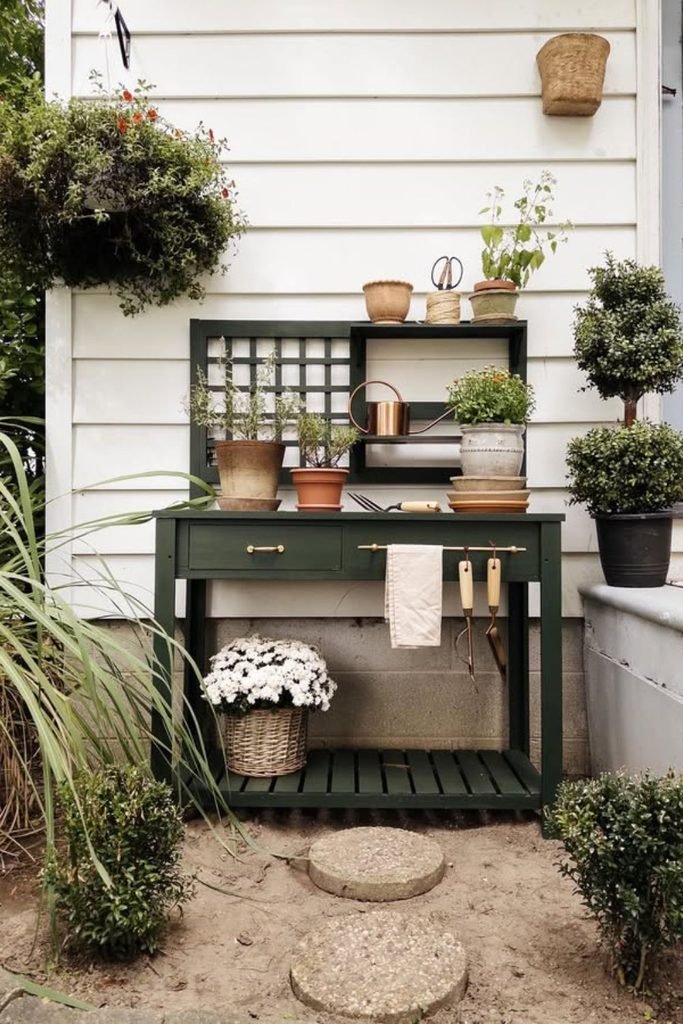
Side Hooks
Free up a compact worktop by moving the tools you use most onto the front or side of the bench.
Install a short rail with S-hooks for trowels, hand forks, gloves and a small towel. Keep each tool within reach without obscuring your planting surface.
A shallow drawer will be used to store labels, twine and other tiny materials that need protection.
This configuration is particularly useful beside the house or along a narrow garden path, where bigger shelves would eat up valuable walking space.
Give the bench extra stability by putting heavier pots on the bottom tier.
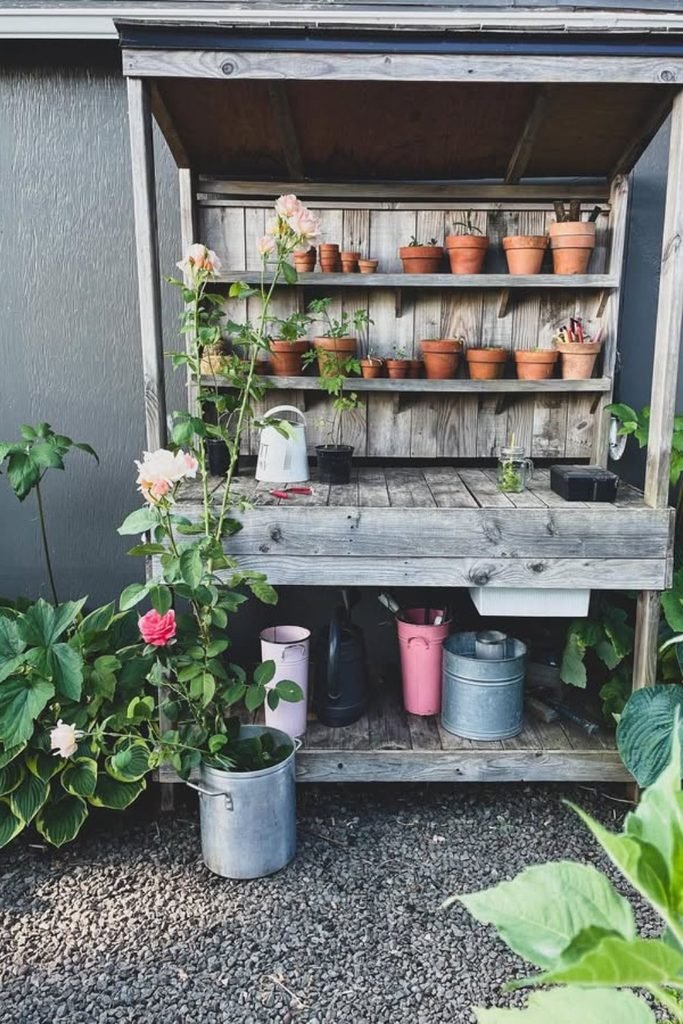
Covered Bench
Protect your main planting area from sudden rain by adding a simple roof above the potting bench.
Extend the cover far enough to protect the workstation and upper shelves. Use those shelves for empty pots and small supplies that are better off dry.
If you don’t have place for a full potting shelter near a shed or fence, this type of set-up is ideal.
Keep watering cans and weather-tough containers under it, and seal exposed wood to prevent wind-driven rain and damp soil from shortening the bench’s life.
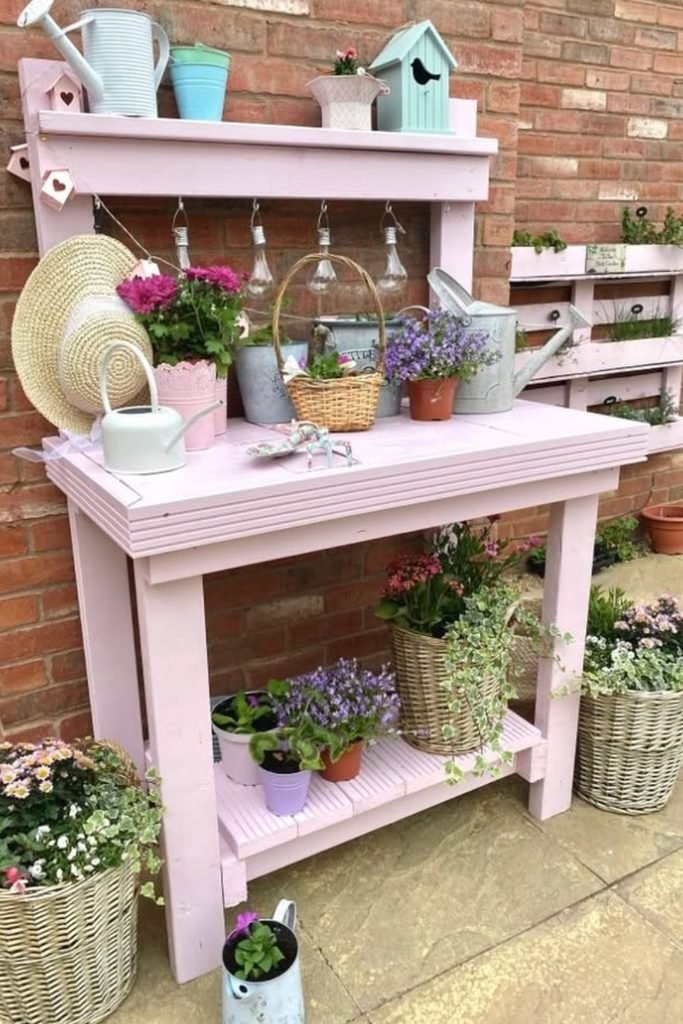
Painted Station
Bring a potting bench into a visible patio area by giving the wood a finish that works with your garden instead of leaving it purely functional.
Choose exterior grade paint prepare the wood properly, and seal vulnerable surfaces so regular watering and damp pots don’t quickly damage the finish.
Keep the upper ledge for light weight watering cans or spare containers, while the lower shelf can hold plants waiting to be repotted.
A painted setup works especially well against plain brick or neutral walls, where the bench can add character with out sacrificing the clear work surface.
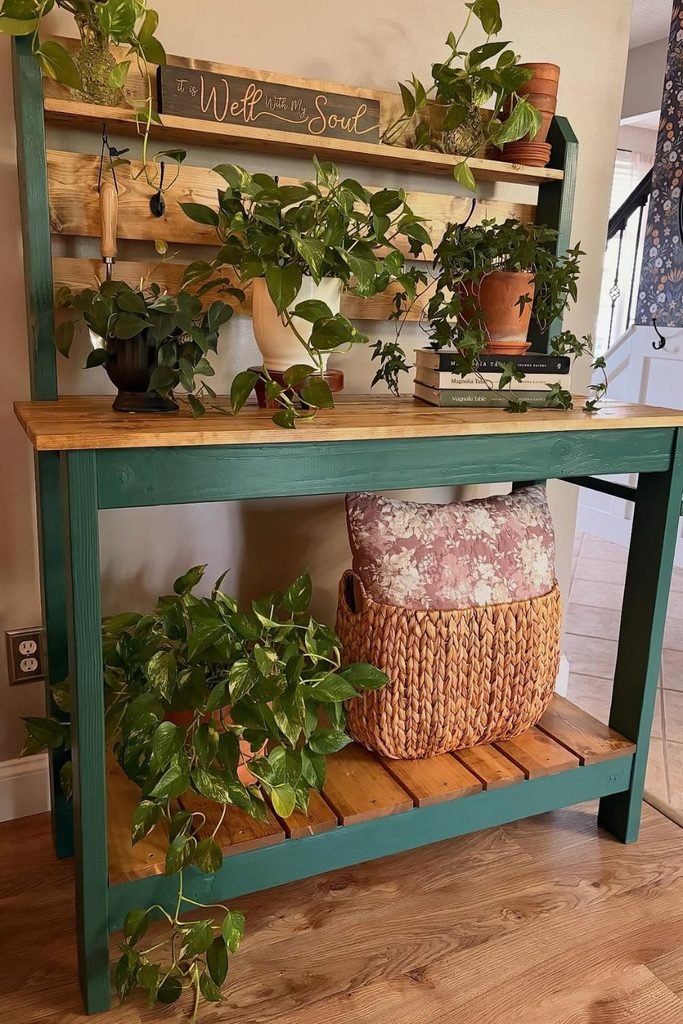
Indoor Station
Bring the potting bench indoors when most of your gardening revolves around houseplants rather than outdoor beds.
Use the elevated shelf for tiny plants, extra pots and lightweight supplies and leave the main surface clear for pruning and repotting.
Add hooks around the back for hand tools so you’re never left with dirty equipment strewn across the room.
When working with soil protect the wooden top with a removable waterproof mat or potting tray and put a basket underneath for potting mix.
Serving Bench
Let your potting bench handle more than gardening when patio space is limited.
Make the worktop easy to clean, so that it can go from repotting plants to holding beverages, plates or snacks when entertaining outside.
Pegs on the back rail allow you to store small garden equipment between uses, and the lower shelf is a great place to store pots and heavy supplies.
You can use trays for potting operations so loose dirt never gets stuck in the surface before you use it for serving.
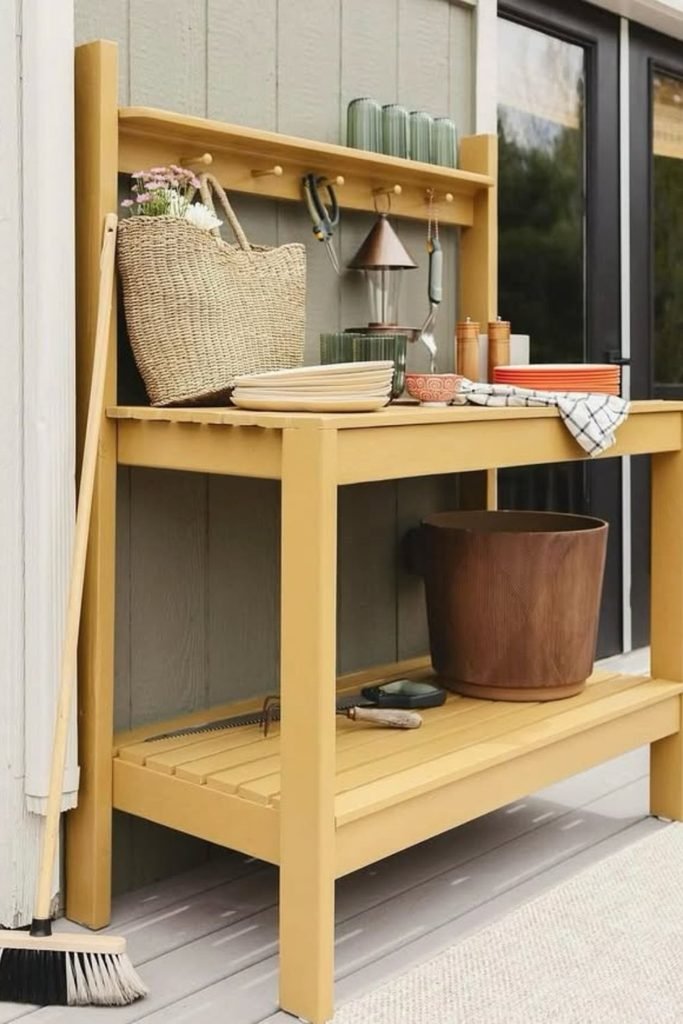
Vertical Hutch
Use the wall above your bench when floor space is tight but your collection of pots keeps growing.
Build a tall slatted hutch with two or three shallow shelves for empty containers, small plants and lightweight gardening supplies, keeping bulky items.
This works especially well against a garage, shed, or patio wall because storage grows upward without making the workstation deeper.
Leave the main counter mostly open for repotting, and secure the upper section firmly so loaded shelves stay stable during windy weather.
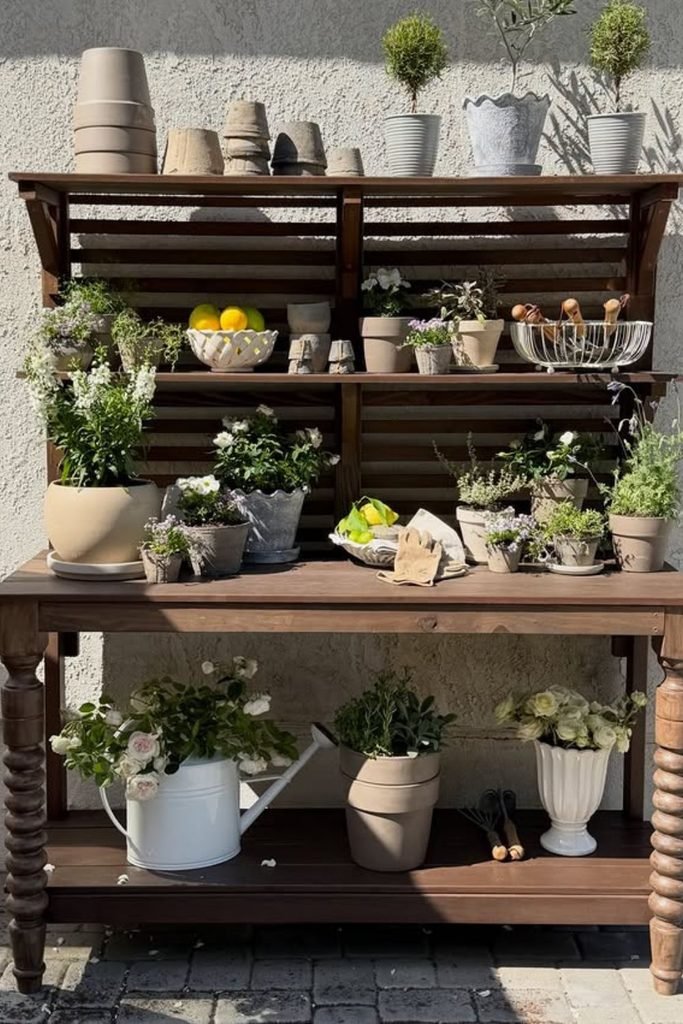
Sunroom Bench
Take advantage of a bright sunroom or enclosed porch when outdoor weather makes year-round potting difficult.
Put your bench near a window so seedlings and recently repotted plants can bask in natural light while they recover.
Instead of cluttering up the work space, hang your most-used trowels from hooks above the counter, and keep empty pots on the upper ledge.
Use the lower shelf as a temporary holding area for plants waiting to be transported outdoors, and place a waterproof tray on the counter.
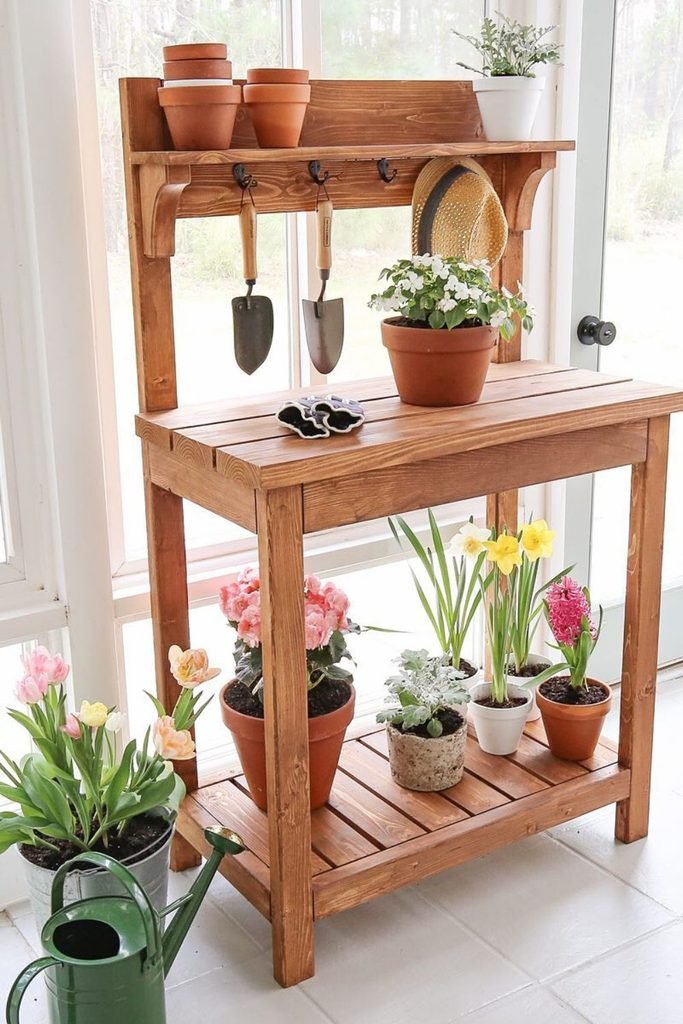
Compact Organizer
Make a small potting bench work harder by assigning every level a specific job.
Hang your usual hand tools on the hooks across the back, use the thin top shelf for spare pots and twine, and keep the main counter free for planting.
Two lower shelves allow you to store regularly used watering gear away from bulky containers and supplies.
This arrangement is a nice size to sit next to a garage or patio wall where a large workstation would be too big.
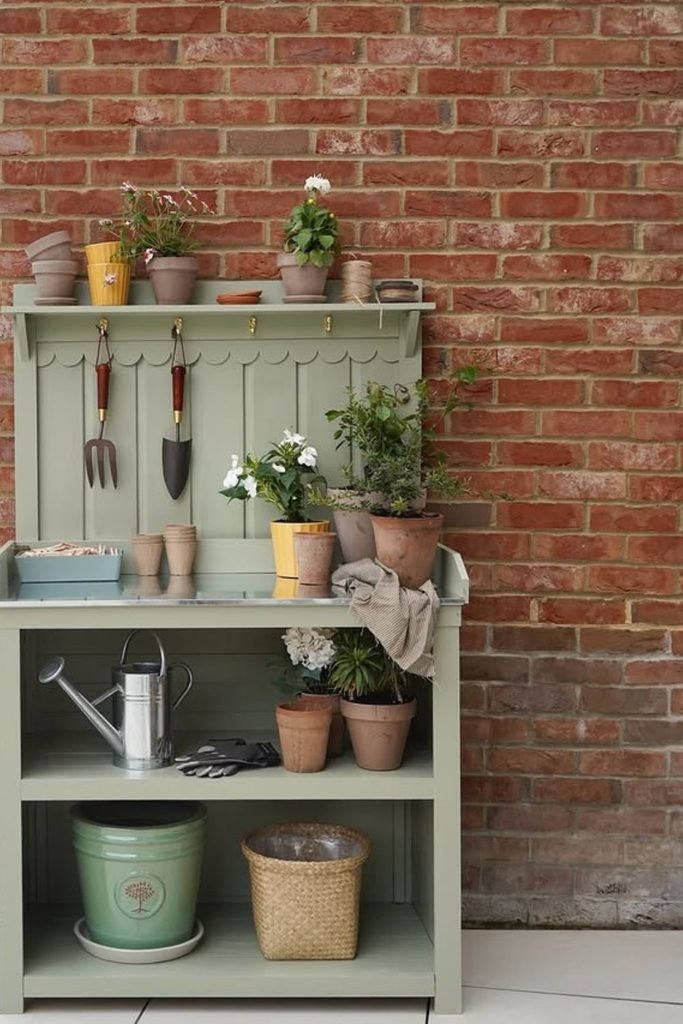
Garden Nook
Tuck your potting bench into a planted corner when you want the work area to feel connected to the garden rather than separate from it.
Select a location close to a home or garden wall and plant shade-tolerant foliage or blooming containers appropriate for the light around the bench.
Have spare terracotta pots below and a tiny wall-mounted rack above for plants that might otherwise clutter the counter.
The open center of the workstation gives you a convenient spot for repotting, and the foliage surrounding the station helps it fit effortlessly.
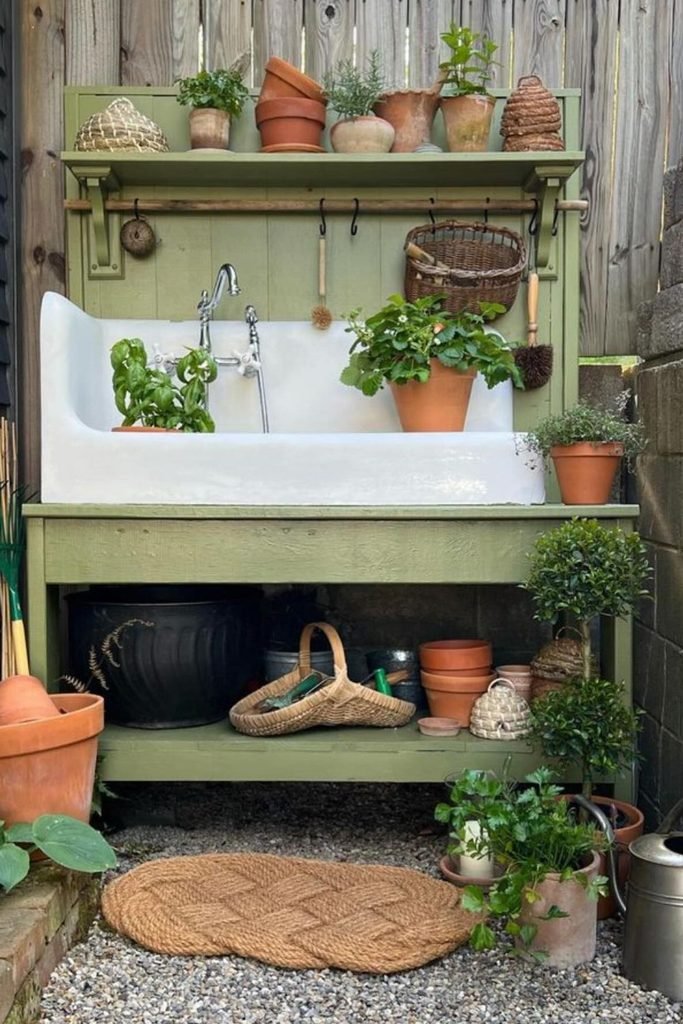
Utility Sink
Save yourself repeated trips to the outdoor tap by making water the center of your potting setup.
You can install a deep utility sink to rinse muddy pots, wash hand tools, soak dry root balls and clean up after repotting without spraying the surrounding space.
The advantage of a narrow side yard is that the bench can be placed against a fence and still leave the walkway free.
Add a rail above for brushes and baskets and the lower shelf for large pots and tubs.
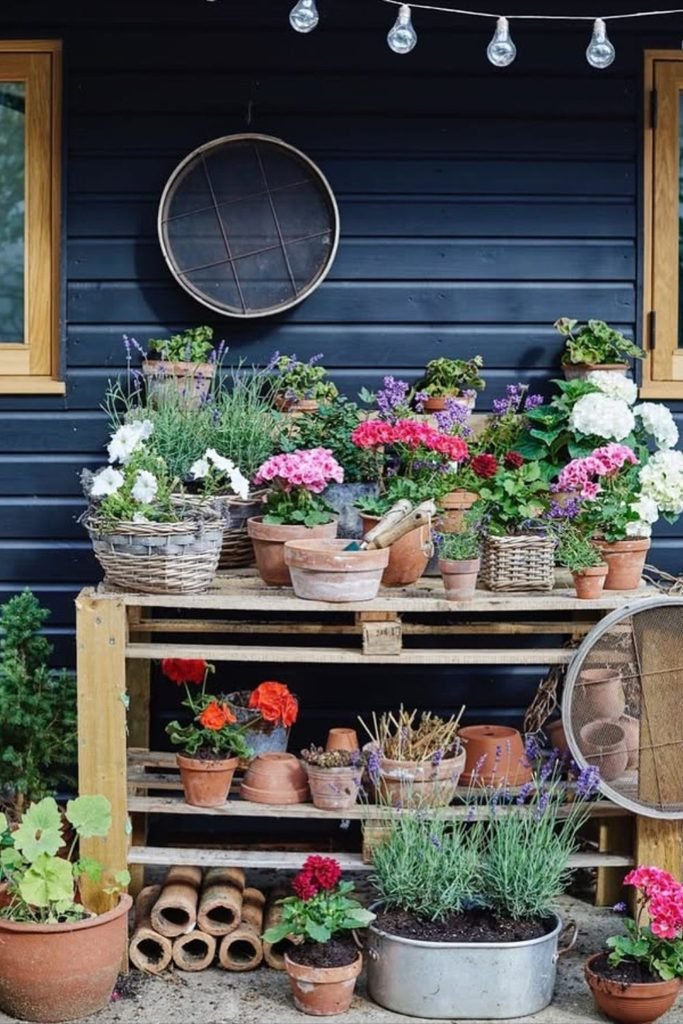
Pallet Bench
Save on building costs by turning sturdy reclaimed pallets into a practical potting station.
Use clean, unweathered timber, sand down any rough edges and reinforce the frame before piling on the heavy pots.
The holes in the pallet boards become handy open shelves for stacked pots, propagation supplies and equipment.
And the wide top offers you enough of space to repot larger arrangements. Position the bench near a shed or covered garden wall for convenient access.
And if it’s going to be exposed to a lot of rain and rest on soggy soil, treat the wood with an outdoor-safe finish.
FAQs
How Deep Should Potting Bench Worktops Be?
Ensure you have adequate depth to put medium and large pots to use, without requiring you to reach too far forward.
If your bench is on a narrow patio or sidewalk, trim the depth a little and bring storage up with hooks and shelves.
Where Should Potting Benches Be Placed?
Pick a location near the plants you frequently work with, with easy access to water and sufficient space to work comfortably.
Shelter also protects stored goods from severe rain and extends the life of a wooden bench.
