
21 Snake Plant Indoor Ideas for 2026
Empty corners can make a room look unfinished, but filling them with more furniture usually just creates a new problem: clutter.
You may think a snake plant is the obvious solution, but it’s not always straightforward to plop one down in any old area.
Too little and it vanishes. The corner’s too packed. Put it in a really dark corner and it will survive but it won’t really grow well.
In this article, you’ll find 21 Snake Plant Indoor Ideas to refresh your home with stylish, practical greenery you’ll love.
Let’s jump in!
How Can Snake Plants Fill Empty Corners Without Clutter?
Start with the size of your empty spot before choosing a plant. If space is tight one tall snake plant can offer height without hogging the walkway.
Upright leaves mean it naturally works well where wider plants would make the room feel tight.Keep it simple.
Instead of around a sofa, bureau, console or reading chair, group numerous tiny pots and trinkets around one bigger plant next to it.
If you already have furniture pieces in the area, consider a smaller or more compact snake plant to leave yourself some open space around it.
Snake plants may survive in low light, but that doesn’t mean you should keep one in a dark area.
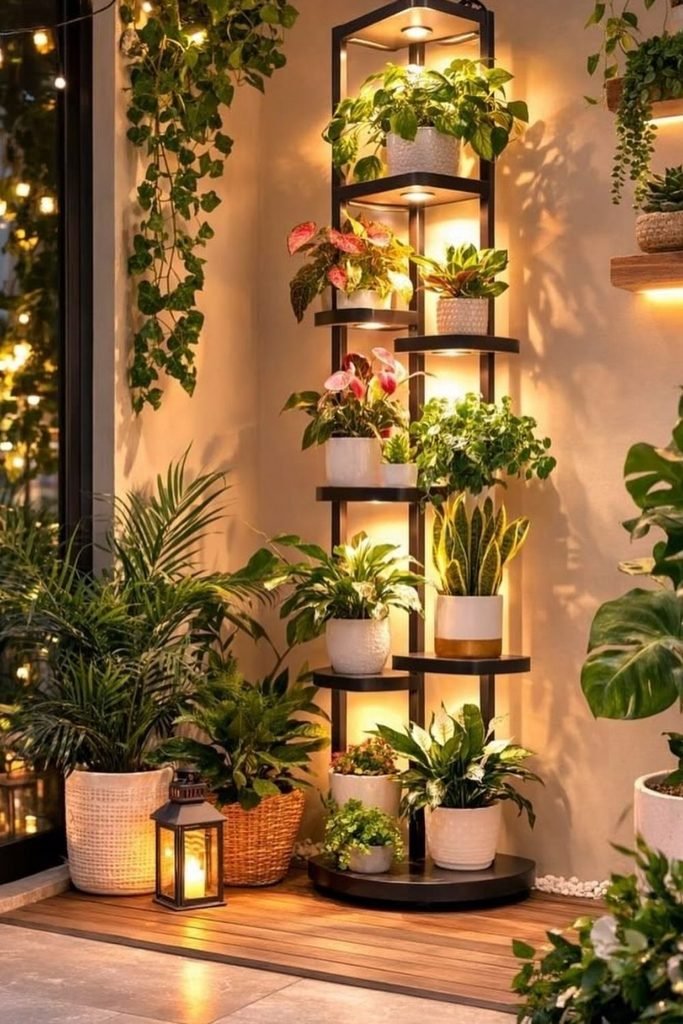
Vertical Garden
Turn a narrow indoor corner into useful growing space by stacking plants upward instead of spreading pots across the floor.
Put your snake plant on a lower or middle tier, with its upright leaves given some headroom, and then mix with softer trailing and leafy plants to break up straight lines.
A slim tiered stand is especially good next to a bright window, in a corner of the living room or at the balcony entrance.
Each plant should be in a drainage pot so that watering the display doesn’t leave roots sitting damp.
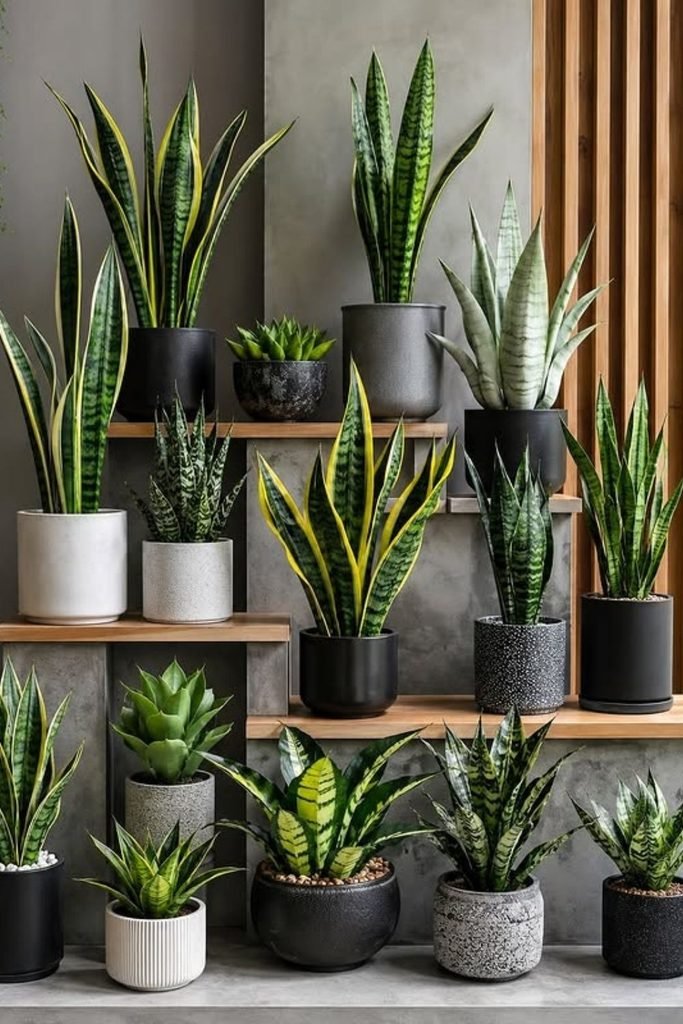
Variety Display
Mixing several snake plant varieties gives you a fuller indoor garden without relying on unrelated plants for contrast.
Use tall yellow-edged plants in the back, medium green types in the center and compact rosette variety in the front so that every plant can be seen.
This setup works especially well beside a bright window, along a bare wall or in a dedicated plant zone, using tiered shelves or low platforms.
To make the diverse leaf designs stand out but not feel busy, keep the planters within a narrow spectrum of neutral finishes.
Leave space between your pots. This way, you can simply water and check on each plant.
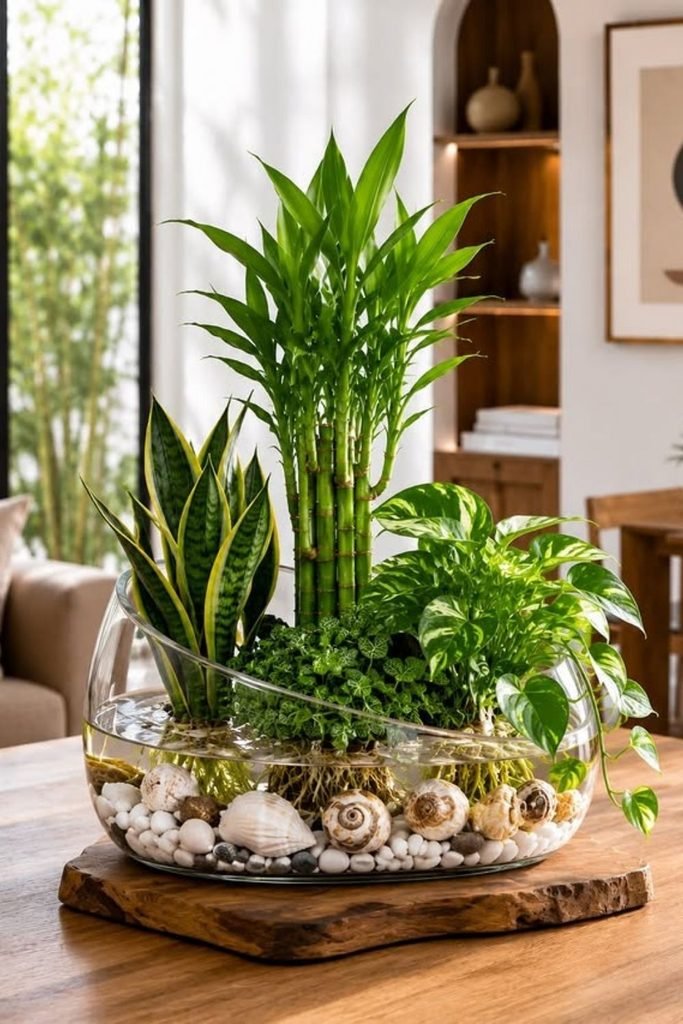
Water Garden
Bring a snake plant into a tabletop display when you want greenery to feel more decorative than a standard floor pot.
Position its rigid leave with softer trailing plants in large glass container but do not immerse the crown of snake plant, or consider it as permanent aquatic plant.
To ease the maintenance of the look, put each plant in a small hidden container just above the waterline, hiding the pots with rocks.
Set the arrangement on a dining table, console or well-lit living room surface where indirect light will reach the greenery and the glass can be part of display.
Matching Stands
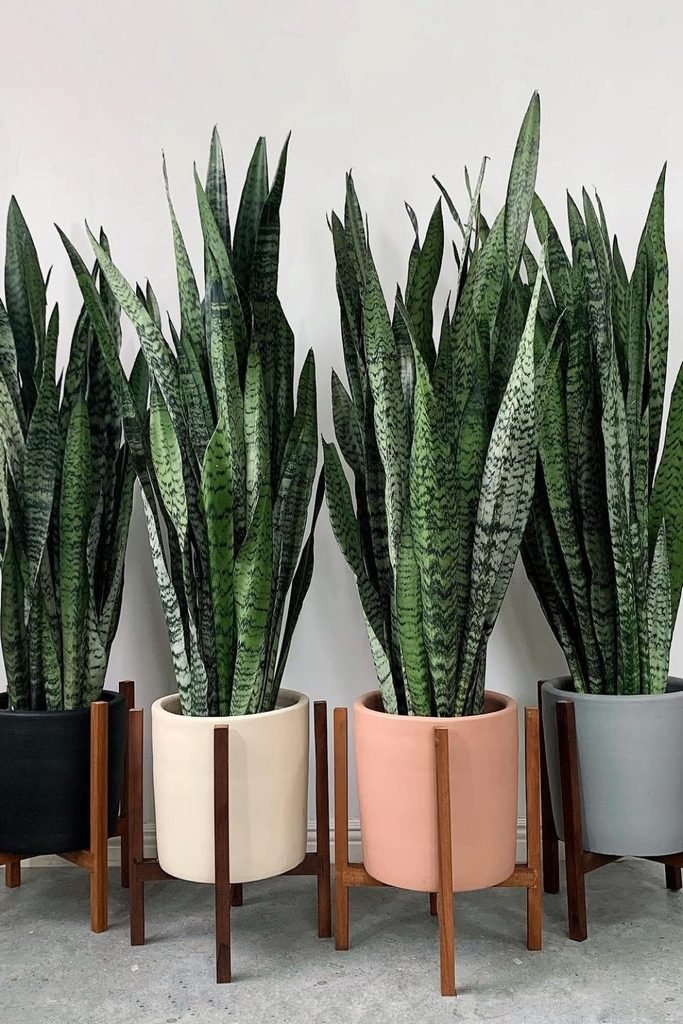
Give several tall snake plants a cleaner presence by placing them in matching wooden stands instead of lining bare pots directly across the floor.
Use the same stand design, then change the planter colors slightly so the grouping feels cohesive but not too matched.
This layout does nicely across a wide blank wall, behind a sofa or in an open living where you have enough floor width.
Wall Planters
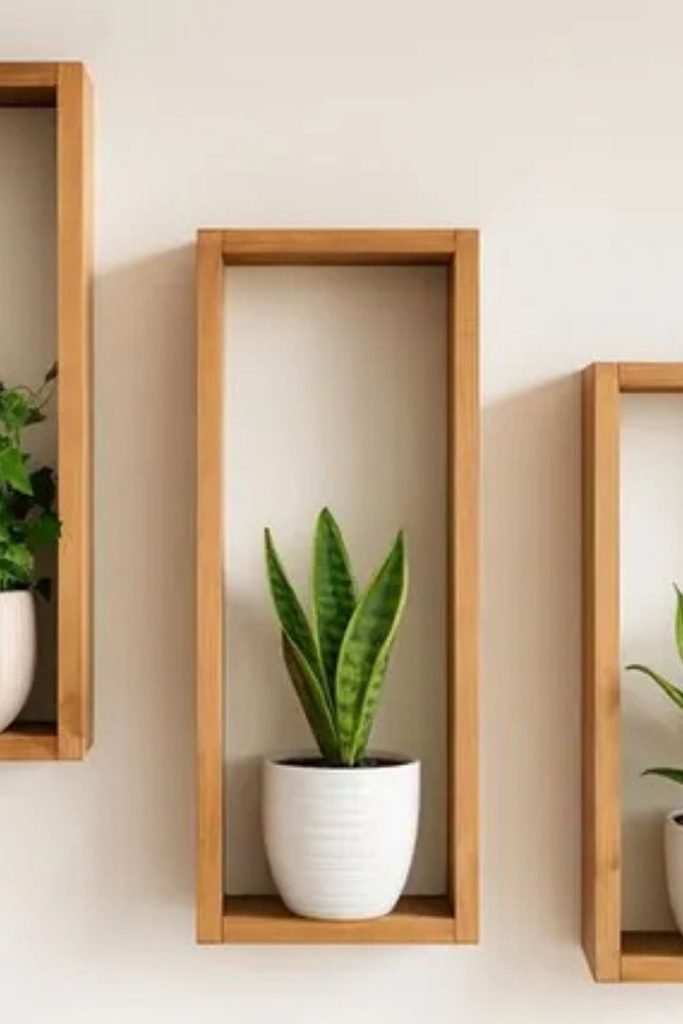
Free up your floor completely by giving smaller snake plants their own wall-mounted boxes.
Hanging them all in a straight line would seem boring. Stagger them at different heights instead.
It works particularly effectively in compact flats, home offices, narrow hallways or above furniture where additional floor pot would create clutter.
Go for compact species of snake plants that won’t overrun the frames before too long, and ensure the inner pots in each are removable for watering and drainage.
Be sure to provide room over the foliage so that fresh leaves can grow without touching the fram.
Pebble Bowls
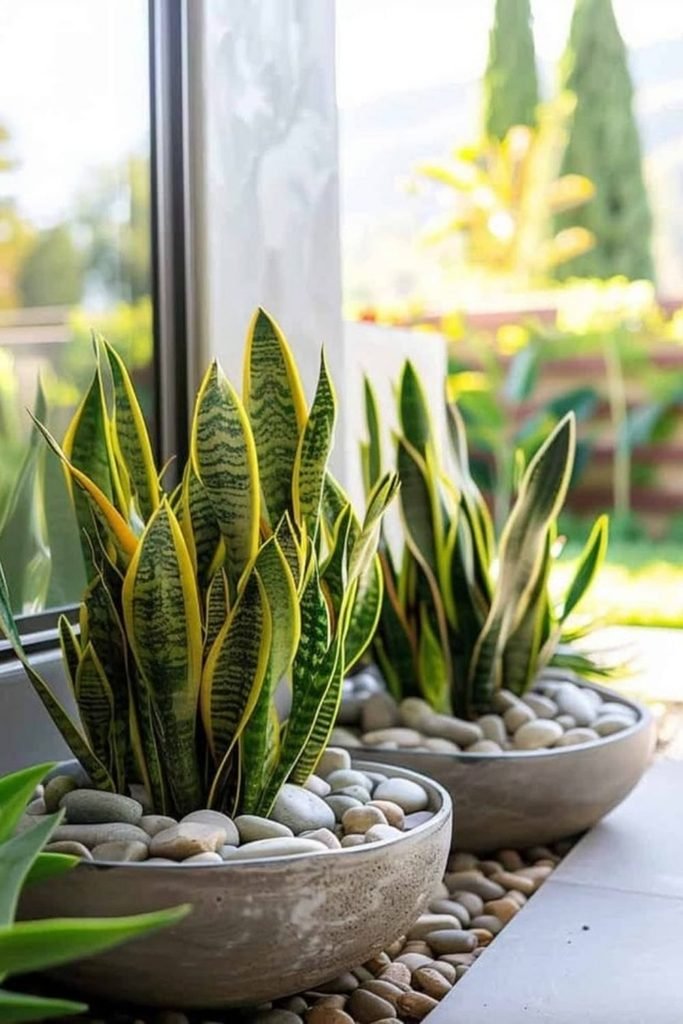
Low, wide planters can make compact snake plants feel substantial without adding another tall pot to the room.
Try this arrangement on a bright windowsill, or a deep ledge or over a long console where a few matching bowls might set an easy rhythm.
For a neater finish, cover the surface of the soil with smooth pebbles, but don’t use a thick layer, so you can still check for moisture before watering.
Instead of allowing decorative stones to cover standing water at the bottom, use pots that have drainage holes.
Space the bowls so the upright leaves have room to spread and the arrangement does not look crowded.
Statement Planter
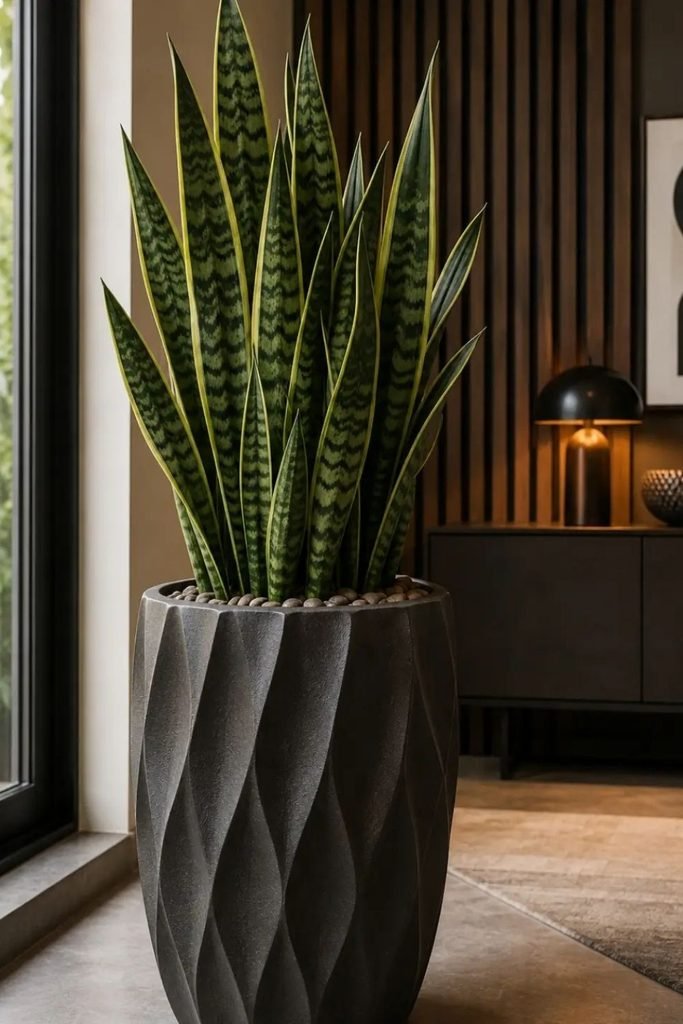
Let one mature snake plant do the work when a corner needs impact but not more objects.
Opt for a robust, heavy planter, visually proportionate to the height of the plant and heavy enough to anchor tall foliage.
This style is perfect for modern living rooms, hallways or open locations next to huge windows where smaller pots may look misplaced.
Keep the decor in the room simple, so that the striking leaf pattern and sculptural container become the focus.
If you put pebbles on the top, only a light coating, and keep the plant in well-draining soil with a drainage hole so excess water can escape easily.
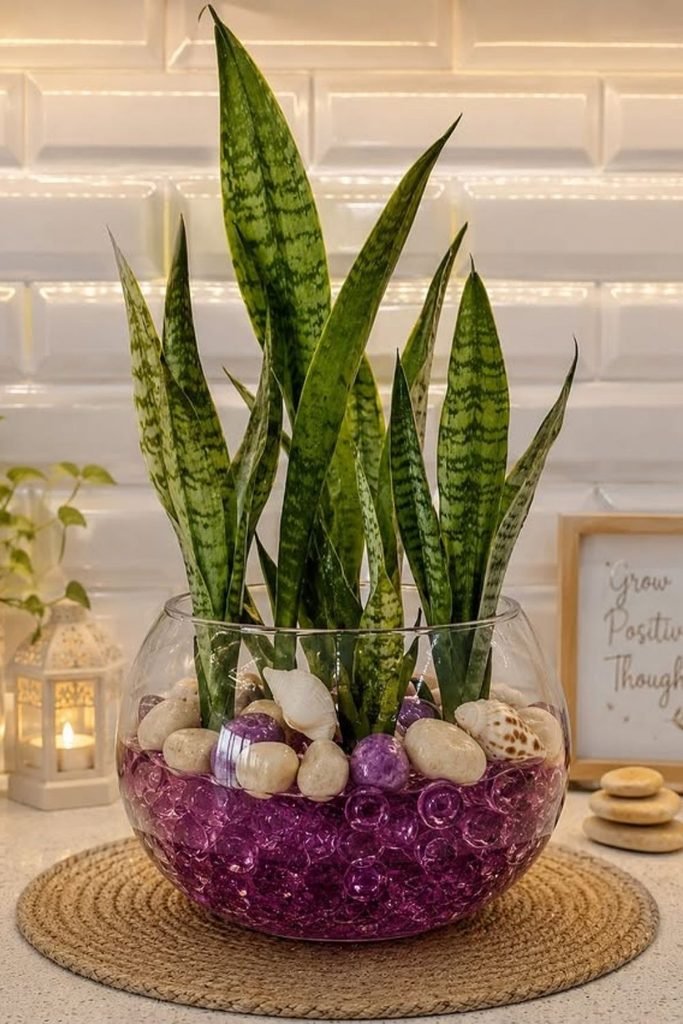
Glass Display
Use a clear bowl when you want a smaller snake plant to become part of a tabletop arrangement instead of another floor display.
Instead of planting directly into a vessel with no drainage, keep the plant itself in a hidden draining container, then surround it with attractive stones.
It goes on a kitchen counter, dining room console or a bright shelf where you can enjoy the layers inside the bowl.
Snake plants are more happier with a growing medium that can dry out between waterings, so don’t leave standing water in the root area.
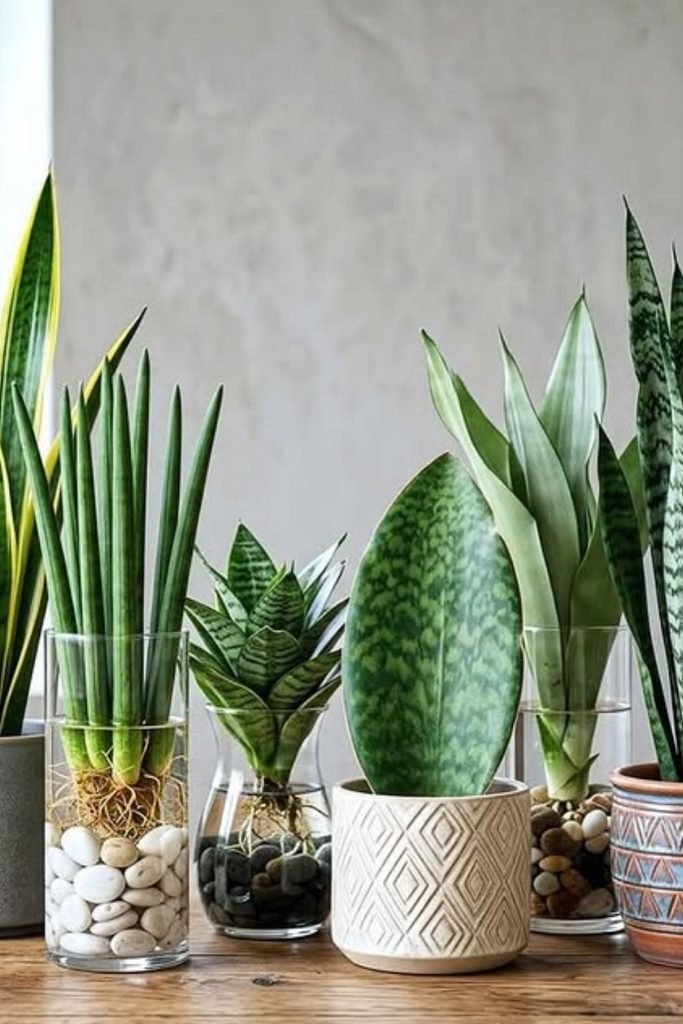
Mixed Propagation
Turn one tabletop into a small snake plant collection by combining rooted cuttings, compact varieties, and mature plants at different heights.
Water propagation is particularly good for a temporary exhibition, as glass jars let you see new roots emerge before you transplant the cuttings into soil.
Don’t submerge the leaves, just the cut end or roots in clean water and change the water regularly.
Position larger pots to the rear and smaller glass vessels to the front so that all forms are visible.
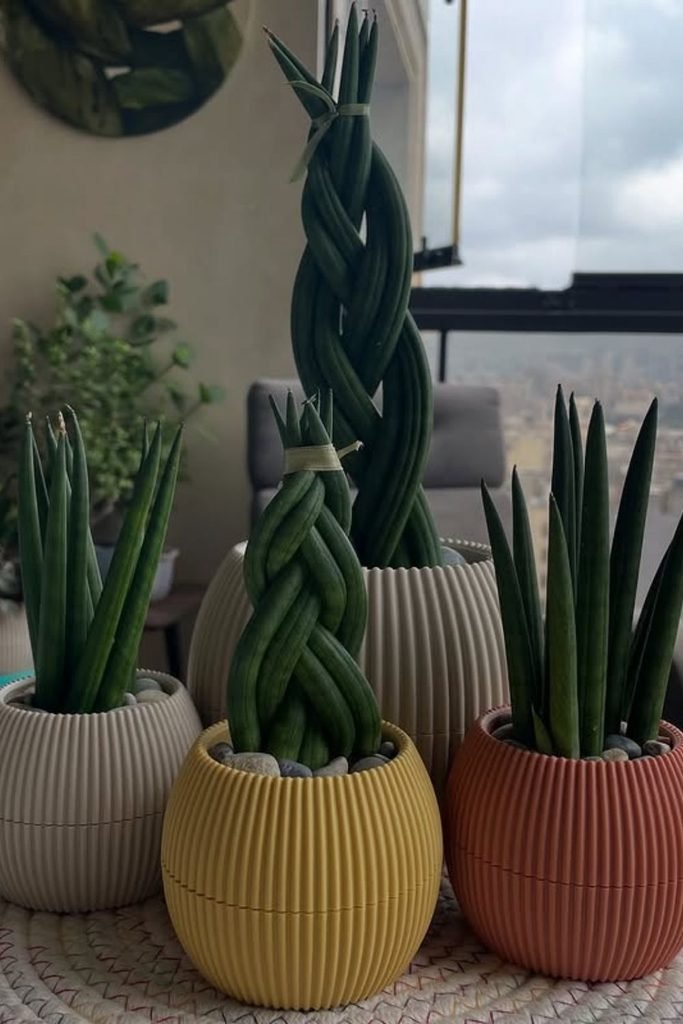
Braided Cylinders
Give cylindrical snake plants a sculptural role by gently braiding flexible young leaves as they grow.
This works best with Dracaena angolensis types, whose round leaves are much easier to train than the flat blades of common snake plants.
Start while the leaves are still flexible, braid them loosely, and use a soft tie near the top without pulling hard enough to damage the foliage.
Group one braided plant with a few naturally upright specimens on a table or bright indoor ledge to create contrast without adding unrelated décor.
Keep the pots compact and well drained, and never force stiff mature leaves into shape.
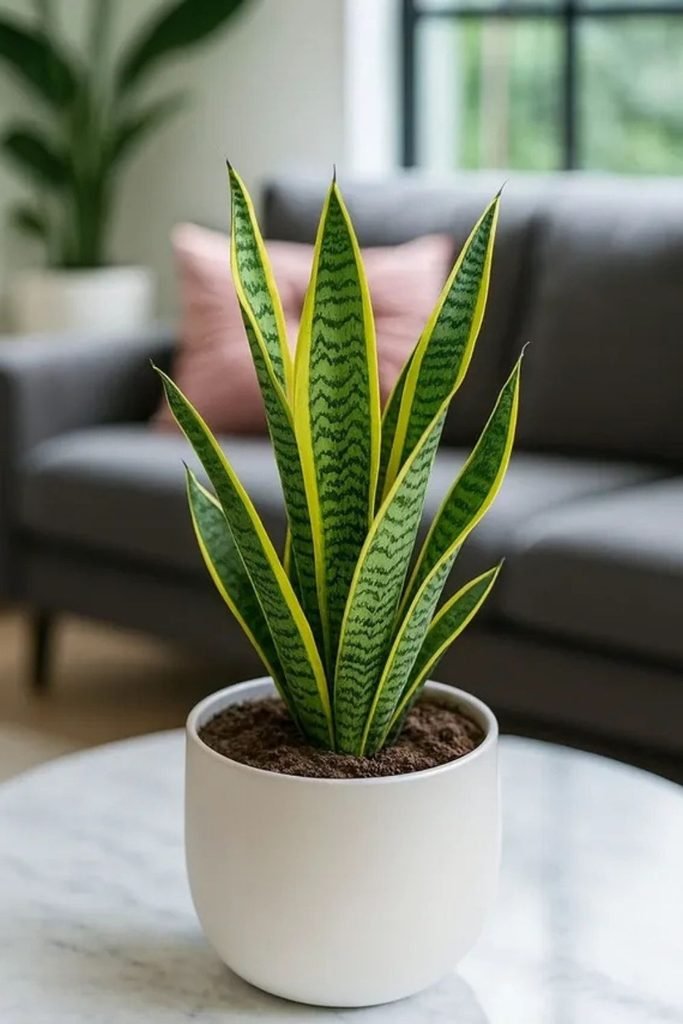
Tabletop Accent
Skip another large floor plant when your living room already has enough furniture and bring a compact snake plant onto the coffee table instead.
A simple planter keeps the upright leaves looking neat, while adding some height to the table without sprawling all over it.
But leave plenty of room around the pot for drinks, literature or ordinary use so the greenery never becomes a hindrance.
This is best done on a big coffee table next to a window where the plant gets some indirect light of use.
Select a pot with drainage holes and set it on a saucer or other protective liner to prevent watering from damaging the tabletop.
Root Display
Show off healthy root growth by using a clear vessel for a temporary water-propagation arrangement instead of hiding everything inside an opaque pot.
Snake plant cutting with trailing greenery for contrasting heights. Keep established roots or the cut base in the water.
Works great on a bright console, plant table or kitchen shelf where you can easily keep an eye on the water level.
Change the water before it becomes hazy, wipe the glass when you see algae, and pop rooted snake plant cuttings into a well-draining potting mix.
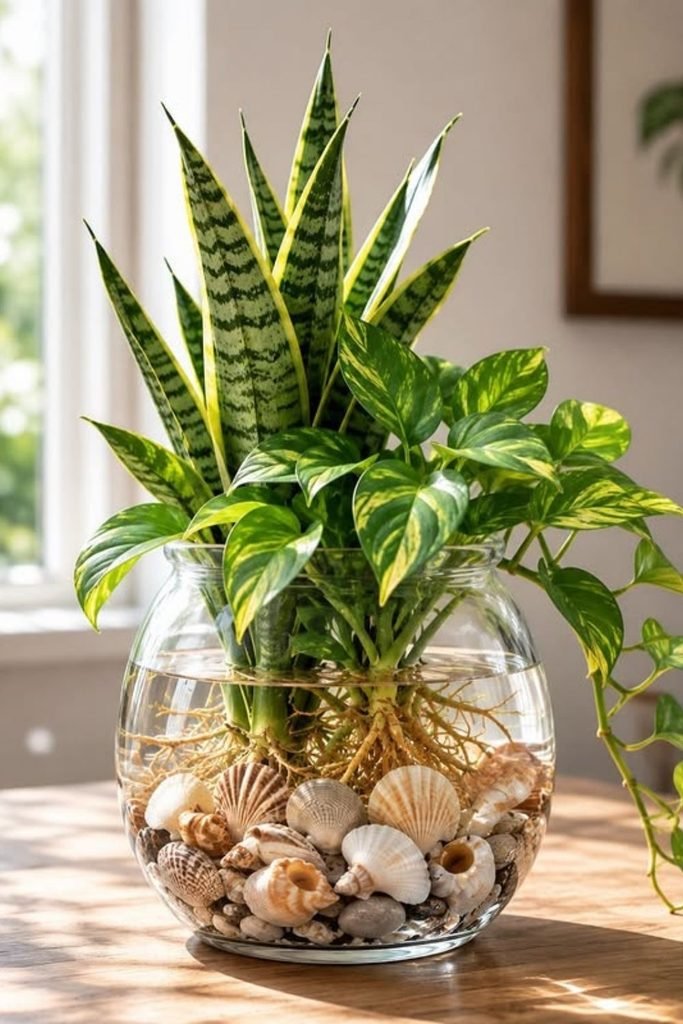
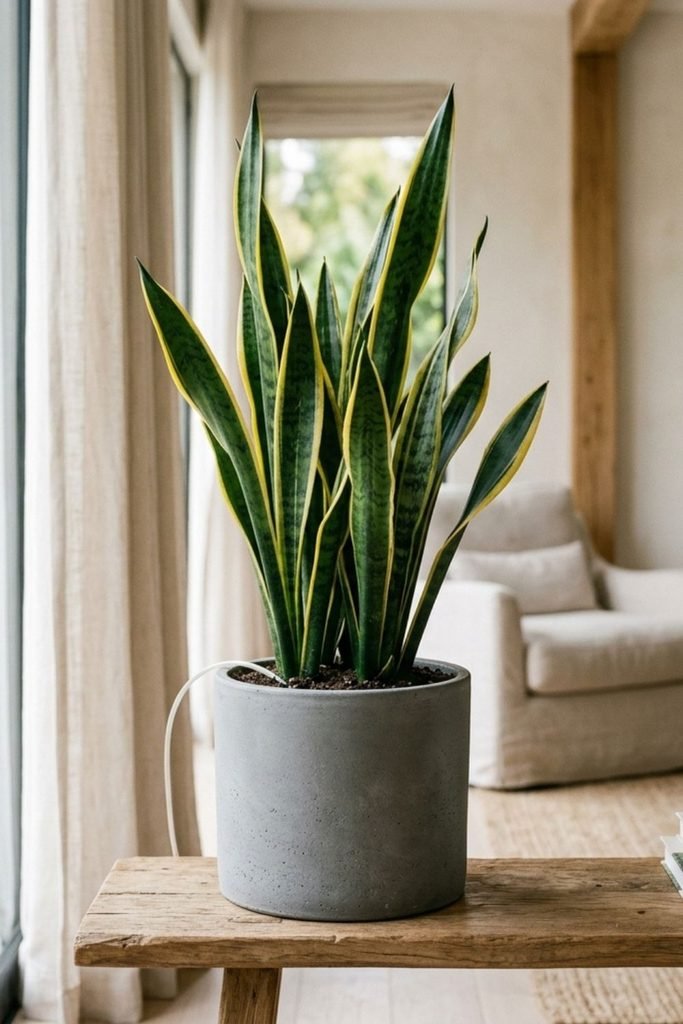
Window Accent
Move a mature snake plant closer to a bright window when you want stronger growth while still using it as part of the room décor.
A basic pot on a strong console works nicely, as the raised location brings the upright greenery nearer eye level without a number of smaller ornaments.
Set the plant back a bit from hot glass, especially if it has been growing in lower light, and increase the sun gradually to avoid leaf damage.
This is a good option for living rooms and sitting areas with a spare surface near a window.
If the growth starts to slant toward the light, rotate the pot every so often.
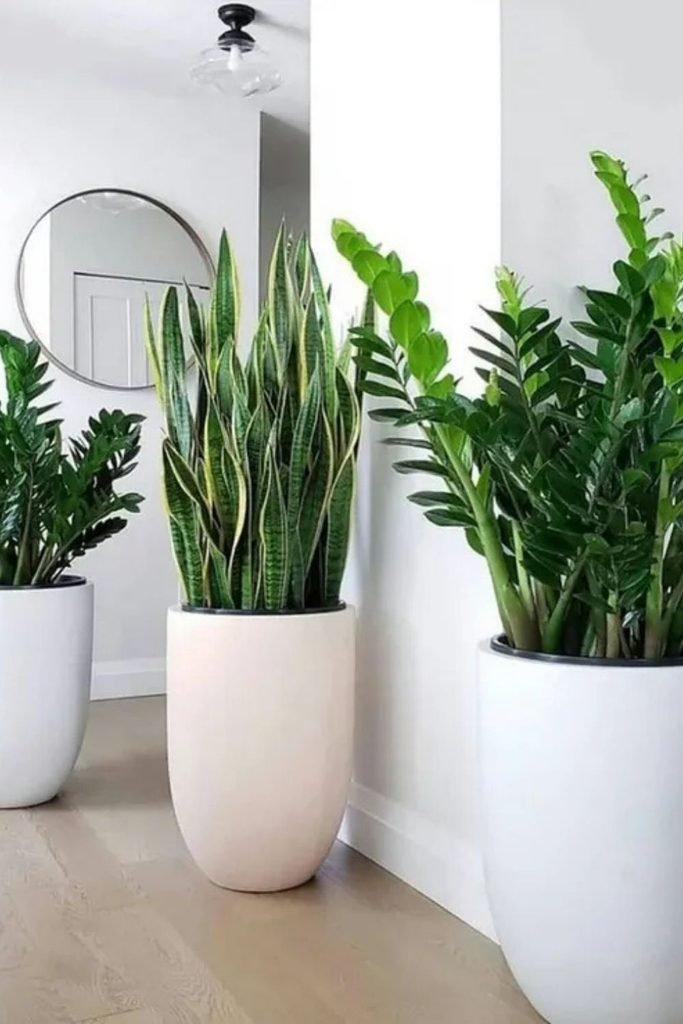
Entryway Trio
Guide guests into your home with one tall snake plant placed between fuller leafy plants instead of filling the entry with small decorations.
The pots are all the same, but the forms of the plants are different enough that the group doesn’t feel repetitious.
This works well in a broad corridor, foyer or open entry where the pots can sit against the wall without reducing the pedestrian path.
Place the snake plant so its vertical leaves are the central height, with the larger plants on either side slightly below.
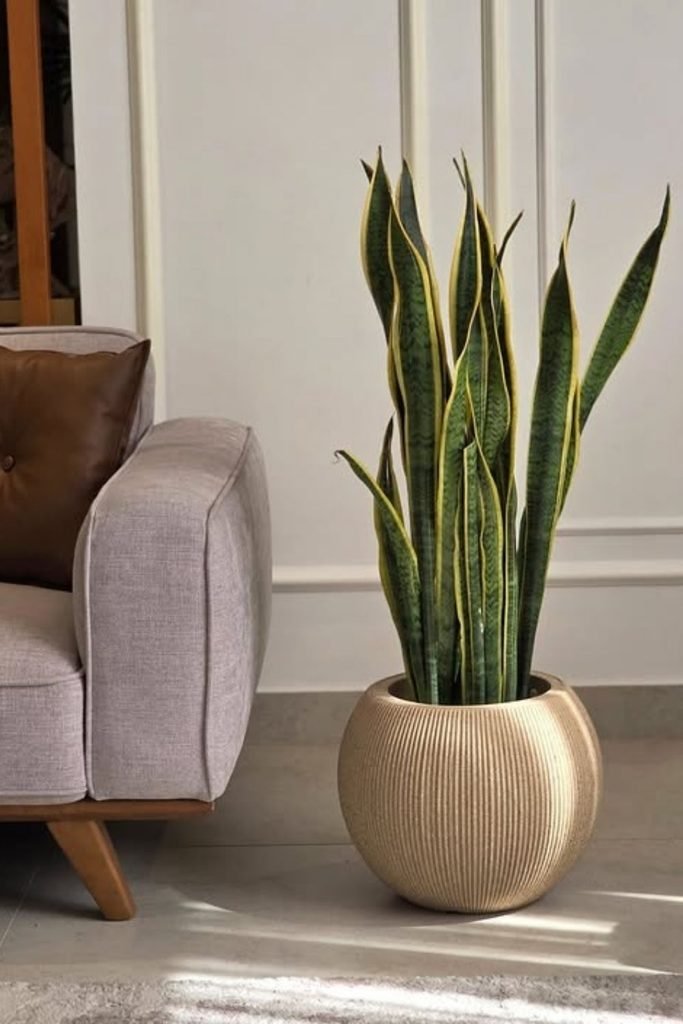
Sofa Companion
Balance the bulky shape of a sofa with one tall snake plant instead of squeezing in another side table or decorative object.
Position the planter slightly beyond the arm so the erect leaves may fill the blank wall space without invading the seated area.
This works especially well in living rooms if there is a tiny space next to the sofa, or an uncomfortable location that feels incomplete.
Select a planter that is wide and heavy enough to support mature growth, but smaller than the footprint of the sofa arm.
If there is daylight from a neighboring window, the plant can remain beautiful without being crammed into a poorly lit corner.
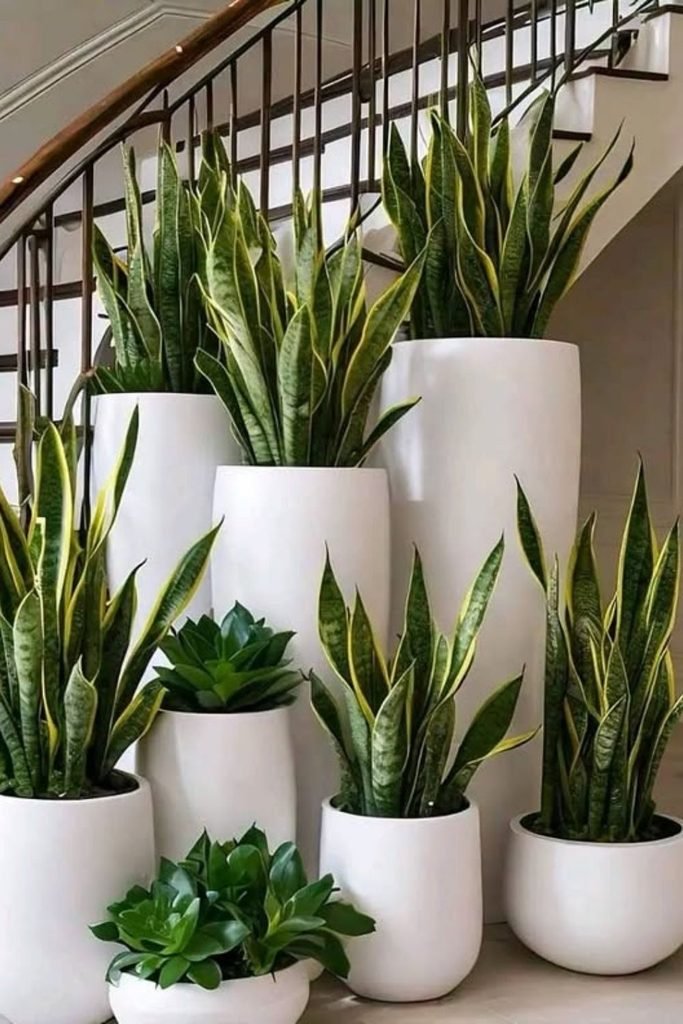
Staircase Cluster
Use the open area beside a staircase to build height in stages instead of leaving the awkward floor space empty.
Place snake plants in different sized planters with the taller ones in back and the shorter ones in front so you can see all the plants.
Matching pot colors helps keep a large collection together without it feeling busy.
Works best on a big landing or beside steps, when the setup is totally out of the pedestrian route.
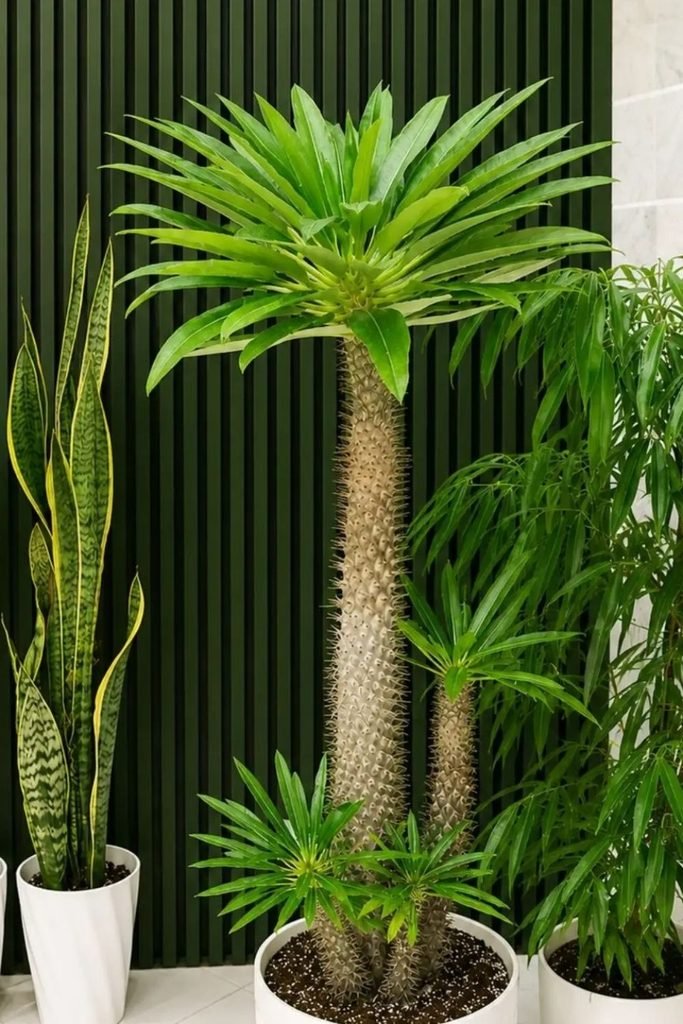
Tropical Contrast
Break up a collection of broad tropical foliage with upright snake plants so every plant does not compete at the same width and height.
Create a layered indoor garden by placing two or three snake plants down one side and letting taller branching or spreading plants occupy the other side.
This is good against a feature wall, in a sunroom, or in a huge living room corner where multiple large pots have room to breathe.
Use one planter color to visually connect the diverse plants, but don’t cluster the pots close together.
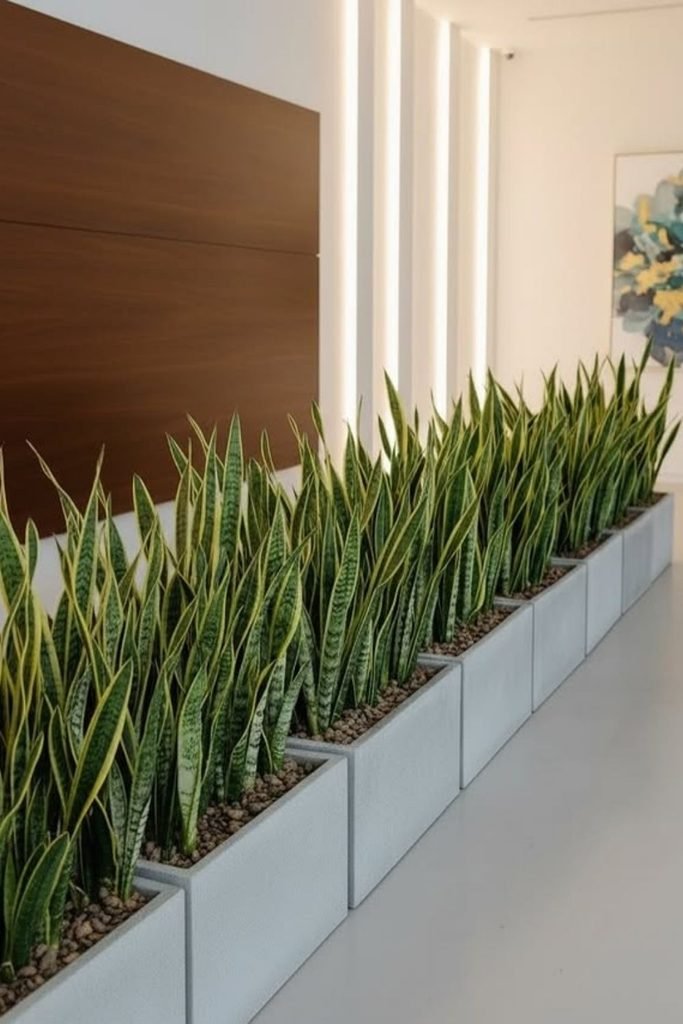
Living Divider
Separate an open room without building a solid partition by lining up snake plants in matching rectangular planters.
Their vertical leaves provide for a unique barrier, but one that retains a sense of openness, ideal for dividing living and dining areas, along long hallways.
For a more polished architectural look, keep the planter row straight and choose plants of similar height.
Allow sufficient space on either side for people to pass comfortably, and ensure that good light reaches the entire row, not just the plants close to a window.
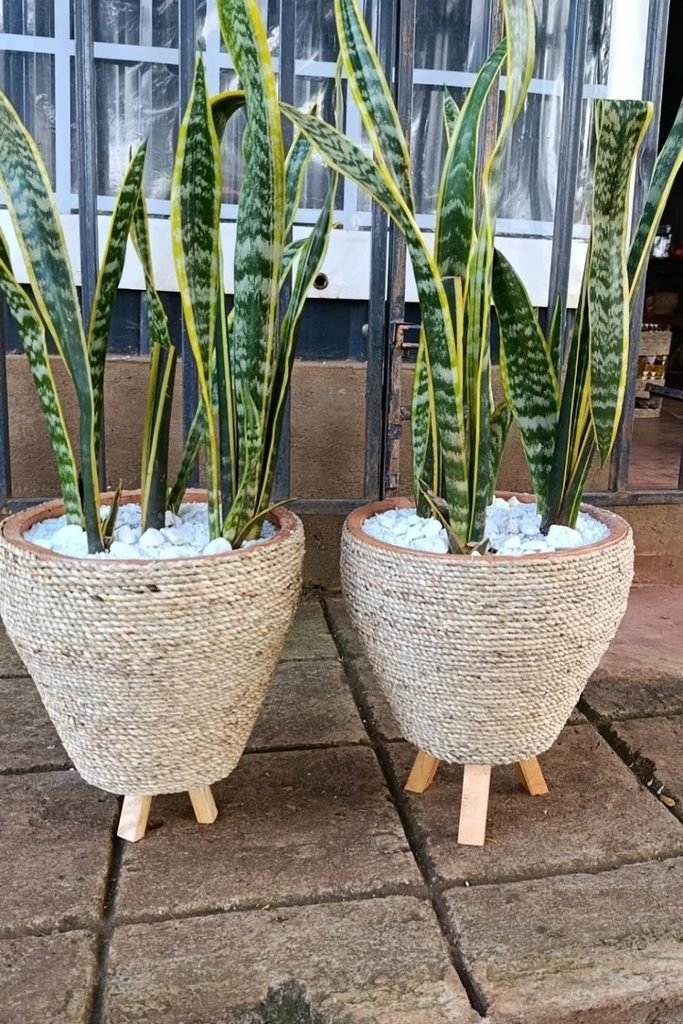
Basket Pair
Soften the sharp upright leaves of mature snake plants by placing them inside woven basket-style covers with short wooden legs.
Using two matching planters works especially well beside an entry, near a bright patio door, or across a wide indoor corner.
Keep the plants in separate draining inner pots rather than planting directly into baskets, since trapped water can quickly create root problems.
A thin layer of pale stones can hide exposed soil, but leave enough access to check moisture before watering.
Position the pair slightly apart so each plant keep its own shape instead of forming one heavy block of foliage.
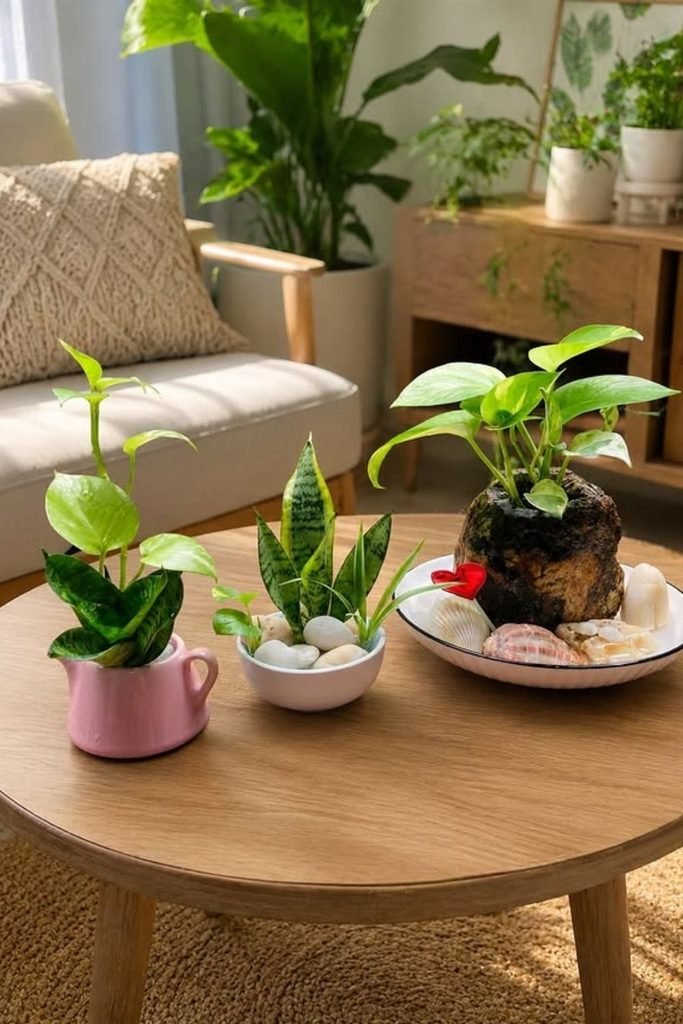
Mini Garden
Bring snake plants onto a coffee table by choosing a compact variety that stays proportional to the smaller surface.
You can place the snake plant’s drained nursery pot in a shallow decorative bowl filled with pebbles for a finished effect.
This approach works nicely in cozy living rooms where the floor area is already taken by furniture.
Try to keep the grouping to one side of the table so you still have enough of useful space for your day to day goods.
Reading Corner
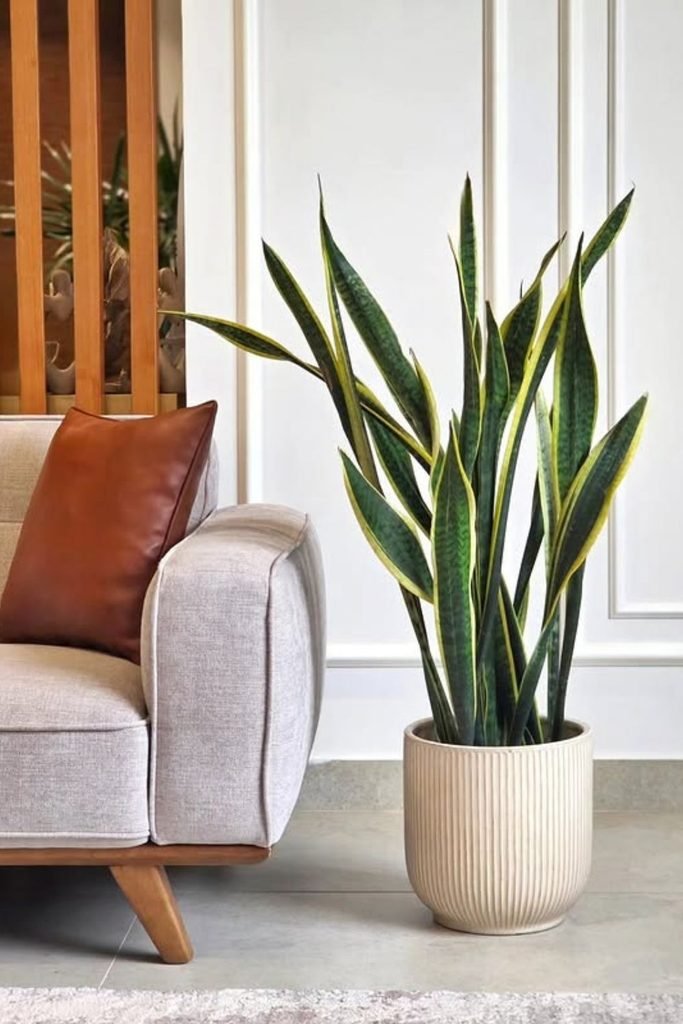
Fill the open space beside an armchair with one tall snake plant when you want the seating area to feel finished without adding another table or lamp.
For height, let the plant extend a little above the chair arm, but keep its footprint on the floor minimal.
A narrow textured planter is a good choice here, giving detail without clashing with the foliage.
Make sure there is room for people to sit comfortably between the chair and plant, and not brush the leaves.
FAQs
Where Should I Place Snake Plants Indoors?
Choose a spot with bright, indirect light if you want stronger, healthier growth.
Living room corners, beside sofas, near windows, entryways, and home offices can all work well.
Keep the pot away from constantly wet areas and make sure it does not block your normal walking path.
How Can I Make Snake Plants Look Better?
Match the plant’s height to the space instead of adding more decorations around it.
Tall snake plants work well in floor planters, while compact varieties suit shelves and tables.
Use simple pots, leave some open space around the leaves, and group plants with different shapes only when you have enough room.
