
23 Pothos Plant Ideas for 2026
When you took your pothos home, it appeared full and fresh but now a few vines are growing longer and the top of the pot seems almost empty.
Or maybe you have a healthy plant, but you don’t know what to do with vines that are forever reaching the floor.
Either condition can make a healthy pothos look scraggly rather than luxuriant.
A little pruning, improved placement, clever training of vines, and a few rooted cuttings can transform how your pothos fills a space.
In this article, you’ll find 23 Pothos Plant Ideas to help you create a fuller, better-shaped display that actually works in your home.
Let’s jump in!
How Can I Make My Pothos Look More Full?
If you have a few long vines on your pothos but the top is otherwise empty, letting those vines become longer will not make the pot fuller.
Cut the longest healthy vines just above a node and utilize those cuttings to create new plants.
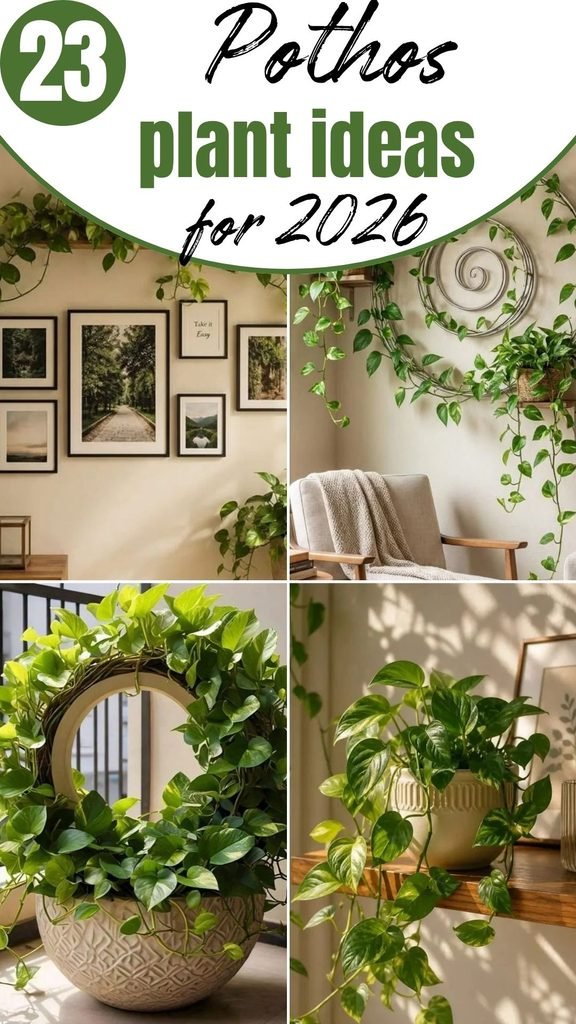
When they have developed roots, plant a few back into the empty spaces in the same container.
More stems means more leaves coming from the base giving you that fuller look you want! Light matters as well.
Gallery Vines
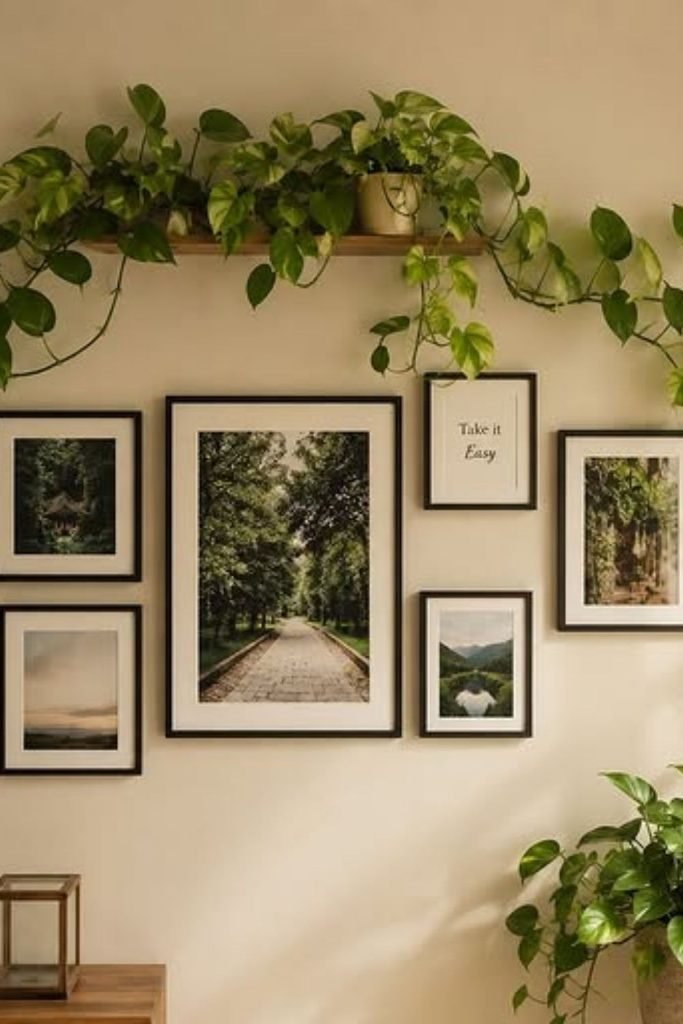
Turn an empty picture wall into a living feature by letting long pothos vines travel around your framed art instead of cutting them back.
Place the mother pots on a high shelf where they will get bright, indirect light, then train distinct vines down each side with little retractable plant clips.
Space the stems away from the frames sufficiently to keep the arrangement tidy, not a mess.
If this happens root a few healthy cuttings and place them back in the original pots to build up some fullness at the shelf.
Spiral Trellis
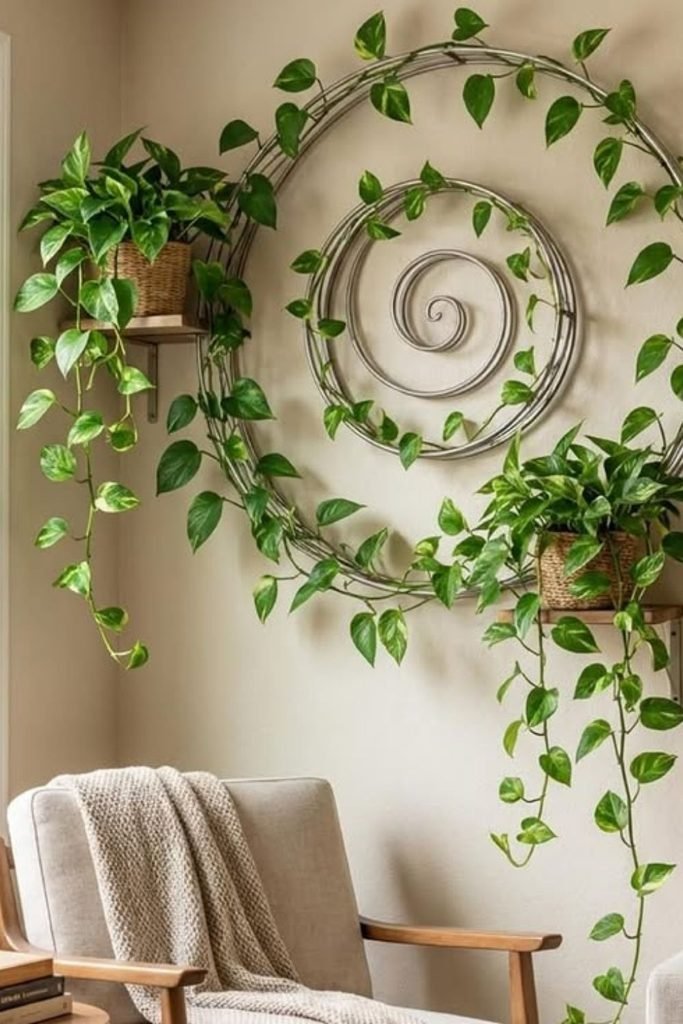
Give long pothos vines a clear path to follow by training them around a large spiral trellis instead of letting every stem hang downward.
Place the support on a bright wall in the living room or reading corner and put pots near opposite portions so that the vines can progressively cover the frame.
Train new growth loosely around the metal rings, but do not aggressively bend the stems.
Having the pots close at hand also makes watering, trimming and guiding new growth much easier.
Hoop Training
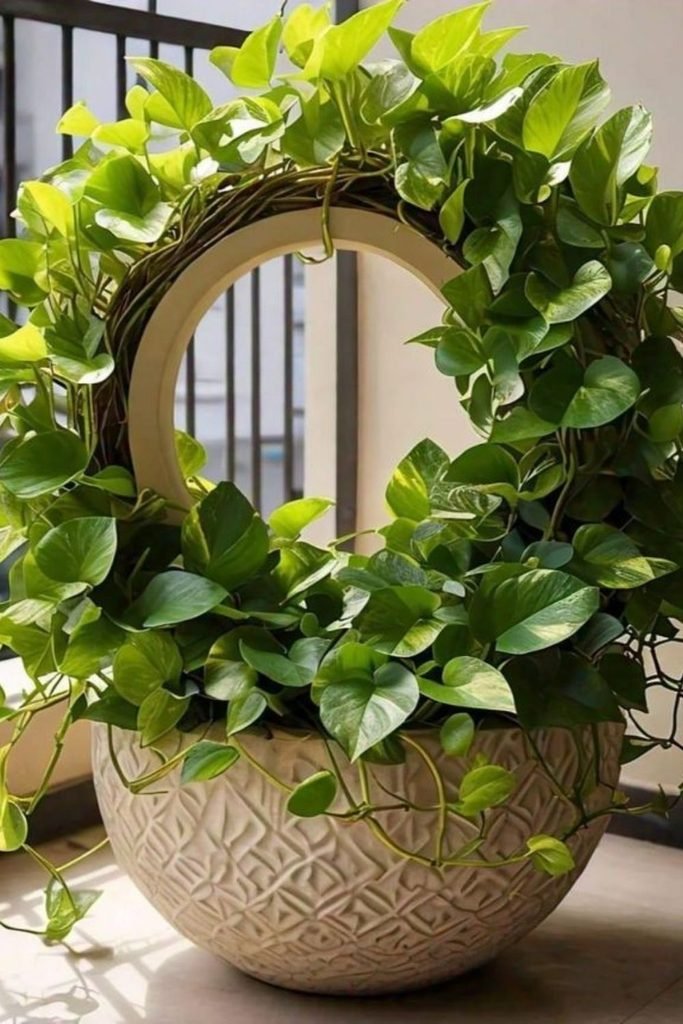
Instead of cutting healthy vines once they become long, wrap them loosely around a sturdy hoop support to build height and fullness in the same pot.
Place the planter in a bright spot with filtered or indirect light, and train flexible stems to cascade over the frame.
Plant many rooted cuttings together at the base to fill in gaps and maintain the planting full, not vine heavy.
Don’t pull the stems too tightly around the hoop, soft curves protect the nodes and make it easy to redirect future growth.
Shelf Cascade
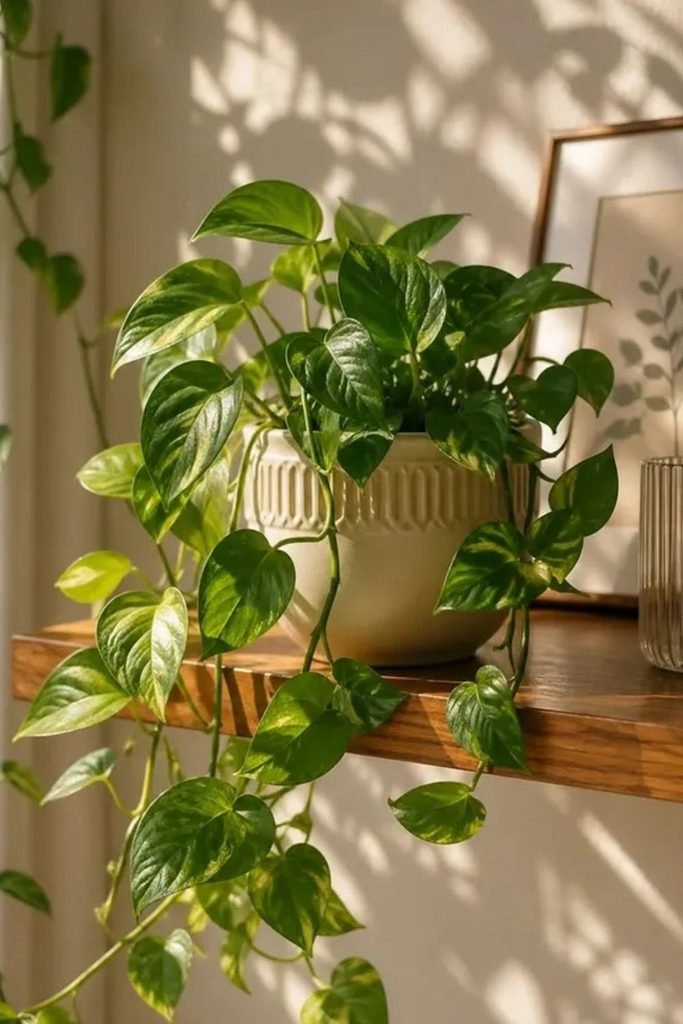
Small shelves can handle plenty of greenery when you let the vines use the empty space below instead of crowding the surface with several pots.
Choose a healthy pothos, with more than one stem, and place it somewhere with bright, indirect light, near a window.
Let the strongest vines grow on their own across the front and sides, snipping off any growth that might get tangled up with neighboring decor.
If you want a thicker cascade over time root a few pruned pieces and put them back into gaps around the edge of the pot.
Water Tower
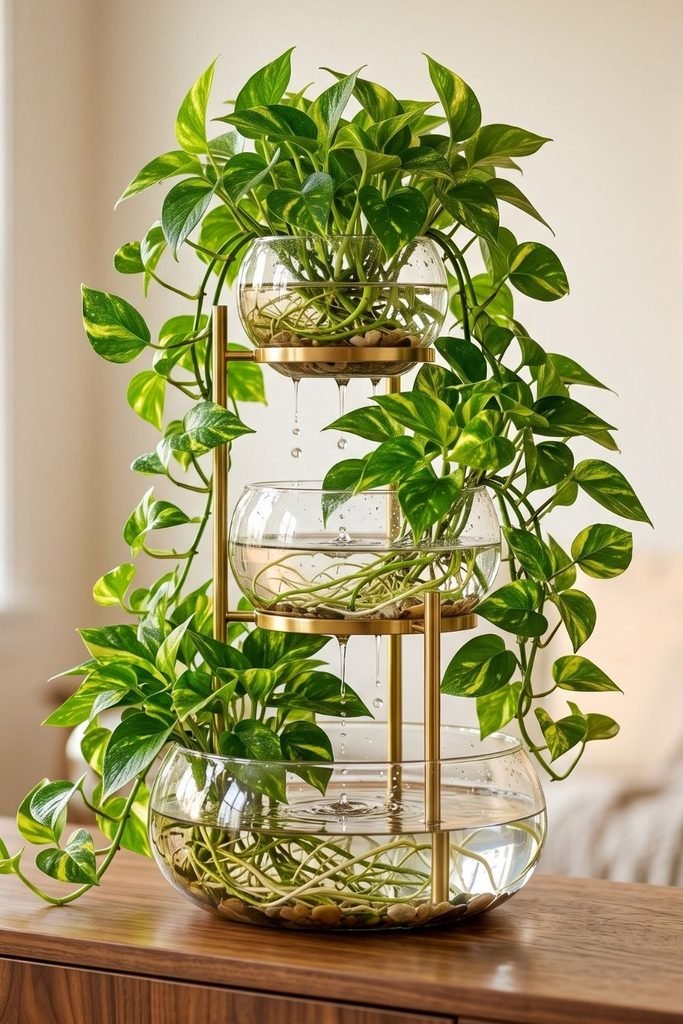
Skip traditional soil pots when you want pothos greenery to double as a decorative centerpiece.
Root good cuttings in transparent bowls filled with water and place upright on a tiered stand.
Leave enough space on each level for the vines to sprawl out. Transparent containers make it simple to observe the development of the roots.
And monitor the level of water, which works particularly well on a light console, sideboard or plant table
Bamboo Grid
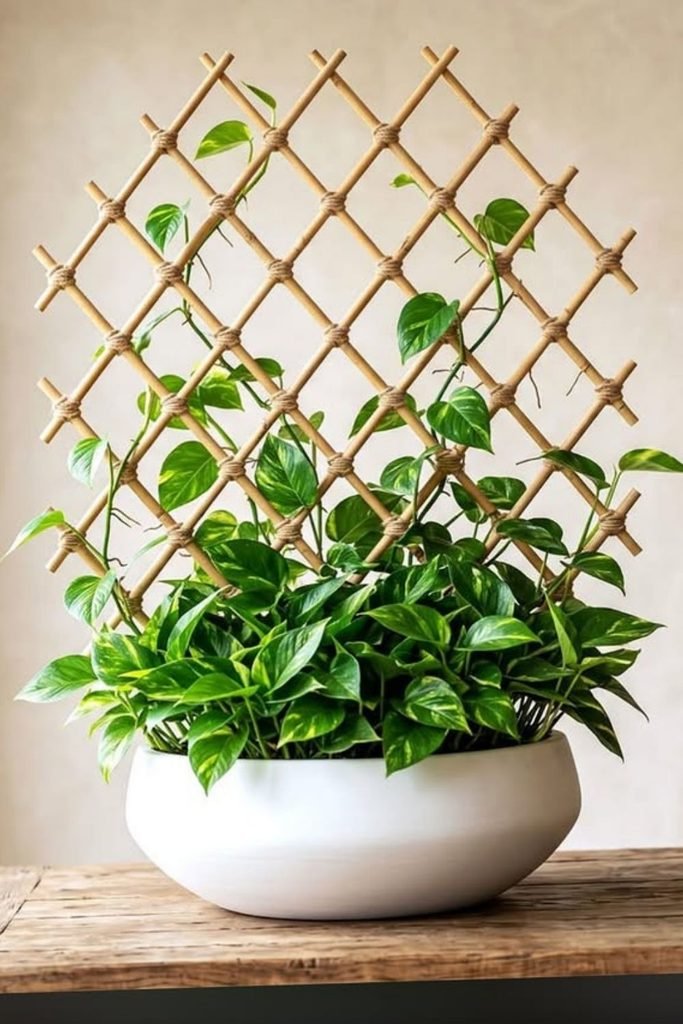
Encourage your pothos to grow upward without using a bulky moss pole by adding a simple bamboo grid behind the planter.
Spread the strongest vines across different sections of the lattice and loosely secure them until they begin following the support naturally.
Wider planters work especially well here because several rooted cuttings can grow from the base while separate stems climb in different directions.
Set the arrangement against a plain wall or on a console where the expanding foliage has room to spread, and redirect new vines early.
Branch Support
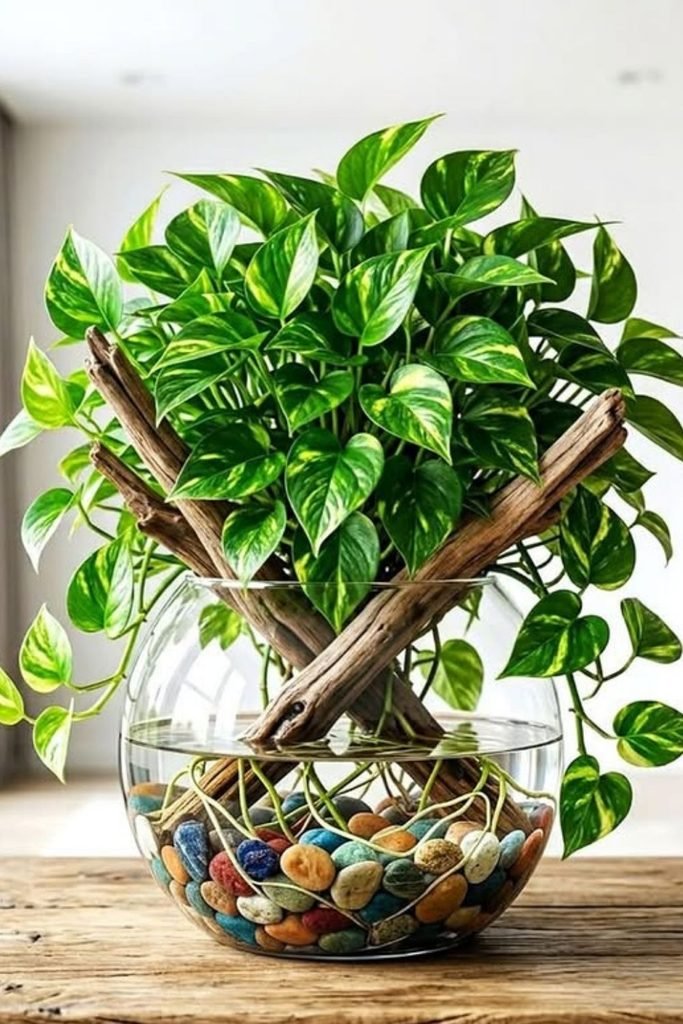
Bring a more natural structure into water-grown pothos by using sturdy branches as supports for the upper growth.
Cut some nodes and place them in a wide glass container with the roots submerged, and the leaves above the water.
Insert a clean branch through the center so that the vines can lean against it as they get longer.
Pebbles can help stabilize the base, but don’t pack them so close that there’s no room for roots to spread.
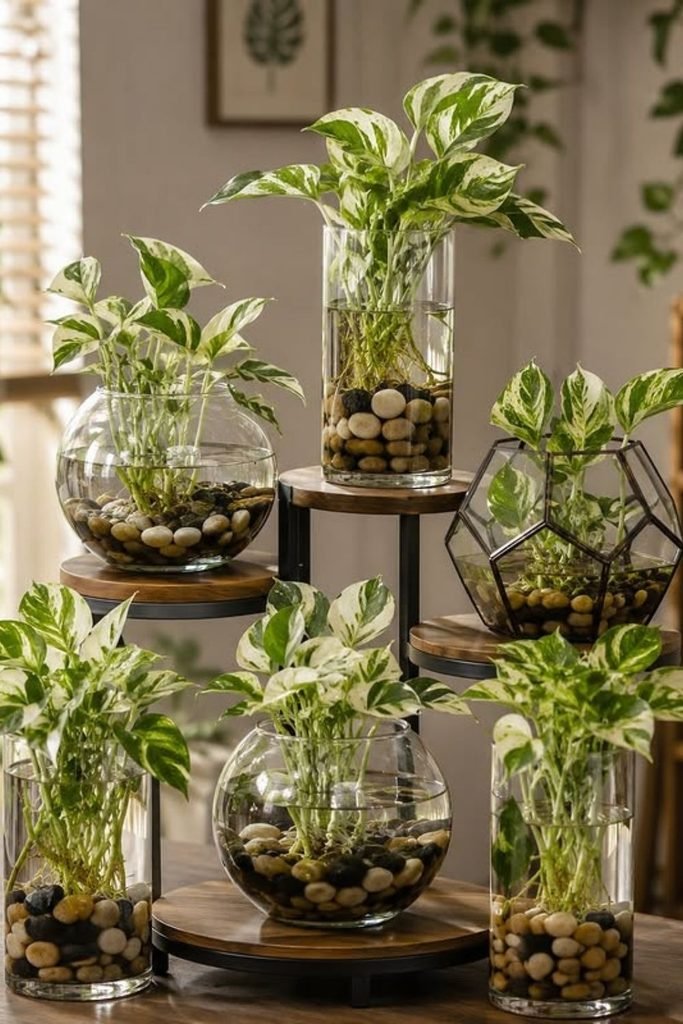
Cutting Collection
One overgrown pothos can give you enough cuttings to build an entire tabletop plant collection.
Place various cuttings in a variety of clear vessels so that each vessel develops into a fuller cluster and doesn’t merely support a single stem.
Mix tall, round and geometric containers to offer variation without needing separate plants.
Maintain the collection in bright, indirect light and water often so you may enjoy the roots as well as the colorful foliage above.
Stairway Trails
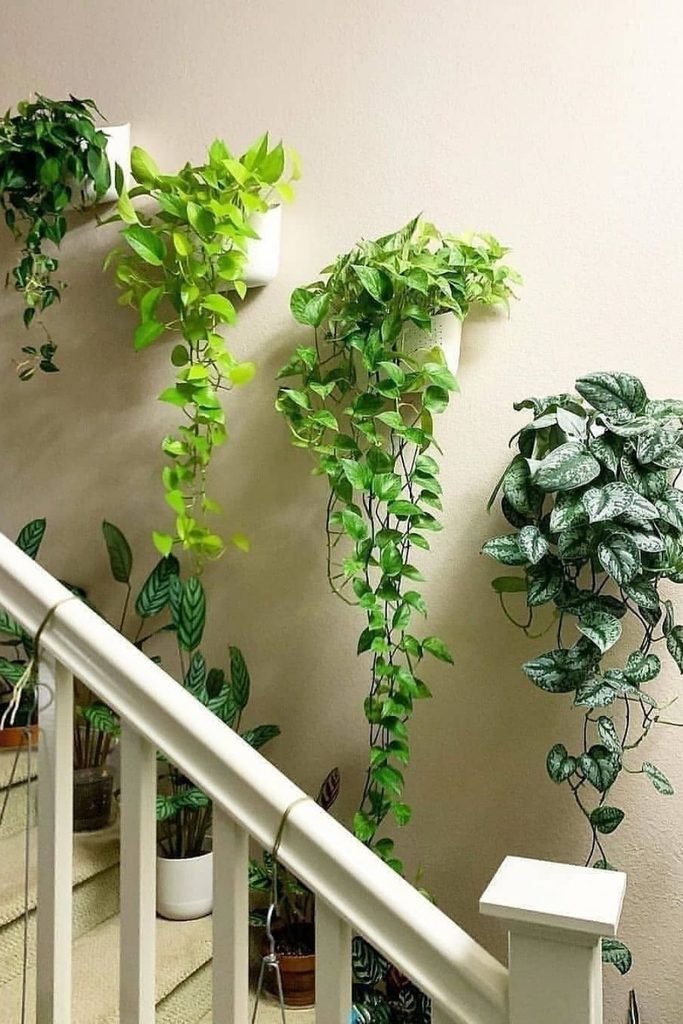
Use the tall blank wall beside a staircase to display pothos where its natural trailing habit has plenty of room to develop.
Mix fuller, longer-growing plants with vines that cascade at varied lengths, and mount pots at varying heights rather than in a straight line.
Make sure all pots are on a stable surface and easily accessible for watering.
Also, picking out a few types of pothos that come in varied leaf colors will help to keep the wall from being monotonous.
Give each plant lots of bright, indirect light and prune any vines that start to interfere with the handrail or walking space.
Driftwood Climber
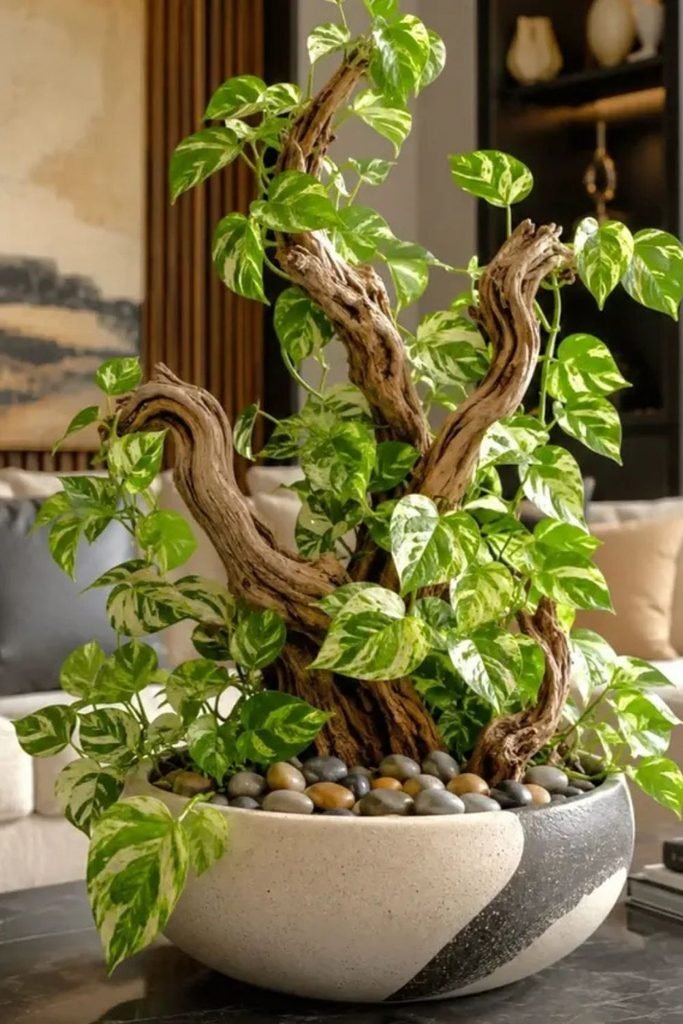
Give a tabletop pothos the structure of a miniature tree by guiding its vines around pieces of twisted driftwood.
Secure many branches strongly before training flexible stems up and around the natural curves.
Pebbles over the soil will give a cleaner finish, but keep them loose enough to check moisture underneath before watering.
Position the arrangement where it can be observed from various angles, e.g. on a living-room table or console, and turn the pot occasionally.
Rustic Climber
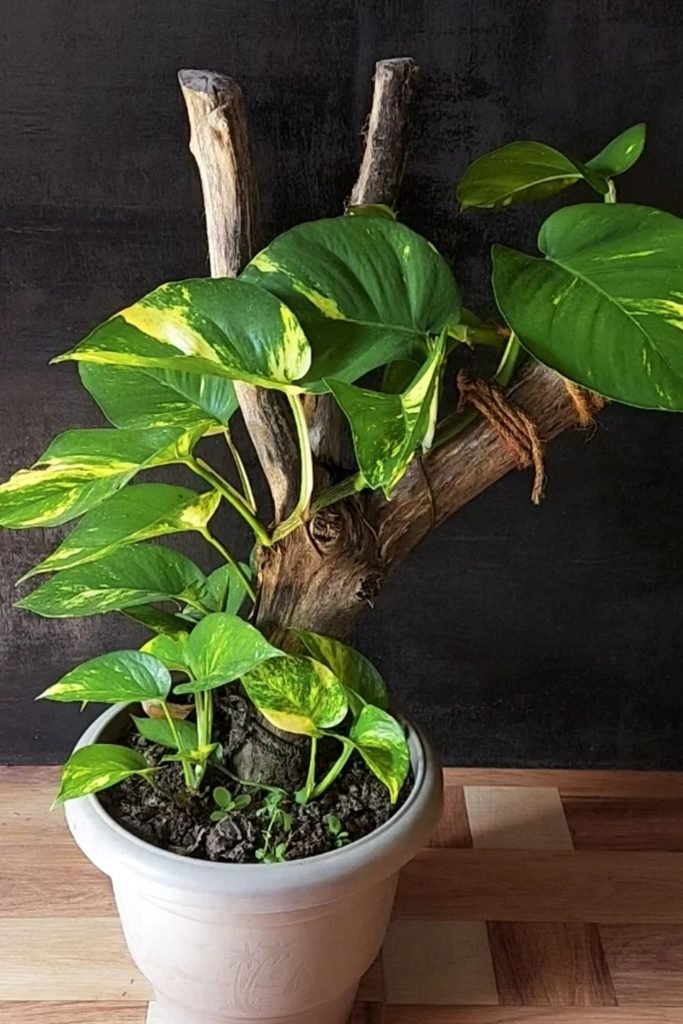
Turn a young pothos into a compact upright plant by giving its vines a thick natural branch to climb from the start.
Put a robust piece of untreated wood well into the container and lead young stems down different sides, lightly tying them with soft plant ties.
Early training works especially well on tables, consoles or tiny corners where long trailing vines would be in the way.
Keep new growth directed up as it appears, avoiding tying directly around leaves or tightening stems against the wood.
Propagation Rack
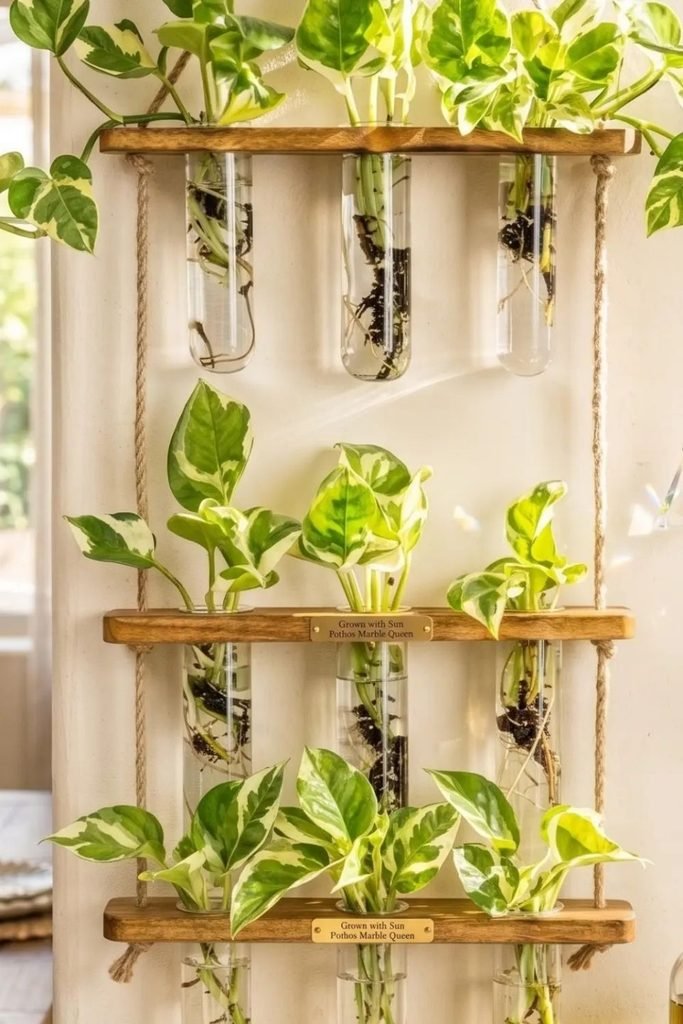
Turn fresh pothos cuttings into a wall display while they develop roots instead of hiding jars around the house.
Place narrow glass tubes in a small hanging wooden rack and put one or two node cuttings in each tube with the node just below the water line.
The cuttings are staggered in size so that each leaf can be seen and new roots can be grown.
If propagating a pothos that has a lot of variegation, place the rack in bright, indirect light.
Living Arch
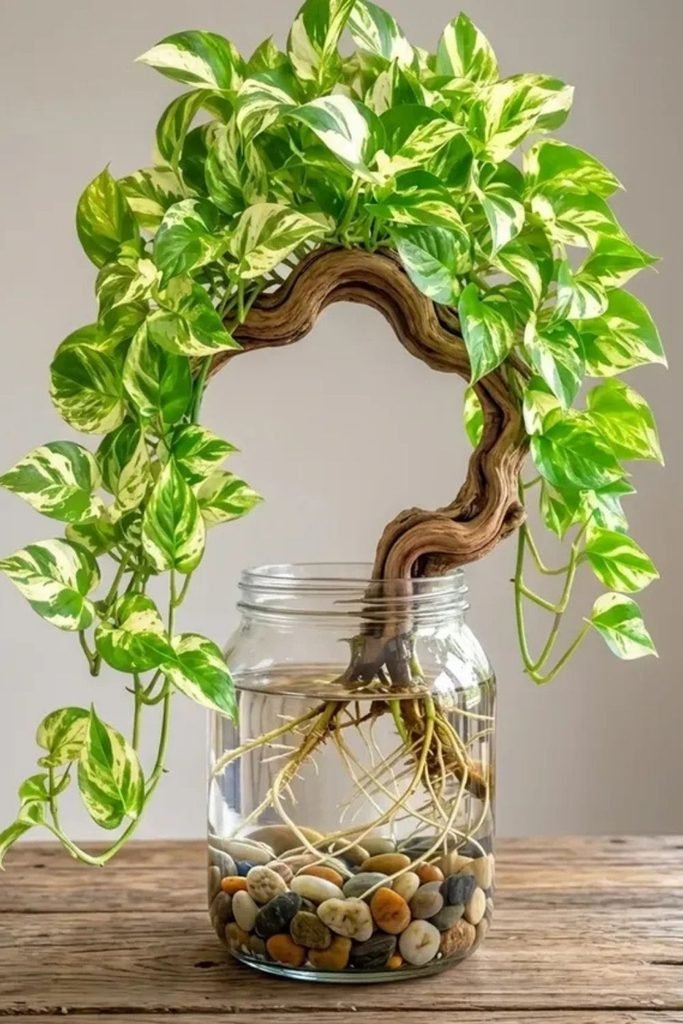
Long pothos vines can become part of the structure instead of simply hanging below the container.
Place a curving piece of driftwood firmly into a wide glass jar, drape several vines over the arch so that leaves collect across the top and a few stems.
This is especially handy if used as a table or console centerpiece, since you can keep the roots visible in water.
maintain submerged nodes and roots covered, change water periodically and maintain most leaves above the water line, where they have space to spread.
Kitchen Arch
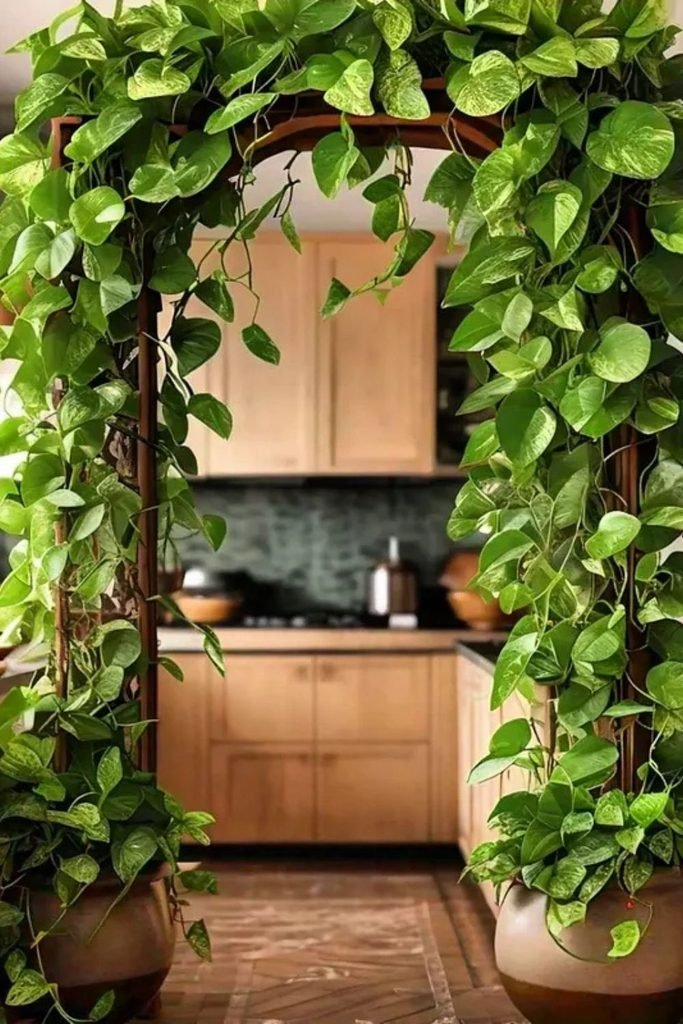
Frame a wide kitchen entrance with pothos when you want greenery to define the doorway with out taking up counter space.
Position full pots on both sides of a solid freestanding arch and train the longest vines upward until growth from each side start to meet across the top.
Instead of leaving the frame barren, put multiple rooted cuttings into a pot for better coverage at the base.
Keep trailing stems off the walking path and cut or guide new growth before it gets all knotted up around the structure.
Bedroom Column
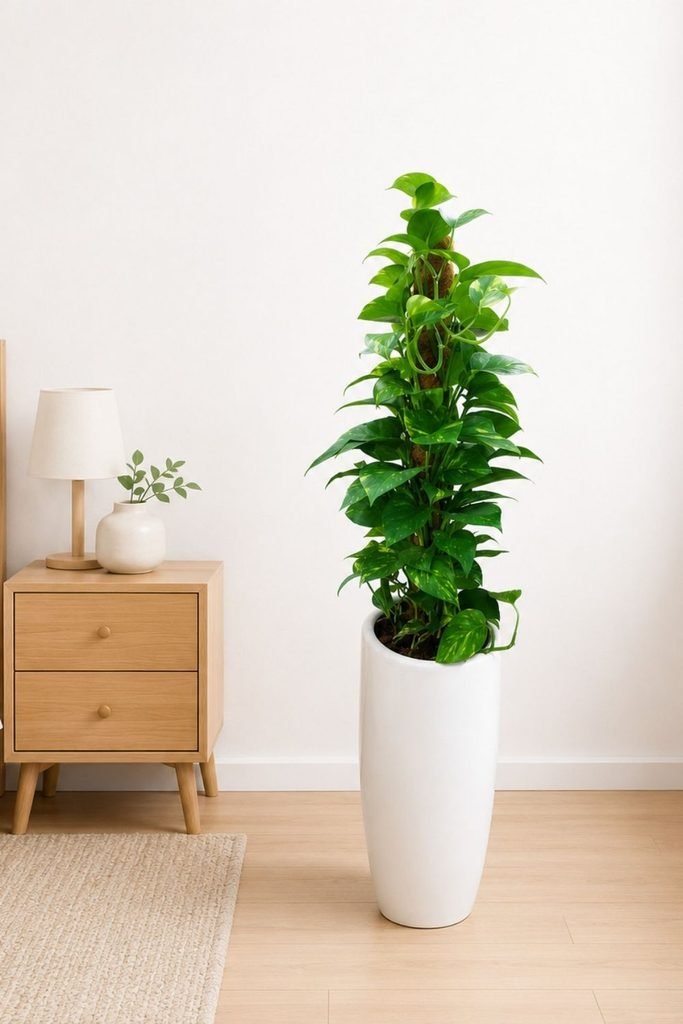
Fill a narrow bedroom corner with greenery by training pothos vertically instead of letting its vines spread across the floor.
Arrange a number of rooted stems around a tall central support and direct new growth upwards as it forms, covering bare areas from different sides.
It’s also a narrow floor planter, so it won’t take up much space and may easily sit next to a nightstand, dresser or bright window.
Turn the planter around every couple of weeks, so the leaves don’t all lean toward one light source.
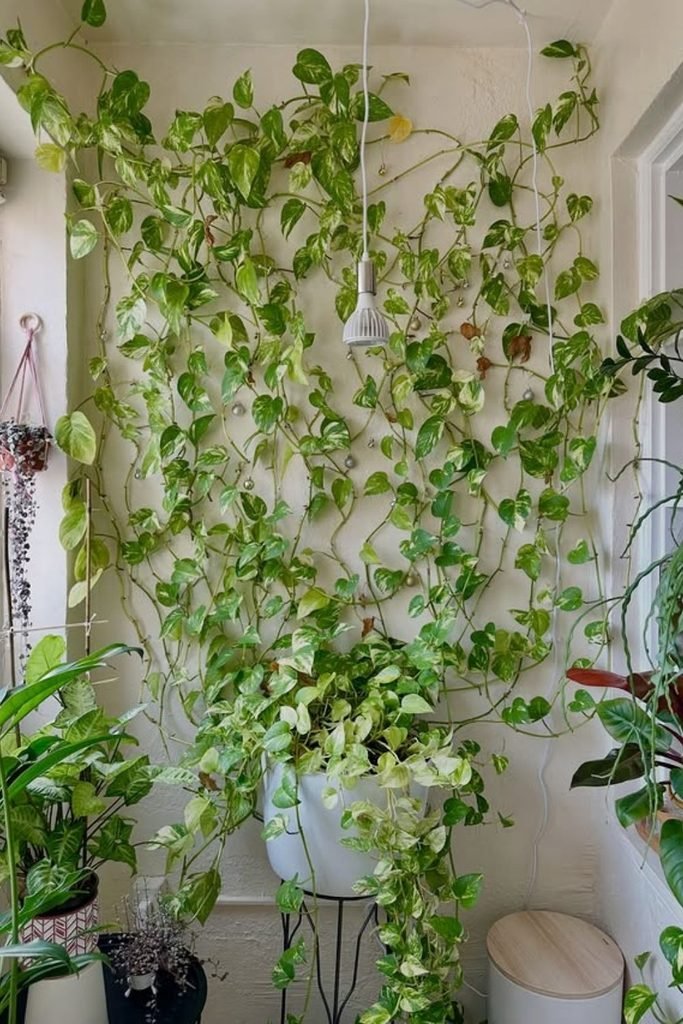
Vine Wall
Let an established pothos cover a blank wall when you have more vine length than shelf space.
Then use retractable plant clips to fan individual stems up and out to the sides, creating loose curves instead of pulling every vine straight.
As new growth grows, guide it into empty places so that the greenery fills the wall evenly, not just in one corner.
Brighter light from a nearby window can help it grow better and the periodic trimming stops extremely long or bare stems from turning the display.
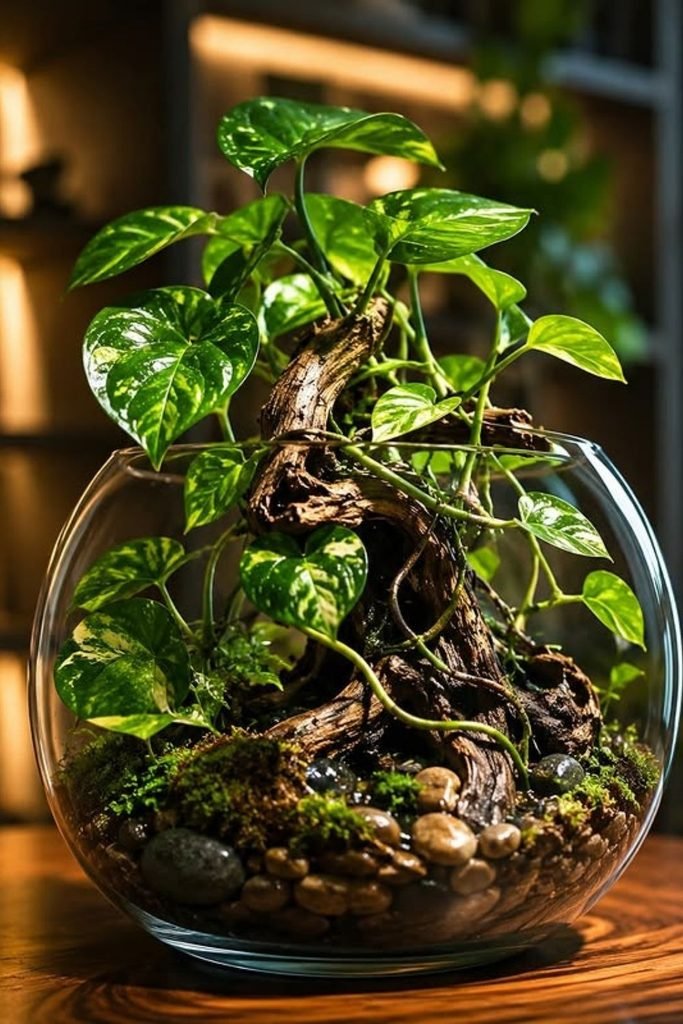
Pothos Terrarium
Build a compact pothos scene when you want greenery on a desk or side table without long vines taking over the surface.
You may use a large open glass bowl with an appropriate planting layer and run a piece of driftwood through the center, guiding growing stems around its curves.
Don’t put cuttings in the container too tightly, the planting must be airy, even if pothos roots need space and drainage in glass vessels.
Water carefully, as there is no way for excess moisture to escape, and position the arrangement in strong, indirect light for even growth of the foliage.
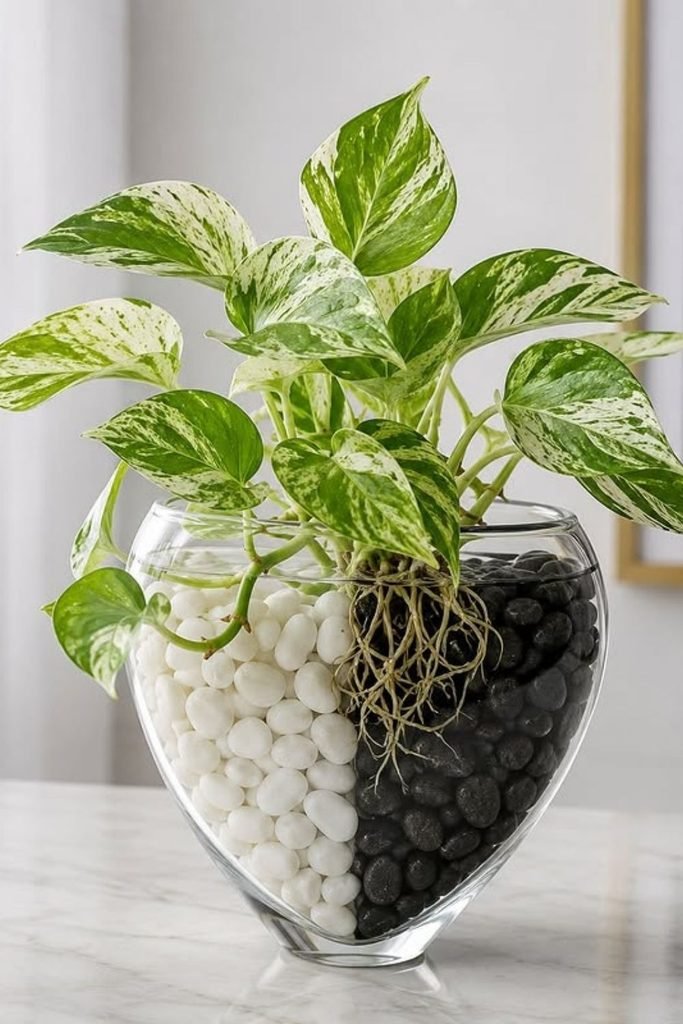
Pebble Culture
Show off the root system instead of hiding it by growing pothos in a clear vessel filled with decorative pebbles.
First put the rooted cuttings through the middle and then place smooth stones all around them to support the roots without crushing or cramming them.
Keep enough of water in the root zone but don’t let the stems and leaves sit in water.
Highly variegated Pothos is also a great choice for a bright tabletop or console display.
Keep a regular watch on the water level, as the stones might hide the amount of moisture around the roots.
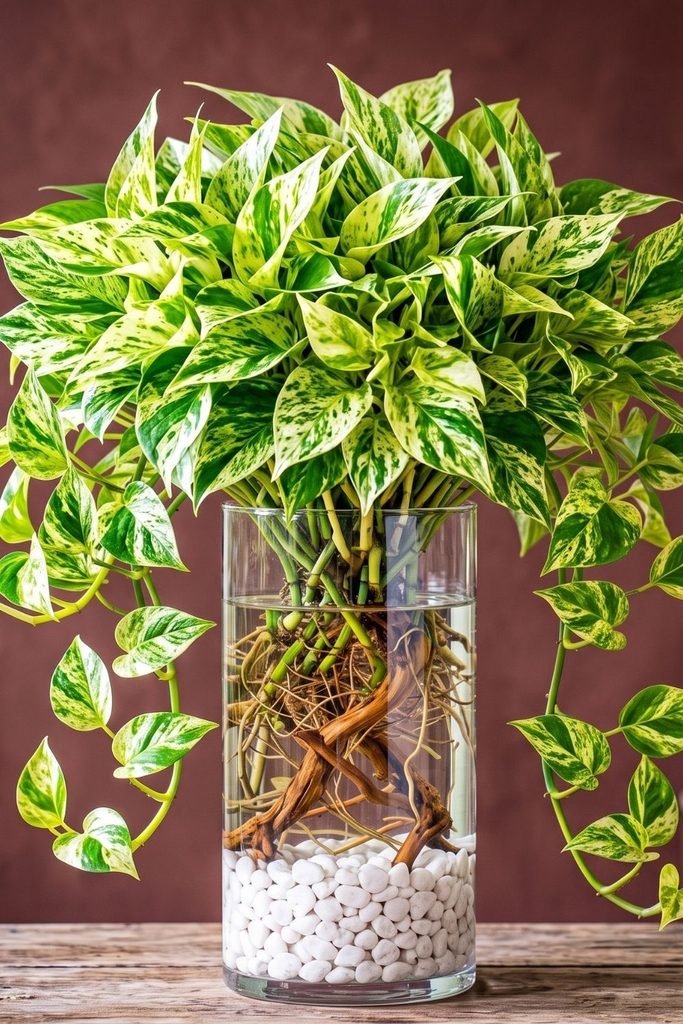
Root Display
Make the roots part of the arrangement when your pothos already has a thick, healthy root system worth showing off.
Gather several rooted stems in a tall glass cylinder and add clean pebbles to the bottom for weight.
Let the leaves stretch above the rim with a few of the vines trailing down the edges.
Talls work great on consoles or sideboards since you have lots of vertical space for roots without taking up a large footprint.
Keep water high enough to cover the roots, but not as high as most stems. Rinse the container whenever the accumulation begins to obscure the glass.
Hollow Frame
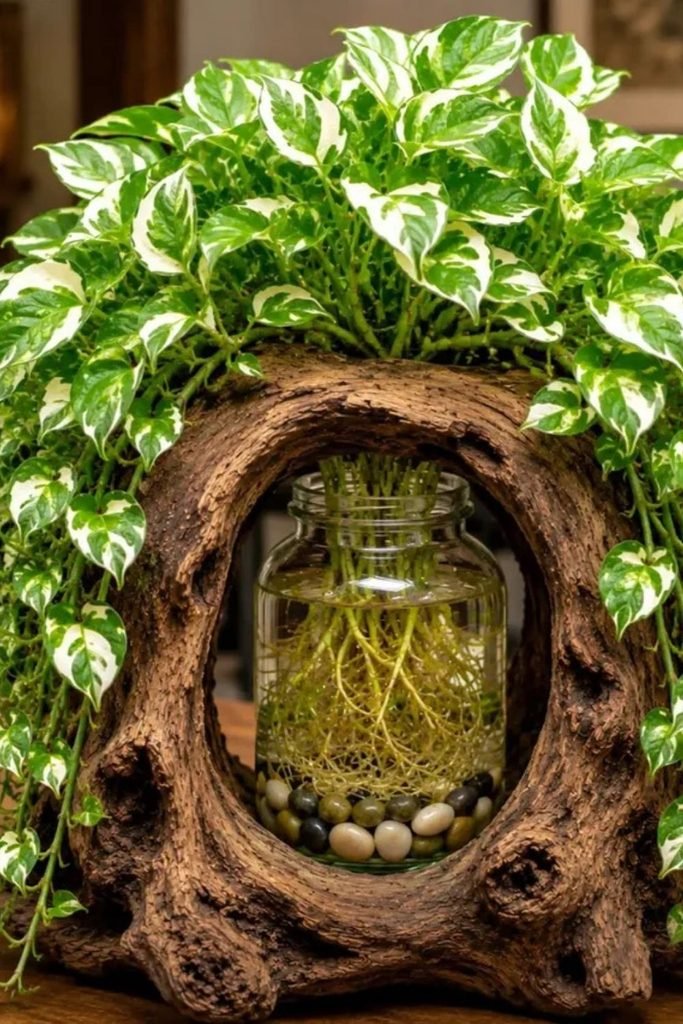
Give water-grown pothos a woodland-style display by placing the propagation jar inside a hollow piece of wood and letting the vines spill over its outer edges.
Start with a number of rooted cuttings in the jar so the foliage forms a thick crown, then place longer stems around the wood instead of driving all vines down.
This works particularly well as a table centerpiece where both the roots and foliage are visible.
When the greenery covers the entire natural frame, clip down vines that go out of hand.
Giant Climber
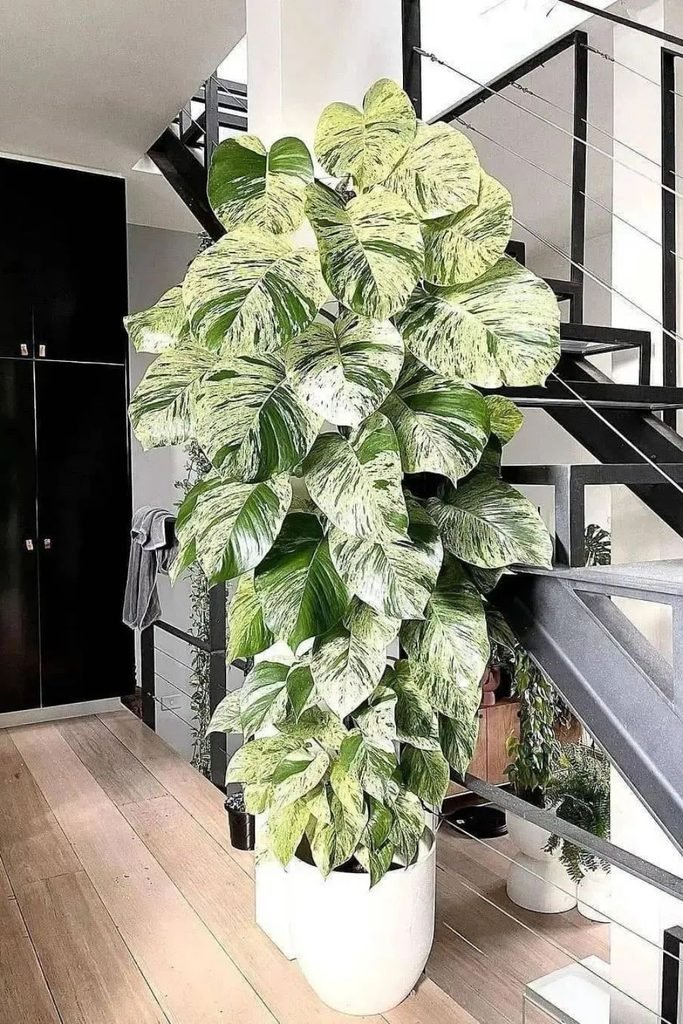
Go vertical when you want pothos to become a true floor-level statement instead of another trailing houseplant.
Train a few vines up a tall, strong support and maintain guiding new growth upwards rather than letting stems fall free.
This works especially well next to staircases, in open living spaces or when you have ceiling height but not much floor space.
Provide plenty of bright, indirect light to keep the variegated leaves vigorous and well colored and growing well.
As the plant grows, periodically examine the support and gently tie in the heavy vines to help keep the structure solid.
Pitcher Roots
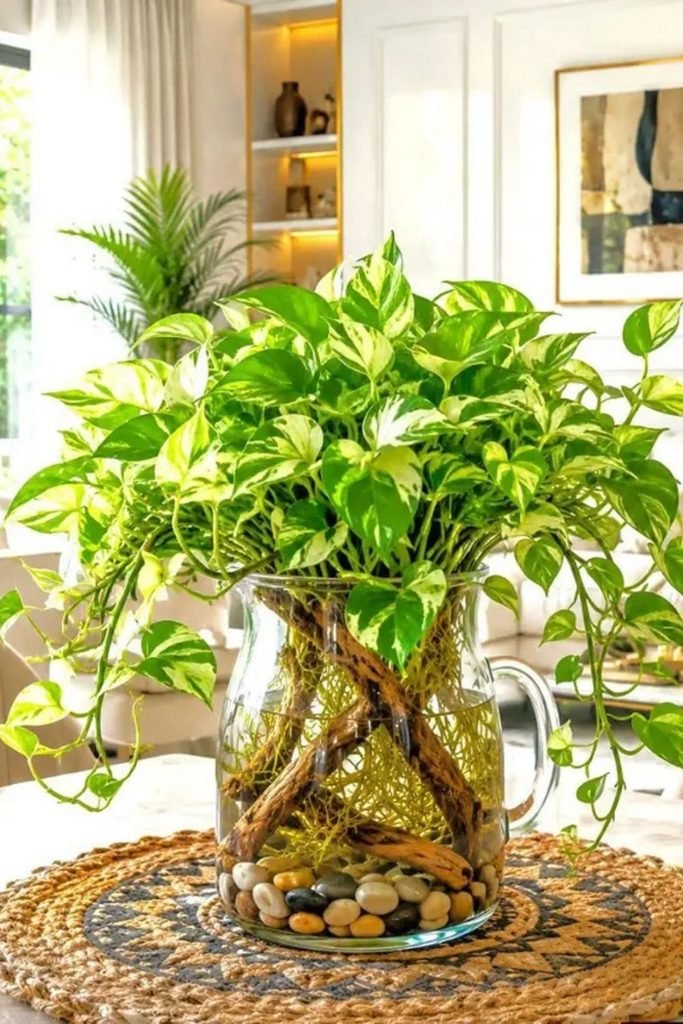
Turn a healthy group of pothos cuttings into an easy table centerpiece by rooting them together in a clear glass pitcher.
Add a few clean pebbles and bits of natural wood below to support the stems without crowding the roots.
The handle makes it easier to move the container when you want to refresh the water or clean the glass.
Place the arrangement near strong, indirect light and let a few vines trail over the edge so the plant fans out instead of growing in a tight cluster.
Moss Climber
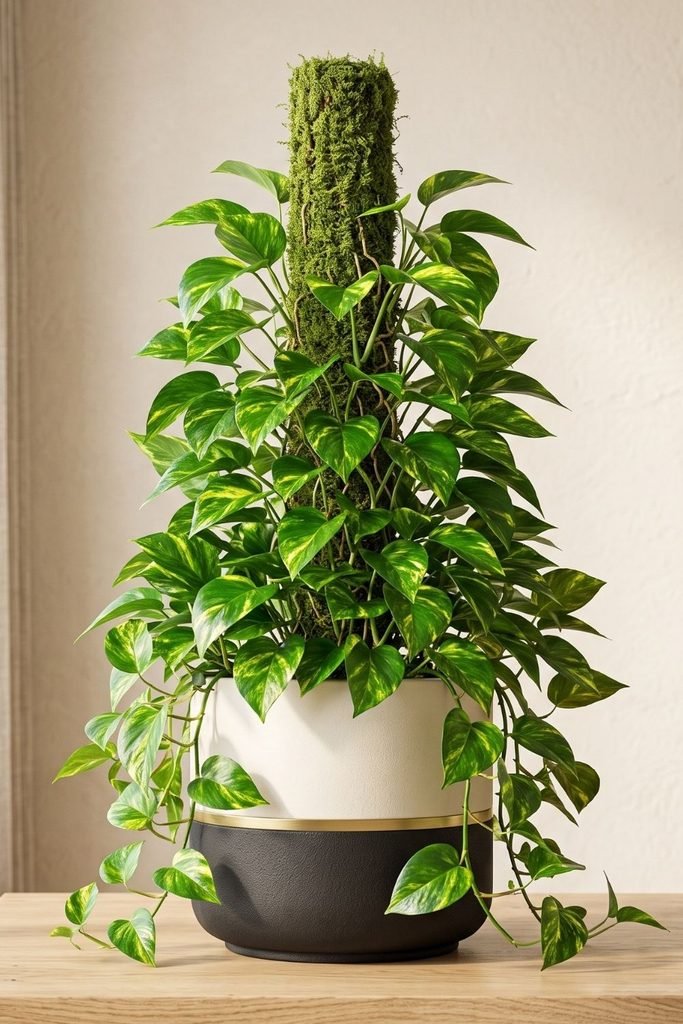
Train some vines upward and let others fall naturally when you want one pothos to look full from top to bottom.
After firmly placing a tall moss pole in the middle of the pot, use loose plant ties to guide a number of healthy stems around it, allowing a few outer tendrils.
Because it adds height without sacrificing the traditional cascade effect, this mixed growth type looks well next to windows, on big tables.
As the climbing growth gets thicker, keep the support steady by adding rooted cuttings around any exposed regions at the base.
FAQs
Can Pothos Grow Well Without Direct Sunlight?
Yes, Pothos likes bright indirect light but can also survive in lower-light locations, but the plant may grow more slowly or become more stretched out.
Avoid placing the plant in severe direct afternoon sun as this might burn the foliage.
How Do I Stop Pothos Vines Looking Too Leggy?
First cut off lengthy stems with significant gaps between leaves, then take healthy cuttings, root them and replant them in the same pot.
Better light plus multiple rooted stems is equal to growth around the base, not just a few long vines.
