
25 Tropical Garden Ideas for 2026
You add another palm, squeeze in a few leafy plants in the spaces, nevertheless your garden still doesn’t have that whole tropical aspect you pictured.
If you go too far, then paths start to fall away, smaller plants are covered and every trimming job is more difficult.
The problem is not usually how many plants you have. It’s how you set ’em up.
A good tropical garden would use varying heights, leaf sizes and textures to provide fullness without crowding plants.
In this article, you’ll find 25 Tropical Garden Ideas to create a lush, relaxing outdoor space you can easily recreate.
Let’s jump in!
How Can Tropical Gardens Look Full Without Feeling Overgrown?
Build fullness in layers rather than filling every open patch with another plant.
Choose taller palms, bananas or other structural plants at the back then bring medium foliage through the middle and keep shorter plants along walks.
Those little spaces will fill in gradually as everything grows. Just watch the mature size before planting.
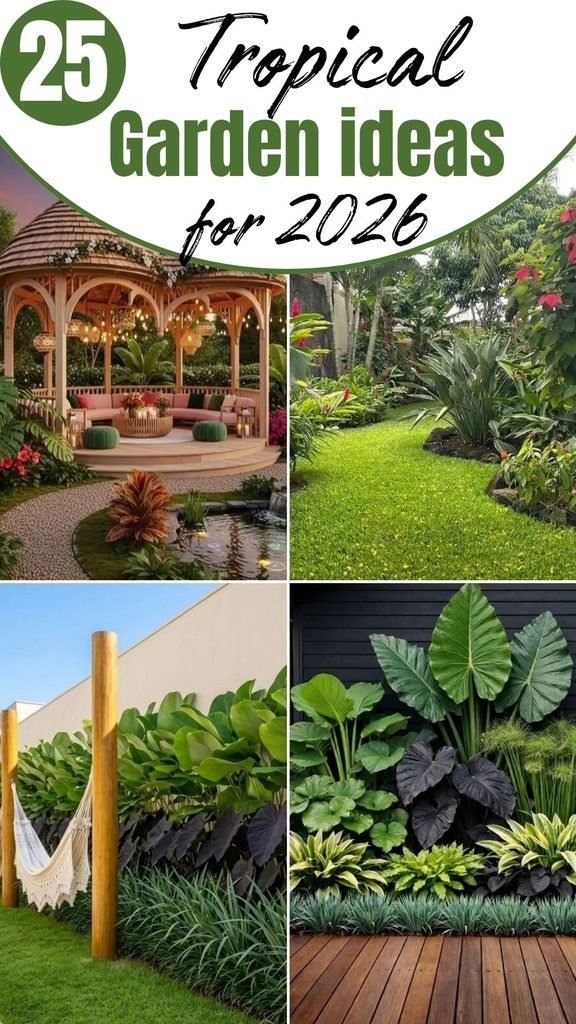
Planting densely looks planned because of the repetition and varying the leaf sizes allows you to see each layer.
Create openings, seating spots and some neat edges so that all the foliage has some structure around it.
If one plant begins to hide another or spill into walking area, trim or divide it before the whole bed becomes difficult to manage.
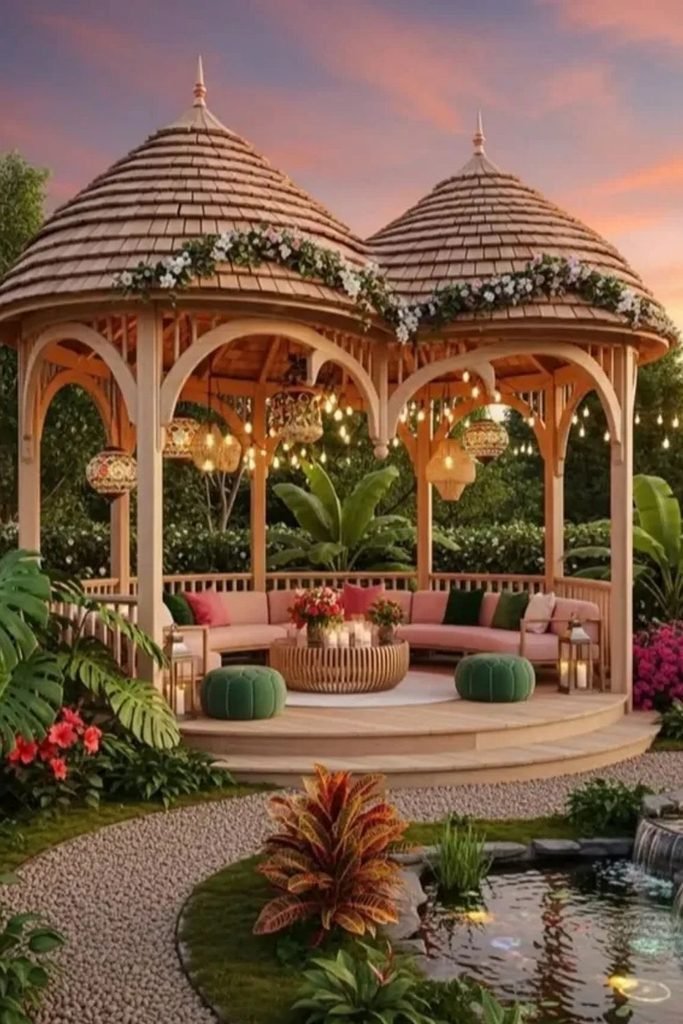
Pond Retreat
Bring water close to a seating area when you want the garden to feel cooler, quieter, and more enclosed by greenery.
A tiny pond with a gazebo or patio and soft borders of broad-leafed plants, low grasses and brilliant tropical vegetation.
Place the taller plants on the outer edge so they preserve privacy but don’t impede the water.
A gravel road, winding to connect the refuge with the rest of the yard, would provide dense planting with a tidy edge.
Lawn Corridor
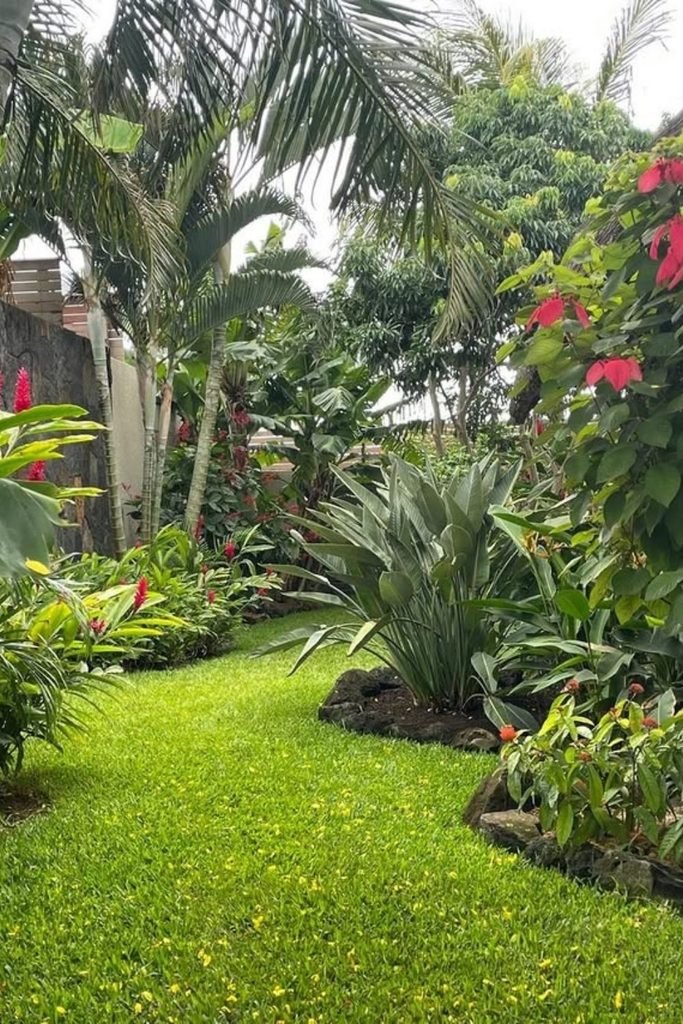
Keep a narrow strip of lawn open through dense tropical planting to give your yard breathing room without losing the lush effect.
Palms and taller plants should be in the rear with broad leaves and flowering kinds in the lower levels .
A gentle curve to the lawn makes a tiny or narrow garden look deeper because you can’t see all the space at once.
Use boulders along some of the margins of the beds to hold the form and keep plants from spreading too far into the grass.
Foliage Layers
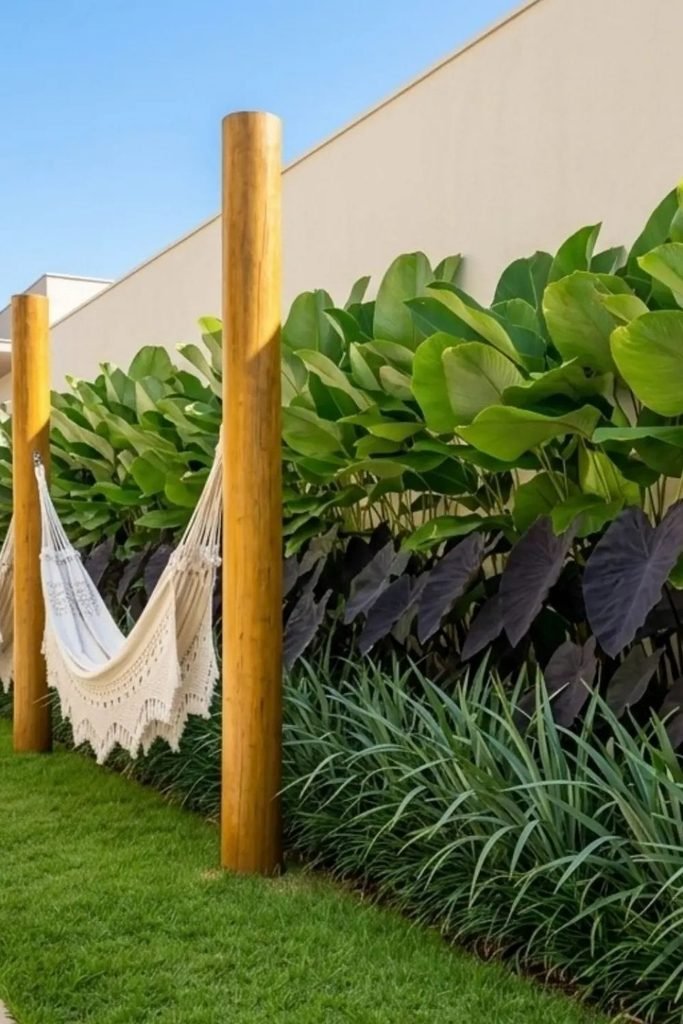
Turn a plain boundary wall into part of the garden by planting foliage in clear layers along its length.
Use tall tropical plants with broad leave in the back for height and screening and then add darker foliage like elephant ears through the middle for contrast.
Plant short, grass-like plants in front to disguise barren stems and maintain the bed seeming full from the ground.
It works especially well next to patios walks or long side yards where you need foliage without giving up much useful space.
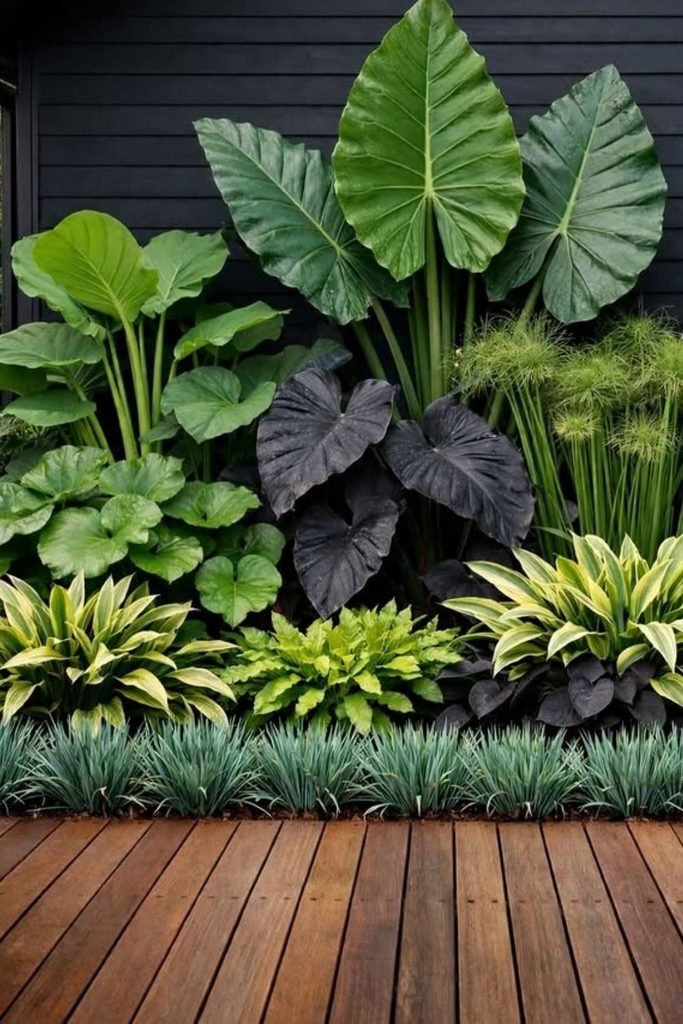
Texture Contrast
Mixing leaf shapes can make a compact tropical bed feel much richer without packing in dozens of plant varieties.
Let oversized elephant ears provide the height, then break up their heavy shape with fine, upright foliage and smaller variegated plants below.
Dark leaves placed between brighter greens add another layer of depth and help individual plants stand out.
This approach works especially well against a plain wall, beside a deck, or in a narrow backyard bed where every planting layer stays visible.
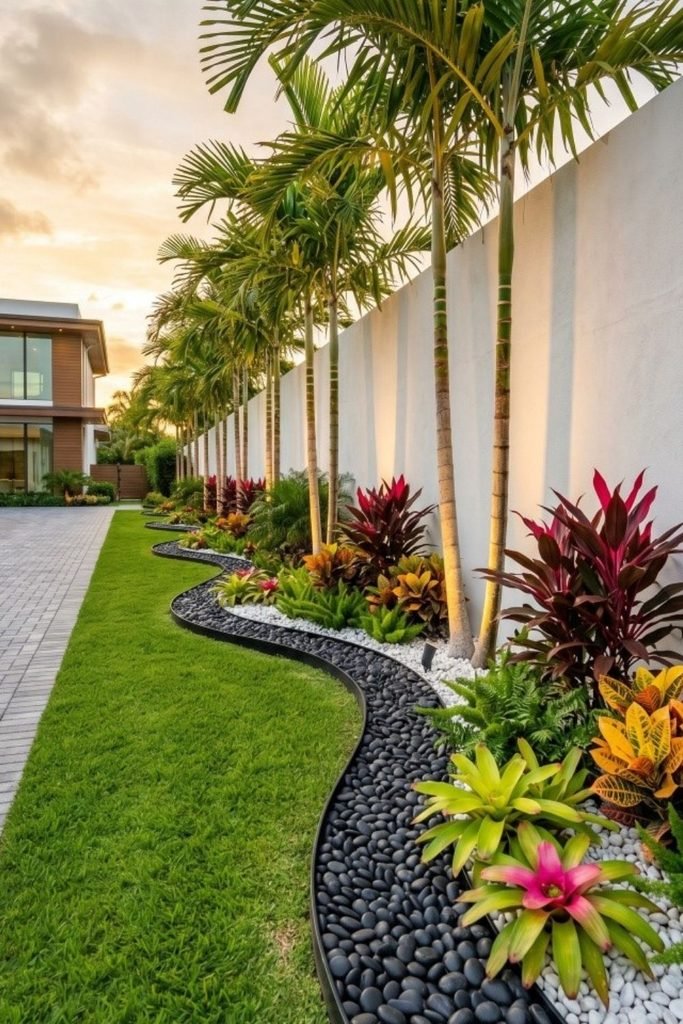
Pebble Borders
Give a long tropical bed stronger definition by running a curved pebble border between the plants and lawn.
Dark stones provide a clean break around palms and vibrant foliage; tiny areas of lighter gravel can accent particular planting pockets.
This is especially good along roads, boundary walls and front yards where tropical landscaping needs to be clean rather than jungle-like.
For above structure, keep palms equally spaced. Below them, utilize lower bromeliads, ferns and colorful foliage.
Add a strong edge before putting in the pebbles, or the stones will slowly creep into the grass and making mowing more frustrating.
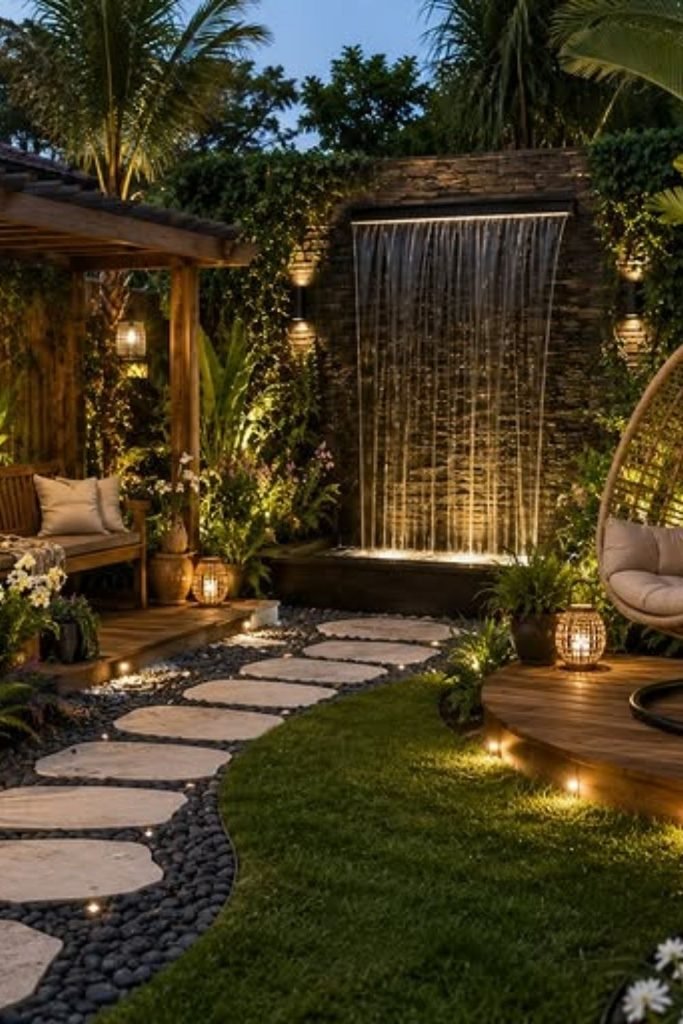
Waterfall Corner
Turn an unused garden corner into a destination by placing a compact waterfall behind the main planting rather than letting it dominate the whole yard.
Encircle the pond with palms, bird of paradise, ferns and lower flowering plants so that as the plants grow, greenery gradually frames the feature.
Stepping stones can direct the way to it, but keep foot traffic away from sensitive beds.
This configuration is especially nice by a patio or private seating, where you can enjoy the sound of moving water.
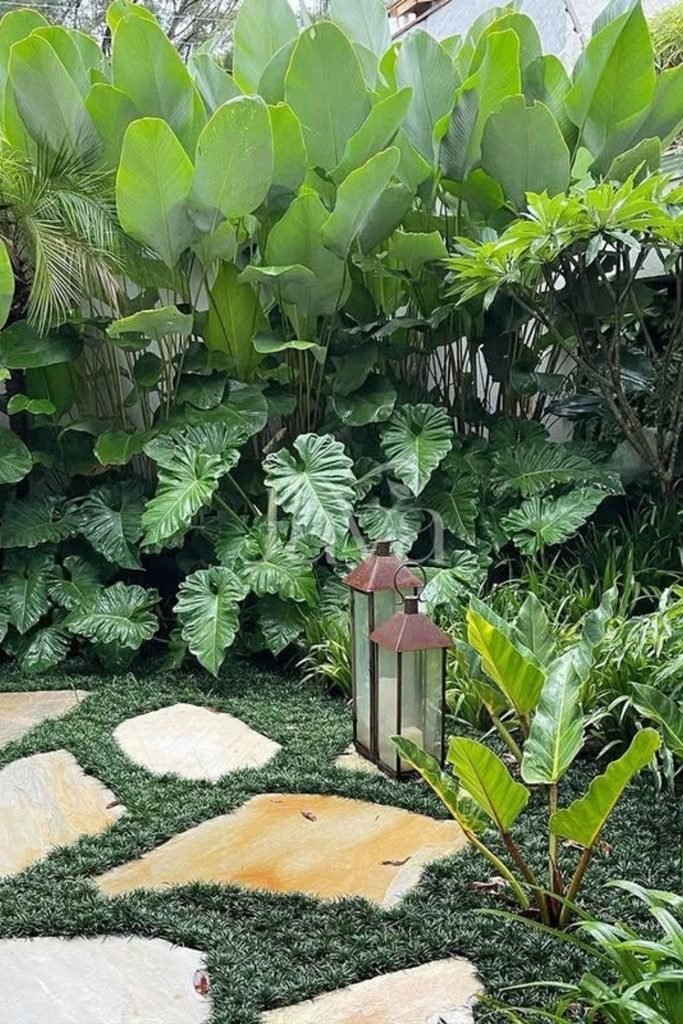
Groundcover Steps
Soften wide stepping stones with low groundcover when you want a path to disappear gently into dense tropical planting.
Leave generous gaps between flat stones and fill the joints with a walkable groundcover suited to your light and moisture conditions.
Around the path, build upward with elephant ears and other broad foliage so the planting becomes taller as it moves away from the walking area.
This works beautifully in courtyards and sheltered garden corners where a solid paved path might feel too harsh.
Shaded Passage
Use overhead trees to turn a narrow side yard into a cooler tropical passage instead of fighting the shade with sun-loving plants.
Plant ferns, compact palms and other shade-tolerant vegetation in the beds below them, putting taller greenery against the boundary and lower plants.
Large stepping stones in grass can keep an open route while the planted edges add the lushness.
This works well in tight places between home and fence where there is vertical space but it is narrow.
Thin tree canopies lightly when needed so filtered light still reaches the lower planting.
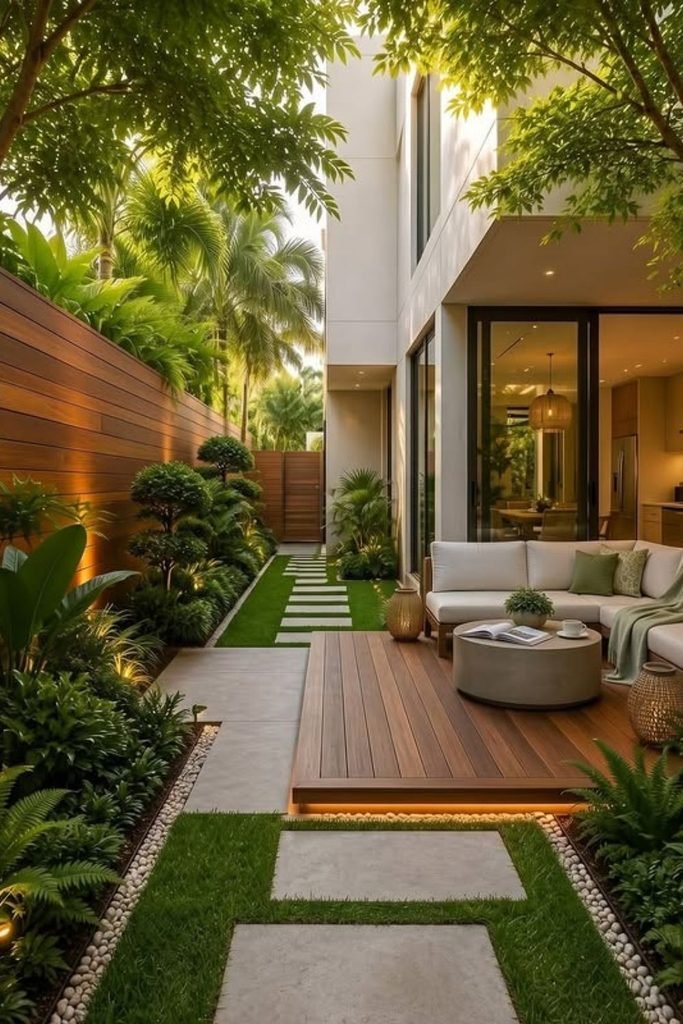
Driveway Border
Use a raised tropical bed beside the driveway to bring greenery close to the house without letting plants spill into parking space.
Use erect bird of paradise or other tall foliage for the rear, fill the middle with split-leaf plants, and finish the front with ferns and compact shrubs.
Each layer is set at a different height so the bed has plenty of volume, but yet a neat contour.
A thin line of dark pebbles at the edge can capture loose soil and provide a visual separation between plants and pavement.
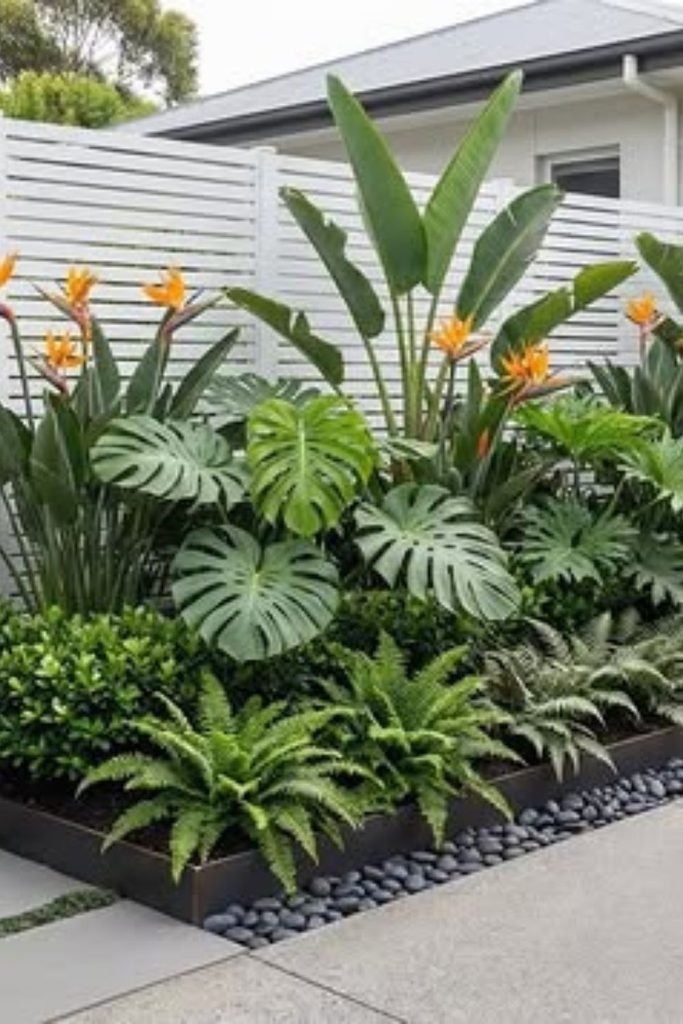
Raised Walkway
Control tropical growth in a narrow passage by keeping plants inside raised beds instead of planting directly along the path.
Use palms for vertical height where the path requires privacy then alternate broad monstera style leaves with erect tropical foliage and compact grasses.
The raised boundaries prevent creeping low plants from wandering into the walking space but also make trimming considerably easier as the garden fills out.
This set-up works especially effectively between a house and boundary wall where every inch of width is precious.
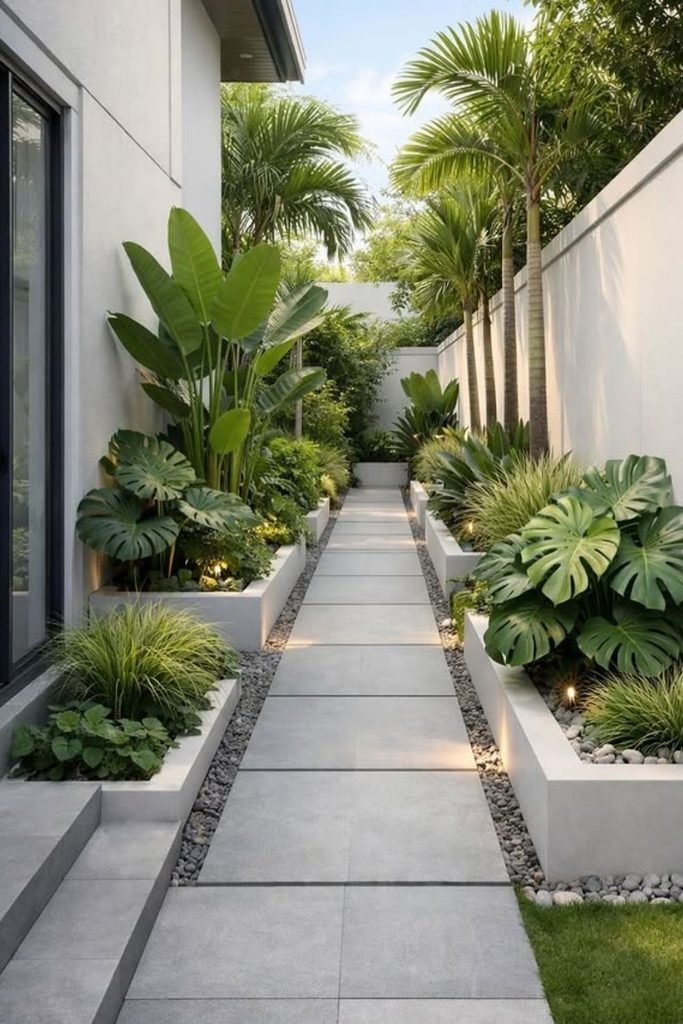
Koi Passage
Let a narrow koi pond run through the garden when you want water to become part of the journey rather than a feature sitting in one corner.
Keep the tropical foliage thick along the outside perimeter, using palms for height and monstera, bromeliads and other smaller plants closer to the water.
There are flat stepping stones around the pond that allow you to walk around, without spoiling the green.
This plan works particularly well for long courtyards or side gardens, as it plays to their narrow design, rather than working against it.
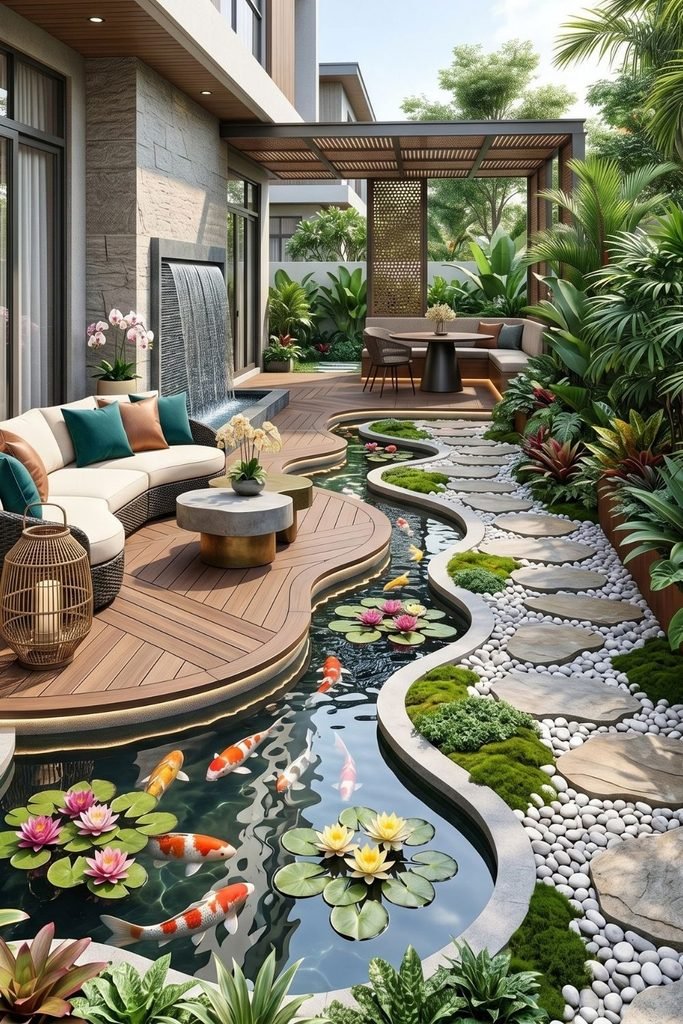
Jungle Layers
Build the planting upward in several heights when you want a larger garden to feel naturally full without losing its shape.
Begin with palms and established trees overhead, and utilize towering banana-style foliage through the middle, then fill in lower spaces with colorful cordylines.
Leave a thin strip of grass across the planting to walk between beds without having to constantly trim back vegetation.
This is especially good for deep back yards if you want the garden to be more immersive as you go through it.
Instead of squeezing in more huge plants, provide room for the biggest plants to develop to their full size, and then use the smaller variety to fill in the spaces.
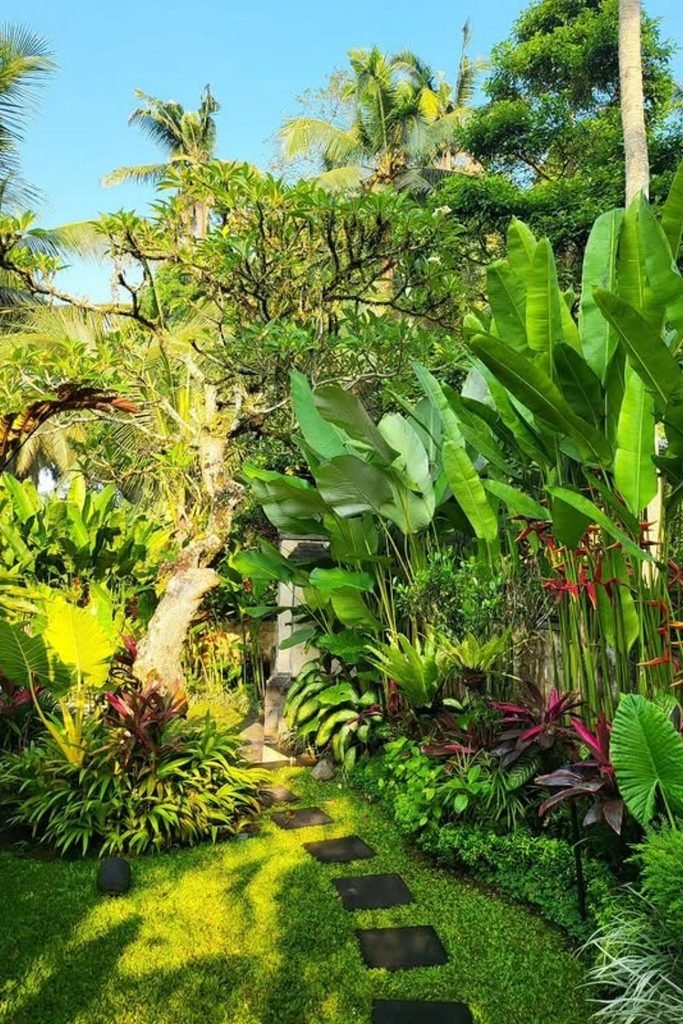
Stream Walk
Pair a slim water channel with stepping stones when you want a narrow courtyard to feel more like a garden journey than a simple passage.
Keep the pond to one side and nestle compact tropical greenery around the rocky edge, then add taller flowering trees and broad leaves further back t height.
Choose moisture-loving plants for near the water, but remember their maturity spread so they don’t cover the stones.
Low garden lights can mark the route in the dark, and pick up reflections from the water.
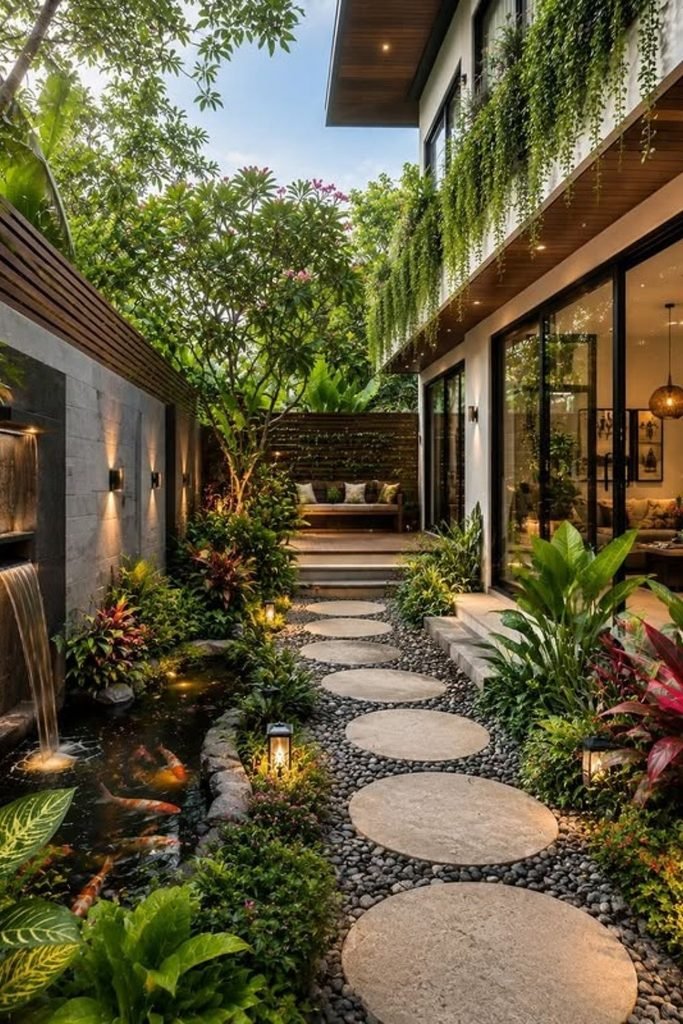
Grass Pockets
Break up hard paving with rounded pockets of ornamental grass when you want a tropical garden to stay soft without letting large foliage take over every edge.
Place large stepping slabs surrounded by dense grasses and palms and broad-leaved plants further back for height and enclosure.
Taller groundcovers can fill up spaces and reduce exposed soil, without blocking the pathway.
As each cluster grows, clip grasses away from stone edges to maintain a comfortable walking.
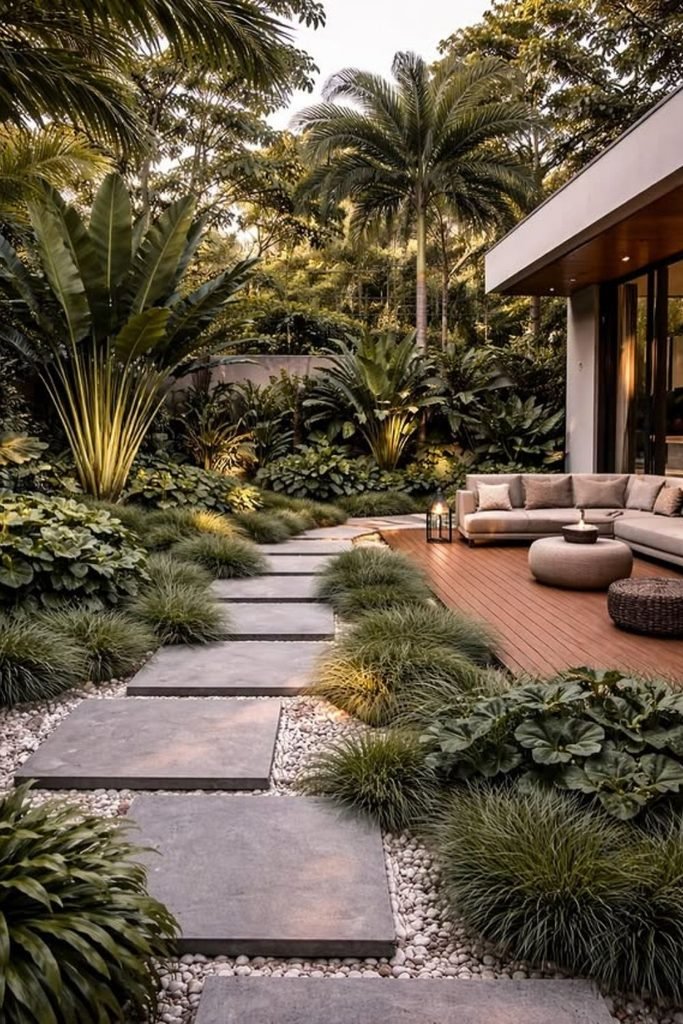
Courtyard Pond
Make an enclosed courtyard feel greener without filling every inch of floor by letting a pond take the central position and planting heavily around its edges.
Use a small tree for overhead height, palms and broad foliage around the walls, then nestle shorter plants near to the water to disguise hard limits.
Large stepping slabs can traverse the pond and connect dining places, without the need for another walkway around the pond.
This is a good method for protected courtyards where walls around the courtyard shield tropical plants from strong winds.
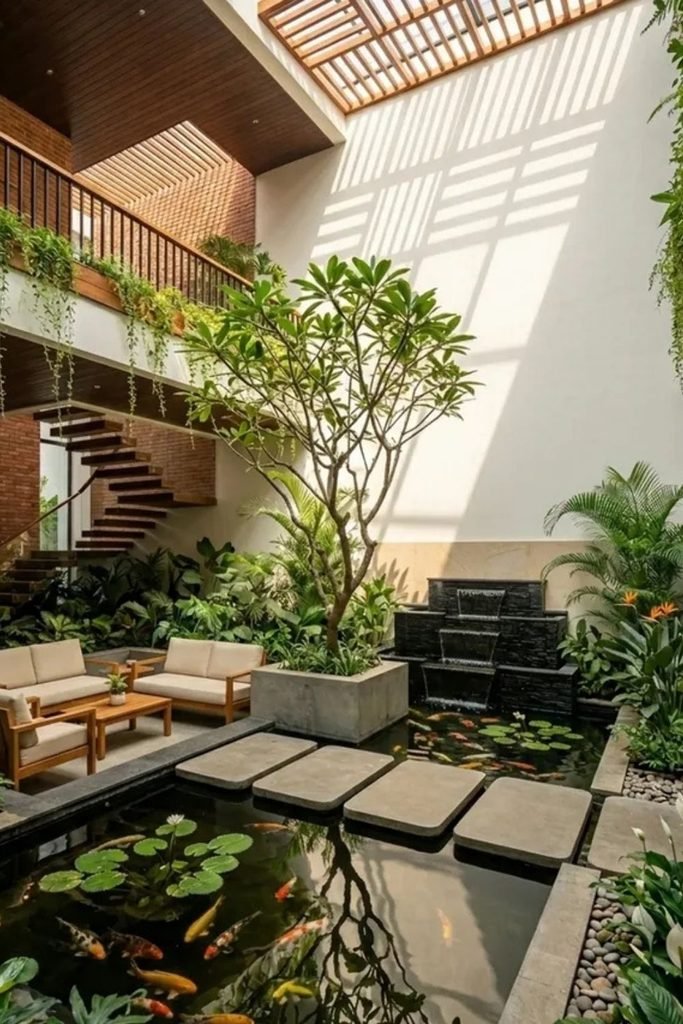
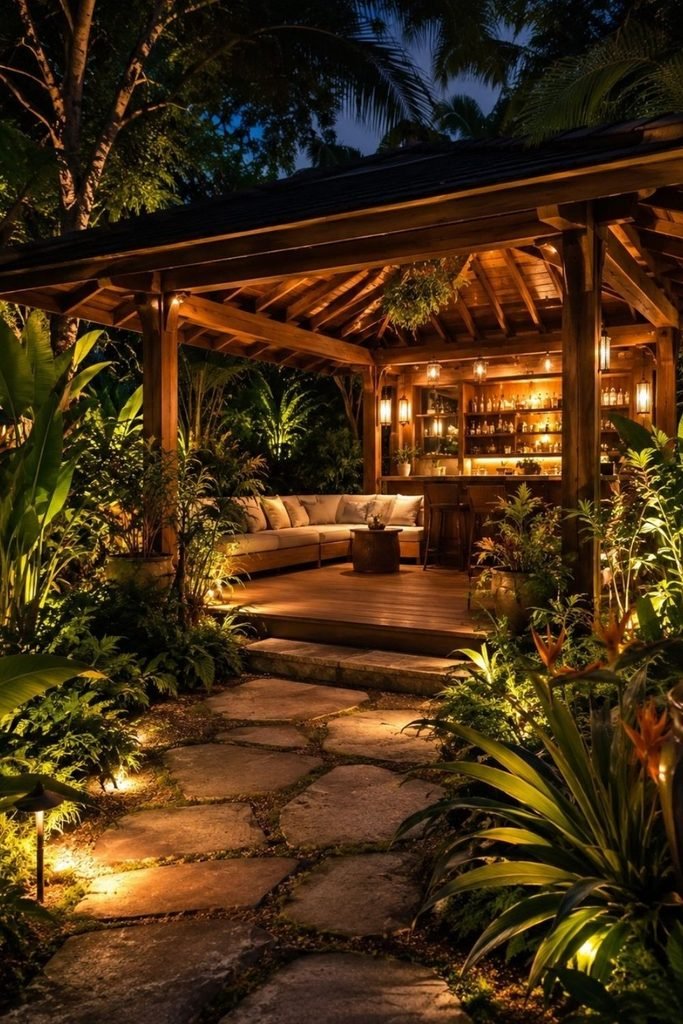
Lantern Path
Guide attention toward a tucked-away garden retreat by keeping the path simple and letting tropical foliage close in gently from both sides.
Create a casual path with irregular stone pavers and plant bananas, bird of paradise, ferns and smaller leafy kinds at decreasing heights toward the walkway.
This is particularly good if there is a gazebo or covered patio off the house that has to feel like it is part of the main garden.
Instead of flooding the entire room with intense light, use modest lamps among the plants and direct the light upward through chosen leaves.
Courtyard Canopy
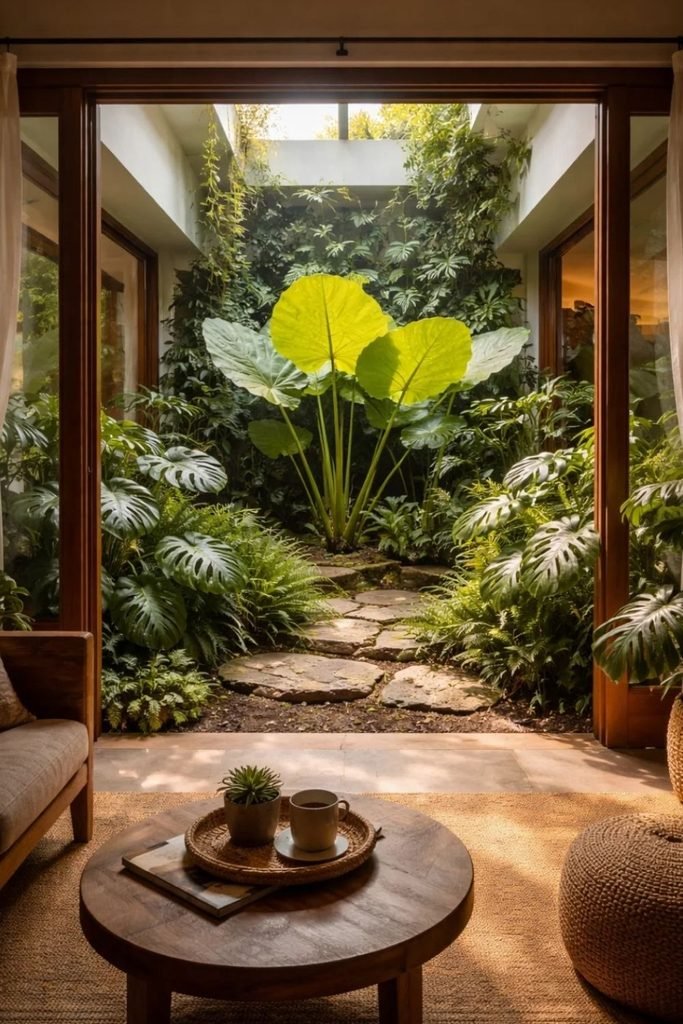
Use one oversized elephant ear as the focal point when a tiny courtyard cannot handle several tall tropical plants.
Place it in the brightest open location and surround the base with ferns and split-leaf foliage that will cope with the lesser light provided by its broad leaves.
Climbers can be trained up the back wall to give vertical greenery without taking up valuable floor space.
This works particularly well where a living room opens directly into an enclosed patio.
Plant the center sparingly and select a basic stone route so the greenery feels lush without dominating the whole space.
Pool Borders
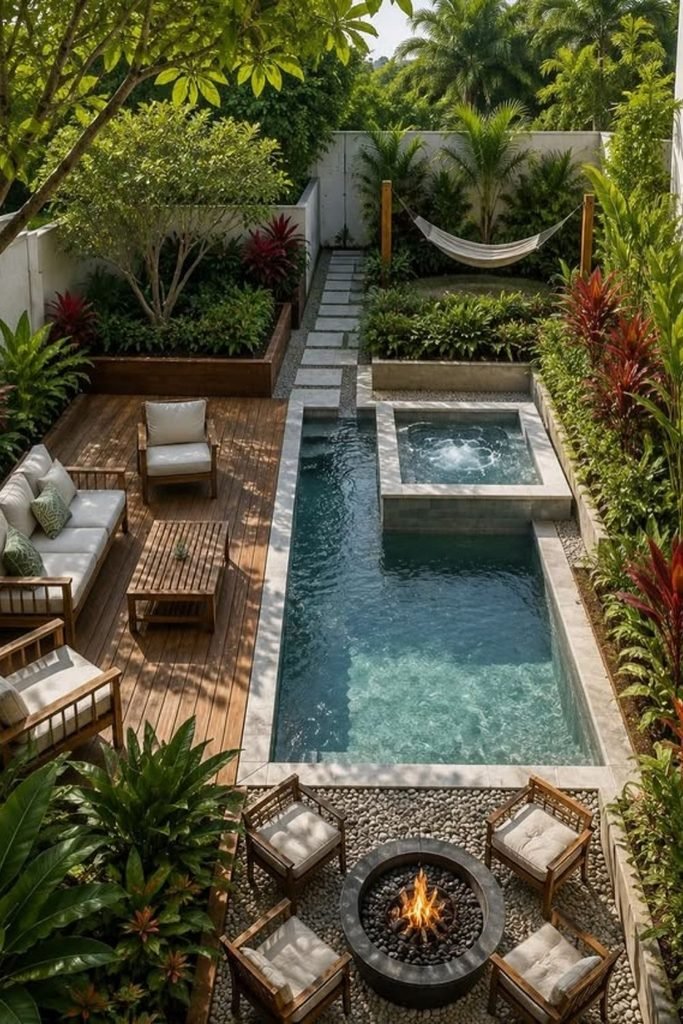
Frame a narrow pool with tropical beds when you want privacy and greenery without sacrificing space for swimming or seating.
Keep larger palms and erect plants on exterior wall and introduce compact shrubs and bright cordylines closer to the pool edge.
Repeating the same red-toned plants down a long border gives color while keeping the planting ordered rather than too jumbled.
This layout is particularly effective in rectangular backyards where each zone should serve a certain purpose.
Elephant Anchor
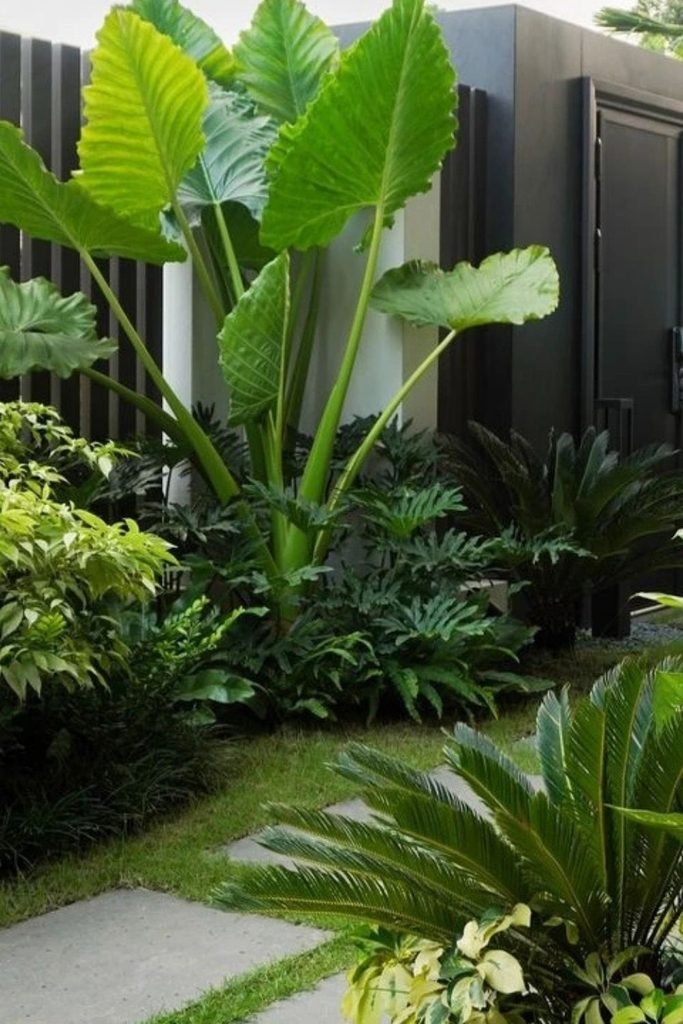
Let one oversized elephant ear carry the height in a compact tropical corner instead of squeezing several large plants into the same bed.
Give it space along a fence or plain wall where its erect leaves make a striking green backdrop, then fill in underneath with split-leaf foliage, cycads.
You’ll want to keep the bottom plants considerably shorter so they don’t compete with the main feature, and so that each layer is visible.
Check the mature spread of the elephant ear while planting so that its leaves do not eventually obstruct doors, paths or access points.
Pond Hideaway
Tuck a small seating spot behind a pond when you want the garden to reward people for walking deeper into it.
Water is surrounded by ferns, bromeliads and broad-leaved tropical plants, and then palms further back provide the towering canopy.
Climbing plants grown above a basic pergola add extra shade to the seating area and assist it to disappear into the landscape.
This idea works best in medium to bigger gardens where you can afford to give one corner over to a quiet refuge.
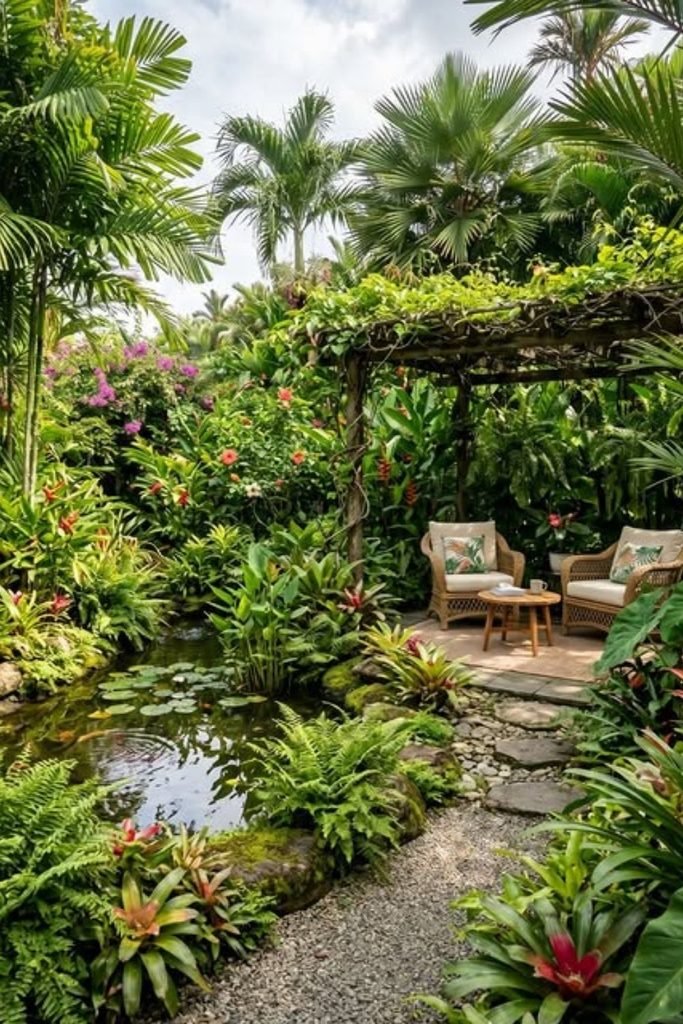
Lawn Clearing
Leave a small patch of lawn open between dense tropical beds when you want the garden to feel lush without closing in completely.
At lower levels line the grass with elephant ears and split leaf vegetation, and let palms rise overhead so greenery surrounds the space.
You can sprinkle in a few flowering tropical plants here and there rather than distributing blooms everyplace to bring color through all that green.
This is great between patios, garden rooms or different wings of a property if you want an open connection.
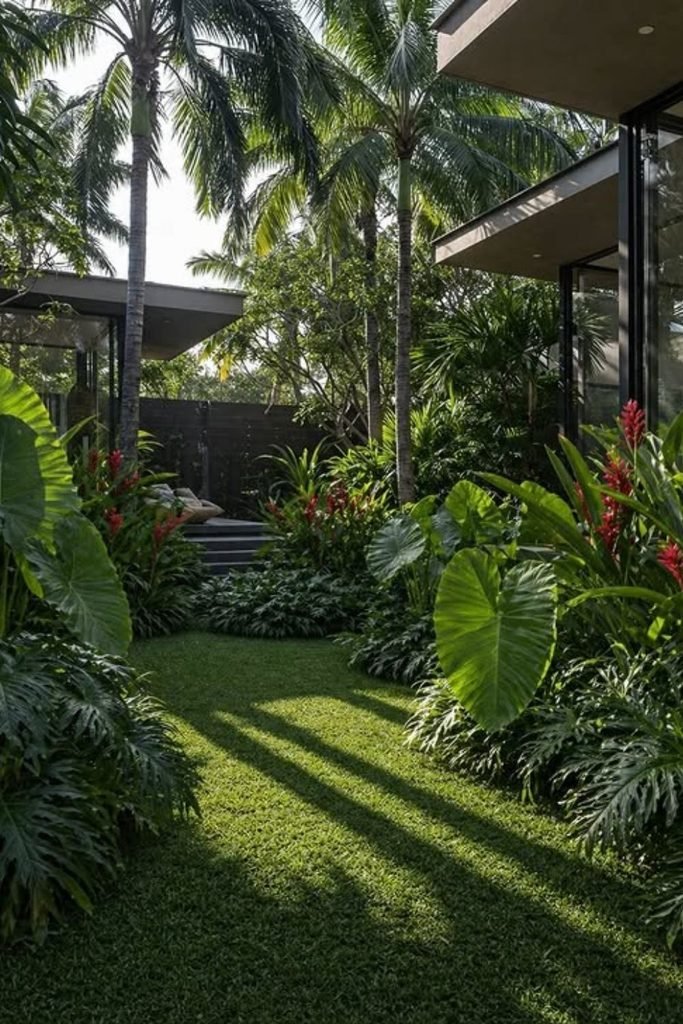
Koi Pocket
Fit a koi pond into a smaller garden by keeping the water feature compact and building greenery vertically around it.
To fill out the space behind the pond, plant monstera, palms and ferns. Use lower foliage at the edge so you can still see and manage the water easily.
White pebbles and dark stepping stones help define a walking area and prevent neighboring plants from encroaching on the corner.
This is a good choice for a patio setting or along an underutilized border.
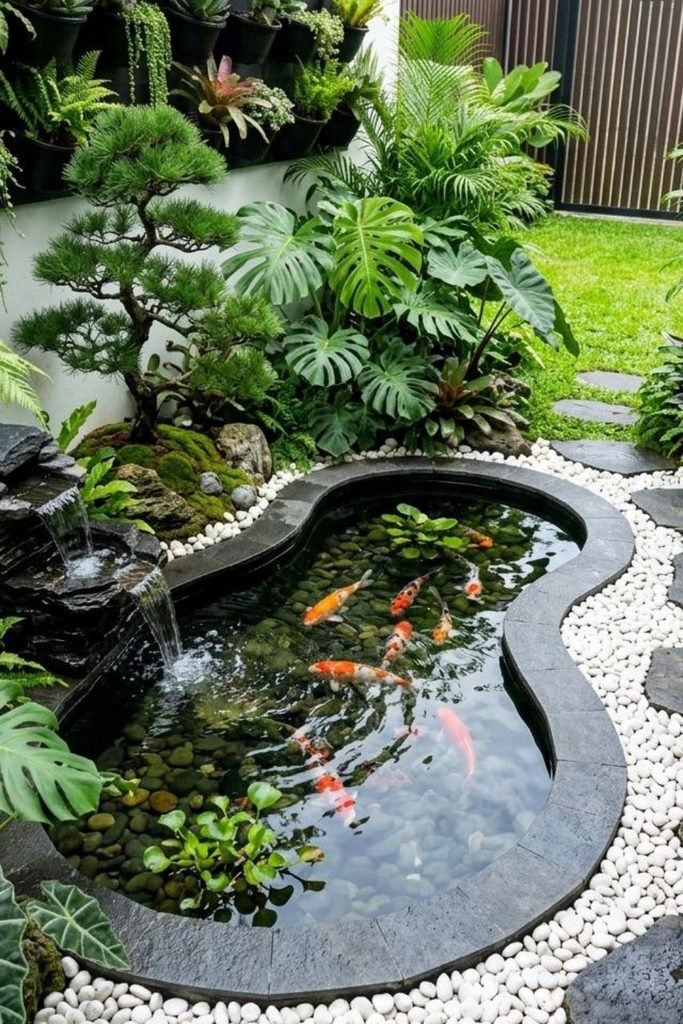
Palm Canopy
Use palms at different heights to build overhead shade while keeping plenty of planting room under neath.
Mix tall trunk forming palms with shorter fan or feather types then fill the ground layer with broad foliage that can handle filtered light.
Large rocks around a small pool or water feature can break up the greenery and give the lower planting a natural boundary.
This approach works best in larger backyards where palms have enough room to spread without crowding roofs or walkways.
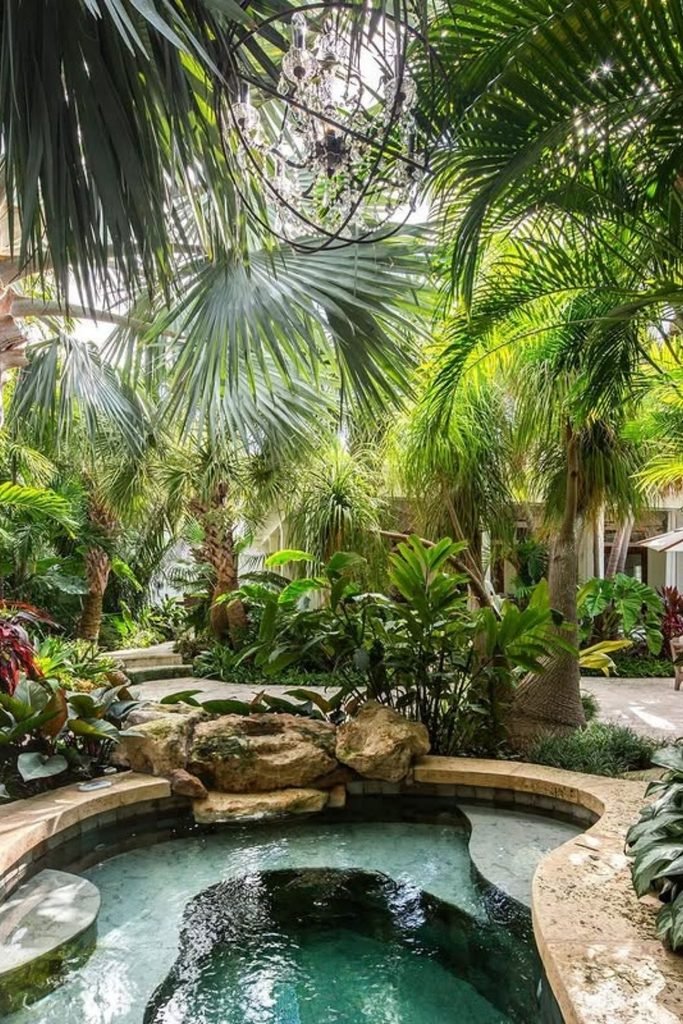
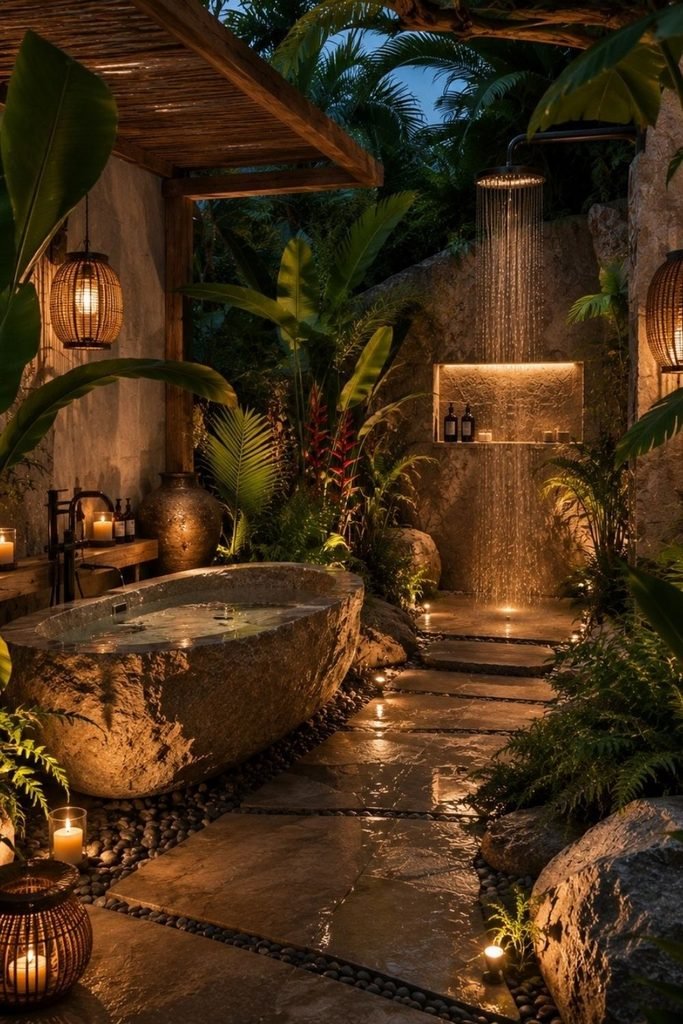
Spa Garden
Turn a sheltered garden corner into a private bathing area by using tropical plants as the enclosure instead of adding more hard walls.
Place tall banana-style foliage and palms around the outer edges for screening, then fill underneath with ferns and smaller leafy plants that enjoy filtered light.
Pull the planting away from the shower and tub so repeated splashing doesn’t create maintenance difficulties or slippery surfaces.
If the space is used at nite add some low uplighting behind selected plants. Lit leaves can add mood without the need for bright overhead lighting.
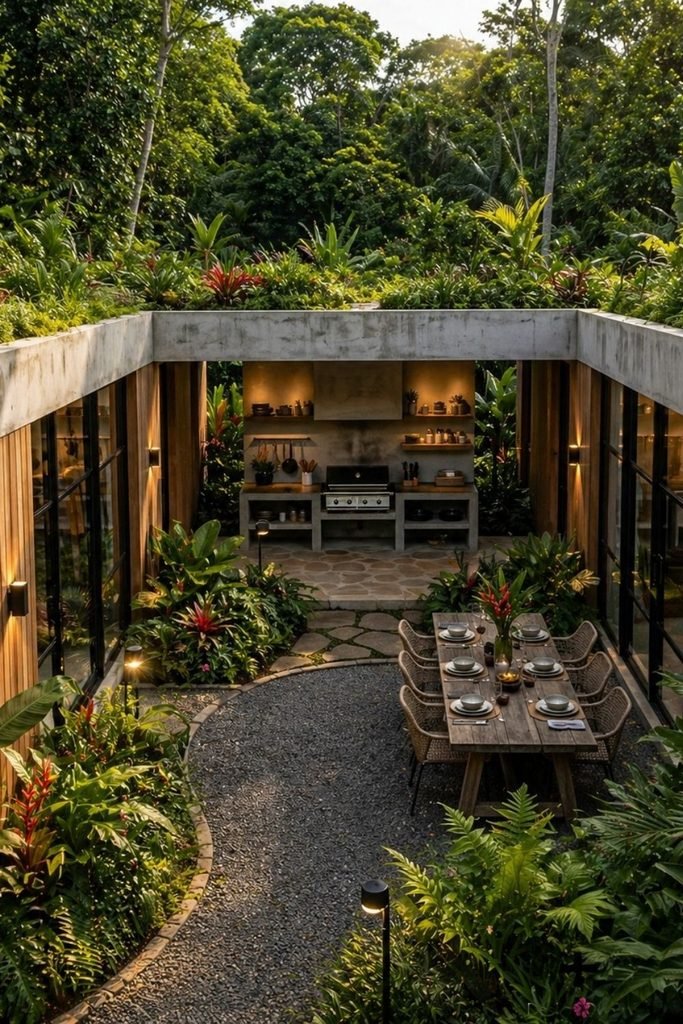
Sunken Dining
Sink an outdoor dining area slightly below surrounding planting when you want tropical greenery to feel taller and more enclosing.
Create large beds around the edges with bananas, heliconias, ferns and palms, keeping the boldest foliage near walls and the shorter plants next to routes.
It’s ideal for a covered patio or outdoor kitchen where you wish to have your meals in seclusion.
If the building can take it securely, introduce some vegetation to the roof or top edges since foliage at varying levels makes the space feel part of the landscape.
Keep access paths open to allow easy pruning and maintenance of dense beds.
FAQs
Can Tropical Gardens Work In Colder Climates?
Yes. You don’t need to use actual tropical plants to produce the tropical look.
Choose powerful plants with big leaves, strong textures and striking shapes and then in the warmer months.
Add delicate bananas, cannas or elephant ears in containers. Move or cover susceptible plants before the mercury drops.
How Often Should Tropical Gardens Be Watered?
Water according to the plants, soil, and weather rather than following one fixed schedule.
Most tropical-style beds perform better with consistent moisture, but constantly wet soil can cause root problems.
Add mulch to slow moisture loss and check the soil before watering again, especially in shaded or densely planted areas.
