
How Preteen Boys Can Keep a Fade Looking Fresh Between Cuts
A fresh fade looks like it was drawn on with a ruler – clean lines, a smooth blend, a shape you can see from across the room.
By week three it looks like a different haircut: the sides have puffed out, the neckline has gone fuzzy, and the neat curve around the ear has all but disappeared.
That in-between stage is where most preteen fades are lost.
Not at the barbershop – at home, in the two or three weeks between visits. This
guide is for that stretch.
Why Fades Grow Out Fast on Preteens?
A fade is a gradient: very short at the bottom, gradually longer as it moves up. That is why it shows growth so fast.
Half a centimetre of new hair barely matters on a long top, but on a faded side it blurs the whole blend – the line softens, the sides stick out, and the shape goes square instead of curved.
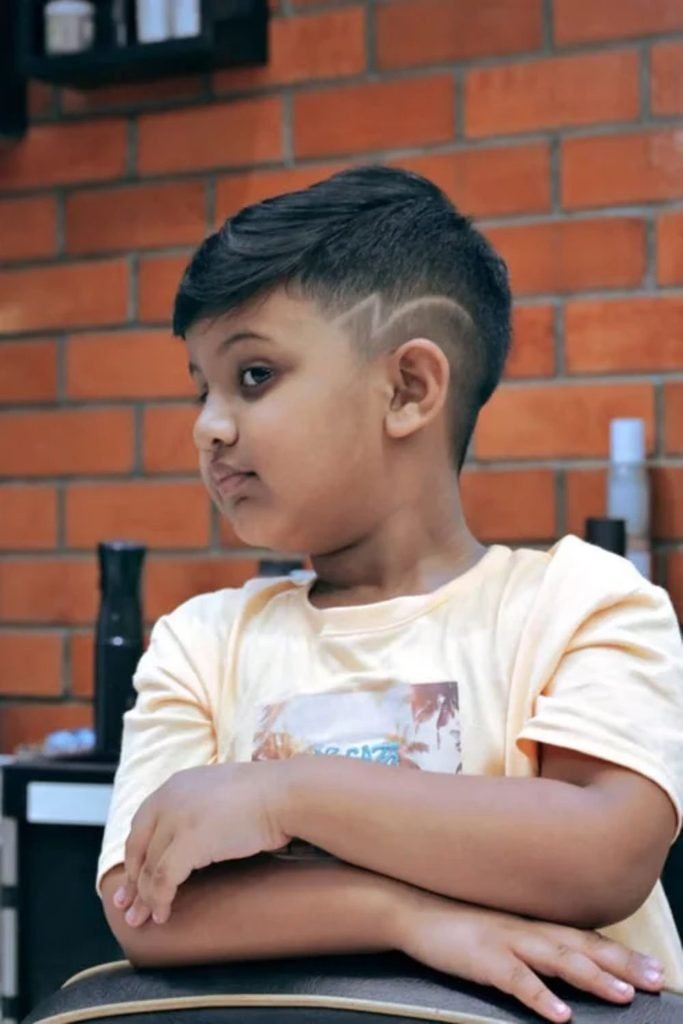
A skin or mid fade starts to lose its edge after about two weeks.
A low taper – the softer, school-safe version – holds up for three to four weeks. Fresh between cuts does not mean looks freshly cut.
It means three things: the neckline is clean, the sides lie flat instead of puffing
out, and the shape around the ear is still visible.
If those three are holding, the fade still reads as intentional – even in week three.
The 2-Minute Morning Reset
A preteen fade needs two minutes in the morning, the same two minutes every day.
Dampen the hair first – a quick splash of water or a couple of sprays is enough. Dry hair resists; damp hair listens.
Then brush or finger-comb the top forward or to the side, following the direction
the barber cut it.
For the faded sides, brush downwards, flat against the head. That one move stops the sides from sticking out sideways by lunchtime.
Product, if any, should be a pea-sized amount of light cream – warmed between the palms and worked through the top only, never rubbed into the faded sides.
Heavy wax or gel is the fastest way to make a fade look greasy and grown-out. On most school days, no product at all beats too much product.
How Often to Book Trims
The rhythm that works: a full cut every three to four weeks, with a quick tidy-up in between for skin or mid fades.
The tidy-up is ten minutes, usually cheaper, and the best trick for keeping a fade fresh. Book it for the two-week mark.
At the tidy-up, say exactly this: Just clean the edges, keep the length on top.
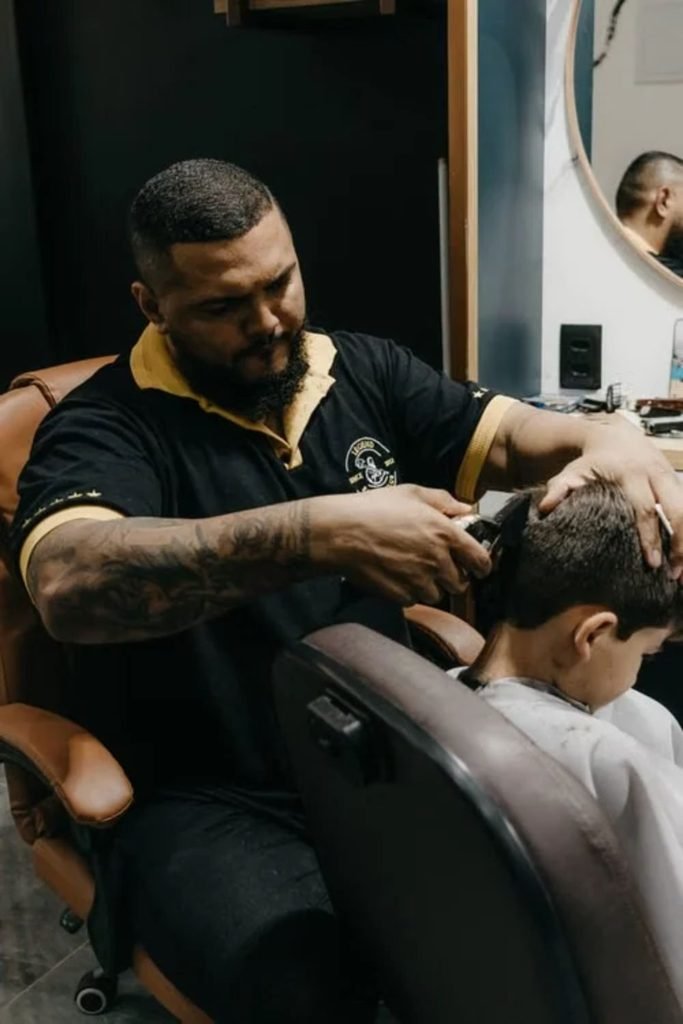
That tells the barber to re-do the neckline, sharpen the blend around the ears, and leave the top alone.
At the full cut, bring a photo of the fade on its best day – taken the day after the last appointment, from the front, side and back.
Also say how short the shortest point should be: a #1 or #2 guards is plenty for a preteen.
Skin-tight fades grow out faster and are the first thing a school dress code will object to.
Washing & Care Between Cuts
The biggest mistake parents make between cuts is washing too much. A preteen fade does not need daily shampoo – two or three washes a week with a gentle shampoo is enough.
Daily washing strips the natural oils that keep the top sitting naturally, and the hair goes fluffy and flyaway, which makes the faded sides look even puffier.
On non-wash days, a rinse is enough. After sport, rinse the sweat out with water and towel-dry – do not re-style it hard or load it with product to fix it.
And never sleep on wet hair: hair dries in whatever shape it slept in, and a fade that was slept on wet wakes up with a cowlick and a flat side.
Quick Fixes for Common Problems
Uneven growth. Children’s hair often grows at different speeds in different spots. Do not try to even it out at home with clippers.
Part the hair slightly to the slower side for a few days, and raise it at the next tidy-up – a barber can balance it in minutes.
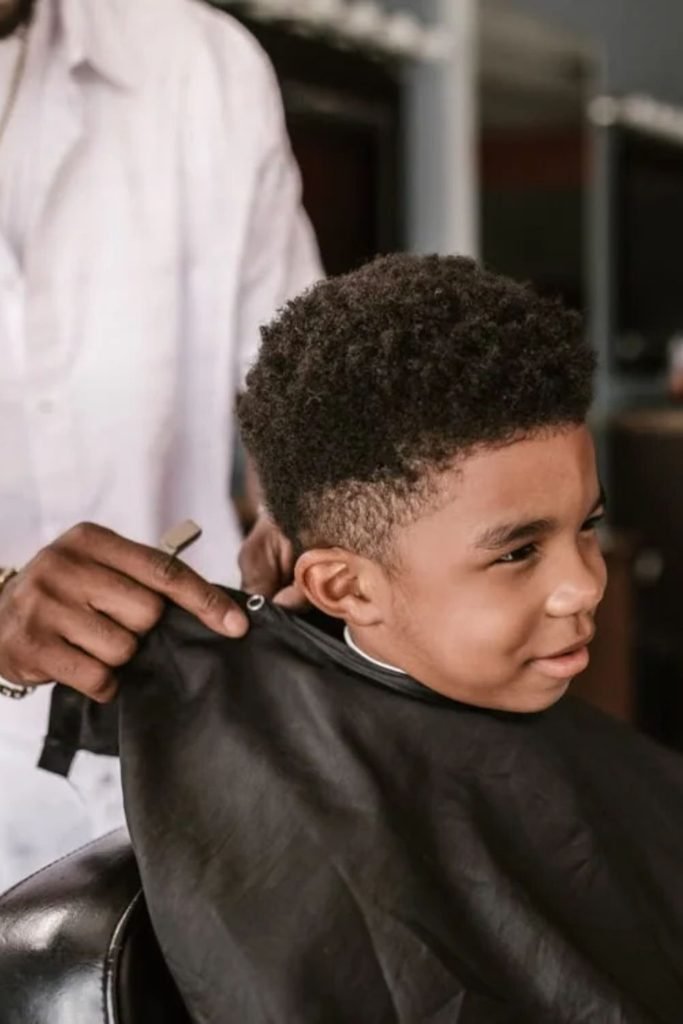
Cowlicks. That stubborn tuft at the crown is not a styling failure – it is the direction the hair grows.
Dampen it, brush it the way it already wants to go, and hold it for ten seconds while it dries.
If it still wins, ask the barber to leave a little more length there – weight tames a cowlick better than any product.
Hat hair. Flattened top, sides pushed out, a line across the forehead where the hat sat.
The repair takes thirty seconds: dampen the top, brush it back into its normal direction, and brush the sides flat downwards.
Do not add product to hat hair – it locks the flat shape in instead of lifting it out.
Checklist for Parents
- Morning (2 minutes): Dampen, brush the top into shape, brush the
- sides flat down. Pea-sized light cream on the top only – or nothing at all.
- Washing: Gentle shampoo 2-3 times a week. Rinse after sport; never sleep on wet hair.
- Week 2: Book the tidy-up. Say: Just clean the edges, keep the length on top.
- Week 3-4: Full cut. Bring the day-after photo. Confirm the guard (#1 or #2).
- School check: Low taper, no hard lines, no skin-tight sides. When in doubt, ask the school first.
- Never: Heavy wax or gel every day, home clippers on uneven patches, a tight hat on wet hair.
A fade does not need a complicated routine to stay looking sharp.
It needs two minutes in the morning, a wash routine that does not fight the hair, and a tidy-up booked before the grow-out shows.
Get those three right and the cut your son walked out of the barbershop with is, more or less, the cut he is still wearing three weeks later.
Note: This post is written by our contributer Derek Nolan who writes for Burst Fade, a men’s haircut guide covering fade and taper styles, maintenance, and barber-ready reference guides. For more on the same approach for younger boys, see low-maintenance fade styles for boys: theburstfade.com
