
15 Bird Of Paradise Plant Ideas for 2026
It is easy to buy a Bird of Paradise, but the hard part is selecting the proper place for it.
You cram it into a bare nook, but before long the leaves are lunging for your furniture.
Further distant and the plant might start bending toward the window for extra light. Even more difficult to strike that equilibrium in small rooms.
In this article, you’ll find 15 Bird of Paradise plant ideas to transform your outdoor space with tropical style.
Let’s jump in!
How Can Bird Of Paradise Fit Small Indoor Spaces?
Use the brightest location you can, not the emptiest nook. Bird of Paradise develops toward light.
Therefore if you push it into a dark location the stems can bend and the plant can grow awkwardly.
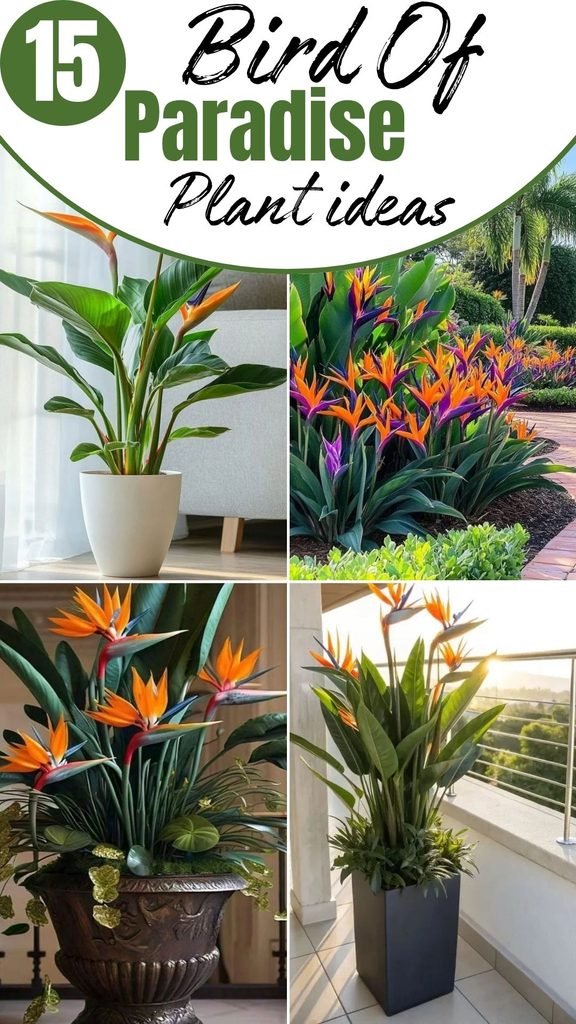
In a small room, put it beside a bright window, at the end of a sofa or behind a chair where its height adds to the vertical space without getting in your way.
Choose a simple floor set-up with one solid planter, rather than around it with numerous pots.
You will also want to leave some open space around the leaves since they will spread broader as the plant matures.
Window Bloom
Give a flowering Bird of Paradise the brightest window area you can spare so it has the light needed to support strong leaves and future blooms.
Set it next the glass, not far away in the room, and leave room for the leaves to spread, without touching the drapes or furniture.
A simple floor planter is especially good for living rooms, keeping the base small and using vertical space for tall stems.
If growth starts angling very much toward the window, turn the pot from time to time.
Be sure that excess water can drain off and not collect inside the decorative container.
Tropical Border
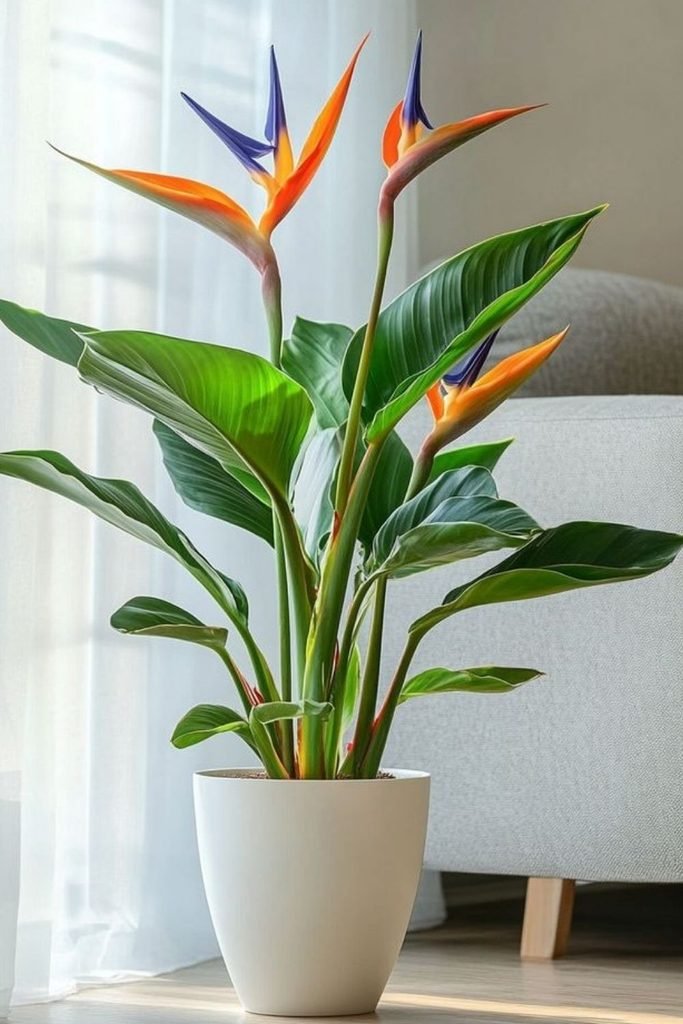
Turn a sunny garden edge into a bold flowering border by planting Bird of Paradise in generous groups rather than scattering individual plants.
Space clumps sufficiently to allow their broad leaves to grow without cluttering the way. Use lower evergreen shrubs in the front for a smooth layered finish.
This is extremely effective when placed next to curved paths, patios, pools or huge tropical gardens where repetitive orange flowers.
Add mulch over the bare soil to hold moisture and deter weeds from competing around the roots.
Layered Display
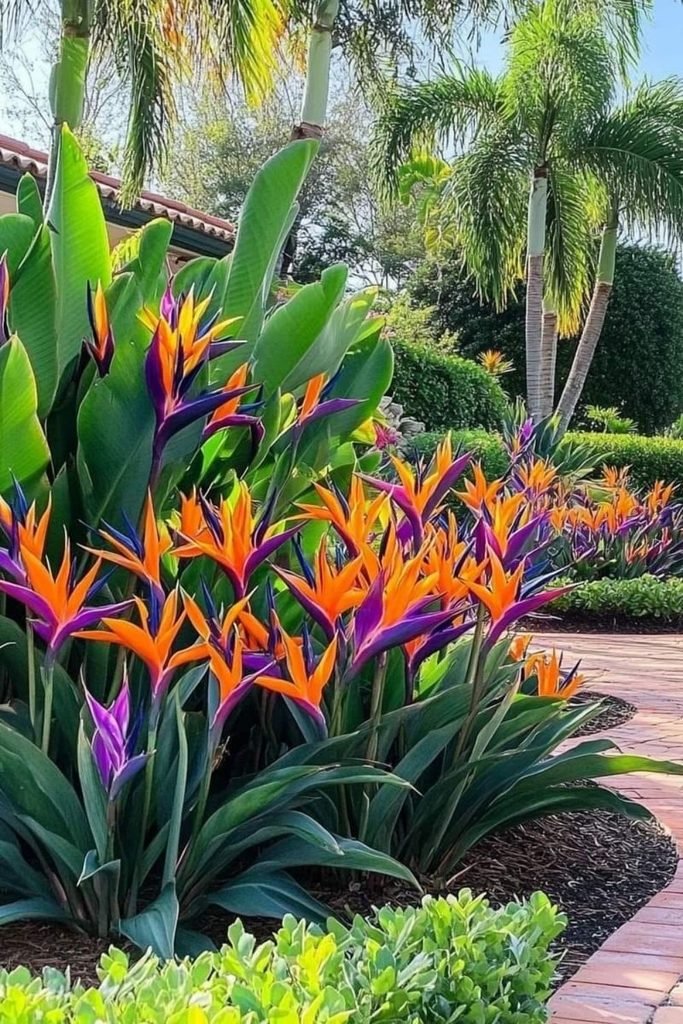
Bring more depth to a large Bird of Paradise container by surrounding its upright stems with shorter foliage instead of filling the whole pot at one height.
Use the Bird of Paradise as a centerpiece and bring in compact or trailing companion plants to soften the planter and hide the bare dirt.
This works well in large entryways, covered patios, sunrooms or light indoor spaces where there’s room for an enormous container to make a statement.
Choose companions with somewhat compatible growing circumstances, and don’t pack the root zone so densely that watering and drainage are problematic.
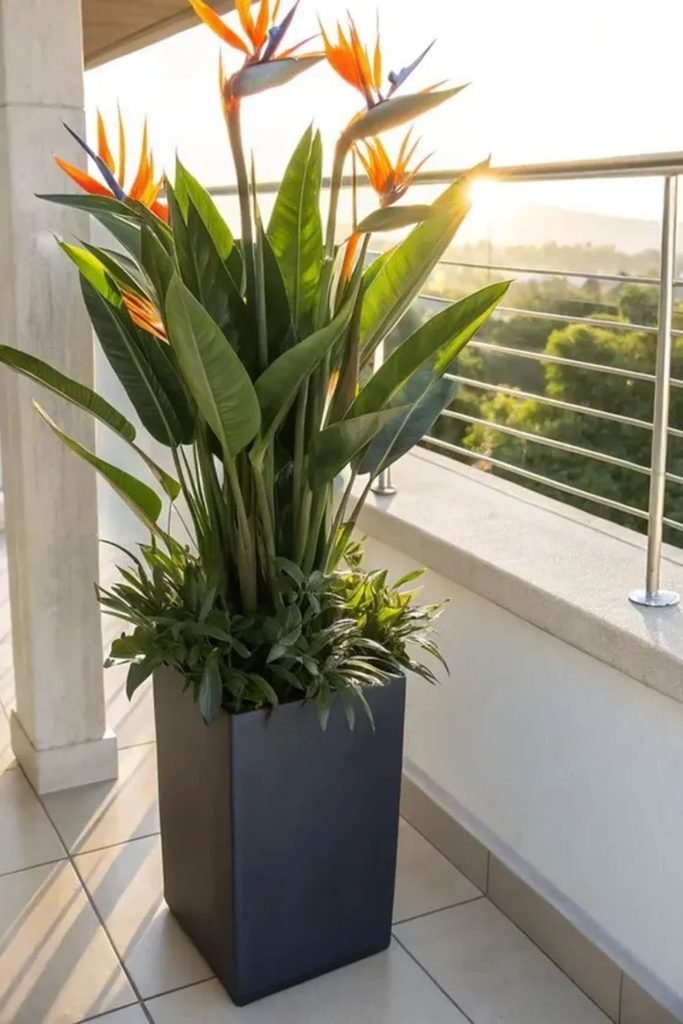
Balcony Accent
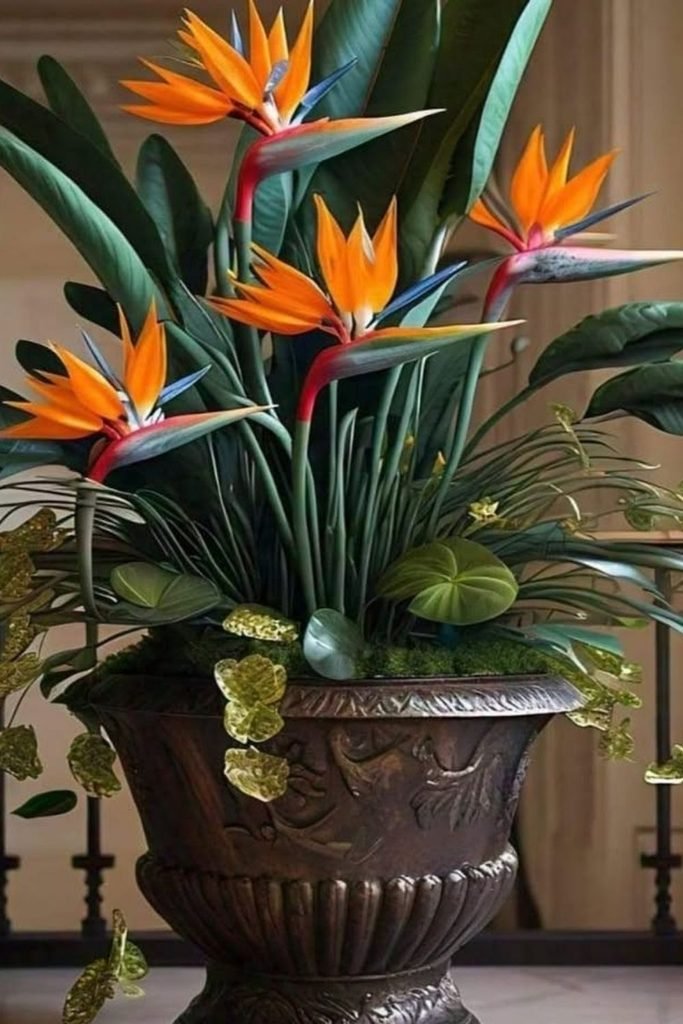
Make a narrow balcony feel greener without sacrificing walking space by using one tall Bird of Paradise as the main feature.
A narrow rectangular planter keeps the footprint down, while the vertical greenery can give height above the railing.
Place it in a location where the plant will get lots of light but watch out for too much afternoon sun if your balcony gets really hot.
The smaller leaves near the base softens the pot, while limiting companion plants makes watering easier.
This is a particularly good arrangement for apartment balconies where you want a tropical appearance without lining every accessible edge with individual pots.
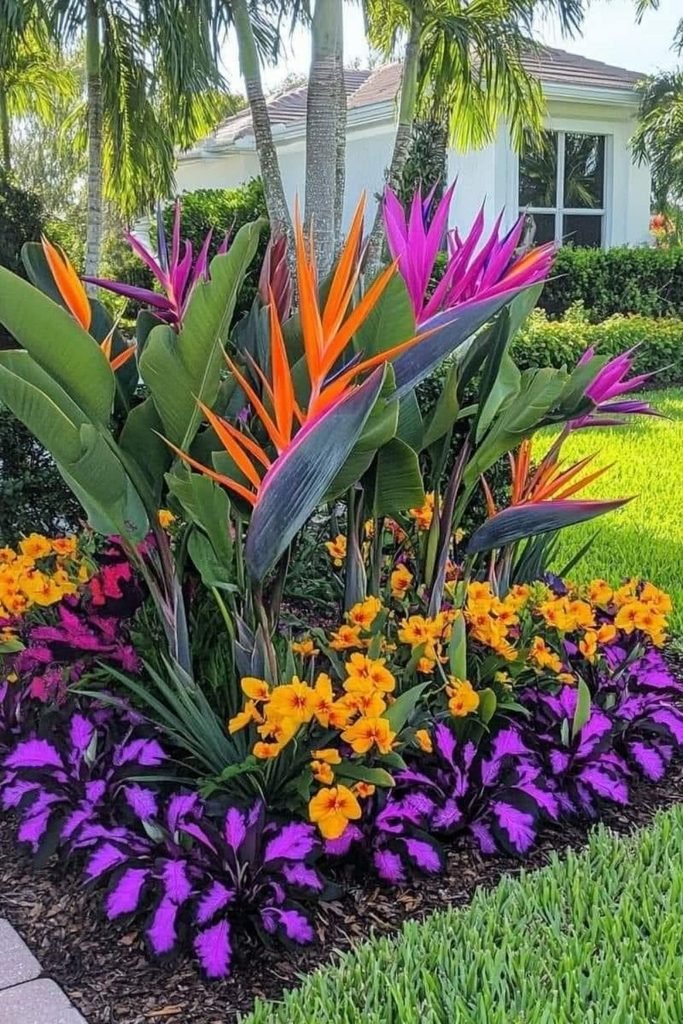
Color Layers
Build a fuller tropical bed by letting Bird of Paradise provide the height while shorter flowering and foliage plants fill the space underneath.
Place the tallest plants in the back or center, then work down to brilliant seasonal blooms and low-growing greenery along the edge.
This tiered method is particularly effective in sunny front yards, curved beds or vast spaces next to sidewalks where one plant would look incomplete.
Allow each Bird of Paradise clump some breathing space for its leaves to grow out, and opt for lower companions that will not compete much for light.
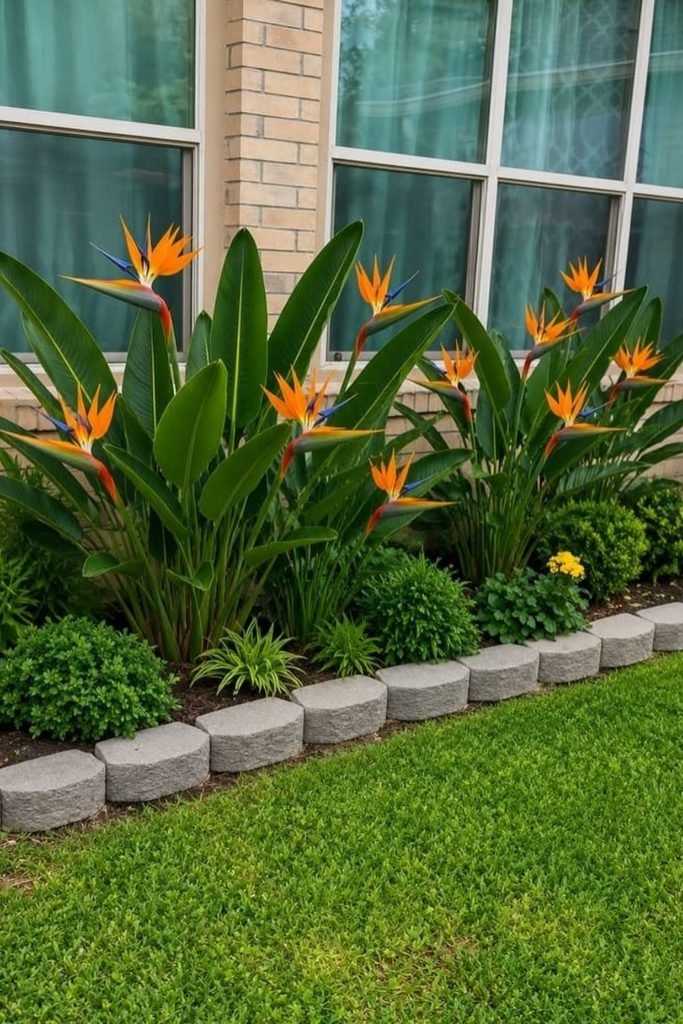
Foundation Border
Use Bird of Paradise as your tall layer to soften a bare foundation without hiding the house and plant compact evergreen shrubs along the front.
Position larger plants near the windows rather than under them so the mature foliage can spread out without shadowing the glass.
A defined stone edging helps prevent turf from growing into the bed and makes care easy year-round.
This works particularly well for sunny front yards and lengthy outside walls where repeating a few clumps of Bird of Paradise gives a sense of continuity.
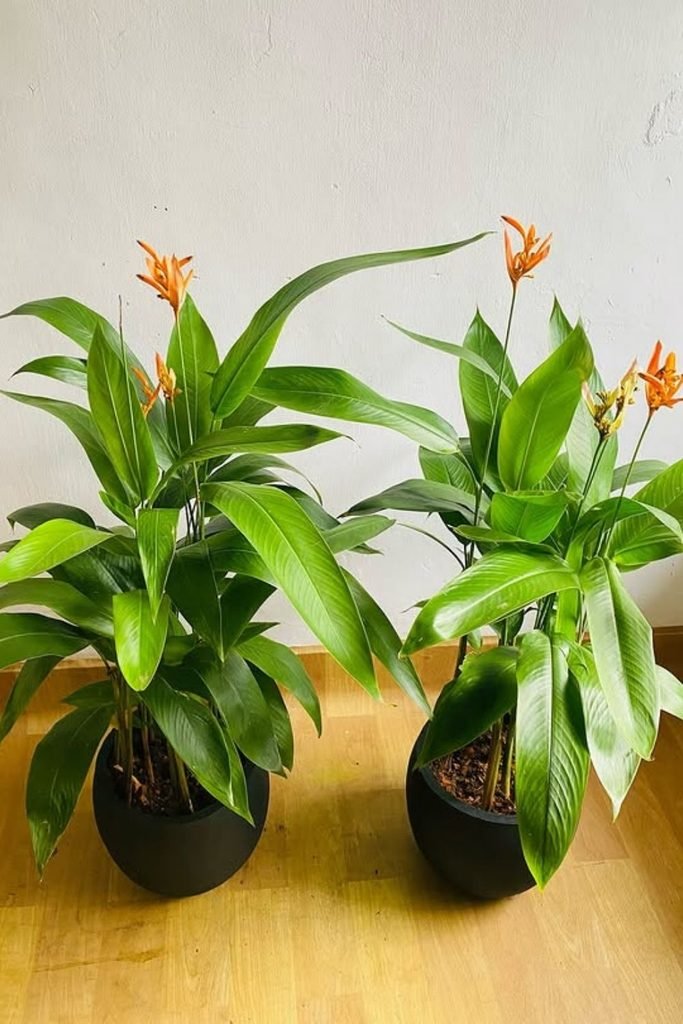
Paired Pots
Use two Bird of Paradise plants when one small specimen feels lost against a wide empty wall.
Keep each plant in its own pot instead of stuffing both into one large container, which makes watering, repotting and moving them much easier.
Slight variations in height give the pair a natural look and a more abundant display.
This arrangement looks excellent alongside huge windows, across open walls of a living room or in a bright entryway with sufficient floor space.
Leave some room between the pots for the leaves to grow freely rather than tangle as both plants mature.
Sofa Accent
Let one upright Bird of Paradise fill the narrow gap beside a sofa instead of adding another piece of furniture that steals floor space.
Select a small planter that is heavy enough to support the tall stems, and then put it far enough from the sitting so that the leaves do not rub.
This works particularly well in tiny living spaces where you want height without cluttering shelves and tables with more decorative objects.
Place the plant in bright, natural light and rotate the pot periodically if the stems begin to stretch out excessively in one direction.
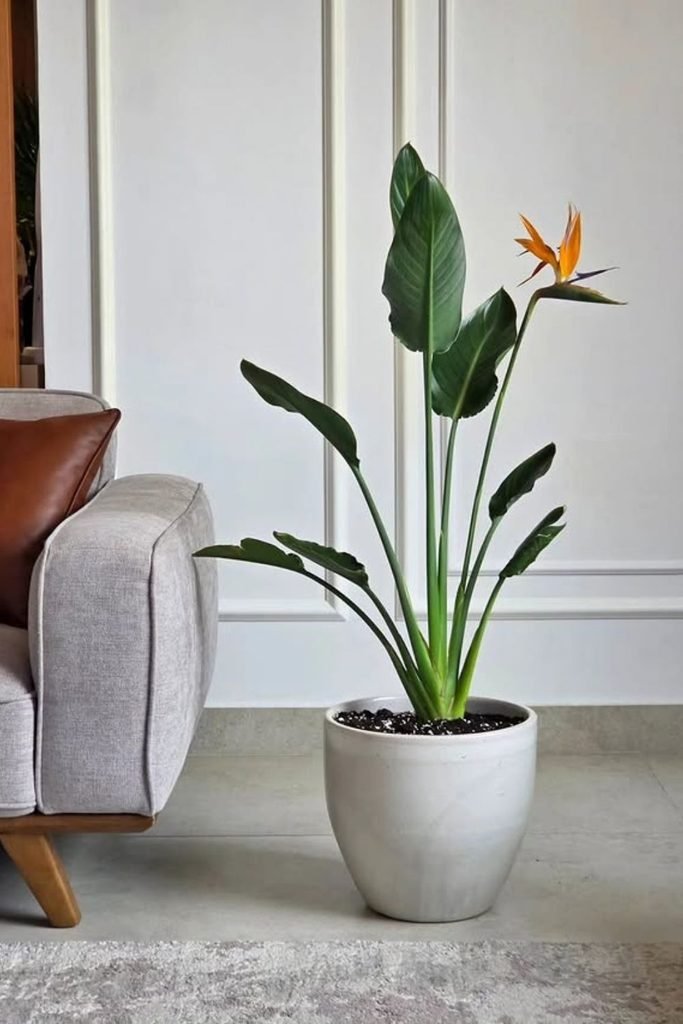
Window Statement
Reserve a bright window corner for your largest Bird of Paradise so its height becomes an advantage instead of a space problem.
A large, hefty planter provides a sturdy base for mature stems and maintaining foliage near natural light prevents poor development toward distant windows.
The greatest place to employ this method is in an open living room, office or entryway with high ceilings and unused vertical space.
Pull the pot out a bit from the wall so the spreading leaves have some chance to fan out, and keep it out of busy walkways where the broad foliage.
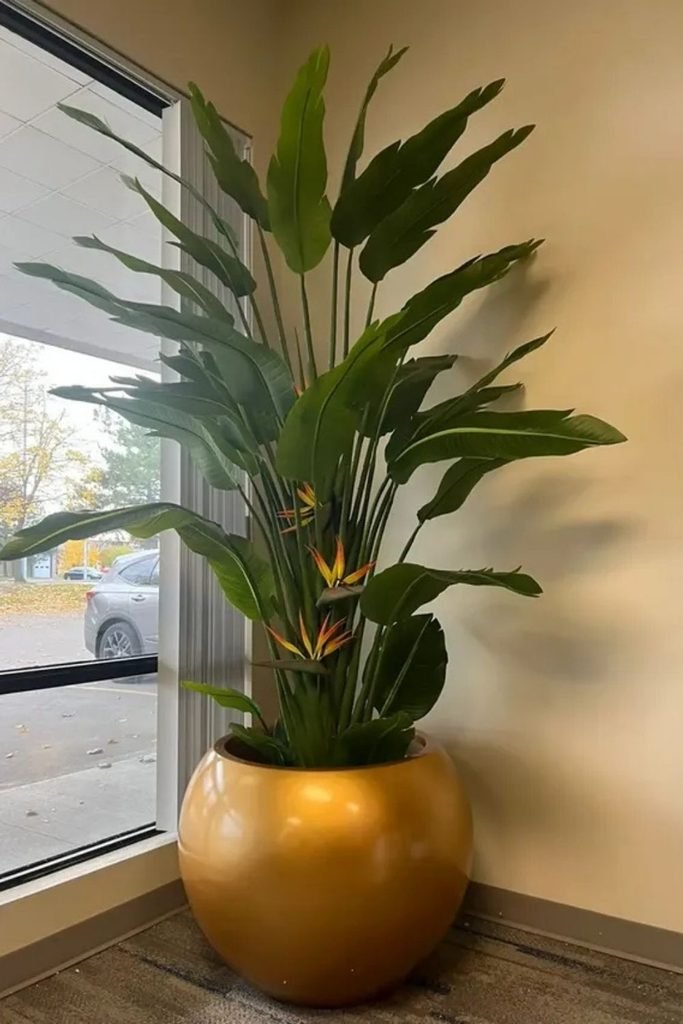
Slim Display
Choose an upright Bird of Paradise when floor space is limited but you still want strong greenery at eye level.
A slim planter keeps things tight at the base, so this arrangement works well next to a sunny window, along an entryway console or along an open living room wall.
Don’t push the leaves under shelves, give the plant strong light and enough space above to maintain its vertical form.
If you use decorative stones, keep them as a thin top layer, as a heavy coating can make it tougher to evaluate soil moisture before watering.
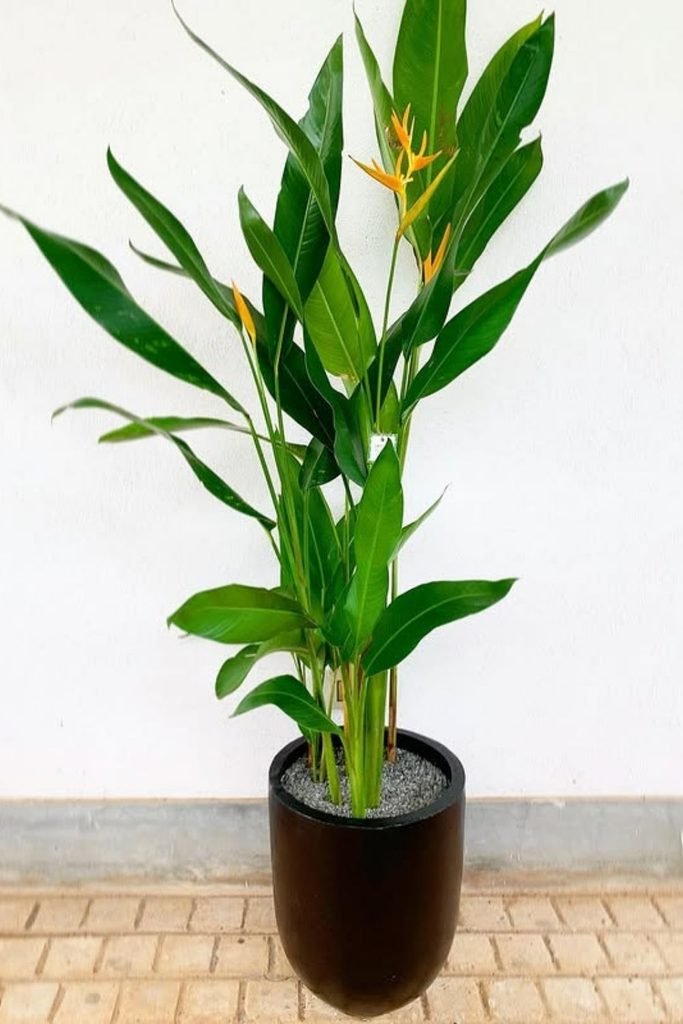
Woven Planter
Warm up a bright living room by placing Bird of Paradise inside a woven basket-style cover instead of relying on a plain plastic pot.
Place the plant by a large window so its long stems get plenty of light and use the basket’s natural texture to tie it into neutral sofas, wood flooring.
For ease of watering, keep the plant in a draining inner pot and eliminate any water that collects in the outer basket.
This layout adds a relaxing tropical vibe to modest living rooms without the need to add several extra plants or decor elements.
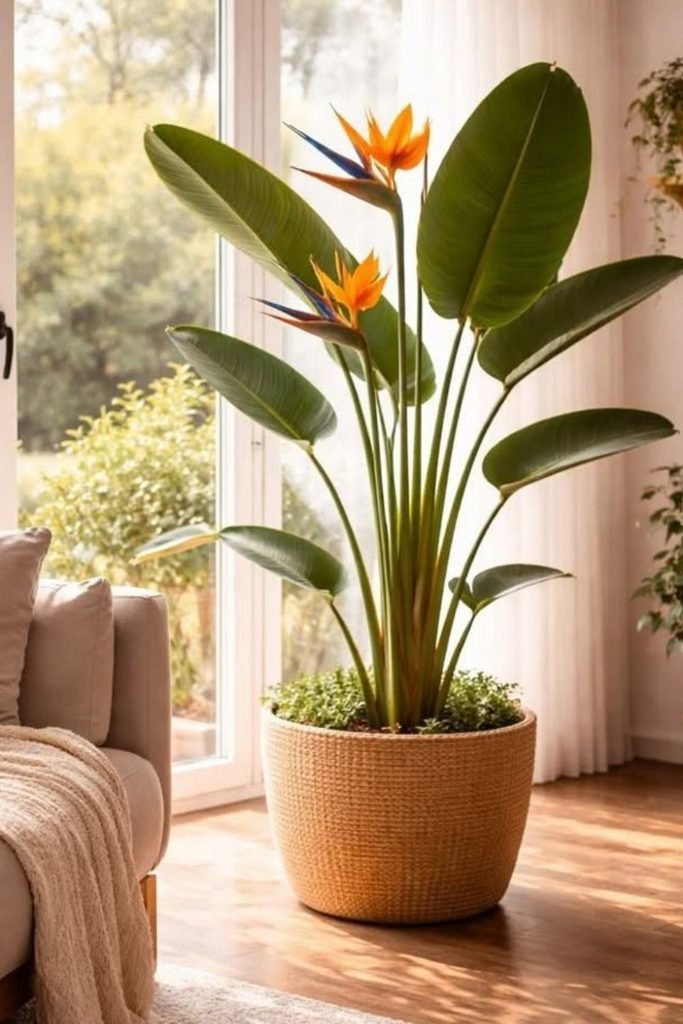
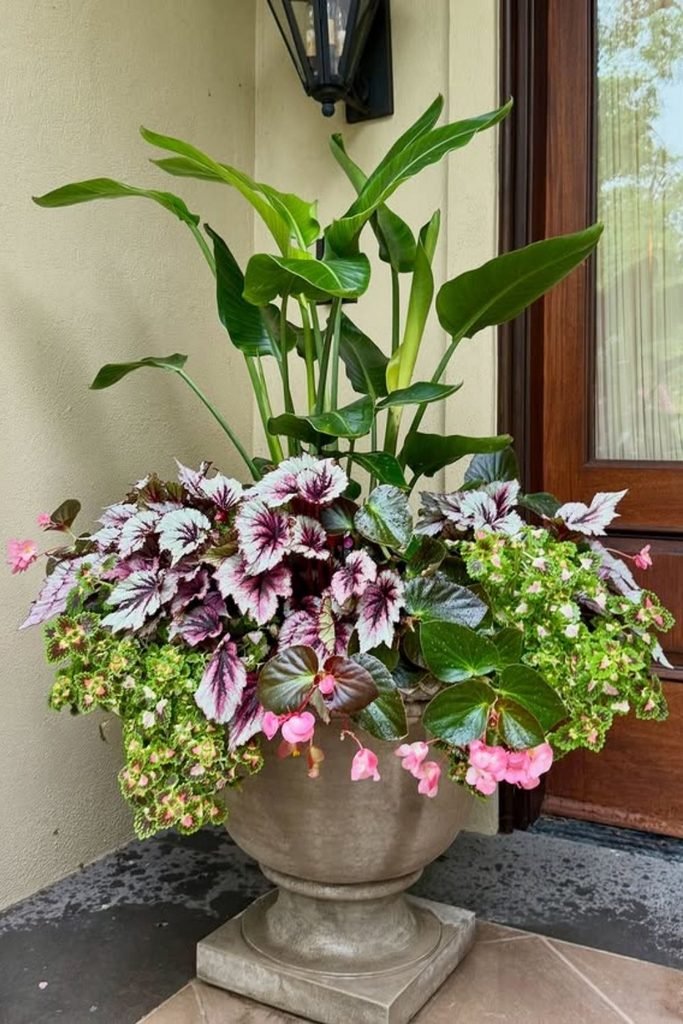
Porch Planter
Turn an empty porch corner into a fuller garden feature by using Bird of Paradise as the tall center and letting colorful foliage spill around its base.
Pick a broad, deep pot that can hold the plant until it reaches its full height, and then add shorter companion plants around the perimeter to create layers.
This arrangement works particularly well next to an entrance or on a covered patio with a lot of bright light.
Be sure to pair compatible plants, since all plants in a container need to have similar water and light needs for the composition to thrive.
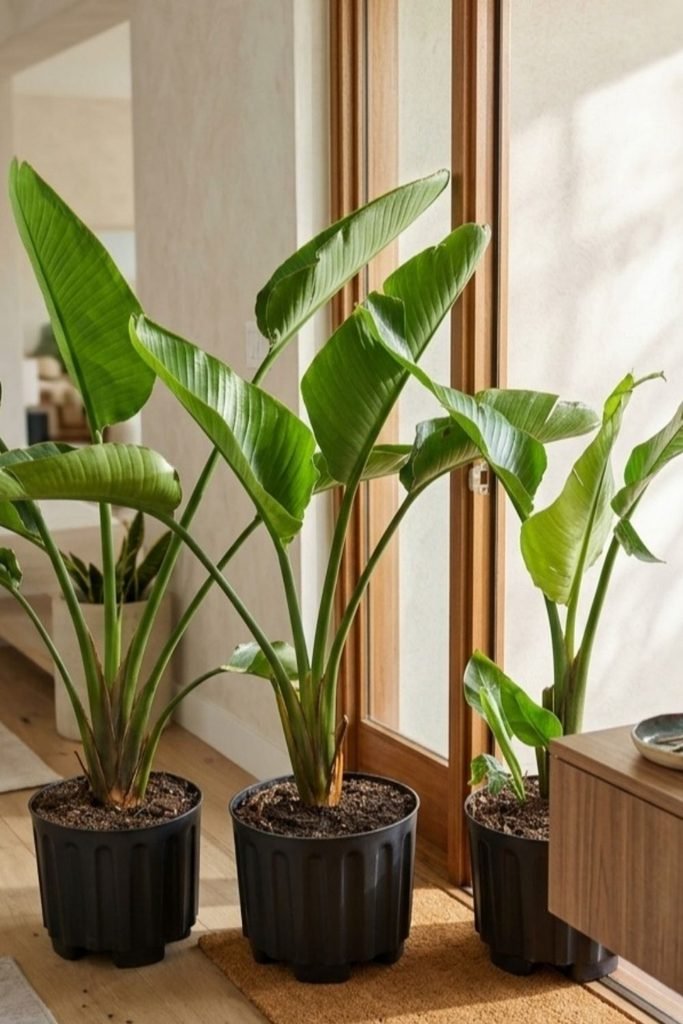
Window Trio
Create a fuller indoor garden without scattering pots across the room by grouping three Bird of Paradise plants beside one large bright window.
Adjust their heights a little so the leaves overlap naturally but give each plant opportunity to spread.
Keeping them in separate containers makes it easier to rotate and water and repot each one as it grows.
This set-up works particularly effectively beside patio doors or across an unused window wall where the group is flooded with intense natural light.
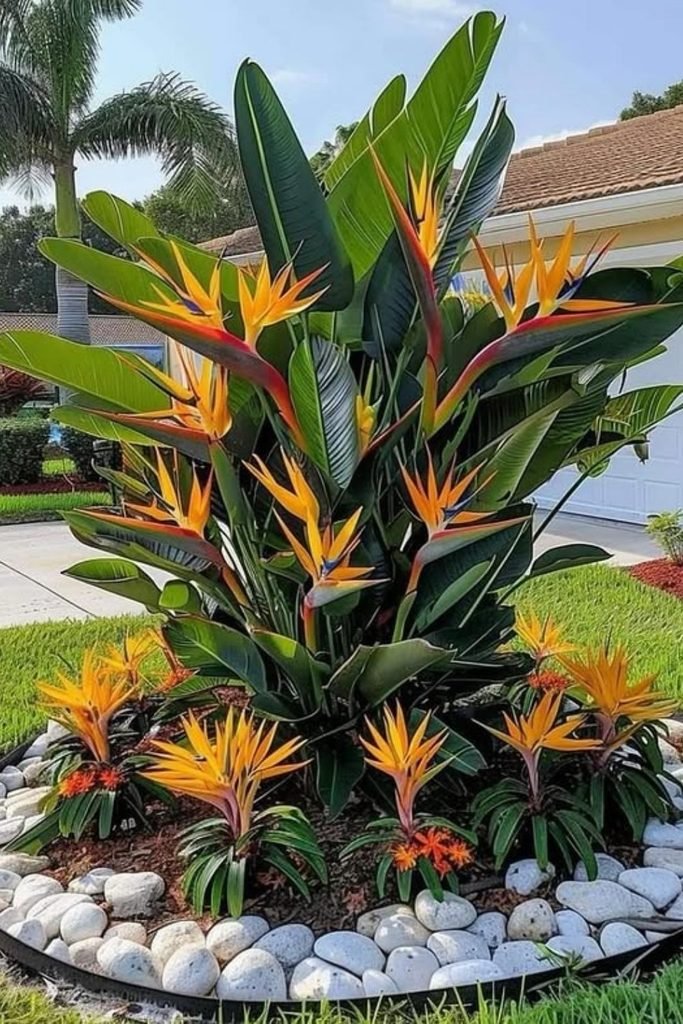
Island Feature
Give an open lawn a clear focal point by building a circular Bird of Paradise bed instead of planting isolated clumps around the yard.
Position the tallest mature plants in the center and work your way down to smaller flowering companions on the outside so that every layer is visible.
The bed can be defined by a ring of light stones of the landscape, separating it cleanly from the surrounding grass.
This works especially effectively in sunny front yards or large lawn areas that look empty.
Allow enough of space for the middle clump as Bird of Paradise can spread out quite a bit when mature.
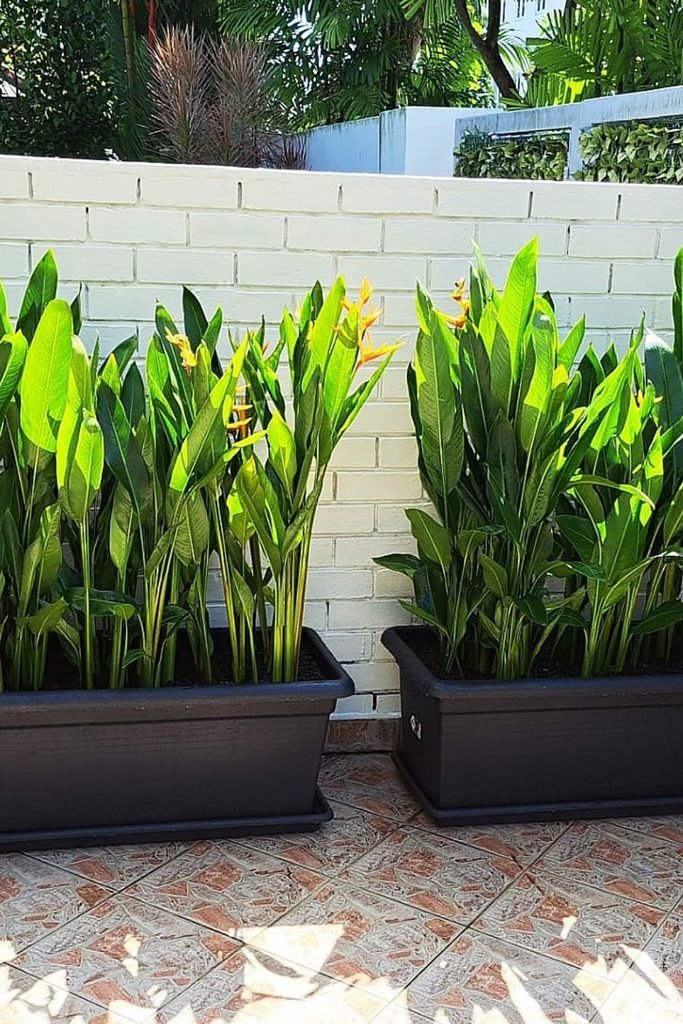
Patio Screen
Create a leafy privacy screen without digging a permanent garden bed by growing Bird of Paradise in long rectangular planters.
Line up two or more containers against a patio wall, balcony edge or seating area, planting them close enough together.
To make a green backdrop, but with enough space between stems to allow for light and air.
Small decorative pots don’t give roots much room and don’t support tall growth as well as deep, solid planters.
FAQs
Can Bird Of Paradise Grow Well In Small Rooms?
If there is sufficient vertical space and the room is well lit, then yes. Keep in bright window, plant in compact floor planter.
And room around the leaves prevents a mature plant crowding a tiny room.
Where Should I Place Bird Of Paradise Indoors?
Place a sunny area near a large window where the plant will receive enough of light, but not in the path of your major traffic pattern.
Good choices are living-room corners, patio doors, sunrooms and open spaces adjacent to low furniture.
