
23 Boys Mullet Ideas for 2026

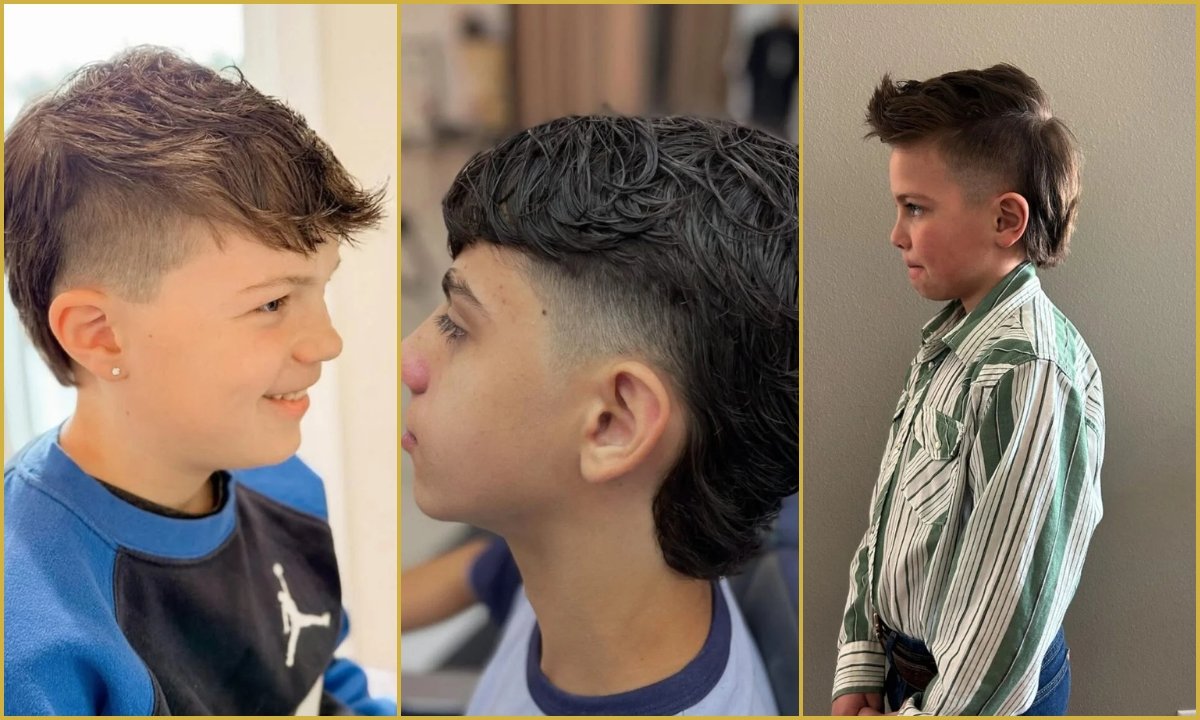
You look at the back of your boy’s head, and you wonder, “Is this just a phase or did you somehow end up with a mullet?”
You see the sides, and you think, “Okay, you look fine there,” and you glance at the top, and you tell yourself, “You can manage that.”
But then you notice the back, and you realize, “You just keep growing, don’t you?”
You don’t want to overreact and give yourself or your boy a bad haircut, but you also know you don’t want your child walking around looking unfinished.
If you’ve typed “Boy mullet” into your search, you probably feel stuck wondering if you should cut it, shape it, or just let it be.
In this article, you will see what age is appropriate is good for a mullet and then I will show you 23 mullet ideas.
Let’s jump in!
Contents
- 1 What Age Is Appropriate For A Boy Mullet?
- 1.1 Tapered Kids Mullet
- 1.2 Low Fade Mullet
- 1.3 Curly Burst Mullet
- 1.4 Spiky Kids Mullet
- 1.5 Soft Fade Mullet
- 1.6 Classic Kids Mullet
- 1.7 Hard Part Mullet
- 1.8 Taper Fade Mullet
- 1.9 Drop Fade Mullet
- 1.10 Textured Burst Mullet
- 1.11 Curly Taper Mullet
- 1.12 Messy Fade Mullet
- 1.13 Design Fade Mullet
- 1.14 Subtle Kids Mullet
- 1.15 Cross Design Mullet
- 1.16 Double Line Mullet
- 1.17 Long Back Mullet
- 1.18 Shaggy Kids Mullet
- 1.19 Side Part Mullet
- 1.20 Short Crop Mullet
- 1.21 Natural Flow Mullet
- 1.22 Extended Tail Mullet
- 1.23 Modern Fade Mullet
- 2 FAQs
What Age Is Appropriate For A Boy Mullet?
A mullet can be appropriate for a boy at almost any age, as it depends more on personality, style, and maintenance than on a specific number.
For younger boys, typically between ages 4 and 10, a softer and more subtle mullet is often preferred, with shorter sides and a slightly longer back to keep the look neat and playful.
As boys grow into pre-teens and teenagers, they are more likely to experiment with their appearance.
A more defined mullet with a noticeable contrast between the front, sides, and back can reflect confidence and individuality.
Factors such as personal preference, school expectations, and grooming requirements also play an important role in deciding whether the hairstyle is suitable.
Overall, a mullet can work well at any age if it is styled appropriately and maintained properly.
Tapered Kids Mullet
You want a mullet that’s playful but neat? You can go for a clean taper on the sides while letting the back flow naturally.
You should ask the barber to taper around the ears and neckline, and you can leave extra length through the crown and back.
When you brush the top slightly back while it’s damp, you’ll see how you can keep the style sharp but still playful for everyday wear.
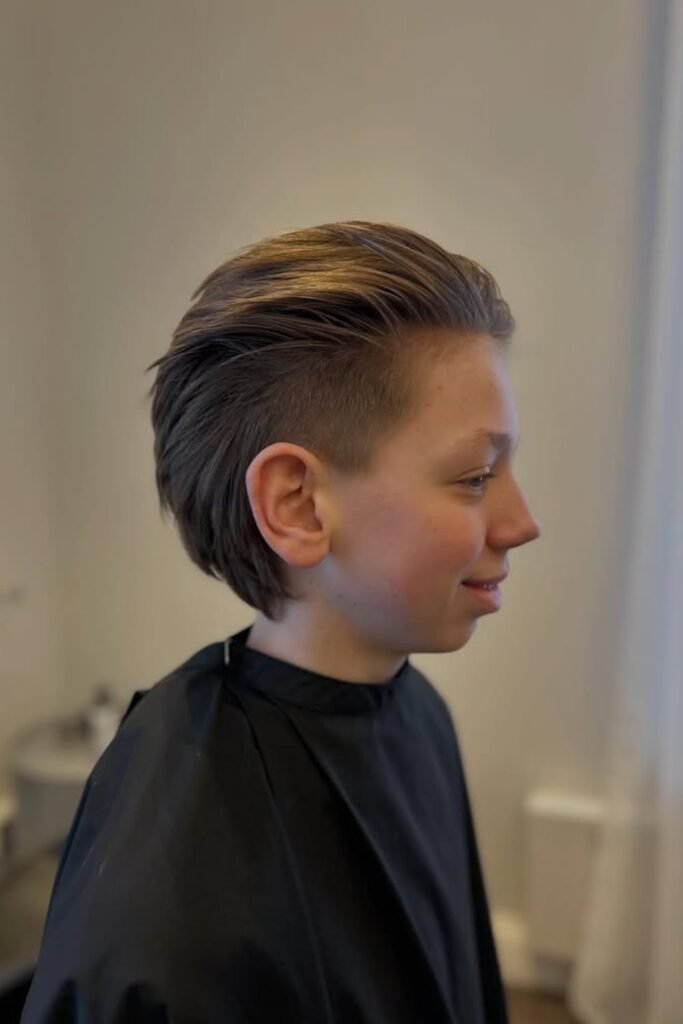
Low Fade Mullet
You’ll notice balance makes this haircut work for you. You can clear bulk around the ears with a low fade while letting the back keep the mullet shape without looking too sharp.
If you have thick or slightly wavy hair, you can see how the texture on top adds movement.
You should ask the barber for a soft blend into the crown and leave the back a little longer so you can grow it out naturally.
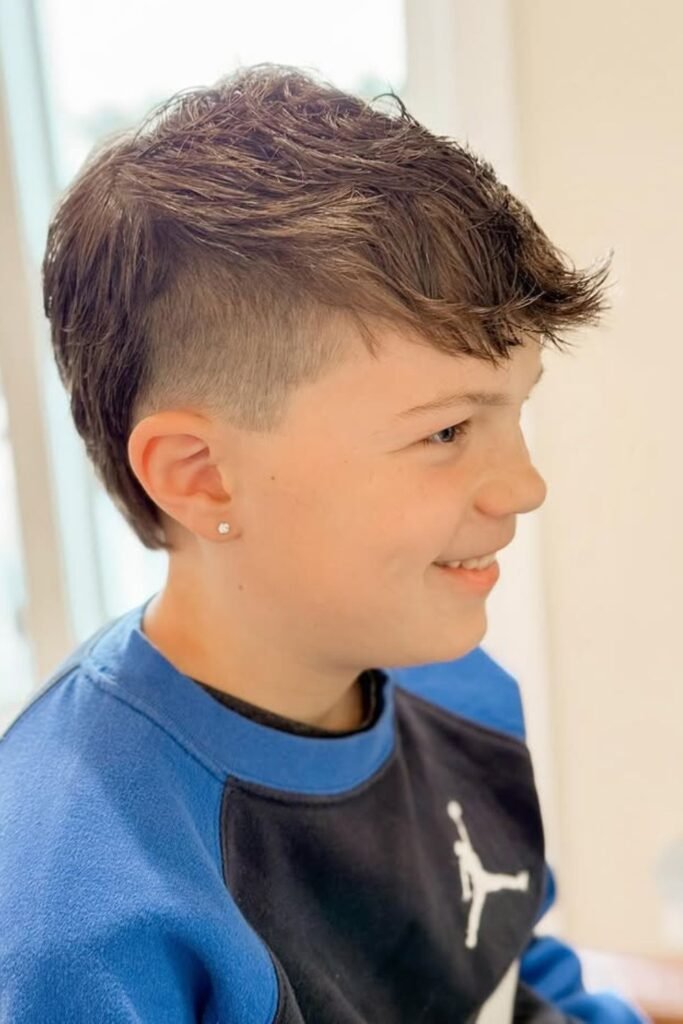
Curly Burst Mullet
You can let texture do most of the work here. The burst-style fade wraps around the ear and blends quickly into thicker curls on top and a longer back.
You’ll love how it keeps the sides clean while your natural waves add volume.
If you want to recreate it, you should ask for a low burst fade and keep the crown layered so the curls don’t sit flat.
You can also use a light curl cream after washing to keep the texture defined without making it stiff.
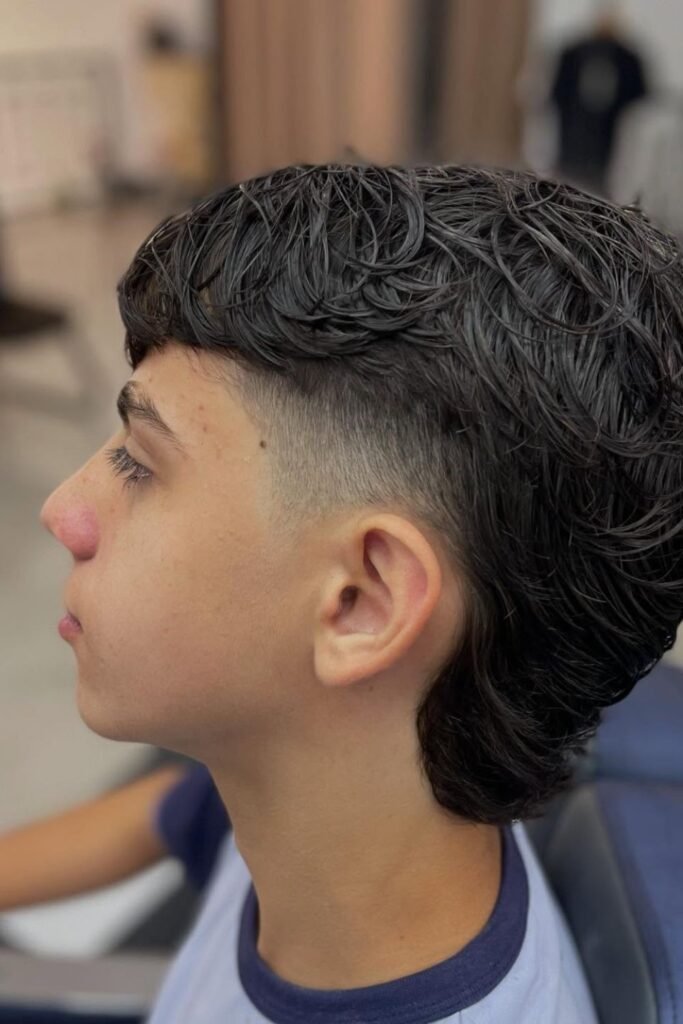
Spiky Kids Mullet
You might want forward energy in this mullet to make it feel playful instead of messy.
You can clip the sides short while leaving the top longer and textured so you can spike it slightly toward the front.
You’ll notice how that contrast keeps the haircut modern while the back keeps the mullet shape. When you style it, you can use your fingers and a tiny bit of matte paste.
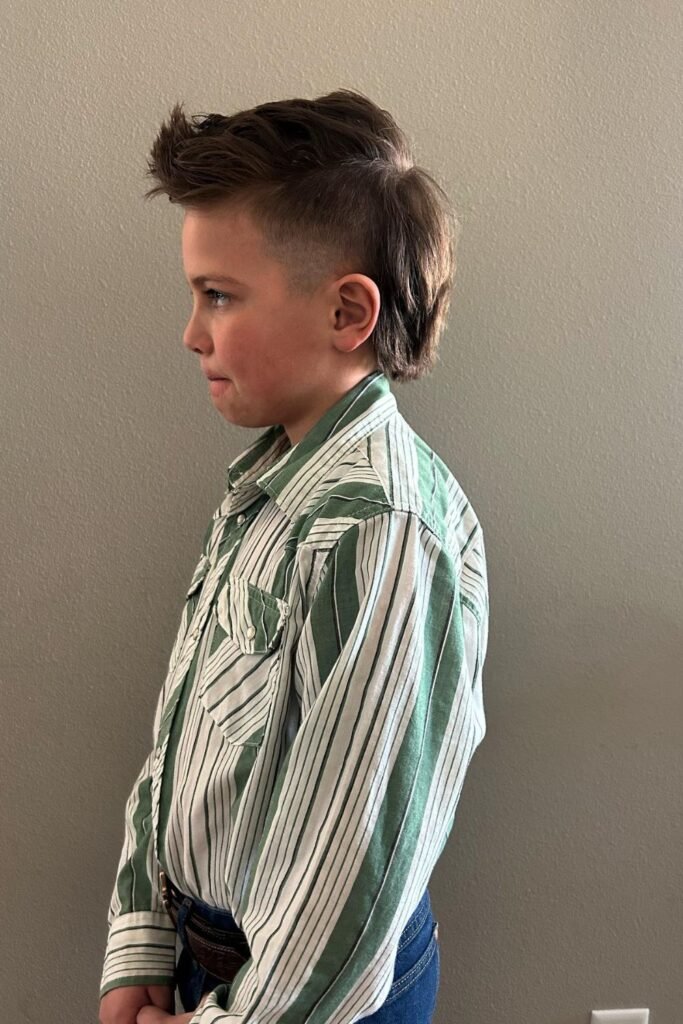
Soft Fade Mullet
You want clean sides to make the longer back stand out without looking harsh?
You can ask the barber for a gentle fade around the ears, blending into a textured crown and leaving the back slightly longer.
You’ll see how it works well for straight or fine hair because you can add shape without needing daily styling.
If you want, you can ask for scissor work on top so the haircut grows out smoothly instead of turning bulky.
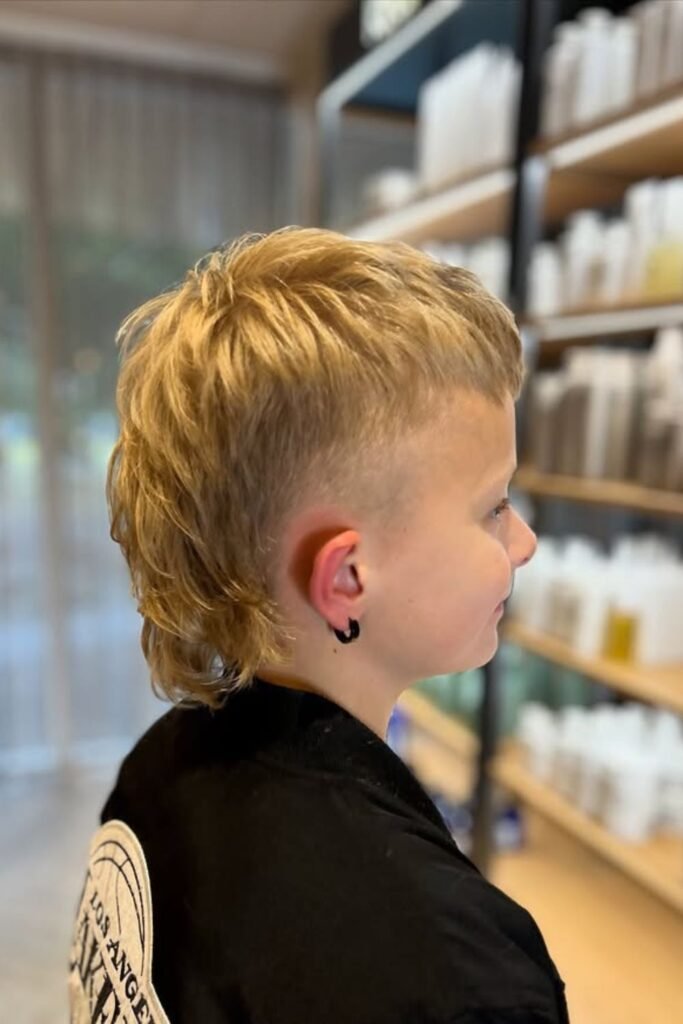
Classic Kids Mullet
You’re not going subtle here, you can embrace the contrast.
You’ll see the top and sides stay short and tidy while the back keeps noticeable length, creating that unmistakable mullet shape.
If you have straight or slightly wavy hair, you can let the longer back fall naturally instead of puffing out.
You should ask the barber to keep the crown short but leave the nape long and lightly layered so you can get movement instead of flatness.
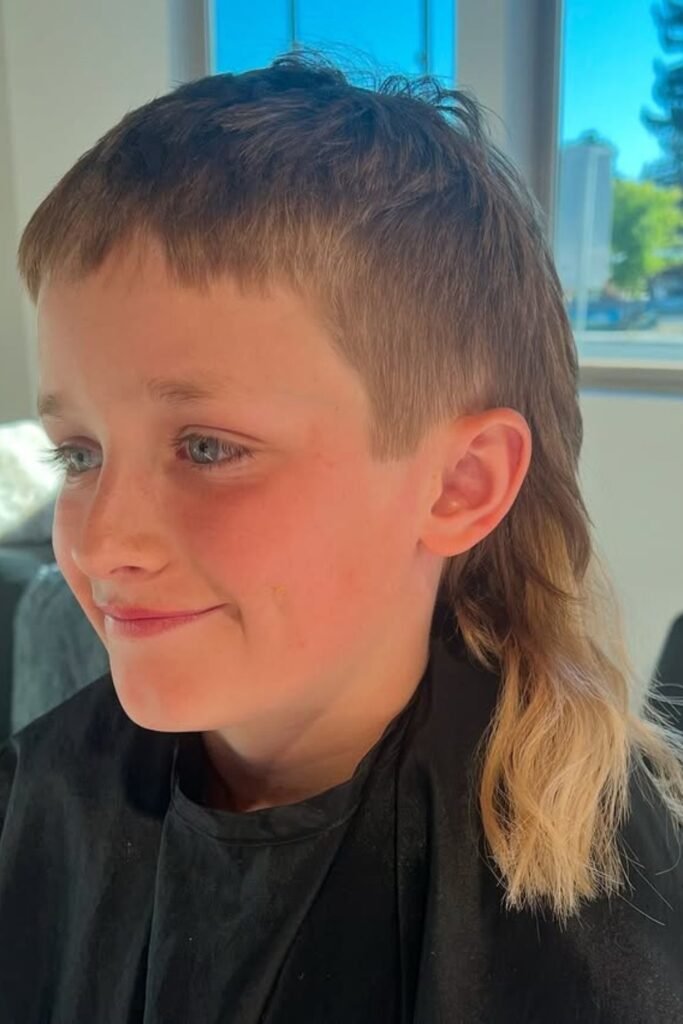
Hard Part Mullet
You can instantly change your look with a sharp line. Ask the barber for a clear hard part above the fade, separating the short sides from the longer top and back.
You’ll notice how that detail makes the mullet look intentional instead of accidental.
You can go for a mid or low fade with a shaved part line, and you should keep the back slightly longer so the mullet shape still shows as it grows.
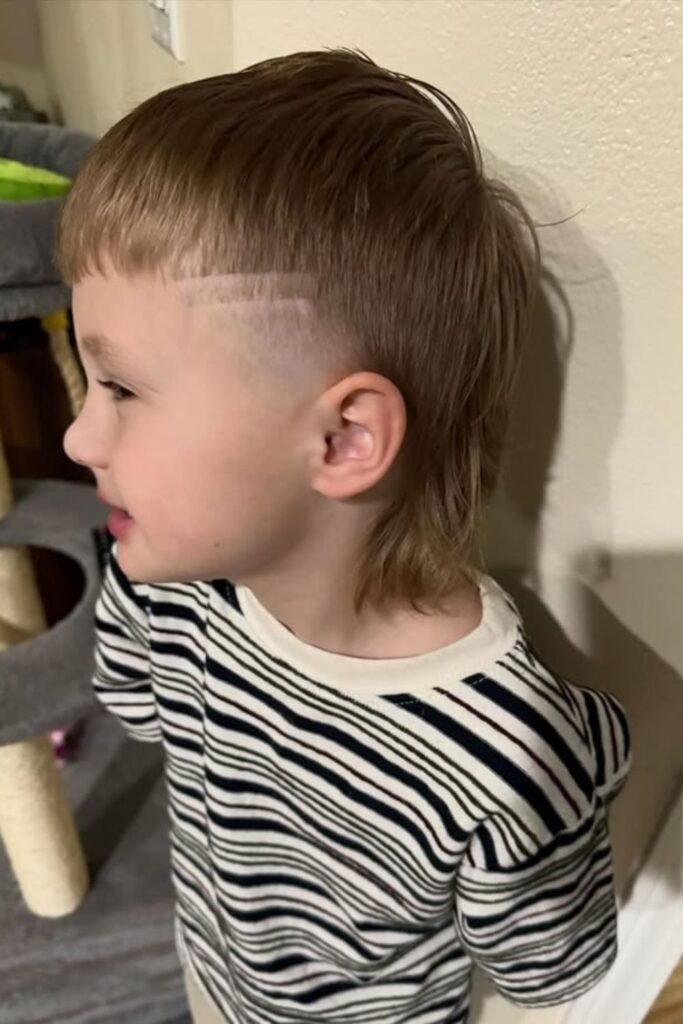
Taper Fade Mullet
You can give your mullet personality with movement.
Taper the sides tightly around the ear while letting the crown and back keep extra length, you’ll see how it flows naturally toward the neckline.
If you have straight or thick hair, you can use the texture to help the back sit nicely instead of sticking out.
You should ask the barber for a clean taper fade and keep the top slightly layered so it grows out smoothly.
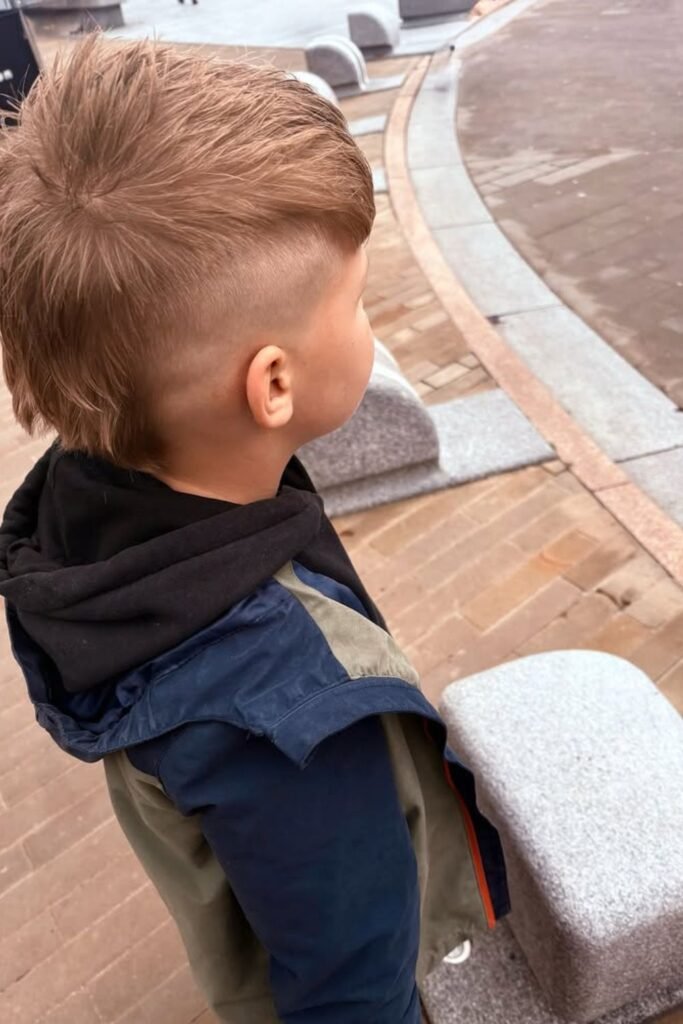
Drop Fade Mullet
You might notice how the fade dips behind the ear instead of running straight across.
You can use that drop shape to keep the sides tight while allowing the back to flow longer.
You’ll see how the mullet looks balanced instead of bulky.
You should ask your barber for a low drop fade that curves toward the neckline and leave extra length at the nape so you can keep the shape clear.
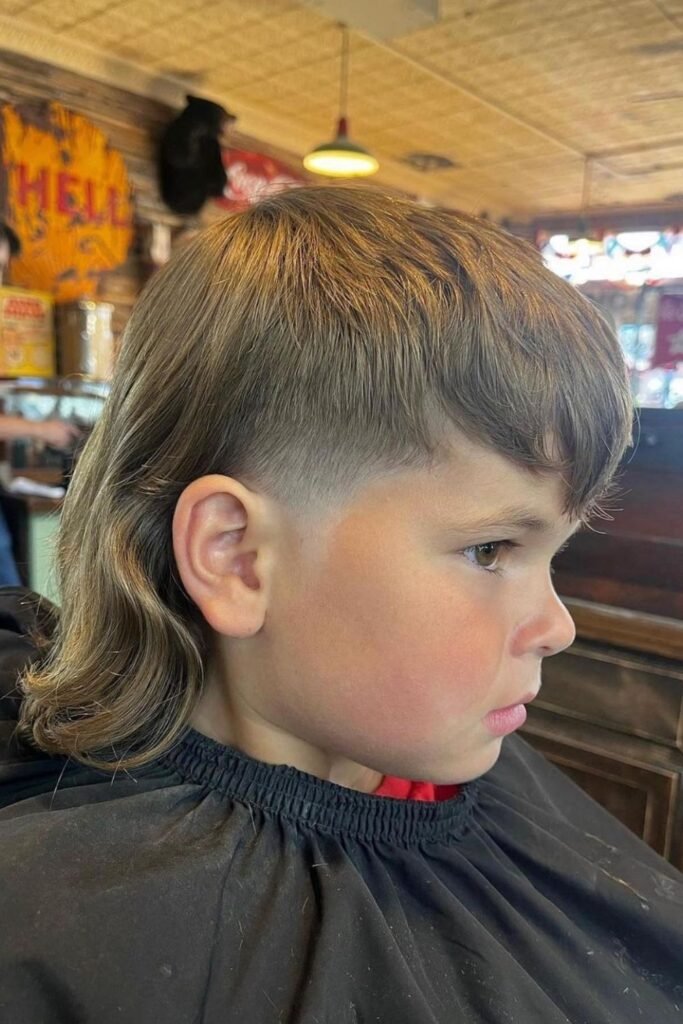
Textured Burst Mullet
You can let the top lift and move naturally by using choppy layers.
You’ll see how the burst fade curves around the ear, keeping the sides tight while the crown and back stay fuller.
If you have thick or wavy hair with natural volume, you can really make this work for you.
Ask the barber for a low burst fade with point-cut layers on top so you can keep that messy, effortless texture.
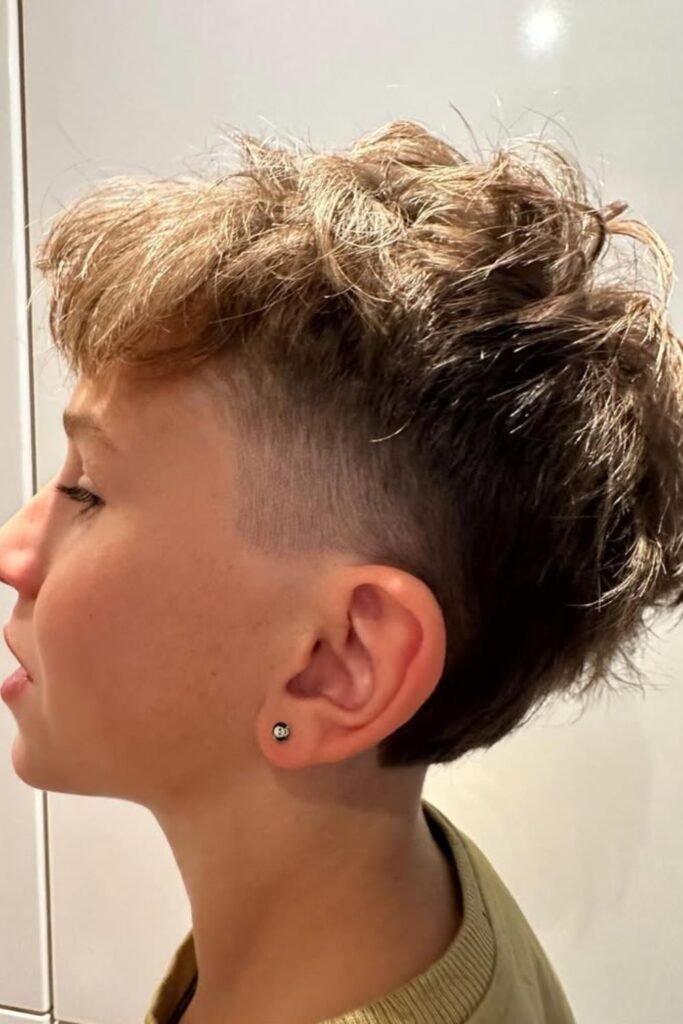
Curly Taper Mullet
You already know natural curls give this mullet personality. You can ask the barber to taper the sides tight while letting the curls stack in the back.
You’ll see how it keeps the haircut clean around the ears while the back stays soft and playful.
If your child has curly or wavy hair, you should leave the crown longer so the curls form naturally instead of getting cut too short.
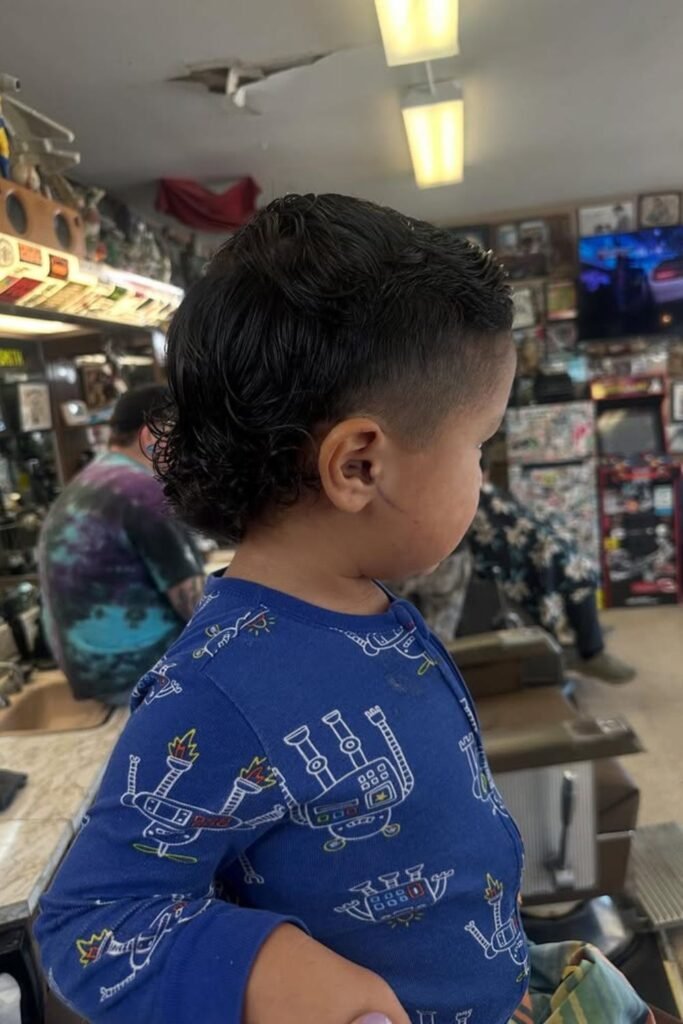
Messy Fade Mullet
You can let texture do all the work here. You’ll notice the barber keeps the sides faded tight while leaving the crown and back longer and choppy for that messy, lived-in look.
You’ll find this works best for thick hair because the layers give movement instead of weight.
If you want, you can ask for a low fade with point-cut layers and style it with your fingers and a tiny bit of matte clay for that effortless finish.
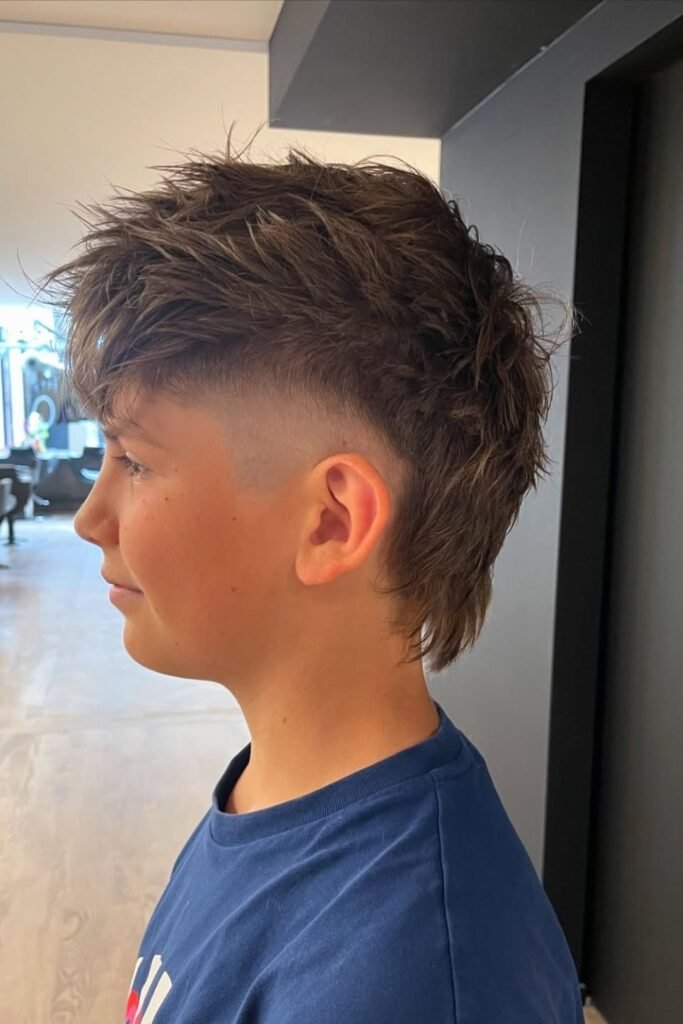
Design Fade Mullet
You can make a regular mullet exciting with a simple design line.
You’ll see how the barber fades the sides clean and carves two sharp lines above the fade while keeping the back classic.
If you want this style, you should ask for a low or mid fade and a small razor design near the temple.
You’ll want a quick cleanup every few weeks because the lines grow out fast.
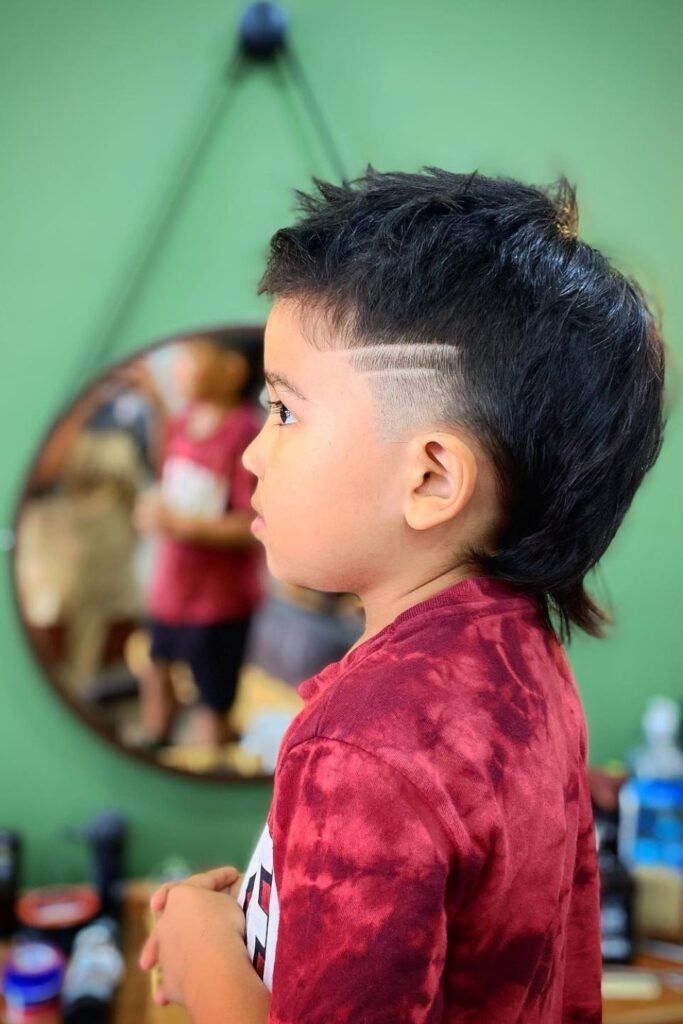
Subtle Kids Mullet
Sometimes, you can make a mullet barely noticeable and still cute.
You can keep the sides softly tapered and blend the top into a slightly longer back for a gentle shape.
You’ll see how this works for parents who want the mullet flow without a bold look.
You should ask the barber for scissor-cut sides with a light taper and leave the back a bit longer so it grows naturally.
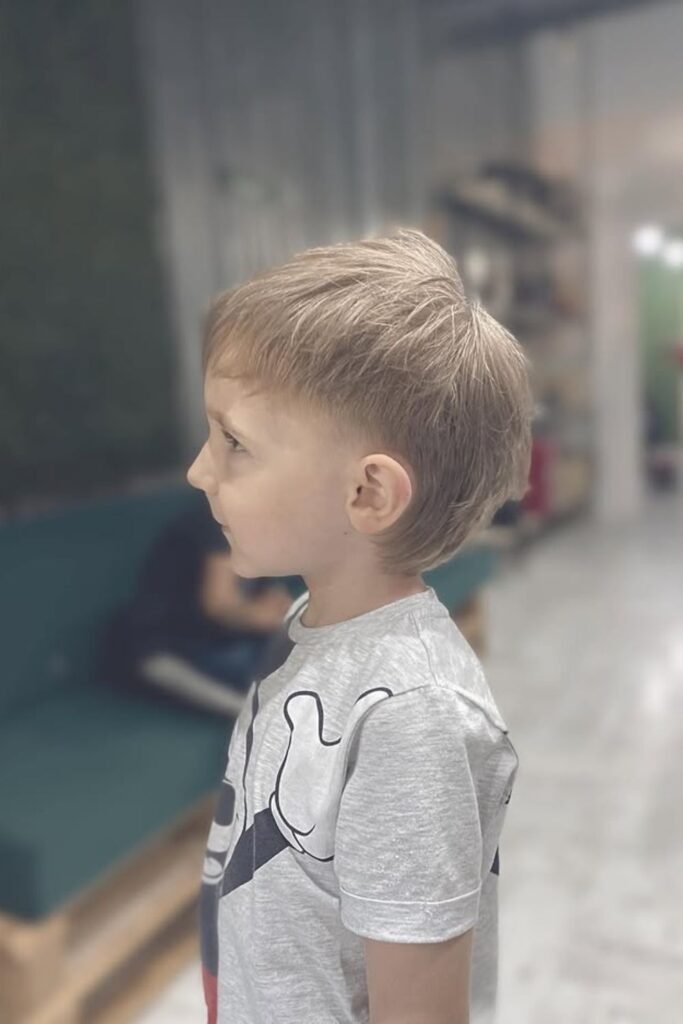
Cross Design Mullet
You can make a haircut memorable with just one small detail.
You’ll notice the barber fades the sides tight and shaves a small cross above the fade while keeping the back long and flowing.
If you want something bold but still wearable, you should ask for a mid fade with a small razor design and keep the back layered so the length moves naturally.
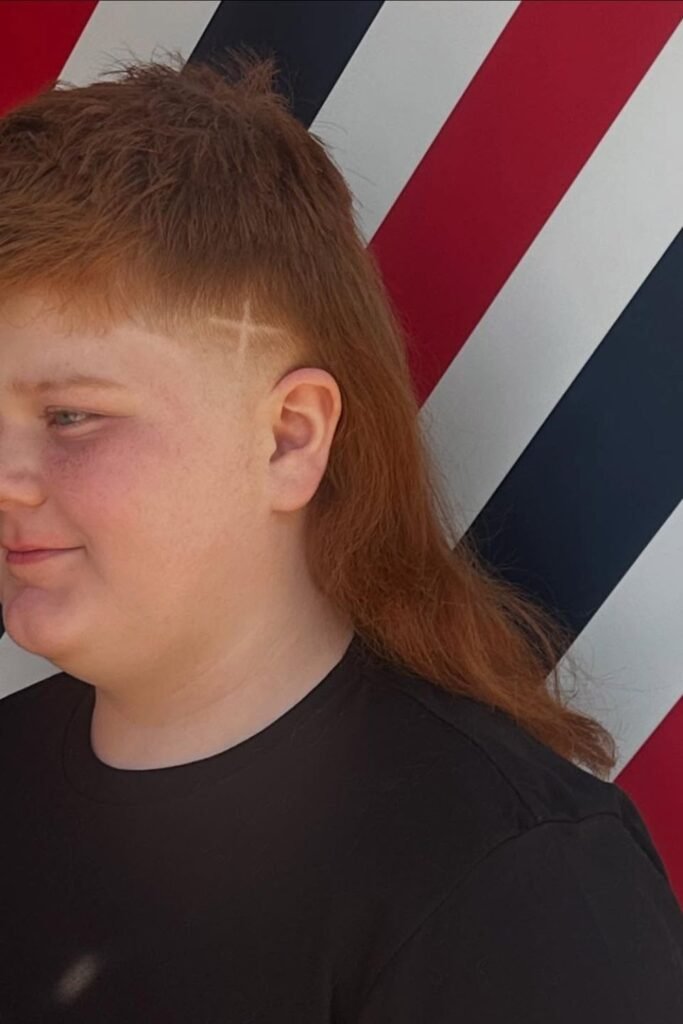
Double Line Mullet
You can add instant personality with two clean razor lines.
You’ll see how the barber fades the sides smoothly and carves parallel lines above the fade while keeping the crown textured and the back longer.
If you want this look, you should ask for a mid fade with double shaved lines and leave enough length in the back so the mullet shape stays visible as it grows.
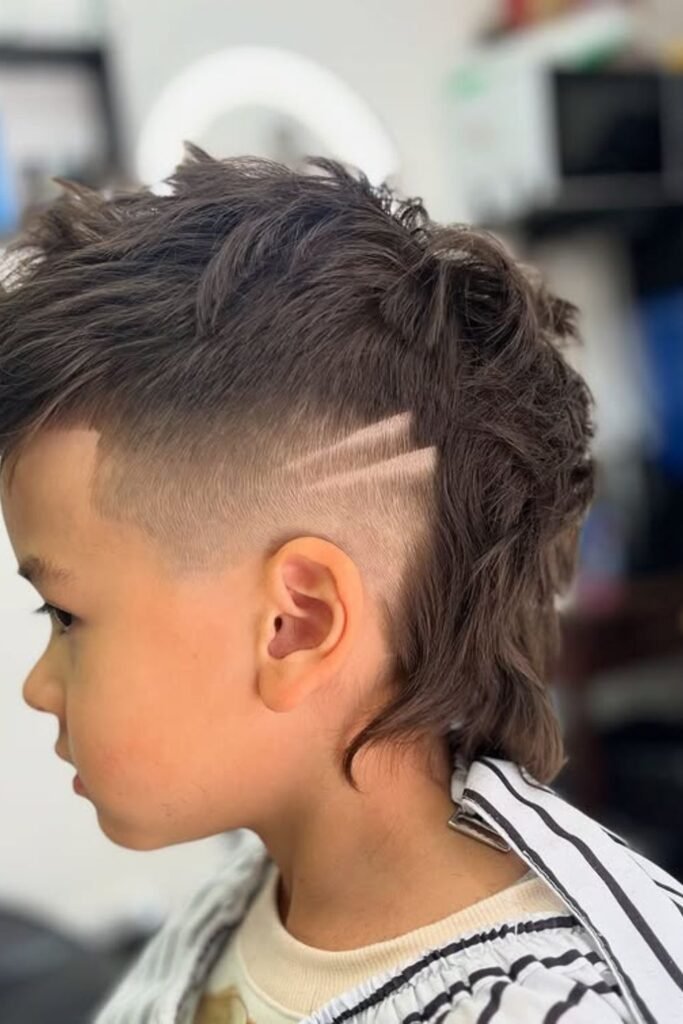
Long Back Mullet
You’ll notice length in the back gives this haircut its attitude.
You can keep the sides clipped short and the crown tight while letting the back grow noticeably longer so the shape stands out.
If you want, you should leave the nape layered so the length moves naturally instead of sitting heavy.
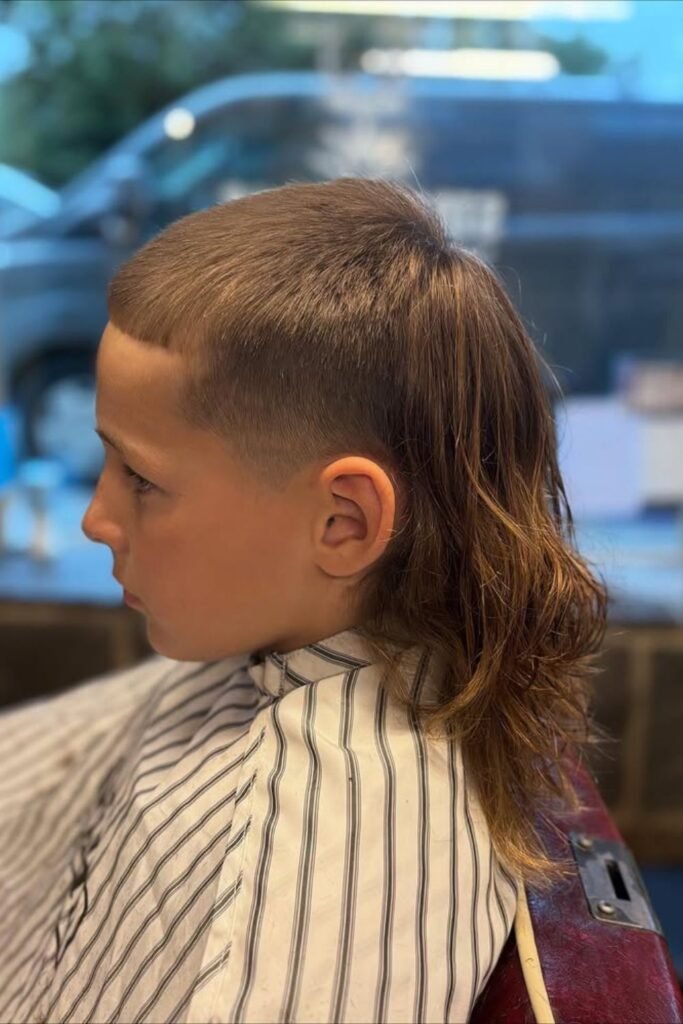
Shaggy Kids Mullet
You can let layers create a relaxed, surfer-style vibe.
You’ll see how the barber keeps the sides softly blended while leaving the crown and back longer and slightly messy.
You should ask for scissor-cut layers through the top and back so the hair falls freely and keeps movement as it grows.
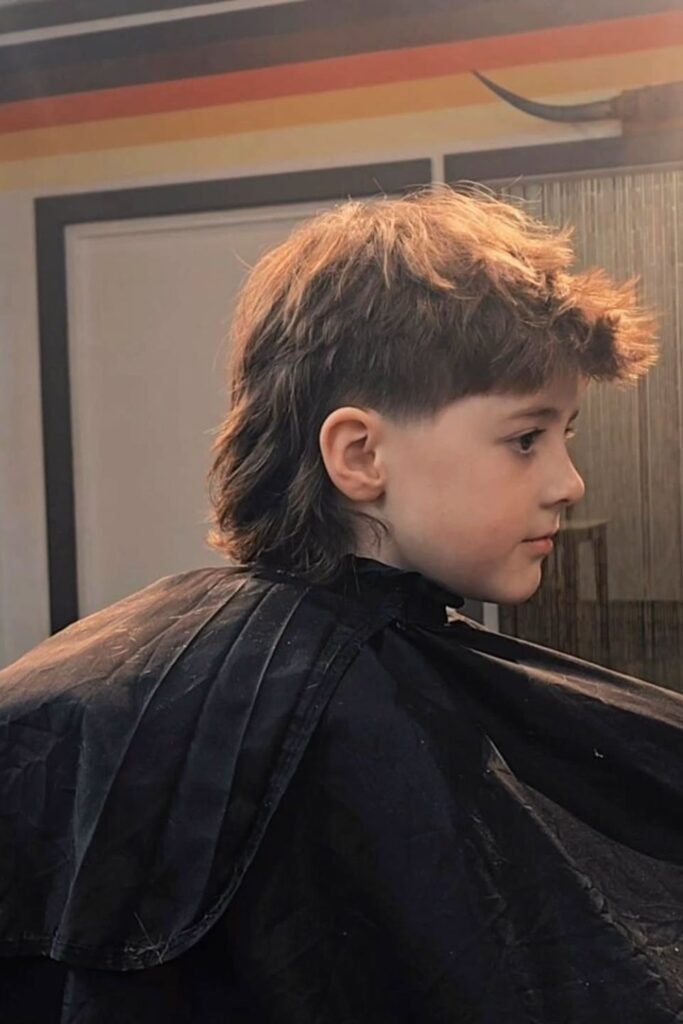
Side Part Mullet
You can make a mullet look polished with a clean side part.
You’ll notice the barber tapers the sides tightly and leaves extra length on top so the hair sweeps neatly to one side.
If you want this look, you should ask for a low taper with a longer top and keep the nape layered so the mullet flows naturally.
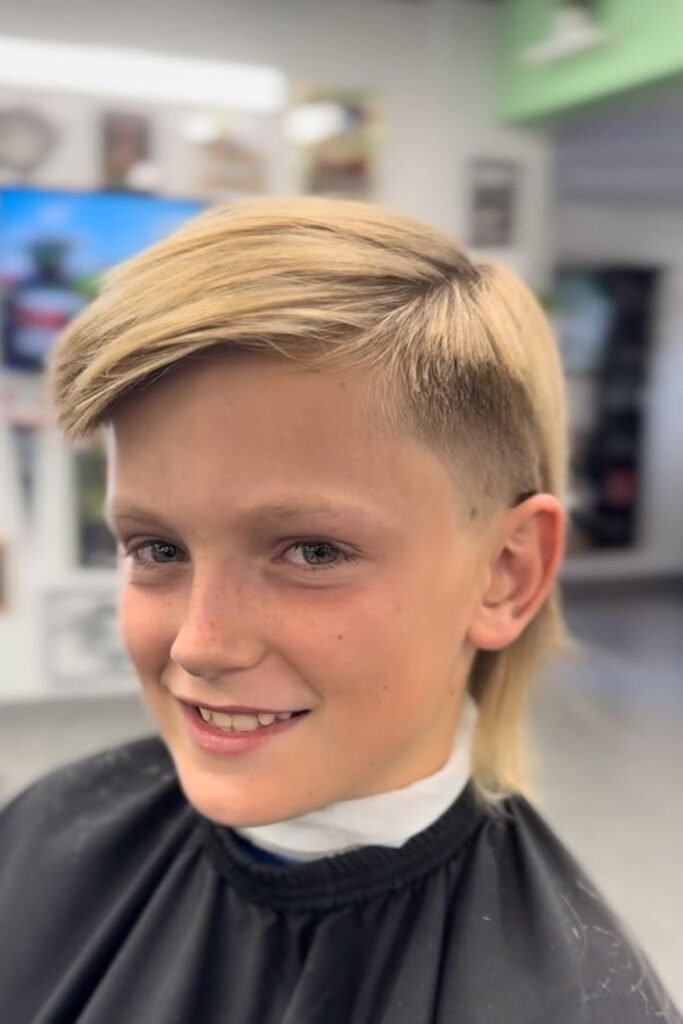
Short Crop Mullet
You can make the front easy to manage while keeping the signature length in the back.
You’ll see the barber crops the fringe and lightly tapers the sides to keep the haircut neat.
If your child is active, you should leave a bit of length at the nape so the mullet shape still shows.
Natural Flow Mullet
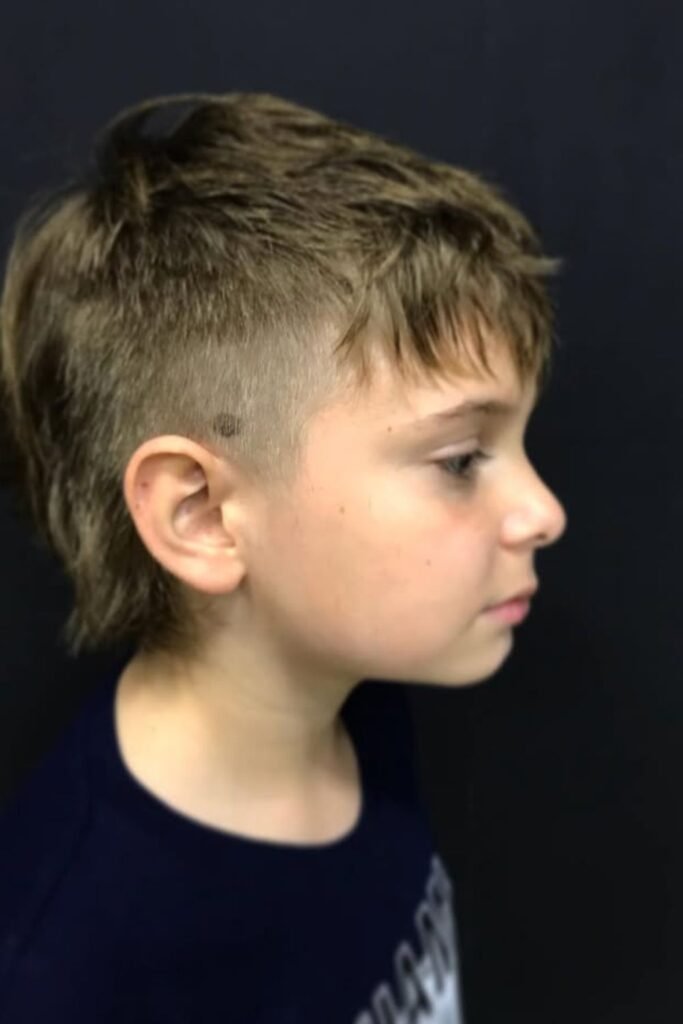
You can let the hair grow naturally and stop over-shaping it.
You’ll notice the sides are lightly tapered while the top and back follow the hair’s natural growth pattern.
If you have straight or slightly wavy hair, you should ask for scissor blending and let the back grow longer so the mullet develops naturally over time.
Extended Tail Mullet
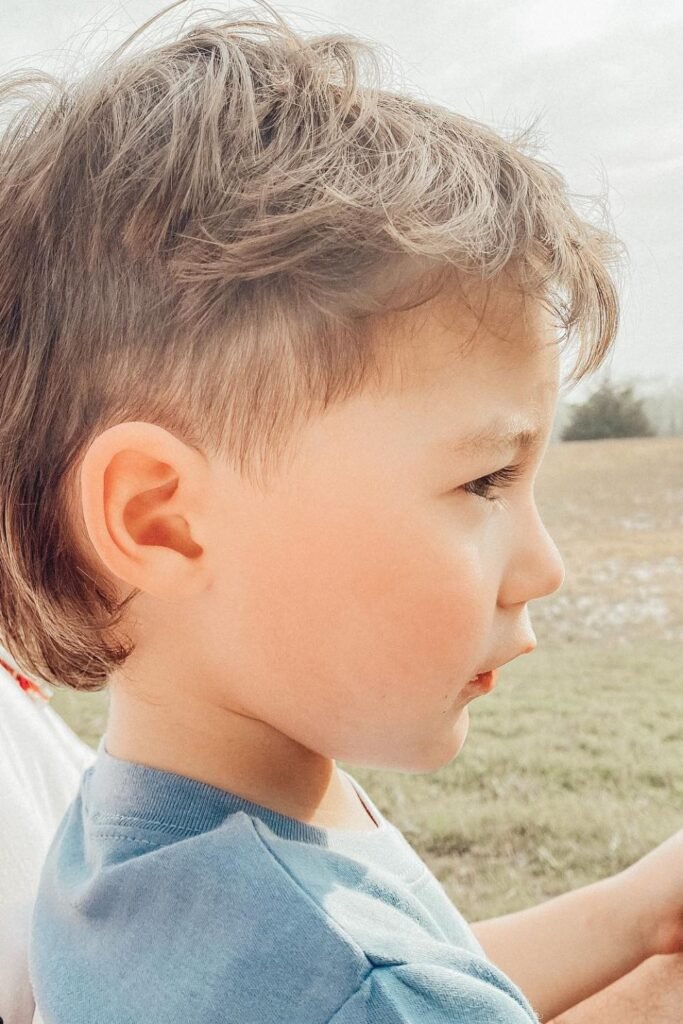
You can go all-in on length with this dramatic tail look.
You’ll see how the barber keeps the crown short and tidy while letting the back grow long and layered.
If you want this style, you should ask for tight sides and a short crown, leaving the nape untouched so the tail keeps growing.
Modern Fade Mullet
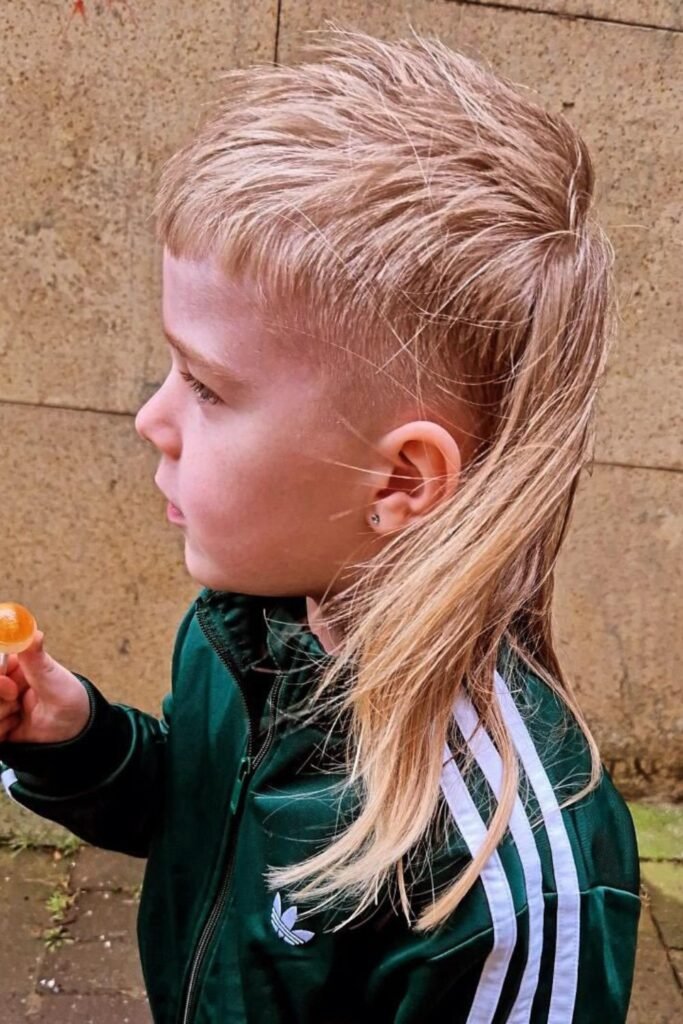
You can make a mullet feel fresh and current with clean structure.
You’ll notice the barber blends a smooth mid fade into a textured crown while keeping the back slightly longer for that signature flow.
If you want this version, you should ask for a mid fade with layered texture on top and leave the nape a bit longer so the mullet shape stays noticeable.
FAQs
How do you ask a barber for a boy mullet?
You should keep it simple and focus on the three key areas: the sides, the top, and the back.
You can tell the barber you want the sides tapered or faded, the top slightly longer with texture, and the back left longer to get that classic mullet shape.
You’ll notice how showing a photo really helps because “mullet” can mean different things to different barbers, and you don’t want any surprises.
How often should a boy mullet be trimmed?
You’ll find that most boy mullets need a quick trim every 4-6 weeks to keep the sides clean and the shape balanced.
You can let the back grow a bit longer between cuts, but you’ll notice the area around the ears and neckline usually grows out first.
If you give it a small cleanup regularly, you will keep the style looking intentional instead of messy, and you won’t have to worry about it looking unkempt.
You may like to read!
