
23 Courtyard Garden Ideas for 2026
A courtyard might have a lot of potential, and yet be frustrating to utilize.
Tall walls steal sunlight, paving leaves little room for plants, and too many pots may make a tiny area feel even tighter, quickly.
Somewhere like a garden, with enough green to be impressive but still require space to sit, wander and appreciate it without being squeezed past plants.
In this article, you’ll find 23 Courtyard Garden Ideas to transform your outdoor space into a beautiful retreat.
Let’s jump in!
Which Plants Thrive When Courtyard Walls Block Most Sunlight?
First, take a look at how much direct sun actually hits your courtyard, as shading can vary from wall to wall.
If your space is mostly shady, ferns, hostas, hellebores, heucheras and Japanese forest grass will offer you lots of greenery without requiring intense sun.
For darker walls, try climbing hydrangea to add some green to the wall without taking up too much floor space.
Be careful not to place sun-loving plants here, or they might get weak, blossom poorly, or tilt toward the little light they have.
If your courtyard is dry due of barriers blocking rain, pick tougher shade plants and water them deeply as the soil starts to get dry.
Group plants with comparable light and moisture needs so that caring for them is easy.
Water Courtyard
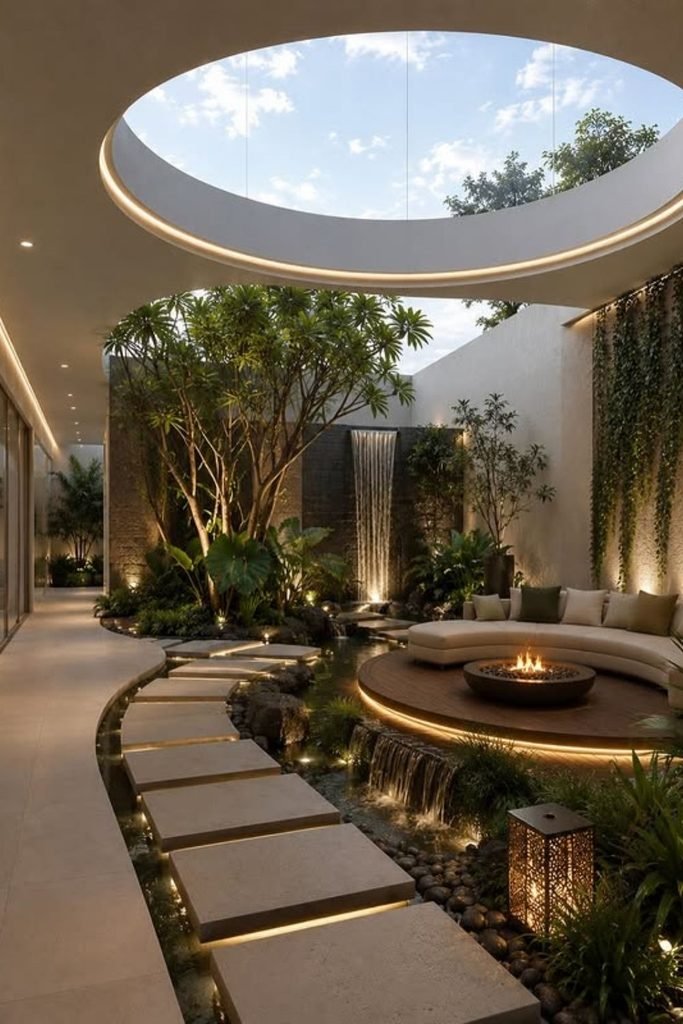
Turn a spacious enclosed courtyard into a calming retreat by letting water guide the layout instead of treating it as a small decorative extra.
Create a shallow pond or narrow stream next to stepping stones, hold the planting down with one multi-stem tree and moisture-loving foliage.
Maintain seating on a low platform to keep it out from splash zones, yet still feel linked to the garden.
Low lights hidden under steps, among plants and near the waterfall will accentuate the movement of the water after dark.
Layered Retreat
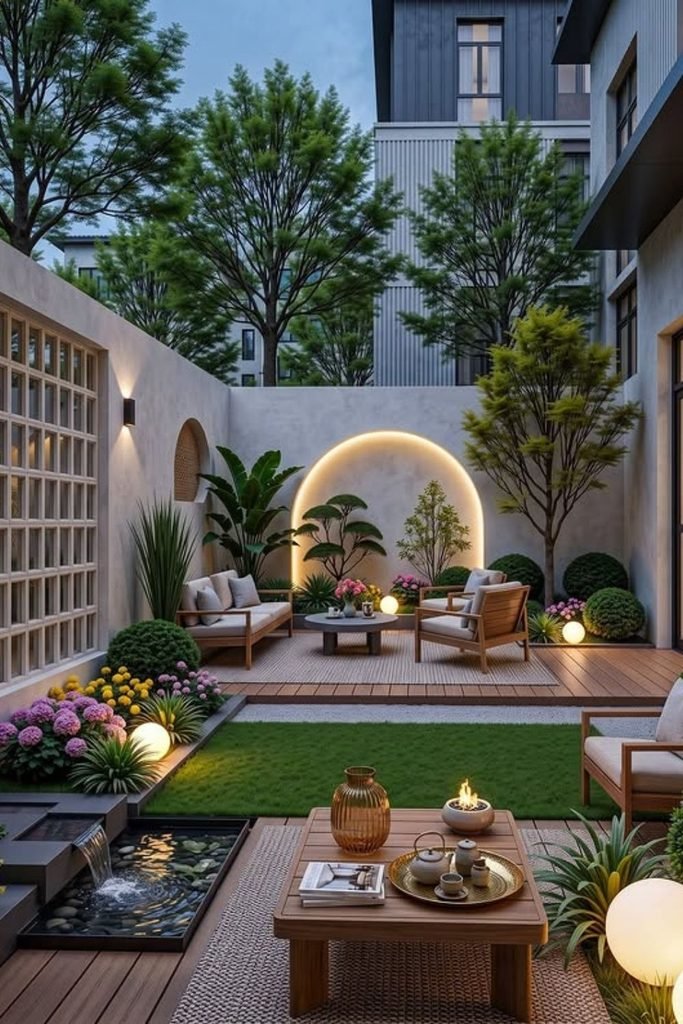
Give a rectangular courtyard more depth by dividing the planting into low, medium, and tall layers instead of lining every plant against the walls.
Leave a section of lawn or groundcover open through the center, then surround it with blooming borders.
Trimmed shrubs and narrow upright trees to build up the foliage without closing in the space.
Raised timber platforms are great for opposing ends when you want different settings for coffee and discussion.
Pergola Canopy
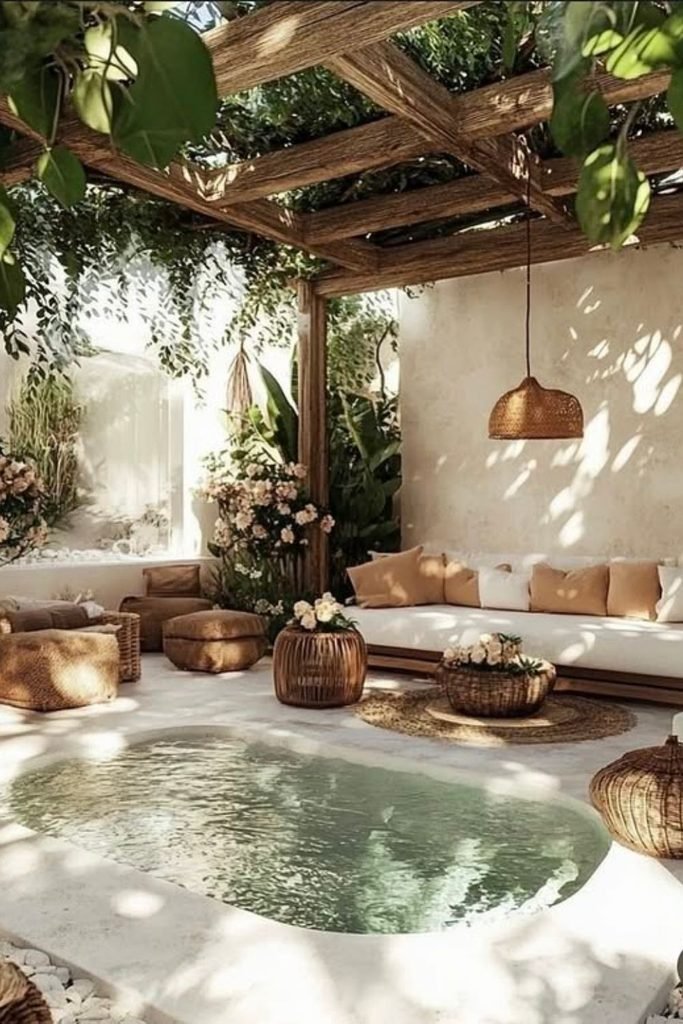
Bring shade into a sunny courtyard by training leafy climbers across an open timber pergola rather than covering the roof completely.
Filtered light reaches the plants below through gaps between the beams and mature vines spread to make cool seats.
Plant blooming shrubs and broad-leaved plants around the edges, keeping the middle open for a small pool or gathering space.
Pale paving can assist bounce available light about an enclosed space, especially when the surrounding walls are high.
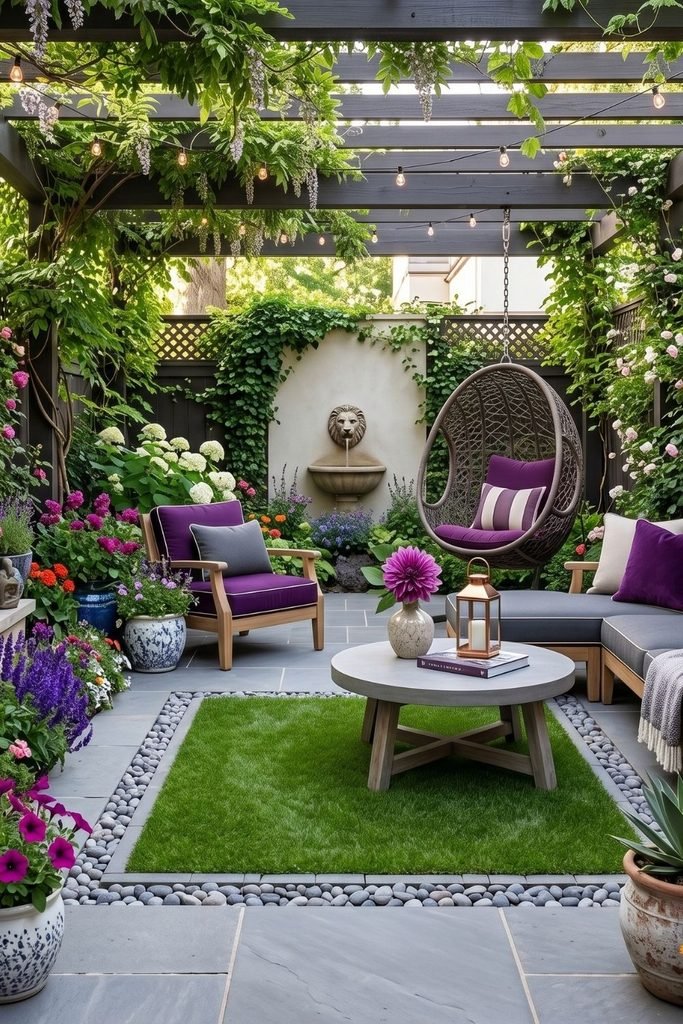
Flower Borders
Pack the courtyard edges with flowers while protecting the middle for everyday use.
Begin with climbers on pergola pillars and boundary screens, then go down to blooming shrubs, medium perennials and compact plants close to the paving.
Containers can fill awkward gaps where permanent beds are impossible, but repeat a few flower colors so the garden stay connected.
Counterbalance all that growth with a central floor for seats or a simple swatch of lawn.
In some partly shaded courtyards, select flowering plants based on the real light each border receives, not on the fact that all sides.
Stream Garden
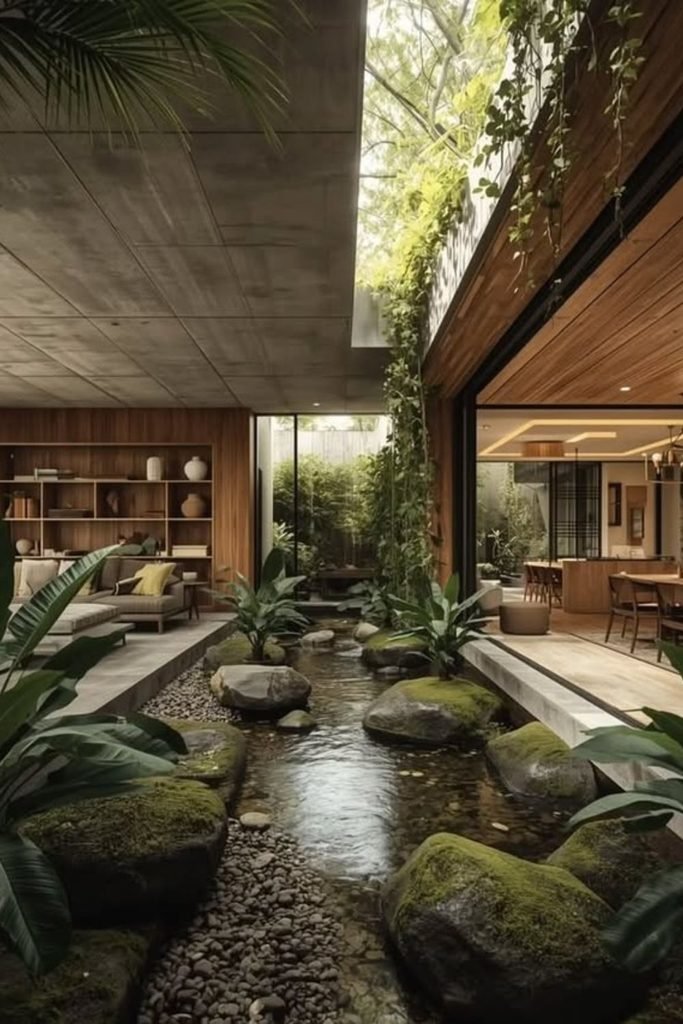
Use a narrow water channel as the garden itself when your courtyard sits between rooms and has very little space for traditional beds.
Line the stream with rounded stones and a few bigger mossy boulders, then insert broad-leaved shade plants into niches along both banks.
Vines can dangle down from above bringing foliage to soften lofty walls without constricting the route.
Plant loosely, not perfectly symmetrical, so that the water feels more natural as it flows around the courtyard.
Consider waterproofing, filtration, drainage and ease of maintenance access before building.
Tree Islands
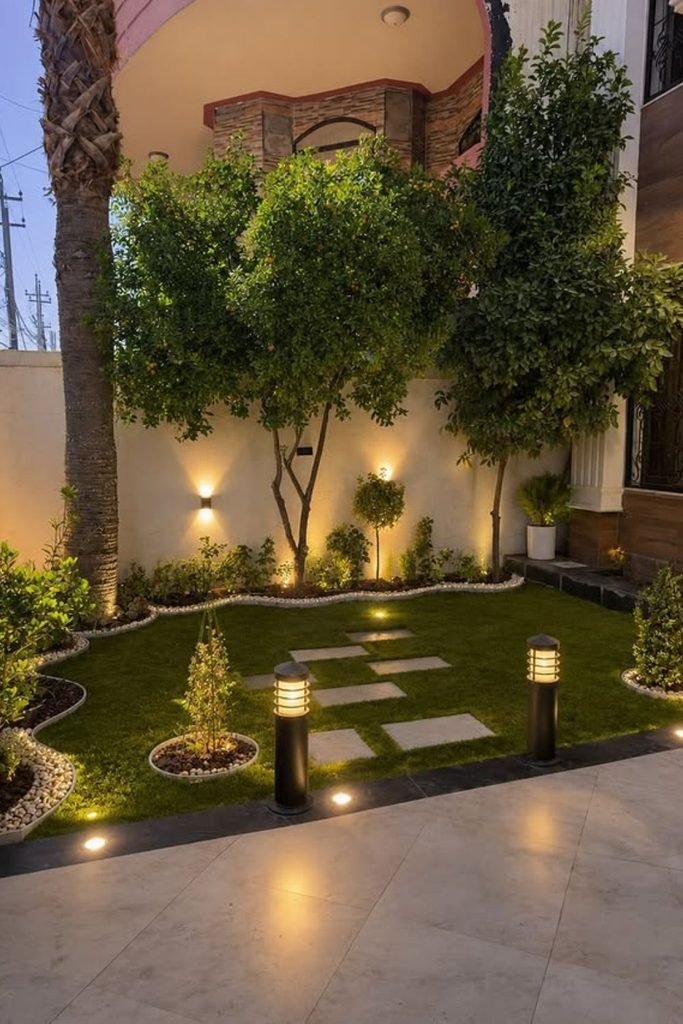
Keep a compact courtyard green without sacrificing its open lawn by giving each tree and shrub its own defined planting pocket.
Cut out curved or circular beds around larger plants, then edge them with pale pebbles to divide the soil from the grass and simplify upkeep.
Small decorative or citrus trees are particularly useful where the courtyard receives a few hours of sun, while shade-loving varieties are more suitable.
Plant for mature size, not nursery size, so that there is plenty of space between trunks and the building.
Curved Pathway
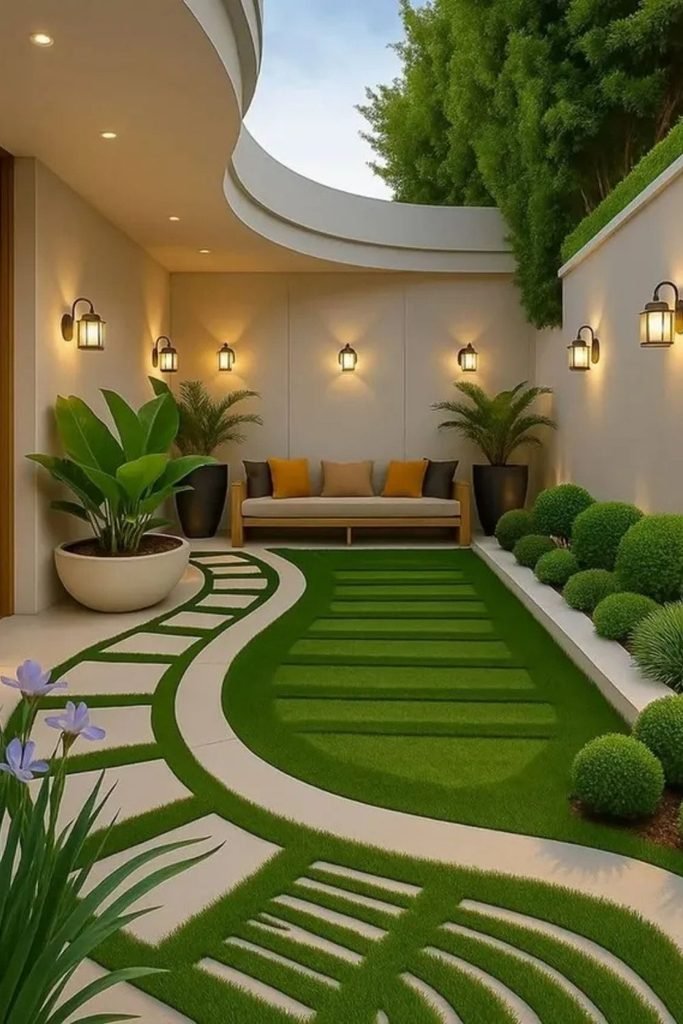
Break up a long, narrow courtyard with a gently curving path instead of running paving straight from one end to the other.
Install stepping slabs in lawn or low groundcover and leave bushes mostly along one boundary so the walkway is pleasant and the center feels open.
Rounded evergreen shrubs are useful where you want structure year-round, but not wide, wild growth, and a few higher plants can soften up bare corners.
Leave tiny spaces between plants at first so older shrubs can preserve their individual shapes.
Framed Passage
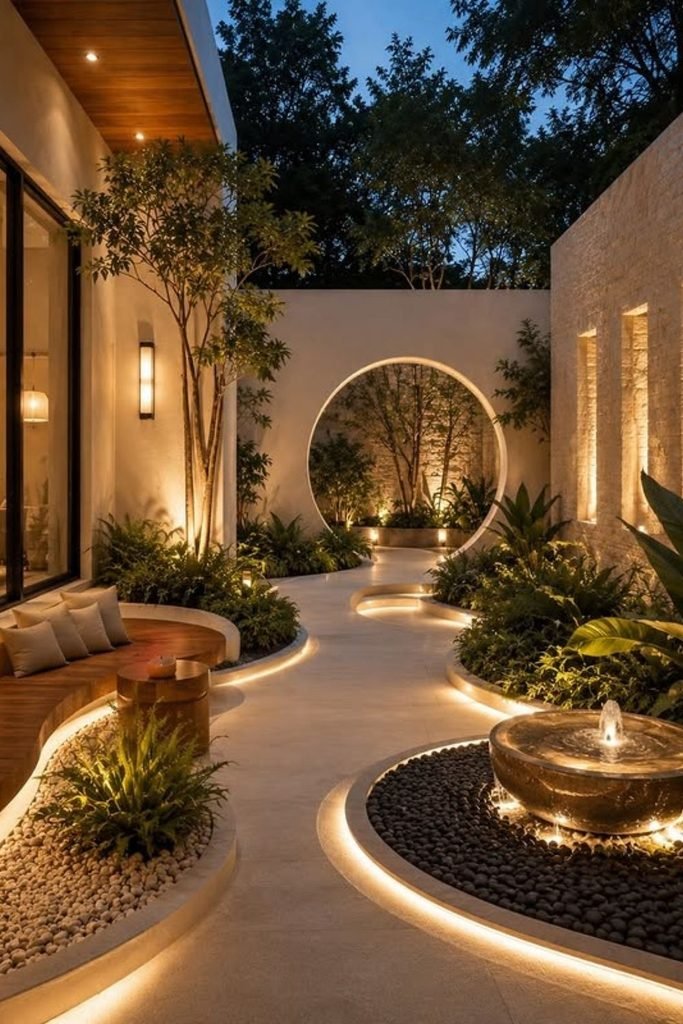
Create a stronger sense of depth by placing a large circular opening where one courtyard section leads into another.
Instead of planting the walk solidly, curve beds around the sides and pile up ferns and big leaves, plus a few slim trees, to keep the pathway open.
The opening leads your eye to the planting beyond, and makes a contained garden feel larger than it actually is.
If you want to have a soft sound without taking up much area, add a tiny fountain near the foreground.
Pond Pathway
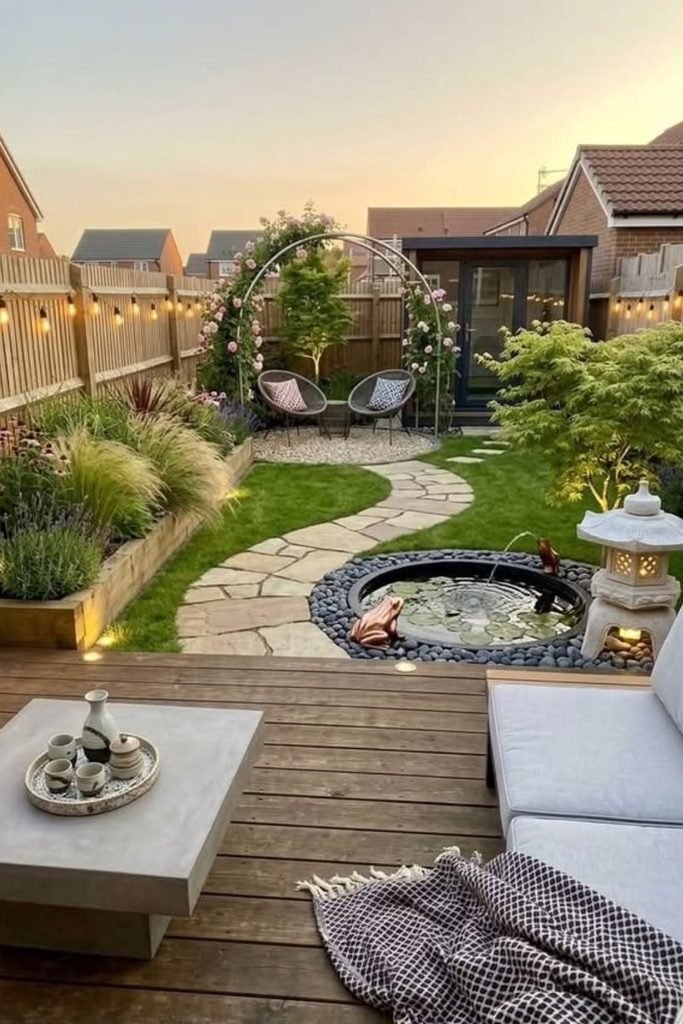
Let a winding path connect different parts of the courtyard while a compact pond creates interest beside the route.
Shift the water feature slightly off center for movement without creating an obstruction then soften the edge with smooth stones.
Raised borders bursting with grasses, flowering perennials and small trees may screen fences and keep planting tidy.
At the further end, train a flowering climber over a small arch to make a destination, and lead the eye around the garden.
Place taller plants close to the edges of the garden so that they give privacy but don’t hinder the open aspect of the lawn or make the path seem crowded.
Centerpiece Tree
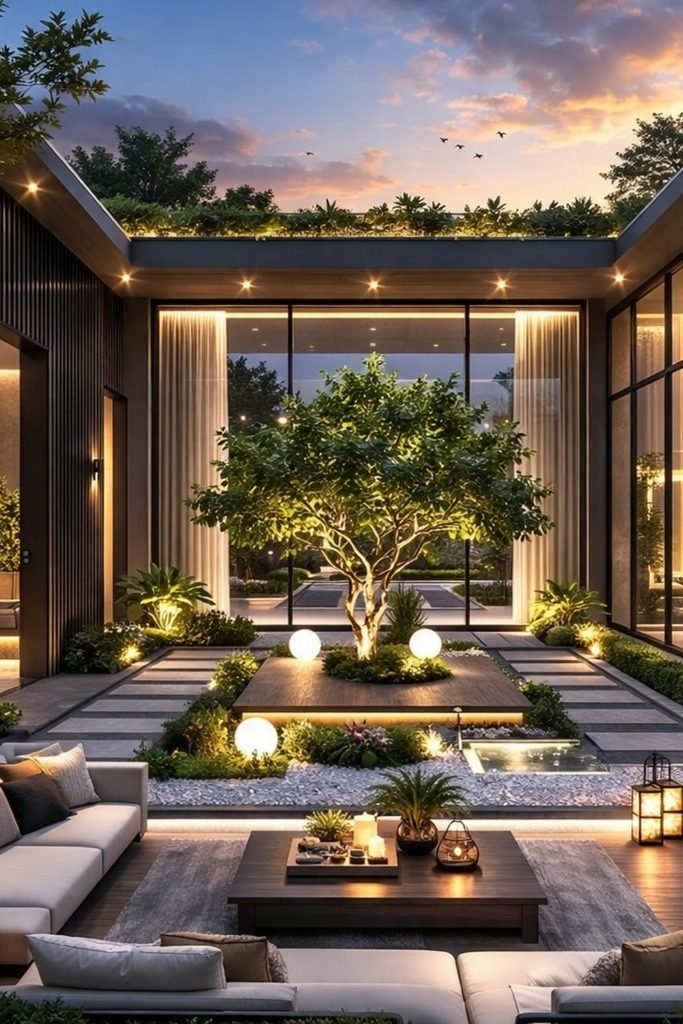
Anchor an open courtyard with one carefully positioned tree instead of scattering several tall plants around the boundaries.
Give the tree a generous central pit for the roots to develop and keep surrounding planting low so that the canopy may be seen from adjoining rooms.
Multi-stem or compact ornamental trees are especially well suited when the mature size fits the space available.
Low groundcovers surrounding the trunk can soften the planting bed but without vying for attention.
Olive Courtyard
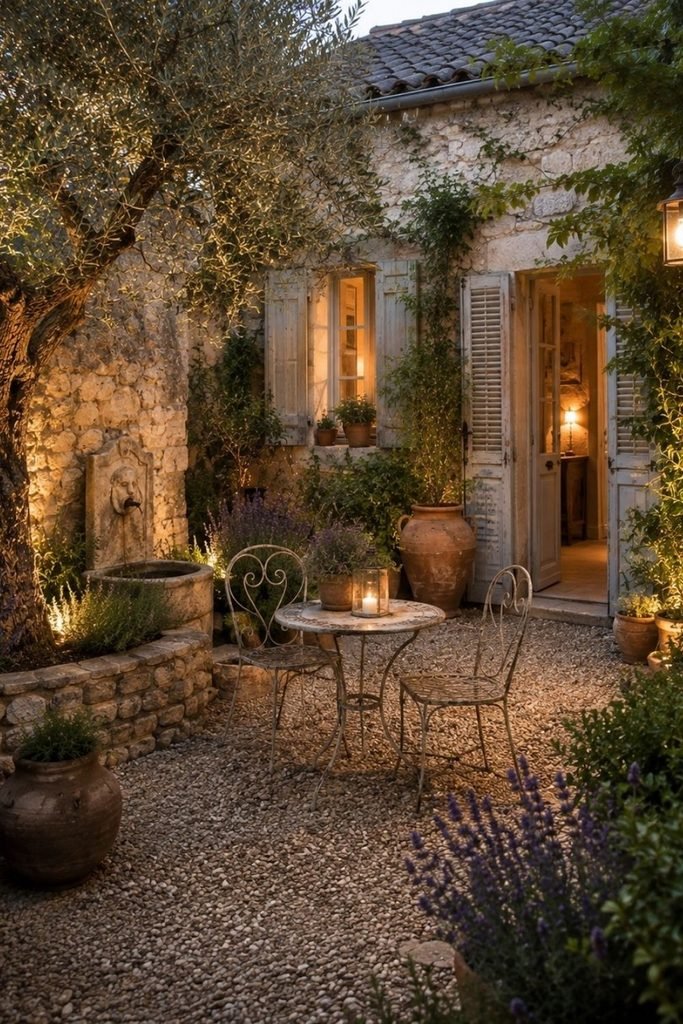
Lean into a warm, dry courtyard by making a mature olive tree the source of shade and character rather than filling the space with thirsty planting.
Gravel underfoot keeps the ground look soft while leaving room for lavender, rosemary and other sun-loving Mediterranean plants around raised stone.
Train climbers strategically over historic walls to add greenery without covering all their texture, and use terracotta pots where you need flexible planting.
Leave the middle mostly clear for a small bistro table so the garden remains usable.
In the evening, use uplighting to illuminate the olive stem and surrounding foliage to reveal their natural shapes, rather than using strong overhead lighting.
Blooming Wall
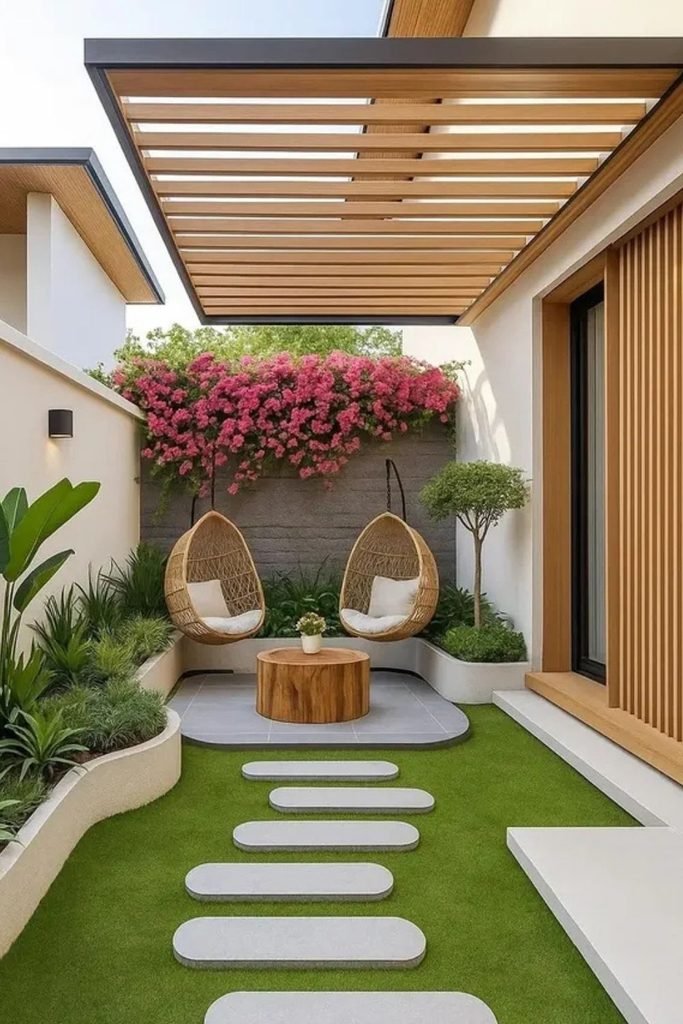
Save the back boundary for a vigorous flowering climber when you want strong color without giving up valuable courtyard floor space.
Train the plant on stiff wires or a trellis, spreading the main stems sideways so that the blossoms eventually cover a greater area of the wall.
Below, compact shrubs and leafy plants can be planted, with a narrow ornamental tree adding height without crowding the garden.
Curved perimeter beds Keep the middle simple with turf and spaced stepping slabs to the seating area.
Curved Lawn
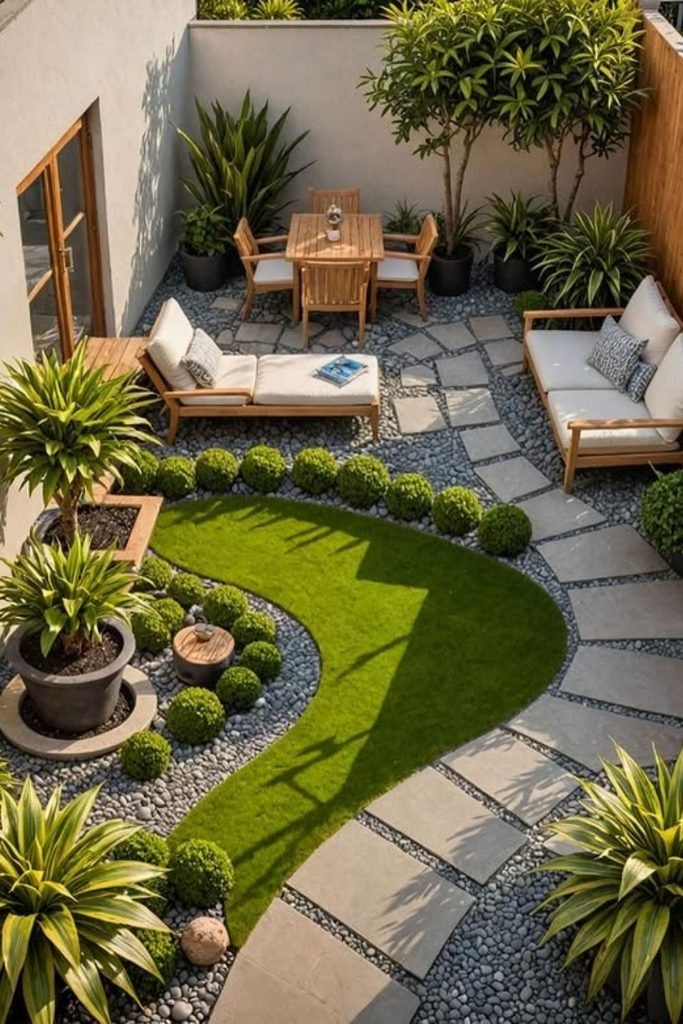
Carve a small sweep of lawn through the middle when you want greenery underfoot with out turning the entire courtyard into grass.
Frame with rounded shrubs and gravel so the perimeter stays tidy then use stepping slab through the surrounding stone to link dining.
Large potted plants near walls provide height where permanent beds would be too space-consuming.
Repeat the same compact shrubs around the bend to keep the planting feeling orderly, not congested.
Living Shelves
Put an empty courtyard wall to work with shallow planted shelves that add greenery without narrowing the walkway.
Select little herbs, trailing plants or small types of foliage that have similar light and watering needs.
Leave enough space between rows to enable plants to develop without shading one another.
Lighting built into the bottom of each shelf can help highlight the planting after sunset but should not be used as a substitute for the natural light plants require.
To create a gradual change in height, keep larger tropical greenery in nearby floor-level planters.
Climbing Canopy
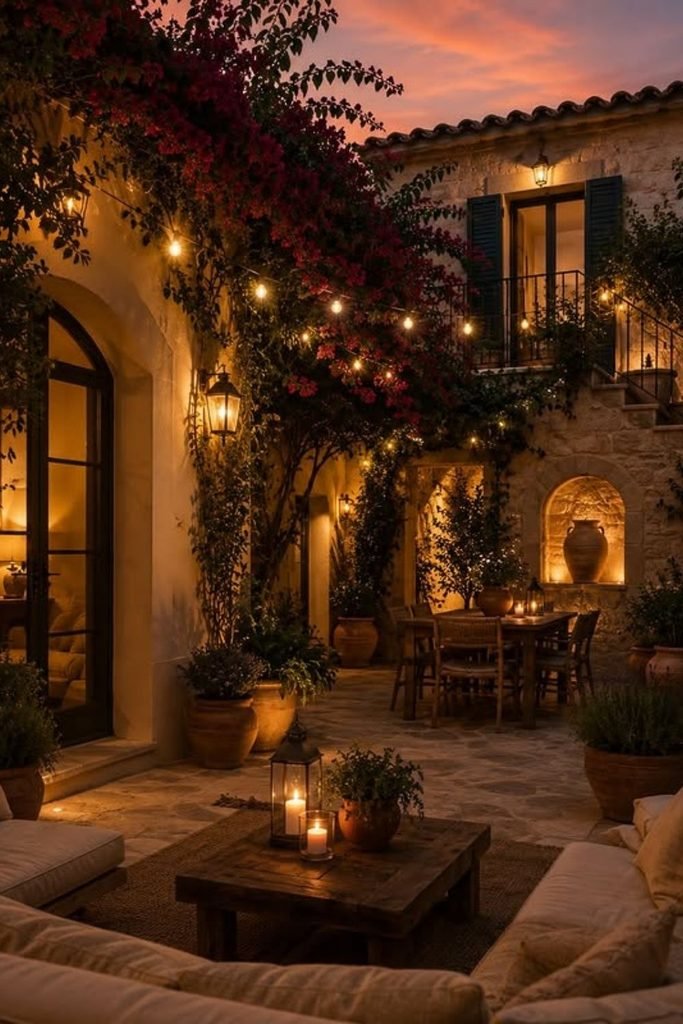
Let a flowering climber spread overhead when courtyard walls leave little room for wide garden beds.
First train strong stems up a wall or robust structure and then train them across wires above the seating area as growth increases.
Bougainvillea is good for warm, sunny courtyards, but select other climbers for your temperature and light availability.
To keep the lower planting basic, use a few large pots so that the courtyard does not get congested at ground level.
Balcony Garden
Extend courtyard planting upward when an upper balcony would otherwise leave the walls feeling bare.
Line the railing with overflowing pots and hanging plants, then replicate some of that greenery at ground level so both floors feel connected.
Put huge pots around the edge of the courtyard, leaving the middle for dining.
A little tree can offer filtered shade for the courtyard when midday light is strong and leafy shade plants can cover cooler places under the balcony.
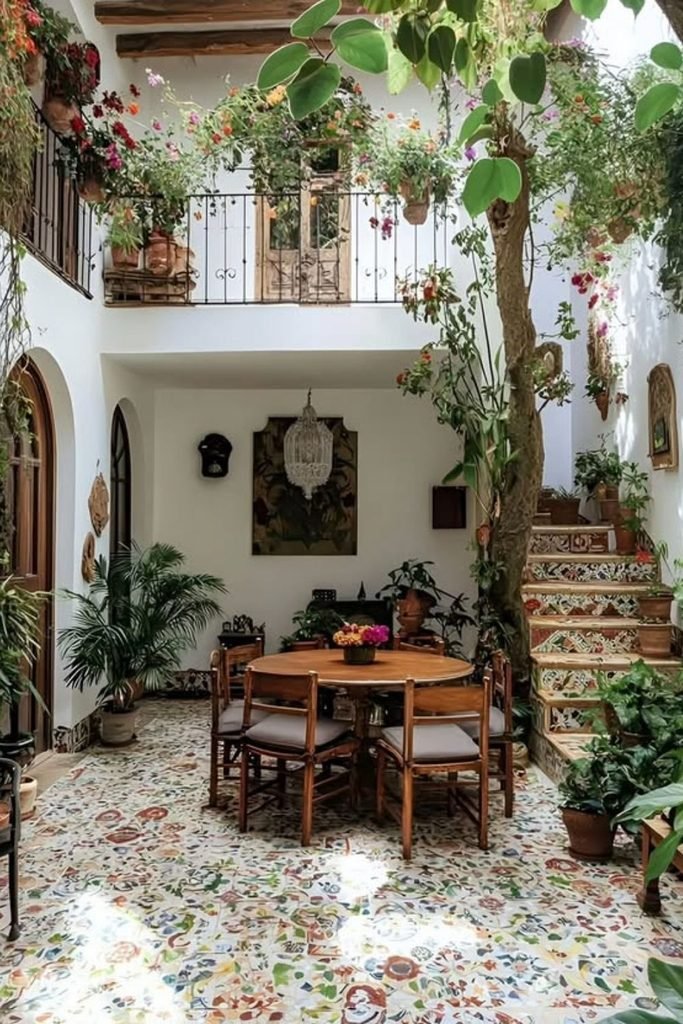
Tropical Borders
Push lush planting toward the courtyard edges when you want a tropical feel without sacrificing the space needed for seating.
Pair palms and broadleaf plants at the back with bromeliads, floral plants and lower foliage nearer the path, allowing room for each layer to mature.
Larger architectural plants can be grown in pots if beds cannot be dug.
Rather than planting on every open spot, keep the middle open with wide stepping slabs and gravel.
In cooler climates, substitute tough plants with bold leaves for sensitive tropicals.
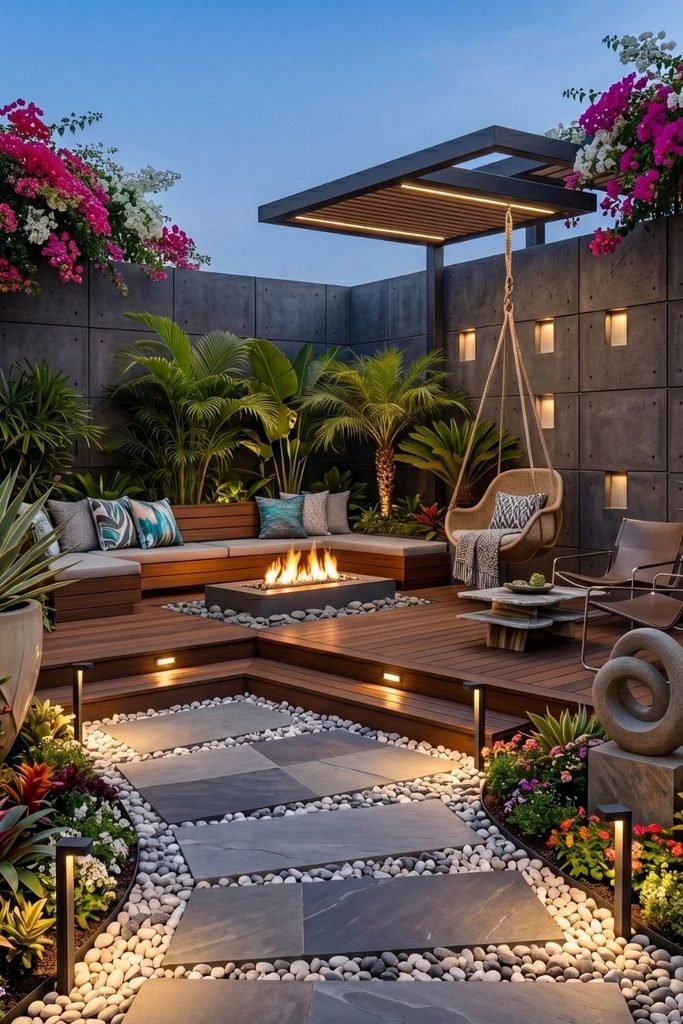
Firepit Garden
Build the courtyard around evening use by placing a compact fire pit inside a defined seating zone and surrounding it with greenery rather than extra furniture.
Use ferns and other low plants next to paths and then taller shrubs or a multi-stem tree further back to soften walls and provide privacy.
The meeting space can be framed by an open pergola, while enabling the tree canopy to remain part of the garden.
Maintain a safe distance between flames, plants, lumber and overhead growth as required by the fire pit manufacturer.
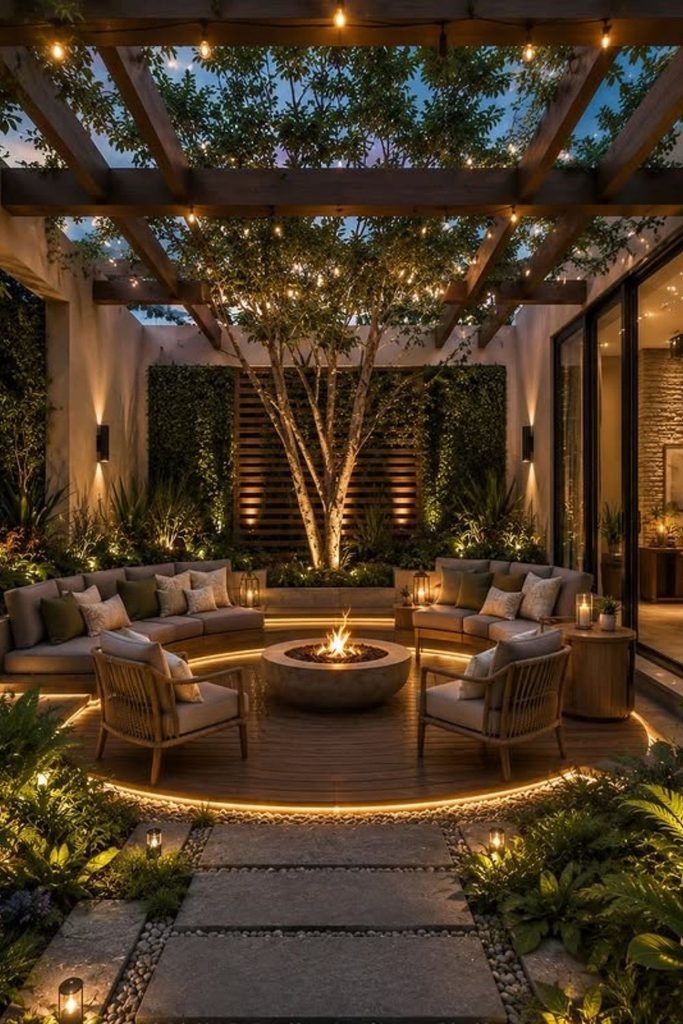
Sculpted Seating
Make permanent seating earn its space by shaping it directly into the courtyard boundary instead of adding bulky freestanding furniture.
Leave space for one established olive tree for height and filtered shade, and train bougainvillea or another sun-loving climber across the upper wall for color.
Small pots can be tucked into embedded wall recesses to break up a lengthy blank surface, particularly when planting beds are at a premium.
Keep the rest of the ground uncluttered, to give the tree and climber a chance to shine.
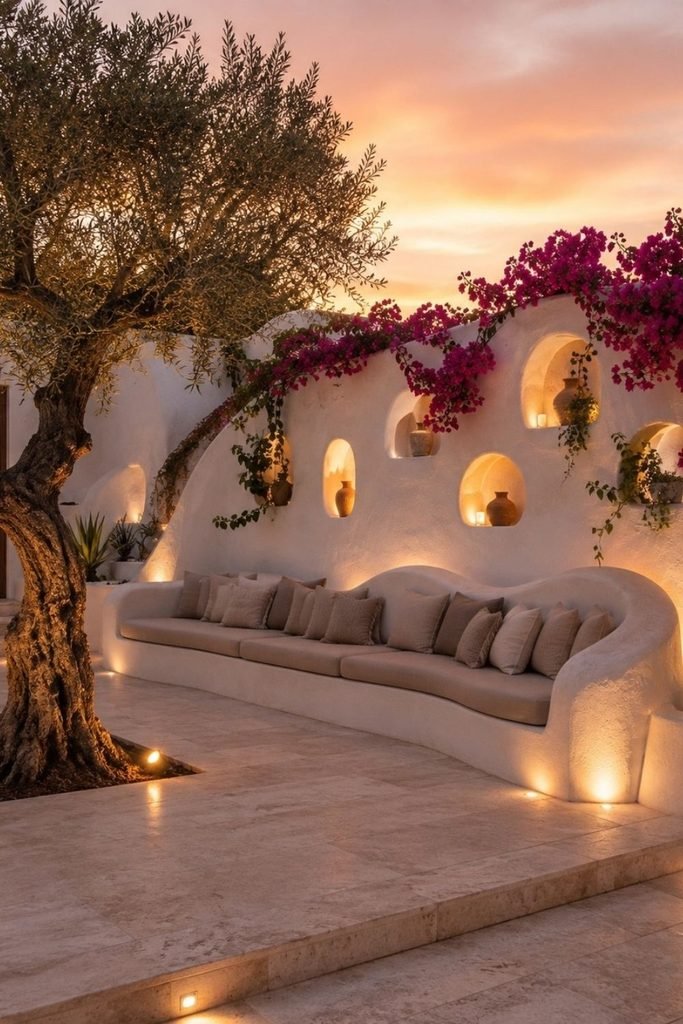
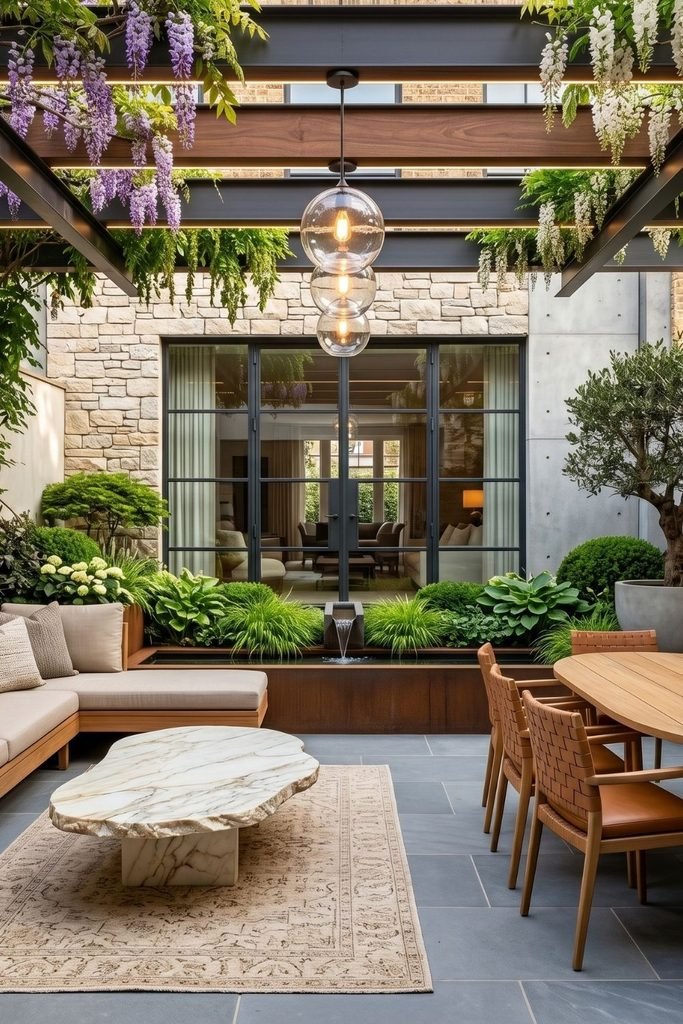
Overhead Blooms
Grow flowering climbers across an open pergola when you want more garden color without filling the courtyard floor with extra beds.
Run the vines up separate beams, or tensioned wires, so the stems have room to spread and the hanging blooms can fall organically over the benches.
Underplant with hostas, grasses, compact shrubs and a few small trees to soften the overhanging growth.
This works especially well in courtyards used for dining, as the vegetation is left around and above the furniture rather than restricting circulation.
Prune climbers after flowering as the species requires. Keep robust stems away from lights, gutters and doors.
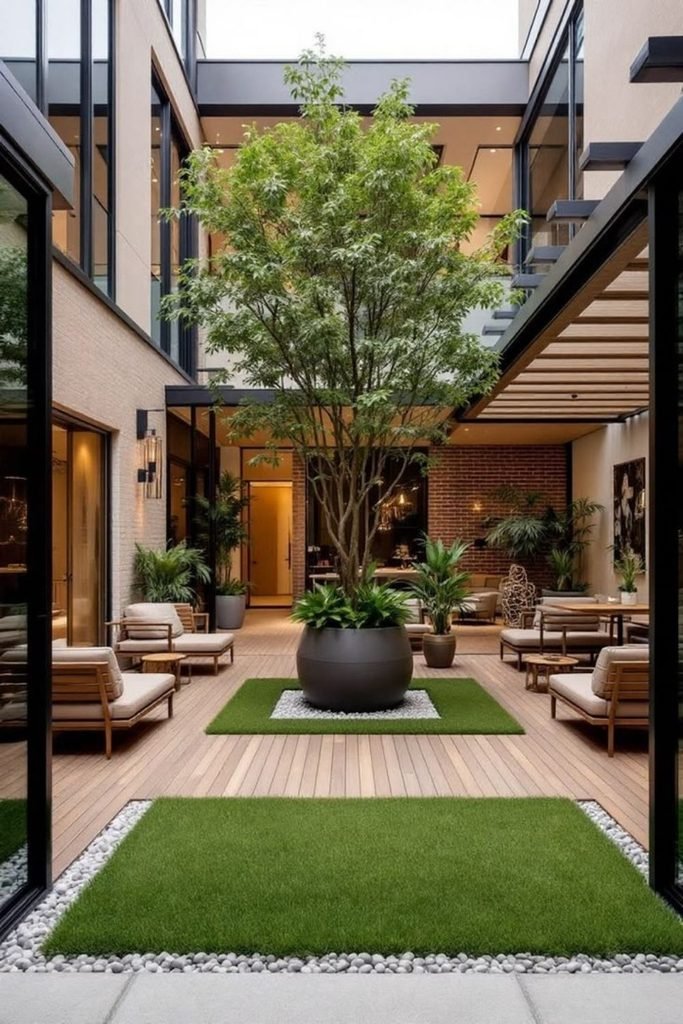
Potted Canopy
Choose one large container tree when your courtyard needs height and greenery but permanents planting beds are not practical.
Position it where the canopy can spread into the open space above rather than crowding against windows or walls.
And select a species that can manage both container growing and the actual light levels of the courtyard.
Choose a large heavy pot with sufficient drainage, to keep the tree steady as it grows.
Low plants around the trunk can mask bare soil and make the container look more planted bed.
Sunken Garden
Lower the seating slightly below the surrounding beds when you want a narrow courtyard to feel private without adding taller screens.
Create raised planters along the edge of the sitting, then combine structural plants, compact trees, ferns, grasses and succulents.
A wall trellis takes climbing plants up where floor space is tight and a slim water feature creates movement without obstructing the walkway.
The primary path should be kept straight and clear so that the lowered seating area doesn’t impede circulation.

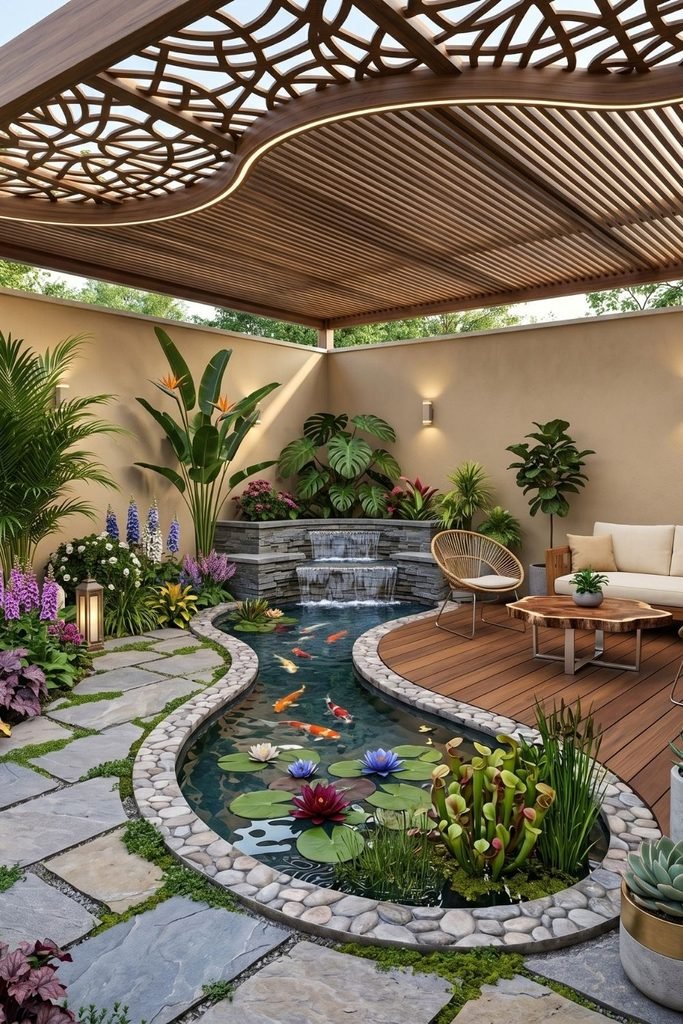
Koi Garden
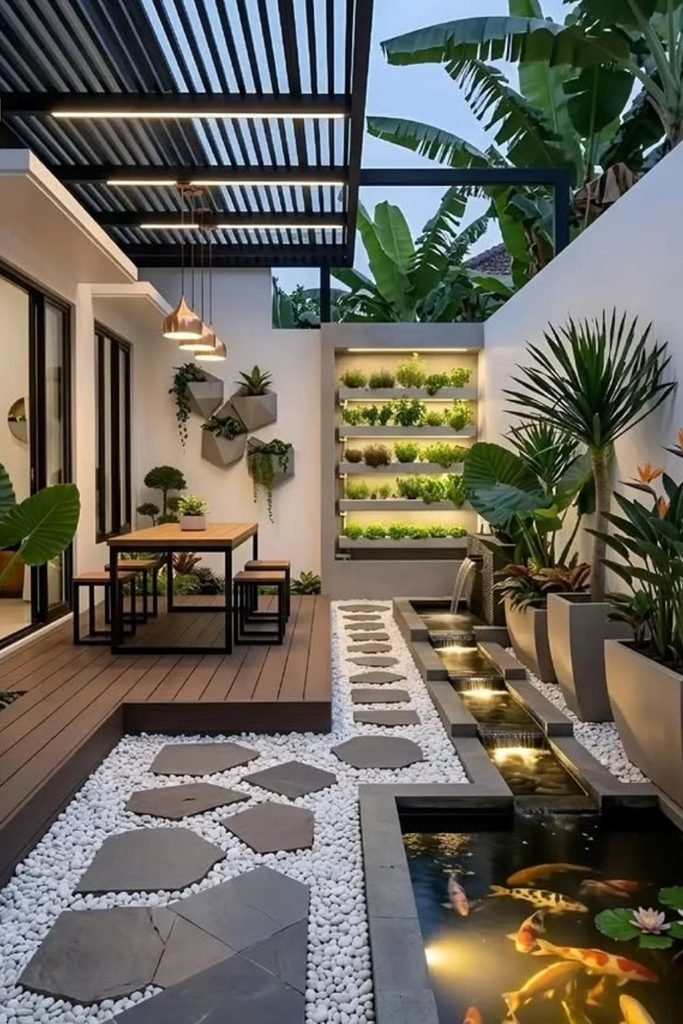
Turn a sheltered courtyard into a water garden by letting a curved koi pond take up part of the planting zone rather than squeezing it into a forgotten corner.
Plant moisture-loving greenery and flowers around the banks to blur the line between water and garden.
Leave one side open. Use a deck or solid path so you can still feed fish and maintain the pond easily.
The overhead slats can block out the intense noon sun but still allow enough light in for the water plants to thrive.
FAQs
How Can I Keep A Courtyard Garden Low Maintenance?
Start with a limited palette of plants, but also select species that are already suited to the amount of sunlight and moisture your courtyard receives.
Big pots take longer to dry out than tiny pots. Evergreen shrubs and hardy perennial plants limit the amount of replanting you have to do each season.
Keep walkways simple, group plants with comparable watering demands and mulch beds to prevent moisture loss and suppress weeds.
What Should I Plant In A Courtyard Without Soil?
Even if the courtyard is totally paved, it is possible to design an entire garden using containers and raised beds.
Select big pots for little trees and shrubs, deep containers for climbers and shallow ones for herbs or compact flowers.
Make sure all containers will drain freely and choose pot sizes that will fit the mature roots of the plant and not its size at the time of purchase.
