
26 Driveway Landscaping Ideas for 2026
You plant flowers by your driveway to disguise all that boring concrete, but now the place seems smaller than before.
Shrubbery grows into the space of your car door, mulch flows down onto the pavement, pretty flower borders become another area to maintain.
In this article, you’ll find 26 driveway landscaping ideas to transform your outdoor space, and improve curb appeal.
Let’s jump in!
How Can I Landscape My Driveway Without Losing Space?
Start by shielding the actual parking space, car door openings, walkways and bin movement areas before adding any plants.
Stay away from large plants nearest to the pavement. Consider low flowers, compact groundcovers, gravel or narrow edging.
If you desire greater height, move taller grasses, bushes and small trees farther back so their mature growth will not reach the driveway.
Alternatively, concentrate planting near the door, mailbox, bends or garage rather than filling both sides from end to finish.
Before planting, take sure to check the mature width of each plant, as a little shrub can soon become a space problem.
A well-landscaped driveway softens the concrete, yet doesn’t interfere with normal use.
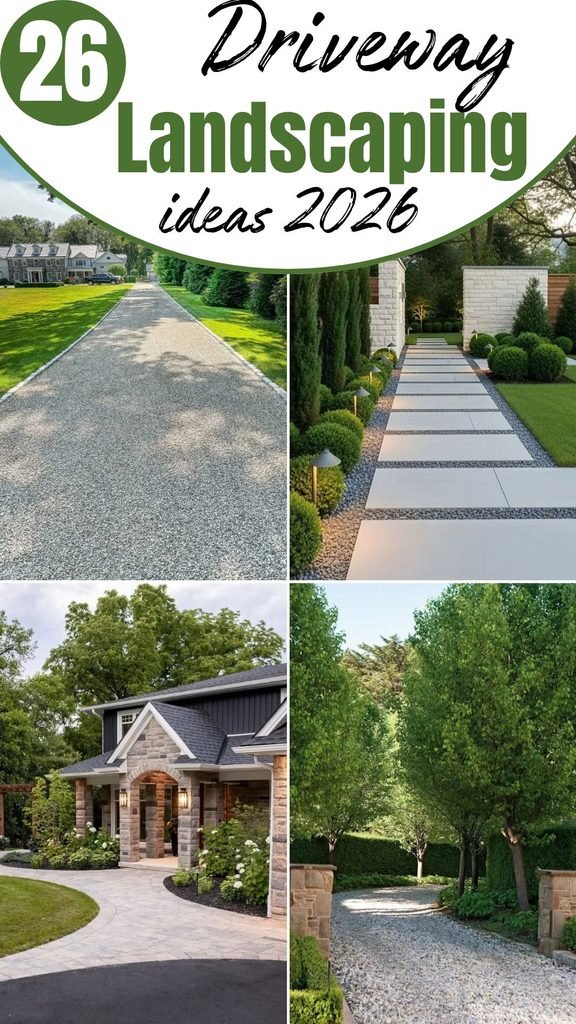
Gravel Approach
Long driveways can feel like empty roads when nothing connects them to the surrounding yard.
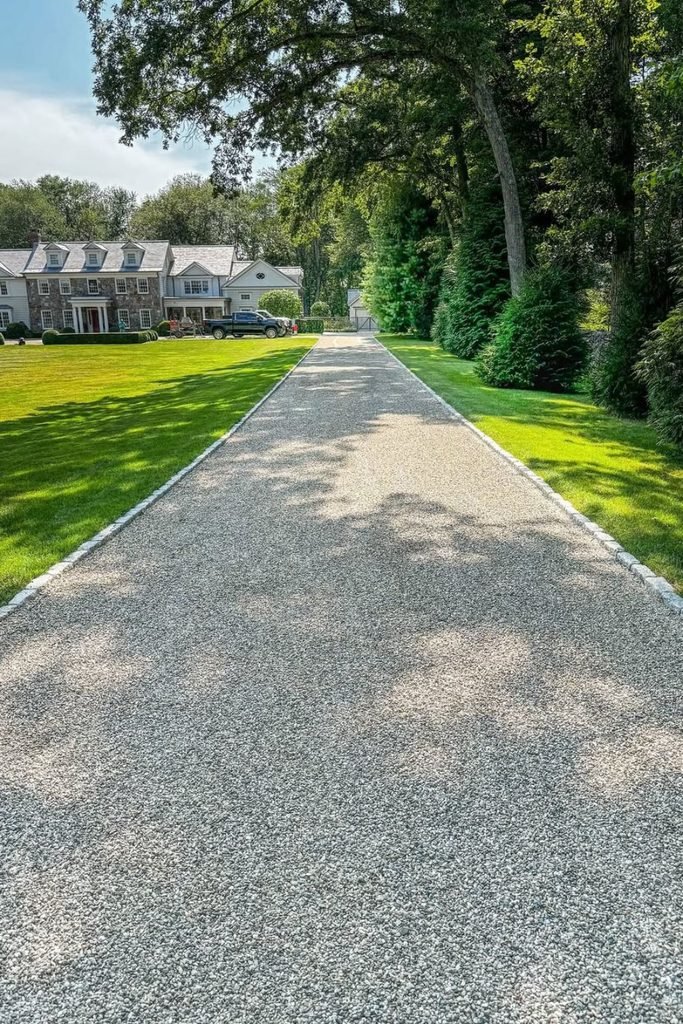
Keep the center basic with the compact gravel and adds crisp stone edging to keep loose debris from spilling onto the lawn.
On one side mature evergreens can give privacy and soften the long vista without taking up space for vehicles.
Leave plenty of space between the pavement and huge trees so roots, branches, and fallen debris don’t cause as many difficulties down the road.
This method works especially well for larger estates when you want a tidy entrance, but don’t want the maintenance of flower beds.
Structured Greens
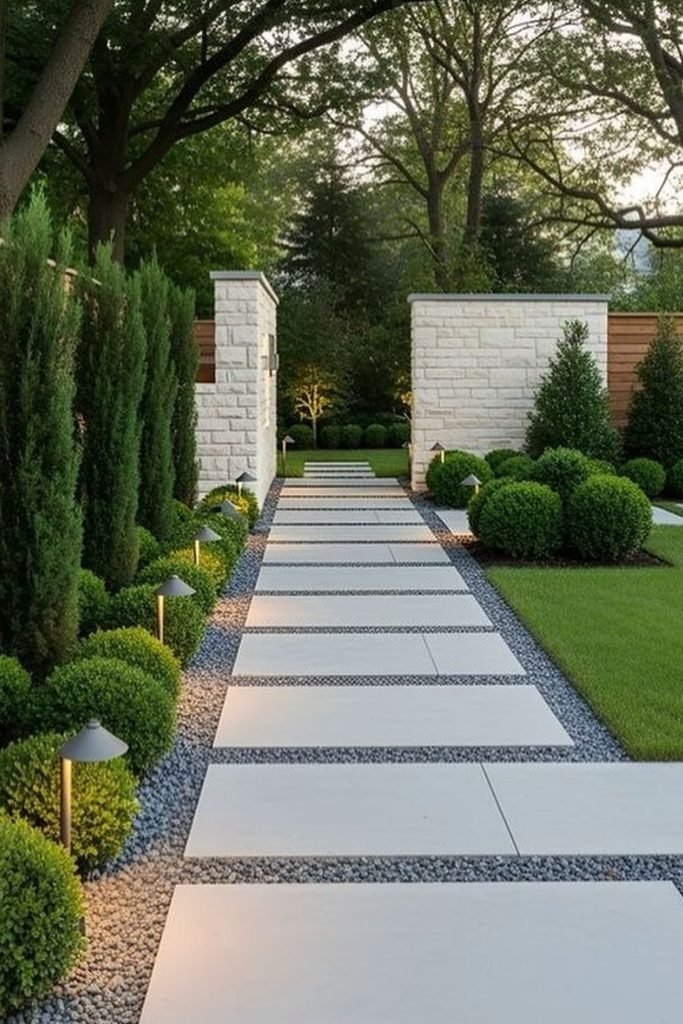
Modern driveways look cleaner when the planting follows the same strong lines as the paving.
You can get height from tall, slender evergreens paired with rounder shrubs, but be careful that branches don’t extend into the vehicle space.
Dark gravel between massive concrete slabs maintains the surface look light and neatly finishes the boundaries.
For a more discreet evening guide, try dim path lights down one border instead of filling both sides.
This design is especially great next to privacy fences or modern homes where you want a lot of green but still require every inch of your driveway width.
Curved Borders
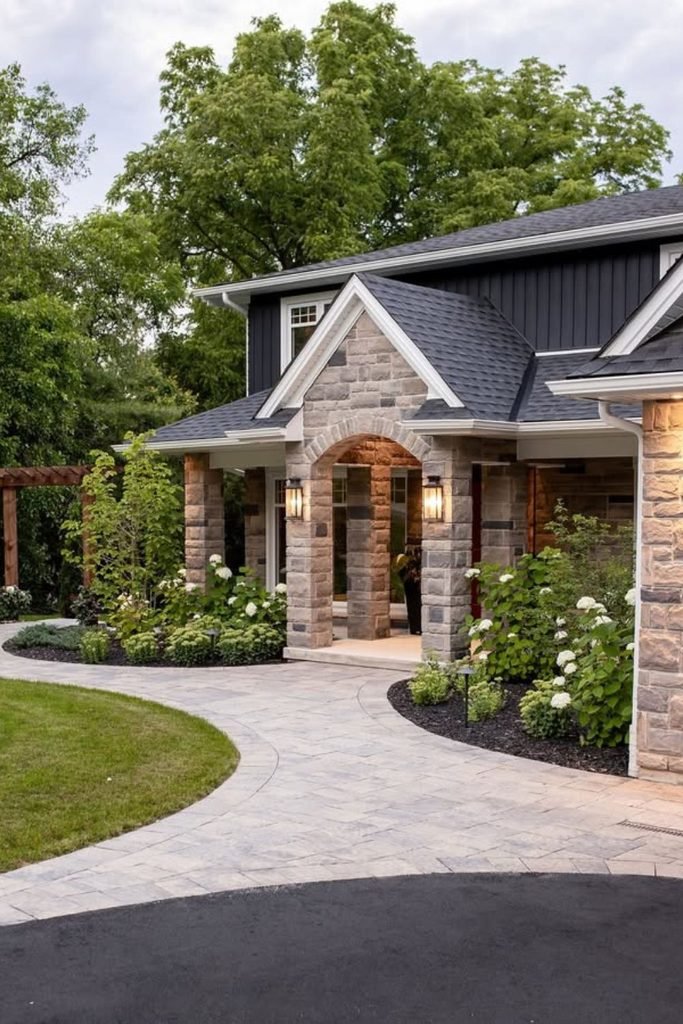
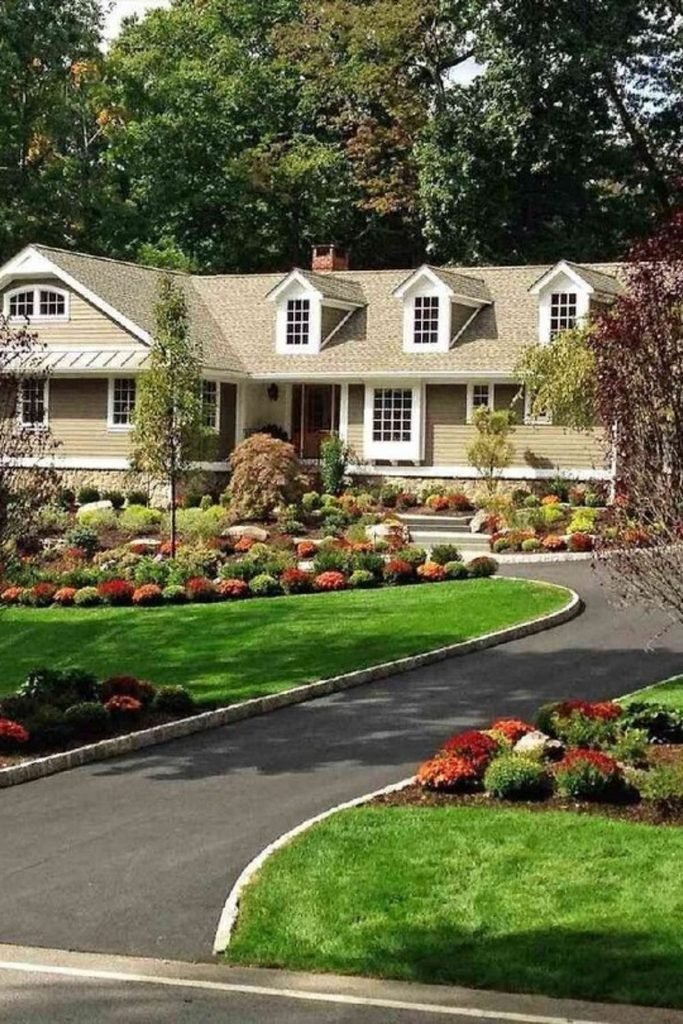
Hard driveway edges feel much softer when planting beds follow a gentle curve toward the house.
Use the bigger areas at the entry for hydrangeas, compact shrubs and low perennials, but keep plants off of the actual driving lane.
Dark mulch gives a crisp break between light asphalt and green flora, so you have lots of contrast without adding more decorative materials.
Bring that similar curvature onto the lawn or walkway so it all feels connected.
This is especially effective for broad driveway entries when you have additional planting space next to the garage.
Tree Canopy
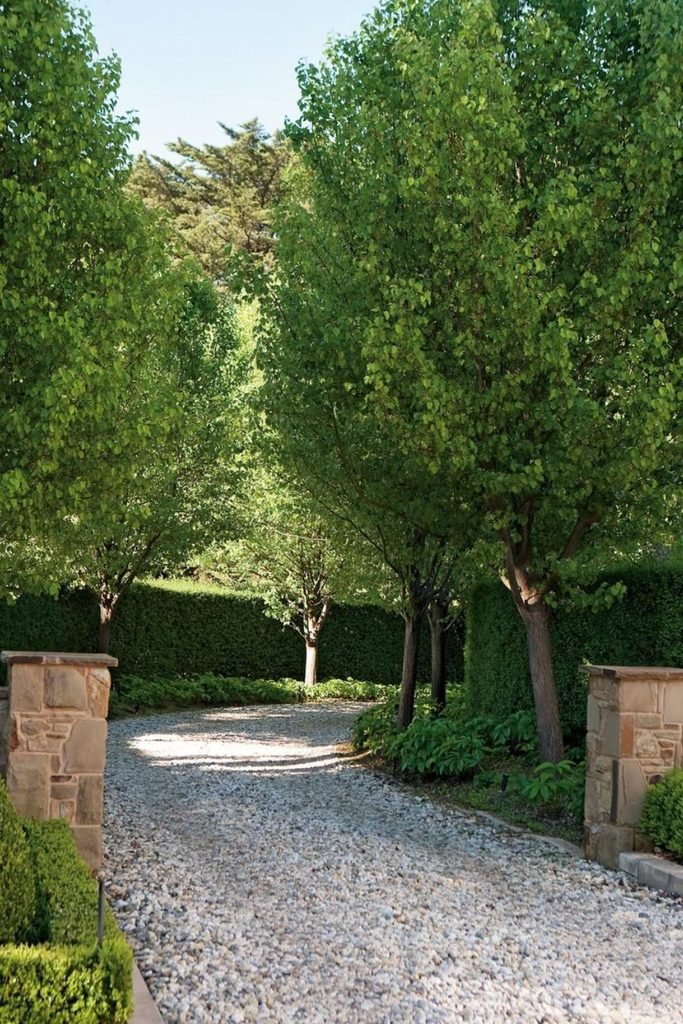
A long driveway gains character when trees create shade overhead instead of crowding the pavement at ground level.
Space deciduous trees far enough back for their trunks and established roots, and fill underneath with low groundcovers that can take filtered shade.
A cut evergreen hedge further back can enhance seclusion without reducing the driving lane.
Stone entrance pillars work nicely here as they indicate the arrival point and keep planting basic.
For larger estates, this is a great method if you want your driveway to look mature and garden-like without having to maintain continuous flower borders.
Paver Curves
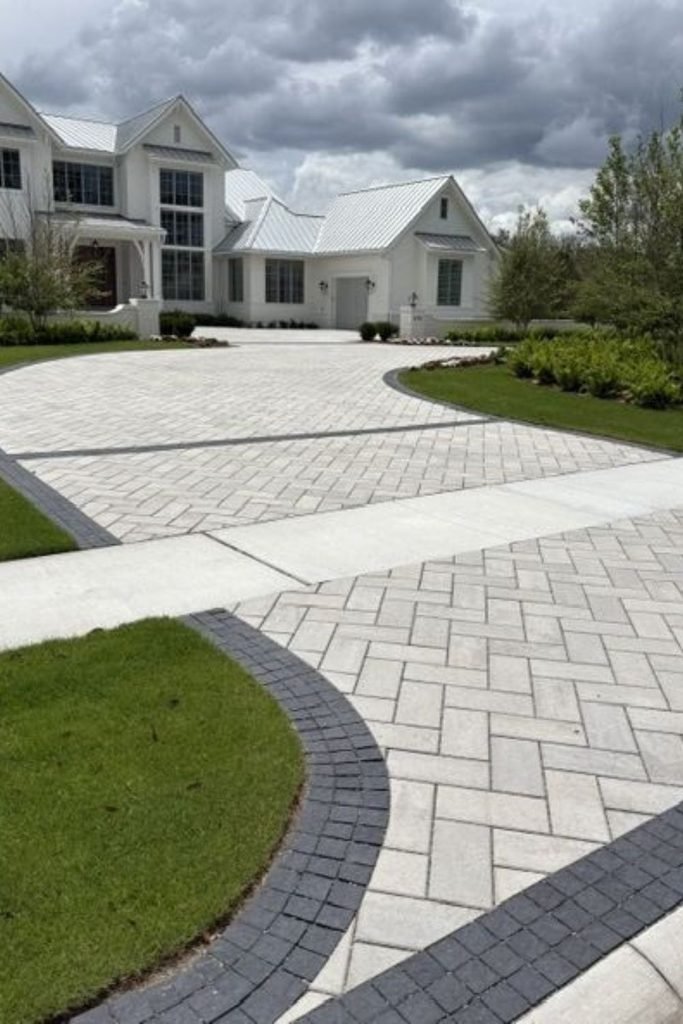
Wide driveways can dominate the front yard so use curved lawn edges to break up the hard surface without taking away turning space.
Light pavers keep the main drive bright a darker border clearly marks each curve and provides the pattern a polished edge.
Try to cluster shrubs and small trees in the wider areas of the garden near the house instead of jamming plants in on all sides.
This works especially well for circular or sweeping driveways, where cars are given a spacious lane, and the lawn and planting areas around them.
Hydrangea Borders
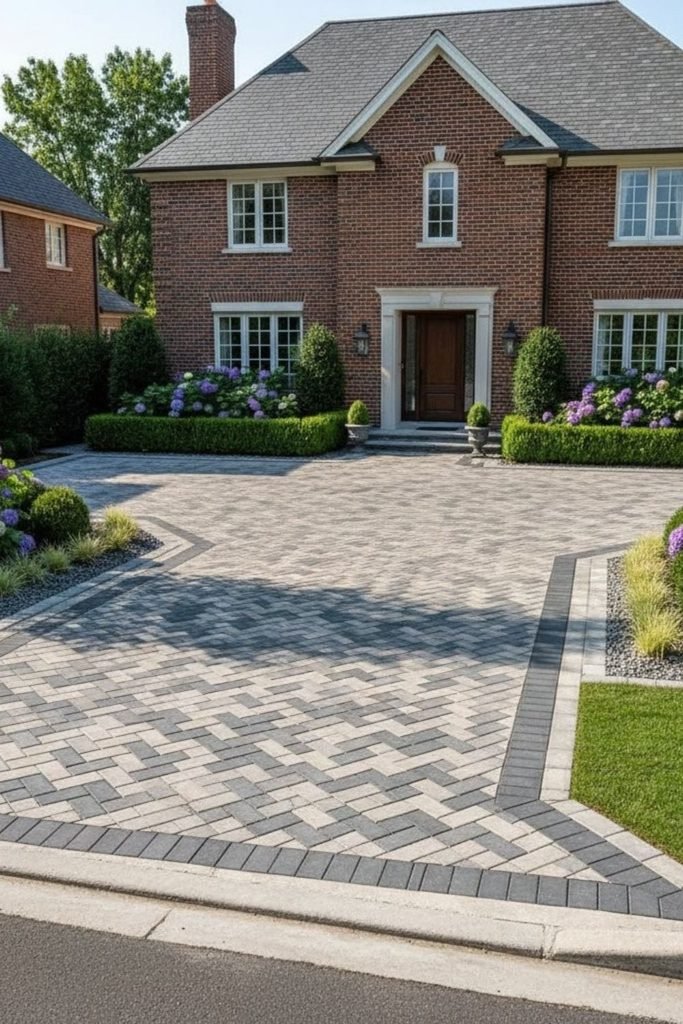
Give a broad driveway more garden presence by placing the strongest blooms in generous beds near its outer corners.
Hydrangeas are tall and colorful enough to offset a big expanse of paving and cut evergreens below keep the edges tidy when the flowering is over.
Tuck small ornamental grasses along the front where they can soften the paver border, but not reach into parking space.
If your house has formal architecture, leave the middle free entirely for turning cars with identical planting repeated on either side.
Friendly entry and you don’t lose the functional width of the driveway.
Seasonal Entrance
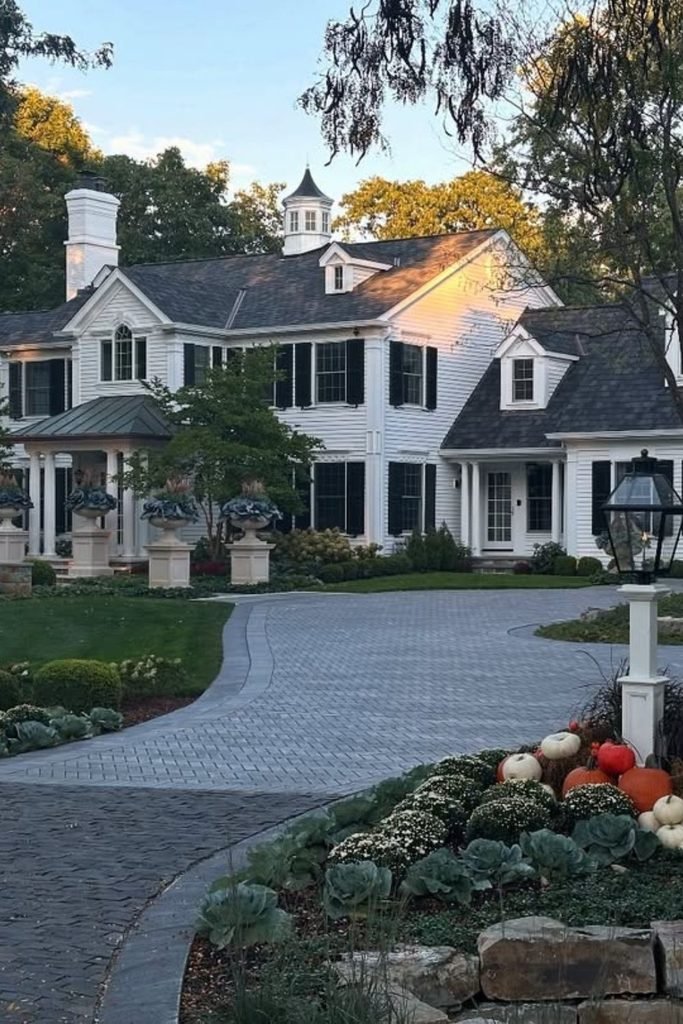
Use the driveway entrance as your main decorating zone when you want seasonal color without changing permanent landscaping everywhere else.
Use evergreen groundcovers and compact shrubs as the year-round base then nestle pumpkins, blooming mothers ornamental cabbage.
Matching lantern pillars can anchor either side and make the entrance more visible after dark.
However, when the season is over, remove the temporary pieces but leave the structural planting intact.
This is especially effective for wide circular or curving driveways, when decorating the whole way would be expensive and difficult to maintain.
Hydrangea Lane
Let one side of a narrow driveway carry the color instead of squeezing matching flower beds into the both edges.
A broad row of hydrangeas makes a soft barrier to garden with compact evergreen planting on the other side to maintain the route open and balanced.
Plant flowering shrubs far enough back so that adult stems will not brush vehicles, and use stone edging to prevent gravel from drifting into the beds.
This works great in a garage or guarded entrance if you want lots of flowers but yet require a comfortable driving area.
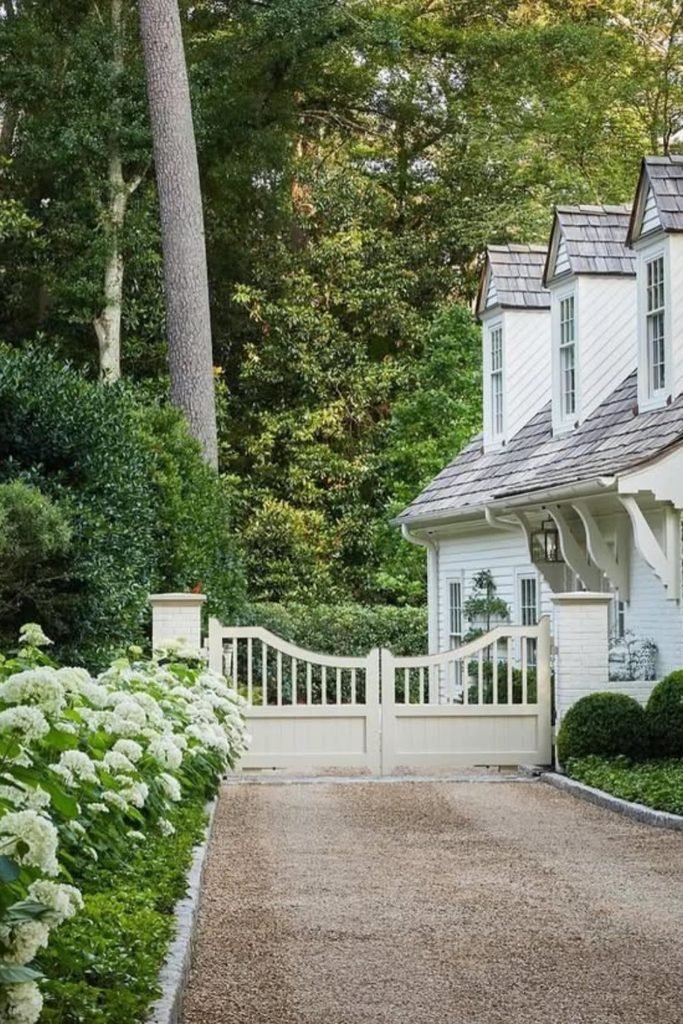
Layered Borders
Turn the planting beside a driveway or connecting path into a gradual transition instead of using one flat row of shrubs.
Near the house, place rounded evergreens for year-round structure, then combine lower grasses, leafy perennials and pockets of brilliant flowers.
Mulch fills in the spaces and helps control weeds during the establishment of plants.
Varying the heights creates a little extra depth in a limited strip without forcing growth onto the usable route.
Choose compact varieties and repeat a few plants down the border to give the garden a linked rather than crowded impression.
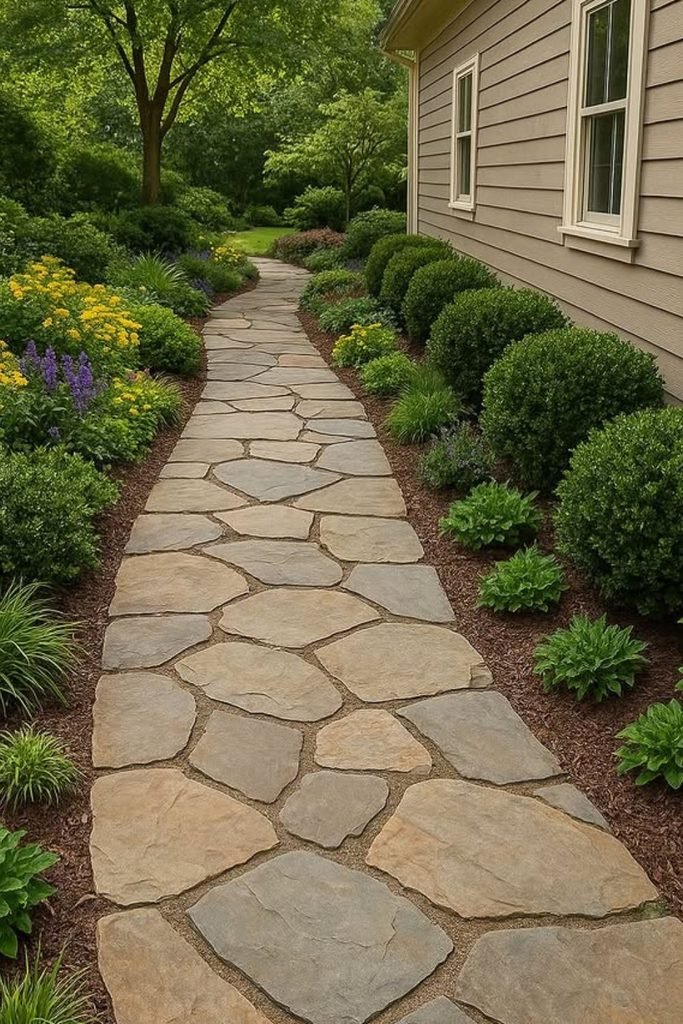
Grass Tracks
Cut down the amount of hard paving by using narrow wheel tracks with grass growing between and around them.
Best for lighter-use home driveways when vehicles follow a predictable course and the lawn can manage your local growing conditions.
Continue with full paving near the garage or turning area, as those areas need more tire movement.
Use the pavers to level out the grass for simpler mowing and a seamless transition.
Flowering shrubbery at the outer edge can offer softness without sacrificing any of the actual driving lane.
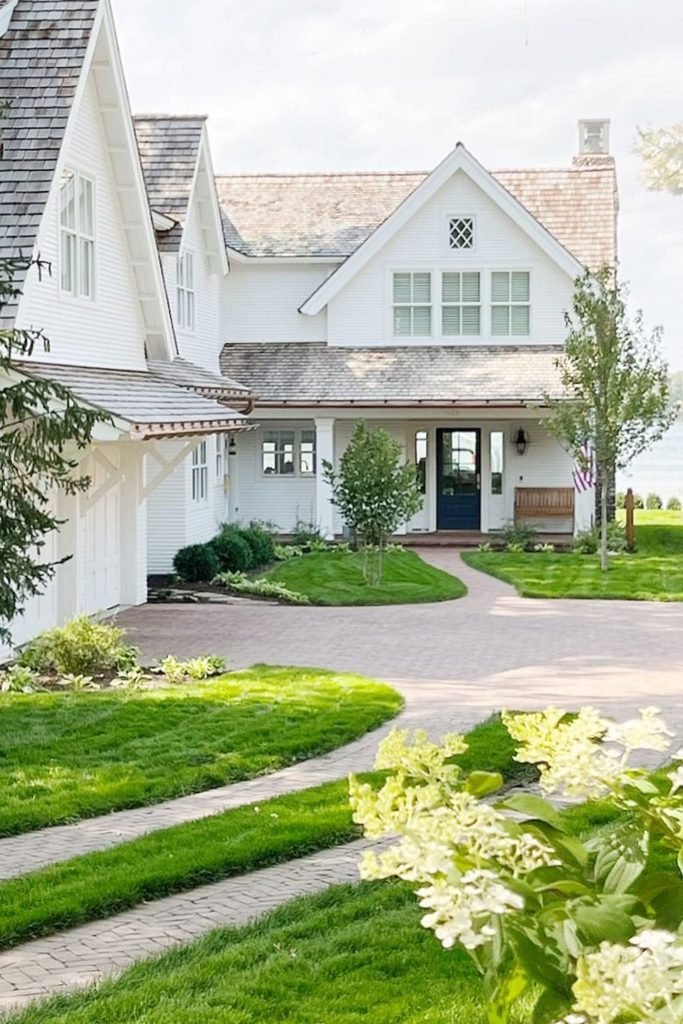
Tropical Lighting
Narrow side spaces can still feel lush when you grow upward instead of letting plants spread across the walkway.
Plant palms and broad-leaved tropicals in a narrow raised bed and then maintain the opposing edge at a lower level with compact grasses.
Light-colored gravel delineates both planting zones without the need for large boundaries.
For evening use, aim small landscape lights into the foliage so that leaves provide soft shadows, yet the route is easy to follow.
It does well in warm regions and confined driveway-side passages where privacy and foliage are a concern but floor space is restricted.
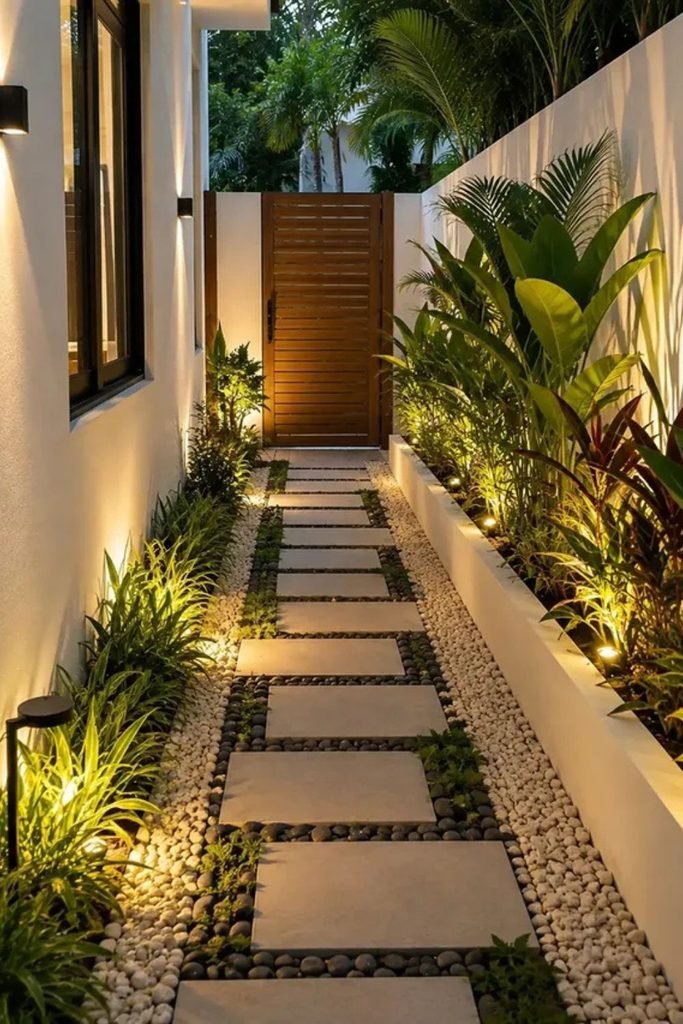
Flowering Avenue
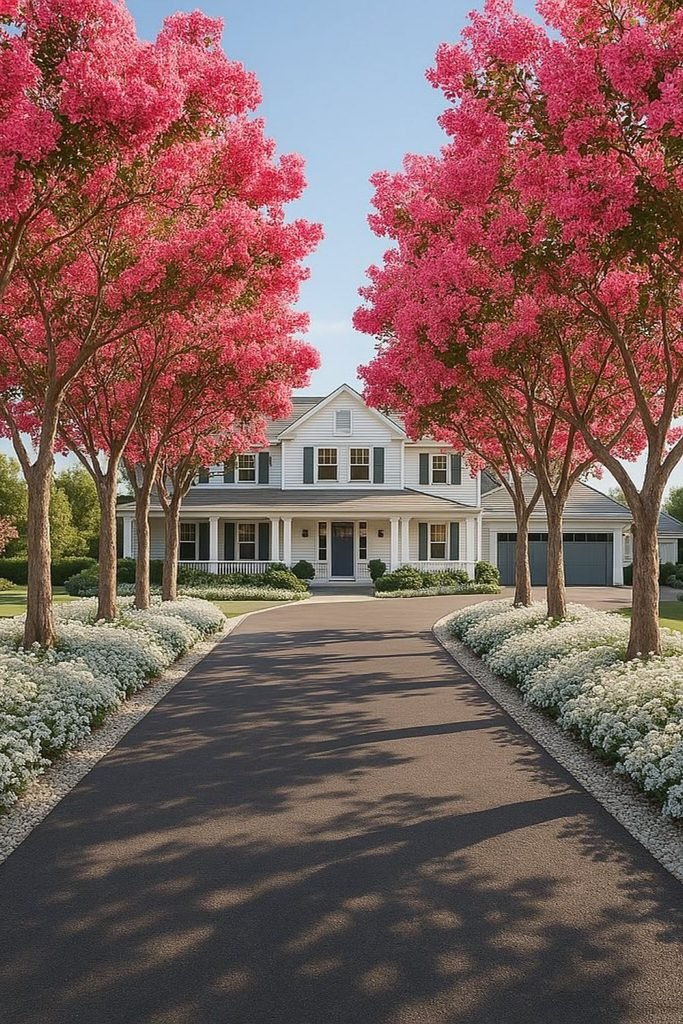
Few things give a long driveway more impact than repeating flowering trees at generous intervals.
Select tree that will grow in your climate and allow sufficient space between trunks so that mature branches and roots may grow without interfering.
Low growing ground coverings will fill the beds below, offering color near the pavement without the bulk.
The repetition of the same trees on either side produces a very powerful sensation of arrival.
This concept works especially well with straight, generous roads where you want significant seasonal interest but don’t want to fill the whole border with bushes.
Cobblestone Frame
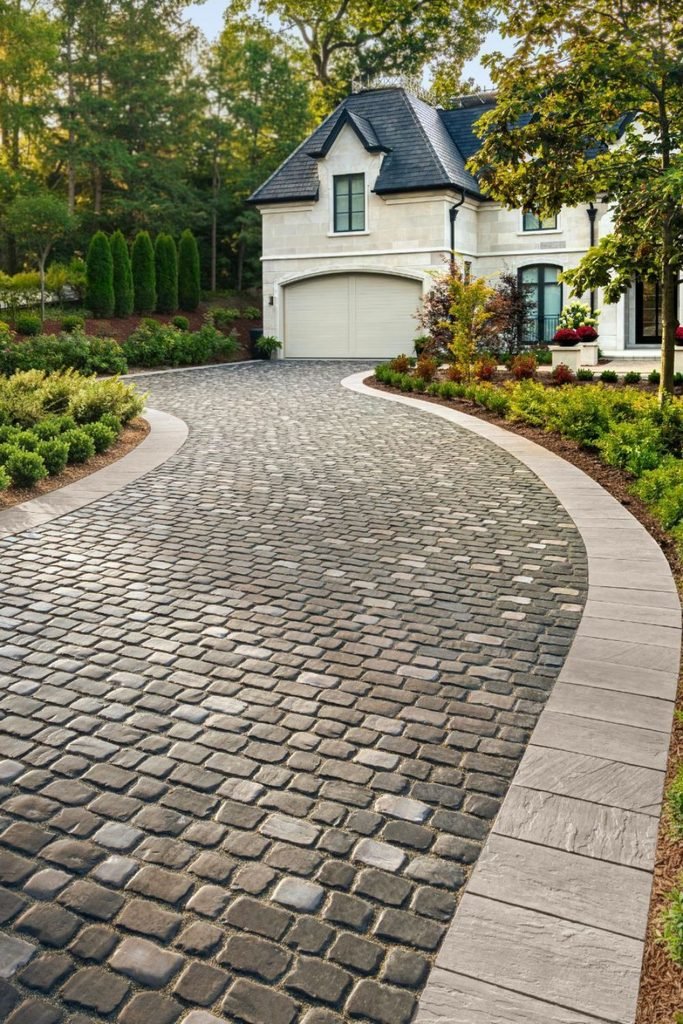
Let the paving do some of the landscaping work when you want a polished driveway without crowding its edges.
Texture is given with the core of dark cobblestones and a smooth contrasting border forms a clear line before the planting begins.
Fill the outer beds with compact evergreens, low shrubs and a few tiny ornamental trees, not huge plants that could lean into automobiles going by.
The same planting rhythm is repeated down the driveway as it curves toward the garage, leading the eye.
It’s a sensible solution for formal homes where you need rich detail and still desire an open, practical driving way.
Palm Pockets
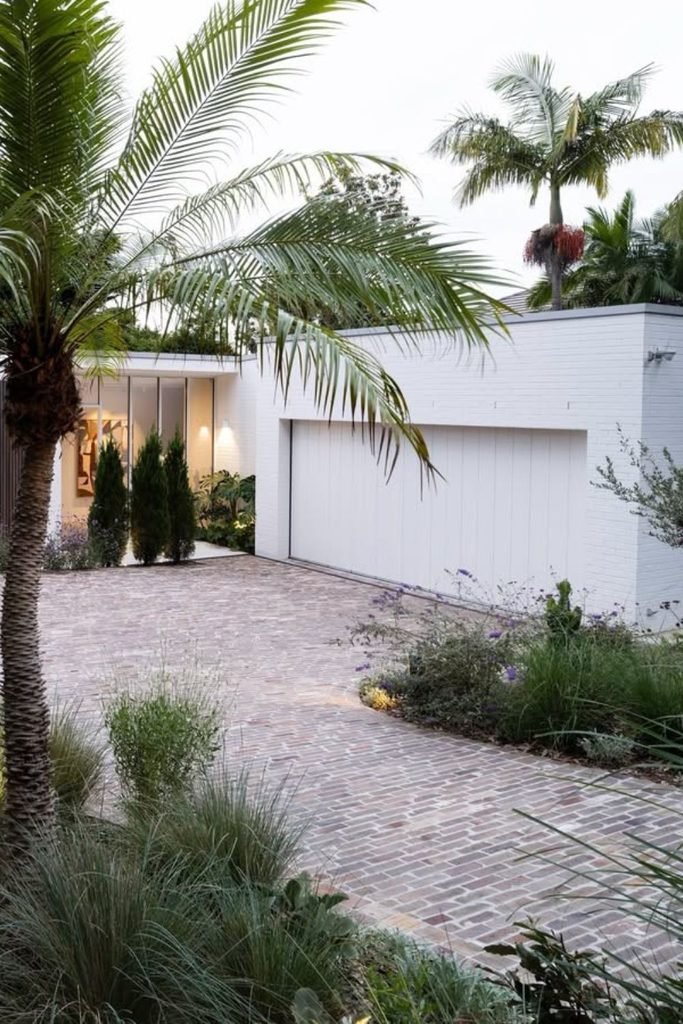
Warm-climate driveways do not need continuous borders to feel planted.
Reserve broader areas along bends and garage corners for palms, feathery grasses and drought tolerant floral species, leaving the brick paving entirely open where automobiles turn. .
The taller palm adds height to the space without taking up a lot of ground area, the loose grasses soften the rough edges down below.
Repeat smaller planting pockets rather than one thick border if your driveway is tight: Select plants that can withstand reflected heat.
Watch out for mature palm fronds that might hang low enough to brush automobiles.
Hedge Framing
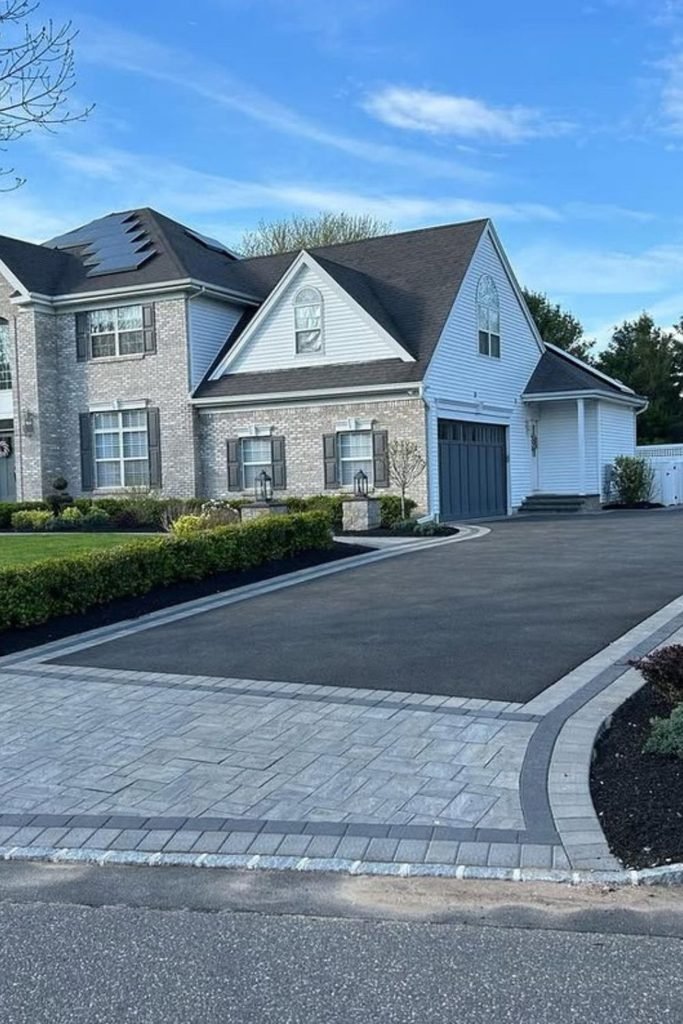
Give a wide driveway stronger definition by running low clipped hedges along the outer edges instead of filling those areas with bulky mixed shrubs.
The flora is kept at a manageable height so that drivers can see without obstruction and the asphalt yet feels connected to the lawn.
At the entry, increase the beds for compact evergreens, low groundcovers and a few contrasting foliage plants.
This design works well for a formal front yard when you want clean structure all year without losing parking or turning space.
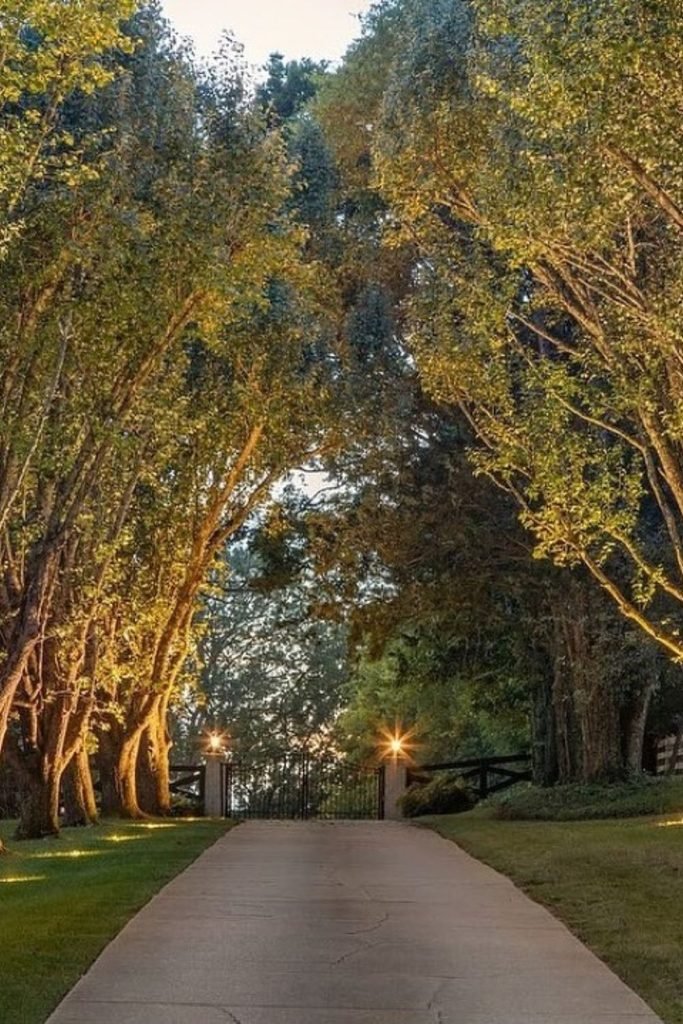
Illuminated Canopy
Turn a tree-lined driveway into an evening feature by lighting the trunks from below instead of adding fixtures all along the pavement.
The small uplights placed next to mature trees lead the eye upward, making the canopy appear higher and leaving the driving surface clean and open.
Keep the trunks surrounded by lawn or modest groundcover so that bulky planting doesn’t compete for vehicle space.
Put space lights with the trees so they look best instead of putting them in a continuous row.
This is especially good for lengthy driveways, because you get nite direction and atmosphere without it looking like a runway of bright path lights.
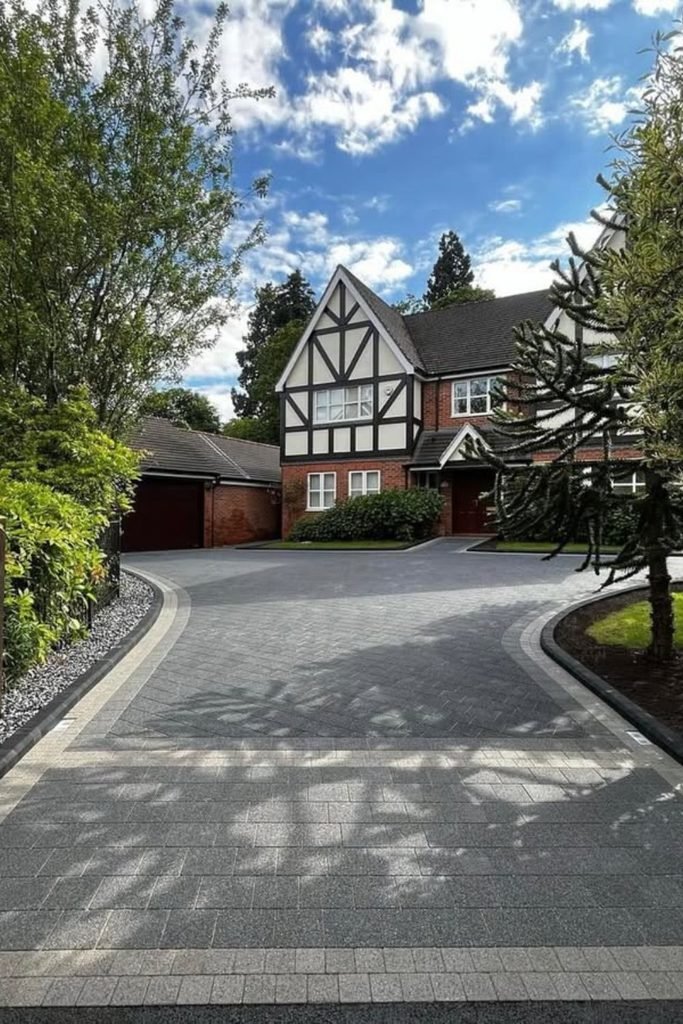
Evergreen Curves
Bring privacy close to a curved driveway by placing taller evergreens along the property edges rather than beside the active driving lane.
They grow up so they obscure the sight of nearby windows, yet the middle is large enough for turning and parking.
Use low gravel or compact groundcover under the vegetation so that the borders will keep tidy and not spill over the pavers.
A lighter pavement band can follow each curve, creating separation between plants and automobiles.
This setup is especially useful in the vicinity of wide garage entrances where screening is desired without loss of maneuvering space.
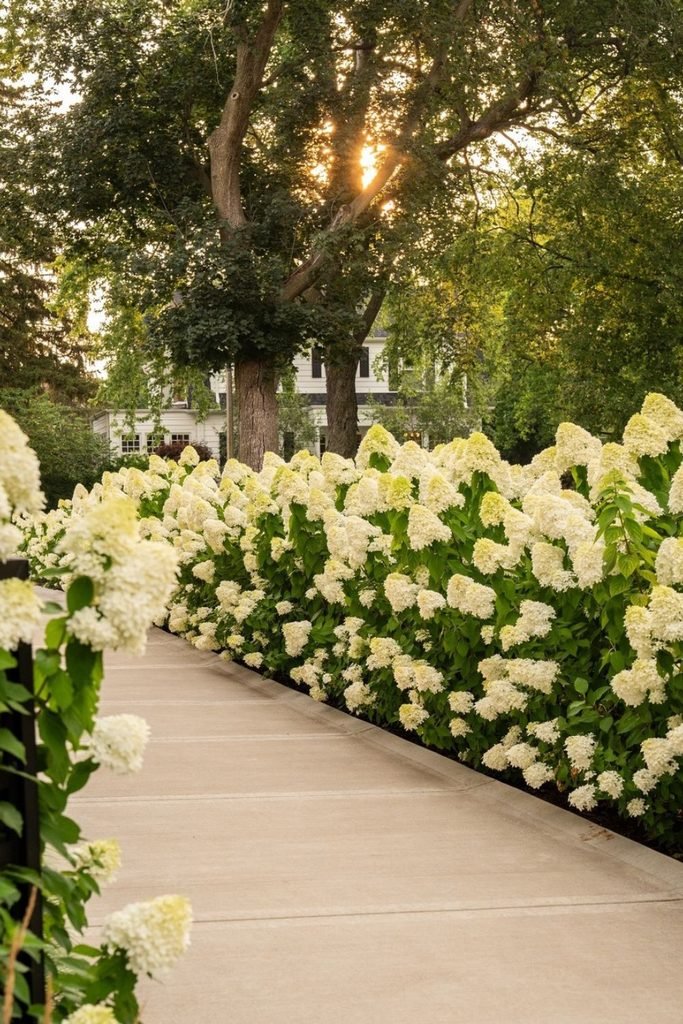
Hydrangea Screen
Skip a hard privacy hedge when flowering shrubs can soften the driveway and screen the view at the same time.
For a lusher look, put panicle hydrangeas on one side of a bed, spaced at mature width, not tight to the young plants.
Their huge flowers form a continuous border throughout the summer, and bigger trees at the back provide shade and an additional layer of privacy.
Position the shrubs a little back from the pavement, so the blooms don’t lean into the cars after rain.
This works best along larger borders of driveways where you have adequate depth of soil for a full, relaxed row.
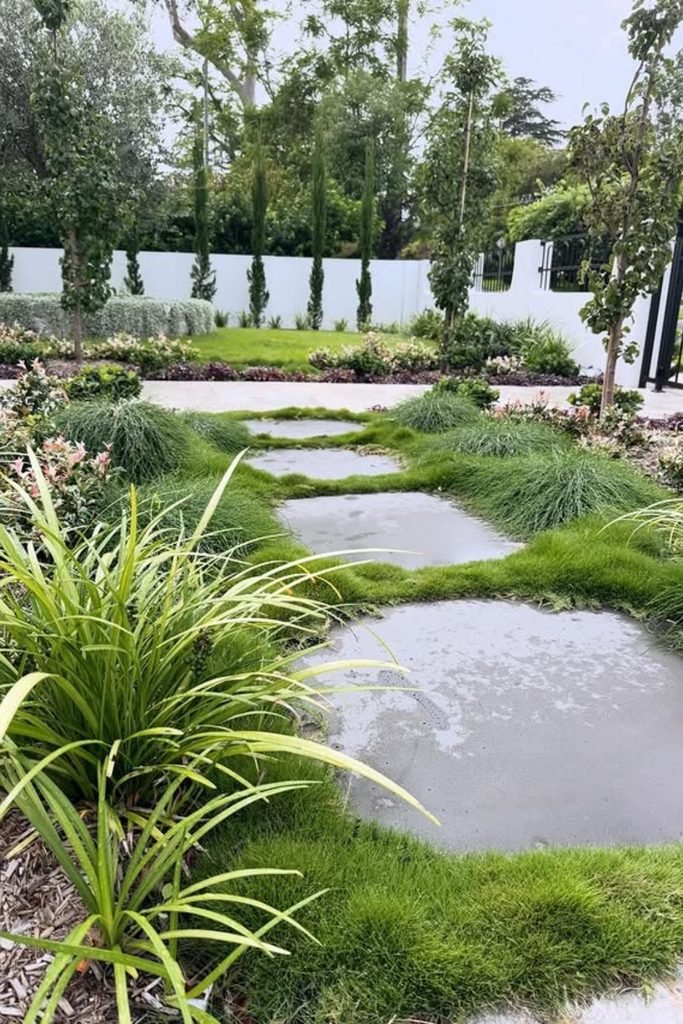
Grass Steppers
Break up a garden-side driveway entrance with oversized stepping stones instead of adding another solid strip of paving.
Let low grass grow around each slab and then frame the route with soft ornamental grasses and small blooming plants to keep the edges relaxed.
The wider planting beds allow the slimmer trees to be set further back, increasing height without overcrowding the path.
Remove grass from around the stone surface to keep the route clear and comfortable to walk.
This is a particularly good option if you have a huge driveway and want to create a special garden walk that still feels like part of the larger environment.
Island Gardens
Use the open lawn around a curved driveway for small planting islands instead of narrowing the pavement with continuous borders.
Plant a thin ornamental tree at the foot of each island, and surround it with low seasonal flowers, compact shrubs and a few pebbles.
Most plants are kept below eye level to preserve unobstructed vistas across the roadway, but add color in a few concentrated locations.
Group similar flowers around the home to make it all come together.
This is especially useful for large front yards when you want the roadway to flow naturally through the landscape without having to plant every edge.
Autumn Gateway
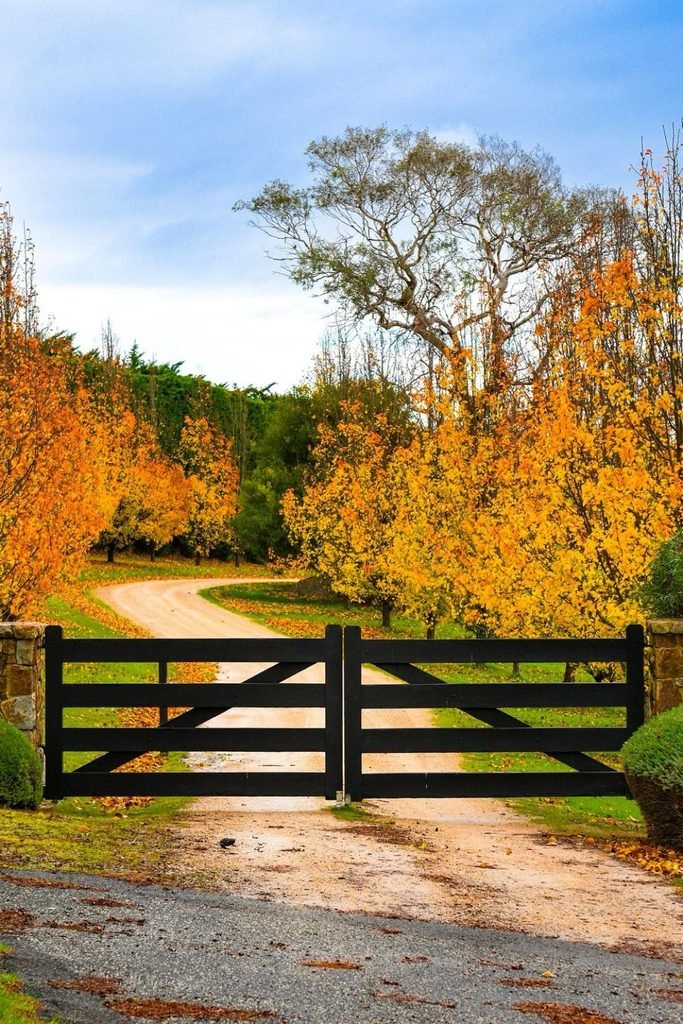
Make the driveway entrance memorable by pairing a simple gate with trees that deliver strong seasonal color farther inside the property.
trimmed shrubs and stone pillars can define the boundary of the roadside, deciduous trees draw the eye along the route without the necessity for continuous flower beds.
Plant trees spread out, following the natural curve, not too close to the gravel; give enough of area for trunks and mature canopies.
This works well for long country drives where you want the landscape to change with the seasons but keep care near the driving surface rather simple.
Green Drive
Save your fuller planting for the driveway edges and let strips of lawn soften the center where traffic is lighter.
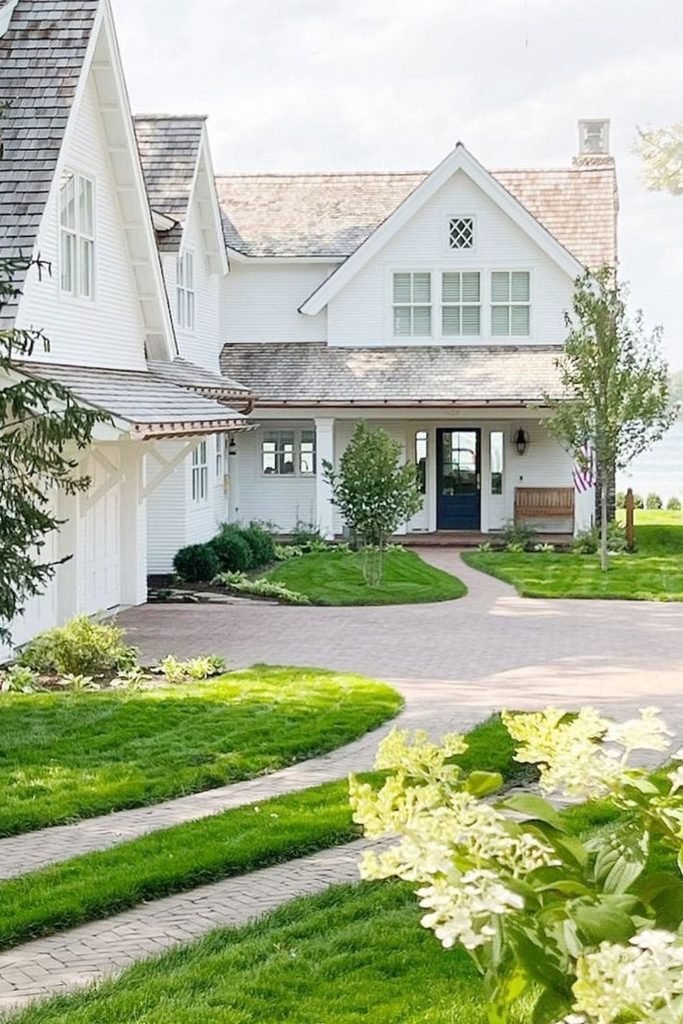
Narrow paver tracks offers tire sturdy path while the grass between them decrease the amount of hard surface and let drive merge into green fronts.
Repeat flowering shrubs such as hydrangeas along the boundary, rather than mixing in too many plants.
This solution is ideal for relaxed residential residences where the driveway is not heavily used and you’d like it to look more like a garden feature.
Grass Grid
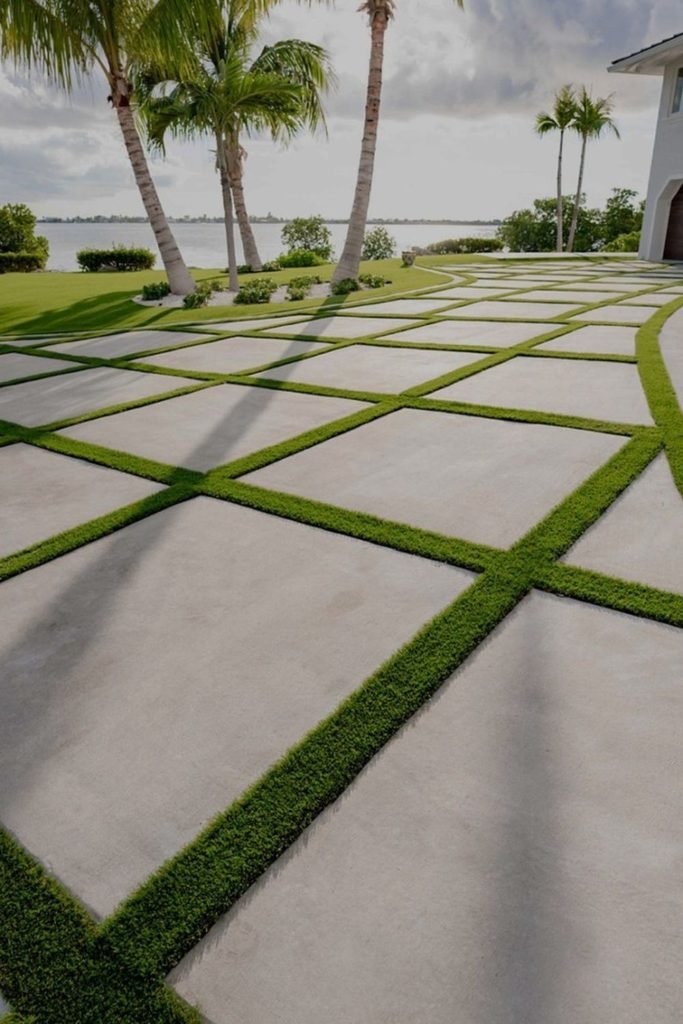
Large concrete driveways feel less heavy when narrow green joints break the surface into smaller sections.
Use reinforced grass or a durable, low growing groundcover between big concrete slabs keeping the planting level with the pavement.
The green lines are more for contrast than being the main driving surface.
The wider slabs should take the brunt of the vehicle weight. This notion works especially well in warm-climate homes with broad garage entrances.
Where palms and open lawns may carry the same clean, tropical atmosphere around the driveway.
Raised Blooms
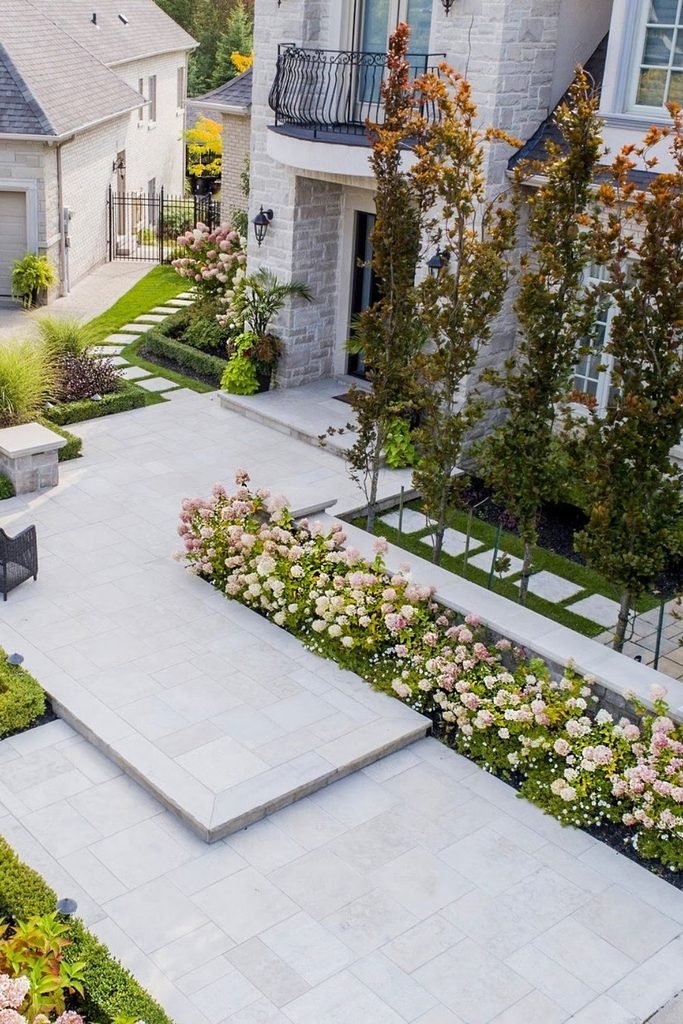
Use a low retaining wall to separate flower beds from busy driveway space when you want generous planting without loose soil.
Fill the elevated border with hydrangeas and smaller flowers for layers of color, then put upright trees behind it to bring height closer to the home.
On the other side, clipped edging helps keep mixed foliage looking tidy.
This is particularly effective where a driveway meets a front patio or entrance, since the little shift in level clearly delineates automobiles.
Succulent Island
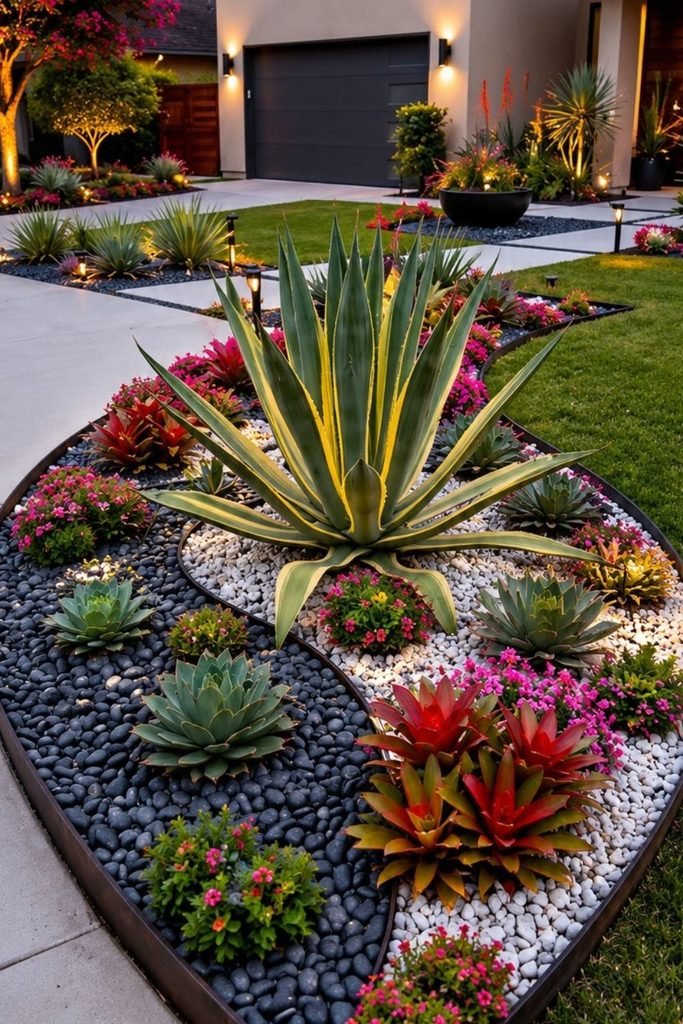
Hot driveway edges become easier to manage when you choose plants that actually enjoy dry, exposed conditions.
Create a curved island with an agave or other architectural succulent as the focus, then surround it with smaller rosette plants and low flower pockets.
Groups for planting can be separated with black and white pebbles, which still cover bare soil, and metal edging keeps the whole bed off the sidewalk.
If you want the shapes to pop after dark, put a few inexpensive landscape lights among the plants.
This works well in warm climates when reflected driveway heat makes conventional thirsty borders difficult to manage.
Floral Corners
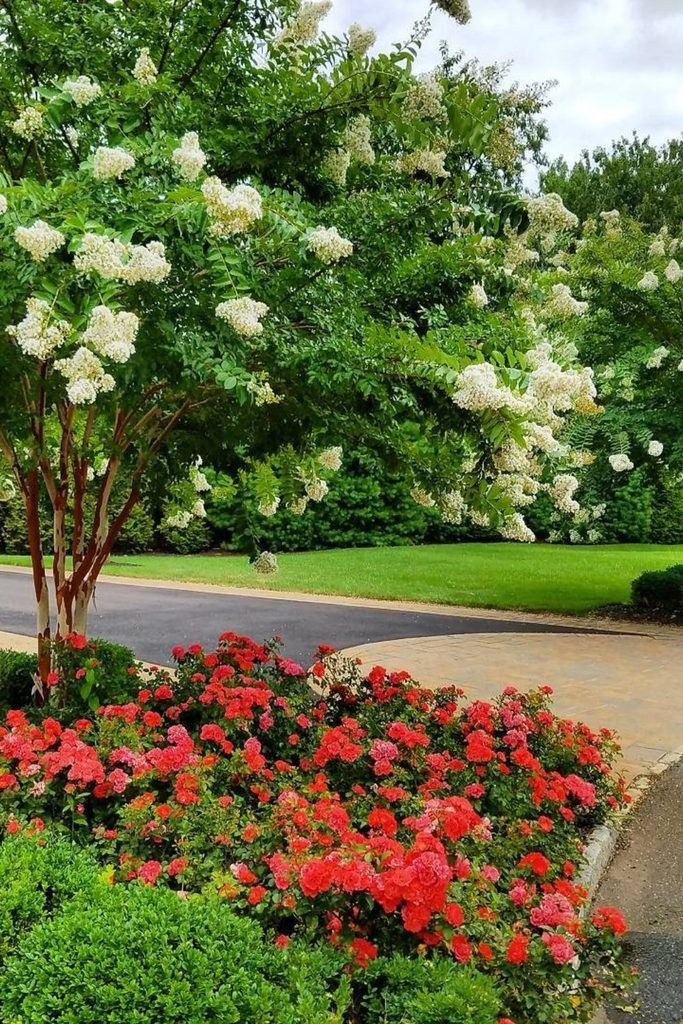
Save your brightest planting for the driveway corners where extra soil space lets flowers grow freely without narrowing the route.
Choose a modest flowering tree for the upper layer and around it plant masses of vibrant roses or other sun loving blossoms.
Evergreen bushes clipped along the perimeter provide the bed structure in the interludes when the flowers are blooming.
Plant lower near the street so drivers can see incoming vehicles well when pulling out.
A comparable bed on the other side can frame a large entry, and a strong corner planting is good when space is restricted.
FAQs
How Can I Make Driveway Landscaping Easier To Maintain?
Select plants that are adapted to the amount of sunlight, kind of soil and local temperature you have, instead of choosing species.
Structure with less work comes from evergreen shrubs, decorative grasses, groundcovers and slow-growing trees.
Add mulch or decorative gravel around plants to help prevent weeds and hold moisture, but be sure to leave enough clearance next to the driveway for cars.
What Plants Work Best Along A Narrow Driveway?
Choose upright or naturally compact plants so mature branches do not intrude on valuable driving room.
Helpful selections are Columar evergreens, tiny decorative trees, low flowering shrubs and attractive groundcovers.
Before you plant, check the mature width of each plant and space taller kinds further away from the pavement.
