
26 Edible Landscaping Ideas for 2026
If you’re interested in the concept of selecting fresh fruit from your own yard but are concerned that fruit trees will feel too crowded, dirty, or more orchard.
Wrong tree, wrong place can block sun, grow too big for the space, or be tough to maintain and harvest.
Choosing the proper type and situating it where it can function as part of the environment.
In this article, I’ll show you 26 edible landscaping ideas you can use to create the beautiful productive garden.
Let’s jump in!
How Can You Incorporate Fruit Trees Into Landscaping?
Start with the premise that the fruit tree is part of your environment, not a distinct orchard.
Choose a variety that will be appropriate for the space at maturity, then find a site where it will receive plenty of the sun and not impede windows, walkways.
Dwarf and semi-dwarf trees are especially suitable when space is tight, because they require less room and are easy to trim and harvest.
You can use fruit trees as centerpieces, privacy screens, windbreaks or as groupings.
Before planting determine whether your chosen variety needs a pollination partner and allow enough space around the tree for upkeep.
Harvest Beds
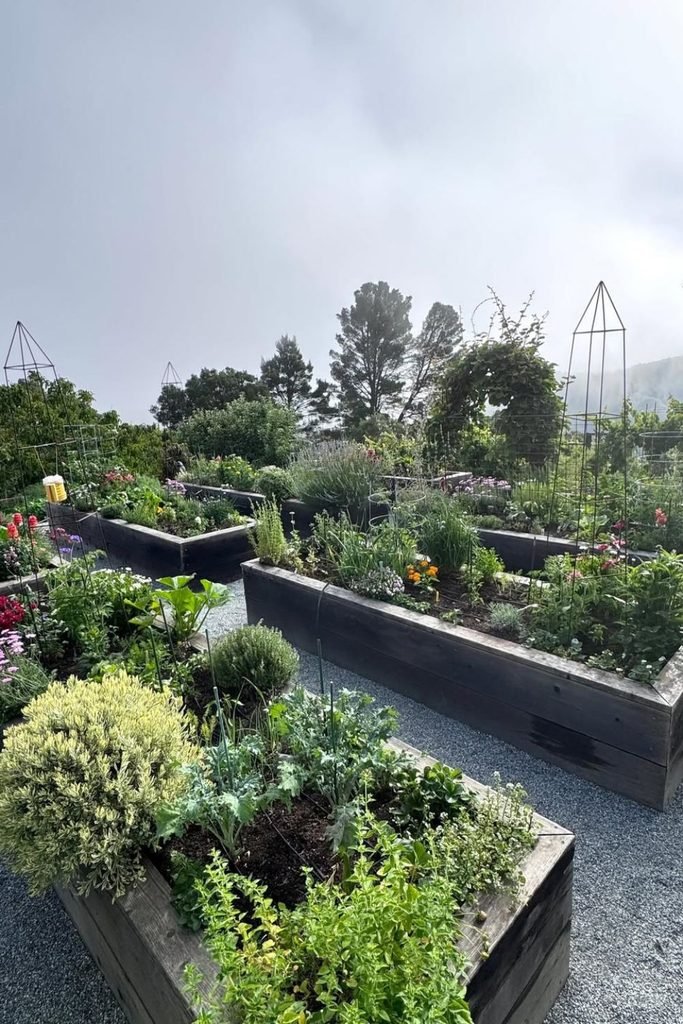
Raised beds make edible landscaping feel organized instead of turning vegetables and herbs into one crowded patch.
Combine lush greens, gourmet herbs, small vegetables and edible flowers in each bed, leaving gravel paths broad enough for watering and harvesting easily.
Add tall metal supports to allow climbing beans, peas or cucumbers somewhere to grow without taking up valuable ground space.
Use this arrangement for a sunny backyard where you want a lot of food but also want to maintain the garden nice and simple to maneuver through.
Terraced Harvest
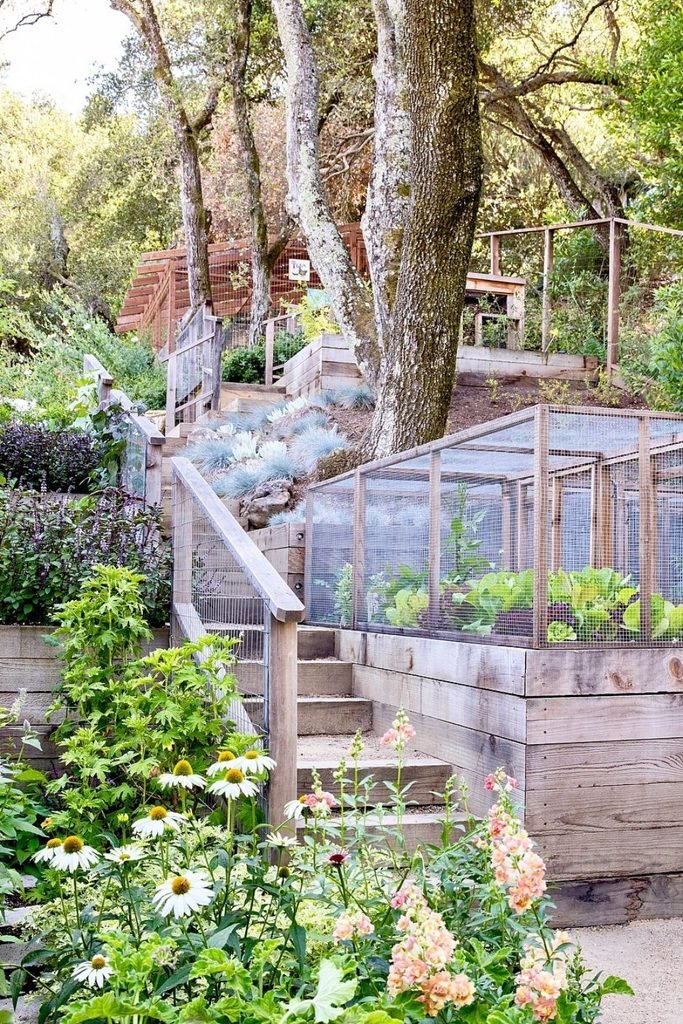
Sloped yards become much easier to grow food on when you turn the incline into level planting zones.
Construct timber retaining beds on the hill, join them with strong stairs and keep the sunniest parts for vegetables and herbs.
A protective netting surrounding vulnerable crops can limit harm from hungry wildlife.
Flowers put between productive regions lighten the hefty timber construction and attract pollinators closer.
This system is especially effective on slopes where it is difficult to plant, irrigate and harvest safely.
Kitchen Beds
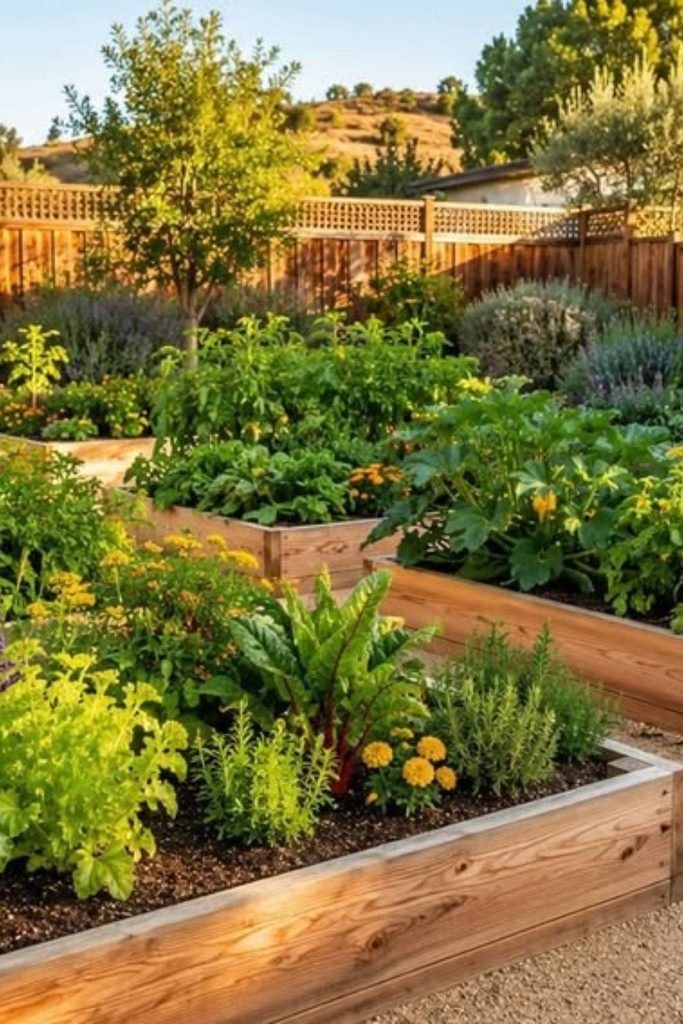
Keeping your most-used vegetables close to the house makes everyday harvesting much easier.
Fill several low raised beds with tomatoes, leafy greens, peppers and culinary herbs, then thread marigolds or similar flowers through the planting for color.
The beds are separated by gravel walkways, which provide for clean access for watering and harvesting without compacting the soil.
Plant taller crops toward the back or grow them vertically so shorter herbs and greens get enough sun.
Protected Harvest
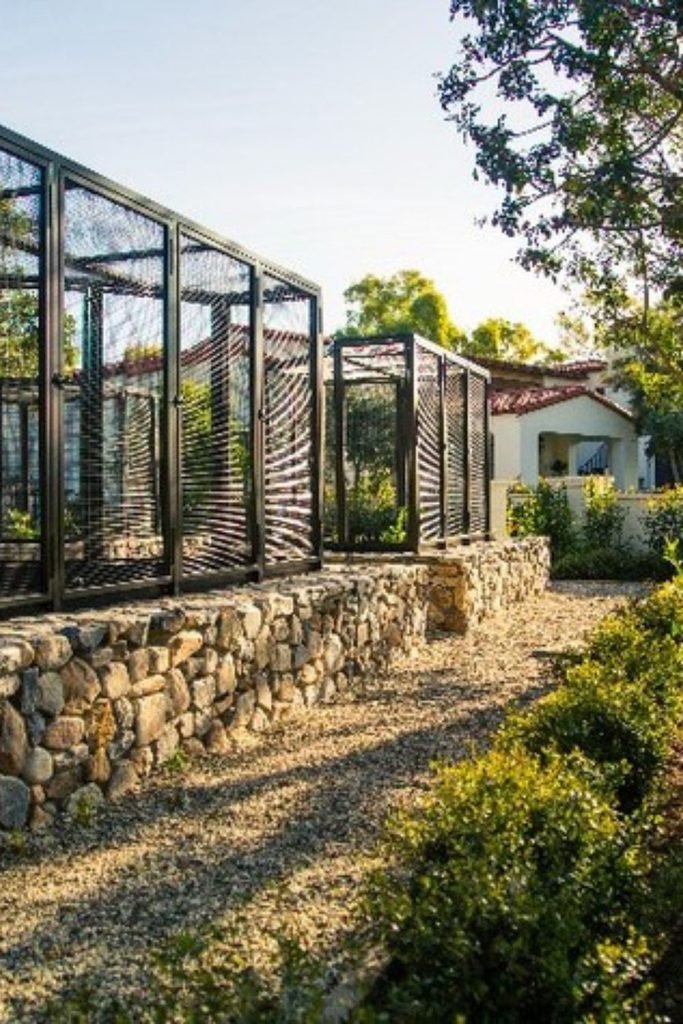
Wildlife pressure can quickly ruin an edible garden, so protect your most tempting crops instead of fencing the entire yard.
For vegetables, berries or young fruit plants that require special protection, erect tall mesh enclosures over designated growing beds.
And utilize stone walls around the base to integrate the structures into the landscape.
Having the cages next to wide gravel paths makes harvesting easy, while adjacent shrubs and trees make the protected growing area feel like it is not isolated.
Vertical Harvest
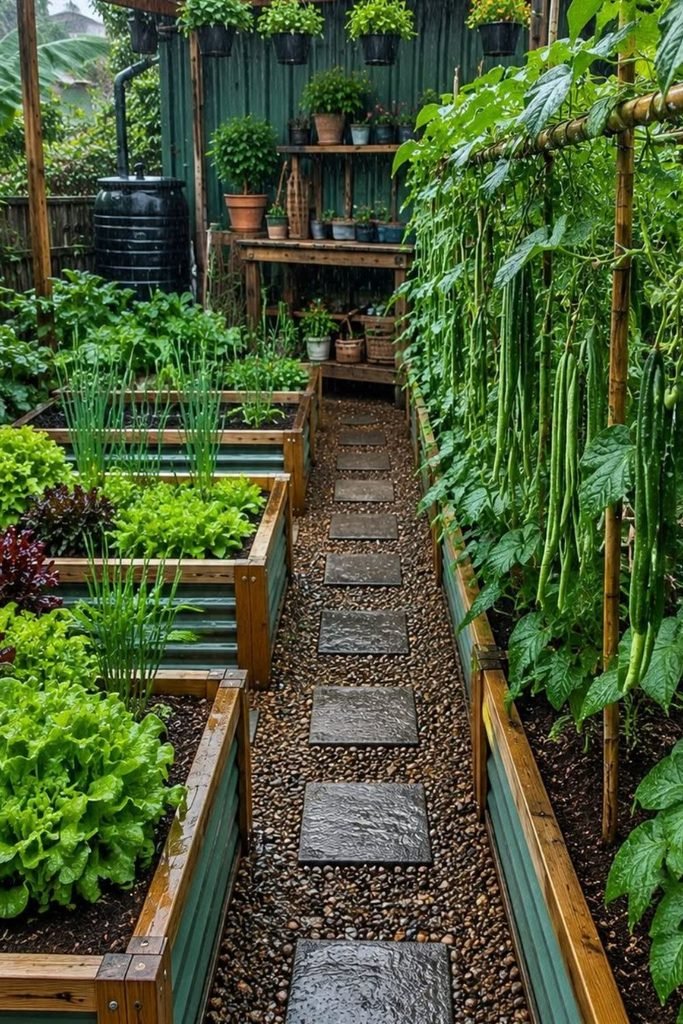
Narrow gardens produce far more when climbing crops are pushed upward instead of allowed to spread across the soil.
Run stout bamboo supports for beans, cukes or other vines along the sunniest side, and grow lettuce, onions and herbs in raised beds below.
Make a basic stepping stone walkway across the middle so all the crops are easily accessible.
For smaller backyards, this layered set-up offers different sorts of food without the lower growing veggies being crowded out by the robust vines.
Sculptural Planters
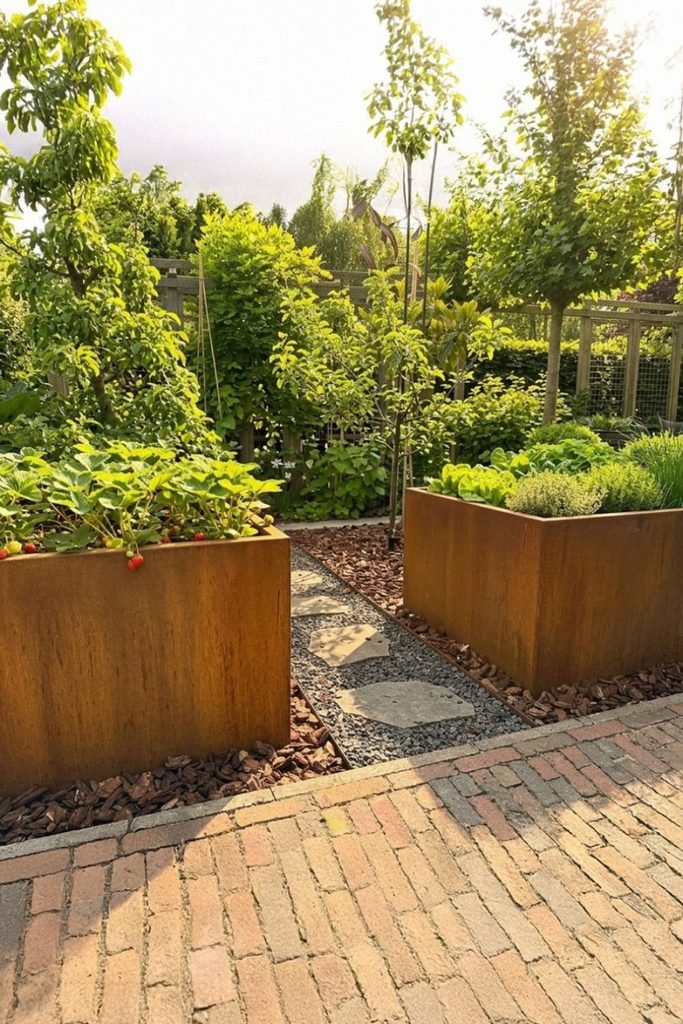
Clean-lined raised planters can bring edible crops into a polished patio or formal backyard without making the space feel like a traditional vegetable patch.
Use different boxes for strawberries, greens, chives and compact herbs. Gravel, bark or brick around the planters gives each growing area a definite edge.
To get height, plant dwarf fruit trees close by so that the edible planting can grow in layers instead of just at ground level.
Edible Tunnel
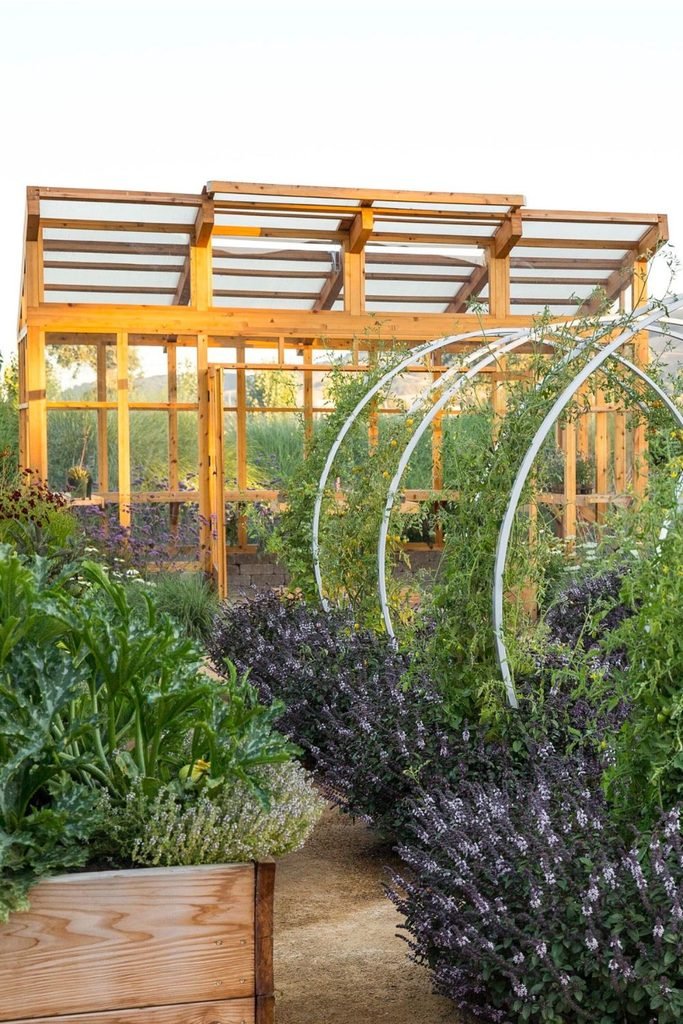
Climbing vegetables can become part of the garden design instead of being hidden on basic stakes.
Place curving hoops over a pathway, and train tomatoes, beans, cucumbers, or other suitable plants down them.
The areas beneath and around the structure can be planted with dense herbs and green vegetables.
Give the tunnel a sunny spot and make sure the supports are strong before the vines get heavy.
Growth fills the frame and you get more vertical production, but leave space for shorter crops in the valuable soil space.
Patio Harvest
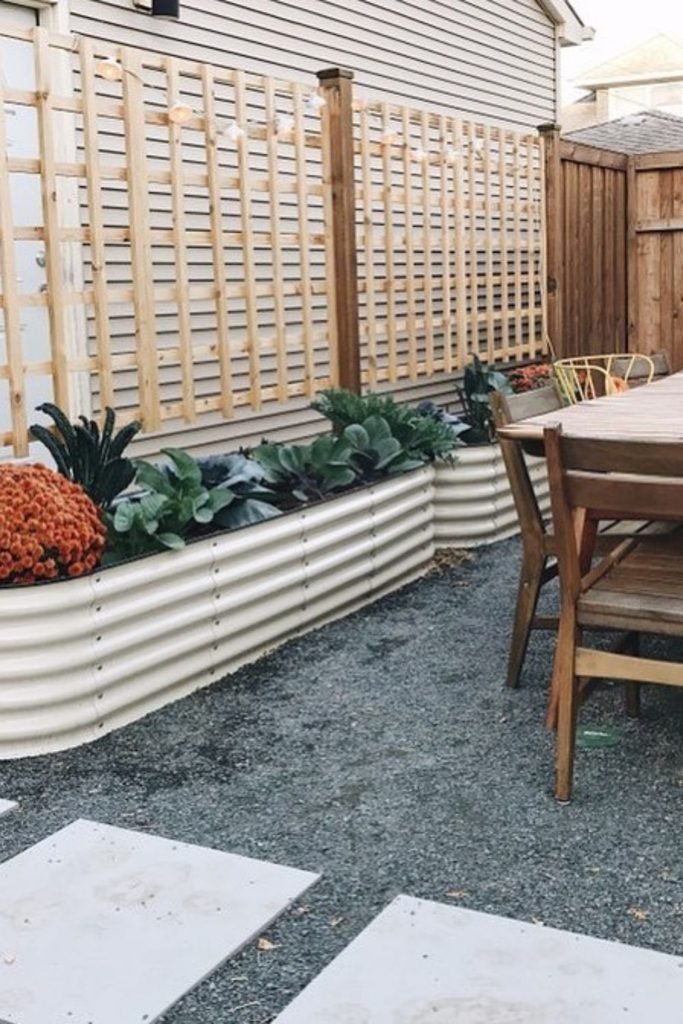
Unused space along a patio wall can hold plenty of food without taking over the seating area.
Create a long raised bed along the boundary and plant it out with compact greens, kale, herbs or seasonal vegetables that you use often.
Add a trellis behind the bed for peas, beans or cucumbers to climb and to provide a softer screen behind the house.
And make the bed narrow enough to reach from the front so you never have to step into the soil to harvest.
Formal Foodscape
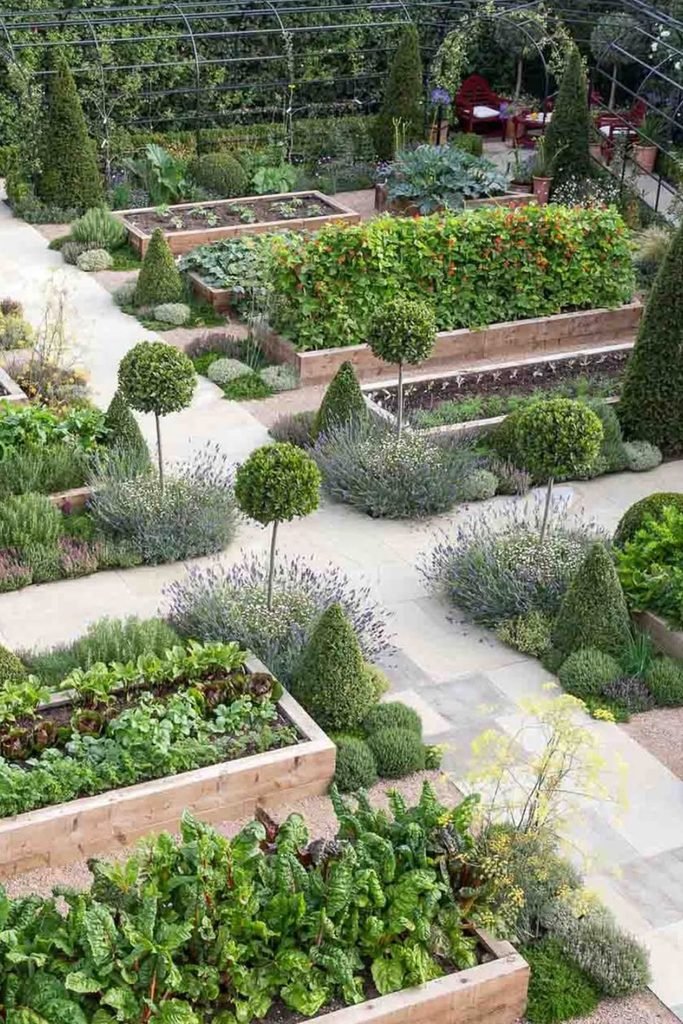
Edible beds can look just as polished as ornamental landscaping when you give the planting a clear framework.
Plant veggies and herbs in geometric raised beds, and then link each growing area by surrounding the edges with trimmed shrubs and flowering herbs.
Broad concrete trails make harvesting comfortable and prevent prolific plants from overflowing out into sidewalks.
If you want your backyard to look more organized, plant taller greens or climbing crops in the middle and lower herbs and compact veggies at the edges.
That way when the crops grow, all beds have a balanced shape.
Circular Harvest
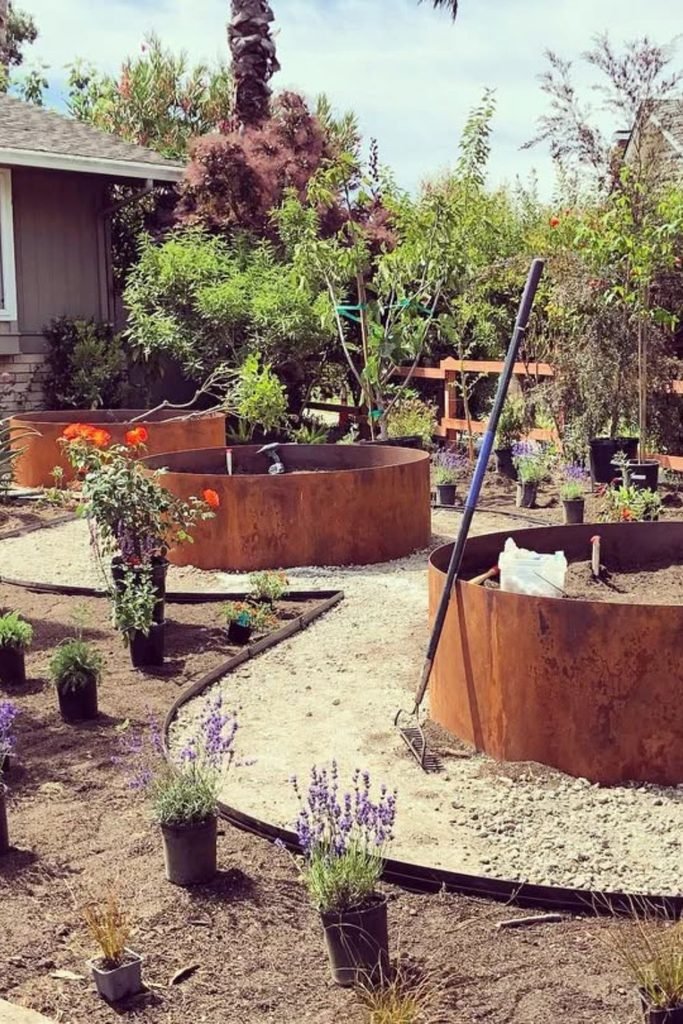
Curved raised beds can break up a boxy backyard while still giving vegetables and herbs clearly defined growing space.
Make large circles with steel or other robust edging material and leave enough room around each bed for a wheelbarrow and simple picking.
Grow taller crops or a small fruit tree in the middle and lower herbs, greens and edible flowers around the edges.
Repeating the circular shape around the entire yard allows for a planned design, but also allows productive plants to be integrated into the entire landscape.
Desert Harvest
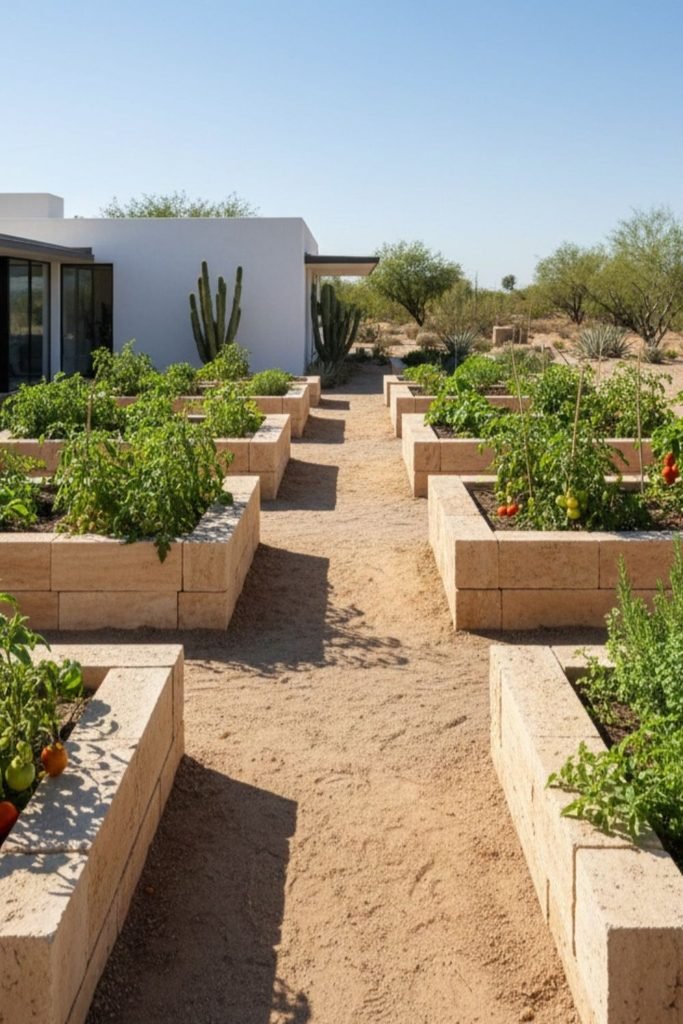
Hot, exposed yards need edible plants and materials that can handle strong sun without making watering harder than necessary.
Group tomatoes, peppers and Mediterranean herbs in deep masonry beds, then use wide gravel roads to keep the surrounding soil from getting wet and becoming difficult to maintain.
Drip irrigation works well here since it applies water to the root zone instead than saturating all of the pathways.
Plant crops in groups that have comparable water needs and give them shade if the heat becomes intense and your sensitive vegetables are beginning to suffer.
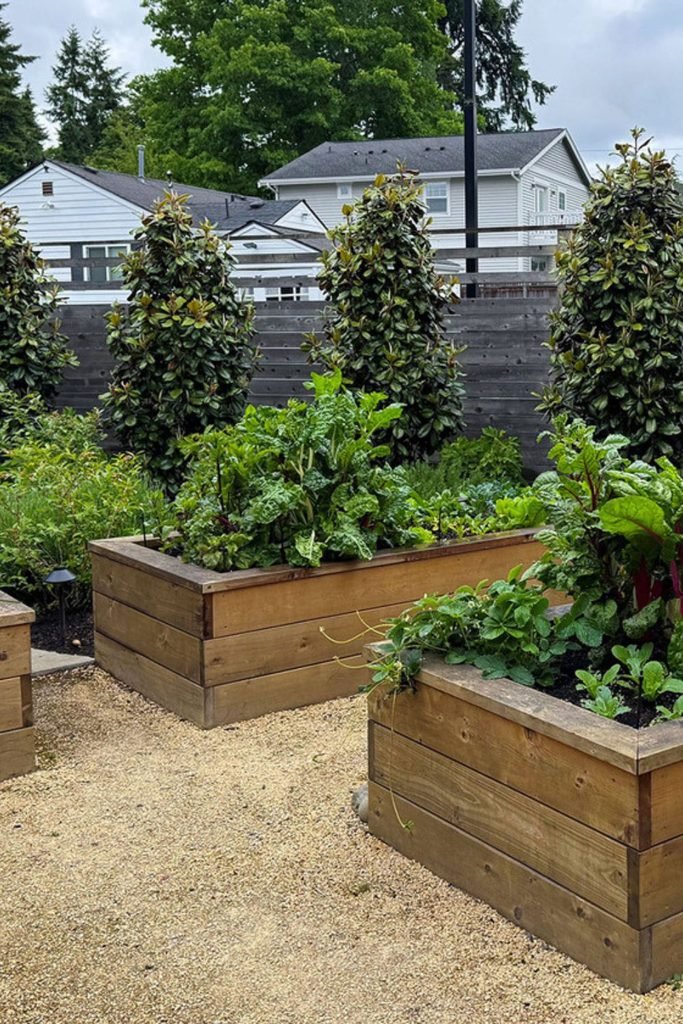
Layered Greens
Leafy vegetables can carry much of the visual weight in an edible landscape when you mix different heights, colors, and leaf shapes.
Instead of separate rows, grow Swiss chard, lettuce, kale, strawberries, and compact herbs in deep raised beds.
Leave the taller chard in the center and let the strawberries soften the edges of the bed as they spread.
Repeating upright evergreens behind the beds provide permanent structure to the garden, so it still feels planned when seasonal vegetables are harvested.
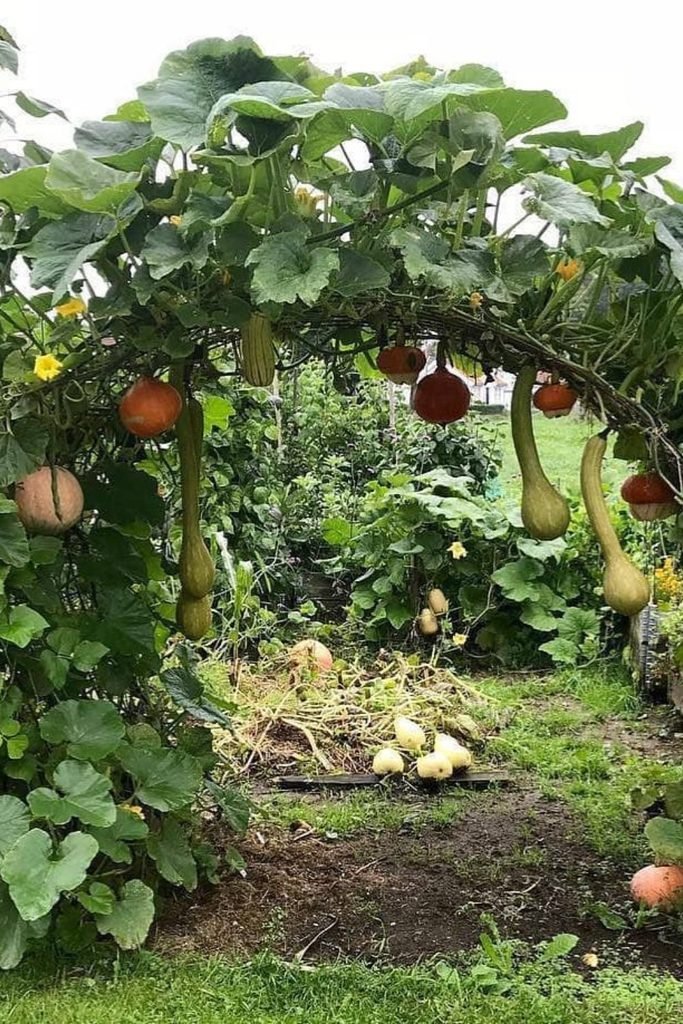
Squash Tunnel
Heavy squash vines become much easier to manage when a strong arch carries their growth above the garden.
Train pumpkins, gourds or good winter squash over a reinforced tube, curving young vines up before they start sprawling across surrounding beds.
If your fruit gets heavy, give it some extra support. The shaded corridor below also helps keep your walking path clear.
And sunflowers or edible flowers placed around the entrance can add some height and pollinator activity to the growing space.
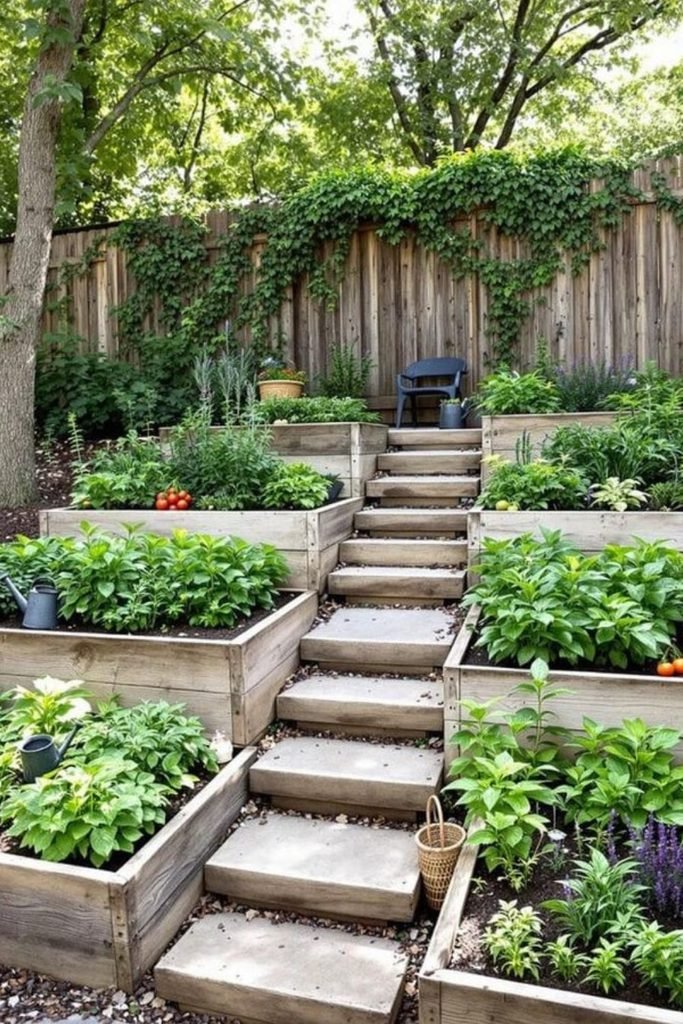
Stepped Harvest
Uneven ground can become productive space when you build edible beds into the slope instead of trying to flatten the entire yard.
Run a central stairway up the slope then place raised beds on either side, filling each level with herbs, tomatoes, leafy greens and other compact crops.
Put taller plants on higher levels where they are less likely to shade lower beds.
The repetition of the beds adds order and the steps provide direct access for watering, pruning and harvesting without having to go across planted soil.
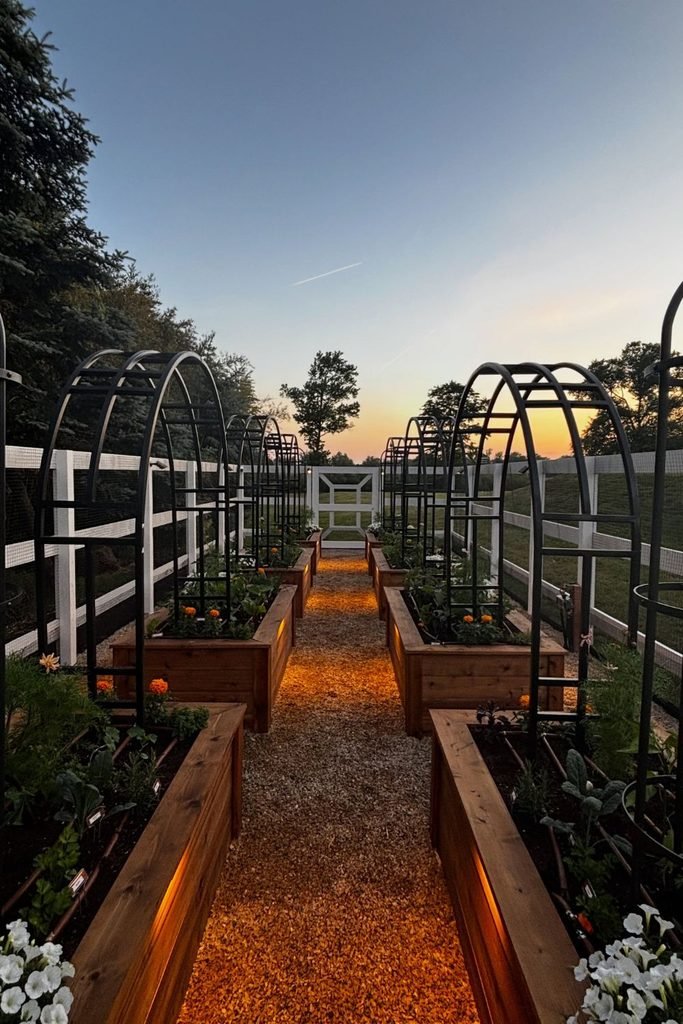
Arbor Rows
Matching arches can turn straight vegetable beds into a garden feature while giving climbing crops permanent support.
Set sturdy arbors a few feet apart over raised bed and as beans, peas cucumbers and compact vines emerge train them upward.
Don’t make leafy greens and herbs compete for climbing space – plant them underneath.
A central gravel walk makes it easy to reach each bed, while repeating the same arbor design brings structure to a lengthy garden, and stops sprawling crops.
Ornamental Harvest
Colorful vegetables can carry the same visual role as flowers when you mix them by shape and height instead of planting strict crop rows.
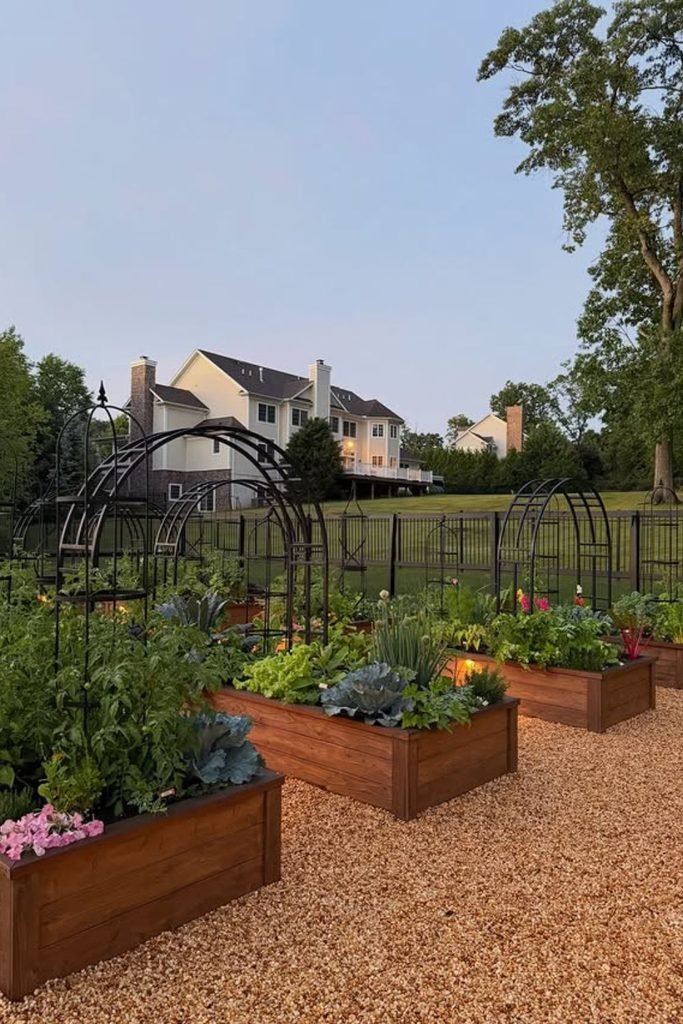
Plant cabbage, lettuce, chard, tomatoes, onions and blooming companions in matching raised beds and add height with black metal arches for climbing crops.
Gravel around the beds maintains the layout neat and makes harvesting easy from all sides.
Keep the same bed and trellis style, so changing seasonal crops never make the garden feel random, and you’ll have a backyard that stays presentable.
Salad Mosaic
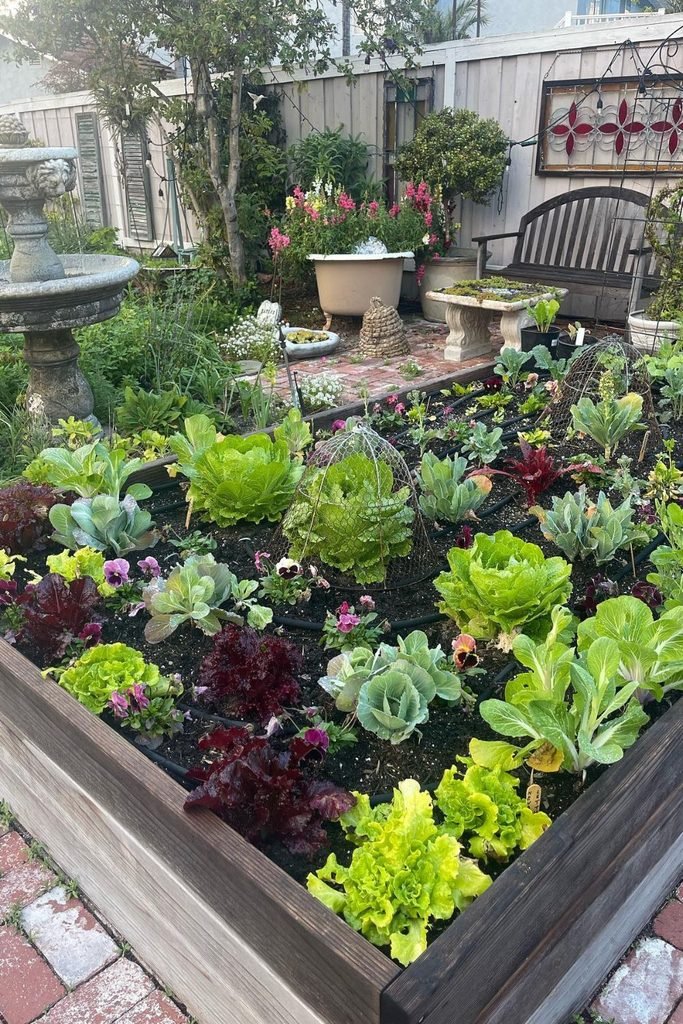
Leafy crops become decorative when you arrange them by color instead of separating every variety into its own row.
Alternate green lettuce, red lettuce, cabbage, chard and other compact greens in one large raised bed, then fill in any blank spaces with edible or pollinator-friendly flowers.
Put the taller plants in the middle and the smaller leaves will peek through at the edges.
Lightweight mesh cloches can protect immature growth of crops that rabbits or birds like without covering the whole bed.
Citrus Retreat
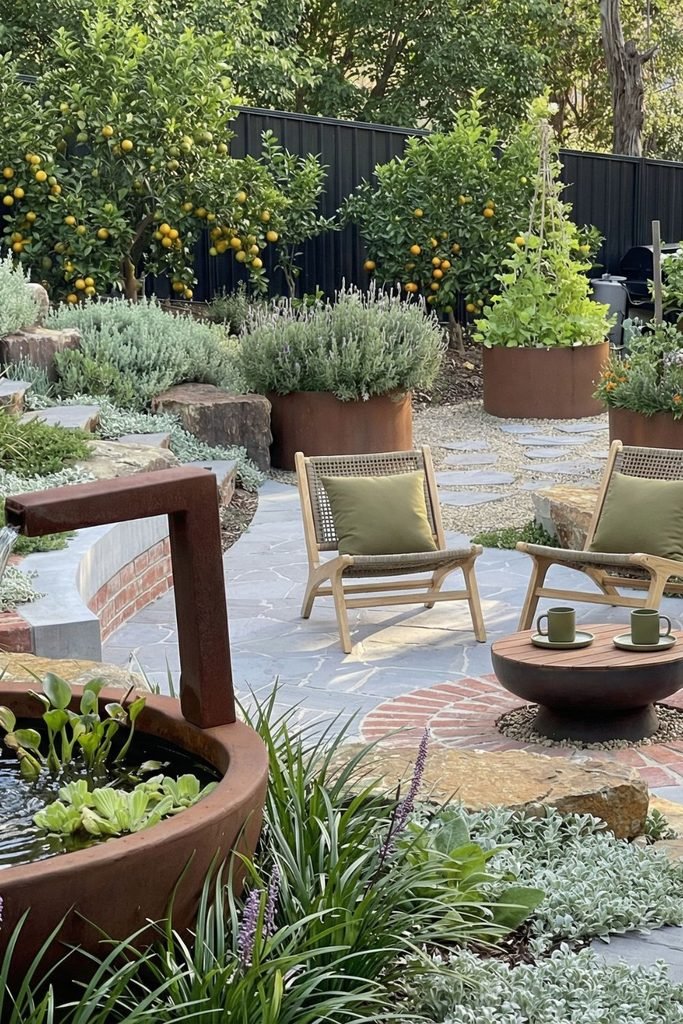
Fruit trees can become part of an outdoor living area instead of being pushed into a separate orchard corner.
Behind chairs, where it will get enough direct sun and room to grow to its full spread, set a citrus or other suitable temperature fruit tree.
Layer in herbs and low-growing edibles nearby to integrate the production area with the rest of the landscaping.
But allow enough distance from furniture and pathways so that the fruit that falls and the branches that spread do not become a nuisance.
Stone Greens
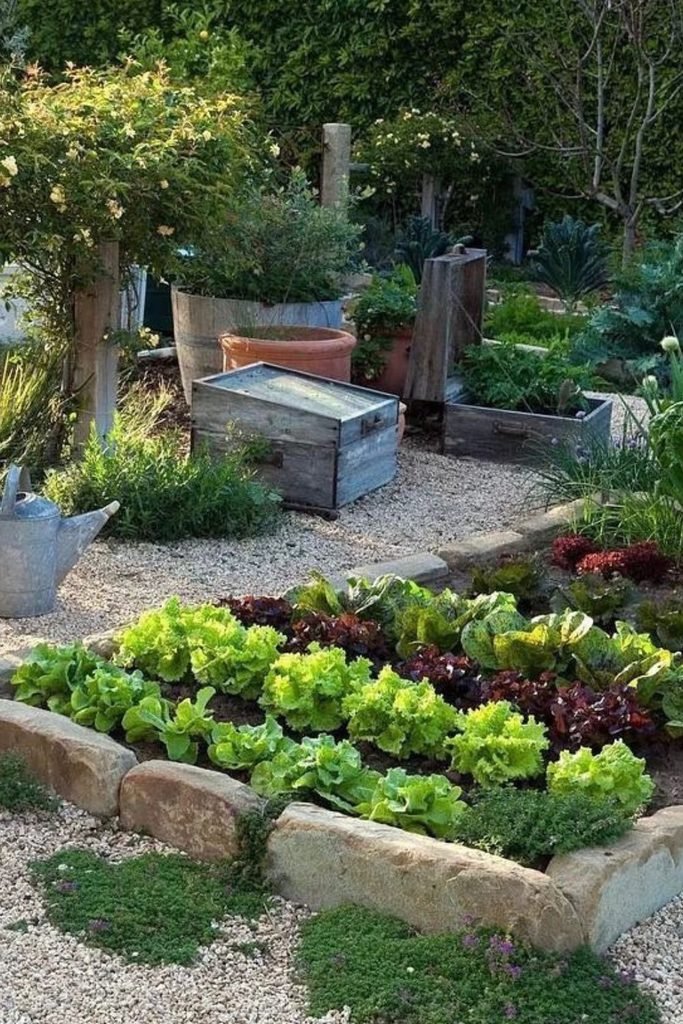
Lettuce can look surprisingly decorative when you give it a permanent-looking border instead of planting it in ordinary vegetable rows.
Surround a sunny flat bed with huge stones from nature. Alternate green and burgundy lettuces for contrast as they grow.
Put short herbs on the outside and save taller vegetables for beds that are closer so they don’t shade the greens.
In such a configuration, gravel walks are quite useful, as the leaves do not become dirty with mud and it is easier to gather them every day.
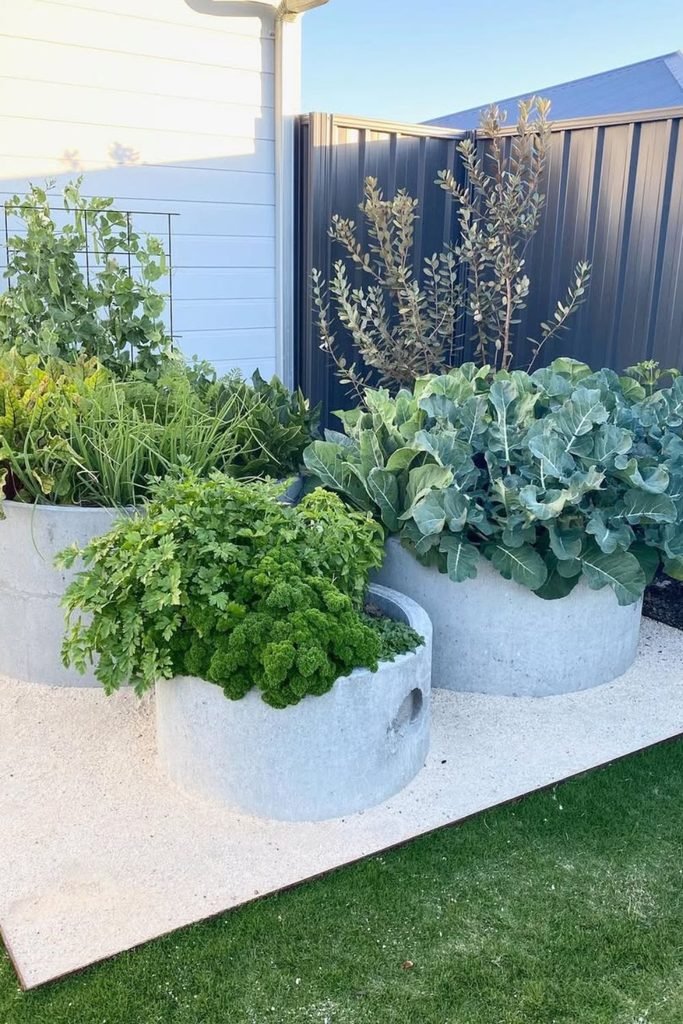
Container Harvest
Concrete planters can keep edible crops close to the house without making a modern yard feel overly busy.
Arrange parsley, chives, leafy greens, brassicas and climbing peas separately, in order of height and growing needs.
Plant strong or taller vegetables in the biggest planters and let compact herbs spill a little over smaller ones for a softer border.
This is a great method for small side yards or patios where permanent beds would be too bulky.
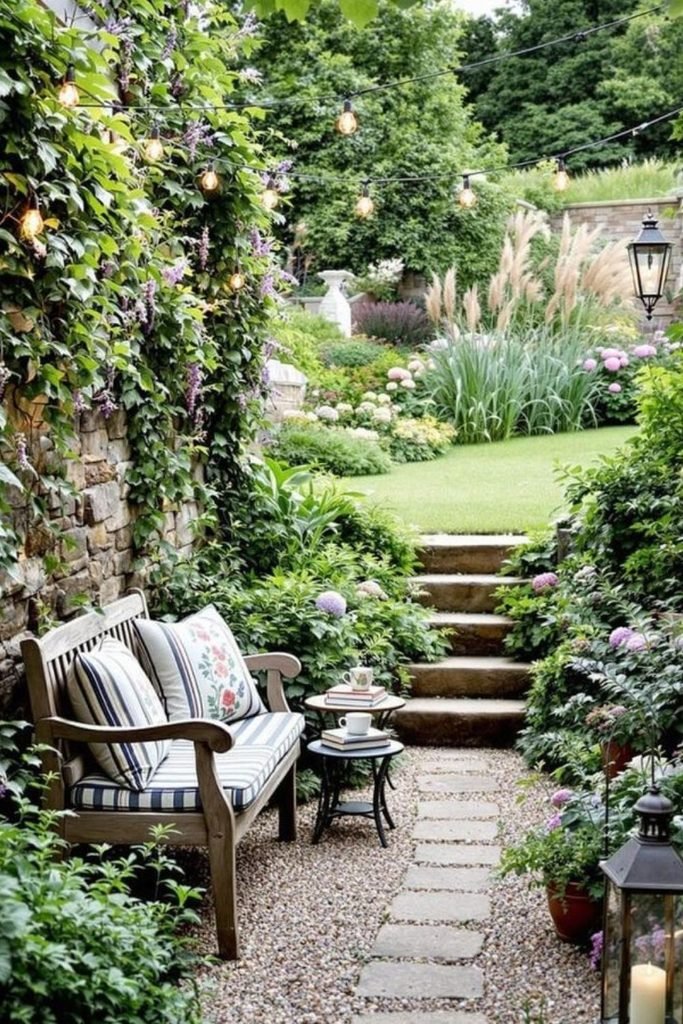
Edible Retreat
Relaxing corners do not have to sit apart from the productive side of your garden.
Place a small seat in a location framed by culinary herbs, berry shrubs or other edible plants appropriate for the light circumstances.
Train a fruiting vine over a neighboring wall or trellis, if conditions are appropriate.
Keep stepping stones through the planting so that harvesting is easy without trampling roots.
This strategy of mixing productive plants into an established seating area works especially well if you want edible landscaping to feel part of the garden.
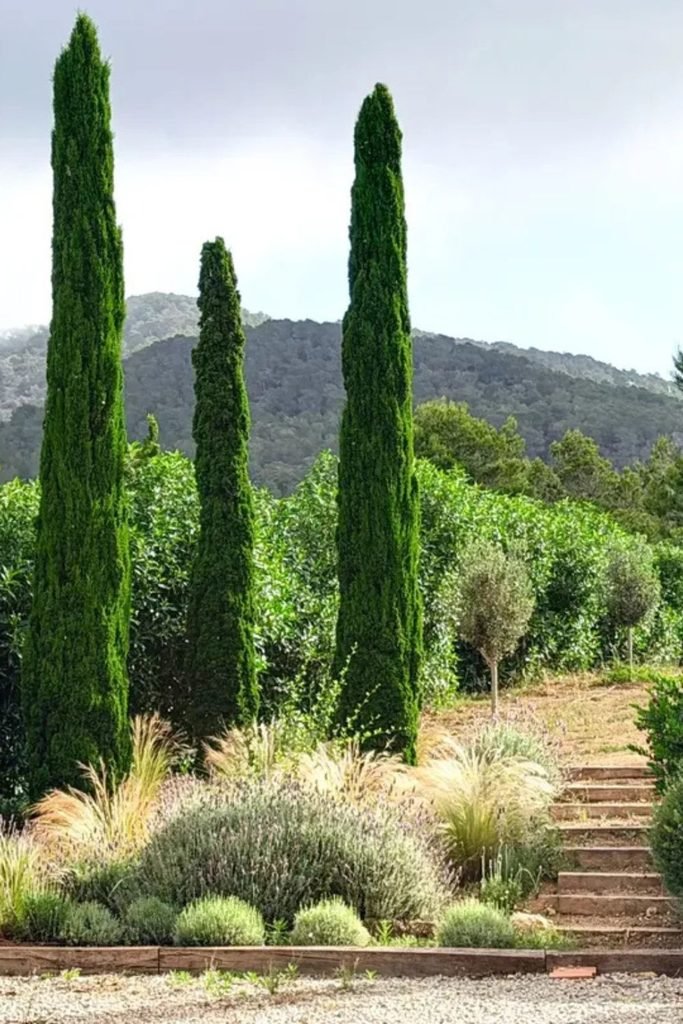
Orchard Layers
Fruit trees feel more intentional when you weave them into permanent landscaping instead of lining them up like a traditional orchard.
Plant climate-suitable fruit trees along a sunny garden boundary, then fill the lower layer with herbs and other compatible plants that won’t compete for light.
Upright evergreens can provide year-round structure between productive areas while gravel roads keep pruning and harvesting routes accessible.
When planting, look at the mature canopy size of each fruit tree so the layered planting scheme doesn’t get out of balance and become congested later.
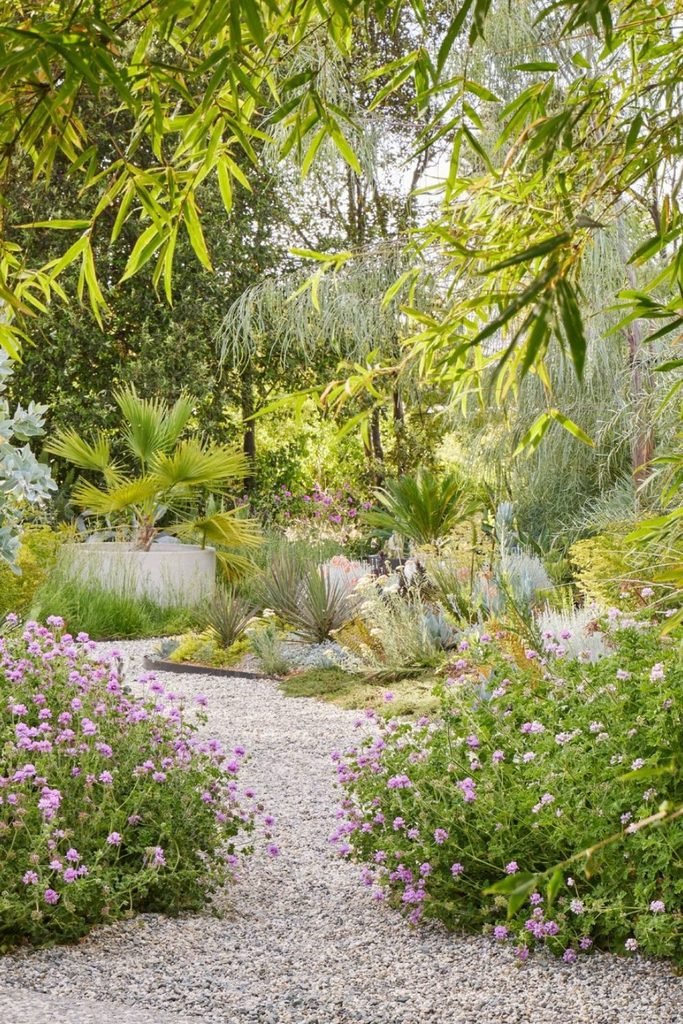
Edible Pathway
Walking routes can become productive garden edges when you replace purely ornamental borders with useful flowering herbs.
Plant low growing edible herbs along a gravel road to soften the edges without spreading too far and blocking access.
Use a variety of heights and flowering times to keep a full border and also to help pollinators.
Select herbs that are appropriate for the local conditions and separate the thirstier culinary plants into their own zones.
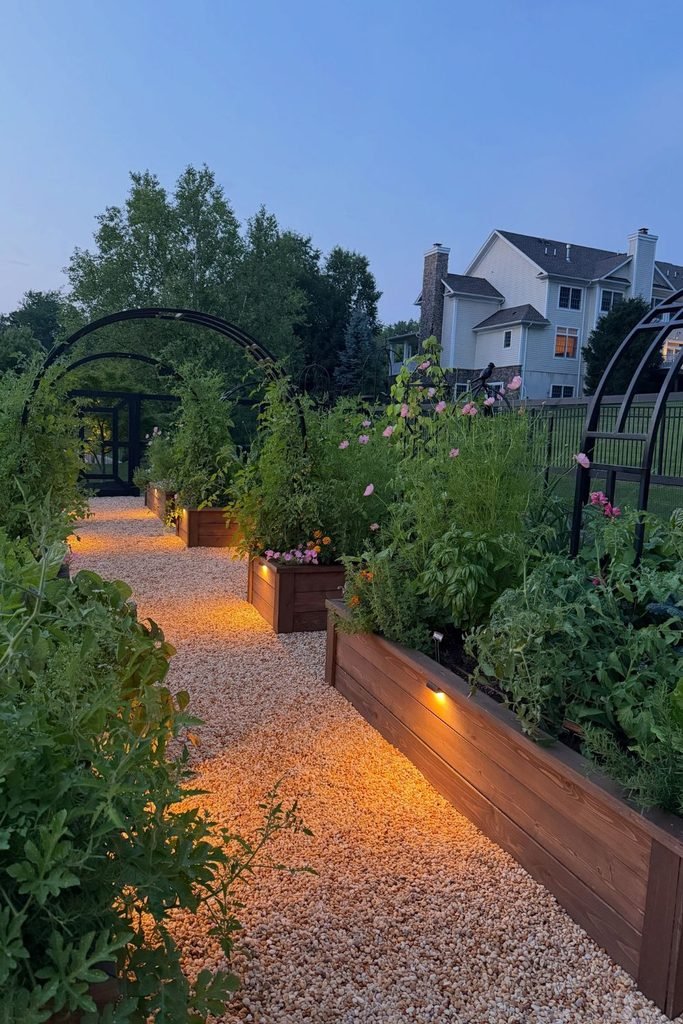
Evening Harvest
Good pathway lighting makes an edible garden easier to use after sunset without turning it into a purely decorative space.
Add warm, low level lights along raised beds to securely reach tomatoes, herbs and green crops in the dark while tall arches take care of climbing veggies above.
Make sure the fixtures are lower than the plants and point the light toward the gravel road, not the leaves.
This is especially useful with bigger kitchen gardens where watering in the evening, monitoring plants or harvesting ingredients is done often.
Herb Terraces
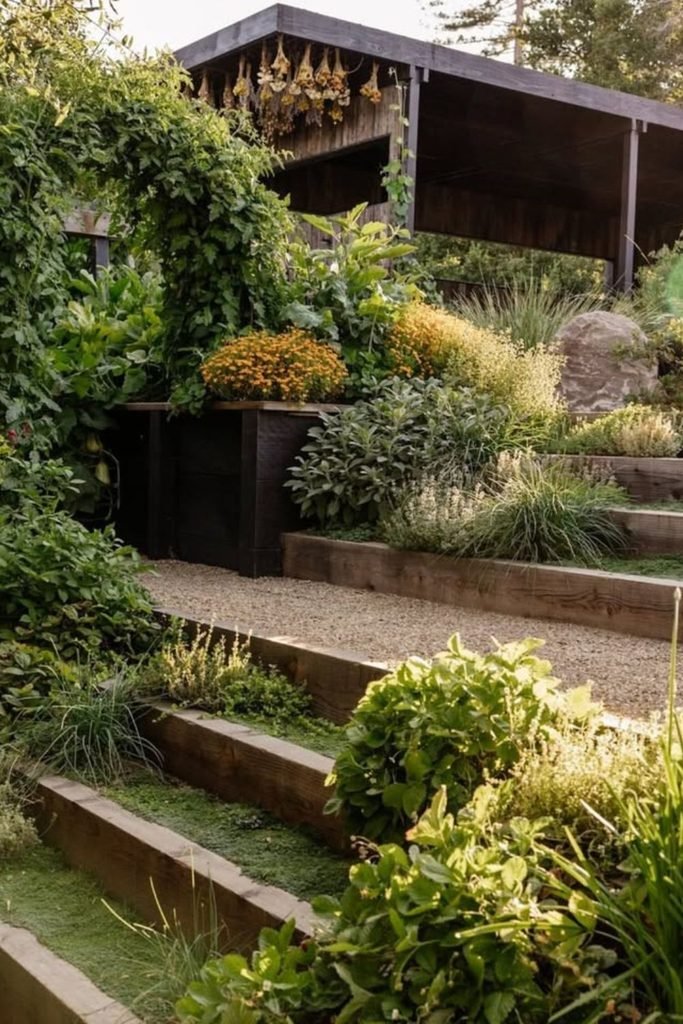
Slopes can grow far more than grass when each level becomes a small edible planting pocket.
Build timber terraces into the slope and plant with rosemary, sage, thyme, chives, strawberries and other crops that suit the amount of sun there is.
Use low herbs to soften the margins of the retaining walls and taller plants further back so that harvesting is easy.
Another way to get vertical production is to train a strong edible vine over a solid arch; this makes the transition between levels an additional usable growth space.
Modern Foodscape
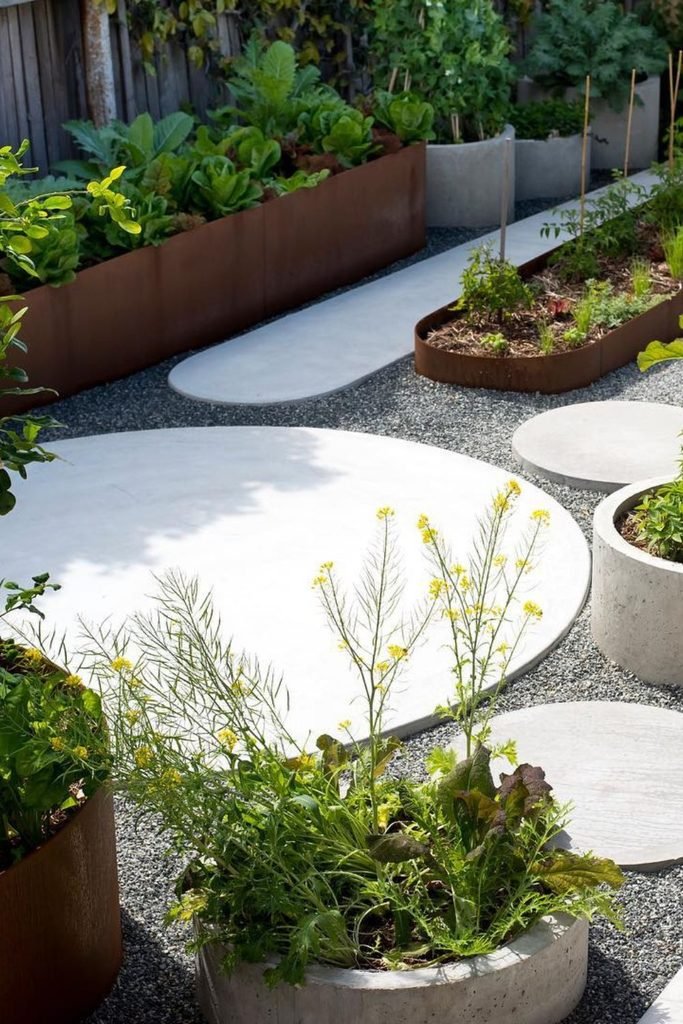
Small edible beds fit beautifully into modern landscaping when you repeat clean shapes instead of building one oversized vegetable patch.
Grow lettuce, herbs leafy greens and seasonal crops in slim steel beds and round concrete planters with gravel and smooth pavers between for easy access.
Keep your most often collected crops on the edge of paths and put taller plants further back.
Mixing various different bed forms brings movement to the yard, while using the same materials keeps the productive planting from looking dispersed.
FAQs
How Can Edible Landscaping Stay Attractive After Harvesting?
Combine seasonal veggies with permanent plants such as fruit trees, berry bushes and perennial herbs.
After the annuals are over, the permanent greens protect the beds from seeming bare.
Alternatively, you can replace the harvested veggies with another seasonal produce or flowers to keep the color and fullness.
Which Edible Plants Work Best Along Landscape Borders?
Depending on your environment and sunlight, herbs, strawberries, small berry bushes, leafy greens and dwarf fruit kinds can function well along borders.
Use shorter plants in the paths and higher ones in the back so the border stays layered but doesn’t make harvesting more complicated.
