
20 English Cottage Garden Ideas for 2026
English cottage gardens look effortlessly charming in pictures. But nonetheless, attempting to recreate that same charm at home might feel unattainable.
You put in colorful flowers, add a few shrubs, even a nice pathway, but the garden still looks random instead of naturally full.
But understanding how to layer them, repeat the correct colors and provide some structure, without losing that calm cottage vibe.
In this article, I’ll show you 20 English Cottage Garden Ideas you can use to create a timeless outdoor space.
Let’s jump in!
How Do You Create Authentic English Cottage Gardens?
The English cottage garden philosophy is simple: every plant has a reason for being, every space feels connected.
Repeat your favourite plants around the yard for rhythm, instead of filling every vacant spot with other blooms.
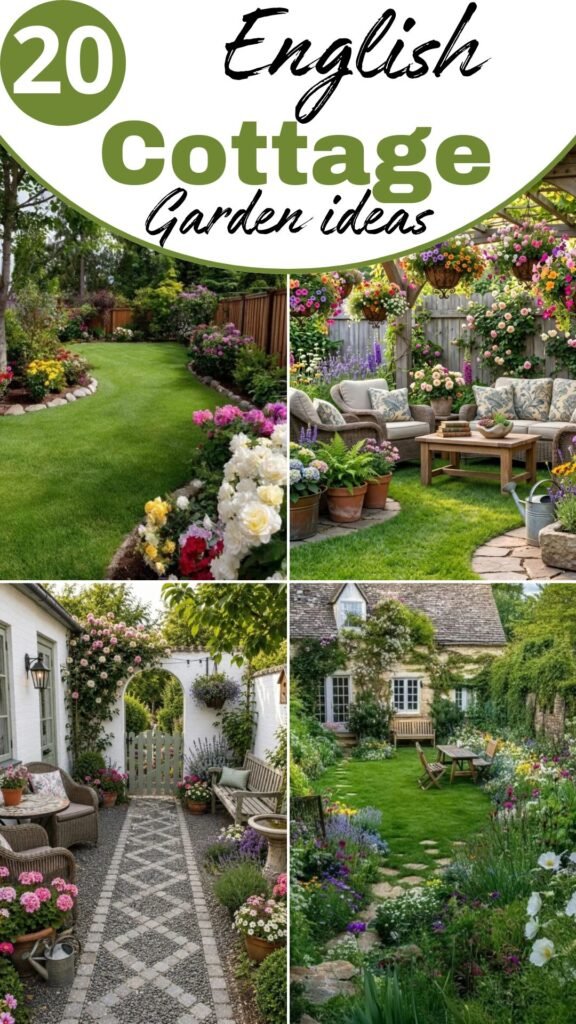
Create levels in your borders by planting taller flowers at the back, medium height blooms in the middle and low growing plants at the sides.
Add climbing roses, clematis or honeysuckle over arches and fences to lift the eye, then add gravel walks, rustic gates or stone edging.
Balance colourful plants with powerful garden features and your cottage garden will feel full, inviting and naturally organised, not crowded.
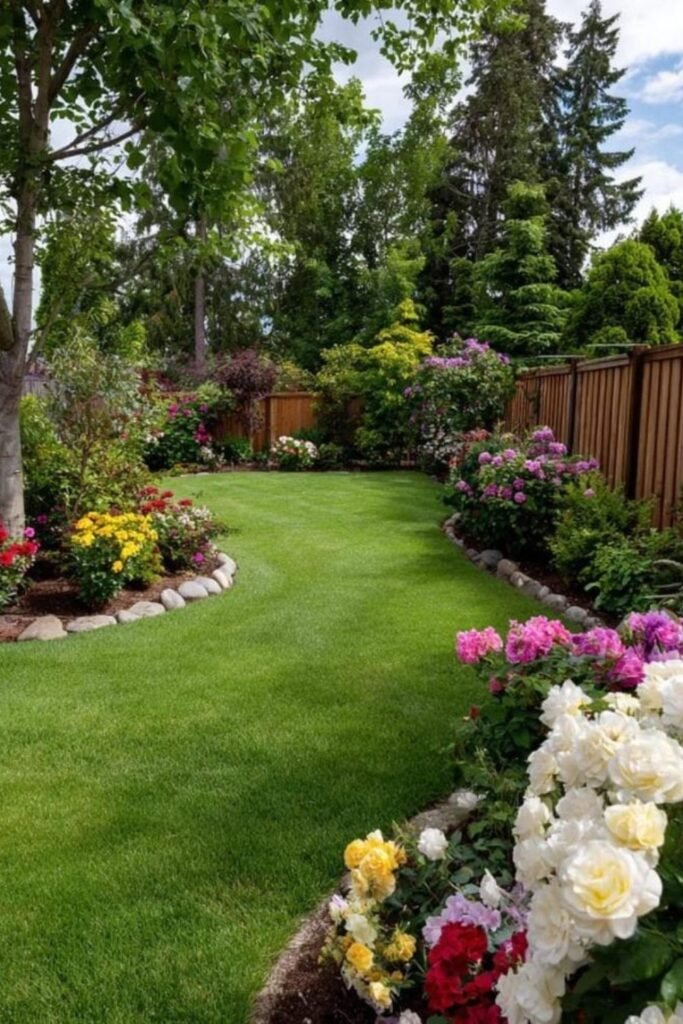
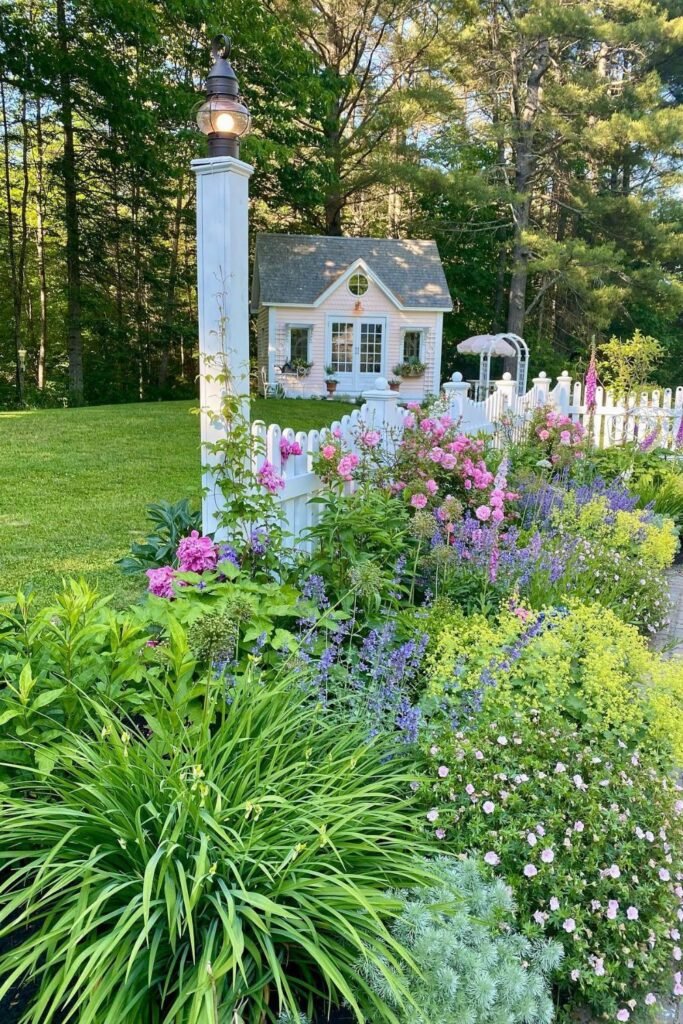
Curved Borders
Gentle curves make a garden feel larger while giving every flower bed its own moment to shine.
Instead of planting everything in straight lines, think of a large lawn as the focus surrounded by winding beds of roses, hydrangeas and colorful perennials.
Edge with natural river stones to maintain the beds clean and make mowing easy.
Behind, tall trees and evergreen bushes along the fence offer height, while the bright borders remain the main attraction with out crowding the garden.
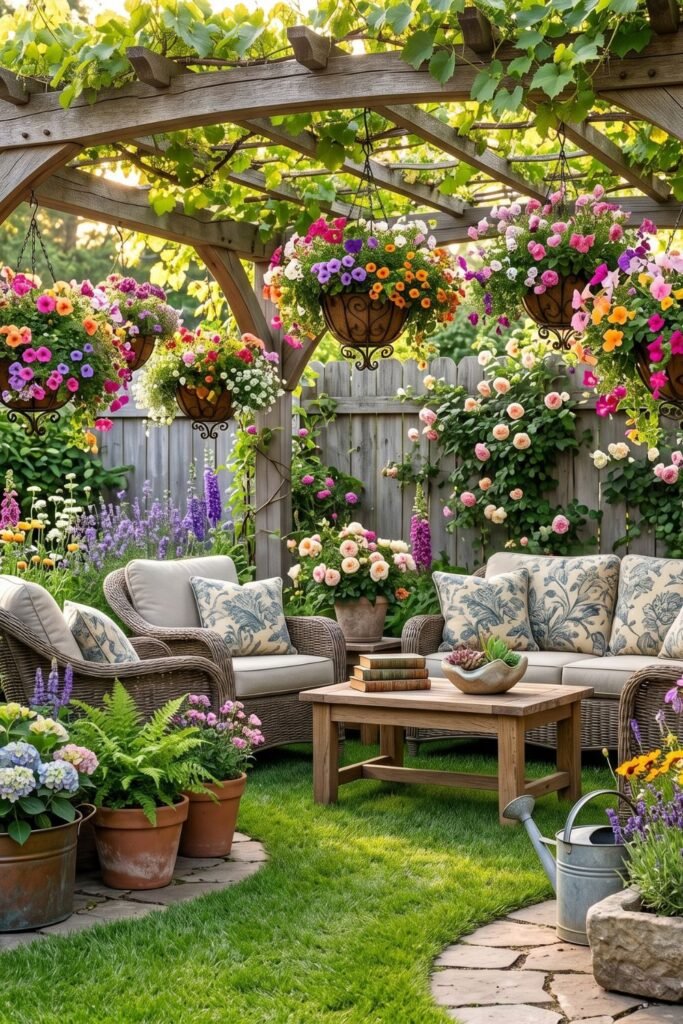
Pergola Retreat
Morning coffee feels even better when your seating area sits beneath a pergola wrapped in climbing vines and surrounded by blooming flowers.
Add comfy wicker seating under a solid wood structure and then soften all the corners with hanging baskets, terracotta pots.
To keep your garden open and inviting, place taller plants near the fence and use shorter flowers to outline the seating area.
A curved stone path finished off helps the entire corner feel connected while providing convenient access for watering, pruning and enjoying the vista.
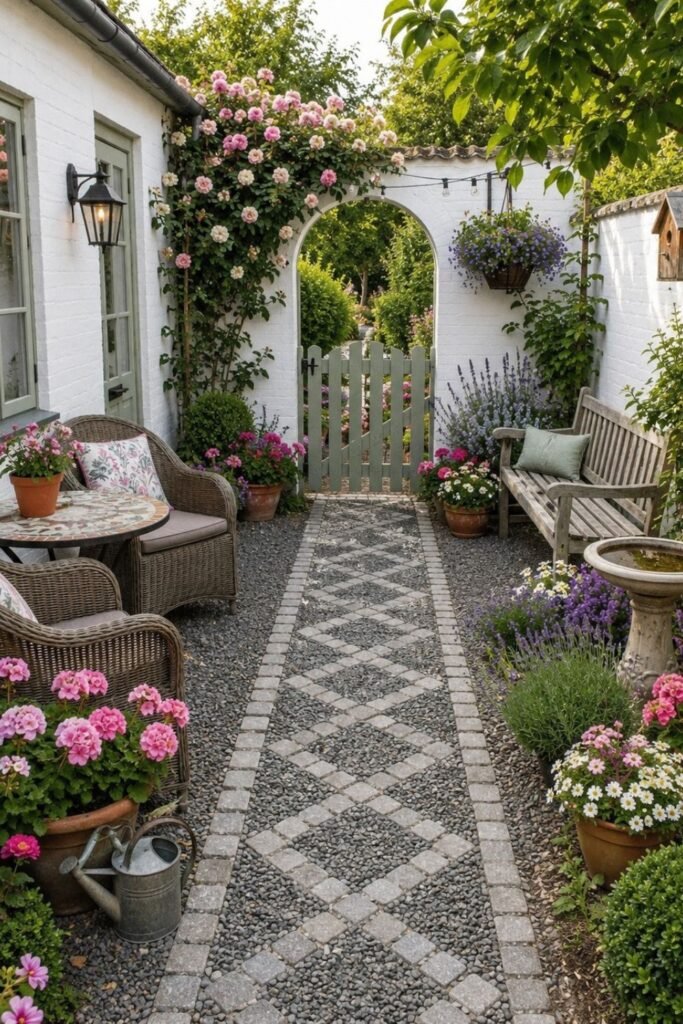
Courtyard Escape
Limited space never has to limit character when every corner serves a purpose.
Create a courtyard entry with climbing roses over an arched gate. Combine gravel with patterned stone pavers to lead visitors into the garden beyond.
Place a small bistro set on one side, and a wooden bench on the other, for two soothing areas without the feeling of crowding.
Fill the space with terracotta pots, lavender, hanging baskets and a birdbath to soften the brick walls, but keep the layout neat, welcoming and easy to maintain.
Garden Rooms
Hidden corners make an English cottage garden feel like an adventure instead of one open space.
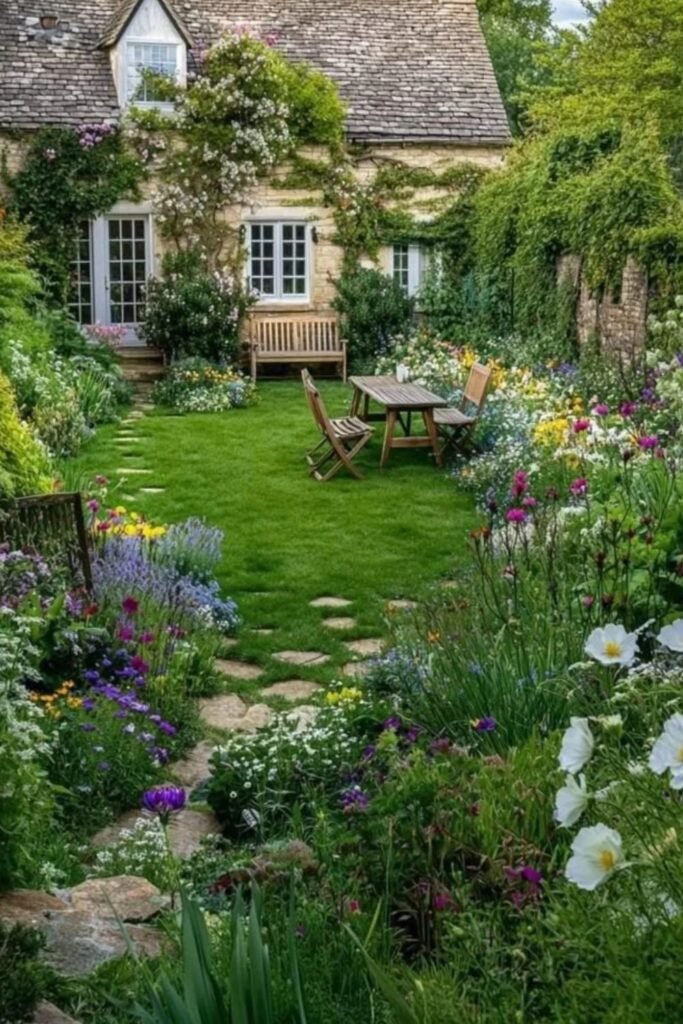
Create a main lawn with rich flower beds on either side and use stepping stones to guide visitors to a peaceful seating area near the house.
Let the house melt into the landscape by covering the walls with climbing roses or ivy, with tall perennials at the back and softer flowers tumbling down the path.
An open lawn is a resting place for the eye, so that each colorful border can be appreciated without producing a crowded effect in the garden.
Rose Arbor
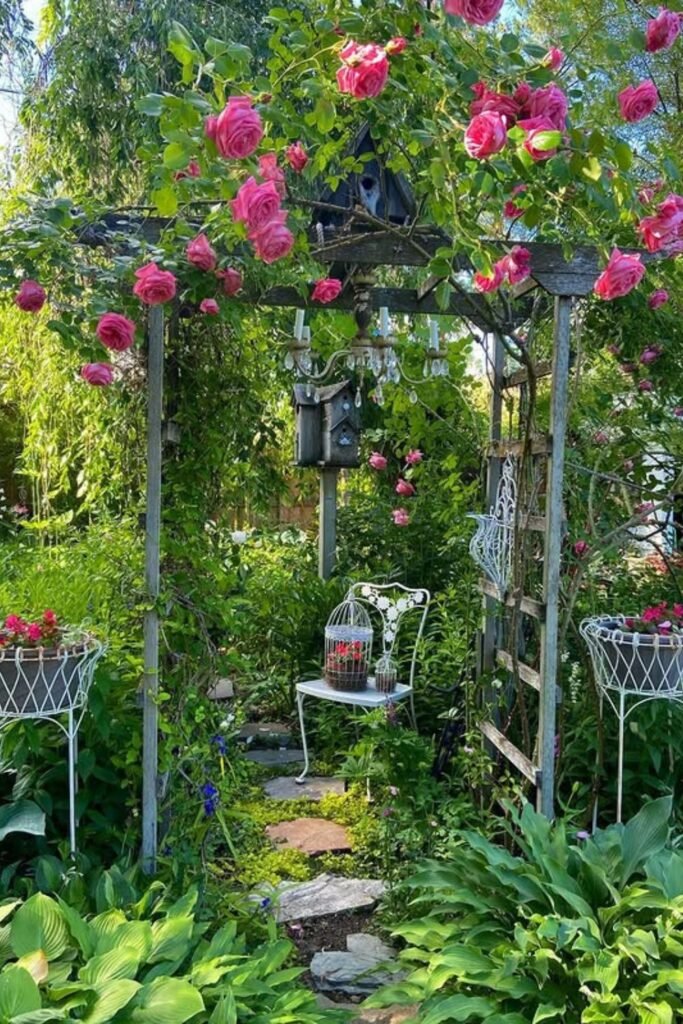
Nothing draws people into a garden faster than an arbor overflowing with climbing roses.
Place one at the entrance to a path or a peaceful seating area, and each season, train the rose canes across the top to create a canopy of blooms.
Plant the bottom level with hostas, foxgloves and other shade-loving perennials to avoid a bare look while taller plants fill the backdrop.
A few vintage pots, a simple chair and a stone path complete the setting without competing for attention.
Patio Corner
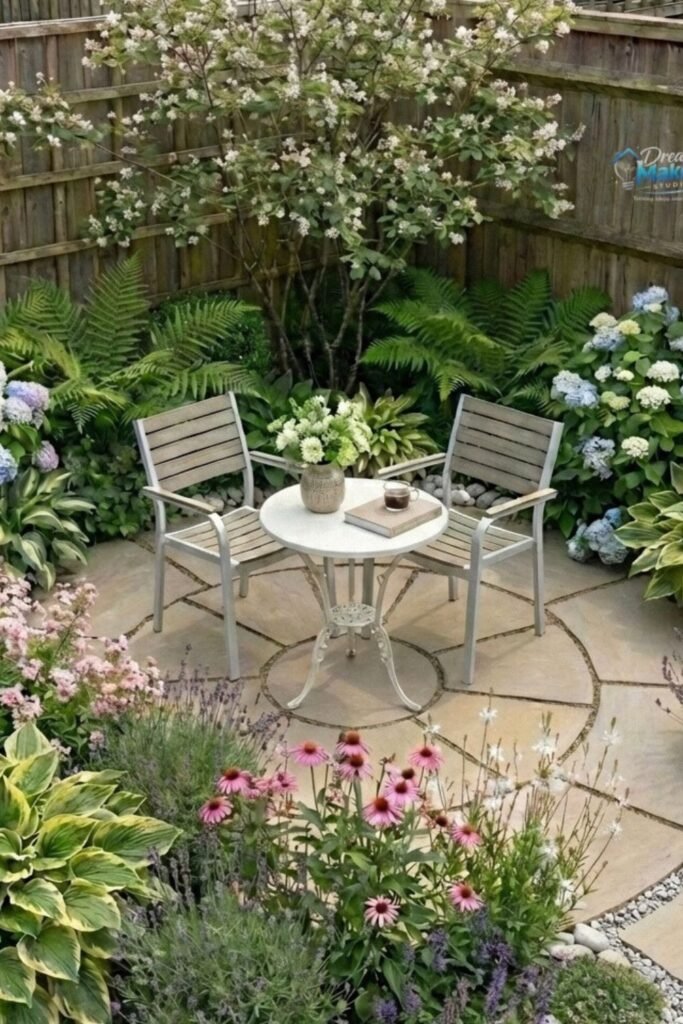
Quiet moments become part of your daily routine when you carve out a small seating area inside your flower borders.
Hydrangeas, hostas, ferns, lavender, and long-blooming perennials soften every edge of a modest stone patio, leaving the middle open for a table and chairs.
Plant a flowering tree behind the seating for some soft shade and added height without shutting in the space.
Smooth river stones finish the beds, separating planting spaces from the patio. The whole corner feels polished, yet is still easy to clean and maintain.
Cottage Entrance
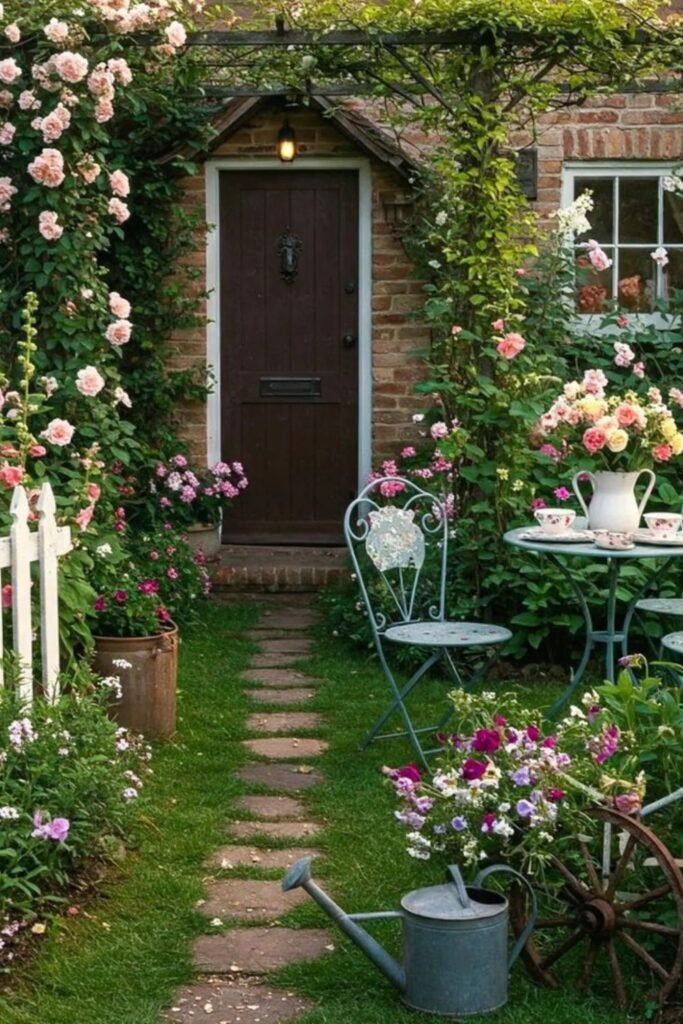
First impressions become unforgettable when the entrance feels like part of the garden instead of a separate space.
Frame the home with gentle blooms by climbing roses over the door and a simple trellis.
white picket fence, vintage watering can and little bistro set offer traditional cottage character without taking away from the landscaping.
Keep taller flowers along the walls, and lower blooms along the path so each layer is visible and the entrance looks appealing and easy to stroll through.
Gravel Path
Every winding path invites people to slow down and enjoy the garden one section at a time.
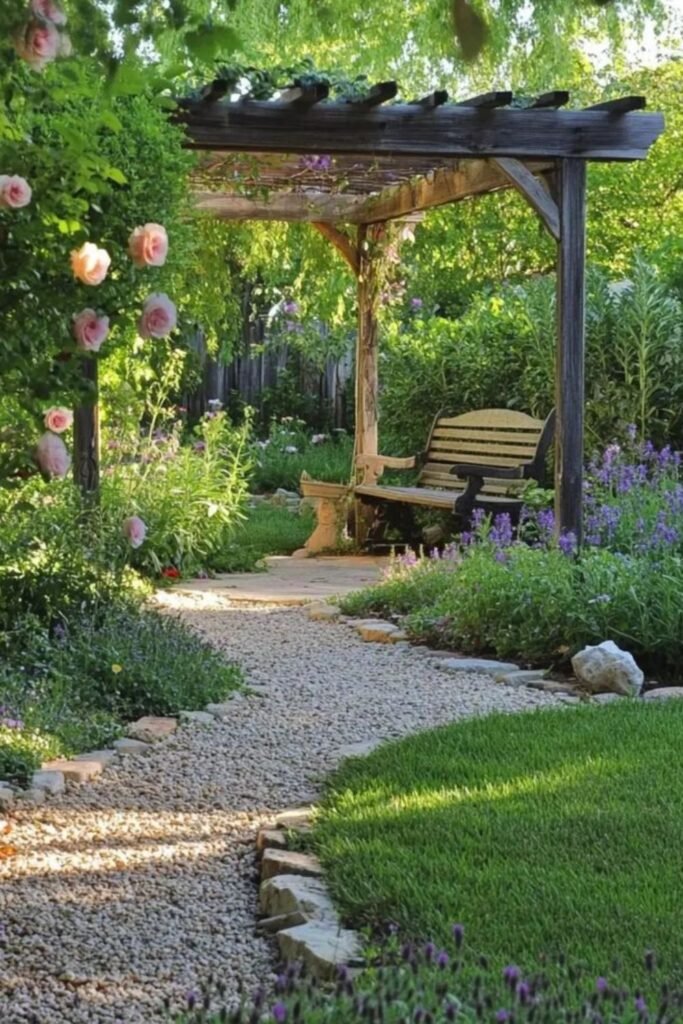
Swap a straight walkway for a curved gravel path with a natural stone edging, then guide it to a wooden pergola with a simple bench placed beneath.
Fill both sides with lavender, roses, salvias and airy perennials so the flowers gently soften the edges without spilling over onto the walkway.
Climbing vines across the pergola provide light shade and make the seating area feel tucked away, turning your English cottage garden into a peaceful destination.
Rose Facade
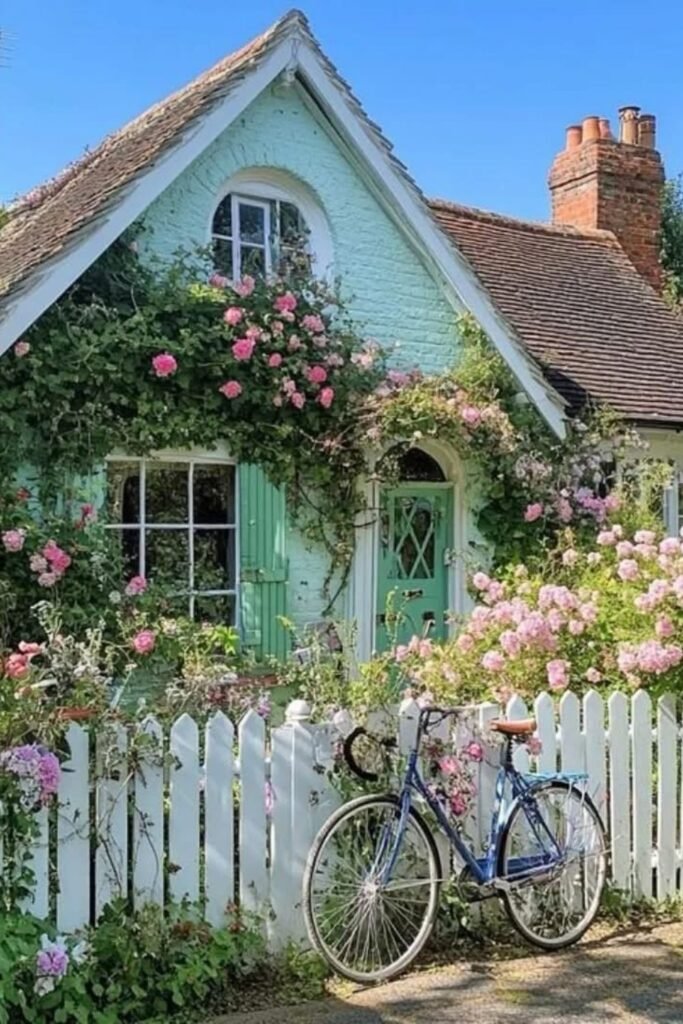
Growing climbing roses across the front of your home instantly gives the garden an authentic English cottage feel without needing a large yard.
Train roses around windows, doors and eaves with robust supports, then soften the base with layered shrubs, pastel perennials and seasonal blooms.
The white picket fence keeps the planting clean and creates a lovely frame that shows off the flowers rather than obscuring them.
A few nice accents such as an antique bicycle or rustic planter round it off with flair but keeping the flower palette consistent makes the entrance pleasant.
Fence Border
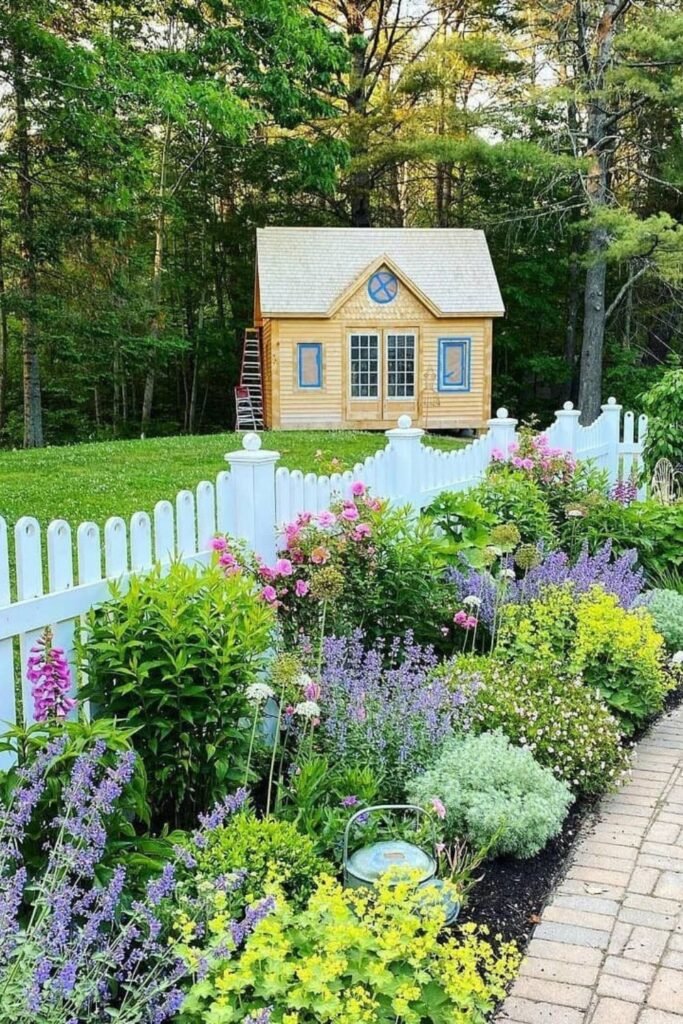
Long fence lines become far more inviting when every section carries a mix of color, texture, and height.
Plant foxgloves and hydrangeas next to the fence; fill the middle with catmint, salvias and roses; and conclude with low-growing ground covers.
A white picket fence naturally enhances the planting, and gives a very classic English cottage backdrop.
A brick path keeps everything very simple to access for pruning and weeding.
Layered Borders
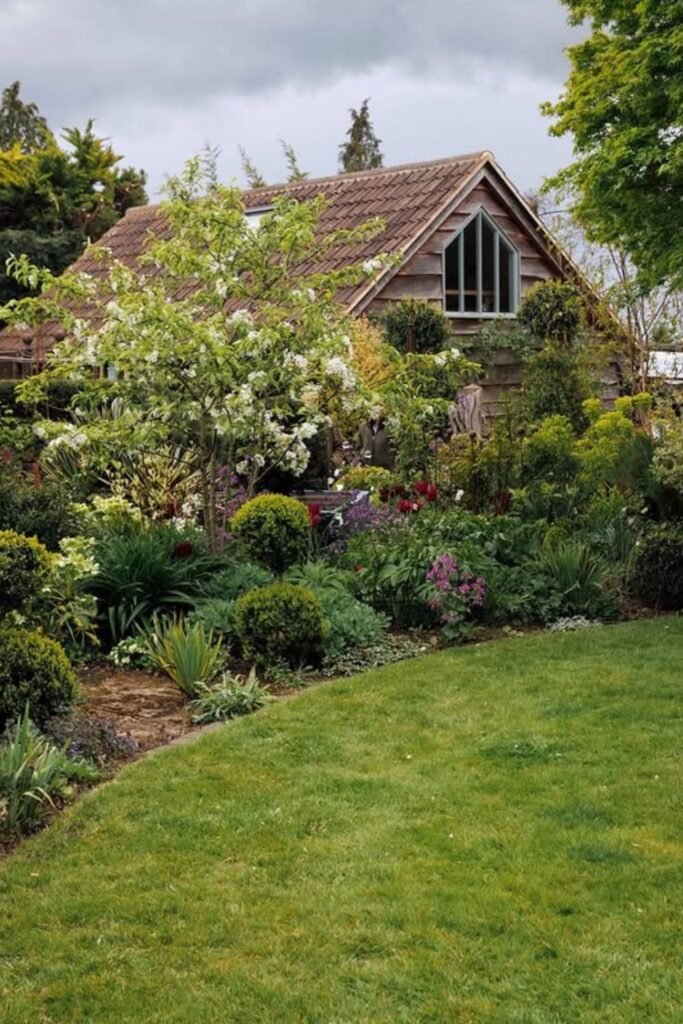
Rich cottage gardens always start with strong layers instead of filling every space with flowers.
For height, plant a flowering ornamental tree toward the center, and surround it with evergreen shrubs for structure all year round.
Fill with colorful perennials between the shrubs to keep the borders alive from spring to fall.
Leave a clear lawn in front so the planting has room to stand out, instead of fighting for attention.
Stone Cottage
Natural stone walls become even more inviting when soft flowers blur the line between the house and the garden.
Build with broad borders of hydrangeas, roses, lavender and pastel perennials that drip softly towards a stepping-stone path.
Mixing huge boulders with terracotta pots adds texture and prevents the planting from becoming too formal and too grounded.
Leave a strip of open turf next to the borders so that each flower will be set off. Your English cottage garden will have that calm, lived-in air, more gorgeous.
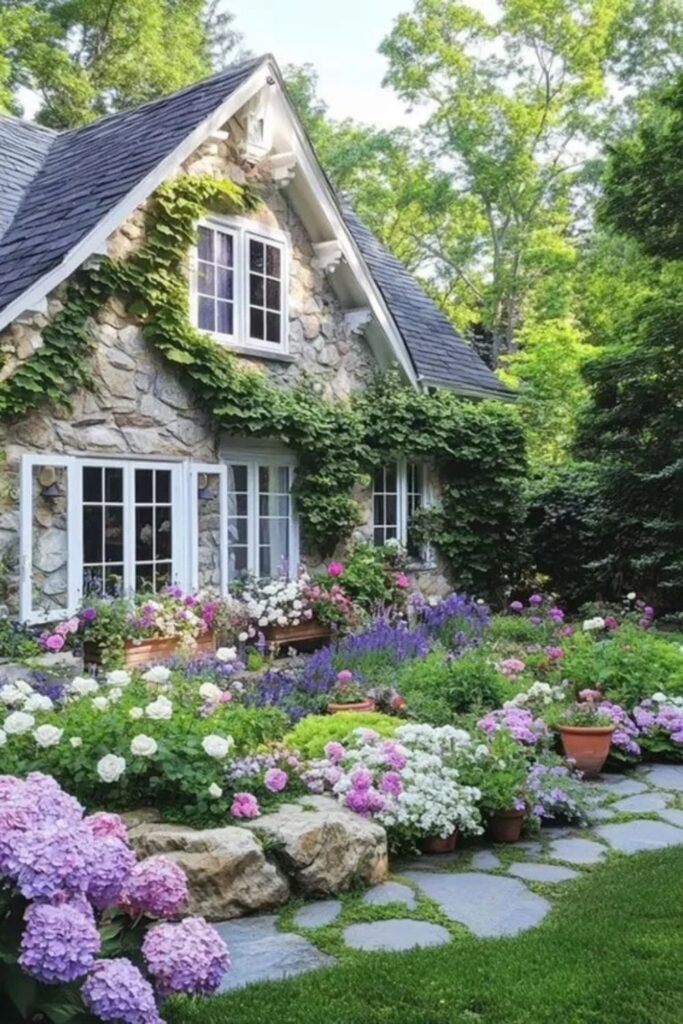
Blooming Gateway
Stepping through a flower-filled gate instantly sets the mood for the entire garden.
Make big drifts of roses, foxgloves, hydrangeas and tall cottage perennials around the entry.
Then repeat the same light pink, white and purple tints all the way around the borders to keep everything linked.
A simple picket fence serves as an inviting focal point that doesn’t obstruct the view, and carefully trimmed evergreen bushes flank the doorway.
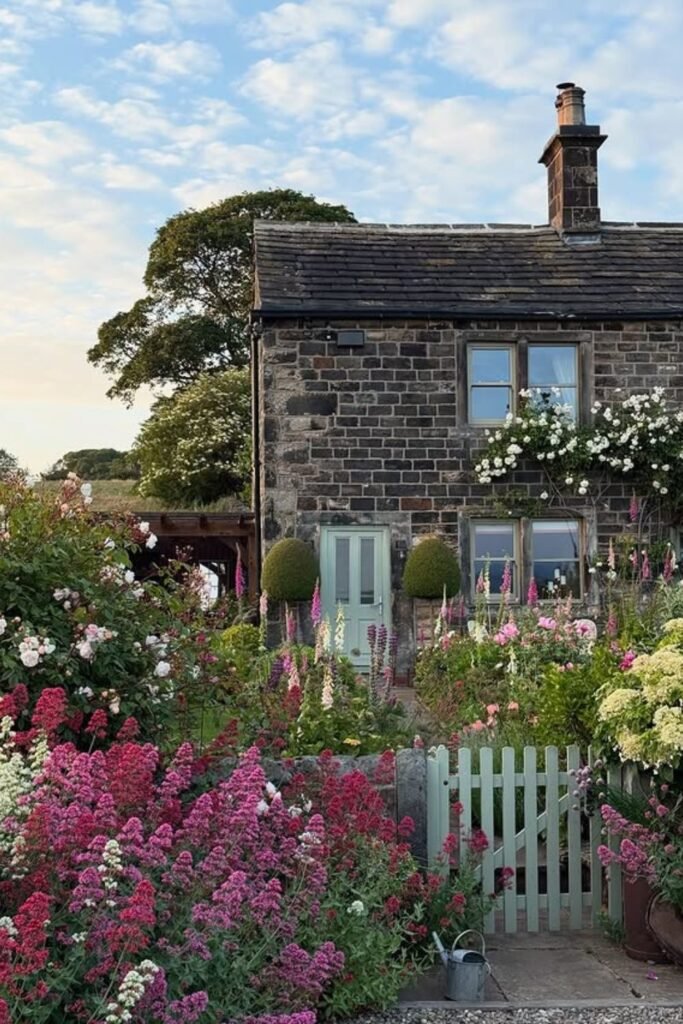
Stone Terrace
Outdoor meals feel far more inviting when the patio blends naturally into the surrounding planting.
Line a stone terrace with lavender, roses, foxgloves and soft cottage perennials and train climbing roses and wisteria up garden walls to turn plain stone.
Allow for enough room around the dining table so that your guests can move around comfortably without hitting the sides.
Balance is achieved by using the same pastel flower colors on both sides of the walkway.
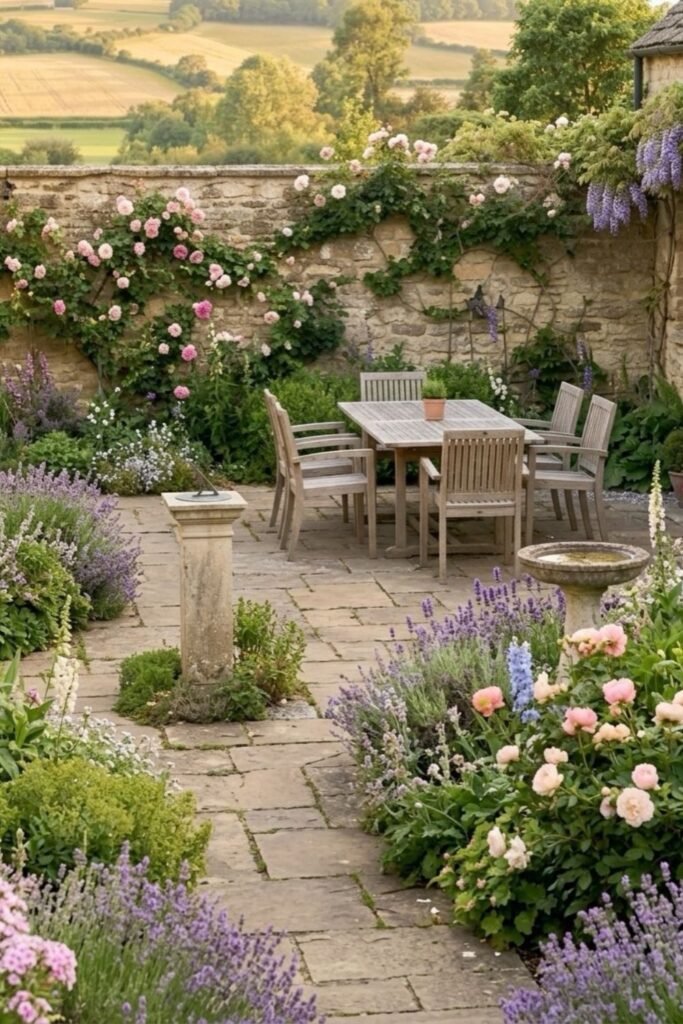
Foundation Planting
House walls feel softer when flowers become part of the architecture instead of stopping at the foundation.
To add vertical interest, cover one part with climbing roses; then layer lavender, salvias, roses, and airy perennials at the base to create a border.
Plant taller shrubs next to walls and lower plants near the lawn so that each flower may be viewed from a distance.
A tidy grass edge alongside the border emphasizes the colourful planting while making pruning and maintenance much easier all year round.
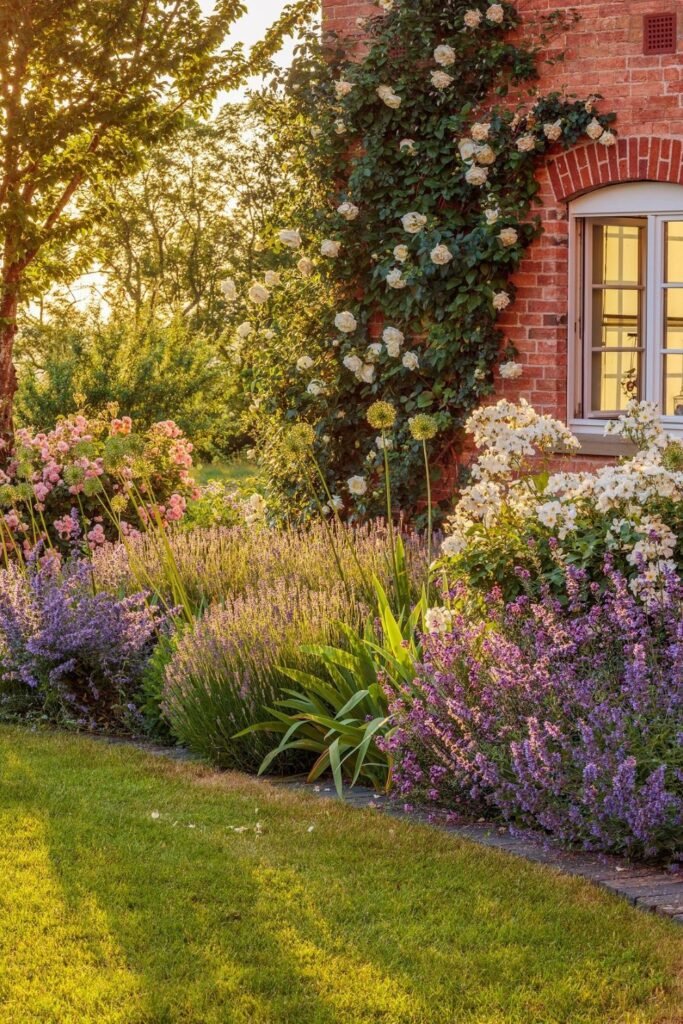
Tea Nook
Afternoon tea feels even more special when your seating area blends into the surrounding flowers instead of sitting apart from them.
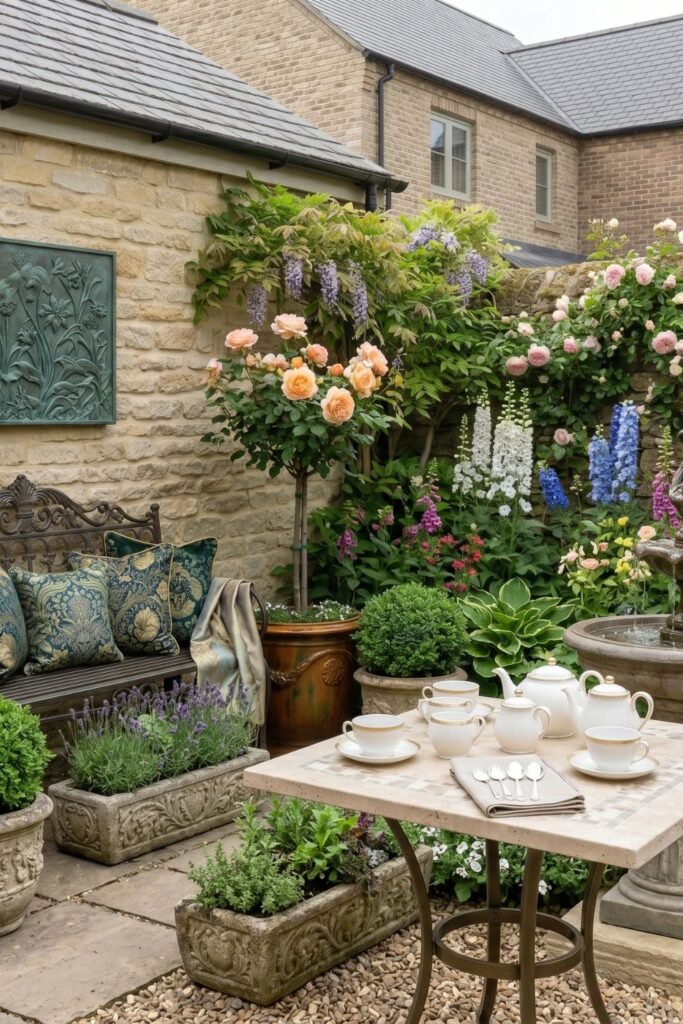
Place a small table beside a bench then frame the space with roses, delphiniums, foxgloves, and lavender to surround it with color from every direction.
Train climbing roses and wisteria over the stone walls to soften hard surfaces, while clipped evergreen shrubs and decorative planters add year-round structure.
A small fountain introduces gentle movement and sound turning an ordinary patio into a peaceful English cottage garden.
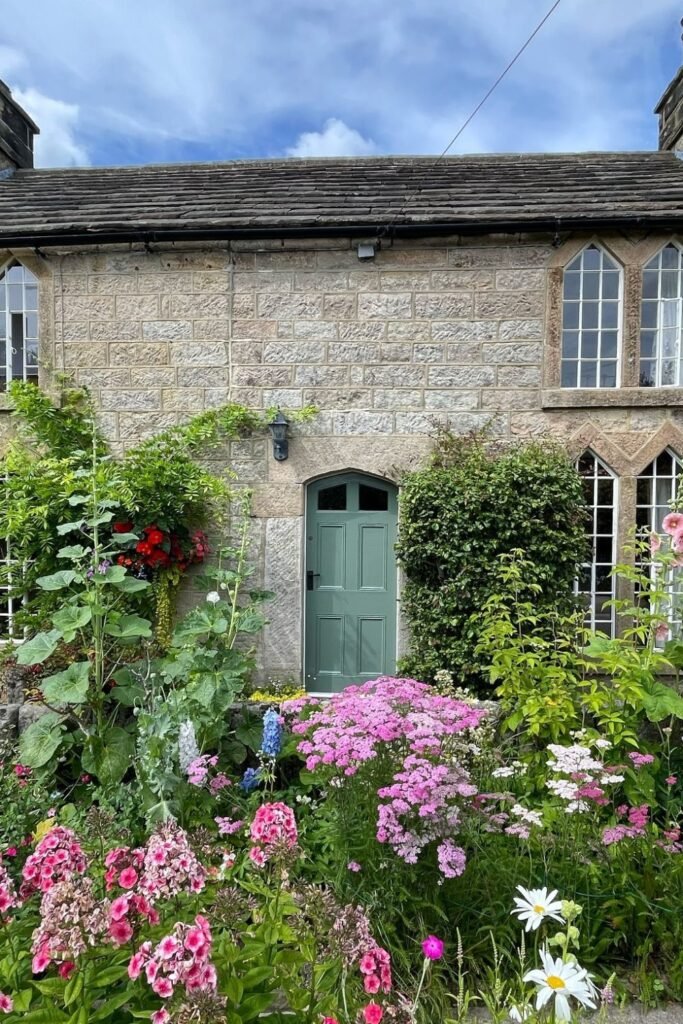
Mixed Borders
Great cottage gardens rarely rely on one type of flower because the magic come from mixing textures and bloom time.
Plant foxgloves, daisies, phlox, roses and other cottage favorites to fill the area surrounding your home and intersperse shrubs to bring shape to the border.
Leave a few of the larger plants near the walls, with shorter flowers softening the front edge for a casual layered finish.
A palette of pink, white, purple and pastel blue prevents the garden from being over-planned and more like it has been collected naturally.
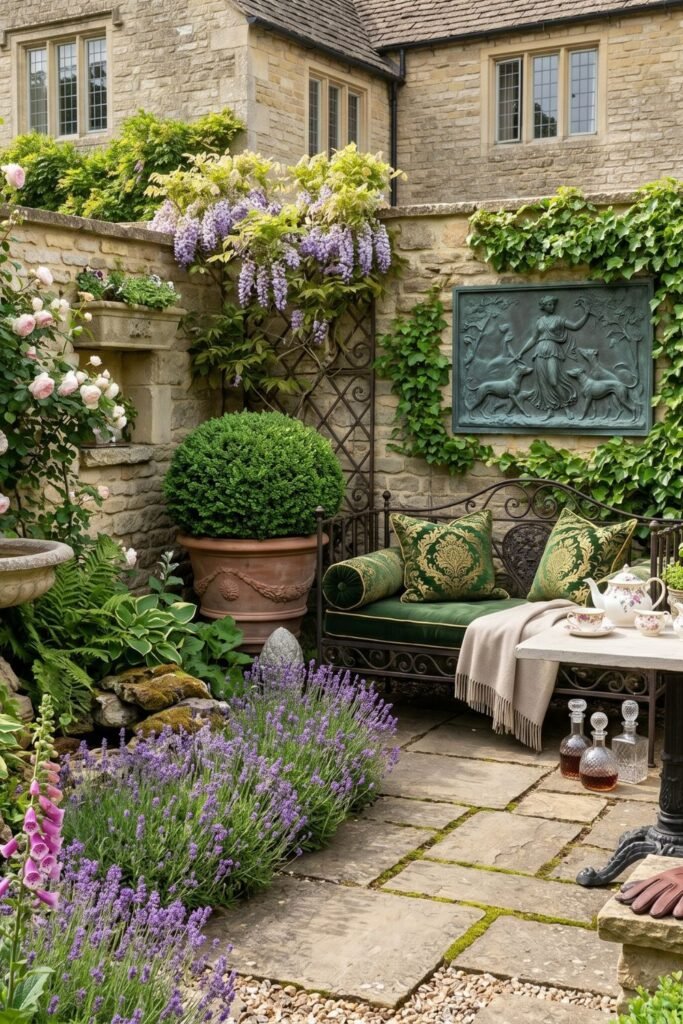
Courtyard Charm
Peaceful garden corners become even more inviting when every detail works together instead of competing for attention.
Surround a stone patio with fragrant lavender, foxgloves, roses and lush hostas to create soft layers surrounding the seating area.
Train wisteria and climbing roses over the walls to draw the eye up. Use clipped evergreen shrubs between flowering plants for structural interest all year round.
A little fountain gives smooth movement and a pleasant sound to the area, creating a sense of peace without any need for further ornamentation.
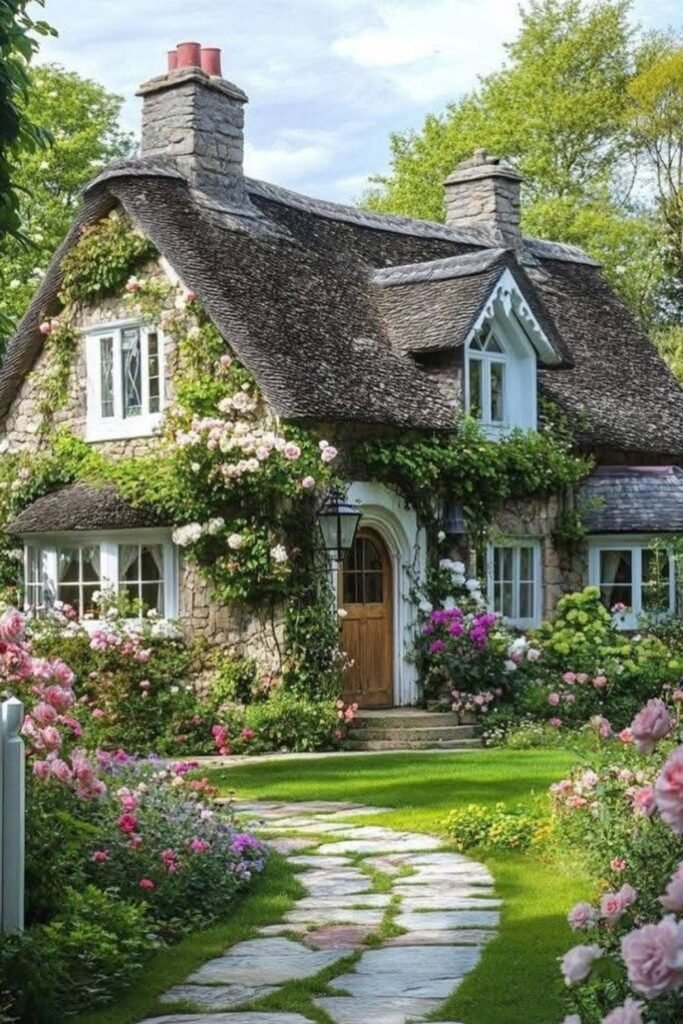
Storybook Cottage
Few garden styles capture the charm of an English cottage better than a winding path leading to a flower-covered home.
Let climbing roses soften stone walls, weave around windows and entryway, then frame the walkway with layered borders filled with roses, hydrangeas.
If the lawn is kept open, the curved stepping-stone walkway is a natural guide to the entry and does not compete with the flowers.
Finish with a basic white picket fence and repeat gentle pink and white blossoms all across the garden to achieve a pleasant.
Border Layers
Long borders look richer when every plant fills a different role instead of competing for space.
Place taller flowers like foxgloves and peonies in the back, weave in salvias and roses in the middle and then finish off with lady’s mantle, hardy geraniums.
Soft pinks, purples and fresh greens make the perfect backdrop for a white picket fence, and repeating the same groups of plants along the border.
Leaving the lawn open next to the plants lets each layer pop and gives the landscape a sense of expansiveness.
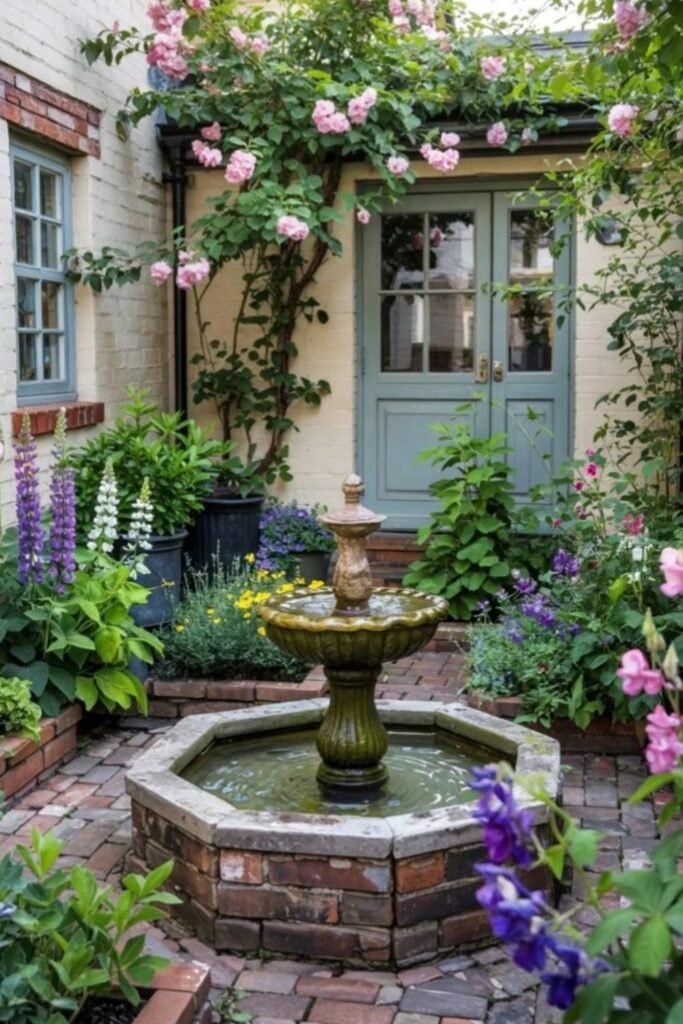
Fountain Focus
Flowing water gives even a compact courtyard the peaceful feeling of a mature English cottage garden.
Put a traditional stone fountain in the centre and layer planting around it with foxgloves, delphiniums, lavender and leafy perennials to soften the brickwork.
Train climbing roses up above the doorway to frame the entrance and give the house a natural link to the garden.
Brick paving gives the space functionality, while raised beds demarcate the planting spaces.
FAQs
How Long Does It Take For An English Cottage Garden To Look Established?
It takes two to four growing seasons to get the complete, layered look of most English cottage gardens.
Start with a mix of shrubs, perennials and climbers for structure and fill gaps with annuals as permanent plants grow.
Mulching, trimming and splitting healthy perennials every year will make the garden denser without looking overloaded.
Can You Create An English Cottage Garden Without A Large Backyard?
Yes, an English cottage garden may be charming even in a small space. Consider vertical planting with climbing roses or clematis, layered borders.
Instead of vast flower beds, and a few repeated plants to make the design coherent.
A winding pathway, a snug seating area, and well picked cottage flowers will make even a little garden feel welcoming and lushly gorgeous.
