
24 Fairy Garden Ideas for 2026
It’s fascinating to scroll through lovely fairy gardens, until you try to make one.
Suddenly the tiny plants sprout everywhere, the rain erodes the paths, and the wind blows away the small ornaments.
Creating a fairy garden that remains attractive isn’t about filling a pot with cute trinkets.
It is about selecting the correct plants, arrangement, and weather-smart touches from the beginning.
In this article, you’ll discover 24 Fairy Garden Ideas along with practical tips to help you create a miniature garden.
Let’s jump in!
How Do You Protect an Outdoor Fairy Garden from Rain, Wind, and Winter Weather?
Start with a good base, which keeps a fairy garden looking lovely through all the seasons.
Choose a container that drains well so that rain water does not sit around the roots, then anchor lightweight ornaments with pebbles, gravel or garden pins to prevent movement in high winds.

Pick plants right for your local climate and don’t try to keep tender species alive outside all year.
Before winter comes, move portable gardens to a protected area or cover tender plants during frigid nights.
A few periodic inspections, a little of light pruning, and replacing any broken accessories will keep your fairy garden looking enchanting long after the initial setup.
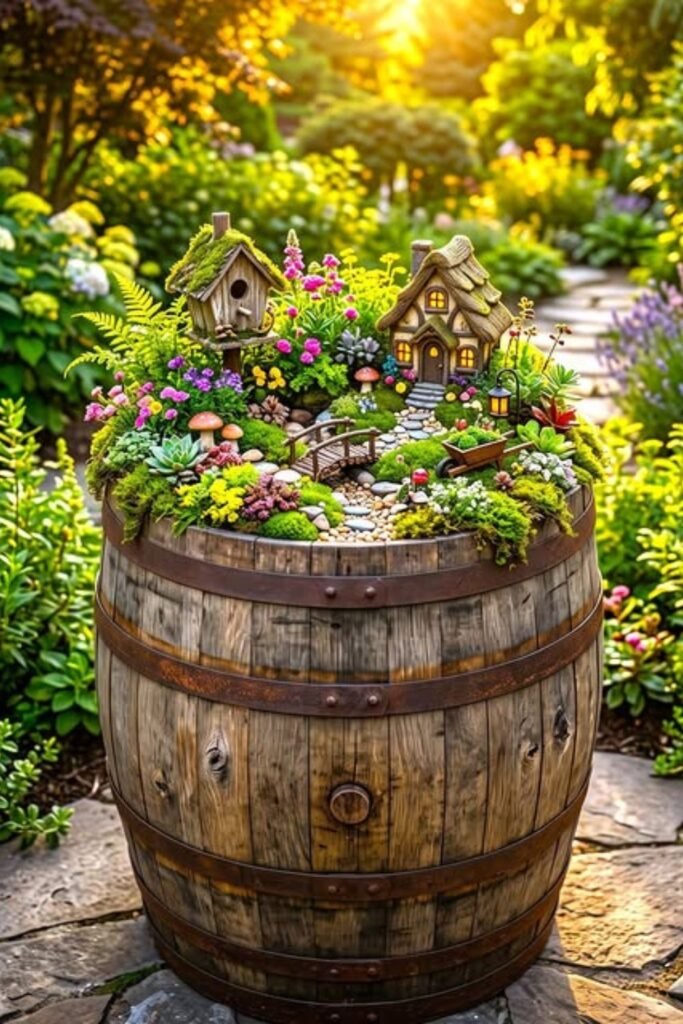
Barrel Village
Hidden corners of a patio or garden become far more inviting when a rustic wooden barrel turns into the centerpiece of a miniature fairy world.
Fill the barrel with well-draining soil and then layer moss, low-growing succulents and colourful alpine flowers to create natural height around two little homes.
Have a curved pebble pathway leading to a modest bridge so the landscape feels connected instead than crowded.
Warm lantern highlights near the entry offer added appeal for evening viewing. The tallest plants are arranged toward the back so every small element is in view.
Keep groundcovers trimmed back frequently so they frame the village rather than smother the paths and dwellings.
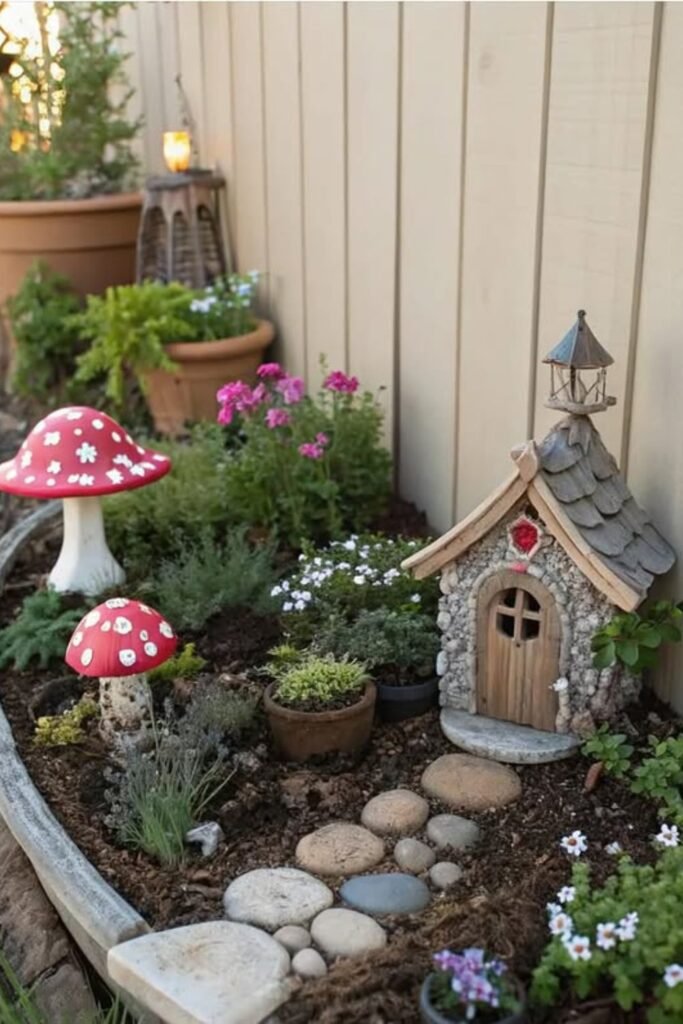
Mushroom Charm
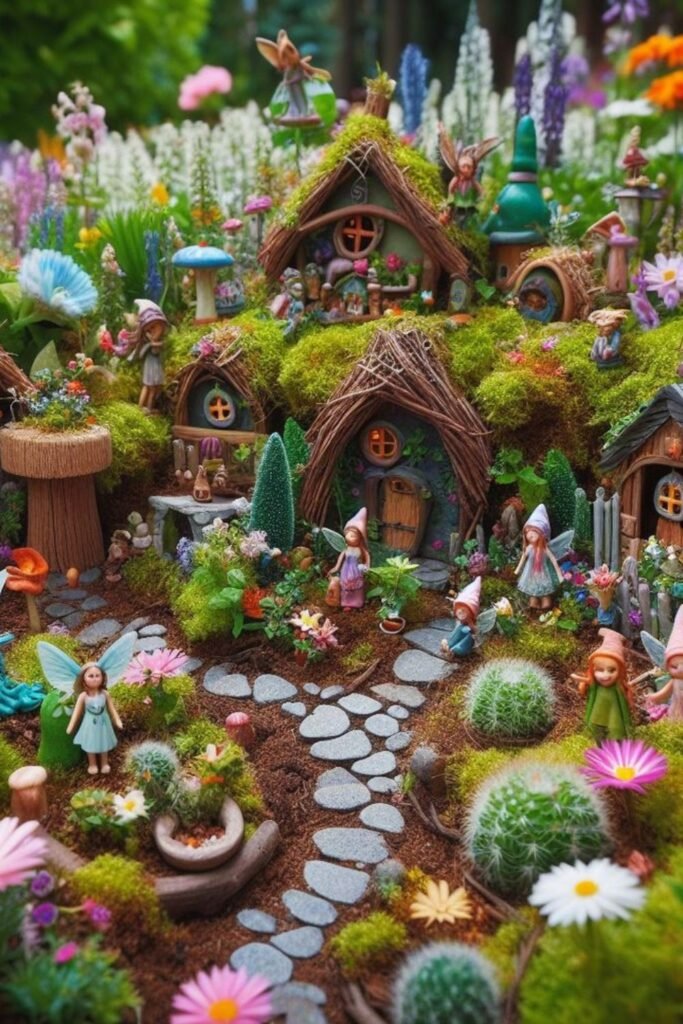
Storybook magic comes naturally when oversized mushroom accents become the focal point instead of filling the space with too many decorations.
Place this design next to a garden path, fence or patio edge for guests to stumble upon. Begin with a textured fairy cottage, and build the scene around it.
Smooth stepping stones direct the eye toward the front entrance. Low growing thyme, moss and compact floral plants soften the soil yet maintain the little house in clear view.
Provide the mushrooms with enough open space so they don’t take over the design, but still make an appearance.
Slip small containers into bare corners to give the garden depth without overfilling the space.
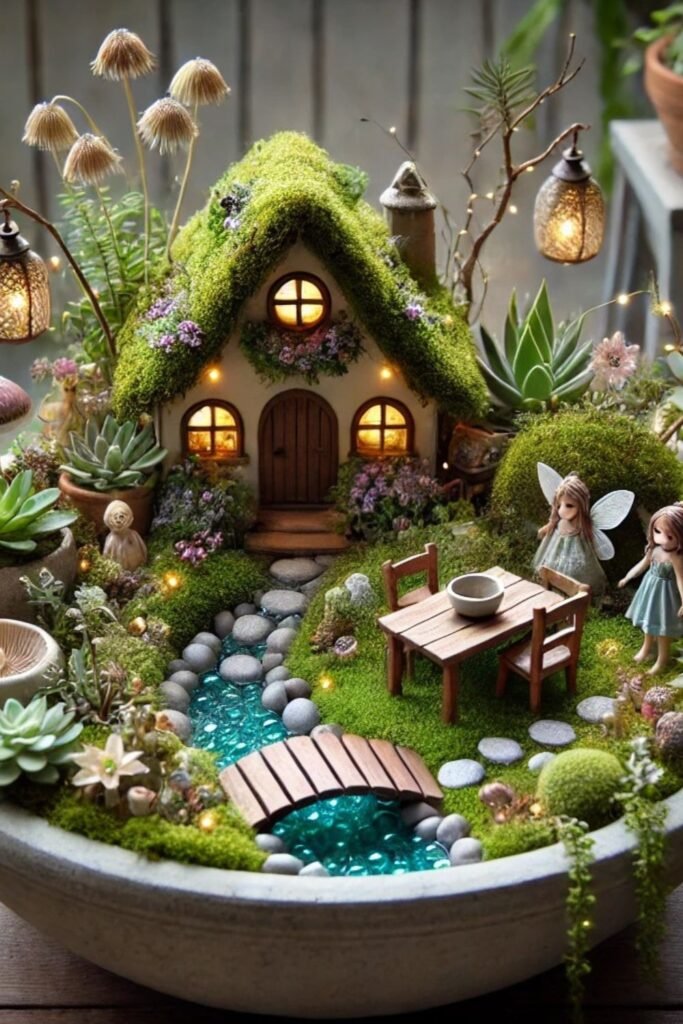
Fairy Cottage
Evening becomes part of the design when soft glowing lights spill from the cottage windows and tiny lanterns guide the eye through the landscape.
Plant this design in a broad, shallow planter so all the features may breathe without being hidden beneath higher plants.
Make a sinuous stream of resin or pebbles under a small wooden bridge and fill with moss, packed succulents and tiny flowering plants to create texture without continuous trimming.
Place the fairy table near the pathway as a gathering point and weave warm micro lights into the branches instead of having them in plain sight.
By limiting the scene to one cottage and a few meaningful touches, the garden becomes a real fairy dwelling, rather than a collection of ornaments.
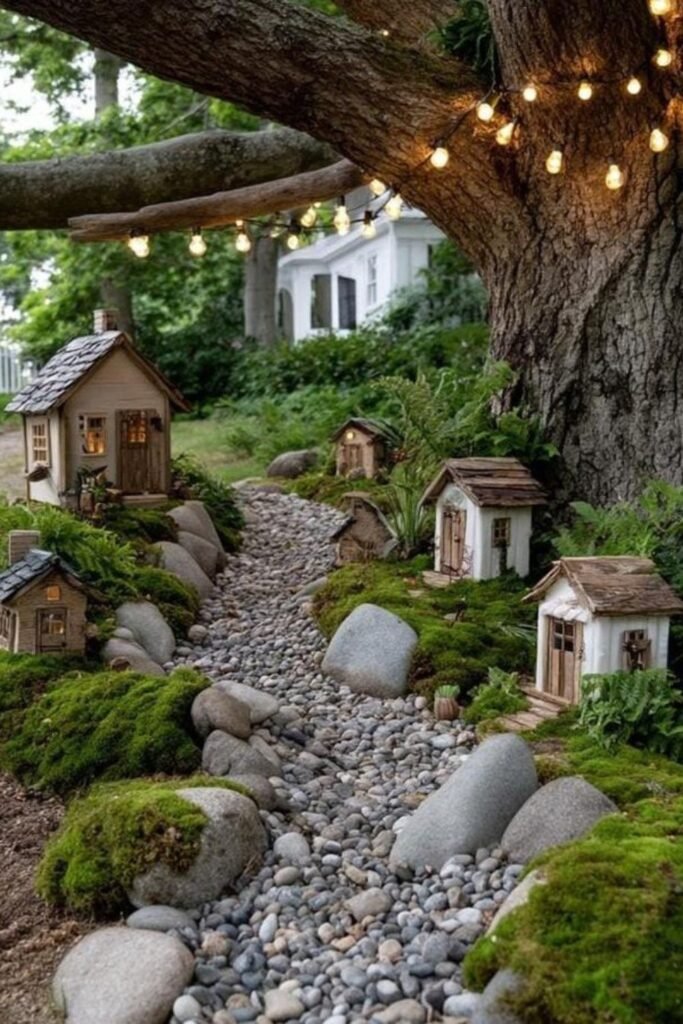
Woodland Village
Magic feels more believable when the landscape becomes the main attraction instead of the miniature houses.
Create this behind a full-grown tree, where natural shade will help moss thrive, and then position numerous little homes along a curving pebble road to evoke a sense of a secret fairy village.
Big rocks make natural boundaries while ferns and forest plants soften each corner without obscuring the view.
Wrap warm outdoor string lights around low trees so the village glows softly after sunset and merges into the neighboring yard.
Leave room between the cottages so that each will have an individual character and let the route lead guests naturally through the whole scene.
Fairy Hamlet
Nothing captures attention quite like a miniature village that feels woven into the landscape instead of sitting on top of it.
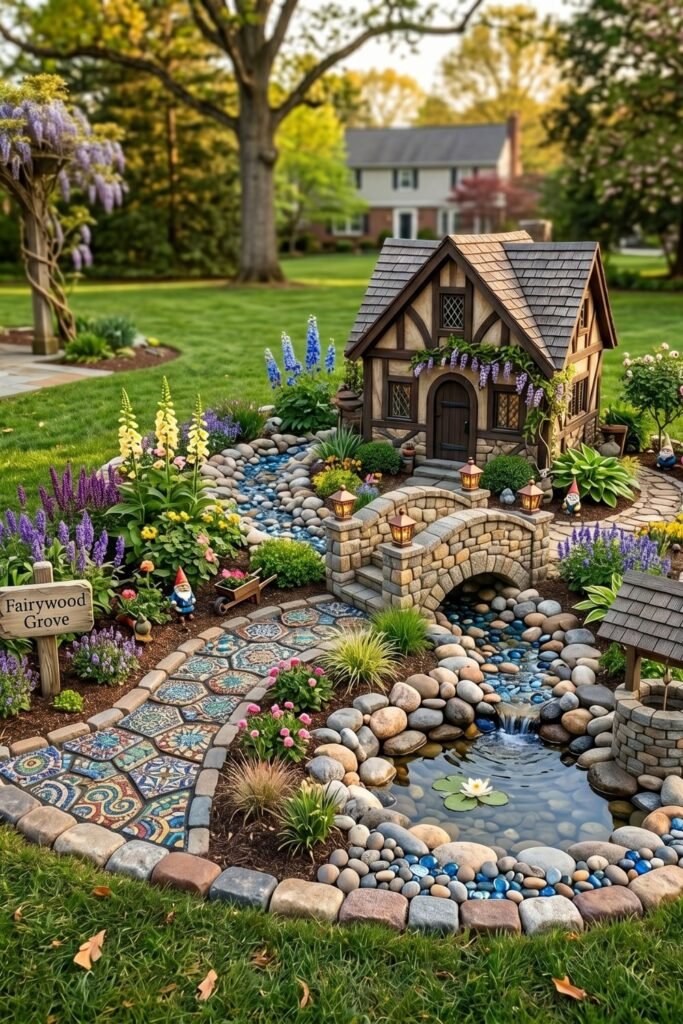
This style is best saved for a big front yard, garden island or broad lawn where winding walks, a pond and layered planting can all take center stage.
Make a big fairy cottage in the middle and trim each feature in stone, add ornate walkways and a tiny bridge across the lake to make it feel complete.
Mix flowering perennials with compact shrubs and ornamental grasses to preserve changing color throughout the seasons without blocking the village.
Small lanterns along the bridge produce a welcoming glow in the evening. Neat boundaries for simpler maintenance and to make the fairy garden look like a permanent feature of your environment.
Wheelbarrow Garde
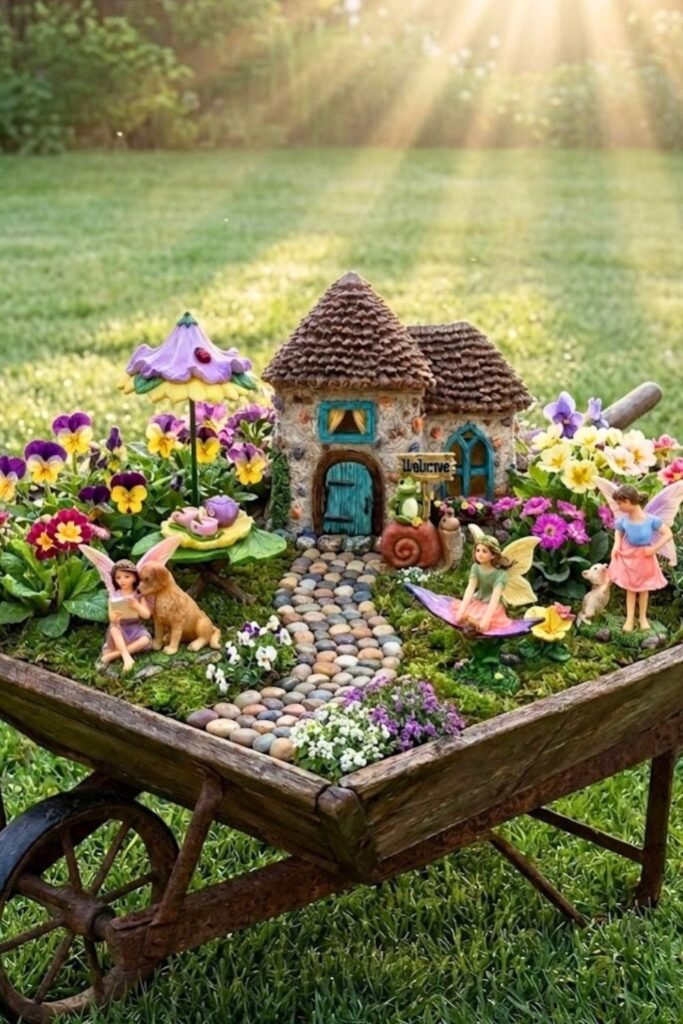
Forgotten garden tools can become the most charming feature in your backyard with a little creativity.
This fairy garden features an ancient wooden wheelbarrow in natural height and is great for putting near a patio, front porch or garden entrance so everyone can see the intricacies.
Pack it with rich potting soil, colorful pansies, creeping thyme and patches of moss, and let a curved pebble path bring visitors directly to the fairy cottage.
little figurines and a little tea table provide character without detracting from the flowers.
Set your wheelbarrow in a sunny area with good drainage, and change out seasonal blooms throughout the year so the little village always feels alive and welcoming.
Bridge Crossing
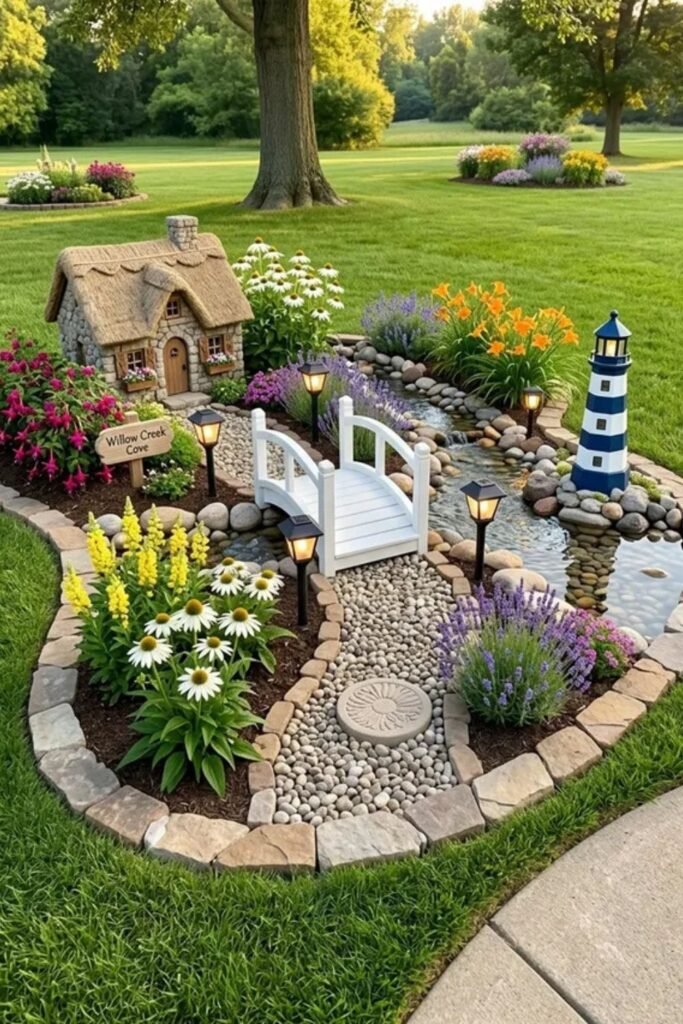
Movement brings a fairy garden to life, and a graceful bridge instantly gives visitors a reason to follow the scene from one feature to the next.
Save this concept for a front yard island, large flower bed or lawn centerpiece, where the winding stream can be the star of the show.
Place a comfortable cottage on one side, then balance it out with a pond and ornamental lighthouse to add depth without cluttering the space.
Along the paths, plant long-blooming perennials such as lavender, coneflowers, daylilies, and more for color that lasts the entire growing season.
The stone edging keeps the design tidy and makes seasonal maintenance much easier. Small solar lanterns put beside the bridge offer a welcoming glow after nightfall.
Pot Hideaway
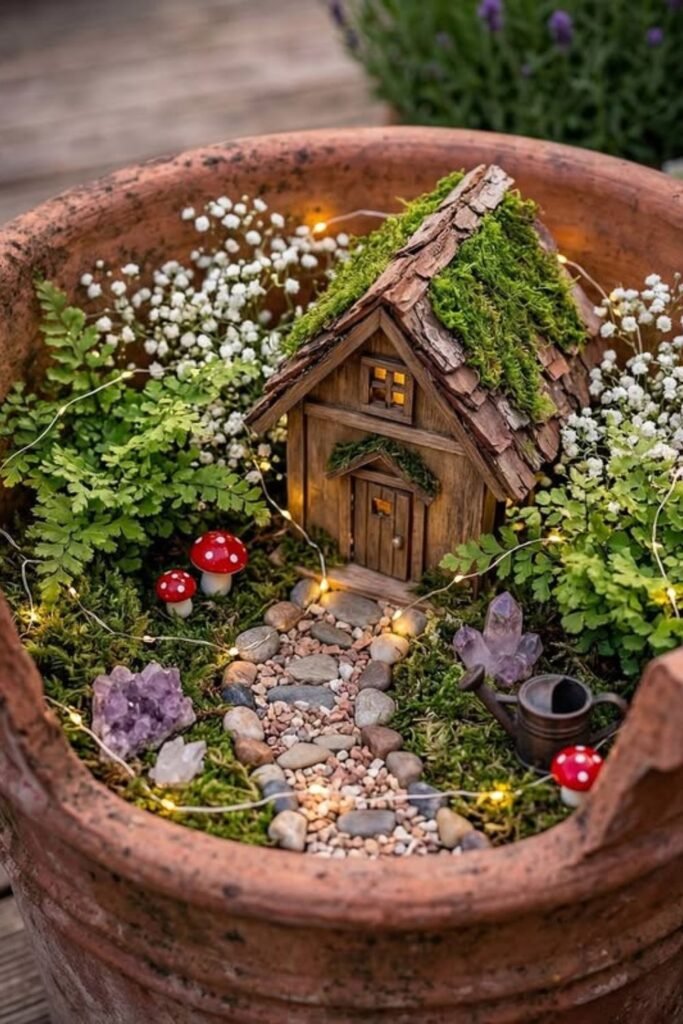
Small spaces deserve just as much magic as large gardens, and a single terracotta pot can become a beautiful fairy retreat with thoughtful layering.
Position the cottage slightly off-center and have a narrow pebble path go organically to the front door to create an inviting sense to the picture.
To give the house a woods sense, surround it with miniature ferns, moss and dainty white blossoms, and add character with tiny mushrooms and sparkly touches that won’t make the design seem too busy.
Warm micro lights hidden in amongst the plants give a lovely glow in the evening, highlighting the pathway without over dominating the garden.
Keep trimming fast-growing plants to keep the moss-covered roof and little entryway the star of the show all season.
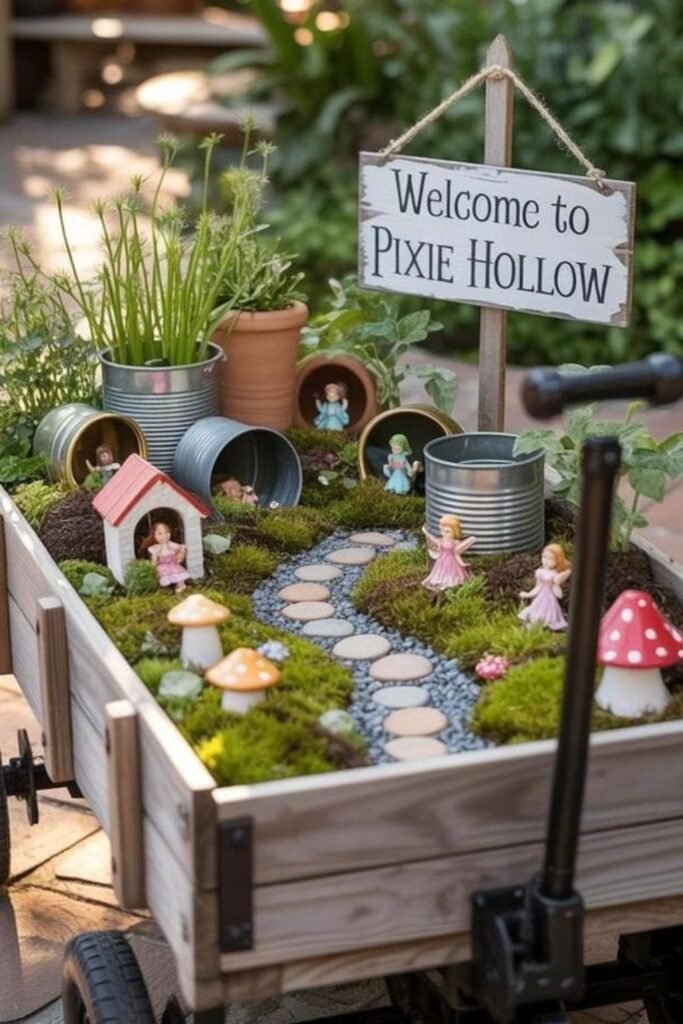
Garden Wagon
Unexpected containers often become the most memorable part of a fairy garden.
And a wooden garden wagon creates a display you can easily move around your patio or backyard.
Fill your base with moss and compact plants, and define the pattern with a winding pebble road that joins little dwellings, fairy figures, and amusing mushroom accents.
Galvanized pots filled with herbs or ornamental grasses add height without taking up valuable space, and a handmade welcome sign gives the hamlet its own flair.
Set the wagon in a sunny area with good drainage and swap seasonal flowers in and out throughout the year to keep your little town looking fresh and alive.
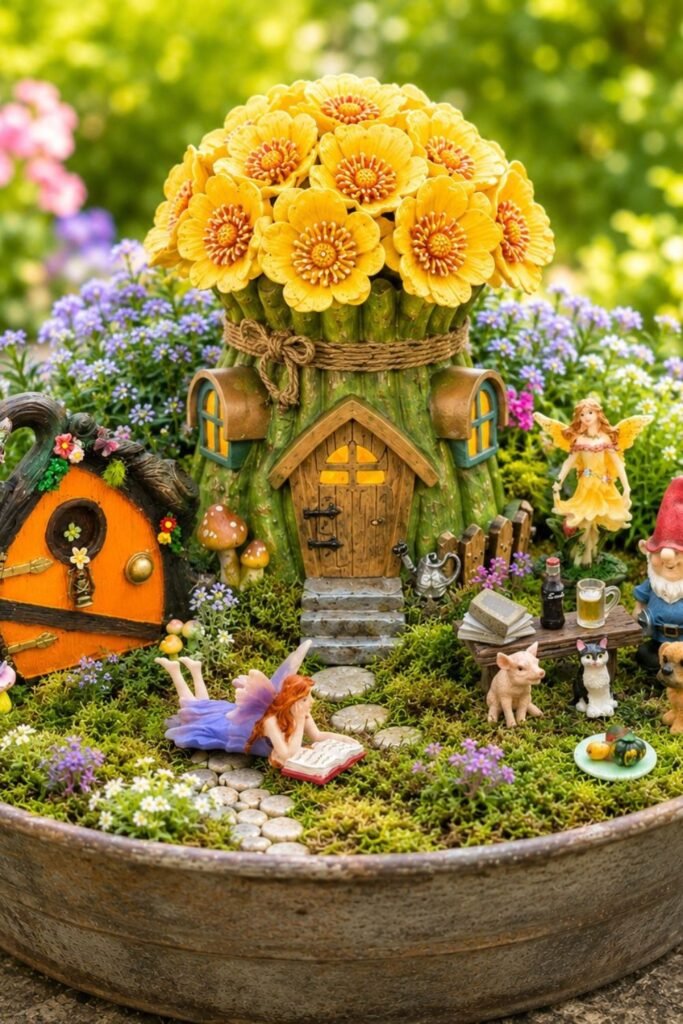
Flower Cottage
Bold blooms can become part of the fairy home instead of sitting around it, creating a centerpiece that instantly catches the eye.
Place this pattern in a large metal bowl or shallow planter so all angles will display every feature.
For height, make the tallest floral arrangement behind the cottage. Surround the base with soft moss tiny flowering groundcovers, and a meandering stone path that naturally attracts the eye to the front door.
A second fairy door whimsical figurines and little woodland animals give the picture a lived in feel without over cluttering the space.
The color palette should be adjusted so the colorful flowers are still the focus while the lesser decorative pieces gently add life to the fairy village.
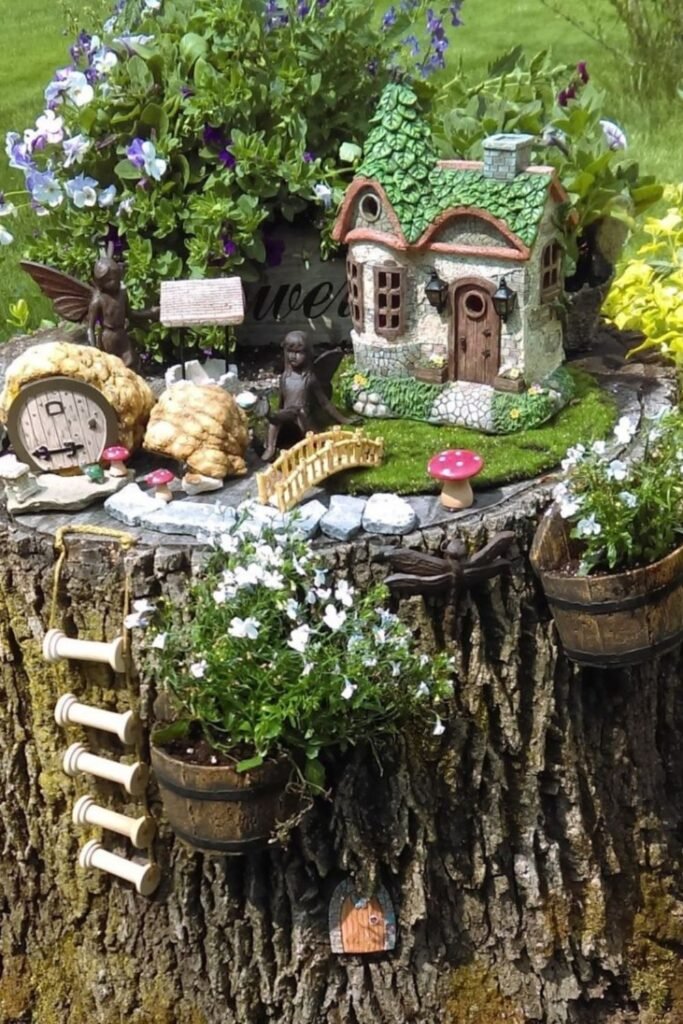
Stump Retreat
Old tree stumps don’t have to disappear from your yard when they can become the foundation of a magical fairy village.
You want to build the main cottage on the level surface and then use the natural bark texture for inspiration.
To come up with imaginative touches like a miniature ladder, hanging flower pots, and a hidden fairy door at the base.
Small bridges, mushrooms and pebble walks help create a real wooded neighborhood feel without the requirement for a vast planting area.
Position this idea in a shaded garden, where flowering annuals and low-growing plants can soften the edges, with the stump protected from intense afternoon sun.
Keep seasonal blooms fresh and wipe away fallen leaves so all your miniatures are simple to notice.
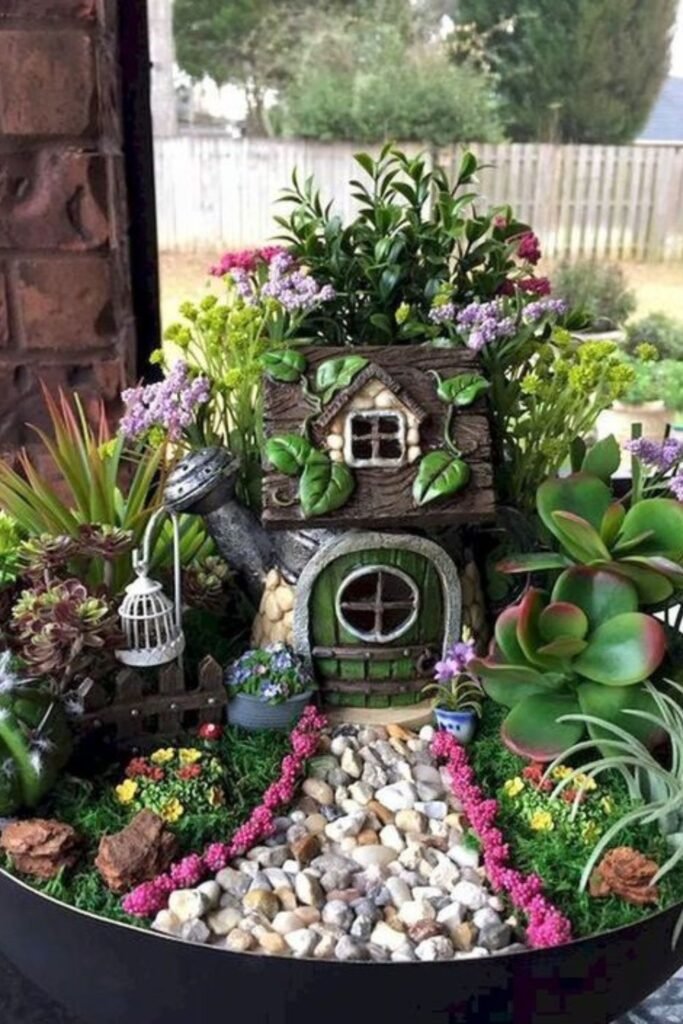
Succulent Haven
Fresh textures make this fairy garden stand out because the plants become just as important as the miniature house.
Place a broad, shallow planter in a covered patio or sunny porch where succulents, air plants, and cacti will do well with great drainage.
Place the cottage a little back and frame the entrance with a gently curving pebble walkway edged with modest blooming groundcovers to lead the eye to the front door.
A colorful watering can and little lamp add personality without competing with the lush flora and the taller greenery behind the house offers the idea of a woods setting.
Water just after the soil has dried completely to maintain the succulents healthy and to keep the overall display looking crisp and neat.
Fairy Colony
Hidden woodland villages feel far more believable when several tiny homes share the same landscape instead of standing alone.
Reserve this form for a big raised bed or a huge garden corner where meandering stone walks can connect each cottage in a natural way.
Plant moss to cover the ground, then place little homes amid flowering plants as if they were tucked into the greenery instead of perched on top.
Use diverse roof types and cottage shapes to give each home its own identity, but repeat the same natural materials to tie the village together.
It’s better to spread small fairy figurines across the scene rather than bunching them together, so visitors can find fresh nuances each time they pause to look.
Archway Cottage
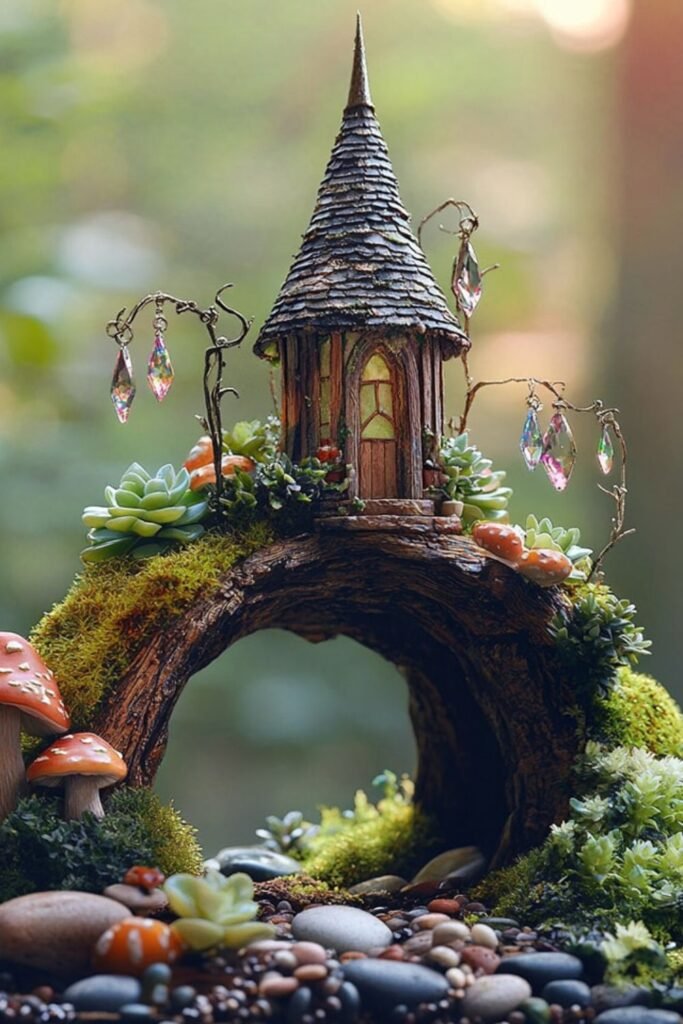
Unexpected shapes make a fairy garden unforgettable, and a moss-covered arch instantly creates the feeling of a hidden world waiting to be explored.
Plant this pattern in a shady woodsy bed, large planter or sheltered patio where moss and tight succulents can thrive without strong afternoon sun.
Place the tiny tower cottage over the arch, then fill in the base with smooth pebbles, miniature mushrooms and low-growing plants to preserve the natural woodland feel.
Tiny crystal ornaments hang from thin branches and reflect the light brilliantly, without overwhelming the image.
While keeping the tunnel uncovered adds depth and enables guests to envision a secret pathway underneath the fairy palace. Trim the surrounding plants occasionally so that the unique arch is the star of the entire display.
Tree Sanctuary
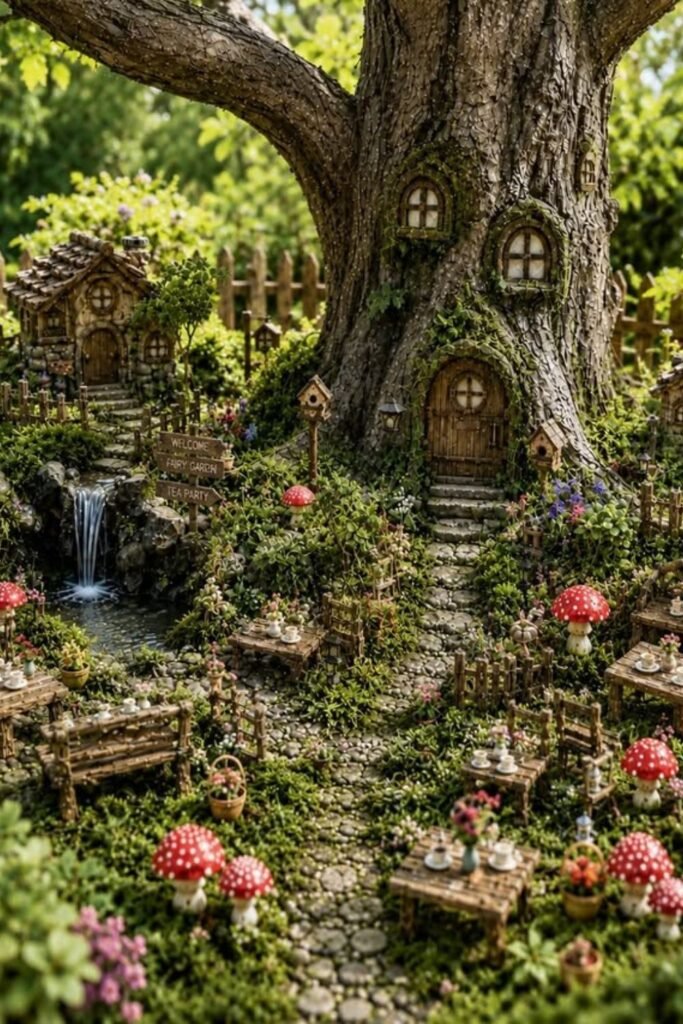
Mature trees already create the perfect fairy setting, so let the trunk become part of the village instead of treating it as background.
Add little doors to the bark, and continue the tale with winding gravel walkways, quaint cottages and fences leading to secret meeting places under the branches.
Every detail is on tune with the woodland concept so there is no sense of clutter. Small tea tables, birdhouses and accents of mushrooms provide charm.
Develop this notion around a healthy tree, without heaping additional soil against its trunk, and use shade-loving groundcovers and compact plants that integrate naturally with the surroundings.
Add a bit of soft movement with a tiny waterfall or pond next to your cottages and this regular garden corner will become a magical spot your guests will want to explore.
Fairy Path
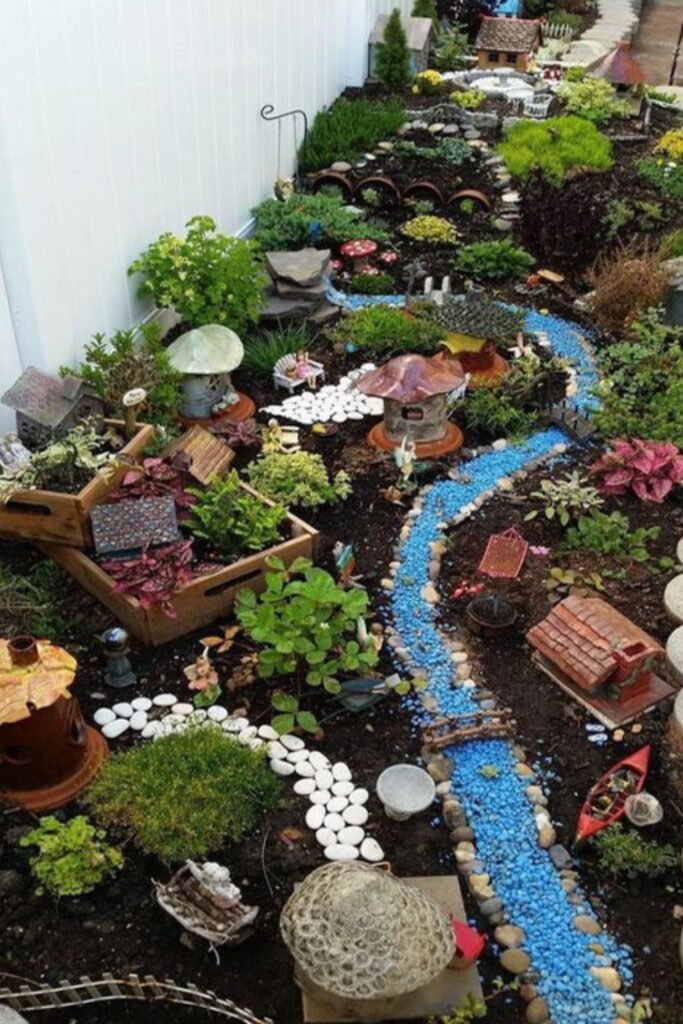
Long, narrow flower beds can become an enchanting fairy world when every section tells part of the story.
Down the middle run a winding blue pebble stream, and link little cottages, bridges.
Mushrooms and gathering places with curved stepping-stone paths so that the eye will go naturally from one end to the other.
Low groundcovers, small shrubs, and seasonal flowers fill in the landscape without obscuring the microscopic detail.
Save the taller plants for the rear edge near the fence to add depth, but keep the village open from the front.
The display feels like a live village with small themed pieces like a market, picnic area or miniature dock, giving visitors something fresh to discover as they walk the trail.
Glowing Hamlet
Twilight brings a fairy garden to life, making soft lighting just as important as the cottages themselves.
Build this enchanted woods with a shady garden where moss can cover the ground and a narrow brook can run between little houses.
Cozy warm window lights, lanterns and hidden micro lights nestled amid flowers to provide a warm glow without apparent wires.
And have curved gravel walkways and small wooden bridges connecting each cottage to make it feel like one village rather than separate displays.
Trim flowering plants and small bushes around entrances to accentuate each luminous window and let moss soften edges to create a serene fairytale mood that seems enchanting from sunrise to sunset.
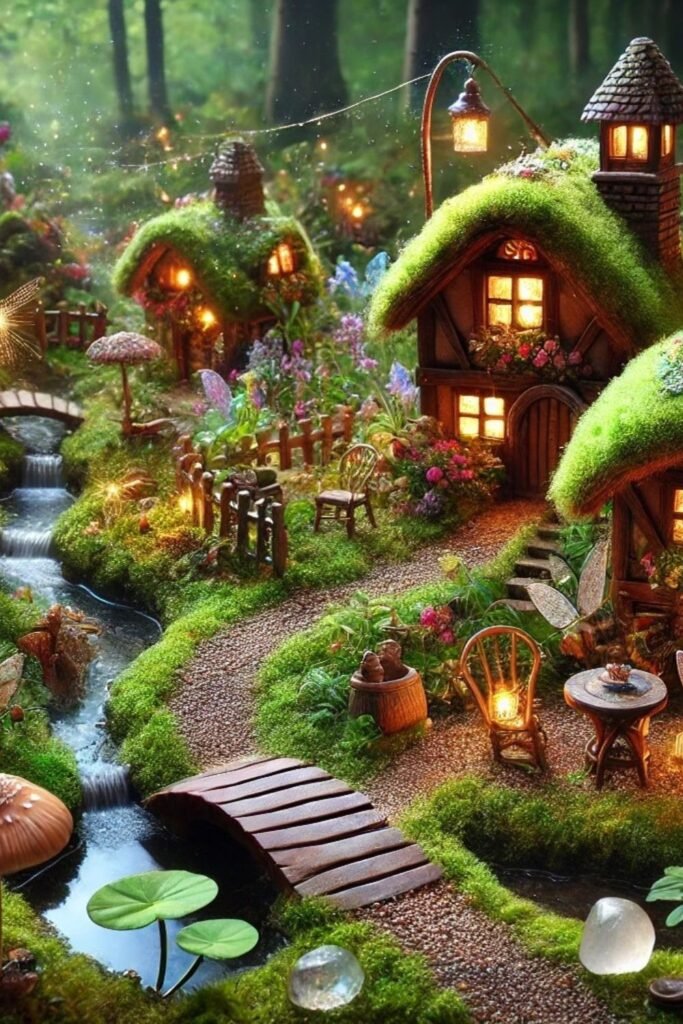
Garden Gathering
Welcoming spaces make a fairy garden feel like a real home, and a tiny seating area adds warmth without needing dozens of decorations.
This design can be built in a shallow planter or beautiful tray where every feature is easy to enjoy from above.
Begin with a mossy hut in the rear of the design, and then lead visitors to a tiny pond, picnic table and wooden seat beneath a modest vine-covered arbor with round stepping stones.
Soft-flowering plants surround the entry making the cottage colorful, but leave enough open lawn for the gathering area to stand out.
Place the tallest features toward the back, and keep paths open, so that each miniature scene flows smoothly into the next lovely region.
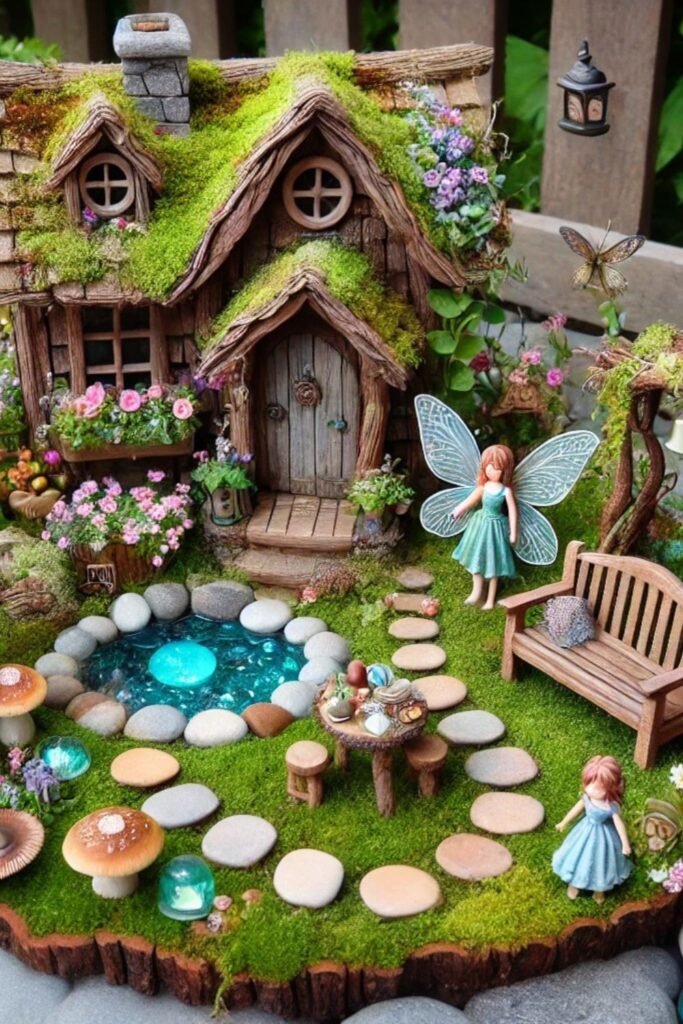
Ladder Escape
Creative details often make a simple fairy garden unforgettable, and a tiny rope ladder instantly adds the feeling of a hidden adventure.
Position this design on a raised planter or decorative stand so the ladder looks to bring guests into the miniature universe.
Plant the cottage in the back, and then soften the sight with compact sedums, mosses and low-growing flowering plants that keep clean all season long.
A pebble pathway, white picket fence and tire swing provide charm without crowding every inch of the planter.
Leave lots of open soil surrounding the larger plants so the tiny accessories are easy to identify, and choose drought-tolerant species if the planter will be in a bright area on your patio or porch.
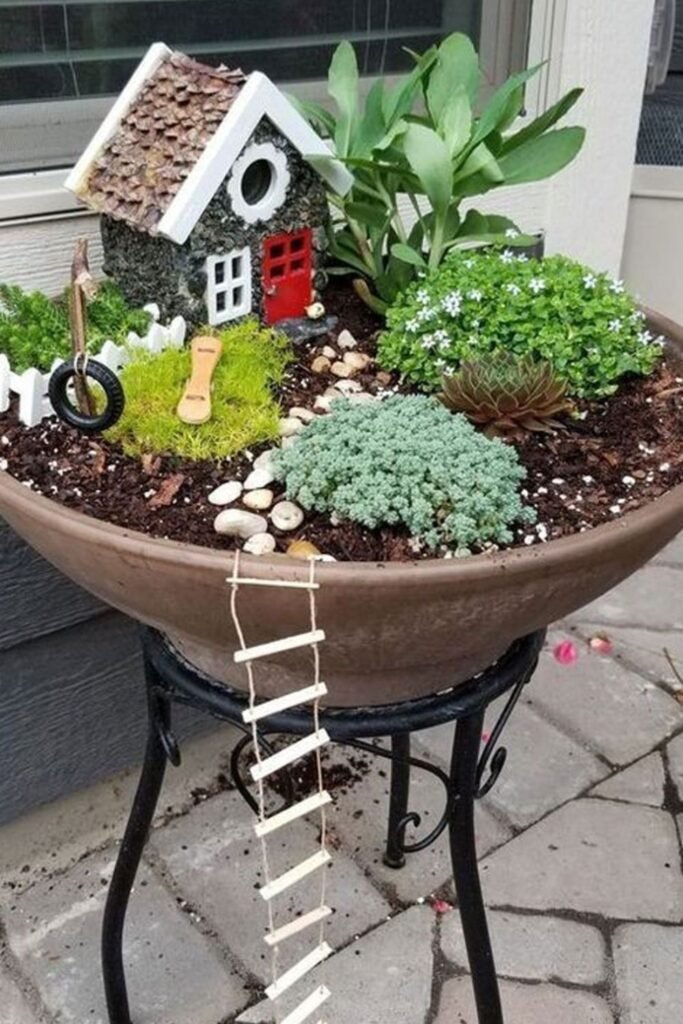
Tree Dwelling
Natural tree trunks can become the heart of a fairy garden and when you design around them instead of hiding them.
Wrap winding stone paths around the foundation. Tuck little dwellings into the bark so they look as though they have always belonged there.
Window boxes of flowers, climbing vines and patches of moss soften the wood, merging the houses into the surrounding scenery.
Select a shady spot to grow woodland plants, and provide enough open space along the paths so that you can easily find every entrance.
Another surprise is created by a concealed entrance in the roots, inviting guests to look closely and see every unique element tucked around the tree.
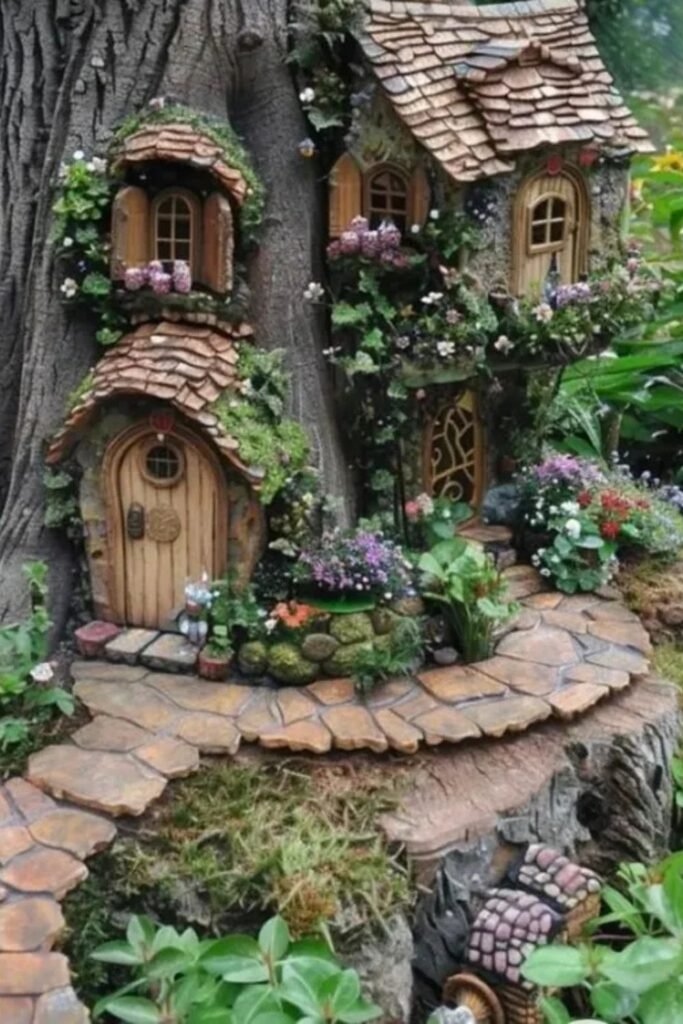
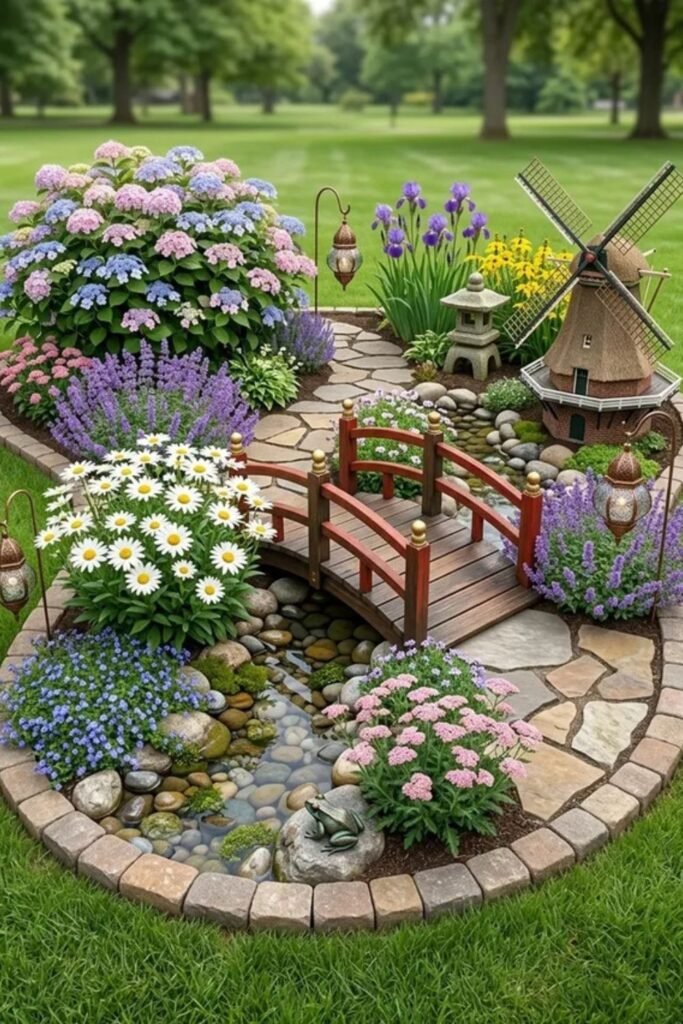
Bloom Retreat
Color does most of the storytelling in this fairy garden, making it perfect for an open lawn or island bed where flowers can shine from every direction.
Layout around a flowing stream and wooden bridge. Add a picturesque windmill toward the back to add height without hiding the surrounding blossoms.
Fill the borders with hydrangeas, daisies, lavender, irises and other long-flowering perennials to keep the show vibrant during most of the growing season.
Curved stone paths connect all of the features naturally and hanging lanterns offer a lovely warmth to evenings without overpowering the scenery.
Retain the distinct character of each plant group and prune back any spreading varieties frequently so the bridge, water feature and windmill stay the focus year after year.
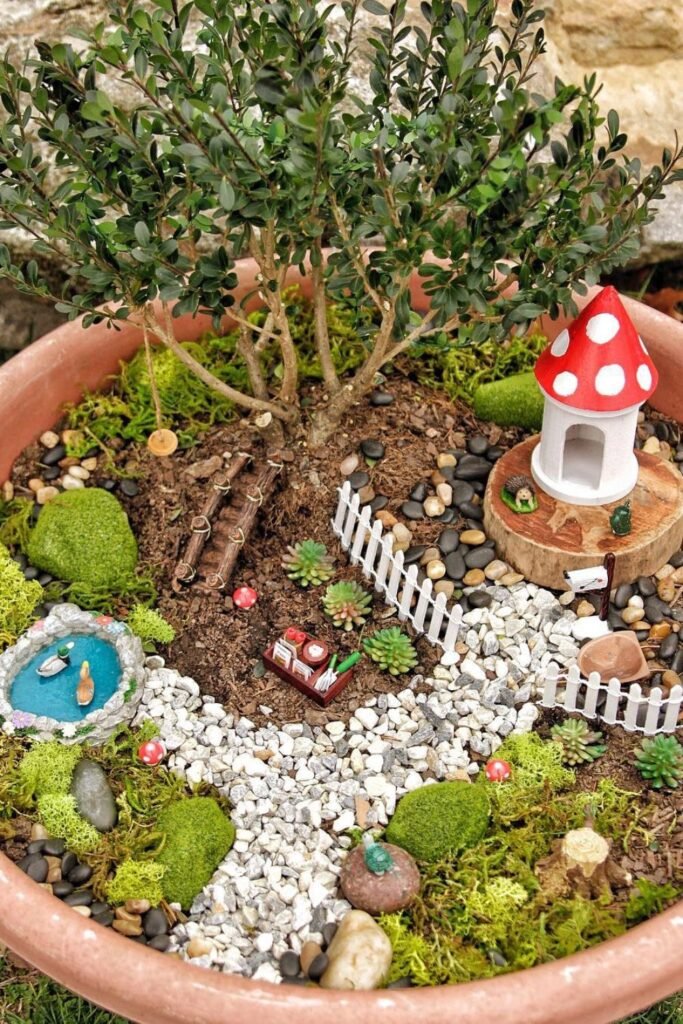
Forest Trail
Simple layouts often feel the most believable because every miniature detail has room to stand out.
Opt for a huge terracotta pot with a tiny shrub as the star attraction to simulate a towering woodland tree, then let a winding gravel path lead the eye to a fanciful mushroom home hidden beneath its branches.
Tiny fences, a little pond and moss patches naturally create lovely tiny areas in the garden without over-crowding the planter.
Low growing succulents are good along the paths as they stay tight and require very little upkeep.
Keep the shrub lightly clipped to allow sunlight to reach the tiny plants below and to make the fairy house easily visible during the growing season.
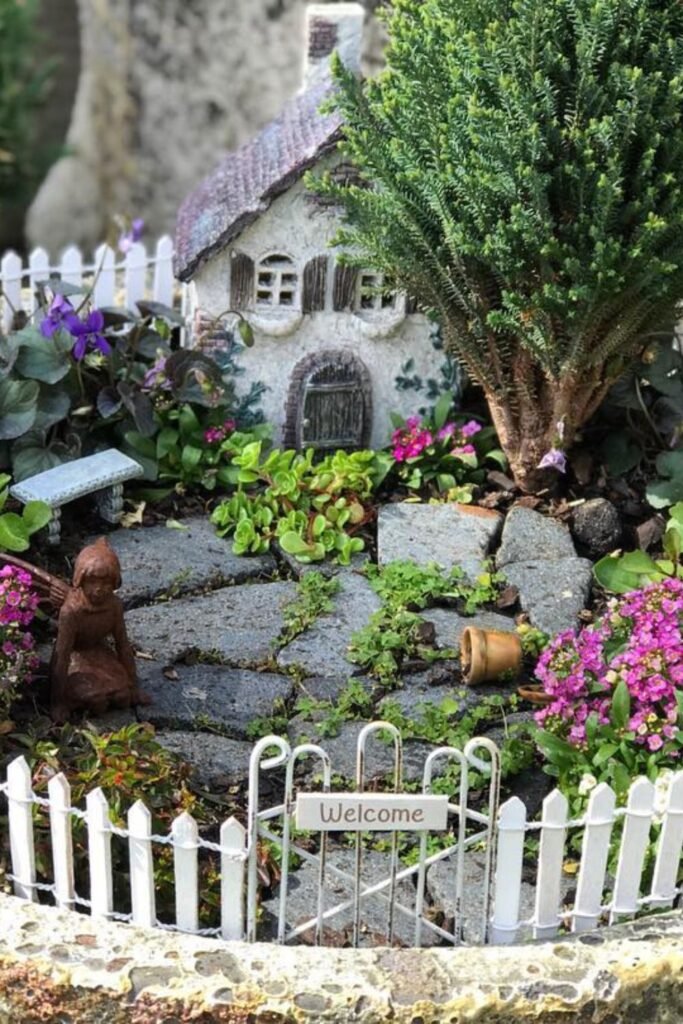
Cottage Courtyard
Small planters can feel surprisingly spacious when the center stays open instead of filling every corner with decorations.
Create a welcome courtyard with a fairy cottage in the back then surround with a white picket fence, flower plants and a stone walkway that naturally leads to the front gate.
Compact shrubs provide the stature to mimic miniature trees while alyssum, violets or other low-growing blooms soften the margins with seasonal color.
A small bench and birdhouse finish the tranquil scene without creating a crowded plan.
Keep the entry clear and each element easy to observe from any aspect by trimming the plants around the pathway regularly.
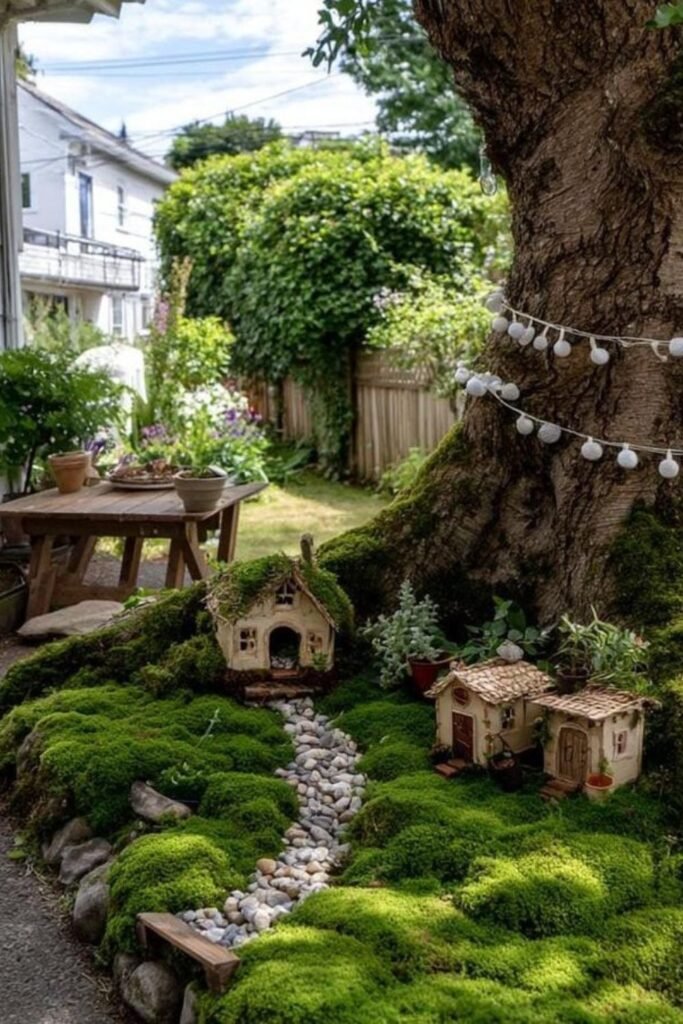
Moss Valley
Nature already provides the perfect fairy landscape when thick moss blankets the roots of an old tree.
Add a cobblestone pathway that wanders toward a few rustic cottages and you’ve transformed that lovely green carpet into a little hamlet, rather than crowding the space with too many items.
Plant small potted plants in between the homes to add subtle texture and color. Create this idea under a mature tree where the moss may thrive in the shadow.
Wrapped around the tree, outdoor string lights lend a lovely glow after dark without detracting from the woodsy setting.
Water the moss periodically during dry seasons, and remove fallen leaves so the paths and little cottages are visible year round.
FAQs
What Plants Stay Small Enough for a Fairy Garden All Year?
Select plants that are naturally compact, so they won’t soon swamp your miniature dwellings and paths.
Creeping thyme, Irish moss, baby tears, dwarf sedum, little succulents and miniature ferns all work nicely as they are low and easy to trim.
Adding a few evergreen plants amongst your seasonal flowers also maintains your fairy garden vibrant without needing a total re-design every few months.
How Can I Make a Fairy Garden Look Magical Without Buying Lots of Decorations?
Accessories come after landscaping. A few strategically placed fairy cottages, pebble walkways, moss, little bridges.
And little fences create a much more believable scenario than flooding the area with dozens of miniatures.
Adding modest solar lights or warm micro lights for the evening and different plant heights will give your fairy garden depth making it feel like a hidden woodland village rather than a display of trinkets.
