
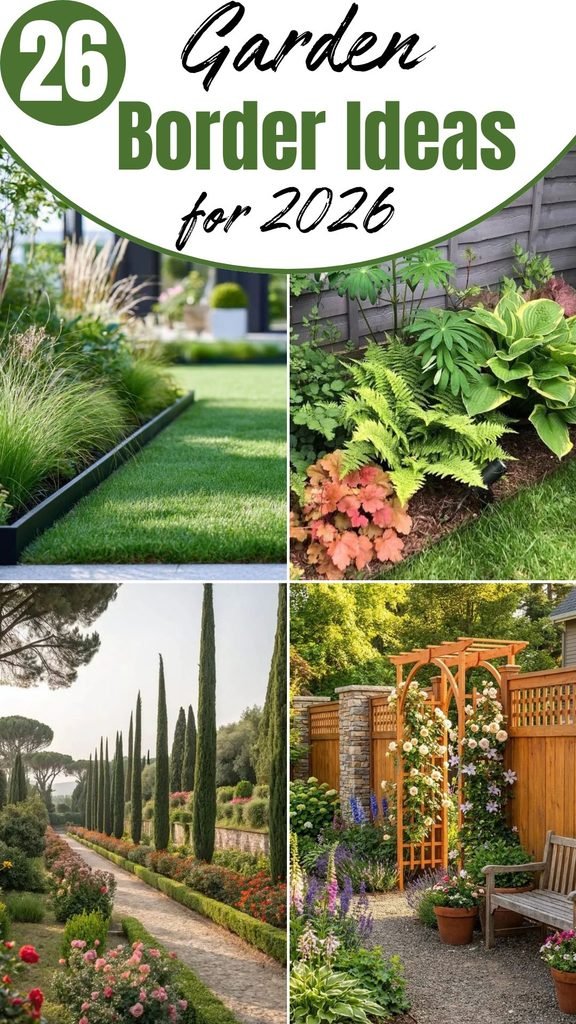
26 Garden Border Ideas for 2026
You can grow gorgeous flowers and still have garden borders that seem like a jumble.
Grass seeps into the soil, borders lose their shape, weeds spring up between plants and suddenly you’re spending more time repairing the border.
Good border is more than a flower holder. It should provide your grass with a smooth edge, fit the space you have and make planting easy to manage.
In this article, you’ll find 26 Garden Border Ideas to transform your outdoor space into something you’ll love.
Let’s jump in!
How Can I Keep Grass From Invading Garden Borders?
Grass usually invades garden borders when roots and runners make their way beyond a shallow or badly maintained edging.
First, make a clean edge between lawn and planting bed, and dig out any grass roots currently growing in.
If your grass is aggressive, use a sturdy edging of brick, stone, metal or the like, set deep enough to form an effective barrier.
Keep it low enough on top so that it’s still easy to mow around.
Alternatively, maintain a thin trench at the edge of the lawn, and re-cut it when grass begins to creep over.
Inside the border, add mulch to help slow down weeds and undesired grass seedlings.
Check the edge often, it is far easier to catch a few runners early than clear an established patch later.
Pebble Border
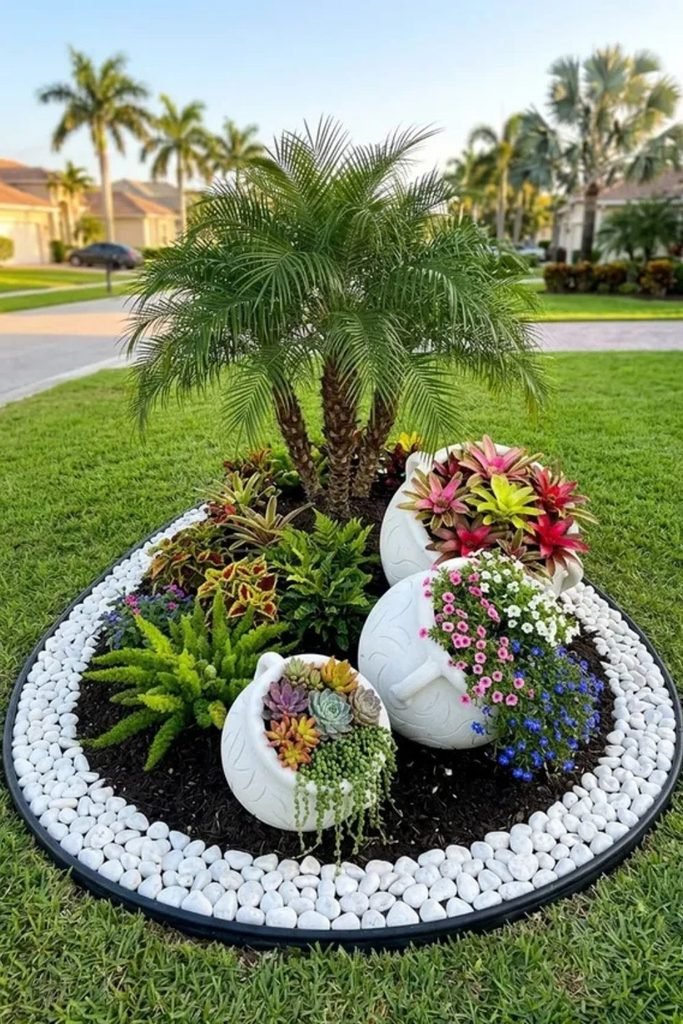
Give a small lawn bed more definition by pairing dark soil with a bright pebble edge instead of letting planting disappear into the grass.
Put a palm or other tall plant in the middle and fill in the lower level with bright foliage, compact flowers and a few potted plants for height.
White pebbles perform especially well around circular or island boundaries, because the contour is easy to see from all directions.
This will stop the pebbles spreading and assist stop the lawn runners encroaching into the bed.
Steel Edging
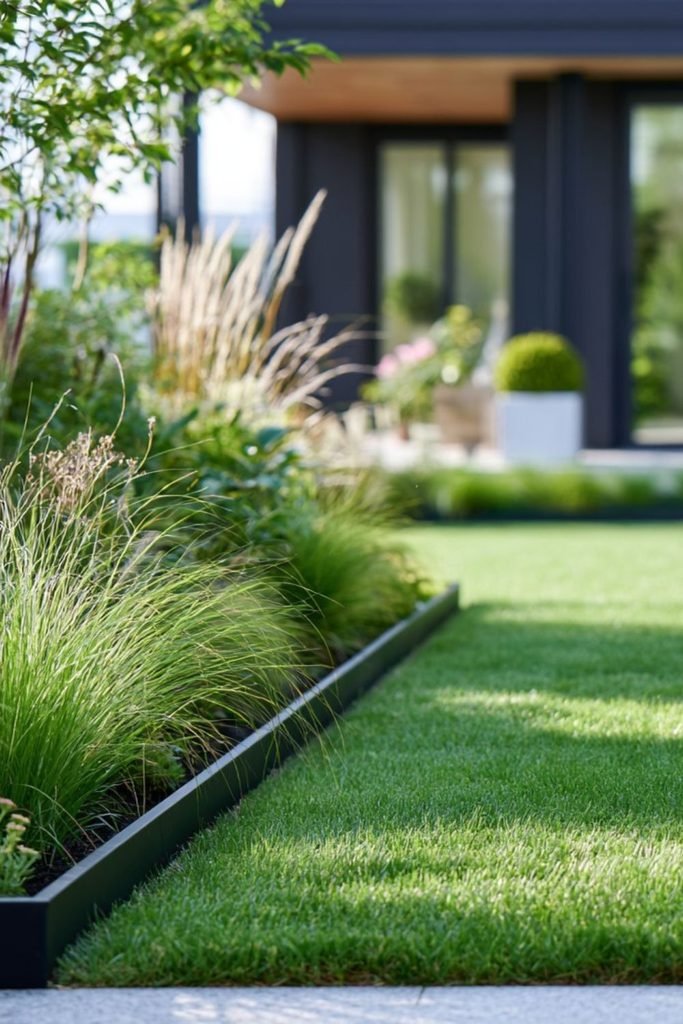
Clean lines work especially well when you want a planted border to feel organized without making the edging itself the main feature.
Drive a narrow steel edging between the lawn and the soil, leaving it slightly above the ground so that grass runners have a difficult time.
To soften the stiff line and fill the border, use decorative grasses, airy perennials and taller vegetation toward the back.
Ideal for modern homes and long grass edges, the dark metal virtually hides under the planting, but yet provides a clear border to follow when mowing or pruning.
Foliage Border
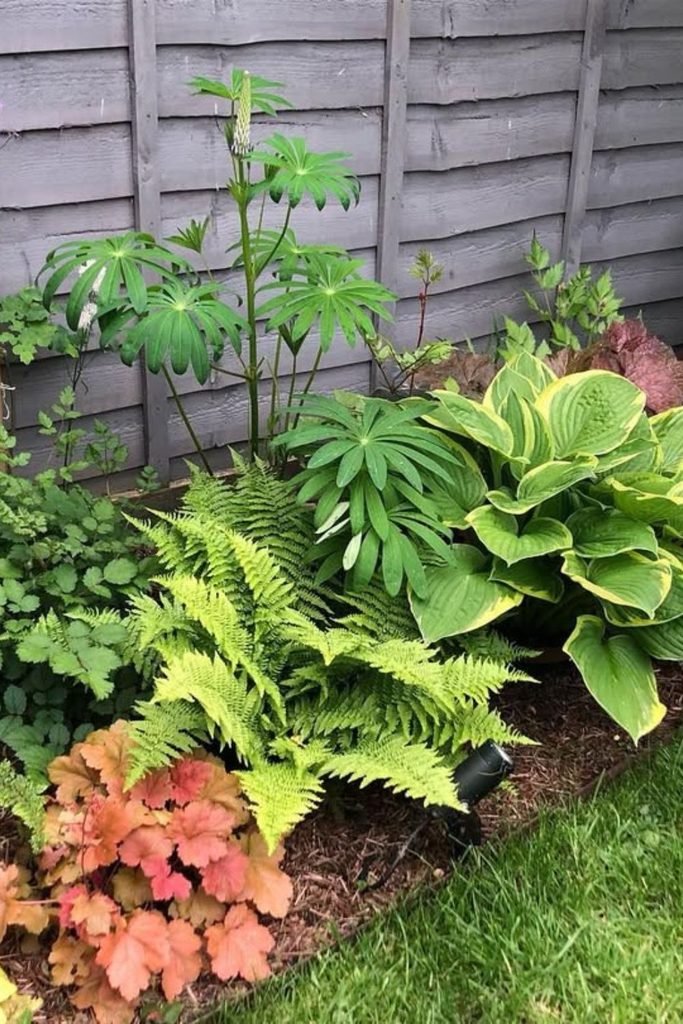
Flowers are not the only way to keep a shady garden edge colorful.Construct the border with hosts, ferns, heucheras.
And other foliage plants with a variety of leaf shapes and tones, then include a few blooming plants.
Space hostas wide enough to have room to spread their leaves between them and finer ferns so the planting isn’t one thick block of green.
Mulch around the plants to cover bare soil, retain moisture, and make it easier to notice undesired grass before it spreads further into the bed.
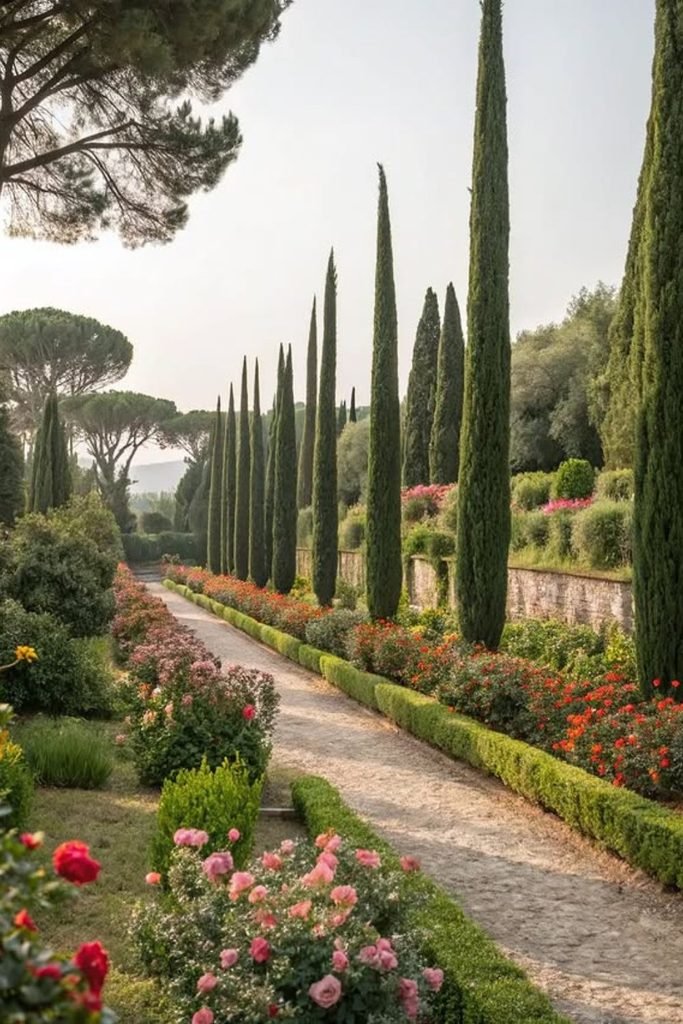
Cypress Border
Strong vertical plants can make a long garden border feel structured without filling every inch with bulky shrubs.
Plant Italian cypresses in a regular pattern for height and rhythm, then soften the lower layer with roses, flowering perennials and neatly cut foliage.
This style is particularly effective placed beside long walks, driveways or property boundaries as repeating trees naturally pull the eye ahead.
Don’t plant them close together for an instant full effect, but provide plenty of area around each cypress for its mature breadth.
Complete the front with a low hedge to give a sharp division from the pathway and to keep the planting together.
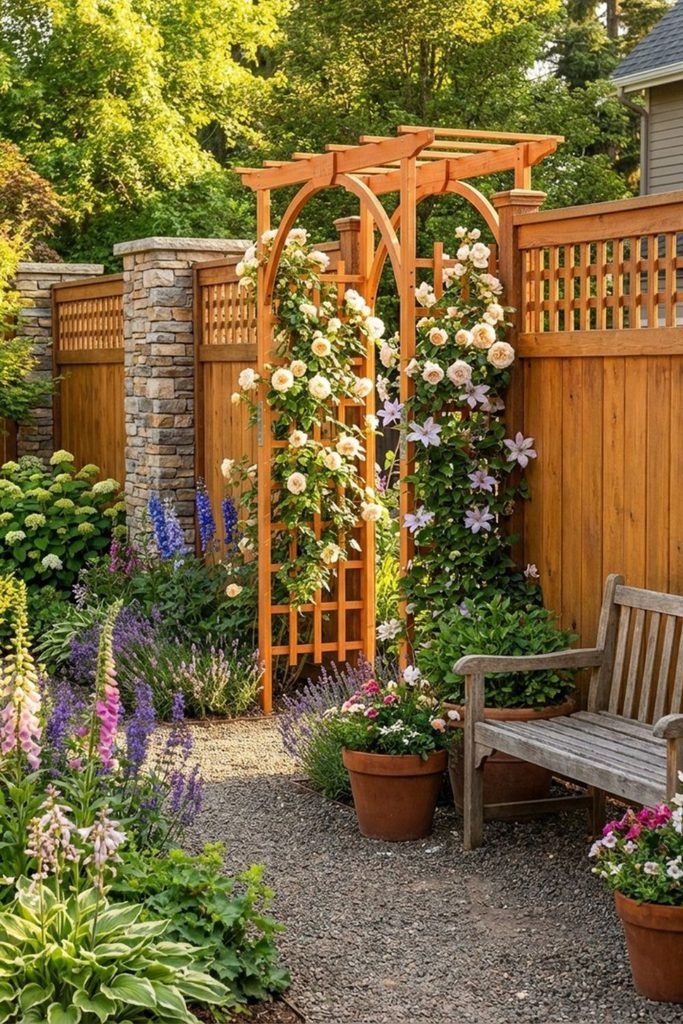
Trellis Border
Use the back of a border when ground space feels too limited for another layer of plants.
Build a solid wooden trellis next to the fence and train climbing roses or clematis up it; then plant foxgloves, lavender, hostas and other shorter plants at the base.
Vertical planting is a great option for beside seating places, tight walks or little garden nooks, as you get flowers and height.
Guide new growing climbing stems onto the supports, do not let them to tangle together.
It also makes future pruning and watering that much easier to have a little breathing area in between the lower plants.
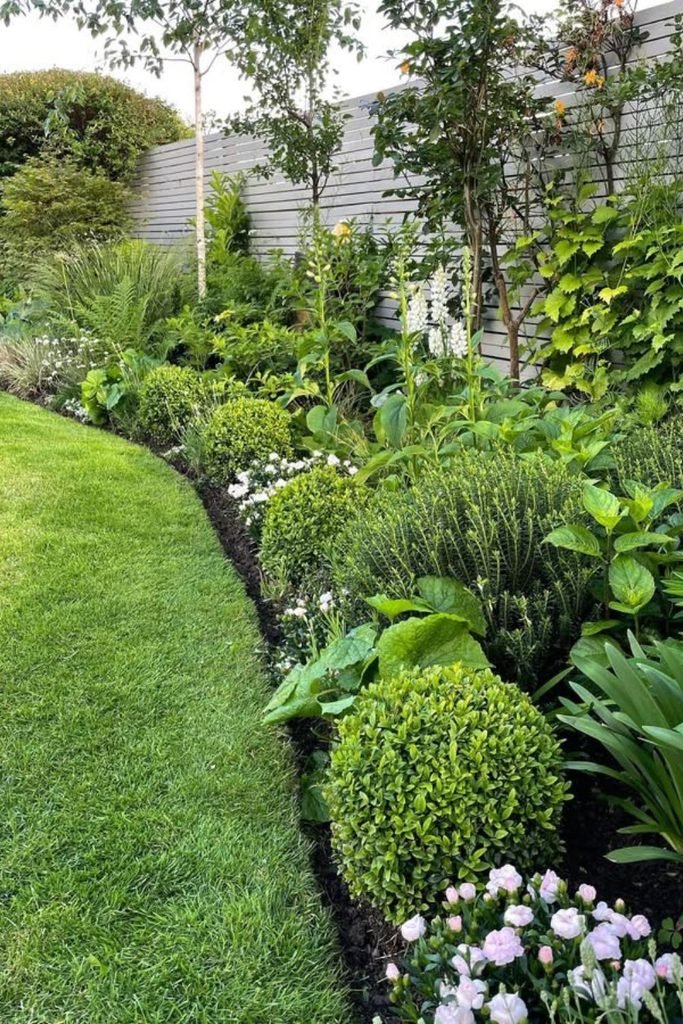
Curved Border
Break away from rigid lawn lines by sweeping the planting bed through a gentle curve, which gives you extra depth for layering.
Place compact round shrubs and little flowers near the grass, leafy perennials in the middle and taller plants or small trees against the fence.
This is especially effective on long borders, as the shifting width of the border helps the eye to move through the garden.
Cut the curve with a sharp edging tool and leave a tiny strip of soil exposed adjacent to the turf so creeping grass may be seen.
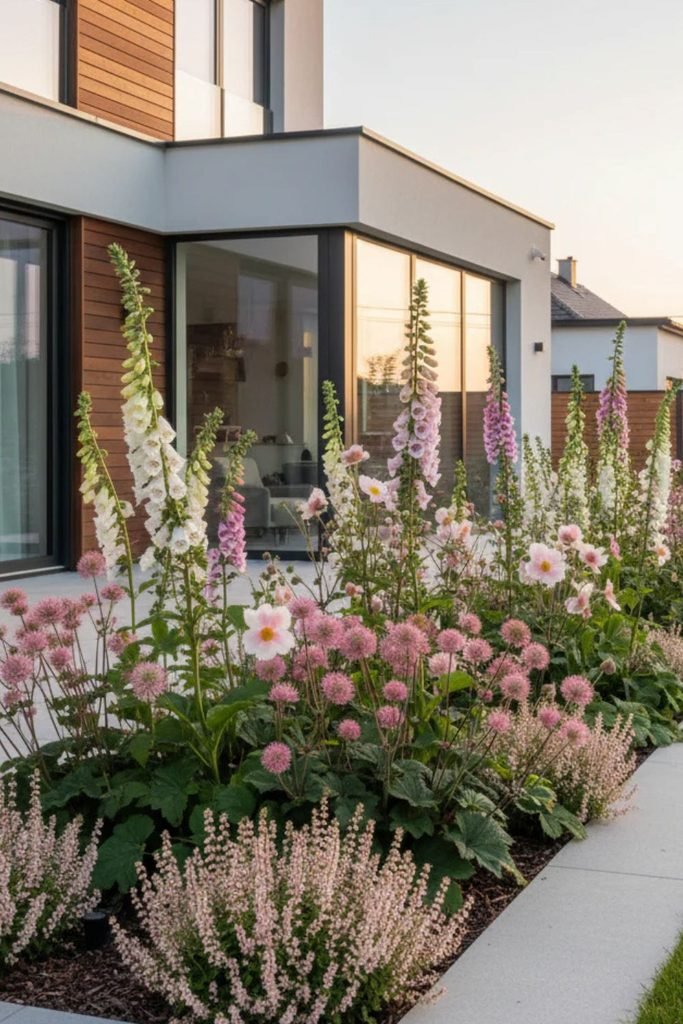
Pastel Border
Keep a long border from feeling busy by repeating one soft color family instead of mixing every flower shade you like.
Pink alliums, pastel foxgloves, airy blossoms and low flowering plants means there are varying heights yet everything still feels connected.
Use the tallest spikes at intervals instead of a complete wall, fill the middle with rounder flowers and bring compact plants toward the walkway.
This type of planting is especially suitable for modern residences as the loose flowers soften straight paving and strong building lines.
Pick plants with overlapping bloom periods so the border will stay pastel colored longer rather than peaking all at once.
Pebble Layers
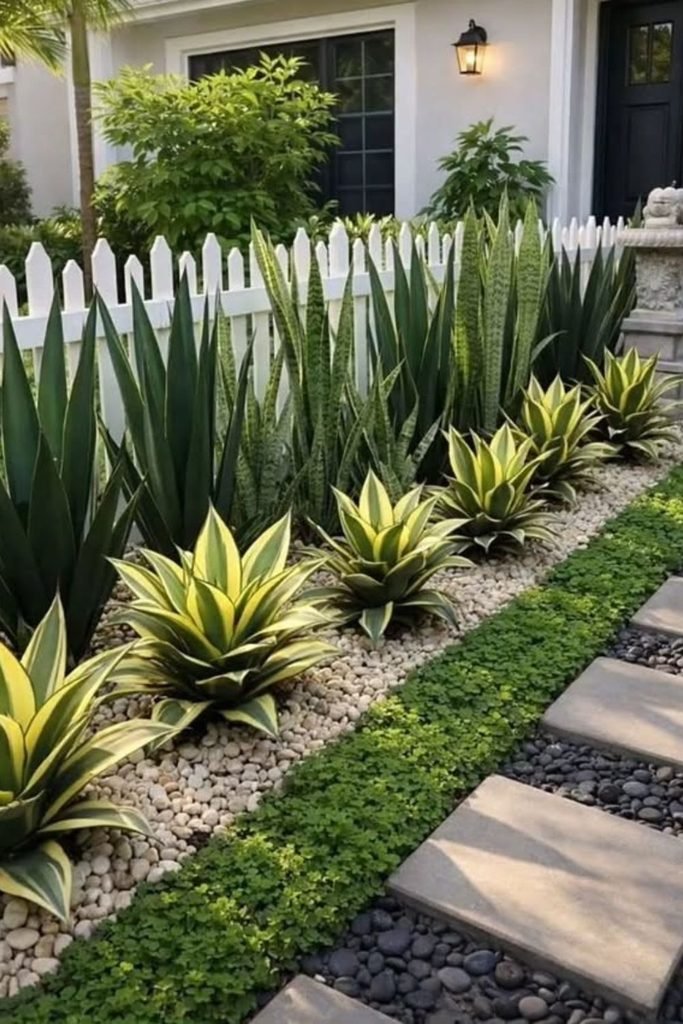
Skip the usual flower heavy border and when you want something cleaner and easier to manage beside a walkway.
Start with tall snake plants along the fence for vertical structure then repeat compact agaves in front so the planting step down naturally toward the path.
Pale pebbles between the plants keep exposed soil covered and make the strong leaf shapes stand out.
This setup works best in warm climates and bright areas where drought-tolerant plants can thrive.
Keep each plant spaced for its mature width, and use a low ground-cover strip along the walkway to soften the transition between the stone bed.
Privacy Border
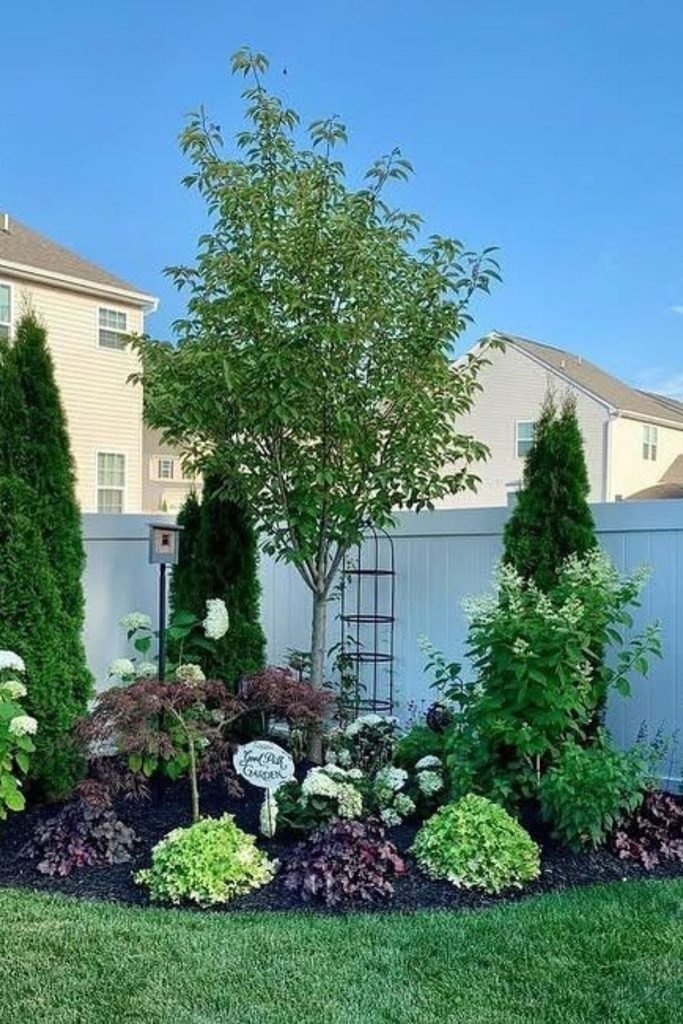
Turn an exposed fence line into a greener screen by mixing upright evergreens with one small ornamental tree instead of planting a solid row of identical shrubs.
Place the tallest evergreens around the rear and layer hydrangeas and compact foliage plants around the bases of the trees to disguise bare soil.
It’s a great option for suburban backyards if you want a bit more solitude without closing in the garden.
Give the tree plenty of area for its canopy to grow and extend the mulch around the bed to reduce weeds and keep a clean line between the planting and lawn.
Rock Border
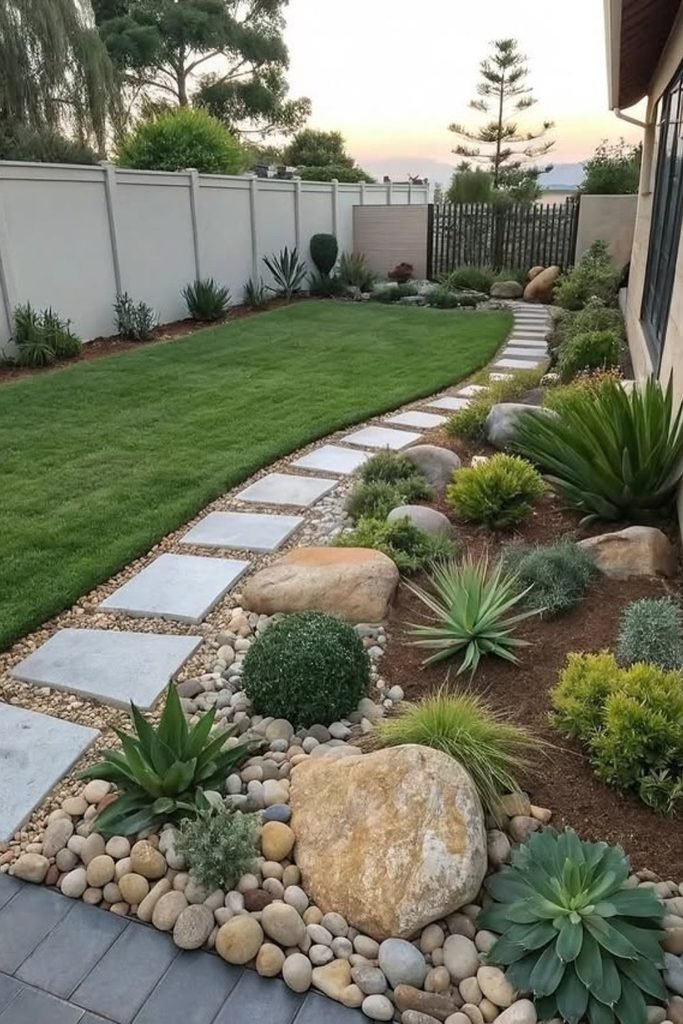
Bring structure to a dry garden edge by using large natural rocks as anchors instead of lining the entire bed with identical edging.
Put the largest rocks in first and then fill in with agaves, dense shrubs, decorative grasses and other drought-tolerant plants around them, leaving enough space.
Narrow gaps can be filled with smaller river pebbles, which also make a tidy transition to stepping stones.
This form is ideal for sunny side yards or modern residences where frequent watering is difficult.
Position taller plants near walls and fences, while smaller succulents can be placed near the pathway to avoid crowding the walking space.
Pebble Curve
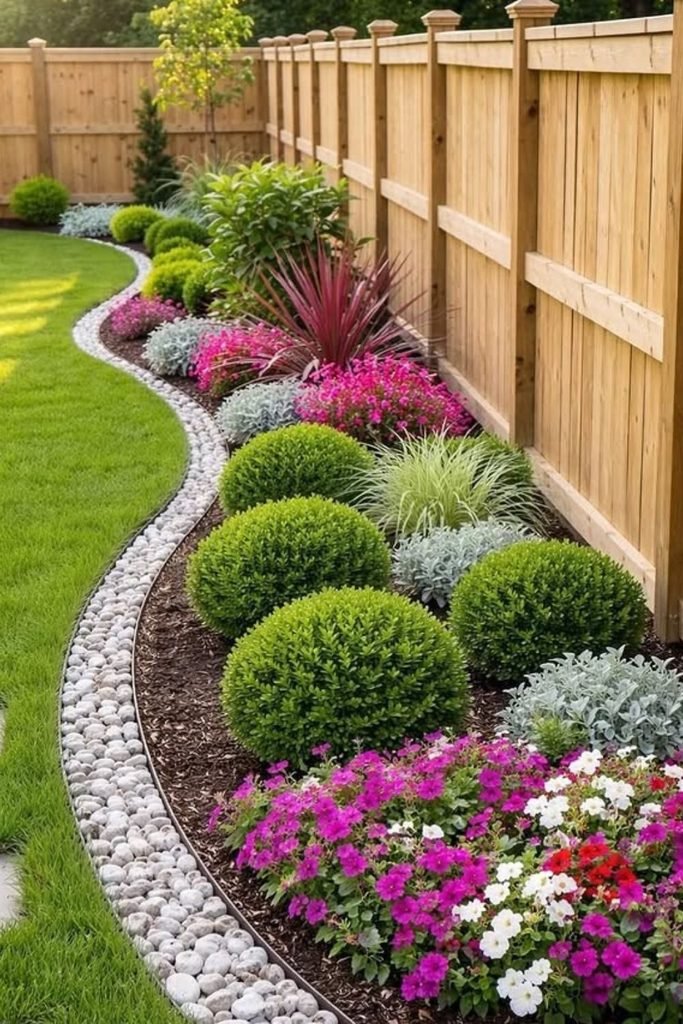
Make a long fence border feel less rigid by running a narrow band of pale pebbles along a gentle curve instead of following one hard straight line.
Use rounded evergreen shrubs repeatedly throughout the bed for year-round structure, then break up the green with silver leaf, attractive grasses.
This is a very useful technique if you want to soften a wooden fence but yet keep the edge of the lawn clean.
Before filling with stones, insert a slender divider under the pebble line, which will help to confine the stones and provide a clearer barrier against grass spreading.
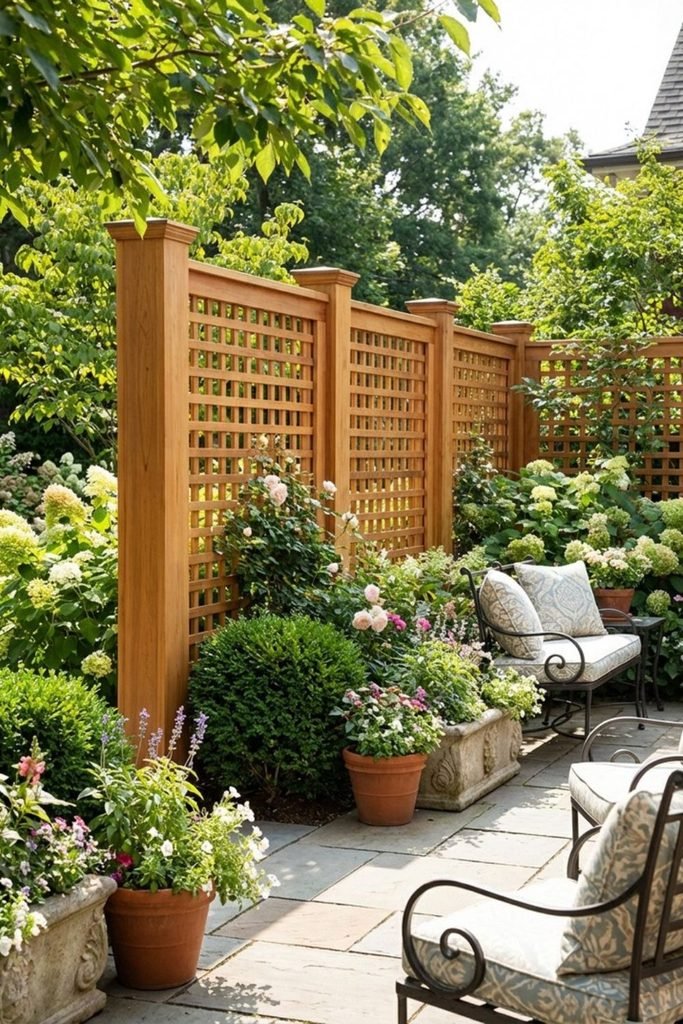
Seating Border
Turn a garden border into part of the seating area by surrounding the patio edge with soft flowers and neatly shaped shrubs.
The hydrangeas offer broader height toward the back and clipped evergreens provide some structure when the seasonal blooms are gone.
Place smaller blooming plants closer to the paving where their color may be appreciated at close hand and use pots to fill in odd spaces.
This is especially good for patios that feel exposed or cut off from the garden. Position plants somewhat behind seats, walking routes, etc.
so mature growth does not crowd the space or make everyday upkeep difficult.
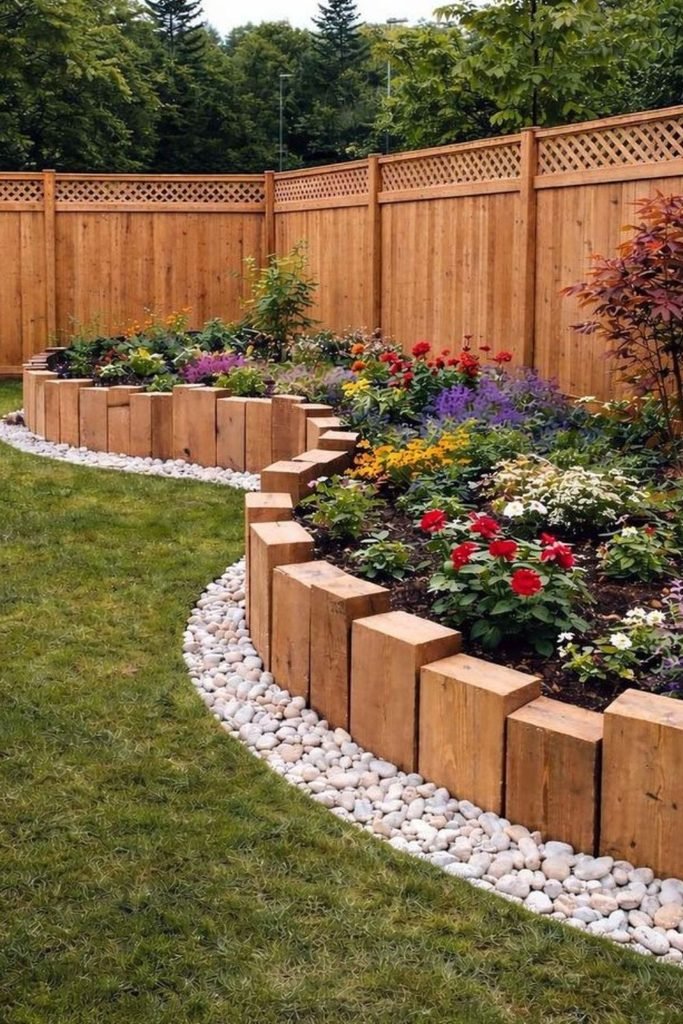
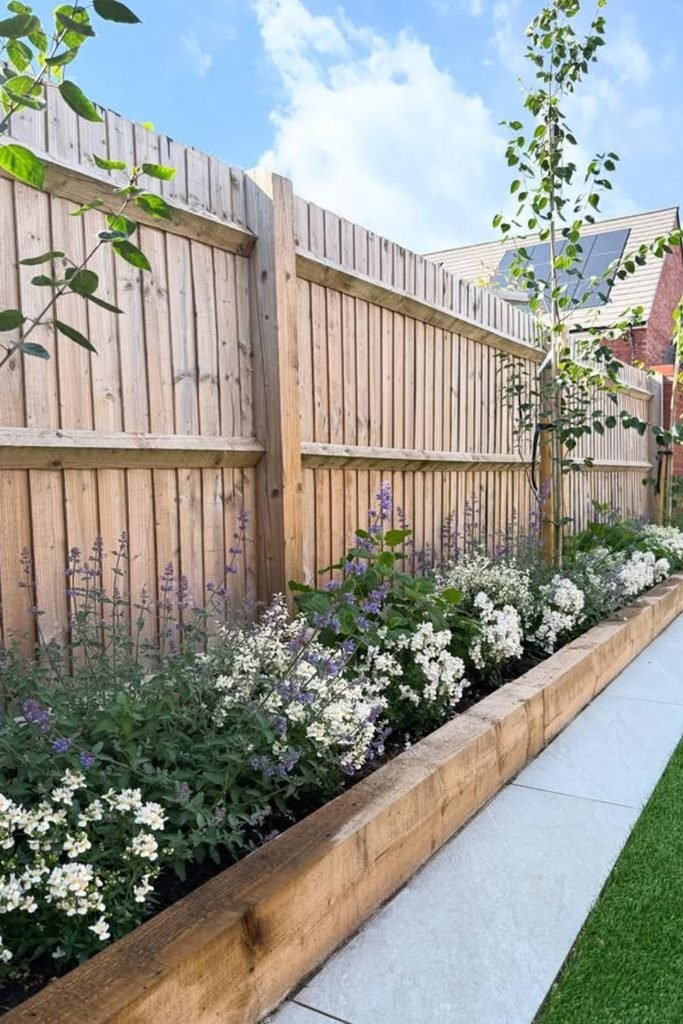
Timber Border
Raised timber blocks can solve two problems at once when your border needs stronger definition and better separation from the lawn.
Lay the big pieces of wood along the curve on the vertical, altering the height slightly to give a relaxed edge rather than one flat wall.
Fill the raised bed with colorful perennials and compact shrubs, placing taller plants toward the fence so smaller flowers can be seen.
Again a small strip of pale pebbles outside the timber provides a barrier between soil and grass and makes cutting easier.
This technique is particularly effective on gently sloped yards where a standard cut edge struggles to retain soil.
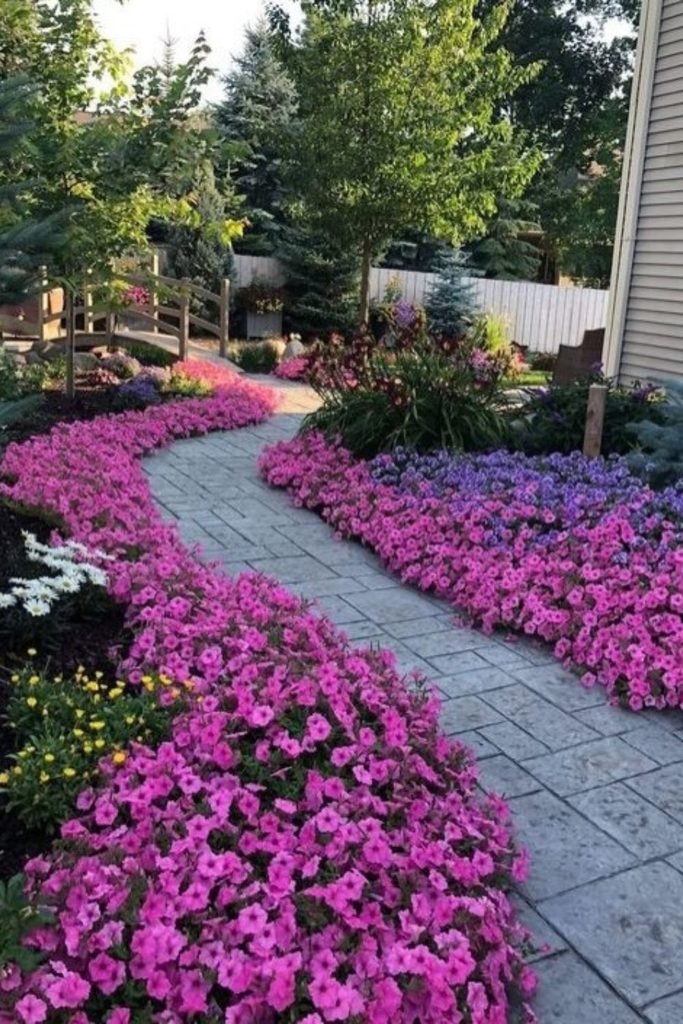
Flower Ribbon
Let low-growing flowers trace the path when you want strong color without hiding the rest of your border.
Plant one compact flowering species in big clusters on either side of the walkway, and set taller perennials, shrubs and small trees further back.
Repeat the same bloom to make a ribbon effect that carries your eye across the garden and avoids a random look to the planting.
This technique works particularly well with curving paths since the flowers naturally fit each curve.
Leave plenty of space beside the paving to allow for mature growth, snipping any stems that start to sprawl over the walking surface.
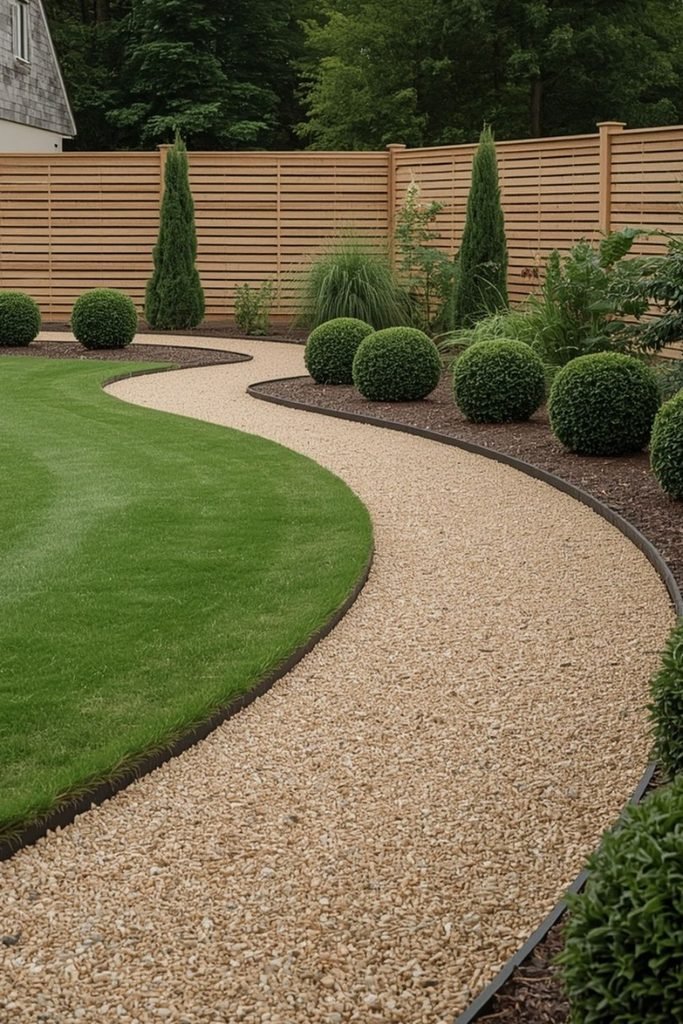
Gravel Divide
Create a wider break between lawn and planting when you want grass control to become part of the garden design.
Run a curved gravel path between the turf and border, then add thin edging on both sides to stop stones, dirt and grass from mingling.
The planting is given a tidy rhythm by repeated rounded shrubs, and height is added without crowding the fence line by upright evergreens.
This is a nice design for bigger backyards where a narrow edge might visually get lost.
Make sure the gravel layer is deep enough for normal foot traffic and cut lawn runners when they reach the edging instead of letting them cross underneath.
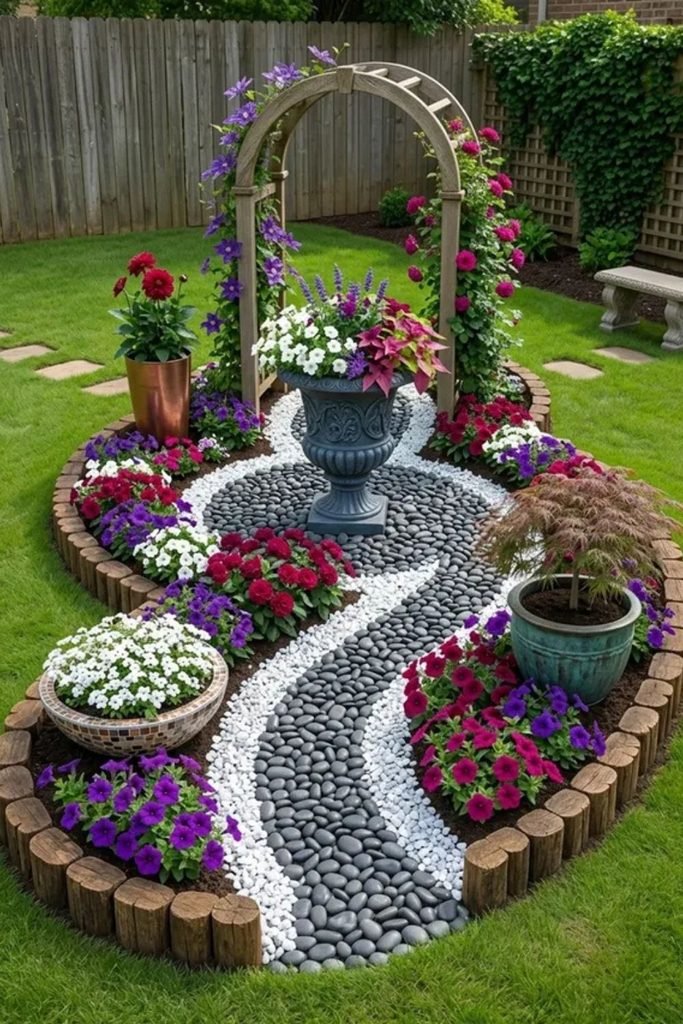
Island Border
Turn an open patch of lawn into a focal point by building a freestanding border that can be enjoyed from every side.
Make the outer curve with short timber edging and then run smooth pebbles down the middle to provide contrast and split the planting into smaller pockets.
Keep vibrant flowers low along the border and add height in the middle with an arch, attractive planter or compact ornamental tree.
This design works best where you have enough lawn to stroll around the bed with ease.
Fit a good barrier underneath the timber edge so grass roots do not slowly creep into the loose planting soil.
Hydrangea Border
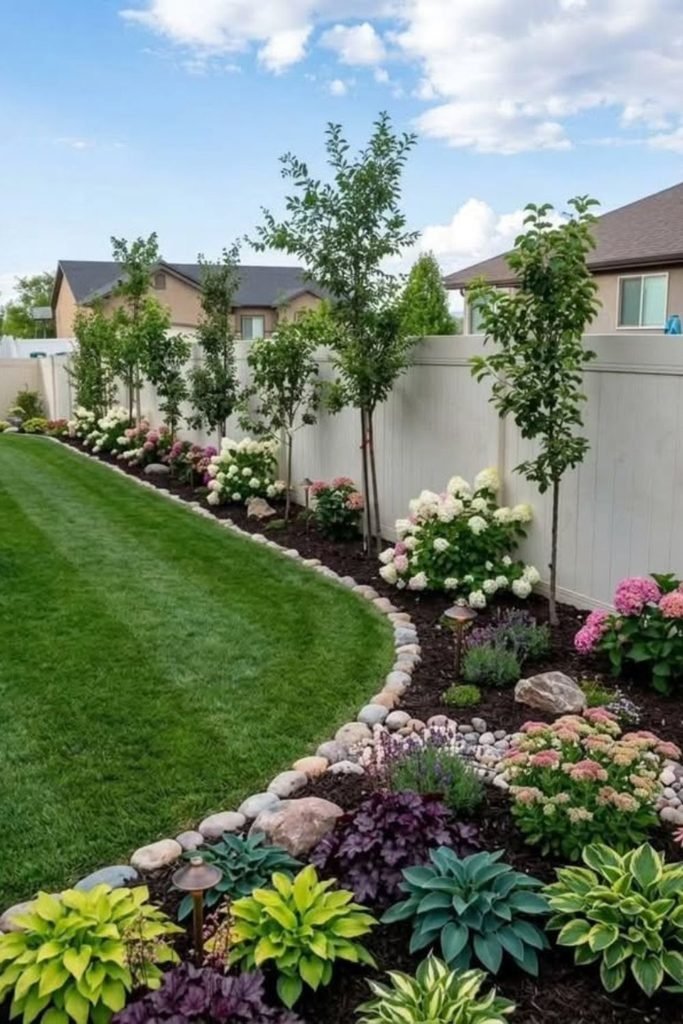
Stretch seasonal color along a plain fence by repeating hydrangeas between small ornamental trees instead of filling the entire bed with one hedge.
In the larger front parts, hostas and smaller perennials will fit in well, with pink and white hydrangeas creating richer flowering pockets behind.
This pattern is great for the long back boundary, the repeating trees give height and there is enough open room to plant flowers below.
The turf side is finished with round stones to make the curved edge easier to follow.
Ensure young trees and shrubs are given plenty of space around them so that the border can fill out naturally as they grow without getting congested later on.
Pathway Border
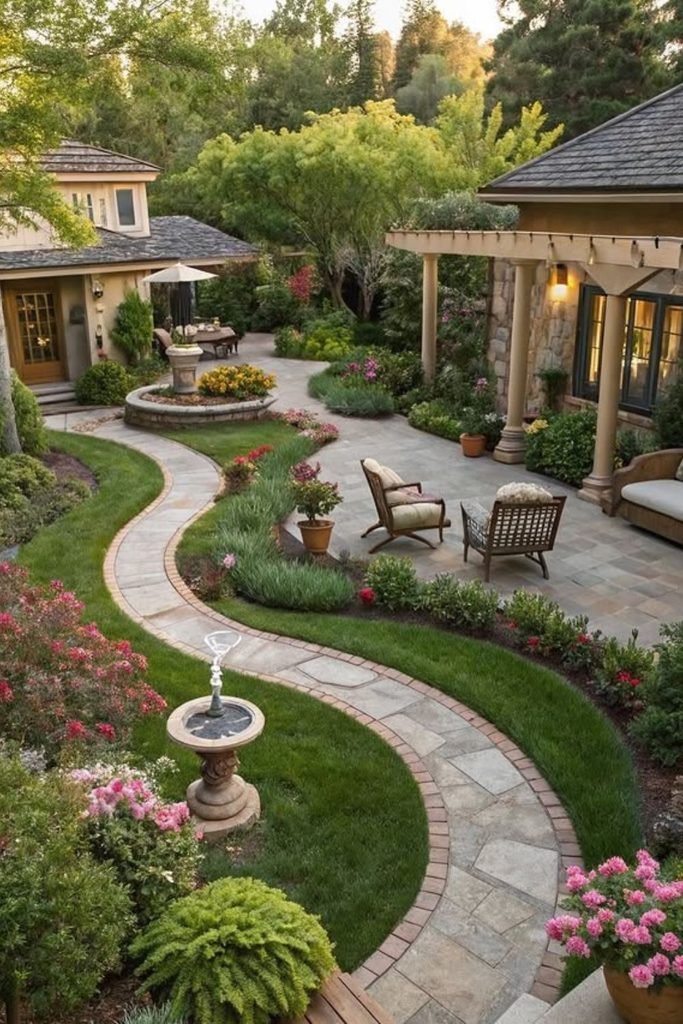
Use a winding path to decide where your borders begin instead of squeezing plants into leftover spaces afterward.
Along the curves, use modest flowers, lavender and compact shrubs and let larger plants fill the deeper parts away from the concrete.
This works particularly well around patios and dining areas since the planting makes a softer transition between lawn, walkways and hard surfaces.
Make sure plants along the route are kept low enough so they don’t flop over the paving as they grow.
A clean edge of brick or stone also offers you a neat mowing line and helps to stop grass from slowly creeping into the beds.
Formal Border
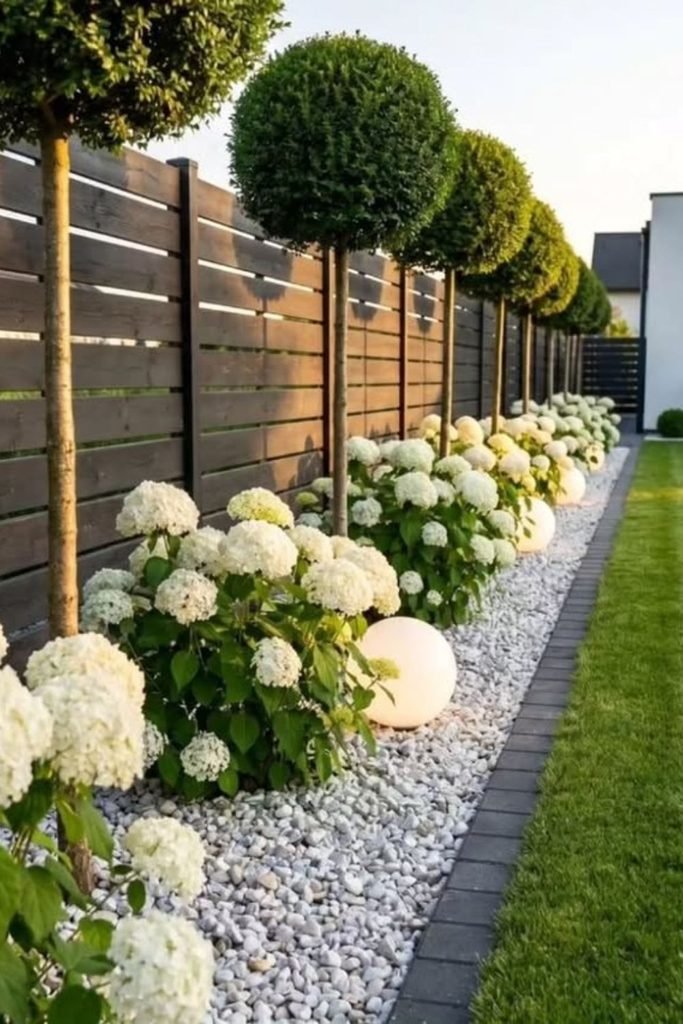
Bring order to a long boundary by repeating the same plants at steady intervals rather than changing varieties every few feet.
Line up cut standard trees for height, then plant white hydrangeas underneath to ensure the border is simple but still has lots of seasonal flowers.
Pale gravel surrounding the plants maintains the ground looking clean, with a black brick edge giving a firm separation from the lawn.
This style works especially well with modern fences and square yards where straight lines are already dominant.
Allow adequate space for each hydrangea to grow, and prune tree canopies uniformly if you want the formal rhythm to remain obvious.
Raised Border
Narrow spaces beside a fence become much easier to plant when you lift the soil inside a simple timber frame.
Dig the bed deep enough for good roots, then repeat small trees around the back, weaving white flowers, purple perennials and softer foliage between.
Adding the border makes the planting more prominent without taking any extra width from the lawn or walkway.
This is particularly useful along side yards and lengthy boundary walls where ground level beds can visually disappear.
Plant with thin mature spreads so that the border may be kept managed and keep the timber a little back from the fence for access.
Fountain Border
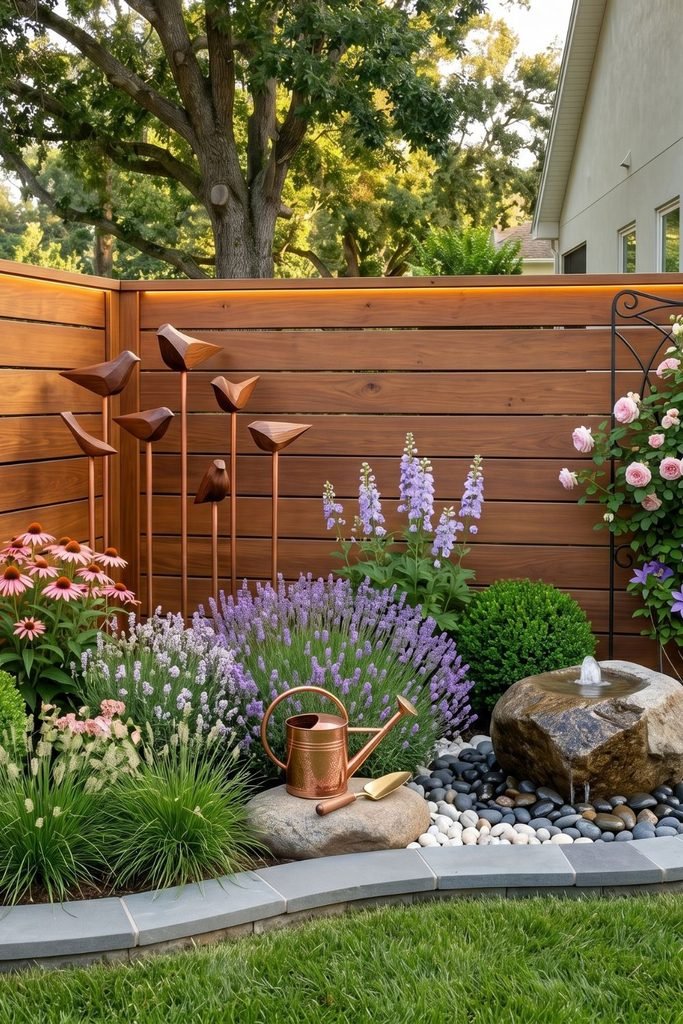
Give a quiet garden corner more purpose by building the planting around one small water feature instead of adding more flowers everywhere.
Add a low fountain to a bed of smooth pebbles, surrounded by lavender, decorative grasses, clipped shrubs, and a few taller blooms for height variation.
Climbers on a fence can carry color upwards without occupying much ground area.
This design is especially effective next to patios or lounging areas where you can hear the rushing water.
A firm stone edging along the lawn side will retain the pebbles and soil and provide a defined line that grass cannot readily cross.
Potted Border
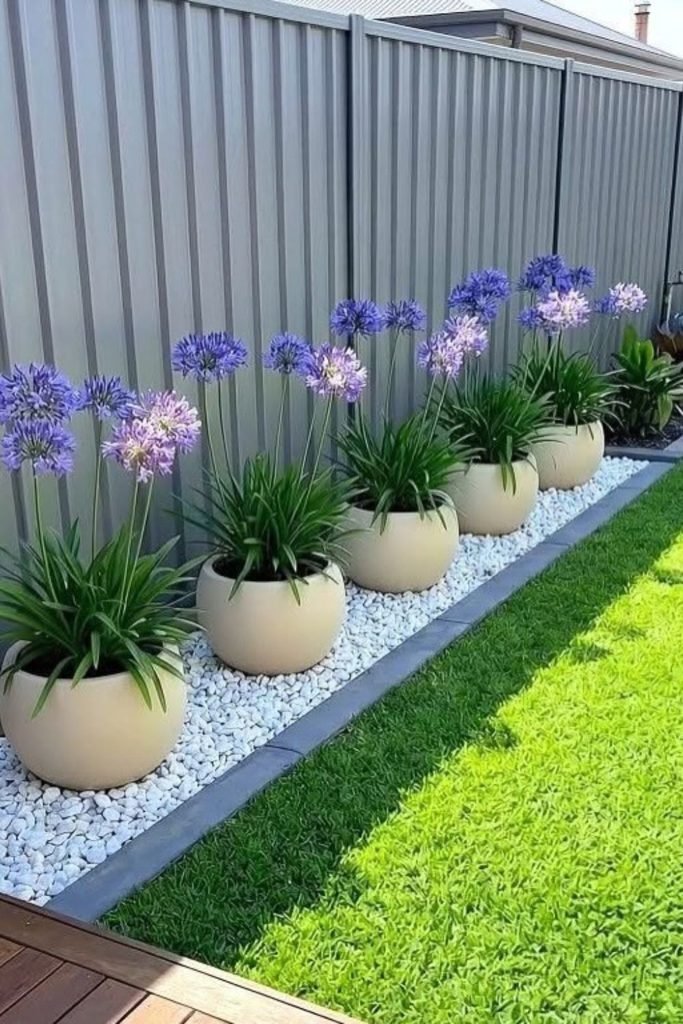
Skip digging a full planting bed when you want a narrow fence line to stay neat and easy to change.
Repeat with matching circular pots filled with agapanthus or another erect blooming plant then place them over pastel ornamental gravel for a tidy base.
Maintaining the same container and plant design generates rhythm along the fence without seeming overwhelmed in the little space.
This technique works especially well behind metal fencing, patios or narrow side yards where planting is hard to get established permanently.
Provide a solid border strip between the gravel and lawn so that stones stay confined and grass runners can not easily spread beneath the pots.
Cottage Border
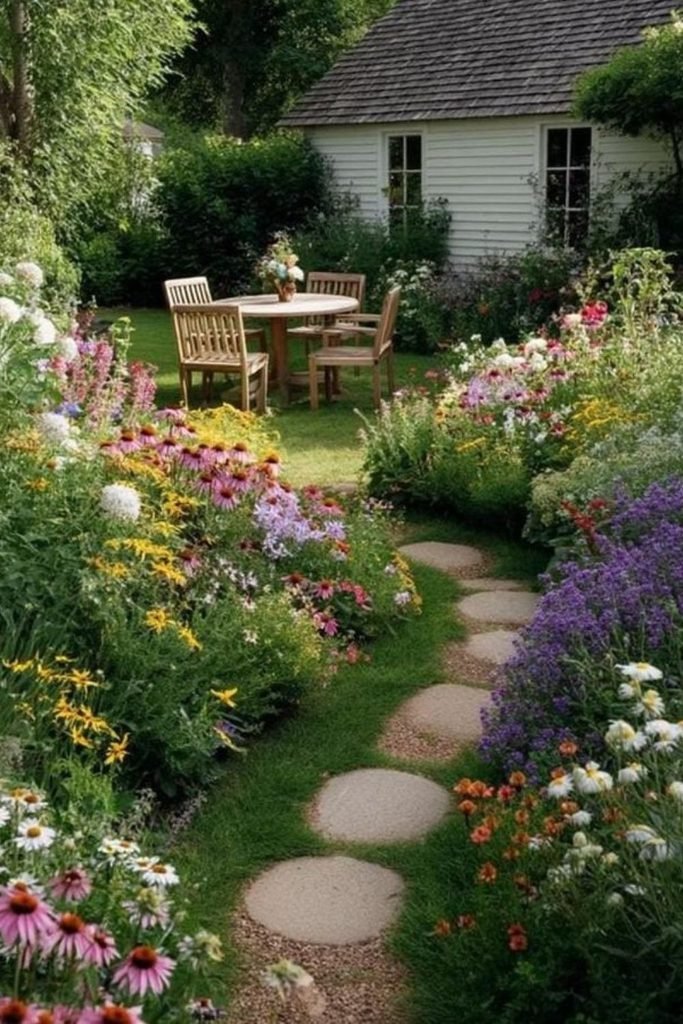
Forget perfectly spaced rows if you want a border that feels full, relaxed, and naturally established.
Cluster daisies, coneflowers, catmint and other flowering perennials in generous groups. Let plants overlap slightly as they age.
And keep the taller blooms on the outside margins, and lower plants next to the stepping stone path so that the path is visible without looking sharply separated from the garden.
This technique works nicely around casual seating areas when you want flowers to envelop the space rather than sit at one boundary.
Pick plants that bloom at different times so fresh flowers can replace older flowers all through the growing season.
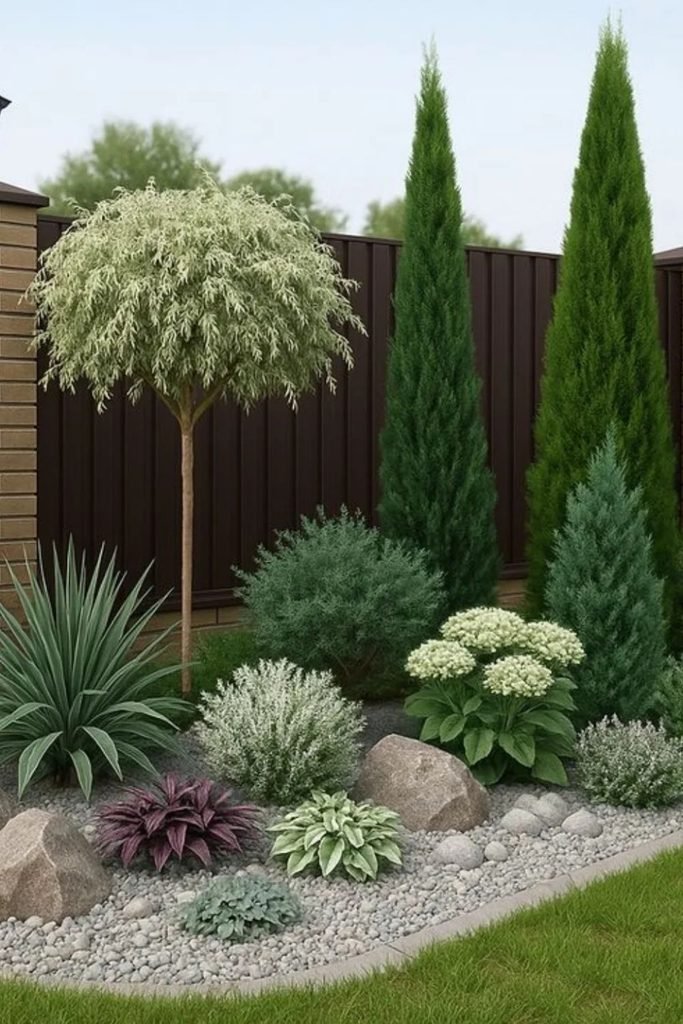
Evergreen Layers
Build a border that still looks complete after flowering season by making evergreens the main structure rather than relying on blooms for everything.
For height, plant narrow conifers along the fence then staggered rounder shrubs, silver leaves and one small ornamental tree through the middle.
Rocks and low plants at the front allow higher greenery settle into the bed naturally rather than looking like a row of trees.
This mix is good for exposed boundaries where year-round screening is important.
Use gravel between plants to avoid bare soil but allow enough open area around the base of tree and shrubs for watering and future growth.
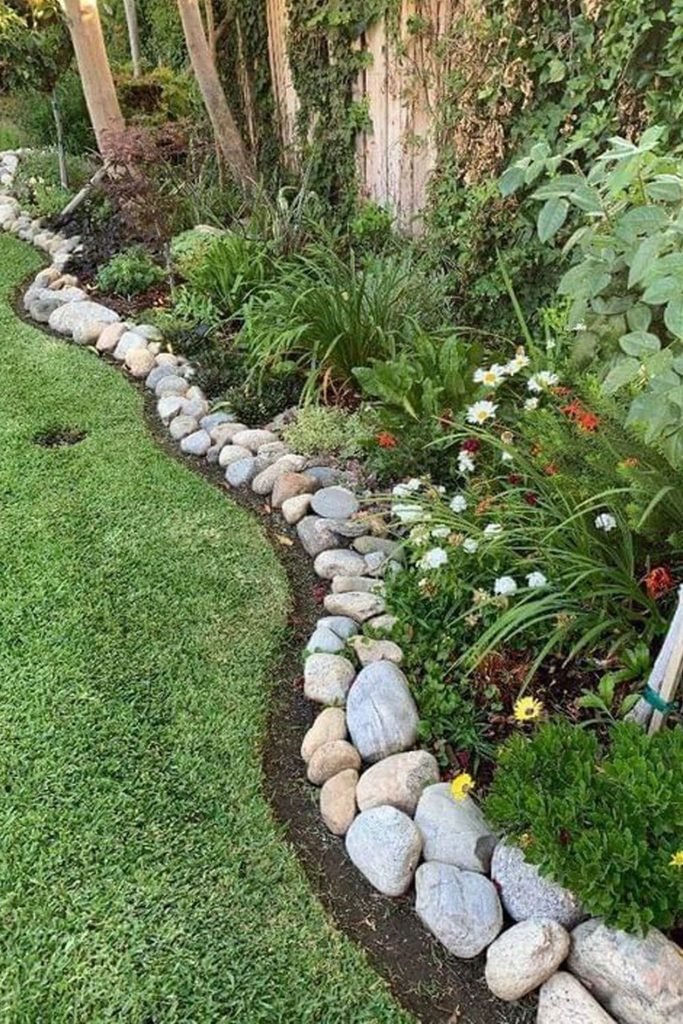
Riverstone Edge
Loose river stones are a simple choice when you want natural border that follows curves without looking too formal.
Then arrange mixed-size stones close together so that the edge feels continuous rather than dispersed.
On the wider curves, put the bigger stones and fill in odd spaces with smaller stones.
This approach works best around casual fence line beds filled with grasses, shrubs, and relaxed blooming plants.
If you can, leave a thin soil break between the stones and turf, as it makes spotting creeping grass simpler.
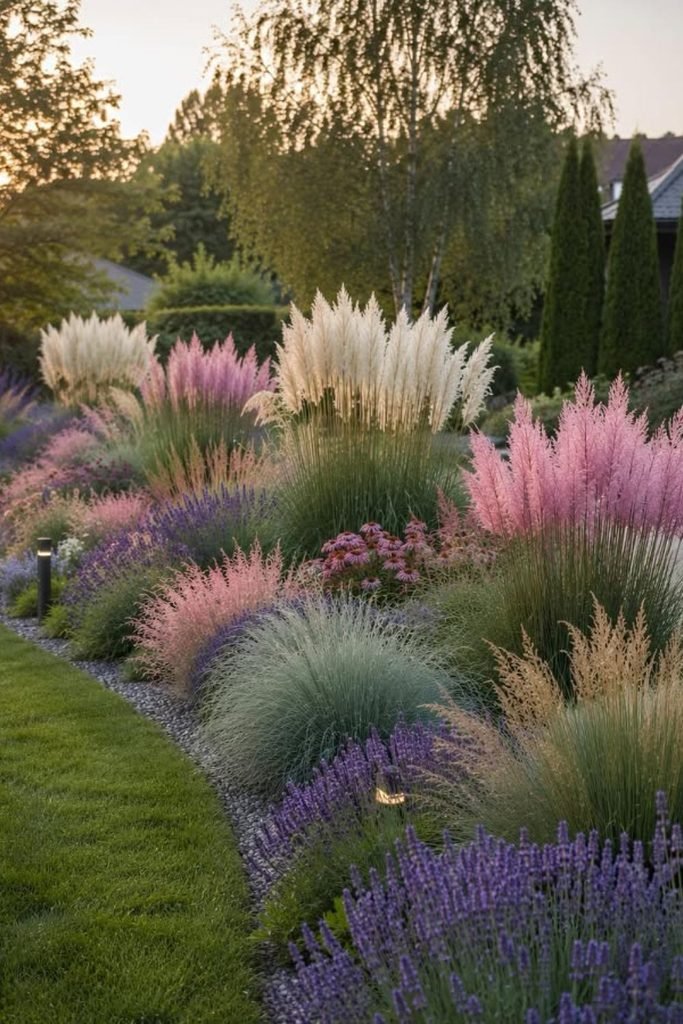
Grass Border
Movement can make a long garden edge feel alive, especially when flowers alone would look too flat or repetitive.
Use multiple heights of ornamental grasses, placing taller plumes in the center and softer mounds around the lawn.
This combo is great in wide borders where the plants have room to move without spilling heavily into the lawn.
Don’t put a different grass variety everyplace, but repeat a few grass types and space properly at planting time so each clump can attain its own natural shape.
FAQs
How Wide Should A Garden Border Be?
Most garden borders look better if they are deep enough for more than one row of plants.
If you have the space, construct a bed wide enough to put low plants toward the front, medium growers in the middle and taller shrubs or grasses.
For narrow yards choose compact plants and vertical growth so the border still feels layered without overwhelming the lawn.
How Can Garden Borders Stay Attractive Year Round?
Build the border around structure plants before adding seasonal flowers. Evergreen shrubs, attractive grasses, small trees.
And plants with fascinating leaves will prevent the bed from looking barren when blossoms disappear.
Combine with spring, summer, and fall flowering plants and allow selected grasses or seed heads to stand into the winter when appropriate.
