
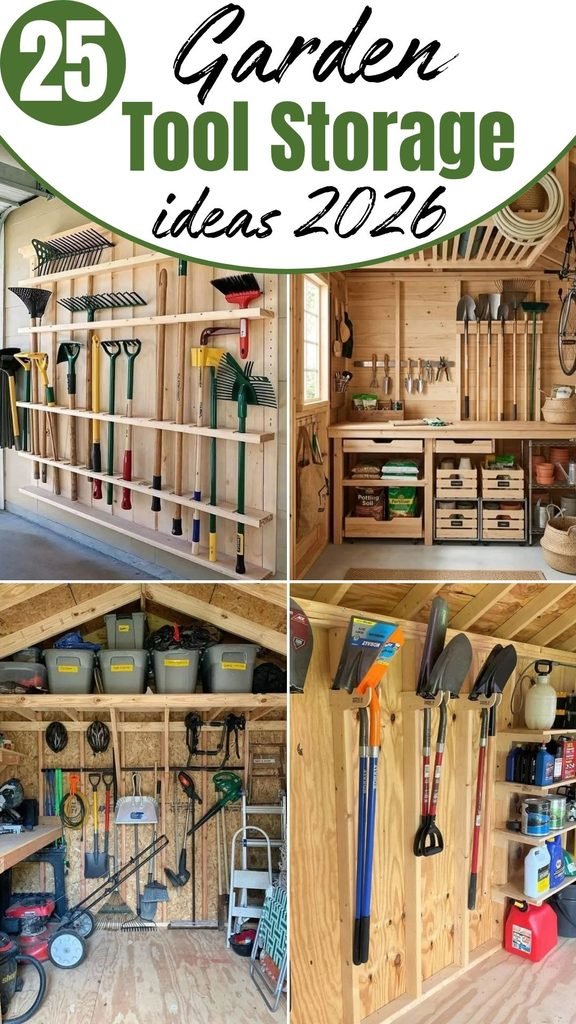
25 Garden Tool Storage Ideas for 2026
Bring a rake from the corner and two shovels and a hoe come tumbling down with it.
And then when you need your pruning shears they’re nowhere to be found.
If your shed or garage continues to look like this, extra hooks and boxes won’t solve the problem.
In this article, you’ll find 25 garden tool storage ideas to clear the clutter, and save space.
Let’s jump in!
How Do I Stop Garden Tools Becoming Jumbled Together?
Don’t just cram all your equipment into one spot. Start by separating apart the tools.
Hang long-handled tools such as rakes, shovels and hoes on individual hooks or in separate slots so heads and handles don’t snag on each other.
A pegboard, shallow drawer, basket or tool caddy works nicely for pruners, gloves, trowels and other things you use often.
In fact, if you can see and retrieve each object without having to first move something else, you are more likely to return it.
Keep everyday tools handy, and store seasonal or rarely used goods higher up.
Your storage will stay more organized for much longer when every tool has one simple place to return to.
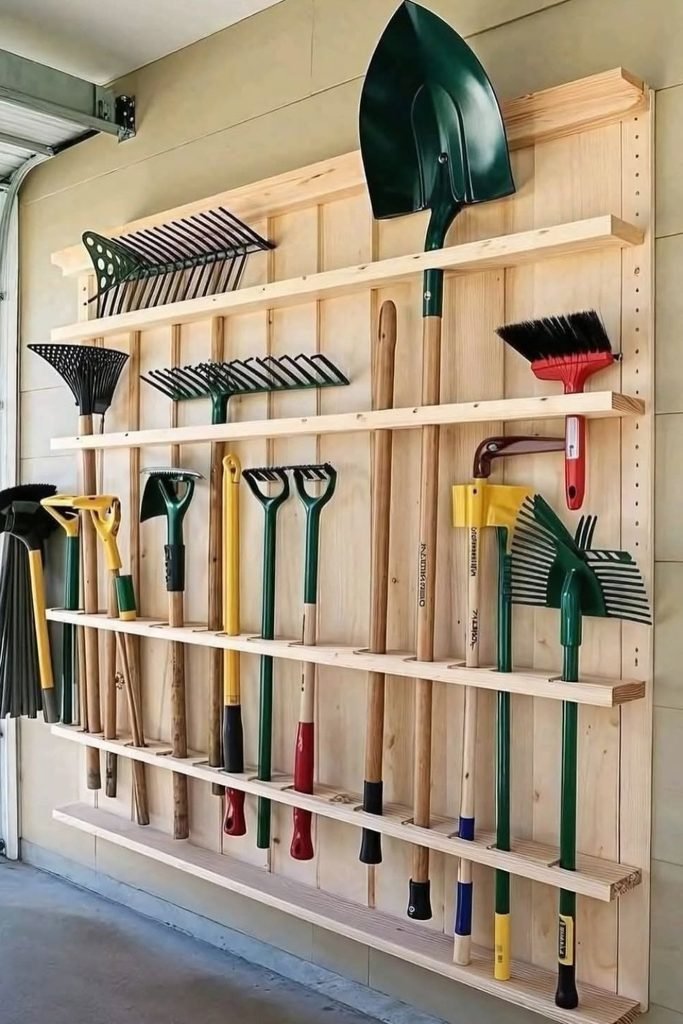
Wooden Slots
Give every long-handled tool its own narrow slot, and you won’t have to untangle rakes and shovels whenever you need one.
Build a simple wooden frame against an empty garage or shed wall, then add horizontal boards with openings sized around the handles.
Leave extra room between wide rake heads so they don’t overlap or catch. Keeping heavier shovels lower also makes them easier to lift out safely.
This setup works especially well when floor space is limited because the entire collection stays upright visible and ready to grab without adding bulky cabinets.
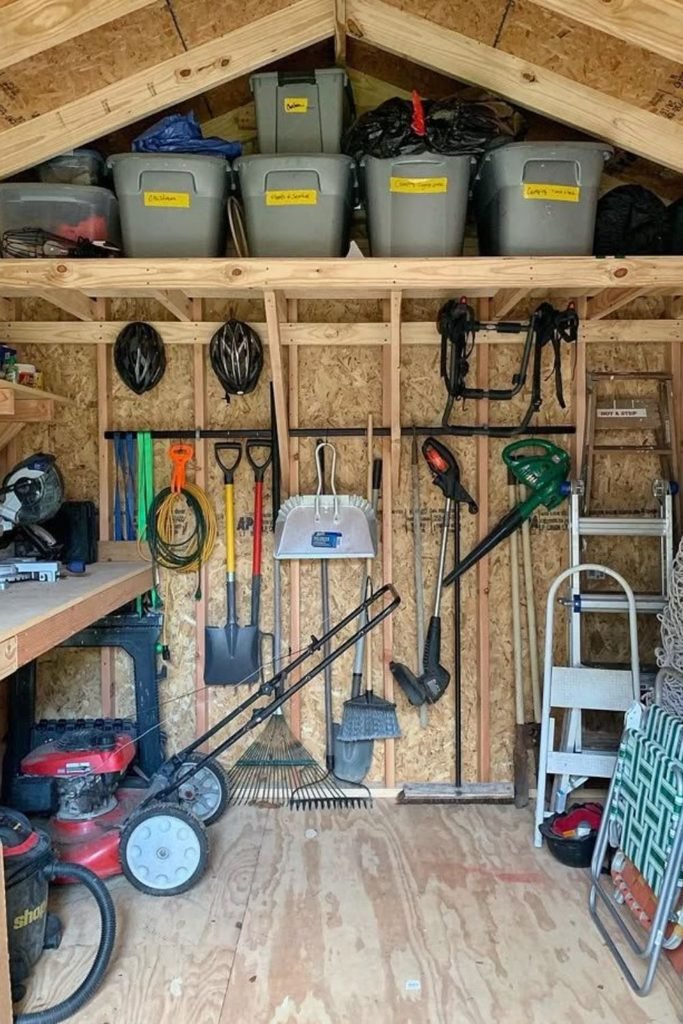
Storage Loft
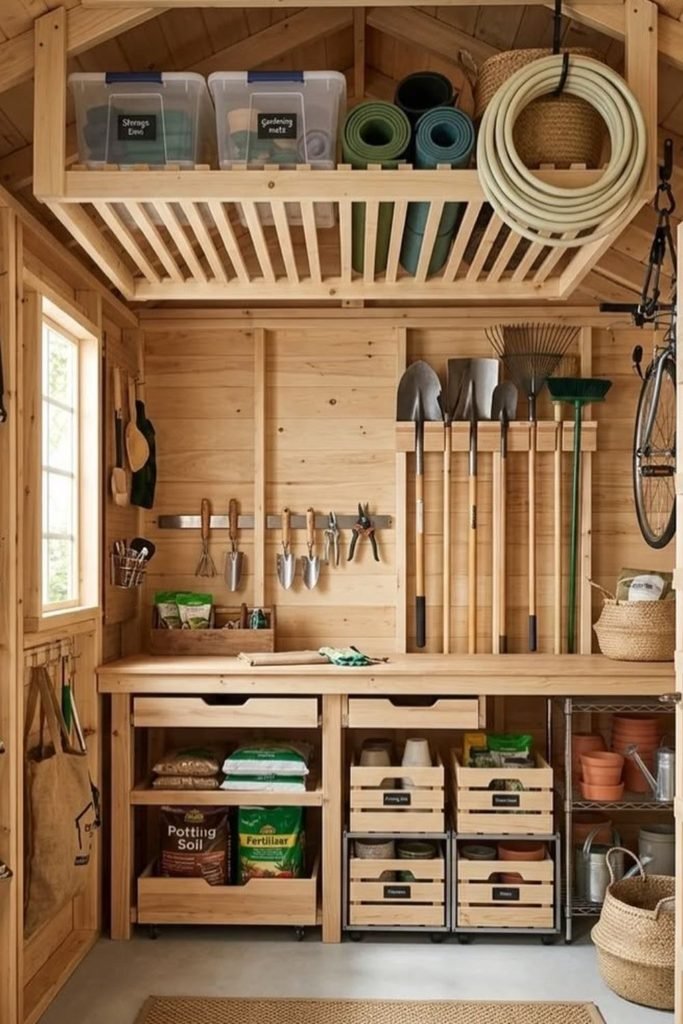
Save the easiest to reach parts of your shed for tools you use every week, then move seasonal supplies overhead.
A strong loft shelf is handy for storing coiled up hoses, extra containers, kneeling cushions and other light items that tend to pile up in your work space.
Underneath, wall racks for long-handled tools and smaller hand tools near the potting bench for easy access.
This tiered structure works well in small sheds as it makes the most of the whole height of the room and leaves the floor free for soil bags, pots and heavier gardening materials.
Shovel Hangers
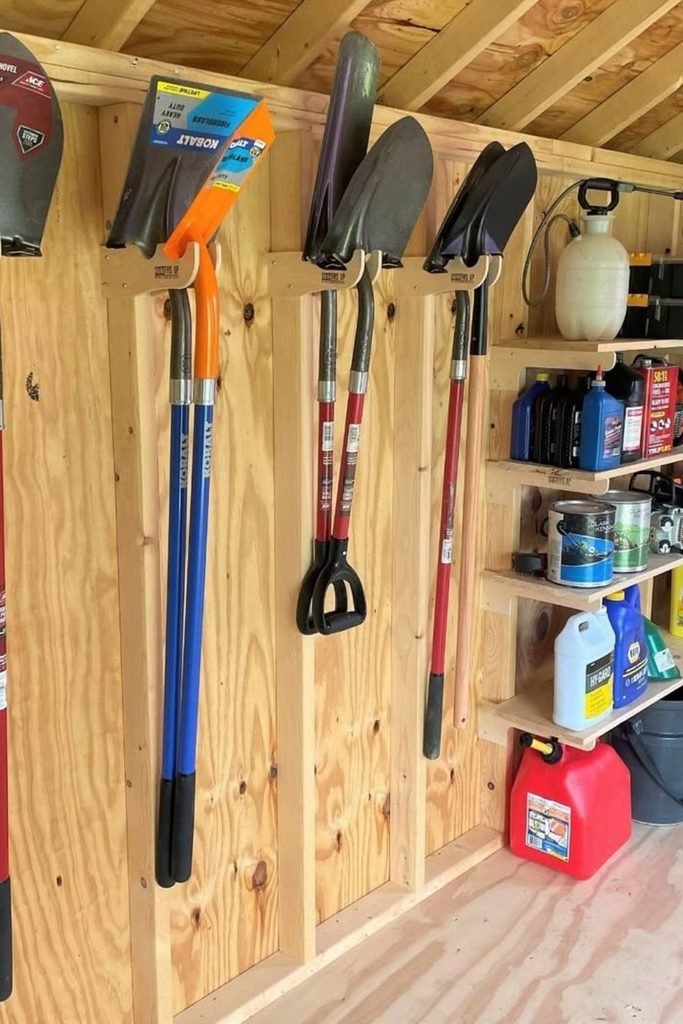
Stop stacking shovels blade-to-blade in a corner where pulling one out can bring the whole pile with it.
Mount one wooden holder at a time at a height that will allow each shovel to hang freely, with enough space between blades so that they do not bang together.
Combine the hanging part with surrounding shelves for toolboxes and other garden items so one shed wall performs numerous storage chores.
This is really handy when you have more than one digging gear as you can see quickly the size you need and take it back without having to move anything else.
Wall Zones
Mixed equipment becomes much easier to manage when one shed wall is divided by purpose instead of filled wherever something fits.
Keep a separate area for heavy powered equipment, so cords and handles don’t get tangled.
Use strong rails or individual hooks, with space enough to lift each article straight off.
More storage can contain labeled bins of seasonal items you seldom require.
This works especially well in busy sheds that contain gardening, lawn-care and domestic equipment, since it gives every category a clear home.
Pallet Station
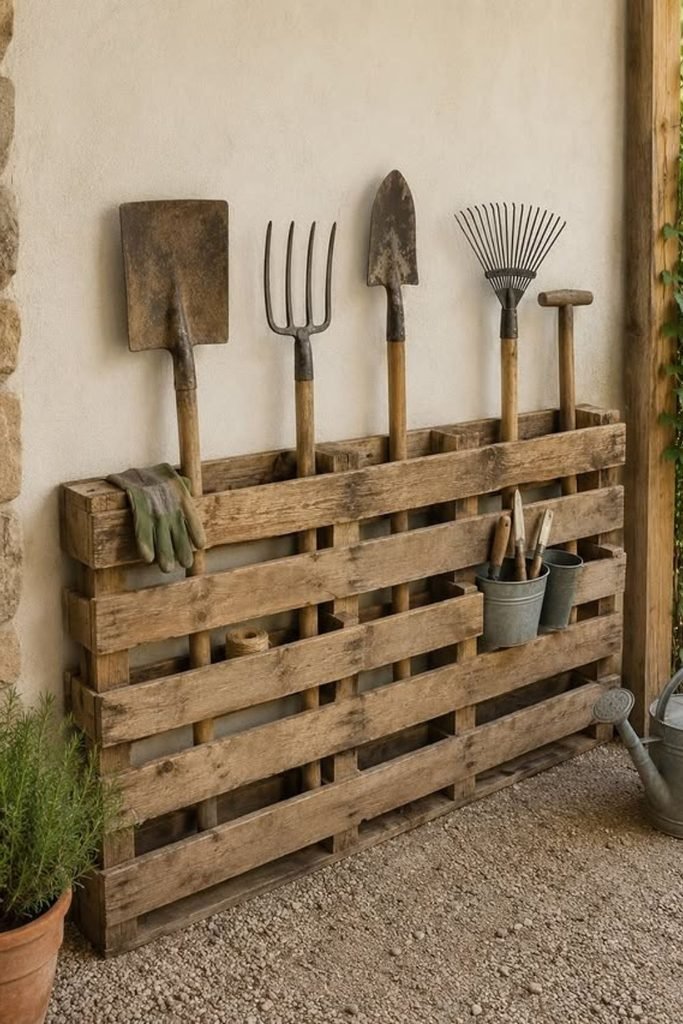
Turn a spare pallet into a grab-and-go tool station when you need storage close to the garden but don’t want a full shed.
Place it upright against a covered wall, using the natural spacing to separate off shovels, pitchforks, rakes and other long-handled items.
Small metal cups or containers can house trowels and other hand equipment. Open slats give handy places for gloves and rope.
Store the pallet beneath a porch, lean-to or other protected spot to keep rain off wooden handles and metal heads.
It’s a cheap method to offer a number of tool sizes their own spots without taking up a lot of floor space.
Task Zones
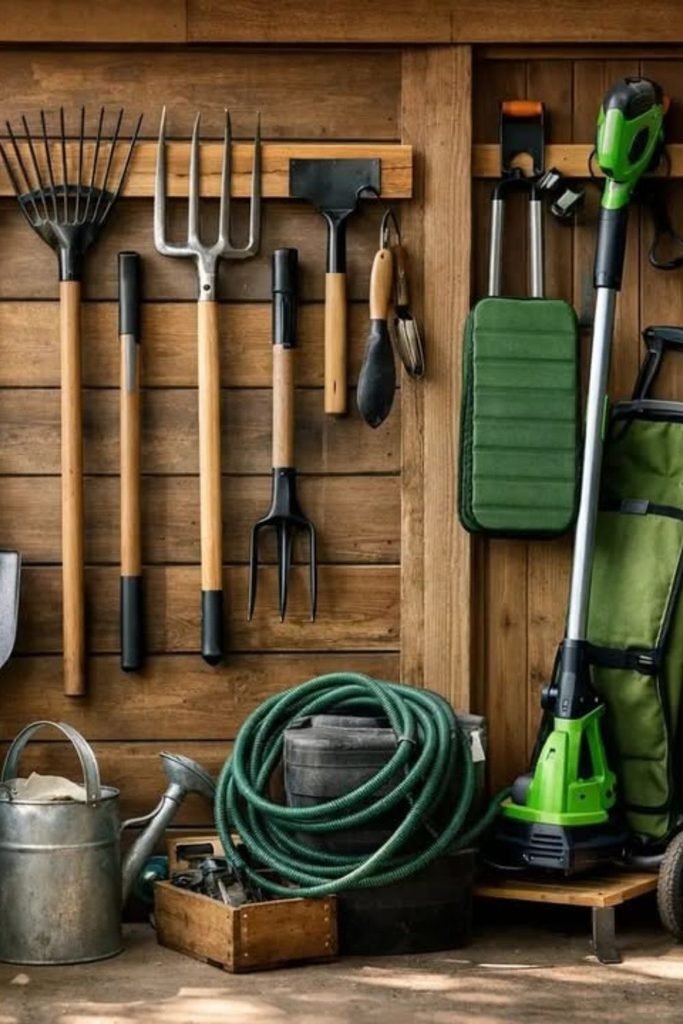
Keep tools grouped by the job they help you finish, and your storage wall becomes much quicker to use.
Have a separate space for watering gear and keep powered equipment away from hand tools to avoid tangles of wires and handles.
Group digging tools.
If you’ve got lots of different kinds of equipment, a simple wooden rail with robust hooks is a good choice for the inside of a shed.
Place the most utilized items at eye level and heavier or bulkier equipment lower.
You’ll spend less time searching for things, as everything you require for pruning, watering or digging is in its own clear zone.
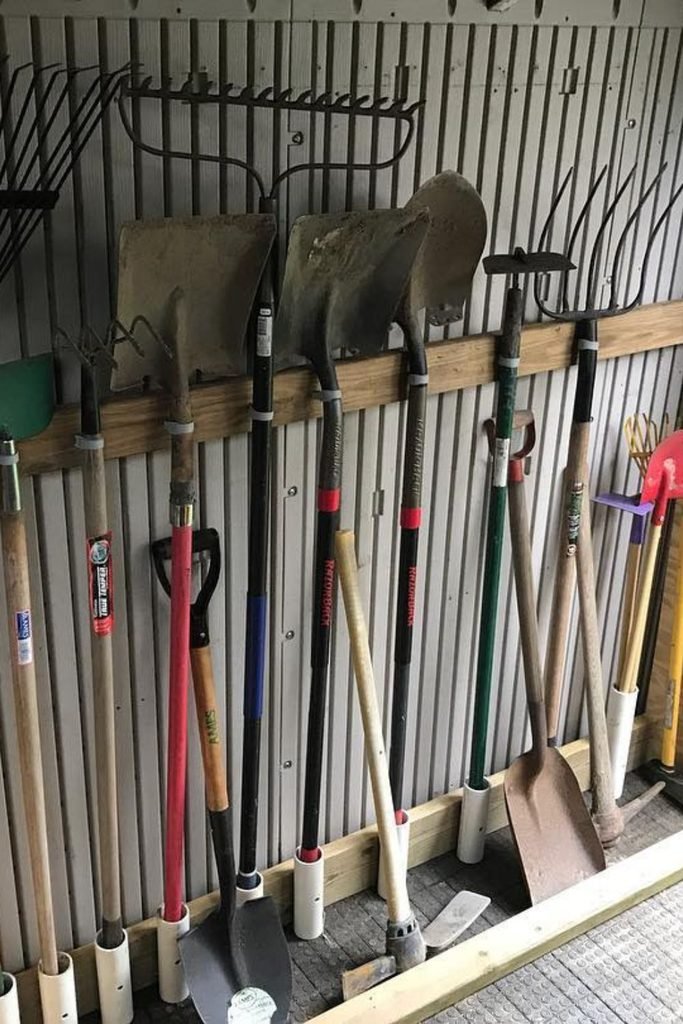
Pipe Holders
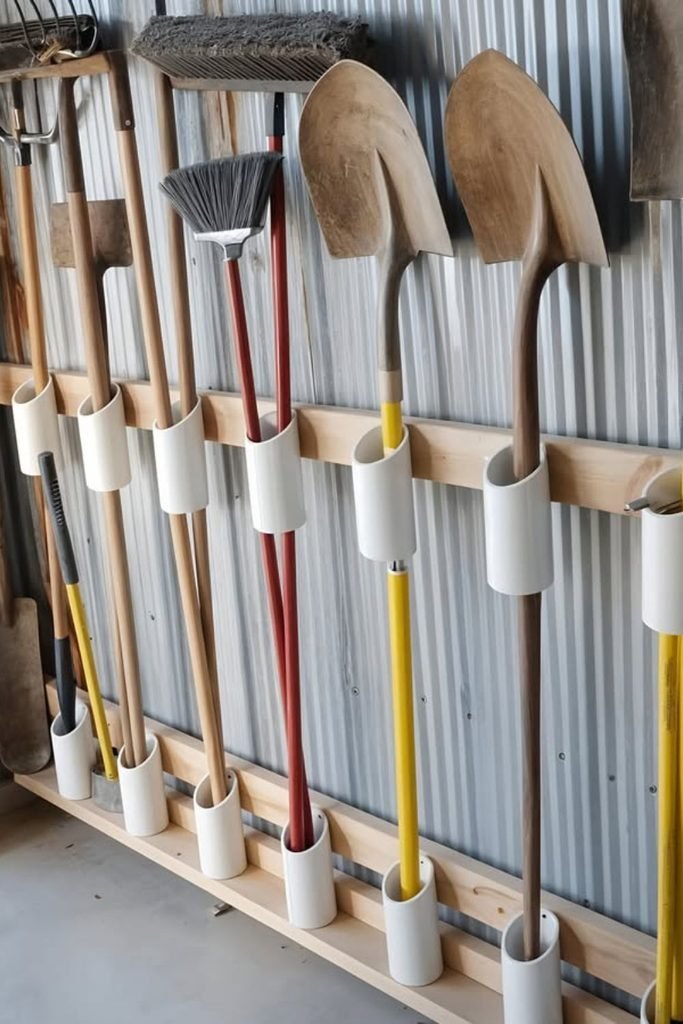
PVC pipe gives each long-handled tool a fixed parking spot without needing a complicated rack.
Cut wide pipe into small parts, smooth edges and fasten each piece to stout horizontal boards at two heights so handles stay vertical.
Don’t make all the gaps the same, but space the holders according to the thickness of your shovels, rakes, forks and brooms.
This works particularly well on unfinished garage or shed walls if you’re looking for an inexpensive DIY system.
And, having each handle distinct means you can pull out one tool without knocking its neighbors onto the floor.
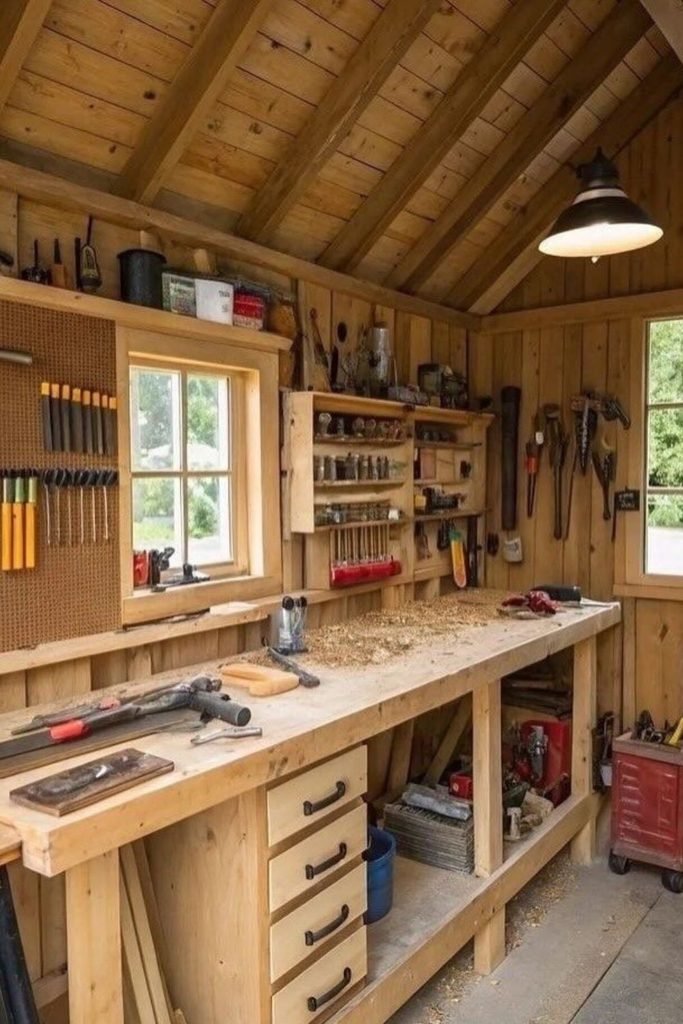
Workbench Wall
Turn one side of your shed into a working zone instead of storing tools wherever an empty spot appears.
Keep hand tools on a pegboard or shallow wall rack above the bench, then use drawers for small pieces that tend to disappear.
Open shelves underneath can take heavier supplies without crowding the work surface.
This setup makes the most sense if you regularly repair tools, sharpen blades, start seedlings or handle small garden projects indoors.
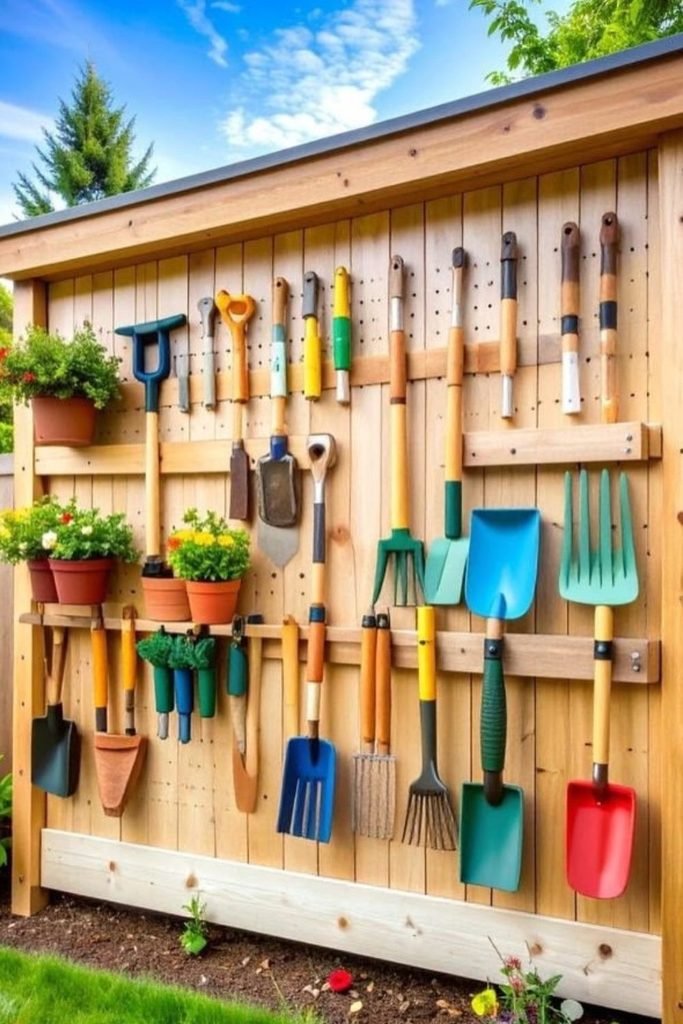
Outdoor Wall
Keep frequently used tools close to the beds by turning a sheltered garden wall into an open storage station.
Install sturdy wooden rails at varying heights for hand trowels, forks, cultivators and longer instruments to hang without overlapping.
Adding a few tiny shelves makes a separate space for pots and daily gardening materials instead of mingling them with sharp instruments.
This is helpful if your shed or garage is a long way from the main planting area.
Store tools inside during inclement weather to increase the life of exposed metal and wooden handles. Choose a storage location under a roof or overhang.
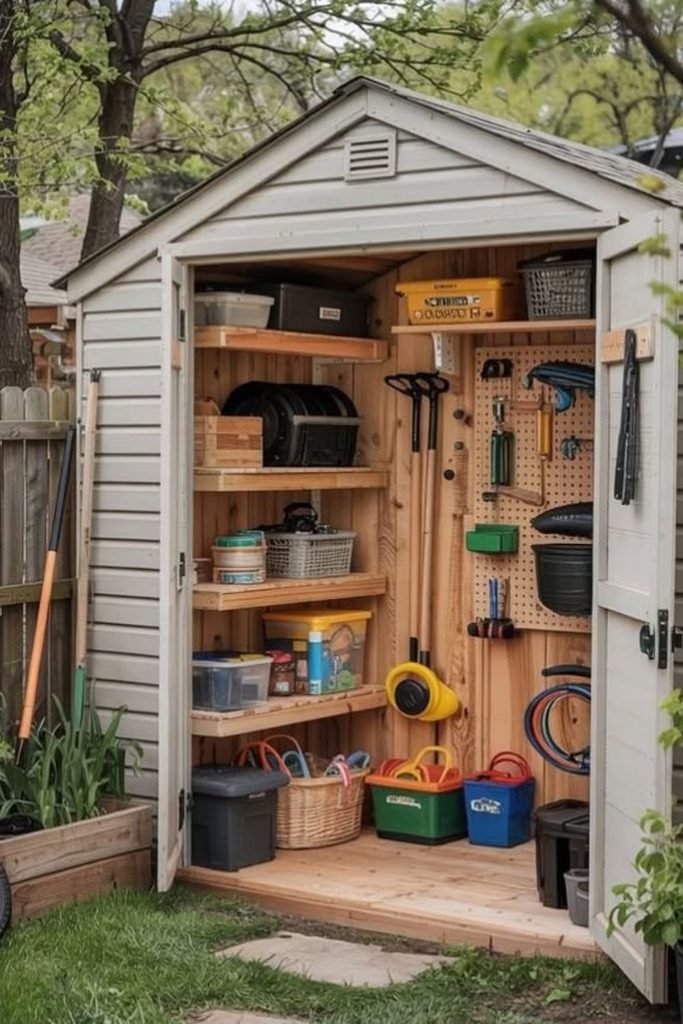
Compact Shed
Give a small shed several storage jobs instead of letting one tool category take over the whole space.
Install shelves along one side for containers, pots and supplies; mount a pegboard on the opposing wall for hand tools you reach for routinely.
long-handled things in tiny vertical spaces instead of leaning over the entryway.
Put heavy containers lower and lighter seasonal items higher for better access to everything.
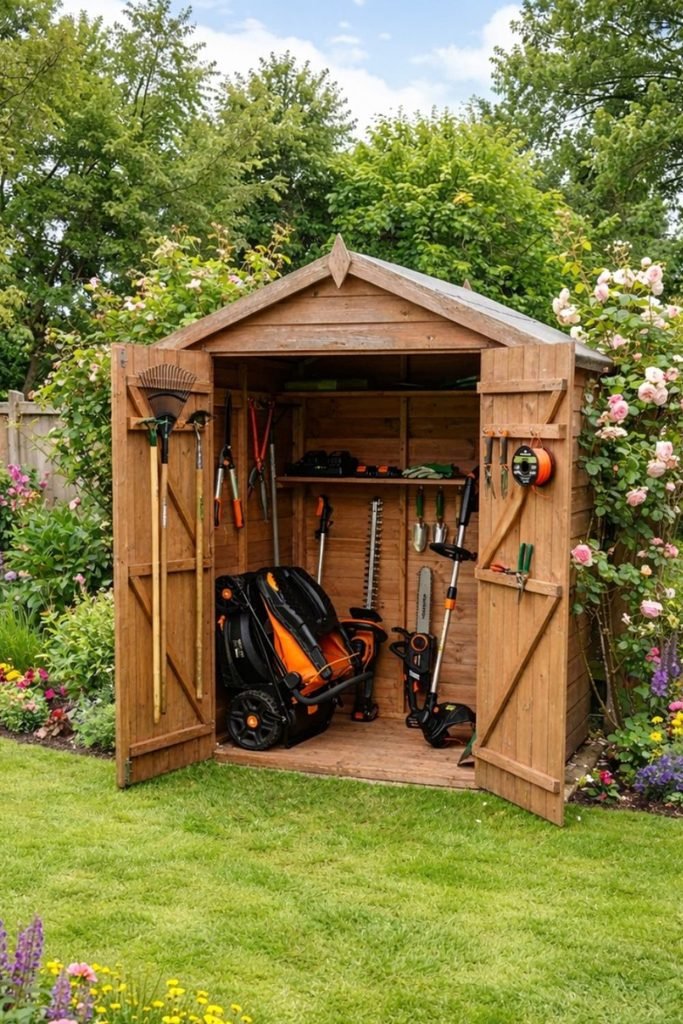
Power Shed
Bulky lawn equipment needs floor space, so move smaller garden tools onto the walls and doors before deciding your shed is too cramped.
Reserve the center and lower area for the mower, trimmer and other large machinery that are more difficult to lift.
A shallow shelf across the rear may carry chargers, gloves and commonly used accessories without getting in the way.
This is good if you have one tiny shed and need to store both gardening tools and powered lawn equipment.
Planting Rack
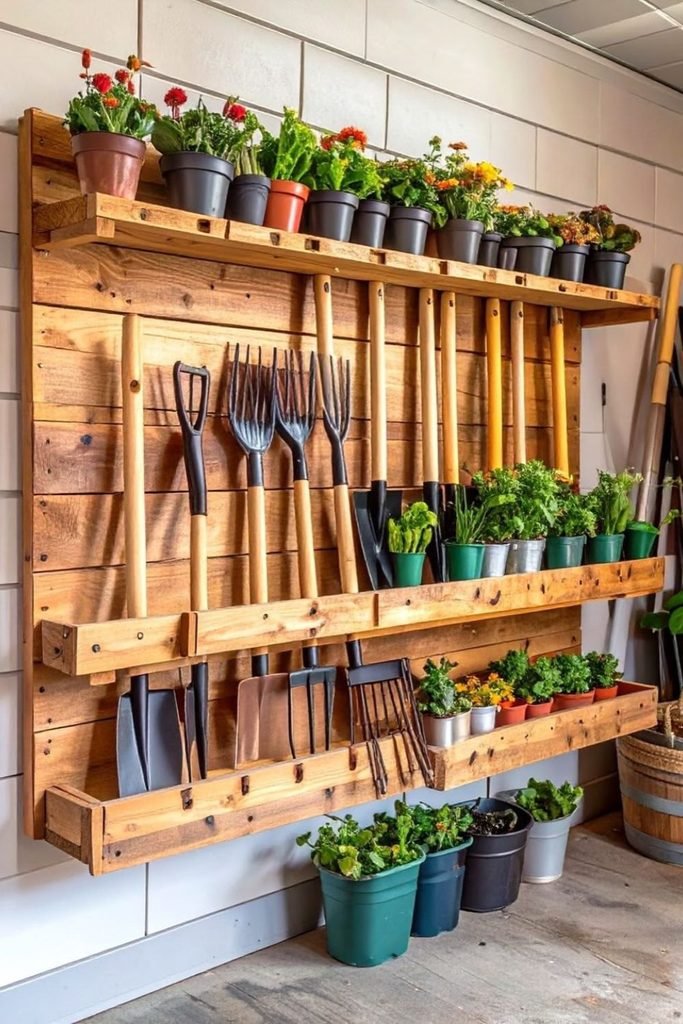
Combine tool storage with a small planting zone when you want everyday supplies kept close to the pots you’re working with.
Build a deep wooden wall frame with individual rails for forks, trowels and longer-handled tools, then add shelves for tiny pots, herbs or seed-starting supplies.
Make sure there is adequate room around each tool so you can lift it out without upsetting anything else.
This design is good for next to a garage work area or a covered potting room where plants and tools can share one wall.
It also means you don’t have to make as many journeys back to the shed for fast garden jobs, having your planting tools next to your potting supplies.
Tool Bin
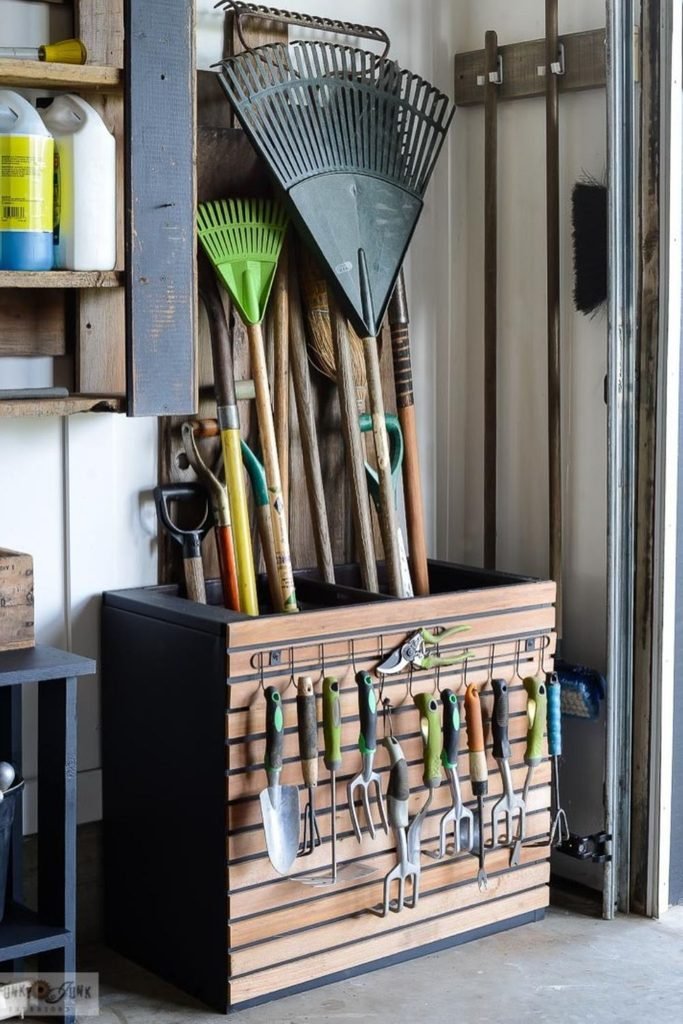
Skip wall mounting when you need a storage system that can sit wherever you have a spare corner.
Keep rakes, shovels and other long-handled tools standing in a deep wooden bin, with hooks or a wire grid across the front for trowels, forks, pruners.
render sure the base is wide and stable so taller equipment won’t render it unstable.
This works especially well at a garage door or shed entry where you can grab what you need on the way out.
Small tools are stored separately in the front so they don’t get lost under the longer handles either.
Covered Rack
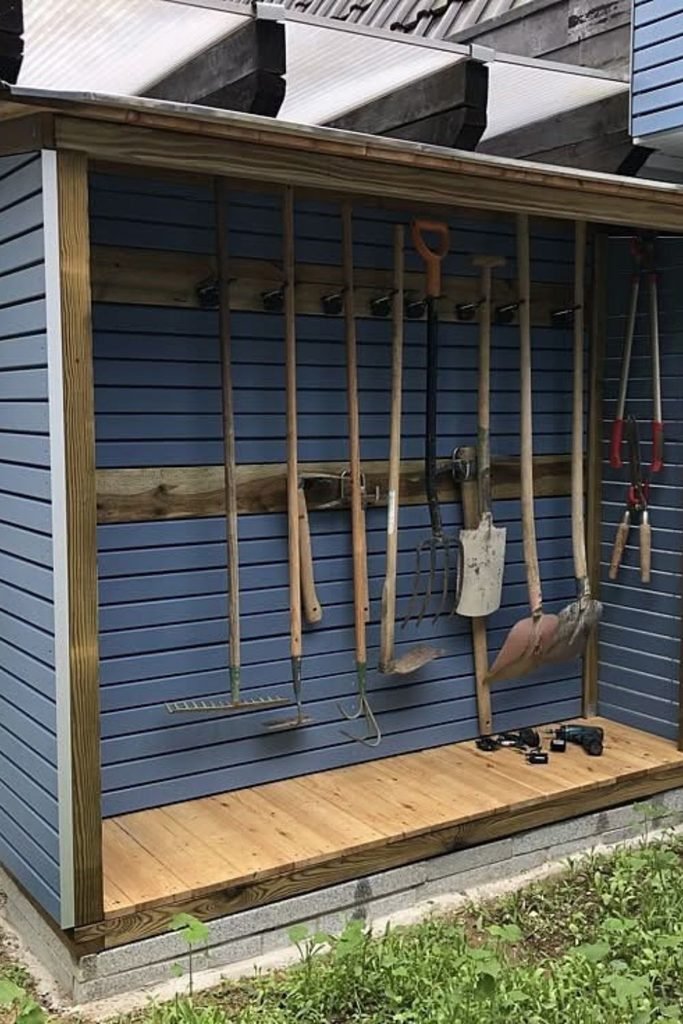
Rain protection matters when your tools need to stay close to the garden rather than inside a garage.
Build a small roofed rack against an outside wall and put on strong horizontal rails with hooks for shovels, forks, hoes and rakes.
Hang each tool separately to clear moist soil, and to allow air to circulate around it for drying.
Such an arrangement is ideal for side yards and gardens that don’t have room for a full shed, but place it where driving rain can’t easily reach the equipment.
Raising the wooden floor a little also keeps handles and metal items away from damp ground.
Pallet Shelter
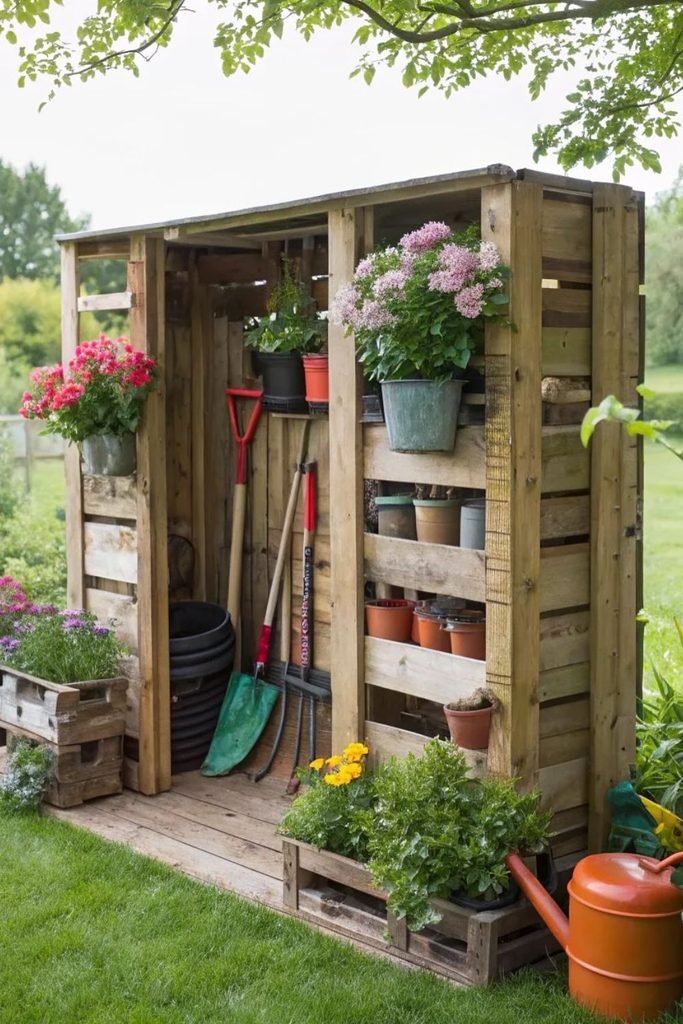
Reclaimed pallets can become a useful garden storage shelter when you need more than a rack but don’t want to build a full shed.
Build the walls with strong pallets, fit a sloping waterproof roof and leave the middle for shovels, rakes, stacked pots and other larger stores.
Side compartments allow you to keep spare planters and everyday planting supplies near to where you work.
Place the shelter on a solid, raised base to prevent the timber from being in continual contact with wet earth.
It works especially well near vegetable plots or larger gardens where repeated journeys back to the garage grow annoying fast.
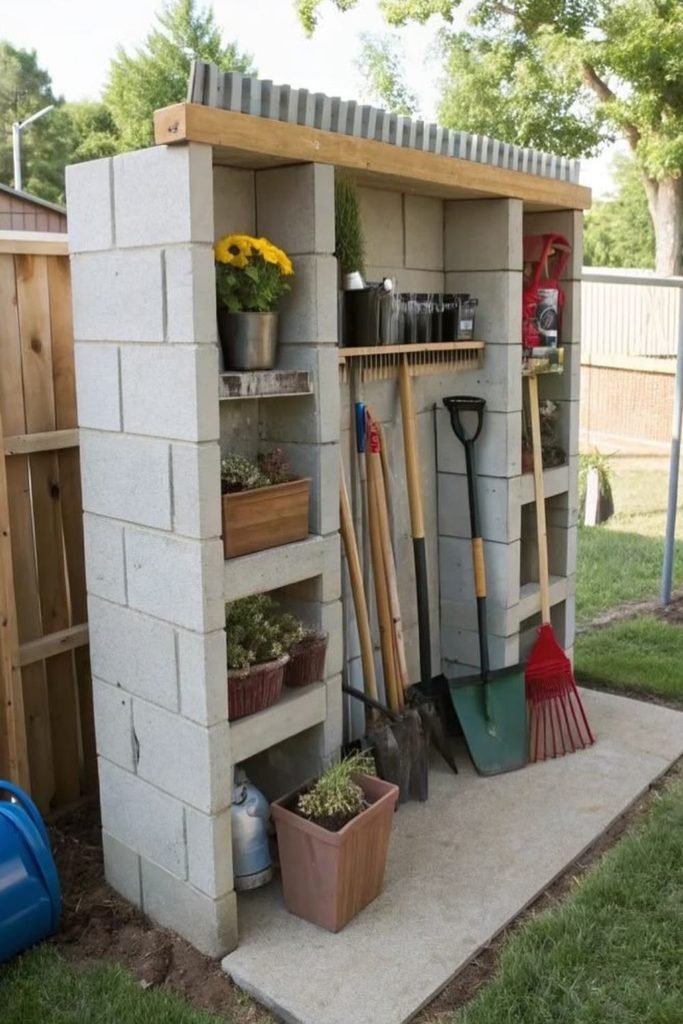
Block Shelter
Choose concrete blocks when you want an outdoor tool station that feels more permanent and can handle damp garden conditions better than an all-wood.
Stack the blocks into narrow side columns leaving open cubbies for pots and small supplies and spanning the top with a weather-resistant roof.
Store shovels, rakes & hoes upright in the center for easy grasp without opening a shed door.
A good cemented base will prevent the handles from resting in muck after rain.
This set up works great against a fence or along a side yard where a standard shed would take up too much space.
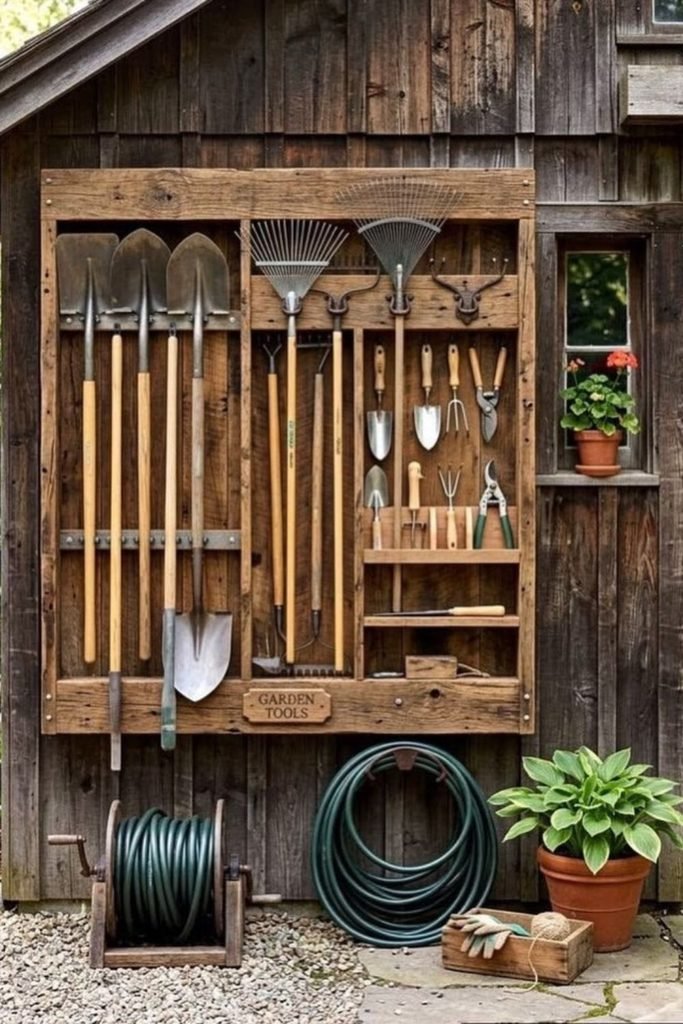
Garden Panel
Use the outside of a shed when the inside is already packed with equipment.
Build a wooden framed panel with individual rails for shovels, rakes, hoes and smaller hand tools, so that each piece can come off without catching its neighbor.
Add a shallow shelf for pruners and trowels, but keep watering gear below where its bulk won’t block the tools.
Place the panel under an eave or other covered area so the rain doesn’t constantly hit the metal heads and wooden handles.
It’s a smart approach to get some useful storage in without taking up any shed floor space.
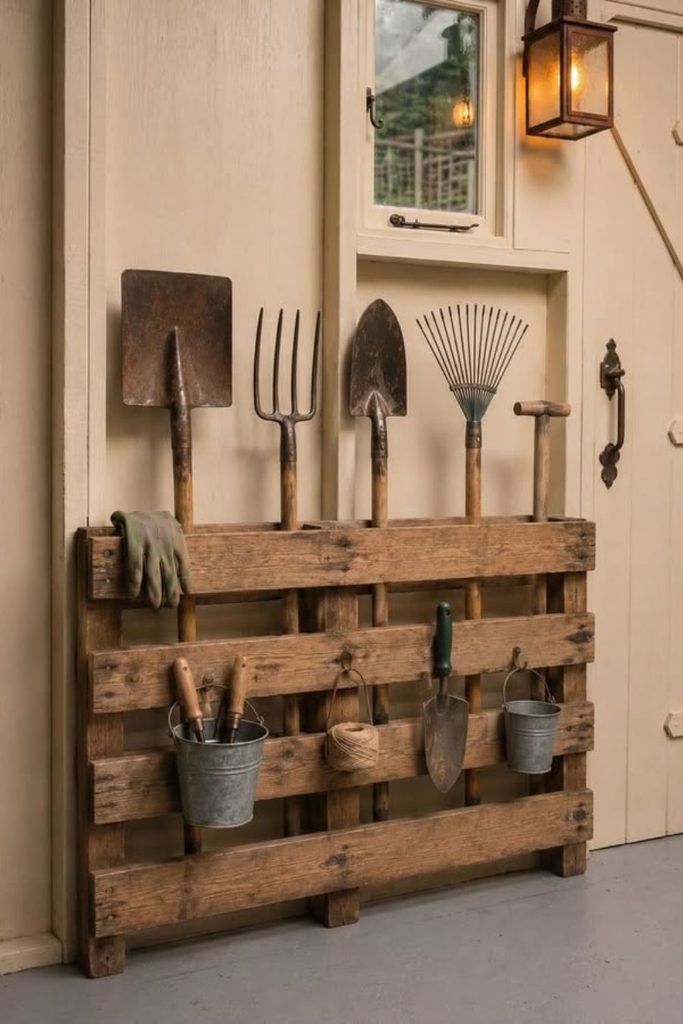
Entry Organizer
Put your most-used tools beside the shed or garage door if you’re tired of walking inside and searching every time a quick garden job comes up.
A low pallet-style organizer will hold spades, forks, rakes and other long-handled tools in an upright position, while little hooks and metal cups hold trowels.
Make sure the frame is secured to the wall so heavy tools won’t topple it forward.
This is particularly helpful for everyday gardening tools, since you can grab what you need on your way out and put it back before dirt.
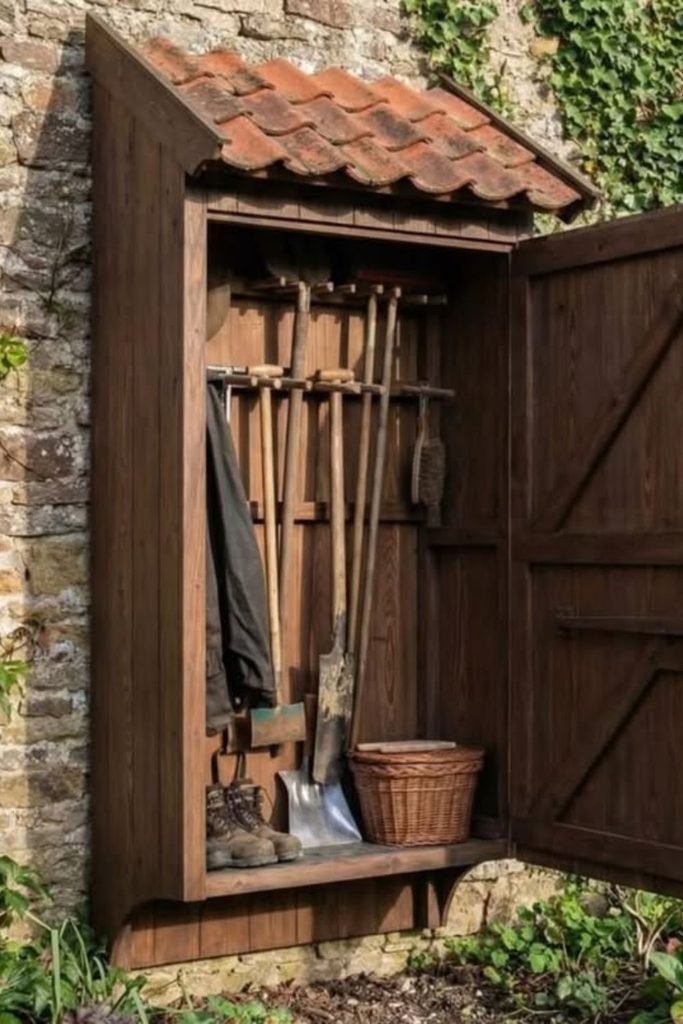
Slim Locker
Fit a narrow tool locker against an unused exterior wall when a full-size shed would take away too much garden space.
Make it tall enough to hold rakes, spades, hoes and forks, then put horizontal supports inside so each handle is standing up instead of falling over in a pile.
A strong door keeps the collection out of sight and offers better protection for tools from weather.
While a raised foundation helps prevent wet creeping up from the ground. This storage type is especially good for side yards.
Courtyards and smaller gardens when you have a narrow strip of space to work with, but need covered storage.
Tool Gallery
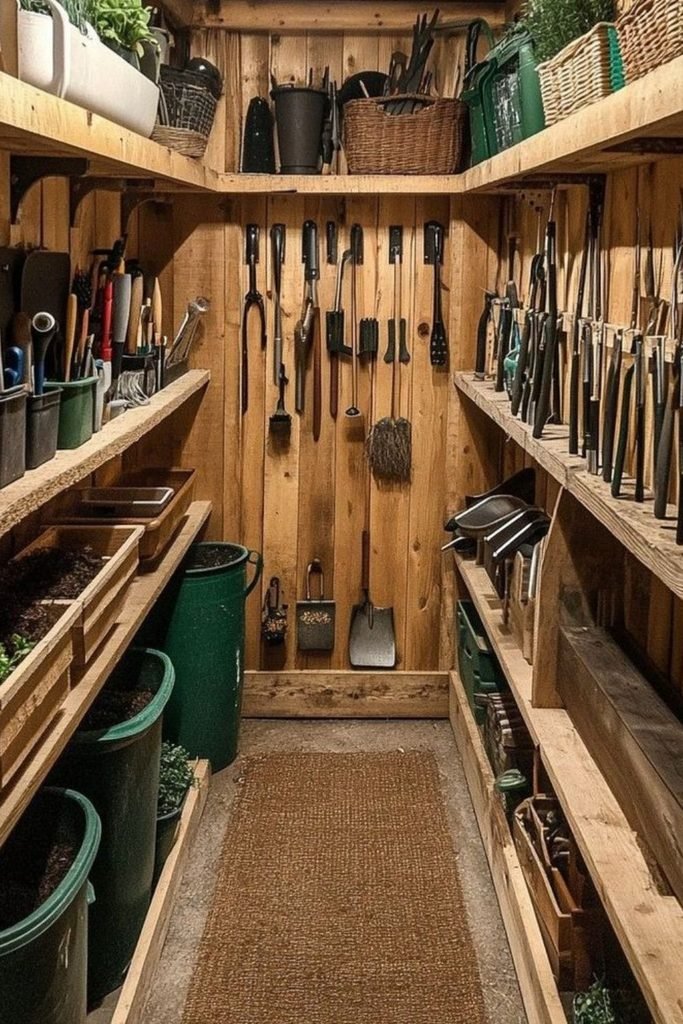
Treat a narrow shed like a walk-in tool library by keeping the center completely clear and pushing storage to both sides.
Shallow shelves will keep hand tools upright, with all handles visible, and wall hooks at the back provide you a stable place for often-used parts.
Use the upper shelves for baskets and lighter supplies, and put soil, containers and other heavier gardening equipment closer to the floor.
This configuration is ideal for long, narrow sheds with deep cupboards that would make the walkway less pleasant.
It also allows you to find what you need without having to rummage through boxes or move other equipment beforehand.
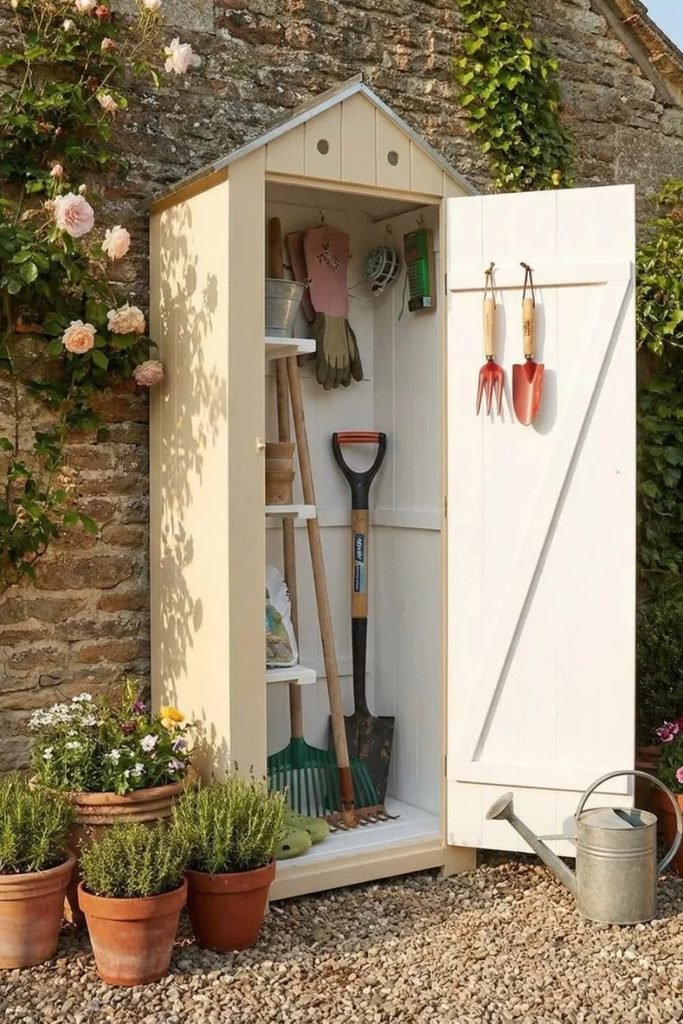
Garden Locker
Small gardens often need enclosed storage without giving up enough room for a traditional shed.
Choose a tall, narrow locker and use its height for rakes, spades, and hoes while adding shallow shelves for gloves, plant food, and smaller supplies.
Put hooks on the inside of the door for lightweight hand tools so valuable interior space doesn’t go unused.
Position the locker close to your main planting area and raise it slightly above damp ground.
Keeping everything behind one door protects tools from weather, hides everyday clutter and gives each item a defined place without taking over the garden.
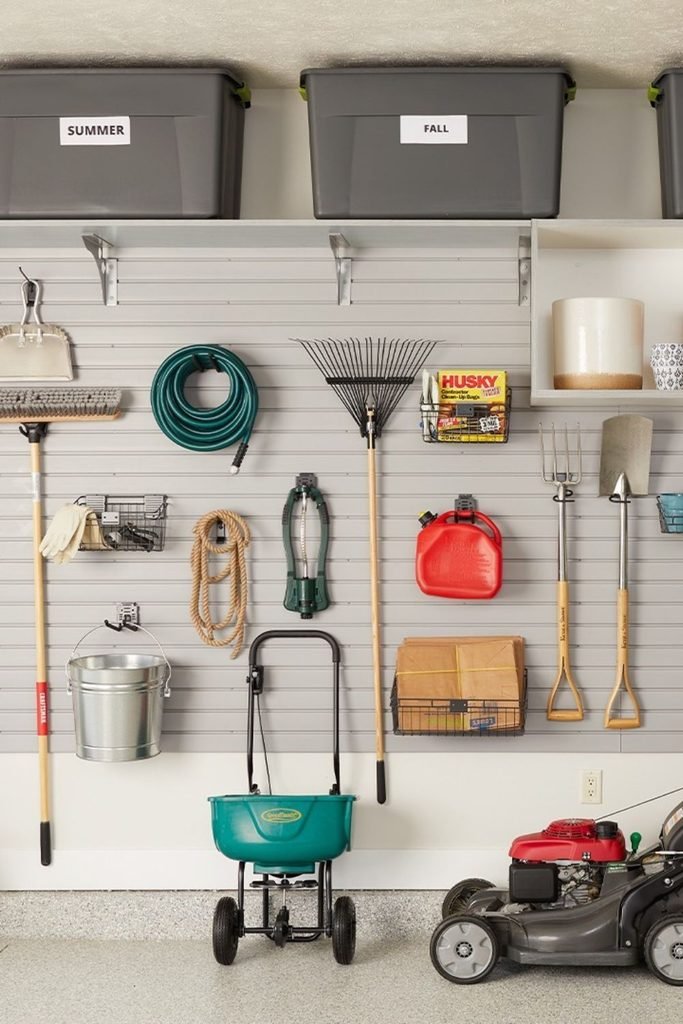
Slatwall System
Adjustable storage makes sense when your garden tool collection keeps changing through the year.
Put up a slatwall and add hooks, baskets and shelves that can be moved around to accommodate everything from rakes and hoses to gloves and hand tools.
When new equipment comes in, you can move each holder rather than drill another set of holes.
Store lengthy tools away from your eyes, small accessories in baskets, and seasonal materials in labeled boxes up above.
This arrangement works especially well for garages, since it opens up floor space for large items such as mowers.
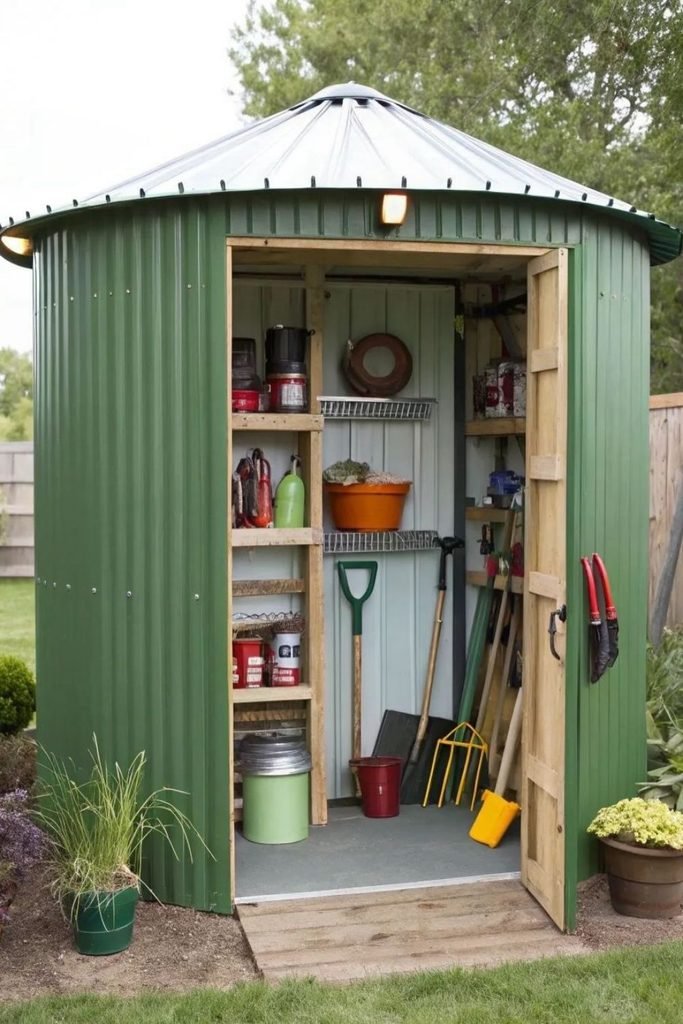
Round Shed
Choose a round metal shed when you need weather-protected storage but want something different from a standard box-shaped garden building.
Don’t shelve the curving sides; leave them for pots, watering supplies and smaller gardening goods, and use the open middle for long-handled instruments that need full height.
Hooks inside the door can accommodate light pruners or gloves without using shelf space.
This plan is good for medium or bigger gardens when a permanent home is needed for multiple tool kinds.
Grouping items around the perimeter helps keeps the doorway clean, so you can get to a shovel or fork without having to move everything first.
Floor Rack
Build a freestanding rack when your shed walls are metal, rented, or simply not suitable for mounting heavy tools.
Use a robust wooden structure with independent pipe sleeves around the base so shovels, hoes, forks and rakes keep erect without their handles slipping together.
Don’t try to get all tools into similar spacing, but leave greater gaps for bulky shovel blades and rake heads.
Set the rack up along one side of the shed, out of the way of the entry.
And it’s easy to relocate or rearrange the entire unit afterward, making it a sensible alternative when your storage needs change.
Storage Bench
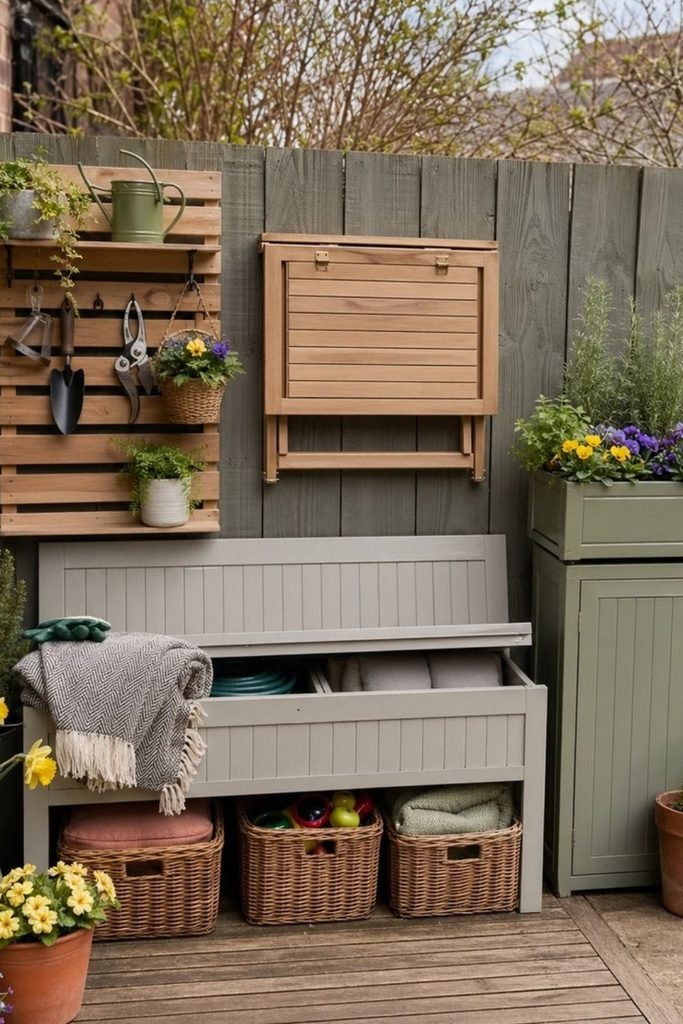
Make garden storage earn its floor space by choosing a bench that hides bulky supplies inside while giving you a useful seat above.
The deep compartment is wonderful for coiled hoses, kneeling pads, or larger accessories.
Slide baskets underneath for gloves, twine, and other items that tend to get spread around.
Pair with a narrow wall rack for hand tools, for those things you need at your fingertips most often.
This configuration is ideal for patios, courtyards and small garden areas where a large shed would look too big.
Do not keep sharp tools in the seating area particularly if youngsters frequent the garden.
FAQs
How Can I Store Garden Tools Without Shed Space?
Vertical Storage Use the external walls, garage corners, fences or covered patio sections.
Wall-mounted rails, pegboards, narrow lockers, and pallet racks can store numerous of tools without taking up much floor area.
Any item exposed to the weather should be kept under a roof or waterproof cover, especially tools with metal heads or wooden handles.
How Do I Prevent Garden Tools From Rusting Storage?
Let the metal parts dry thoroughly and then store the tools in a protected location with sufficient air circulation.
If you are going to store it for a long time, lightly oil all clean metal surfaces before putting it away.
