
23 Garden Tools Ideas for 2026
Many beginners think that if they buy more tools, they will garden better. Then the initial shopping trip turns into chaos.
There are five different trowels on a shelf, another shelf with rakes that look almost identical and suddenly you are wondering.
Buying the wrong tools is waste of money, takes up storage space and can even make routine activities feel harder than they need to.
In this article, you’ll discover 23 garden tool ideas that make gardening easier and more efficient.
Let’s jump in!
What Garden Tools Should Every Beginner Buy?
Start with tools you’ll grab for on every garden trip instead of buying a big kit you’ll barely use.
For most planting, pruning, watering and soil preparation jobs, you’ll typically need a sturdy hand trowel, bypass pruners, gardening gloves, a digging spade.
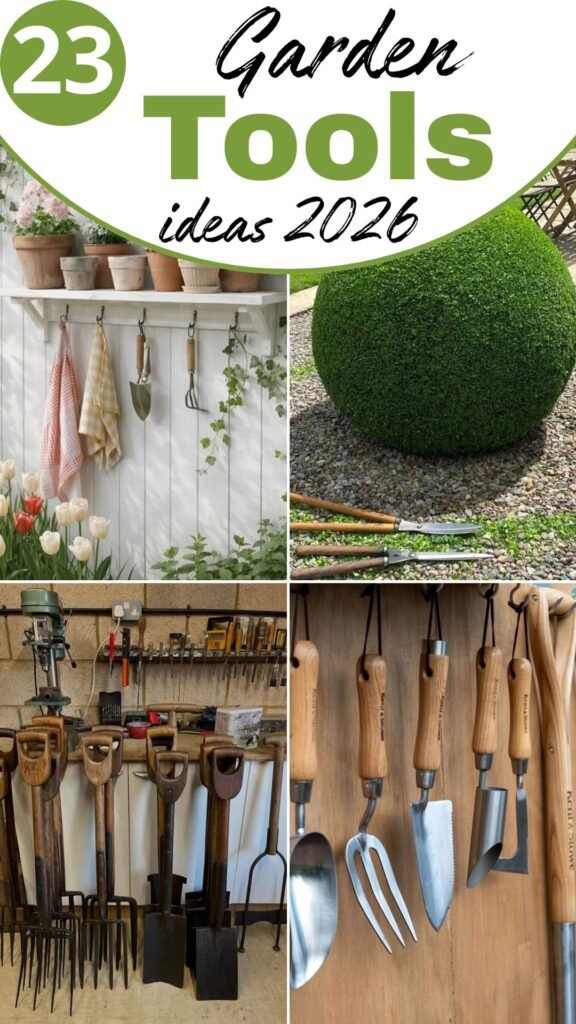
When you start gardening on a daily basis, you will begin to see what other tools would genuinely make your labor easier.
It’s a money saver, makes storage easy, and helps you learn how to use each tool well instead of being overwhelmed by equipment you don’t really need.
Tool Station
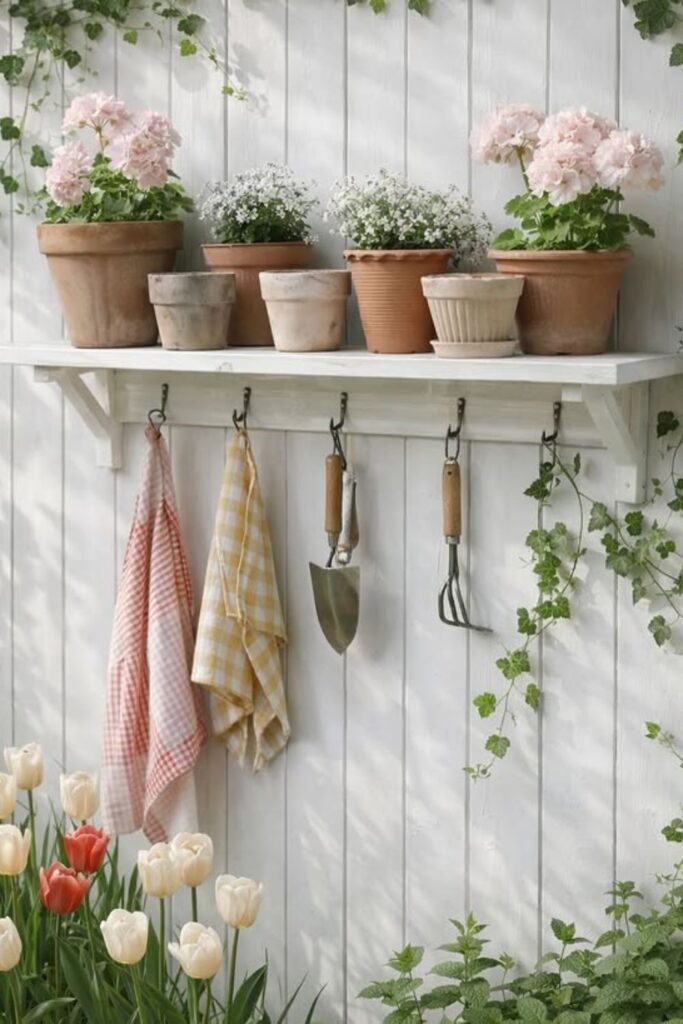
Keeping your most-used garden tools within arm’s reach saves more time than buying extra equipment.
Put up a basic wall shelf near your potting area and hang some solid hooks under it for your trowel, hand fork, gloves and towels.
Keep empty pots and day-to-day necessities within easy reach and add some potted flowers to the top shelf for a cheerful touch.
When you start planting, use a covered porch, shed wall or walled patio to keep things dry and handy.
Precision Trimming
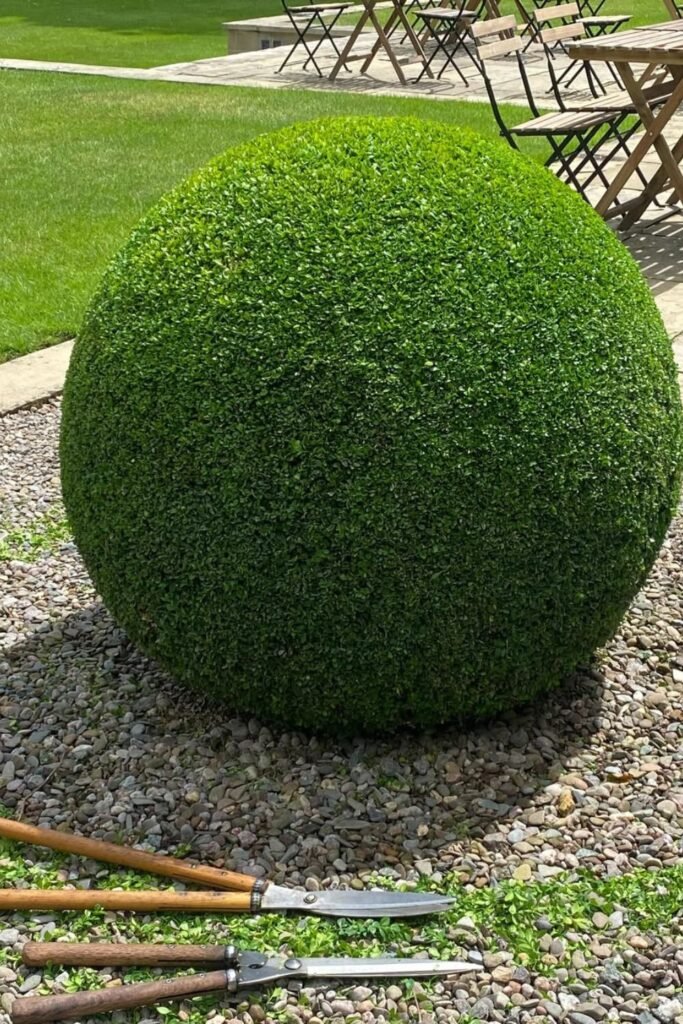
Perfectly shaped shrubs never happen by accident, and the right hedge shears make all the difference.
Long-bladed manual shears will cut boxwood or other dense evergreen shrubs into smooth curves without tearing fresh growth.
Don’t take out big pieces at a once. Start at the bottom and work your way up with light, even cuts.
If you back off every so often you can see where you have been uneven before it becomes noticeable.
Tool Collection
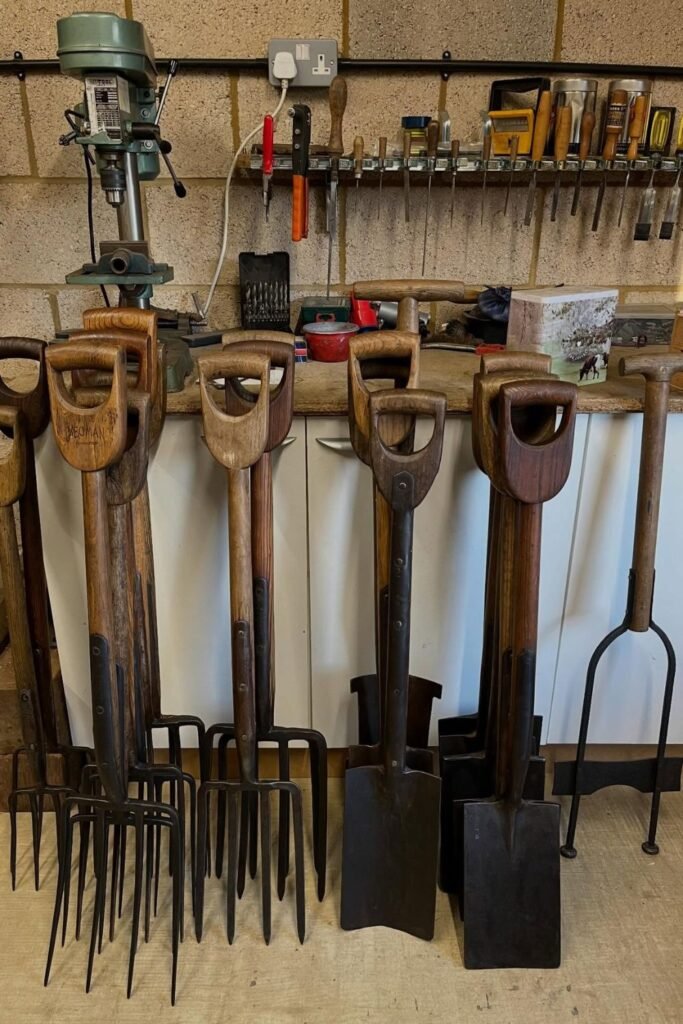
Strong gardening starts with dependable tools that match the jobs you do most often not with the big variety you can buy.
Slowly build your kit. You want a good digging fork to loosen the soil and a sharp spade to edge and plant.
A square shovel is good for moving compost or gravel. Select hardwood handles and forged metal heads for tools that will hold up to years of daily use.
Long-handled tools are best stored upright in a dry shed, which keeps the handles straight and eliminates unnecessary rust and makes it much easier.
Hand Essentials
Small hand tools handle most everyday gardening jobs, so keeping them clean, sharp, and easy to reach makes every planting session smoother.
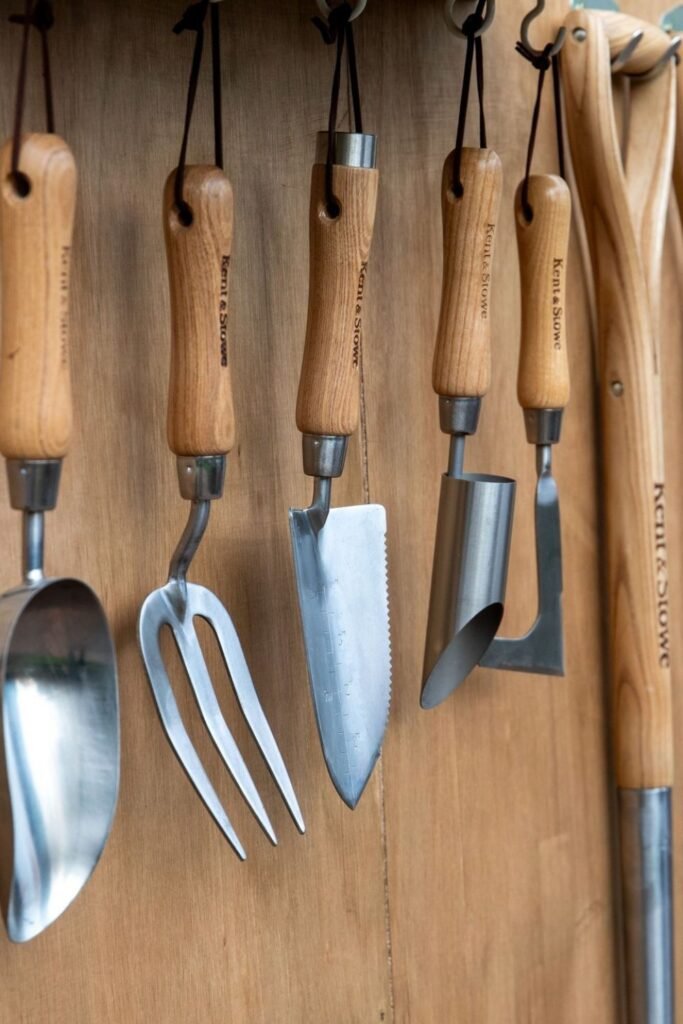
Instead of dumping them in a bucket, hang a hand scoop, fork, trowel, bulb planter and weeding tool on distinct hooks inside a shed or potting table.
By grouping comparable equipment together, you can grab the tool you need without having to rummage through a mess.
Wipe off any damp soil before hanging them back up, and allow wooden handles to air dry so they remain comfortable to use and are ready.
Storage Corner
Clutter disappears when every gardening supply has its own place.
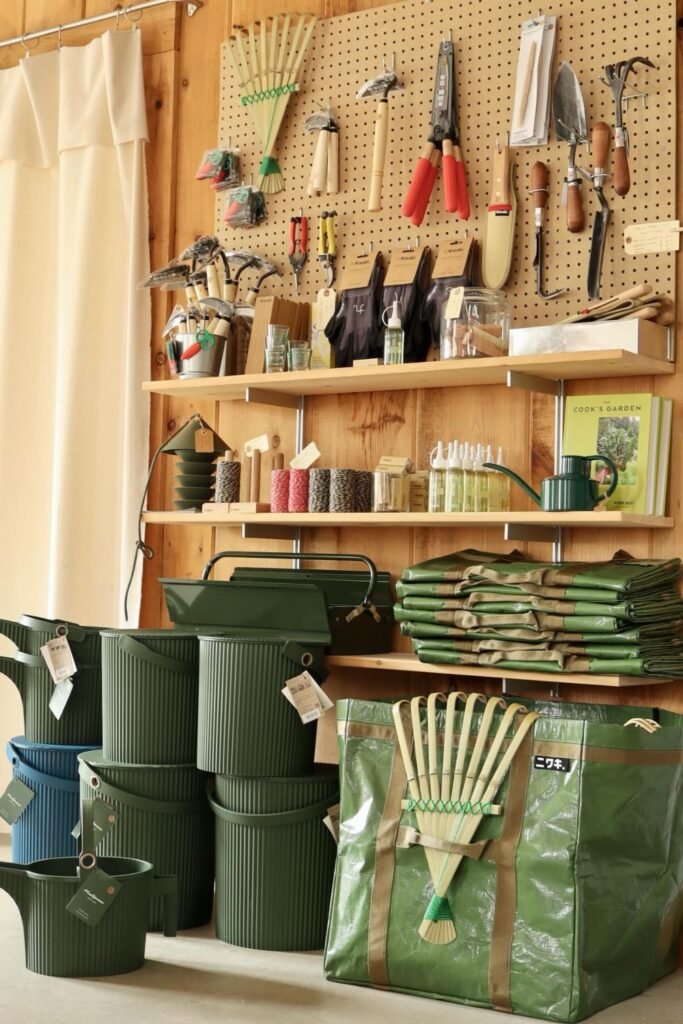
Hang a pegboard above solid shelves to keep hand tools in sight, and store watering cans, pots, gloves or twine and seed packets neatly below.
Bulk storage bags or bins for compost, mulch or empty containers keep cumbersome supplies off the floor and easy to grasp on busy planting days.
This special space is particularly useful in a shed, garage or potting room as it means you have everything you need in one place.
Pallet Rack
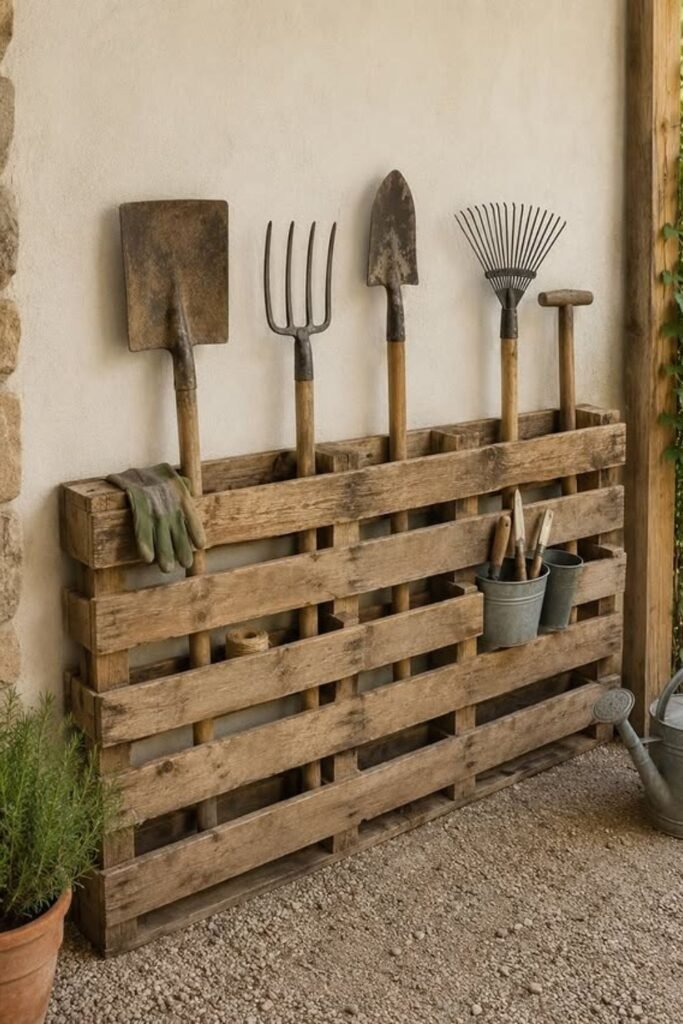
Turning an old wooden pallet into garden tool rack gives bulky equipment a permanent home without spending much money.
Slide shovel, rake, fork and hoe handles between slats to hold them upright and off the ground, and hang gloves or small buckets on extra hooks for easy access.
Put the rack against a covered wall in a shed, garage, or sheltered patio where rain can’t reach the metal heads.
Putting each tool back in the same place at the end of every gardening session keeps your workplace tidy, prevents excessive damage to handles.
Lawn Edging
Clean garden borders start with the right edging tool, not extra effort.
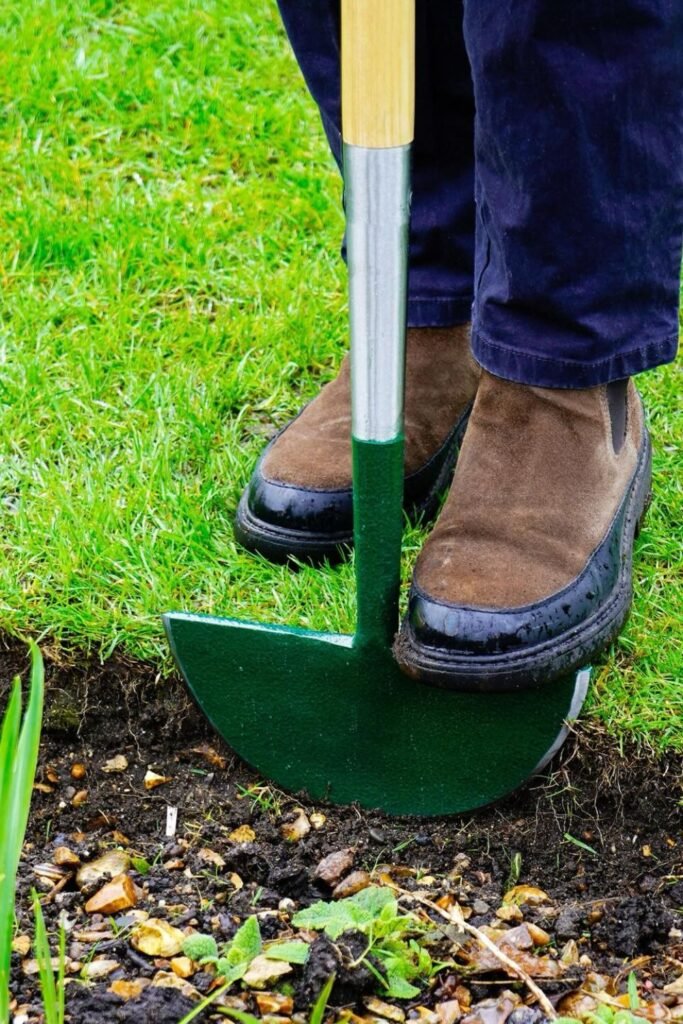
Cut a clean line through the dirt around the edge of your lawn with the half-moon edger to create a clear separation between grass and flower beds.
Working a short section at a time will offer you better control and keep curves looking smooth instead of uneven.
To keep the grass from creeping into the planting areas, refresh the edges every few weeks.
Wall Organiser
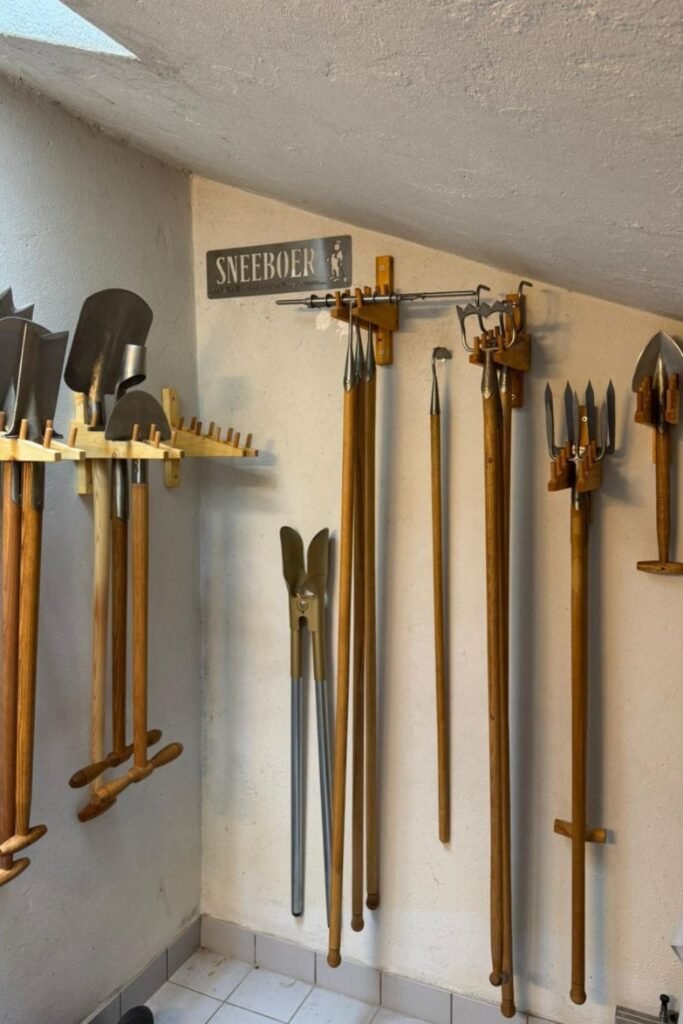
Searching for the right shovel wastes time before the real gardening even begins.
Build custom wooden racks on the wall of a shed to hold long-handled tools upright and keep each variety in its own region.
Keep the spades together, the forks in a separate holder and the specialty tools on their own hooks so every handle is easy to identify at a glance.
Space tools a bit apart so metal heads don’t rub together and wooden handles can dry properly after use.
Root Watering
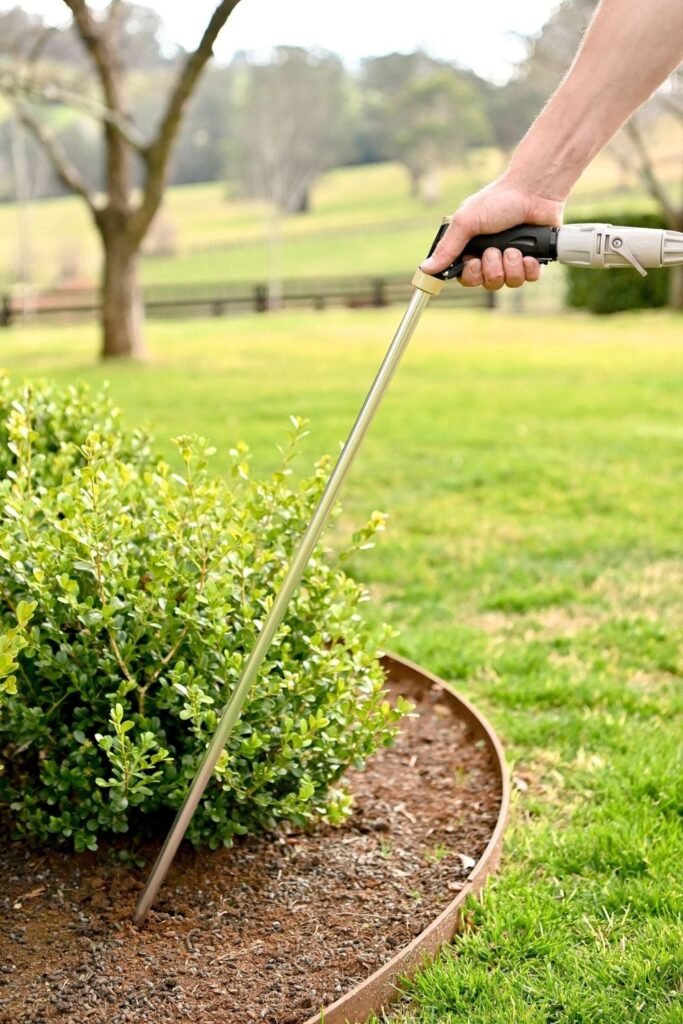
Deep watering reaches roots where plants need moisture most, especially during hot, dry weather.
Watering wand . This wand is used to get water below the surface of the soil rather than saturating the top layer.
Use it around shrubs, young trees or large bushes. Take your time to slowly move the wand along the drip line.
To assist the plants survive the summer heat, water deeply so the roots can grow deeper. This will also mean you won’t have to water as often.
Tool Display
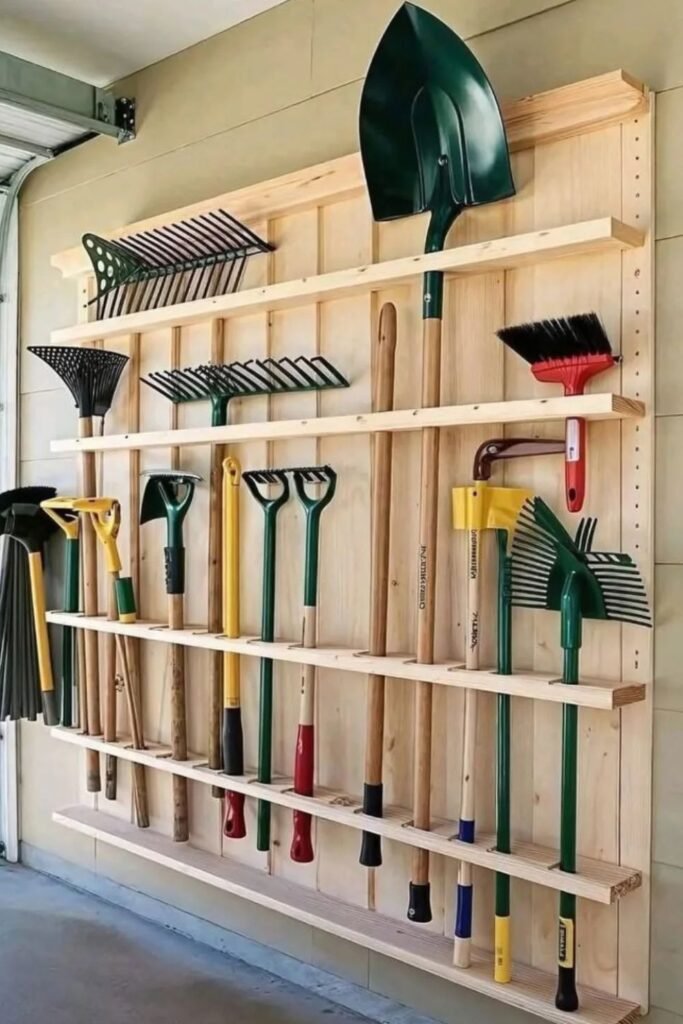
Walking into a tidy shed makes every gardening project easier before you even pick up a tool.
Instead of stacking rakes, shovels, hoes and brooms in a corner, build a wall-mounted rack with evenly spaced wooden slats to keep them upright.
Reserve the upper shelves for bulky heads, and stow long handles in the bottom slots so things are secure and easy to identify.
Keep the rack in a garage or shed to protect the metal pieces from unneeded weather and a location for all tools to call home.
Power Hub
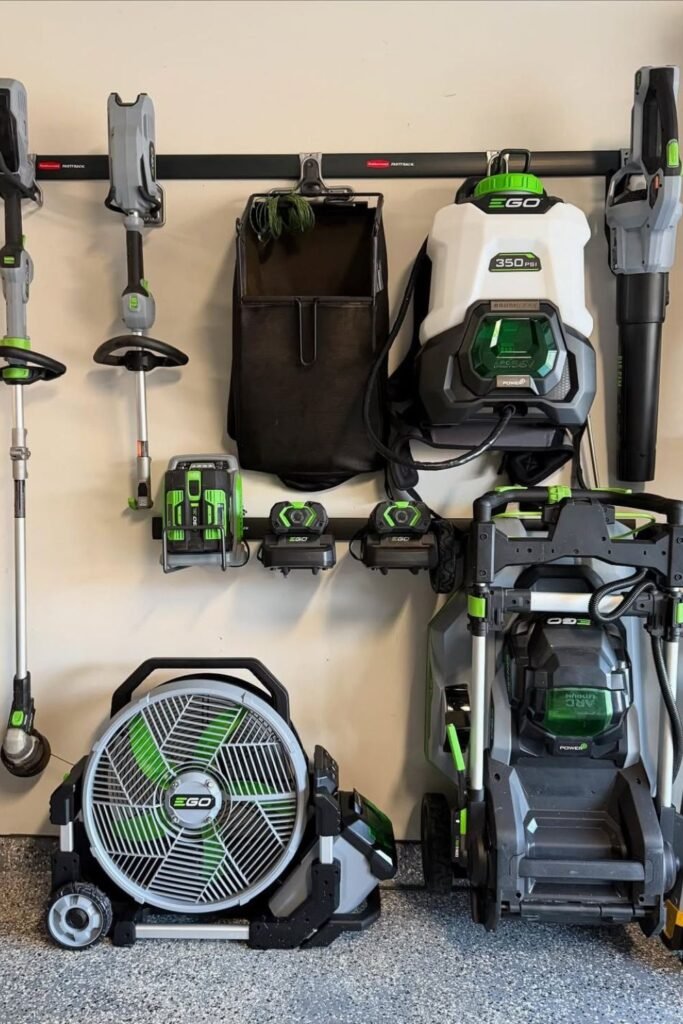
Battery-powered equipment becomes much easier to manage when every machine and charger stays in one dedicated station.
Hang trimmers, blowers, sprayers and spare batteries where they are protected and ready to use by installing a heavy-duty wall rail inside your garage or shed.
Keeping chargers together also makes it easier to recharge everything after mowing or trimming instead of finding a dead battery halfway.
This allows you to use the same batteries for different garden tools, saving you storage space and the cost of buying new batteries.
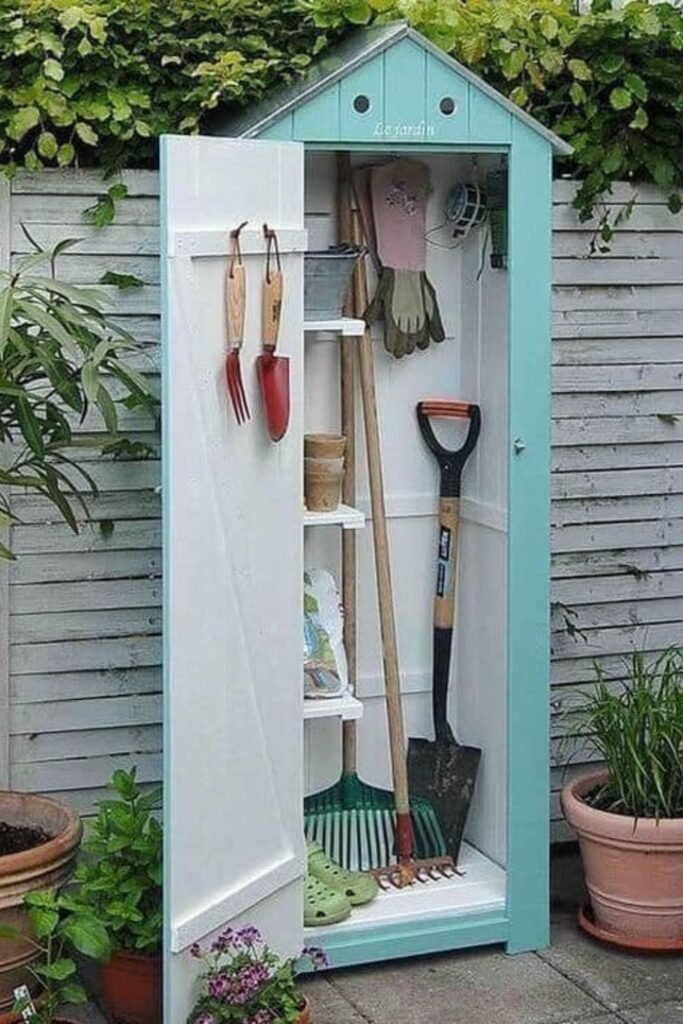
Mini Shed
Limited outdoor space doesn’t mean your gardening tools have to stay scattered around the patio.
Shovels, rakes, gloves, hand tools and small supplies should be kept out of the weather in a narrow outdoor cabinet or small shed.
Simple shelves help separate pots, twine, seed packages and plant labels so everything is easy to find.
Put a small storage unit near a fence or your planting area so that you have all your tools handy and are more likely to put everything back after each session.
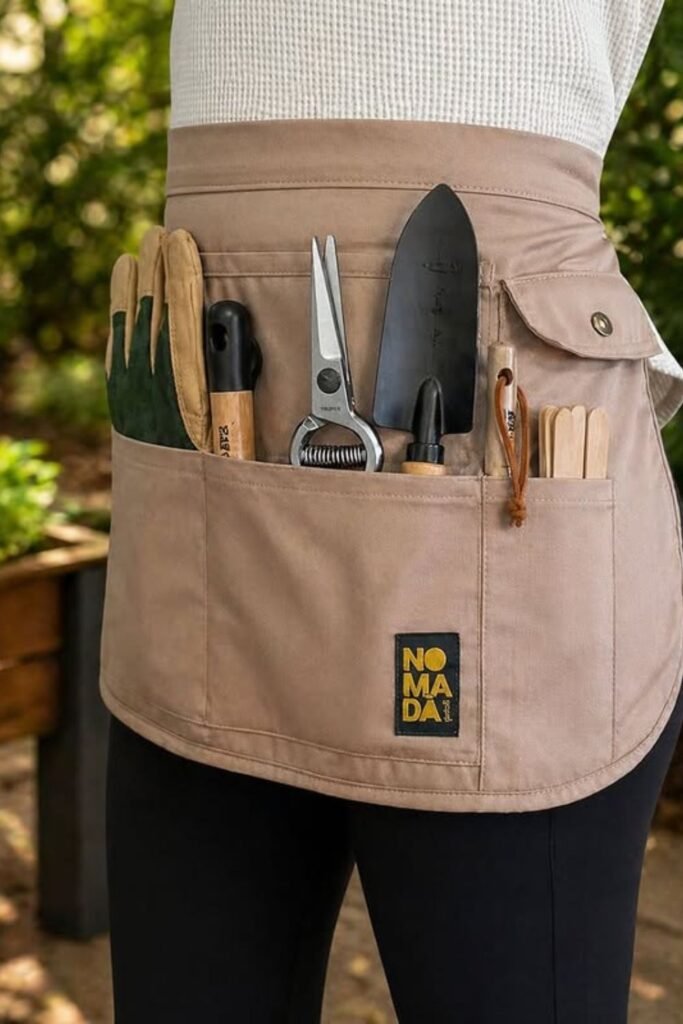
Garden Apron
Constant trips back to the shed slow down even the simplest gardening jobs.
A multi-pocket garden apron is great for keeping gloves, pruners, a hand trowel, plant labels and twine handy when you’re working in the garden.
Assign a tool to each pocket and you’ll always know where something goes and don’t waste time digging through buckets or wheelbarrows.
A good sturdy canvas apron with deep pockets is a great option especially for flower beds, raised gardens and container planting.
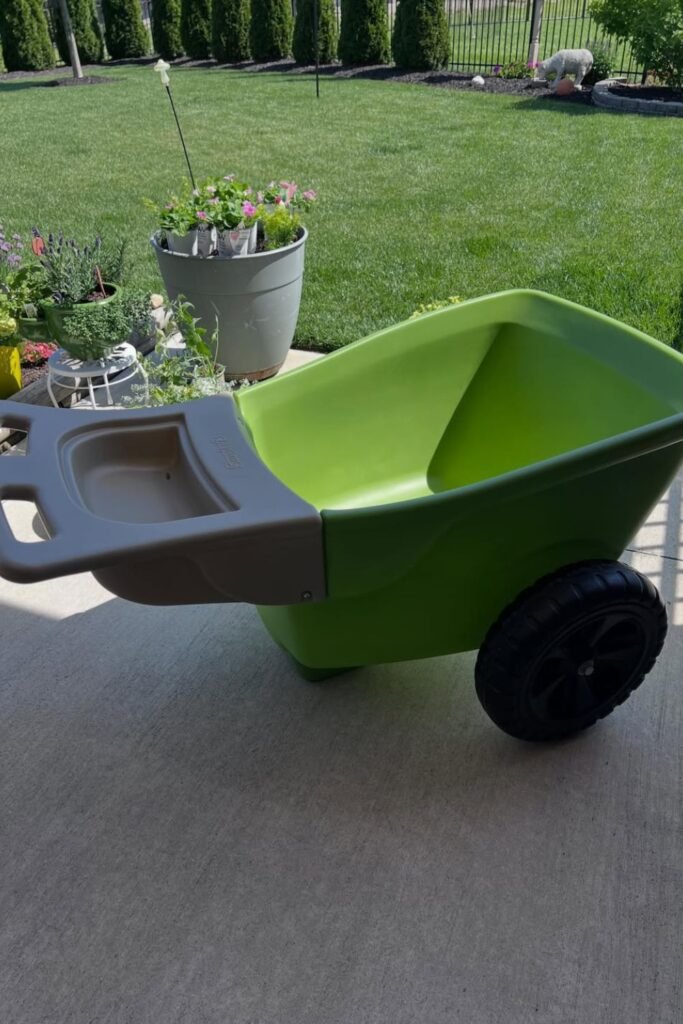
Garden Cart
Heavy bags of compost, stacks of pots, and freshly pulled weeds become much easier to move when you stop carrying everything by hand.
A lightweight garden cart with large wheels lets you move soil, mulch, plants, tools or garden waste around your yard without straining your back.
Select a model with a storage tray so you have space for gloves, hand tools or seed packets as you work.
It pays to have everything in one place before you start planting, and it will keep your workstation organised and prevent many journeys between shed and yard.
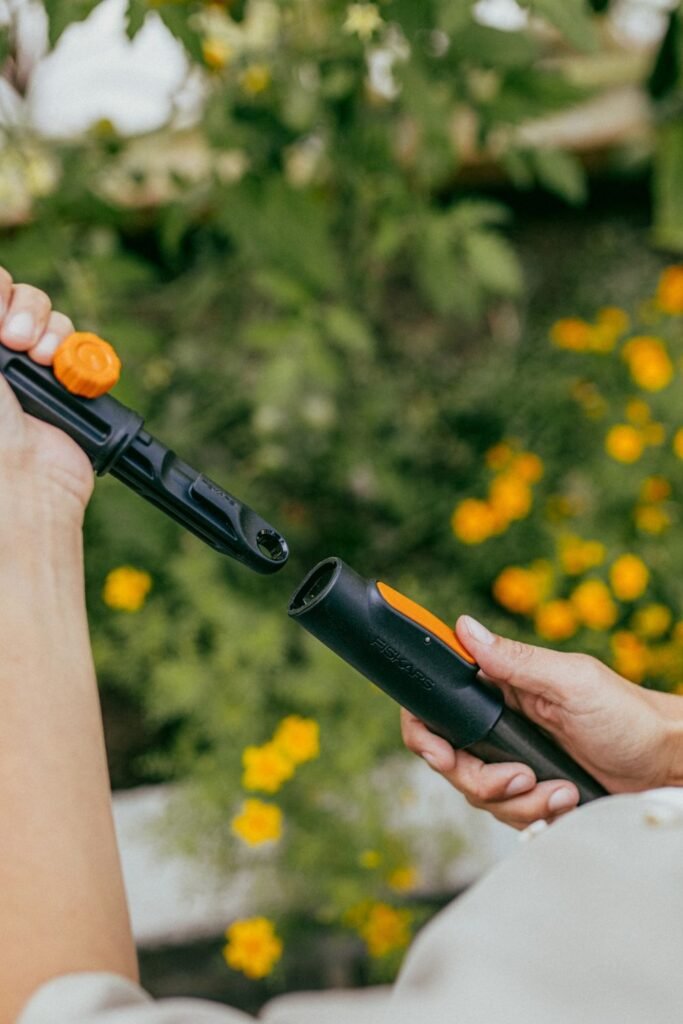
Extendable Handle
One smart handle can replace several separate tools and free up valuable storage space.
Opt for an expandable system which allows you to change watering heads, cultivators, brushes or pruning attachments in seconds.
Before you begin, be sure to attach each attachment tightly so it stays firmly in place as you work around flower beds, vegetable gardens or shrubbery.
Store interchangeable accessories in a single storage bin so you can switch chores quickly and get more of your garden routine done.
Planting Auger
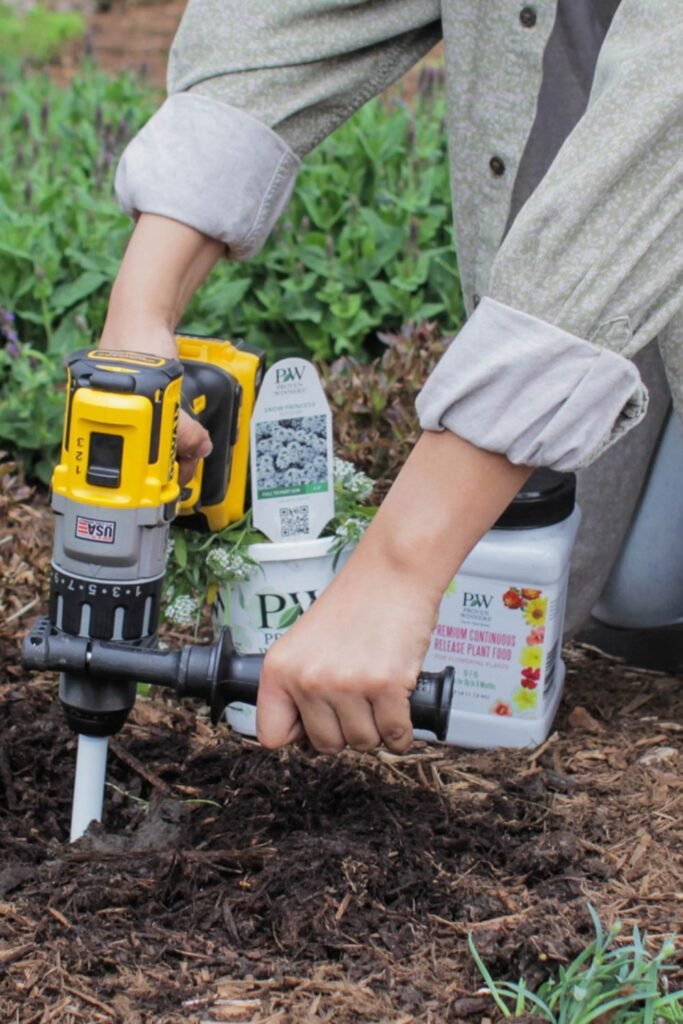
Digging dozens of planting holes by hand quickly turns a fun project into tiring work.
When planting annuals, bulbs, tiny shrubs or mixing compost into loose soil, use a garden auger attached to a cordless drill.
Steady as you steer it, let the drill do the heavy work, and in seconds you’ll produce neat, uniformly sized holes.
Clear out big rocks before you drill this will assist the auger to operate more smoothly and will safeguard the attachment and your drill.
Snap Attachments
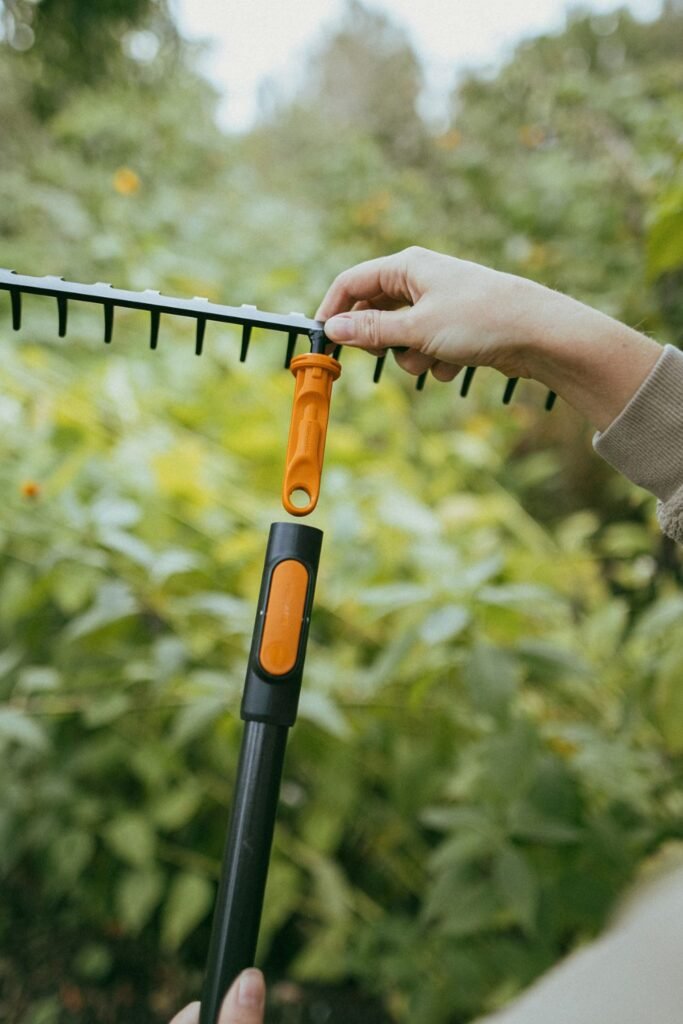
Switching between garden jobs becomes much faster when one handle accepts multiple tool heads.
Instead than storing many full-sized tools that take up valuable shed space, just click a rake, cultivator, broom or scraper attachment onto the same handle.
Make sure every attachment is properly locked before you start working, particularly while digging or clearing debris.
If you have a small garden, a patio, or a shed where storage is limited but versatility is important, an interchangeable system is a particularly good choice.
Starter Kit
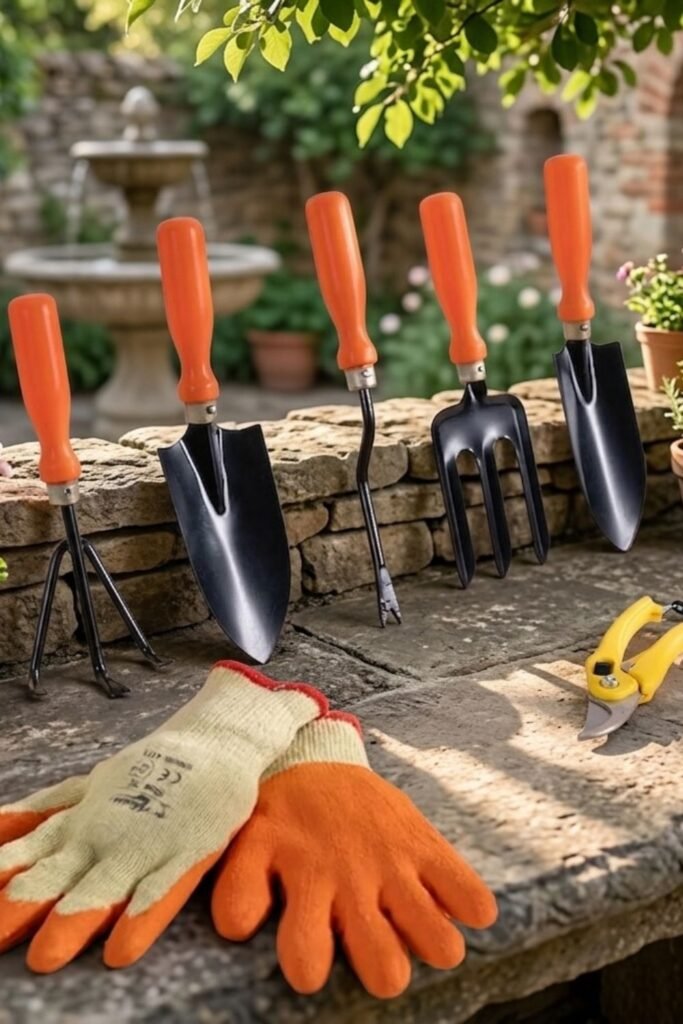
Great gardens rarely begin with expensive equipment because a few dependable hand tools can handle almost every daily task.
Keep a trowel handy for planting, a hand fork for loosening the soil, a cultivator to break up the surface crust, good quality pruners to trim and a comfortable set.
You’ll work with confidence and not clutter up your shed with tools you rarely use by building your toolbox around flexible fundamentals.
When your garden expands or your projects get bigger, you may then buy specialised equipment as you need it, rather than buying everything at once.
Outdoor Access
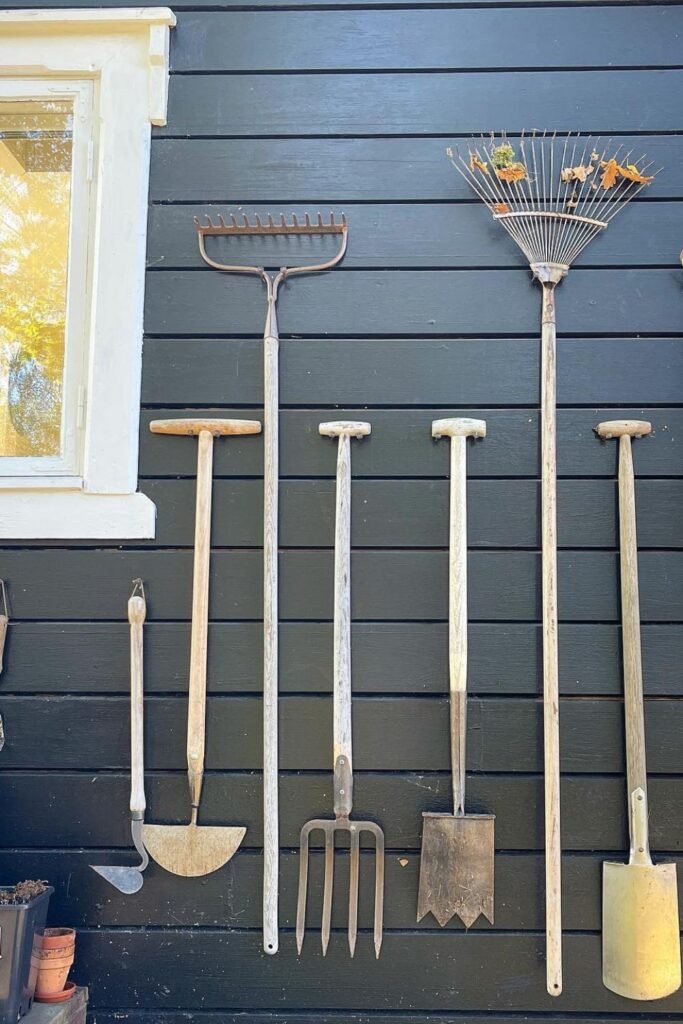
Reaching for a shovel should take seconds, not a search through a crowded shed.
For long-handled tools, attach strong hooks to an external wall to keep them tidy, easy to grab and available when planting, raking or digging is needed.
Group comparable items together, so rakes are next to each other, digging tools are grouped together.
An overhanging sheltering wall can help protect wooden handles and metal heads from continual rain but keep your everyday equipment close to garden.
Harvest Rake
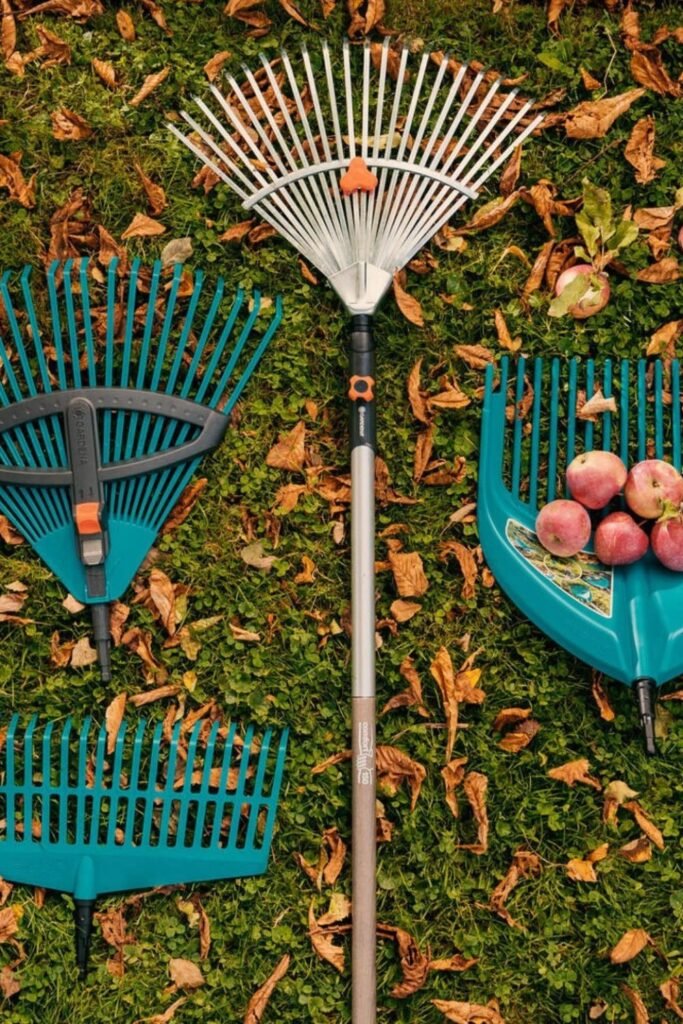
Autumn cleanup becomes much quicker when you choose the right rake attachment for the job.
Wide fan rakes whisk up dry leaves without harming the lawn, and scoop-style rake heads make it easy.
To gather fallen fruit, pinecones, or larger mounds before dumping them into a compost bin or garden cart.
Use a rake that matches the size of the area you’re cleaning. This way you can cover more ground with each pass rather than taking extra trips.
Tool Lineup
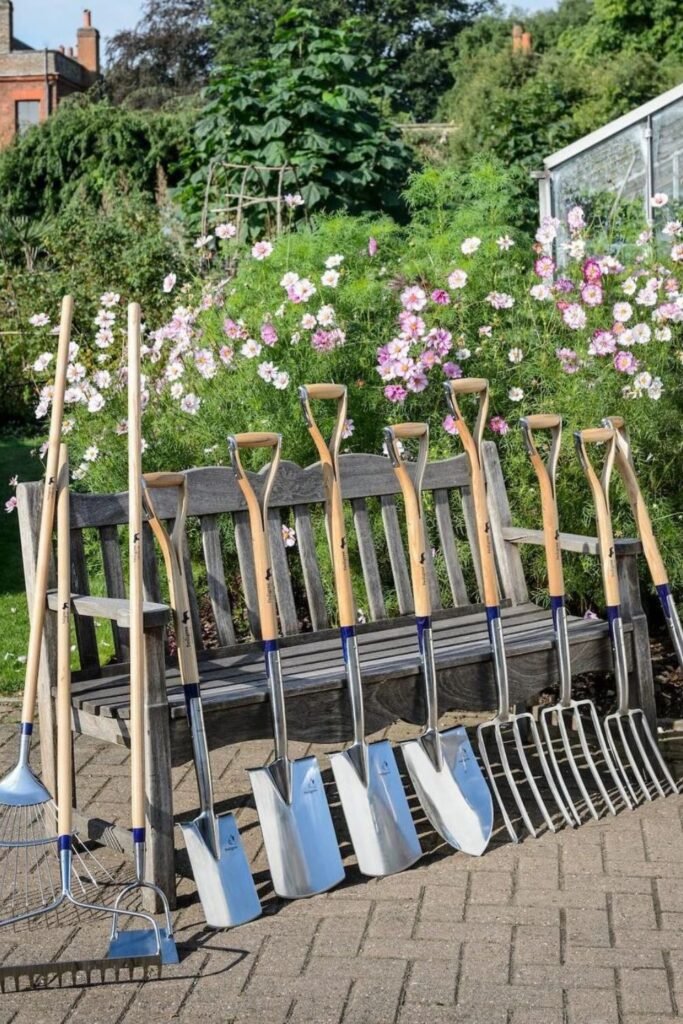
Building a reliable gardening toolkit takes time, so choose long-handled tools based on the work you do most often instead of buying everything at once.
You’ll need a digging spade for planting, a garden fork for loosening compacted soil, a square shovel for transferring compost and a rake for cleaning leaves.
Clean tools and store them on a rack or lean them neatly against a bench so they dry correctly and handles don’t get broken.
It’s preferable to invest in a few high-quality essentials than to load your shed with gear you’ll rarely use.
Hose Station
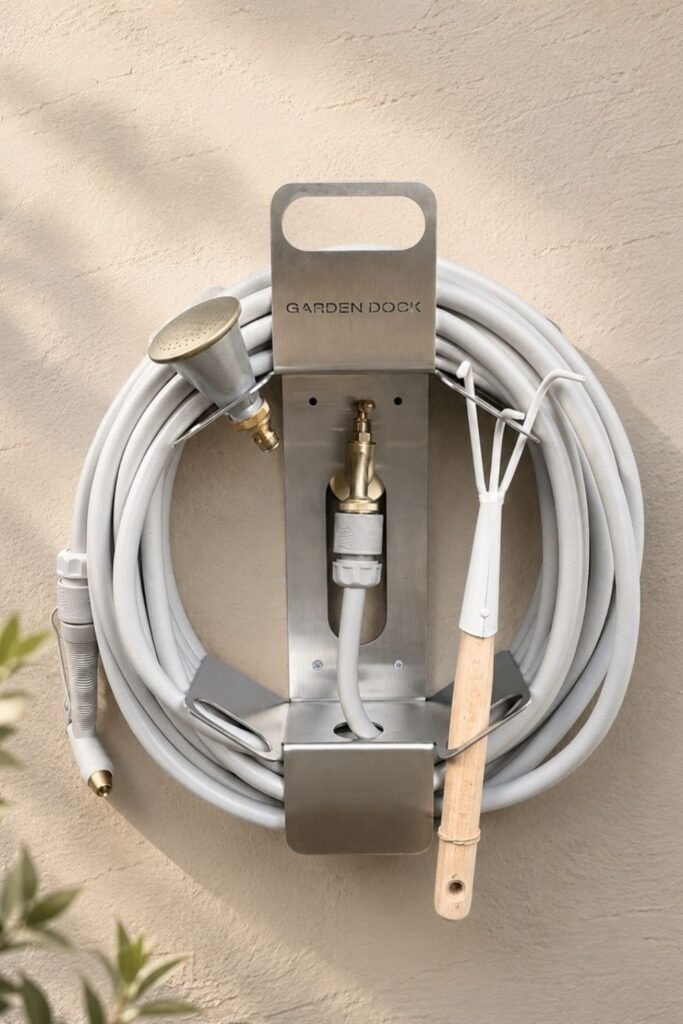
Tangling a garden hose wastes time before watering even begins. Install a wall-mounted hose holder that has room for the hose.
Spray nozzle and watering wand so every watering gear stays in one handy place. To minimize kinks that hinder water flow and to prolong the life of the line.
Position the station adjacent to your main outdoor spigot so you can water flower beds, containers or vegetable plants without having to move equipment.
Draining the hose before putting it away also helps protect fittings and maintains everything ready for your next gardening excursion.
Pressure Sprayer
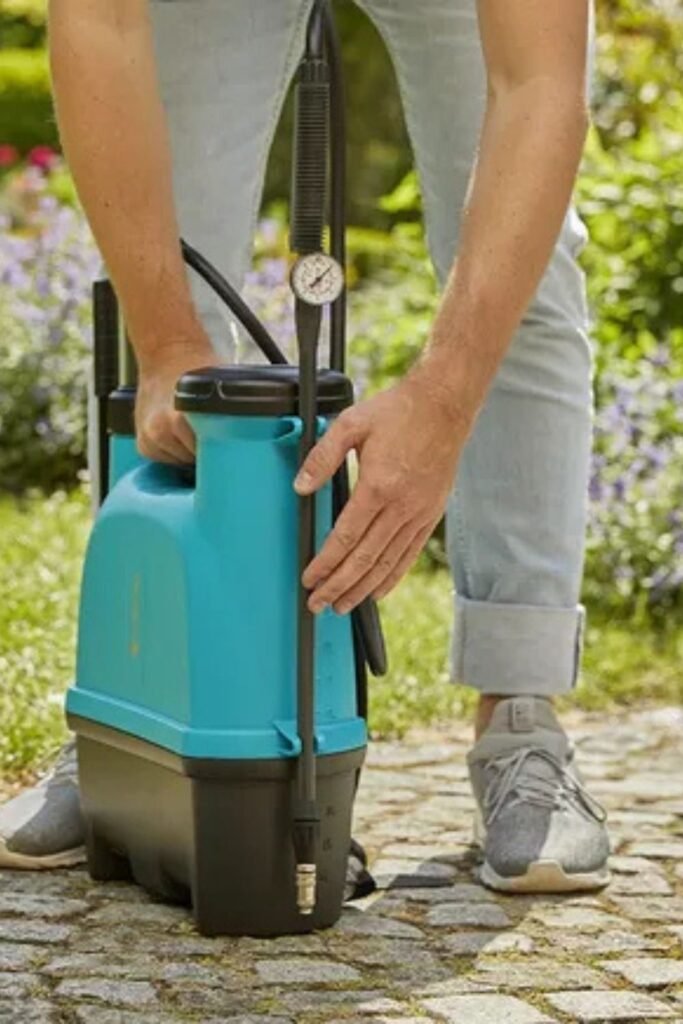
Healthy plants often need more than regular watering, and a pressure sprayer helps you apply liquid fertilisers, organic pest treatments.
Pump the sprayer up to the correct pressure, then spray a thin even mist over the tops and undersides of leave where pests like to hide.
A shoulder or hand-held type that is comfortable to use is particularly effective on flower beds, shrubs, vegetable gardens and young trees.
Rinse the tank well at the end of each usage to avoid any build up of residue and keep the sprayer ready for the next garden treatment.
FAQs
What Garden Tools Last the Longest With Regular Use?
Tools that last have forged steel heads, sturdy hardwood or fibreglass handles and joints that don’t loosen after repeated digging or pruning.
Rinse soil from metal pieces after each use and dry thoroughly. Store in a covered, dry place to avoid rusting.
In the long run, you will save money by purchasing a bit more expensive tools that you use most of the time.
How Can You Organise Garden Tools Without Taking Up Much Space?
Do not put tools on the floor. Maximize vertical storage space with wall hooks, pegboards, pallet racks or small storage cabinets.
Tool organization: Group comparable instruments together and store the tools you use most often at eye level for easy access.
A neatly arranged storage room will protect your equipment, minimize clutter and allow you to start your gardening activity.
