
23 Garden Yard Ideas for 2026
You might have tons of plants, a lovely lawn and even a good patio but your yard can still feel like it’s missing something.
Maybe the flower beds are disjointed, a corner is bare, or it’s already more work than you desire to maintain it tidy.
Begin with how you really use your yard and then design the garden to fit those demands.
In this article, you’ll find 23 Garden Yard Ideas that can help you create a more useful, connected, and manageable outdoor space.
Let’s jump in!
How Can I Make Backyard Landscaping Easier To Maintain?
Cut the number of jobs your yard generates each week.
If you have short strips of lawn, complex bed edges or plants that always seem to require trimming.
Replace with simpler designs and species better suited to your soil, sun and local environment.
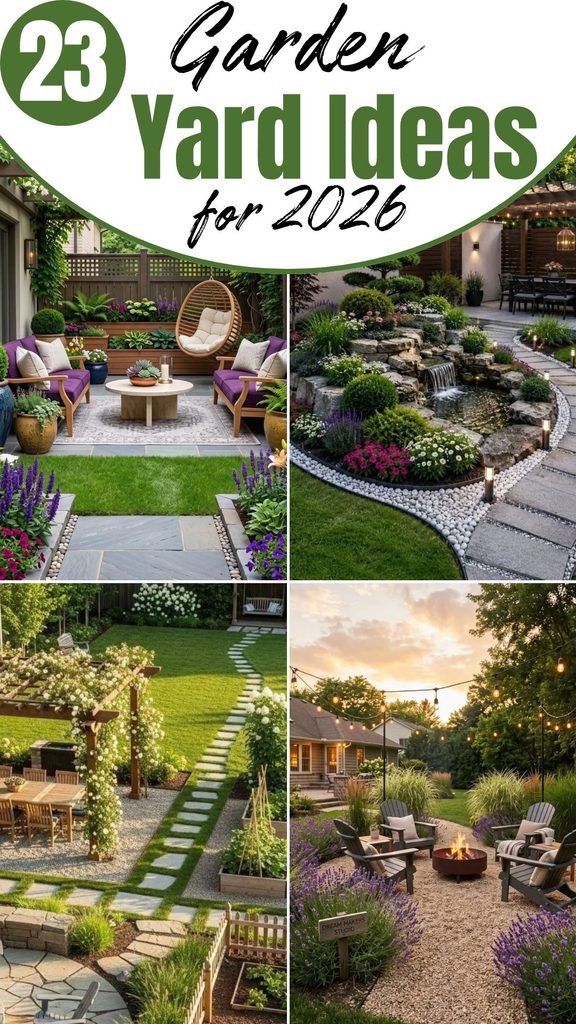
Group plants with similar watering demands together so you aren’t lugging the hose across the whole yard.
Mulch around shrubs and flower beds to help hold moisture in the soil and slow the growth of weeds.
They can also be used to cover bare spots that would normally be invaded by weeds.
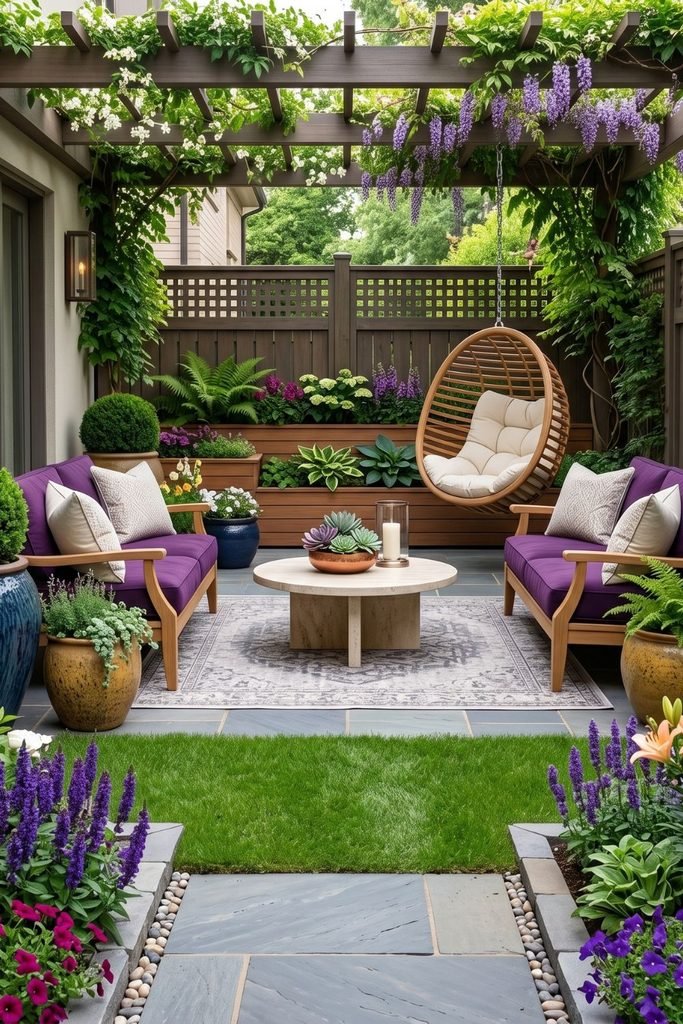
Pergola Retreat
Turn a seating area into part of the garden by letting climbing plants grow across a pergola instead of leaving the structure bare.
For overhanging greenery, a wisteria or another blooming climber is a good choice, and stacked beds along the borders make the room feel nestled into yard.
Place pots next to the patio to bring plants closer without restricting the walkway.
This arrangement works especially well next to the house or along a secluded section of the backyard where you want shade.
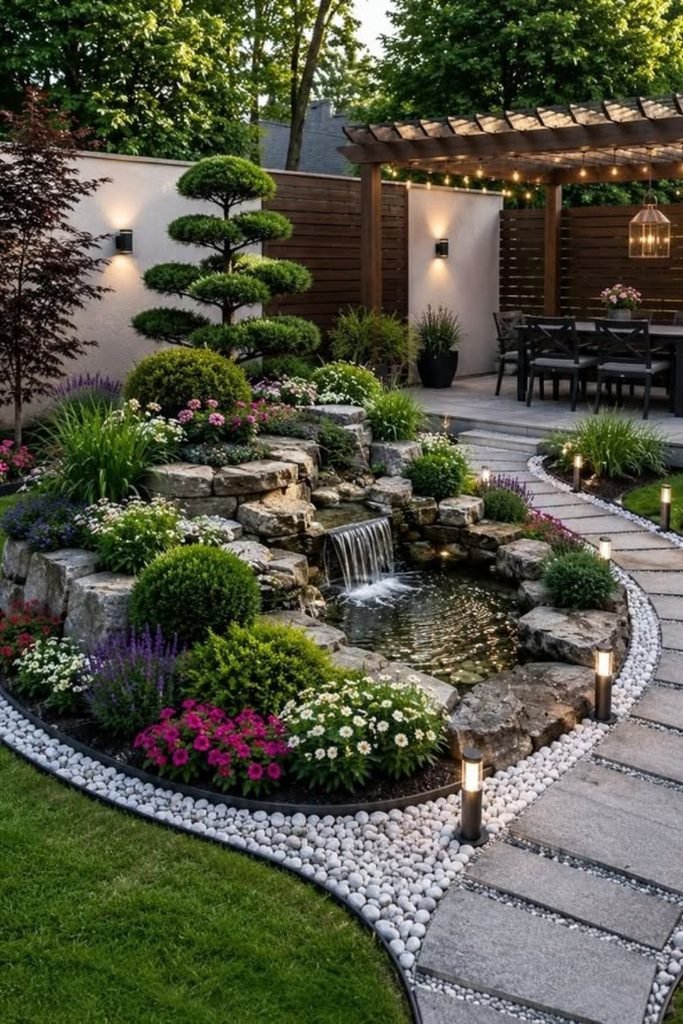
Pond Pathway
Make a garden path more rewarding by letting it lead past a small pond instead of running through an empty stretch of lawn.
Build the water feature from natural stone, then soften the edges with low flowers, rounded bushes and taller plants at the back.
White pebbles can outline the stepping path from the surrounding earth, and give the walkway a cleaner finish.
Provide enough open lawn around the feature so the yard doesn’t feel crowded.
This design works great if you have a central space that needs a center point but yet allows simple mobility toward a patio or eating place.
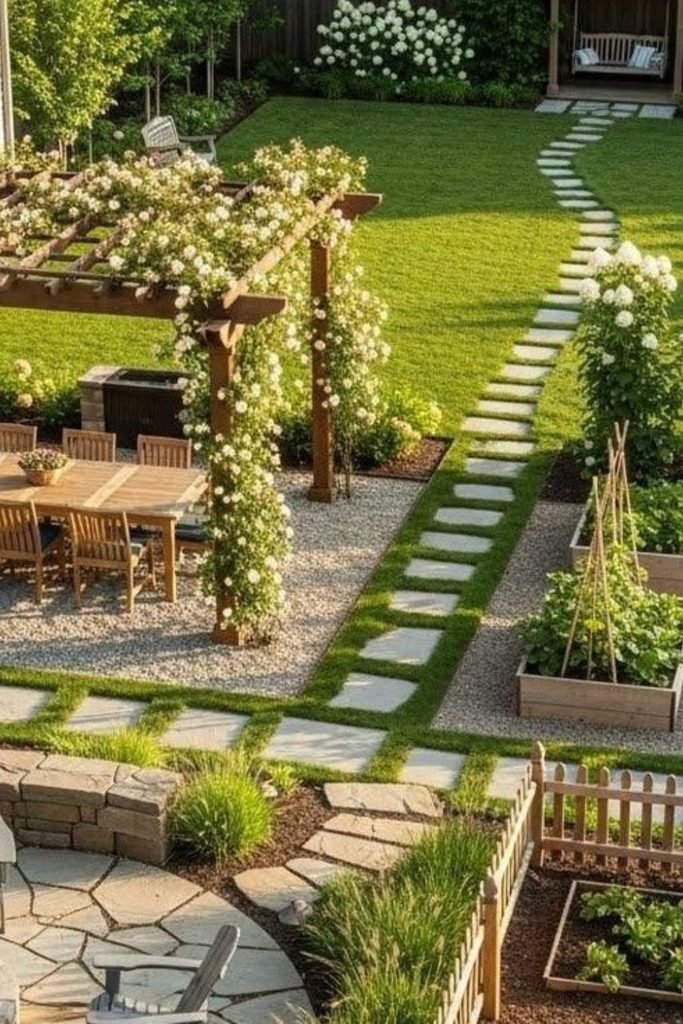
Garden Zones
Divide a larger yard by purpose so every section earns its space instead of letting one wide lawn take over everything.
Leave a grassy space available for daily usage, create raised vegetable beds in sunny spots and dine under a flower-covered pergola.
And instead of one big paved walkway, each zone can be connected with stepping stones.
If you have the room, repeat similar plants in different parts to give the sensation of them being connected.
This is a great set up for families who want to grow food, entertain outside, and still have plenty of open lawn.
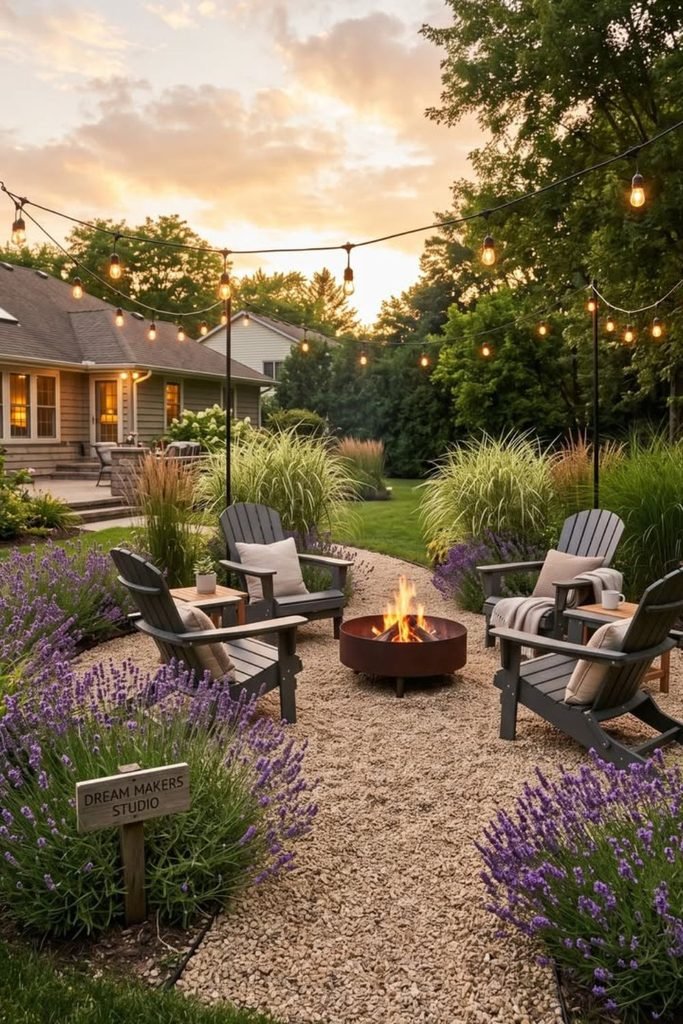
Fireside Garden
Carve a simple gravel pocket into the lawn when you want a gathering spot without building a full patio.
Place a fire pit in the center with plenty of room around it, and arrange chairs so it’s easy for guests to walk from one seat to another.
Instead of showing the edge of the gravel, plant a wide border of beautiful grasses and blooming plants that are suited to your environment around the region.
The planting lets the fire area settle naturally into the yard, while separating it from open lawn.
String lights overhead can make it functional into the nite, which is particularly helpful for a wide backyard that wants a chill destination away from the house.
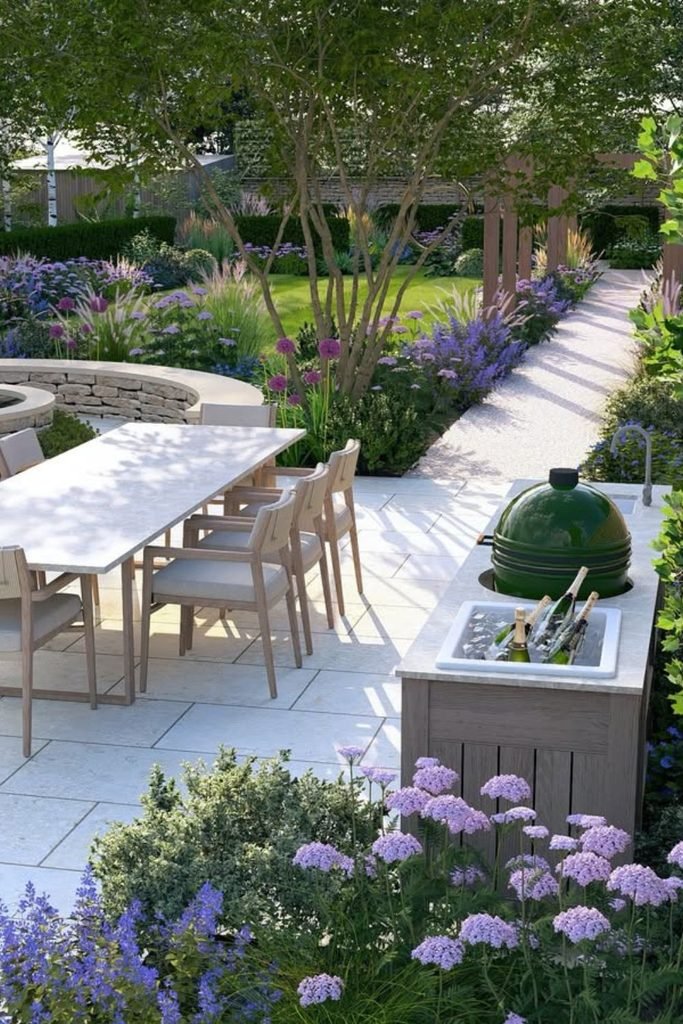
Dining Border
Bring flower beds right up to an outdoor dining area when you want meals to feel connected to the garden instead of separated from it by open paving.
Allow enough patio area for chairs to be pulled back comfortably, then soften the outside borders with flowering perennials, grasses, compact shrubs.
Extend the planting along the path so the eating area flows seamlessly into the remainder of the yard.
This works especially well near the house so you can make cooking and dining easy, but still enjoy a full garden scene.
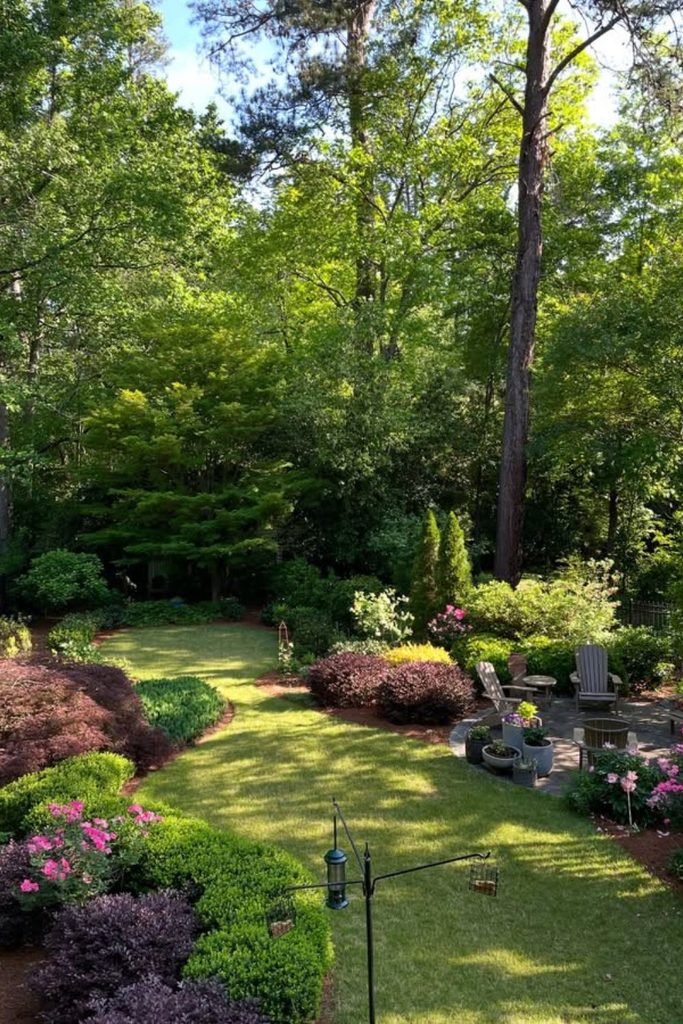
Woodland Lawn
Let mature trees set the mood instead of fighting their shade with oversized flower beds or extra hardscaping.
Keep an open ribbon of lawn through the middle, then build deeper planting beds around its edges with shrubs, flowering perennials.
Curving the lawn naturally between those beds gives you a clear walking area while making the garden feel fuller.
Tuck a small seating spot into one side rather than placing it in the center.
This approach works especially well in established yards where large trees already provide privacy, height, and a strong backdrop.
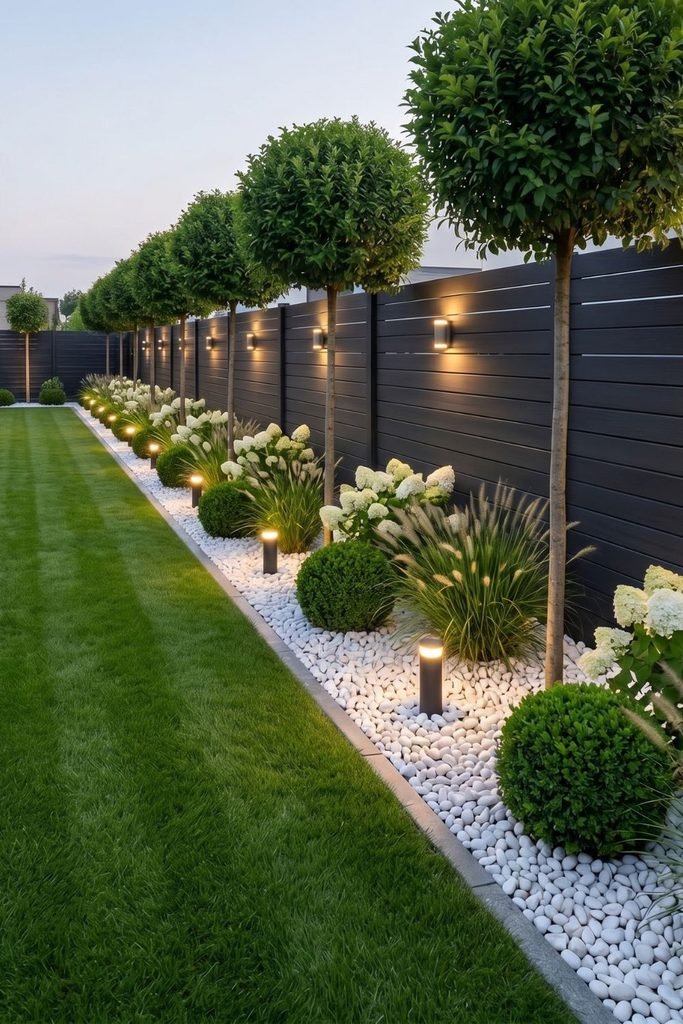
Linear Border
Give a long, narrow yard stronger structure by running one continuous planting border along the fence instead of scattering plants across the lawn.
Plant tiny trees at even intervals for height, and fill in below with rounded evergreens, blooming shrubs and attractive grasses to make many levels.
A stone or gravel mulch can keep the bed looking tidy, and reduce the area of exposed soil on which weeds can settle.
And if there is a grass on the other side, leave it open so that the space still feels broad enough to use.
This neat arrangement works particularly well with modern houses because the repetition of planting and the straight lines mirror the design.
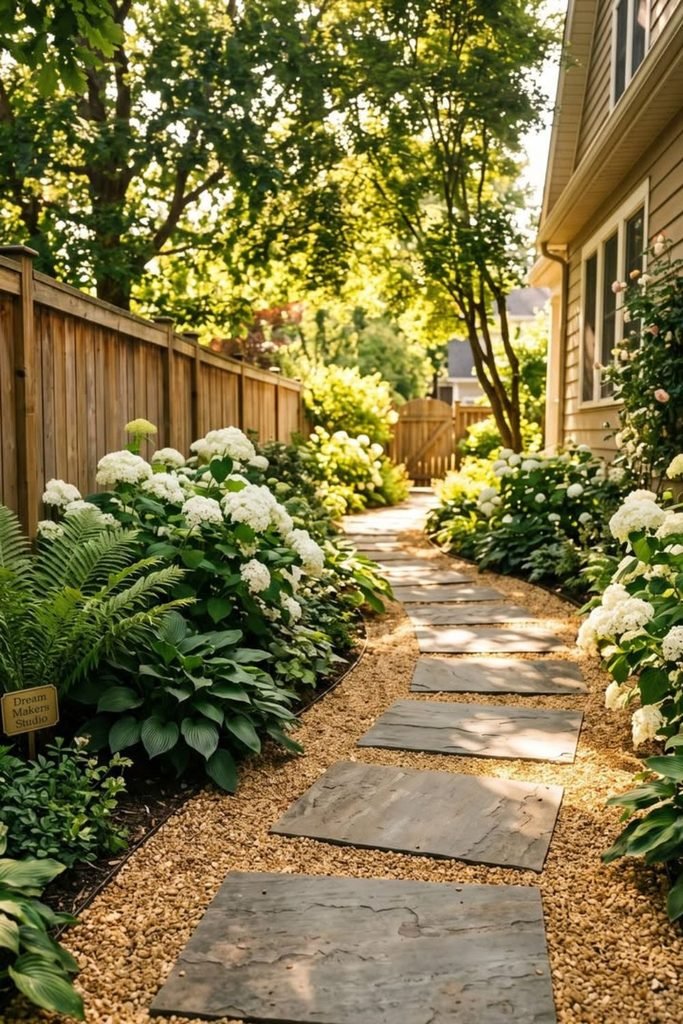
Shade Passage
Turn the narrow strip between your house and fence into a planted walkway instead of leaving it as a forgotten side yard.
Make a distinct path with large stepping stones over gravel, and use the rest of the space for plants that prefer the lower light, such as ferns and broad-leaved perennials and flowering shrubs that tolerate shade.
To soften both limits without obscuring the path, place taller plants at the fence and house margins.
A limited plant palette repeated down the tunnel also makes for easier maintenance.
This technique is especially successful in places where the grass struggles due to neighboring buildings, fences and mature trees reducing the direct sunlight.
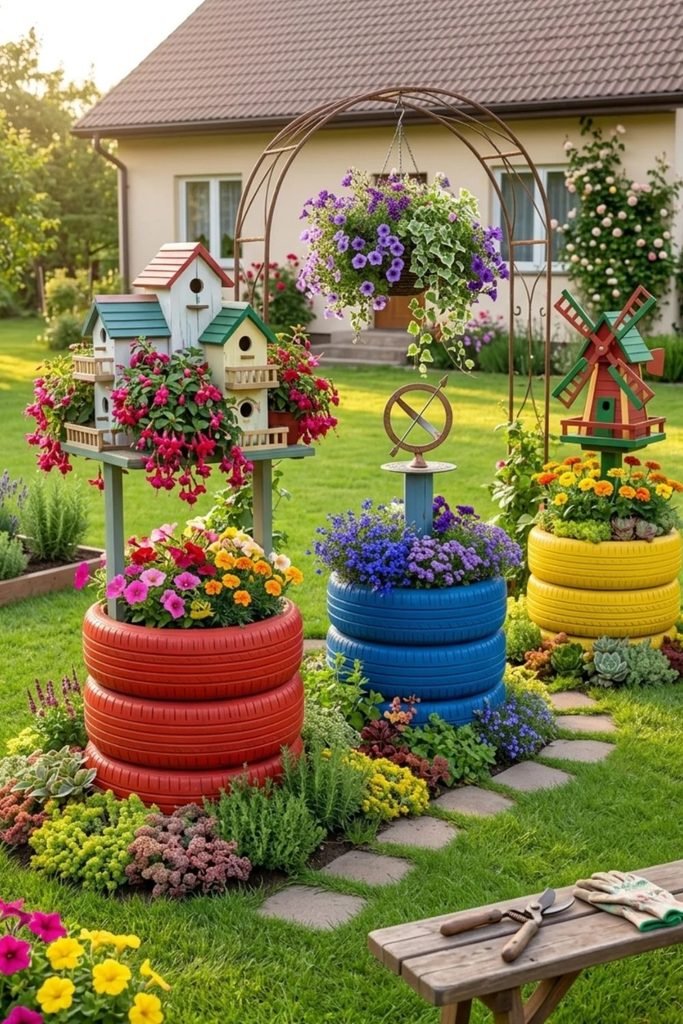
Tire Planters
Give old tires a second job by turning them into raised flower planters for a playful section of the yard.
Stack two or three firmly and fill the center with good planting material and well-draining soil, then soften the spherical form with flowers.
Try grouping multiple planters together instead of distributing them and surround their bases with low-growing plants to tie the display to the ground.
It works best in a casual family garden, a creative backyard, or a special garden nook where bold, handmade features are a natural match with the rest.
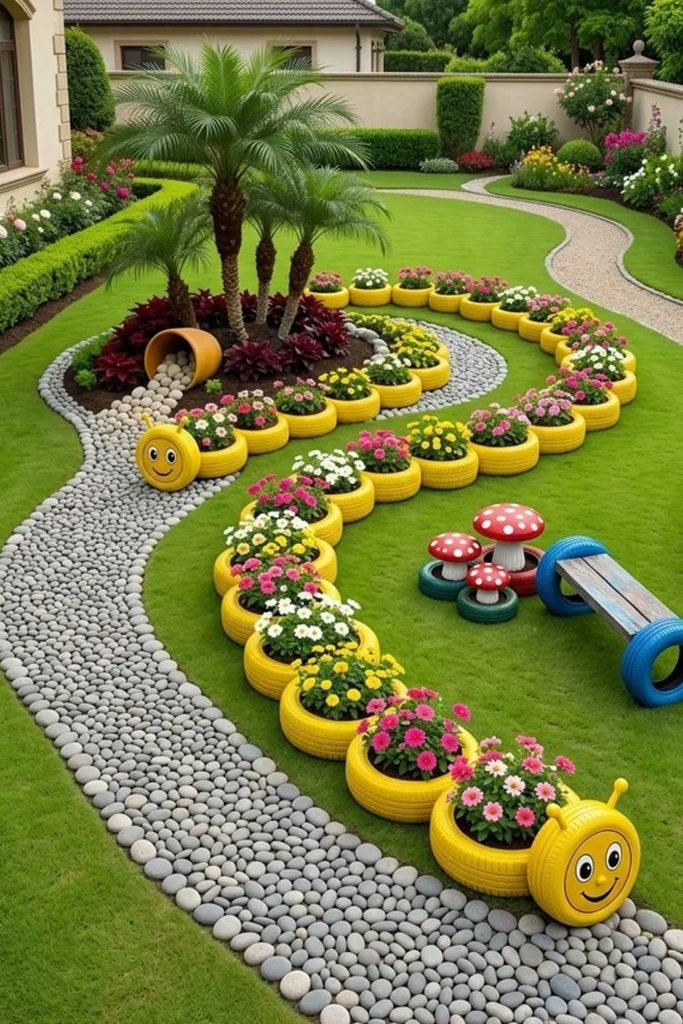
Caterpillar Border
Make a playful flower border more organized by repeating the same planter shape along one flowing curve.
Recycled tires can house compact annuals or other shallow-rooted flowers, and the curving arrangement offers a clean edge between planting and lawn.
To replicate the caterpillar effect, be sure to carefully secure and prepare each tire, use appropriate drainage and soil, and then repeat a limited floral palette so the show is coordinated.
The lawn around it should be kept basic, as the colored border adds a lot of visual interest.
This concept works for family gardens or larger yards where you want gardening to be fun without giving up open.
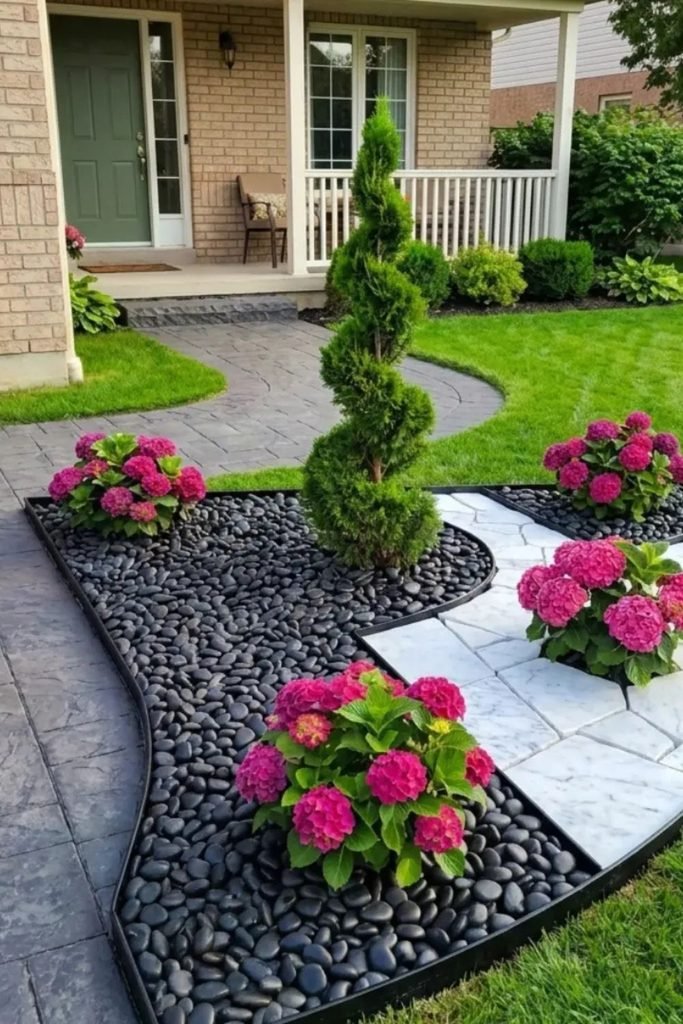
Pebble Island
Break up a wide stretch of lawn with one compact planting island instead of adding another border around the yard.
Select a tall evergreen or sculptural shrub to serve as a centerpiece, then add a few blooming shrubs around it, allowing enough space for them to mature.
Dark pebbles can hide exposed soil which helps the plants to pop, and a defined boundary helps prevent stones from spreading into the grass.
If you wish to introduce a stronger pattern, use contrasting paving sparingly.
Great next to an entry walk or open front-yard spot that feels bare but doesn’t need a big, high-maintenance flower garden.
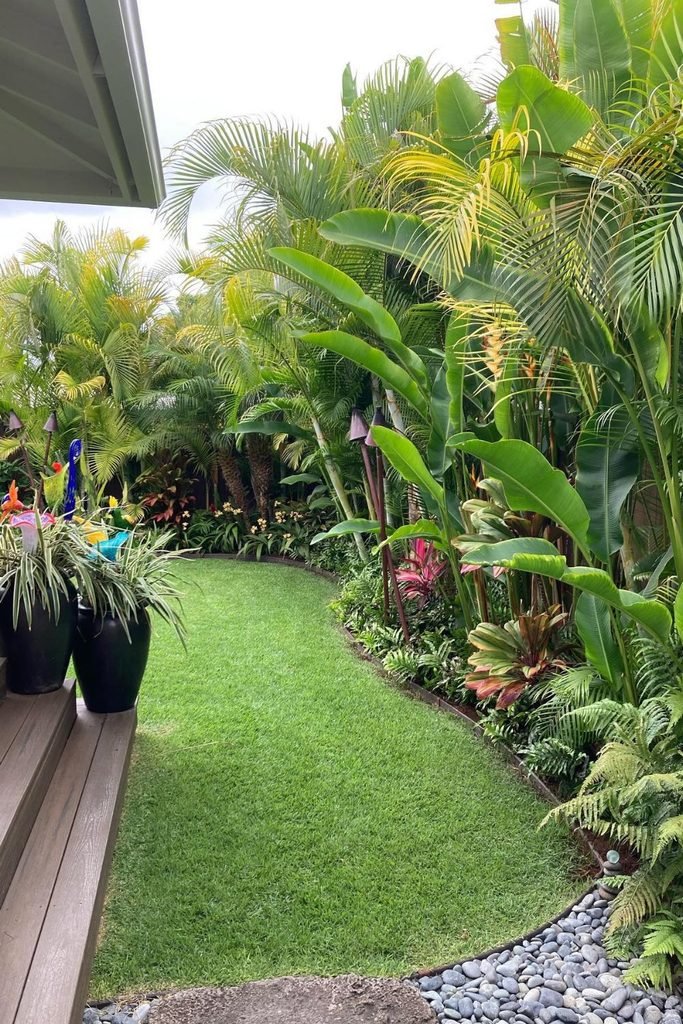
Tropical Border
Use the yard boundary for your tallest planting when you want privacy without sacrificing the open lawn.
The upper layer can be formed by palms and broad-leaved tropicals, with ferns and other foliage plants filling in the gaps near the ground.
Pack the border deep enough to hide bare stems, but check each plant’s maturity width before planting, so the bed doesn’t get overloaded later.
You get a place for your eye to rest with the lawn simply next to such lush vegetation.
This method is most suited for warm areas where tropical plants may survive outside, and a fence or adjacent property needs softer, more natural screening.
Entertaining Garden
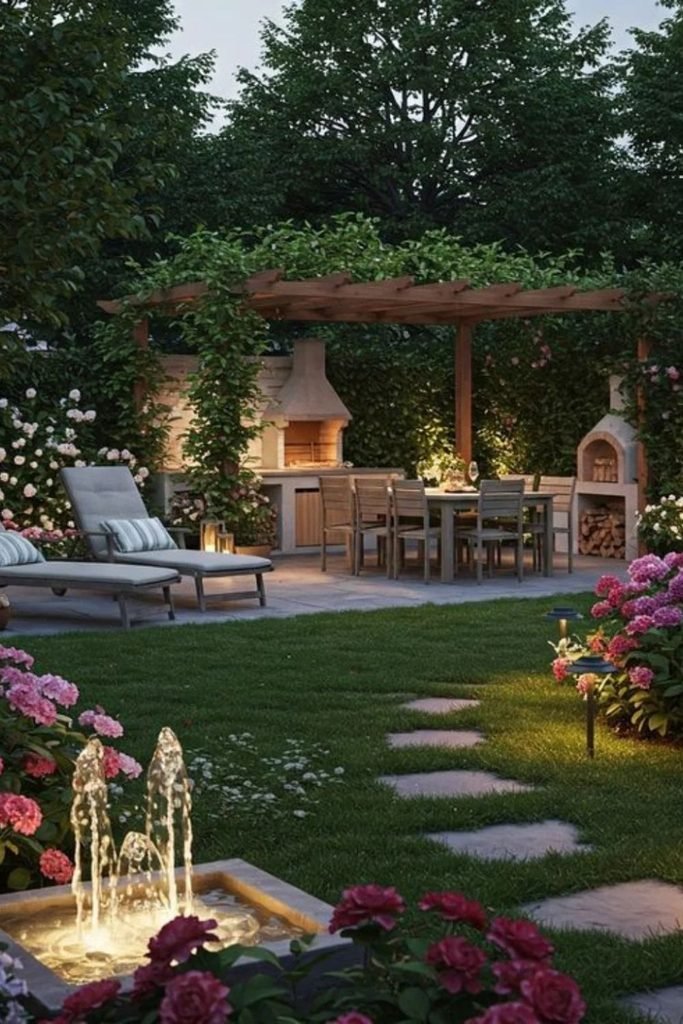
Push the main entertaining area toward the back of the yard when you want to keep the center open and surround guests with greenery.
Build a basic patio under a pergola and combine the eating and cooking activities so the food doesn’t have to be moved from one area to another.
Flowering bushes on the sides can soften the pavers, while taller hedges or climbers can provide privacy behind the structure.
Leave a strip of lawn between house and patio, then lay stepping stones that illustrate the easiest way over it.
Garden lighting and a small water feature can make the surrounding landscaping enjoyable after nightfall without overwhelming the lawn with other attractions.
Garden Lounge
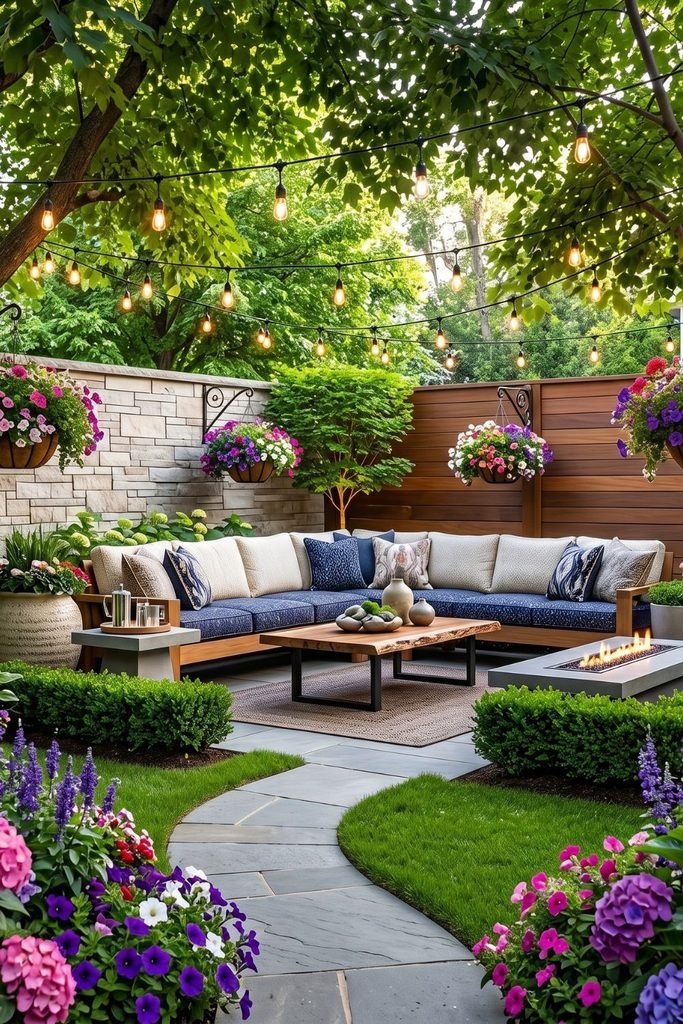
Build your seating area around existing trees when you want natural shade without adding another large structure to the yard.
Keep the footprint of the patio small and then surround the perimeter with flowering shrubs, low evergreens and seasonal flowers so that the loun
Hanging baskets may bring flowers higher into the tree canopy, and string lights make that same area useful after dark.
Instead of paving everything, run a small path from the lawn straight over to the dining area.
This configuration is good for a shady portion of the yard where you want comfortable seating but want much of the surrounding area to be green.
Circular Retreat
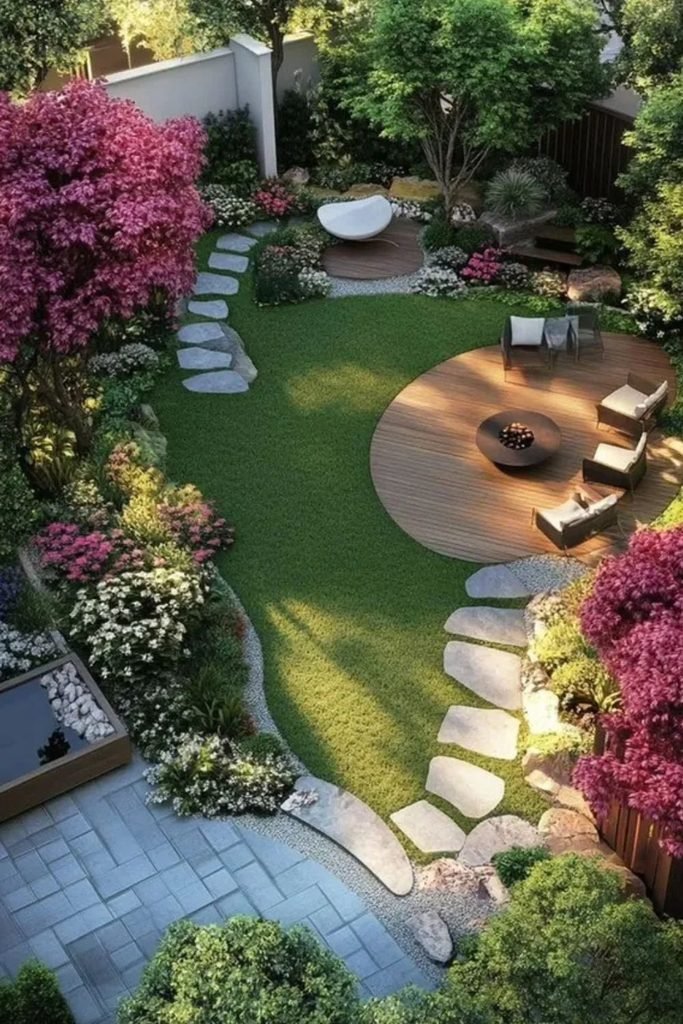
Round seating platforms can soften a yard dominated by straight fences, patios, and property lines while giving an open lawn a clear destination.
Set one out to the side, not right in the middle, and let curved planting beds wrap around it with small trees, shrubs and blooming perennials.
Follow the softer shape with irregular stepping stones that lead between house and seating space.
This arrangement works especially well in medium-sized yards if you want several locations to rest without splitting the space up with fences or constructions.
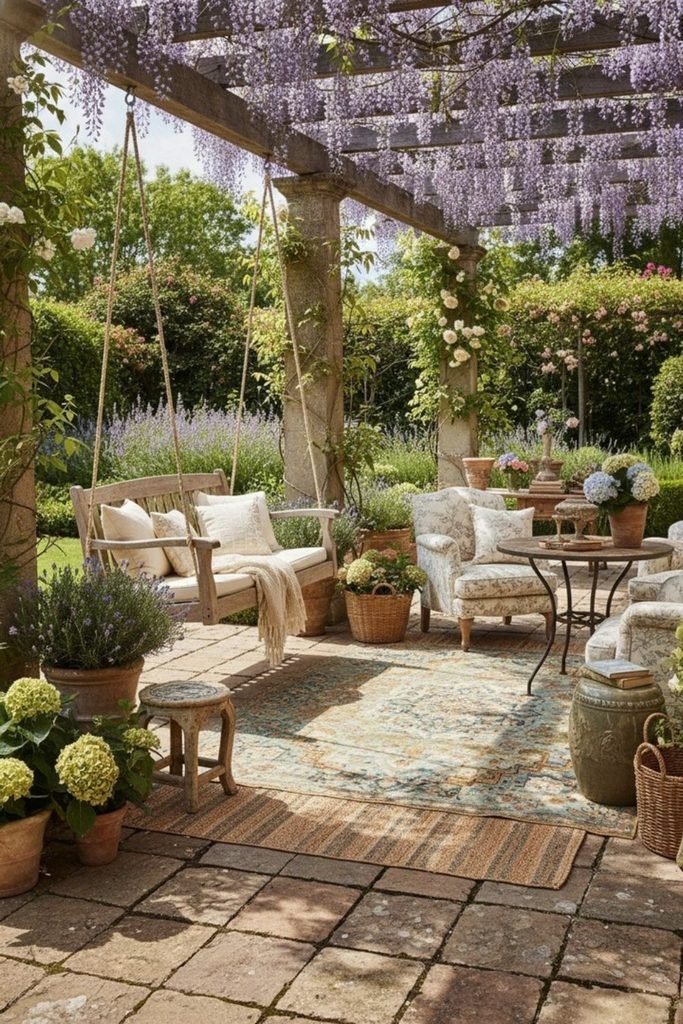
Wisteria Canopy
Let a climbing vine turn an open pergola into natural overhead cover when you want the seating area to feel surrounded by the garden.
Train a suitable climber up strong beams and prune frequently keeping growth in check and not engulfing the structure.
Bring flowers within eye level in containers and keep the patio inviting with movable seats and a swing.
The same blossoms are repeated in the outside beds, connecting the covered space to the larger yard.
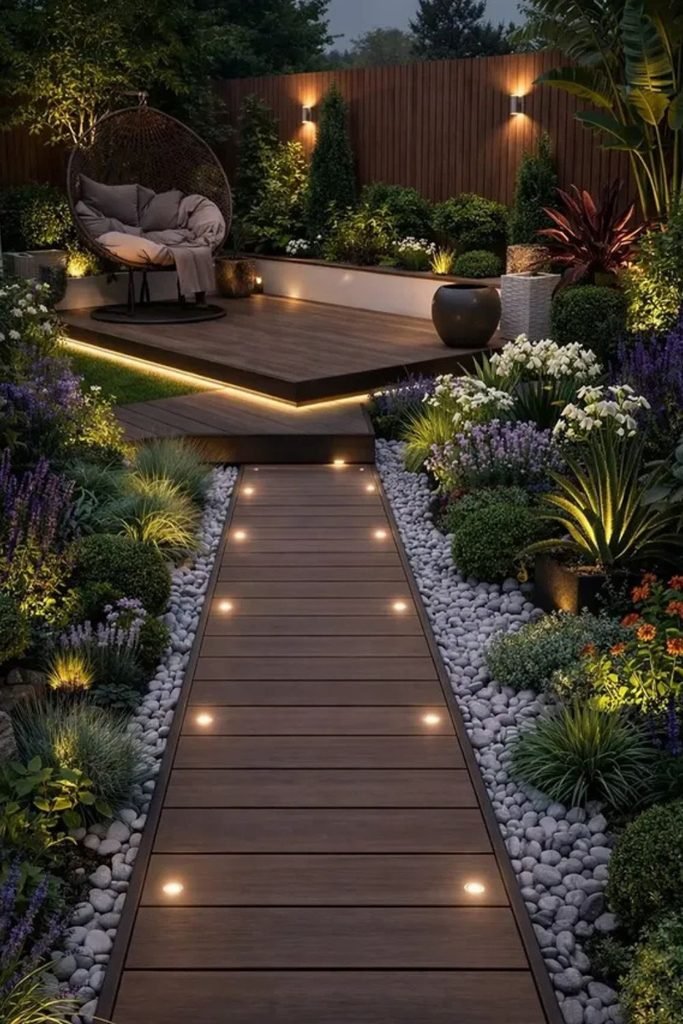
Illuminated Walkway
Guide attention through the garden after dark by building lighting into the route instead of relying only on bright fixtures around the house.
Build a straight walkway to a raised seating deck and line both sides with low shrubs, grasses, floral perennials and pale gravel.
Small recessed path lights can designate each step, or discrete uplights might emphasize specific plants rather than filling the whole bed with light.
Leave spaces between fixtures so garden retains darkness and depth It works particularly effectively in smaller backyards.
When a single clear path may take you from the house to a garden destination where you can relax.
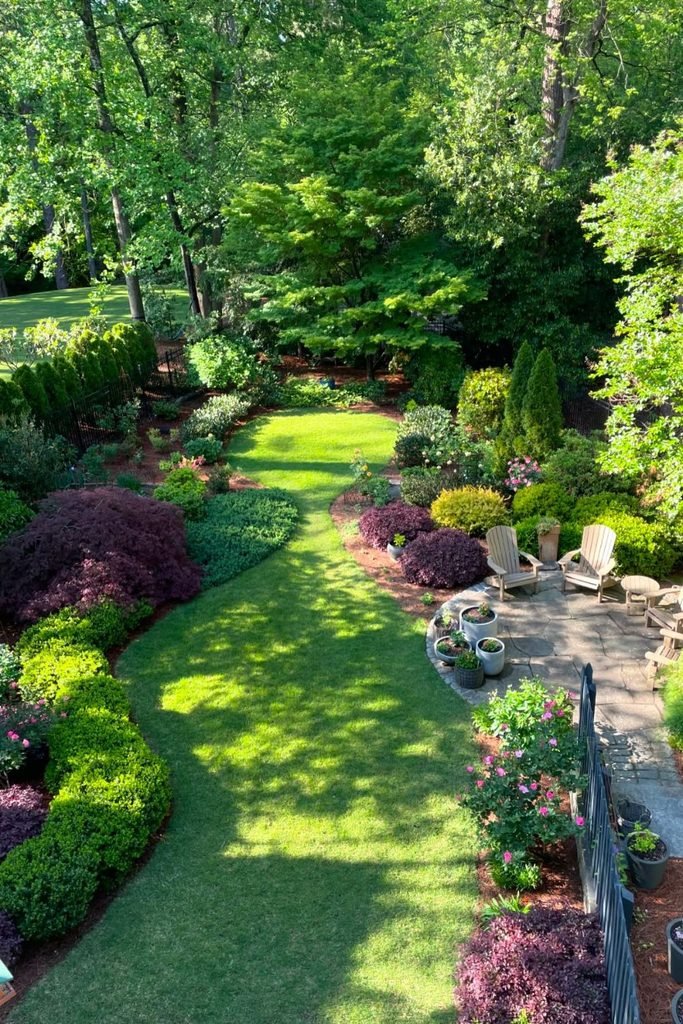
Lawn Corridor
Keep a generous strip of grass through the middle when you want a planted yard that still has room for walking, playing, or everyday use.
Make deeper beds on either side, varying the heights with low edging shrubs, floral plants, medium bushes and towering evergreens toward the boundaries.
A little of curvature in the bed lines so the lawn doesn’t look like a stiff rectangle, and it naturally attracts your eye to the back of the garden.
This design is great for larger yards when you want a lot of greens but don’t want to turn every bit of usable turf into another garden bed.
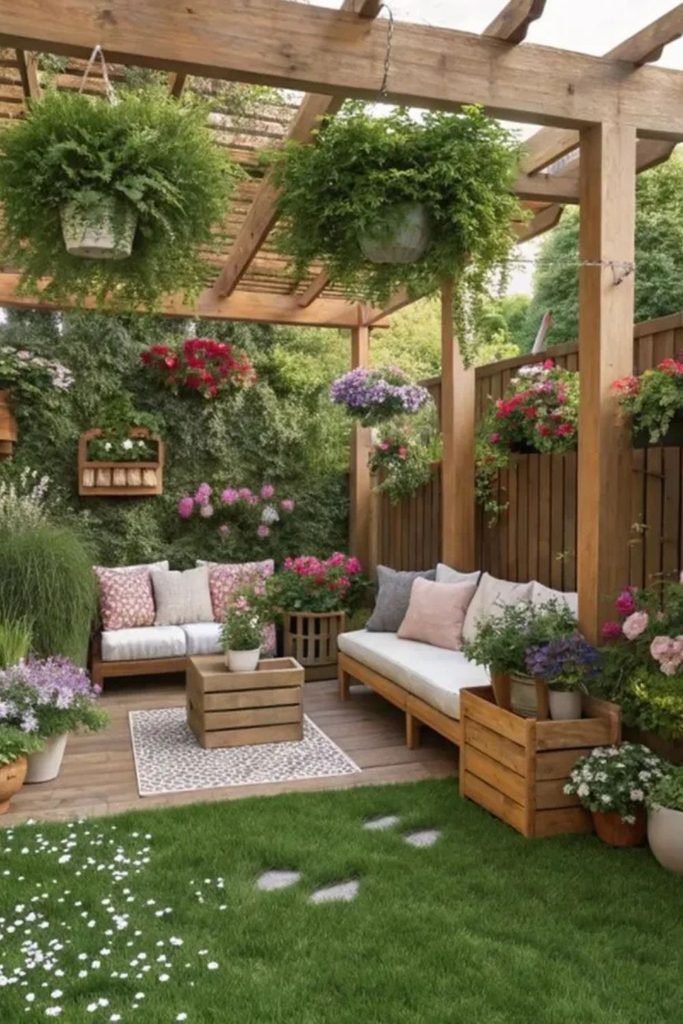
Hanging Garden
Use the pergola beams and nearby fence when ground space is limited but you still want plenty of flowers around your seating area.
Dangle trailing plants overhead, add flower boxes where you can and use a few larger pots at floor level to disperse the foliage across several heights.
Keep the middle open for furniture, so that watering and moving around shall never be a difficulty.
And using containers instead of planting permanent beds on every edge means you can also swap out seasonal plants more simply.
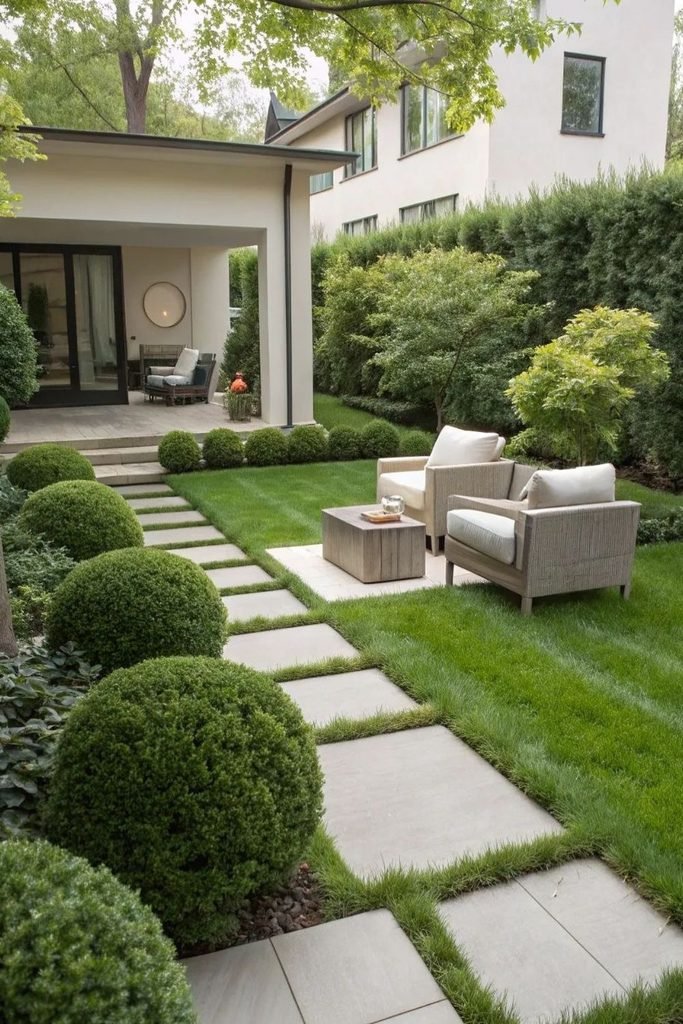
Structured Greenery
Keep the plant palette simple when you want a polished yard without spending every season managing flowers.
Rounded evergreen bushes define the walk way and provide shape all year round. Taller hedging along the boundary give privacy but does not take over the lawn.
Add a couple of modest ornamental plants to break the repetition of foliage and give the space some height.
The home is linked to the seating area with large stepping stones through grass, avoiding hardscaping.
Garden Dining
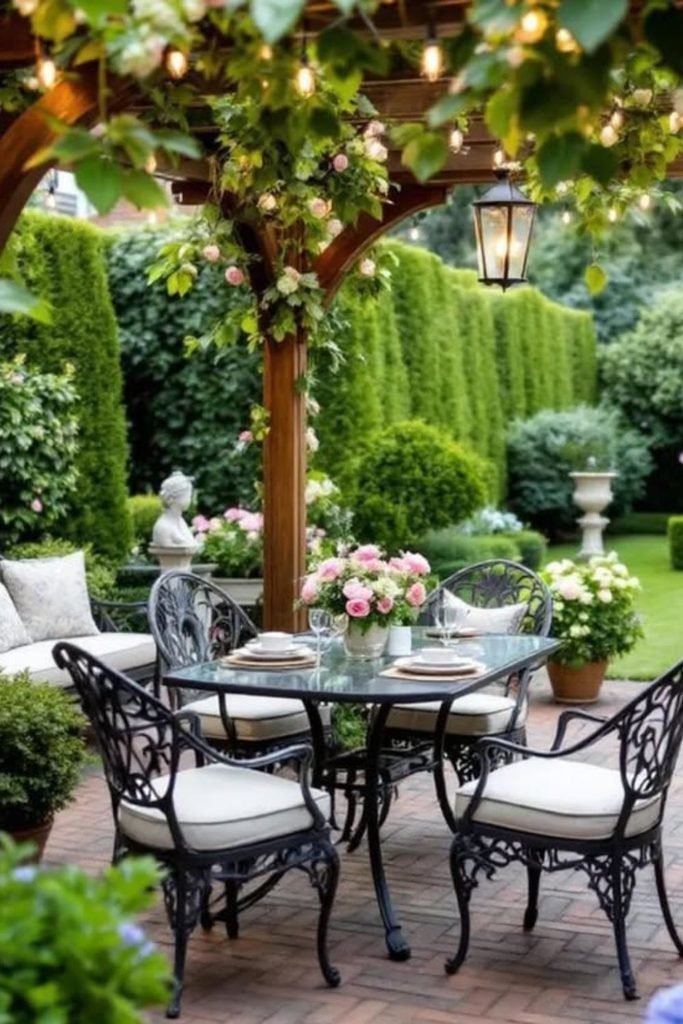
Place your dining table where the garden can become the view instead of pushing it against a bare wall or open lawn.
A pergola gives the area structure while climbing plants grown around the supports and overhead beams soften it without taking up valuable ground space.
Keep nearby shrubs trimmed and layered and plant taller evergreens along open borders for privacy.
Potted flowers by the table can move seasonal color closer without creating another permanent bed.
This arrangement works nicely just outside the house where it’s still easy to serve meals but the seating still seems part of the larger garden.
Courtyard Garden
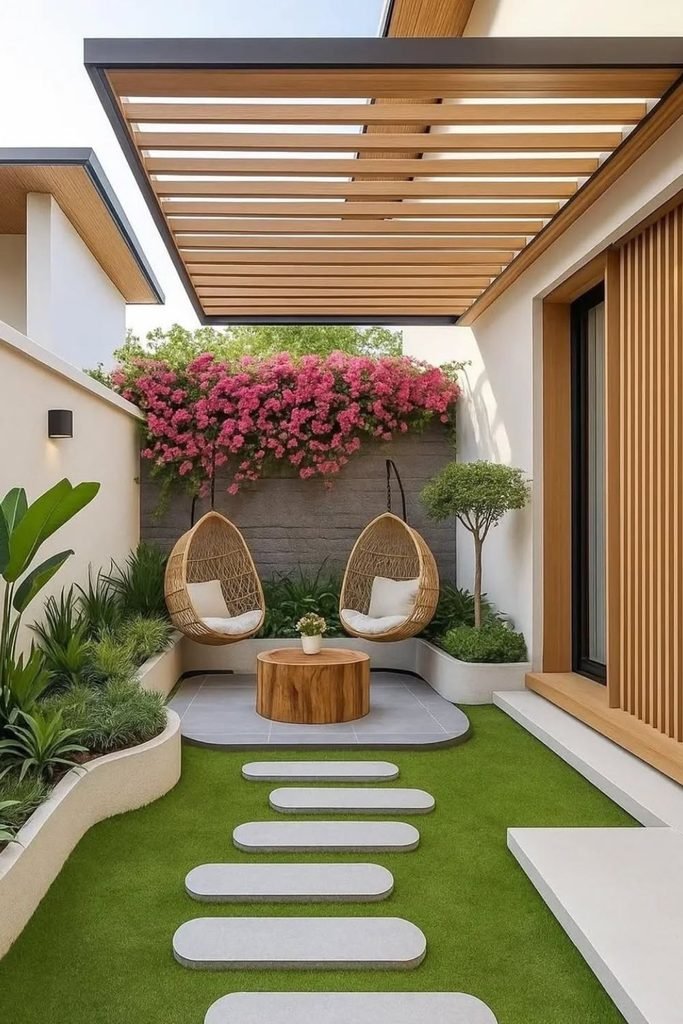
Use built-in planting beds when a narrow yard needs greenery without losing valuable floor space to scattered pots.
Run the beds along the walls and then layer upright foliage, compact shrubs and one small tree to give the garden varying heights while keeping the center uncluttered.
If you want color without increasing the planting area, train a flowering climber up the rear wall.
Stepping pads lead to a little seating area and give the vast expanse a sense of purpose.
This is especially useful between modern residences or in enclosed courtyards where privacy is already there but the rough walls can be softened with plants.
Modern Layers
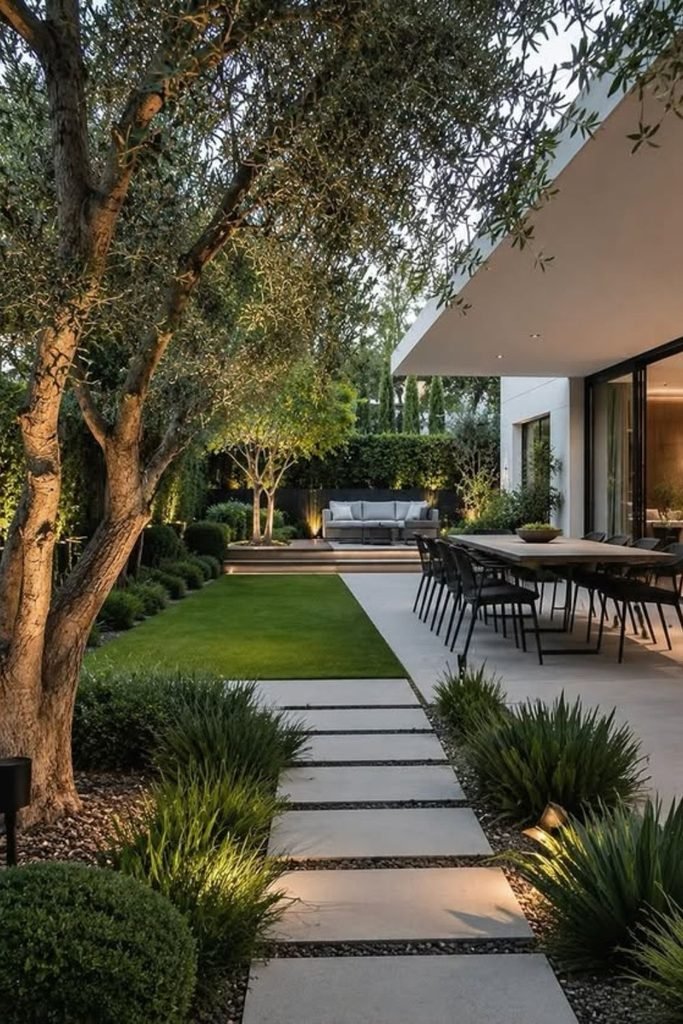
Let one mature tree anchor the garden, then build the rest of the planting around it instead of removing valuable existing shade.
Low grasses and rounded shrubs can fill the front, while hedges and tiny trees give taller layers along the boundary for privacy.
Leave a rectangle lawn open in the center and connect it to the home and the back seating area with wide paving slabs.
The simple plant shapes balance sleek architecture without making the garden feel empty, thus this pattern works especially well in modern yards.
FAQs
How Can I Make My Garden Yard Feel Bigger?
Keep your yard center open and transfer deeper planting to the borders.
Curved beds, layered shrubs, small trees and trails leading to a somewhat hidden destination can add extra visual depth.
Don’t overfill every corner with plants or furnishings, because open lawn provides breathing space in the garden and makes every planted area pop.
What Should I Add To An Empty Garden Yard?
Start with one element that provides the yard a defined purpose seating area, tree, path, deeper vegetable bed.
Slowly build around it, not putting random decorations everyplace. Repeat a few plants, materials or bed shapes to connect different locations.
This prevents new additions from looking random and gives the entire yard a planned aspect as it grows.
