
25 Greenhouse Ideas for 2026
Your greenhouse should make gardening simpler, not create another list of things to deal with.
Start with the room you have, sunshine, temperature and what you truly want to grow.
In this article, you’ll find 25 Greenhouse Ideas with practical ways to create a growing space.
Let’s jump in!
How Can I Keep My Greenhouse Cool During Summer?
The hot summer heat can transform a greenhouse into an oven faster than you think. Open the roof and side vents early in the day to let the hot air rise out.
If temps still rise, apply shade fabric over the sunniest side instead of blocking all the light your plants require.
Keep the door open on warm days, and use a fan if there is insufficient natural air movement.
Water plants in the morning so moisture is available before the afternoon heat arrives.
On dry days, you can dampen the bottom of the greenhouse and cool the air for a short time.
Most important, have a thermometer in. When you know when the temperatures start to rise, you can cool the space down before the plants begin to suffer.
Garden Glow
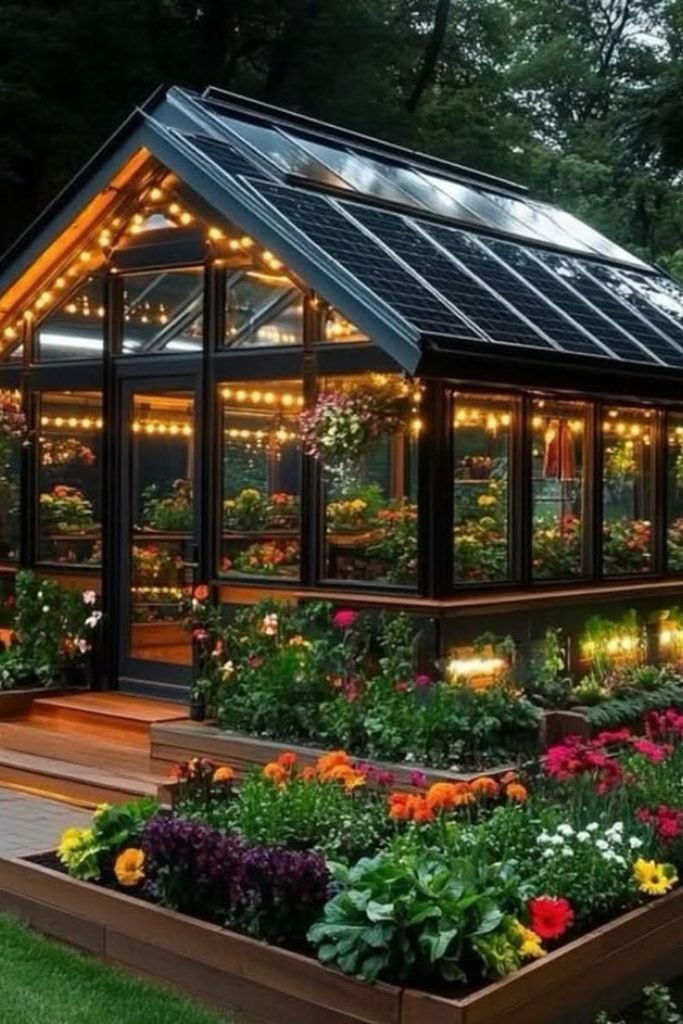
Evening lighting can turn a working greenhouse into a garden feature you enjoy after the growing work is finished.
Run warm outdoor-rated lights along the roof frame rather than placing bright bulbs directly above plants, especially if you only want decorative lighting.
Raised flower beds around the greenhouse help connect the structure with the rest of the garden instead of leaving it sitting alone on the lawn.
Keep taller plants away from the glass so they do not block valuable daylight, and leave a clear path to the entrance for watering, carrying trays.
Garden Passage
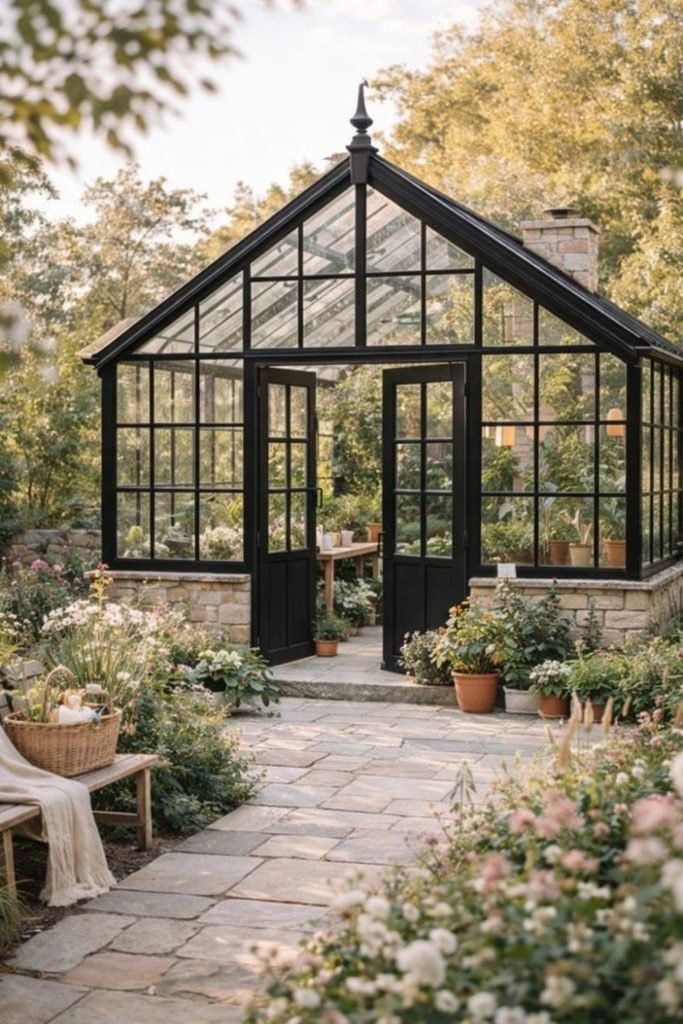
Give your greenhouse a proper approach if you want it to feel connected to the garden instead of dropped into an empty corner.
There was a stone or brick path from the main yard all the way to the door, and then both sides were softened with flowering perennials and low-growing plants.
Watch the planting closest to the glass so mature bushes don’t steal sunlight or limit ventilation.
Double doors are especially good for a larger greenhouse, as they allow trays, bags of soil and garden equipment to pass through easily.
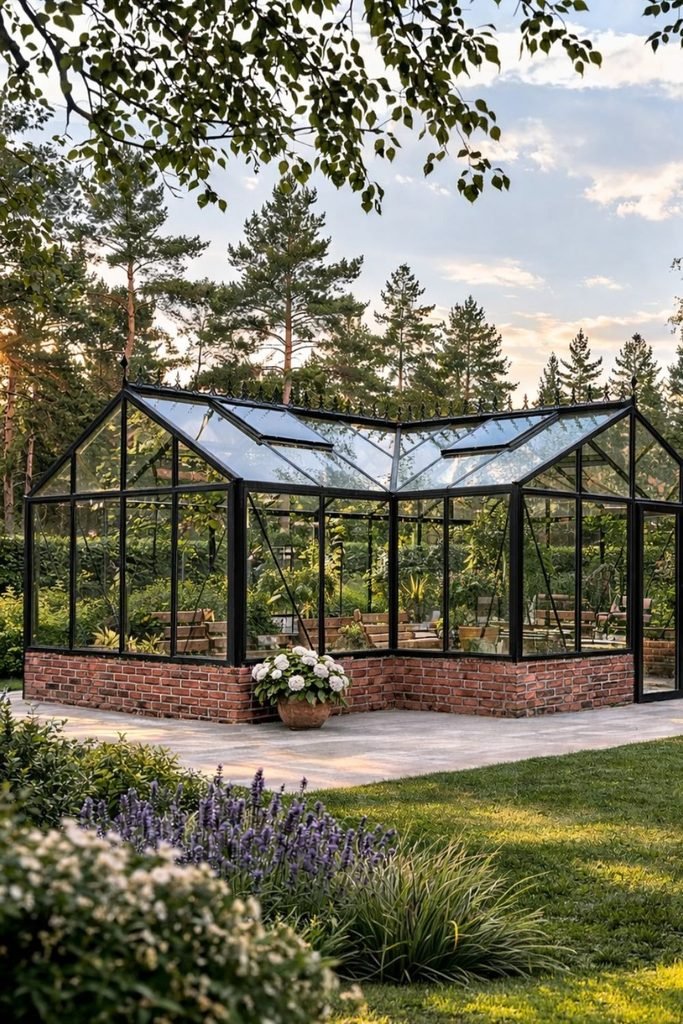
Raised Foundation
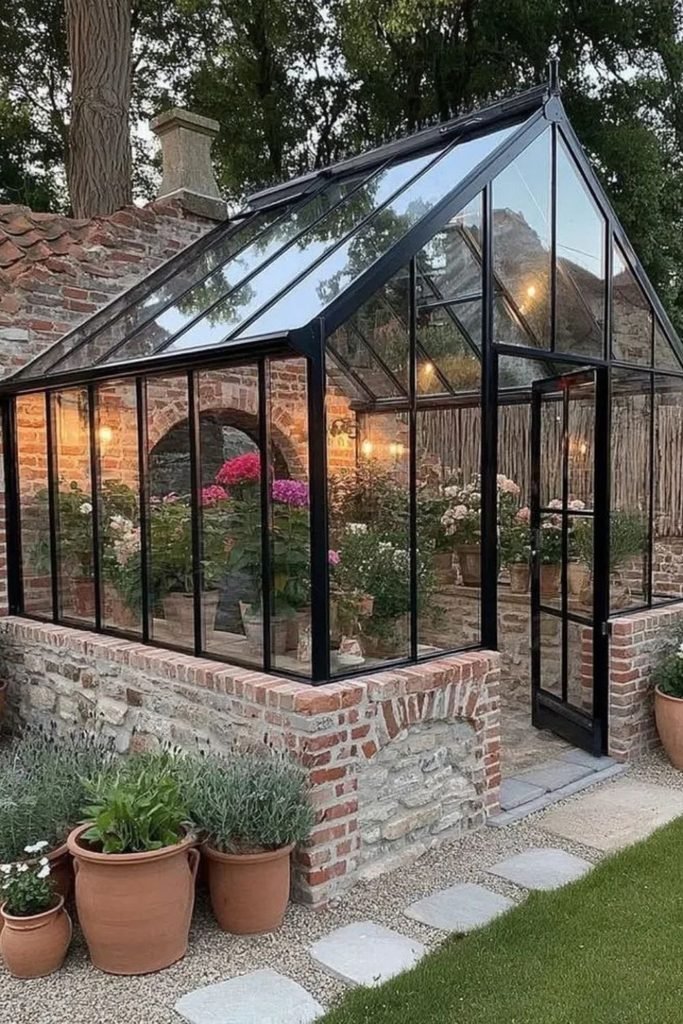
Uneven ground does not have to rule out a permanent greenhouse. If you build the frame on a raised brick or stone foundation.
You get a level starting point and you keep the glazing above damp soil and splashback.
It is particularly effective in older gardens where the base can be color matched to existing walls, allowing the new structure to blend in naturally.
Once you have planned the foundation measurements to fit around the greenhouse frame, and included a sturdy, well-drained entry, lay brickwork.
Pots on the outer edge can soften the harsh base, but they won’t obstruct any light through the glass.
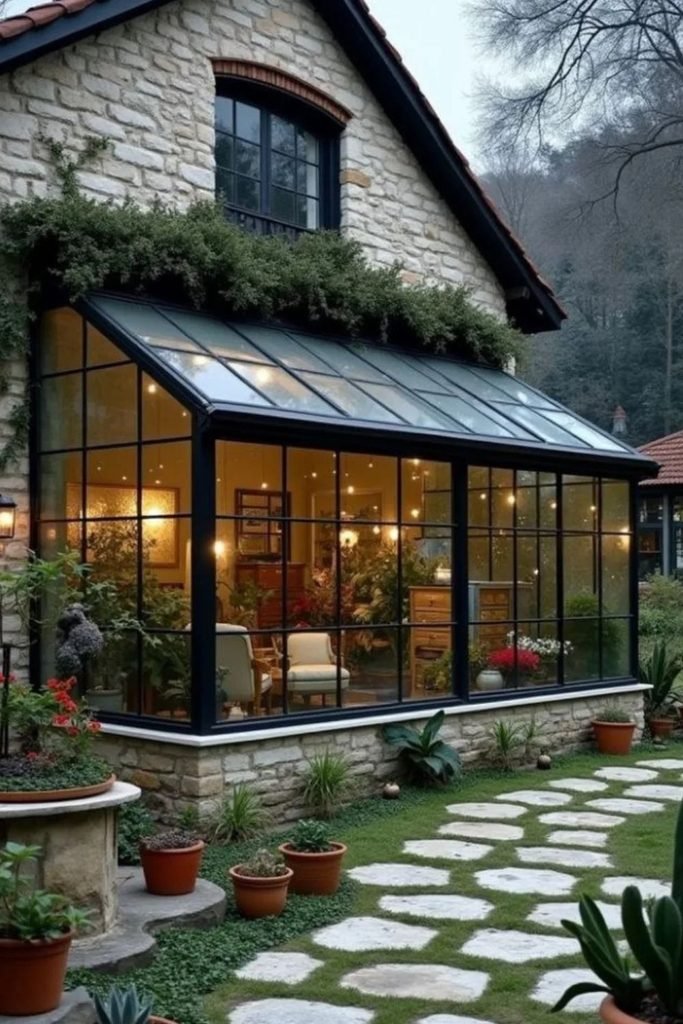
Attached Growing
Use an exterior house wall when you want greenhouse space without giving up a large section of the garden.
A building can be added well to the house, providing a covered growth place for potted plants and fragile kinds.
Before you build, choose a wall that gets usable daylight and make sure that neighboring trees or rooflines won’t keep the glass in shade most of the day.
Good roof vents are particularly vital here as heat may build up fast against a solid wall.
Don’t overload every corner with plants. Leave enough open space on the floor for comfortable movement of pots and for working.
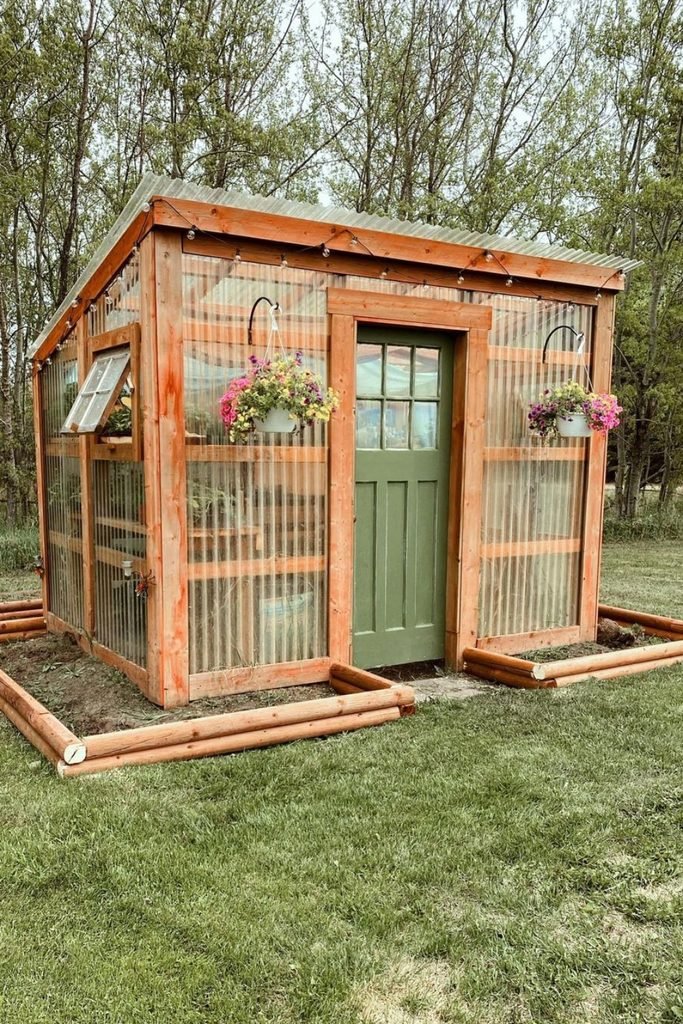
Timber Greenhouse
Simple timber framing is a practical choice when you want a greenhouse that can be built around your available yard space instead of fixed kit dimensions.
Build the frame with treated or naturally rot-resistant wood and then put on clear corrugated panels.
This will make the building lighter and more budget-friendly than using full glass.
It is a good idea to have an opening side window right from the start, because warm air needs an easy way out in summer.
If you are intending to grow flowers nearby, leave bare ground or planting strips around the base.
But keep weeds and moisture away from the timber to help the bottom structure endure longer.
Growing Corner
Tucking your greenhouse beside raised vegetable beds keeps most of the growing work in one part of the yard.
The greenhouse can be used for seedlings, tender crops and plants that need extra warmth.
The gravel around the structure makes watering, hauling pots and cleaning up soil spilled after rain a cleaner job.
Before selecting the exact spot, notice the movement of the shade of mature trees in the vicinity during the day.
Too much above cover can reduce the light your greenhouse needs, especially in spring and winter.

Paved Greenhouse
Mud around the entrance becomes frustrating once you start carrying trays, tools, and watering cans in and out regularly.
Put a brick or stone surface all around the greenhouse, to provide a sturdy working zone that is easier to walk on after rain.
If you want flowers and leaves to soften the hard concrete without crowding the glass, leave planting spaces along the edges.
If the greenhouse is flanked by mature trees, clean fallen leaves from the roof and gutters often and ensure that branches are not casting heavy shade during the primary growing season.
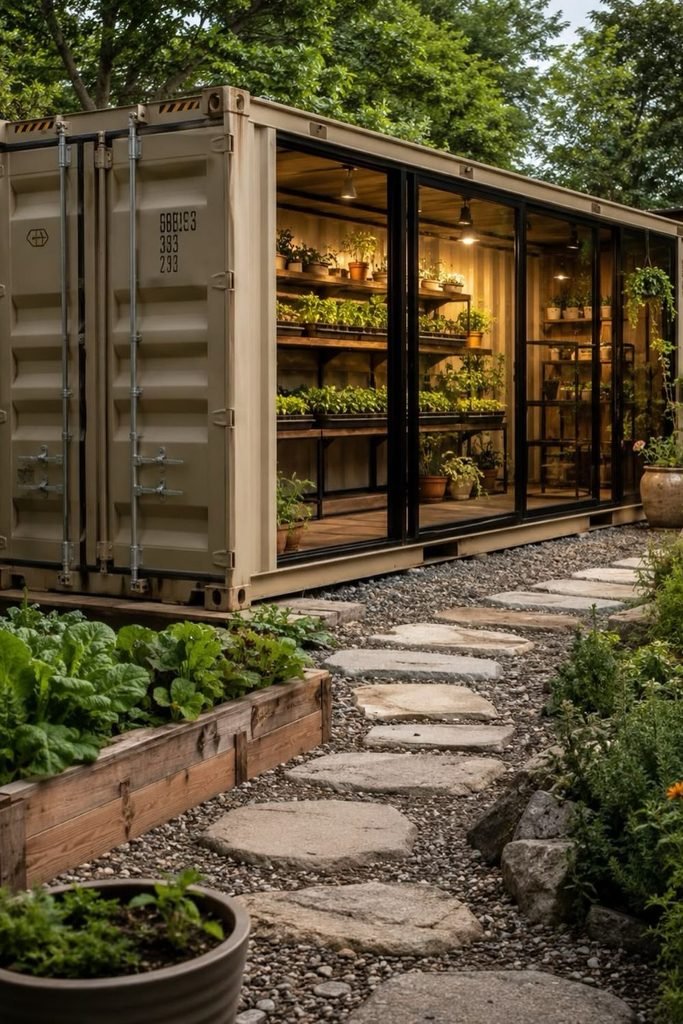
Container Greenhouse
Repurposing a shipping container can give you a greenhouse and sturdy storage structure in one footprint, which works well when garden space is limited.
Cut away some of the sun-facing side and replace it with wide glazed panels.
Inside, tiered shelves will allow you to organize seedlings and smaller pots vertically.
Solid metal walls absorb and retain heat, so you want to arrange for ventilation and temperature management before you fill the room with plants.
Grow lights can be added to darker shelf sections, but should be used in addition to good natural light, not instead of it.
Place container on a sturdy, well-drained base to avoid water pooling beneath.
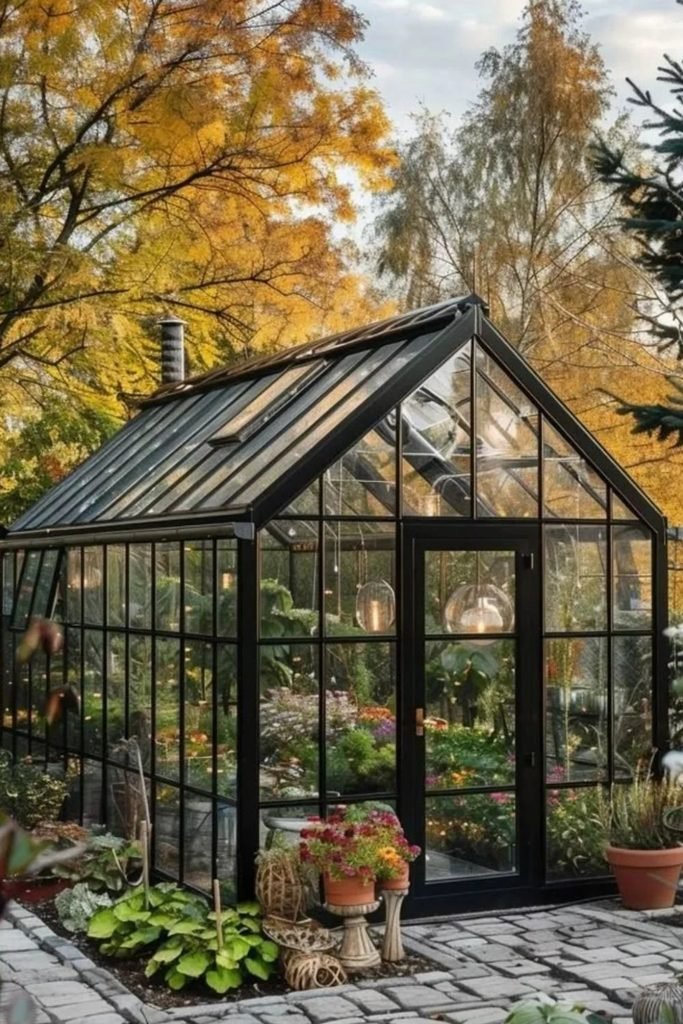
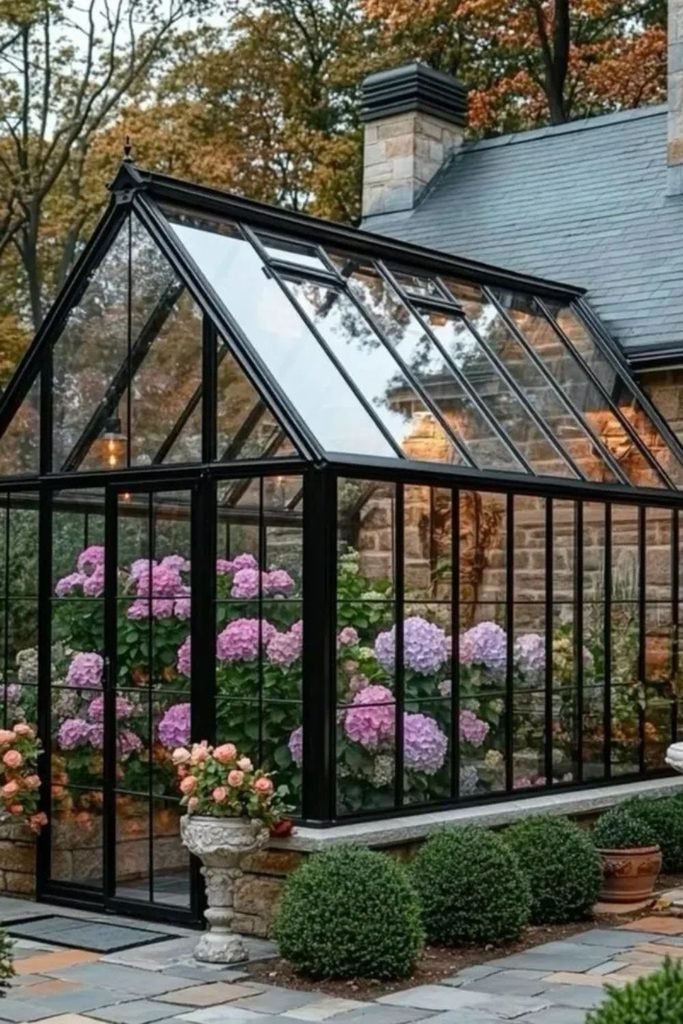
Floral Greenhouse
Growing flowering plants inside the greenhouse can give you more control over weather-sensitive blooms help extend their display the normal outdoor season.
Use the brightest areas for sun-loving flowers, but don’t put huge plants too close to the glass where leaves can overheat.
Once it warms up, opening the roof vents can be very advantageous. Flowers still need a constant flow of air around their leaves.
To create a greenhouse near the home, duplicate a few of the same flowers or shrubs outside the structure.
So the growing space feels connected to the surrounding garden rather than detached from it.
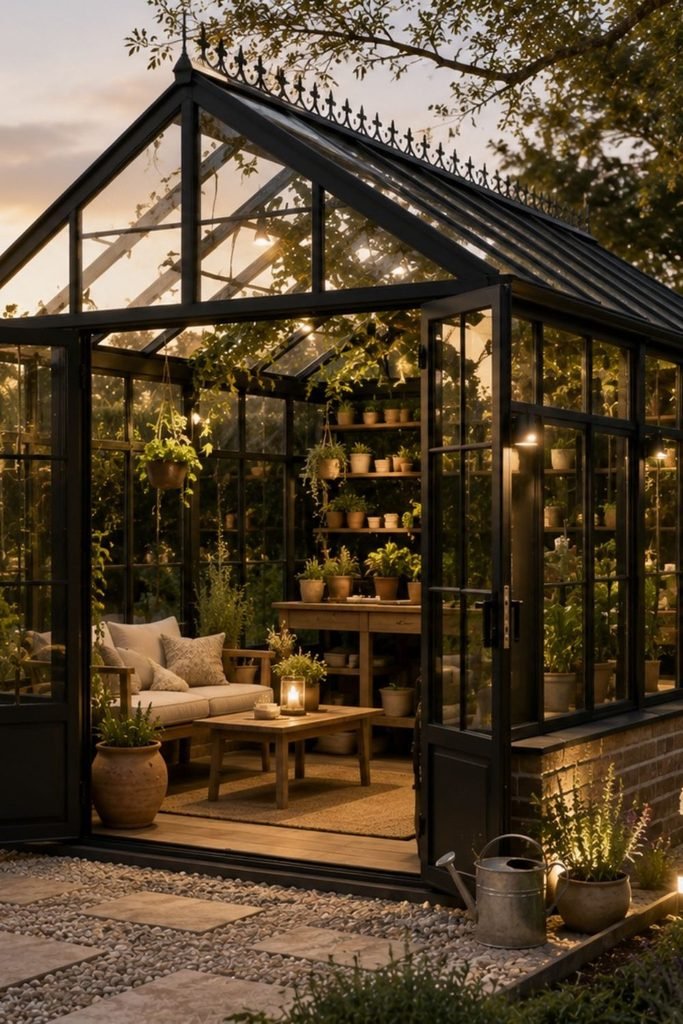
Greenhouse Retreat
Saving one corner for seating makes sense when your greenhouse has more room than your plants currently need.
Keep the periphery with shelves, hanging pots and a compact potting bench, and leave the middle open for a modest chair and table.
It’s especially useful for gardeners who spend long hours sowing, repotting or monitoring plants and want somewhere comfy to sit between activities.
go for furniture that resists dampness and don’t go overboard with the pathway decor On hot summer evenings, open the doors before you use the area.
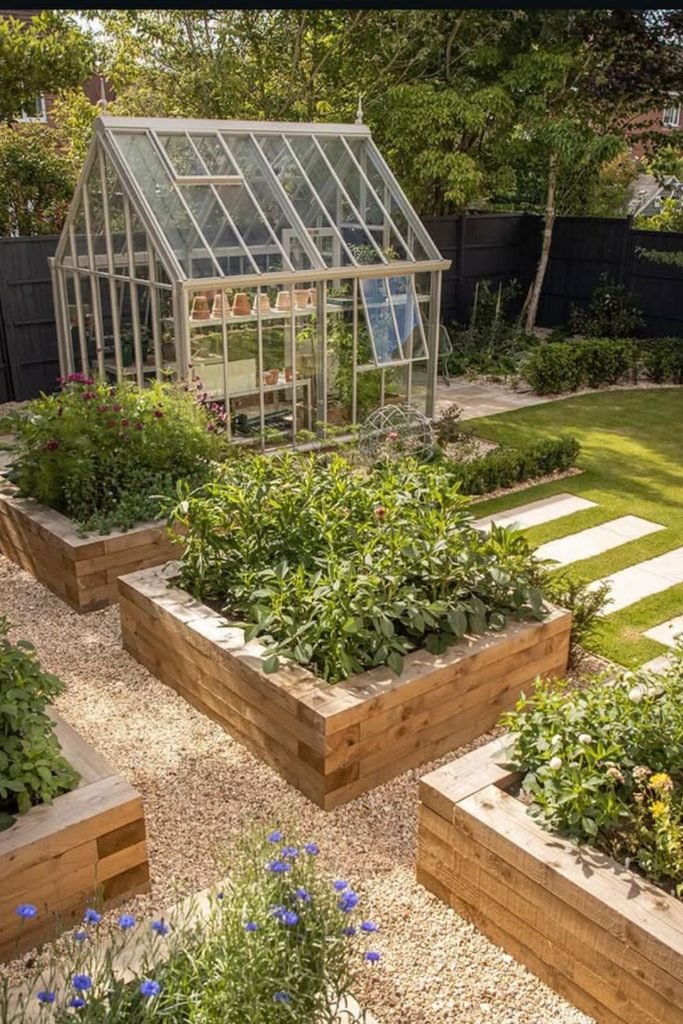
Growing Hub
Keeping your greenhouse close to raised beds makes seed starting, transplanting, and everyday plant care much easier.
Or start young plants under cover and move them straight into the surrounding beds when external conditions are perfect, rather than moving trays across the yard.
Gravel between the beds provides good drainage and keeps muddy shoes off the greenhouse floor.
Leave plenty of room between the raised beds so you can walk a watering can or wheelbarrow from one planting area to another.
Inside, small shelves can accommodate seedlings without sacrificing the primary working space.
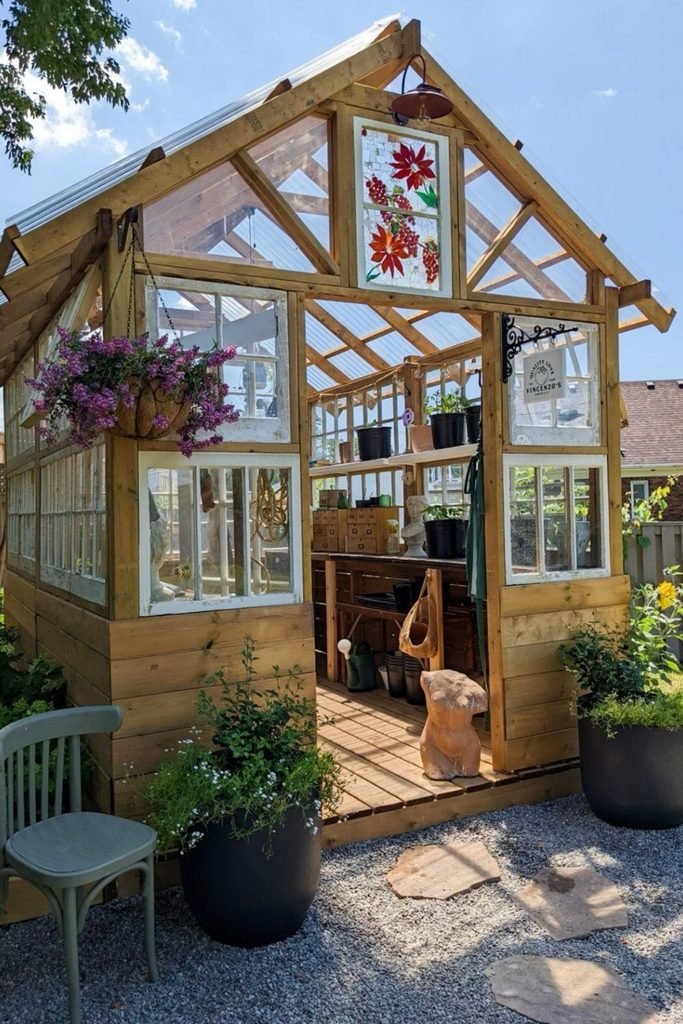
Salvaged Windows
Old windows can become the starting point for a greenhouse when you want to reuse materials instead of buying every panel new.
First measure and lay out the windows on the ground then build the timber frame to their real measurements so you are not fighting unequal gaps later.
Leave numerous windows hinged to open for ventilation during warm times.
Where matching salvaged glass is hard to come by, clear roof panels are handy, and keep the upper structure lighter.
Seal joints carefully against rain and prevent exposed timber from persistent dampness to help the greenhouse last.
Roof Venting
Hot air naturally collects near the greenhouse roof, so giving it an escape point can make summer growing much easier.
Install roof panels or vents in the fit opening at the top of the structure so rising heat can escape instead of accumulating around your plants.
They can be used with an open door or bottom vent to pull cooler air into the growing space.
This is especially helpful in small greenhouses that heat up quickly on sunny days.
Automatic vent openers can also help when you’re away and can’t open the windows yourself as the temperature rises.
Summer Shading
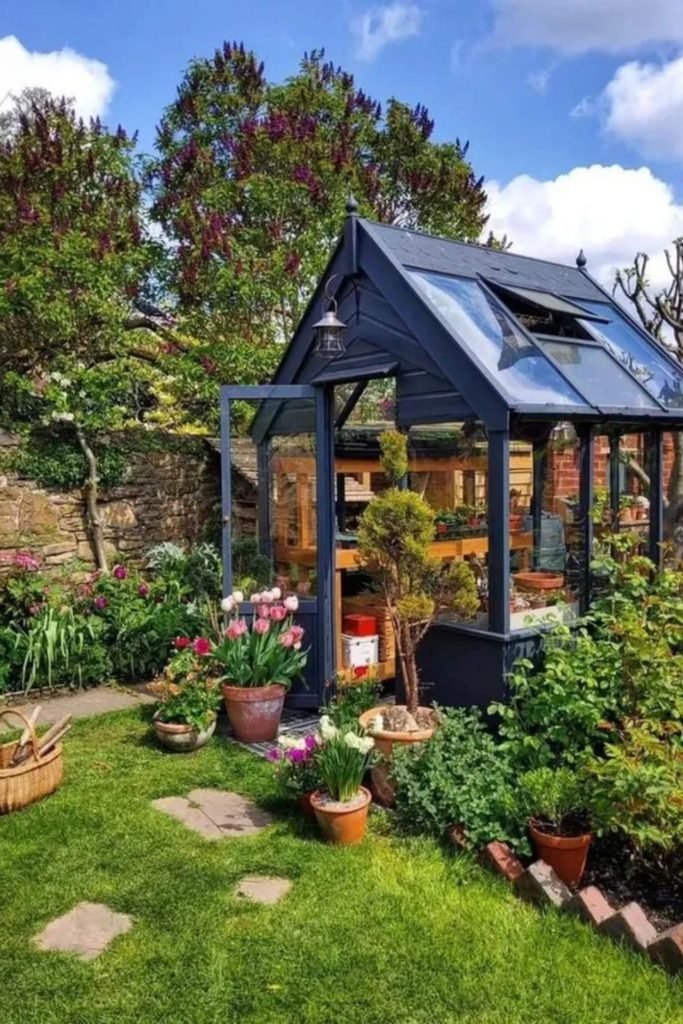
Strong afternoon sun can push greenhouse temperatures up quickly, even when the doors are open.
During the warmest part of the summer, screen the roof using shade cloth to eliminate some of the direct sun heat before it reaches your plants.
Make the covering changeable, not a permanent blocking of the glazing, so you may take it off or lessen it when the temperature goes down the daylight is less.
Use overhead shade with open doors or vents. Shade reduces heat build-up but does not replace ventilation.
This is very effective, particularly in exposed areas where the greenhouse receives extended hours of bright summer sunshine.
Bed Layout
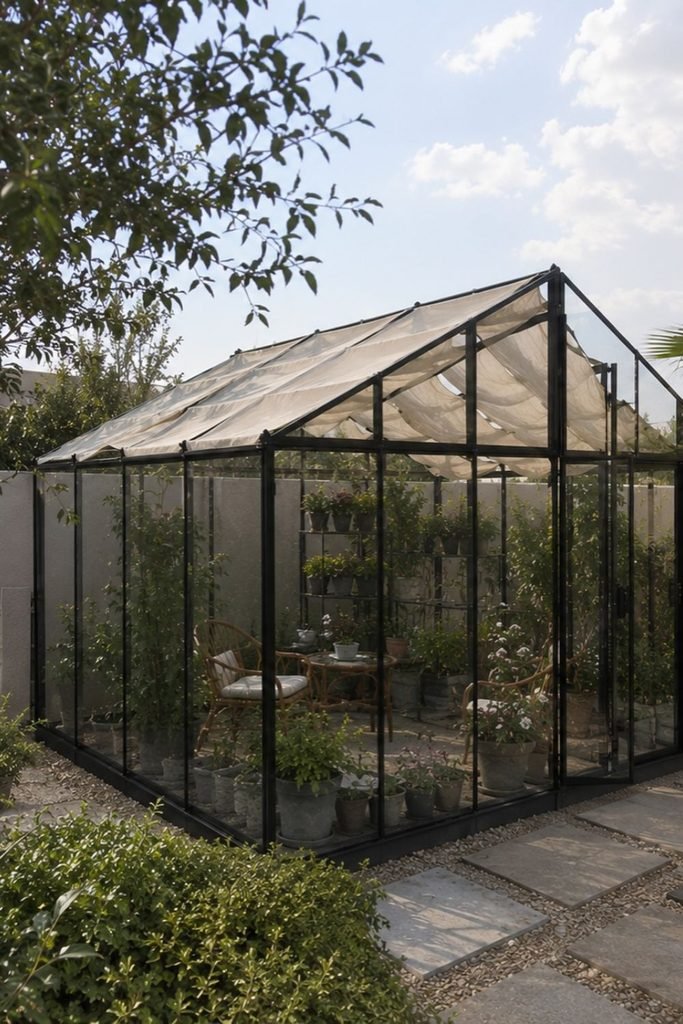
Placing raised beds around the greenhouse keeps outdoor crops close to the protected growing area without cramming everything inside.
Use the greenhouse for seedlings and heat-loving plants, and then reserve the surrounding beds for vegetables, herbs that grow well in open settings.
Leave wide gravel walkways between beds so watering, harvesting and wheelbarrow movement are easy even when it rains.
Location of tall plants : Taller plants should be located where they will not cast long shadows across the greenhouse.
Keeping the complete growth zone together also makes watering and checking on the plants much quicker each day.
Compact Workspace
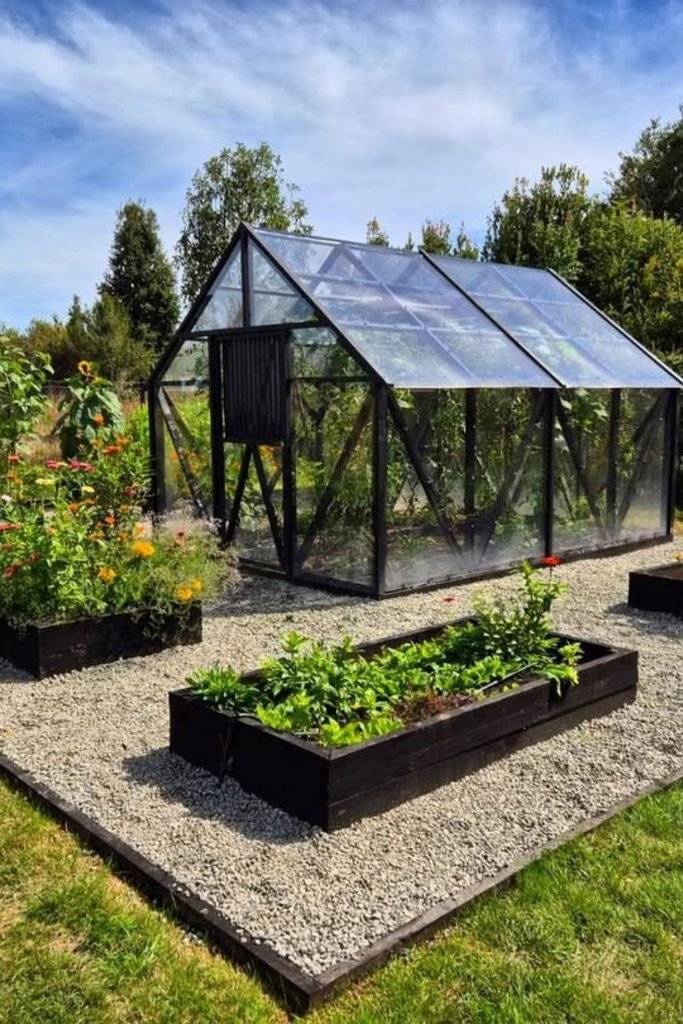
Small greenhouses work harder when every surface has a clear job. Narrow shelves for seedlings and small pots can be ran along the glazed walls. A
slim bench for repotting, pruning and keeping common equipment should be added.
Open the center allows you enough room to maneuver without knocking over plants as they mature.
Larger pots that do not require full greenhouse protection can be placed immediately outside of the entry in this space, thus reserving important indoor space.
If shrubs or trees around it start to crowd the structure, trim them back before they restrict light or make air circulation around the greenhouse too tight.
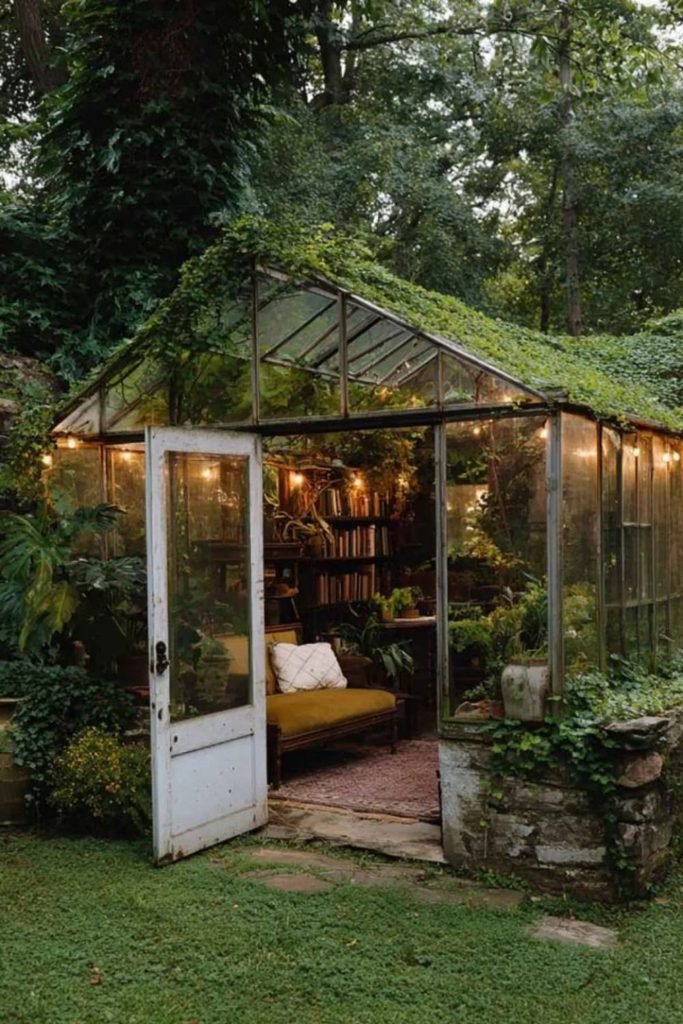
Woodland Hideaway
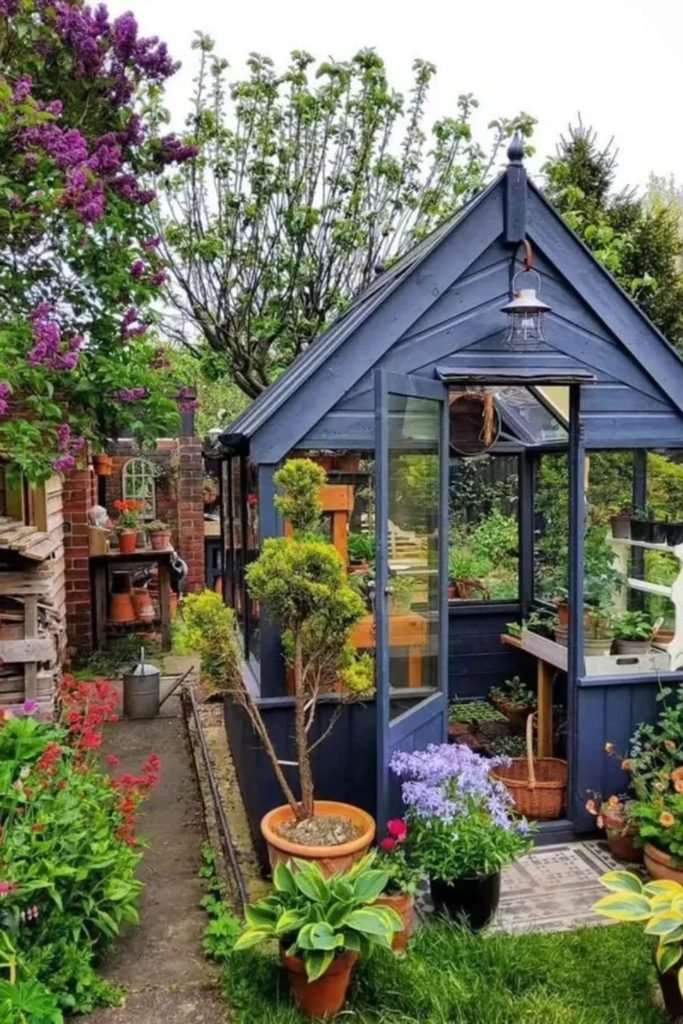
Deep garden corners can support a greenhouse, but heavy tree cover changes how you should use it.
Expect heat-loving crops to do poorly there; rather, keep ferns, foliage plants, propagation or other plants that do not have to tolerate full sun all day.
Keep growth off the glass roof, so it doesn’t further reduce light or collect fallen leaves and moisture.
Add chairs or storage inside, but leave enough open room for air to circulate through the structure, and put plants around the brighter edges.
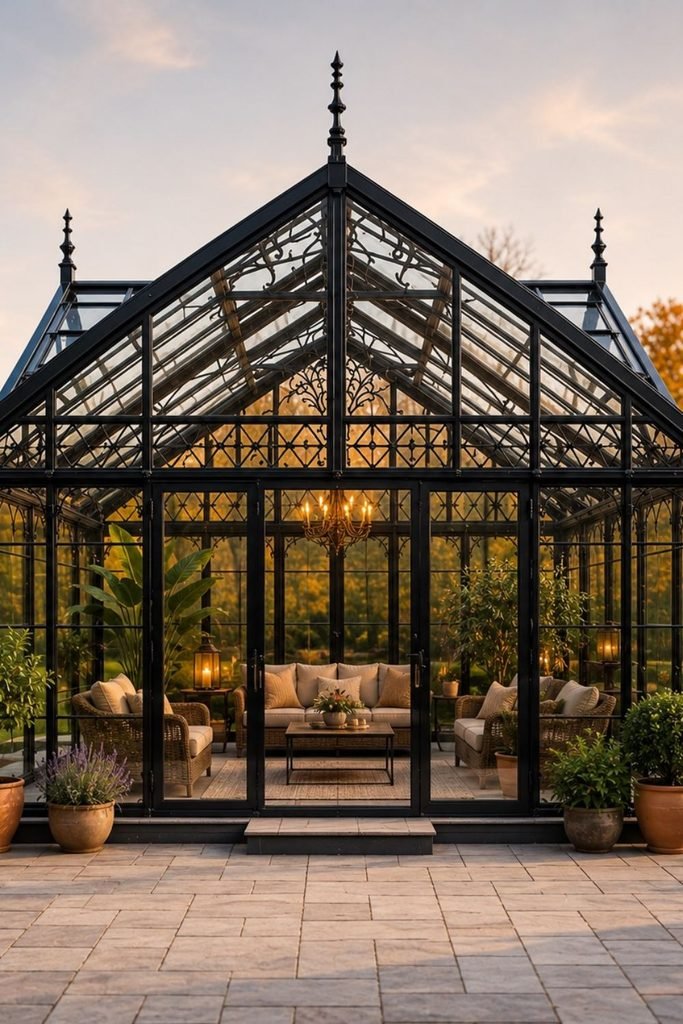
Victorian Retreat
Turn a larger greenhouse into a shared plant-and-seating space when growing capacity is not your only priority.
Use tall tropical plants and containers around the periphery to get a lot of light without dominating the middle space.
Weatherproof chairs can be used in the middle but leave clear access to doors and plants that need frequent attention.
Big glass constructions may heat up quickly, so add multiple roof vents and large opening doors before you put furniture in.
That same protected room can also be used to safeguard sensitive container plants that would suffer outdoors in colder months.
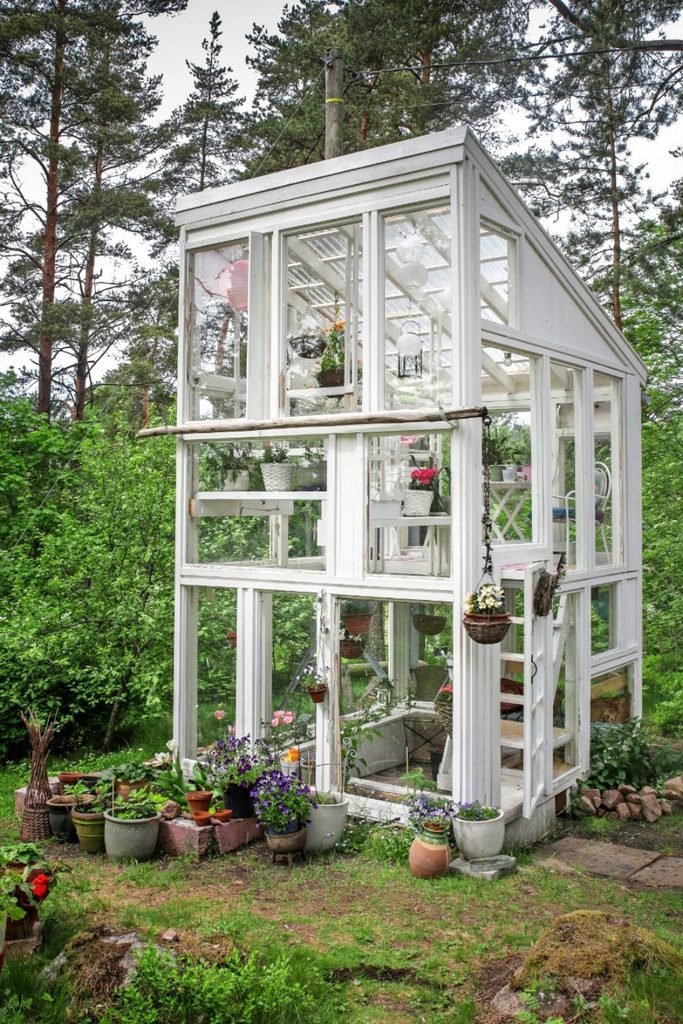
Vertical Greenhouse
Building upward can give you far more growing room when the available footprint is narrow.
The lower level is for bigger pots and day-to-day plant care, while the upper shelves can be reinforced for seedlings, herbs and smaller pots.
In a tall building, warm air will rise to the top quicker, so it is vital to open windows at different levels.
Leave the stairs and center floor free and put the heavier pots on lower shelves so you can get to them more easily.
This method is especially effective for the small garden where it is impossible to extend the greenhouse outwards.
Corner Layout
An L-shaped greenhouse can make better use of a wide garden corner while giving different crops their own growing zones.
Use one wing for taller vegetables or climbing plants and the other for benches, seedlings or container plants, leave connecting portion open for easy movement.
Both parts should have roof vents. Warm air tends to pool unevenly in a larger construction.
Before you build, walk around the complete footprint on the ground to assist you ensure that entrances, paths and planting areas will still be easy to reach when the greenhouse is full.
Narrow Greenhouse
Long, slim greenhouses can fit into open strips of lawn where a wider structure would take away too much usable garden space.
Put benches or shelves on one side and leave the other side open to have a clean walkway so that you can get to the plants without having to always move pots.
The small footprint is good for tomatoes, cucumbers or trained vines and a lofty roof means climbing crops get more room.
Watch the sunshine play around the yard for a full day before you choose a location.
Don’t build the building where neighboring trees will cast it into deep shade for extended hours.
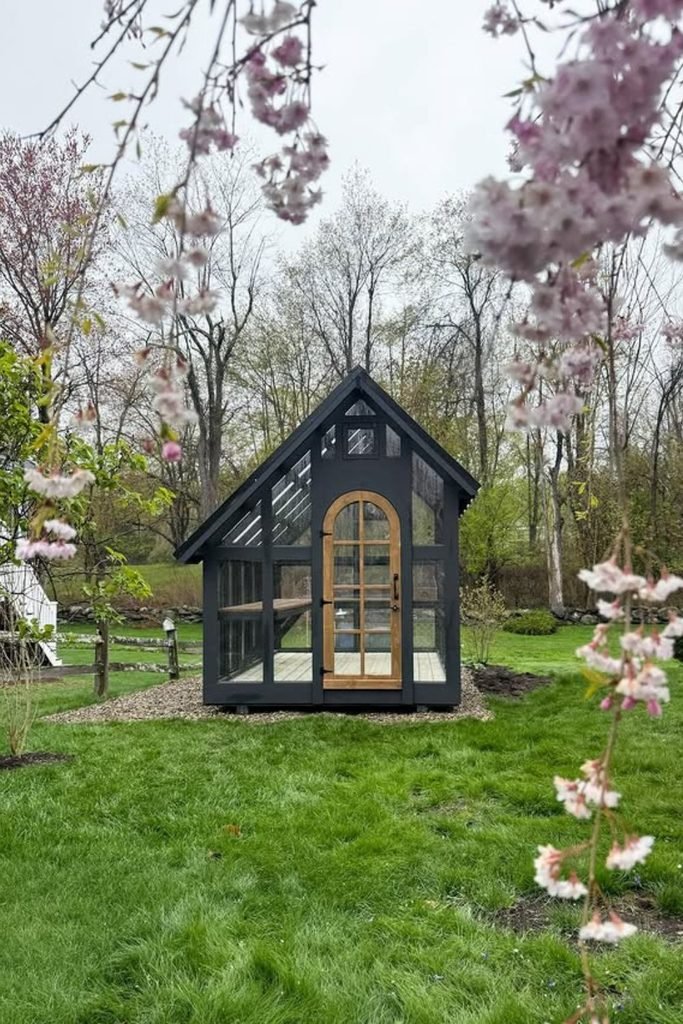
Potting Station
Keep everyday gardening supplies inside the greenhouse if you are tired of carrying pots, labels, compost, and tools back and forth.
Put a narrow work surface next to a solid or semi-enclosed wall, and store your most used products in crates and shelves underneath.
Opening windows above the bench will assist push warm air out while you work, and help control humidity surrounding the seedlings.
This plan is ideal for a small greenhouse when growth and potting must share the same footprint.
Keep weather-tolerant supplies inside, as the heat and dampness of the greenhouse can destroy various tools, seeds and packaged goods over time.
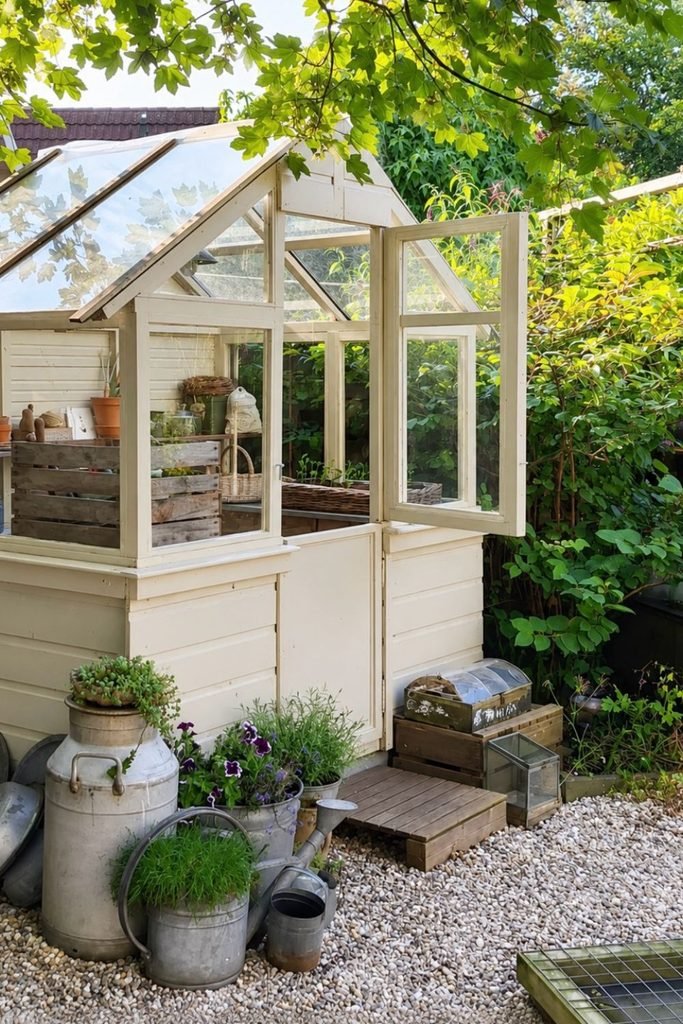
Layered Growing
Floor space disappears quickly once a greenhouse starts filling with pots, so spread plants across several levels instead.
Use wall shelves for herbs and small containers raised beds for larger plants and hanging baskets for flowers that can take the warmer air near the roof.
Make sure you leave the center walkway wide open so you never feel uneasy about watering or harvesting.
Make sure that the greenhouse frame will take the additional weight safely before hanging anything heavy.
Group plants with comparable light and watering demands together, too.
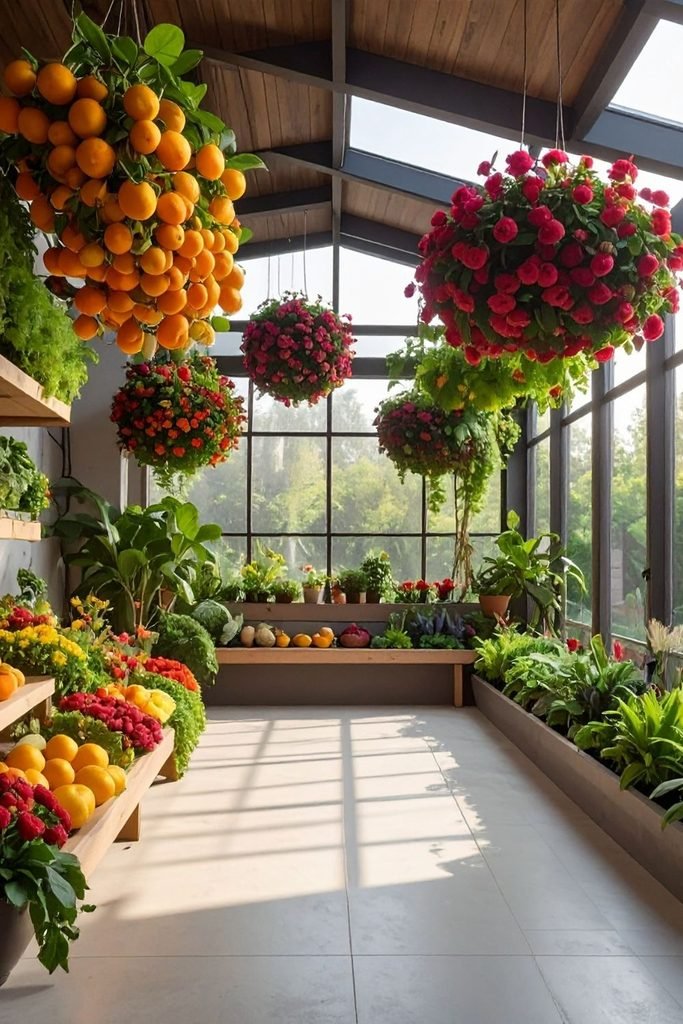
Garden Lounge
Growing space does not have to be the greenhouse’s only purpose, especially when it connects directly to your home.
Leave some space for covered seats and have container plants or herbs on the sides where they still receive plenty of natural light.
Comfortable furniture works best in rooms where the floor drains well, and where the glazing can be opened for air in hot weather.
If you want a greenhouse that can also serve as an everyday refuge, arrange for electricity outlets, lighting, ventilation and moisture-resistant furnishings.
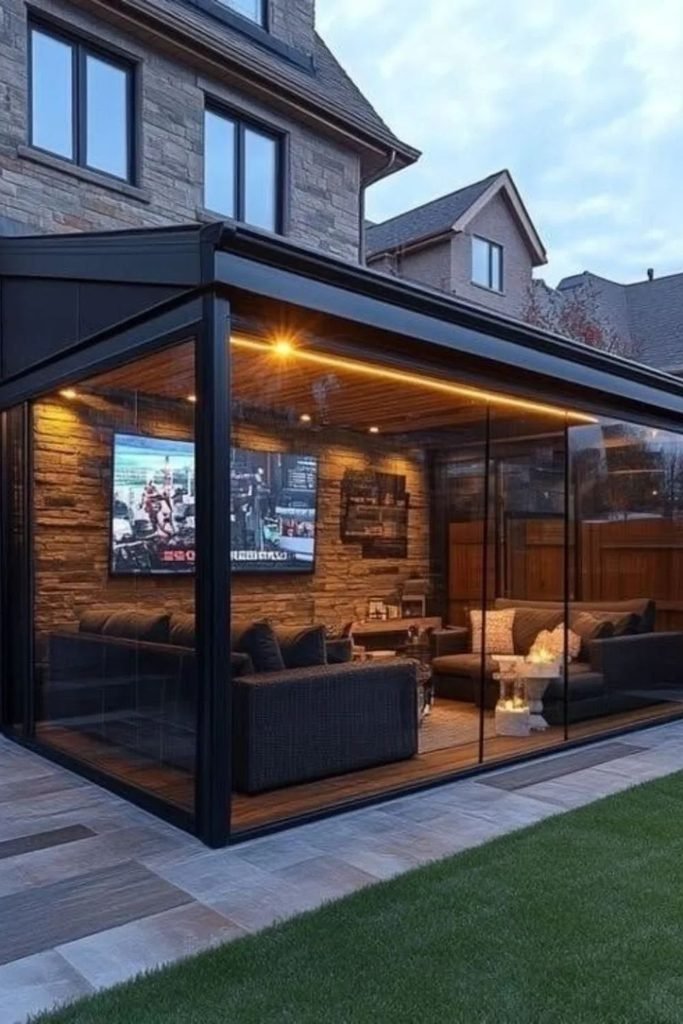
Reclaimed Greenhouse
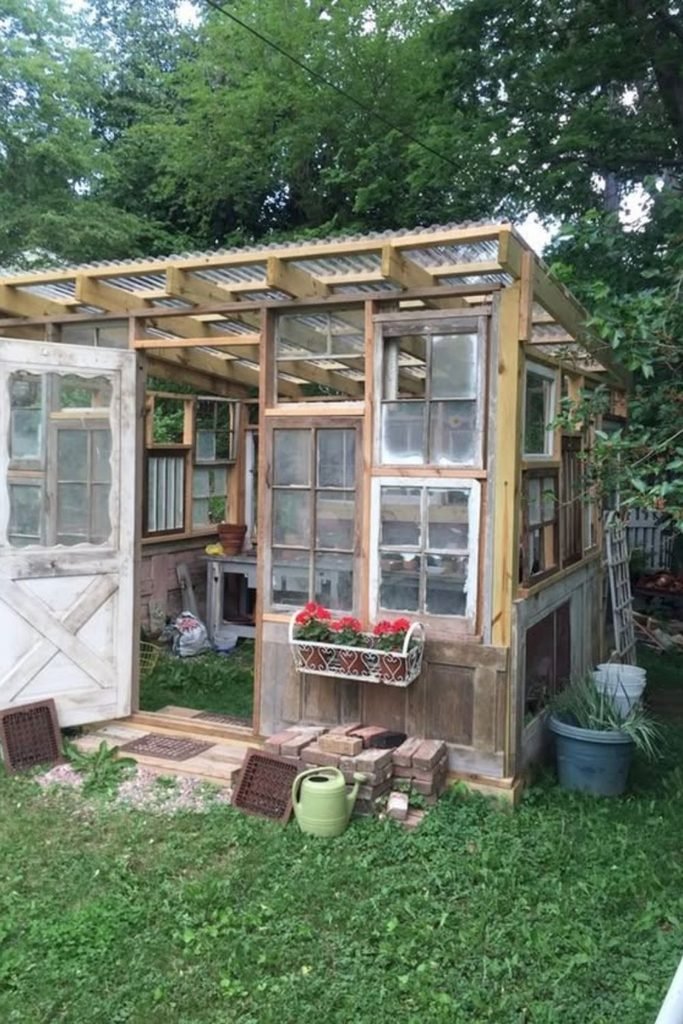
Old windows and doors can become useful greenhouse walls instead of ending up as waste, making this approach ideal for a low-budget DIY build.
Start with a solid timber frame first and then place recycled windows around it, rather than mismatched frames holding the structure up.
Provide for the opening of multiple windows to permit the escape of hot air in the summer.
Use clear corrugated roofing to provide light from the top. Seal gaps when needed, but leave planned ventilation points open.
Reused materials come in many shapes and sizes, so measure each piece before assembling, and replace any weak or cracked glass.
FAQs
Which Greenhouse Location Gets The Best Sunlight?
Choose a location that receive plenty of direct sun shine especially in the morning and during the winter months when the light is lower.
Avoid siting your greenhouse directly under large trees; fallen branches, intense shade and dripping debris might cause problems.
If you plan to utilize water, electricity and your main garden beds regularly, keep them within easy reach.
What Should Beginners Grow Inside Their Greenhouse?
Start with plants that give you useful results without demanding complicated temperature control.
Tomatoes, peppers, cucumbers, lettuce, herbs, and seedlings are practical choices for beginners.
Match your crops to the season rather than trying to grow everything year-round.
