
28 Indoor Herb Garden Ideas for 2026
Growing fresh herbs seems simple until your basil starts to droop, your mint goes yellow or your rosemary refuses to grow no matter how carefully you water it.
Maintaining a living indoor herb garden can seem daunting, even with some limited sunlight or a small kitchen.
You don’t need a green thumb or fancy setup to cultivate healthy herbs indoors. A few smart decisions can make all the diff.
In this article, you’ll learn how to build an indoor herb garden that actually thrives.
Let’s jump in!
How Do You Create An Indoor Herb Garden?
Indoor herb gardening isn’t hard if you know what they really need. Most indoor herb gardens die for lack of a few basic reasons.
Such as situating the plants in a dark place, watering all the herbs the same manner or using pots that don’t drain properly.
If you get those essentials right immediately, your herbs stand a lot greater chance of staying healthy and producing fresh leaves for months.
Start by finding a sunny location, picking herbs that will grow well in your area, and giving each plant the correct amount of care, not the same amount for all.
When you have those basics in place, it’s so much easier to build a gorgeous indoor herb garden, no matter how tiny your home is.
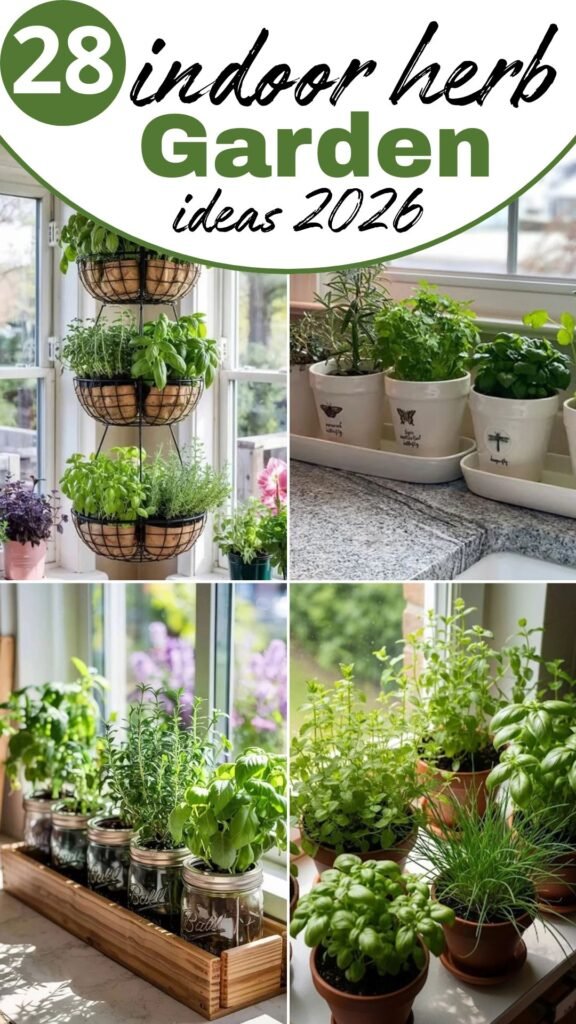
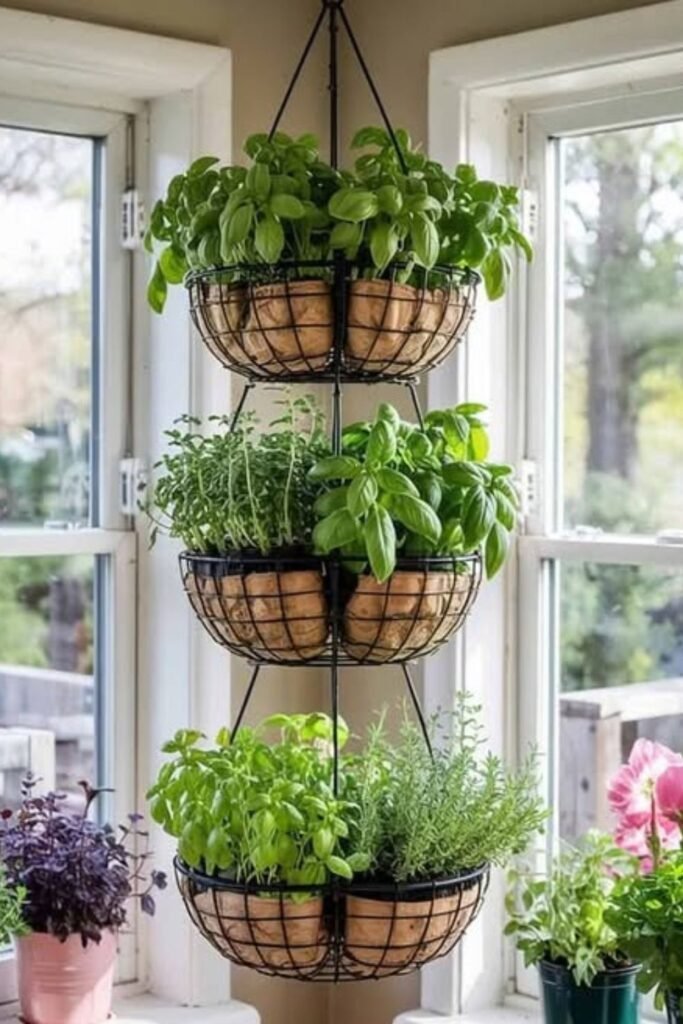
Tiered Baskets
Running out of countertop space doesn’t mean you have to grow fewer herbs. Hanging a three-tier basket near a bright kitchen window.
gives basil, thyme, rosemary and other sun-loving herbs plenty of light and keeps every pot within easy reach.
Choose baskets lined with coco that drain well. Group plants with comparable watering demands together.
Turn the baskets around every few days so all the plants grow evenly. Simple black metal frames also give vertical interest.
Making this set-up feel like it’s part of your kitchen décor and not simply another collection of plant pots.
Windowsill Row
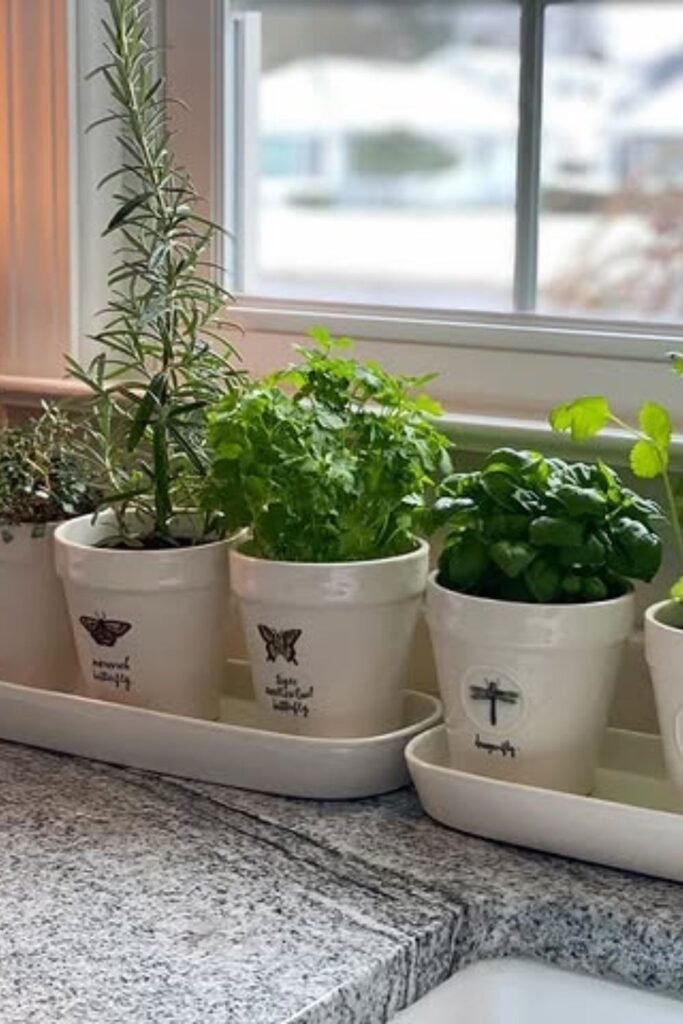
Fresh herbs become part of your daily cooking when they’re lined up beside the kitchen sink or a sunny window.
The arrangement is nice and the ceramic pots are matching on a basic tray. Watering and cleaning is so much easier.
Grow basil, parsley, cilantro and rosemary in different pots so each plant gets the attention it requires without having to compete for space.
Keeping it all together also allows you to rotate the pots every few days, so that every herb gets even sunshine and healthy, balanced growth.
Crate Display
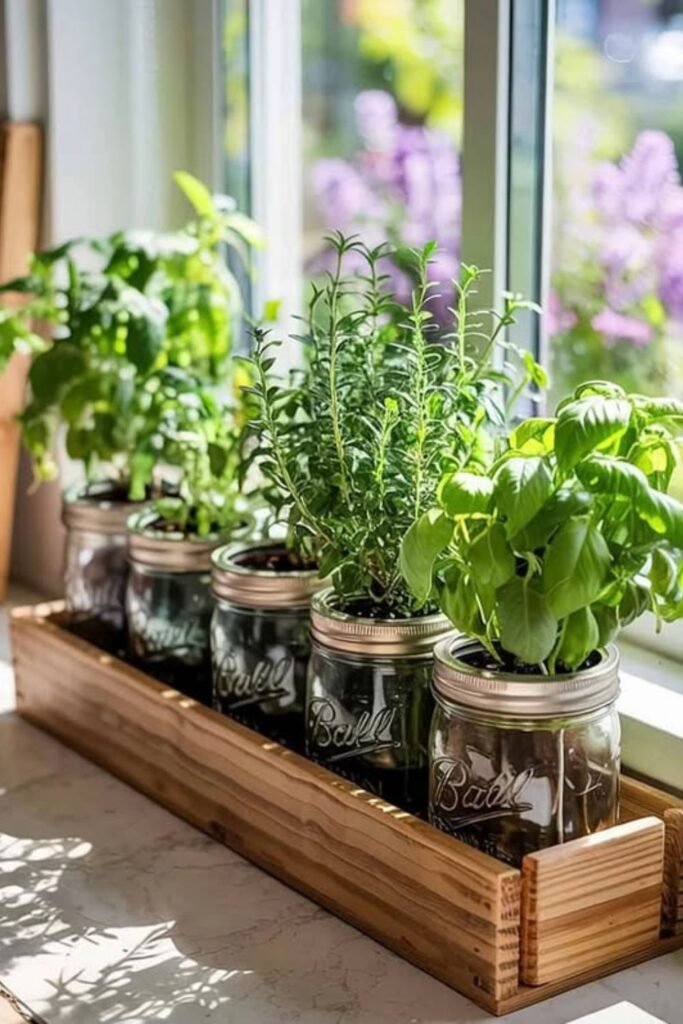
Giving your herbs a dedicated home instantly makes the kitchen feel more organized. A simple wooden crate keeps mason jar planters grouped together.
They also provide a pleasant, natural accent that fits with farmhouse, rustic or modern decors.
Set the crate on a sunny windowsill where the basil, rosemary and mint will get lots of light during the day.
If you use glass jars, don’t plant directly in the jar but add a layer of small stones and an inner nursery pot with drainage so extra water doesn’t gather around the roots.
Terracotta Collection
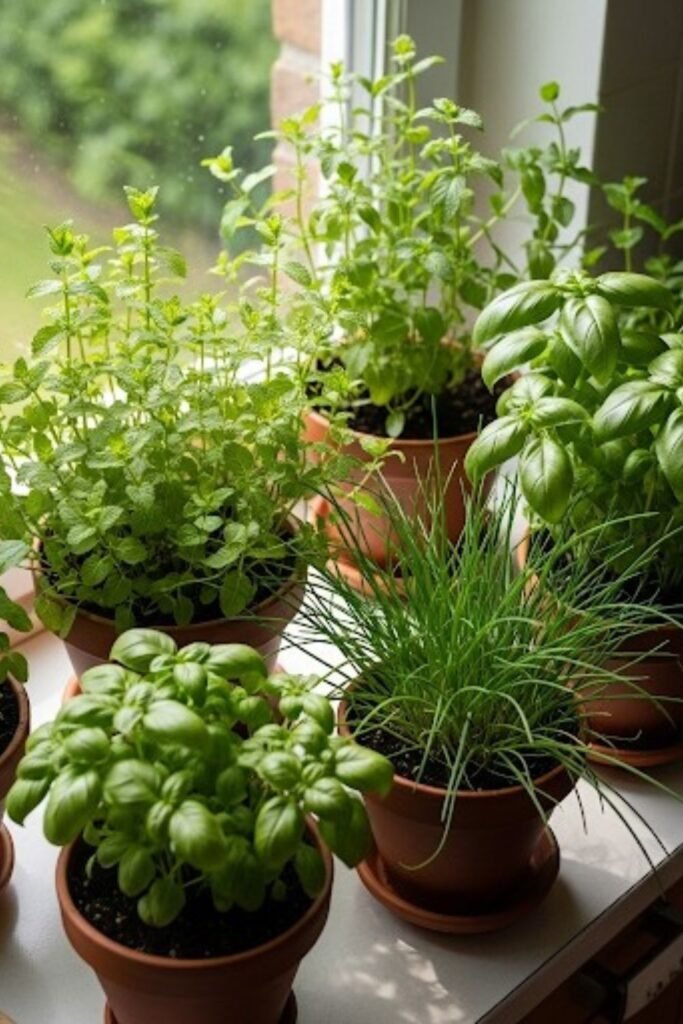
Nothing beats the classic combination of terracotta pots and a bright kitchen window for growing healthy herbs.
Keeping each herb in its own container allows you to tailor watering to its specific needs, a great benefit when basil, mint, chives and oregano are planted together.
Place the taller herbs behind the shorter ones so that each plant gets enough sunshine without shading any of the others.
Terracotta also allows extra moisture to escape, so it’s a good choice if you’re concerned about overwatering your indoor herb garden.
Rail Garden
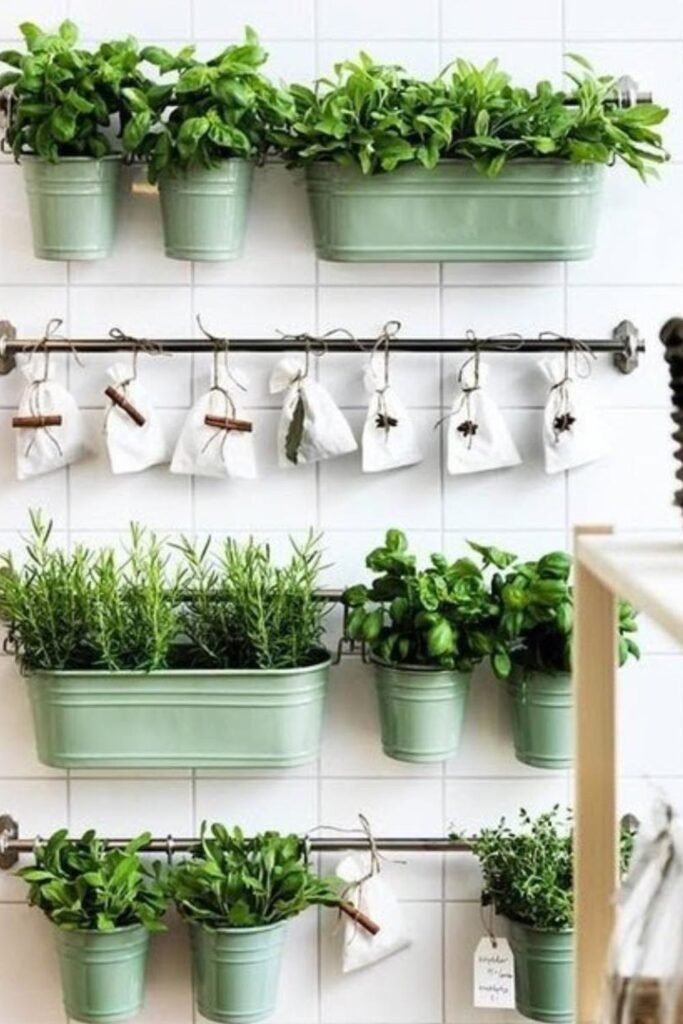
Empty kitchen walls can become the perfect growing space with a simple rail-mounted planter system.
Fix sturdy rails near a bright wall or window, then hang lightweight metal pots filled with herbs you use most often while cooking.
Keeping the planters off the countertop frees up valuable workspace and creates an organized display that’s easy to water and harvest.
Pair herbs with similar growing needs in the larger trough planters, and trim them regularly to encourage fuller growth instead of long, weak stems.
This setup works especially well in small kitchens where every inch of space matters.
Hanging Frames
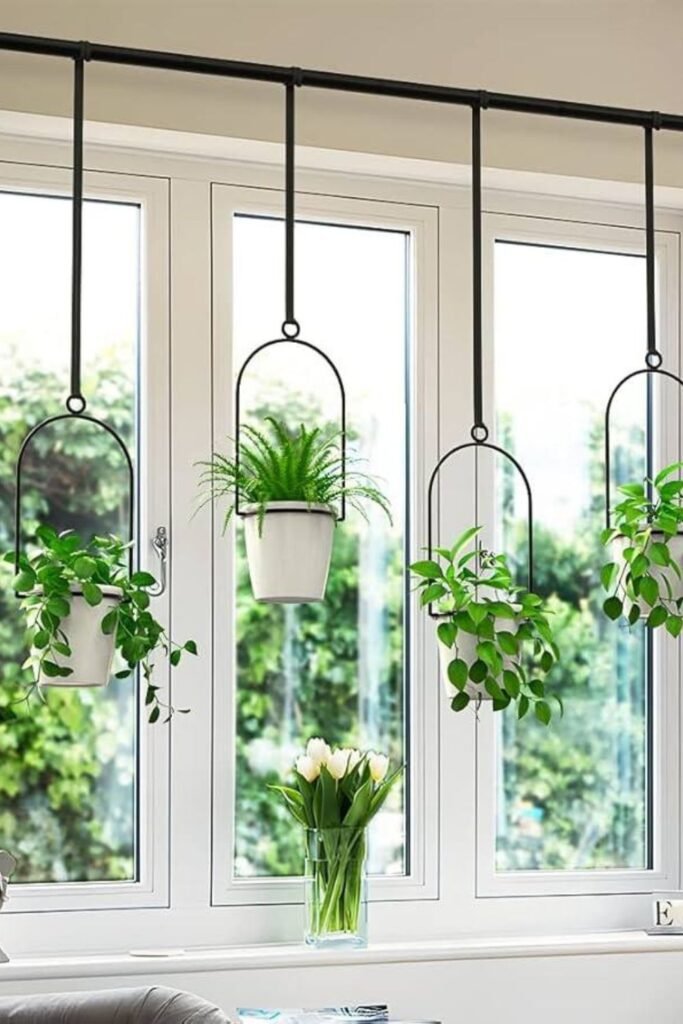
Freeing up your windowsill can make an indoor herb garden feel lighter and more open.
Hanging pots from a strong curtain rod gives each herb plenty of natural light without taking over counter or shelf space.
Hang trailing herbs on the outer hangers and compact growers in the centre to produce a balanced show that appears immaculate from every aspect.
Use light, well-draining pots and ensure they are spaced adequately apart to allow for unrestricted circulation of air.
Rotate each planter often to ensure all sides get equal sun, keeping your herbs full, healthy and ready to pick.
Shelf Layers
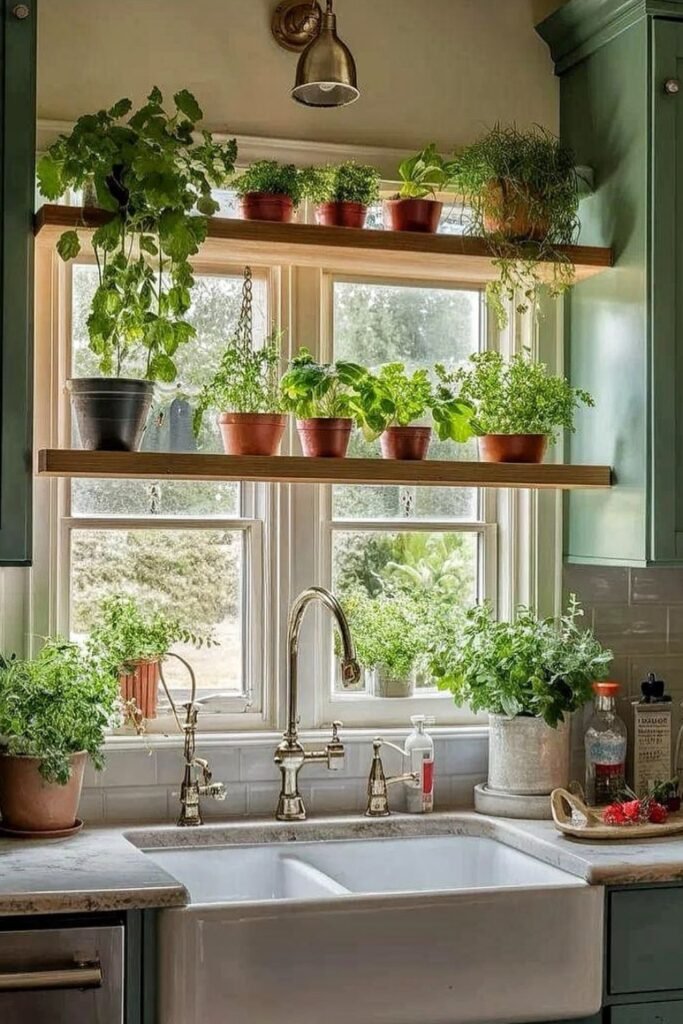
Turning the space above your kitchen window into growing shelves gives every herb access to natural light while creating a lush focal point.
Mix trailing herbs with upright kinds for depth, but provide enough space between pots so each plant has sufficient ventilation and sunshine.
The wooden shelves and terracotta pots give the setting a warm, timeless look that would look just as good in farmhouse, cottage or modern kitchens. Harvest herbs regularly before they become overgrown.
Turn the pots weekly to encourage even growth on all sides and prevent them from leaning toward the window.
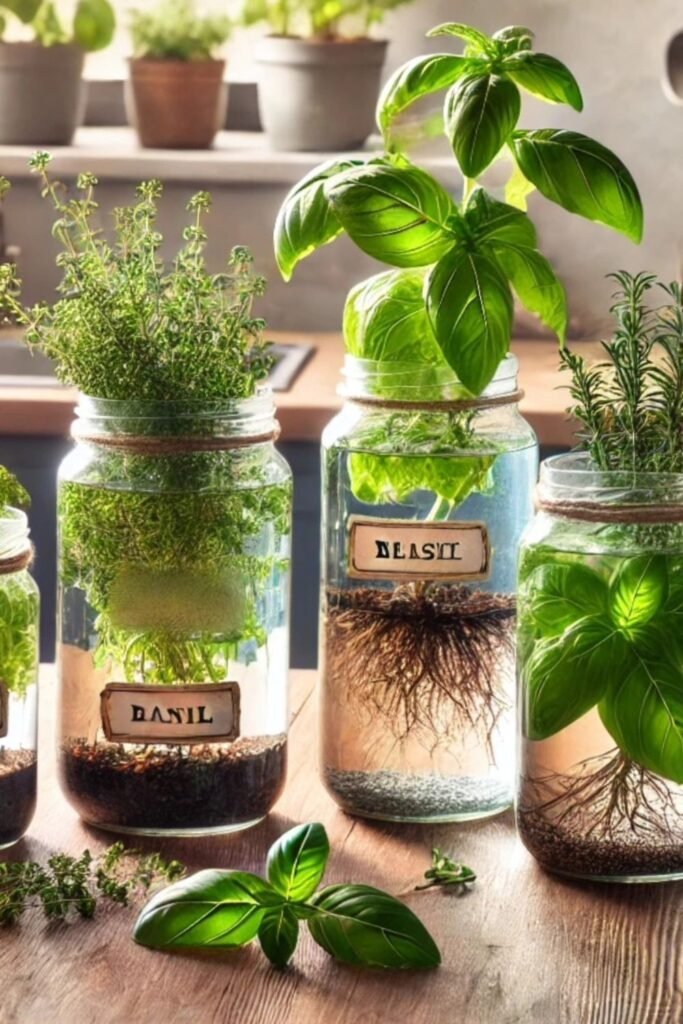
Jar Propagation
Growing herbs in clear glass jars lets you watch the roots develop while adding a fresh natural touch to your kitchen.
Place the jars on a sunny windowsill or a bright counter top and use them to grow cuttings of basil, mint or rosemary before transferring them to soil.
Label each jar so you know what herbs you have, and change the water every few days so the roots stay healthy.
Transfer them to pots with good drainage soil once the roots get robust for faster growth and success in the long run.
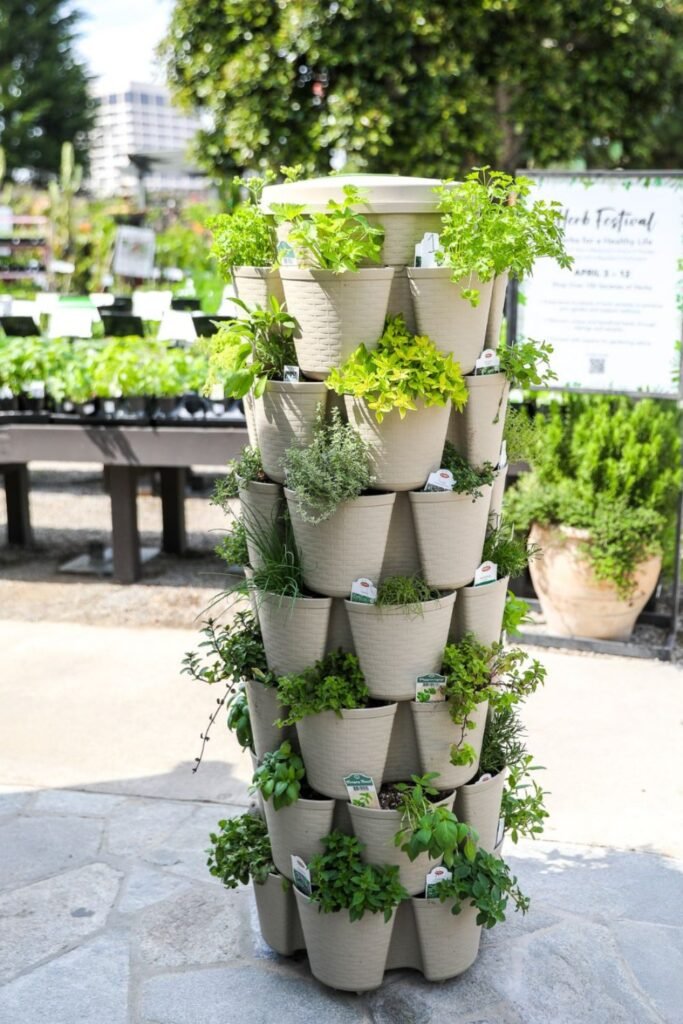
Tower Planter
Growing a large herb collection doesn’t require a large kitchen when you build upward instead of outward.
With vertical tower planters you can grow your favorite herbs such as basil, oregano, thyme, mint and more.
All in one compact footprint perfect for apartments, patios or sunny indoor areas.
Place the taller herbs at the top, so they get the most light, and the slower-growing kinds in the lower spaces.
Pick herbs frequently so every part stays full, productive and easy to maintain, not overcrowded, and place herbs with comparable watering needs on the same level for easier care.
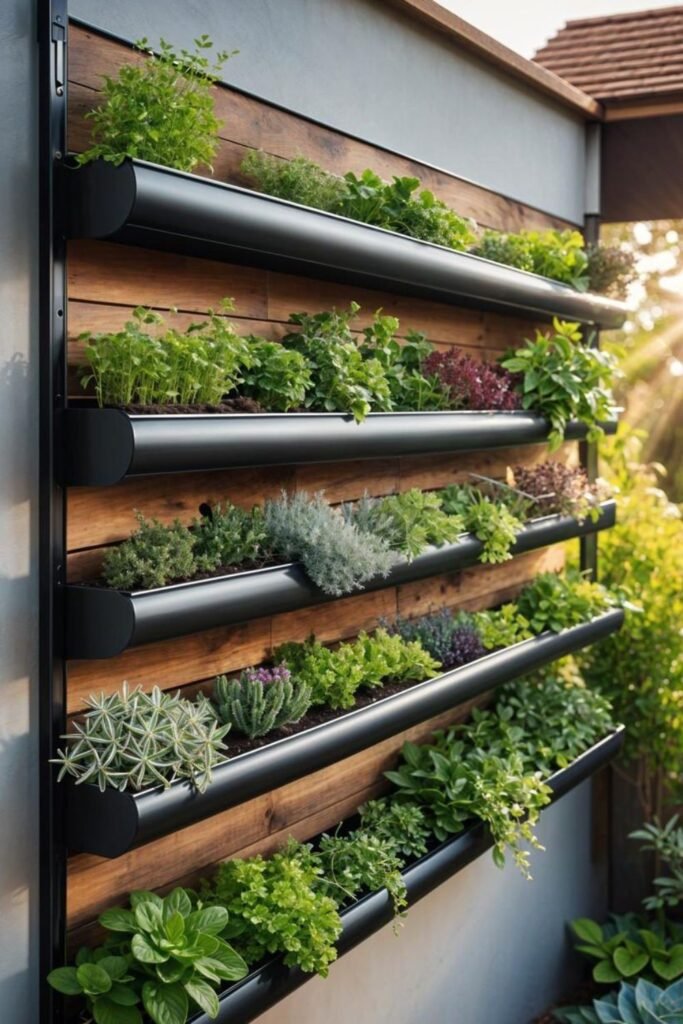
Wall Troughs
Bare walls can become your most productive growing space with long planter troughs mounted in stacked rows.
This is particularly effective on a sunny balcony, in an enclosed patio or against a light indoor wall when floor space is scarce but vertical space is not.
In each trough, group herbs with similar growth tendencies to make watering and pruning easier. Space rows so each planter receives plenty of light.
Pairing sleek black planters with warm wood panels also produces a sophisticated aesthetic that converts a practical herb garden into a showstopping decor highlight.
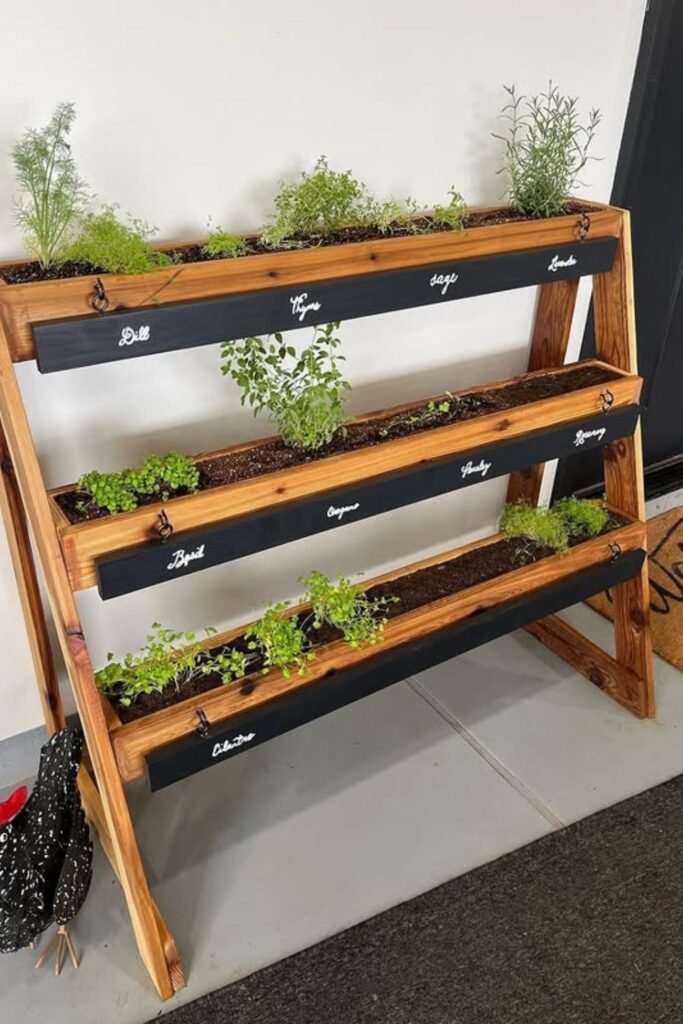
Ladder Planter
Keeping every herb labeled makes cooking faster and caring for your plants much simpler.
A wooden ladder planter with long planting compartments works nicely on a covered porch, doorway, balcony or sunny inside nook where you want to grow multiple herbs without taking up much floor space.
Label each plant on the front so everyone knows what’s growing where. Keep herbs with comparable watering needs on the same shelf to make upkeep easier.
The design also allows for more airflow around the plants which helps the soil dry up more evenly and reduces the possibility of overwatering.
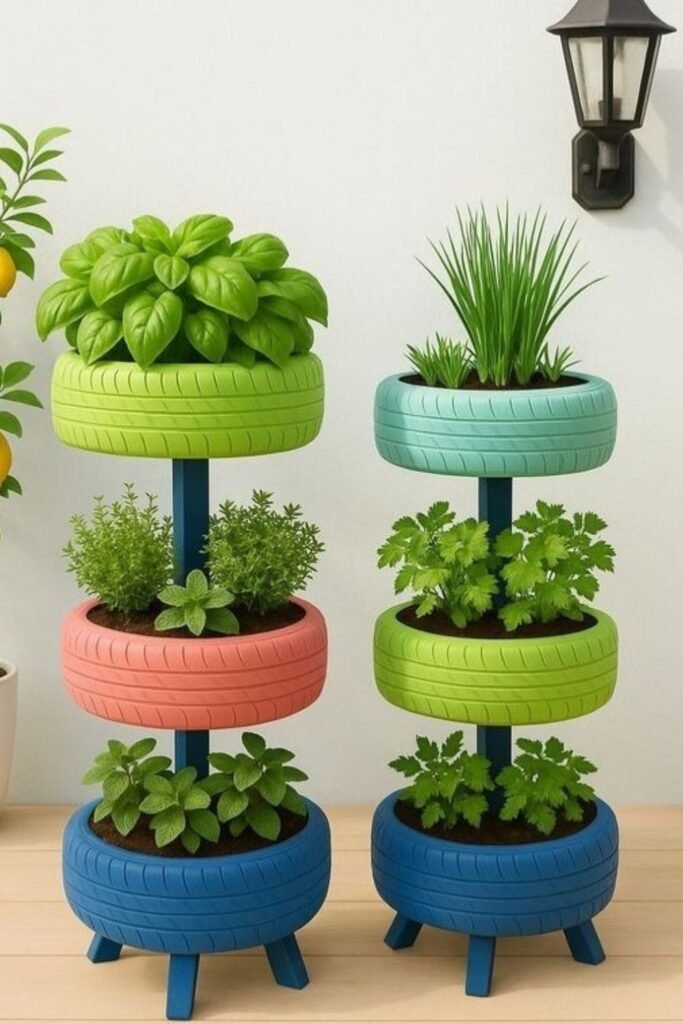
Tire Towers
Bright colors can make an herb garden feel like part of your décor instead of just another plant collection.
Stacking repurposed tire planters into vertical towers is a smart method to produce numerous herbs in a small space.
Perfect for balconies, patios, or sunny indoor nooks when space is at a premium.
Put larger herbs, like basil, on the top tier where they get the most light, and fill the lower levels with mint, cilantro or chives.
Rotating the towers from time to time and putting drainage holes in before planting will help each herb develop equally and will keep the display tidy and productive.
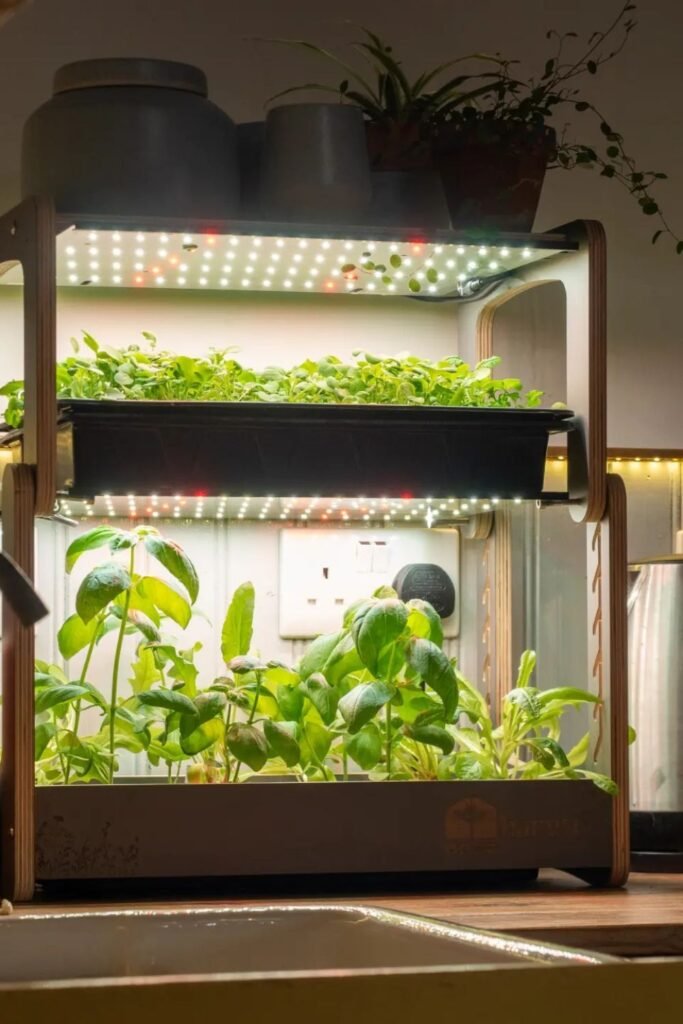
Grow Station
Dark kitchens don’t have to limit your herb garden when you create a dedicated grow station with LED lights.
Shelving with built-in grow lights may provide basil, lettuce and other herbs with steady light throughout the year.
Which is a fantastic alternative for apartments or homes with limited sunshine.
You are able to set the lights on a schedule for 12-16 hours a day so your plants have a regular routine without you having to do any extra work.
Growing herbs on separate shelves also gives you the option to organize seedlings on the top and mature plants on the bottom, making harvesting and care much easier as your indoor garden grows.
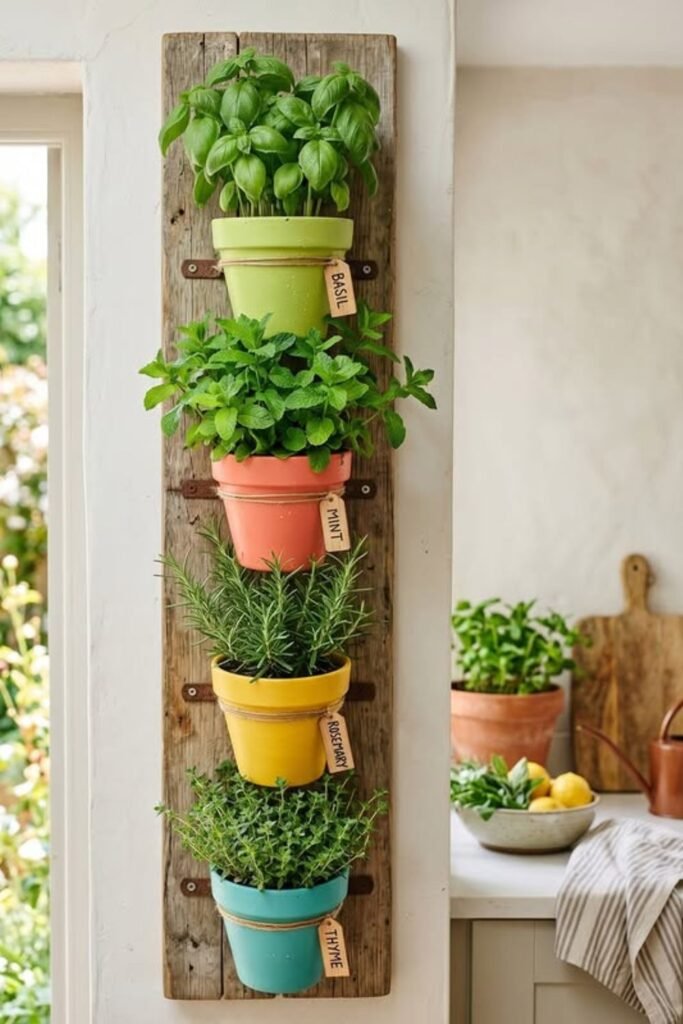
Plank Display
Turning a narrow wall into a vertical herb garden is a smart way to adds greenery with out sacrificing valuable counter space.
Position a reclaimed wooden plank next to a sunny window, using robust brackets to hold up bright-colored pots.
This keeps everything orderly and close at hand as you cook. By planting your basil, mint, rosemary and thyme in different pots.
You can water each as needed and you won’t have to worry about one overachiever choking out the others.
Simple plant labels make for easier harvesting and offer a nice, ordered look to the display that’s perfect for farmhouse, rustic or cottage-style kitchens.
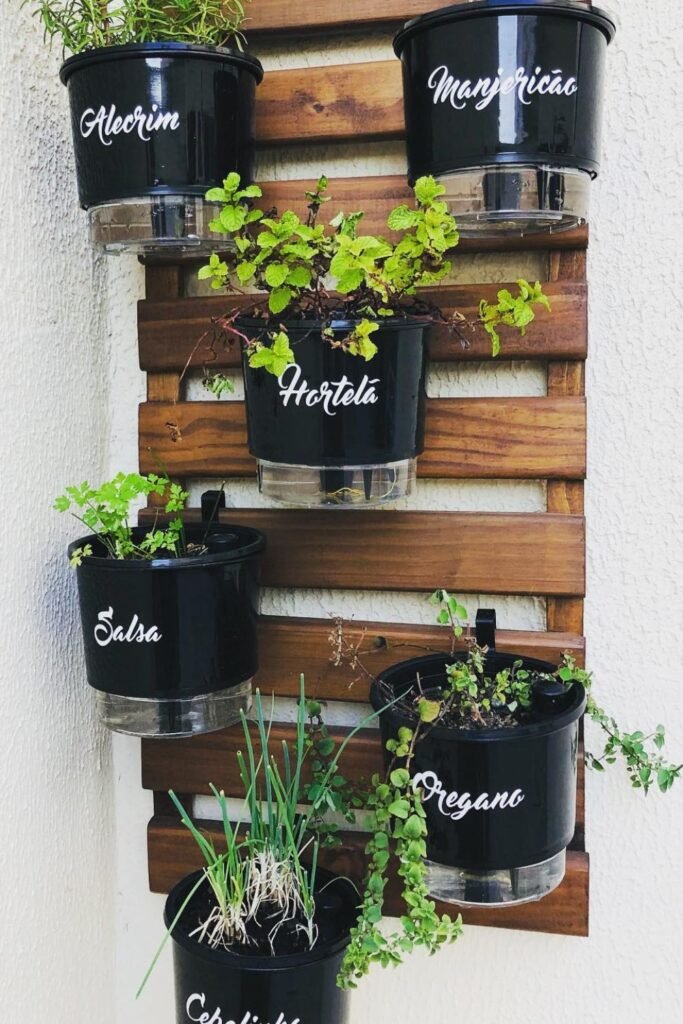
Pallet Garden
Giving an empty wall a purpose is one of the easiest ways to fit more herbs into a small space.
In a light kitchen, on a balcony or a covered patio, mount a wooden pallet and attach self-watering pots to limit the possibility of missing a watering day.
Label each container so you can always tell basil from oregano from mint from parsley from chives when you’re cooking.
Growing each herb in its own pot also prevents aggressive growers such as mint from invading neighboring plants.
Making your herb garden easier to maintain and harvest throughout the course of the season.
Hanging Rails
Kitchen walls can work just as hard as your countertops when you turn them into a vertical herb garden.
Install a couple robust metal rails and install light pots where they get enough of natural light during the day.
It’s easier to water each herb in its own pot, as various plants require varying amounts of moisture.
The open design allow you to easily reach every thing when preparing food.
Finish the display with coordinating planters and basic hooks for a tidy feature that is clean, space-saving and makes fresh herbs part of your usual culinary practice.
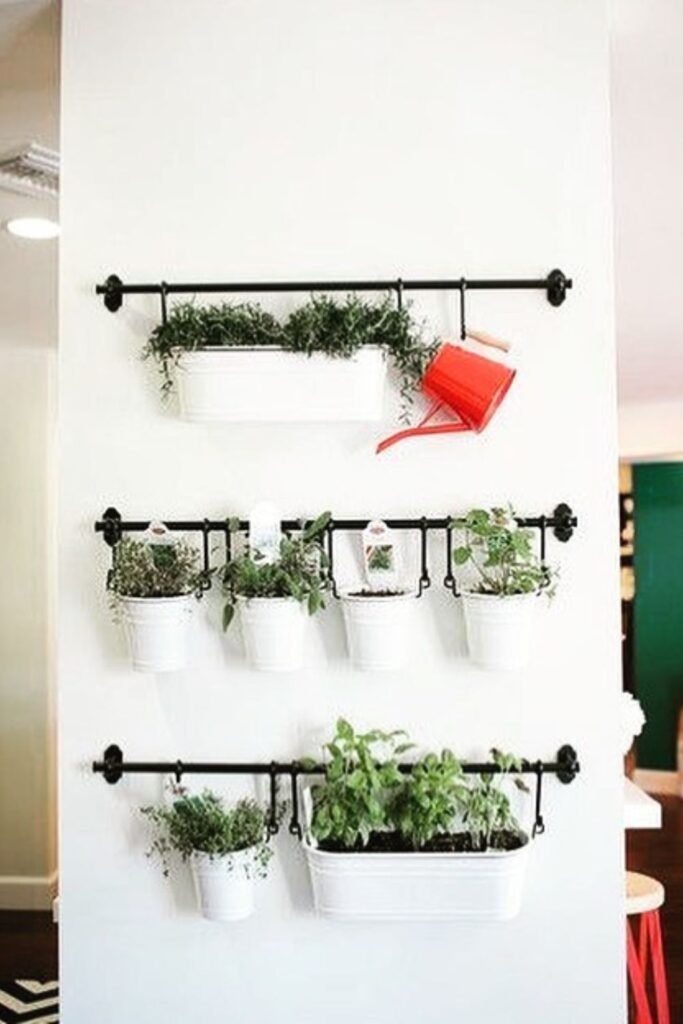
Floating Boxes
Making use of an empty kitchen wall can free up your counters while keeping fresh herbs close to where you cook.
Floating wooden planters offer a clean and sleek display that works nicely in contemporary kitchens that have plenty of natural light.
For extra depth, grow herbs of varied heights. Position trailing kinds on lower shelves and taller growers higher up for a balanced look.
Space each planter well enough so that each herb can have enough of air circulation and sunlight.
And then prune them regularly to promote bushier growth, rather than long, spindly stems.
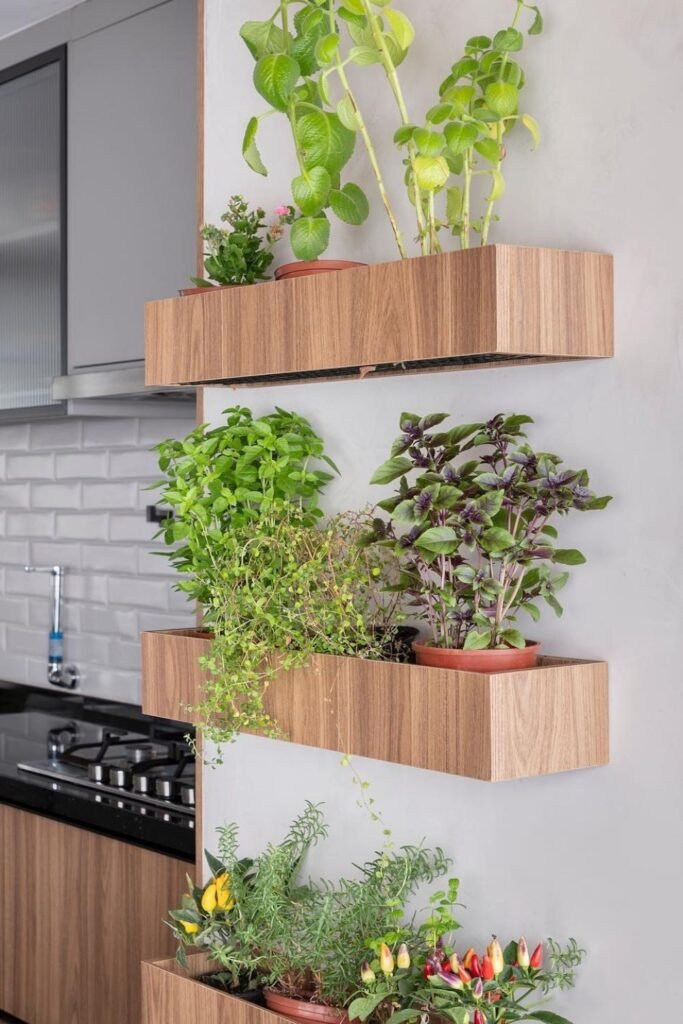
Herb Pairing
Growing herbs with similar care needs in one large planter saves time and keeps maintenance simple.
Group woody herbs like rosemary, thyme and sage together as they demand drier soil.
Basil and parsley can be in a separate container with more regular moisture. Wide metal tubs work great on a sunny windowsill.
Kitchen island or covered patio where multiple herbs can grow without feeling cramped.
Mark each plant so you don’t confuse variations. Leave some space between each herb so that it has room to spread out and grow healthily.
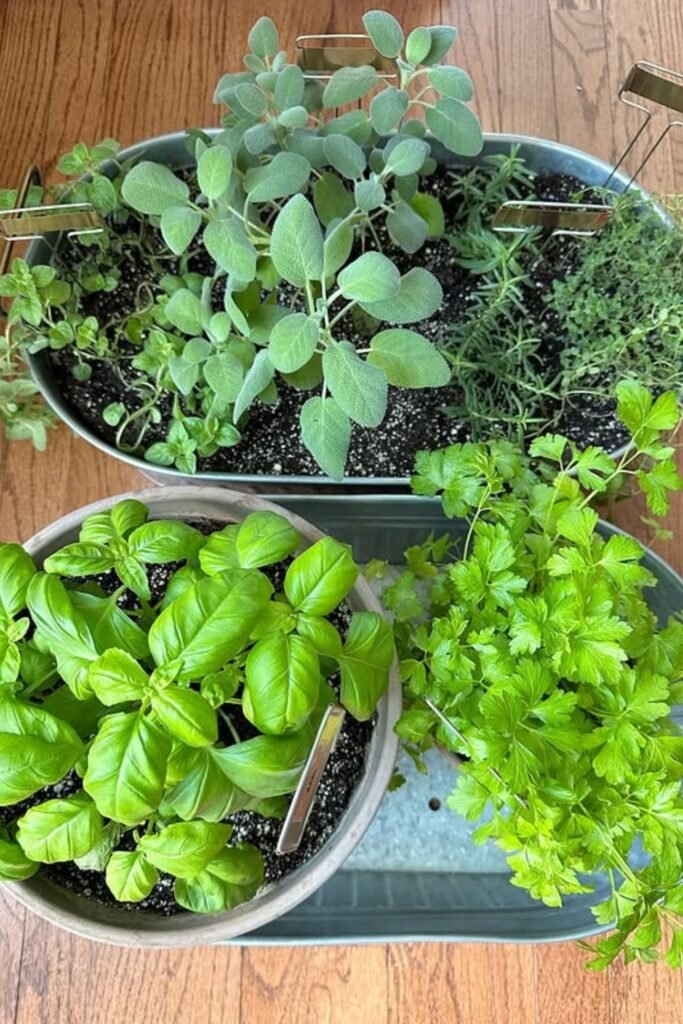
Grid Rack
Making every herb easy to see and reach can turn daily cooking into a smoother routine.
Wall mounted grid rack efficiently organizes single terracotta pots, great for modern kitchen with the little counter space.
Place each herb in a separate pot so you may water and prune it as necessary without disturbing the others.
Space plants equally to allow for ventilation and guarantee they each get enough light.
Keeping your basil, thyme, mint and parsley healthy, and producing a clean, tidy element that fits organically in the kitchen.
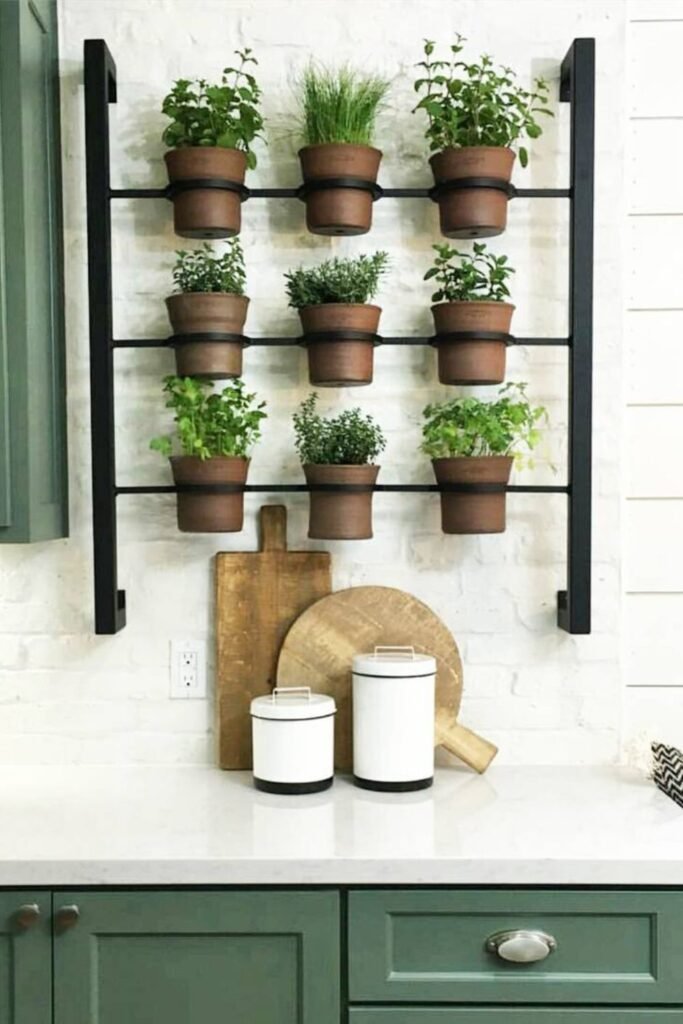
Crate Wall
Keeping every herb labeled and separated makes harvesting much easier when you’re cooking every day.
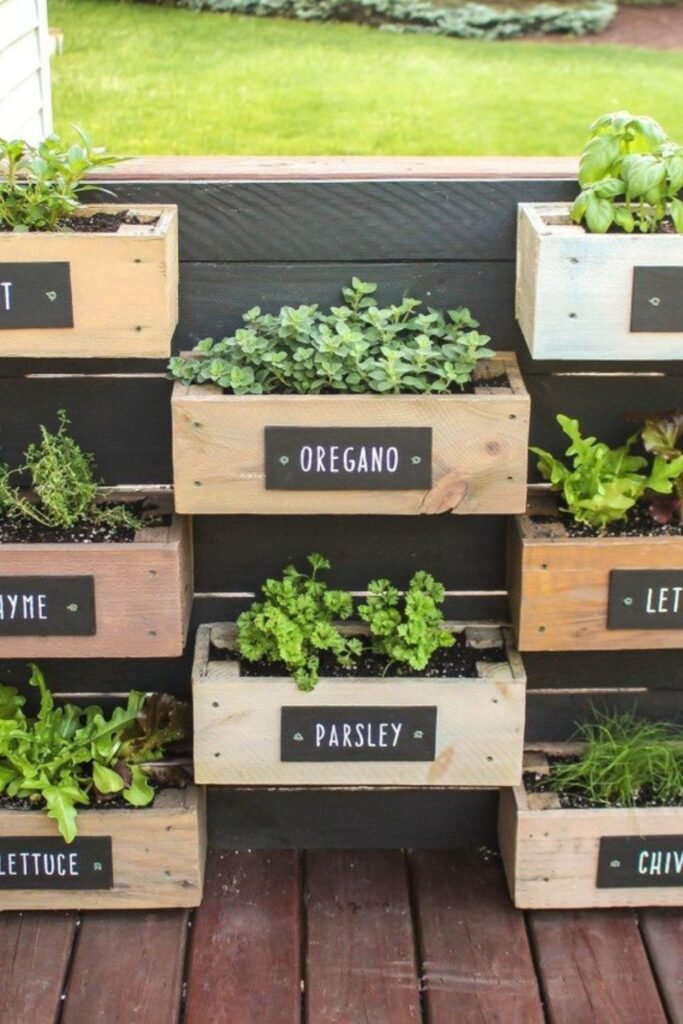
To build a little herb station attach small wooden planter boxes to a fence, balcony railing or sunny kitchen wall, which will look tidy and take up minimal room.
Plant mint, basil, oregano, thyme, parsley and chives in separate boxes so they all get the correct amount of water and space to grow.
Finish the setup with chalkboard-style labels for easy identification, and leave a little space.
Between each planter to allow for better airflow and to keep the herbs growing healthy all season long.
Macrame Cluster
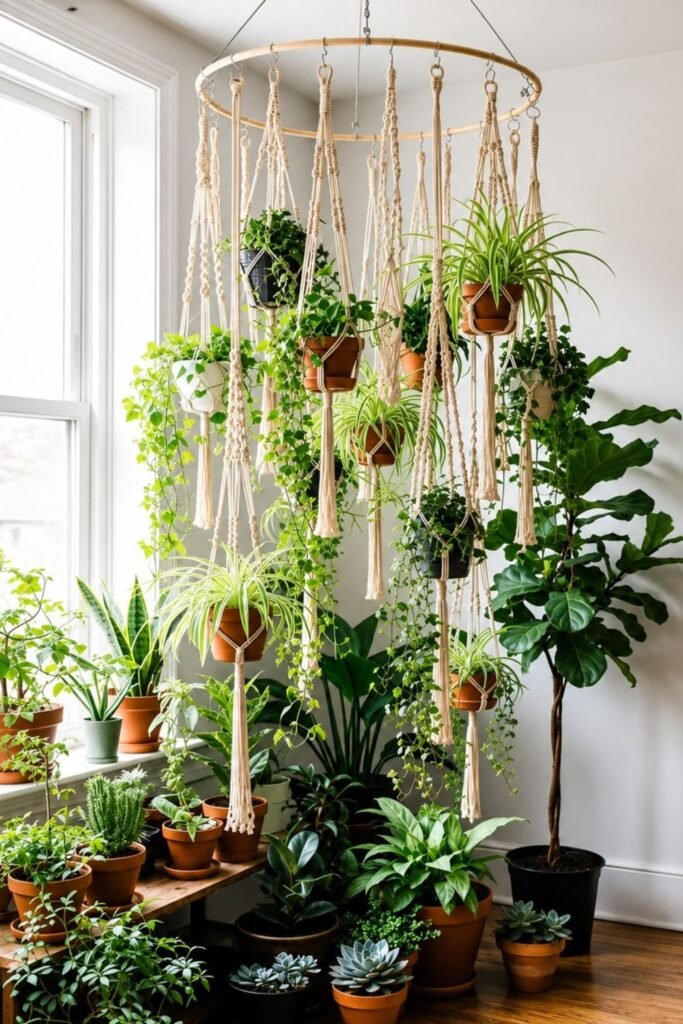
Creating a hanging herb corner is a smart way to add more greenery without giving up shelf or floor space.
Hang a few macrame holders by a big, sunny window to give all the herbs lots of natural light, and add some dimension with the varying heights.
Use trailing herbs likes oregano or thyme in the lower hangers and choose compact types such as basil or mint for the higher hangers to achieve a balanced look.
Make sure you leave enough room between each planter for the air to flow freely.
And this will help your herbs stay healthier while turning an underutilized corner into a gorgeous indoor garden feature.
Kitchen Hooks
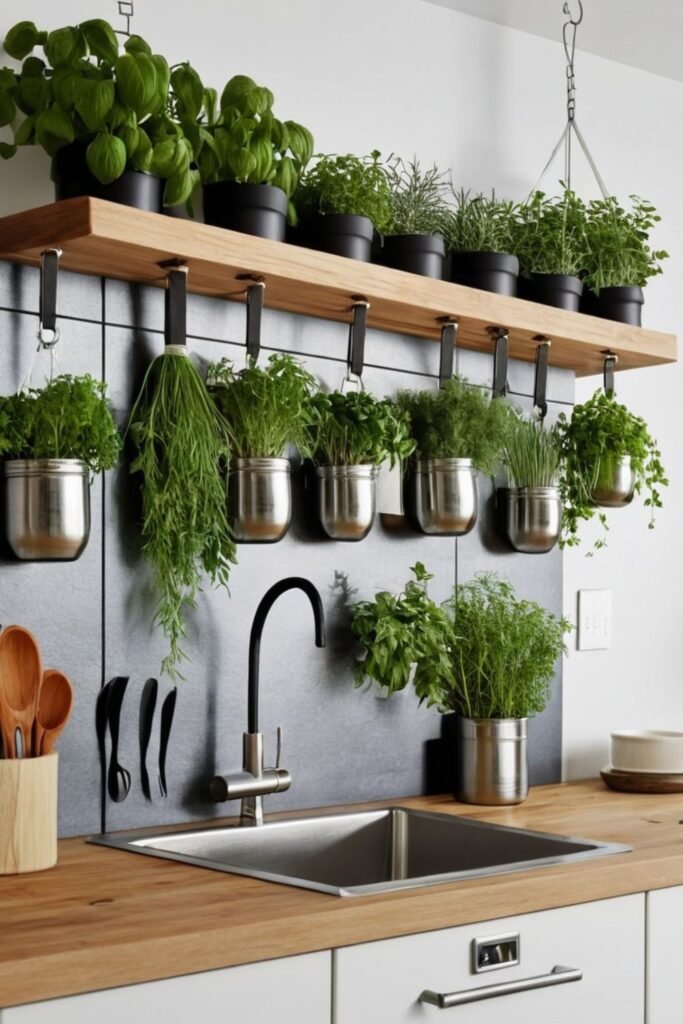
Keeping fresh herb exactly and where you cook make harvesting feel effortless. Install a sturdy wooden shelf with hanging hooks.
Set them over your sink or prep area. Combine counter top pots with hanging container for several growing levels that don’t cramp the workflow.
Keep frequently used herbs such as basil, parsley, dill and chives close at hand. Slower growing kinds can be placed on the upper shelf.
The containers are matched and a simple metal rail keeps the display appearing neat and tidy.
And regular trimming of herbs will foster fuller plants that produce fresh leaves for everyday meals.
Sill Station
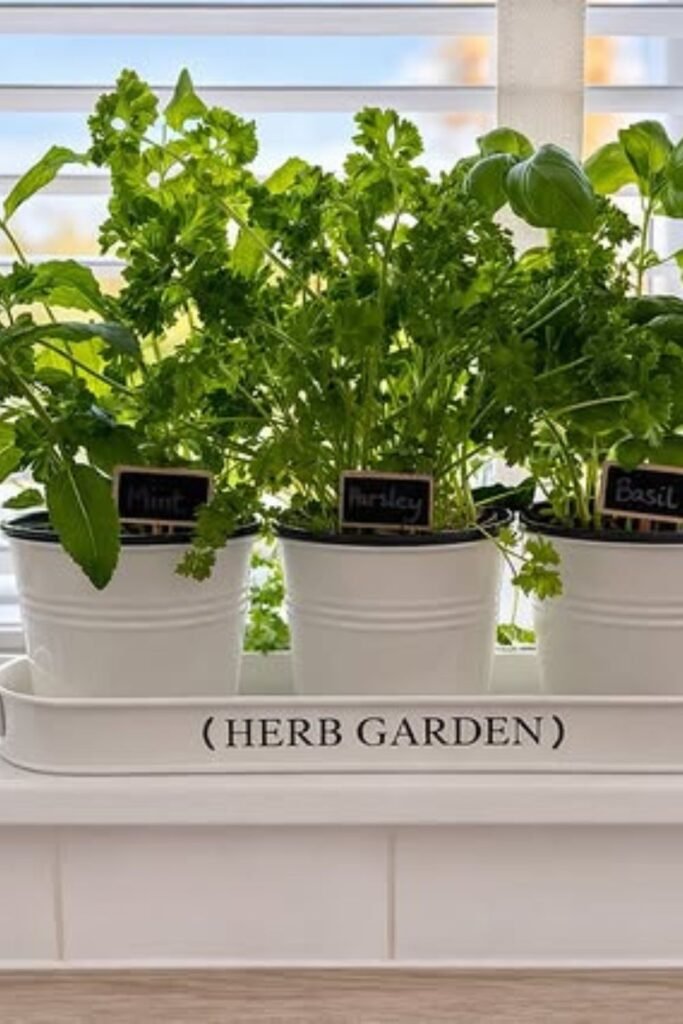
Fresh herbs become part of your everyday routine when they sit on a sunny windowsill instead of hiding in another room.
Group matching pots on a tray to catch extra water and keep the space clean while giving basil, parsley, and mint the bright light they need to thrive.
Small plant labels make harvesting quick especially when you’re cooking with multiple herbs at once.
Turn the pots every few days so each plant grows evenly toward the light source and regularly remove older leaves to encourage fresh, bushier growth throughout the season.
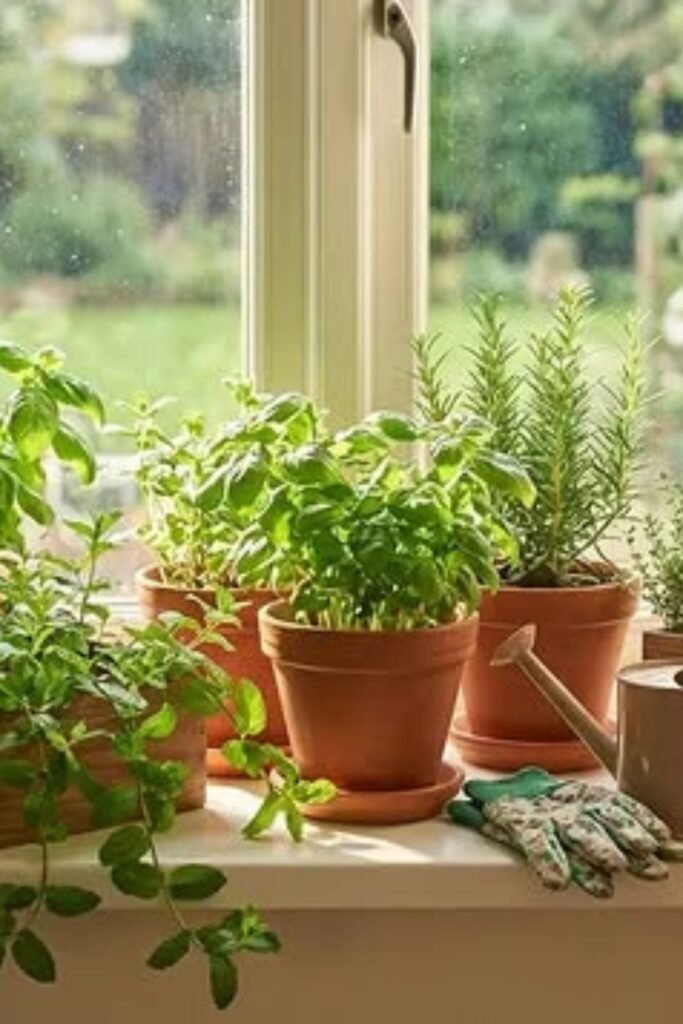
Sunny Cluster
Natural sunlight does most of the hard work when you gather your herbs around a bright window.
Terracotta pots paired with wooden planter boxes provide a peaceful collected look that looks at home in farmhouse, cottage or modern kitchens without looking too stylish.
Arrange taller herbs (such as rosemary) toward the back and spreading herbs (such as mint or oregano) closer to the front so that all the plants receive sufficient light.
Keep a small watering can handy for easy care and pinch off a few stems regularly instead than allowing the plants to become overgrown.
This simple habit helps you grow bigger, healthier herbs all year round.
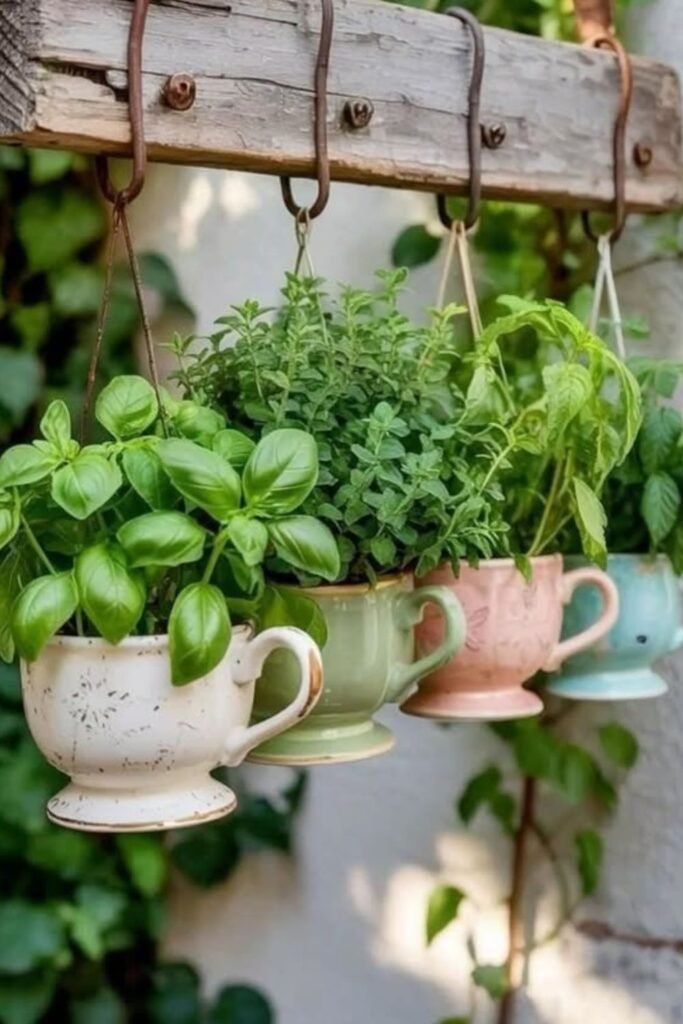
Teacup Planters
Old teacups can become charming herb planters that add personality without costing much.
Hang them from a salvaged wooden beam on a sunny deck, balcony or kitchen window where the basil, oregano and mint may get several hours of light a day.
If you plant in a cup, make a small drainage hole first, or set a nursery pot inside the cup to keep water from pooling around the roots.
Mixing cup colors provides a collected vintage vibe, and leaving one herb per cup makes watering, pruning, and harvesting more easier during the growth season.
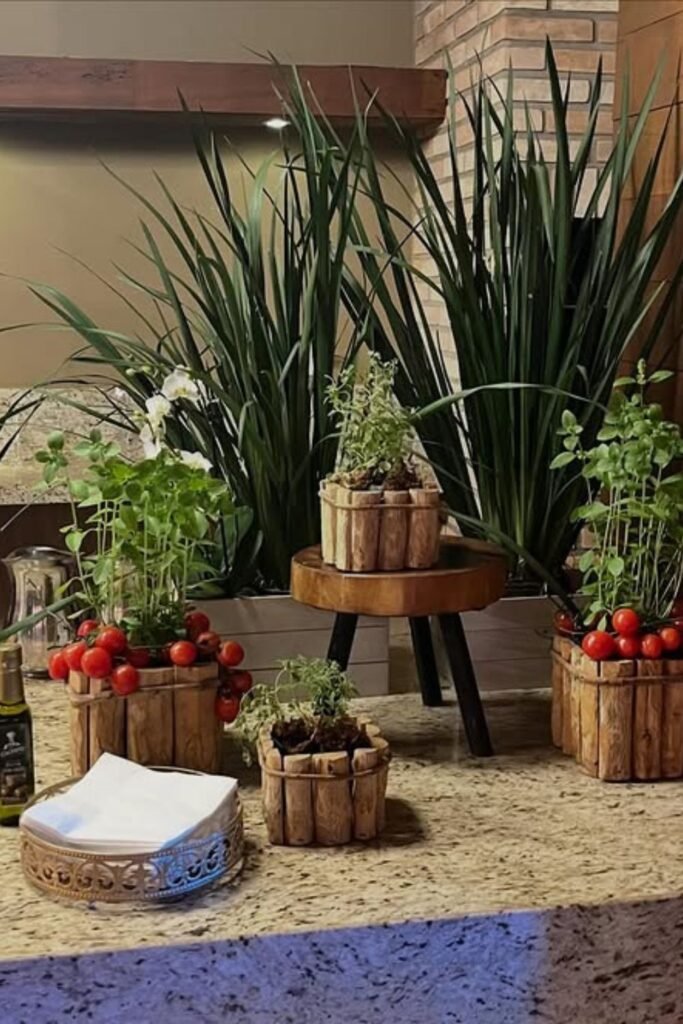
Counter Display
Fresh herbs deserve a spot where everyone can enjoy them, not just where they can grow.
Add miniature wooden barrel planters to a kitchen island, dining table, or coffee station for a centerpiece that is both gorgeous and functional.
Adding herbs and compact food plants provides color and texture without crowding the arrangement.
For a variation of heights, raise one planter on a tiny stand, then place the entire display near a sunny window so that each plant receives ample natural light.
Regular trimming will maintain the herbs full and neat, ensuring the centerpiece is always lovely and giving you fresh ingredients anytime you need them.
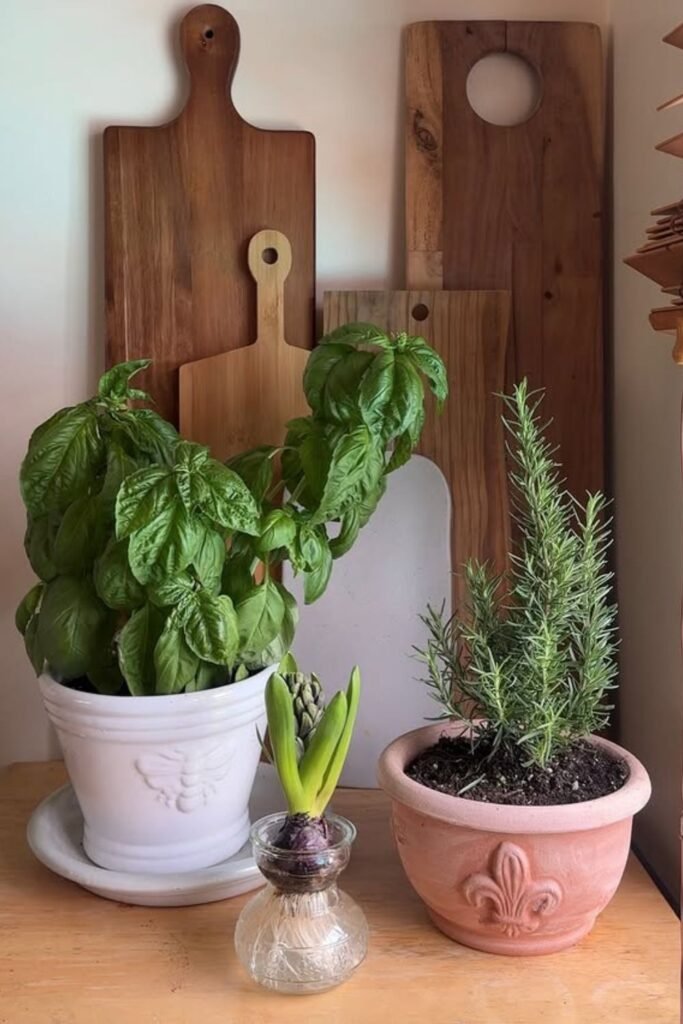
Cooking Corner
Keeping your favorite herbs beside the prep area makes fresh ingredients part of your everyday cooking routine.
Pair a huge basil pot with rosemary in a matching terracotta planter, then arrange against wooden cutting boards for a warm, lived-in kitchen vibe.
Put the arrangement in a sunny window where the herbs will receive several hours of sunlight and keep each plant in its own pot for easy watering.
Pick a few stems often rather than wait until the plants go out of proportion, and they’ll repay you with fuller growth and a steady supply of fresh flavor.
Light Rack
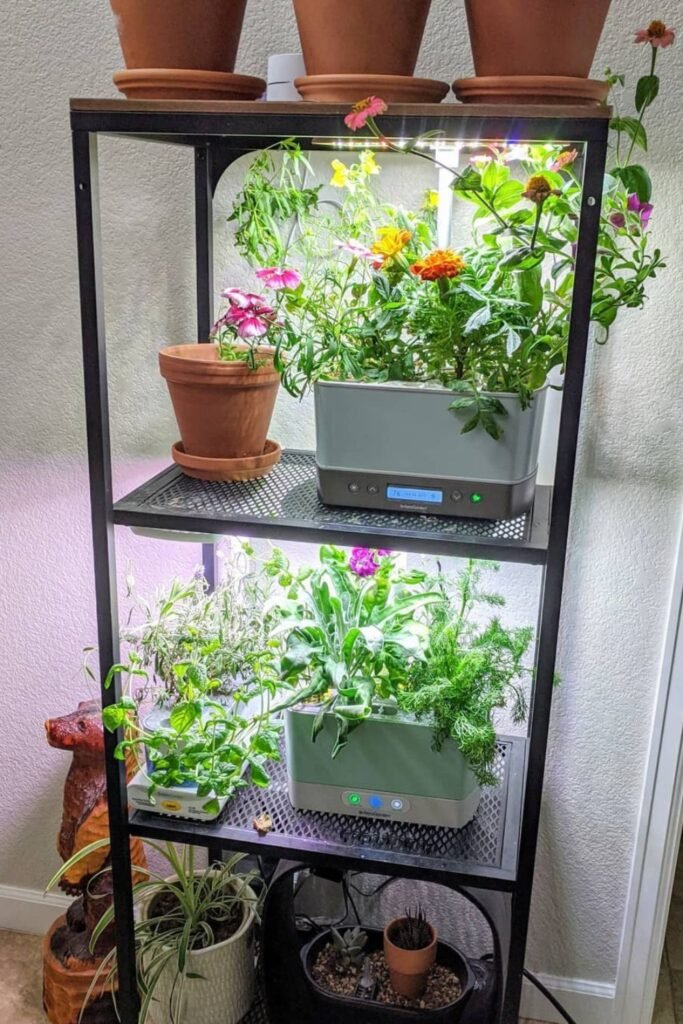
Limited sunlight doesn’t have to stop you from growing fresh herbs year-round. A metal shelving unit fitted with LED grow lights.
Makes the perfect indoor growing station for herbs, seedlings and even edible flowers. Ideal for apartments or homes with darker spaces.
Arrange taller plants on the bottom shelves and younger herbs below the upper lights to give each level room to thrive.
Group like plants together, set timers for the lights to reduce daily upkeep, and maintain your indoor herb garden lush, productive and ready for harvest any season.
FAQs
Can I Grow Different Herbs Together In The Same Indoor Planter?
Yes, but only if they have similar care needs. Rosemary, thyme and sage like drier soil, whereas basil, parsley and cilantro need more continuous hydration.
And putting herbs with similar watering and sun requirements together can keep them healthy and make your indoor herb garden a whole lot easier to care for.
How Do I Keep Indoor Herbs Healthy During Winter?
Place your herbs in the sunniest window you have, supplementing with LED grow lights if the sun is sparse.
Water when the top inch of soil is dry Keep pots away from heating vents and harvest regularly to encourage new growth.
With a little seasonal tweaking you can keep your herbs working for you even in the winter months.
