
23 Kitchen Garden Ideas for 2026
Growing fresh herbs and veggies seems fulfilling until the reality hits continuous watering, weeds taking over.
Plants failing in the incorrect position and a garden progressively becoming just another duty on your list.
The key is to create a low-maintenance environment with the correct layout, easy-care plants and smart ideas that keep fresh items within reach.
In this article, I’ll show you 23 amazing kitchen garden ideas you can easily recreate at home.
Let’s jump in!
How Can I Make My Kitchen Garden Low Maintenance?
A kitchen garden should facilitate living, not add to the everyday burden.
There is a lot to do in terms of watering, weeding and caring for your plants and many beginners lose steam.
The secret is to create a configuration that works with your routine and not against it.
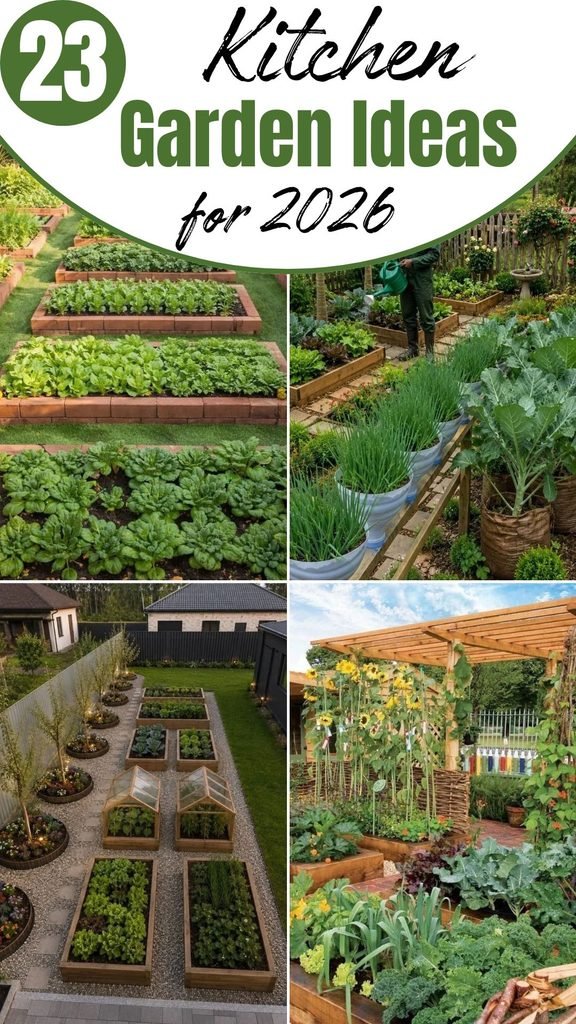
Opt for low-maintenance plants, arrange beds for easy access, and utilize clever strategies such as raised beds, mulch, and efficient watering to cut down.
A little garden carefully organized, frequently gives more pleasure than a vast one needing regular attention.
Use plants you actually use. Place them where care seems convenient. Build a kitchen garden that stays productive with out taking over your routine.
Organized Harvest
Keeping vegetables in separate raised beds makes a kitchen garden much easier to manage when several crops are growing at once.
Make beds in rectangular shapes with gravel roads between them so that you can get to plants from both sides without walking on the soil.
Assign spots for leafy greens, herbs, strawberries and larger vegetables, then add small cold-frame coverings to crops that require extra warmth or protection.
The gravel between the beds also reduces the amount of muddy walking areas and provides fewer spots for weeds to take hold.
Leafy Rotation
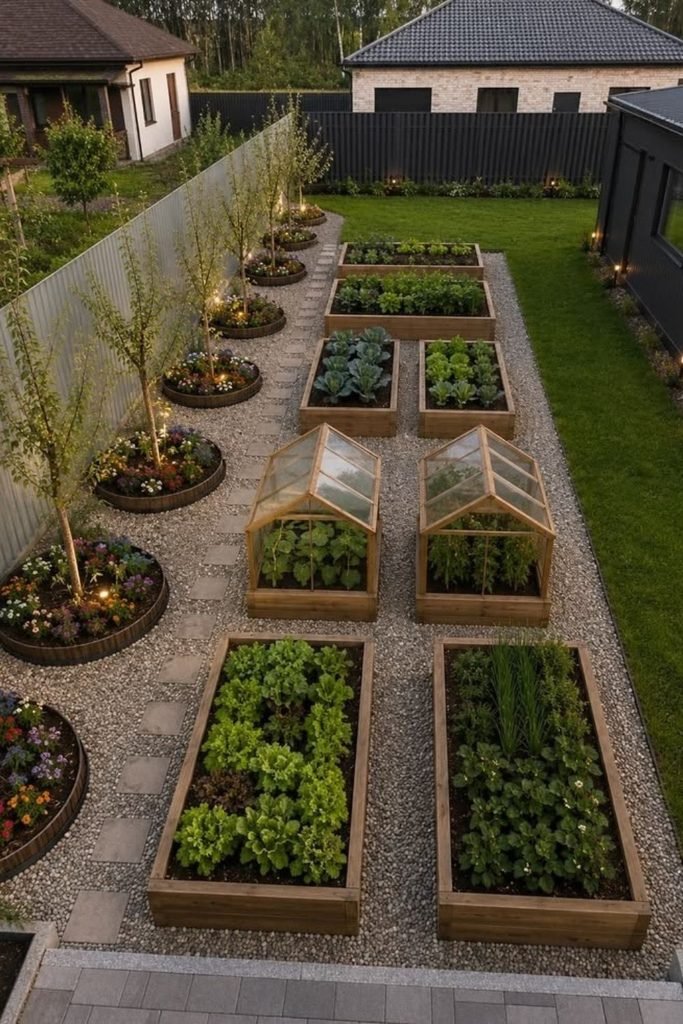
Quick-growing greens can keep a kitchen garden productive without demanding complicated care.
Divide shallow brick beds into separate blocks for planting lettuce, spinach, Asian greens and cooking herbs.
Harvesting allows the younger plants to grow slowly, but it keeps fresh leaves for longer.
Low beds are especially good for sunny backyard plots where you want well-defined crops without the bulkiness of buildings.
Mixed Growing
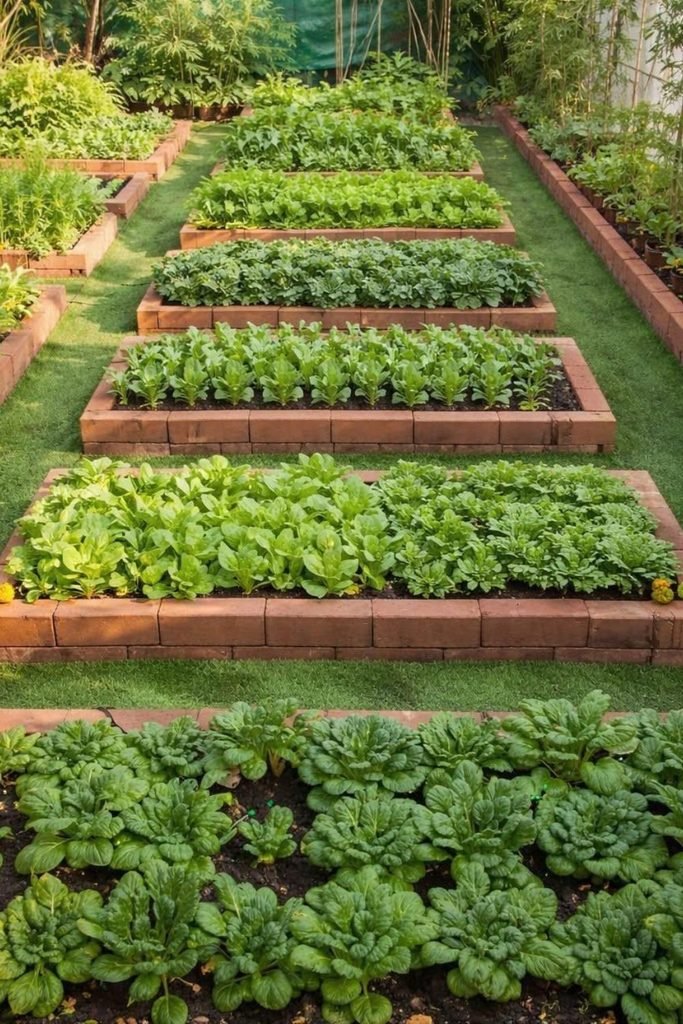
Giving each crop its own growing style can make a productive garden far easier to fit into an irregular backyard.
Keep salad greens in tight raised beds, plant herbs or onions you’ll be harvesting often in raised pots, and grow larger veggies that need more room for roots.
The taller fruit plants can be put at the back so they don’t shade the shorter crops.
You can also combine containers with permanent beds so that you can change the arrangement between seasons without having to completely rebuild the garden.
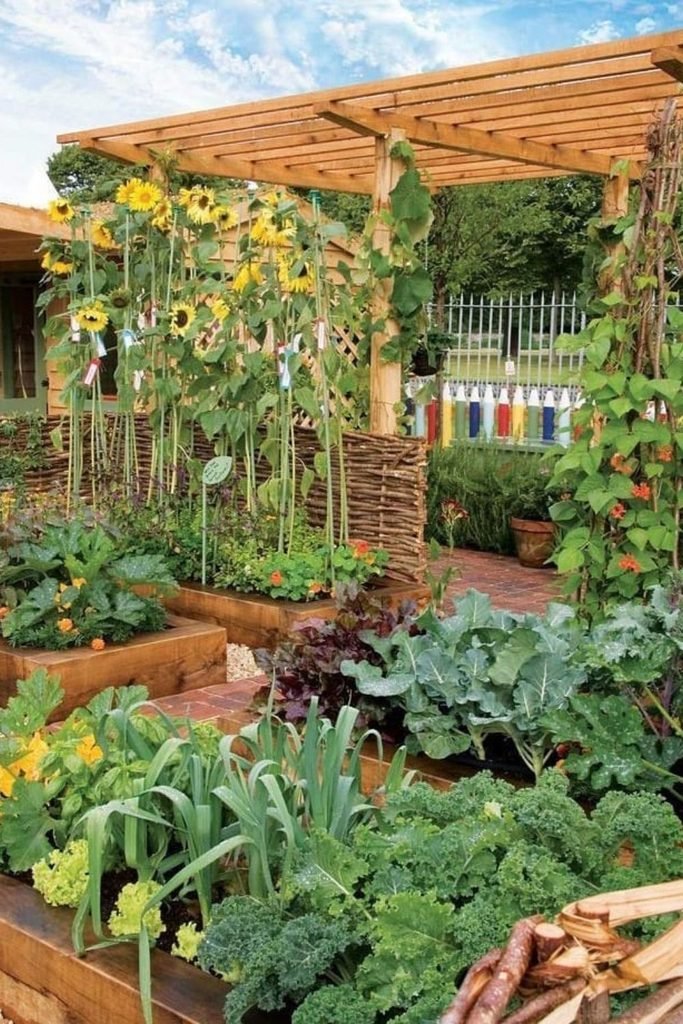
Pergola Harvest
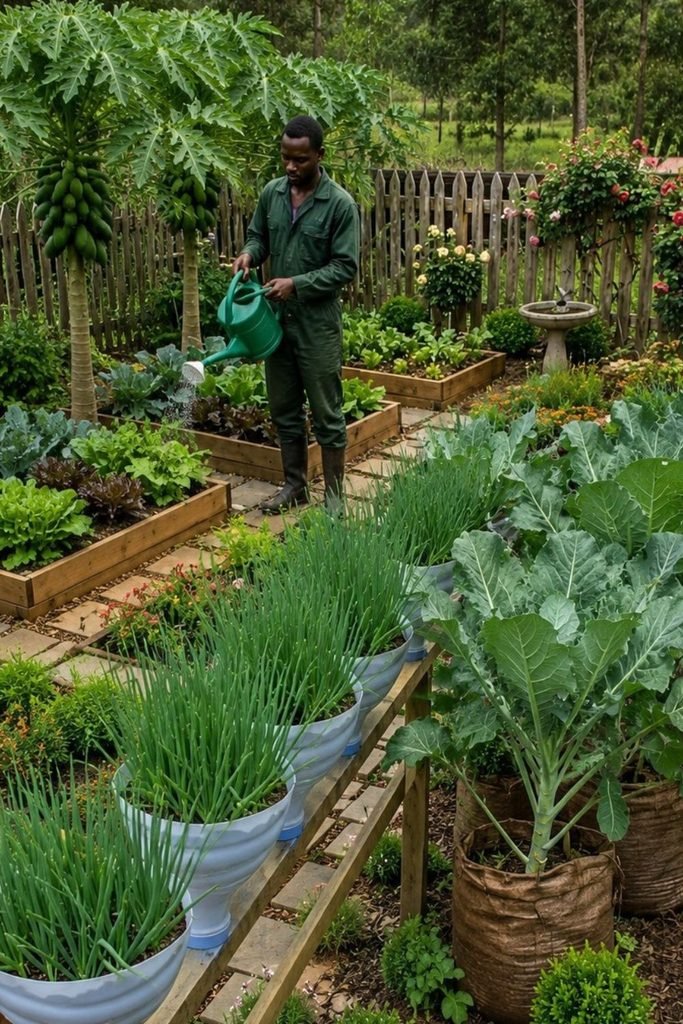
Growing upward is one of the easiest ways to gain planting room without adding more beds.
Build a simple wooden pergola over a sunny kitchen garden and train climbing beans, cucumbers or squash up robust supports, with leafy greens and root crops.
As the season continues, plant taller vines in places where they won’t block critical sunlight.
Nasturtiums and marigolds, for example, can fill in bed margins for added color and help make a productive vegetable area an attractive element of the garden.
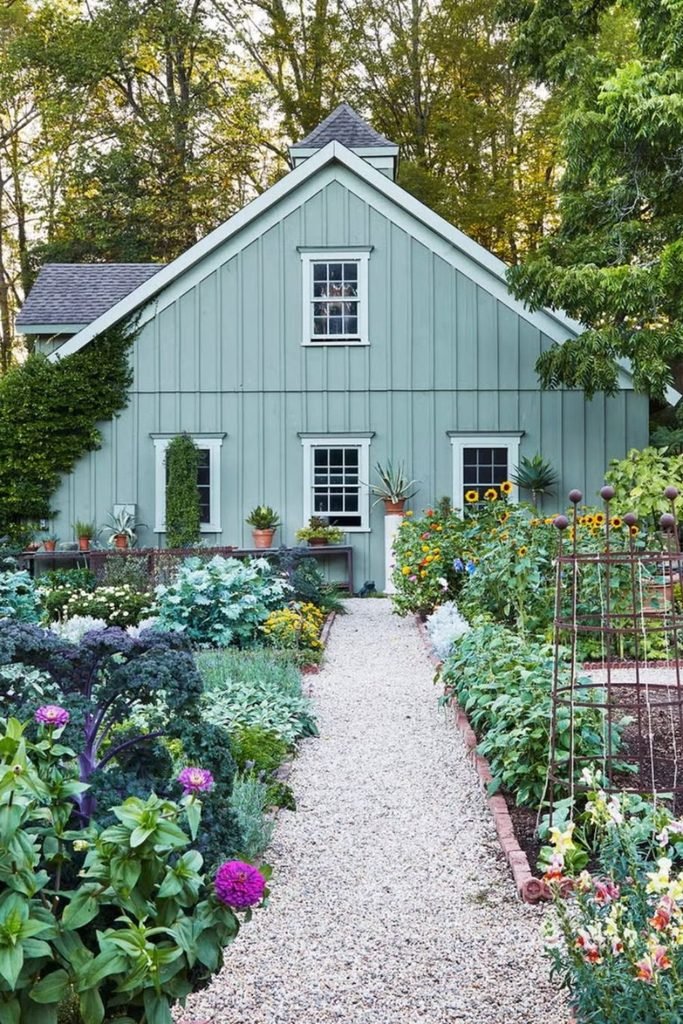
Edible Borders
Vegetables do not need to sit in a separate utility corner when they can become part of the landscaping.
Plant climbing crops and seasonal vegetables with blooming plants along large garden borders next to kale and herbs, with a gravel walk.
Flowers can add extra color and encourage pollinators, while metal supports give taller crops somewhere to climb without overflowing across nearby plants.
Use this technique next to a cottage, garden shed, or backyard path to grow fresh food without compromising the attractive aspect of outdoor environment.
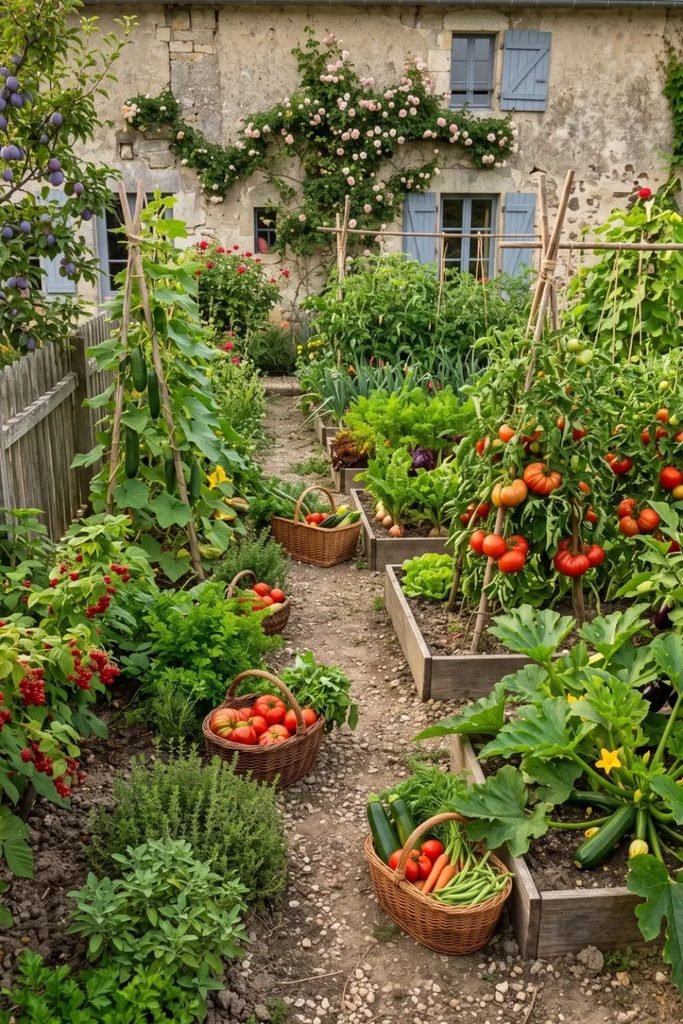
Harvest Layers
Packing several edible layers into one sunny plot gives you more variety without wasting growing space.
Train cucumbers and other vines up simple bamboo supports. Keep tomatoes staked so fruit does not touch the earth.
Shrubbery of fruit can soften the exterior edges, while a tiny fruit tree offers another fruitful layer.
Make a broad central passage for bringing baskets and water, especially when the crops are at the height of summer growth.
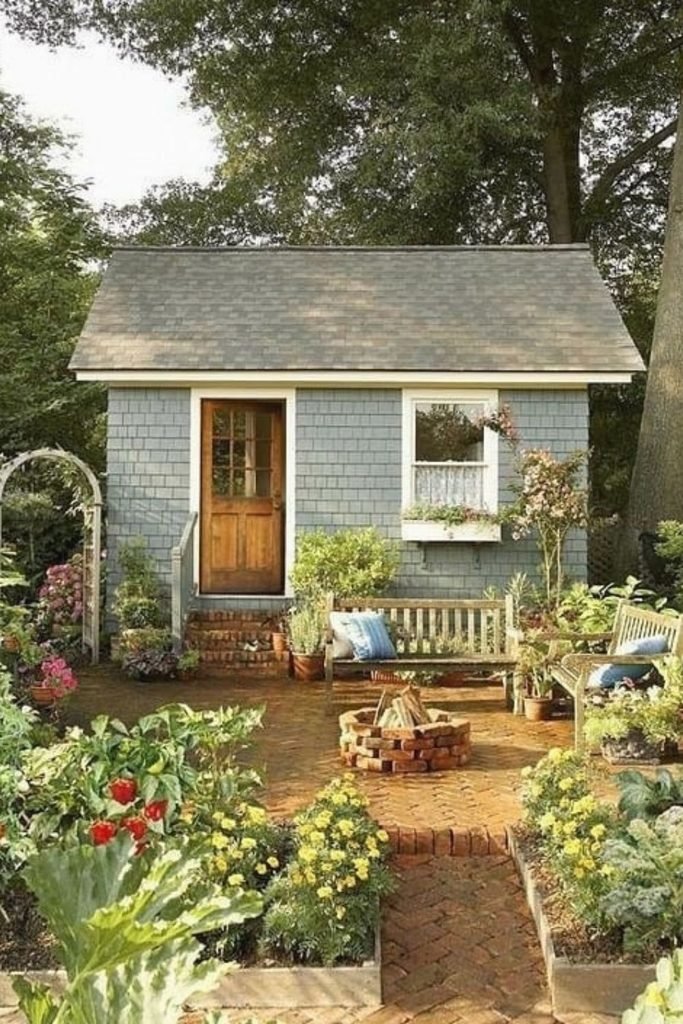
Garden Retreat
Blending food growing with a place to relax makes a kitchen garden feel like part of the backyard rather than a work zone.
Leave productive beds along the perimeter for tomatoes, green vegetables and herbs and save the center for a brick patio and modest seats.
And flowers placed in along the margins of beds can lure pollinators and soften the transition between crops and the sitting area.
Think about this setup right outside a garden shed or small outbuilding tools can remain within easy reach, and harvesting, pruning or watering.
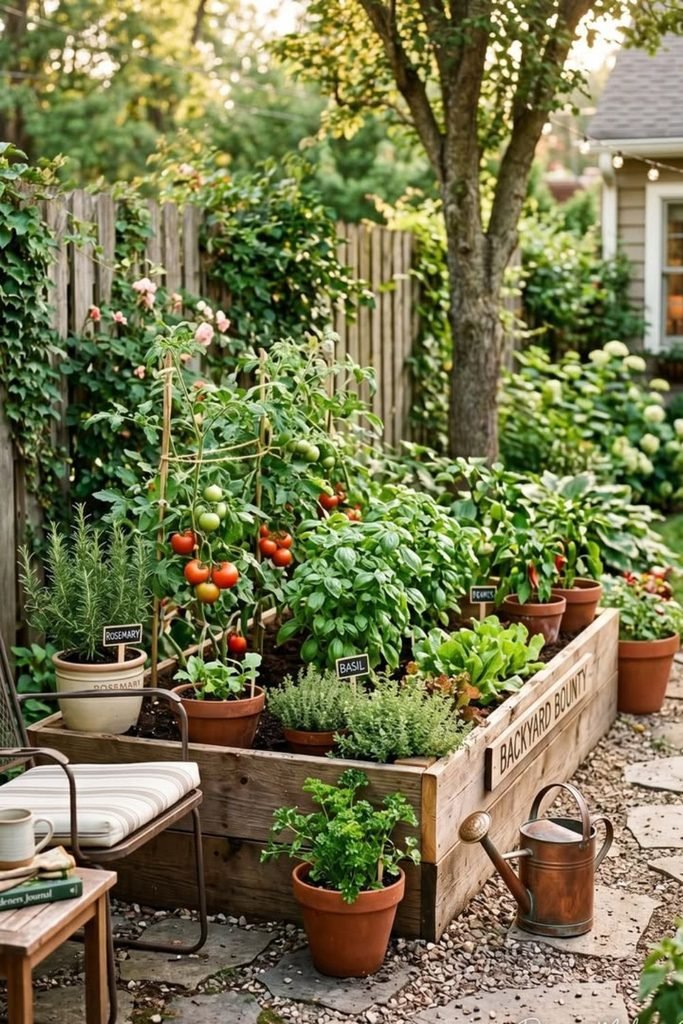
Backyard Bounty
This can convert a raised bed into an extension of your kitchen with all the ingredients you use daily kept together.
Fill the middle with basil pepper and maintain lettuce compact herb along the edges for easy plant tomatoes in back Strong support
Pots of rosemary, parsley and other commonly used herbs can be placed beside the bed and moved easily as the sunlight changes.
Place this setup close to a patio or back door so that snatching a handful of herbs or veggies never feels like an extra gardening chore.
Greenhouse Corner
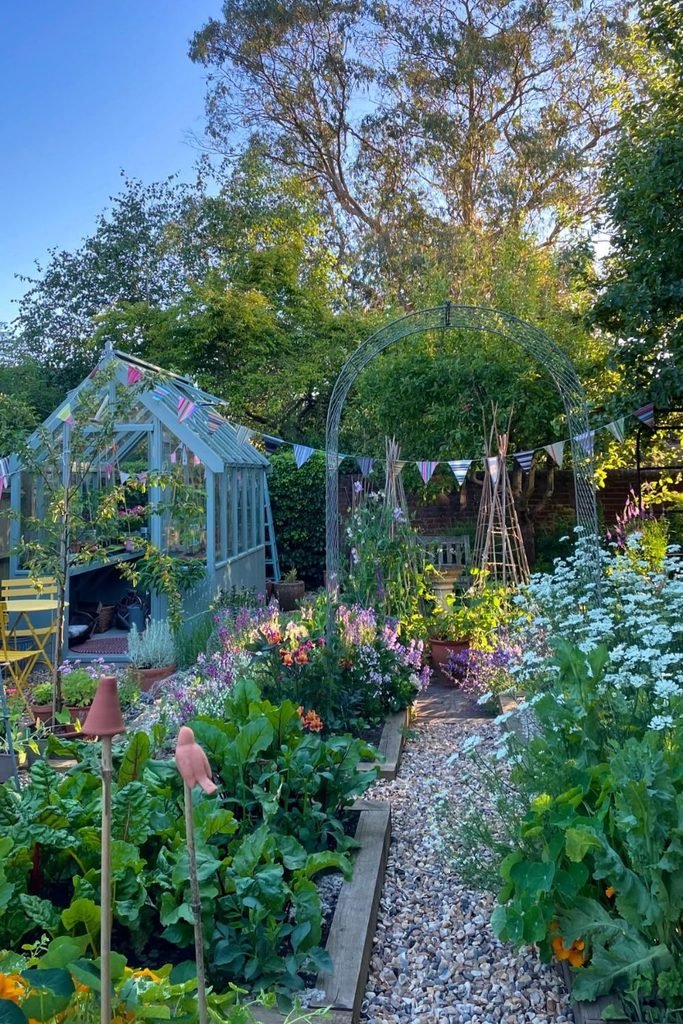
Extending the growing season becomes much easier when a small greenhouse sits directly beside your main vegetable beds.
The enclosed area is ideal for seedlings, delicate herbs and crops that like warmth, while the surrounding beds can be used for hardy greens and larger.
Think of growing climbing beans or peas on an arch above the pathway, making advantage of overhead space.
Plant pollinator-friendly flowers around profitable crops, particularly at bed margins, so the garden has a vibrant and bountiful feel.
Trellis Beds
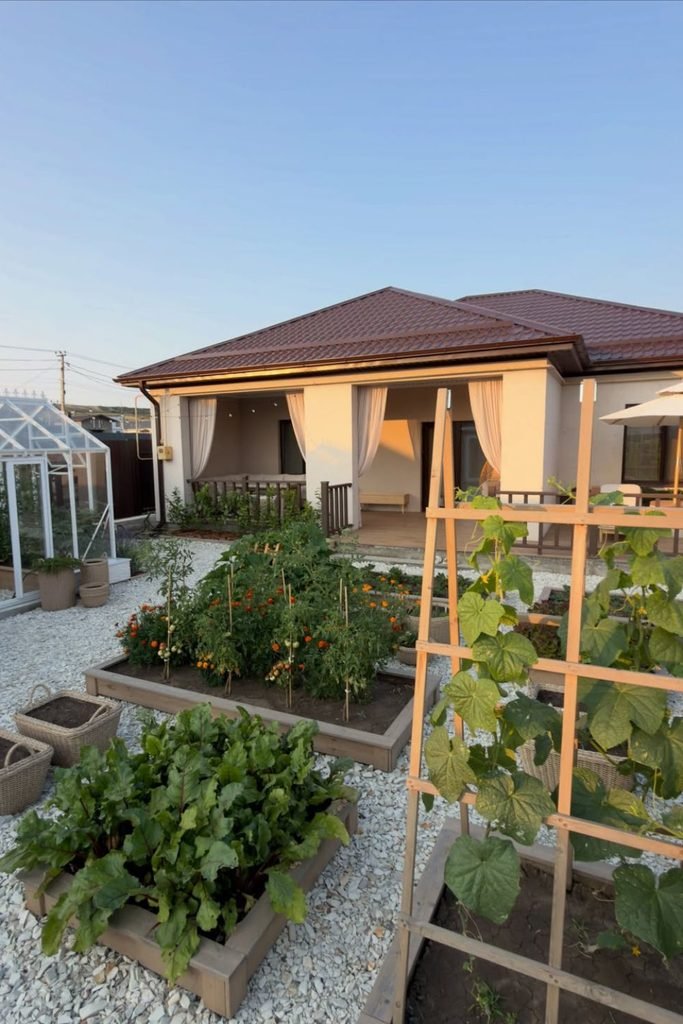
Let climbing vegetables claim the vertical space instead of allowing them to spread across valuable soil.
Place a solid wooden trellis in a sunny raised bed for cucumbers or beans and leave compact vegetables such as beets and leafy greens in adjacent areas.
They can be grown on a larger central bed with individual supports for better air circulation and easier harvesting.
Gravel surrounding the beds helps keep walking areas cleaner and minimizes the need for frequent weeding.
A greenhouse nearby is a handy spot to start seedlings before outside planting begins.
One Bed
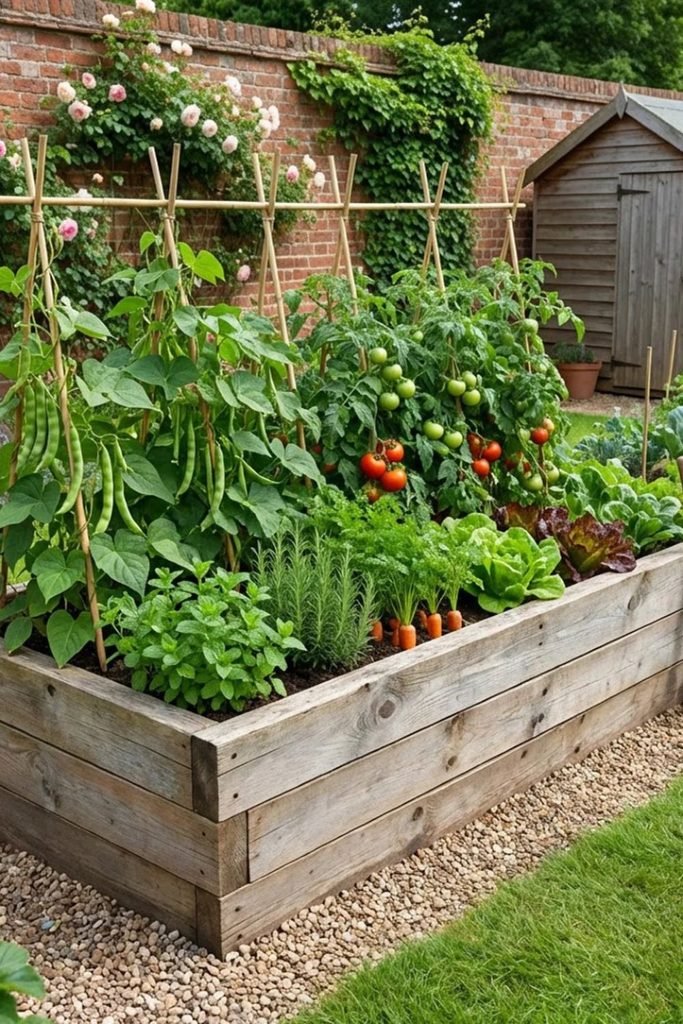
Simplify your first kitchen garden by growing several everyday crops inside one generously sized raised bed instead of maintaining multiple scattered plots.
Climbing beans need a bamboo structure at the back, with tomatoes supported beside, and the lower spaces can be planted with lettuce, carrots, rosemary.
Taller crops should be planted behind shorter ones to prevent excessive shadowing and facilitate harvesting.
Deep wooden sides also provide plenty of space for roots and lift the soil level, which can make planting, weeding and basic care easier.
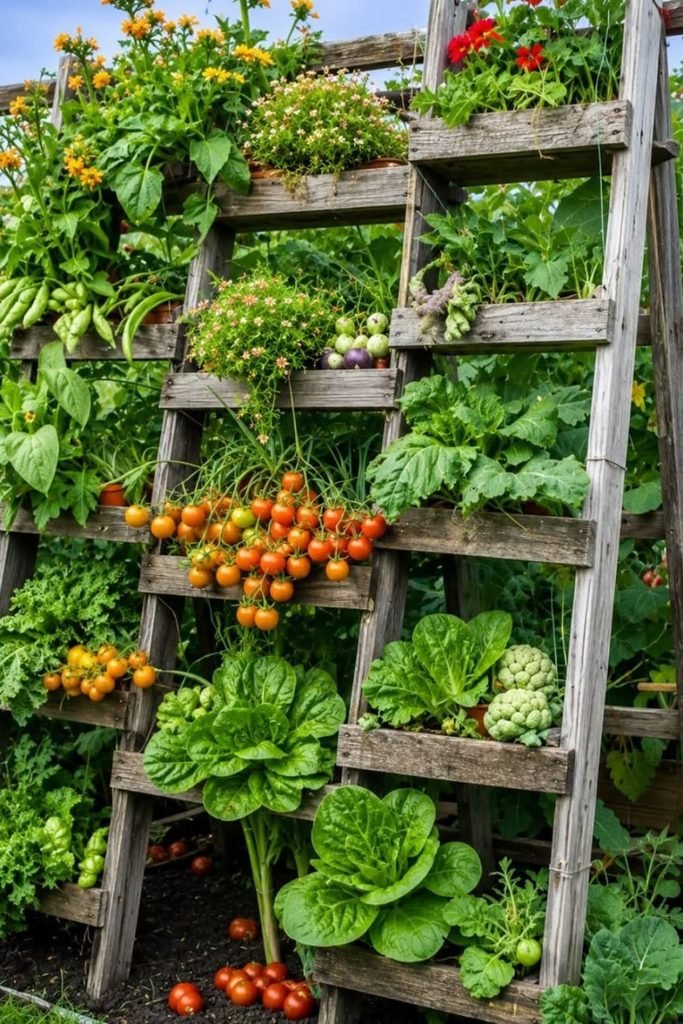
Ladder Garden
Running out of ground space does not mean you need to stop adding edible plants.
For compact lettuce, herbs, peppers, cherry tomatoes and smaller crops, use sturdy wooden ladders as tiered growth stations on distinct levels.
Plant leafy greens in the shadier spots, then plant the sun-loving crops up high for hot times.
Tightly secure the planter boxes to each rung and check the moisture more frequently as raised pots might dry out faster than garden beds.
Crop Zones
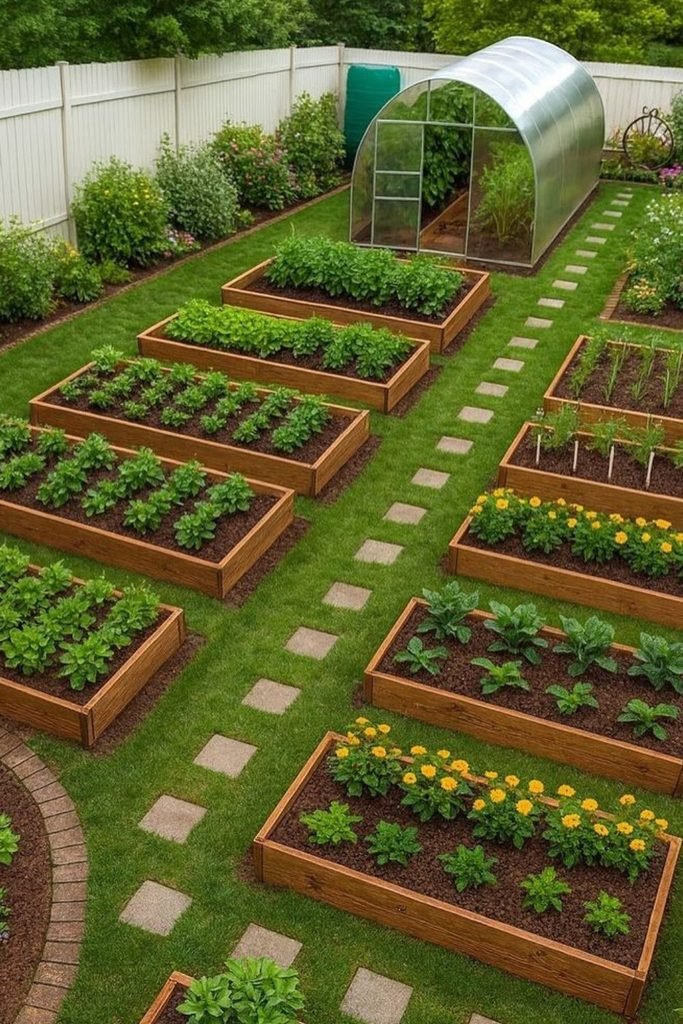
Separating crops into dedicated beds can save time when watering, feeding, harvesting, and planning the next planting season.
Grow veggies with comparable demands together and make wide trails between beds so you can reach everyplace and the soil does not get compacted.
Keep fast-growing greens in easily accessible beds, taller or longer-season crops farther back, and put flowers around selected edges for extra color.
At the end, a small greenhouse provides a protected zone for seedlings and vulnerable crops giving bigger backyards a productive system that work over.
Cooking Garden
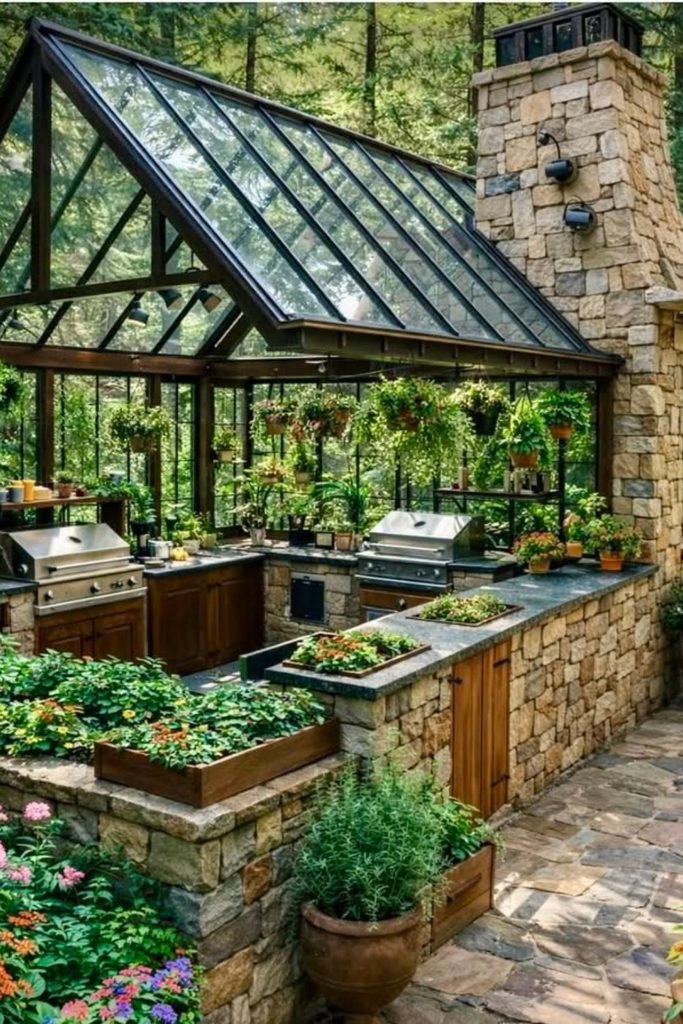
Bringing edible plants right beside the cooking area makes harvesting feel effortless rather than like a separate garden chore.
Use built-in planters and pots nearby for rosemary, thyme, basil, parsley, and other herbs you use often, placing the most commonly selected.
Small herbs can be hung in containers with out occupying workspace. It works especially effectively around covered outdoor kitchens.
Where shelter can extend usability yet fresh supplies remain close enough to snip right into meal.
Protected Patch
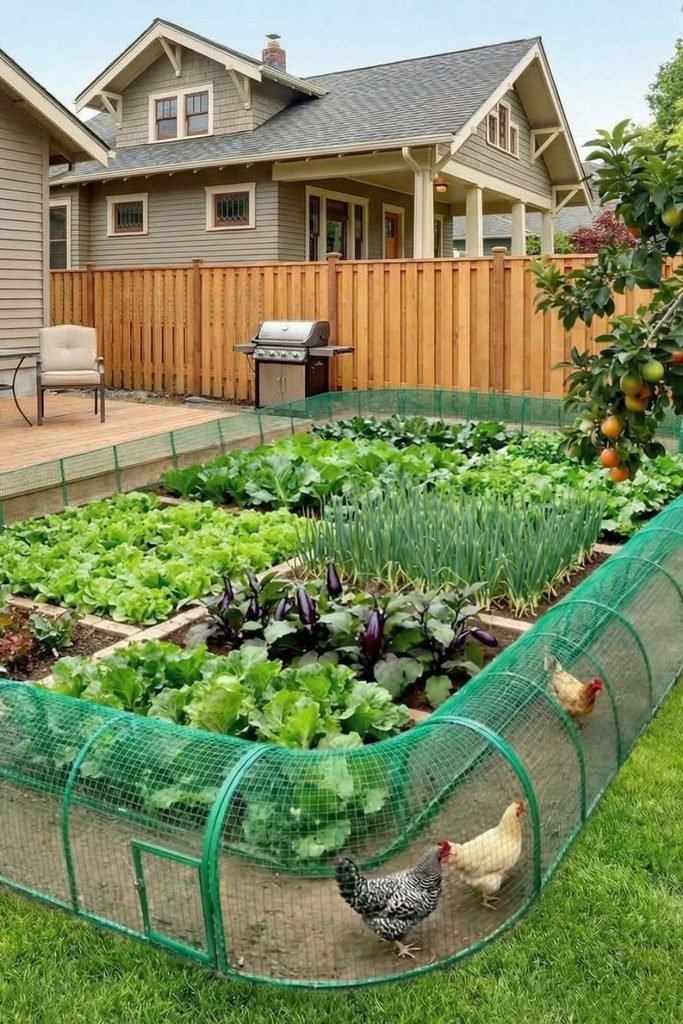
When delicate crops have a distinct boundary it is simpler to share garden space with chicken.
For a small vegetable patch with a low mesh fence to prevent birds from scratching around lettuce, onions, eggplants and other young plants.
Make watering and harvesting easy by dividing the interior into simple planting pieces.
A patch next to a patio also maintains fresh produce close to the kitchen and allows for quick daily checks.
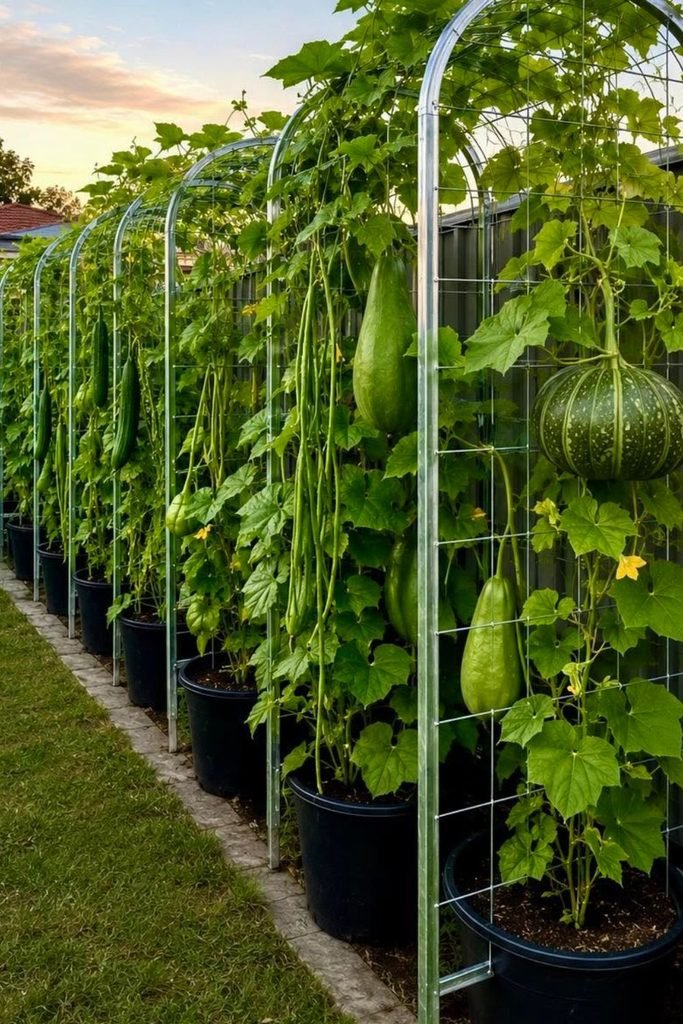
Vertical Vines
Long fence lines can become productive growing zones without sacrificing much lawn or walking space.
Along the edge set up big pots and behind them set up tall arched trellises.
Train cucumbers, beans, gourds or other climbing vegetables you choose to grow up.
To control spacing and to keep roots out of permanent garden beds, give each robust vine its own pot.
This tactic is especially helpful in tight backyards where outward expansion is limited, but there is a lot of vertical space going to waste.
Tiered Greens
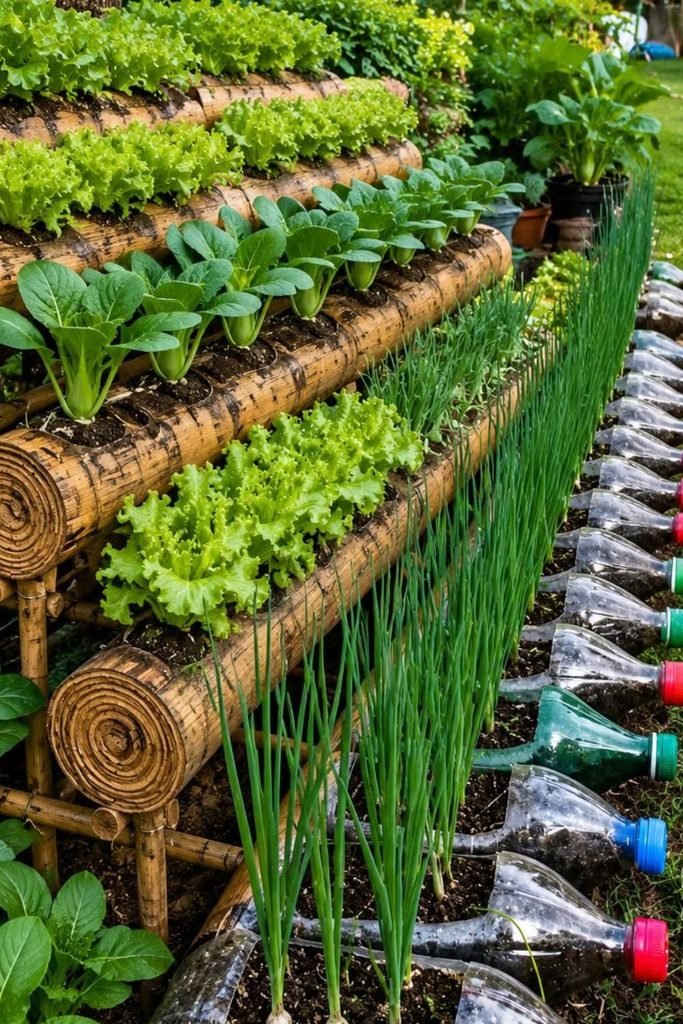
Stacking leafy crops in shallow planting tiers can turn a narrow strip into a surprisingly productive kitchen garden.
Create durable bamboo or wooden troughs at varying heights and sow lettuce, bok choy, spinach or compact herbs in each row.
Keep taller vegetables, such green onions, at ground level so they don’t crowd the top tiers.
Reused containers can be an inexpensive way to extend the planting line, but add drainage holes to them before filling them with soil.
This layout is perfect beside to fences, patios or sunny garden margins where regular beds would take up too much space.
Autumn Harvest
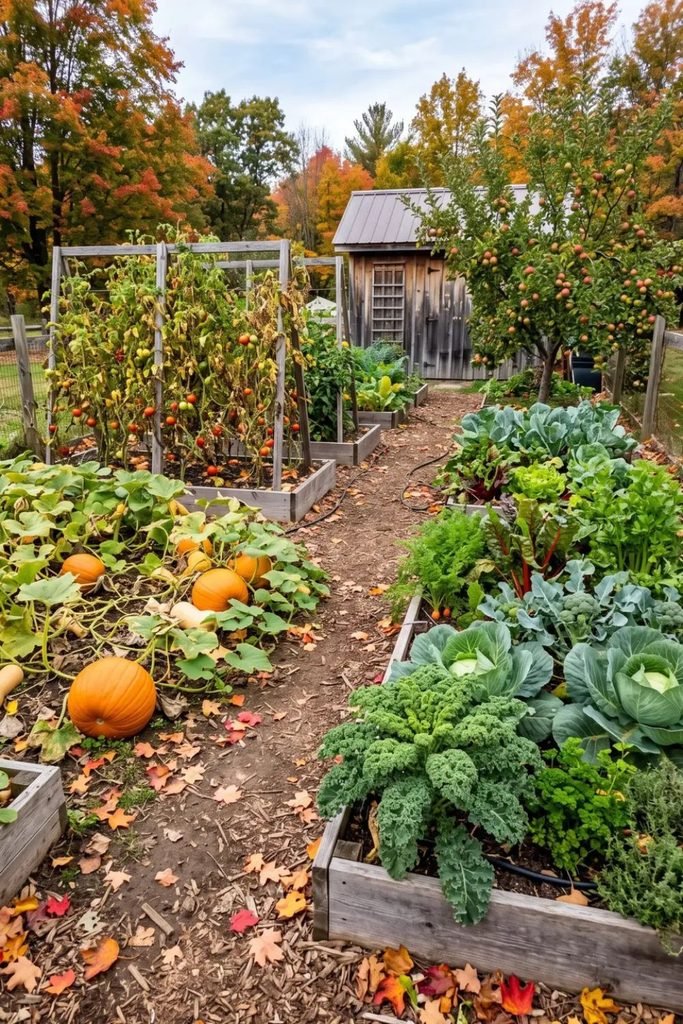
Stretching your kitchen garden into fall gives you fresh food long after summer crops begin fading.
Plant cool-season vegetables such as kale, cabbage, broccoli, chard, and lettuce on raised beds and allow pumpkins and squash to sprawl in a separate section.
Another bounty from fruit trees, and without infringing on planting beds. Sturdy support keeps late tomatoes upright till the mercury drops.
Finish walkways with wood chips or shredded leaves to cut down on muck and weeds, and the material will add organic matter as it breaks down.
Companion Beds
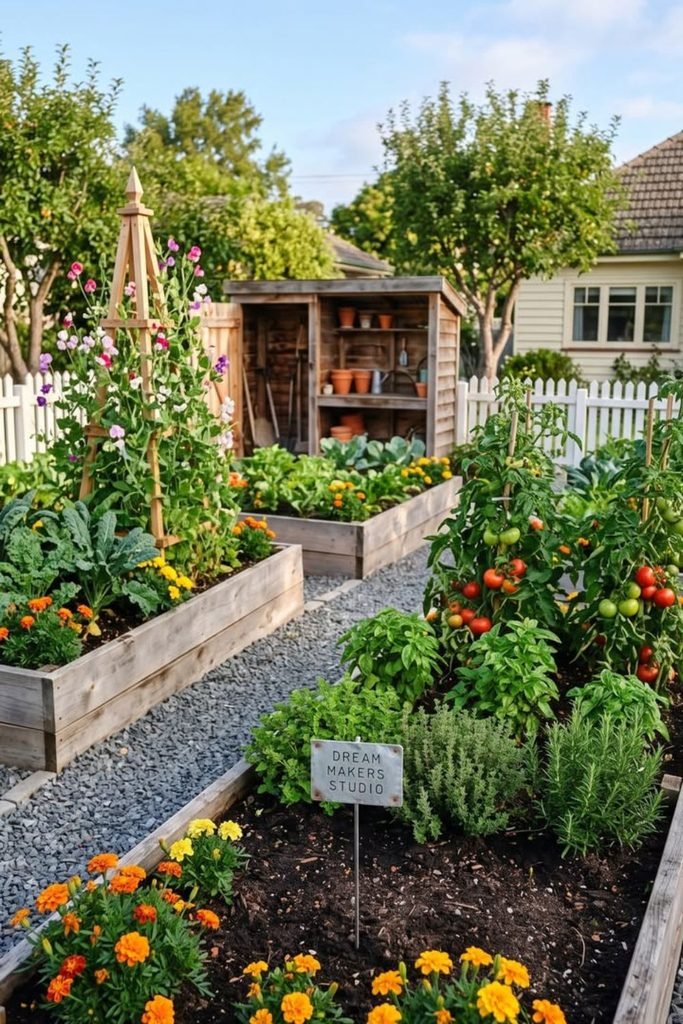
Pairing vegetables with useful flowers can make raised beds work harder without adding another growing area.
Keep tomatoes and basil together in a sunny bed plant climbing peas on a tall support and tuck marigolds or other compact flowers around open edges.
Save leafy crops for nearby beds where they have room to spread. All sections are accessible by gravel walkways.
And a small tool shed close by saves frequent journeys inside for pots, stakes, watering gear and harvesting materials.
Harvest Sections
Breaking the garden into crop specific beds keeps generous vegetable plot from becoming difficult to manage.
Set aside another bed for quick picking lettuce and herbs. Situate climbing veggies adjacent to permanent trellis panels so vines remain regulated.
Broad walks between beds make watering, weeding and transporting harvest baskets so much easier.
Having a modest storage shed at the end of the garden also means that stakes, hand tools, pots and supplies are near to where they are actually utilized.
Mulched Paths
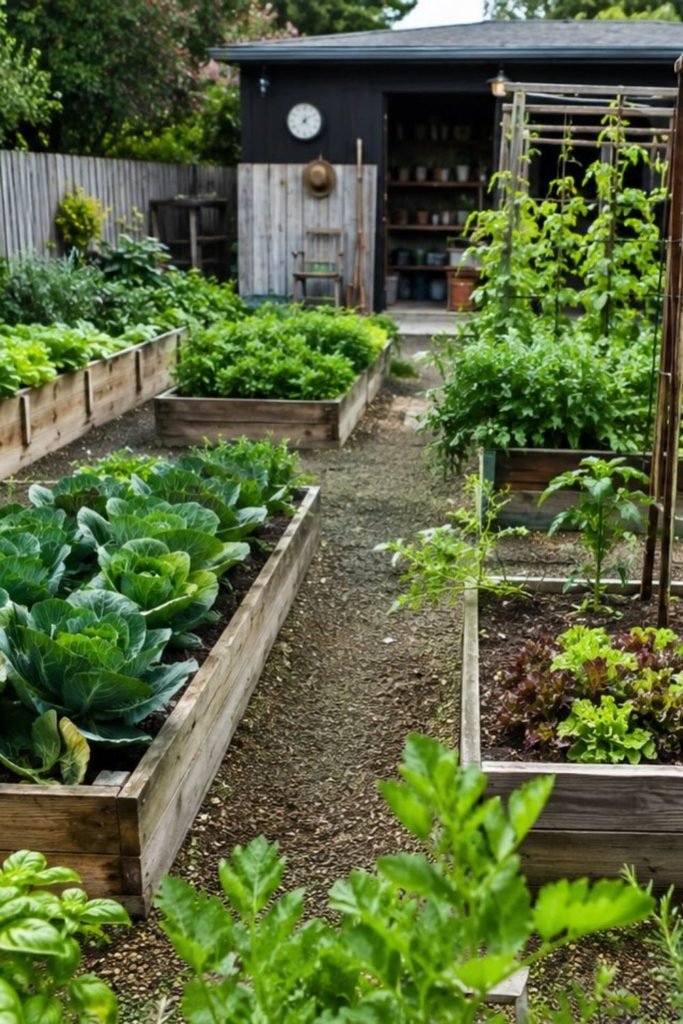
Cut down one of the most repetitive garden jobs by covering the walking areas instead of leaving bare soil between beds.
Cover numerous path weeds with a coating of wood chips to help clearly differentiate growing zones, cut down on muddy footing and smother weeds.
Pick beds in a variety of sizes to suit the crops you cultivate, then add permanent trellis panels wherever peas, beans or cucumbers need support.
Paths large enough for a wheelbarrow will make composting, harvesting and seasonal cleanup a lot less difficult.
Labeled Beds
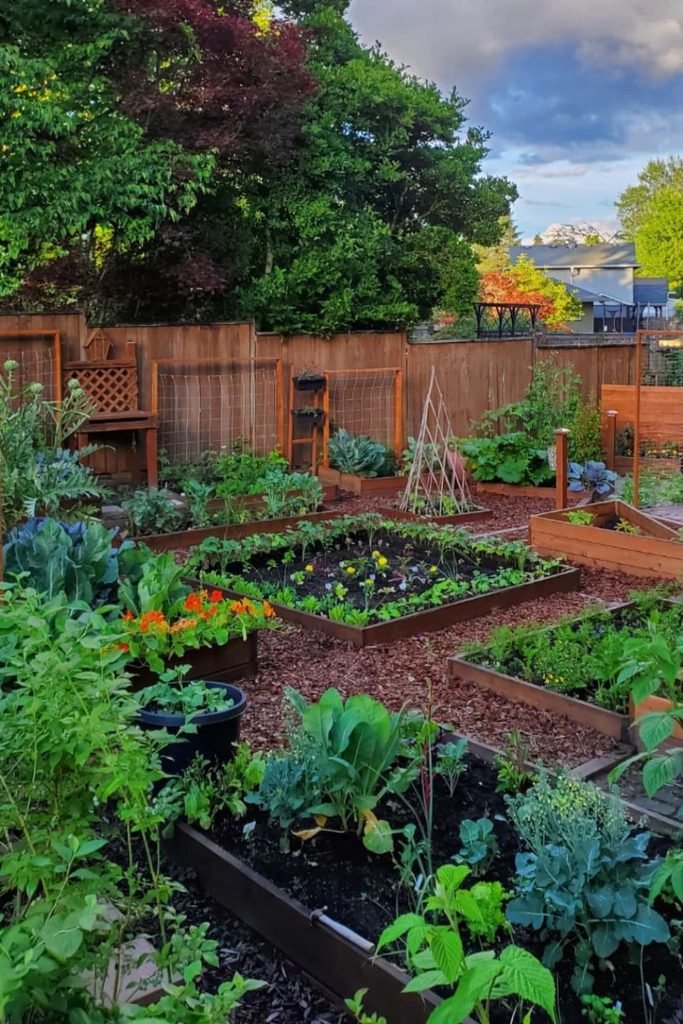
Plant labels become surprisingly useful once a kitchen garden holds several similar-looking greens and herbs.
Arrange your plot in tidy rectangular beds, grow one crop or a closely related group of crops in each bed.
Low bamboo edging can delineate each growing area without generating cumbersome obstacles.
This systematic approach works particularly well for novices cultivating lettuce, spinach, onions, herbs and other common crops.
You can easily monitor what is growing, where gaps exist and which bed needs replanting next.
Formal Potager
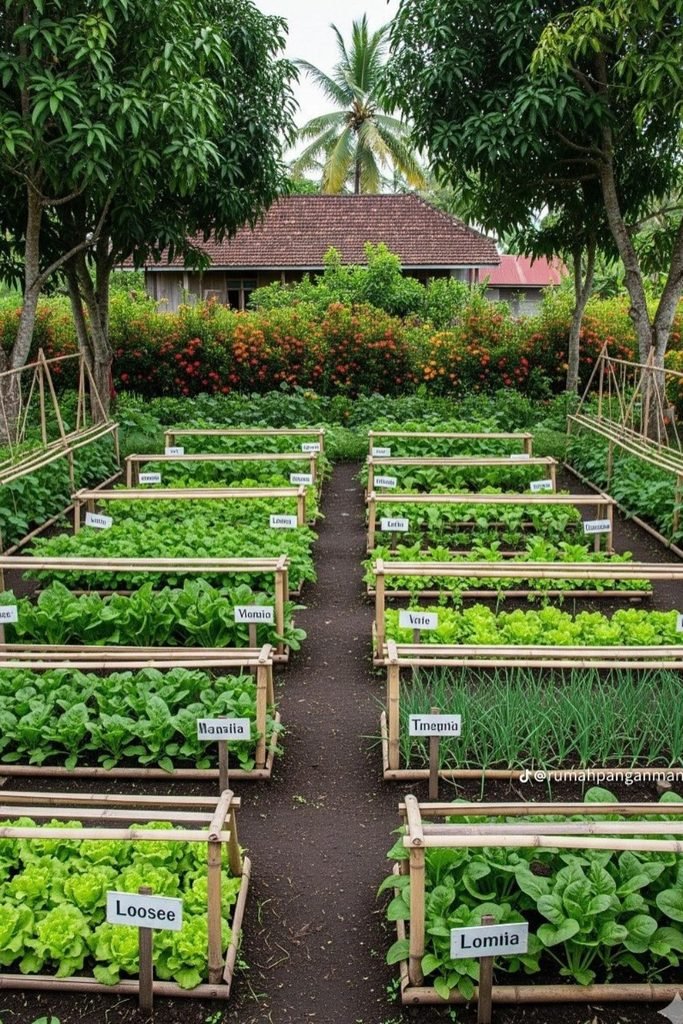
Structure can make a productive kitchen garden feel as polished as the ornamental landscape around it.
Turn a huge sunny plot into geometric growing parts bordered by low trimmed hedges and fill the interiors with zucchini, leafy vegetables, herbs, climbing crops.
Between portions keep gravel roads so you can reach all beds without walking on the soil.
At one end a greenhouse provides a natural center point and extra shelter for seedlings and vulnerable vegetables.
If you’re want homegrown produce without sacrificing the formal charm of a conventional garden, this potager-style arrangement is for you.

FAQs
Can Beginners Start With A Small Kitchen Garden?
Yes. Starting small is usually the best bet in terms of watering, weeding and harvesting.
Start with one or two raised beds, or a handful of containers, and plant things you frequently use in your cooking, such as lettuce, basil, parsley, tomatoes or peppers.
Once you learn the amount of sun, water and attention your plants need, you may begin to progressively add to your garden.
How Can Kitchen Gardens Produce Food Through Seasons?
Design each bed to follow the changing growing circumstances rather than to plant everything at once.
You can have tomatoes, peppers, beans, cucumbers and other warm season crops in beds during the summer, then lettuce, spinach, kale and other cool season.
Succession planting is also good for avoiding empty beds so you have smaller harvests over longer periods.
