
18 Kitchen Plants Ideas for 2026
Walking into a kitchen filled with lush green plants is calming until you try to replicate the appearance in your own house.
If you have been wondering where plants can go without getting in the way, you are asking the appropriate question.
With a few clever choices, even the smallest of kitchens can feel fresh, tidy and vibrant without compromising the area you use every day.
In this article, I’ll show you 18 kitchen plant ideas you can use to bring fresh greenery, natural color, and practical style.
Let’s jump in!
How Can You Display Kitchen Plants Without Losing Space?
You don’t need a bigger kitchen to have more plants. You just have to use the space differently.
Instead of overloading your counter space with pots, clear your work space and use walls, windows, shelves, cabinet tops and hanging planters.
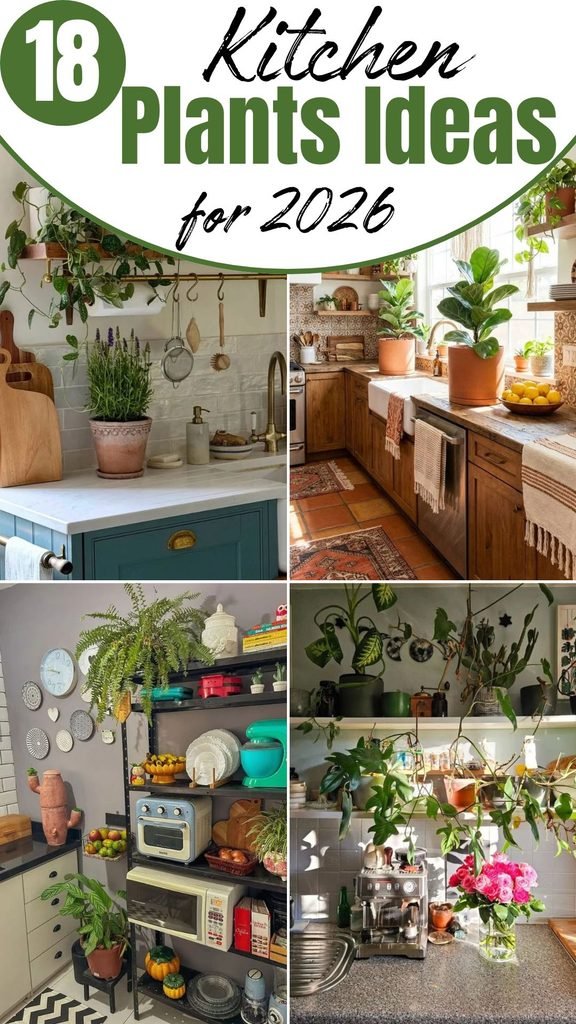
Put herbs near the brightest window so they’re easy to pick while cooking, and trailing plants on higher shelves to offer greenery without causing clutter.
If your kitchen isn’t very sunny, opt for low-light plants or get a small grow light instead of trying to keep sun-loving herbs alive.
If you position things smartly your kitchen will continue to be functional, but will also feel new, welcoming and lively.
Lavender Counter Garden
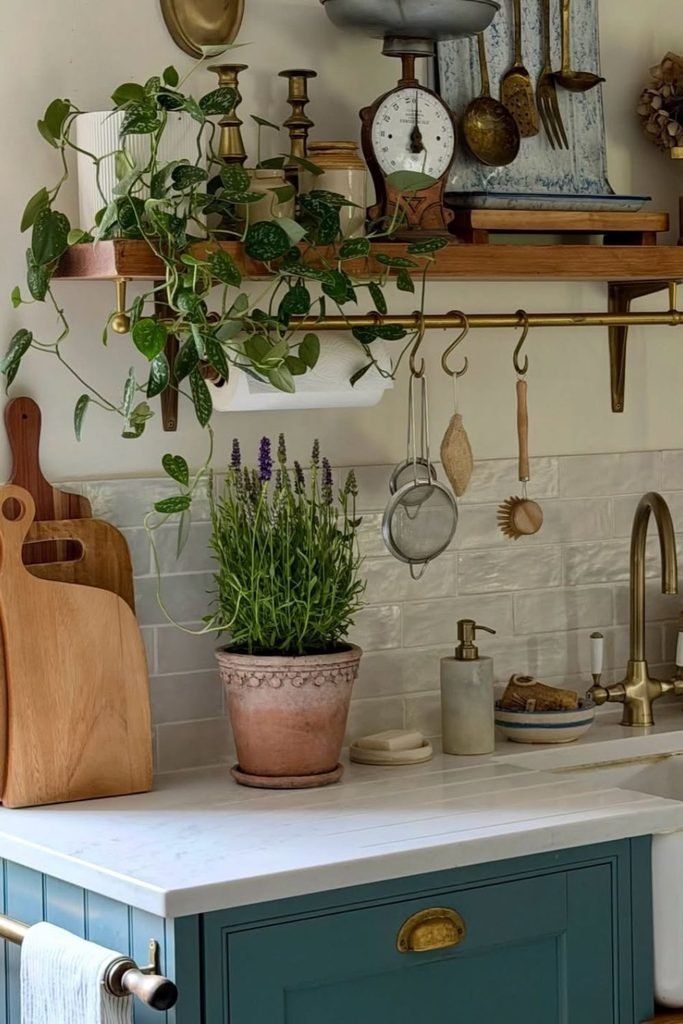
Bring garden fragrance into the kitchen by growing lavender in a terracotta pot, where its purple blooms soften practical countertop surroundings beautifully.
Choose a bright position away from constant sink splashes, then use gritty, free-draining soil to keep lavender roots comfortably dry between waterings.
Pair it with a trailing pothos above allowing cascading greenery and upright lavender stems to create layered planting without sacrificing valuable workspace.
Sunlit Kitchen Greenery
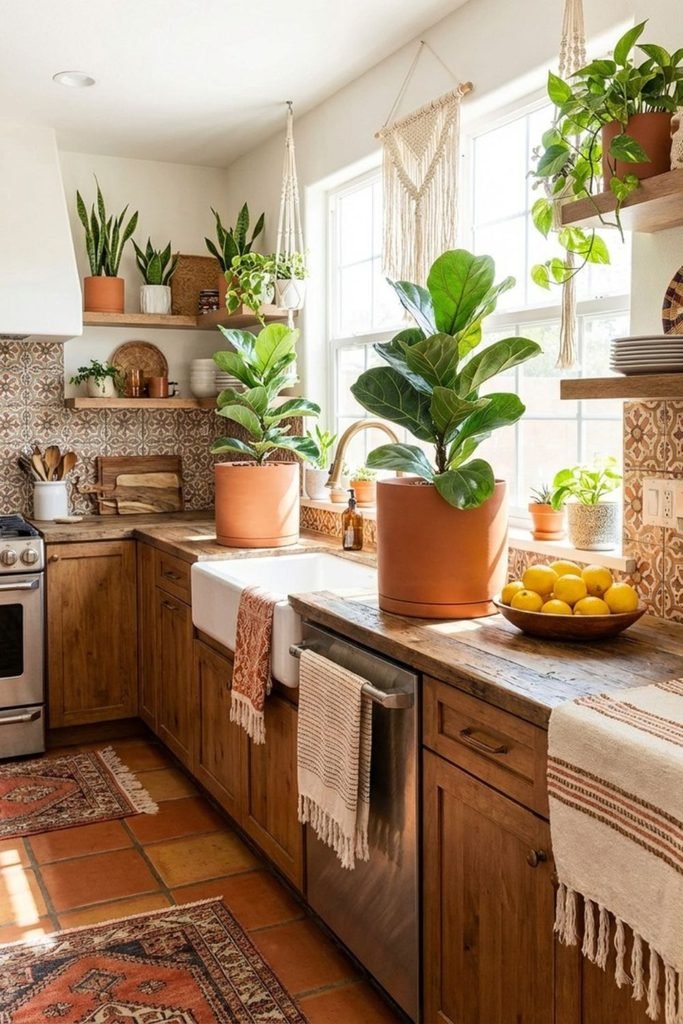
Turn a sunny kitchen into a miniature indoor garden by grouping fiddle-leaf figs, snake plants, pothos and smaller greenery across different heights.
Place larger pots near bright windows while letting hanging and shelf plants fill unused vertical areas keeping busy counters functional and uncluttered.
Terracotta containers work especially well here because their warm finish connects leafy greens with wooden cabinetry, patterned tiles, and other earthy kitchen textures.
Fern Shelf Corner
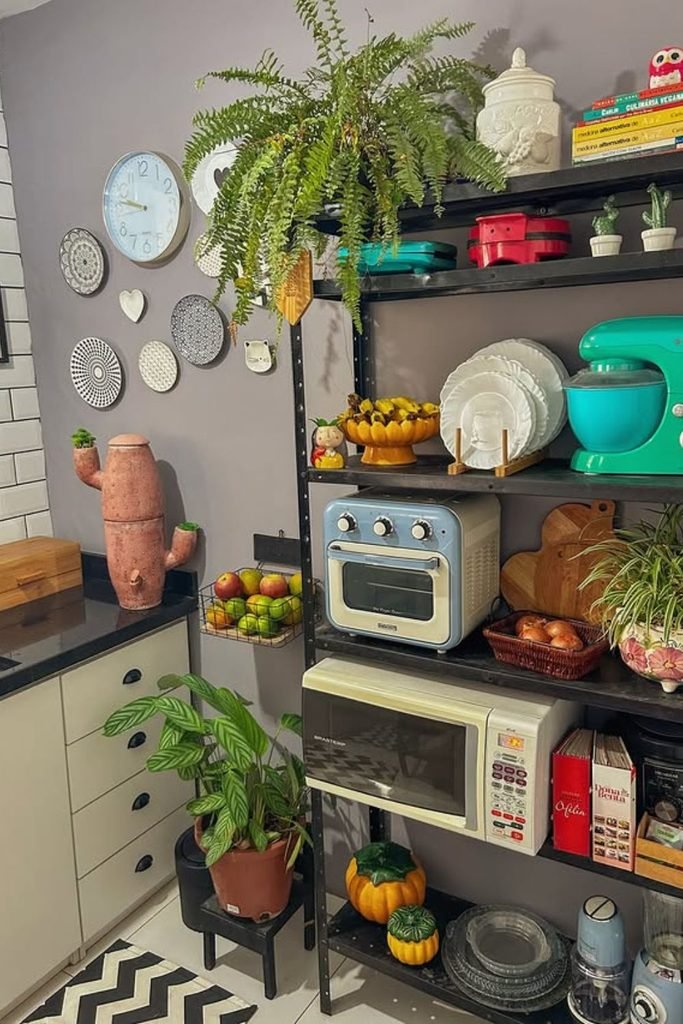
Make an overlooked kitchen corner feel alive by letting a generous fern spill naturally from the highest shelf instead of crowding limited countertops.
Position moisture-loving foliage away from hot appliances then add another leafy floor plant below to spreads greenery through different visual levels naturally.
Regularly rotate the pots toward available day light and trim tired fronds, helping this layered indoor planting remain balanced despite the compact setting.
Layered Kitchen Jungle
Lean into an abundant indoor garden look by mixing climbing vines, broad foliage, and unusual cactus forms instead of relying on matching houseplants.
Guide longer stems along discreet supports while keeping pots across upper ledges and counters creating movement with out letting foliage overwhelm working surfaces.
A sunny kitchen suits this arrangement beautifully especially when direct light reaches stronger plant while more delicate varieties sit slightly farther back.
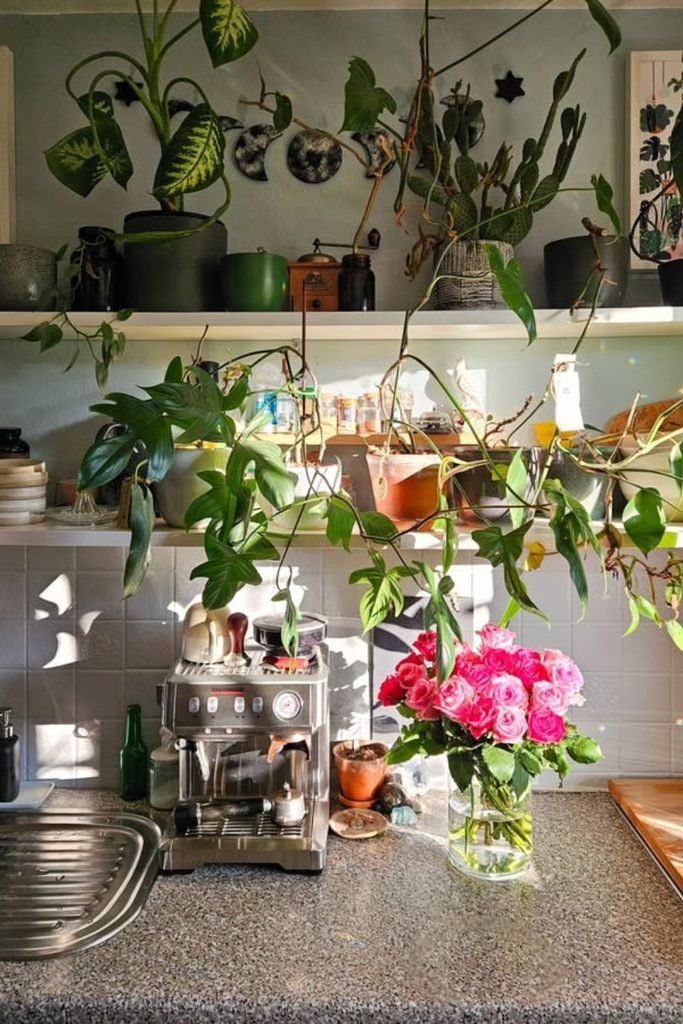
Cascading Window Greenery
Cascading pothos and smaller sill plant frame the kitchen window turning powerful and natural light into vibrant vertical growth zone.
Hang fuller vines from top corners then put compact pots along sill. So greenery encircle window with out obstruct daylight.
Trim trailing stems around the sink lightly and turn smaller pots often for balanced growth and an easy working space.
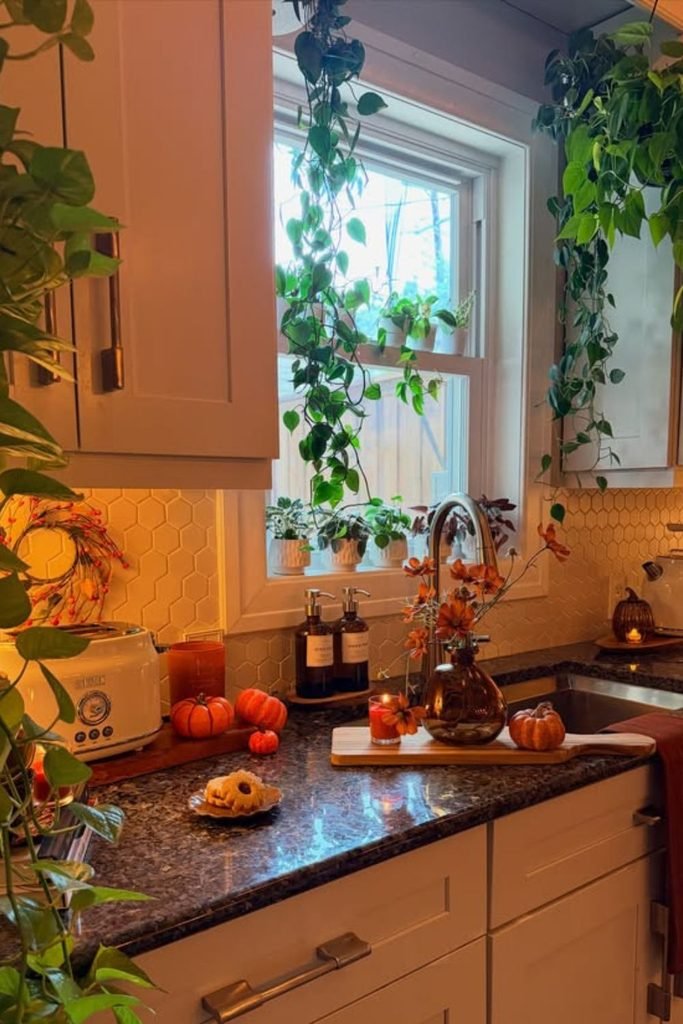
Cactus Window Shelves
Give a bright kitchen window new purpose by installing narrow shelves where compact cacti and succulents can receive dependable daily sun shine.
Mix sculptural pots and varied plant shapes across each level leaving small gaps so every cactus remain visible and visually distinctive.
Because these plants prefer drier conditions, use draining containers and water sparingly, making this display especially practical for gardeners with limited time.
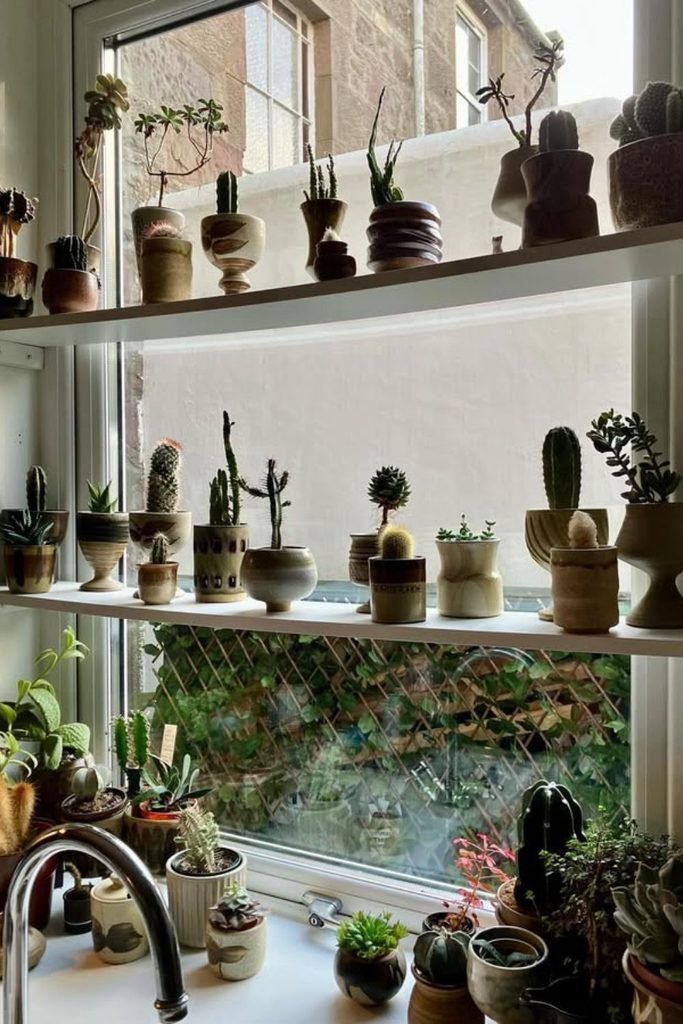
Greenhouse Kitchen Garden
Borrow the feeling of a greenhouse by spreading flowering pots, herbs, and trailing greenery around generous windows and unused upper kitchen ledges.
Keep sun-loving blooms close to the glass while hanging softer cascading plants overhead creating layers that draw greenery upward without cluttering counters.
Warm wooden cabinetry and terracotta pots make this approach especially inviting while regular pruning keep overhead growth tidy around doors and windows.
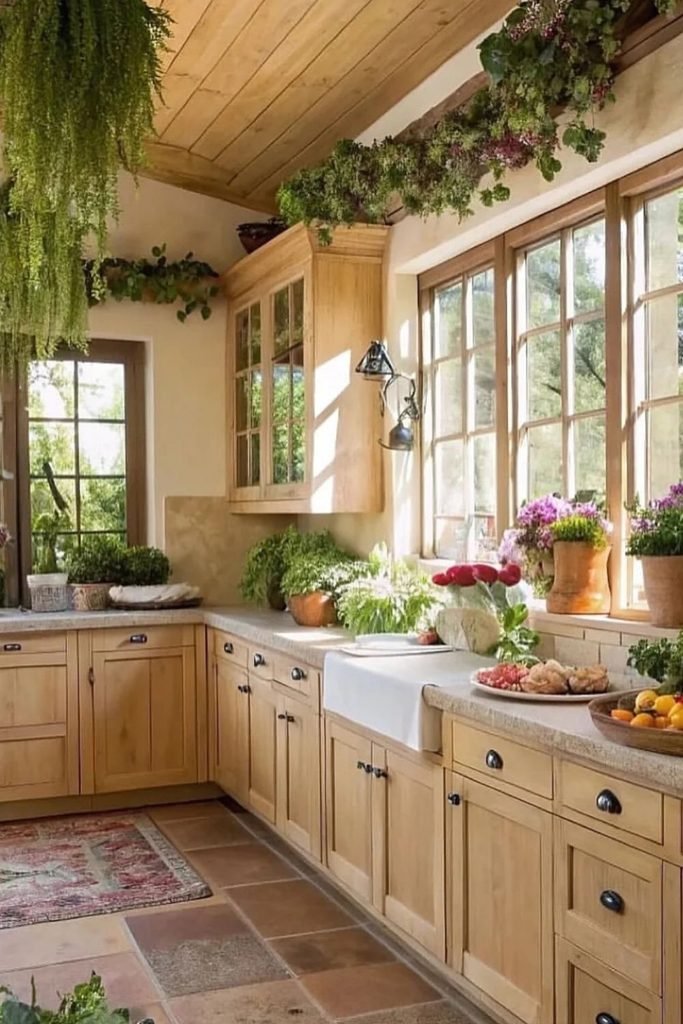
Layered Plant Kitchen
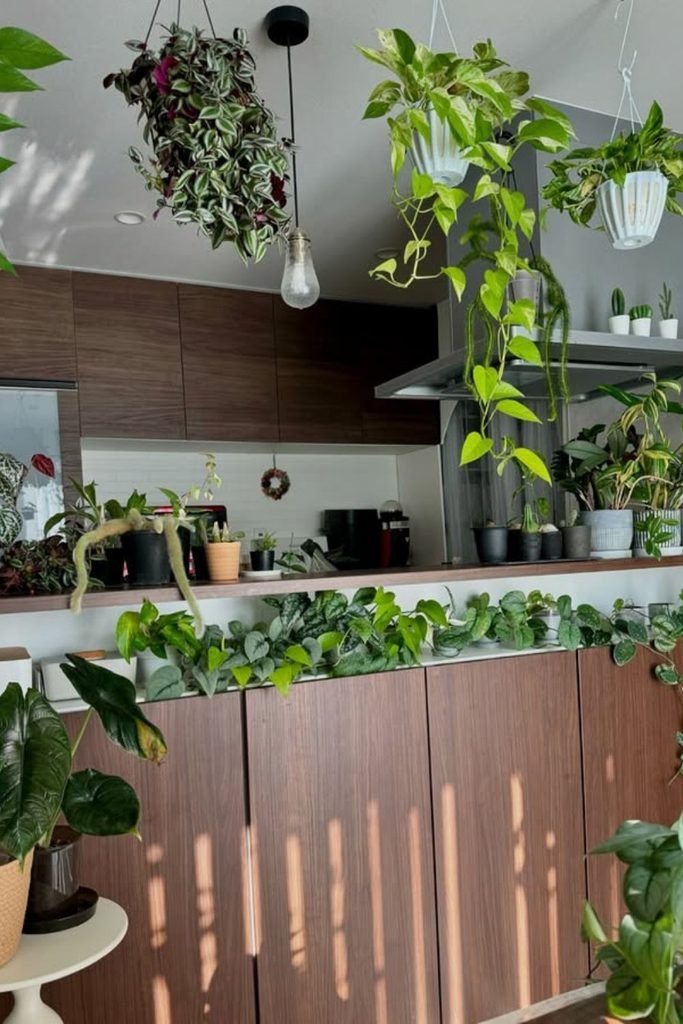
Turn open kitchen surfaces into a full indoor garden by combining hanging vines, trailing foliage, broad leaves and compact potted plants.
Use ceiling hooks for cascading varieties then continue greenery across ledges and cabinet tops so planting flows naturally through different heights.
Group plants according to their light needs rather than appearance alone, helping this abundant arrangement stay healthy.
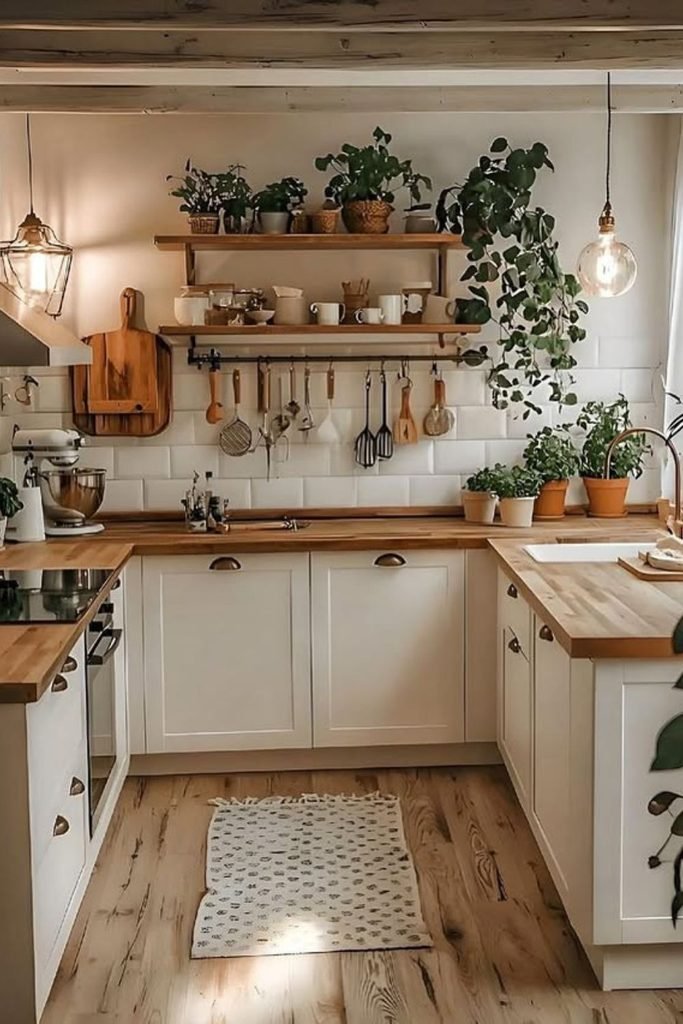
Shelf Garden Display
Make open shelving work harder by filling the upper level with compact leafy plants while keeping everyday kitchenware easily accessible below.
Mix upright and trailing varieties in simple pots then let one longer vine spill downward to soften the straight shelving and backsplash.
Place smaller plants near the brighter window side and rotate them weekly, helping every pot develop evenly with out overcrowding the cooking area.
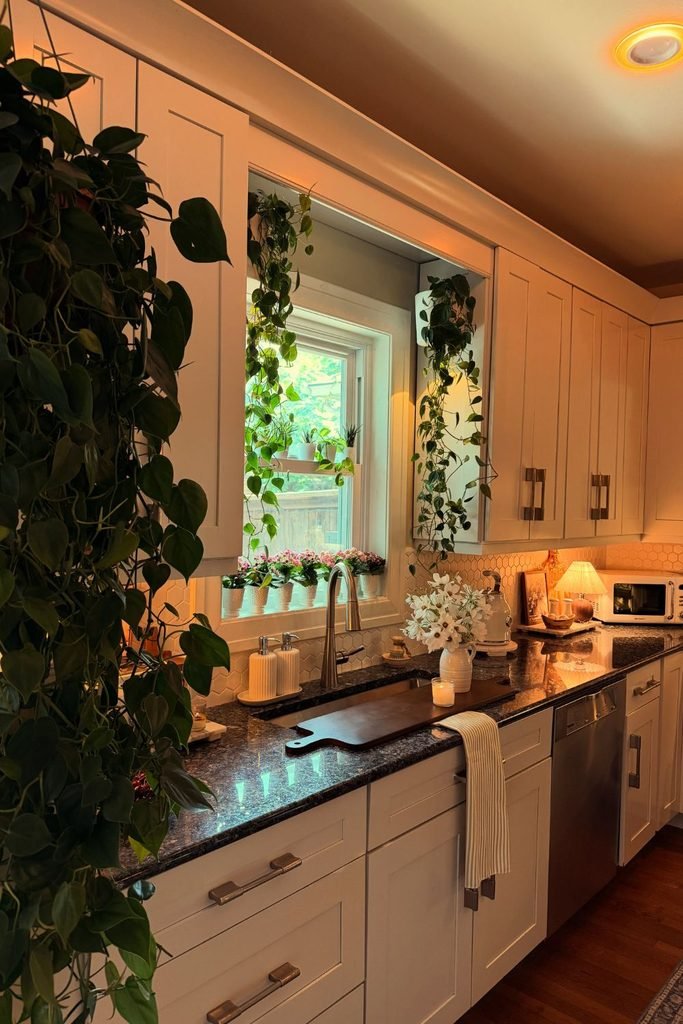
Window Vine Frame
Create a living frame around the kitchen window by training long pothos vines downward from high planters beside the surrounding cabinets.
Keep flowering plants across the sill for extra color, while trailing foliage uses vertical space that would otherwise remain completely unused.
Warm evening lighting makes the greenery feel especially cozy, but position the main plants near daylight so healthy growth continues beyond styling.
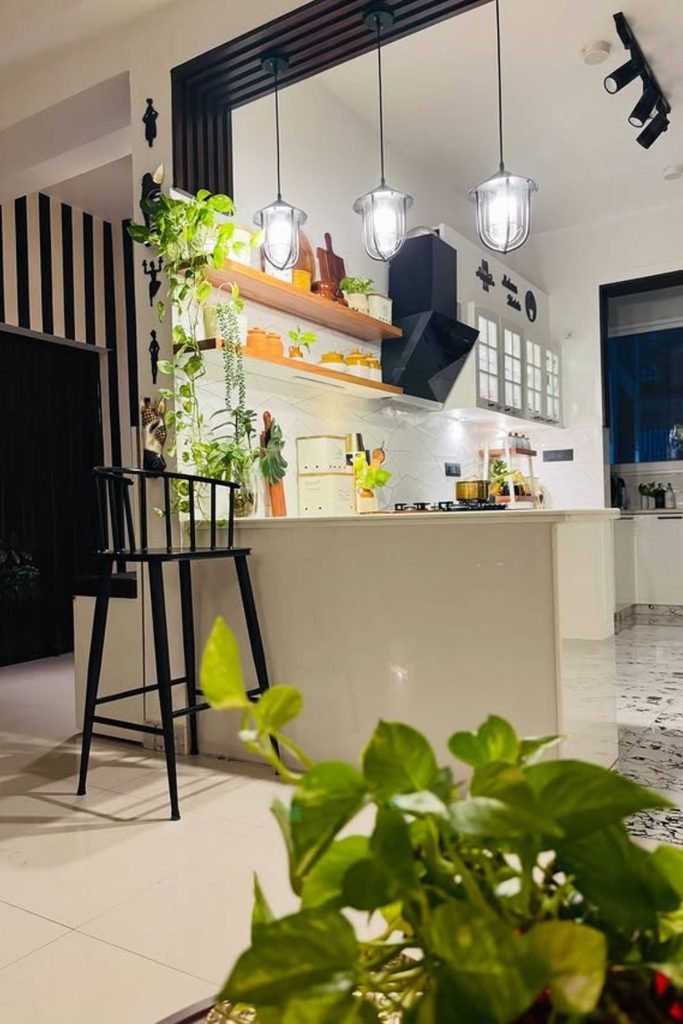
Trailing Shelf Greenery
Give a modern kitchen an easy garden accent by letting pothos and other trailing plants cascade naturally from open wooden shelving.
Position fuller pots at shelf ends so stems can fall freely leaving central areas available for jars, utensils and everyday kitchen essentials.
Bright overhead lighting highlights the foliage after sunset while nearby natural light should remain the primary source supporting steady plant growth.
Kitchen Herb Row
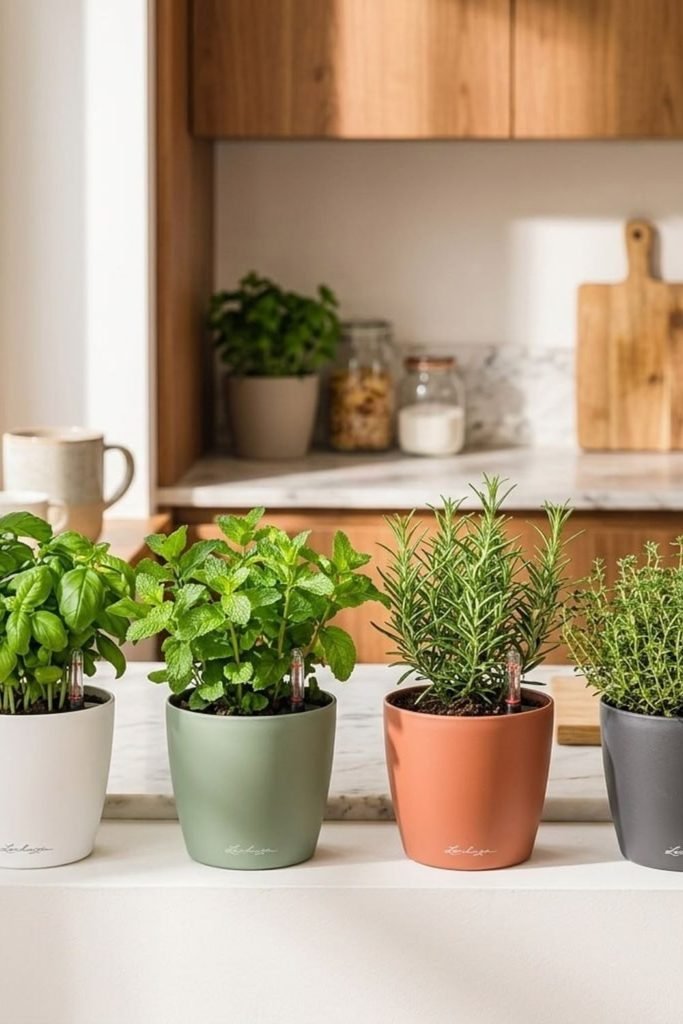
Keep fresh cooking herbs within reach by grouping basil, mint, rosemary and thyme in separate pots beside a bright kitchen window.
Separate containers make watering easier because moisture loving mint and basil will not compete with the drier conditions rosemary prefers indoors daily.
Choose pots with drainage holes and rotate them every few days so each herb receives balanced light and grows evenly.
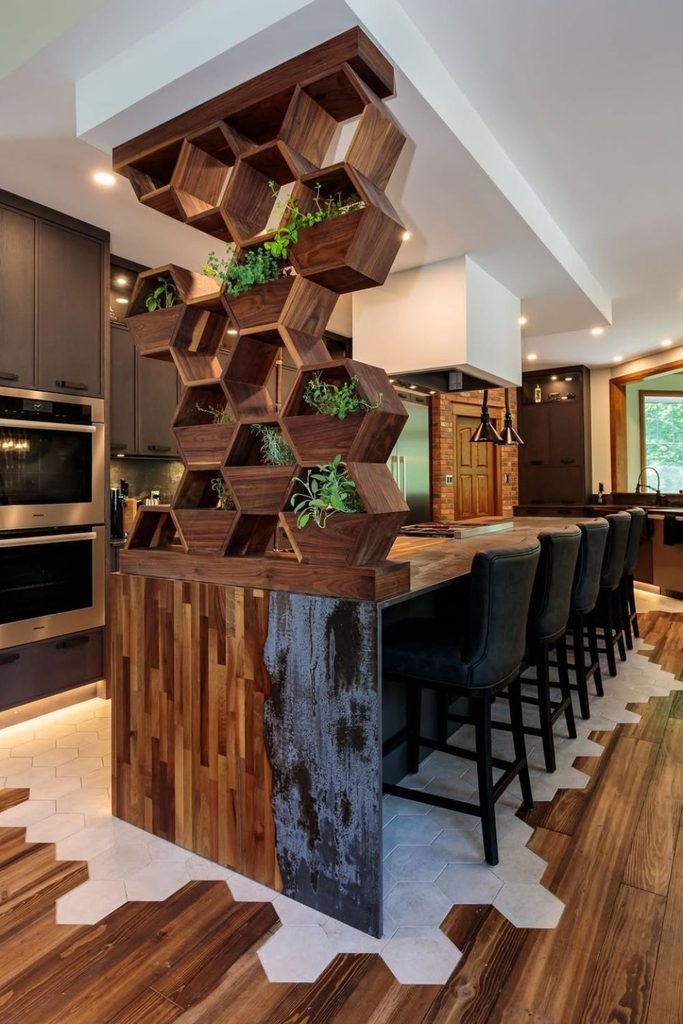
Sculptural Herb Divider
Turn an open kitchen divider into growing space by building geometric wooden cubbies that hold herbs between the cooking and seating zone.
Make watering easy by selecting small plants such as thyme, oregano, mint or parsley and placing them in removable pots in designated compartments.
Leaving some cubbies unfilled keeps the building from feeling overstuffed, and allows light to reach the vegetation.
It works particularly well in large kitchens where you want plants close to the action but don’t want to give up counter or island space.
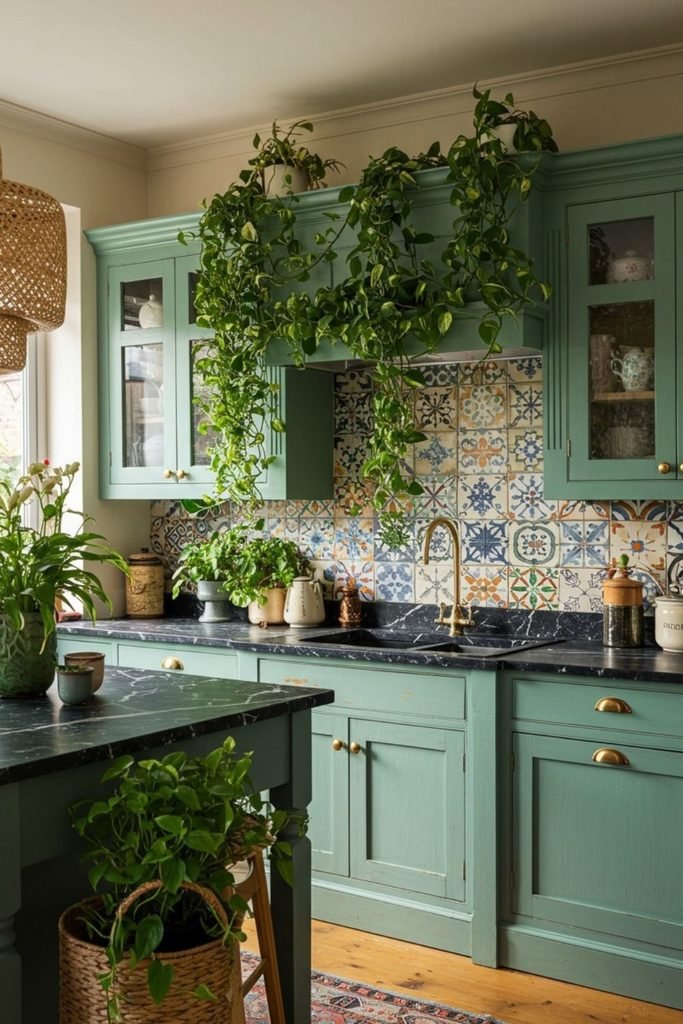
Cascading Cabinet Vines
Use the forgotten space above tall kitchen cabinets to grow trailing plants without sacrificing a single inch of your worktop.
Set pothos or another easy-care vine in lightweight containers on top of the cabinets and allow the stems to drape over open shelving or the range hood area.
Bright indirect light from a nearby window will promote fuller growth and occasional pruning will prevent vines from growing onto cooking surfaces.
One enormous trailing display paired with a few smaller countertop plants keeps the foliage balanced rather than crowded.
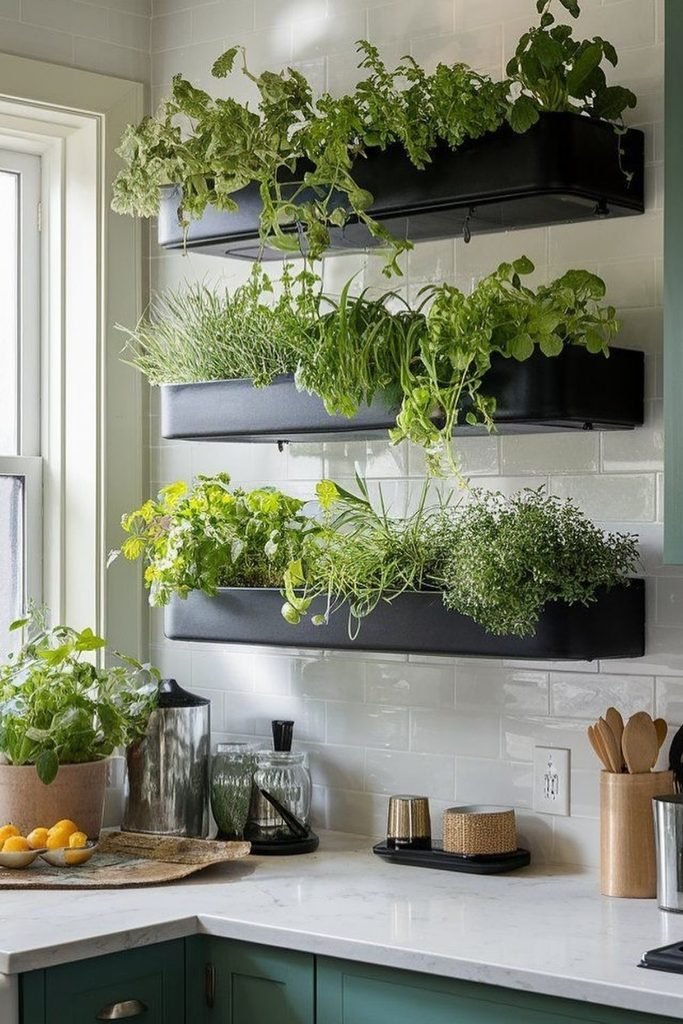
Vertical Herb Troughs
Move your herb garden onto the wall when countertops are already busy with everyday kitchen essentials.
Put three long planter troughs next to a light window, with enough room between them so basil, parsley, chives, thyme and other herbs may grow.
Make sure each trough drains well, and grow plants with similar watering demands together.
The planters are also close to natural light so they grow healthier and the vertical set-up allows you to pluck fresh herbs without cluttering the windowsill.
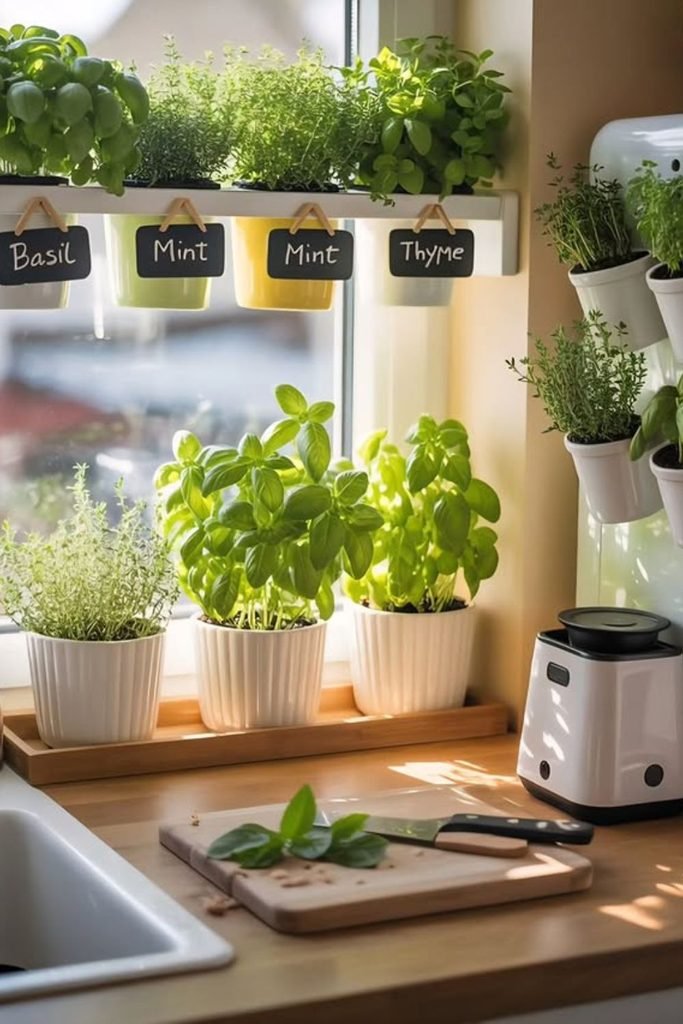
Labeled Herb Station
Make everyday cooking quicker by keeping your most-used herbs together beside a bright kitchen window.
Grow basil, mint, thyme and other herbs in separate pots, and name them with small tags so you can distinguish the types while cooking.
Use a narrow hanging rail or wall-mounted holders with pots on the windowsill to squeeze more plants in the same spot.
Keeping each herb in a separate pot also makes watering easier, especially when various kinds dry up at different rates.
Floating Garden Boxes
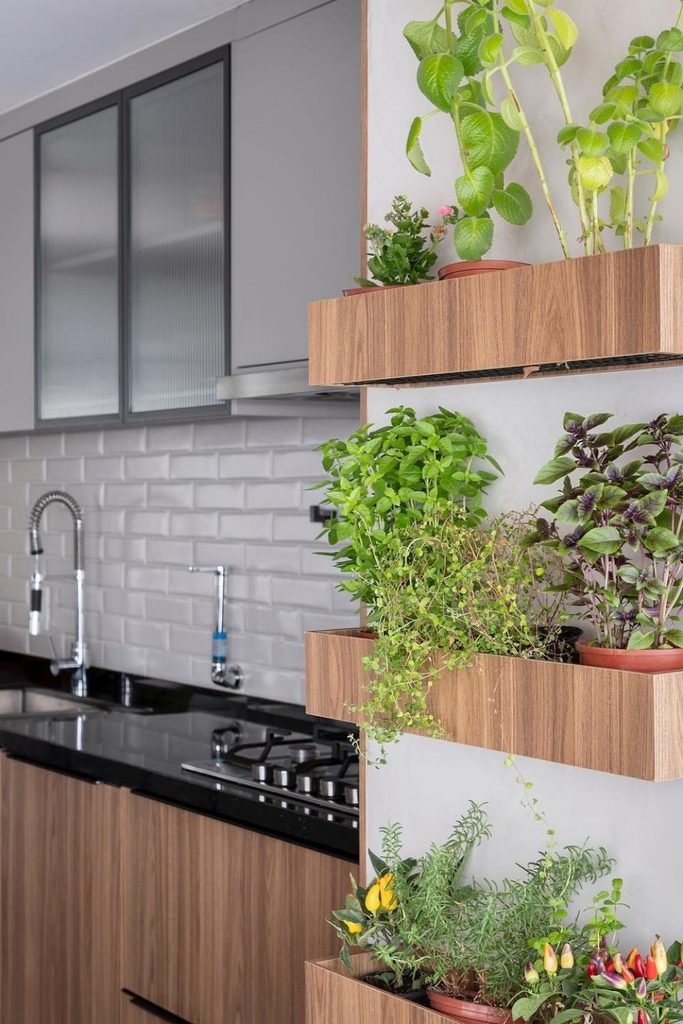
Bring a productive garden onto an empty kitchen wall by mounting deep wooden planter boxes at different heights.
Put compact herbs like basil, thyme, rosemary and purple basil in the middle and lower levels for simple harvesting, while taller plants can be placed in the upper box without getting in your way.
Space each planter vertically enough for mature growth.
Place removable pots inside the wooden boxes to make watering and drainage easier.
This configuration is particularly useful if there is little floor and countertop space.
Mixed Window Garden
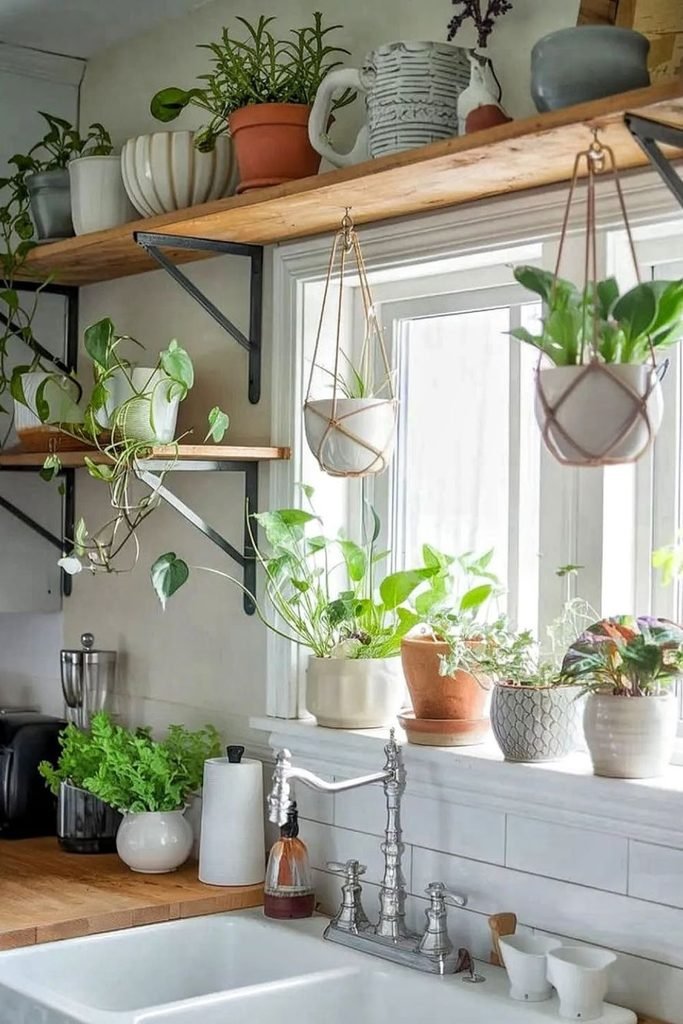
Mixing herbs with decorative houseplants can make a kitchen window feel fuller without turning every available surface into growing space.
Sun-loving herbs and compact plants work well on the sill, while hanging pots will give a home to tiny greenery and trailing types that like height.
Extend the exhibit onto adjoining open shelves with rosemary or vines to tie the whole nook together.
Spacing the pots apart enhances air circulation and makes it easier to access each plant for watering, trimming or harvesting.
FAQs
How Many Kitchen Plants Are Too Many for One Space?
Kitchen plants should brighten the room not clutter it. Don’t count the pots, focus on balance.
Provide enough space in the work area to cook, vary the heights of the plants for visual appeal and don’t crowd every shelf and windowsill.
Proper spacing of plants also enhances air circulation and makes watering, pruning and cleaning much easier.
Which Kitchen Plants Need the Least Maintenance?
Greenery for no extra work. Choose hardy plants.Pothos, snake plants, ZZ plants, spider plants.
And heartleaf philodendrons may survive a missed watering here and then and thrive in the average indoor environment.
Give them the right light, use containers with proper drainage, and they’ll stay healthy with relatively little effort.
