
23 Living Room Plants Ideas for 2026
Many living rooms have all the appropriate furniture, yet something is missing.
You buy a gorgeous plant, put it in a corner, and nevertheless the space still appears flat or worse, the plant starts to struggle.
Plant decorating isn’t about filling empty areas, it’s about knowing what plants go where and how to make them fit with your room.
Once you know a few simple style tips, even one well-placed plant may radically change the ambiance.
In this article, I’ll show you 23 Living Room Plants Ideas you can use to refresh your space.
How Can Beginners Keep Living Room Plants Healthy?
Keeping living room plants healthy gets much easier once you stop treating every plant the same.
Start by placing each one where it gets the light it actually needs instead of choosing a spot that only looks good.
Check the soil before watering because plants usually suffer more from too much water than too little.
Rotate pots every few weeks so all sides grow evenly, wipe dust from the leaves, and move sensitive plants away from heaters.
Small adjustments throughout the year keep your plants growing well and help your living room stay fresh, green, and inviting without adding extra work.
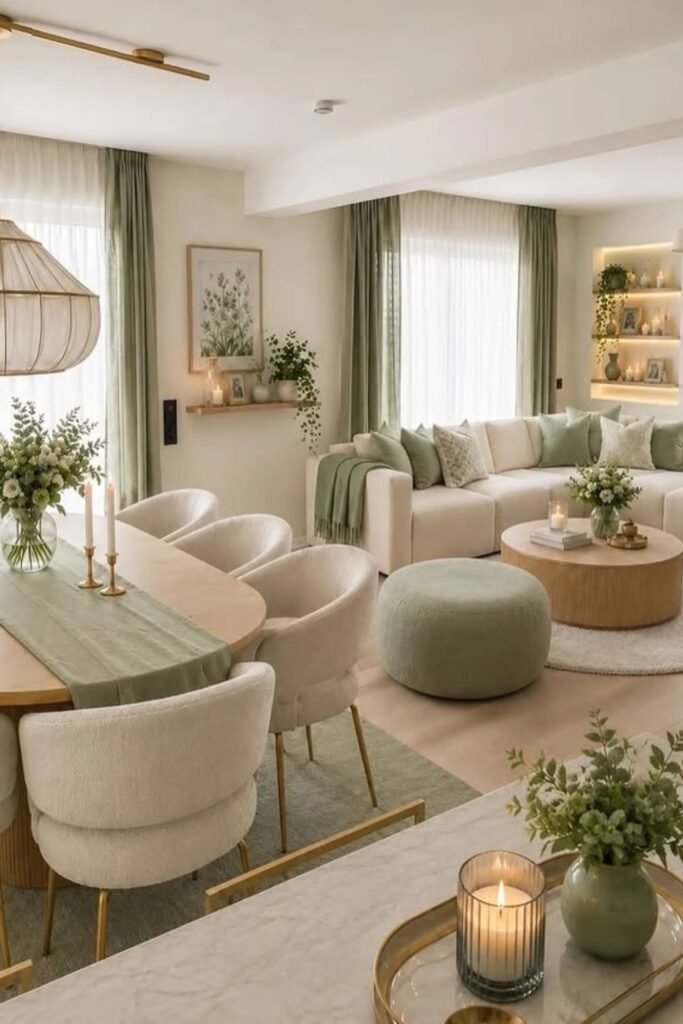
Soft Indoor Greenery
Bring garden freshness indoors by repeating leafy plants and simple floral arrangements across dining, coffee, and display surfaces.
Choose compact trailing houseplants for shelves, then echo their greenery with loose white flowers and eucalyptus-style stems arranged in rounded vases.
Bright windows support the living plants beautifully, while soft neutral containers keep attention on foliage and connect the greenery surrounding sage accents.
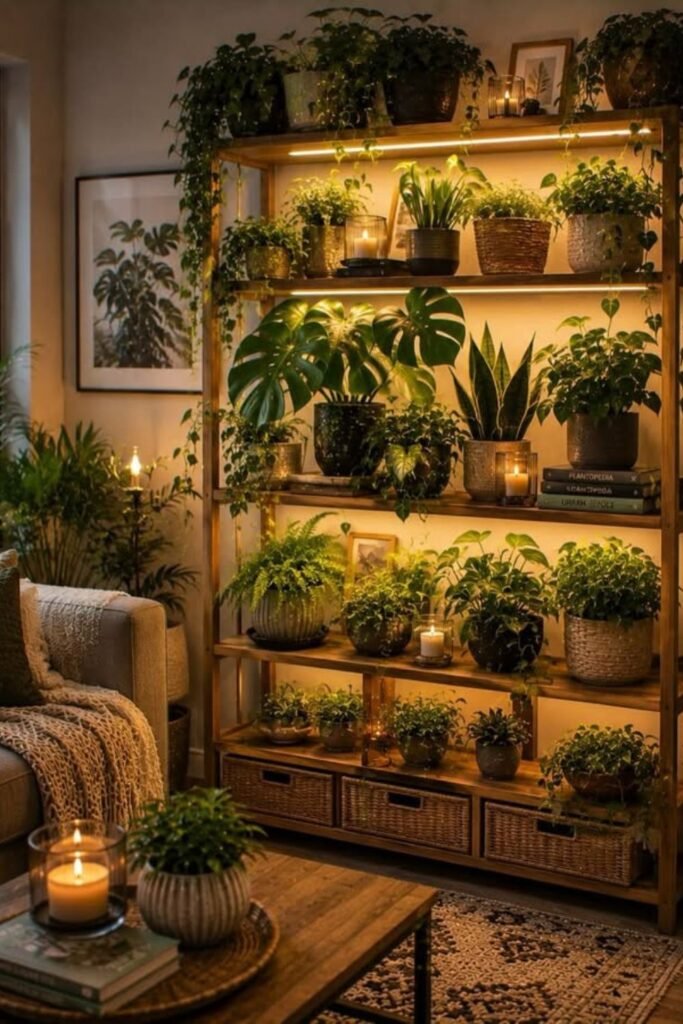
Illuminated Plant Shelves
Turn an unused shelving unit into a productive indoor garden by filling every level with leafy plants suited to filtered household light.
Mix trailing vines, upright foliage, ferns, and broad-leaf varieties so each shelf develops different heights while still forming one lush display.
Install warm grow lights beneath the shelves when daylight is limited, giving plants consistent illumination while creating a cozy evening garden atmosphere.
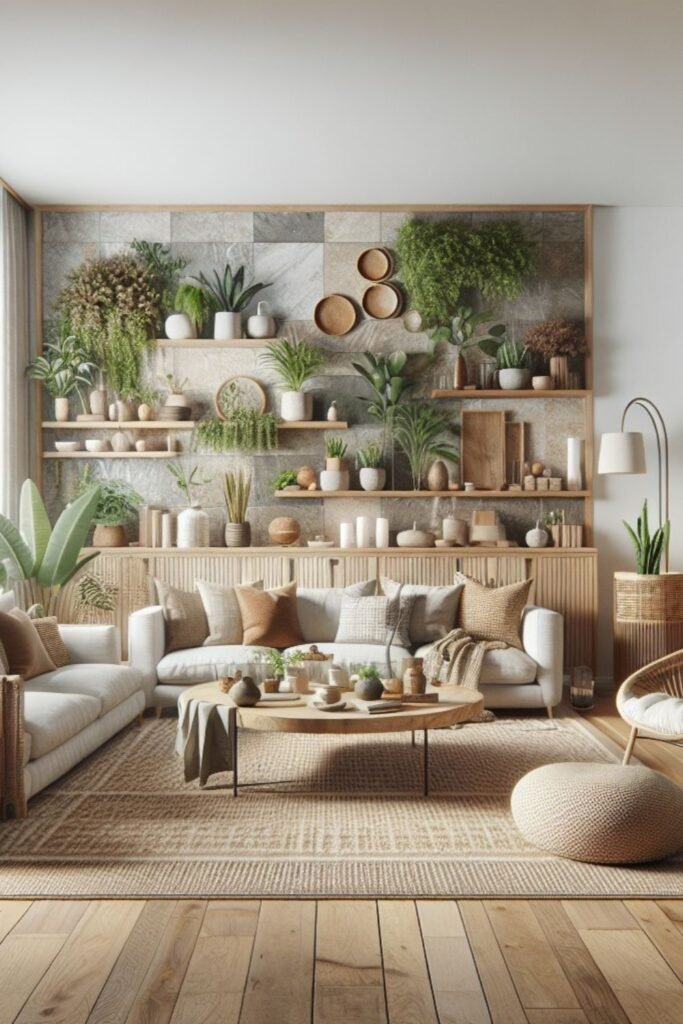
Layered Garden Wall
Use one feature wall as a relaxed indoor garden by spreading potted greenery across floating shelves, cabinets, and nearby floor-level containers.
Balance large architectural leaves with smaller trailing and upright plants, leaving enough open shelf space so the arrangement feels collected.
Position demanding plants closer to the bright window, while tougher varieties can sit farther inside where softer indirect daylight reaches the display.
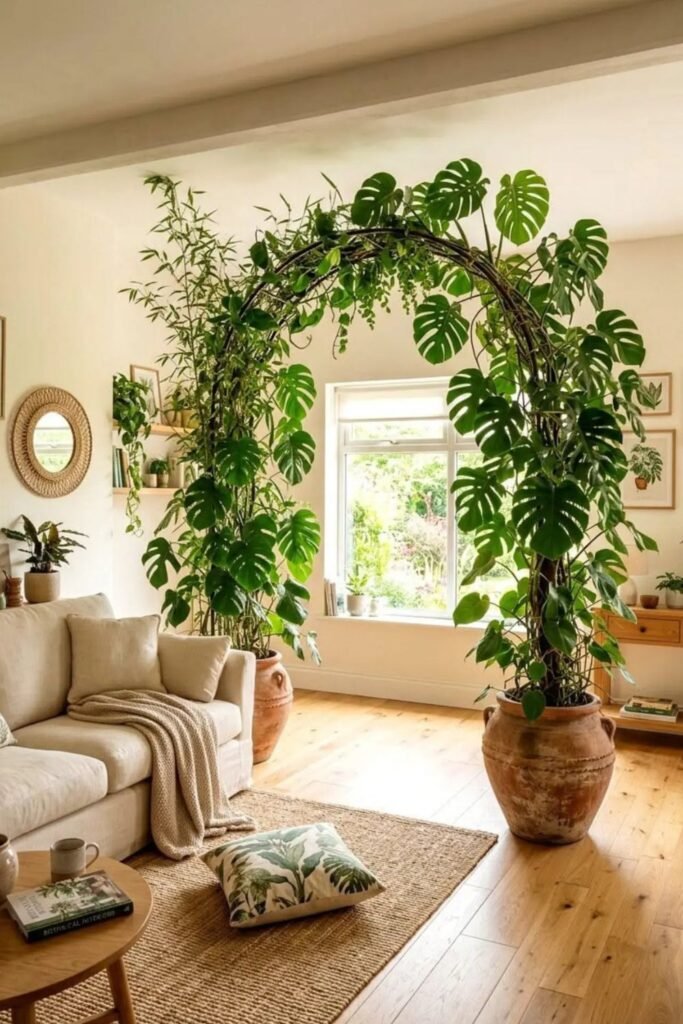
Living Plant Arch
Make climbing plants part of the architecture by training vigorous vines over a sturdy arch positioned between two generously sized floor planters.
Monstera creates the bold leafy canopy here, while finer climbing foliage fills empty sections and softens the framework as growth gradually thickens.
Place this living arch beside a bright window, secure new stems loosely to the support, and rotate planters periodically for balanced growth.
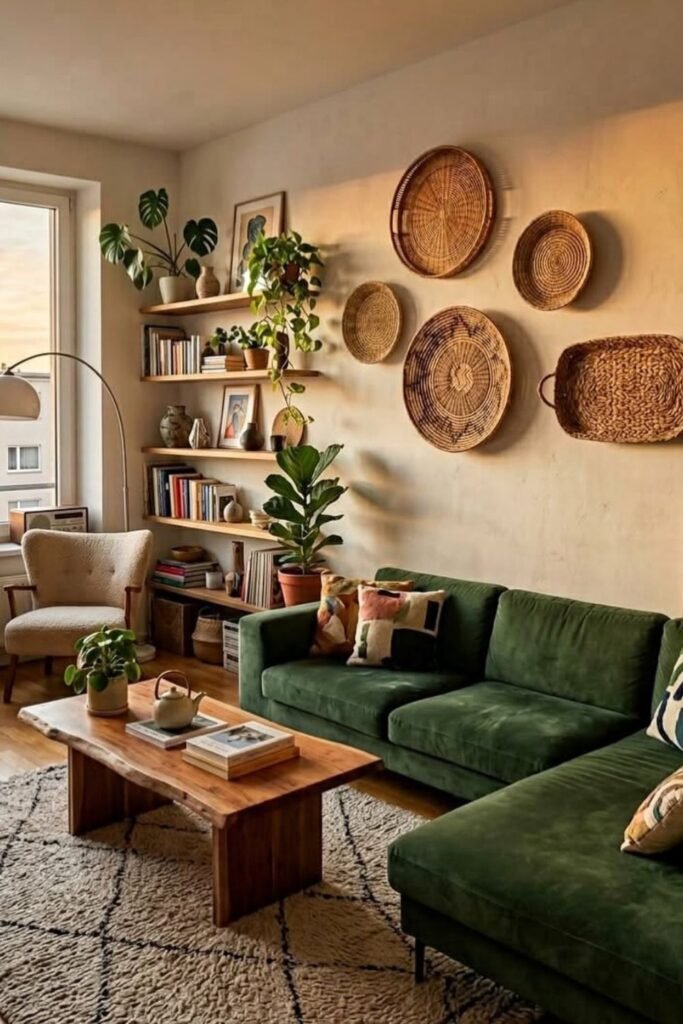
Shelf Garden Corner
Give a sunny reading corner more life by placing trailing vines and compact potted greenery across open shelves beside the window.
Let longer stems cascade naturally from higher shelves, while upright floor plants create height and connect the smaller pots with the room.
Choose bright indirect light for this arrangement, and rotate shelf plants regularly so vines grow evenly instead of leaning toward one direction.
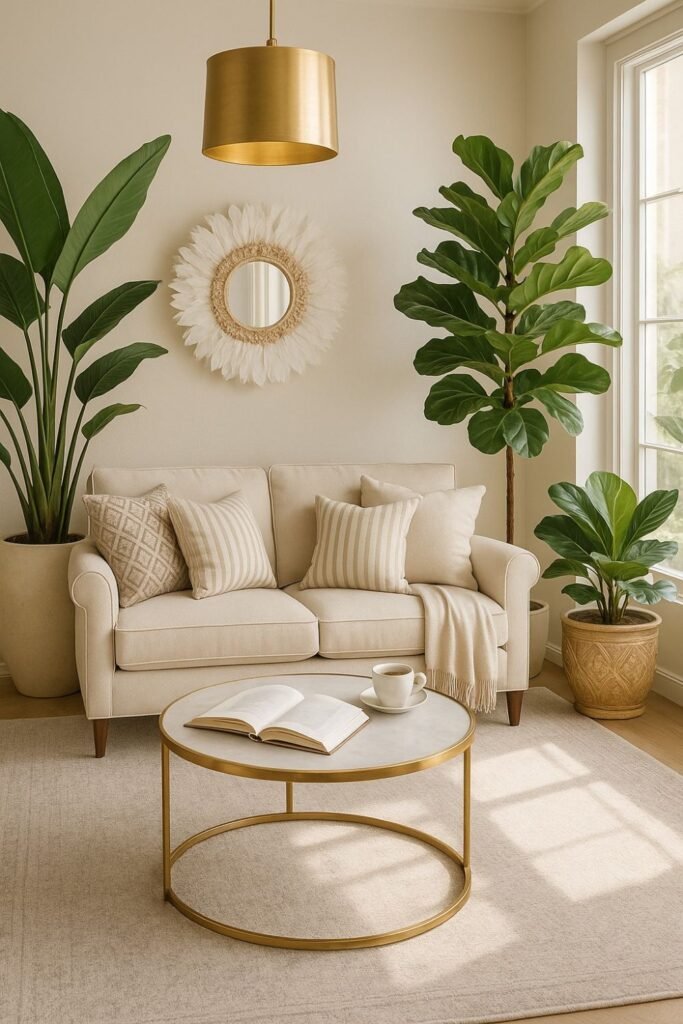
Statement Foliage Trio
Create an airy indoor garden with three large foliage plants positioned around a small sofa, leaving enough breathing room between their leaves.
Pair tall bird-of-paradise style foliage with broad fiddle-leaf shapes, then use a shorter leafy plant to soften the arrangement near the window.
Large neutral planters keep the greenery visually clean, making this setup especially effective in bright living rooms with limited decorative garden space.
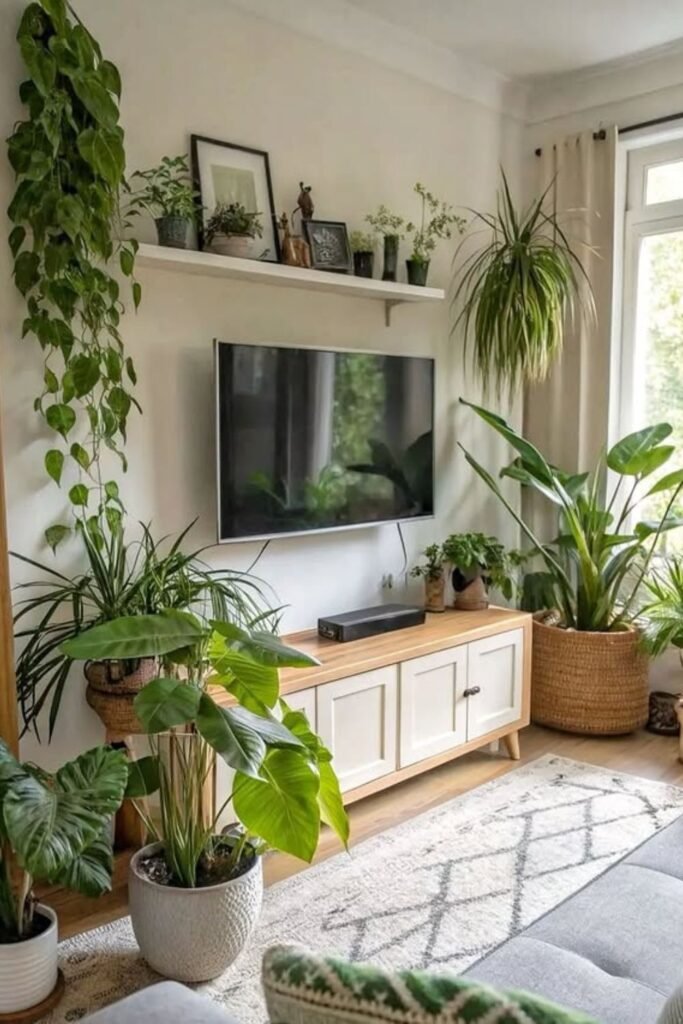
Window Plant Cluster
Turn the brightest living-room window into a growing zone by gathering plants of different heights around the television and nearby furniture.
Use trailing vines above, broad tropical leaves below, and tall narrow foliage near the window to build greenery without blocking walking space.
Woven baskets and simple ceramic pots make mixed varieties feel connected, while filtered daylight helps this dense indoor collection stay naturally vibrant.
Monstera Window Feature
Let one mature monstera become the garden focal point by giving its spreading leaves an open corner beside a large bright window.
A generous floor planter gives the roots space while a discreet support pole can guide taller stems upward as the plant matures.
Keep surrounding greenery minimal so those sculptural leaves remain noticeable, especially in warm living rooms where furniture already carries strong colors and textures.
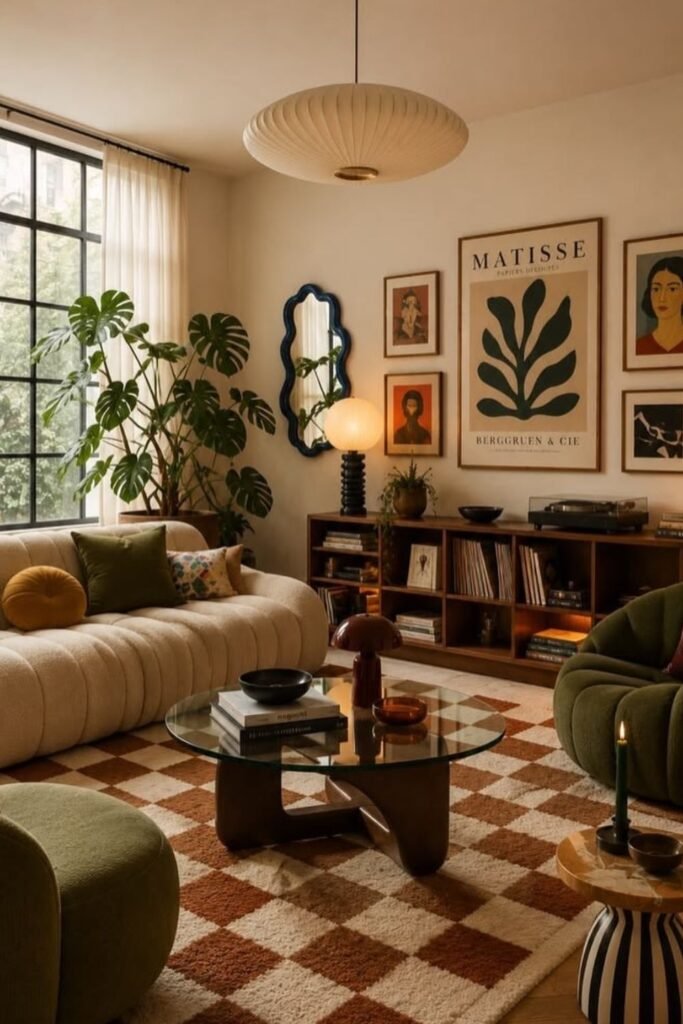
Balcony Greenery Flow
Carry indoor greenery toward the balcony by repeating compact potted plants on shelves, consoles, and corners throughout the connected living space.
Use trailing vines higher up and fuller floor plants beside furniture, creating gentle height changes without making the narrow room feel crowded.
Keep sun-loving varieties closer to balcony light, while adaptable foliage can sit deeper indoors where bright filtered daylight still reaches them.
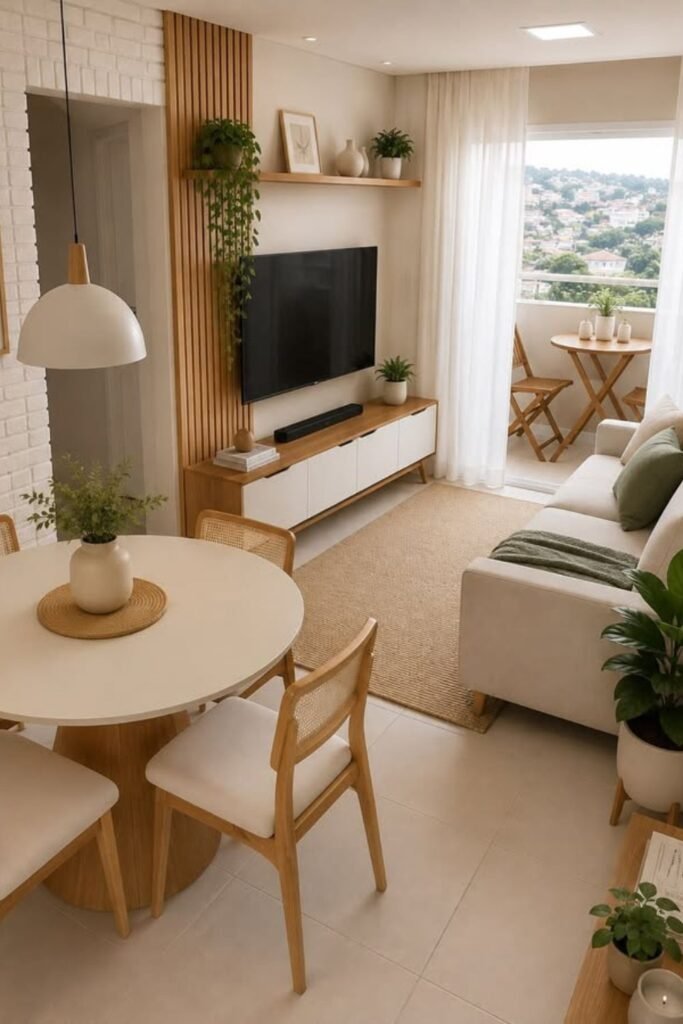
Cozy Garden Retreat
Transform a forgotten corner into a calming garden retreat by surrounding one comfortable chair with ferns, vines, and broad leafy plants.
Build greenery upward with a ladder shelf and hanging planters, then place fuller foliage near the floor to create an enveloping effect.
Warm string lights and candles can weave between the plants, giving this arrangement a relaxed evening glow without overpowering their natural texture.
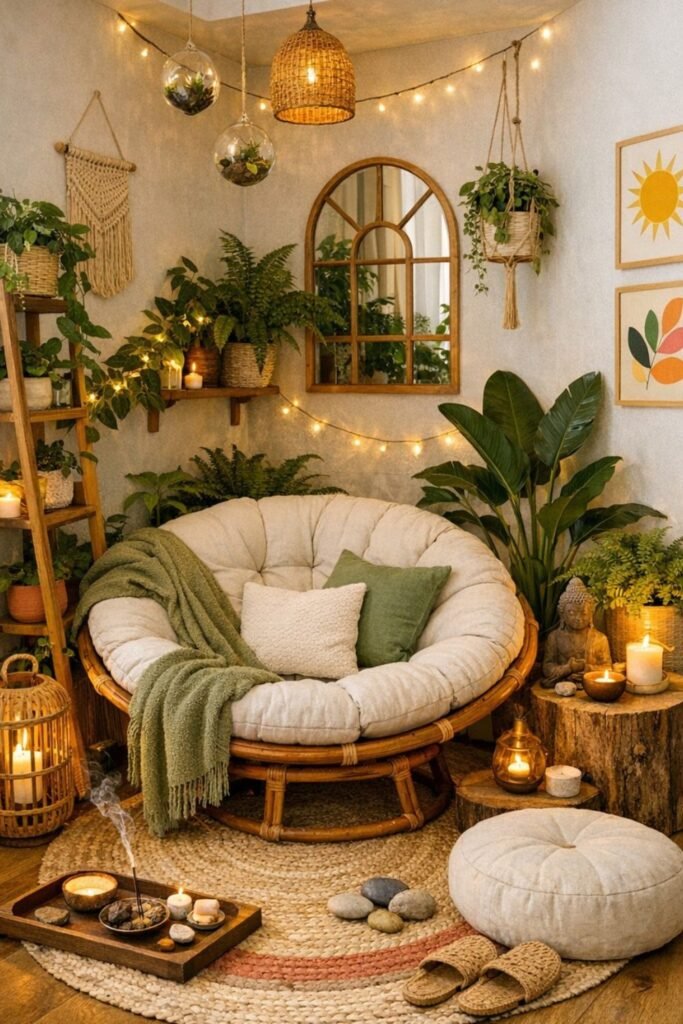
Boho Plant Layers
Spread greenery around the room instead of concentrating everything together, letting trailing vines, palms, and shelf plants soften different decorating zones.
Train lightweight vines along upper walls and shelves, while taller palms fill empty corners where their feathery leaves have room to spread.
Choose woven containers and warm wooden surfaces to connect the plants naturally, especially in relaxed living rooms with bohemian or vintage character.
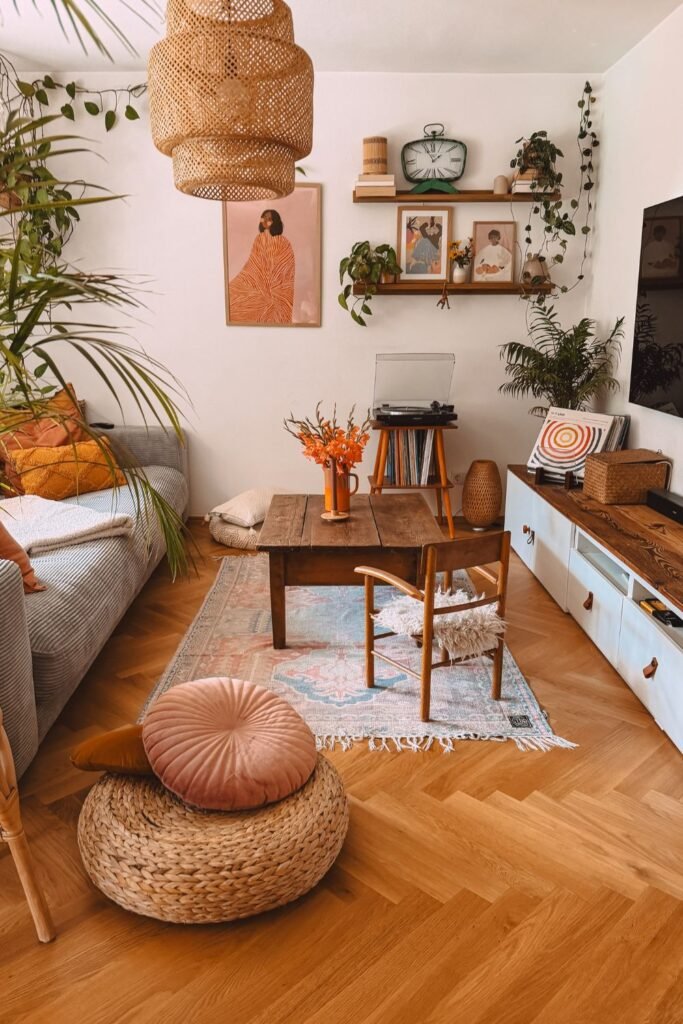
Bold Foliage Grouping
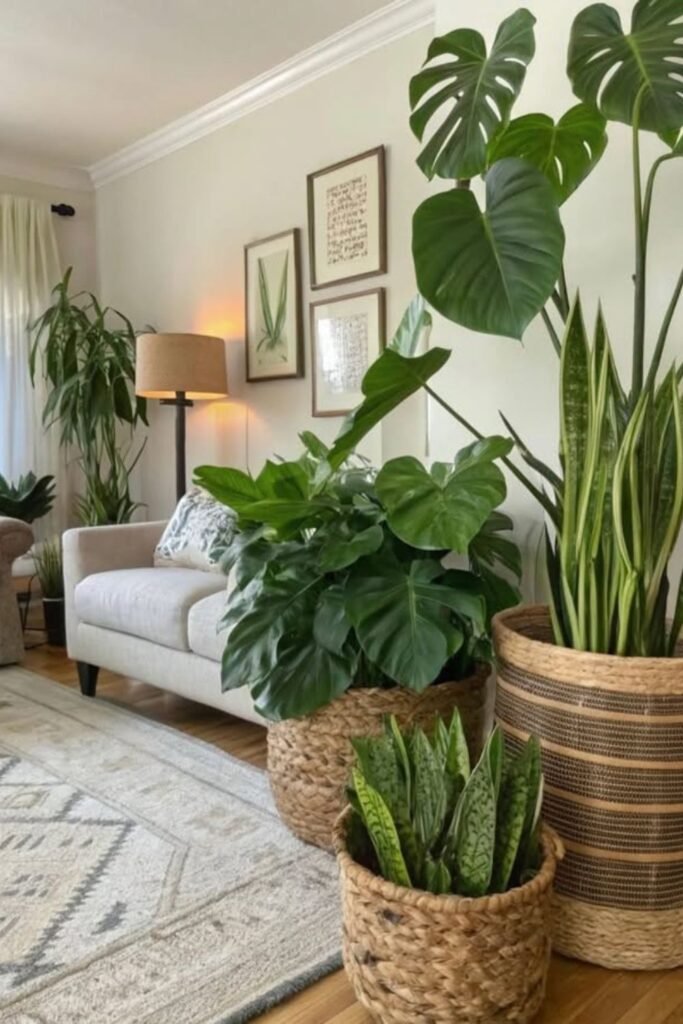
Make oversized foliage feel intentional by grouping monstera and snake plants together, using contrasting leaf shapes to create depth beside the seating.
Place taller specimens behind shorter pots so every plant remains visible, then use woven baskets to give mismatched containers a coordinated finish.
Bright indirect light suits this tropical grouping best, while generous spacing around larger leaves improves airflow and prevents the corner feeling overgrown.
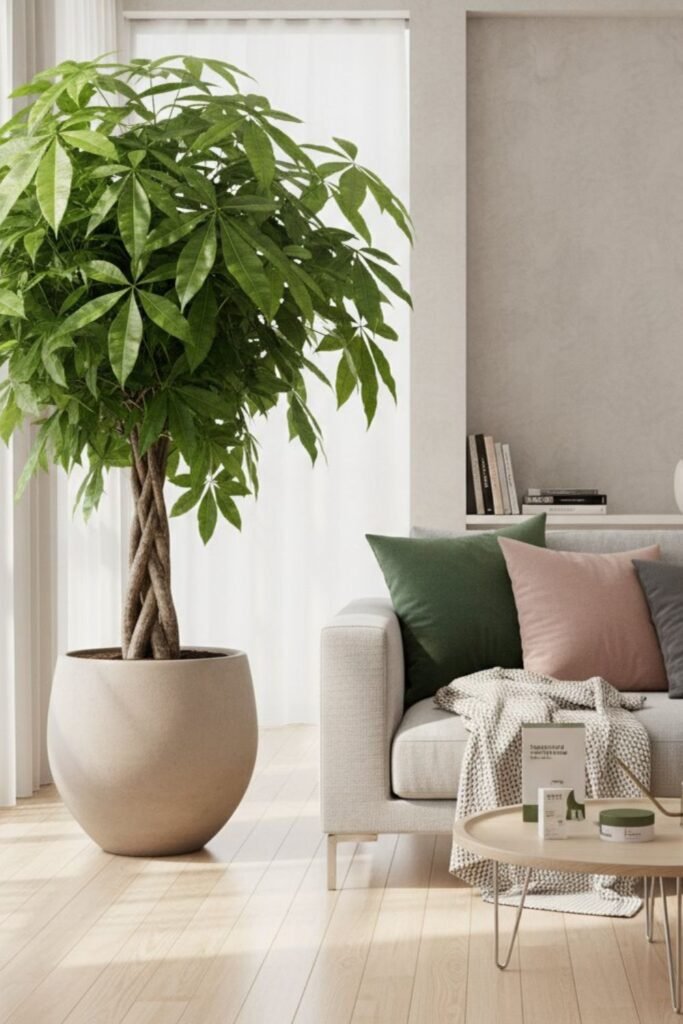
Braided Money Tree
Give a bright living room one strong botanical anchor by placing a mature money tree beside tall windows with softly filtered daylight.
Its braided trunk adds structure beneath the leafy canopy, so choose a simple oversized planter that keeps the overall arrangement clean and balanced.
Leave generous space around the foliage for even growth, and rotate the pot occasionally to prevent the canopy leaning toward the window.
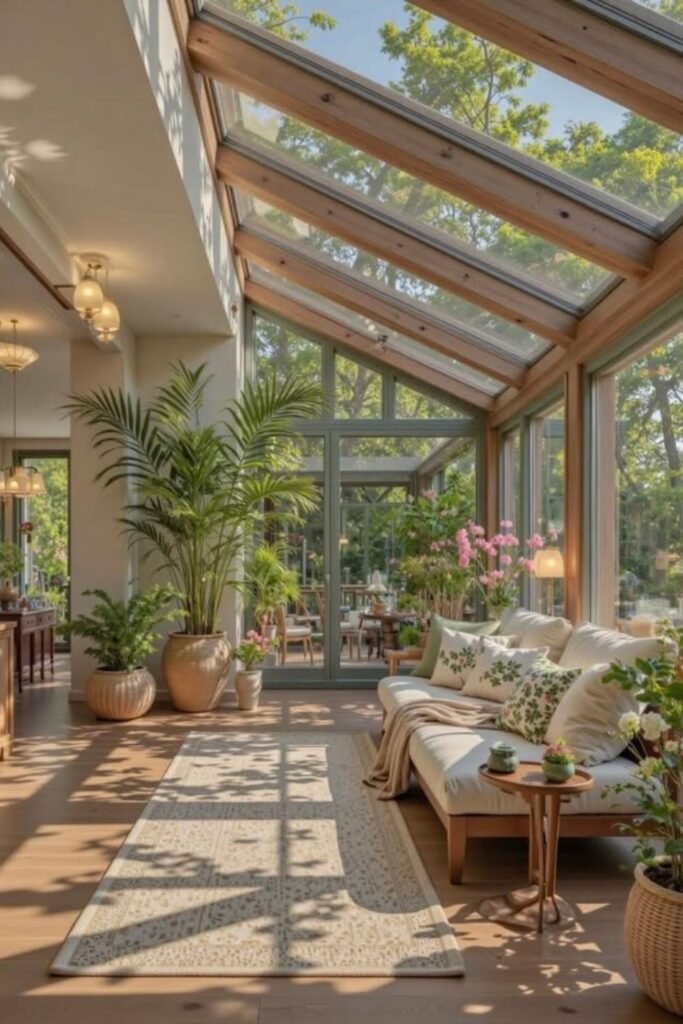
Sunroom Garden Lounge
Use a glass-roofed sunroom as a true indoor garden by combining tall palms, flowering plants, and smaller greenery around comfortable seating.
Arrange taller plants toward the ends and corners, keeping shorter flowering pots near tables where their color can be enjoyed at eye level.
Watch midday sunlight through extensive glazing, using filtered shade when necessary so tender foliage receives brightness without prolonged exposure to intense heat.
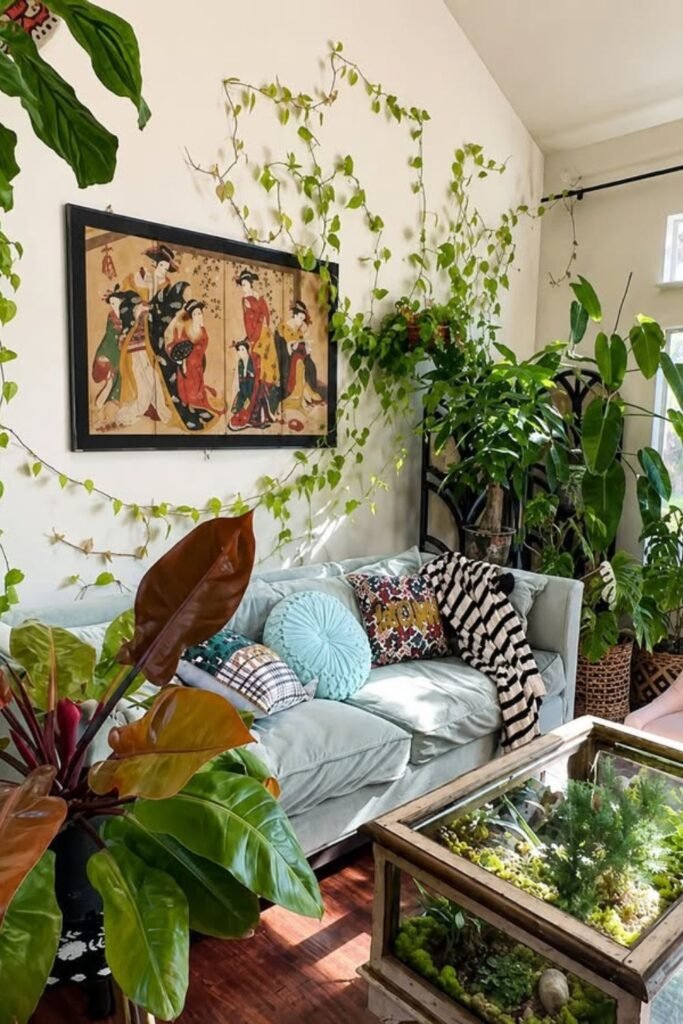
Climbing Vine Gallery
Turn a plain wall into living garden art by training long climbing vines around framed artwork and across open stretches above the sofa.
Guide new stems with discreet wall clips, allowing some sections to wander naturally while keeping vigorous growth away from frames and curtain hardware.
Combine the climbing layer with large floor plants near bright windows, creating greenery from floor to ceiling without filling every surface with pots.
Cascading Media Garden
Soften a television wall by placing generous trailing plants across floating shelves, letting their vines fall naturally around books and decorative pieces.
Balance the hanging growth with broad-leaf floor plants on both sides, creating a green frame without allowing foliage to cover the screen.
Choose trailing varieties that tolerate bright indirect light, then trim longer stems periodically so the display stays lush rather than becoming visually tangled.
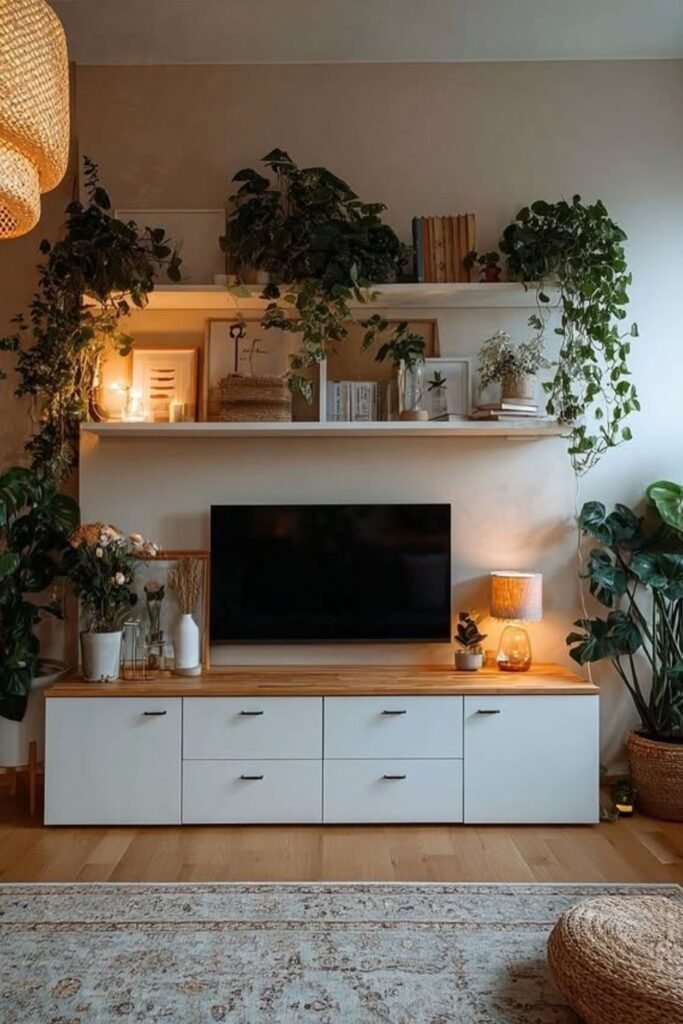
Layered Window Garden
Fill a bright window wall with mixed tropical plants, combining floor pots, hanging vines, and shelf greenery for natural garden depth.
Keep broad-leaf varieties closest to generous daylight, then place smaller ferns and upright foliage slightly farther back where light remains softly filtered.
Hanging plants use empty ceiling space beautifully, making this arrangement especially practical when you want abundant greenery without sacrificing valuable walking areas.
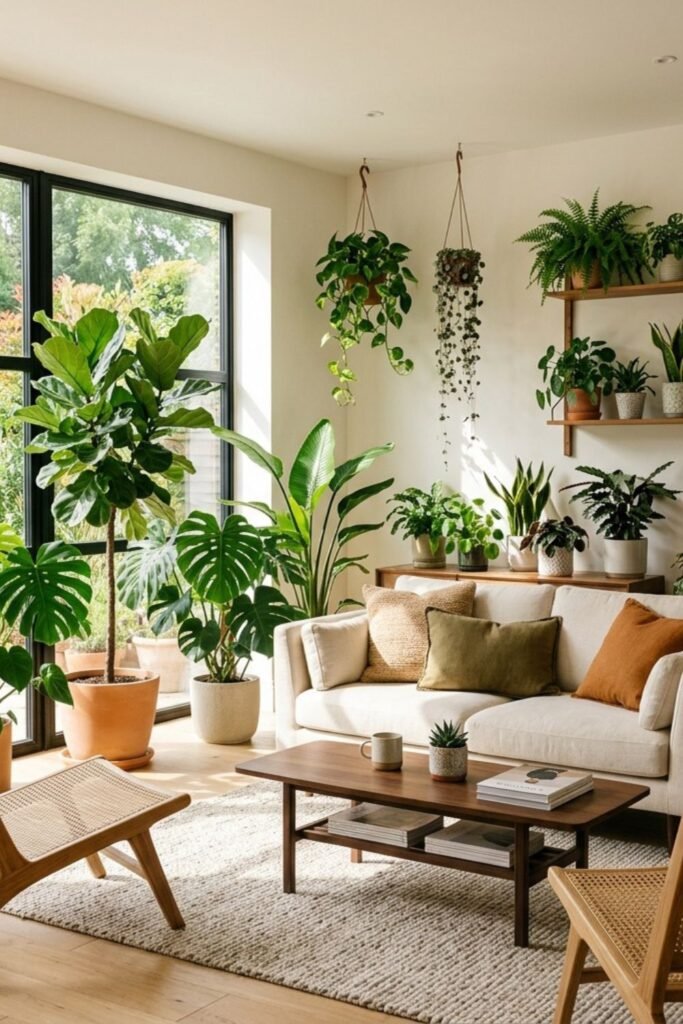
Airy Foliage Balance
Frame a neutral sofa with tall leafy plants on both sides, creating a calm indoor garden without making the room feel overly dense.
Mix fiddle-leaf forms with snake plants and smaller tropical foliage, varying container heights so greenery moves naturally from floor level upward.
Position the largest specimens beside bright windows, while smaller adaptable plants can fill interior corners and soften furniture edges with gentle greenery.
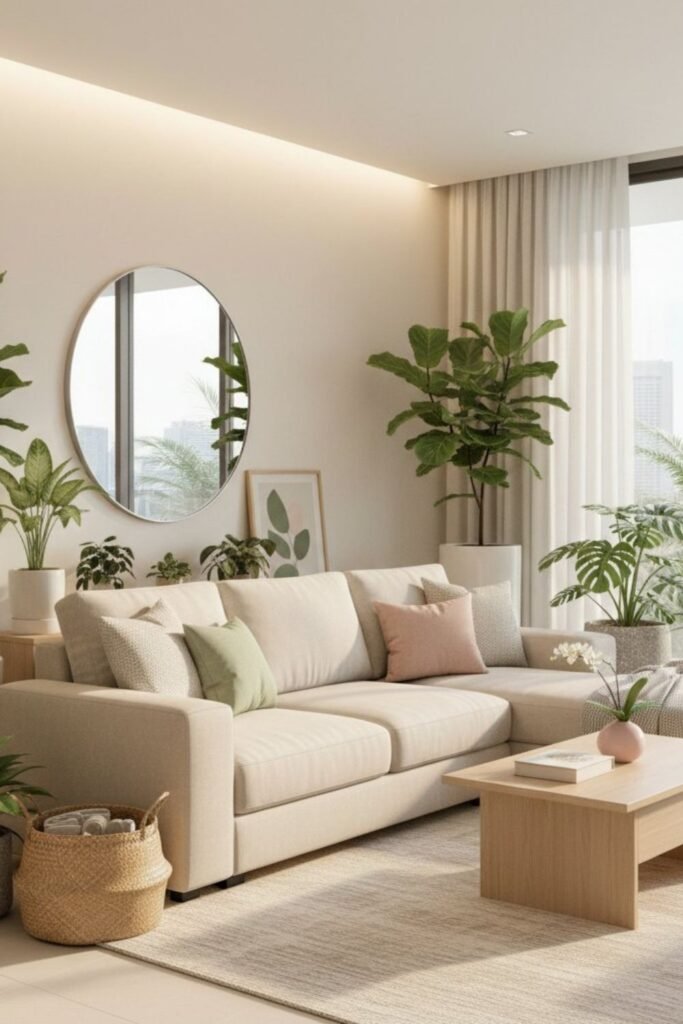
Sculptural Plant Stand
Turn a sunny corner into vertical growing space with a tiered wooden plant stand that gives every trailing pot its own level.
Place fuller vines on upper platforms so stems can cascade freely, while compact foliage fits lower shelves without becoming hidden beneath larger plants.
Keep the stand near strong filtered daylight and rotate individual pots regularly, helping each side develop evenly while maintaining the sculptural arrangement.
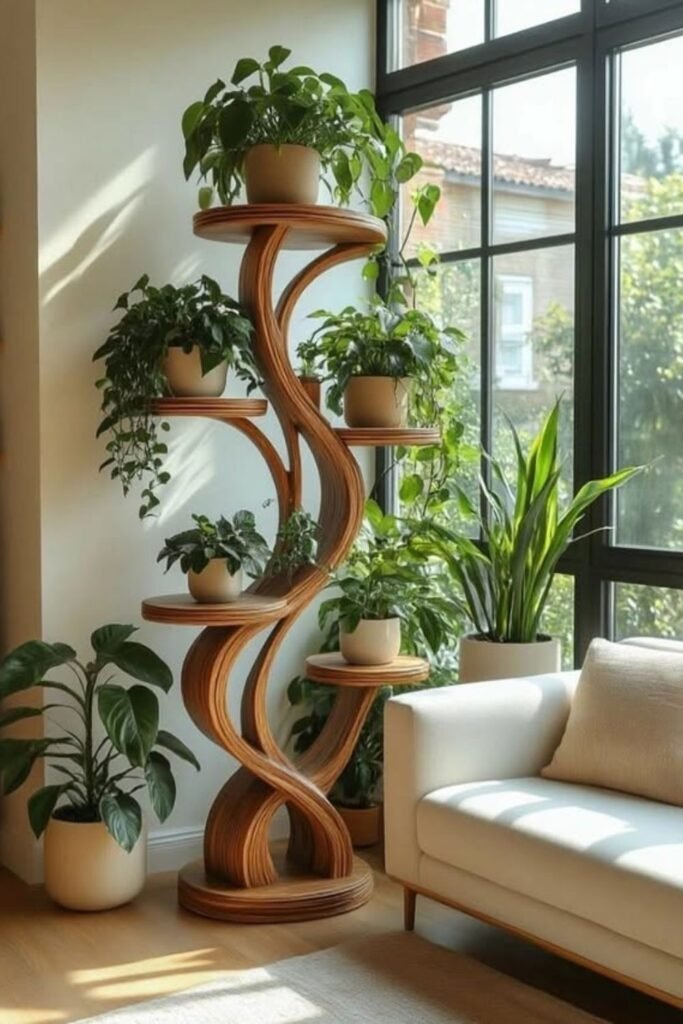
Tropical Garden Corner
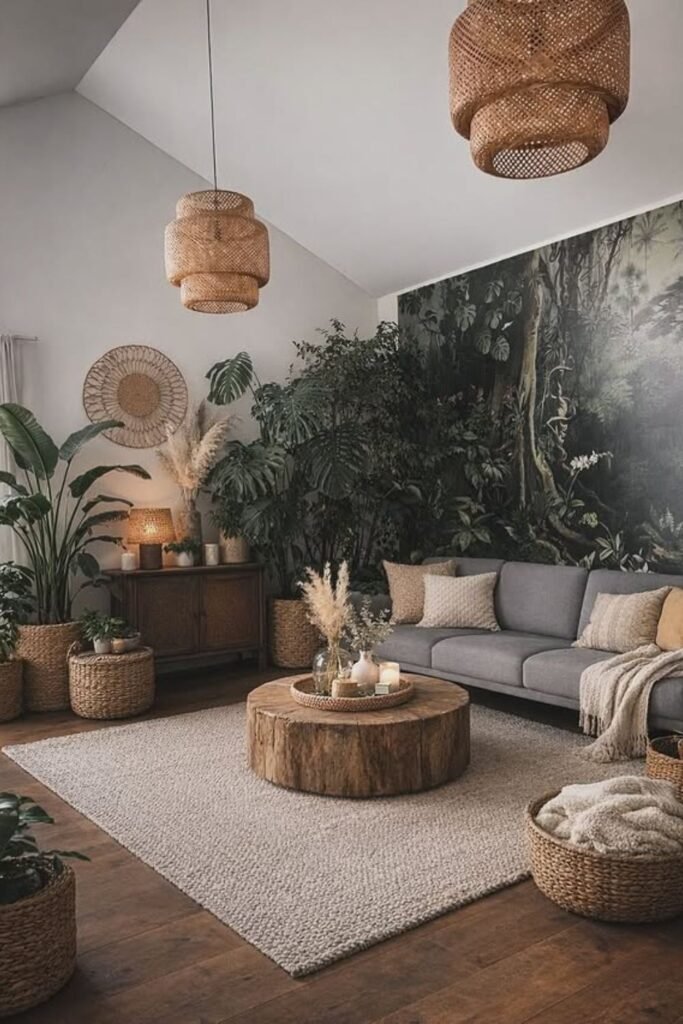
Build an immersive garden atmosphere by clustering oversized tropical foliage near one wall, allowing different leaf shapes to overlap without becoming cluttered.
Use woven baskets around floor pots to soften their containers, then repeat natural textures through lighting and furniture for a cohesive earthy finish.
Give larger plants generous indirect daylight and breathing room, especially when dark botanical wallpaper already adds another strong layer.
Botanical Reading Nook
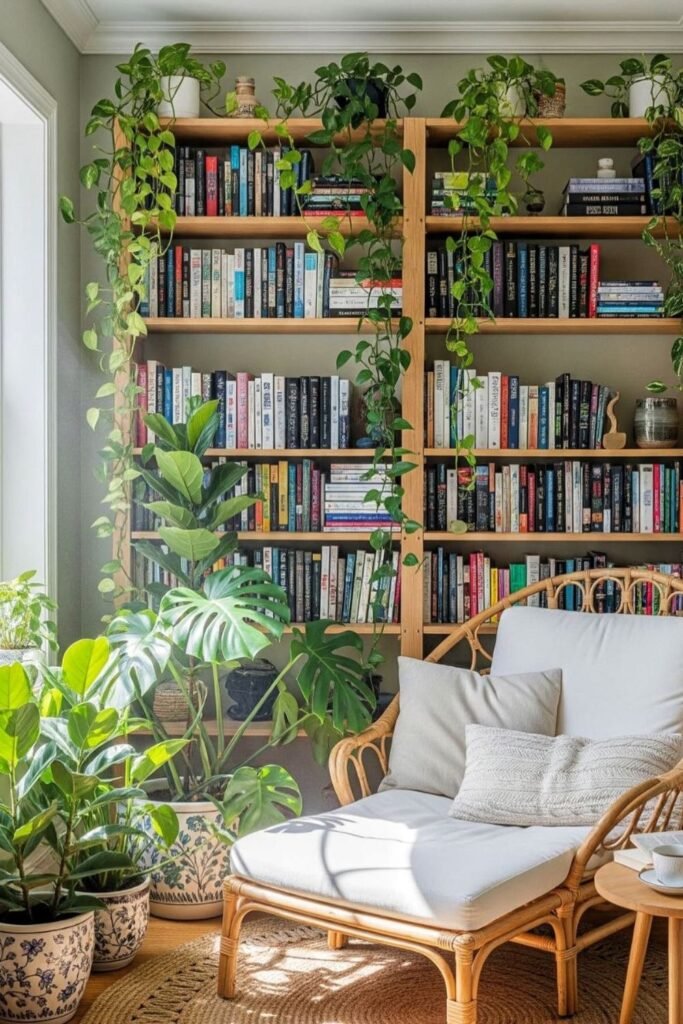
Turn a sunny reading corner into a small indoor garden by surrounding the chair with broad foliage and cascading bookshelf vines.
Set larger floor plants beside the window, then let pothos trail from upper shelves to soften books without hiding the collection.
Bright filtered daylight supports both layers, while decorative ceramic pots make the greenery feel intentionally connected to the warm natural reading space.
Living Shelf Divider
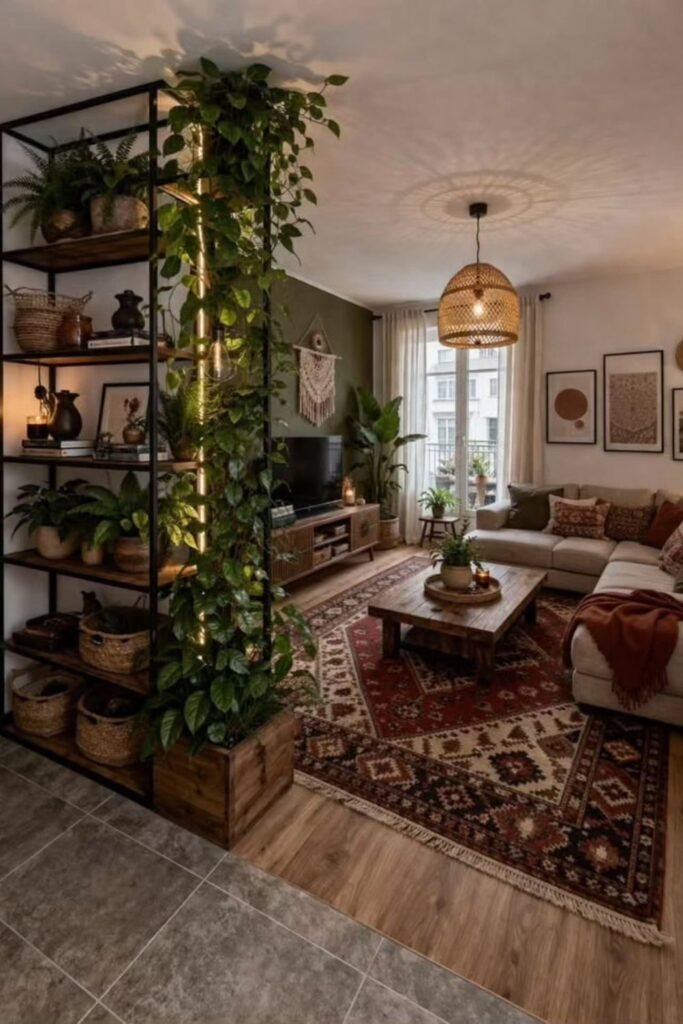
Use an open shelving divider as vertical growing space by training one vigorous vine upward and allowing foliage to spill between shelves.
Plant the climber in a generous floor container, then guide stems around the metal frame with soft ties as new growth develops.
Tuck ferns and smaller plants onto nearby shelves, creating layered greenery that separates adjoining spaces without building a heavy solid partition.
Subtle Kitchen Greenery
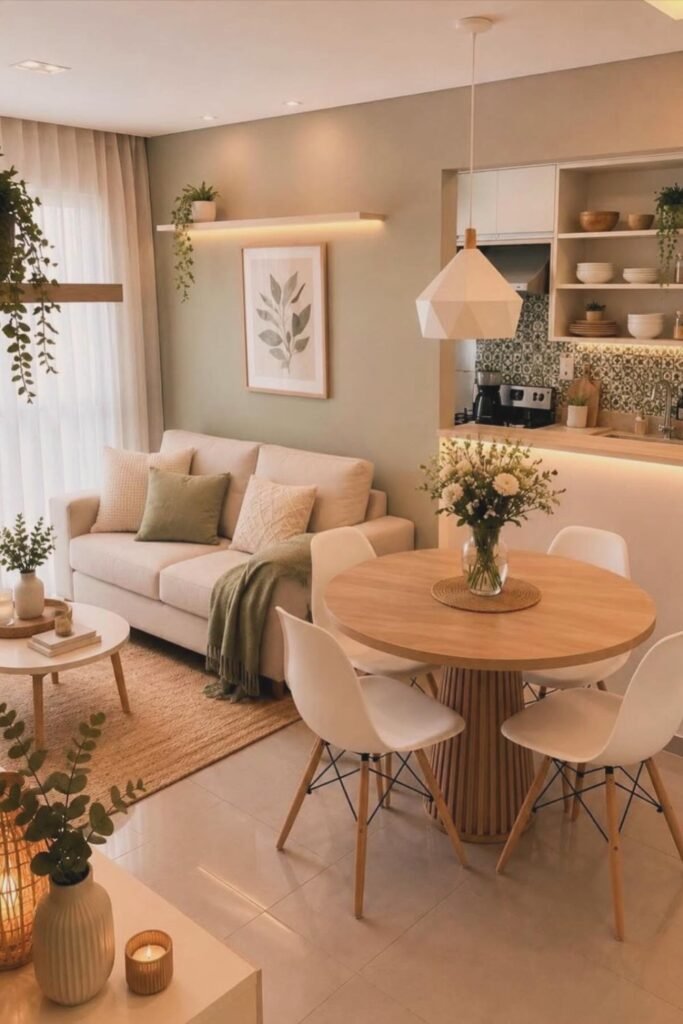
Bring greenery into a compact open-plan room with trailing plants positioned high enough to decorate without taking away useful dining space.
Place vines on floating shelves and upper cabinets, allowing stems to fall gently while keeping leaves away from cooking heat and splashes.
Repeat smaller leafy arrangements near the living area, helping the limited greenery travel naturally through the kitchen, dining, and seating zones.
FAQs
Can You Mix Large And Small Plants Without Making A Living Room Look Crowded?
Yes, mixing plant sizes is among the easiest methods to create a balanced display.
Put tall plants in corners or against furniture, medium plants near windows or consoles, and smaller types on shelves or coffee tables.
Leaving enough space between the planters keeps the area airy and allows each and every plant to shine through.
Which Living Room Plants Stay Attractive With Very Little Maintenance?
If you want greens but don’t want to fuss about it all the time, snake plants, ZZ plants, cast iron plants, pothos and rubber plants are great choices.
Most of these plants are tolerant of typical indoor circumstances, need less regular watering.
And thrive in strong indirect light, making them suitable for busy homes and those new to houseplants
