
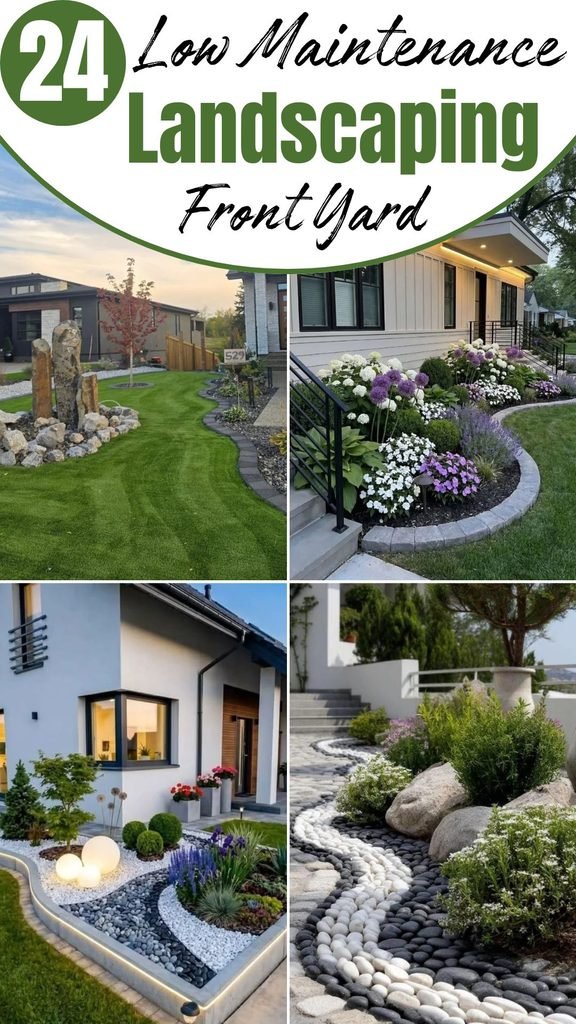
24 Low Maintenance Landscaping Front Yard
Pull weeds on Saturday, mow the lawn on Sunday, and your front yard looks like it needs attention again by Wednesday.
If you’re feeling like maintaining everything nice is another weekly task, it can be a problem with the way your yard is set up, not how hard you work.
Weeds grow on bare soil, overgrown bushes demand endless pruning and too much grass is too much time on the mower.
In this article, you’ll find 24 low-maintenance landscaping front yard ideas that keep curb appeal high.
Let’s jump in!
How Can I Landscape Without Spending Every Weekend Weeding?
Instead of worrying about weeding every weekend, first, reduce the number of areas they can grow.
Prior to planting new beds, pull out all weeds and cover exposed soil with roughly 2 to 4 inches of mulch.
Mulch also filters light from many weed seeds and helps the soil maintain moisture so you can water less.
Don’t space shrubs too widely just because the plants seem small now.
Select plant based on their mature size and let suitable groundcovers progressively fill in where weeds would ordinarily grow.
Keep lawn edges well away from planting beds, or grass will creep underground and come back into your borders.
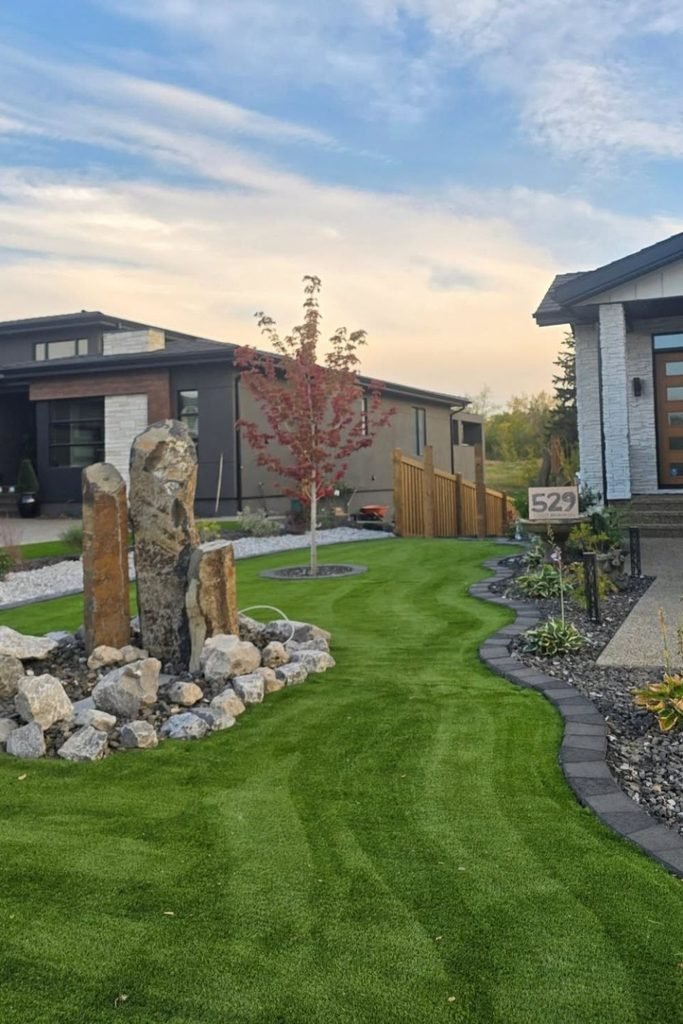
Rock Islands
Cut down on planting without leaving your front yard looking unfinished by turning open lawn areas into bold rock features.
Big upright stones encircled by smaller boulders provide a permanent centerpiece that requires no watering, pruning or seasonal replanting.
Leave enough turf surrounding the feature for easy mowing, and provide stone-edged beds near the home to segregate plants from grass.
To make upkeep easier, choose a few hardy perennials or ornamental grasses to fill the borders, rather than a heavy flower display.
Layered Perennials
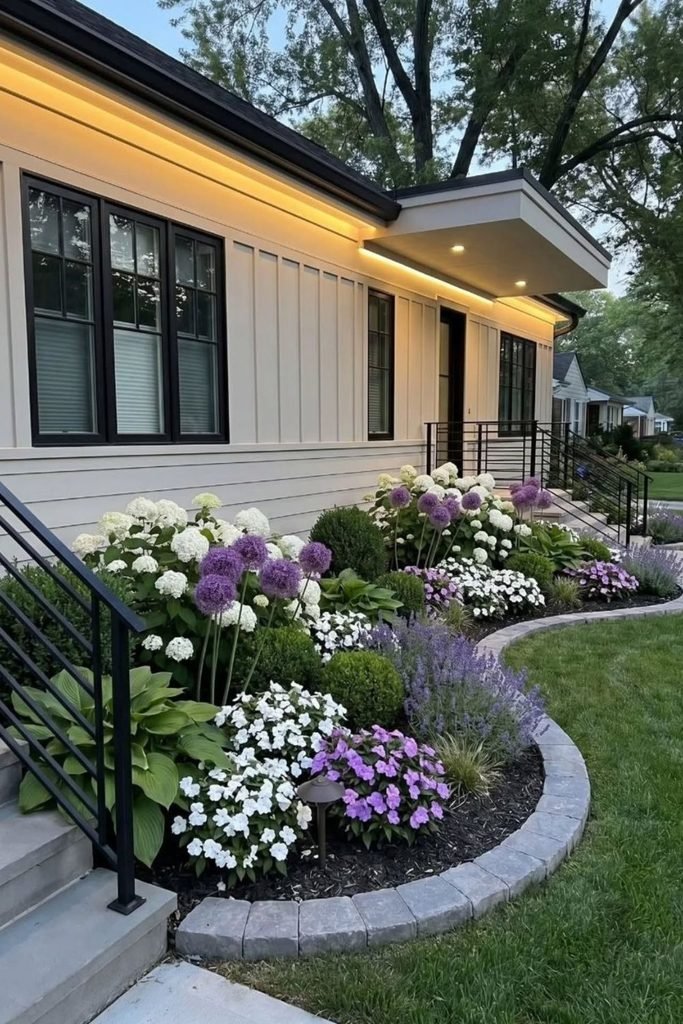
Fill foundation beds with plants that return each year, and you can get plenty of color without rebuilding the garden every season.
Combine compact evergreen shrubs with hardy flowering perennials of various heights, placing taller blooms closer to the house and shorter plants.
As the plants grow larger, they shade more of the ground and there’s less open space for weeds to grow.
Choose types that are appropriate for the amount of sun and moisture around your base.
The stone edging provides a permanent border to the bed and helps keep lawn grass from intruding into your planting area.
Pebble Stream
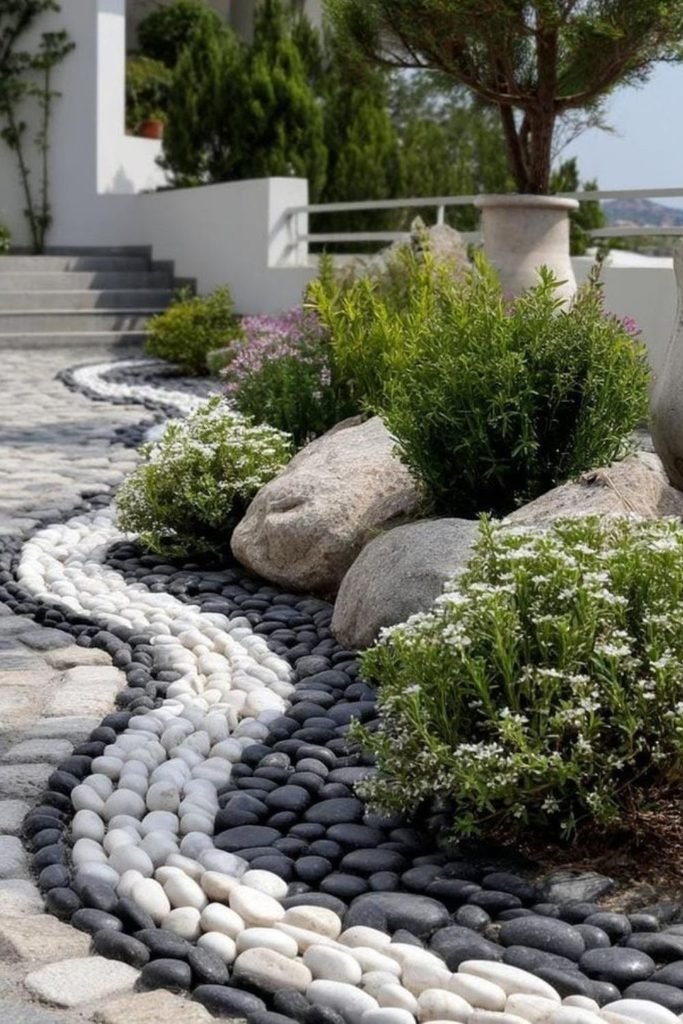
Turn a dry, awkward strip beside your walkway into a decorative pebble channel instead of filling it with plants that need regular attention.
Create a flowing pattern using smooth stones of various tones.
Anchor the edges with a few huge rocks and compact shrubs that are climate-suitable.
With most of the area covered with stone, there is less exposed soil for weeds to settle in, but some cleanup will be needed from time to time.
This method works particularly effectively along front walkways, sloped driveways, or tight locations where keeping grass trimmed is difficult.
Raised Xeriscape
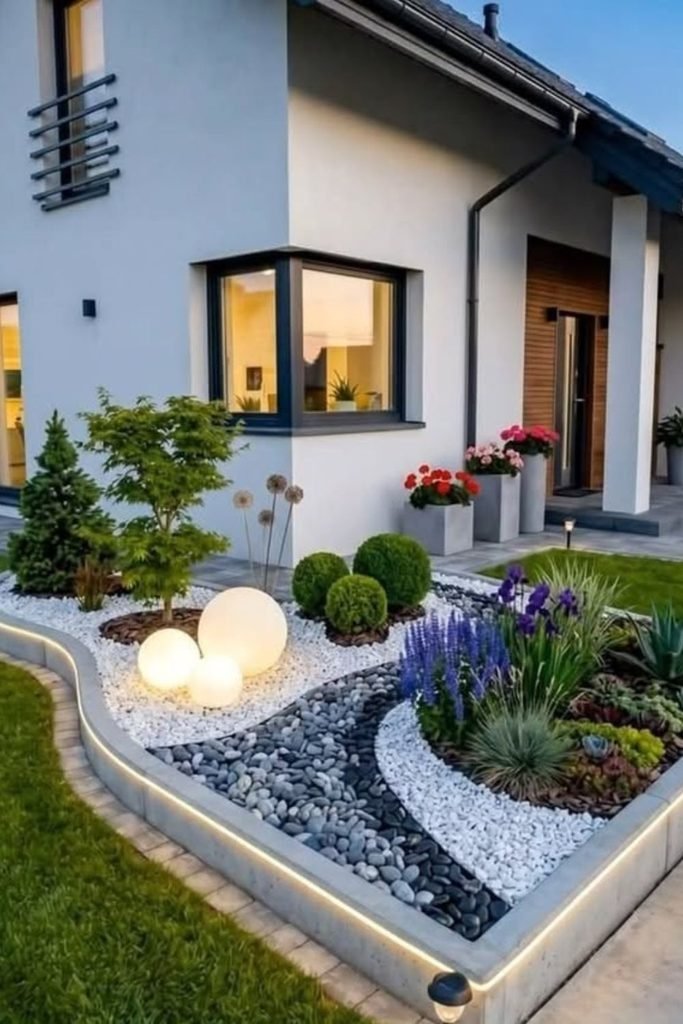
Give a small front yard more structure by lifting a drought-friendly planting bed slightly above the lawn.
Concrete edging keeps the gravel and planting spaces defined, and succulents, compact evergreens, ornamental grasses and hardy flowering plants add interest.
Choose species that are adapted to your local heat and rainfall so established plants require less supplementary watering.
Don’t plant all one color of stone for the entire bed; mix it up with contrasting pebbles for interest even when nothing is flowering.
This works particularly effectively around modern entrances when you want a tidy garden without using vast sections of high upkeep flowers.
Xeric Entry
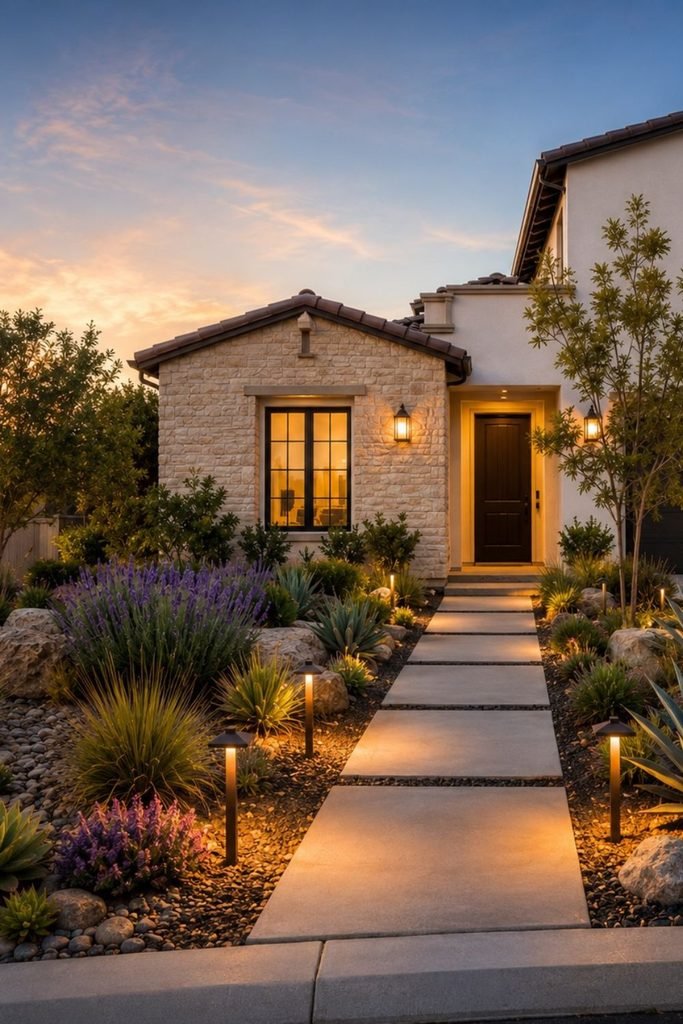
Skip thirsty lawn around the front walkway and build the entrance with drought-tolerant plants that already handle dry conditions well.
Spiky architectural plants, flowering perennials, succulents and attractive grasses can form a full garden while gravel and scattered rocks hide much of open soil.
Run big stepping slabs down the middle, so foot traffic never interferes with planting spaces.
This is especially good for hot, sunny front yards, where regular watering can be a bother.
Include some basic path lights to allow you to see at nite without adding extra chore to your gardening list.
River Edging
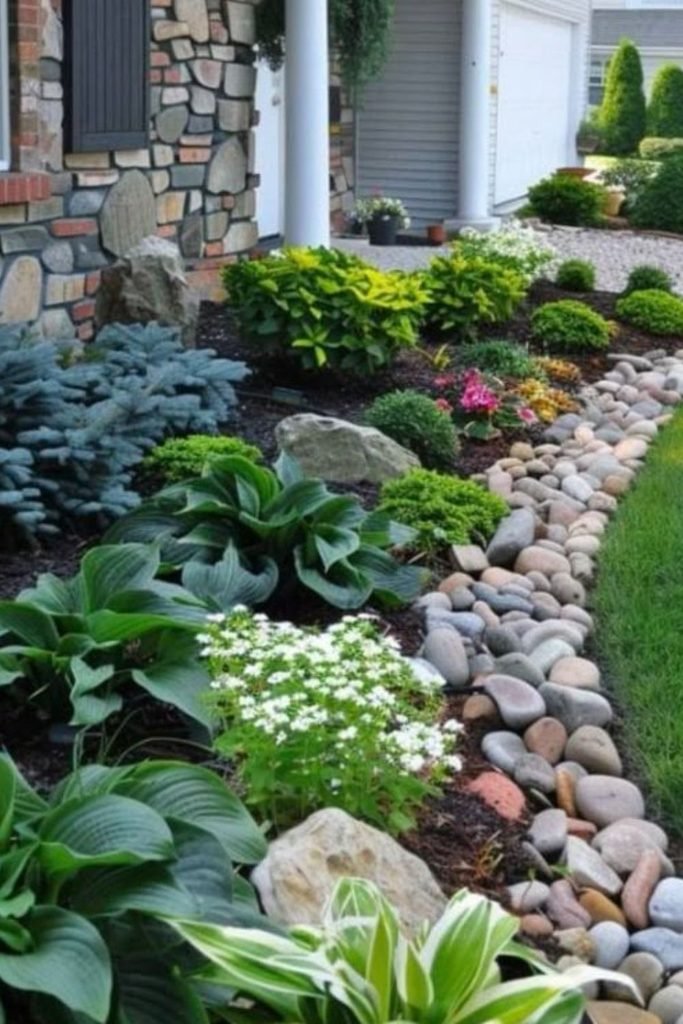
Solve two maintenance problems at once by using a wide river-rock border between the lawn and foundation planting.
Rounded stones offer a nice distinction that helps prevent grass out of the mulched bed and gives the edge a softer finish than straight concrete.
Plant a few flowering plants, some compact evergreens and broad leaf perennials behind it so as the garden matures, the foliage covers much of the soil.
This design is particularly good along curving foundations where it is tough to mow close to plants.
Keep shrubs naturally small for their position, mulch the leftover gaps and let repeated plant groups give fullness without forming a border that need constant.
Drought Clusters
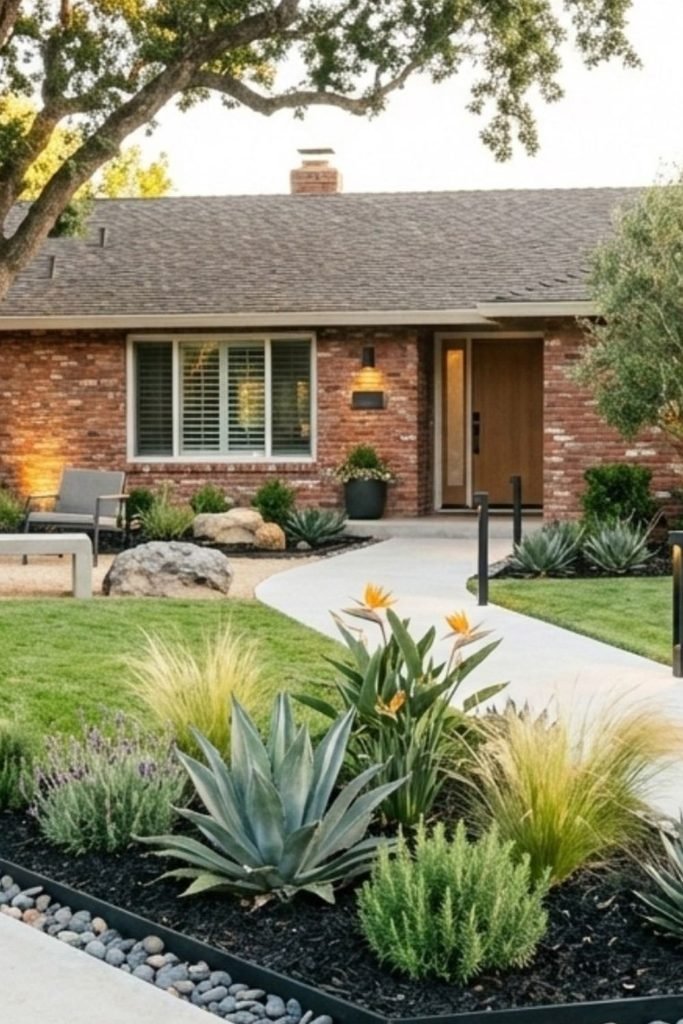
Hot, sunny front yards become much easier to manage when you group tough plants by similar water needs.
Combine sculptural succulents with small herbs, attractive grasses and a few blooming accents and give each plant plenty of freedom to develop natural size.
Dark mulch between the groups keeps soil covered and makes dispersed foliage look deliberate, not scant.
This method works best near a large entry walk or in broad lawn areas that you wish to transform gradually rather than remove all the grass at once.
Defined metal border keeps the mulch contained, and a simple plant palette means fewer watering and trimming procedures to remember.
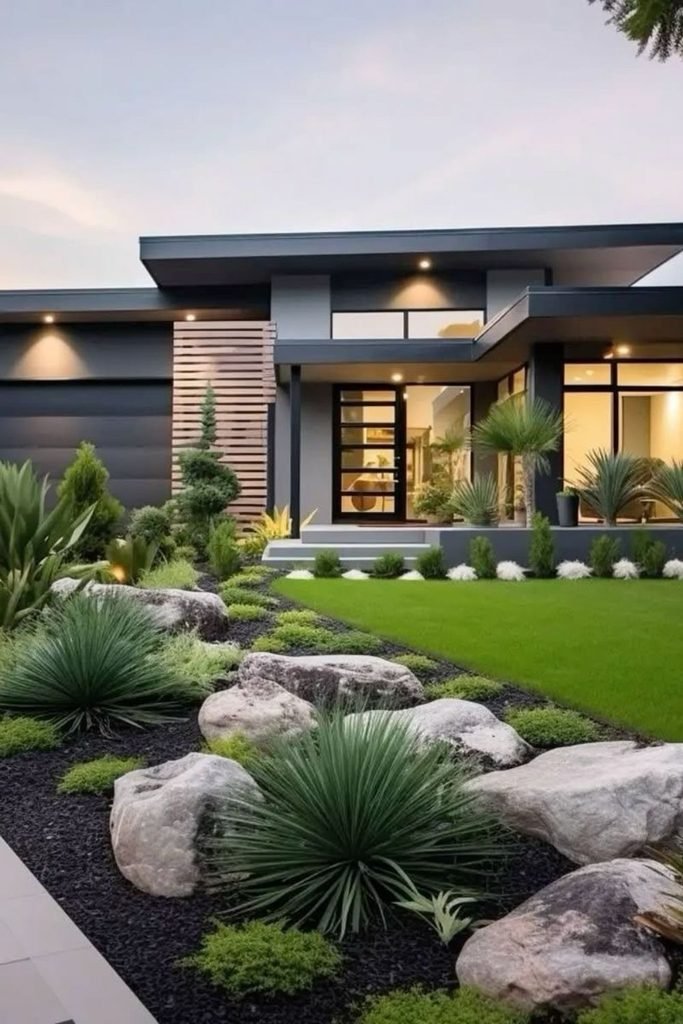
Boulder Beds
Break up a large stretch of lawn with boulder-filled planting beds instead of adding more grass that needs mowing every week.
Start with a few large rocks, then surround them with architectural grasses, small shrubs and spreading groundcovers to add texture to the bed.
Dark mulch or fine gravel over the remaining soil makes it simpler to notice the occasional weeds early.
This strategy works especially well with today’s front yards since a limited plant palette keeps the design tidy.
Allow plenty of space for the eventual size of the mature plant, and the garden will fill in naturally without becoming a constant trimming job.
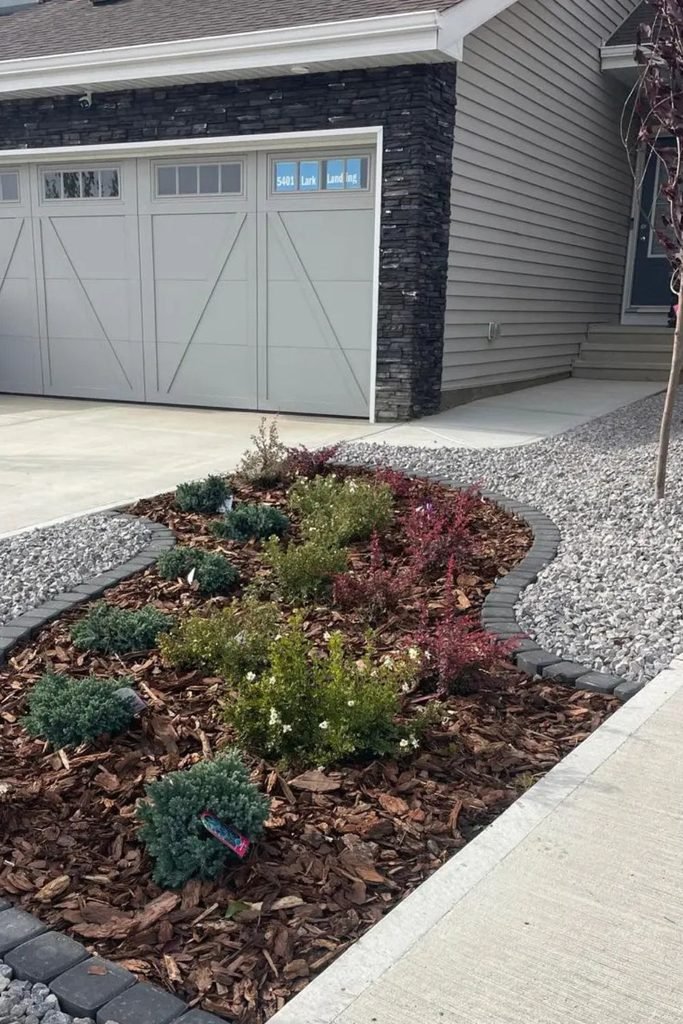
Gravel Pocket
Replace a hard-to-mow patch between the driveway and walkway with gravel, then reserve one defined pocket for plants.
The curved paver border prevents bark mulch from mingling in with the surrounding stone.
Compact plants provide enough greenery and color to prevent the space from seeming bare.
Pick slow growing types that will fit into their mature space, so you are not continuously trimming them back from the pavement.
This design is especially effective in narrow front yards, side entrances, and odd strips where turf has a hard time growing or mowing seems unnecessary.
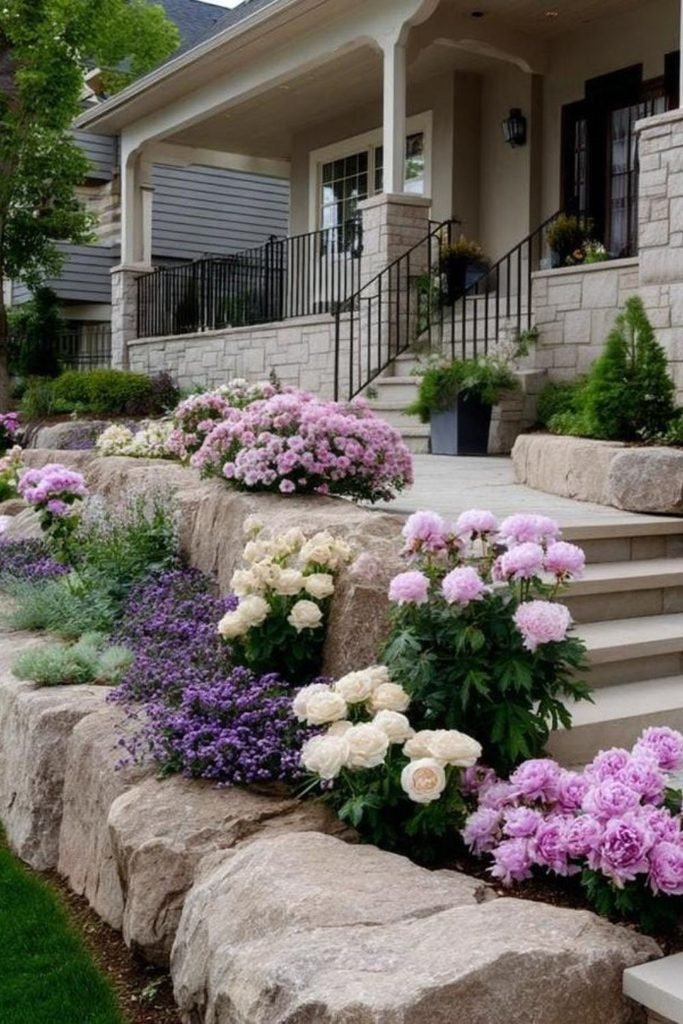
Boulder Terraces
Steep front yards become far easier to manage when large boulders turn the slope into permanent planting pockets.
Rather than battling to mow an incline, plant out large stones in staggered levels and fill the spaces with tough floral perennials, spreading plants and compact shrubs.
Once set, larger plants shade more of the soil and assist to reduce open places where weeds can emerge.
It works particularly well next to raised porches, front steps, or sloping walkways where you already require some sort of retaining structure.
Select long-lived plants suitable to your climate, then repeat a few kinds across the slope for lots of color without dozens of different care regimes.
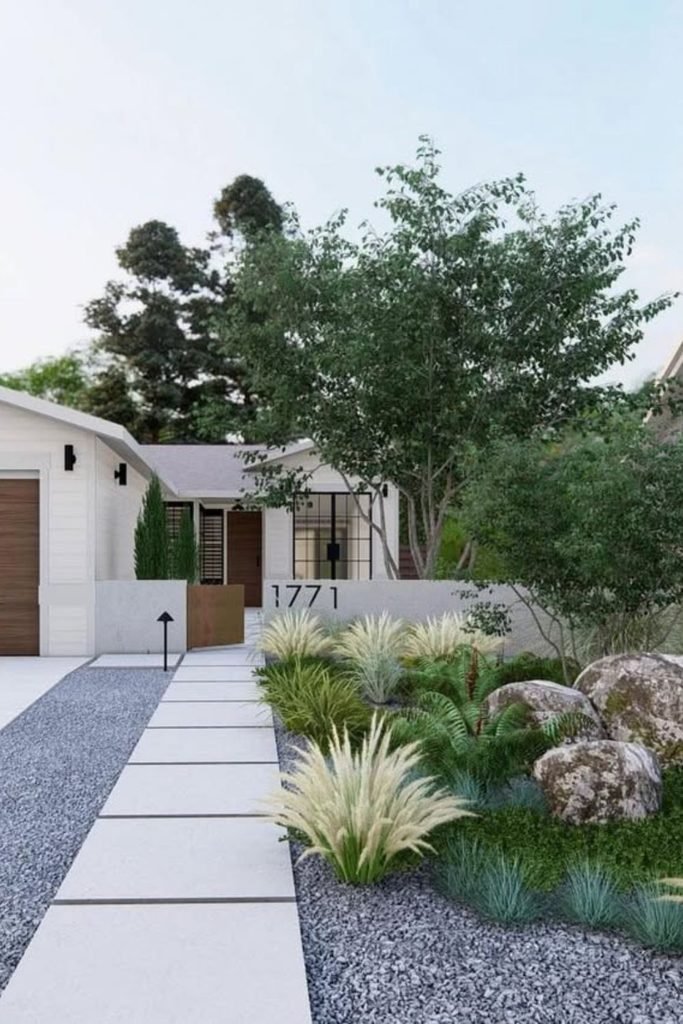
Gravel Approach
Make the walk to your front door easier to maintain by replacing narrow grass strips with gravel and widely spaced planting groups.
Large concrete slabs provide a neat path across the yard, and ornamental grasses, ferns, small trees and pebbles soften the hard surfaces.
If you have gravel on the bare ground, you don’t have to mow odd areas along the path, and there’s less bare dirt to worry about.
This pattern is especially good for narrow modern front yards where every inch has to work.
Choose grasses and trees that fit your site and repeat only a few types to make watering, trimming and seasonal cleanup easier.
Flowering Groundcover
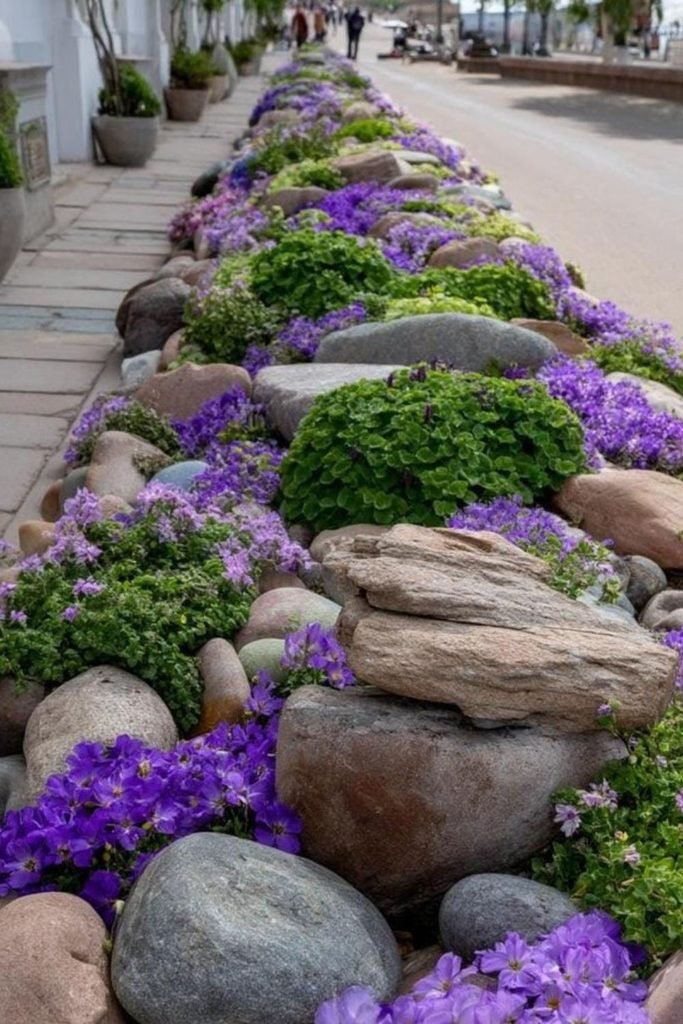
Crowd out open planting space with low-growing flowers instead of leaving bare soil between decorative rocks.
Groundcovers can grow around stones to form a complete border and require less frequent weeding than widely spaced plants.
Use this idea along sidewalks, property margins or skinny strips in front yards where mowing grass would be a pain.
Begin with a few repeated clusters rather than many unconnected kinds.
Select perennial groundcovers appropriate to your sun, soil, and temperature.
Large stones give year round structure so the border still looks designed when the flowers slow down.
Dense Xeriscape
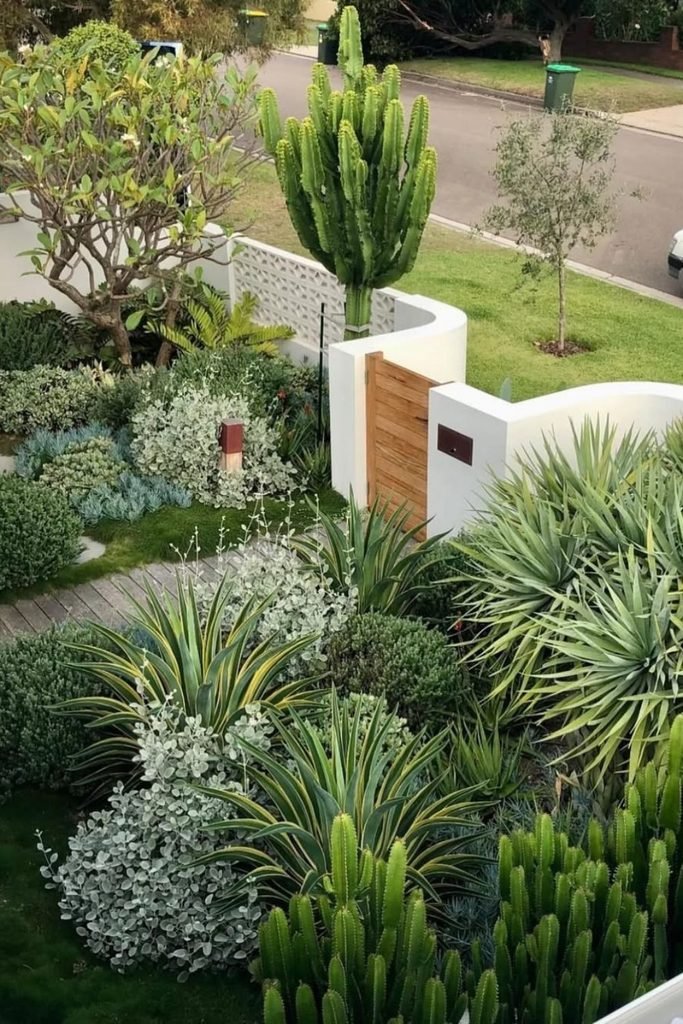
Let plants cover the ground for you when you want a lush front yard without leaving endless gaps to weed.
Group drought-tolerant succulents sculptural foliage plants, compact shrubs, and a few small trees in close repeating groups, choosing kinds that can easily thrive.
Once it’s established, the soil is shaded by overlapping foliage and weeds have fewer easy openings.
This is a good option for warm sunny yards where frequent watering is costly or cumbersome.
Keep taller architectural planting toward boundaries and use lower rounded shrubbery along paths so the garden remains dense.
Succulent Strip
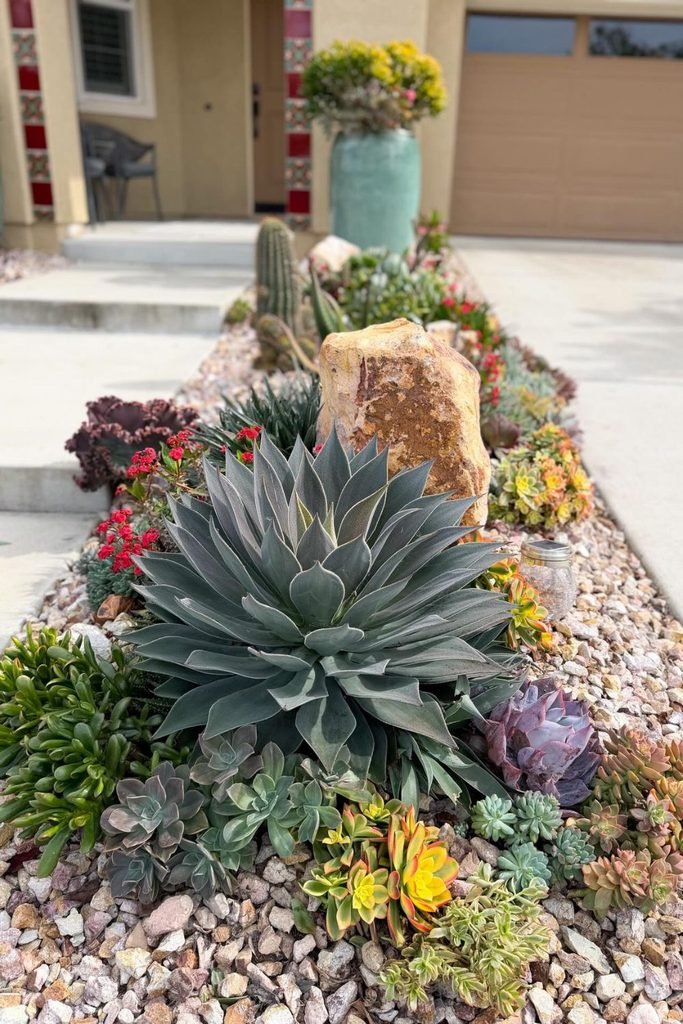
Tight spaces between a driveway and front steps don’t need grass or thirsty flower beds to feel finished.
Fill the strip with gravel and then stack rosette succulents, low spreading types and some erect cactus shapes to provide height without regular trimming.
Scattered pebbles can break up the planting and offer structure to the bed even in the absence of flowers.
This strategy works well in warm, sunny climates where suitable succulents can withstand local circumstances with minimal extra water.
Keep plants away from walking edges, particularly sharp or spiny species, select varieties according to their mature spread so small bed remains easy manage.
Gravel Framing
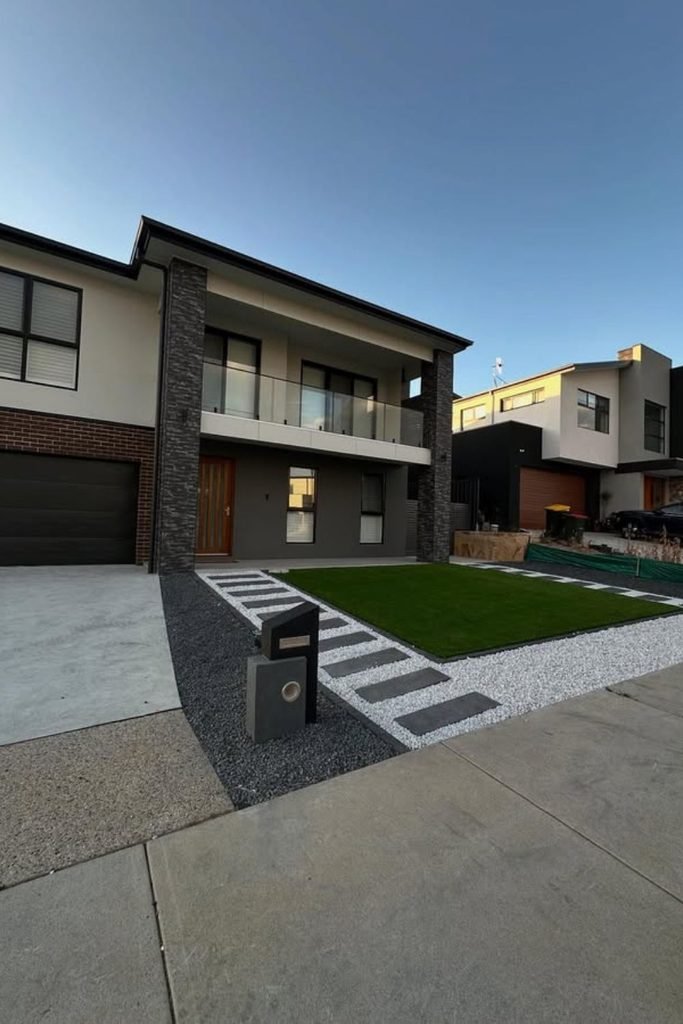
Keep the lawn only where it adds useful greenery, then surround it with gravel to remove the narrow strips that usually make mowing and edging frustrating.
Large stepping slabs can span the sidewalk to the door, while contrasting stone gives a clean edge to the grass.
This method works well for modern front yards where a simple arrangement often beats congested planting areas.
If you want to minimize the maintenance even more, keep the grass one neat rectangle instead of dividing it up into multiple little sections.
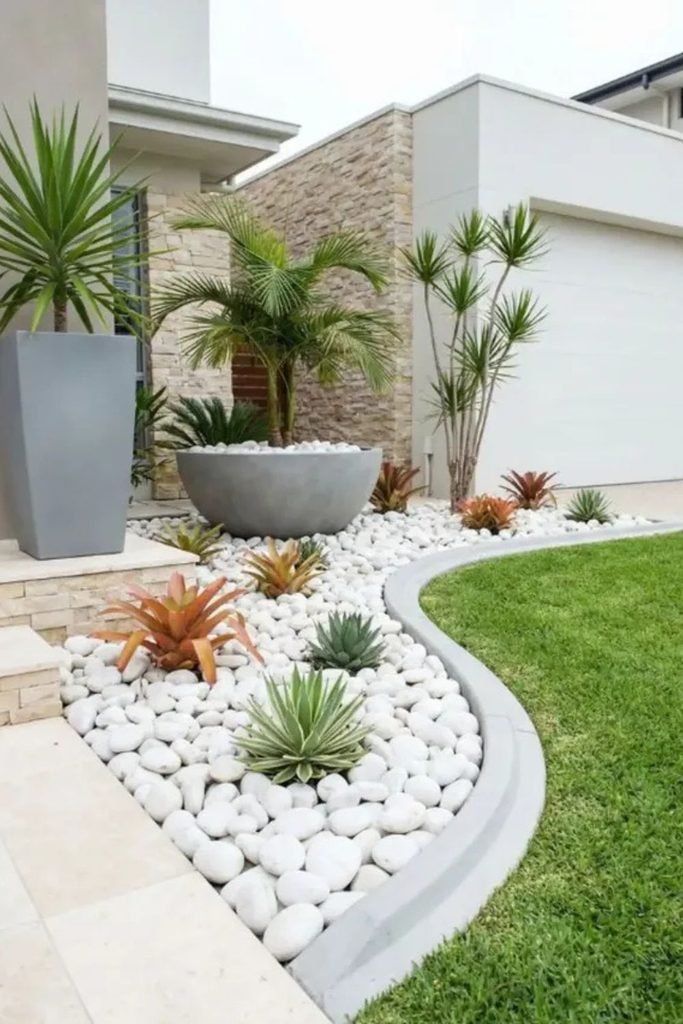
Tropical Stones
Bring tropical character into a low-maintenance front yard without filling the entire border with thirsty flowers.
Cover a curved foundation bed with smooth decorative stones.
Place sculptural plants such as bromeliad-like rosettes, yucca-style leaves and climate-suitable palms where each may stand out on its own.
You can use larger pots and taller plants at the entry so that the roots do not interfere and it is easy to move them later on.
The greatest place to use this method is in warm regions and sunny entryways where appropriate tropical plants will flourish.
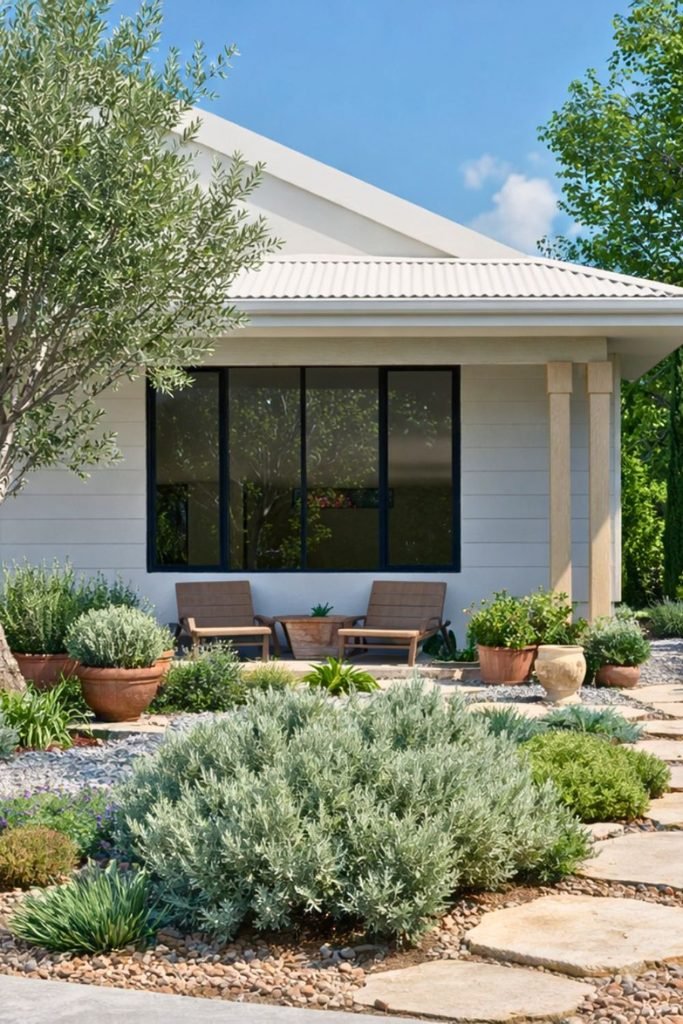
Silver Shrubs
Lean on silvery evergreen foliage when you want a front garden that stays interesting without depending on constant flowers.
Cluster drought tolerant shrubs with a few low grasses and flowering accents then use gravel between plants to keep a finished look to the ground.
This method of planting is especially good for sunny, dry front yards where it is difficult to keep watering often enough.
Add one small tree for height and shade, but let each shrub to grow to its natural width.
Irregular stepping stones can meander through the plants without adding extra lawn edges and a few containers near the porch make seasonal changes a snap.
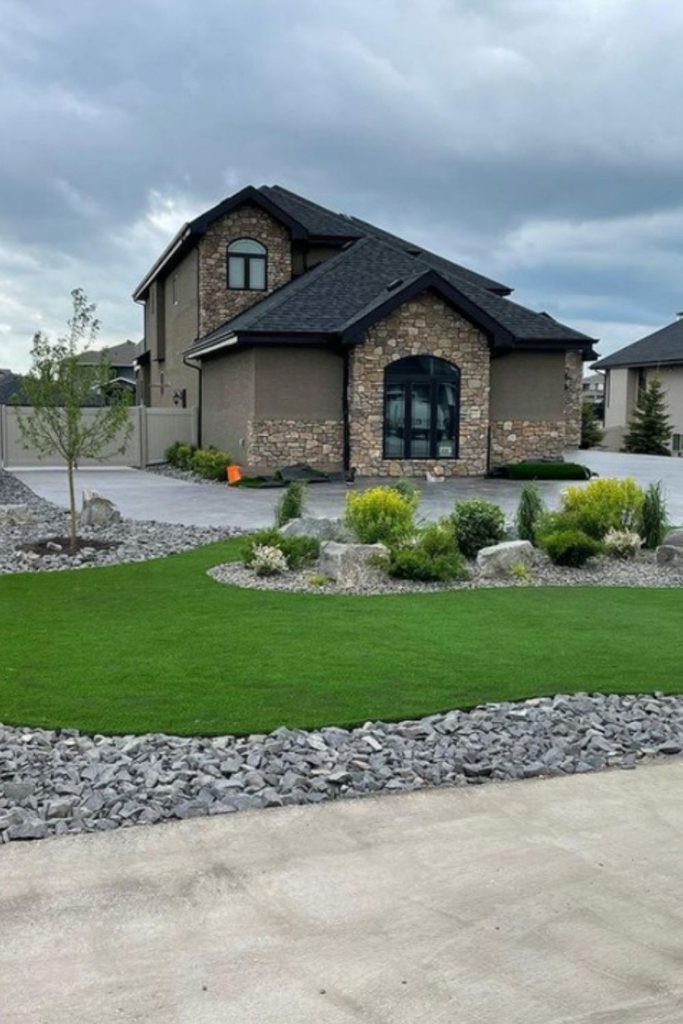
Lawn Islands
Keep one generous stretch of lawn for softness, then cut maintenance around it by turning the remaining front yard into rock-covered planting zones.
Small islands of tight shrubs and boulders add greenery without the requirement for big flower beds that need continual weeding and seasonal upkeep.
This design works especially effectively in wide front yards where eliminating all of the grass would make the landscaping too difficult.
Create smooth, mowable curves and eliminate sharp corners where the mower can’t easily reach.
Work in gravel around young trees and planting areas, then select slow-growing shrubs that will maintain their shape with occasional pruning.
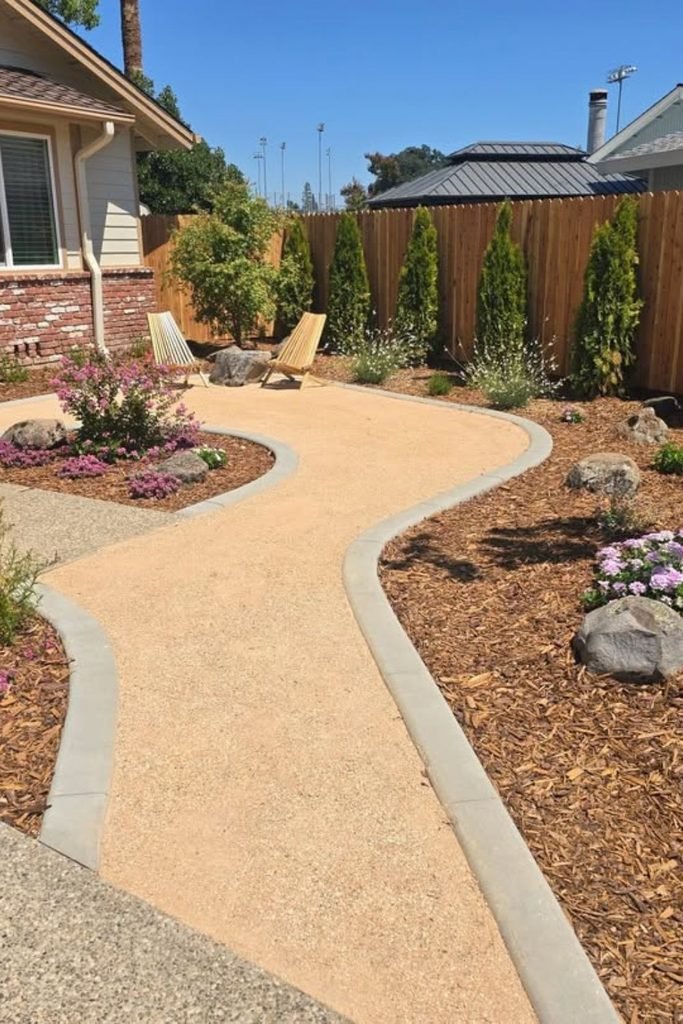
Mulched Courtyard
Remove the lawn completely when the front yard needs to work more like an easy outdoor living space.
A curved asphalt path with broad mulch beds on either side keeps most of the soil covered.
Scattered stones, small flowering perennials, and upright evergreens give character without dense planting.
This is good for small, enclosed yards where a patch of grass would be of little practical value.
Place chairs near the widest part of the path so the scenery is practical too.
@caligreen_landscaping
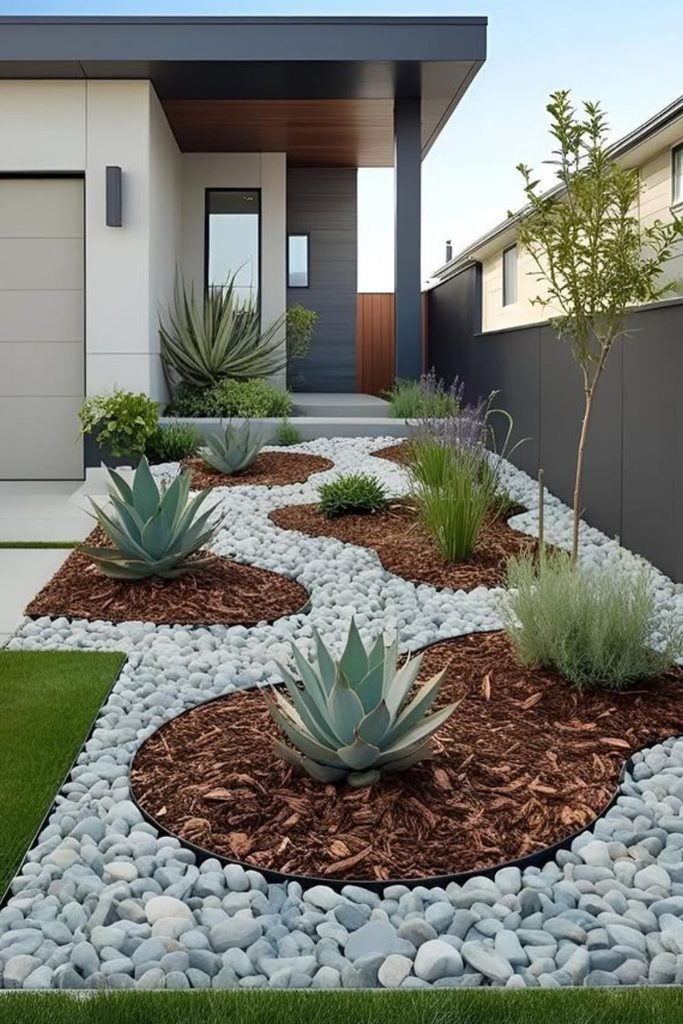
Mulch Circles
Separate individual plants into mulched pockets when you want the clean finish of decorative stone with out placing every root directly in gravel.
Curved metal edging may corral bark around agaves, lavender-like shrubs, decorative grasses and other drought-friendly plants.
Allowing each one space to flourish while the surrounding pebbles cover unused ground.
This arrangement works especially well in narrow modern front yards because it provides interest without creating a crowded flower border.
Group plants with similar water demands , make sure pockets are large enough for future growth and add organic mulch as it breaks down .
You don’t have vast sections of bare soil that promote weeds, but obtain clean planting spaces.
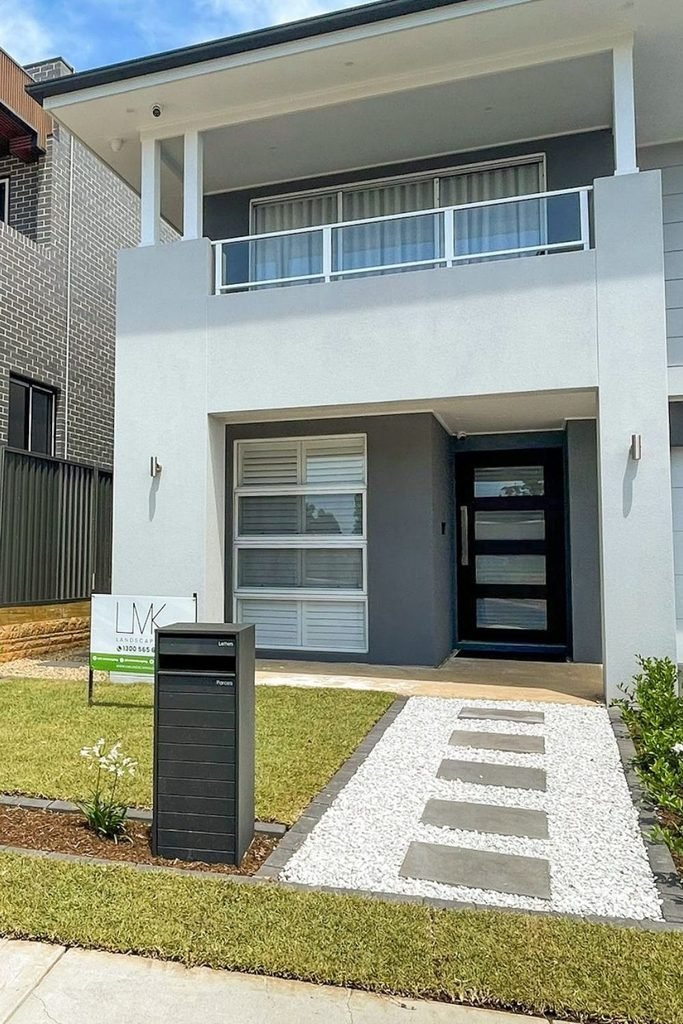
Gravel Walkway
Save the planting space for areas that actually add greenery instead of squeezing plants along every part of the entrance.
To provide a straight path from the sidewalk to the door, use rectangular stepping slabs set in beautiful gravel, leaving narrow beds on either side.
This is particularly effective in tiny front yards because a fully planted walkway would soon look overgrown and need additional weeding.
Use sturdy edging to stop pebbles from spilling onto the lawn. Mow the rest of the grass in simple shapes to make mowing easy.
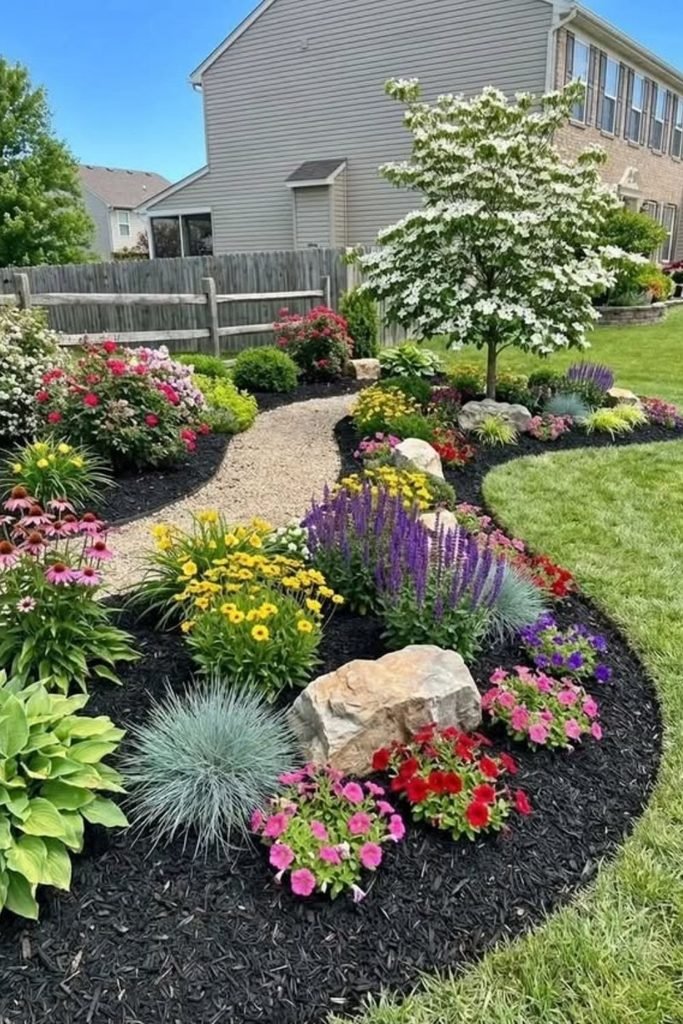
Perennial Sweep
Build your color around dependable perennials, and you can skip the yearly job of filling the entire front border with new flowers.
Use several hardy flowering kinds in generous drifts, then after the flowers are finished add in attractive grasses, compact shrubs, and a small ornamental tree.
Curved beds are ideal around an existing lawn, since they offer enough of room for planting without sacrificing all the grass.
As plants become established, cover soil with mulch and plant with spacing based on mature width so their foliage eventually plugs numerous weed-friendly.
Choose cultivars that require about the same amount of sun and watering to keep normal care straightforward.
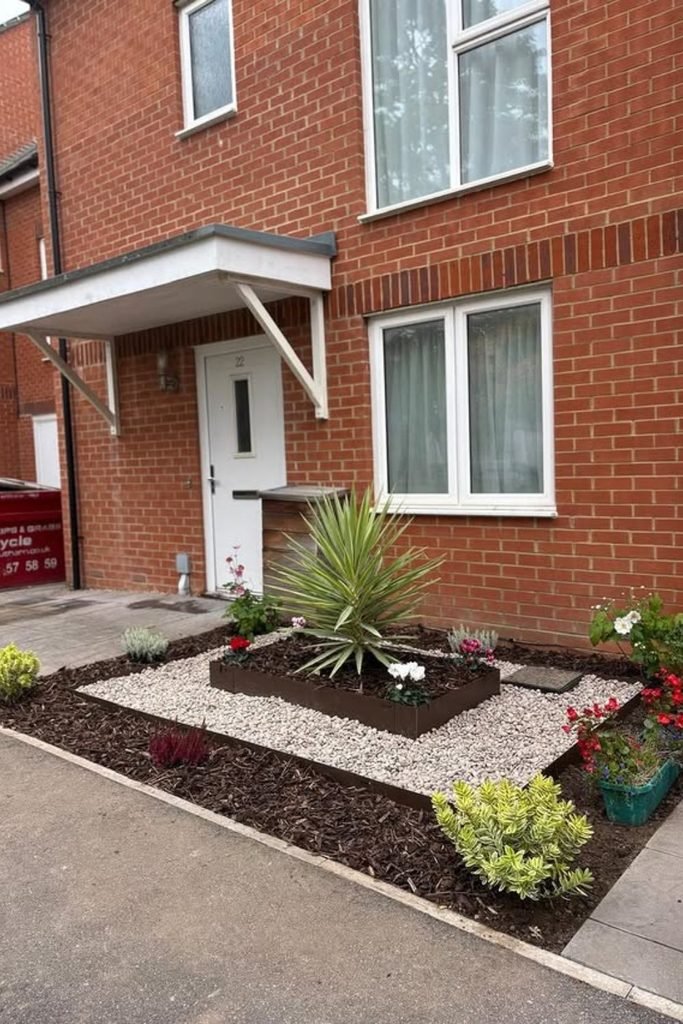
Framed Gravel
Give a tiny front yard a clear focal point instead of filling every corner with plants.
Create a low square platform around a sculptural evergreen. Fill the surrounding area with decorative gravel so the center remain visually strong.
Mulched strips around the outside can support compact shrubs and a few hardy floral plants, keeping most roots in the soil and limiting exposed land.
This pattern is especially good for townhomes, small driveways or asphalt front yards where grass isn’t practicable.
Boulder Border
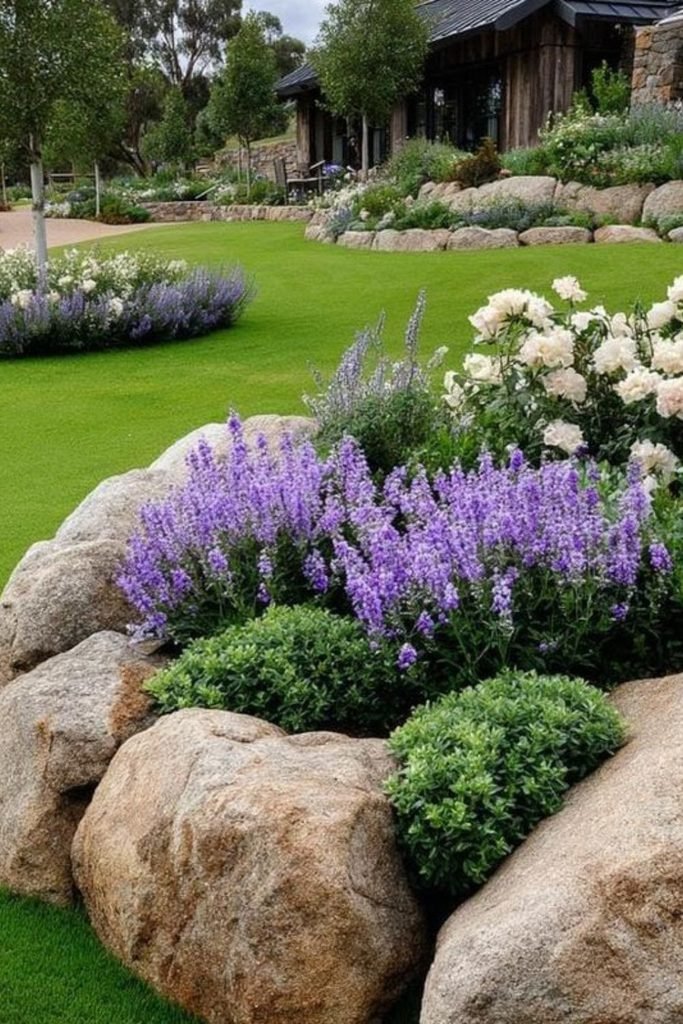
Use oversized boulders as a permanent garden edge when you want flower beds to feel full without relying on rows of high-maintenance plants.
Plant hardy perennials and compact evergreen shrubs in the gaps between the rocks, so that the mature foliage softens the gaps, and the stones give stability year-round.
This is especially effective on vast lawns, gently sloped yards or properties with a natural landscape style.
Instead, mix together a few long-blooming kinds rather than dozens of plants with varying care needs.
FAQs
What Makes A Front Yard Truly Low Maintenance?
Start by reducing jobs you have to repeat every week.
Keep lawn shapes simple cover bare soil with mulch or suitable groundcovers and choose plants that fit the space at maturity.
Hardy perennials, compact shrubs, and drought tolerant plants can also reduce replanting, pruning, and watering when matched to your local conditions.
How Often Should Low Maintenance Landscaping Need Regular Care?
Don’t expect “no work” but expect “occasional work. You may still need to pluck a few weeds, refill mulch, prune some plants, clean gravel.
A well-maintained front yard will cut down on those jobs, because plants, edging, ground covers and hardscaping are chosen to avoid maintenance problems.
