
22 Male Stitch Braids Ideas For 2026

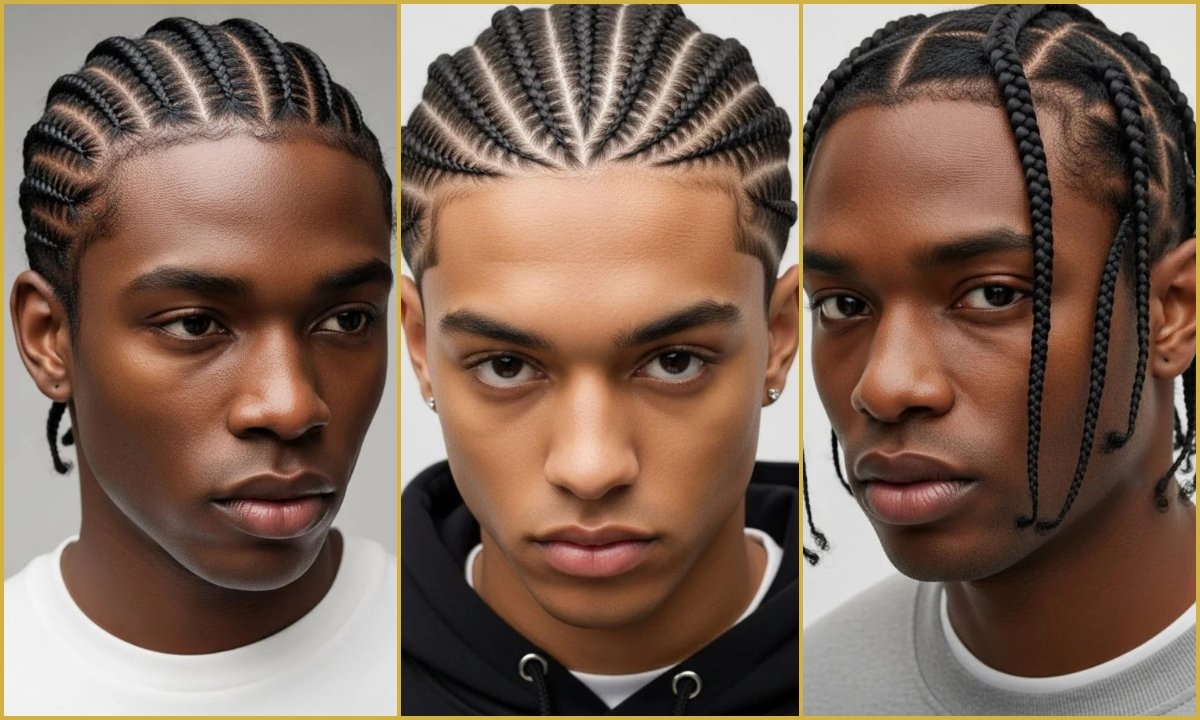
You’ve probably seen cornrows on Instagram and paused for a second, thinking they look clean… but wondering if they would actually work on you.
Maybe you feel like your hairline isn’t perfect, or you worry your hair isn’t long enough yet, or you’re afraid tight braids could mess with your edges and make things worse.
If you’ve ever had those thoughts, you should know that kind of confusion is completely normal.
Cornrows can either level up your whole look or highlight every weak spot in your hair, and that usually depends on how you get them and why you choose them.
In this article, you will discover 22 best male stitch braids ideas for 2026.
Contents
- 1 Is Cornrow Good For Men?
- 1.1 Angled Stitch Rows
- 1.2 Minimal Stitch Rows
- 1.3 Thick Stitch Rows
- 1.4 Clean Straight Stitches
- 1.5 Layered Stitch Cornrows
- 1.6 Stitch Braids with Beard Balance
- 1.7 Stitch Fade Cornrows
- 1.8 Precision Stitch Fade
- 1.9 Classic Stitch Cornrows
- 1.10 Wide Stitch Pattern
- 1.11 Leaf Stitch Pattern
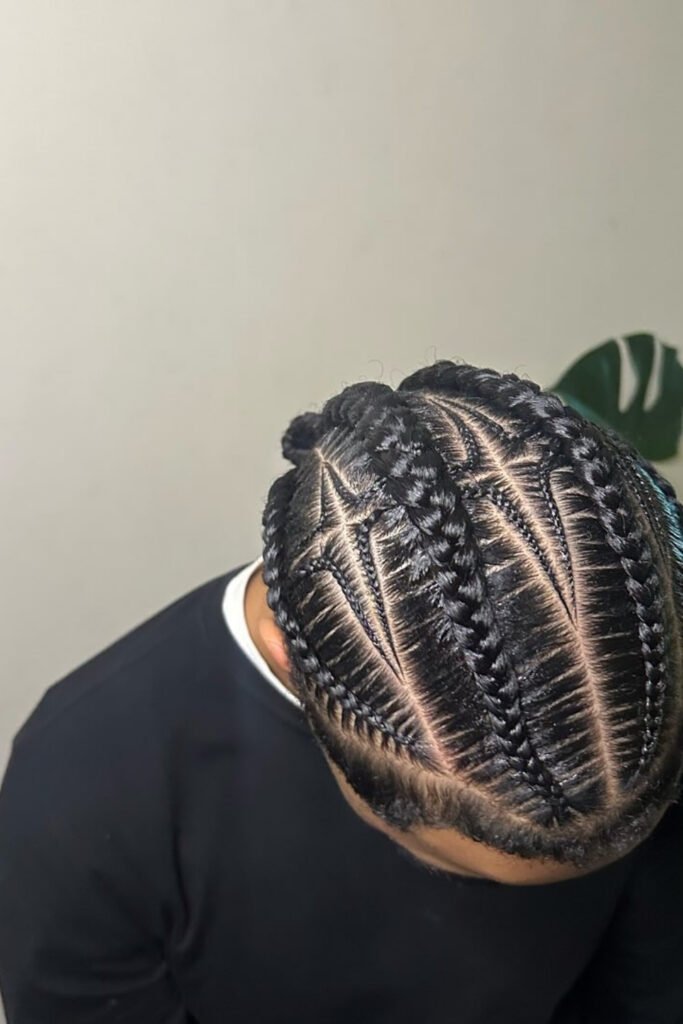
- 1.12 Zigzag Stitch Cornrows
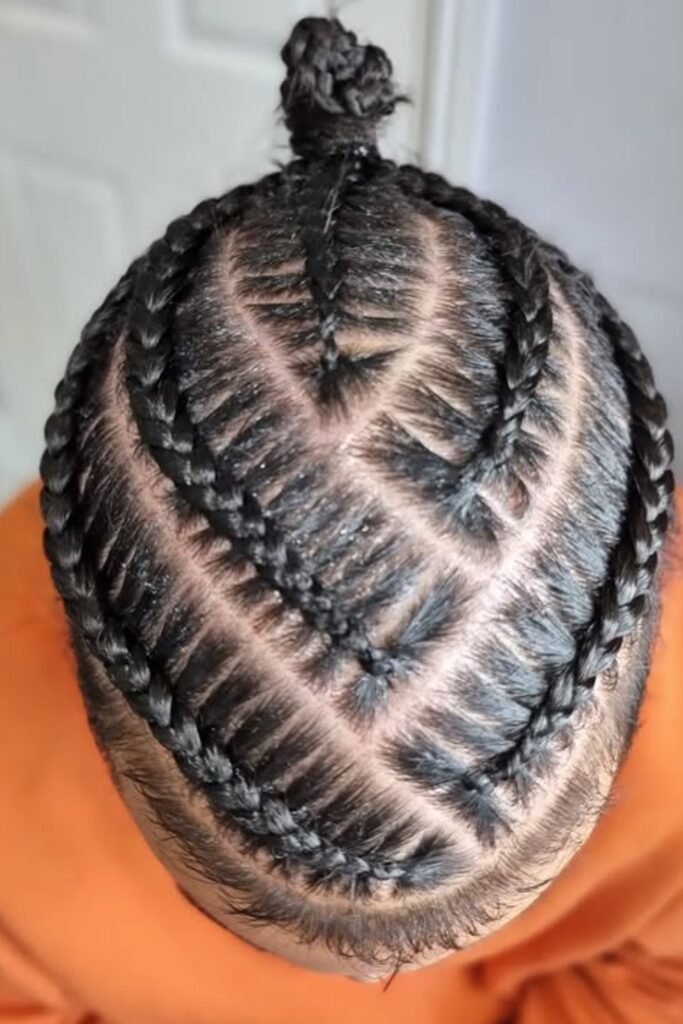
- 1.13 Chevron Stitch Bun
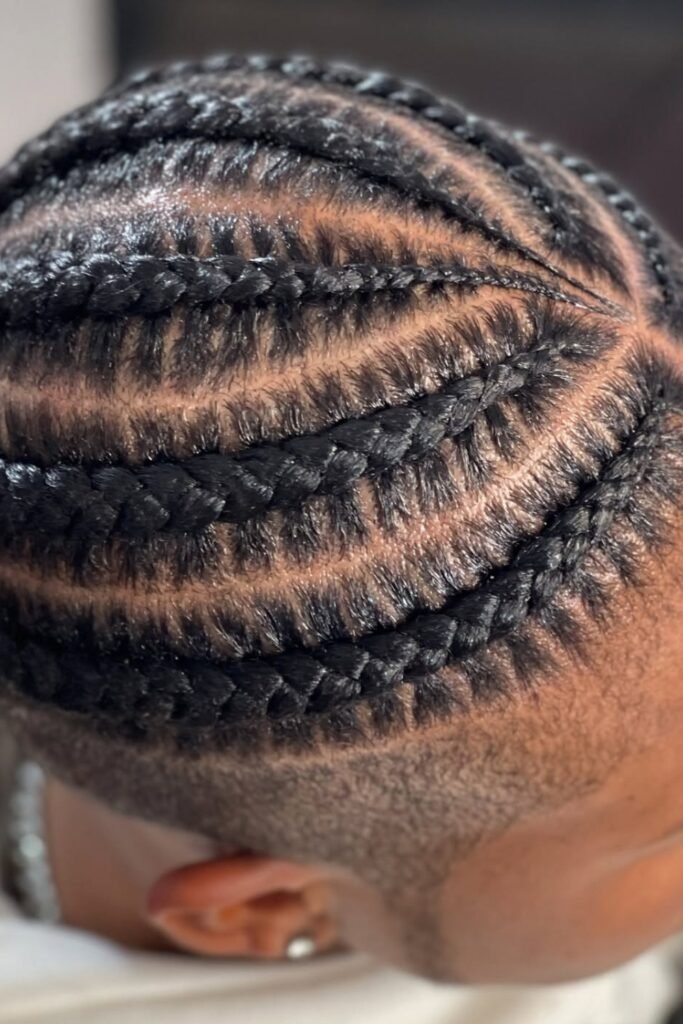
- 1.14 Side-Flow Stitch Cornrows
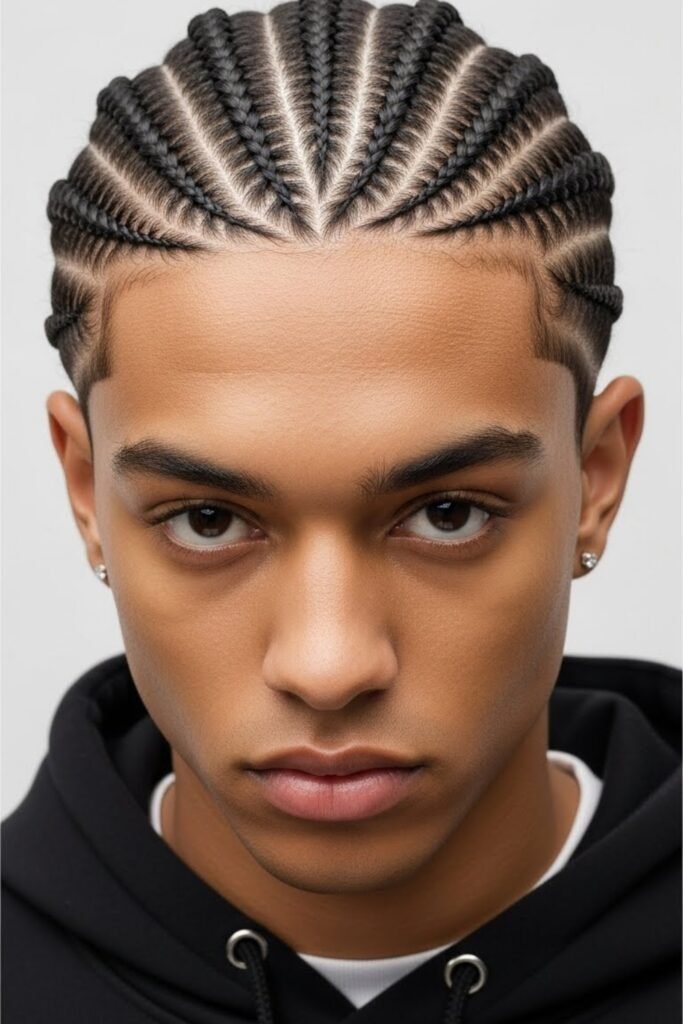
- 1.15 Stitch Braids with Center Focus
- 1.16 Tapered Stitch Cornrows
- 1.17 Spiral Stitch Cornrows
- 1.18 Swirl Stitch Cornrows
- 1.19 Low-Tension Stitch Braids
- 1.20 Crowned Stitch Cornrows
- 1.21 Low Fade Stitches
- 1.22 Stitch Braids for Active Lifestyle
- 2 FAQs
Is Cornrow Good For Men?
Yes, cornrows can be really good for you but only if you choose the right style and you get them done the right way.
When your hair is healthy and long enough, cornrows can give you that clean, low-maintenance look you want, the kind that stays sharp for weeks without much effort.
But when the braids are too tight or the pattern puts too much focus on your hairline, you might notice thinning or a big forehead standing out even more.
When you match the braid size, the parting, and the tension to your own hair type, you will see they can work for you instead of against you.
Angled Stitch Rows
If you want cornrows that look sharp without screaming for attention, you’ll probably like this pattern right away.
The angled stitch rows create movement across your scalp, which can help break up a strong forehead line and give you depth from every angle.
Minimal Stitch Rows
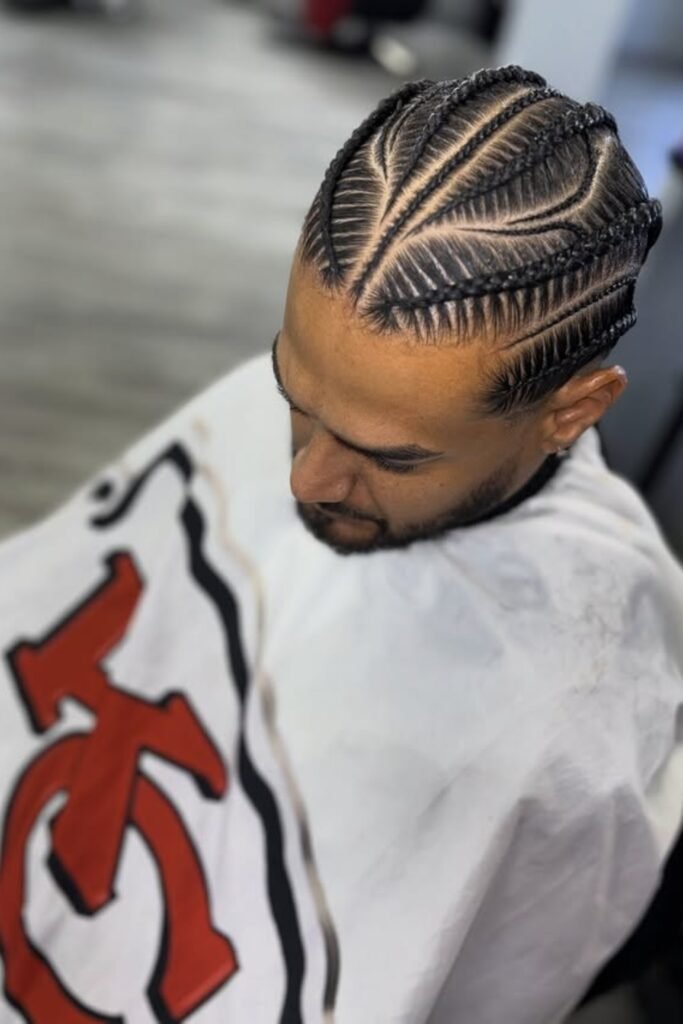
If you want a clean and mature look, minimal stitch rows can be the safest option for you.
This style uses fewer braids, so your scalp doesn’t feel overexposed and your haircut stays neat.
Thick Stitch Rows
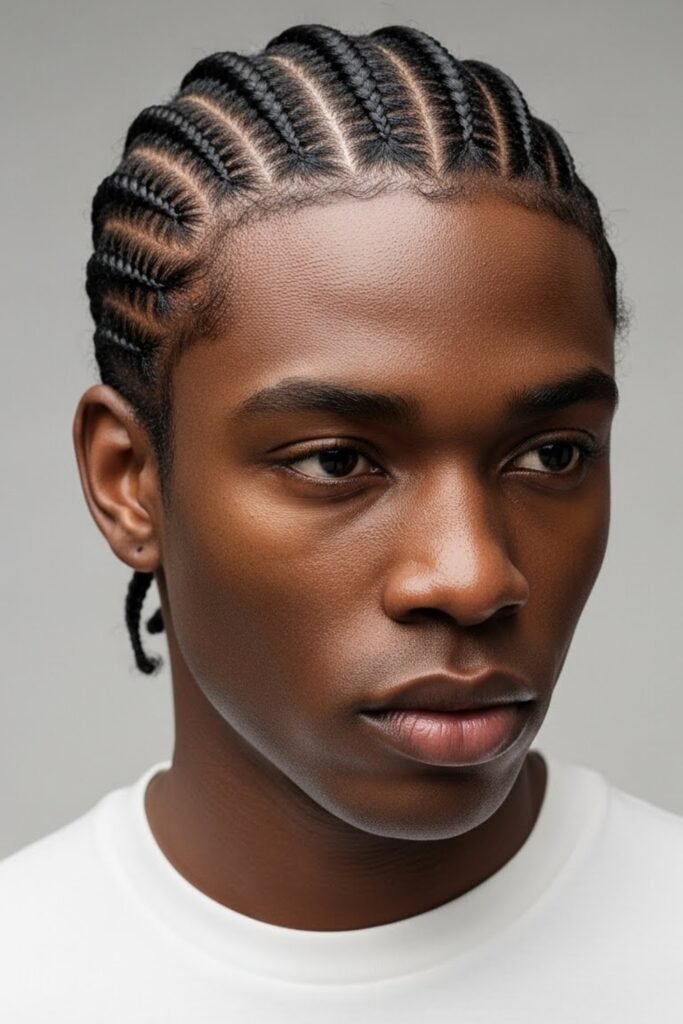
This style works when you want something bold but still controlled. If you have medium-to-thick hair and you stay active, this can work really well for you.
The thicker stitch rows give your hair more grip, so you can expect your braids to last longer and put less stress on your scalp compared to thin stitches.
Clean Straight Stitches
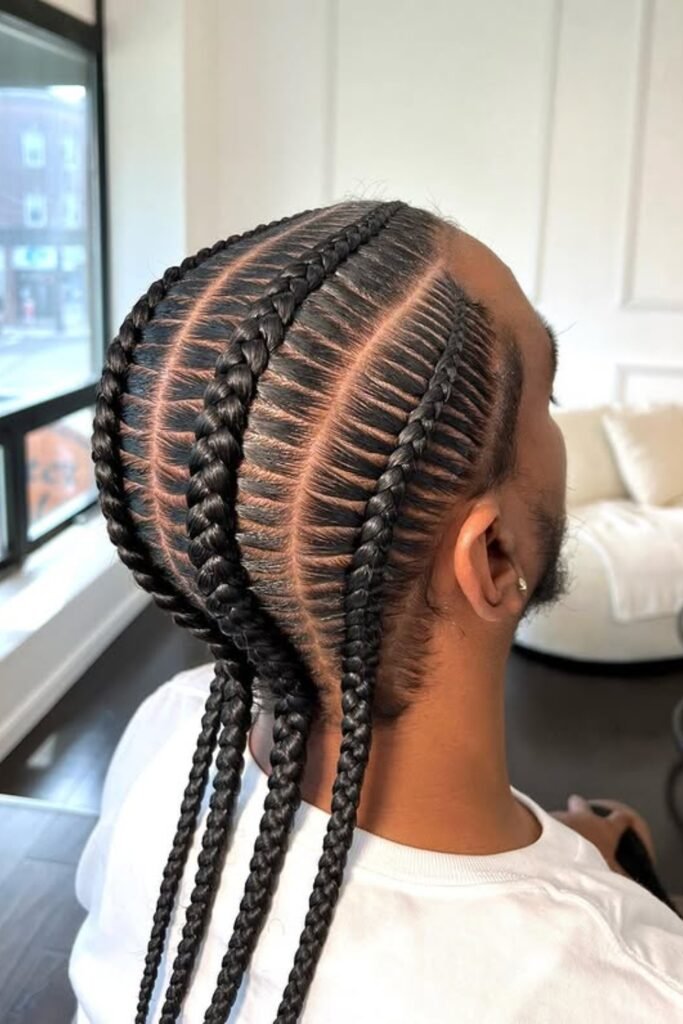
When you want cornrows that look sharp in any setting, this is usually the safest option for you.
The straight stitch pattern keeps everything balanced and symmetrical, which works best if your hairline is still solid and your density is even.
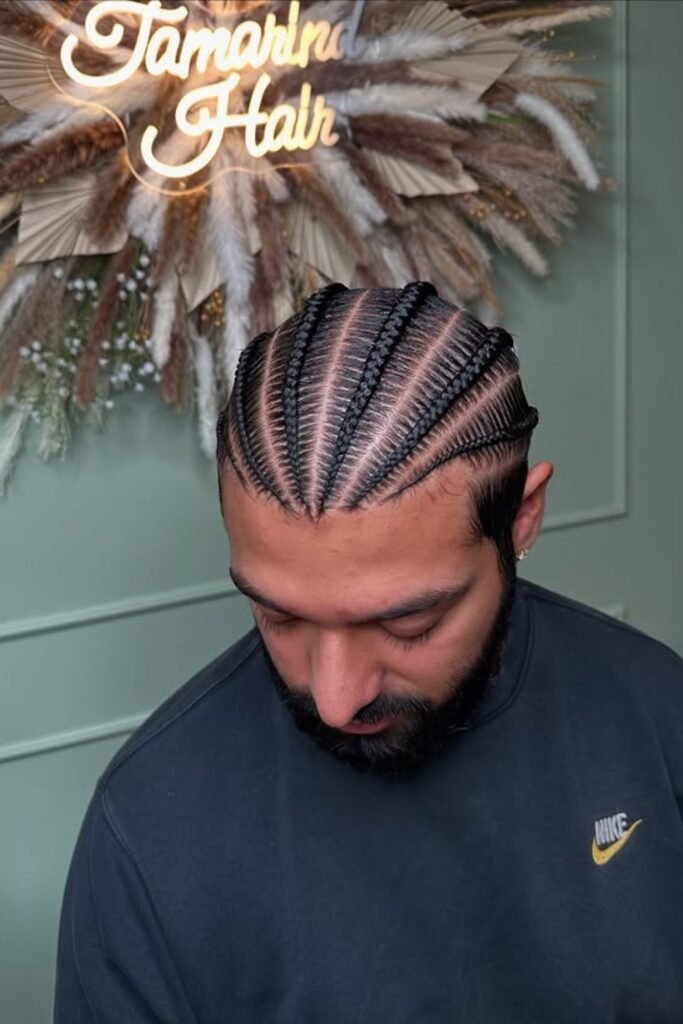
Layered Stitch Cornrows
The layered stitch pattern adds depth across your scalp, while the horizontal accent braid breaks the flow just enough to stand out.
If your hairline isn’t perfect, this can actually work in your favor because the curved parts pull attention away from the front.
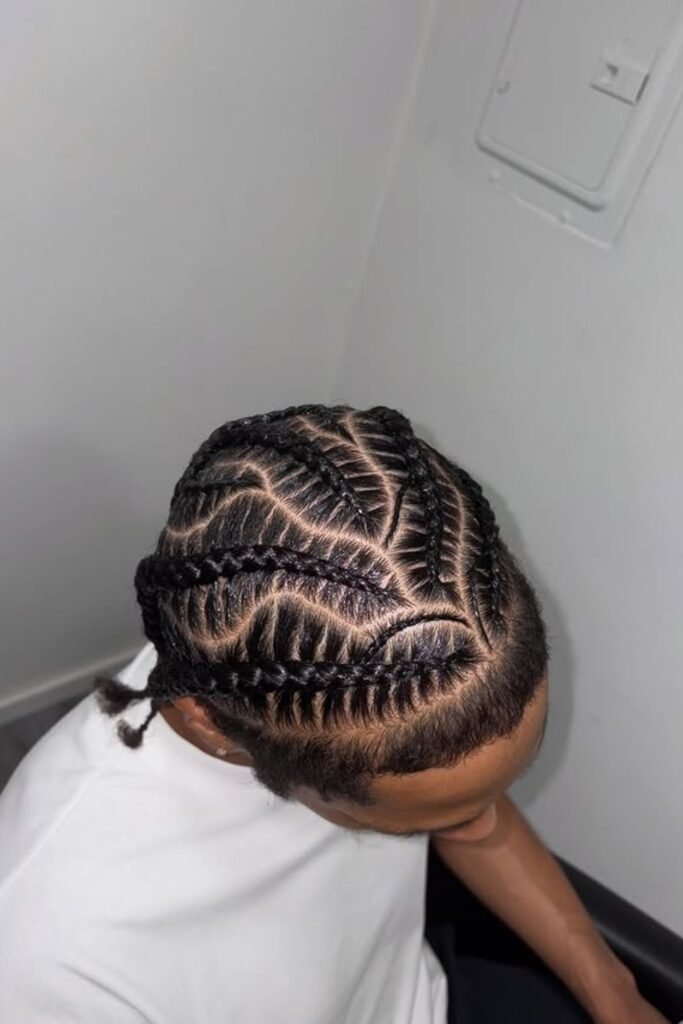
Stitch Braids with Beard Balance
When you have a full or well-shaped beard, your braids should match that strength.
You should avoid an overly sharp lineup because it can make your face look harsh.
If you combine natural edges with clean braids, you’ll get a confident, masculine finish.
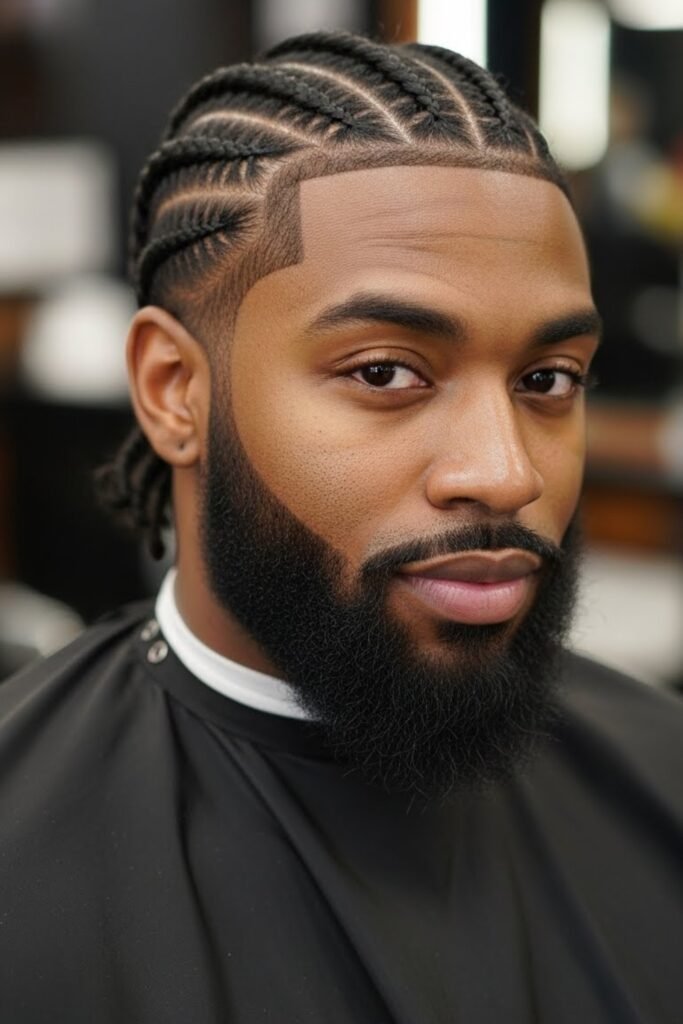
Stitch Fade Cornrows
If you want cornrows without committing to a full braided perimeter, this can be a smart option for you.
You should have your barber and braider work together: clean stitch parts on top, a low or mid fade on the sides, and a natural lineup that doesn’t push your hairline back.
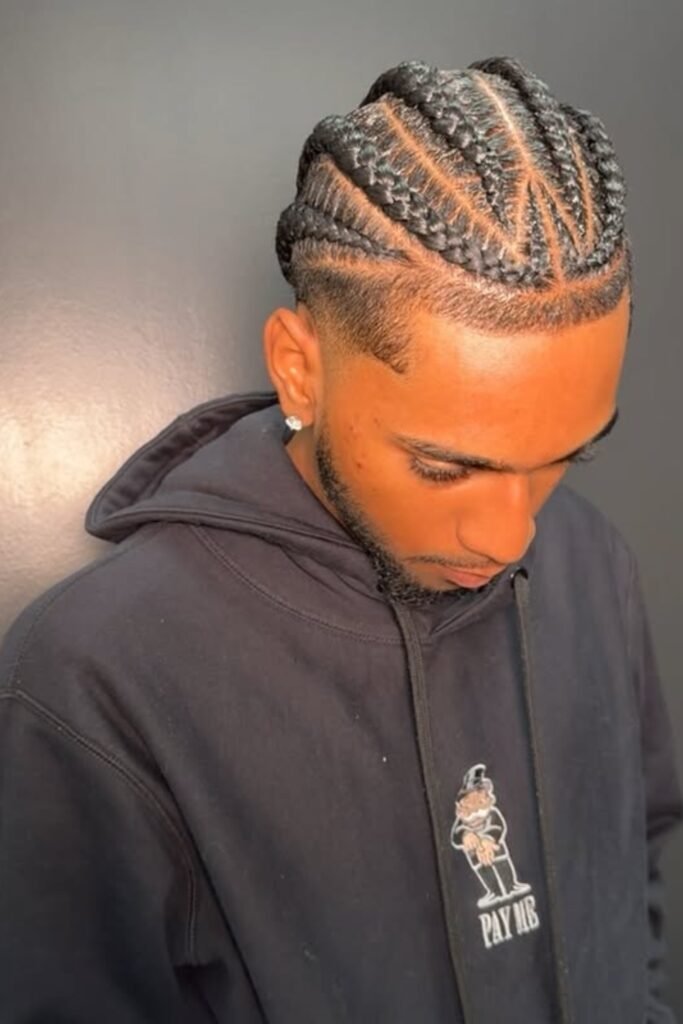
Precision Stitch Fade
When you want control over how bold your cornrows look, this style gives you that flexibility.
The sharp stitch pattern keeps everything defined, while the fade lightens the overall feel and takes pressure off your edges.
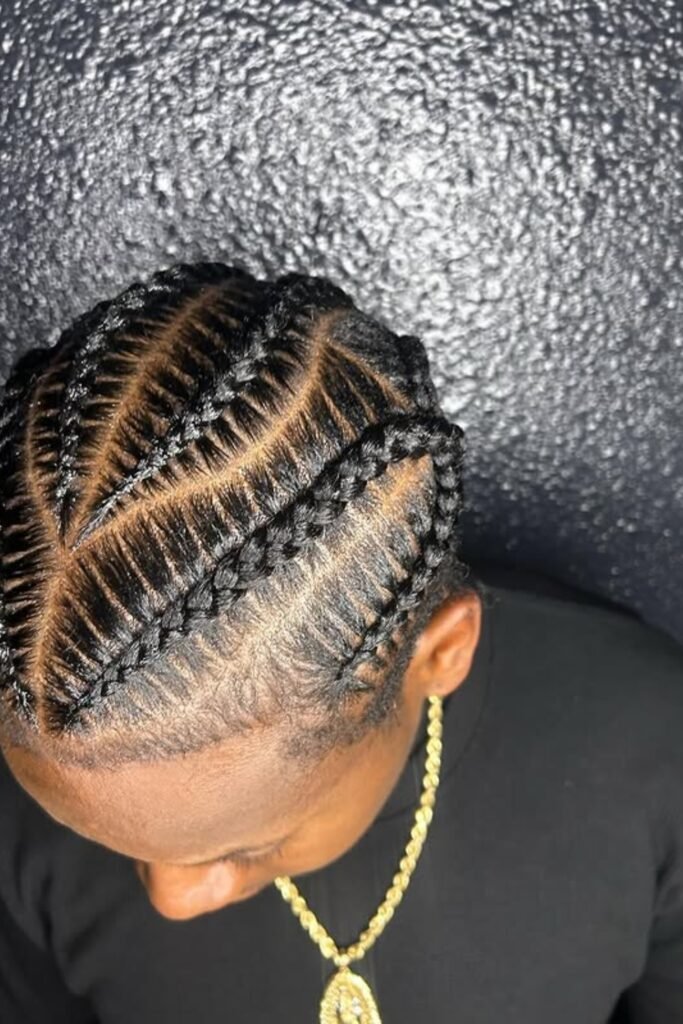
Classic Stitch Cornrows
The straight stitch cornrows run evenly from front to back, giving your head a balanced, symmetrical shape.
This works best for you if your hair density is consistent, because everything is fully exposed here.
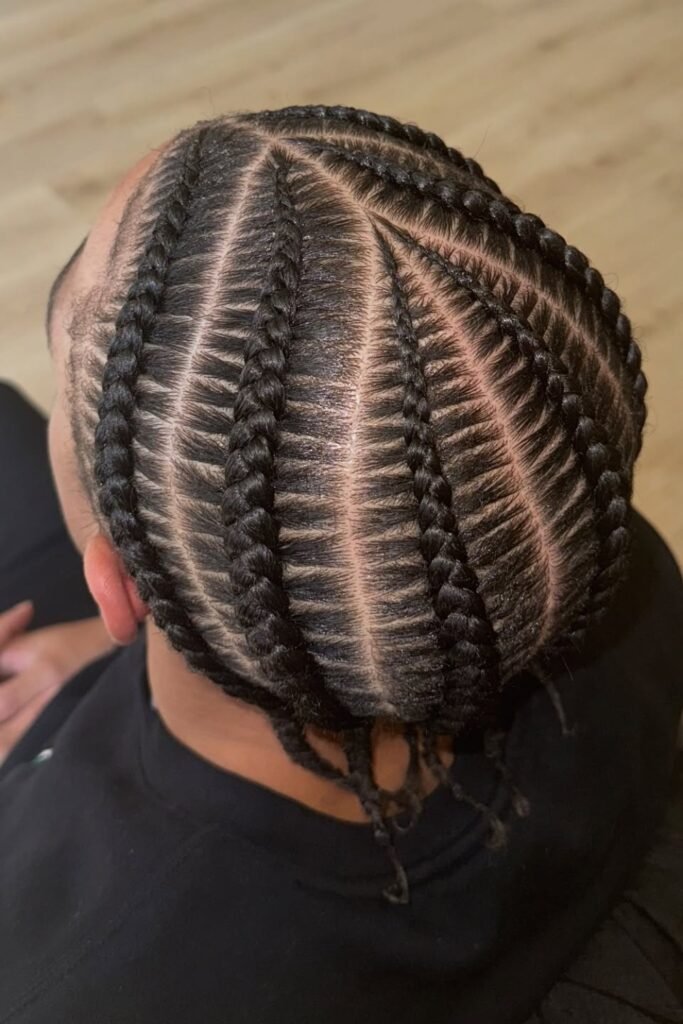
Wide Stitch Pattern
If your hair is thin or low-density, wider stitch braids can work really well for you.
You should tell your braider that you want fewer rows with wider sections so the style feels solid and natural.
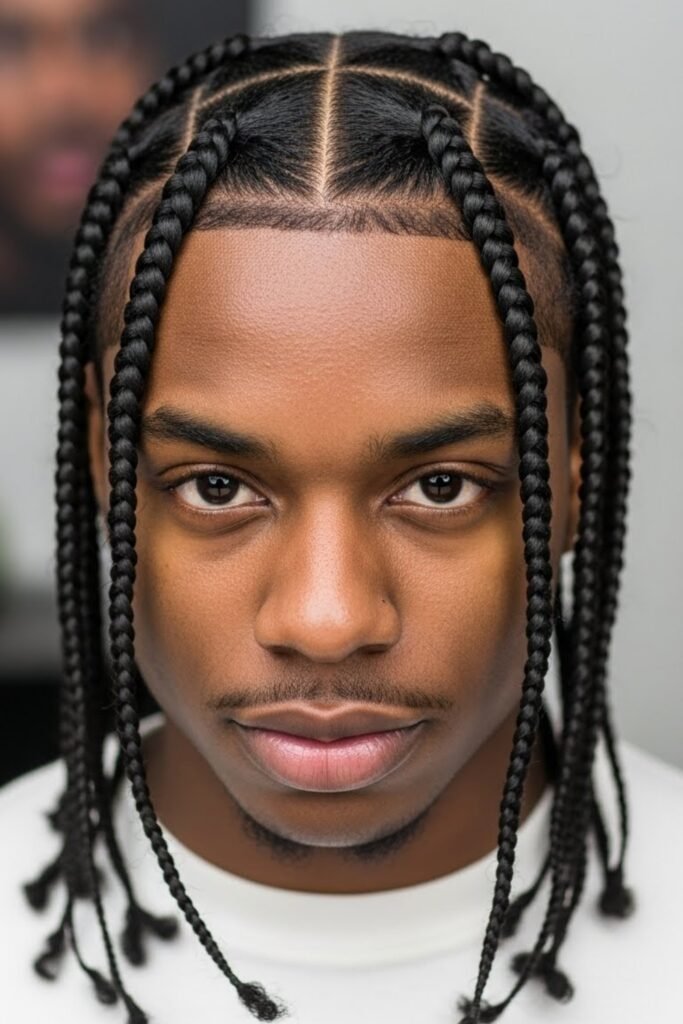
Leaf Stitch Pattern
If straight rows feel too plain or too exposing for you, this design can add character without feeling forced.
The leaf-style stitch pattern creates natural breaks in the rows, which can help disguise uneven density and pull attention away from your hairline.
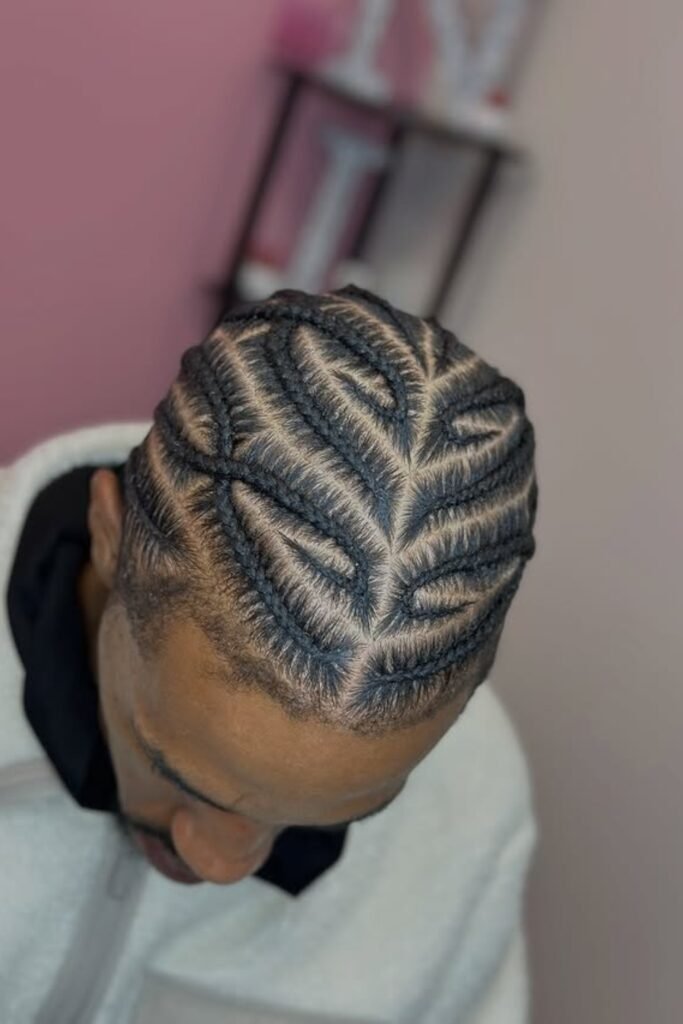
Zigzag Stitch Cornrows
The zigzag stitch parting breaks up straight lines, which can help hide uneven density and make your hair look fuller from the top.
You should ask for clean zigzag stitch parts with medium-sized rows and steady tension, then keep your edges natural so the design stays in focus.
Chevron Stitch Bun
The chevron stitch pattern adds texture and movement across your scalp, while the braids finishing into a small bun help you keep everything controlled and practical.
This works well for you if you want cornrows but still like tying your hair up for work or workouts.
Side-Flow Stitch Cornrows
If you want cornrows with movement, this can be a strong option for you, especially when paired with a low fade.
You should ask for medium stitch rows with angled parting and even tension that follows the natural curve of your head.
Stitch Braids with Center Focus
This design works for you if you want to pull attention away from your hairline and toward the center of your head.
A strong stitch pattern starting in the middle can create structure across your scalp.
Tapered Stitch Cornrows
The stitch cornrows are laid in a controlled, slightly angled flow, while the low taper on the sides keeps everything sharp and easy to wear daily.
If you like braids but still want that haircut feel around your ears and neckline, this can work really well for you.
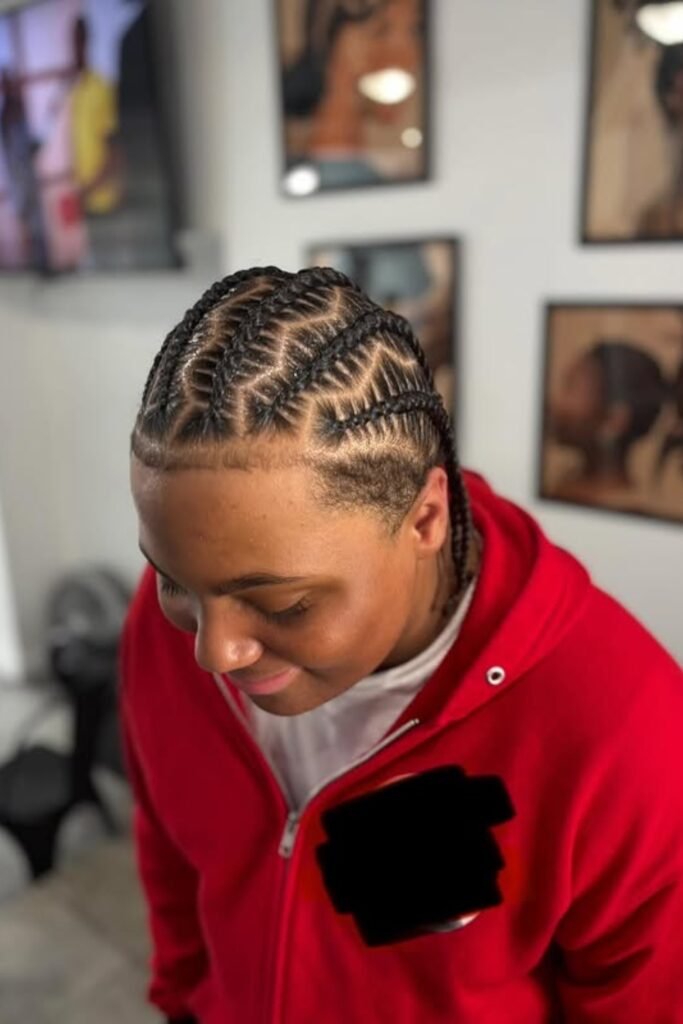
Spiral Stitch Cornrows
The spiral stitch pattern pulls the rows around your head instead of straight back, which makes the look more dynamic and can soften sharp hairlines or temples.
It usually works best when you pair it with a low or mid fade, so the design stays clean from the side.
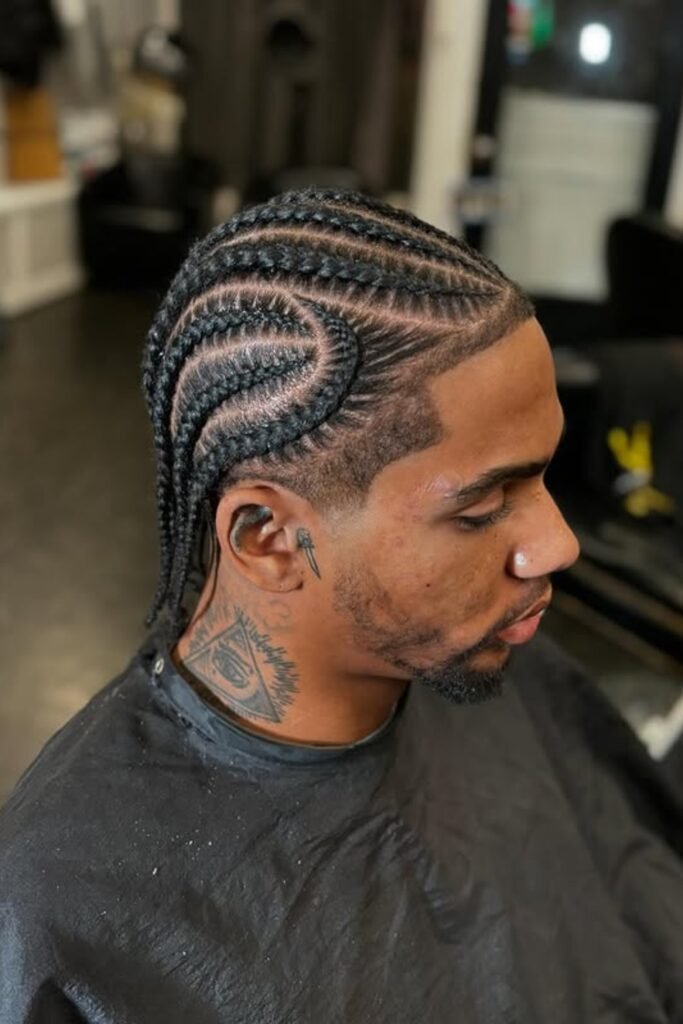
Swirl Stitch Cornrows
The swirl stitch pattern wraps around your head, creating a circular flow that adds depth and can make your hair look fuller from every angle.
If your hairline isn’t perfectly straight, this style can really help because the curves pull attention away from the front.
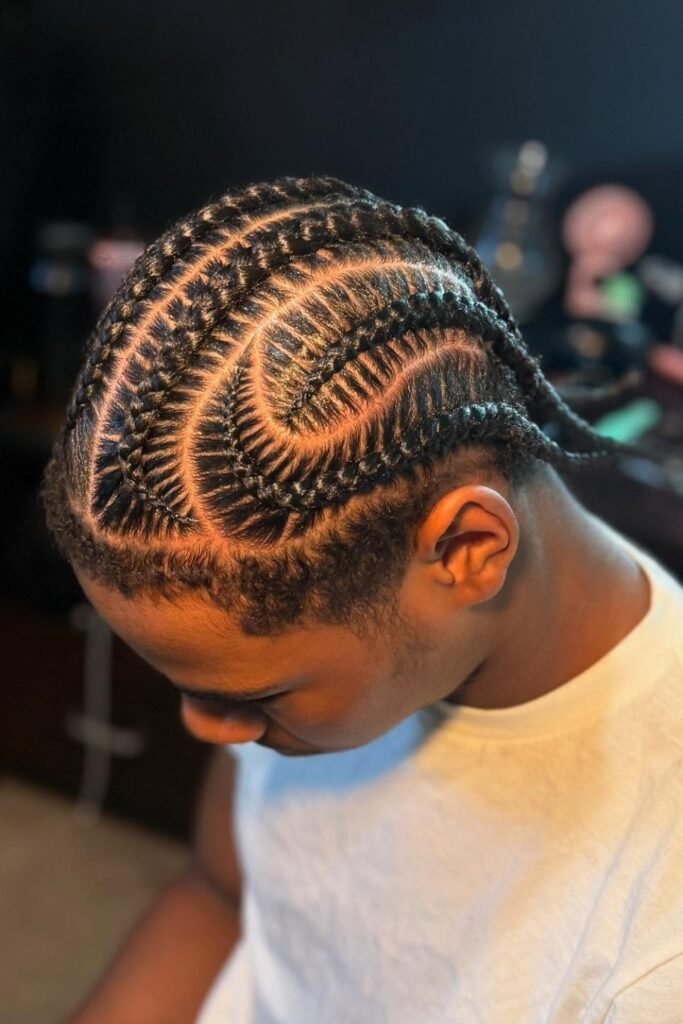
Low-Tension Stitch Braids
Not everyone can handle tight braids, and tight doesn’t always mean better. This is especially useful if you plan to keep your braids in for a longer time.
You should make sure your braids are neat and secure, but never painful or pulling at the roots.
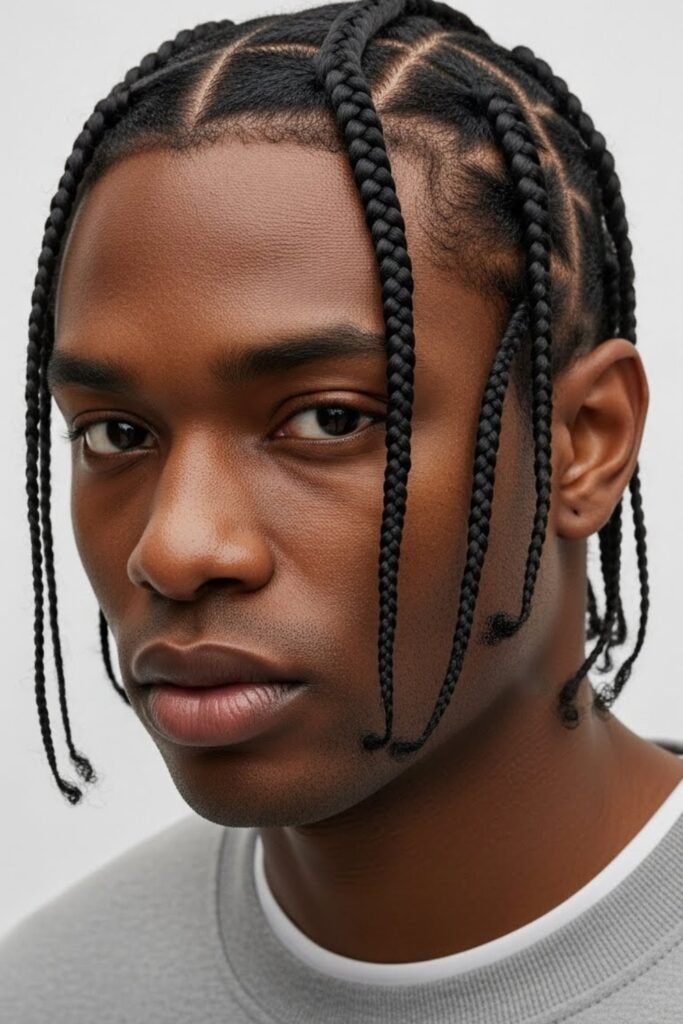
Crowned Stitch Cornrows
If you want structure right where it matters most, this style focuses on the top and front of your head.
You should ask for curved stitch parts that narrow toward the center, medium braid thickness, and controlled tension so your scalp stays visible but comfortable.
Low Fade Stitches
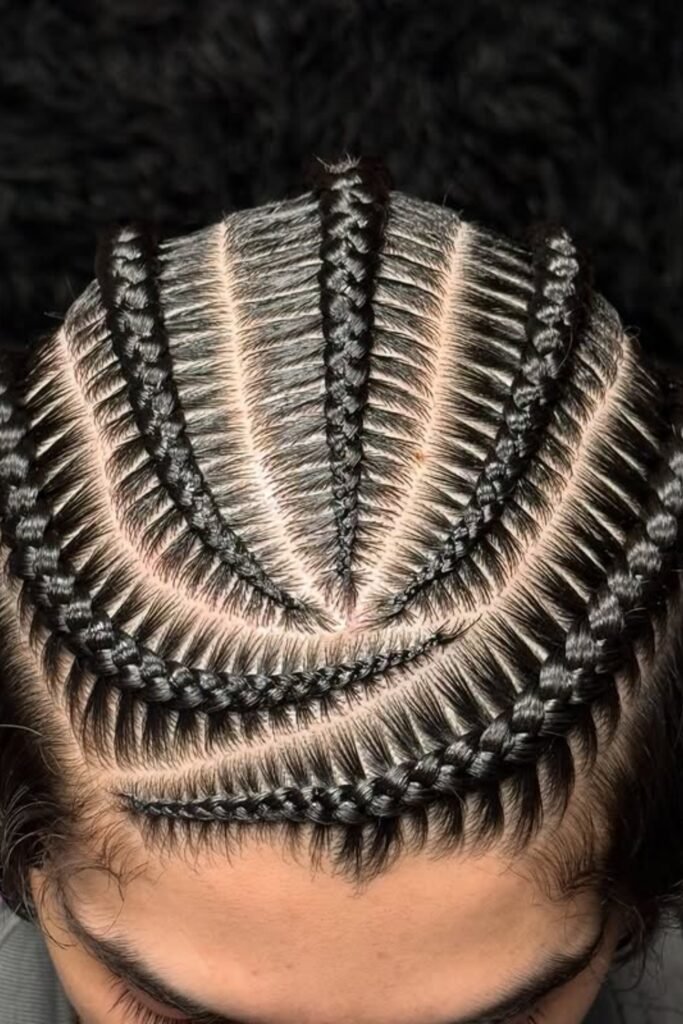
The stitch cornrows stay clean and controlled on top, while the low fade around the sides keeps your haircut light and sharp.
It works especially well if you want braids but don’t like a bulky feel around your ears or temples. The fade can also help reduce tension near your hairline.
Stitch Braids for Active Lifestyle
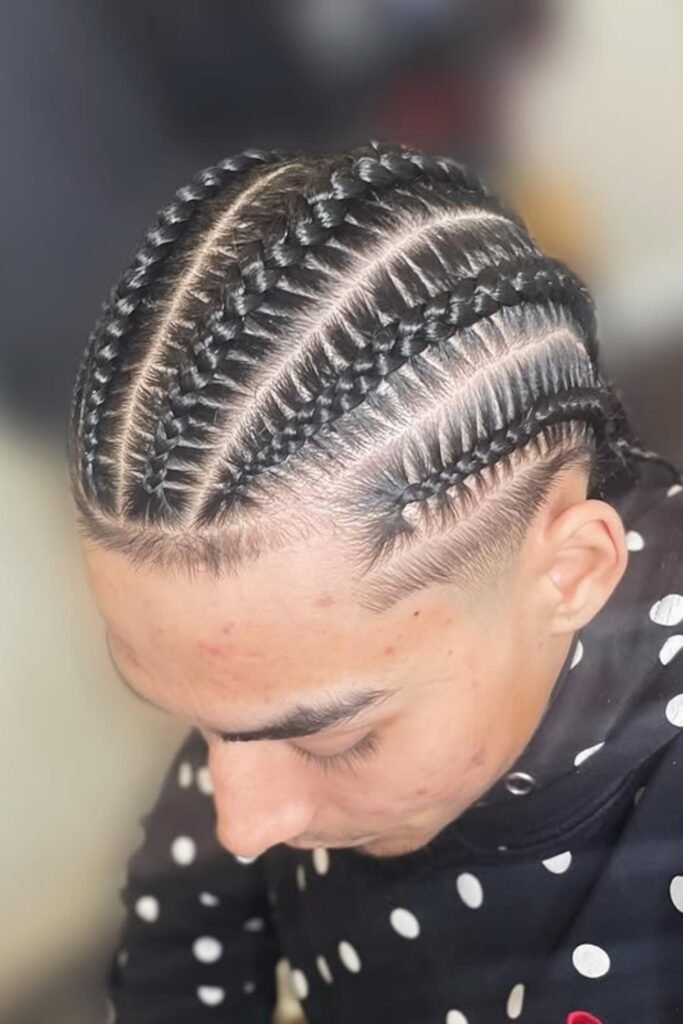
If you work out often or sweat a lot, simple stitch braids are probably the smarter choice for you.
You should also oil your scalp regularly and wear a drag at night to make sure your style lasts without looking messy.
FAQs
Do cornrows damage men’s hair?
Cornrows don’t have to damage your hair if you do them right.
Your problems usually show up when your braids are too tight, when you add heavy extensions, or when you keep the style in for too long without proper care.
If your scalp feels sore or your hairline looks pulled back, that’s your body telling you the tension is wrong.
When you get your cornrows done with proper spacing, moderate tension, and you moisturize regularly, you will see that cornrows can actually protect your hair instead of harming it.
How long should men keep cornrows in?
Most men should keep their cornrows in for about two to four weeks. After that, new growth and frizz can start putting extra stress on your roots.
If you sweat a lot or work out often, you should consider taking them out closer to the two-week mark.
When you remove them on time, you will help prevent breakage and keep your hairline healthy.
You may like to read!
