
20 Mullet Hairstyle Men Ideas for 2026

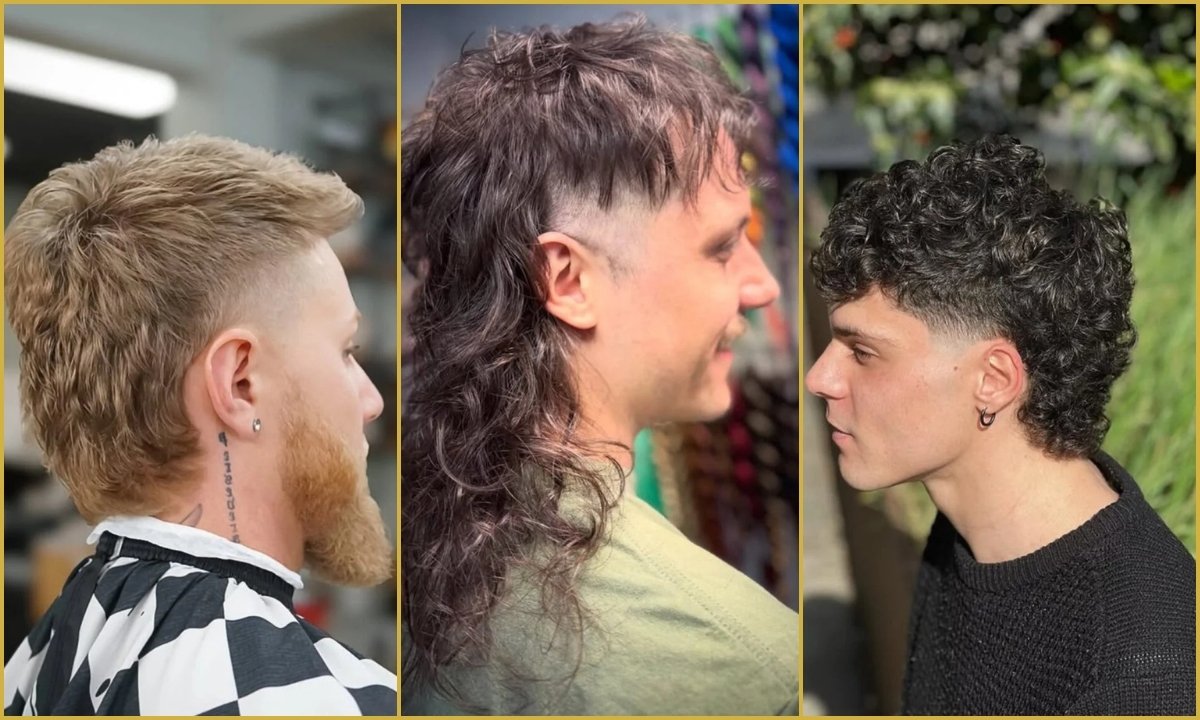
You scroll through mullet photos and you think, some of these look great but how do you avoid ending up with the wrong one? That’s where you usually get stuck.
When you start thinking about a mullet, you realize you can look sharp or you can look completely off, and you’ll notice the difference often comes down to one simple thing.
If you choose a cut that doesn’t match your hair, your face, or your lifestyle, you’ll feel it right away.
Most guides don’t help you with that; they just show pictures and leave you guessing what you should pick.
In this article, you’ll learn which mullet cut actually suits you, and I will also share 20 mullet ideas you can try.
Let’s jump in!
Contents
- 1 Which Mullet Cut Is Best?
- 1.1 Low Fade Mullet
- 1.2 Textured Blonde Mullet
- 1.3 Long Curly Mullet
- 1.4 Curly Taper Mullet
- 1.5 Subtle Taper Mullet
- 1.6 Classic Curly Mullet
- 1.7 Curly Fade Mullet
- 1.8 Short Textured Mullet
- 1.9 Soft Fade Mullet
- 1.10 Curly Beard Mullet
- 1.11 Two-Tone Shag Mullet
- 1.12 Tight Fade Curly Mullet
- 1.13 Voluminous Curly Mullet
- 1.14 Loose Wave Mullet
- 1.15 Low Fade Curly Mullet
- 1.16 Soft Flow Mullet
- 1.17 Tapered Wave Mullet
- 1.18 Slick Back Mullet
- 1.19 Spiky Burst Mullet
- 1.20 Textured Modern Mullet
- 2 FAQs
Which Mullet Cut Is Best?
There isn’t one best mullet cut for everyone, and you’ll notice that pretty quickly.
The best mullet is the one that matches your face shape, your hair type, and how you live day to day.
If you ignore even one of these, you can feel how the haircut starts to look forced instead of natural, and you’ll know it doesn’t really fit you.
Start with your face shape, because this is where you can balance everything. If your face is round, you’ll want shorter sides and a bit of height on top so you can create balance.
If you keep too much bulk on the sides, you’ll see how your face starts to look wider than it should.
If your face is long or sharp, you can keep more length and texture, because your features can handle it and you won’t feel overwhelmed by the cut.
Then you look at your hair type, because your hair will decide how the mullet behaves. If you have straight hair, you’ll need layers, otherwise you’ll notice the back can look flat and lifeless.
If you have wavy or curly hair, you already have movement, so you should focus more on control.
When you shape the sides and clean the neckline, you can make sure your mullet looks intentional and not messy.
Your lifestyle matters more than you might think.
If you work in a professional setting, you’ll usually want a softer or modern mullet with a taper, because you can keep the front and sides clean and still feel confident at work.
If you’re into street style or creative work, you can push the length and texture further, and you can let the mullet show more personality.
Low Fade Mullet
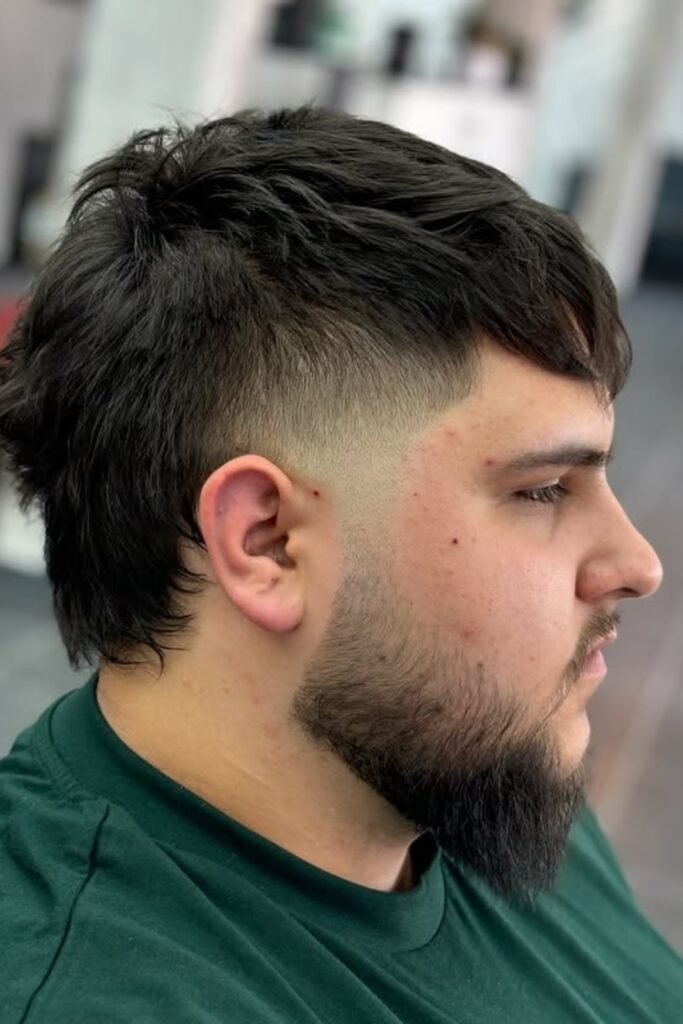
If you want a mullet that feels modern without looking extreme, this is where you usually land.
You get that clean low fade, and you’ll notice how it keeps the sides tight and sharp, so you don’t end up looking messy.
When you have thick hair, you can really benefit because you remove bulk around your ears and jaw.
If you ask your barber for a low skin fade, you can keep texture on top and controlled length in the back, so you show contrast without going too far.
Textured Blonde Mullet
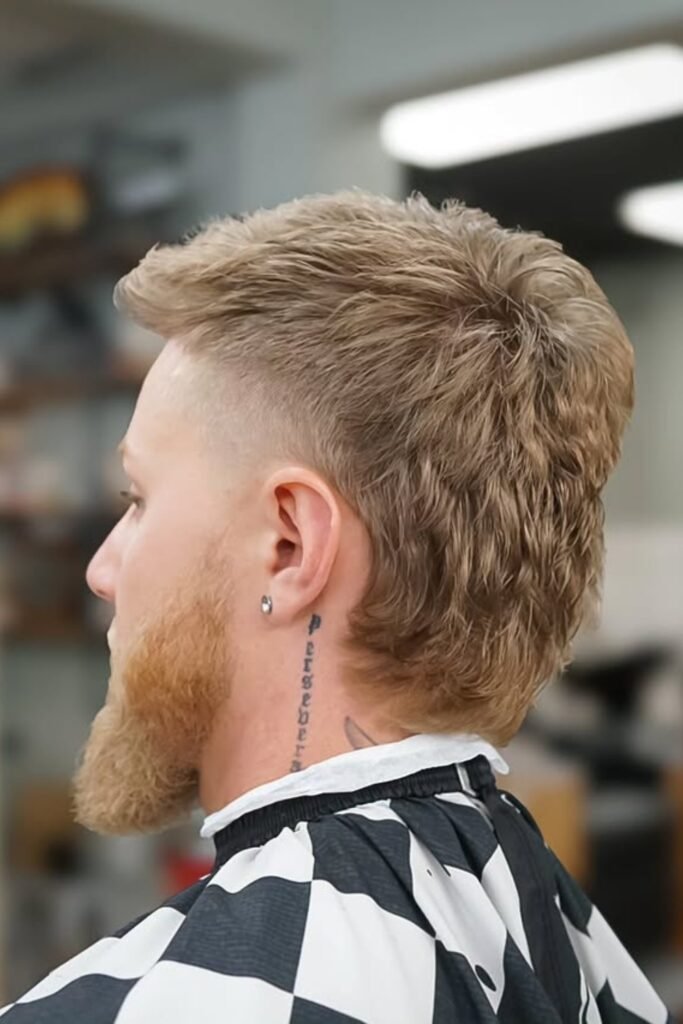
If you want volume but you don’t want sharp fades, this version gives you that balance.
You keep the sides shorter, but you avoid skin fades, so you get a softer, more natural feel.
When the textured top blends into a layered back, you’ll see how the whole shape flows instead of looking broken.
If your hair is thick or slightly wavy, you can ask for scissor work on top and layers in the back, not heavy clipper lines.
Long Curly Mullet
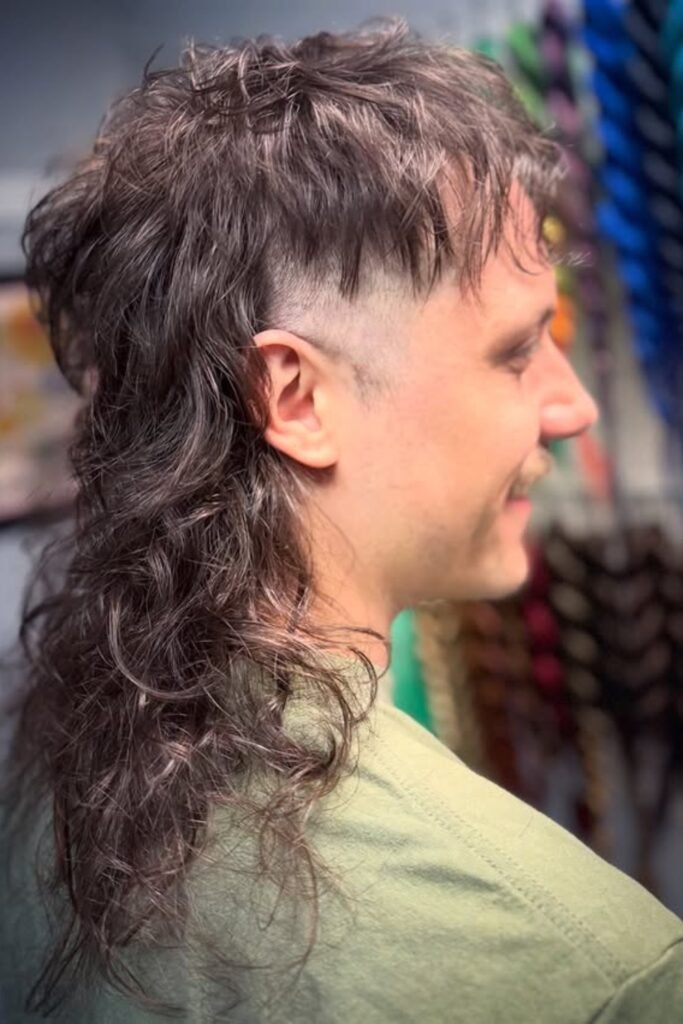
If you’re ready to go all in, this is how you can do it properly. You keep the sides tight with a fade, and you let the long back take the spotlight.
When you already have curls or waves, you’ll love how much movement you get. If your hair is straight, you might struggle without styling.
When you recreate it, you can keep a mid fade on the sides and let the back grow past the collar, then you use curl cream so you stay controlled, not frizzy.
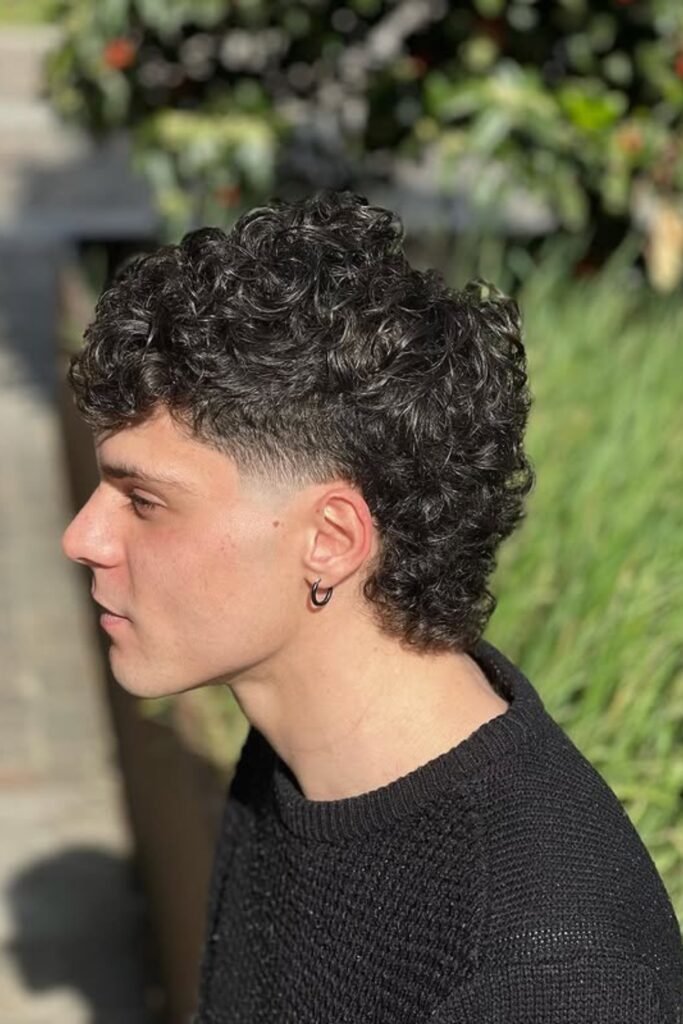
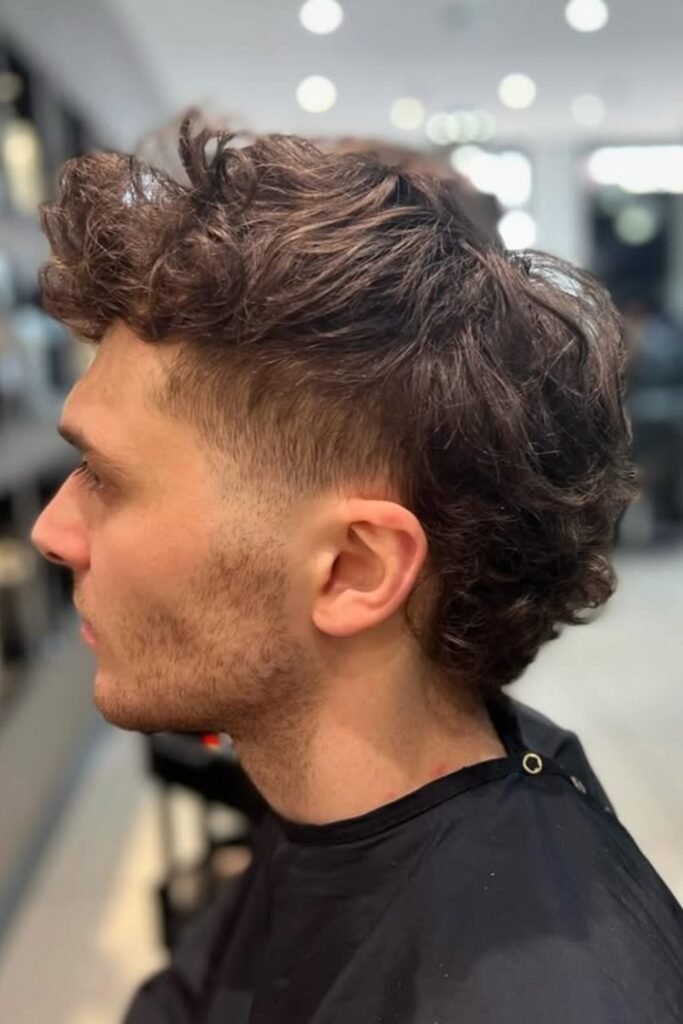
Curly Taper Mullet
If your curls are your strongest feature, you shouldn’t hide them, you should shape them.
You keep a tight taper on the sides, and you let the curls on top and in the back stay full.
When you want texture without mess, this works in your favor. If you ask for a low taper instead of a high fade, you’ll get a smoother transition.
When you use a light curl cream and let it air dry, you keep volume without losing control.
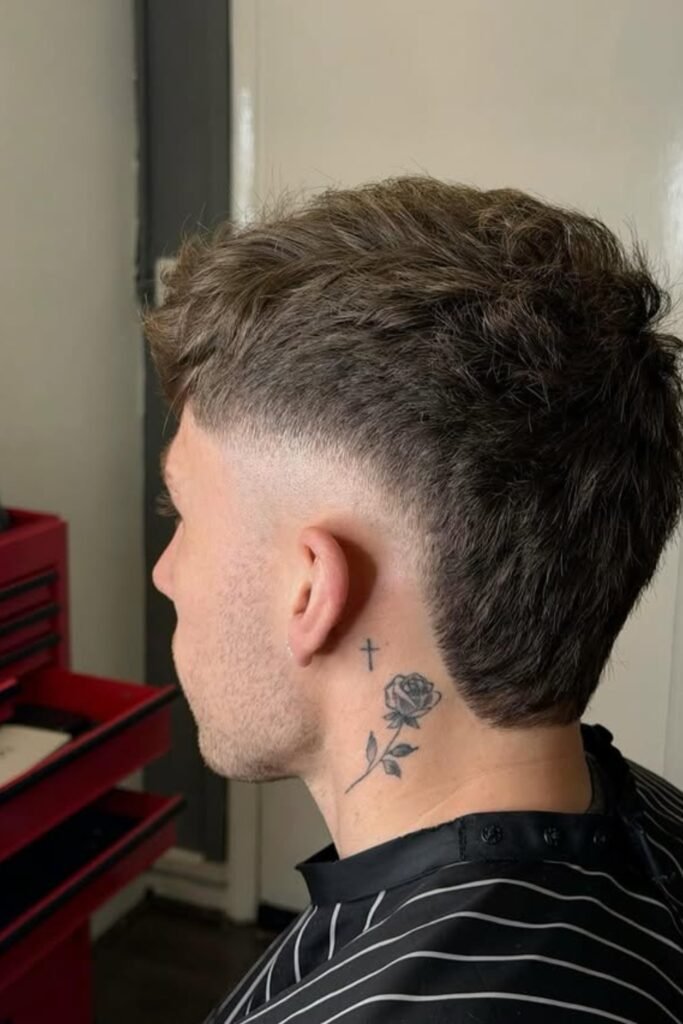
Subtle Taper Mullet
If you don’t want drama, you don’t need to force it.
You keep a soft taper on the sides, and you let the back stay just long enough to show shape.
When you’re testing the mullet waters, this is a safe place for you to start.
If you ask for a low taper and a natural neckline, you’ll get a cut that grows out clean and still feels office-friendly.
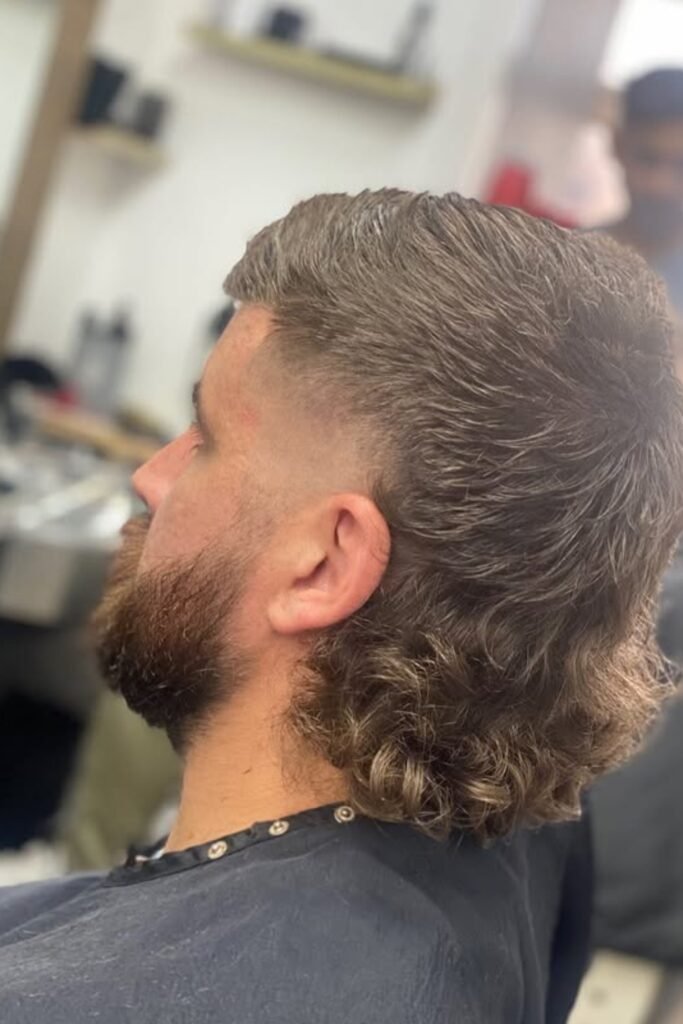
Classic Curly Mullet
If you like timeless styles, you’ll feel at home here.
You sharpen your profile with a tight fade on the sides, and you let your natural curls define the back.
When your hair curls naturally, you can lean into it instead of fighting it.
If you ask for a mid fade and keep length at the nape, then brush the top slightly back, you’ll get structure without stiffness.
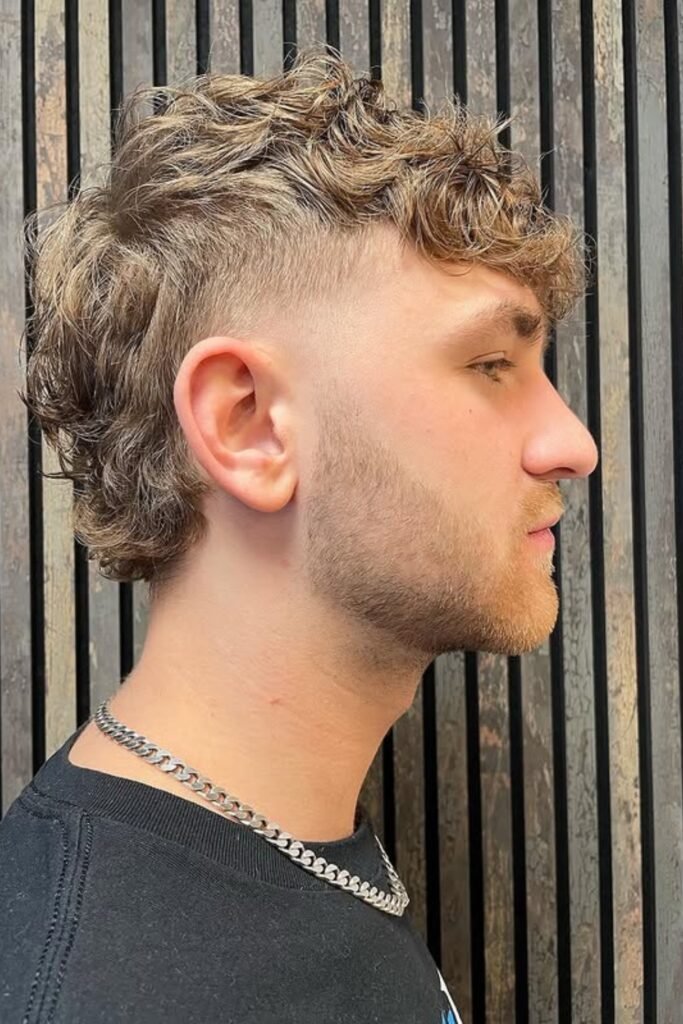
Curly Fade Mullet
When you mix tight curls with a clean fade, you get something sharp but full of personality.
You remove weight around the temples with a higher fade, and you let the curls on top and in the back stand out more.
If your hair is thick and textured, this can really work for you.
When you ask for a mid-to-high fade with layered curls, you can finish with curl cream and scrunch for separation.
Short Textured Mullet
If you like a clean front but you still want that mullet feel, this balance works well for you.
You keep the fringe blunt and structured, and you let the back stay longer without going extreme.
When your hair is straight or slightly thick, you can manage this easily.
If you ask for a low fade, texture on top, and a layered back, you’ll avoid that heavy look.
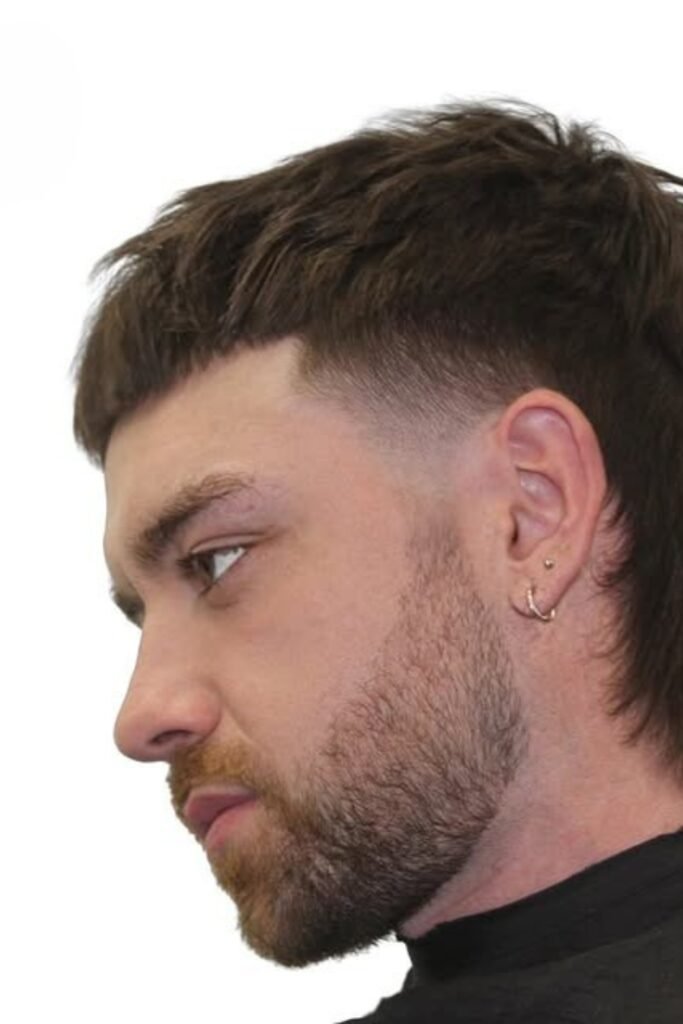
Soft Fade Mullet
If you want something current but not loud, this is an easy win for you.
You keep the fade soft on the sides, and you let the back add shape instead of shock value.
When the top stays lightly textured, you won’t feel stiff or overdone.
If you ask for a low fade blended into the crown and keep the back layered, you can style it fast with a light matte paste.
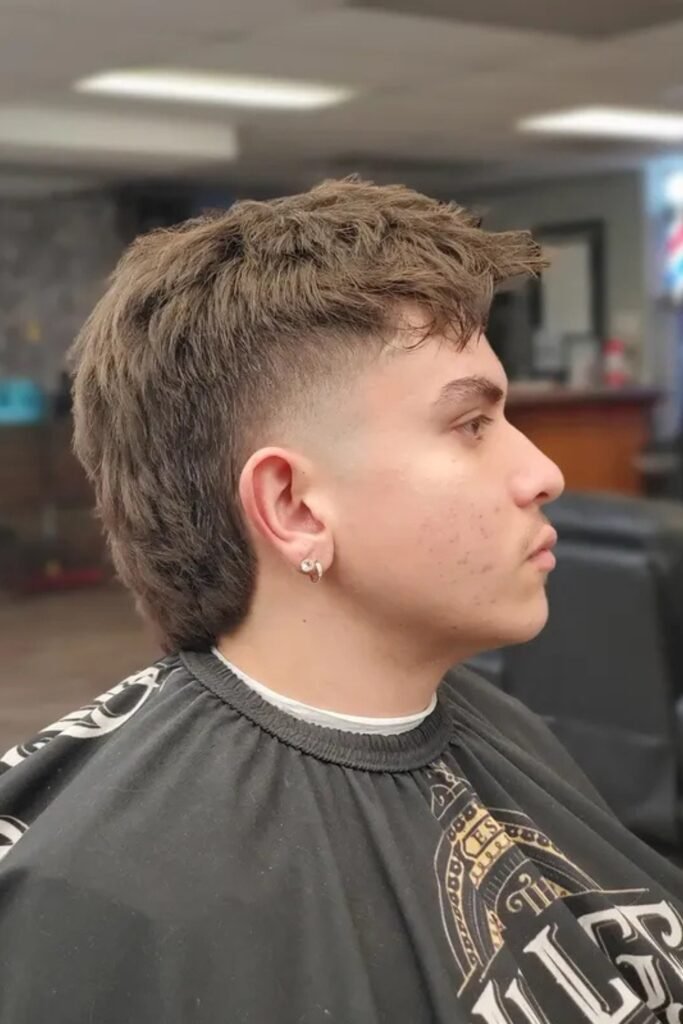
Curly Beard Mullet
If you have a full beard, you should let it work with your haircut, not against it.
You use faded sides to create separation, so your beard doesn’t blend in and look bulky.
When you keep the back curly and layered, you add flow.
If you ask for a mid fade that connects cleanly to your beard line, and you use curl cream plus beard oil, you keep everything sharp and balanced.
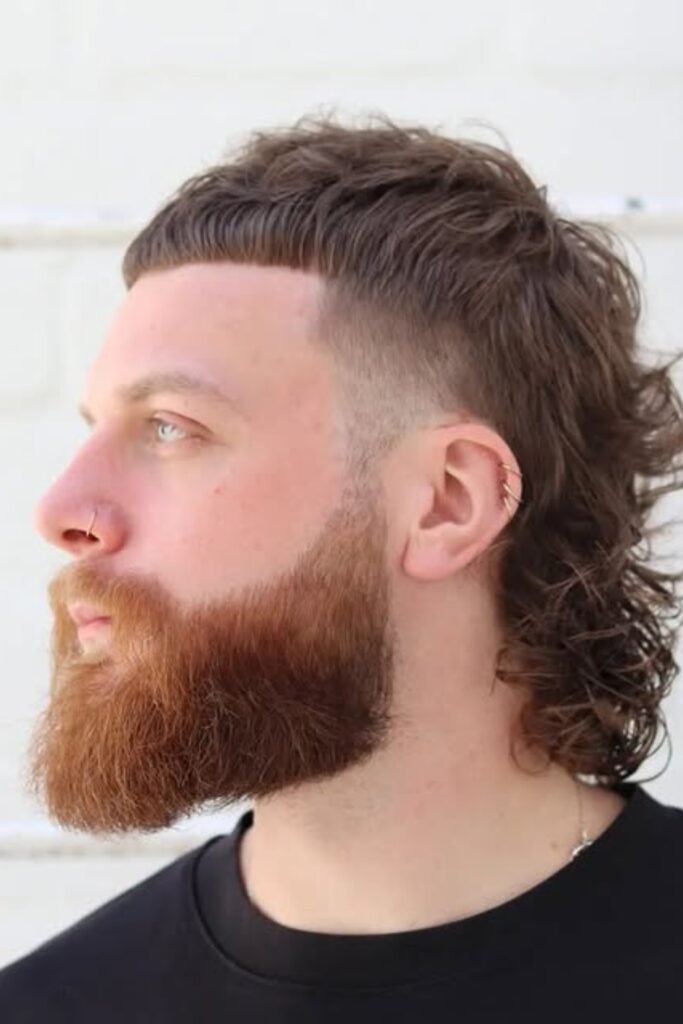
Two-Tone Shag Mullet
If you want to stand out fast, contrast is what you use. You keep the top dark, you lighten the tail, and you instantly make the mullet shape pop.
When you add faded sides, you stay sharp instead of messy.
If you’re open to color and creative style, you can ask for a tight fade, a layered back, and subtle bleach only on the lower section, so you get that clean two-tone effect.
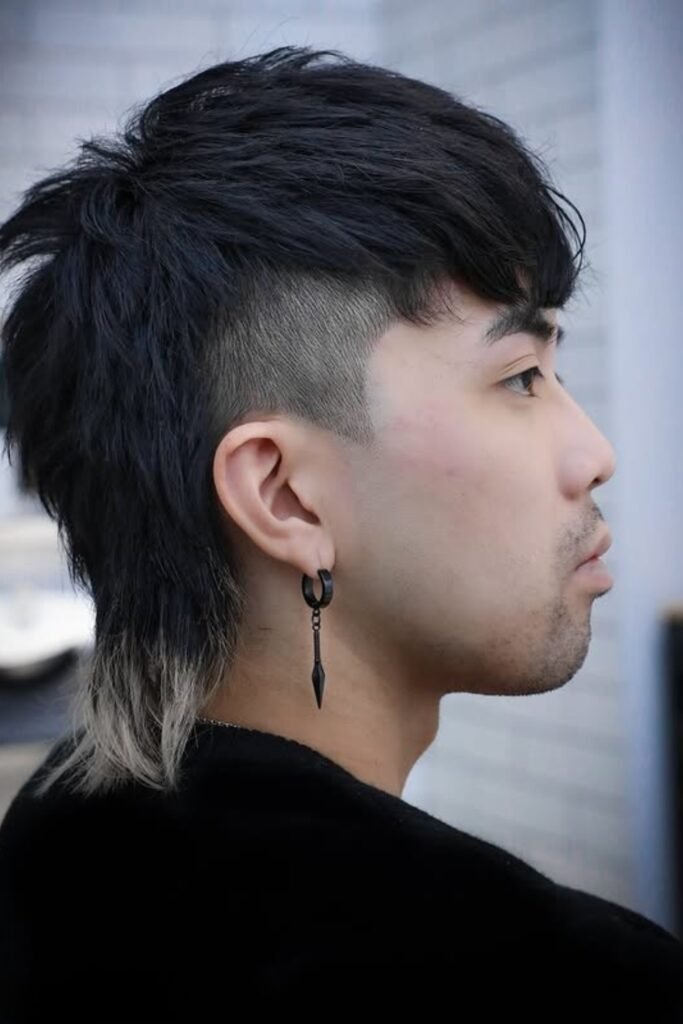
Tight Fade Curly Mullet
If you want clean sides and real movement in the back, this is how you do it right.
You keep a tight fade around your ears, and you’ll notice how it removes bulk so your curls can stand out more.
When your curls are defined and medium to thick, you can really make this work.
If you ask for a mid-to-high fade and keep layered length at the crown flowing into the back, you’ll get that sharp-but-fun balance.
When you use curl cream and let it air dry, you keep things natural and bouncy.
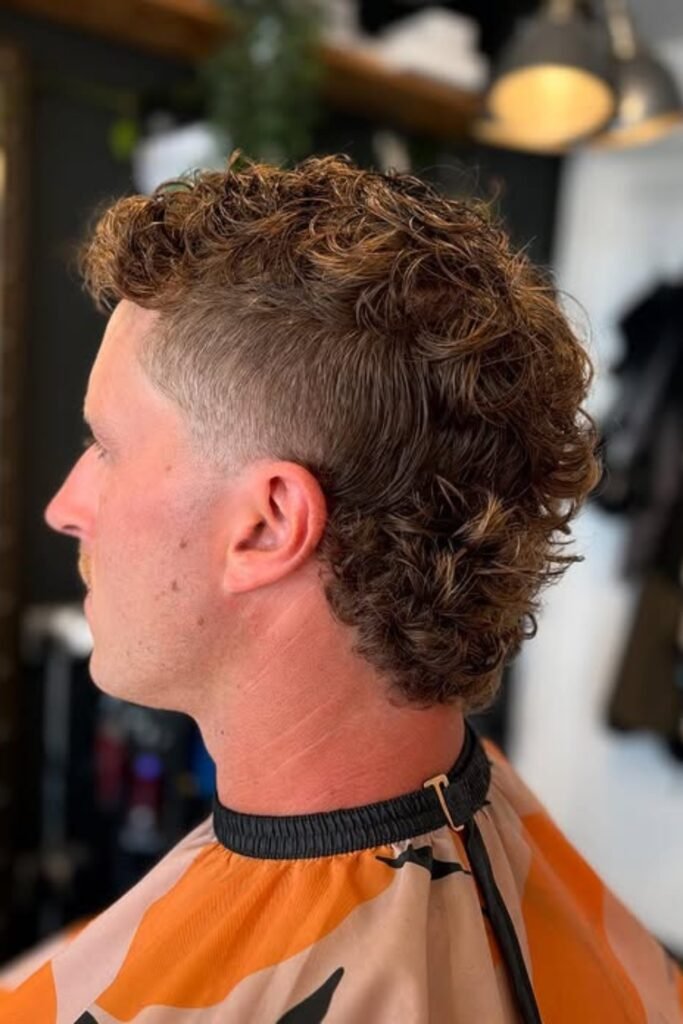
Voluminous Curly Mullet
If your curls already have bounce, you should let them take control.
You keep a soft taper on the sides, and you allow the back to stay full and layered, so you get movement instead of stiffness.
When you don’t want a harsh fade but still need shape, this cut works for you.
If you ask for scissor layering through the crown and nape, you avoid extra bulk.
When you scrunch in a lightweight curl cream, you keep volume without frizz.
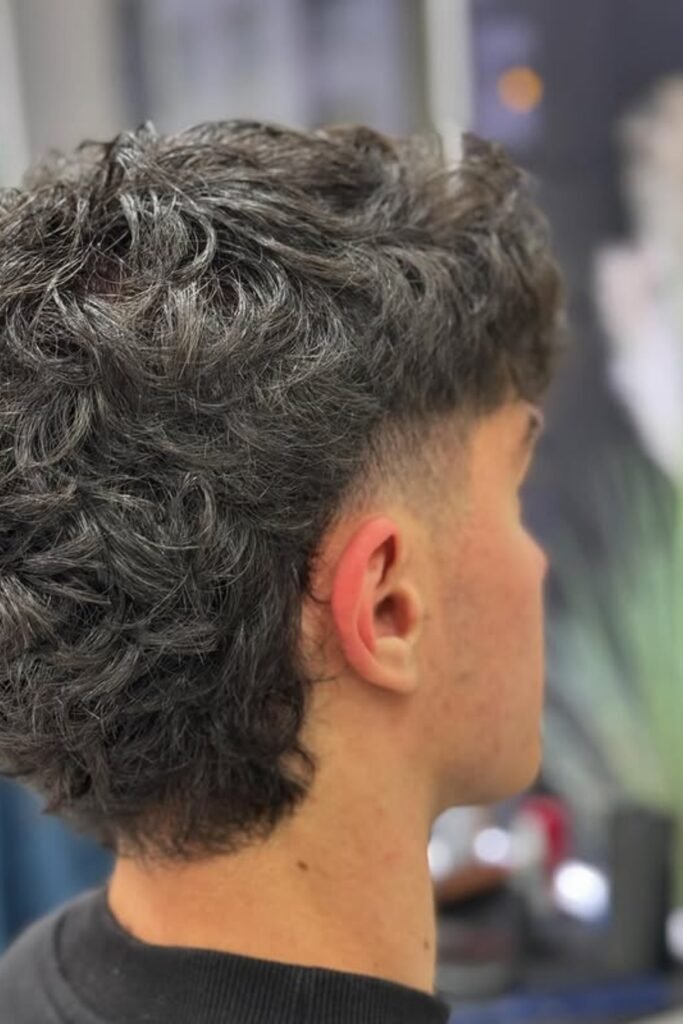
Loose Wave Mullet
If your hair bends more than it curls, this shape lets you move freely without looking wild.
You keep the sides short and clean, and you let the back hold medium length with soft layers that flow naturally.
When you want something rugged but still controlled, this works in your favor.
If you ask for a low fade or tight taper and keep the back just past the collar, you stay balanced.
When you use a light cream, you enhance your waves instead of locking them in place.
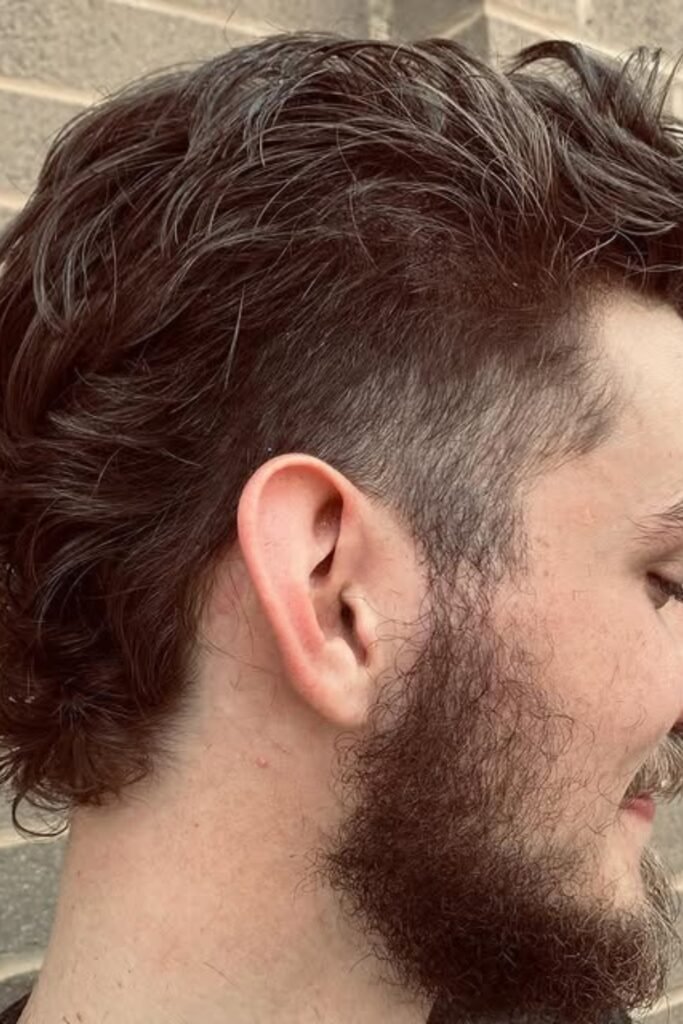
Low Fade Curly Mullet
If you want a mullet that feels sharp but still natural, this balance suits you well.
You keep the fade low, and you avoid cutting too high, so your curls on top and in the back look fuller.
When your hair is naturally curly and medium density, you can rely on this cut.
If you ask for a low skin fade blended into layered curls and keep the back shaped, not long, you stay clean. When you use curl cream, you define without stiffness.
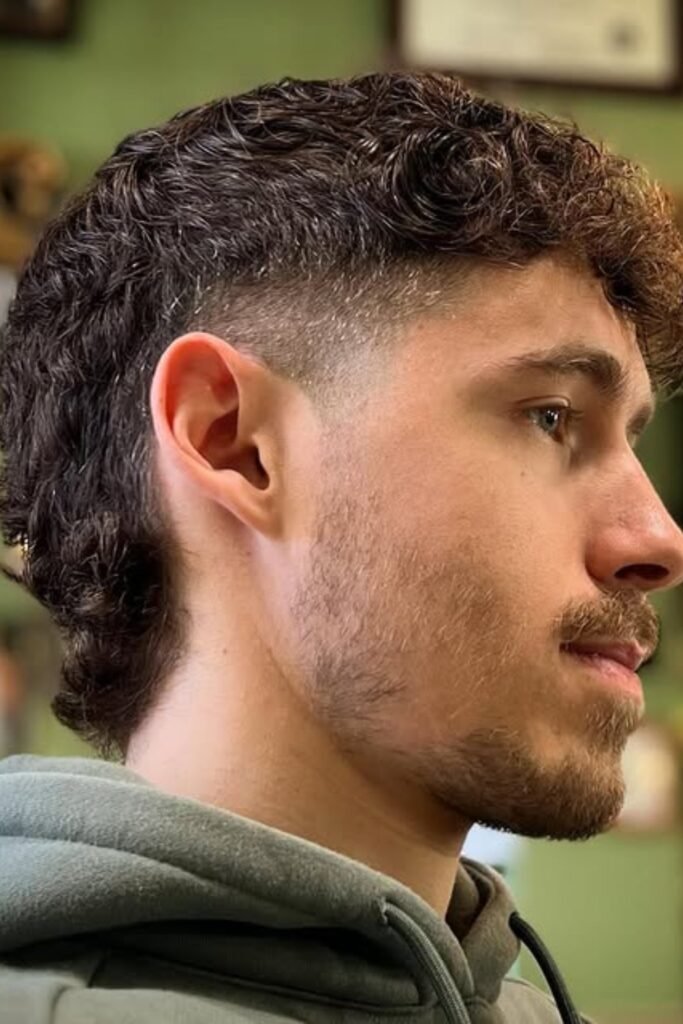
Soft Flow Mullet
If you want movement without harsh contrast, this shape gives you that smooth flow.
You keep the sides trimmed short but not shaved tight, so you don’t lose that relaxed feel.
When the top flows into a medium-length back, you won’t feel disconnected anywhere.
If your hair is straight or slightly wavy, you can make this work easily.
When you ask for scissor work on top and light layering in the back, and you use a small amount of matte cream, you stay effortless.
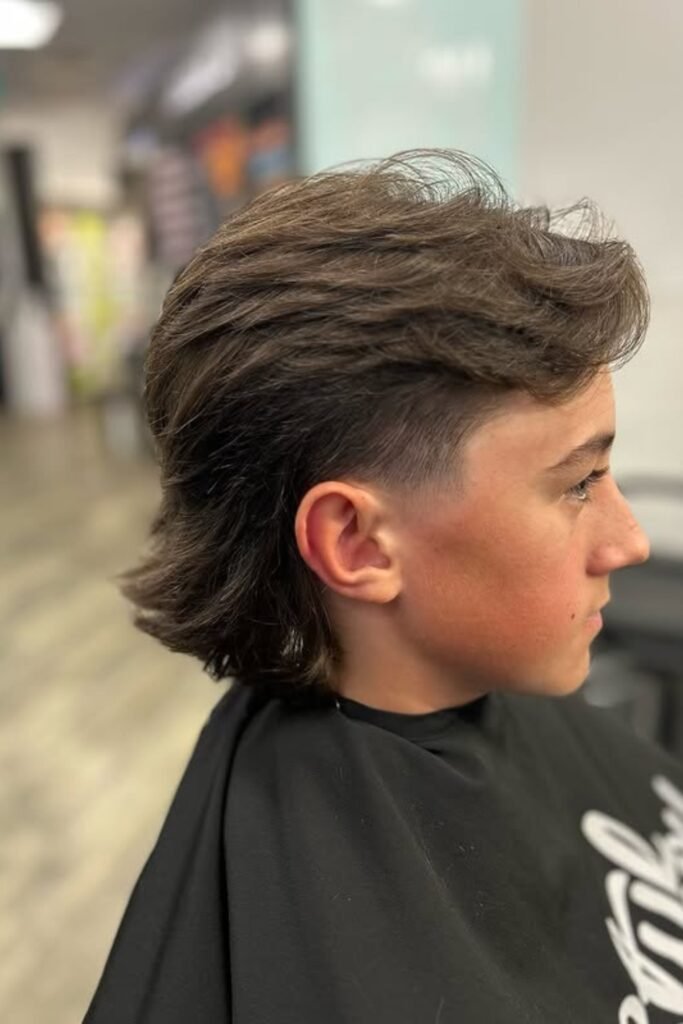
Tapered Wave Mullet
If you want something that feels grown but still stylish, this shape fits you well.
You taper the sides clean without going skin tight, and you keep the look refined.
When your natural waves blend into a softly layered back, you get movement without chaos. If your hair is medium-thick and you want a subtle mullet, this is a smart choice.
When you ask for a low taper and scissor layering through the crown and nape, you get that smooth flow.
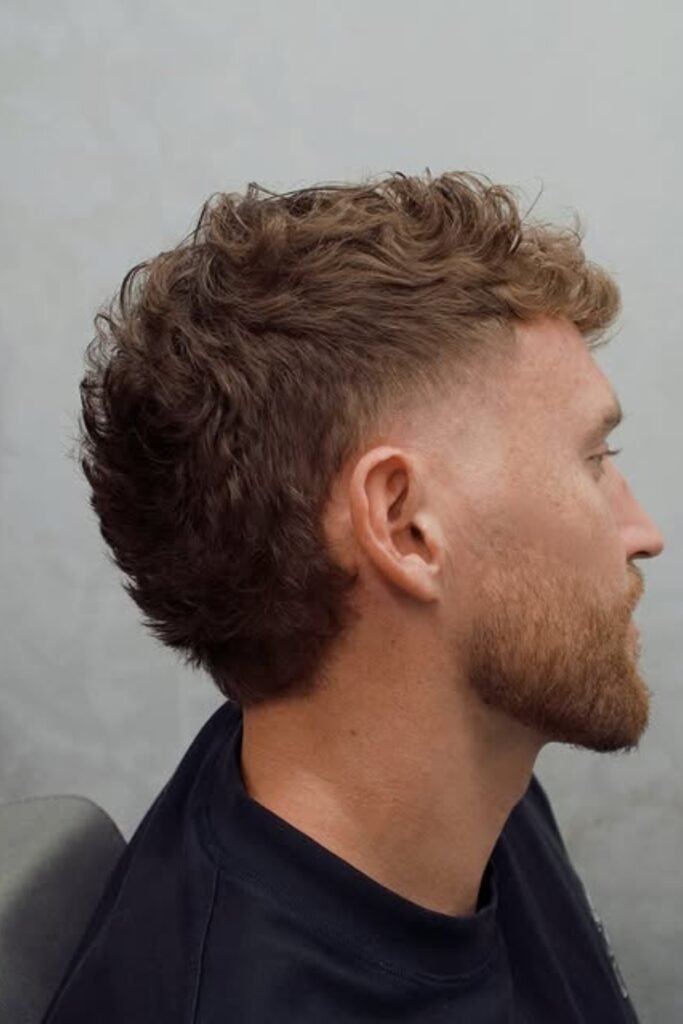
Slick Back Mullet
If you like control in the front but still want that mullet edge, this version works for you.
You keep the sides faded tight, you brush the top back smoothly, and you leave just enough length in the back to show contrast.
When your hair is straight or slightly thick, you’ll find this easy to manage.
If you ask for a mid fade with longer length on top, you can slick it back using a light pomade without stiffness.
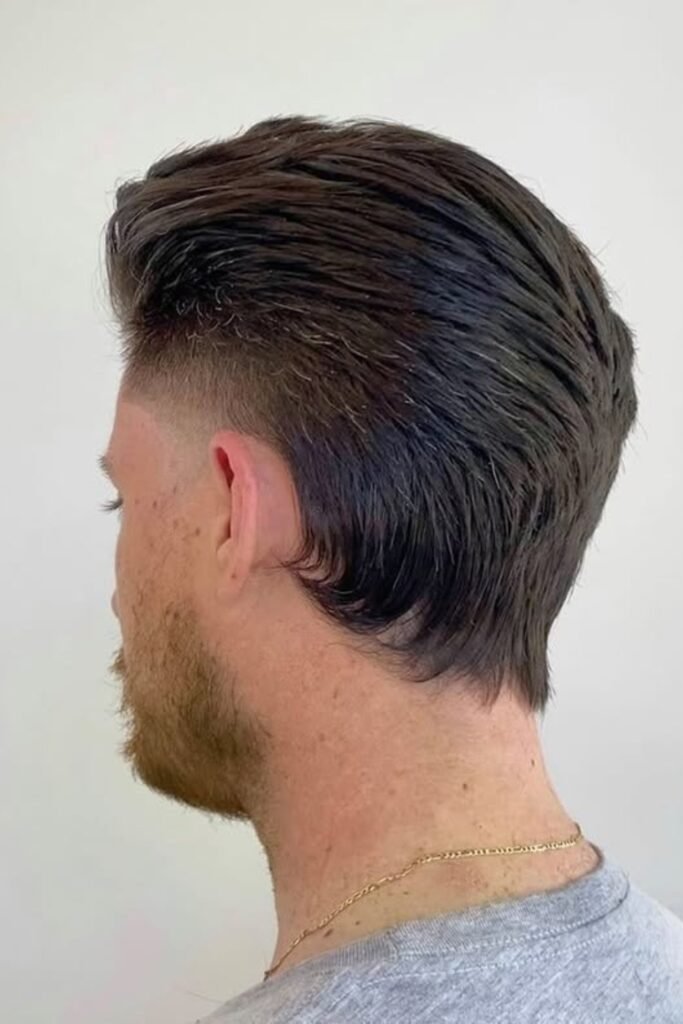
Spiky Burst Mullet
If you want energy and attitude, this one lets you show it. You use a burst fade that curves around your ear, and you keep the sides tight while the back stays textured and bold.
When you push the top up and keep it a little messy, you get that modern edge. If your hair is thick and straight or wavy, this works well for you.
When you ask for heavy layering and use matte clay while rough-drying with your hands, you get lift and movement.
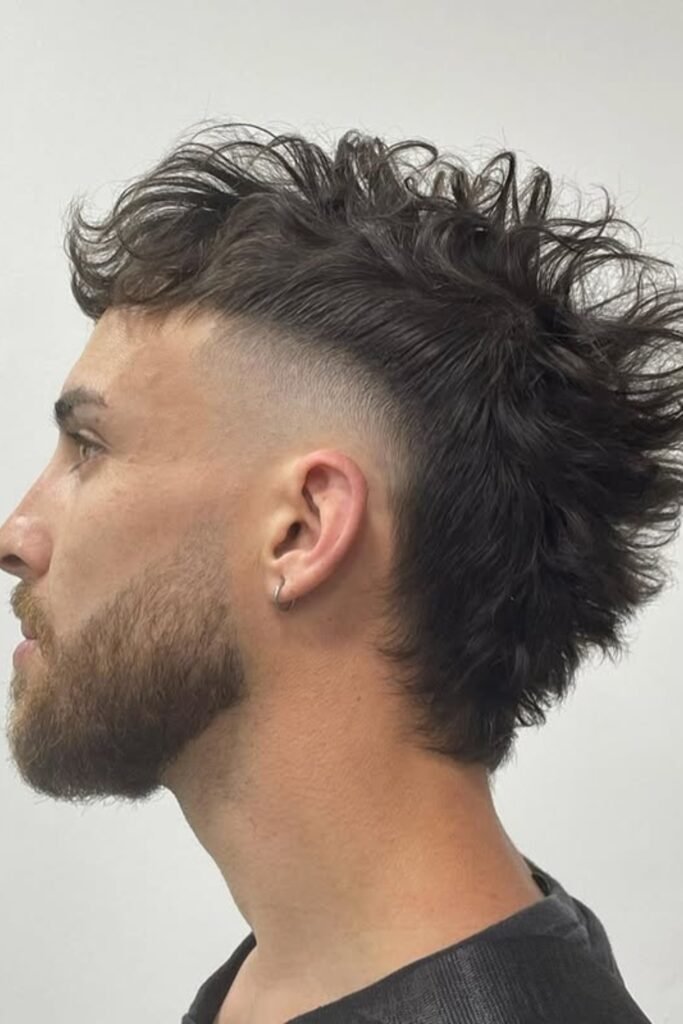
Textured Modern Mullet
If you want a mullet that feels stylish and wearable, not extreme, this is a safe option for you.
You keep a low fade on the sides, and you let the top stay textured and slightly pushed forward.
When the back holds medium length with soft layers, everything flows instead of sticking out.
If your hair is straight or wavy, you can rely on this cut. When you ask for a low fade blended into layered length at the nape and use a light matte paste, you keep natural movement.
FAQs
What hair type works best for a mullet?
Mullets usually work best when you have thick, wavy, or curly hair, because you already get natural volume and movement working in your favor.
When your hair has texture, you can let the mullet breathe instead of forcing it.
If your hair is straight, you can still make it work, but you’ll need light layering or a bit of styling product so you don’t end up looking flat.
When you add that extra shape, you help the mullet feel intentional and balanced, not lifeless.
How do you style a modern mullet?
You can use a lightweight matte cream, texture spray, or curl cream depending on your hair type, so you get exactly the look you want.
When you blow-dry, you’ll notice added volume on top that really makes the mullet pop.
If you use your fingers to style instead of a brush or comb, you’ll keep the finish natural and effortless, instead of looking overly polished.
You may like to read!
