
23 Perennial Garden Ideas for 2026
Planning a perennial garden sounds easy, until your flowers bloom gloriously for a few weeks, and then leave ugly gaps and tired-looking areas behind.
You might also find it difficult to decide what to plant together, where to put the taller blooms or how to maintain the bed interesting after summer.
The idea is to not try to cram in additional plants. You need to mix perennials with varied bloom periods.
And heights, foliage and growing needs so that when one group fades another takes over.
In this article, I’ll show you 23 perennial garden ideas you can use right away to create a beautiful outdoor space.
Let’s jump in!
How Can Perennial Gardens Stay Colorful Through Every Season?
If you want a color theme, don’t plant a garden full of perennials blooming all at the same time.
Combine spring, summer and fall bloomers such that one set begins to show off just as another starts to fade.
Most perennials bloom for a short time, so staggered bloom periods will extend your season of color.
Begin with spring bulbs for an early kick-off, then keep the garden going through quieter weeks with colorful foliage and attractive grasses.
With the onset of cold weather, leave the lovely seed heads and grasses standing.
You can also deadhead certain perennials after they flower to encourage a second flush of flower and retain a tidy bed.
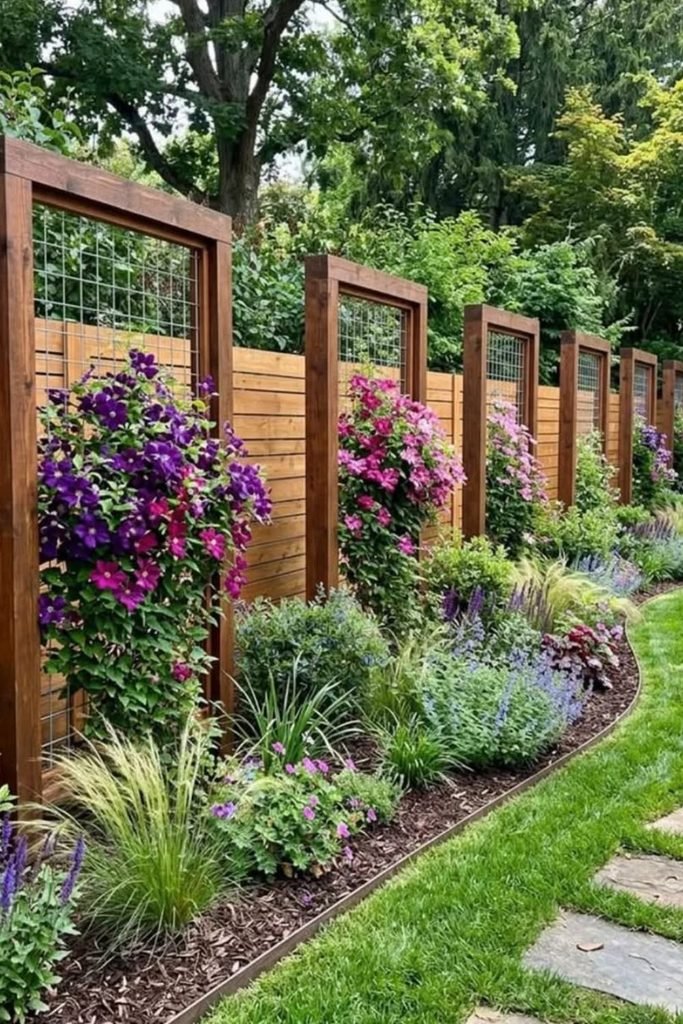
Trellis Border
Turn a plain fence line into a layered perennial feature by giving flowering climbers vertical support and keeping shorter plants around their base.
Fit solid trellis panels around the boundary and team climbing clematis with attractive grasses, catmint, salvia and low-growing perennials.
The repetition of purple and pink flowers down the border visually connects to the lengthy planting, while grasses soften the lower edge.
Sunset Border
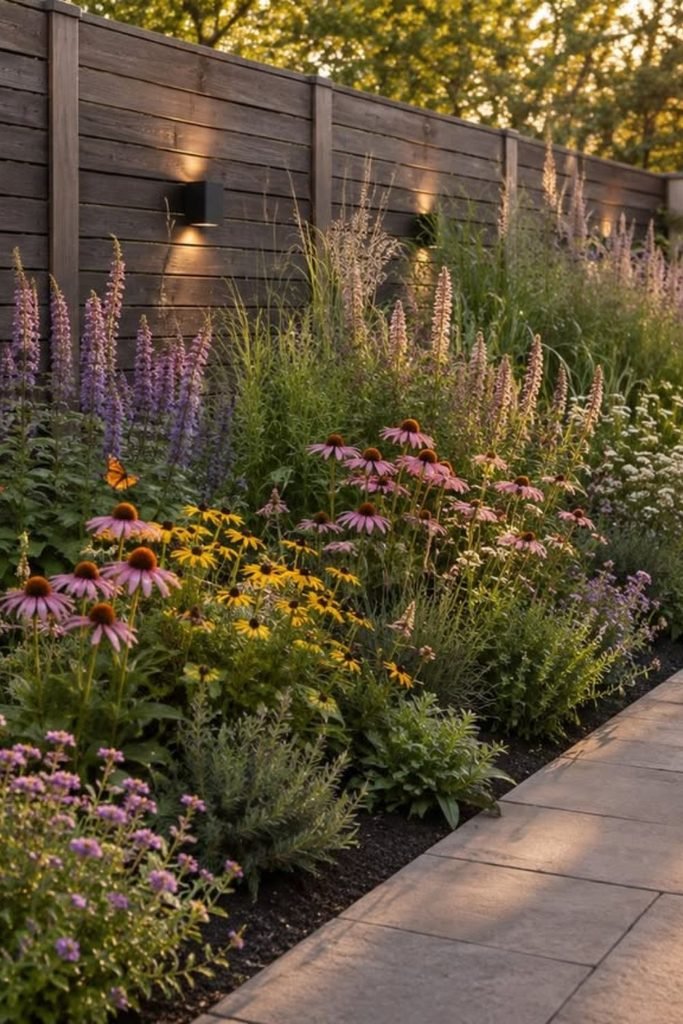
Bring lasting color beside a patio by mixing perennials with staggered bloom times instead of relying on one dominant flower.
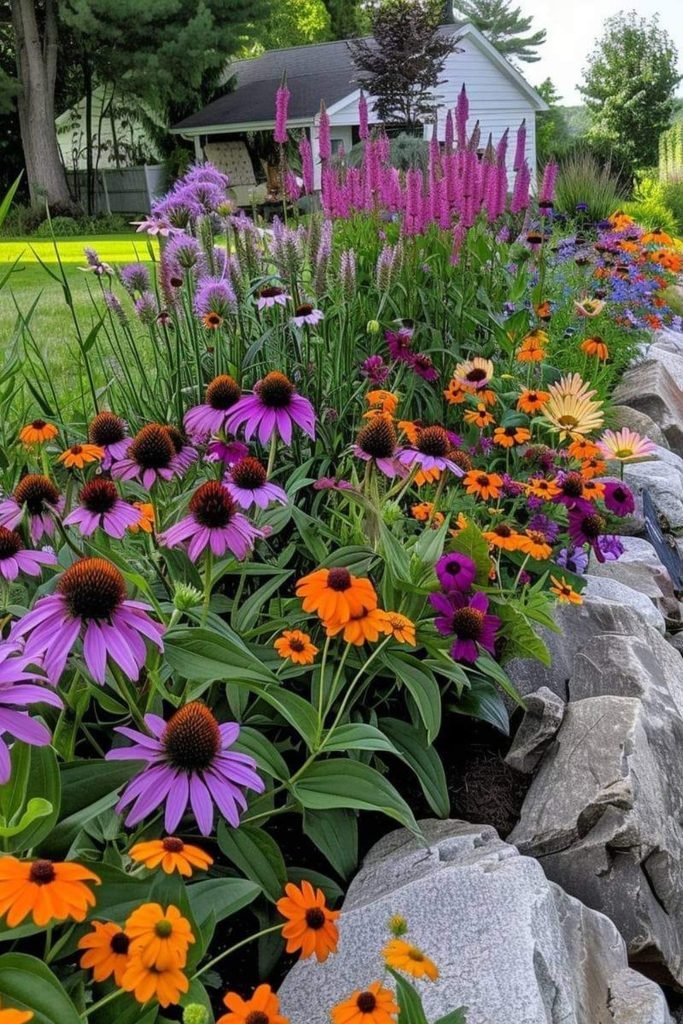
Scatter coneflowers and black-eyed Susans through the middle, intermix upright purple flowers, and tuck in airy grasses near the fence for height and movement.
Warm wall lights may extend the garden’s impact into the evening after sunset.
And recurring clusters of flowers keep a long, narrow bed seeming connected rather than cluttered.
Stone Layers
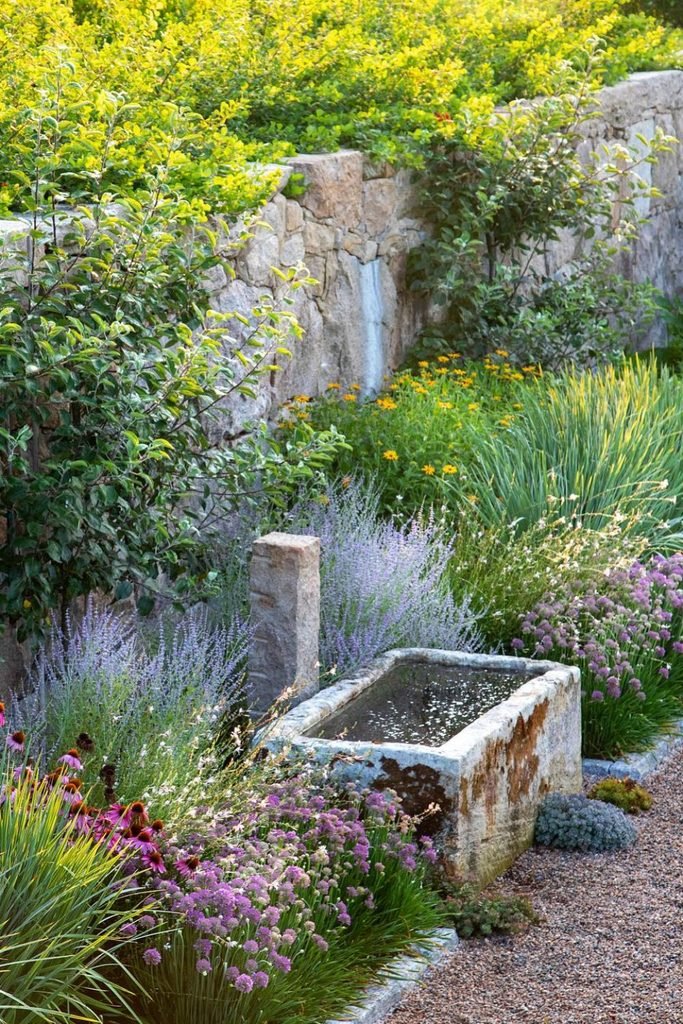
Give a sunny perennial bed more character by letting soft flowers spill naturally around stone walls, gravel paths, and simple water features.
Use lavender-toned spikes of coneflowers, flowering chives, compact groundcovers and grassy foliage in varying heights.
Leave the smaller plants on the walkway and allow the larger clusters to fill up the middle.
Stone edging gives structure year round so the garden still feels complete when some plants have completed flowering.
Lavender Rhythm
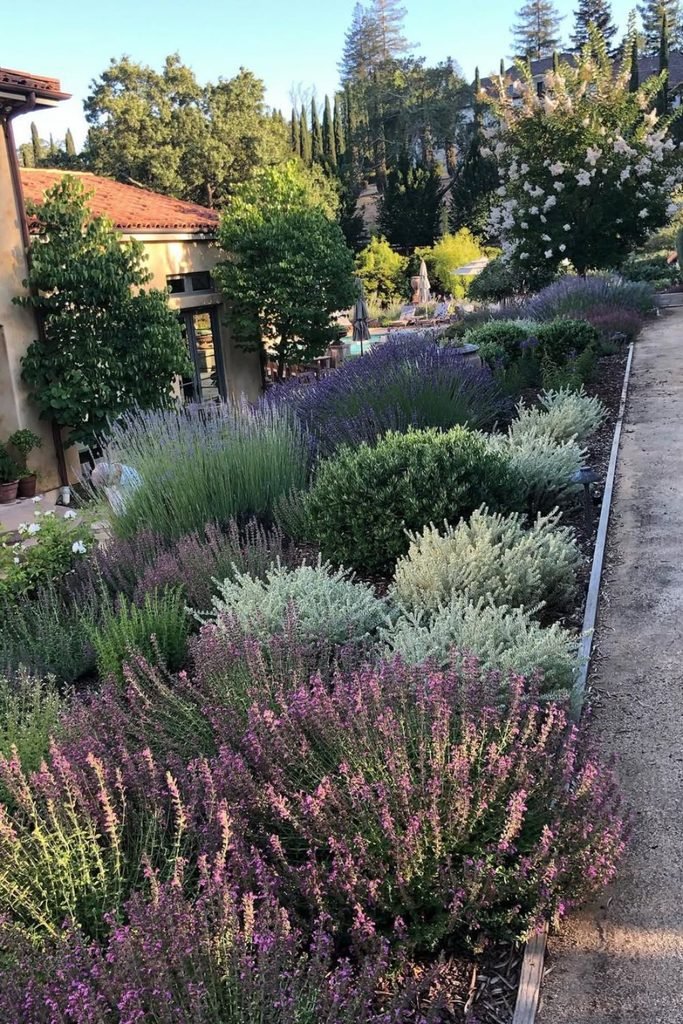
Build a calm, drought-friendly border by repeating lavender-toned perennials instead of filling every gap with a different flower.
Alternate rounded lavender bushes with silvery leaf with compact evergreen shrubs.
Allowing enough space for each plant to reach its mature spread. Repetition draws the eye along a long corridor.
While the green and silver foliage mixed in keeps the planter beautiful even as the purple blooms begin to fade.
Cottage Layers
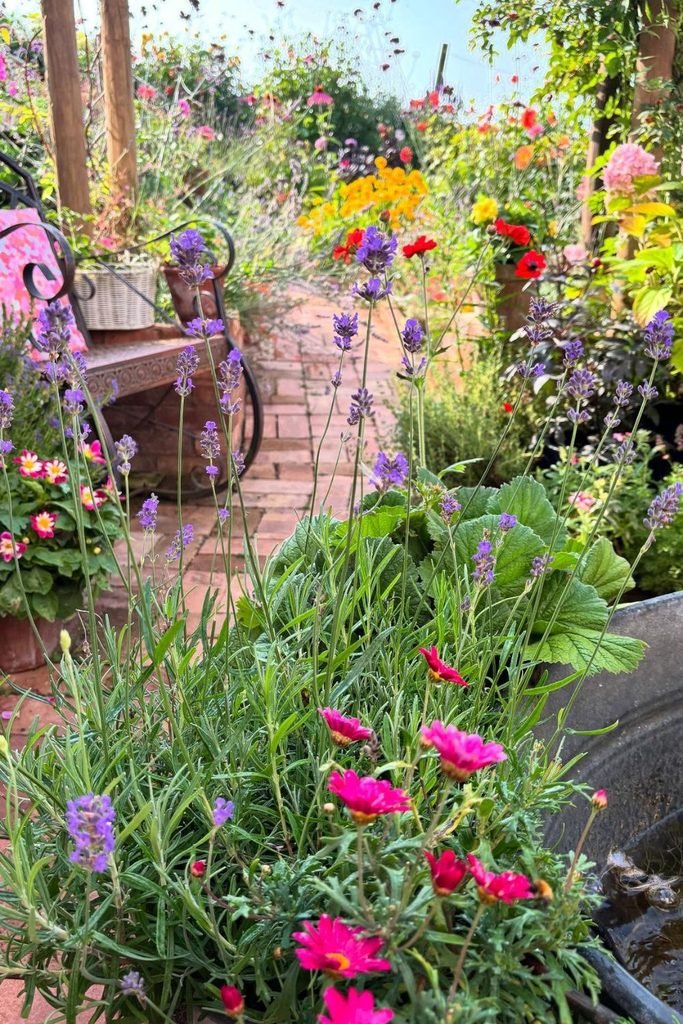
Let different flower heights overlap naturally when you want a perennial garden to feel full without arranging everything in strict rows.
Plant spikes of lavender by the path, nestle compact pink flowers at the base and take brighter blooms further into the garden.
The erect stems coupled with broad foliage keeps all levels fascinating.
A narrow brick walkway allows you to stroll through dense planting without stepping on emerging plants.
Meadow Path
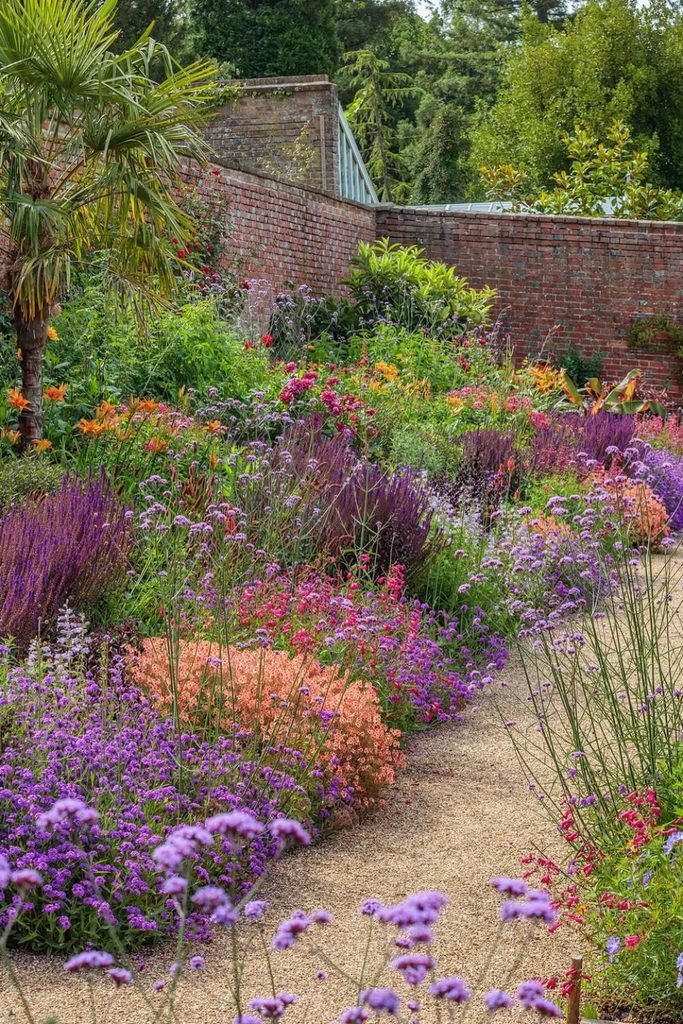
Create an immersive walkway by planting broad drifts of perennials close enough to soften both sides without blocking the path.
Repeat purple verbena-like blossoms and upright salvias, then cut through them with coral, pink and orange blooms for changing seasonal color.
Let a few airy stems trail down onto the gravel for a relaxing planting, while taller vegetation near the back provides the border enough depth to feel entrenched.
Structured Blooms
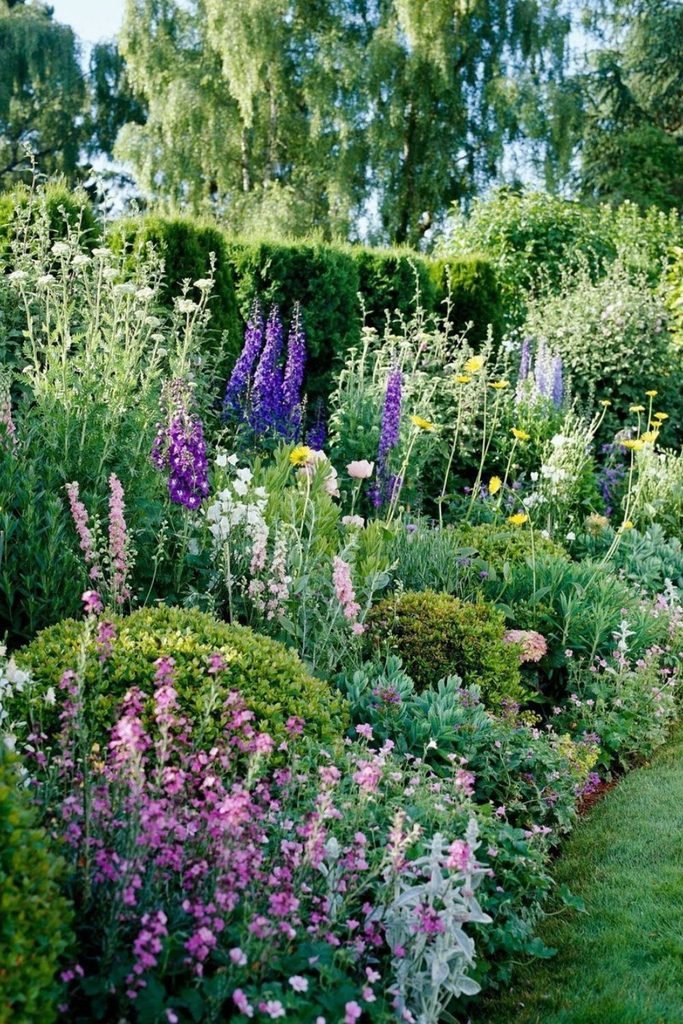
Balance loose perennial flowers with clipped evergreen shapes when you want a full garden that still feel organized.
Use rounded shrubs for the lowers layer and sprinkle in tall purple spikes, gentle pink blossoms, yellow daisies and silvery leaves.
When flowering slows the evergreens keep the bed together, and the variation in bloom heights keeps dense planting from becoming one flat mass of color.
Foundation Color
Brighten a partly shaded foundation bed by pairing bold foliage with smaller pockets of seasonal flowers.
Hostas can be used to make broad green anchors and then fill in the open areas with pink, blue, orange and yellow blooming perennials that have the same light.
Between bloom times variegated leaves all along the front make the border fascinating.
Dark mulch helps make the shapes of individual plants easier to see and helps prevent weeds.
Prairie Layers
Stretch late-season color around a patio by mixing airy perennials with ornamental grasses instead of depending on dense flower clumps alone.
Mix fine grasses with coneflowers and verbena-like blossoms, yellow daisies and gentle purple spikes, allowing heights to blend freely.
As summer progresses into fall, warm oranges and yellows continue to provide life to the border.
Grasses fill in the fading regions and prolong the sense of movement after many flowers have finished blooming.
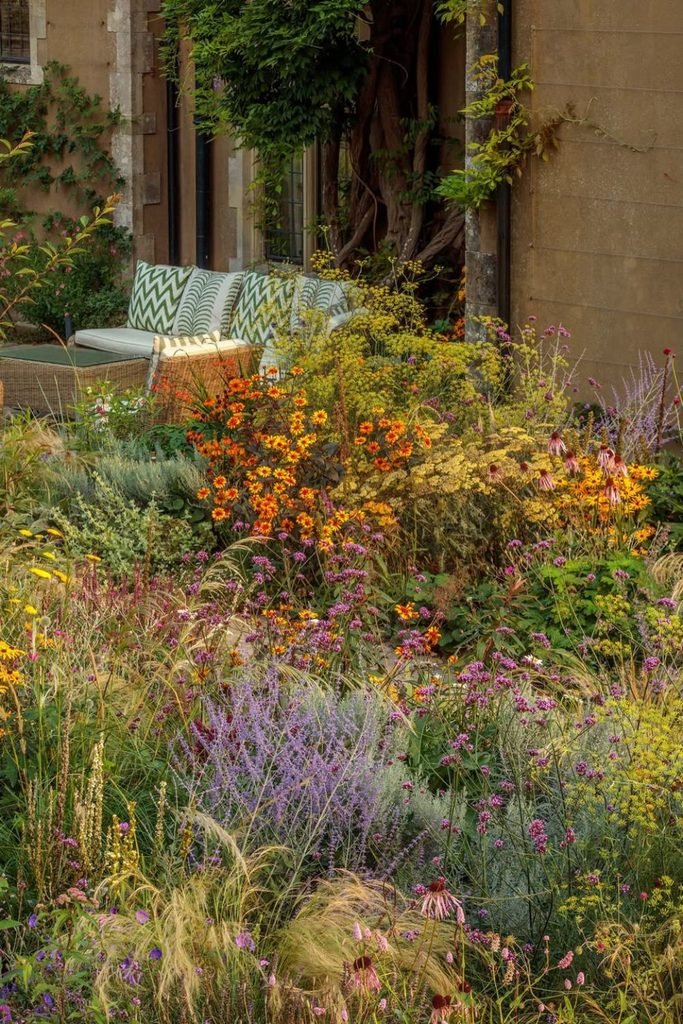
Potted Height
Use one oversized container as a vertical focal point when the surrounding perennial bed needs height without another permanent shrub.
Pack it with tall stems of blue flowers, then surround the container with burgundy foliage, low green perennials and a bright decorative grass for contrast.
The container in the bed keeps me tethered to the planting, and the blooms lifted off the ground give another layer without overwhelming the landscape.
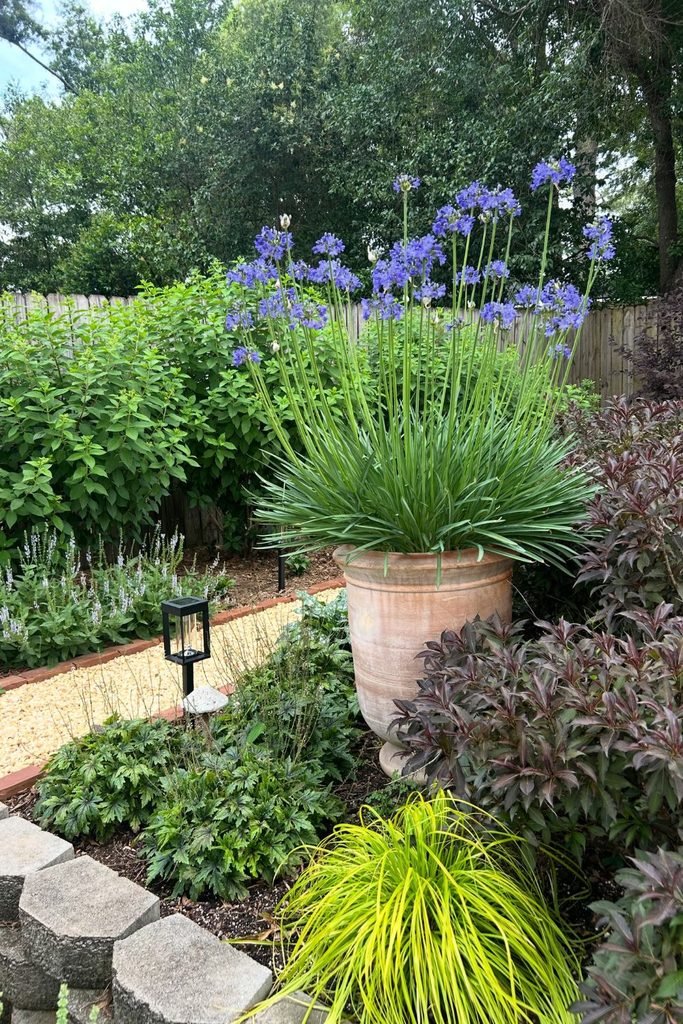
Purple Drifts
Repeat one strong flower color in generous groups when you want a modern perennial garden to feel coordinated without becoming formal.
Through the middle, plant tall purple salvia-like spikes, softened at their base with lower lavender, leaving small pockets of green foliage between each clump.
Depth is created by the height of the same color family and repetition around walks and steps helps to separate planting sections to be one continuous garden.
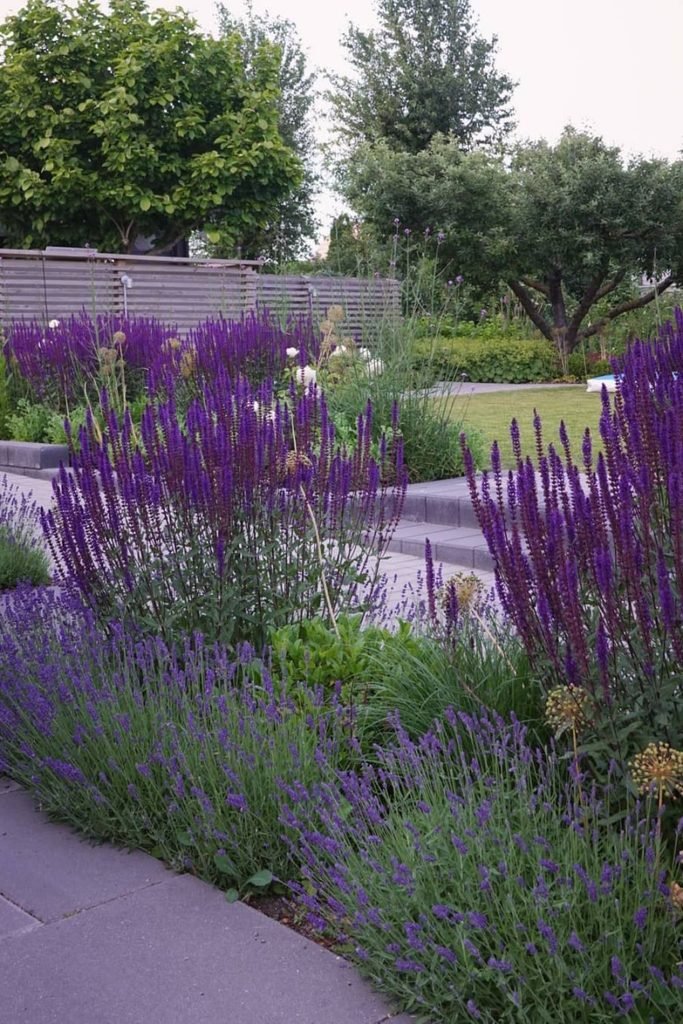
Hydrangea Sweep
Soften a wide lawn edge with generous flowering masses instead of scattering small plants across the bed.
In the front, plant compact purple hydrangeas. In the back, plant taller cream and blush panicle hydrangeas for depth.
Space each shrub far enough apart to allow the flowers to mature without crowding.
Mulch bare soil to retain moisture and suppress weeds until the planting fills in.
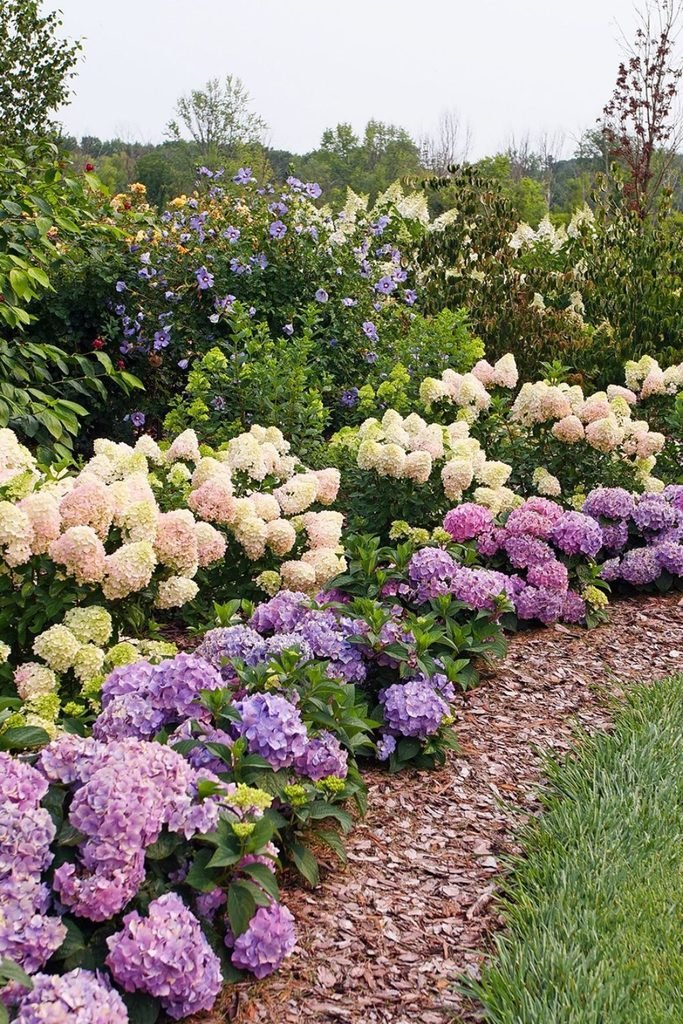
Pollinator Border
Invite more pollinator activity by packing a sunny border with nectar-rich flowers that bloom at slightly different times.
Combine coneflowers with black-eyed Susans, long purple spikes and other perennials appropriate to your area.
Putting each kind in separate clusters for easy foraging by bees and butterflies.
The stone edge will help confine the dense planting and chosen seed heads can be left to stand after flowering for added seasonal interest and wildlife value.
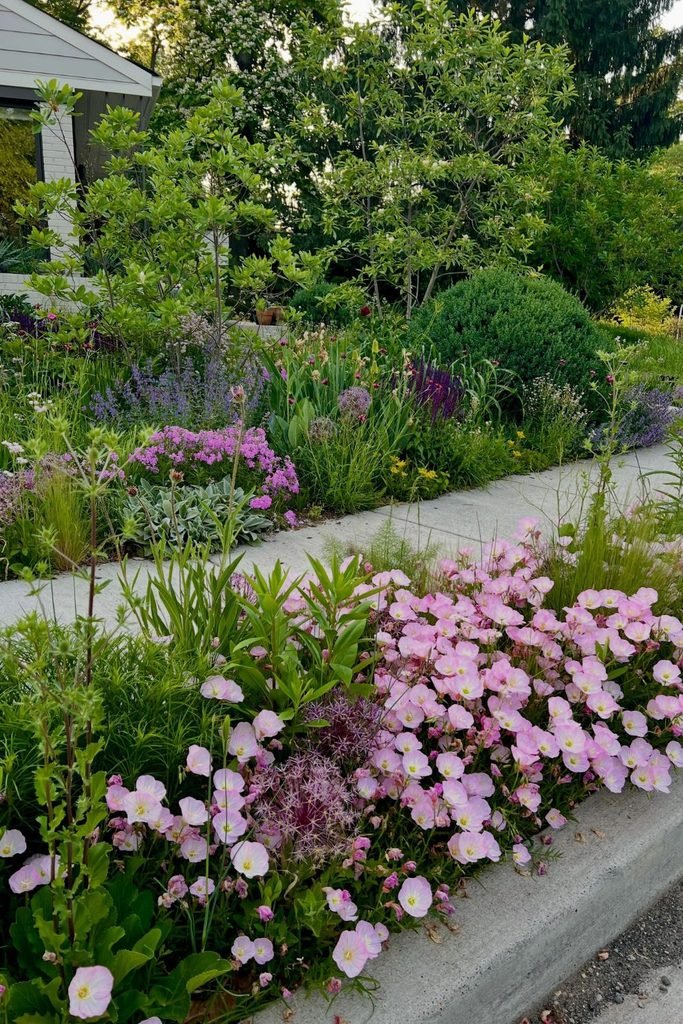
Pathway Spill
Soften hard walkway edges by letting low flowering perennials spread toward the pavement while taller plants build depth behind them.
The pink flowers would be low to the ground at the curb, then the purple spikes, decorative alliums, grasses and rounded evergreen shrubs would come next.
The garden seems established when you leave a few plants to flow over the edge softly and the clear path makes the planting, which is numerous, practical.
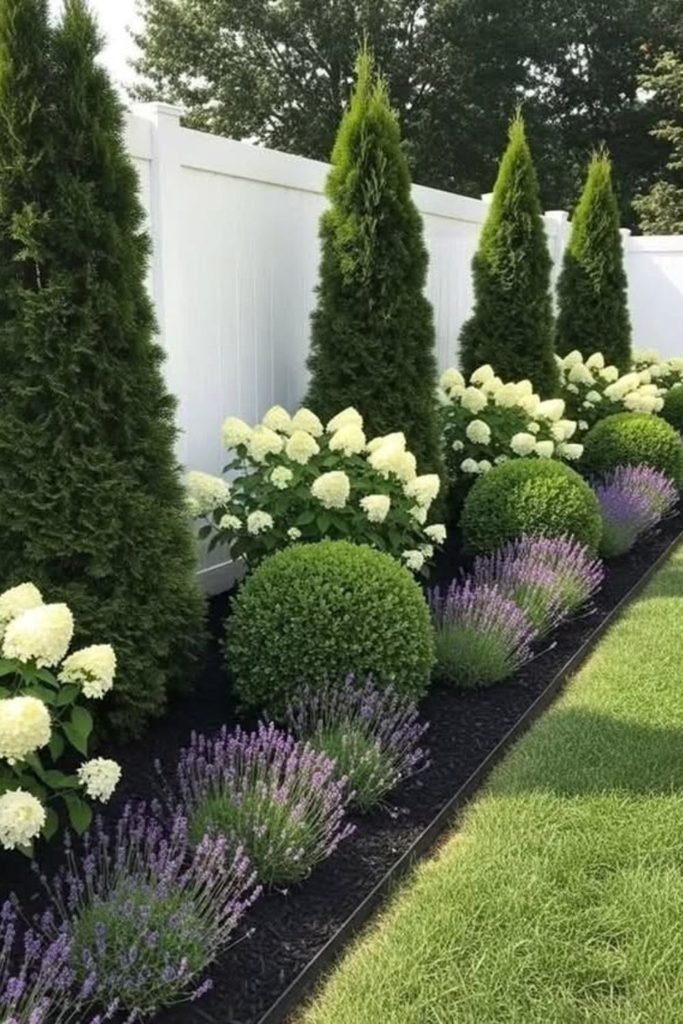
Formal Border
Keep a narrow fence bed polished by repeating a small set of plants in clearly defined layers.
For year-round height, plant tall evergreens at regular intervals, then white hydrangeas between them, and finally alternate rounded shrubs with lavender along the front edge.
A lengthy border can be hectic, but with the palette limited to green, white and purple.
And with permanent evergreen shapes to hold the structure after the flowering perennials have faded, it doesn’t feel busy.
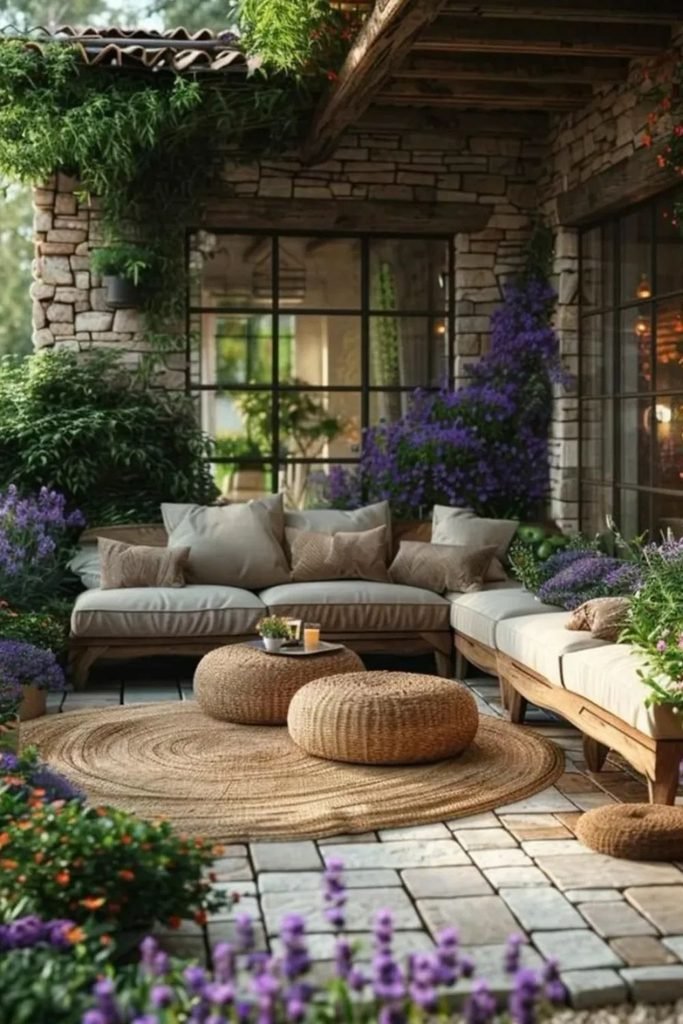
Patio Blooms
Wrap a seating area with perennial planting when you want the patio to feel connected to the garden rather than sitting beside it.
Surround pavers with lavender mounds add taller purple flowering plants around walls and corners and mix in little warm colored blossoms for contrast.
Plants should be lower next to seats and strolling routes, then grow height outwards so blooms give privacy without closing the patio in.
Stone Walkway
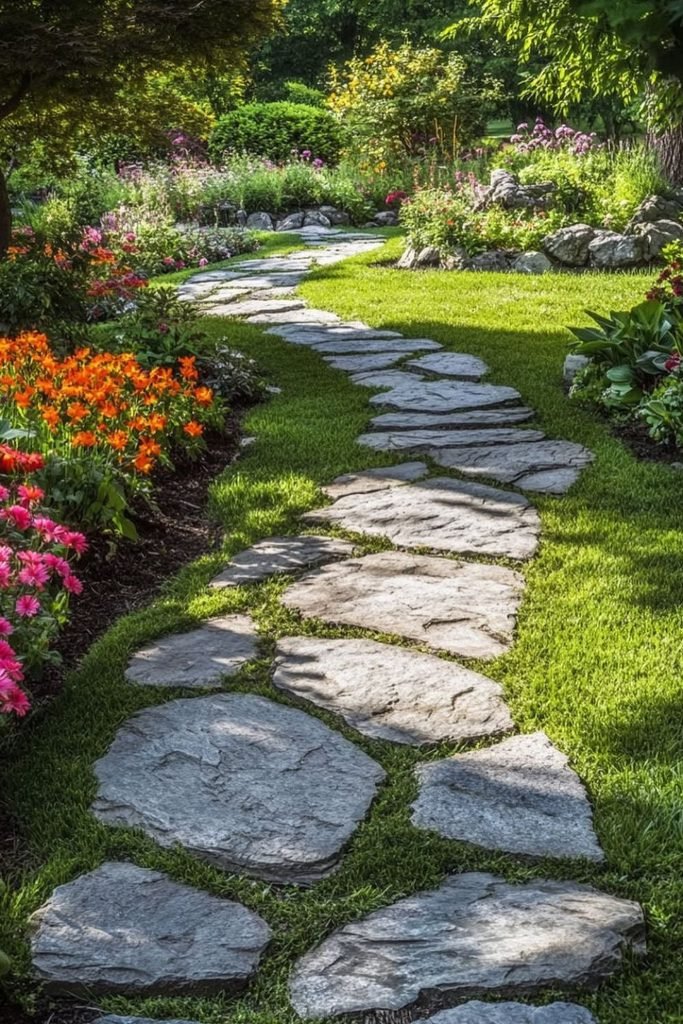
Guide visitors through a large perennial garden with an informal stone path that leaves plenty of planting room on both sides.
The stones curve between wide flower beds, with bright perennials like daylilies and daisy-like blossoms close to the walkway, and taller plants farther back.
Between the stones, grass softens their hard edges, and the recurring flower colors along the journey invite the eye to follow the path deeper into the garden.
Allium Layers
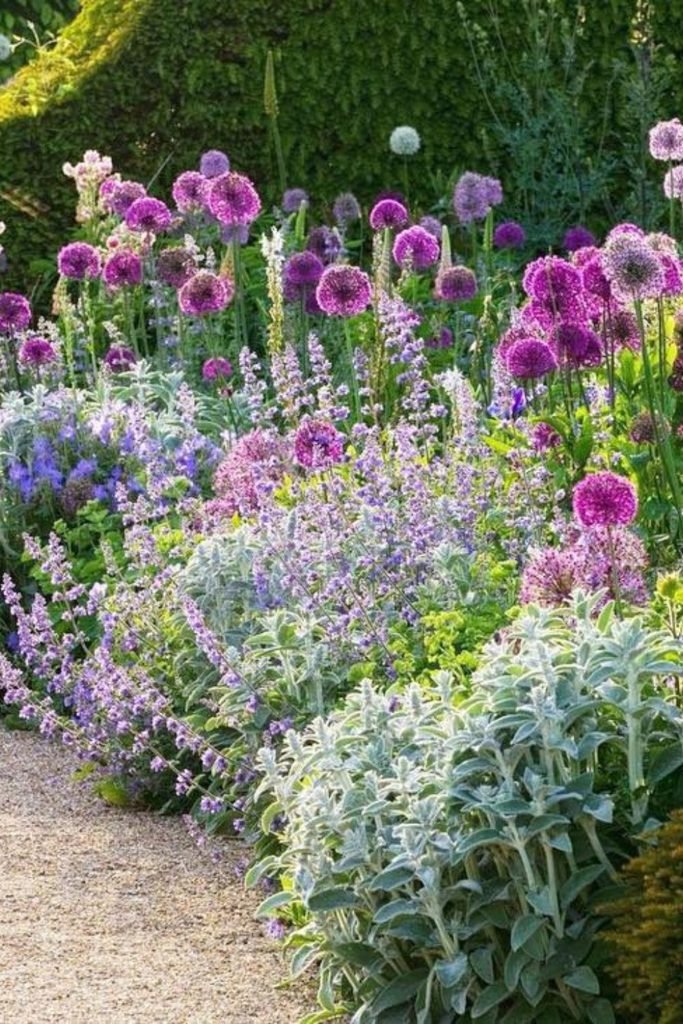
Use globe-shaped alliums to add height without creating a heavy wall of flowers along a sunny path.
Let their purple heads fall above lower flowers of catmint-like form and silvery lamb’s ear, and then repeat the combination down the border for rhythm.
The allium blossoms will begin to fade but evergreen bushes behind the flowers will give a firm background while silver leaves will keep the planting vibrant.
Grass Structure
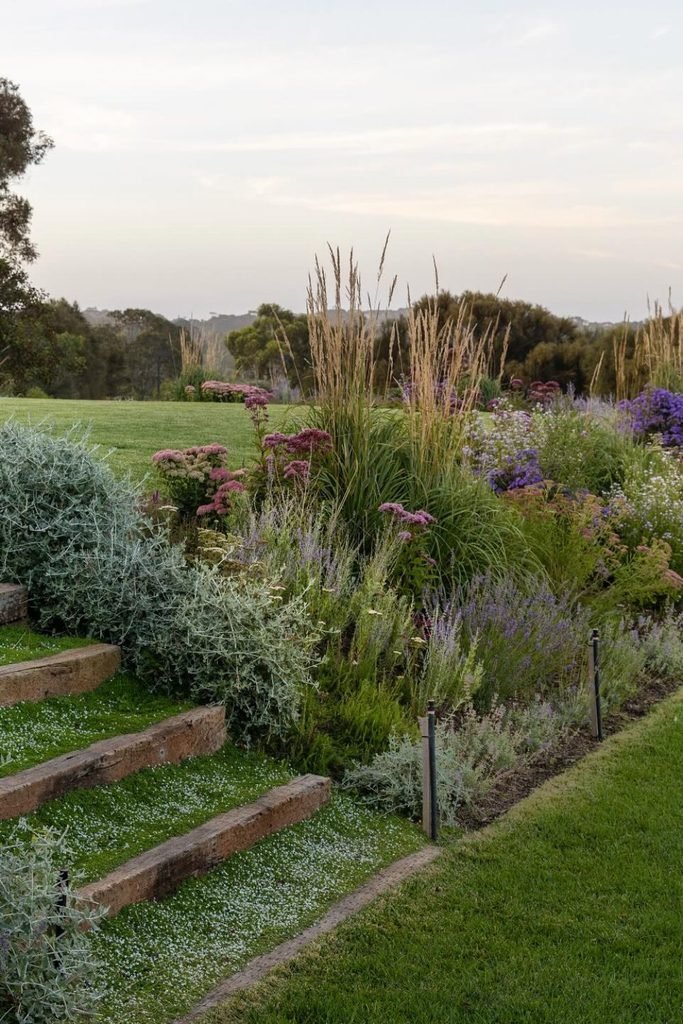
Anchor a long perennial border with tall ornamental grasses when you want height that still feels light and natural.
Down the center, set erect grasses and weave in purple asters, pink sedum-like blossoms, lavender toned flowers and silvery foliage around their bases.
The grasses stay upright long after flowers are gone in summer, so leaving the dried stems up adds texture and motion to fall and winter.
Color Islands
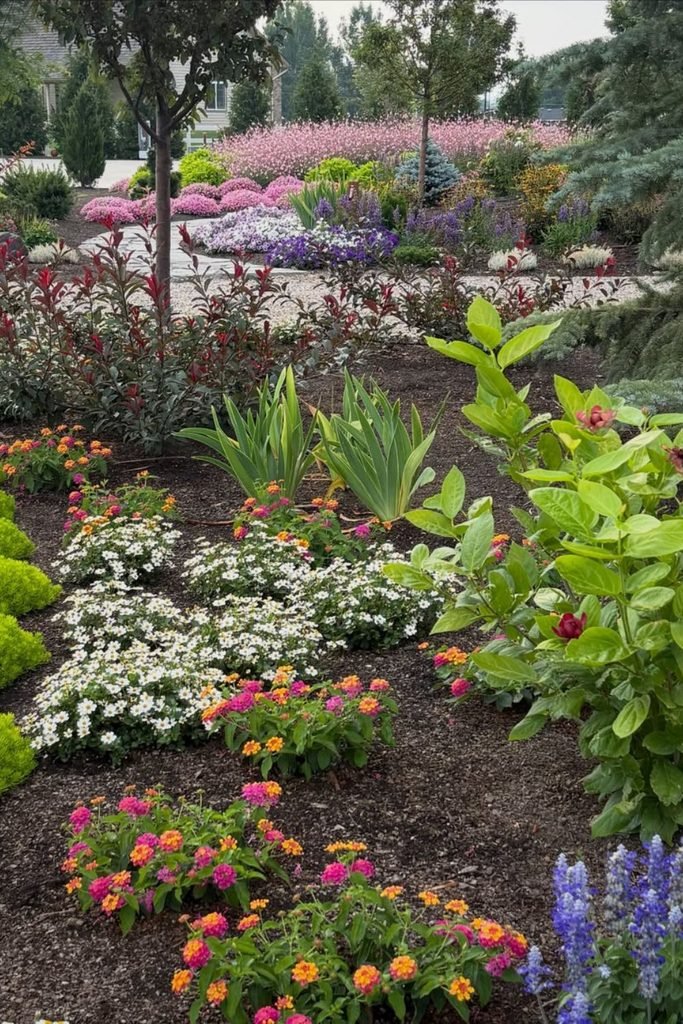
Break a wide garden bed into small repeating pockets when you want plenty of color without letting the planting become visually crowded.
Group low white flowers with compact pink and orange flowers, then offset with circular green mounds and higher foliage plants.
You can leave a little mulch between the juvenile groups for each form to develop, then repeat the same colors further back to connect the whole garden.
Foliage Contrast
Keep a perennial garden interesting between bloom cycles by giving foliage as much attention as flowers.
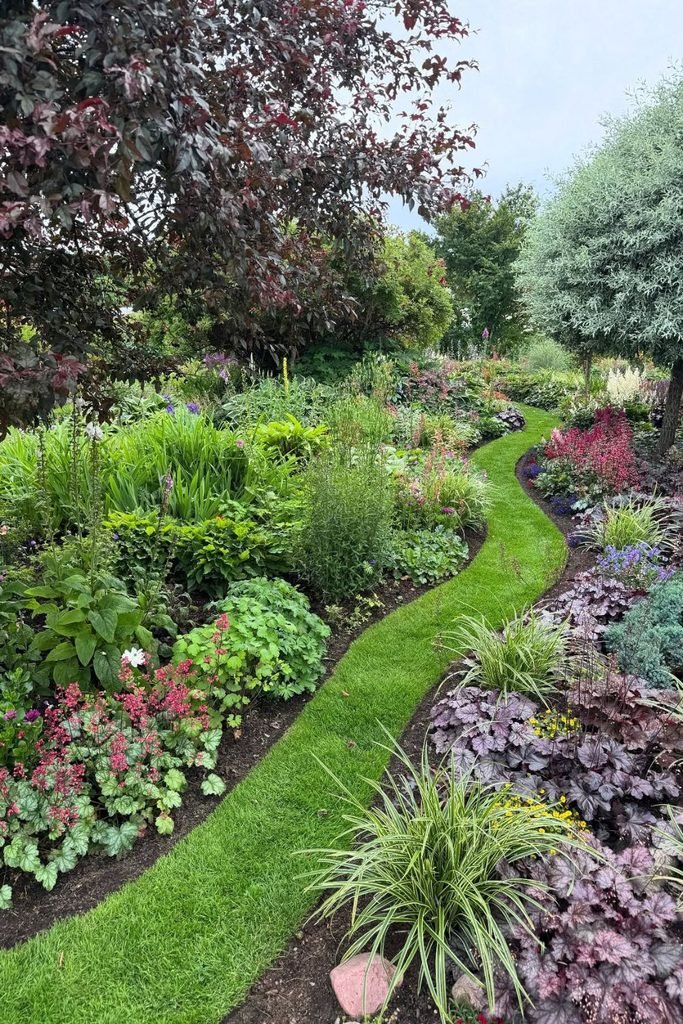
Pair burgundy heuchera with striped ornamental grasses and broad green leaves and pink, purple and yellow blossoms strewn throughout.
Repeat essential textures on either side of a curved grass walk.
The leaf color and shape combination keeps the beds looking full even in quieter flowering weeks.
The curving course creates natural separation between dense plant groups.
Lavender Walkway
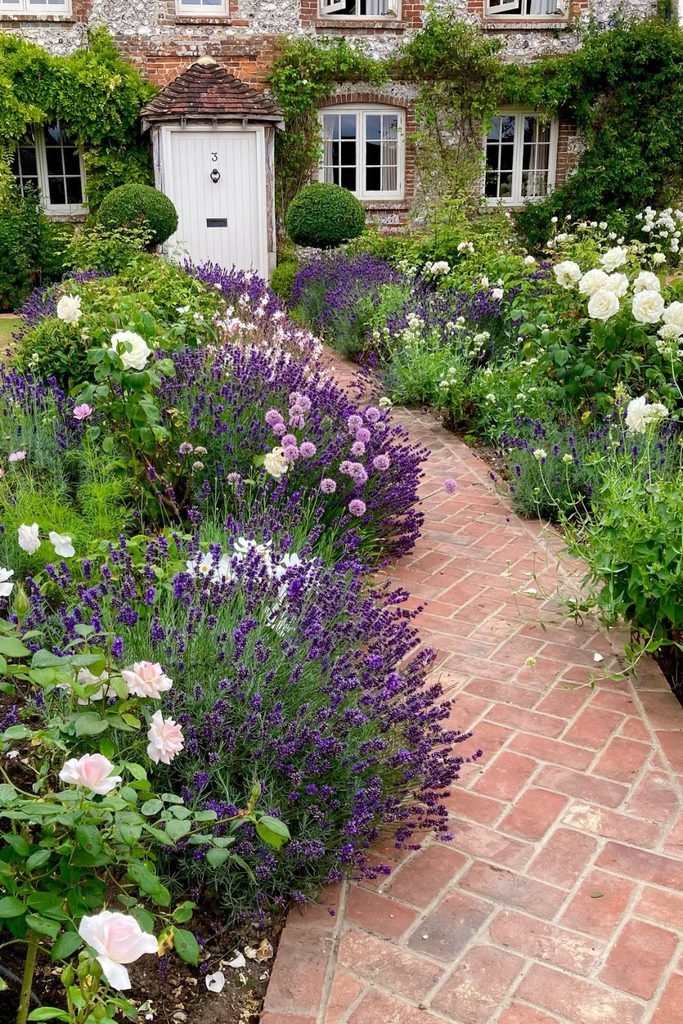
Frame a front entrance with fragrant planting by repeating lavender in generous mounds along both sides of a brick path.
Tuck white and blush roses in between the purple drifts then add a few airy flowering perennials to loosen up the arrangement.
Position taller roses behind the lavender so that the stems don’t block the walk.
The repeating purple and white near the doorway naturally draws the eye forward, and gives the entrance a pleasant cottage-garden atmosphere.
Sculpted Hydrangeas
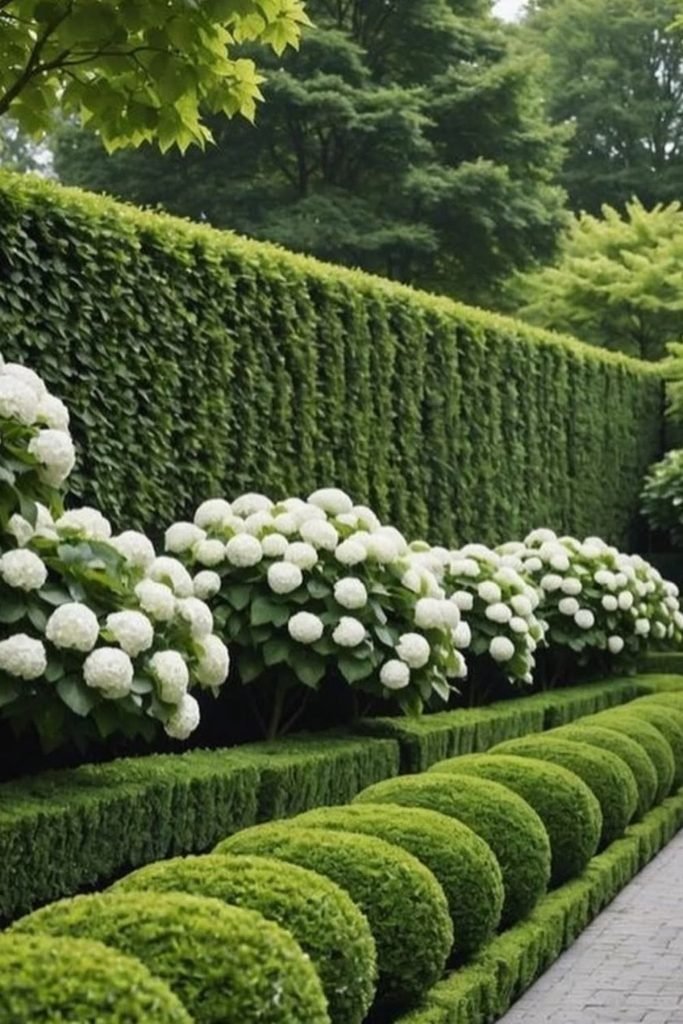
Bring strong structure into a formal perennial garden by pairing rounded hydrangeas with neatly clipped evergreen shapes.
Plant a series of white flowering hydrangeas behind low boxwood hedges then plant matching green spheres down the path to establish an organized rhythm.
A simple floral palette allows the varied plant types to take center stage, with evergreen hedges holding the design together when hydrangeas are no longer.
FAQs
Which Perennials Give the Longest Seasonal Color?
Instead of just having one flowering season, choose a combinations of spring, summer and fall bloomers.
Peonies, salvia, coneflowers, coreopsis, asters and sedum can help spread color across the months.
Put evergreen or colorful foliage plants between them so that the garden is still filled when one group has finished blooming.
How Can I Keep a Perennial Garden Low Maintenance?
Better-matched plants need less intervention.
Start with perennials adapted to your sunlight, soil, rainfall, and local climate. Space everything by mature size, mulch bare soil and plant in generous groups.
Use strong grasses and long-lived blooming plants, and divide crowded perennials when necessary instead of constantly replacing plants.
