
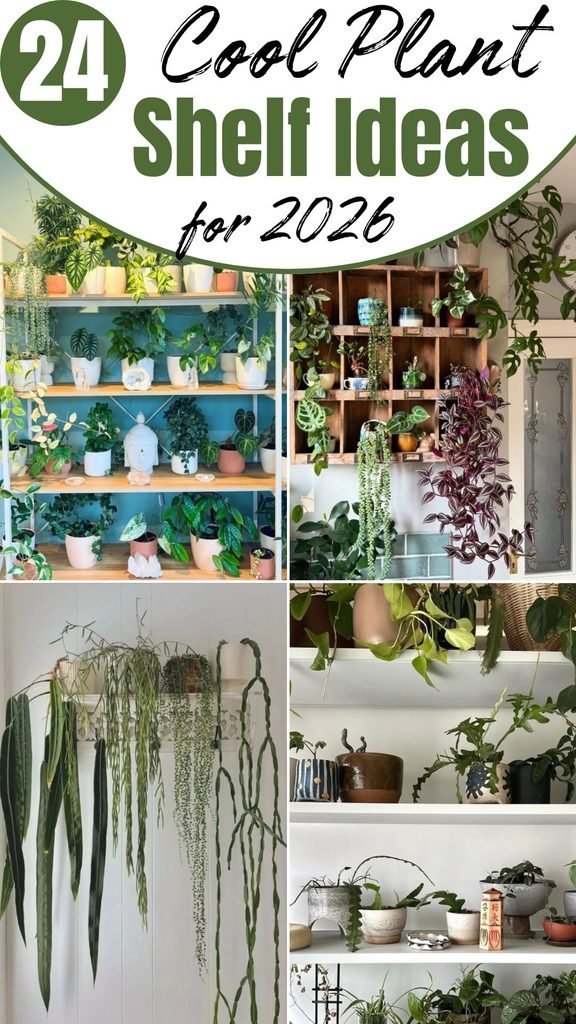
24 Plant Shelf Ideas for 2026
It’s easy to have a few houseplants until they steadily overrun every windowsill, table and unoccupied space.
The apparent option is to buy a shelf, but then a further dilemma arises.
The shelf is crammed, taller plants block the light, trailing vines obscure everything below, watering is a balancing act.
A decent plant shelf should be healthy for every plant at the same time, display your collection and be space saving.
In this article, I’ll show you 24 Plant Shelf Ideas you can use to display your greenery beautifully.
Let’s jump in!
How Do You Arrange Plants Without Shelves Looking Overcrowded?
First, think of your shelf as part of the room rather than a place to squeeze in every plant you own.
Give the pots some room so each plant gets ample light and makes a statement of its own.
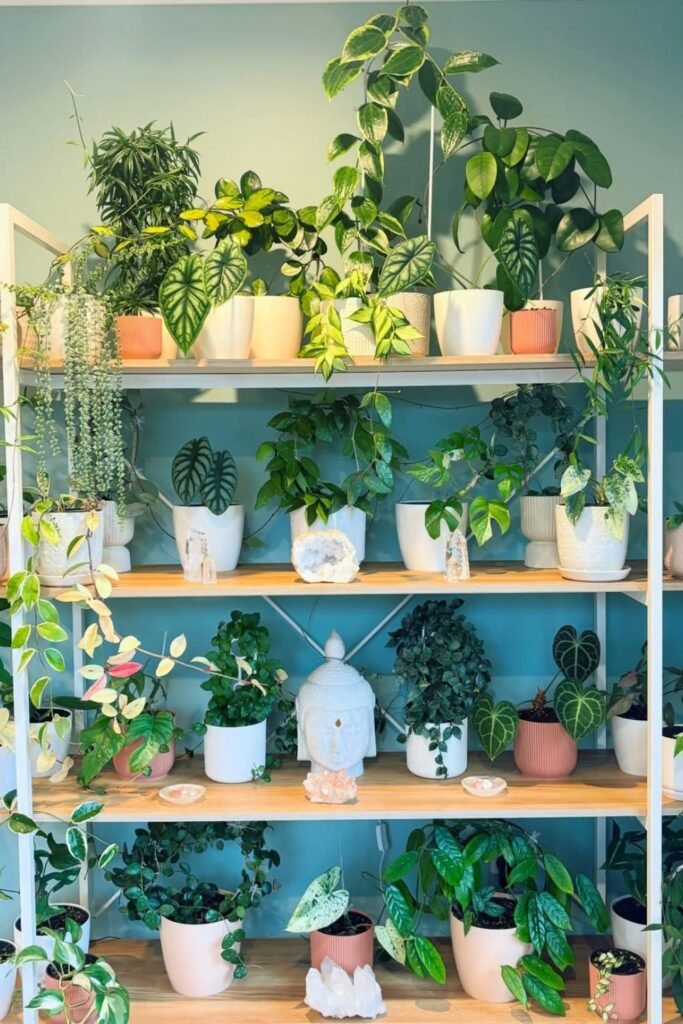
Put taller plants on lower or wider shelves then let trailing kinds hang down from higher levels without covering the plants below.
Grouping plants with comparable light and watering requirements makes them much easier to care for.
If one shelf looks crowded, don’t add more plants, just move some to another area.
Layered Plant Display
Turn an open shelving unit into a living plant wall by mixing upright foliage, trailing vines, and compact pots across different levels.
Place taller plants along the upper shelves while letting pothos and other trailing varieties spill downward to soften the straight shelving edges.
Keep plants with similar light needs together, rotate their pots regularly, and leave small gaps between foliage for easier watering and healthy airflow.
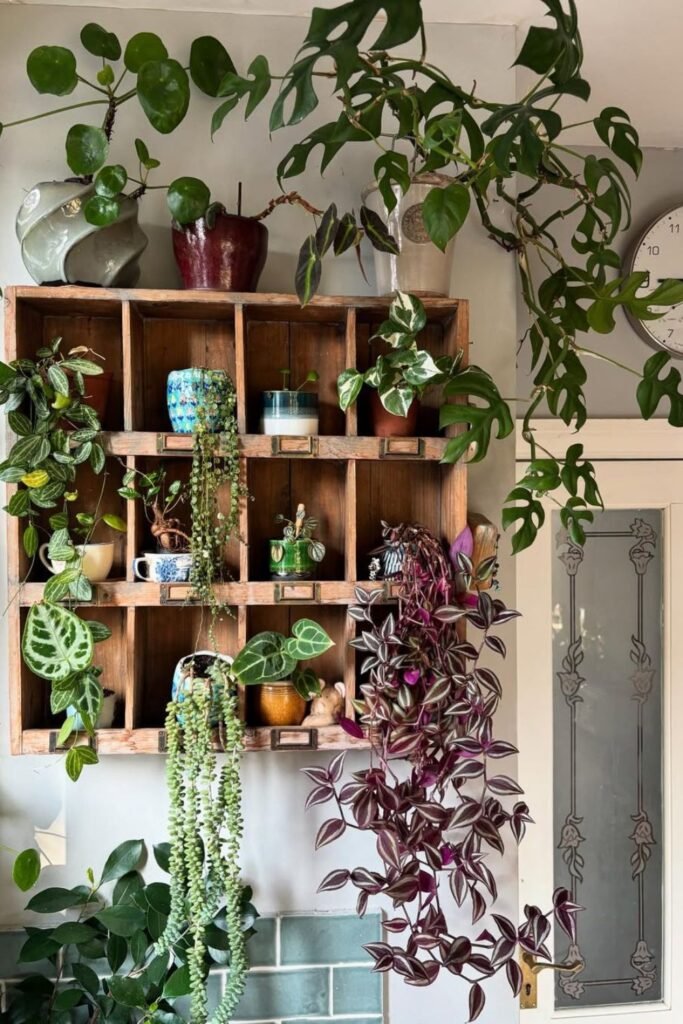
Vintage Plant Cubby
Give an old wooden cubby new purpose by filling individual compartments with small houseplants while allowing trailing varieties to escape beyond the frame.
Use compact pots inside tighter sections, then position longer vines near outer compartments where their stems can cascade naturally without becoming crowded.
Mount this display near bright indirect light, and combine different leaf shapes and colors to make the small planting area feel richly layered.
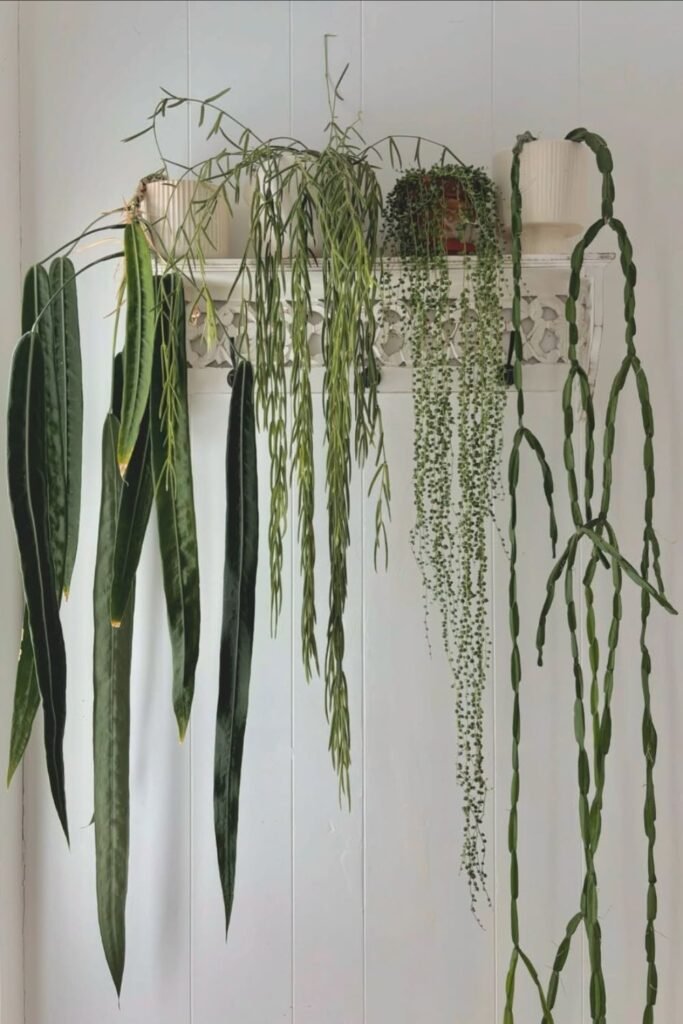
Cascading Cactus Shelf
Make narrow wall space feel dramatically greener by placing long trailing cacti and succulent vines high enough for their stems to hang freely.
Choose a sturdy raised shelf, space containers several inches apart, and combine thin stems with fuller cascading varieties for noticeable textural contrast.
Position the arrangement where filtered daylight reaches the plants, while keeping the hanging growth clear of furniture and busy walking areas below.
Mixed Pot Shelving
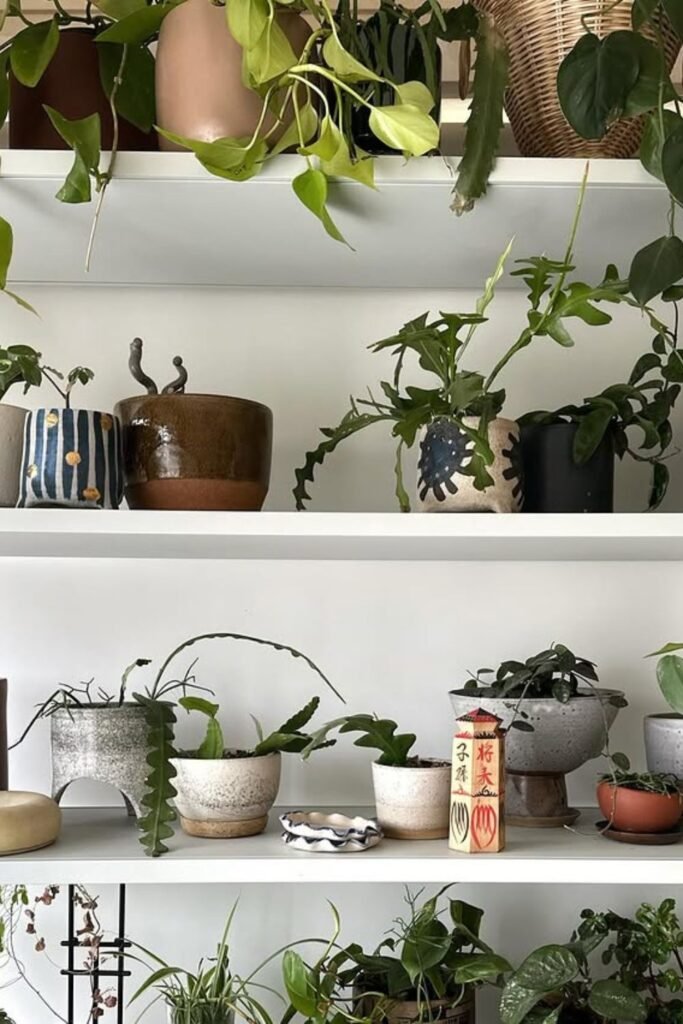
Build a relaxed indoor garden by spreading small and medium houseplants across simple shelves instead of concentrating greenery into one crowded section.
Mix ceramic, terracotta, and textured containers while varying plant heights, leaving enough open shelf space so individual foliage shapes remain clearly visible.
Reserve upper levels for trailing vines and brighter spots, then place compact plants below where watering, pruning, and regular maintenance stay convenient.
Corner Garden Shelves
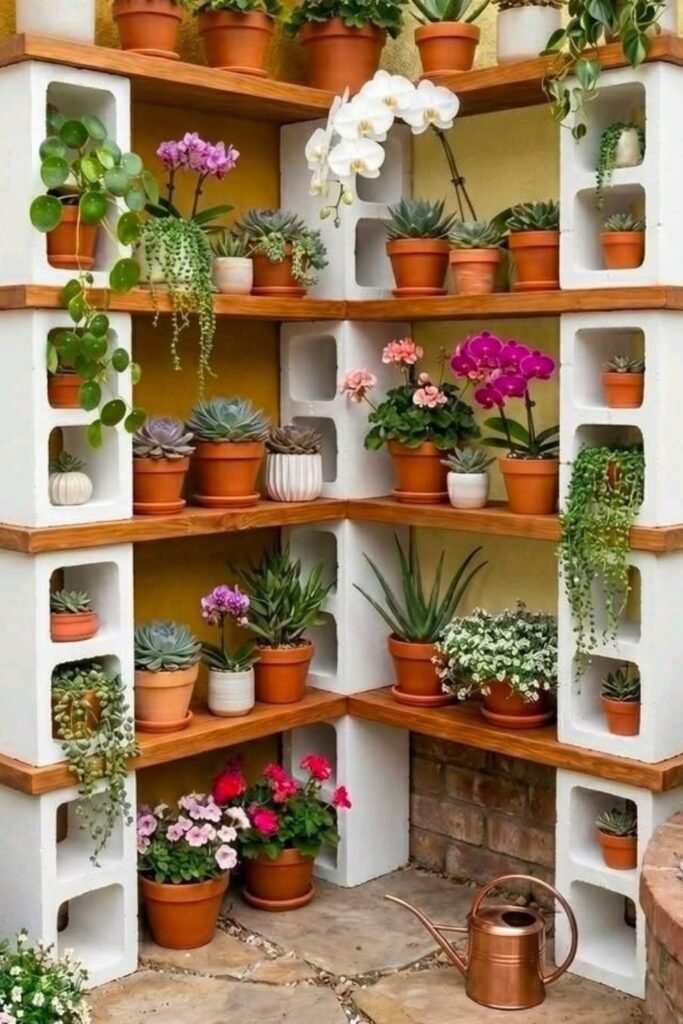
Transform an unused patio corner into productive planting space by stacking sturdy shelves between open concrete blocks and warm wooden boards.
Fill larger levels with orchids, aloe, succulents, and flowering plants, then tuck smaller pots inside block openings for extra growing space.
Let trailing greenery spill from higher sections while keeping thirsty plants lower, making watering easier and giving the arrangement natural layered movement.
Vertical Plant Wall
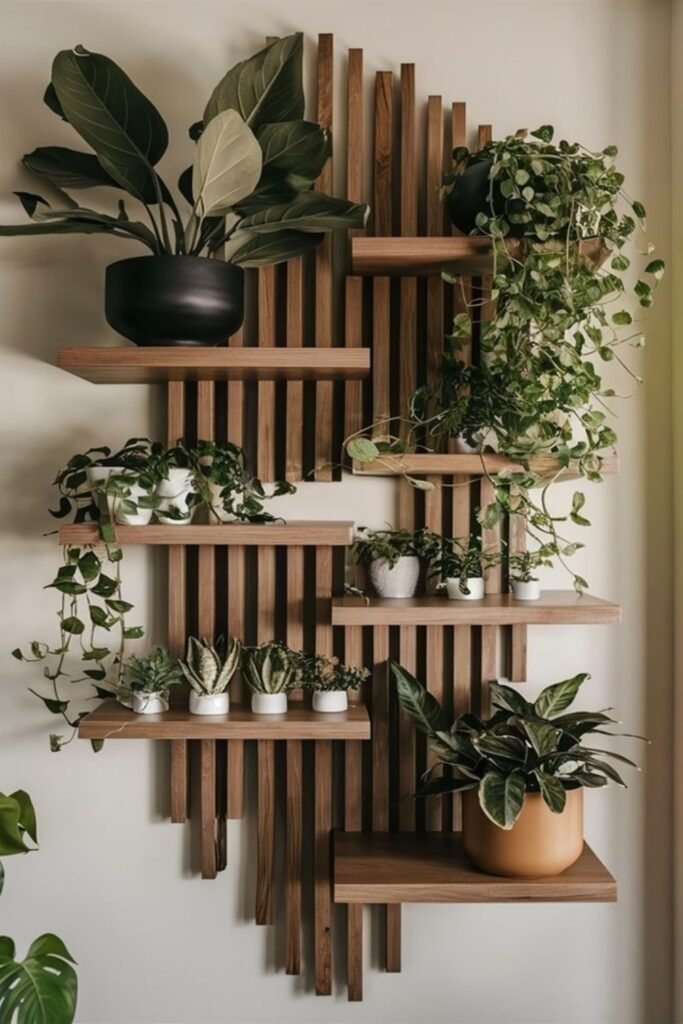
Bring greenery onto a narrow indoor wall with staggered wooden shelves backed by vertical slats that create height without occupying floor space.
Balance large leafy plants on wider platforms, then soften the wooden structure with cascading vines and clusters of smaller pots between levels.
Place the display near bright indirect daylight, allowing trailing stems room to grow while rotating larger containers occasionally for balanced foliage development.
Live Edge Shelves
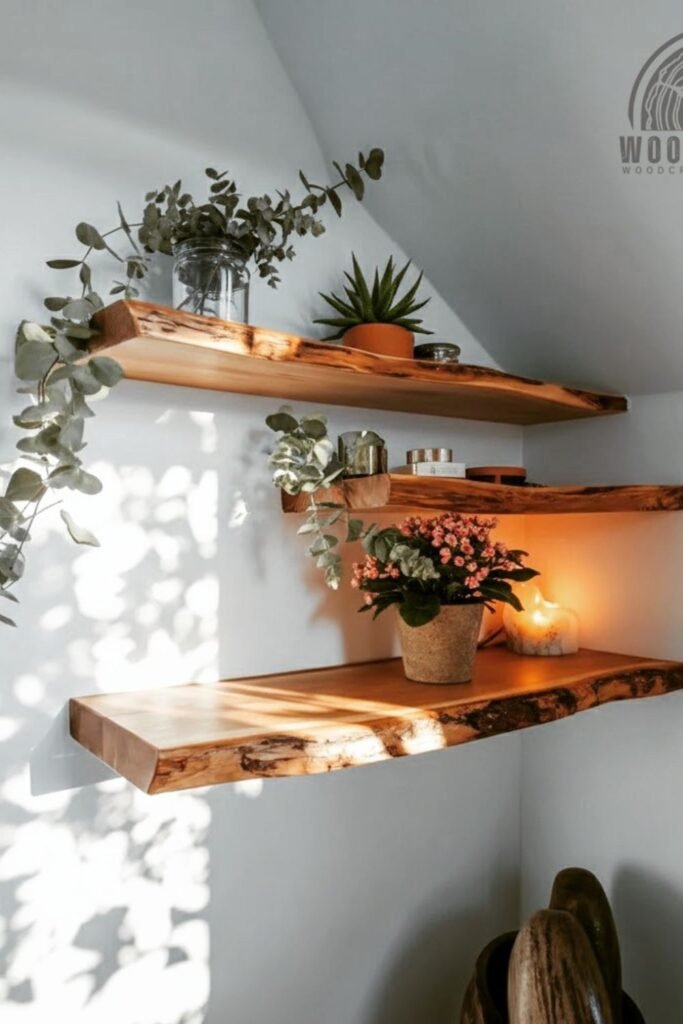
Let natural wood become part of the garden by pairing live edge floating shelves with a few carefully spaced plants and botanical cuttings.
Keep the arrangement airy with one trailing branch, a compact succulent, and flowering greenery rather than covering every shelf with crowded containers.
Use this setup beside a sunny window where shifting daylight highlights leaf shadows, wood grain, and delicate foliage without overwhelming smaller plants.
Floating Plant Shelves
Work small pockets of greenery into living room shelving by pairing compact houseplants with pottery, artwork, baskets, and other natural decorative pieces.
Space plants across separate levels instead of grouping them together, giving each leafy accent enough visual room while keeping the display comfortably balanced.
Choose low maintenance varieties for harder reaching shelves, reserving larger floor plants for corners where watering and routine care remain much easier.
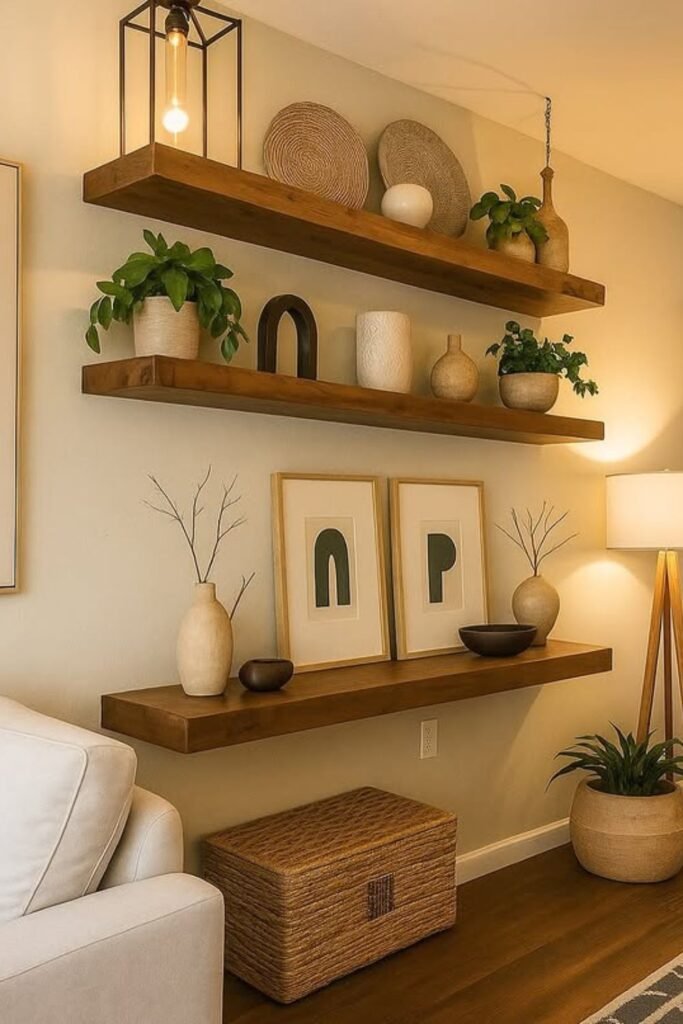
Plant Workspace Shelves
Turn a home workspace into a growing corner by spreading leafy houseplants across open shelving while keeping the central desk area functional.
Group larger foliage toward shelf ends, then fill middle sections with smaller terracotta pots so every plant remains reachable for routine care.
Allow one trailing vine to frame the shelving edge, while bright overhead light and nearby daylight help maintain healthy, balanced indoor growth.
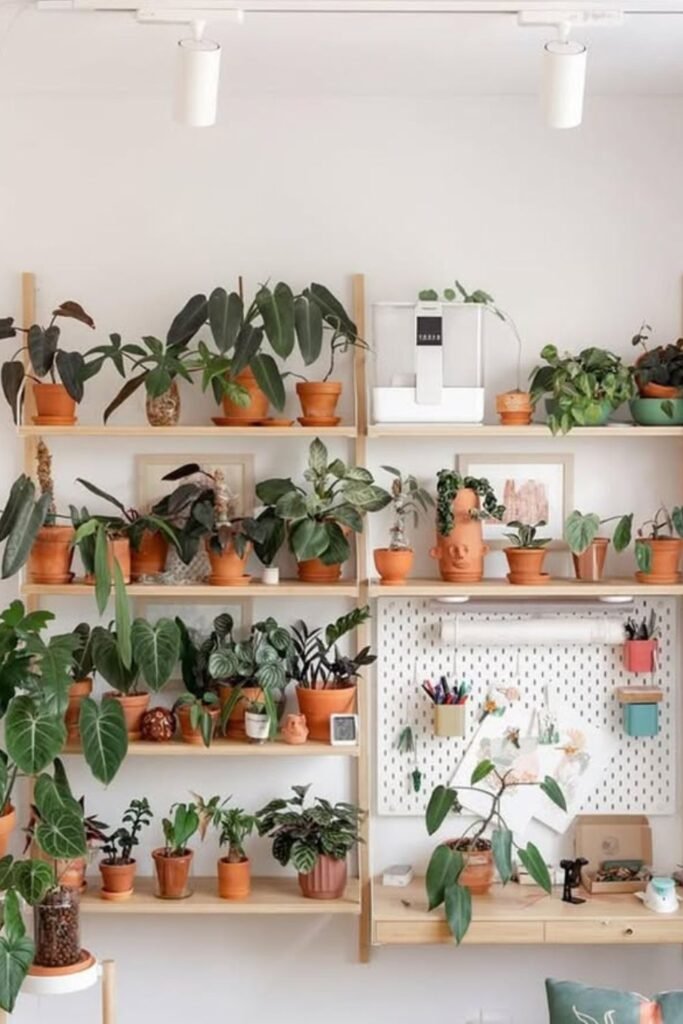
Library Plant Wall
Give a sunny reading corner extra life by layering houseplants above bookcases, creating a lush backdrop without sacrificing valuable floor space.
Mix upright foliage with cascading vines across wooden shelves, letting longer stems fall between levels while keeping books safely below watering areas.
Position light loving varieties nearest the window, then use denser foliage farther inside where softer indirect sunlight creates comfortable growing conditions.
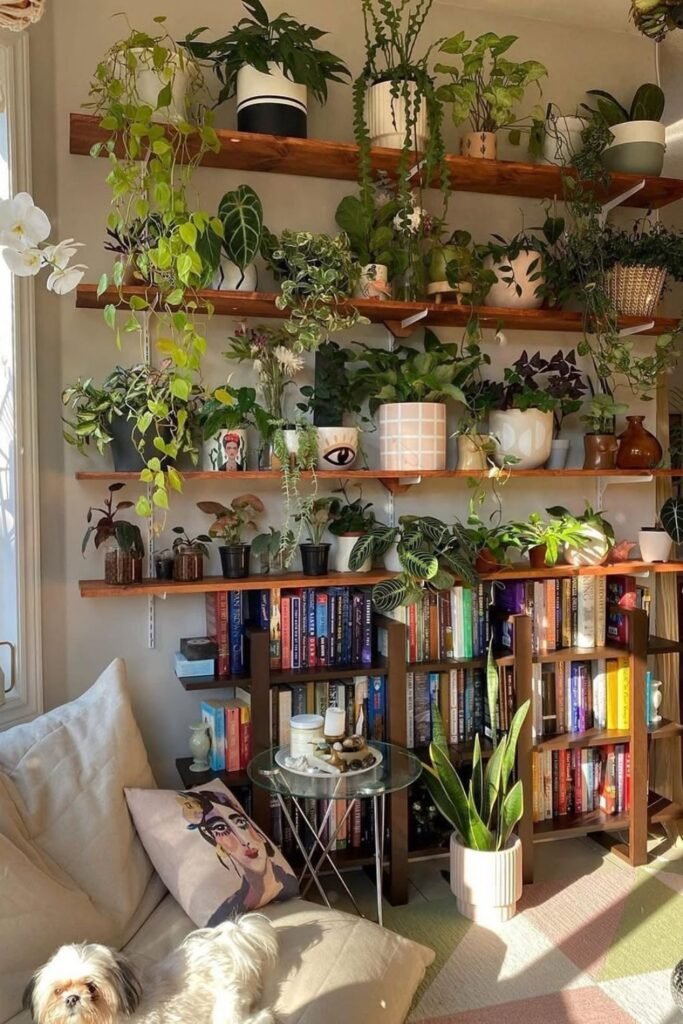
Hanging Garden Shelves
Bring greenery onto an empty wall by suspending narrow wooden shelves from a natural branch with thick rope and decorative macramé knots.
Place trailing plants near shelf edges so vines follow the hanging ropes, while compact upright varieties keep each platform balanced and uncluttered.
Choose lightweight pots and secure every hanging point carefully, especially near windows where bright indirect light can support steady plant growth indoors.
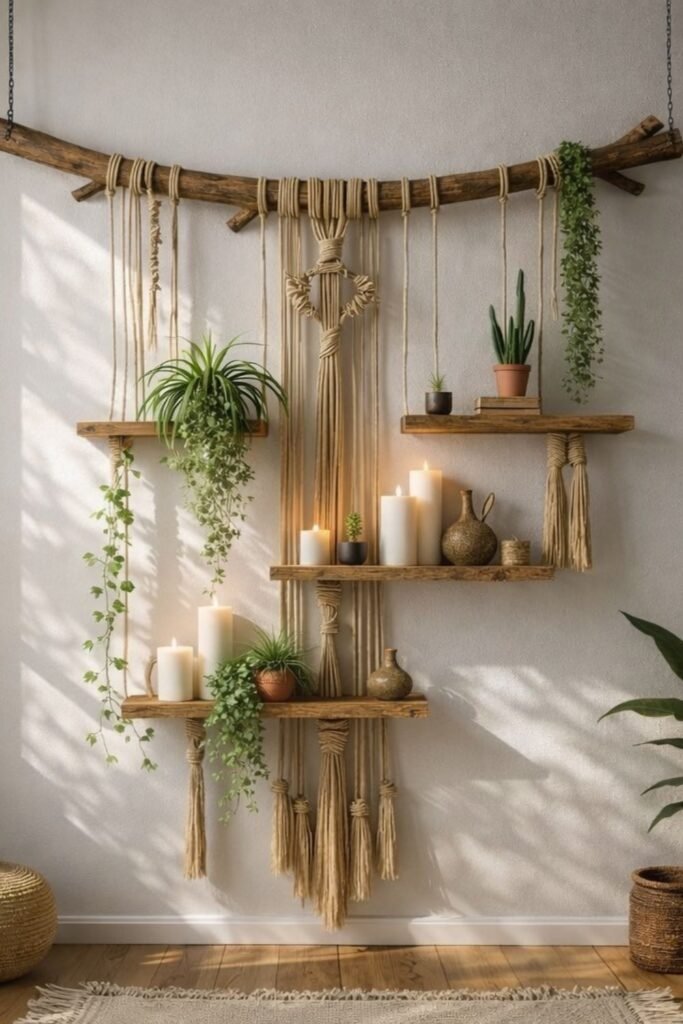
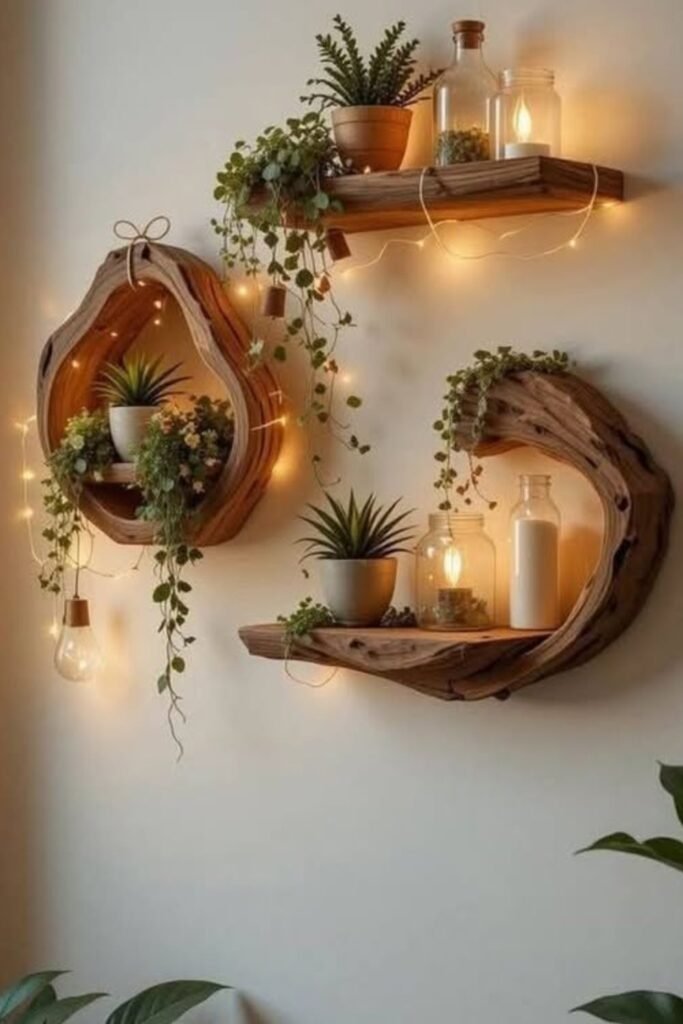
Glowing Plant Nooks
Turn small wall spaces into warm plant displays by pairing sculptural wooden shelves with trailing greenery, compact succulents, and softly glowing lights.
Use curved wood pieces to cradle smaller pots, then guide delicate vines around their edges so greenery naturally emphasizes each organic shape.
Add warm string lights around the shelves for evening atmosphere, keeping bulbs away from foliage while nearby daylight supports plants during daytime.
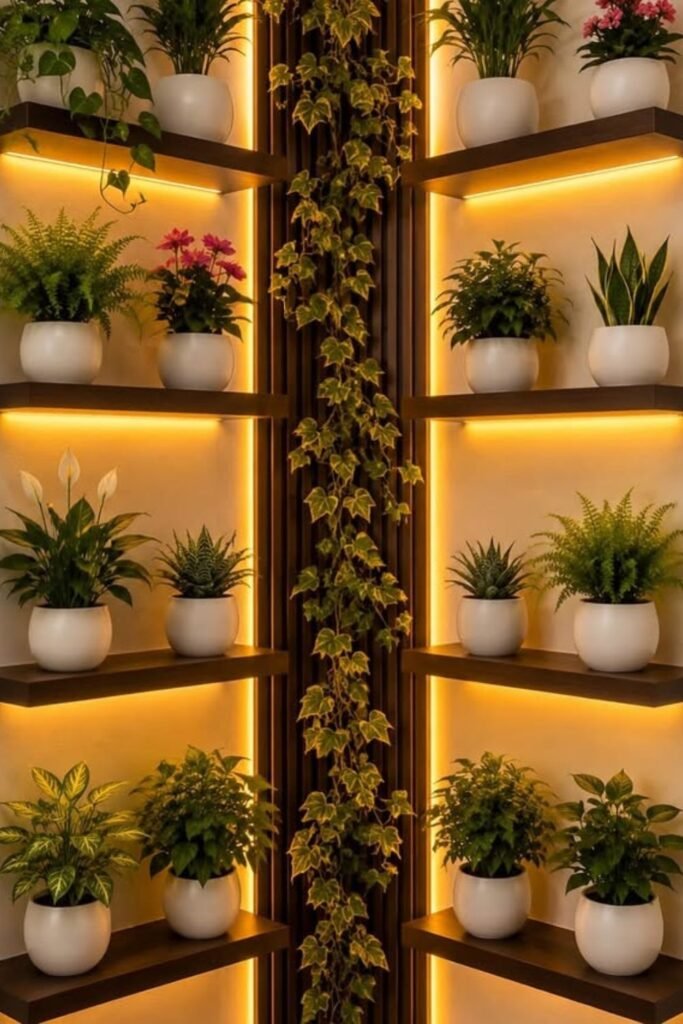
Illuminated Plant Shelves
Make a plain wall feel like an indoor garden feature by pairing dark floating shelves with compact greenery and warm lighting underneath.
Arrange ferns, flowering plants, and upright foliage in matching pots, leaving open space around each plant so the display stays balanced.
Train one climbing vine through the center slats, where its vertical growth connects every shelf and adds movement without overcrowding individual plants.
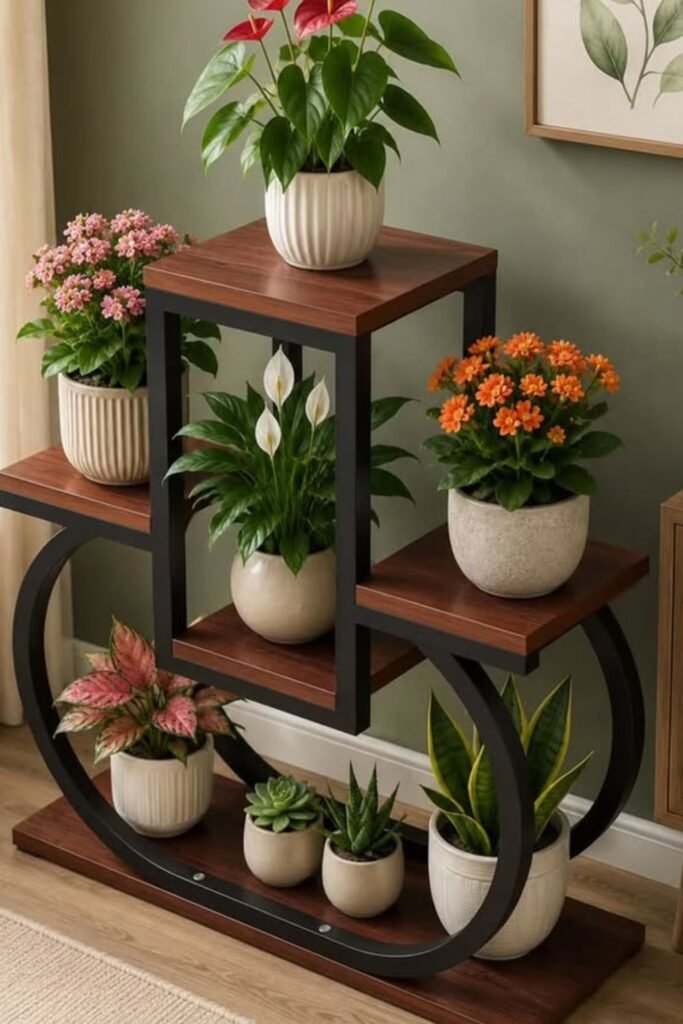
Tiered Plant Stand
Turn a bright living room corner into a colorful garden display with a tiered stand that gives every potted plant its own level.
Place taller flowering plants on upper platforms, then arrange peace lilies and compact blooms through the middle for a naturally layered composition.
Keep succulents and snake plants near the bottom, where their shorter growth fills empty space without hiding the more decorative flowers above.
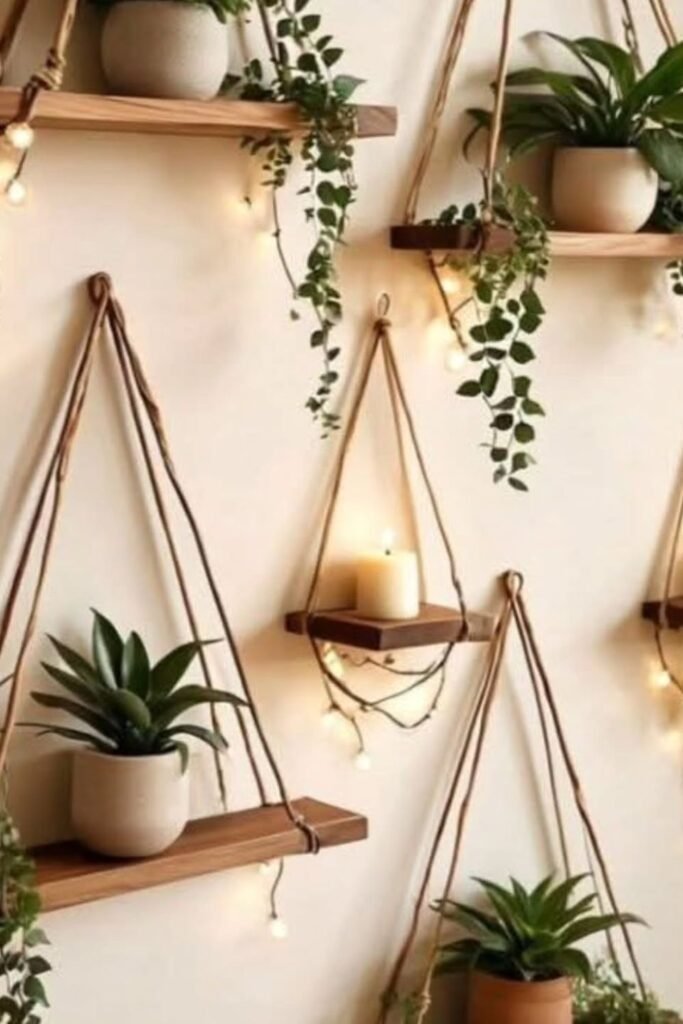
Glowing Hanging Shelves
Create a softer wall garden by suspending wooden shelves with leather or rope straps, then weaving warm fairy lights around the supports.
Let trailing plants spill from the highest shelves while compact leafy varieties sit lower, creating movement without requiring a bulky floor unit.
Choose lightweight pots for safer hanging, and place the arrangement near filtered daylight so foliage stays healthy beyond the decorative evening glow.
Rope Plant Shelves
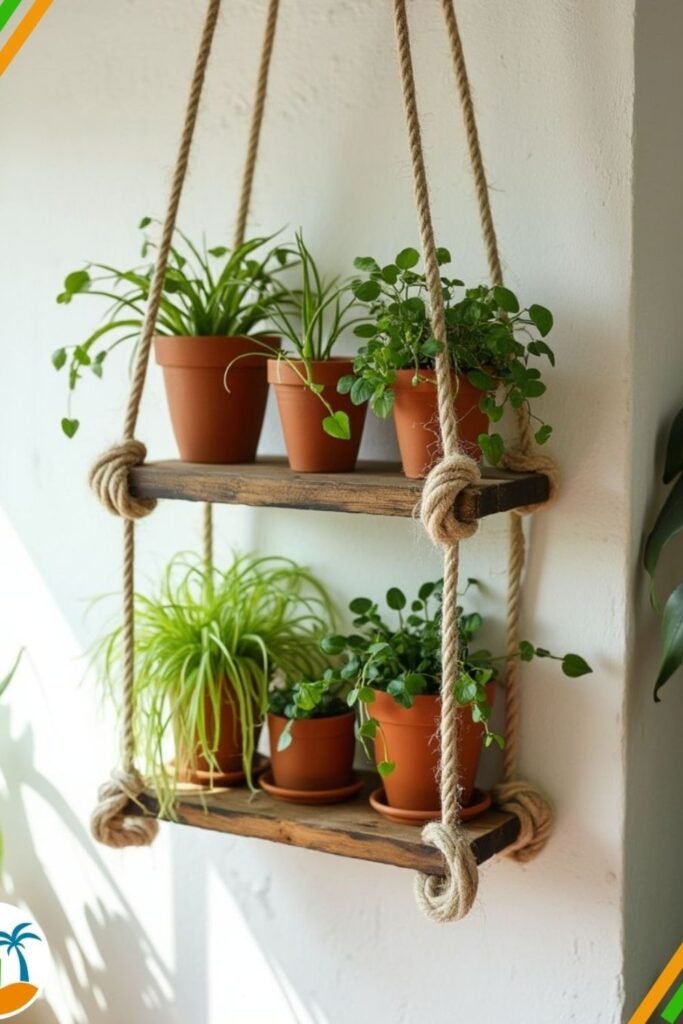
Use thick rope and rustic wooden boards to build a compact two level garden that keeps several plants off crowded surfaces.
Group spider plants with smaller trailing varieties in terracotta pots, allowing their different leaf shapes to create texture across each narrow shelf.
Hang the structure beside a bright window, secure every rope knot firmly, and rotate pots occasionally so plants receive more even daylight.
Sunlit Corner Garden
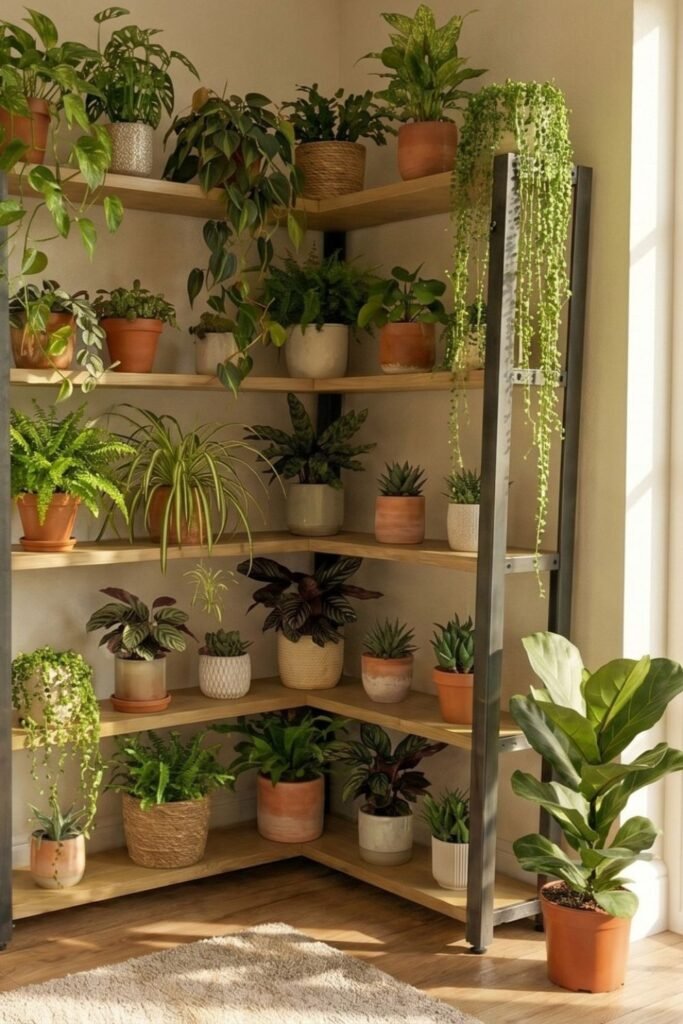
Fill an empty corner with tiered shelving that gathers mixed houseplants together while keeping every pot open to valuable natural window light.
Set trailing vines and fuller foliage on upper levels, then arrange ferns, spider plants, and compact succulents across the lower wooden shelves.
Keep larger floor plants beside the structure to extend greenery outward, creating a fuller garden effect without overcrowding the individual shelf levels.
Sculptural Plant Tower
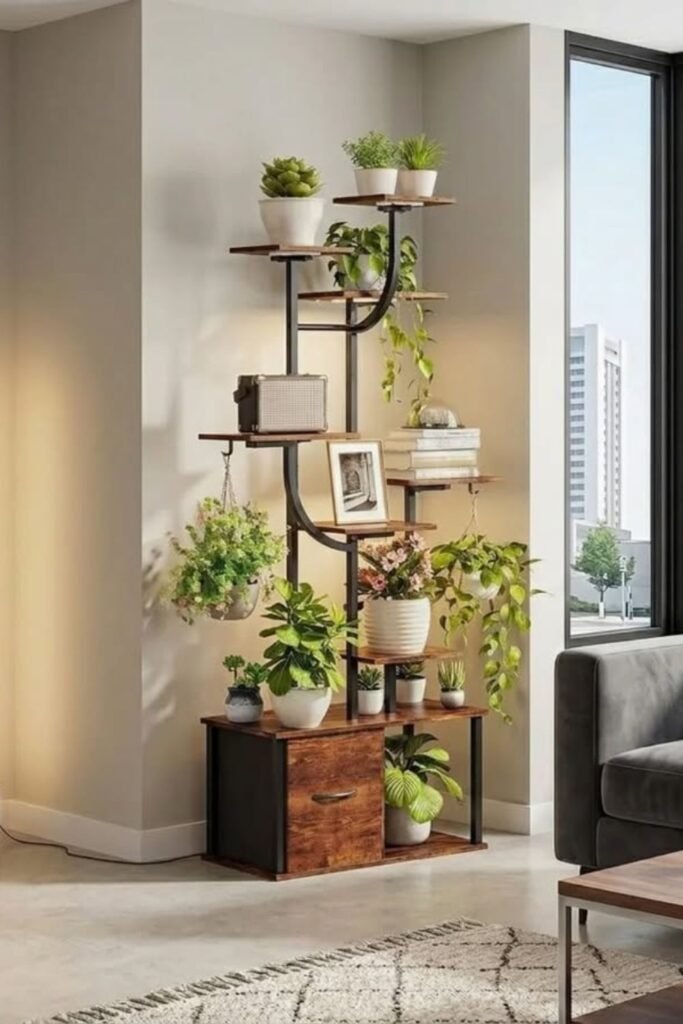
Use a tall narrow plant stand when floor space is limited, letting staggered platforms carry greenery upward instead of across the room.
Alternate leafy plants, succulents, and trailing vines between different heights, leaving occasional platforms open for decorative pieces and practical storage below.
Position the tower beside a bright window so upper plants receive strong daylight, while lower varieties benefit from softer filtered light nearby.
Branch Garden Shelves
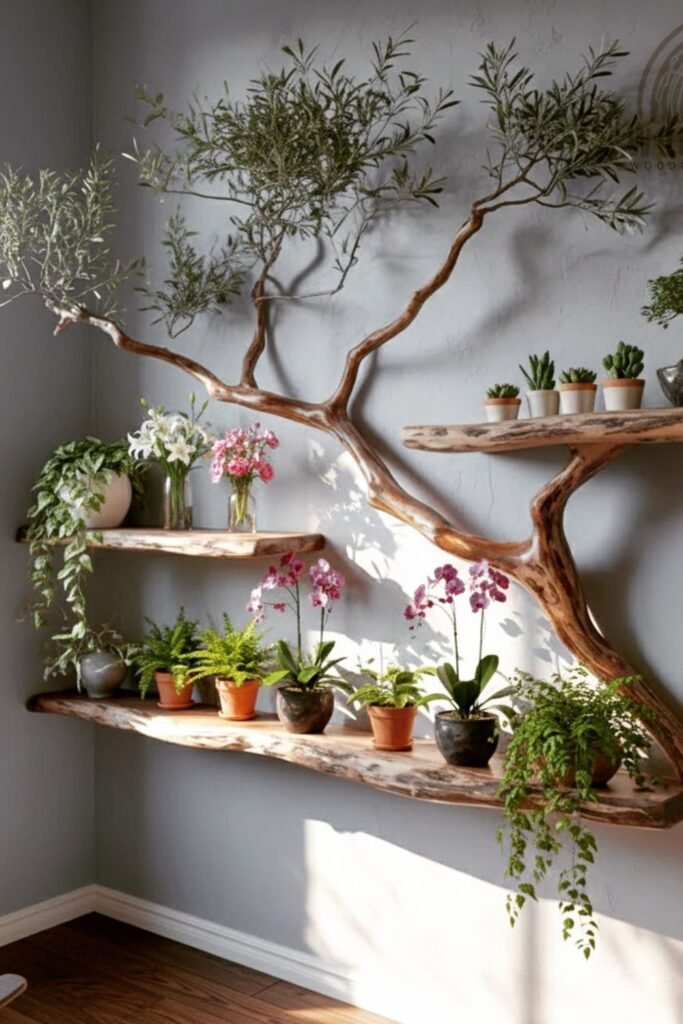
Bring an organic woodland feel indoors by using a sculptural tree branch as the framework for several natural wood plant shelves.
Line lower shelves with orchids, ferns, and flowering pots, then reserve the upper branch ledge for succulents and a miniature bonsai.
Place the installation beside a sunny window where branch shadows become decorative, while trailing greenery softens the heavier wood structure naturally.
Geometric Plant Shelf
Give a narrow wall purposeful greenery with an asymmetrical wooden shelf that combines small platforms, vertical panels, and room for cascading growth.
Place a trailing pothos on the outer ledge so vines fall freely, then balance it with compact flowering and leafy plants opposite.
Keep matching dark pots throughout the arrangement to reduce visual clutter, allowing fresh foliage and the warm wooden framework to stand out.
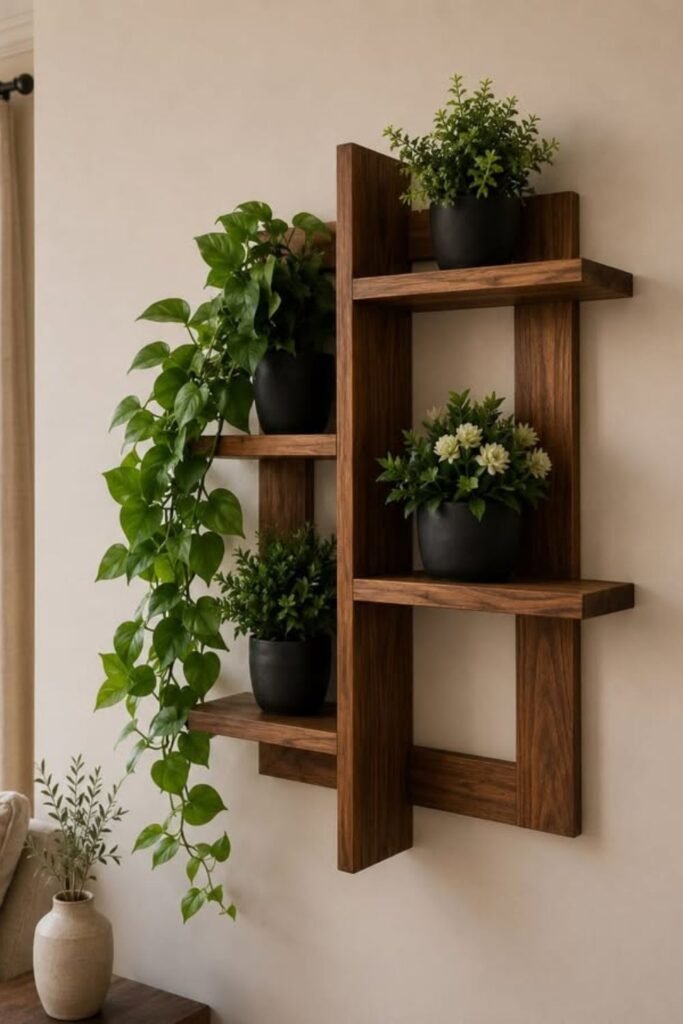
Backlit Garden Shelves
Turn a narrow wall into a polished plant feature by pairing staggered wooden shelves with soft lighting tucked neatly beneath each level.
Spread ferns, upright foliage, and trailing plants across alternating platforms, leaving enough open wall space to keep the arrangement visually balanced.
Use warm shelf lighting for evening atmosphere, while positioning the garden near natural daylight so decorative illumination never replaces healthy growing conditions.
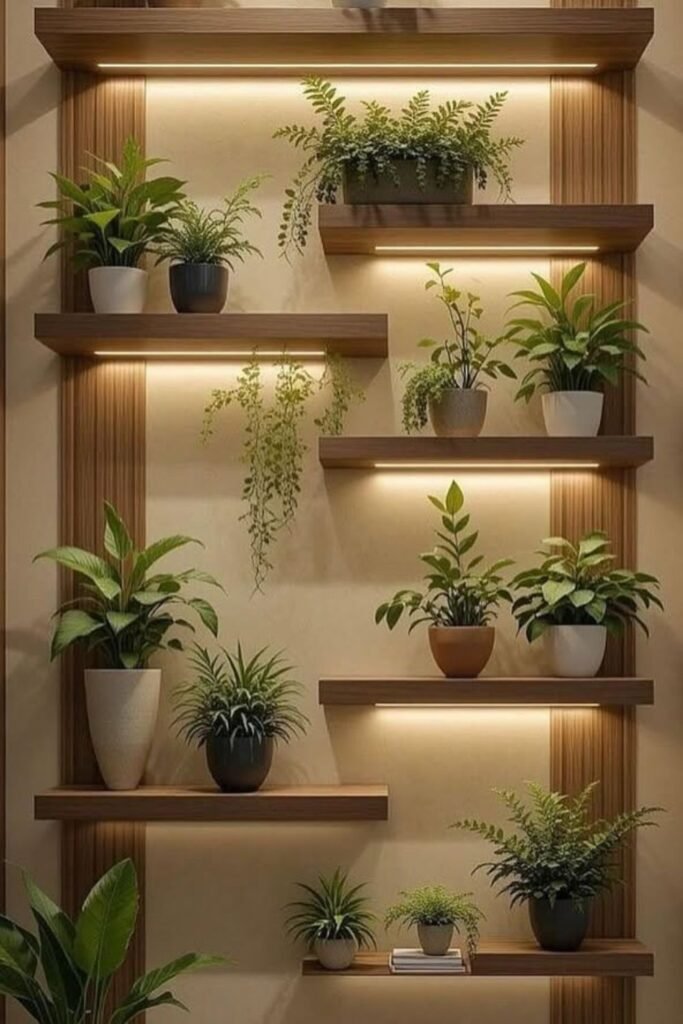
Curved Plant Tower
Make a cozy bedroom corner feel greener with a sculptural plant tower that carries cascading foliage upward without demanding much floor space.
Set fuller vines on wider platforms and flowering plants on smaller ledges, letting stems weave naturally around the curved metal framework.
Add gentle shelf lights and nearby string lighting for warmth, then keep the stand close to a window for reliable daytime brightness.
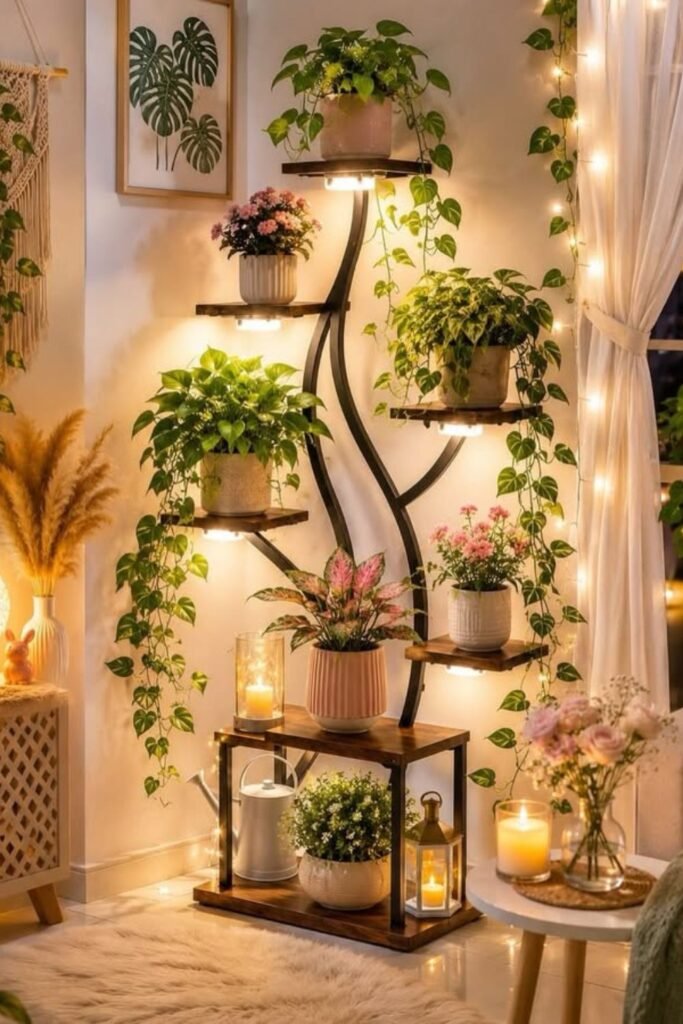
Live Edge Garden
Celebrate natural materials by mounting irregular live edge shelves beside a bright window, creating generous platforms for plants without bulky freestanding furniture.
Scatter trailing vines, succulents, and upright foliage across different heights, allowing the uneven wood edges to remain visible between individual containers.
Reserve brighter window facing shelves for light loving varieties, while moving sensitive plants inward where softer daylight protects leaves from harsh exposure.
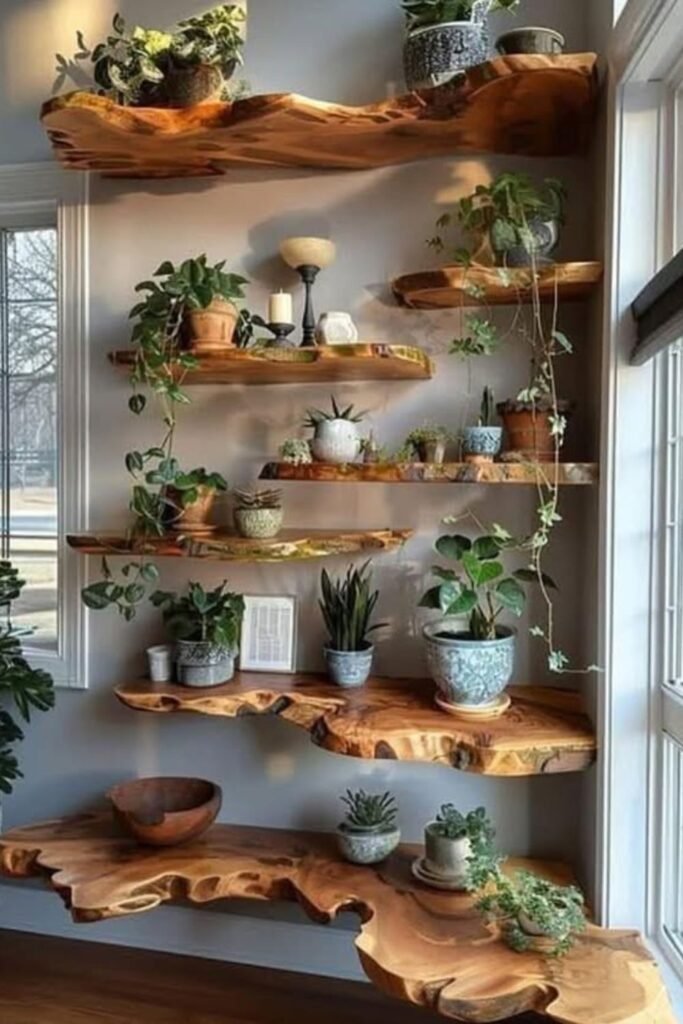
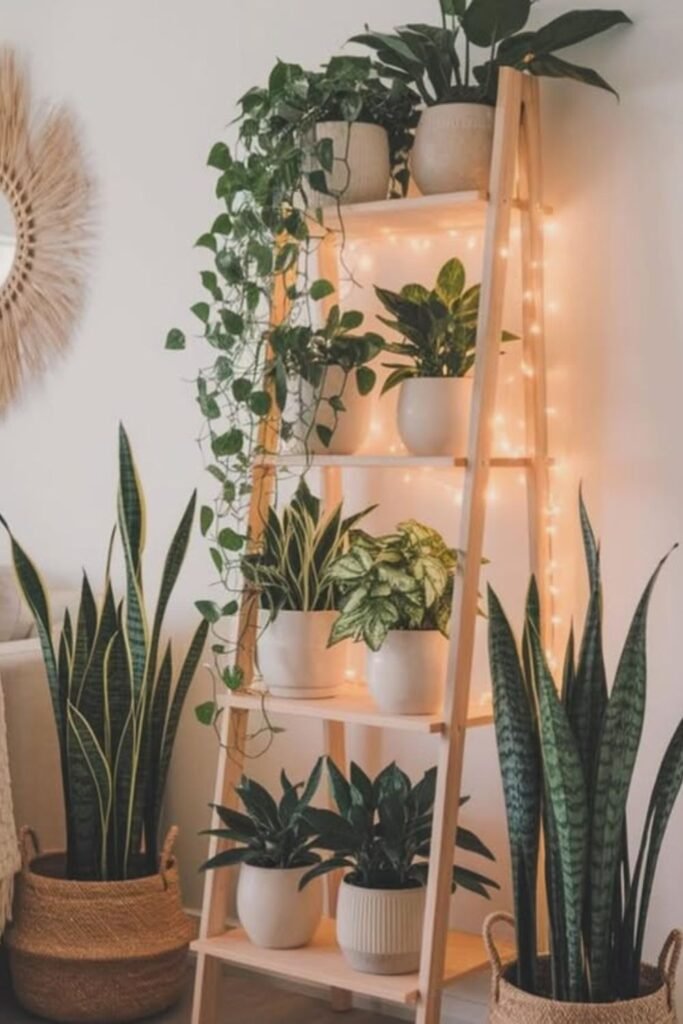
Glowing Ladder Garden
Give a quiet corner vertical greenery with a leaning ladder shelf, using several levels to display foliage without making the room feel crowded.
Start with trailing pothos near the top, then layer patterned foliage and compact plants downward while tall snake plants anchor both sides.
Wrap subtle string lights around the wooden frame for evening warmth, keeping foliage loosely arranged so every plant remains accessible for regular care.
FAQs
How Many Plants Should You Place on One Shelf?
Focus on the shelf size rather than trying to reach a specific number of plants.
Leave enough space for leaves to grow without overlapping too much, and make sure every pot receives adequate light and airflow.
A shelf with a few well-placed plants usually looks more attractive than one packed from edge to edge, and it also makes watering, cleaning.
Which Plants Are Best for Floating Wall Shelves?
Choose lightweight plants that stay compact or trail gracefully over the edges.
Pothos, heartleaf philodendrons, string of pearls, spider plants, peperomias, and small ferns all work well because they don’t become too heavy.
Save large floor plants like monsteras or bird of paradise for the ground, where they have room to grow without putting extra strain on the shelf brackets.
