
25 Raised Garden Beds Ideas for 2026
It’s great to look over stunning raised garden beds until you try and plan one for your own backyard.
Suddenly you’re contemplating what arrangement will suit your area, how much room to leave between the beds.
One bad decision and you could end up with restricted walkways, hard-to-reach plants or a garden that’s more effort than you bargained for.
In this article, you’ll discover practical planning tips first, followed by 25 raised garden bed ideas.
Let’s jump in!
How Can You Make Raised Garden Beds Beautiful?
Every Raised Garden starts with one choice: construct something that looks wonderful, or design something that’s easy to use.
The truth is, you don’t have to pick. First, figure out how you’ll get to each plant in the garden and water it without dragging hoses all over the yard.
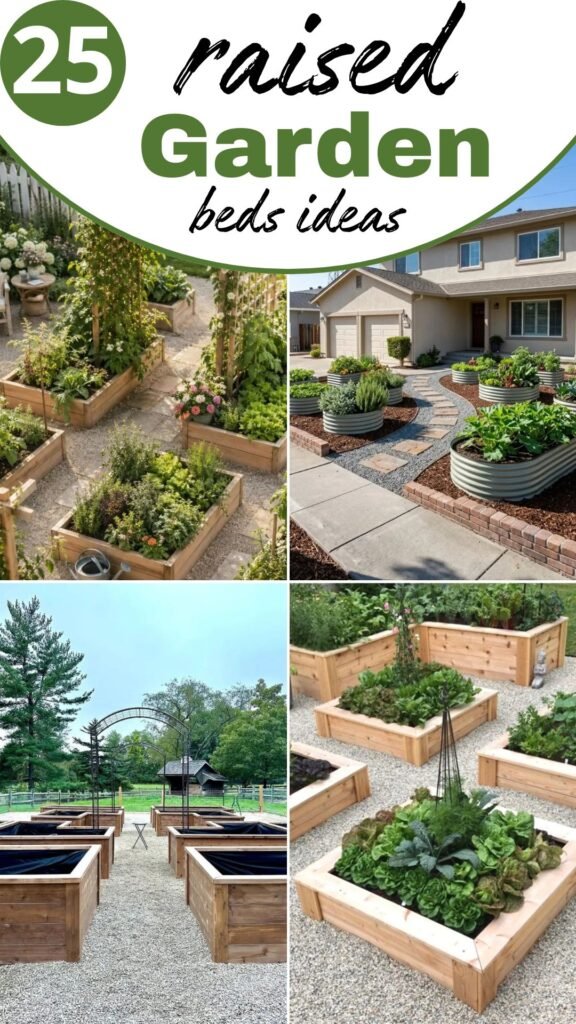
Leave ample space between beds before adding decorative elements, and use materials that complement your home’s design rather than following fads.
Add trellises, flowers or gravel walks only where they help the plan, not just the looks.
When everything has a purpose, your raised garden remains beautiful, orderly and much simpler to maintain all during the growing season.
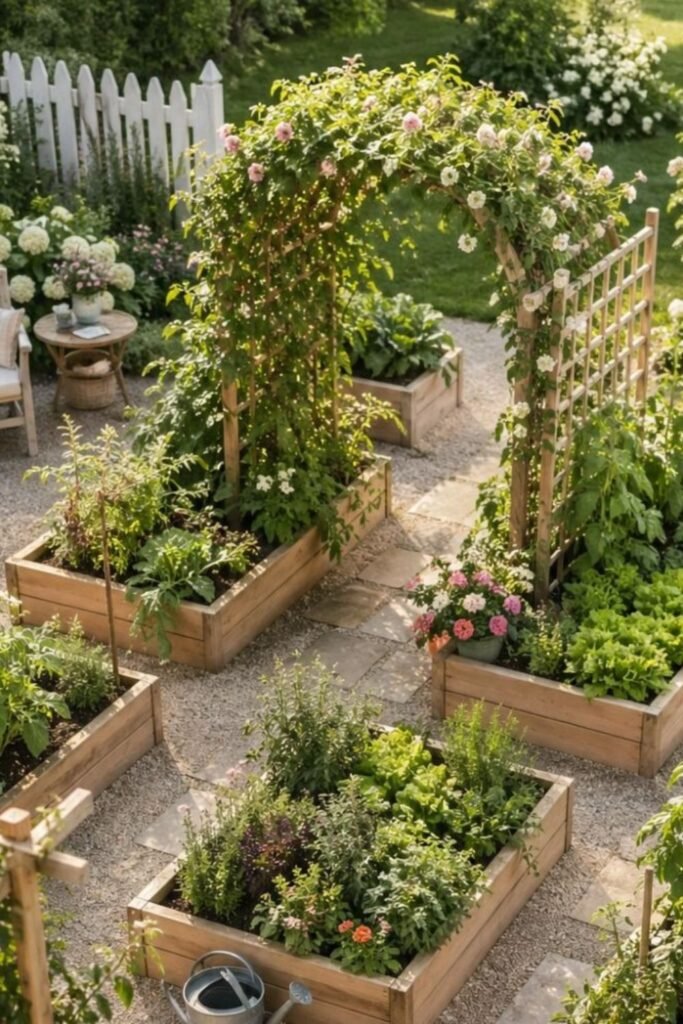
Garden Arch
Walking into your vegetable garden should feel inviting, not like stepping into a row of plain planting boxes.
Build a wooden arch between two raised beds and train climbing roses or beans or cucumbers to grow up it for added height and seasonal colour.
Keep the same bed size to keep things balanced and finish off the paths with gravel or stepping stones for cleaner access after watering.
Planting leafy greens, herbs and blooming plants around the entry softens the structure and makes the whole garden a destination, not just a place to grow vegetables.
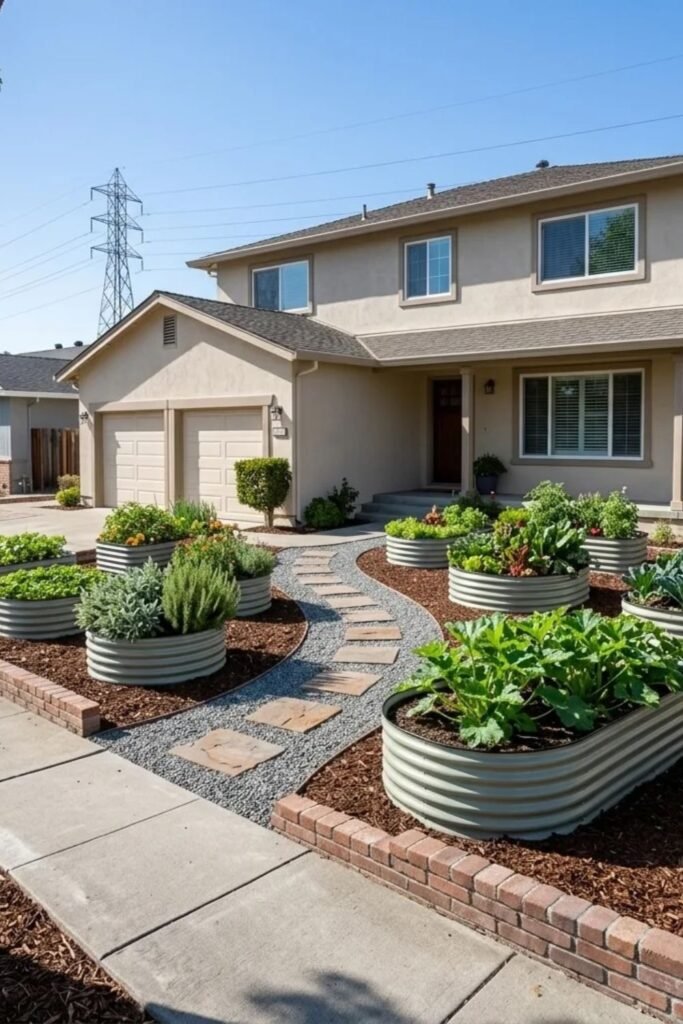
Metal Layout
Curved pathways instantly make a front yard vegetable garden feel more welcoming than straight rows of planters.
Space raised beds evenly so all areas are easy to access for planting and harvesting.
Surround beds with mulch to suppress weeds and keep the look nice all year long.
Fresh harvests and a picturesque landscape are created by herbs, lush greens and bright veggies.
Matching the design of the beds across the yard pulls everything together and makes your edible garden look natural with the rest of the landscaping around your home.
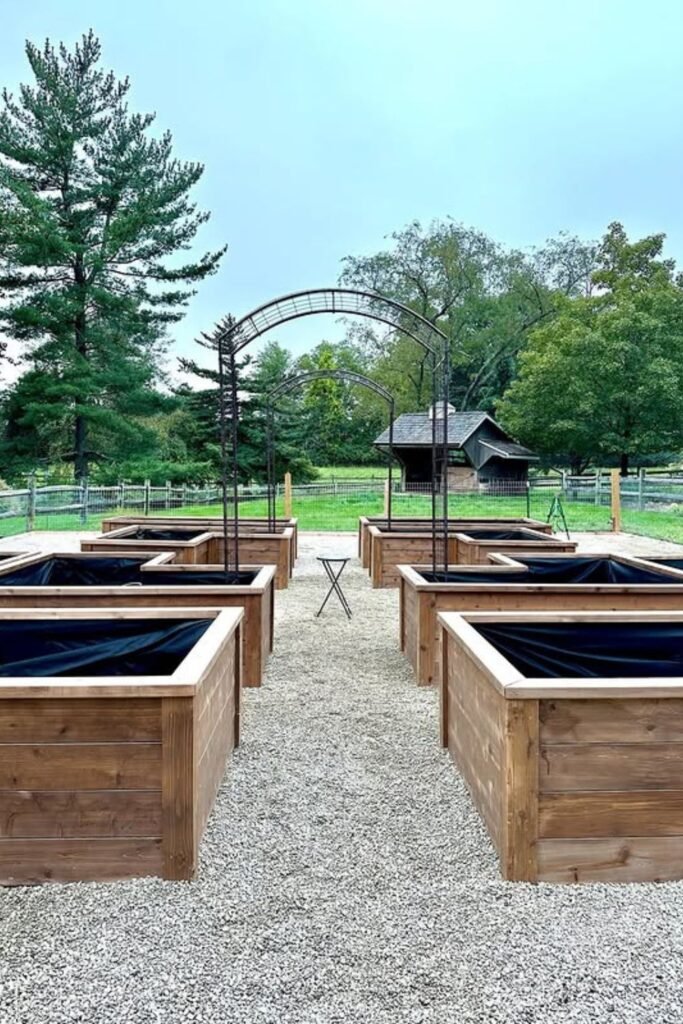
Symmetrical Beds
Order makes a vegetable garden feel bigger and easier to manage. Arrange matching wooden raised beds in evenly spaced rows.
Then separate them with wide gravel walkways so you can push a wheelbarrow or watering can through without squeezing between them.
In the middle path, garden arches act as a natural focus of attention and give climbing beans, cucumbers or flowery vines a space to grow up.
Having all the beds the same height and size also makes it easier to rotate crops each season and gives the whole garden a neat, professionally designed look.
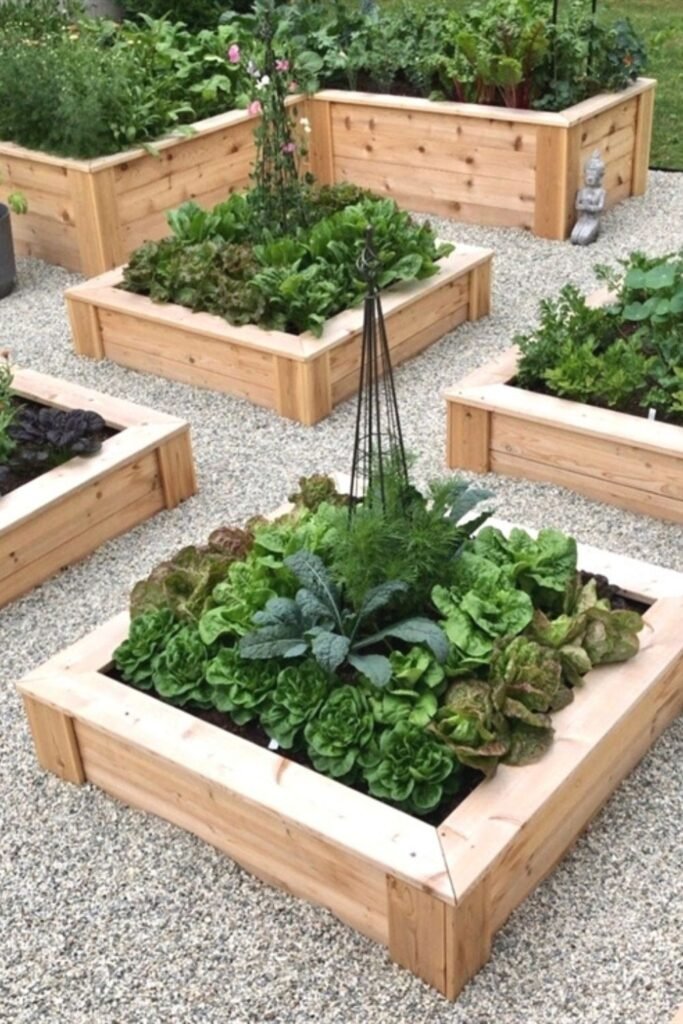
Cedar Squares
Fresh cedar beds arranged in a grid keep every planting area organized without making the garden feel crowded.
Allow enough of gravel roads between beds so you can weed, water and harvest from each side without walking on the dirt.
Plant leafy greens in the center beds, use the larger boxes for taller veggies and add vertical flair with a simple obelisk to support climbing crops.
The same design of bed repeated across the space produces a tidy, unified arrangement that’s easy to expand as your vegetable garden expands.
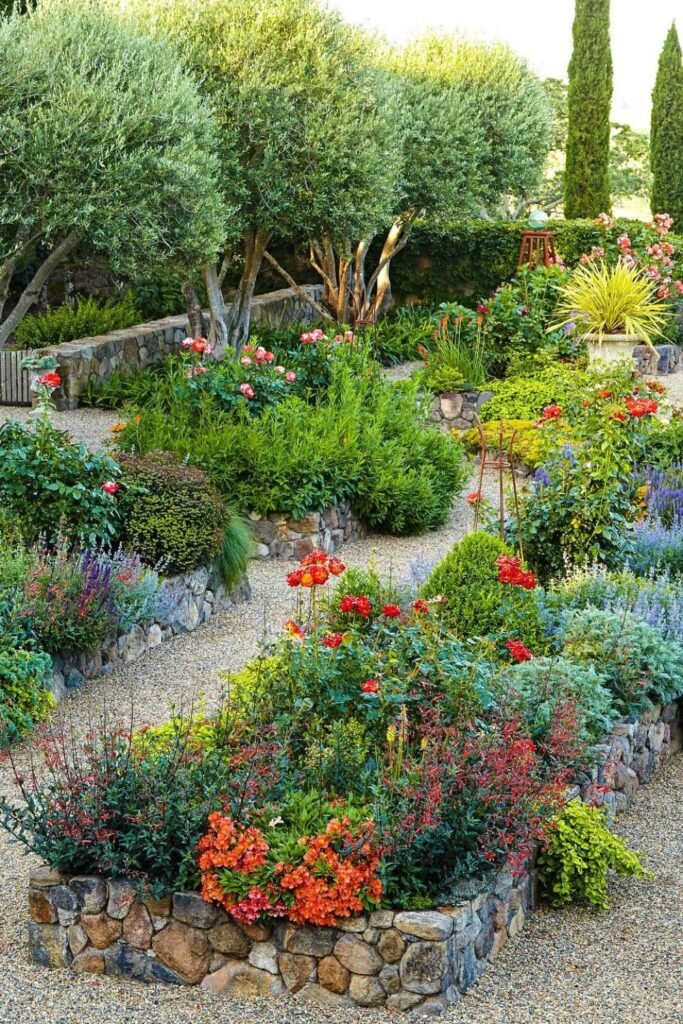
Stone Borders
Natural stone borders give your garden a timeless look while creating sturdy raised planting areas that blend beautifully into sloped landscapes.
Plant flowering shrubs, lavender, ornamental grasses and evergreens at varying heights to ensure colour in all areas of the garden throughout the seasons rather than all flowering at the same time.
Curved gravel paths soften the pattern and direct visitors through the garden, without disrupting planted areas.
If you want a raised garden that feels more like a professionally planted hideaway than a standard vegetable plot, this style is perfect.
Mixing texture, color and evergreen structure keeps the space looking lovely even when some of the flowers fade.
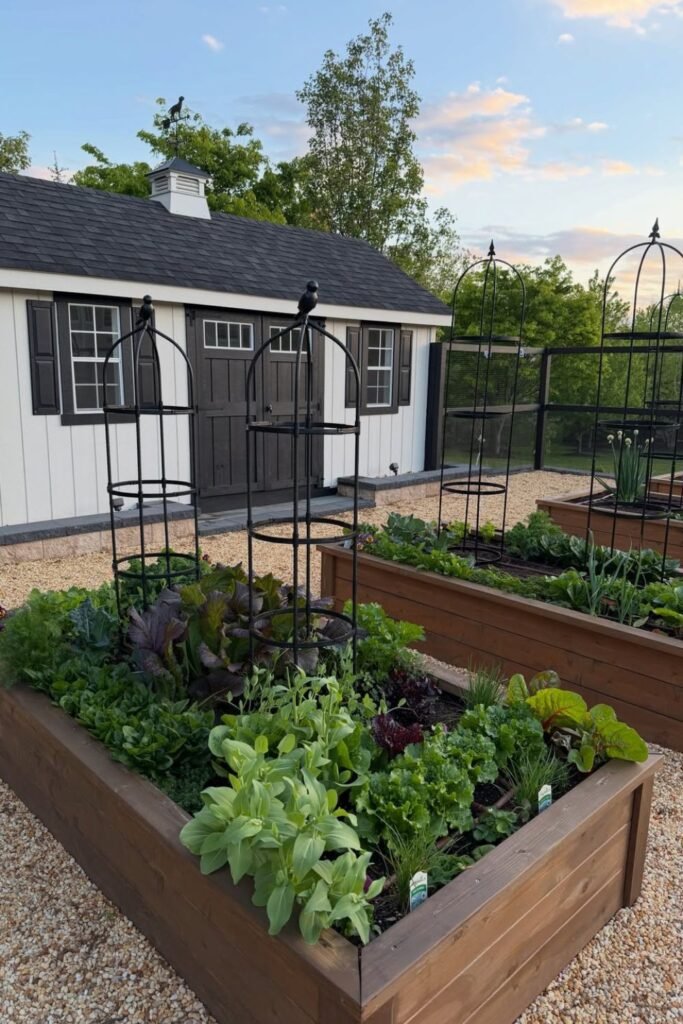
Obelisk Support
Vertical growing keeps raised beds productive without making them feel overcrowded. Position sturdy metal obelisks in the center of larger beds before planting.
Then train beans, peas, cucumbers or blooming vines to grow up instead of over adjacent veggies.
Pair dark metal supports with rich wood planters and light gravel paths for a clean, modern and easy-to-maintain garden.
Growing leafy greens and herbs toward the bottom makes greater use of every inch and adds layers of texture that keep the beds filled from spring through harvest.
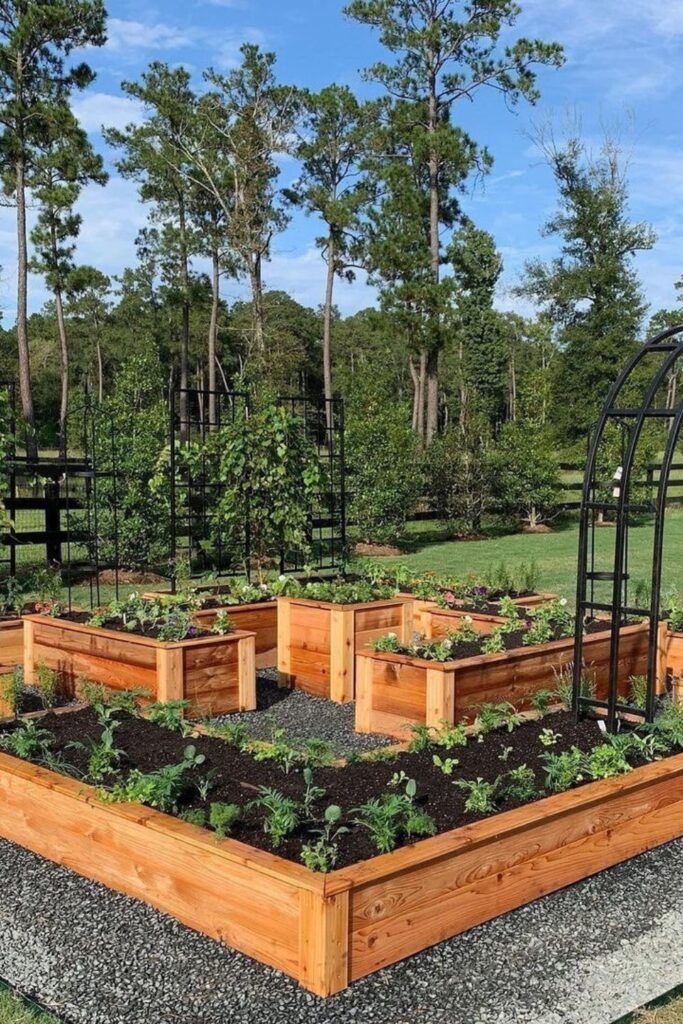
Garden Grid
Planning several raised beds at once creates a garden that grow with you instead of feeling pieced together over time.
Keep all wooden plantersthe same size and situate them along wide gravel walks so you can easily access each corner for planting and harvesting.
Add an arch at the entryway and tall trellises towards the back for height without blocking sunlight from smaller crops.
Leave room between the beds for future planting adjustments, and arrange herbs, flowers and vegetables according to their growing demands to keep care simple all season.
Border Planting
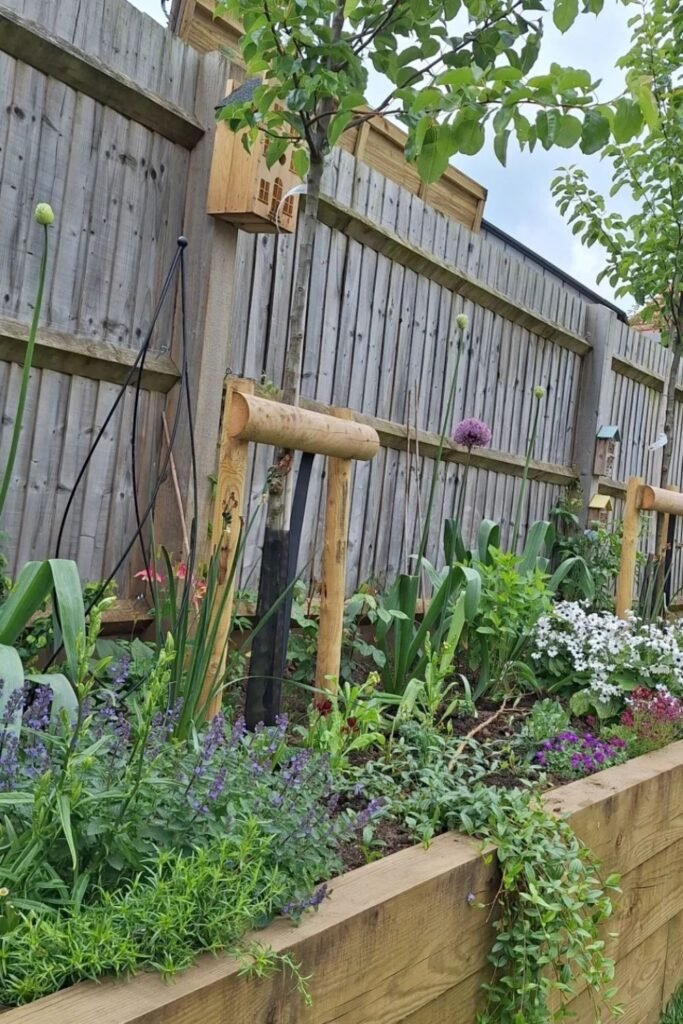
Fence lines often become forgotten spaces, but a long raised bed can turn them into one of the most colorful parts of your garden.
Plant flowering perennials, herbs, decorative grasses and young trees in layers to ensure the border remains interesting from spring to fall.
Place taller plants in the back and trailing kinds for a softer front edge for a broader look.
You can add birdhouses or garden ornaments to the fence to give the space a bit more character and make it more inviting to pollinators and wildlife.
Mulch Paths
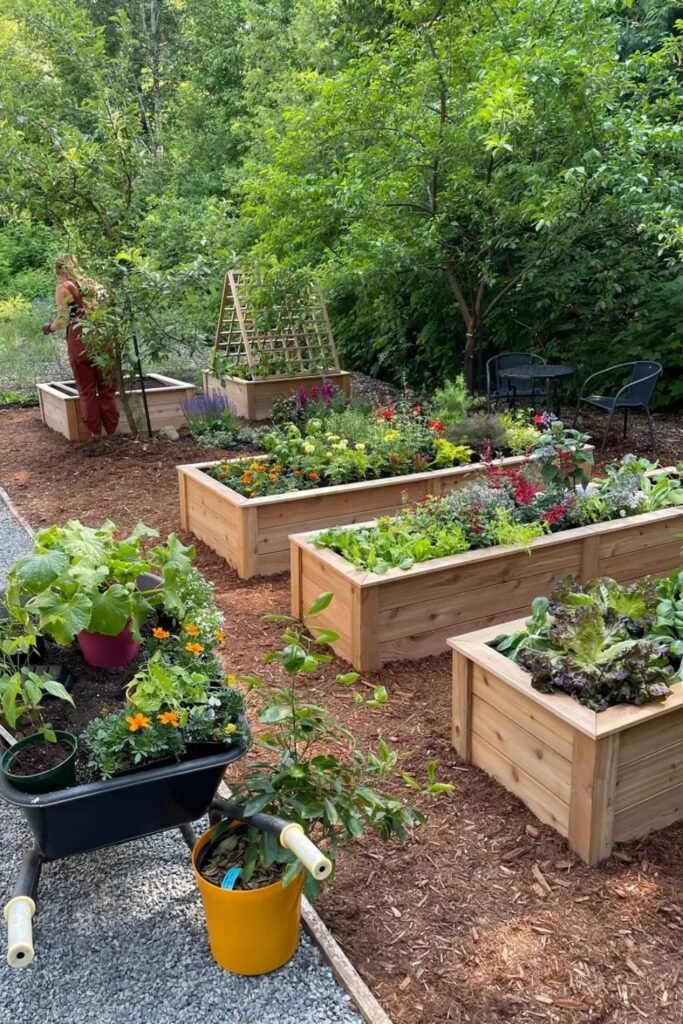
Fresh mulch between raised beds keeps the garden looking tidy while making everyday maintenance much easier.
Arrange matching wooden pots, spaced well enough apart for people to walk between them.
And surround them with colorful vegetables, herbs and companion flowers to attract pollinators and break up the sea of green.
One bed has a modest trellis to create vertical growing room without breaking up the neat layout.
Gravel the boundaries along the main pathway to define planting spaces and give the entire garden a planned look that is easy to build on as your yield expands.
Protected Harvest
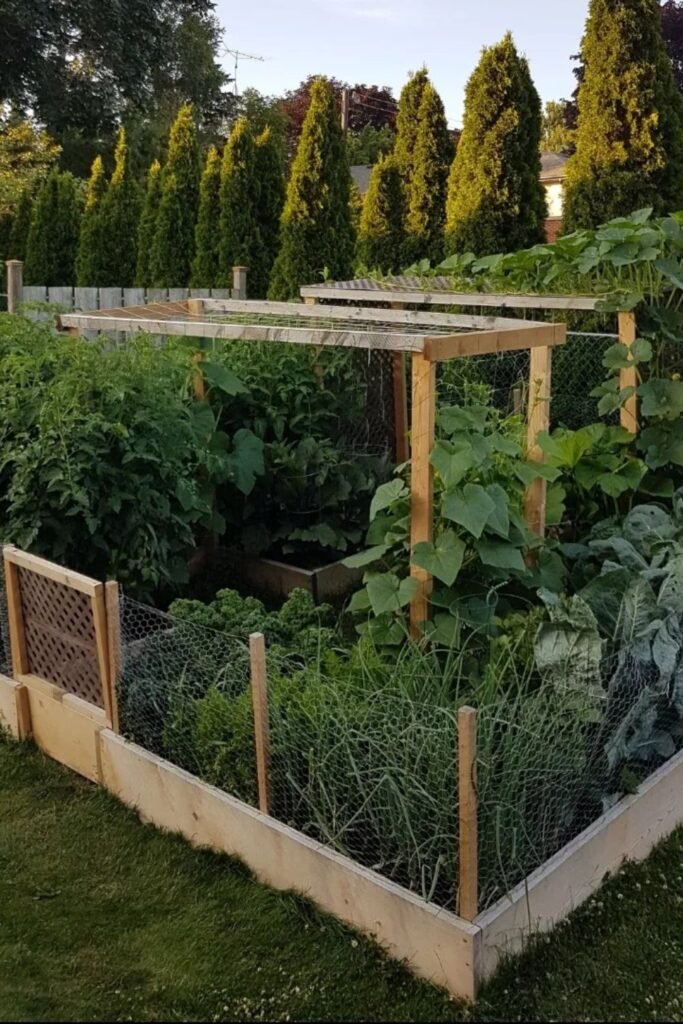
Growing vegetables becomes much less stressful when your raised beds include built-in protection from the start.
Surround the garden with low wire fence to keep rabbits and other small animals out, and add an overhead trellis for cucumbers, beans and other climbing crops to develop without overtaking adjoining beds.
Plant taller vegetables in the middle and shorter greens on the outside to ensure all crops get enough sun.
Growing everything in one enclosed growing space makes watering, harvesting and seasonal upkeep faster. It also keeps your backyard looking neat and tidy.
Arch Entrance
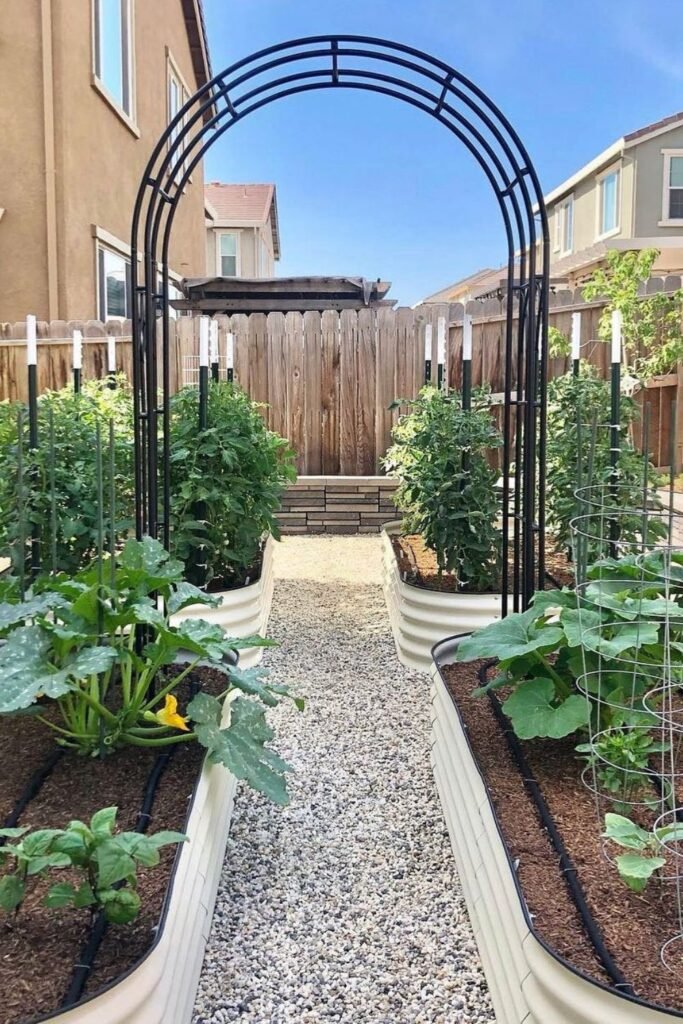
First impressions matter, even in a small backyard garden. Frame the main walkway with a metal arch to create a clear entrance.
For a neat, balanced scheme line both sides with matching galvanized raised beds.
Put in drip irrigation before you mulch so that every bed is watered uniformly with minimal work.
Use tomato cages or vertical supports to prevent heavier crops growing up instead of spilling out into the path.
The light colored gravel fills the space, brightens the landscape, keeps shoes cleaner after watering and connects the whole design together with no maintenance.
Corner Layout
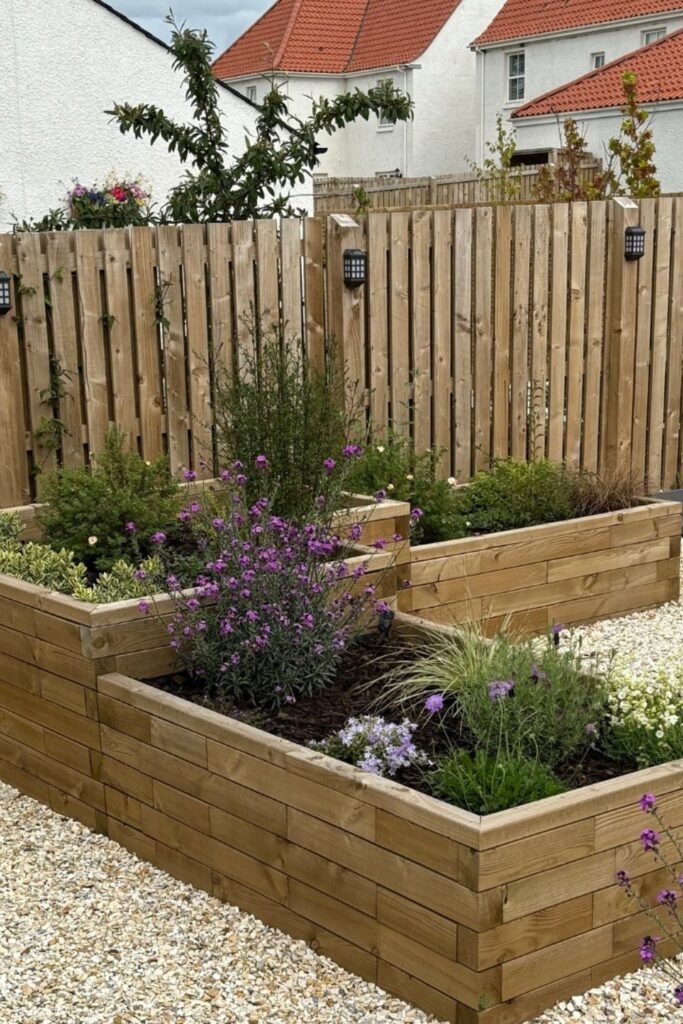
Unused corners can become one of the most attractive features in your backyard with a stepped raised bed layout like this.
Link the wooden planters to create different planting spaces for herbs, floral perennials and compact shrubs.
But retain all of them so they are easily accessible from the surrounding gravel walks.
Put taller types toward the fence and arrange lower flowers up front for depth without blocking the view in any portion.
Garden lights put on the fence cast a pleasant evening glow, making the garden feel welcome long after the sun has set and turning a simple corner into a polished landscape feature.
Kitchen Rows
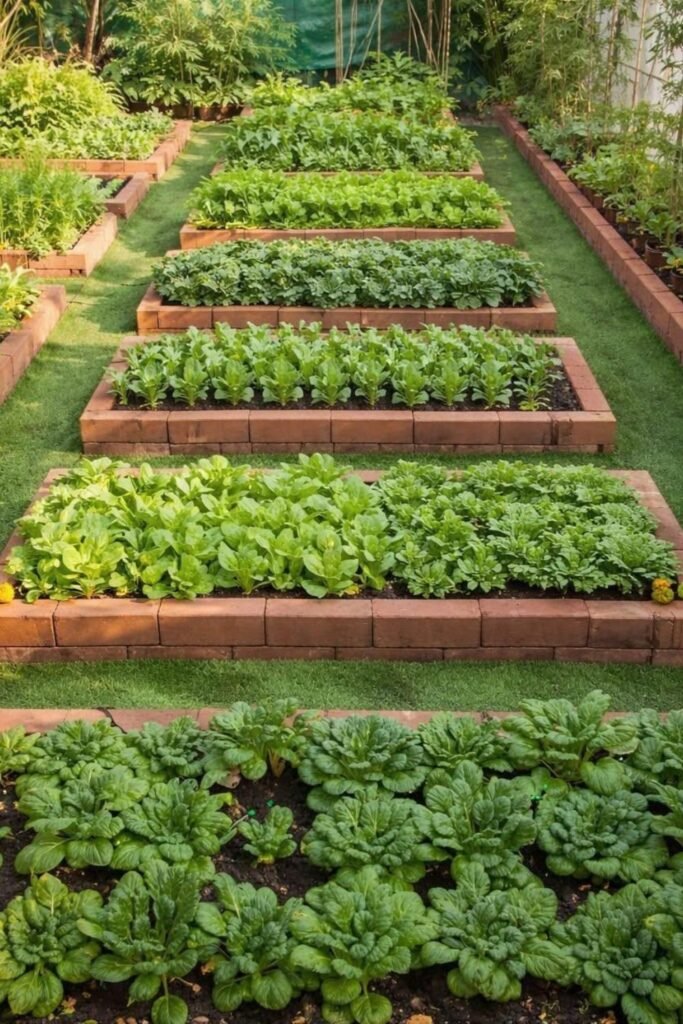
Harvesting becomes much easier when every crop has its own dedicated growing space.
Avoid planting it all in one planter. Group veggies with comparable watering and harvesting requirements together.
Use low brick-edged raised beds in straight rows. Leave small trails of grass or mulch between the beds so you can reach each part without compacting the soil.
Keeping the garden tidy, planting each new season much more efficiently and making crop rotation easier are all benefits of growing leafy greens in one bed, root vegetables in another and herbs along the perimeter.
Metal Planters
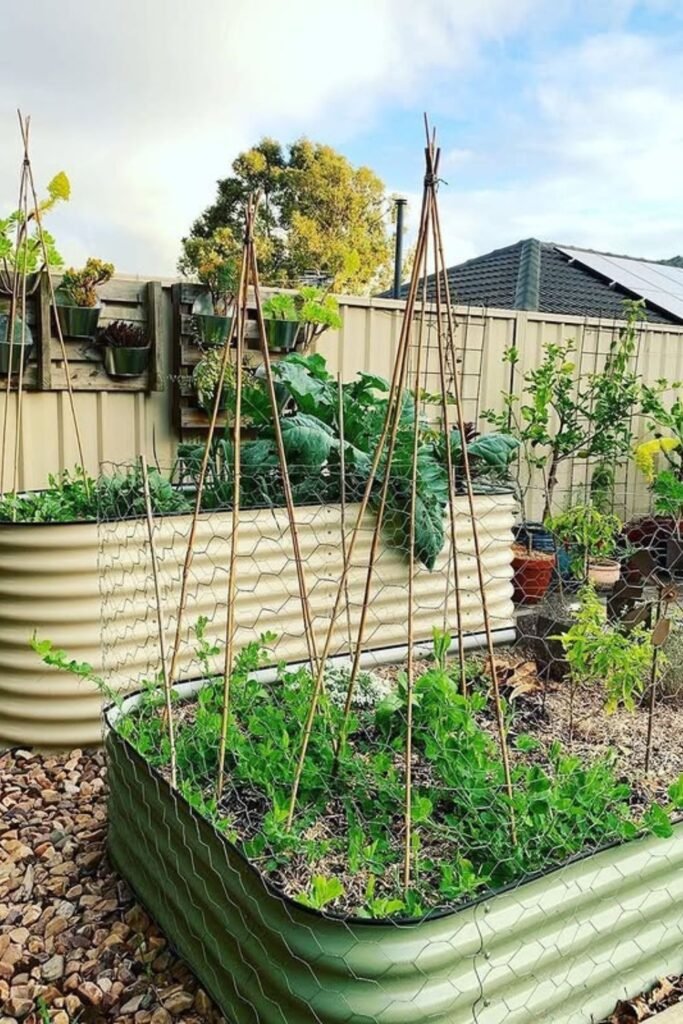
Limited space doesn’t mean you have to give up growing a wide variety of vegetables. Use galvanized raised beds.
Divide enormous crops from climbing plants, and then install simple bamboo teepees for peas or beans to climb vertically instead of spreading over the soil.
Gravel is good for open areas since it drains well, helps to keep the weeds down and makes it easier to walk on after rain.
Hanging planters on the fence provide extra space for herbs or succulents so every section of the backyard may work harder without seeming crowded.
Greenhouse Beds
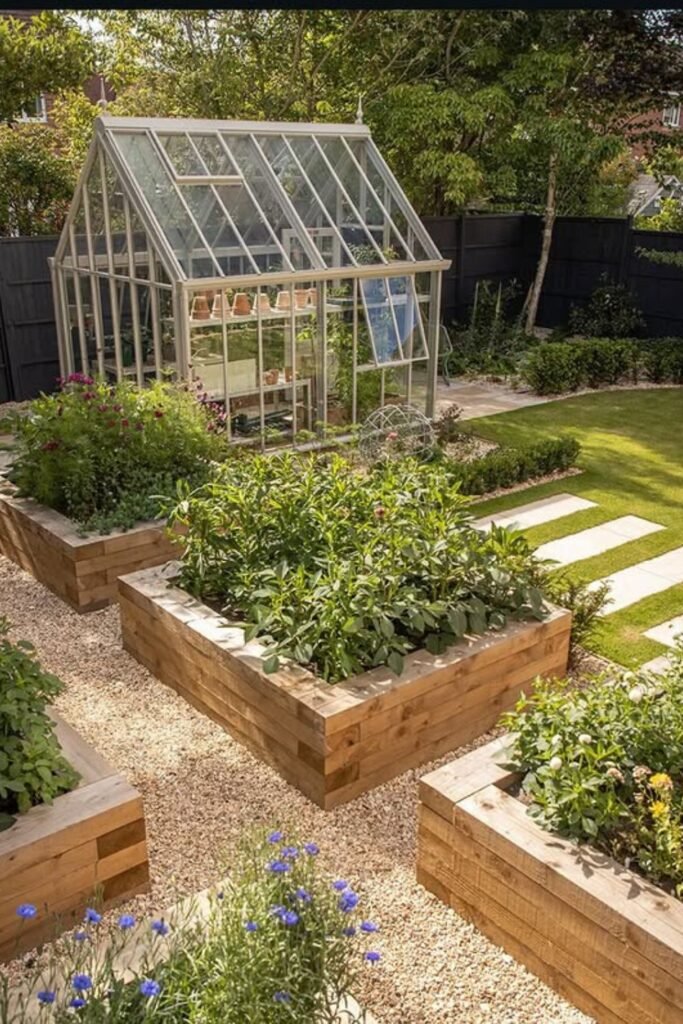
Fresh vegetables don’t have to stay limited to one growing season when you build raised beds around a greenhouse.
Line gravel roads with wooden planters for a neat pattern, making it easy to travel between planting, watering and harvesting.
Plant the beds with herbs, flowers and seasonal vegetables Use the greenhouse to start seedlings early or shelter tender plants in cooler months.
Using the same height and type of bed throughout the garden produces a finished effect, and future additions will seem like they belong, rather than being tacked on.
Modern Borders
Clean lines can make a raised garden feel just as elegant as any landscaped flower bed.
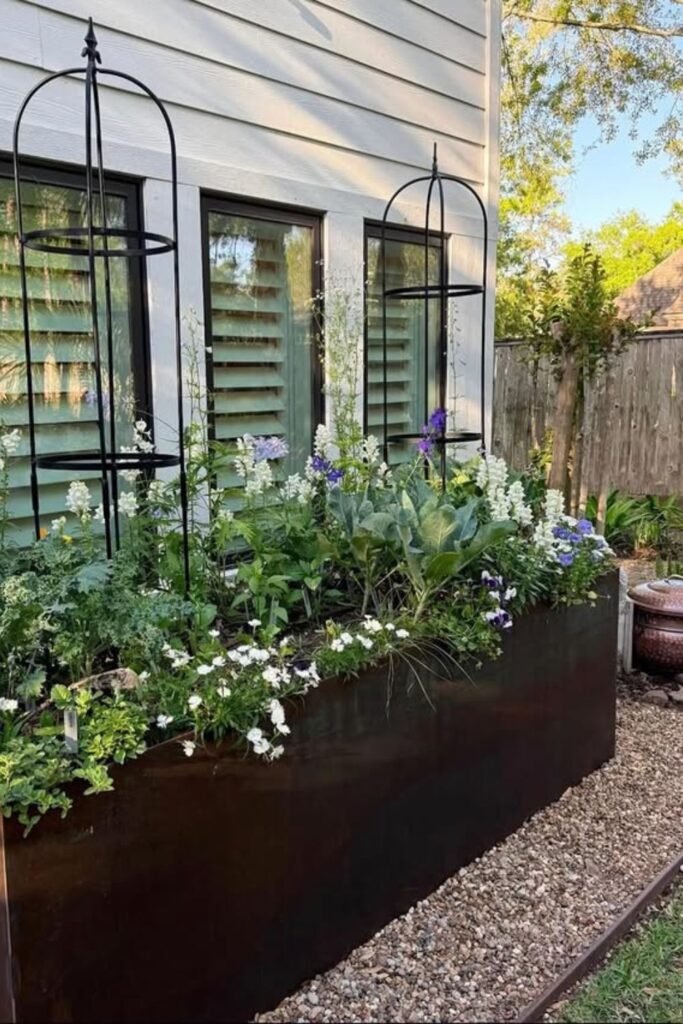
Set long, metal pots by the house, and fill with a combination of flowering perennials, leafy greens and ornamental foliage for color that changes throughout the season.
Even if the climbing plants aren’t yet mature, tall obelisks provide vertical structure, and gravel paths keep the space tidy and easy to maintain after watering.
Black accents in the supports and window trim bind the whole design together, making the garden feel like a natural extension of your home’s architecture, not a distinct planting area.
Accessible Layout
Comfort should be part of your garden plan from the beginning. Arrange raised beds with wide gravel walkways so you can carry tools.
Harvest veggies or ride a cart without getting squeezed between pots. Maintaining all the beds at a reasonable height also makes planting and weeding easy over the season.
Leave the middle part of your garden free for easy movement, and grow leafy greens, strawberries and compact veggies around the perimeter, with taller crops at the back.
This basic design helps keep things neat, fosters healthier plants with improved air movement, and allows easy access to every region of the garden.
Central Courtyard
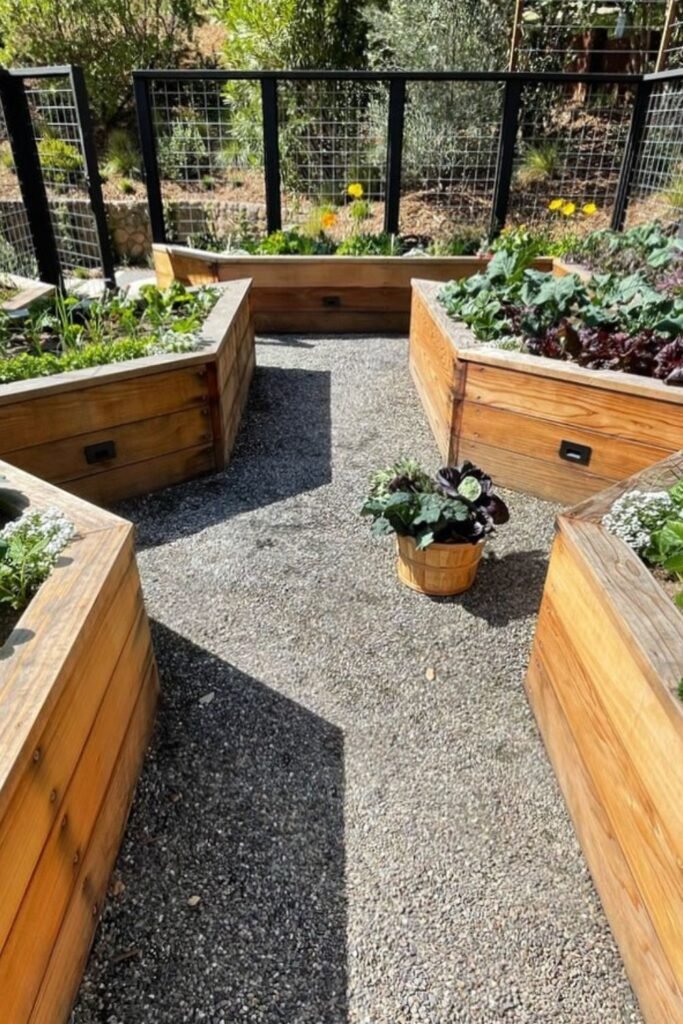
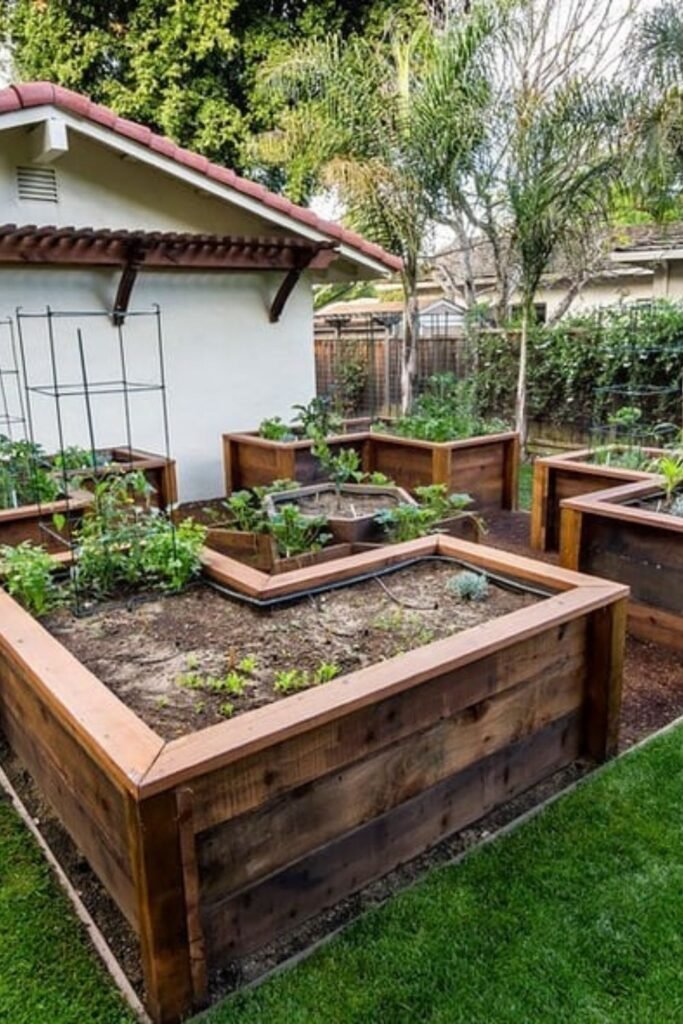
Gathering several raised beds around a shared center creates an organized garden that’s easy to work in from every direction.
Leave adequate space between planters for watering, harvesting and carrying supplies and utilize the center area for a fire pit, compost station, decorative planter or a modest seating feature.
The bigger boxes are for taller veggies, the smaller ones toward the centre are ideal for herbs and fast growing crops.
The coordinating wood finishes on each planter give the overall setup a balanced, custom-built look that’s polished from every aspect.
Hexagon Beds
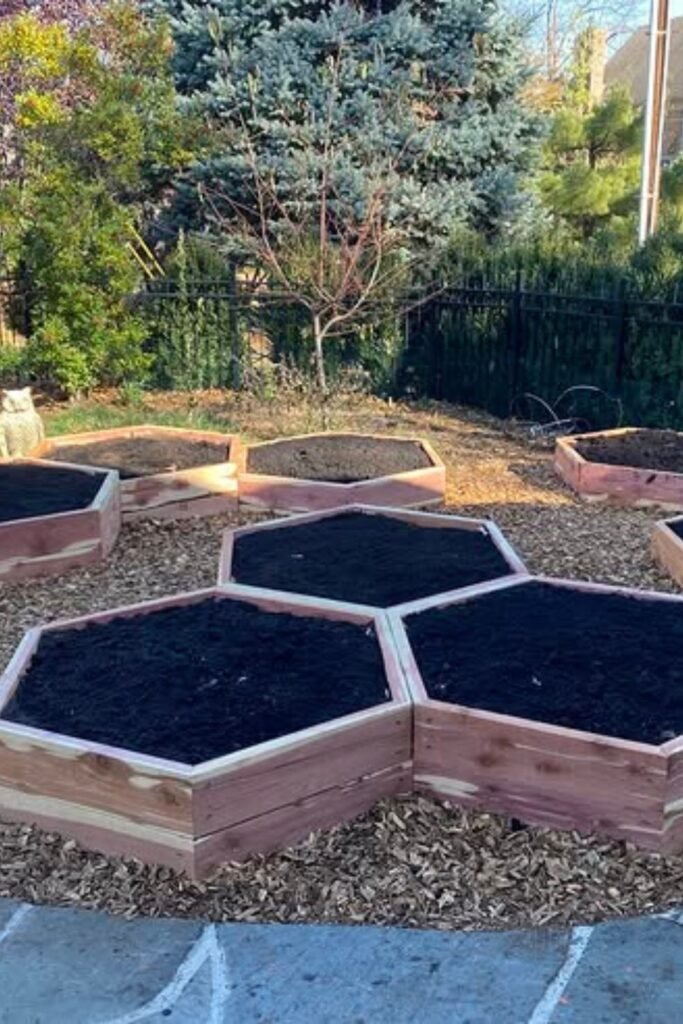
Breaking away from standard rectangles gives your garden a playful layout that stands out without making planting more complicated.
Arrange raised beds in a hexagonal pattern, with ample room between them for pathways of wood chips or mulch.
Designate each bed for a separate crop, flower mixture, or herb collection to ease seasonal maintenance. Link a few beds together for a cool centerpiece .
Leave room for individual planters that you may add to over time to grow the garden.
This is especially good for backyard family gardens as each bed is a different growing area, making gardening more fun and structured for both parents and children.
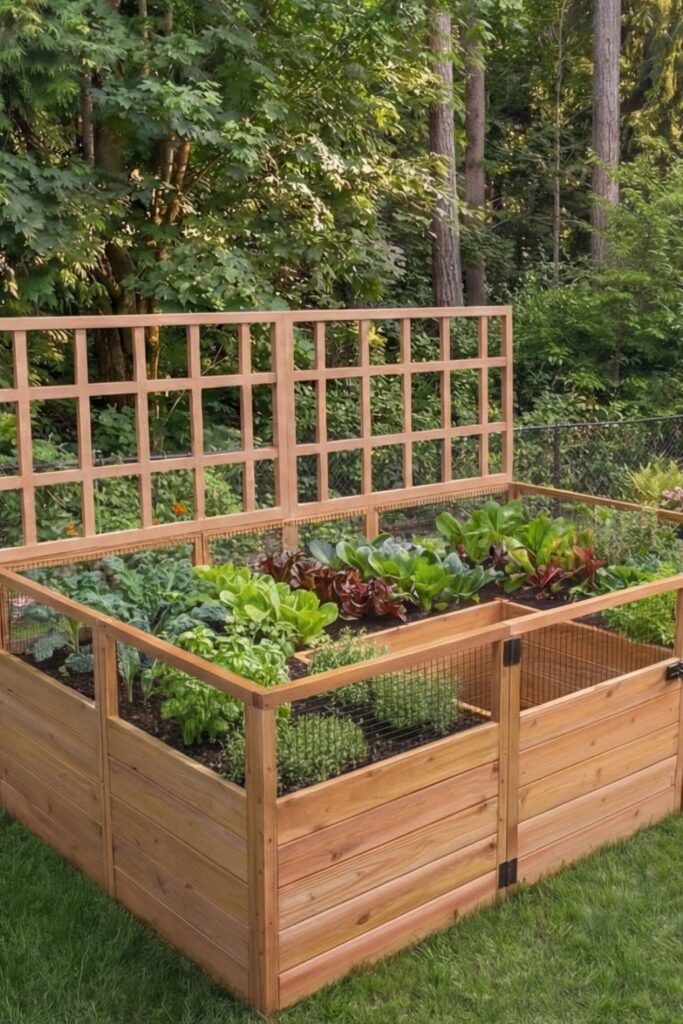
Mesh Protection
Healthy vegetables deserve protection without hiding the beauty of your garden. Build a raised bed with wire mesh sides and a lockable gate.
Keep rabbits and other small animals away while allowing you easy access for planting and harvesting.
Put a wooden trellis over the back for peas, beans or cucumbers to climb up instead of filling the bed.
Group leafy greens, herbs and root veggies together by their growing needs to make watering and seasonal care much easier.
This setup is particularly good if you have animals that is constantly destroying your crops but still want a clean, appealing backyard garden.
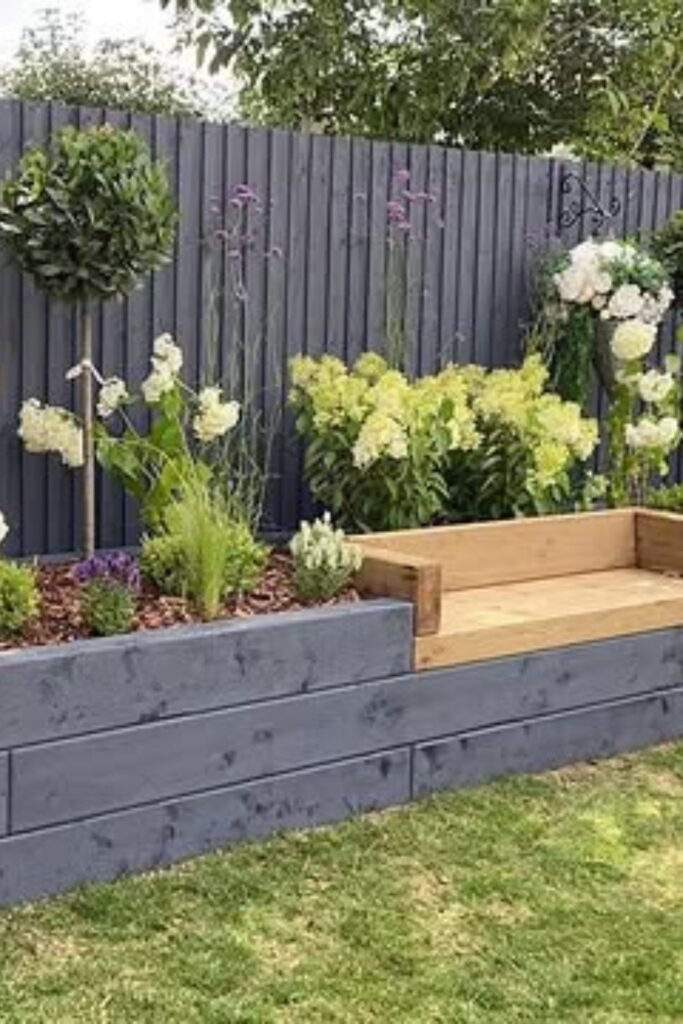
Tiered Borders
Long fence lines become much more interesting when you build raised beds at different heights instead of using one flat planter.
Give ample space to each plant and add depth across the border by giving different layers for flowering shrubs, attractive grasses and compact herbs.
Match the lumber to your fence colour with paint for a seamless look, then repeat clipped topiary and white blossoms to maintain the pattern balanced from end to end.
The integrated seating between the pots makes the garden a place to rest and appreciate the scenery rather than just care for it.
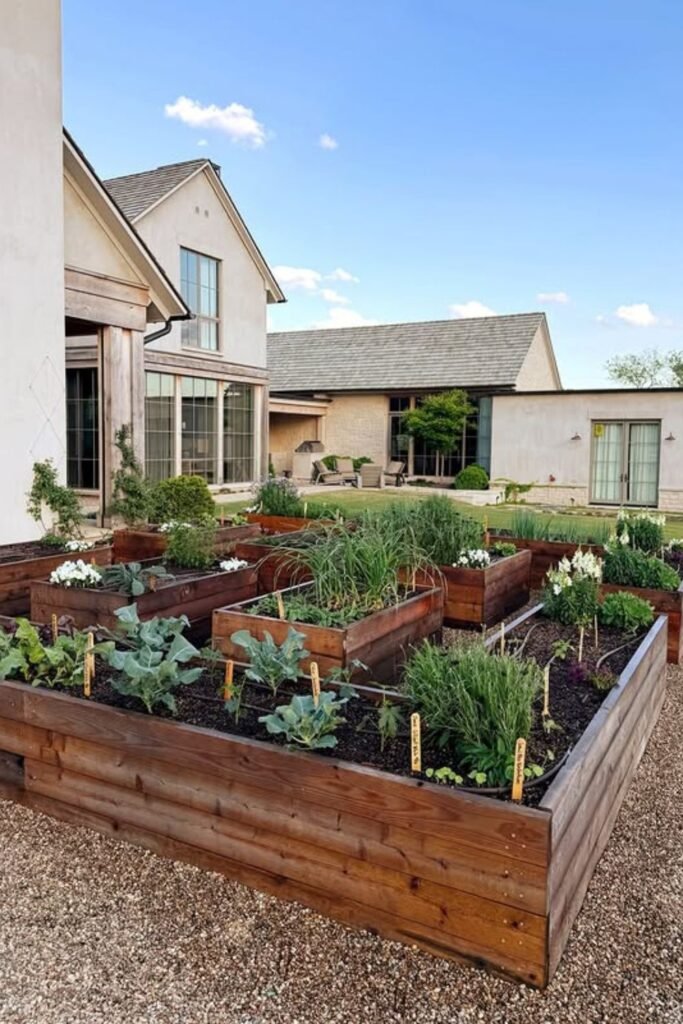
Kitchen Garden
Growing different vegetables becomes much easier when every crop has its own dedicated raised bed instead of sharing one large planting area.
Place identical wooden pots in a perfect grid with gravel roads in between so you can water, weed and harvest without ever having to step on the soil.
Reserve larger beds for crops like broccoli and onions, while smaller boxes are good for herbs, flowers or seasonal vegetables.
Using the same wood finish across the garden produces a polished image that works with modern homes, and makes it easy to add more beds as your garden grows.
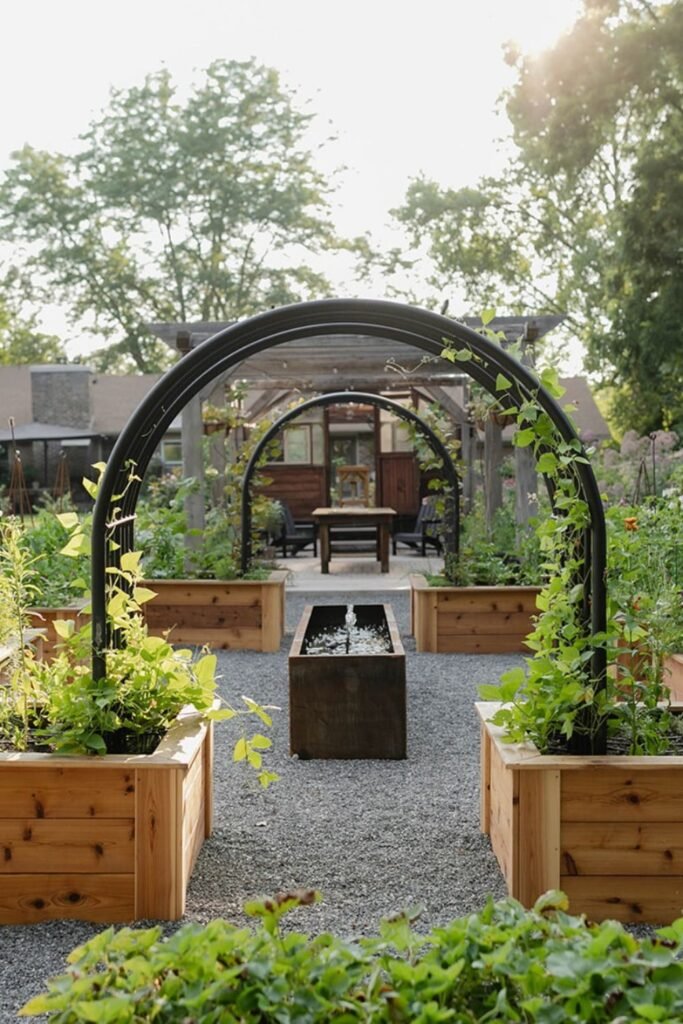
Garden Retreat
Growing vegetables becomes even more enjoyable when your garden includes a place to slow down and enjoy the view.
Arrange raised beds along a gravel walkway in the middle, then surround the path with identical metal arches, covered with climbing vines, to provide a natural journey to a seating area.
Herbs, flowers and veggies soften the edges of each planter, while a modest water feature gives soothing movement and a sense of tranquility to the room.
Keeping the same bed size and pathway materials helps to balance the arrangement, creating a productive kitchen garden that is as inviting as an outdoor living room.
Patio Garden
Sharing your garden with family becomes easier when raised beds surround a comfortable place to sit.
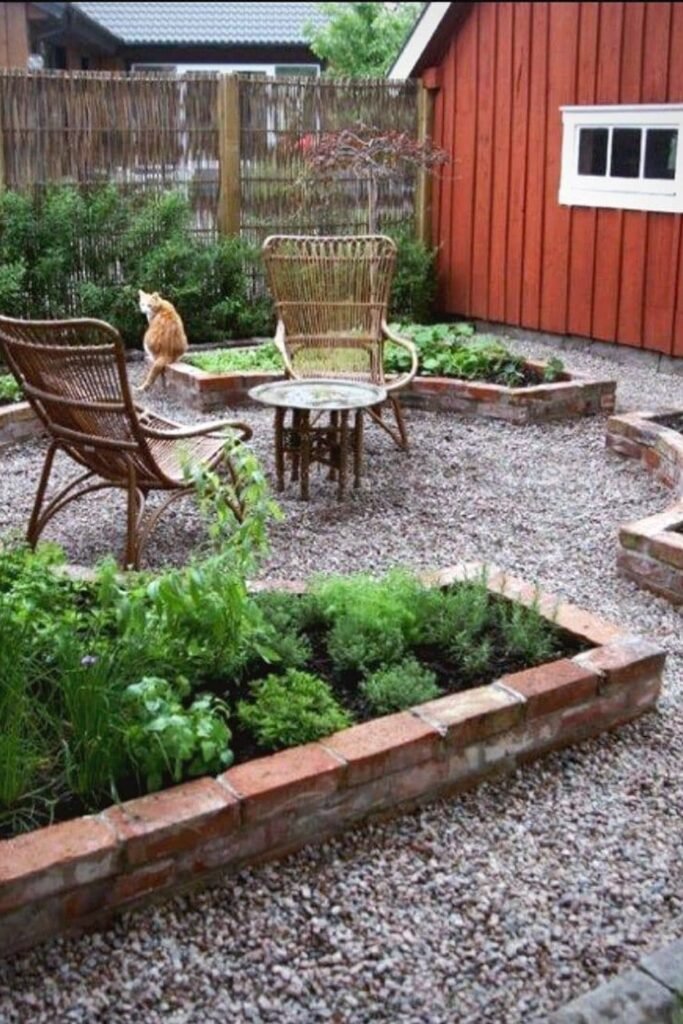
Planters lined with bricks surrounding a gravel patio, and then herbs, leafy greens and seasonal vegetables within easy reach of the dining area.
The curved bed borders soften the arrangement and organically guide movement while allowing plenty of open room for chairs and a small table.
The garden is a place you’ll want to visit every day, not just when it’s time to weed or harvest, thanks to a combination of productive plants and a soothing meeting location.
Evening Glow
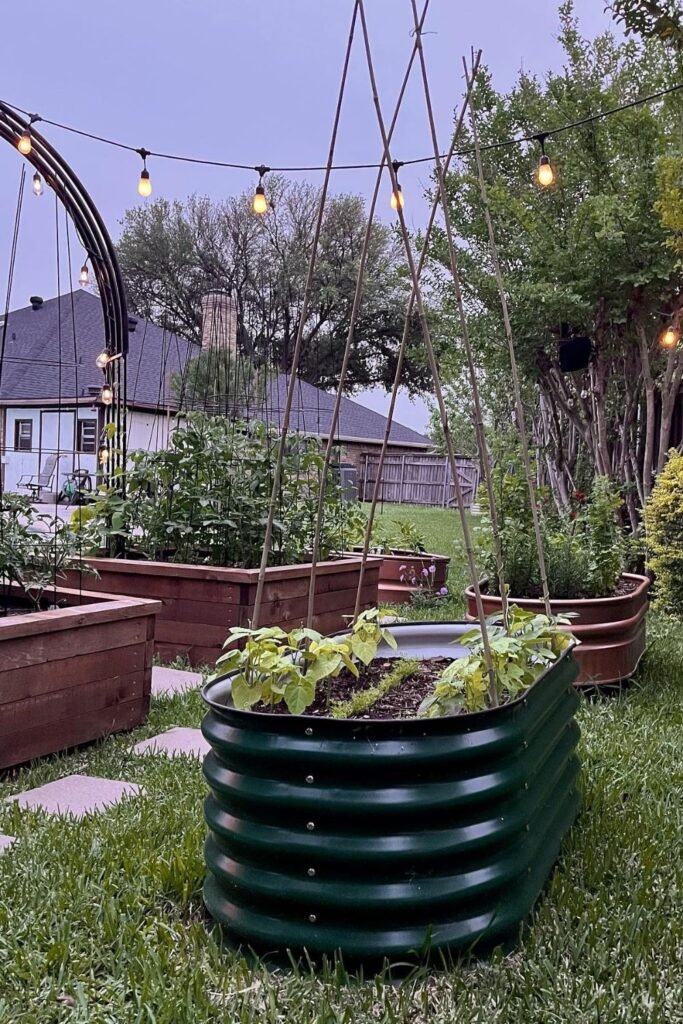
Gardens shouldn’t lose their charm after sunset. Hang warm string lights above your raised beds to create a cozy atmosphere.
Then, mix galvanized and wooden planters with bamboo teepees and metal arches to lend height to the space.
Make every bed more fruitful by growing climbing beans or peas on the supports, leaving the lower spaces for herbs and compact vegetables.
Stepping stones between the pots make it easy to walk around the layout at night, transforming your vegetable garden into a pleasant outdoor spot to relax in long after the day’s gardening is done.
Night Garden
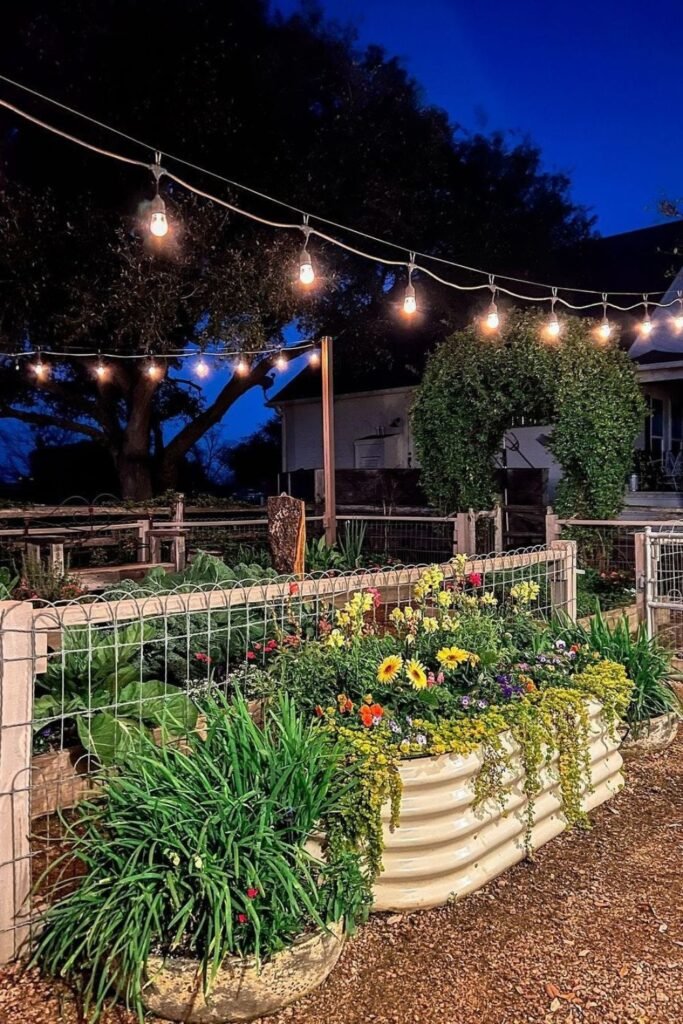
Sunset doesn’t have to mark the end of time spent in your garden. String warm café lights above your raised beds.
to provide a relaxing place where you may pick herbs, water your plants, or just sit and rest after supper.
To soften the vegetable beds and encourage pollinators during the day, mix galvanized containers with vibrant flowers around the margins.
The crops are protected by a basic wire fence that does not obscure the view, and gravel paths stay clean and easy to walk on even after nightly irrigation.
Small updates like this to the lights make the whole garden feel alive long after the sun sets.
Covered Beds
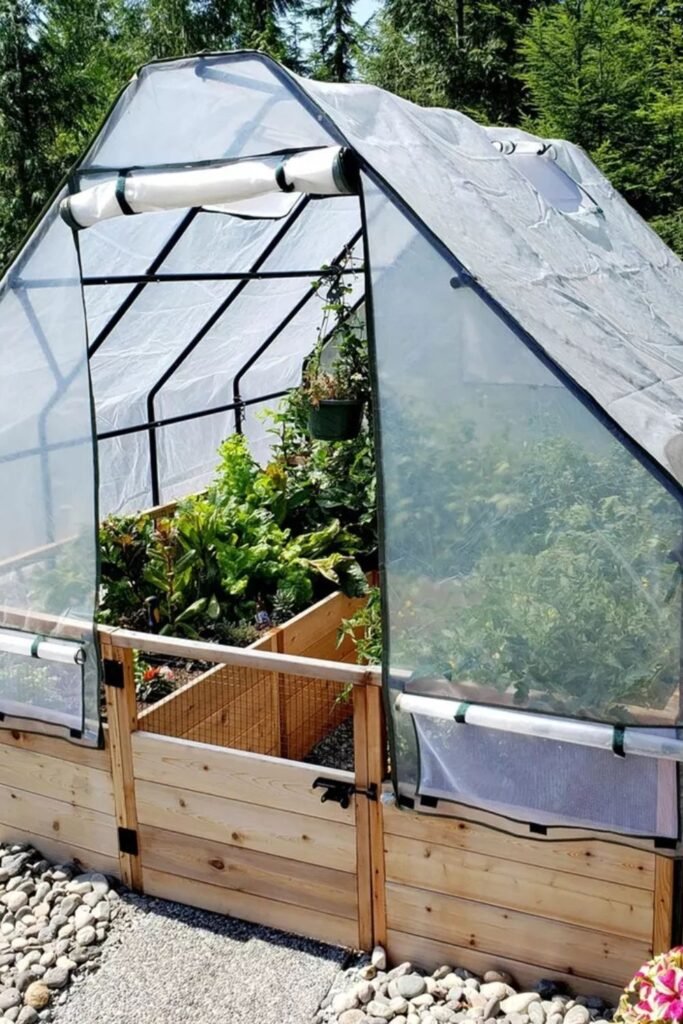
Changing weather doesn’t have to interrupt your growing season. Add a greenhouse cover over your raised bed to protect vegetables from heavy rain, frost.
And stronger winds while making a warmer environment for seedlings and vulnerable crops. Roll-up panels are an easy way to adjust ventilation in the sunshine. They help prevent excess heat and moisture inside.
Use gravel walks with the enclosure to promote drainage and to keep the entrance clean after watering.
This is a great option if you want to start planting early in the spring and keep harvesting long after outdoor temperatures start to decrease.
FAQs
How Deep Should Raised Garden Beds Be For Vegetables?
Most vegetables do well in raised beds 12 to 18 inches deep, but root crops like carrots, parsnips and potatoes frequently do better with 18 to 24 inches.
Think about what you want to grow before you build, because selecting the optimum depth from the start promotes healthy root development.
Improves drainage, and cuts down on the need to rebuild your beds down the road.
What Is The Best Material For Long Lasting Raised Garden Beds?
Which is ideal depends on your budget and design of garden. Cedar and redwood are inherently rot-resistant and fit in perfectly with the outdoors, while galvanized metal can survive for decades with little upkeep.
For a more classic setting, brick and stone provide a more durable answer. Instead of simply choosing the cheapest choice.
Choose a material that suits your the climate maintenance preference and the overall appearance of your backyard.
