
25 Rooftop Garden Ideas for 2026
An empty rooftop looks like a great spot for a garden until you start considering all the heat, the wind, watering, drainage and the weight of all those plants.
If you put the incorrect plants up there, it may be a lot of work to keep them alive, and not much time to appreciate the space.
If you design with your rooftop conditions first, it makes everything easier to handle.
In this article, you’ll find 25 Rooftop Garden Ideas to help you create a practical outdoor space you’ll actually enjoy using.
Let’s jump in!
How Can I Make Rooftop Gardening Easier For Beginners?
Don’t try to turn your whole roof into a garden at once. Start small. Select a location that gets moderate sun and is protected from high winds.
Good drainage prevent roots from sitting in water and larger pots retain moisture longer than smaller ones.
Instead of fighting the conditions existing on your roof, choose plants that compliment them.
If the environment gets hot and windy, begin with hardier, drought-tolerant plants and cluster pots together to simplify watering.
Place containers close to a handy source of water, and as your garden develops, consider using drip irrigation.
Pergola Garden
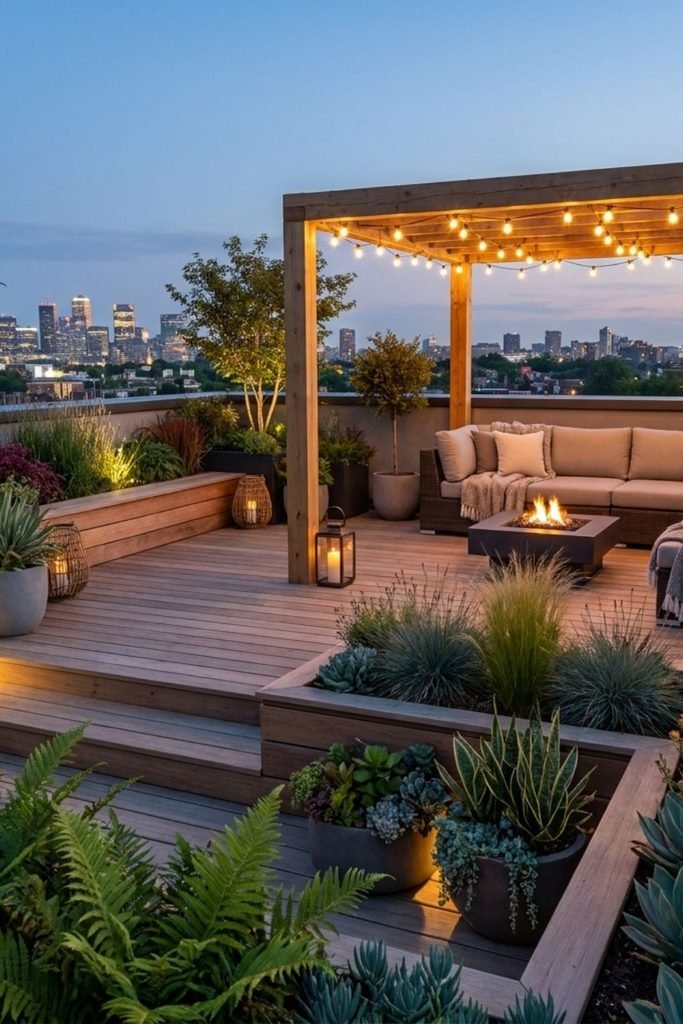
Frame your main seating zone with a wooden pergola when the rooftop gets uncomfortable under direct afternoon sun.
In deep pots around the deck, put in decorative grasses, tight shrubs, succulents and other plants that are appropriate to your area exposure.
Select margins are lined with higher plants for privacy but not obscuring the skyline.
Install soft overhead lights under the pergola to keep the garden functional after dark and low lights near the planting beds to delineate walkways.
Flower Canopy
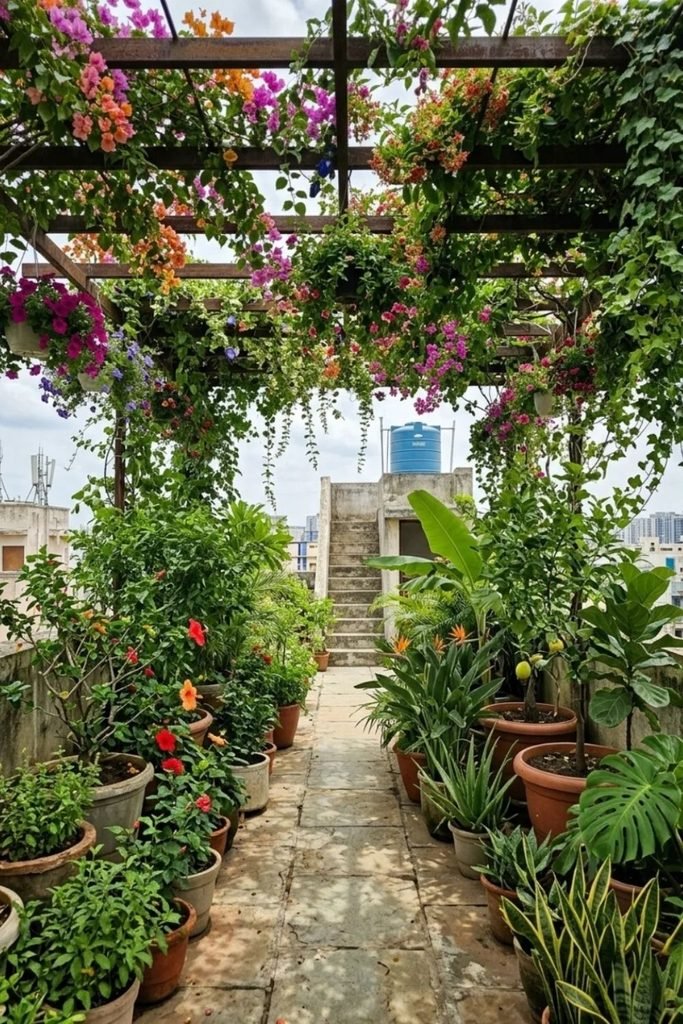
Turn a narrow rooftop walkway into growing space by training flowering climbers across a sturdy overhead frame instead of filling the floor with more pots.
Keep the middle path free, then plant bigger leafy plants on the sides to make a beautiful garden without blocking movement.
Select climbers that are appropriate to your area sun and climate, and train new growth onto supports as it emerges.
Hanging baskets can fill in small overhead gaps, while frequent pruning keeps flowers and vines from being too heavy or impeding the walkway.
View Border
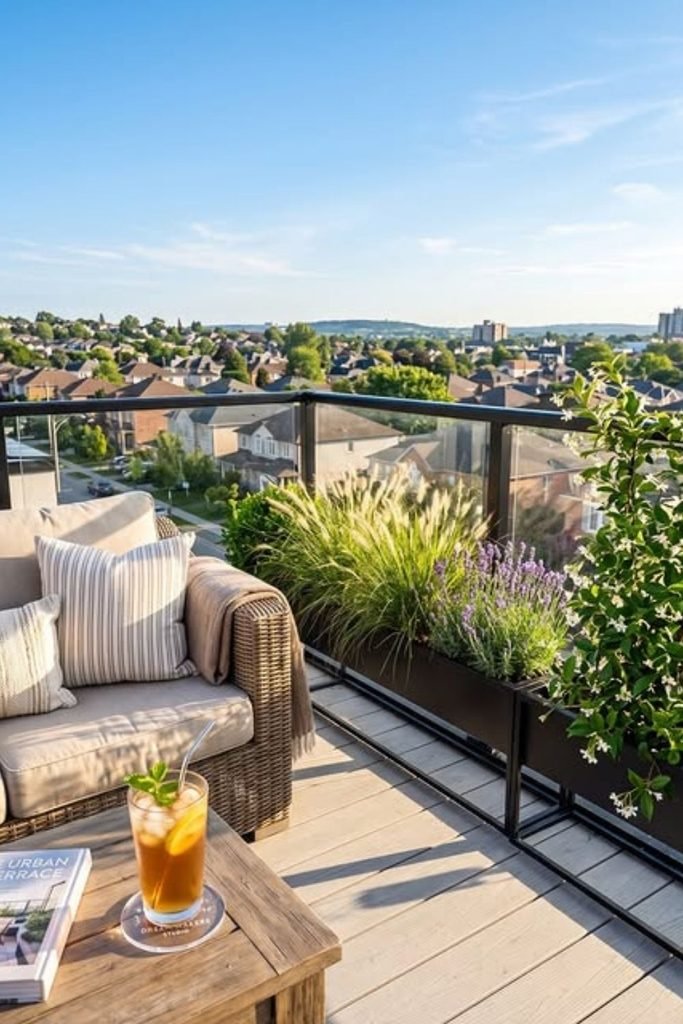
Keep the best rooftop view open by using low rectangular planters along the railing instead of surrounding the entire edge with tall greenery.
Add some ornamental grasses and modest blooming plants to soften the edge but still provide for a view of the horizon beyond.
Instead of blocking every way, choose one taller shrub to leave on a side where more screening is helpful.
Arrange chairs close enough to enjoy the planting, but not so close as to reduce the width of the strolling space, and choose kinds that can tolerate sun and wind.
Blooming Corner
Soften a small rooftop seating corner by letting flowering climbers provide height while compact blooms and herbs fill the lower level.
Train the climber up a rail or strong trellis, and use medium containers around the seating area, rather than scattering pots all over the floor.
To keep the planting abundant but not visually cluttered, combine white flowers with softer purple and pink blooms.
Provide a comfortable walk to the chair, and consider container sizes large enough to better maintain more stable moisture during heated rooftop weather.
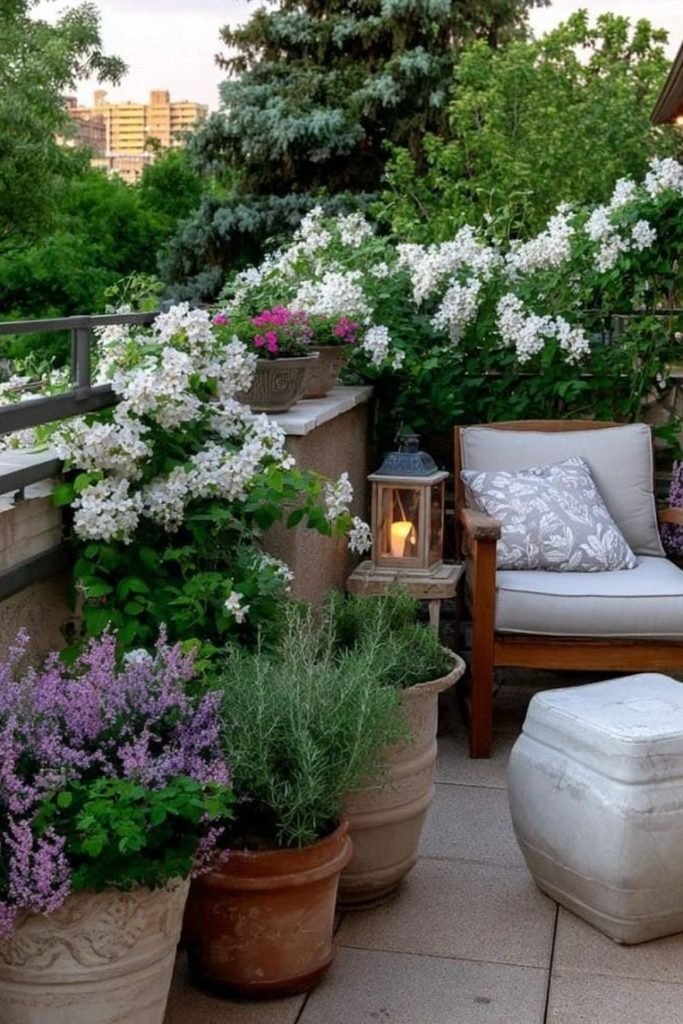
Lavender Lounge
Build the planting around your seating when you want a rooftop that feels relaxing without losing the open city view.
Use lavenders or other flowering plants that like the light, together with beautiful grasses, to form soft layers surrounding the sofa.
Bigger built-in planters help avoid that scattered-pot look and provide roots with more room to flourish.
Fill the space with low garden lights within the plants and warm overhead bulbs so that the greenery remains part of the scene after dark.

Edible Rooftop
Put productive plants to work when your rooftop has enough sun for herbs, vegetables, or compact fruit trees.
Set up raised beds in individual growing zones, with plenty of space between them so that harvesting, pruning and watering are never unpleasant.
Edible plants with blooming partners will keep the garden looking good while offering you more diversity than rows of vegetables alone.
If possible, run drip irrigation straight through the beds. It might become laborious to water bigger rooftop gardens by hand.
Check to see if the roof can take the extra saturated weight before you plant deep beds or fruit trees.
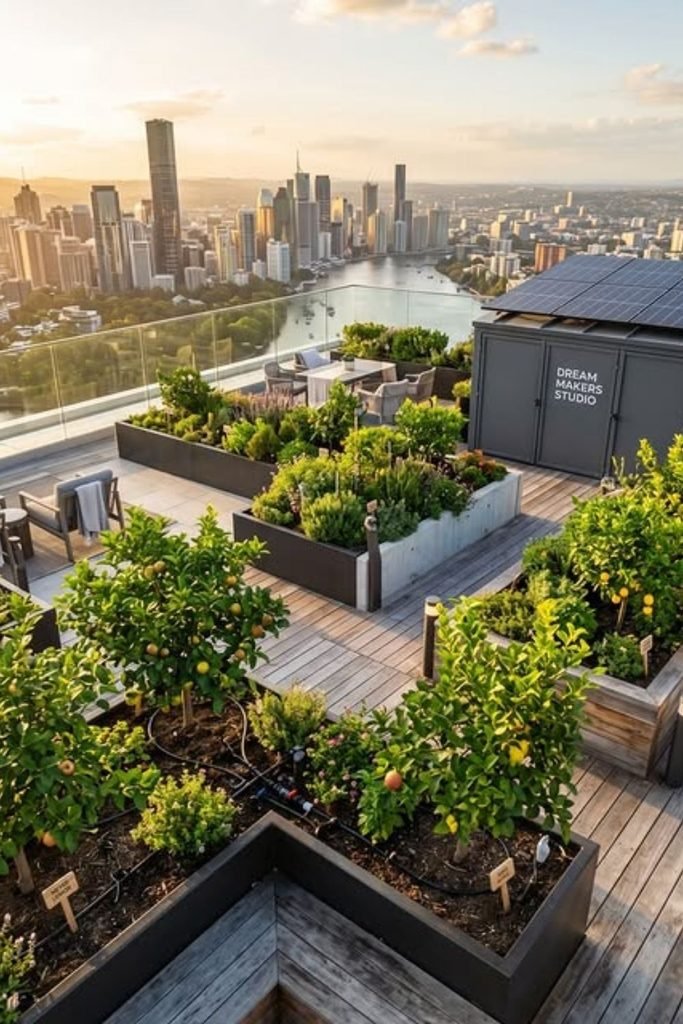
Garden Dining
Make meals part of the garden by placing a compact dining table in the open center and letting greenery fill the rooftop edges.
Plant a planted barrier with out cluttering seats or strolling routes with fence planters floral climbers and deeper pots.
If the roof provides minimal natural shade, place a robust umbrella over the table, so the space stays comfortable through the bright hours.
Grow vines up when you have sturdy supports available, as the vertical growth gives you additional greenery.
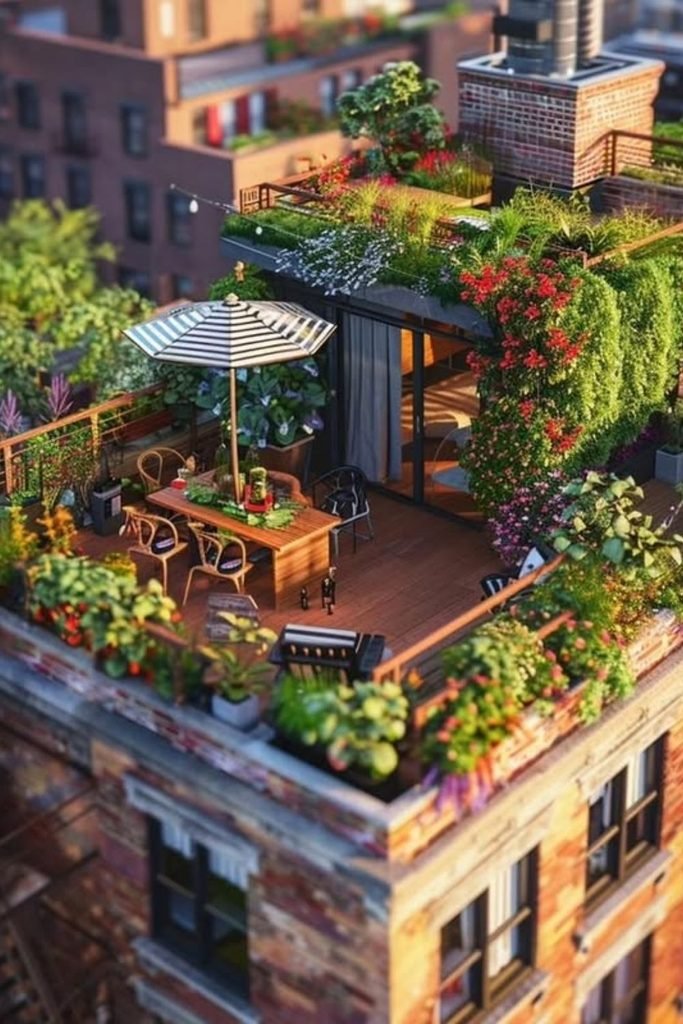
Curved Planting
Break up boxy rooftop by using rounded raised beds to guide movement naturally toward the seating area.
Layer compact shrubs trailing flowers and soft foliage into the curves keeping any taller growth to the outer edges so lounge stays open and bright.
Train climbers over a safe pergola to provide overhead foliage and filtered shade without using additional floor space.
Repeating a few plant kinds throughout each bed will help make a thickly planted rooftop feel orderly rather than congested.
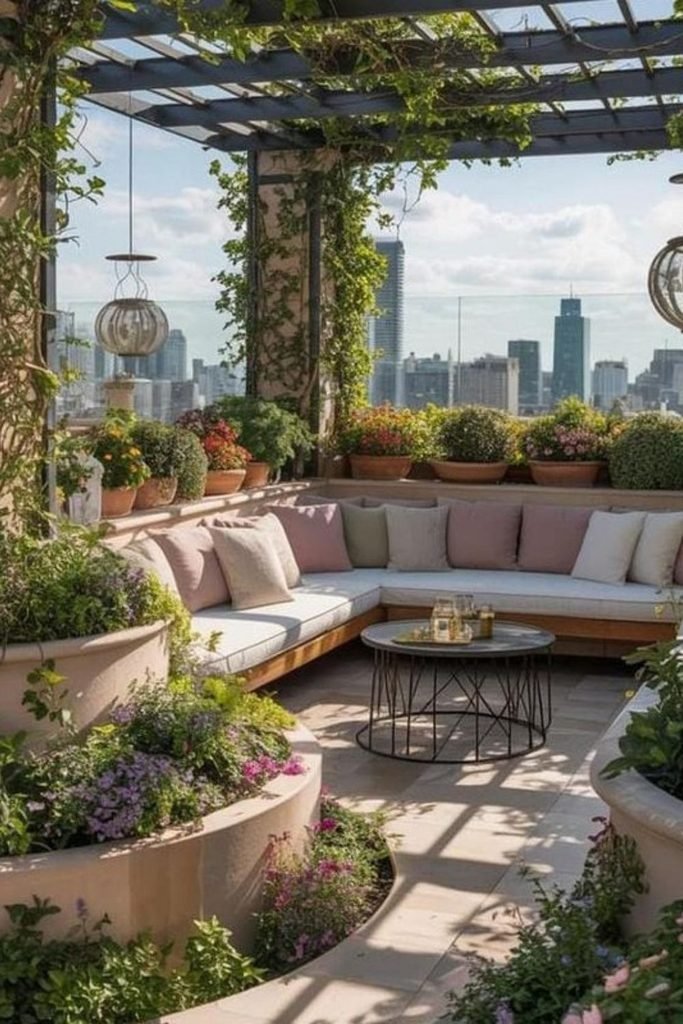
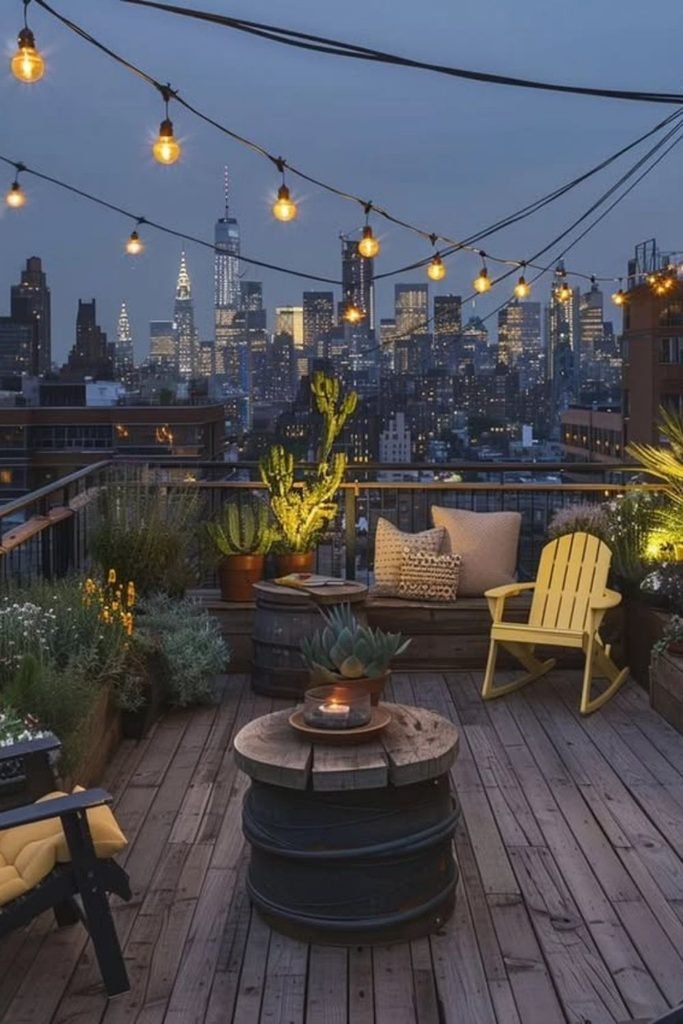
Twilight Planting
Bring the garden to life after sunset by placing low accent lights inside planted borders instead of relying only on bright overhead bulbs.
If they suit your environment and sun levels, drought-tolerant succulents, erect cactus, flowering perennials and compact shrubs are good choices.
Place taller plants near blank walls or corners, then fill in with shorter foliage along the skyline, keeping the view open.
String lights can complete the seating zone while focused lights between the plants offer enough depth to keep the rooftop looking green at nite.
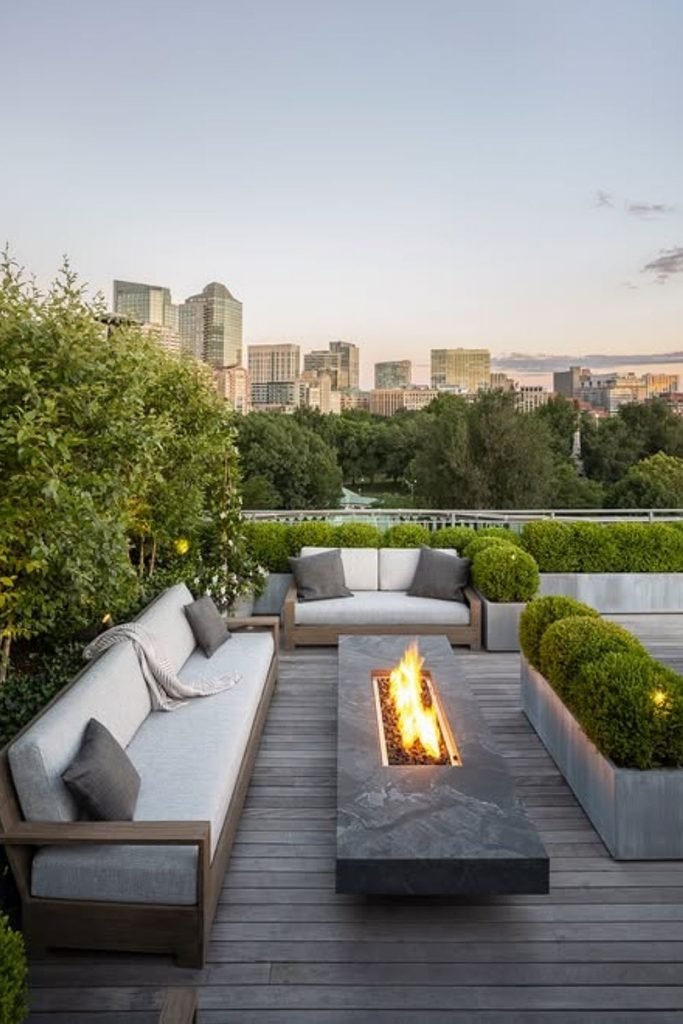
Living Screen
Use dense shrubs as a living boundary when neighboring rooftops or buildings make your seating area feel too exposed.
Place the taller leafy kinds on the side where you want the most screening, then create structure with clipped evergreen shrubs in rectangular containers.
The plants are kept around the outside so there is plenty of room in the center for seating and dining.
Choose bushes that can take the wind and sun on your roof and prune them often so the screen remains dense but doesn’t eat up important floor space.
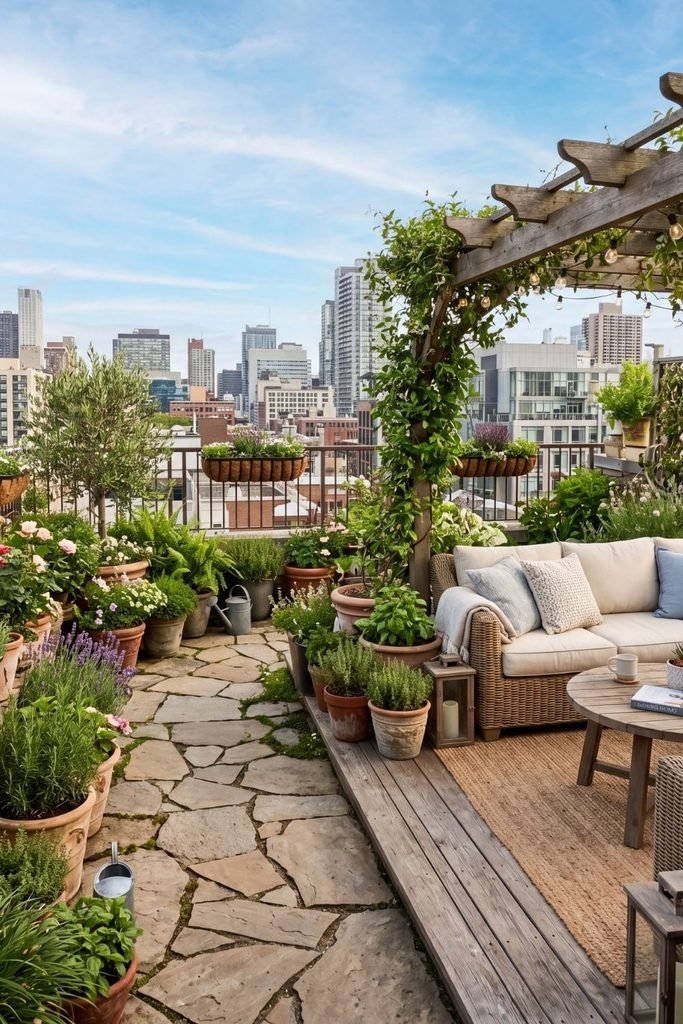
Cottage Rooftop
Give a plain city roof a softer garden feel by mixing flowering pots, herbs, compact shrubs, and climbers instead of relying on one formal row of planters.
Place groups of plants around the walkway and around the pergola’s perimeter, making sure to allow a clear path in the middle.
Train vines up strong supports to hold greenery overhead, then add hanging railing baskets for more flowers without losing floor space.
Repeat herbs like rosemary or lavender can help bring aroma closer to the seating area in amongst the brilliant blossoms.
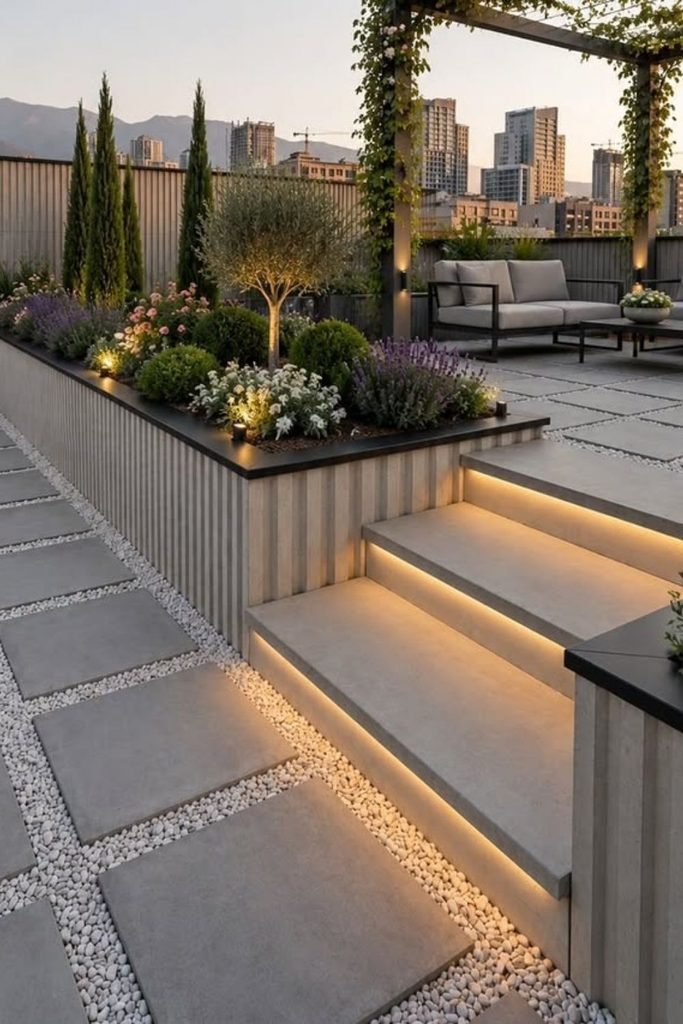
Layered Beds
Raise one planting bed above the main rooftop level when you want greenery to define separate areas without adding walls.
Build the bed around a modest ornamental tree then add upright evergreens, rounded shrubs, lavender and low flowers to add height.
Place taller plants at the back, and softer blossoms along the walk so that each layer can be seen.
You may tuck low lights between plants to highlight the landscaping after dark and illuminated steps make the shift in level simpler to negotiate.
Wildflower Roof
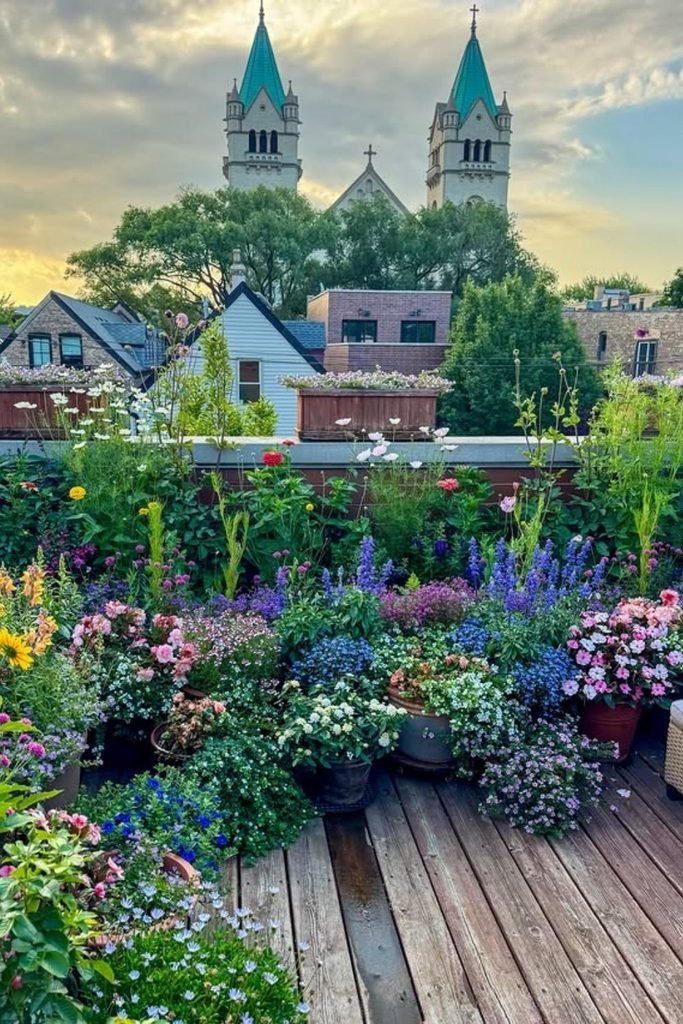
Let flowers become the main feature when you want a rooftop garden that changes naturally through the growing season.
Mix tall airy blossom with medium perennials and low trailing flowers repeating a few colors so the planting seems rich not arbitrary.
Put some big pots close together and they’ll look like one long flower garden, but you can still shift things about.
Choose types that suit your rooftop sun and breeze, and combine different bloom times so one group can step in as another starts to fade.
Evergreen Layers
Give a spacious rooftop year-round structure by mixing small trees, clipped shrubs and lower foliage instead of depending mainly on seasonal flowers.
Place the tallest foliage adjacent to corners or open edges, and then step the plants down toward the lounge so it feels covered but not confined.
Built-in border beds are particularly good for this strategy, as they keep most foliage off the walking area.
Repeat similar evergreen designs around the roof, allowing adequate spacing for mature growth and simpler pruning between plants.

Pollinator Border
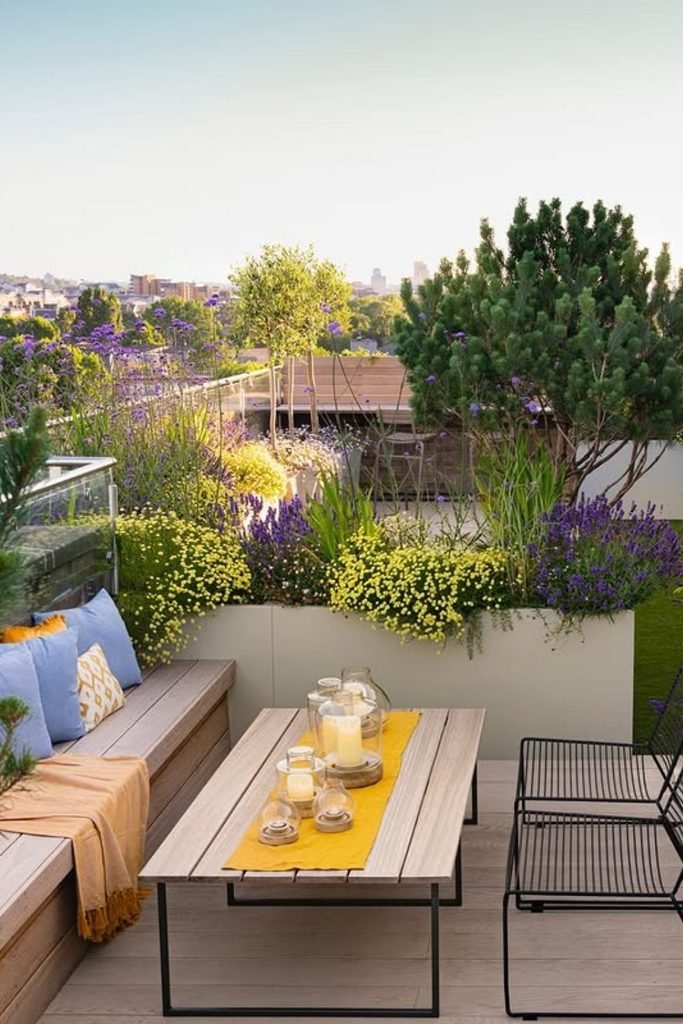
Bring more movement into a sunny rooftop by filling one deep border with nectar-rich flowers, airy perennials, and evergreen structure.
Let taller blooms grow toward the back and pour lavender-like plants and short yellow flowers along the front, providing pollinators with multiple heights.
Select types with varying flowering times to keep the border flowering for longer.
A few compact evergreens can anchor the planting between flower seasons and one tiny tree adds height where the roof can safely take it.
Private Dining
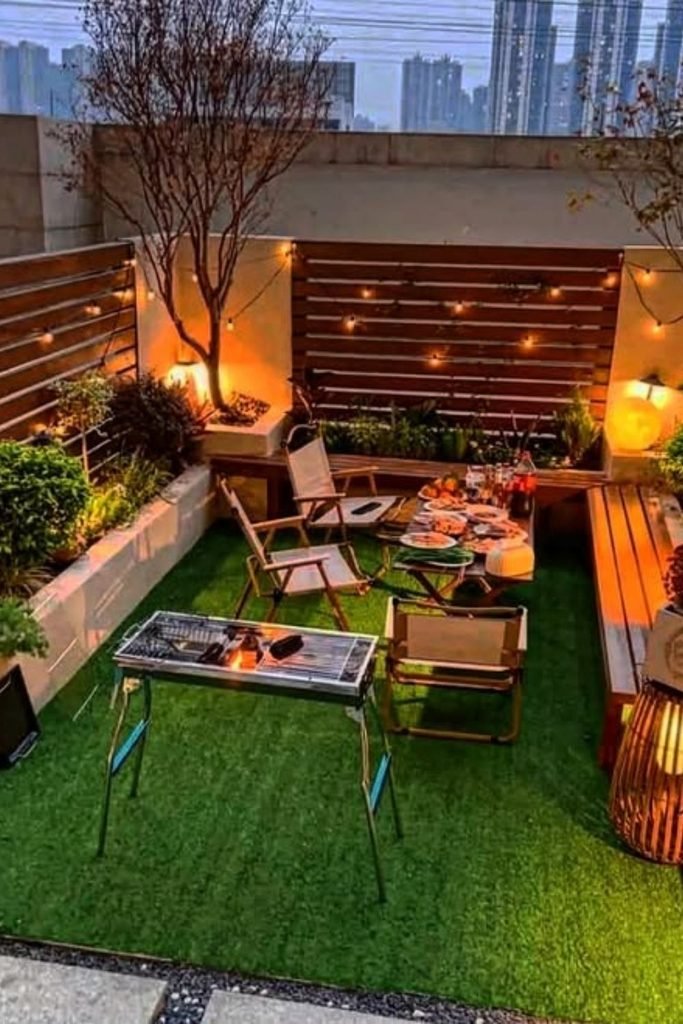
Carve out a more secluded eating area by combining slatted screens with dense planting around the exposed sides of your rooftop.
Plant compact shrubs and tiny trees in deep perimeter beds, leave the middle open for a table and easy traffic.
Slatted panels are good for areas you want to separate visually but not seal off the yard totally.
Concentrate taller flora toward nearby views so the remainder of the roof still feels open.
Framed Dining
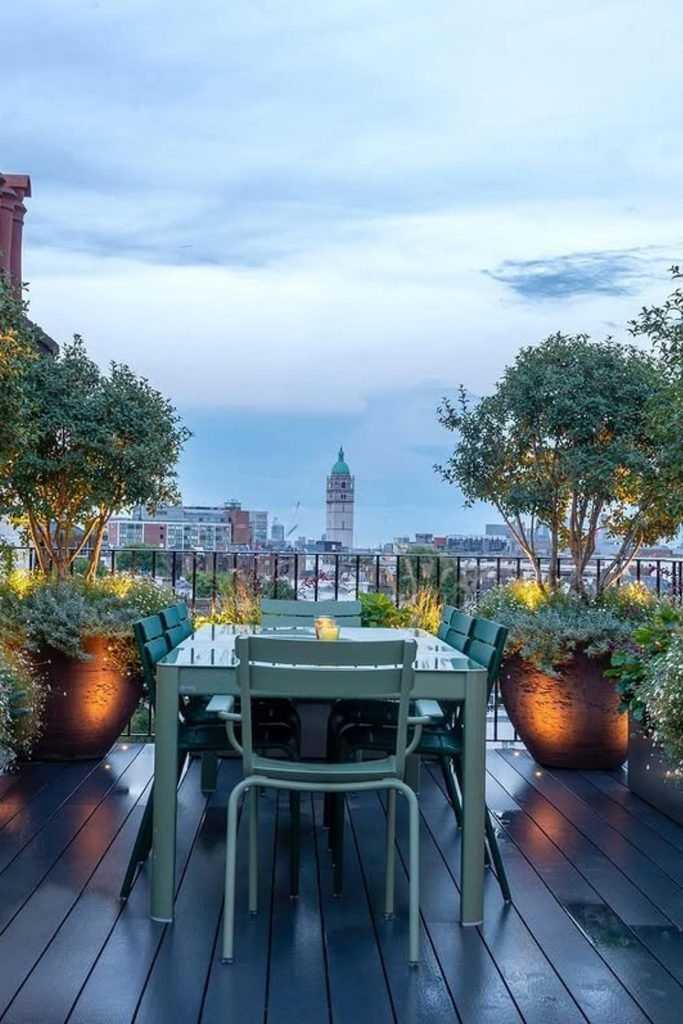
Anchor an open dining area with matching potted trees when you want greenery without sacrificing the rooftop view.
Put a large container on either side of the table, and place airy grasses, tight shrubs and small flowering plants around the lower edges.
The center is kept open for easy serving and repositioning of chairs while the higher trees provide a natural frame for the eating area.
Use uplighting that doesn’t flood the entire garden with light but is subtle enough to keep the greenery of the larger pots visible in the evening.
Soft Borders
Wrap the lounge with mixed-height planting when you want a rooftop to feel enclosed by greenery without building a solid privacy screen.
Add one tiny tree (for height) and then fill in with rounded shrubs, silvery foliage, flowers like lavender and low blossoms at the edges of the planters.
Most plants are kept below eye level to help preserve the city view, but still define the seating area from the edge of the roof.
Use delicate purple, white and green tones again and again through the beds so that a huge mix of plants looks connected, not busy.
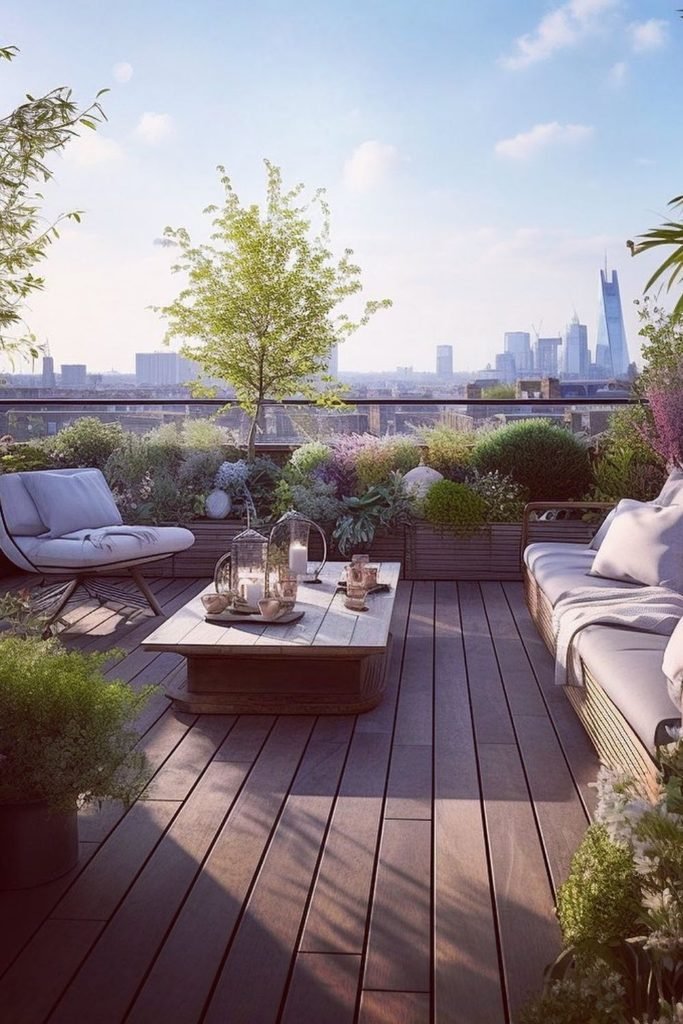
Lantern Pergola
Make an evening rooftop feel warmer by letting a vine-covered pergola handle both greenery and over head lighting.
Train climbers along the beams to soften the structure then keep larger tropical plants and container greenery around the outer edges so the lounge stays spacious.
Hanging lanterns can provide the main glow, while smaller string lights spread softer light across the canopy.
Keep vines pruned away from bulbs and electrical connections, and choose climbing plants that can handle the sun and wind conditions on your roof.

Floral Ceiling
Cover an overhead trellis with a flowering climber when you want natural shade without giving up valuable rooftop floor space.
Train the vines on solid supports and prune often enough to keep the growth in balance not letting heavy branches accumulate in one place.
Keep lower planting simple with tropical greenery and clean perimeter containers so the flowers remain the primary emphasis.
If you want filtered shade during the day, position seats under the canopy and choose a climber that is suitable for your temperature, rooftop sun and wind.
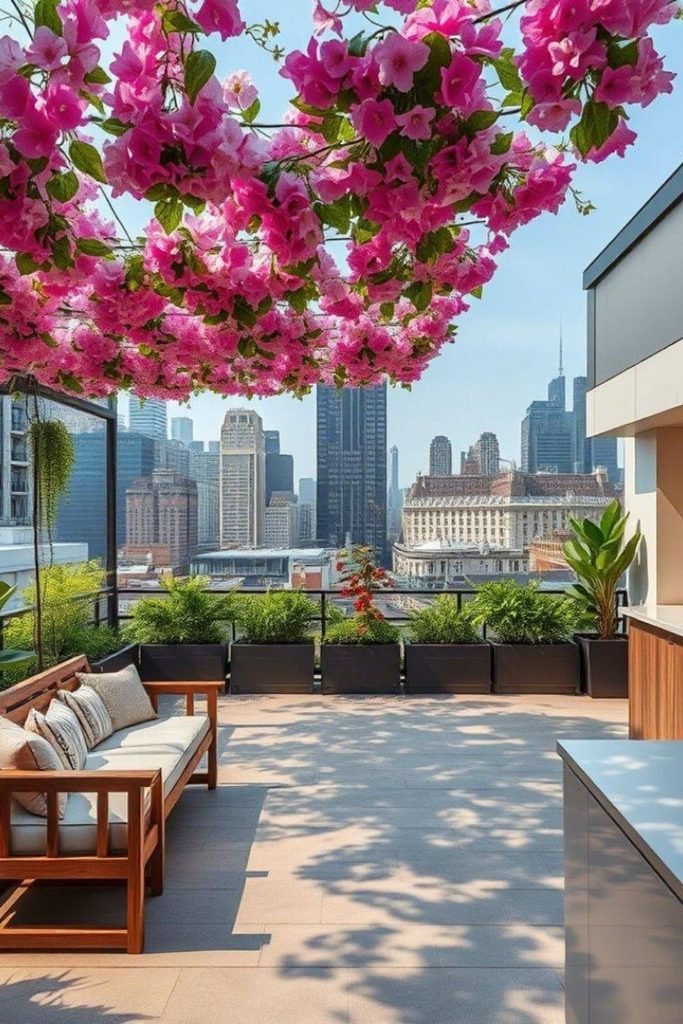
Shaded Retreat
Beat harsh rooftop sun by stretching a light fabric canopy across a sturdy pergola instead of leaving the main lounge fully exposed.
Use big tropical plants on the sides and smaller flowering container near the entrance.
Select the species appropriate for your climate and light conditions and design your garden around that shady spot.
You’ll want to keep most of the vegetation around the perimeter, leaving the middle of the space open and comfortable for gathering.
Add soft lights under the canopy and between some selected pots so the plants still frames the space when daylight is gone.
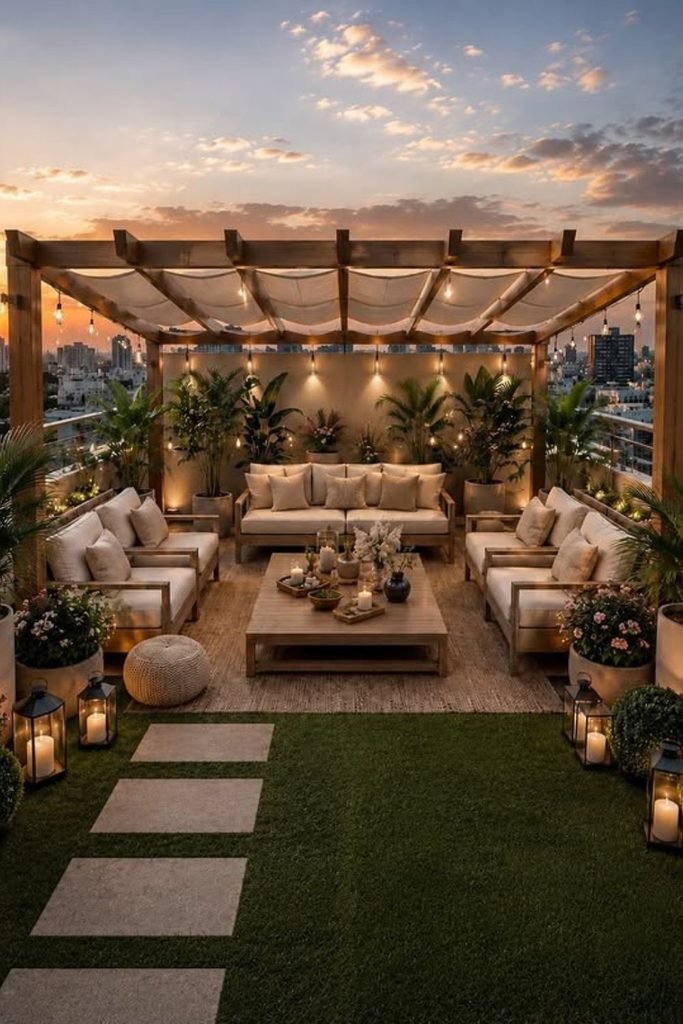
Curved Pathway
Guide movement through a narrow rooftop by curving the walkway between planted border instead of pushing greenery into isolated corners.
Put the tallest palms or bushes next to the fence for height, and then put the flowering plants and broad leaves near the path so their features appreciated.
Pebbles between the beds and the pathway keep things neat without adding extra pots.
For evening use run low lighting down the margins of paths and position modest up lights among essential plants so you can see where you are walking.

Cinema Garden
Turn an underused rooftop corner into an outdoor movie spot while keeping the garden simple enough that it never blocks the screen.
Line the outer edges with matching planters filled with compact plants, ornamental grasses and herbs, leaving the middle open for flexible seating.
Avoid taller plants in the projector’s line of sight, and utilize foliage behind the chairs to soften the hard rooftop barrier.
Overhead string lights are good for casual evenings, but put them on their own switch so you can lower the space down to zero when the movie starts.
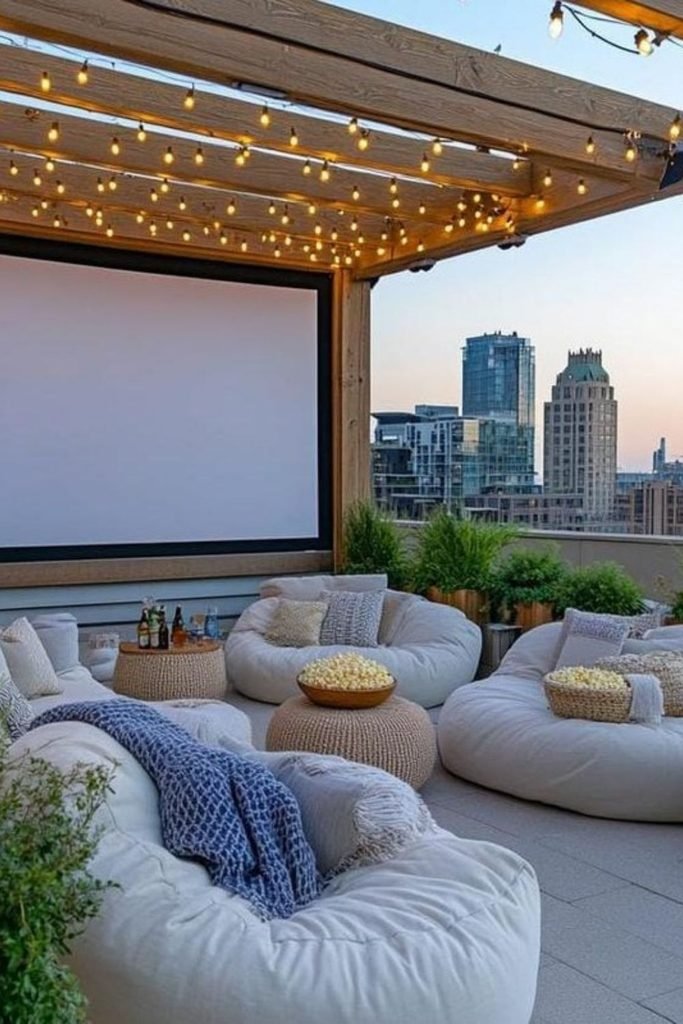
Skyline Meadow
Keep a rooftop dining area open and airy by building a loose meadow-style border around the perimeter instead of using tall solid screens.
Group upright purple blooms with beautiful grasses, compact evergreens and sculptural shrubs for movement at varying heights whilst retaining distant views.
Leave much of the center empty so the table never looks crowded with foliage.
If your roof is exposed to the elements, choose hardy plants that can withstand wind and sun and repeat the same few varieties along the edges.
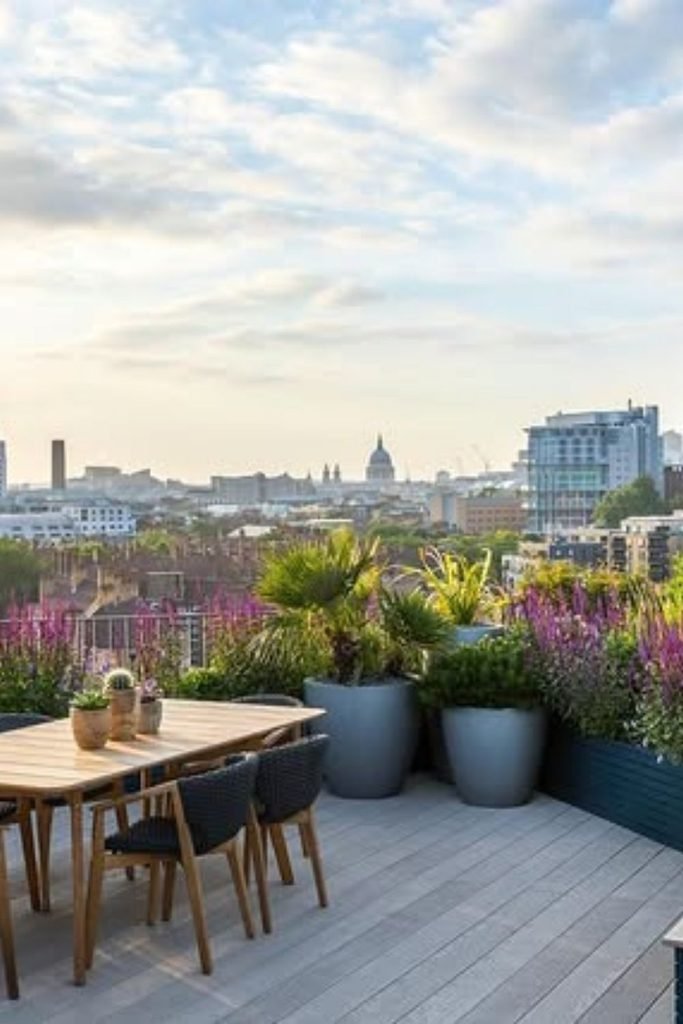
Living Wall
Save valuable floor space by turning one blank rooftop wall into a vertical garden instead of adding another row of containers.
Link the two levels by combining trailing foliage, compact flowering plants and textured greenery across the wall, then duplicate a couple of those plants in pots.
In hot weather an automatic drip system can make it much easier to maintain a larger living wall.
Keep the rest of the rooftop planting limited so that the wall remains the dominant garden element, but provide enough open area for seats.
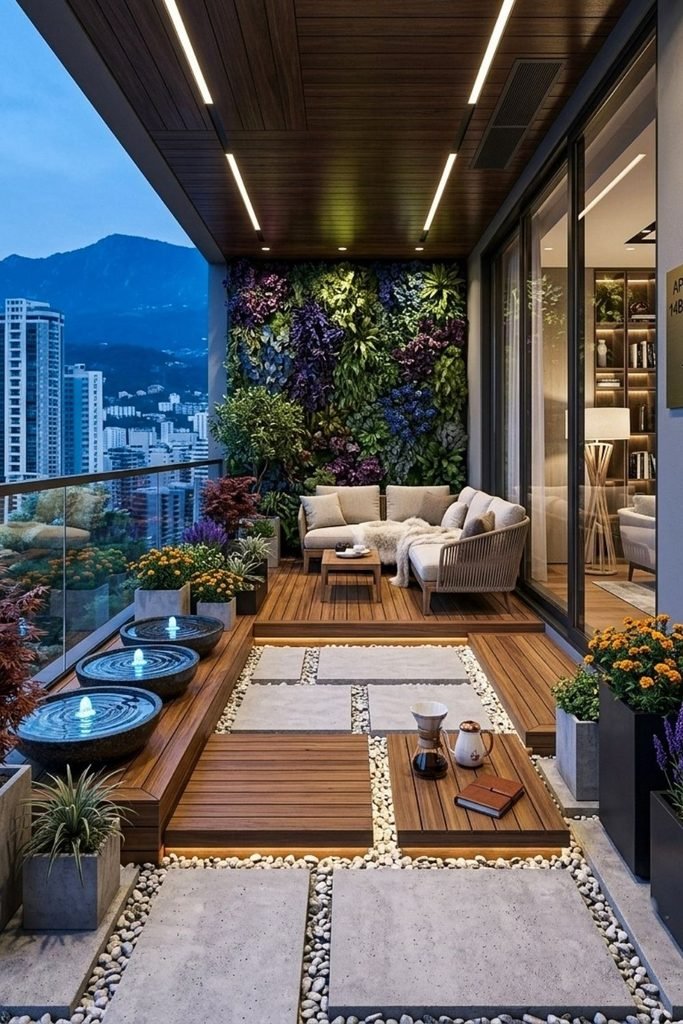
Flower Cocoon
Surround a small rooftop lounge with tall, loose flowers when you want the seating to feel tucked inside the garden rather than placed beside it.
Grow taller airy blooms toward the outer boundary,bring hydrangea-like clusters and shorter flowering plants closer to chairs for a gradual change in height.
Mixing plants with overlapping bloom periods will keep the space colorful for longer.
Leave enough clearance around the furniture for watering and pruning, especially once vigorous summer growth begins filling the gaps.
FAQs
How Can I Keep Rooftop Plants From Drying Out?
Group together plants with comparable watering needs,use larger containers that keep moisture longer than tiny pots.
Mulch on top of soil can reduce evaporation. Drip irrigation makes watering easier when it’s hot.
Regularly check the soil, as containers on the roof are prone to drying up faster than garden beds at ground level due to the wind and direct sun.
Which Plants Handle Windy Rooftop Conditions Best?
Choose hardy plants that are inherently tolerant of exposed situations such as ornamental grasses, lavender, sedum, compact shrubs and some herbs.
Avoid putting delicate, top-heavy plants where they can be hit by strong wind corridors.
Larger pots are more stable, and grouping plants together may give some protection from continual wind to smaller plants.
