
24 Spring Garden Ideas for 2026
Spring gardening is hard when every bloom in the nursery is too wonderful to leave aside.
You bring home tulips, daffodils, pansies and a few more favorites only to find the garden appearing busy, not gloriously filled.
Some blossoms hide behind taller plants, colors compete for attention, vacant spaces arise as early flowers fade.
Before you plant, consider about groupings, height, repeating colors and varying bloom times.
In this article, you’ll find 24 Spring Garden Ideas to help you bring color back after winter.
Let’s jump in!
How Can I Combine Spring Flowers Without Looking Messy?
Begin with a simple color scheme before you start purchasing flowers.
Rather than planting a different hue all throughout, select two or three major colors and repeat them across the garden.
Cluster similar flowers to make your beds look larger and calmer. Next, consider height.
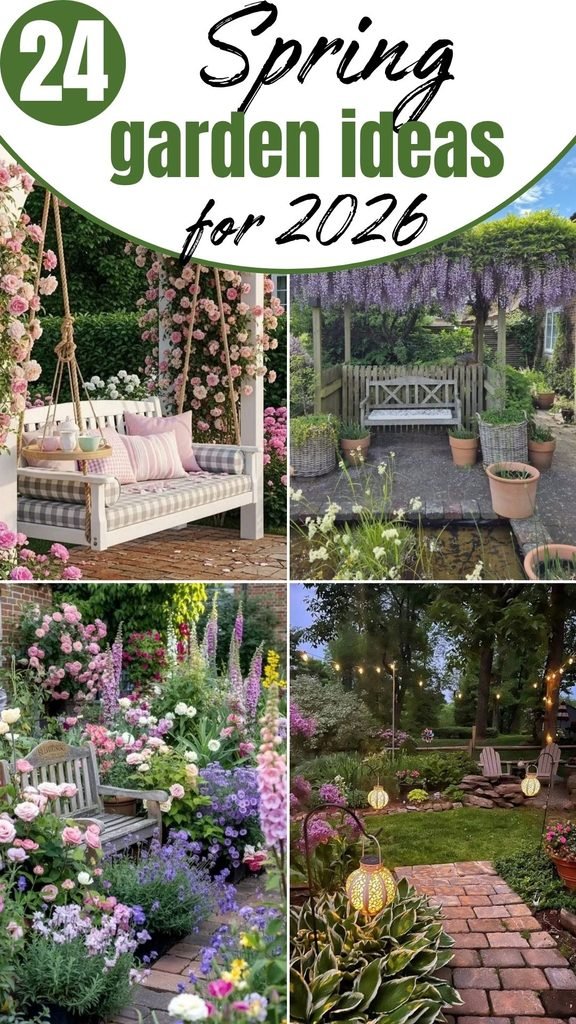
Place shorter blooms toward the walkways and borders of the border and taller blooms in the middle or rear.
Overcrowding plants can decrease air circulation and lead to other issues later on. And finally, use flowers that bloom at different times in spring.
As one group fades another can take over so your garden preserves its color without being crowded.
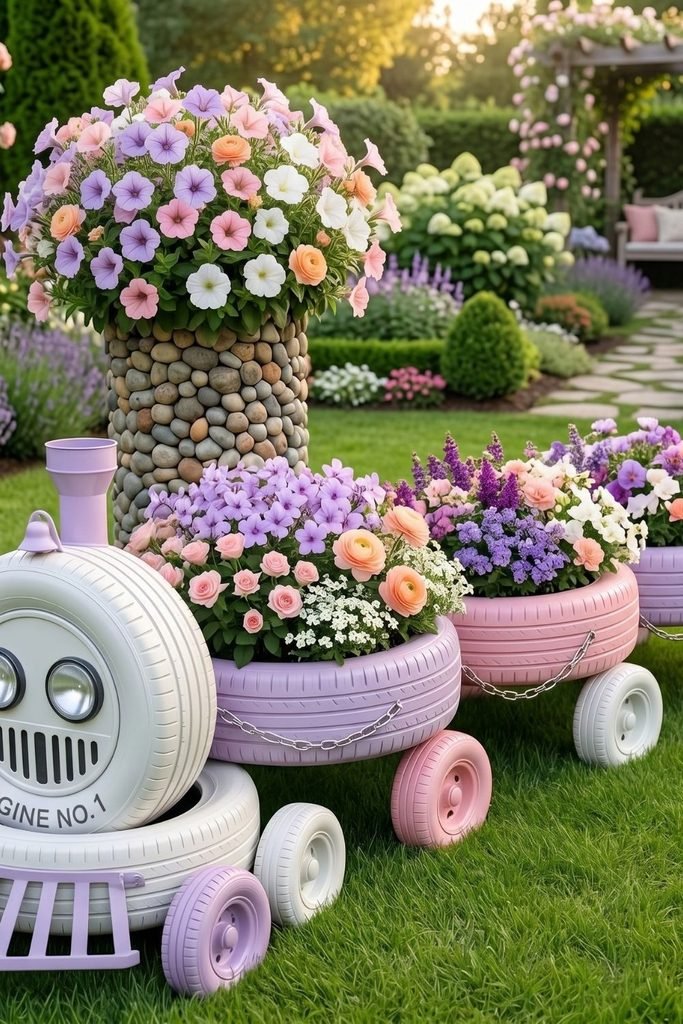
Floral Train
Turn old tires into a playful spring planter when you want a garden feature that feels fun without taking over the whole yard.
Secure tires so they don’t roll, and fill each opening with well-draining potting mix.
Plant various spring flowers in each segment, but repeat two or three colors throughout the whole train so it doesn’t look too cluttered.
Petunias, violas, alyssum and other small seasonal flowers work nicely for the cascading effect.
Playful Planters
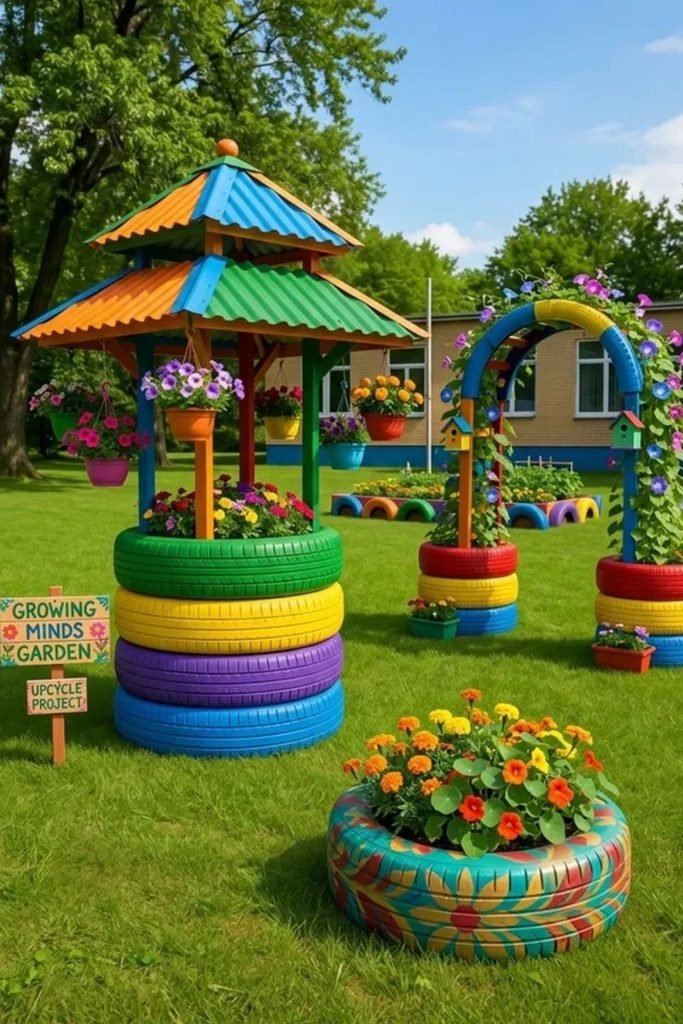
Give a family garden more personality by turning stacked tires into colorful spring planting stations.
Use the deeper stacks for hanging baskets or erect flowers, then save the lower tires for compact flowers such as nasturtiums, pansies or marigolds.
If you’re using multiple vivid paint colors, repeat those colors on the buildings so the region still feels connected.
Leave enough lawn between each feature to stroll or to mow easily. This system is especially successful in school gardens, communal areas.
Rose Retreat
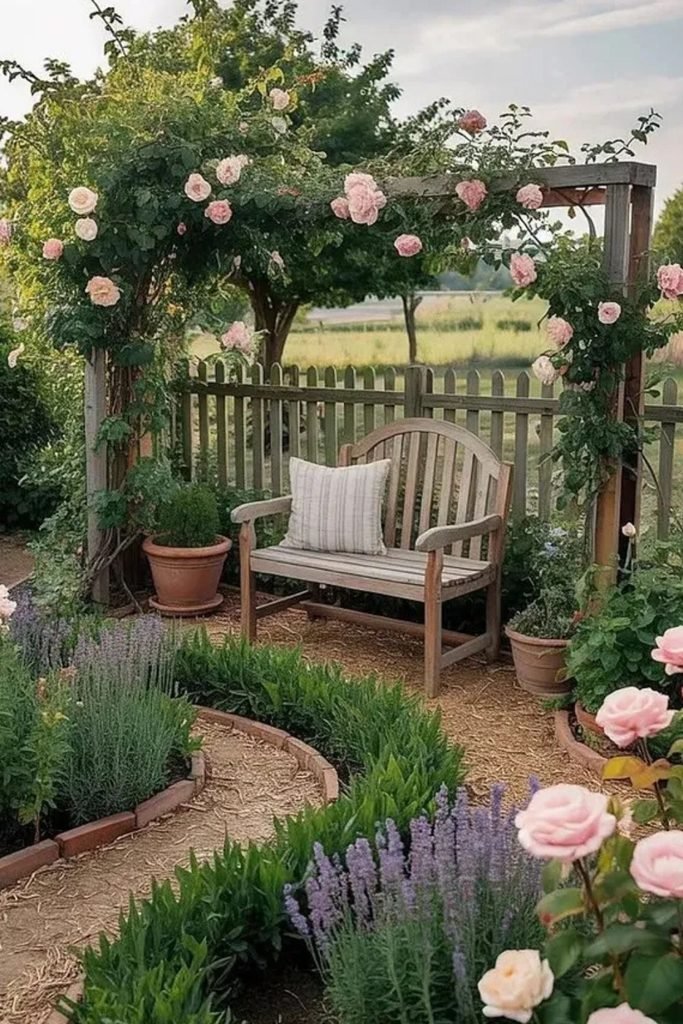
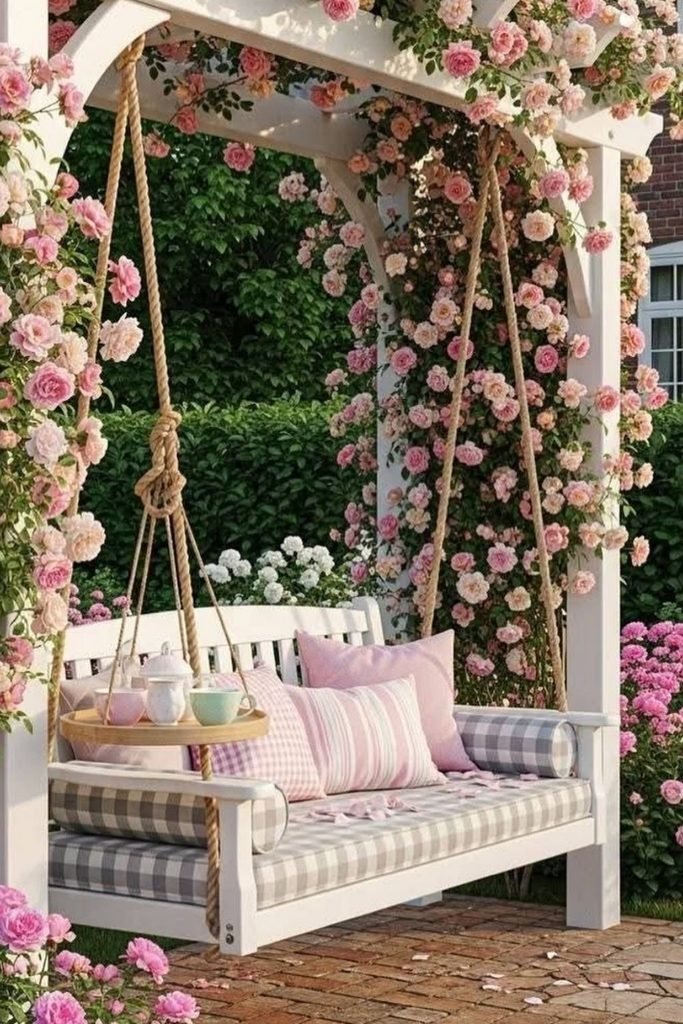
Turn a quiet garden edge into a spring resting spot by letting climbing roses frame the seating instead of adding more flowers at ground level.
Train the primary canes horizontally along a solid arbor or pergola, lightly tying them in place as they grow to stimulate flowering shoots along more structure.
Make the mattresses lower and softer so the seating area doesn’t feel crammed.
Lavender perennials and leafy plants can fill the gap between the roses and path, keeping the palette in check.
Choose this set-up for a sunny fence line or a hidden-away backyard area where you want flowers, shade and seats to feel like one cohesive garden element.
Twilight Garden
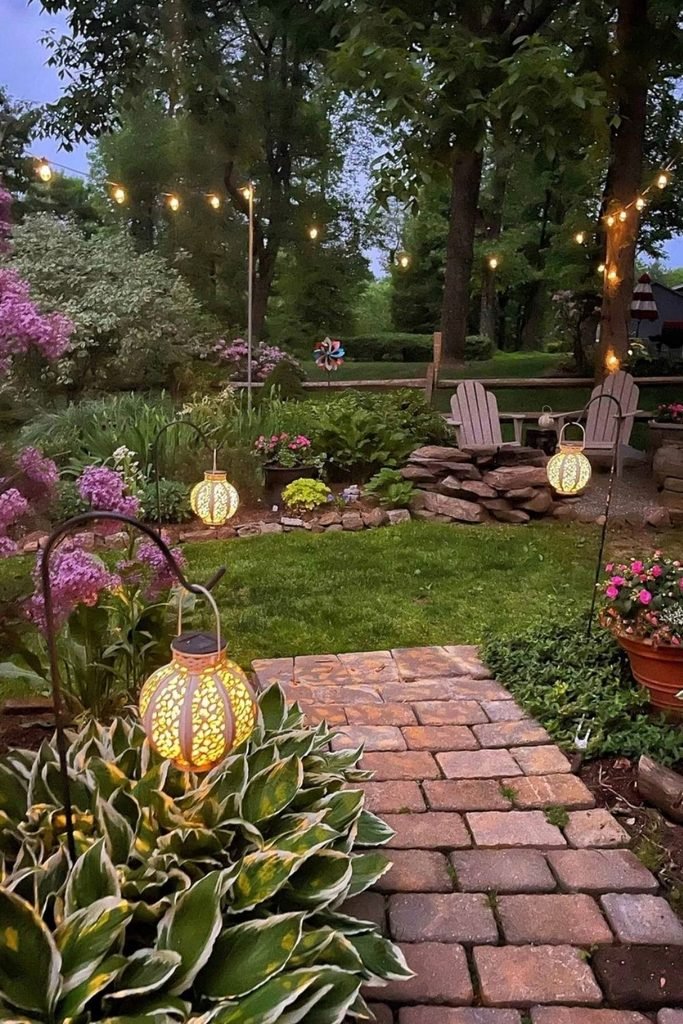
Extend the time you can enjoy spring planting by designing one garden corner for the evening, not just daylight.
String warm outdoor lights overhead and add solar lanterns down the path so flowering shrubs, hostas, and container blooms are still visible after nightfall.
Place brighter flowers around benches and walkways where the limited evening light can still catch their hue.
In a partly shady yard, foliage with contrasting edges and spring-blooming plants will keep the beds interesting even when flowers are fewer.
Rather than putting chairs out on the open lawn, create a little seating area bordered by planting and the whole corner will feel more private and linked.
Cottage Layers
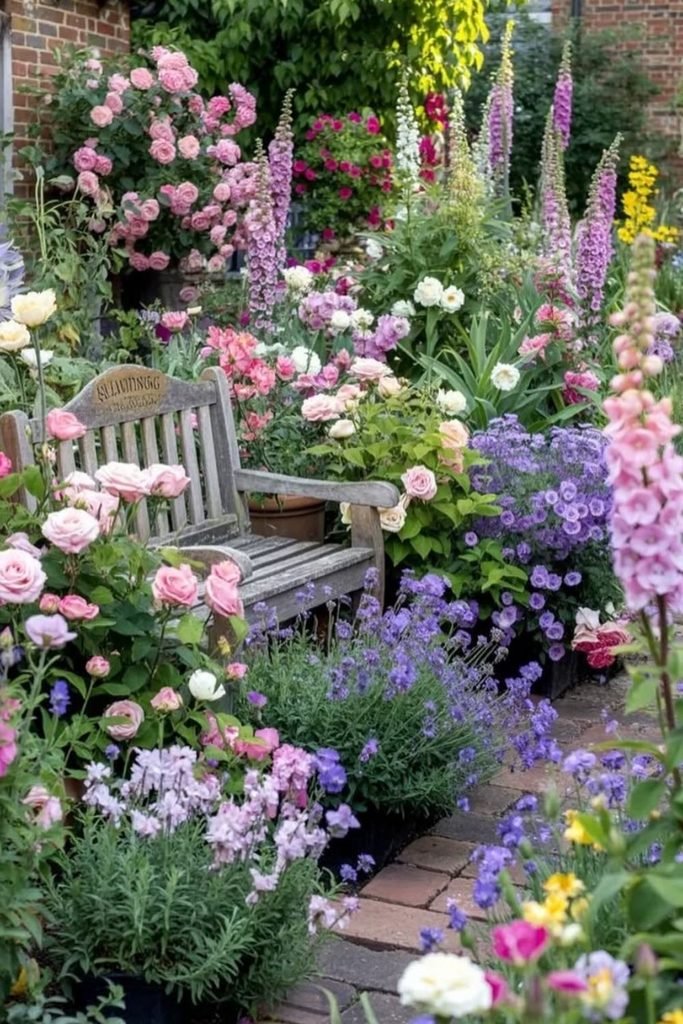
Let spring flowers overlap in loose layers when you want a full cottage garden without making every plant compete for attention.
Begin with tall spikes in the back, thread in medium-height roses and rounder blooms in the middle and soften edges of paths with lavender-toned.
Repeat a few main hues – pink, purple, white so the abundance still feels related.
It works especially well on narrow paths, where flowers can spill softly over the boundaries, providing space for people to walk.
Space huge perennials at their maturity spacing and cover transitory gaps with seasonal spring blooms, instead than overwhelming the bed permanently.
Wisteria Canopy
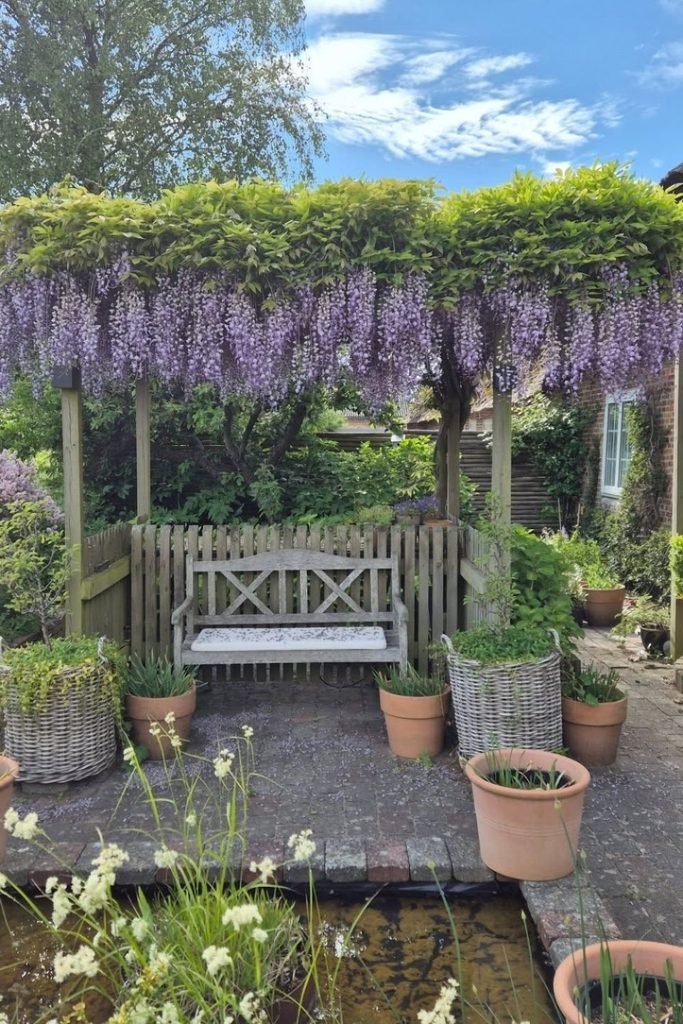
Use flowering vines overhead when ground-level beds already feel full but you still want a strong burst of spring color.
Train wisteria over a robust pergola and train new growth along the top so the hanging blossoms will ultimately form a gentle ceiling over the seating area.
Give the vine plenty of sun and don’t forget to prune; wisteria may get quite big and heavy with age.
Beneath, a bench makes the building more than just ornamentation, and simple pots around the base hold the attention above to the flowers.
This is a great way to cover a patio, garden nook or courtyard where vertical planting may offer color without taking up valuable floor area.
Rose Pergola
Make climbing roses do the decorating when you want spring color around a seating area without packing more plants into the beds.
Choose a sturdy pergola in a bright spot and plant climbers along the outer posts.
Give young canes a hand by loosely tying them as they grow upwards and across the beams.
If you want the heavy flowering to feel delicate rather than chaotic, stick to comparable pink and blush tones in the rose palette.
Low flowering plants at the base can carry the color without competing with the
Curved Borders
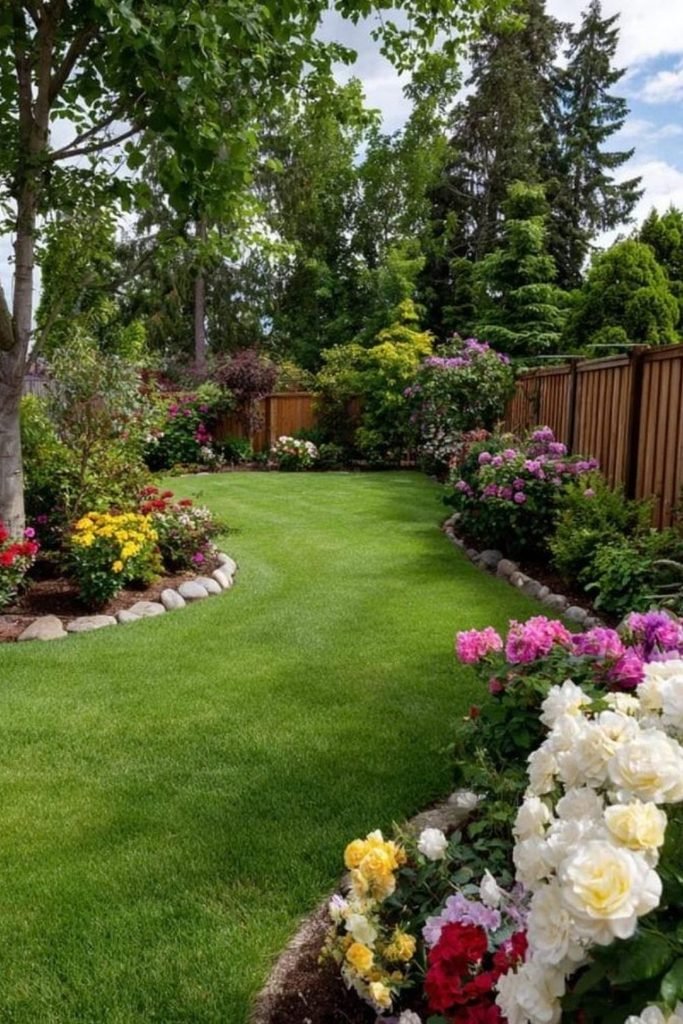
Break up a long rectangular lawn with gently curved flower beds that guide your eye through the garden instead of stopping it at the fence.
Mark the curves first with a garden hose, then cut clean borders, and add each bed with shrubs at the back and smaller spring flowers closer to the lawn.
A few pink, white, yellow and red blossoms repeated on either side connects the planting without having each portion look the same.
Rounded stone edging can assist retain mulch in place, and makes mowing easier.
This type of layout works especially well in medium to long backyards where straight borders can make the space appear cramped and inflexible.
Blooming Layers
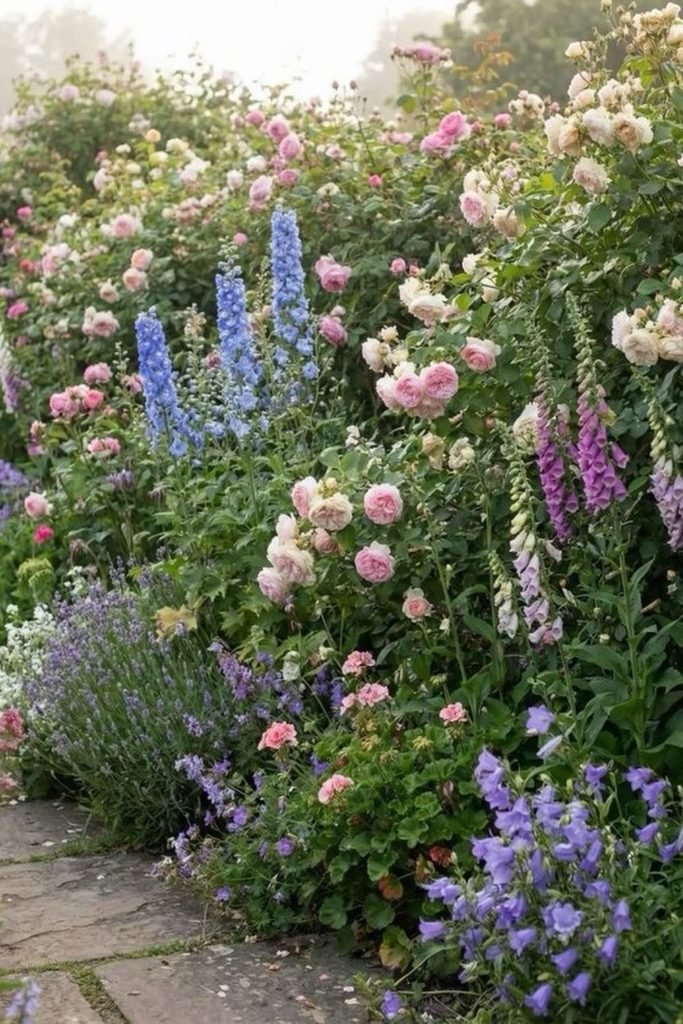
Build a flower-packed border without losing order by giving each height its own job.
Let climber or shrub roses make the leafy background tall spires like delphiniums and foxgloves across the middle and conclude near the path with lower lavender.
Rather than mixing colors all over the place, repeat delicate pink, blue, purple and white in little clusters so the eye can go easily across the planting.
This is a good way of working deep borders next to roads or fences, or sunny cottage gardens where you can afford numerous layers.
Before you plant, check the heights of mature plants, because the larger spring growth will eventually cover the smaller flowers you wish to see.
Raised Blooms
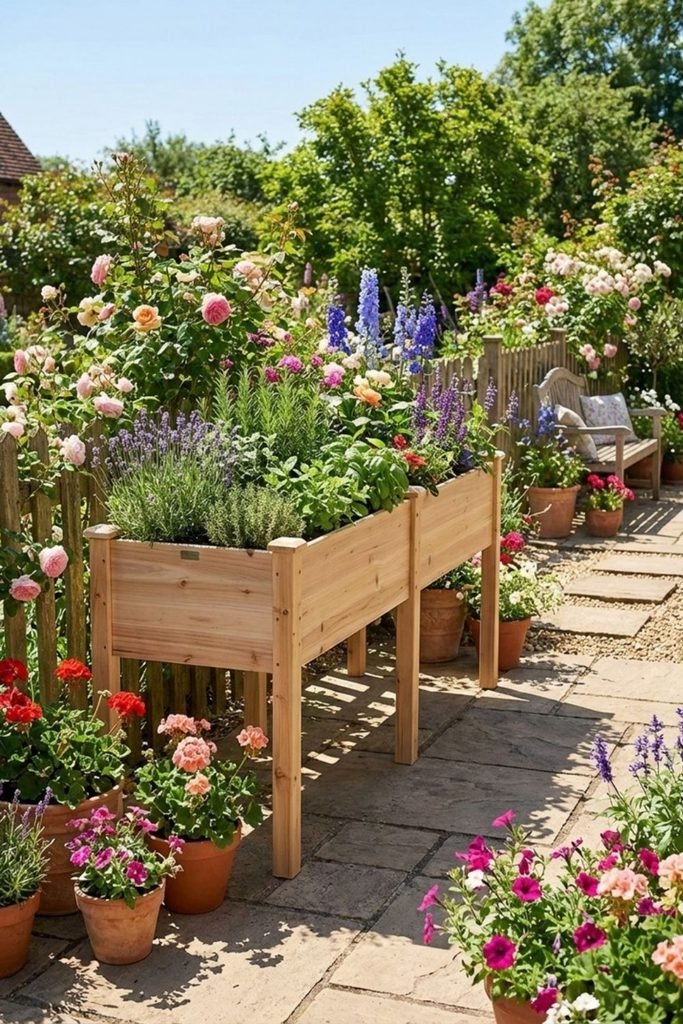
Bring spring flowers closer to eye level with an elevated planter, especially when bending over low beds makes gardening uncomfortable.
Fill the box with good new soil that drains properly and instead of filling every square inch with blooms, mix upright flowers with compact herbs or leafy plants.
Plant taller types in the middle or rear and shorter plants along the borders to give each layer access to sunshine.
Pots around the base can bring the same flower colors into the surrounding patio without cluttering the planter itself.
This is a great configuration for paved courtyards, beside garden walkways or in small back yards when you want some useful planting space.
Blossom Island
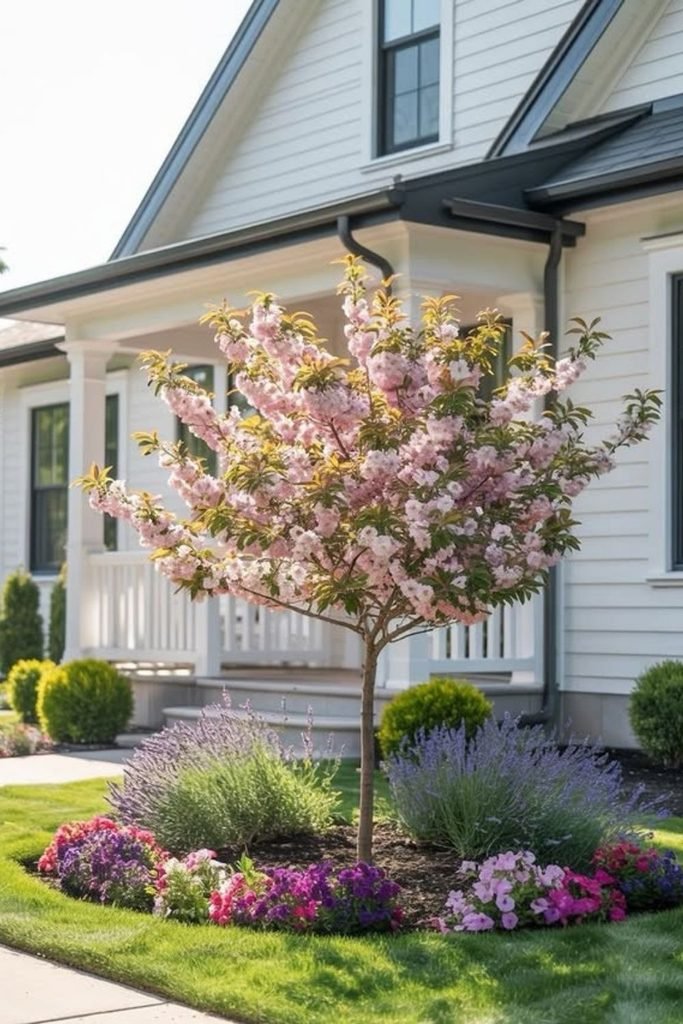
Give a flowering tree its own small planting island when your front yard needs one clear spring focal point.
Leave the tree in the middle, but plant low-growing flowers and small perennials around it that won’t compete with its canopy.
Repeating pinks and purples below serves to link the ground planting with the blossoms overhead, while a neat curving edge divides the bed from the lawn:
Do not pile mulch or plants against the trunk, but leave the soil surrounding the trunk open.
This is a good choice for planting near a driveway, front walk or porch, where the tree may provide height and seasonal beauty without filling an entire yard.
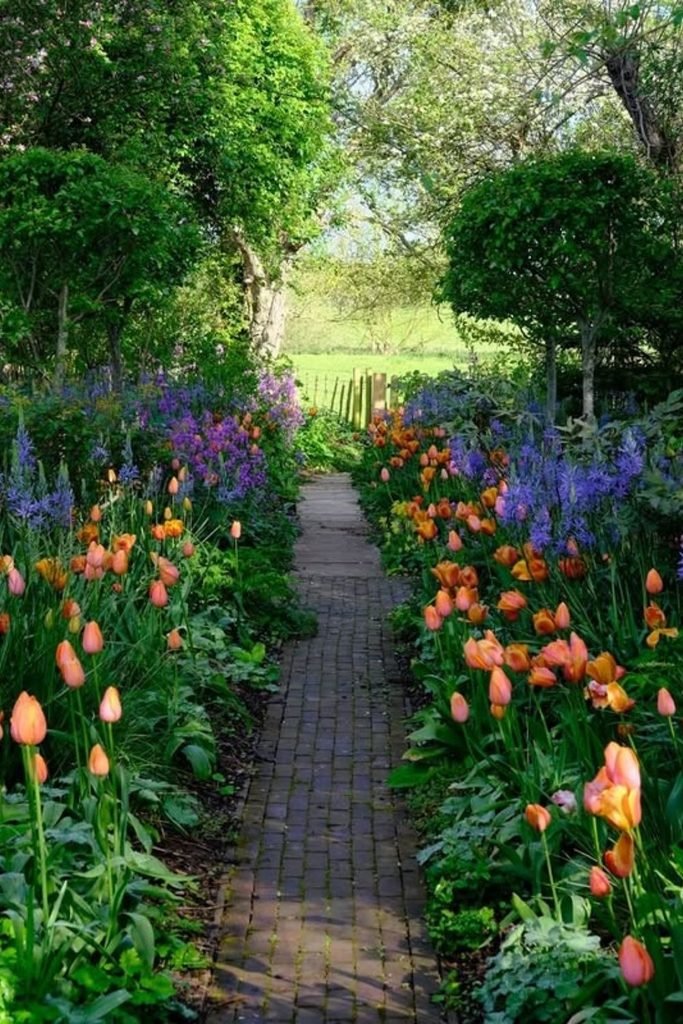
Tulip Walkway
Guide visitors through the spring garden by planting bold flowers along both sides of a narrow path instead of concentrating every bloom in one bed.
Arrange the tulips in loose bunches, then behind them add taller blue or purple flowers for contrast, but do not use too many conflicting hues.
The permanent structure can be trees and bushes while at the lower level bulbs can provide seasonal interest.
Plant tulips in the fall for spring bloom, and plant later-blooming perennials to fill in after the bulb greenery dies down.
Rainbow Drifts
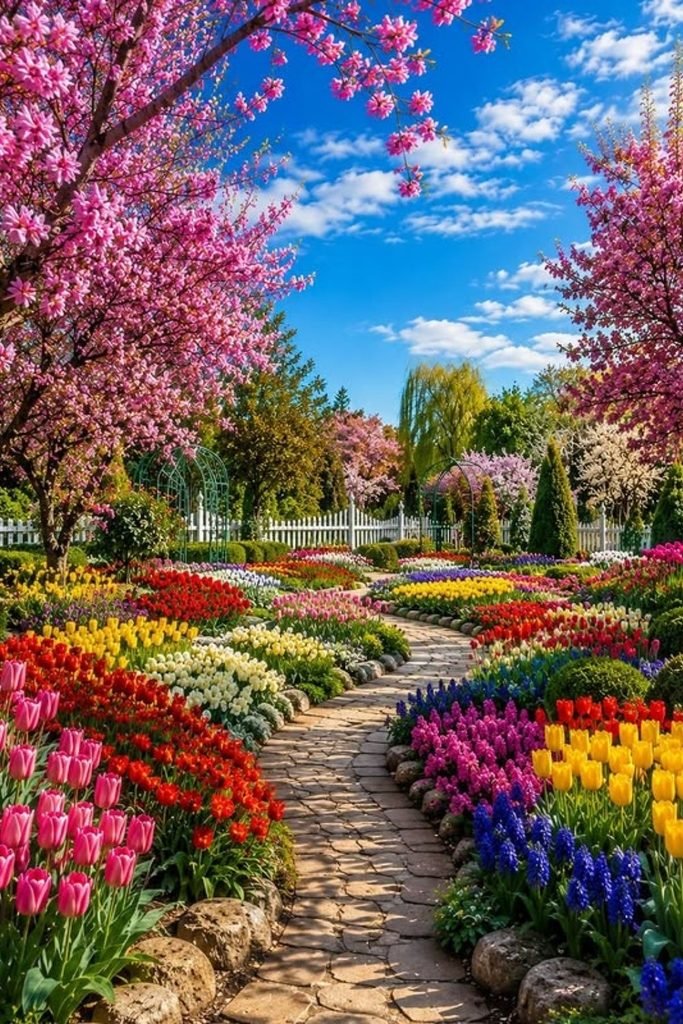
Control a wide mix of spring colors by planting each shade in generous drifts instead of scattering individual flowers throughout the beds.
Group tulips and other spring bulbs by color, then repeat those groupings further down the walk so red, yellow, pink, white and blue can coexist in one garden.
This strategy is especially successful in curved beds where each color reveals slowly as you go through the room.
Add clipped evergreen shrubs and blooming trees between the brighter areas to offer your eyes a place to rest.
Rose Gateway
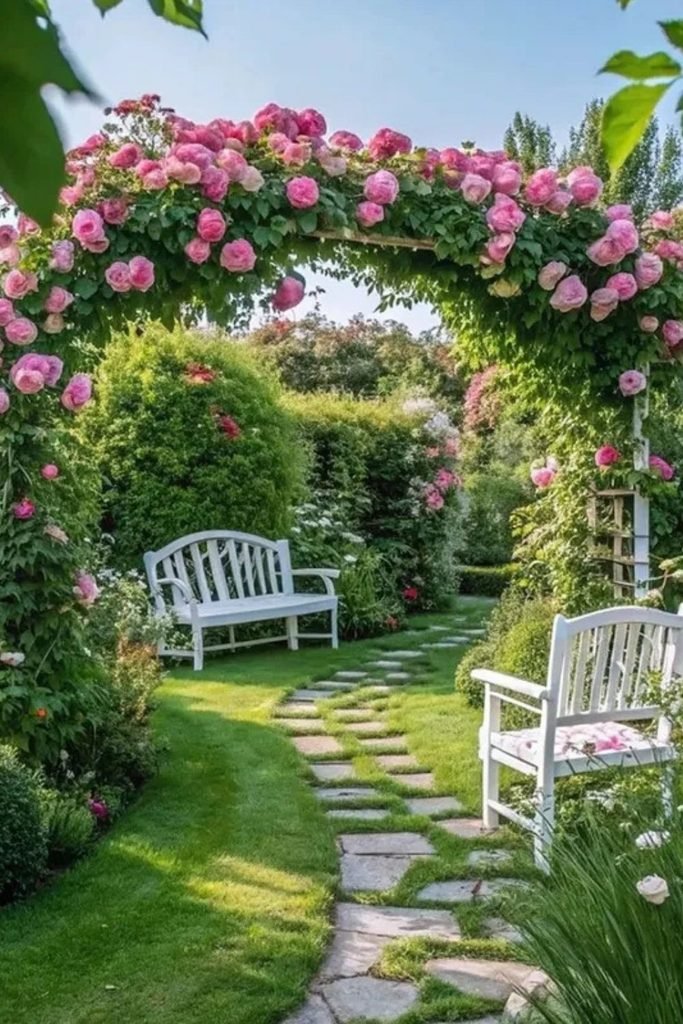
Frame the transition between two garden areas with climbing roses so the entrance itself becomes part of the spring display.
Fix a stout arch over a path, plant one climber at each support, and train the main canes round the sides and over the top as they lengthen.
You can still have lots of flowers, but keep most of them in one pink palette to avoid visual clutter.
Continue the path with basic stepping stones and low plants so the arch remains the center of attention.
Pollinator Path
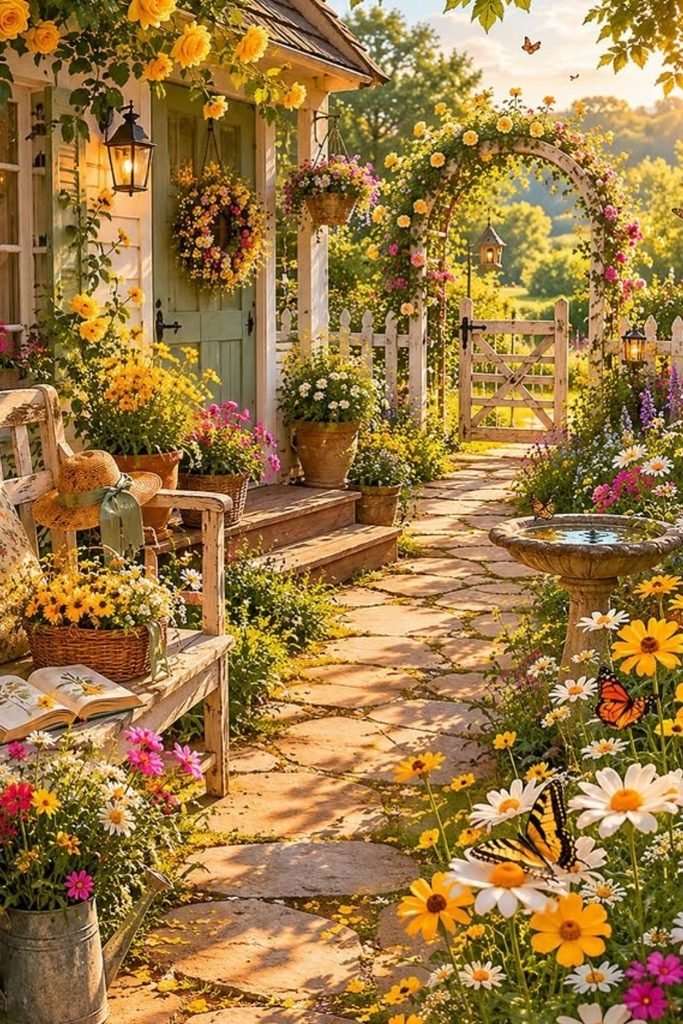
Invite spring pollinators closer to the garden by filling the edges of a sunny walkway with generous groups of nectar-rich flowers.
Instead, choose a few of flowers that are acceptable for the local environment and come in diverse forms with staggered flowering times.
Add a shallow birdbath or water dish nearby, but keep the water clean and provide stones where insects can safely land.
Pots and hanging baskets can add extra color to the porch without expanding the gardens.
Tropical Border
Warm-climate gardens can still feel fresh in spring when you layer seasonal flowers around permanent tropical plants.
Use palms and other robust foliage to provide the height, then group low-growing blooms in repeated pink, purple, red and white groups around them.
Positioning flowers nearer to the border of the lawn creates a clear boundary while providing the bigger vegetation with some breathing space.
Instead of imitating plants that are cultivated in cooler areas, select spring types that are adapted to the heat and sun in your area.
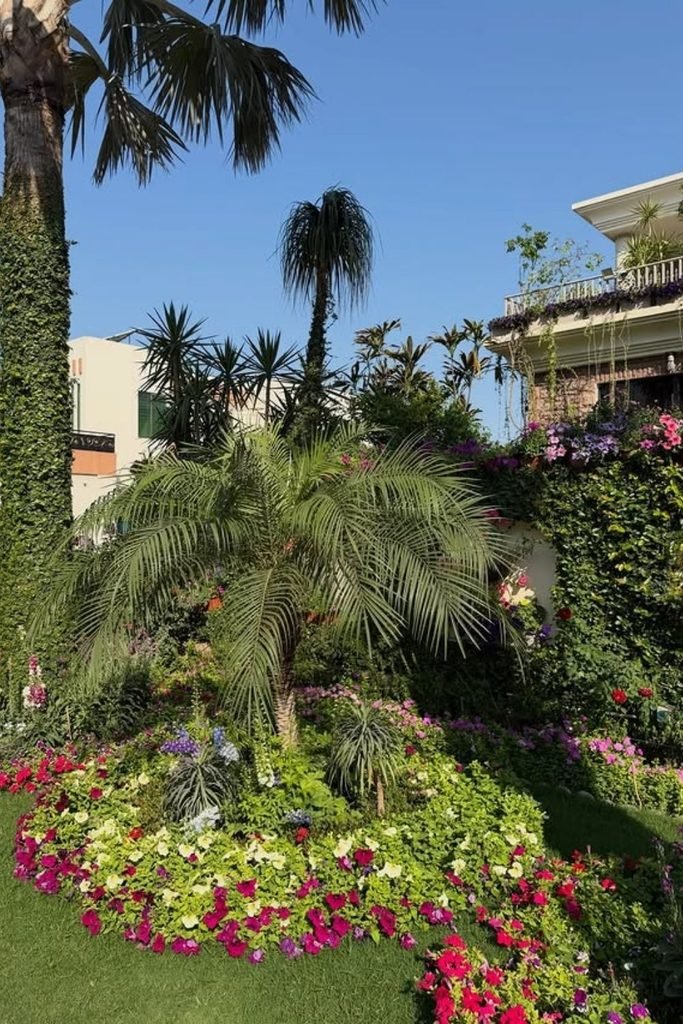
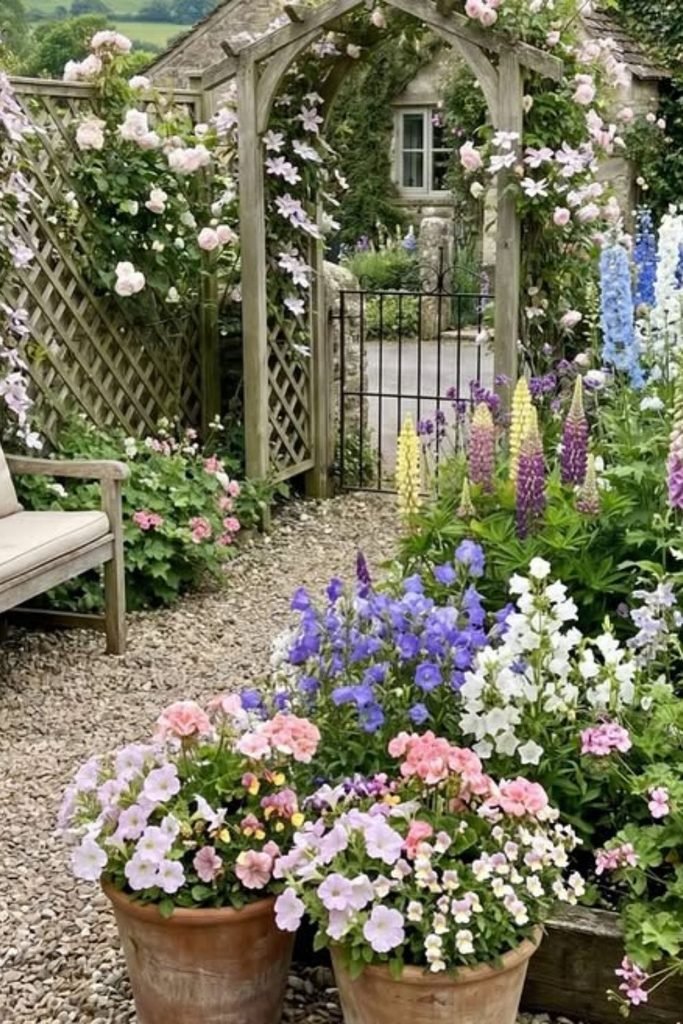
Cottage Courtyard
Soften a gravel courtyard by pushing most of the spring planting toward its edges and leaving the center open for walking and seating.
Train climbing roses or clematis up a trellis and arch to bring flowers up to eye level, then add height by placing tall spires behind short pink, blue blooms.
Pots along the way help fill tiny holes without making the permanent beds a crowded mix.
This is ideal for cottage doors, side gardens and small courtyards where planting space is limited.
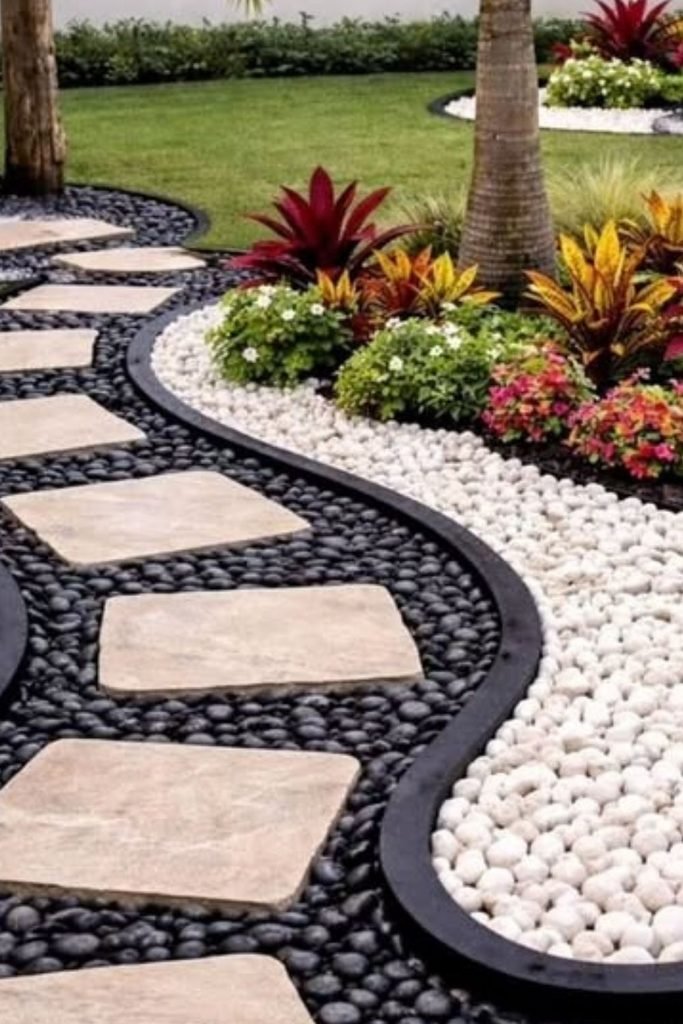
Pebble Path
Keep spring planting neat and easy to follow by separating bold foliage from the walkway with strong curved edging.
For the walking route, cover dark pebbles with large stepping stones, and use contrasting white gravel in nearby planting islands to make palms.
Repeating the same edge around each piece pulls the entire design together even if the plants are somewhat varied in color and texture.
This is especially useful in gardens in warm climates where tropical plants can give year round structure and spring flowers can be added for seasonal punctuation.
If you use decorative rock, put down landscaping fabric or another weed barrier underneath it to help limit weed growth in the spaces between the rocks.
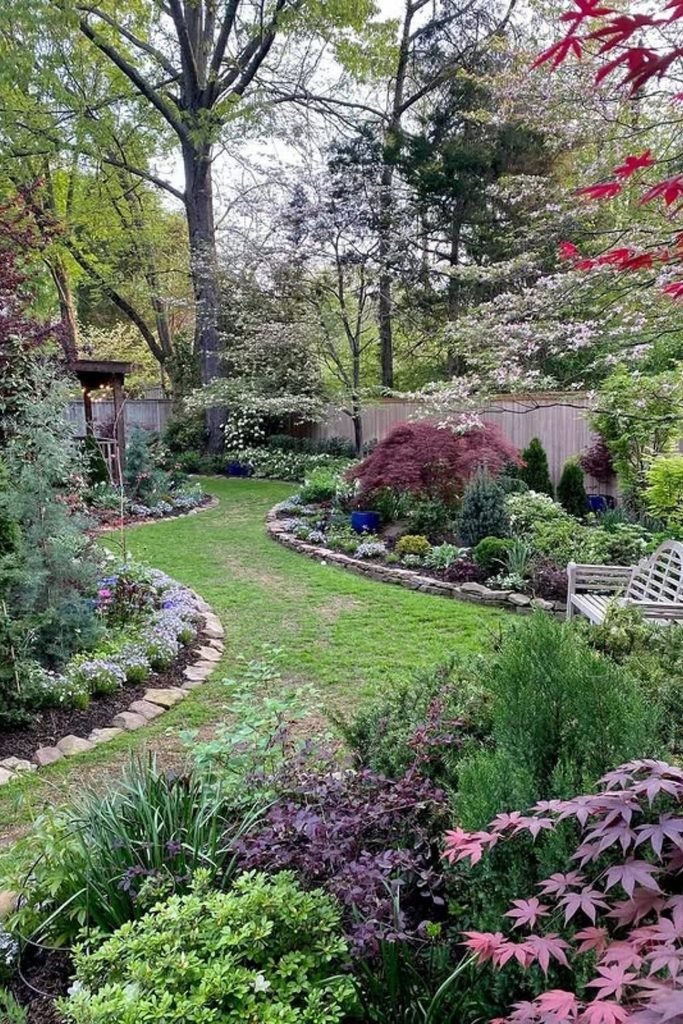
Woodland Borders
Use mature trees as the backbone of your spring garden instead of trying to fill every shaded area with flowers.
To build curved beds around the grass, layer compact evergreens, Japanese maples, flowering shrubs and shade-tolerant perennials for interest at heights.
Small pockets of pale blue, white or pink flowers can lift the bottom borders without clashing with the bold hues of the foliage above.
Maintain a strip of grass through the middle so that the dense planting still feels open and simple to explore.
It works especially effectively in mature gardens when existing trees provide the cool woods feel that takes years to reestablish from scratch, in dappled shadow.
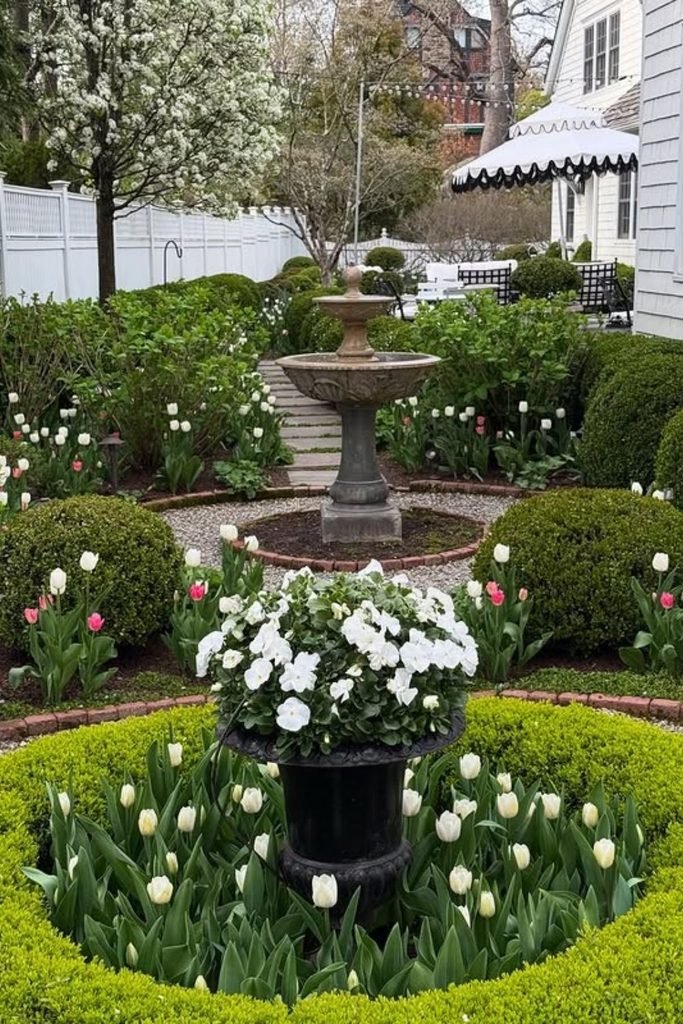
Formal Tulips
Bring spring color into a structured garden by planting tulips inside clipped evergreen borders rather than creating another loose flower bed.
Select one dominant color like as white, and use only a few pink flowers for accents so the blooms do not spoil the formal layout.
Boxwood-like shrubs give the garden shape while the bulbs are still in the ground, and continue to give it structure once the bulbs have flowered.
A fountain, urn or other feature can give the center a sense of an anchor and give the surrounding planting a sense of balance.
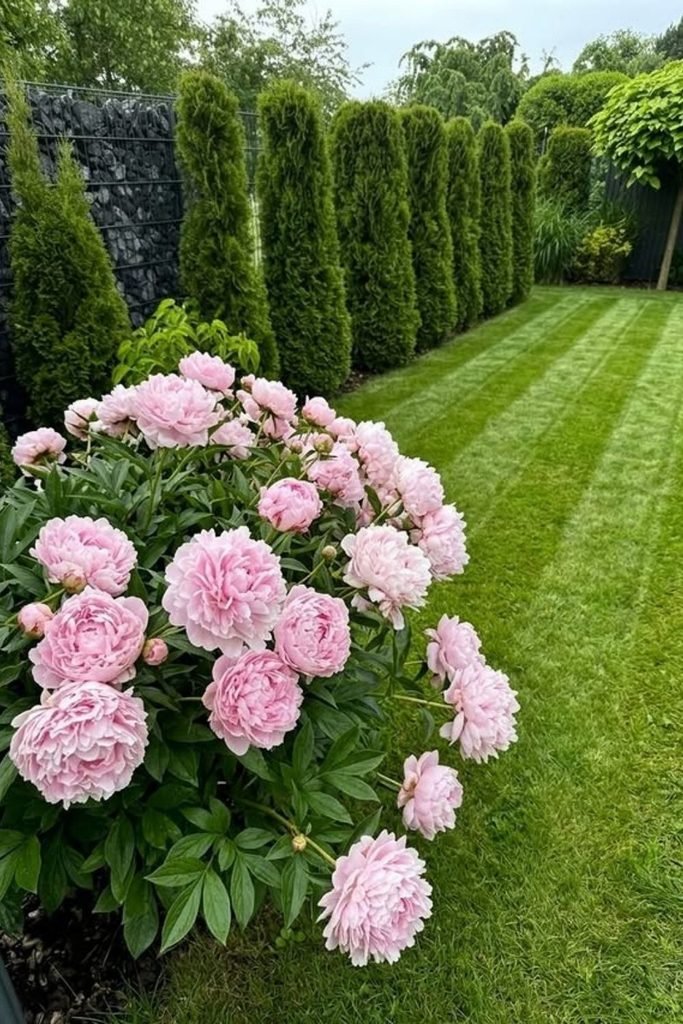
Peony Border
Reserve one sunny border for a generous group of peonies when you want a strong burst of late-spring flowers without mixing several competing blooms.
Plant them where they can stay long term, giving each plant enough room to mature and keeping the crown at the correct depth for your variety.
Their large pink flowers already make plenty of impact, so let a clipped evergreen screen or simple lawn provide the quieter background.
Once flowering ends, leave the healthy foliage in place because it keeps the border green through the growing season.
This works especially well along privacy hedges, fences, or lawn edges where one repeated flower can create a clean, established look.
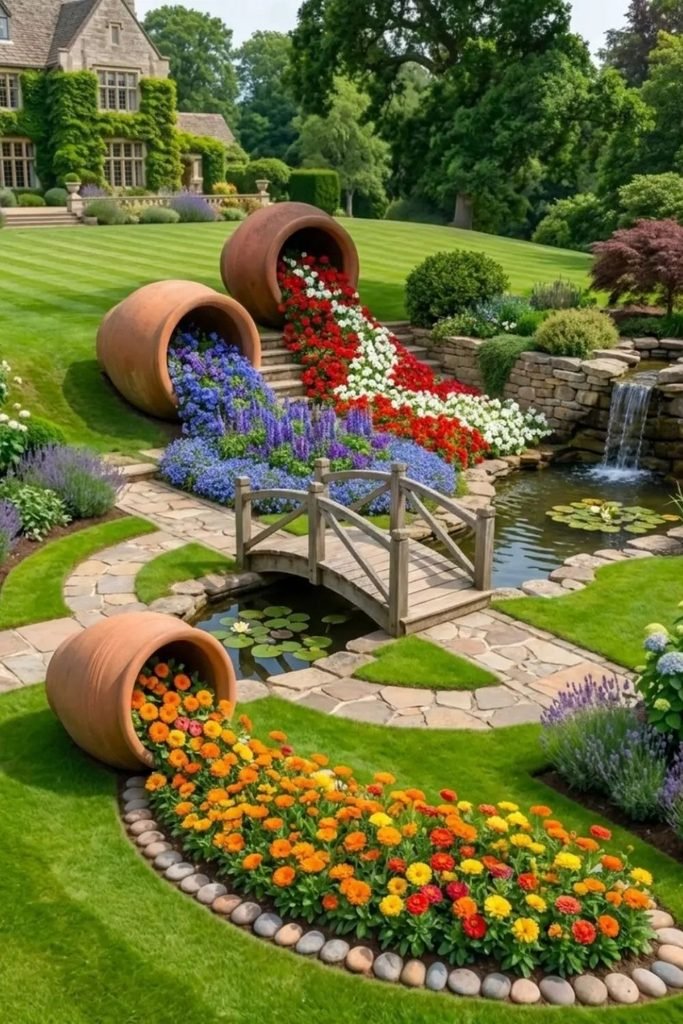
Spilled Blooms
Create a playful focal point by making flowers appear to pour from an oversized garden pot.
Anchor a big container on its side, and create a narrow planting bed that extends from the opening, gradually widening as it crosses the lawn.
Thanks to the use of one main color family in each “spill,” the effect is easy to read from a distance, and smooth stone border keeps the flowers from fading.
Choose compact seasonal flowers that naturally form a dense carpet, and match their sunlight and watering needs to the area.
This works well for broad lawns, slopes or open locations where a typical flower bed could appear too flat.
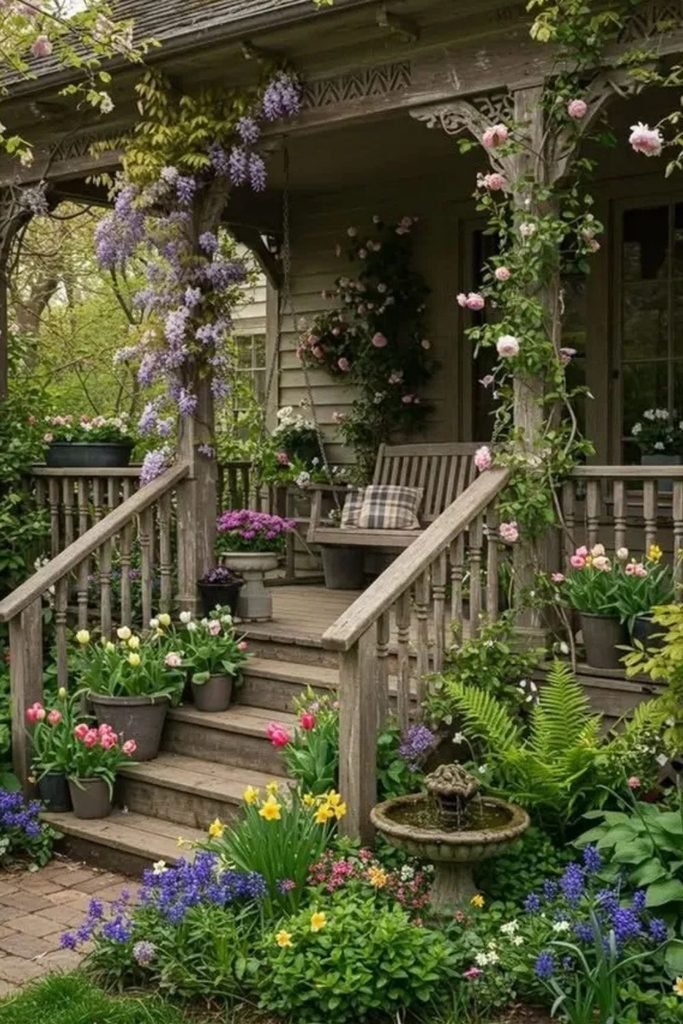
Porch Blooms
Carry spring planting right up to the house by using porch steps, railings, and posts as extra growing space.
Put pots of tulips and other spring bulbs on alternate steps, not in an even line, and train blooming climbers up the porch supports to join the containers.
Some persistent greenery around the foundation so that area still seems developed when the early flowers are over.
This is particularly handy near older porches, cottage entrances or homes with limited space for front yard landscaping.
By mixing pots with in-ground flowers, seasonal transitions are also made easier because finished containers may be moved.
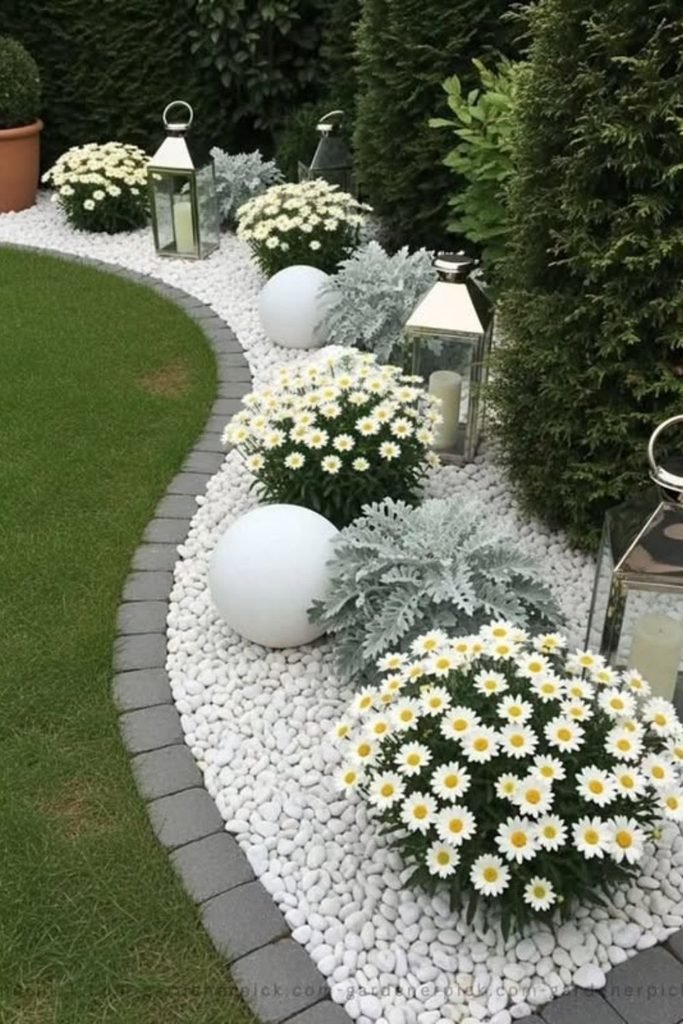
Daisy Edging
Freshen a plain evergreen border by repeating rounded groups of white daisies instead of mixing many spring colors together.
Space the flowering plants at regular intervals then place silver foliage between them to break up the green backdrop and give contrast.
To get a tidier look, you can fill the bare soil with white decorative gravel.
Leave adequate room for planting around each root area to allow for irrigation and growth.
It works particularly well next to curving lawns, neatly trimmed hedges or modern garden beds, where a limited palette feels more purposeful.
To make the border look beautiful even after sunset, add lamps between selected flower clusters as well.
FAQs
Which Spring Flowers Keep Garden Beds Colorful Longest?
Don’t plant just flowers that all bloom at the same time; mix early, mid- and late-spring bloomers.
You can start the season with crocuses and daffodils, maintain the color in the middle with tulips and then take over with perennials when bulbs fade.
How Can I Make Spring Gardens Easier To Maintain?
Begin with permanent shrubs and perennials for a dependable garden structure and add spring bulbs and seasonal flowers just where you need additional color.
Group plants together that need similar light and watering, mulch exposed soil and prevent crowding plants.
You’ll spend less time watering, weeding, or replacing failing plants down the road.
