
29 Vegetable Garden Design Ideas for 2026
Vegetable gardens are sometimes started with good intentions but are crowded, uneven and tougher to manage than you think.
One bed receives too much sun, another sits unused and harvesting turns into a tangle of plants.
If you’re looking for vegetable garden design ideas, chances are you don’t just want a spot to grow tomatoes or lettuce.
You want a design that looks orderly, uses every inch strategically, and makes gardening feel easier.
In this article, you’ll learn practical planning tips first, then explore inspiring vegetable garden designs you can recreate in your own space.
Let’s jump in!
How Do You Design A Vegetable Garden That Looks Beautiful?
A great vegetable garden begins long before you sow the first seed. How you set up your beds, pathways.
And growing space will determine how easy it will be to water, harvest and care for things later on.
Start with the sunniest area and arrange a layout so you can reach every plant without walking on the earth.
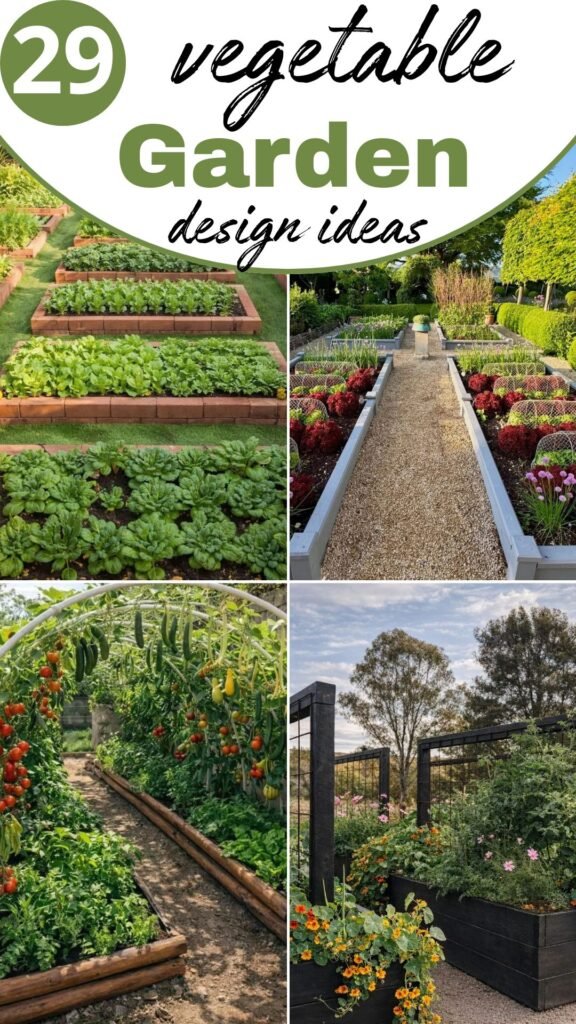
Plant tall crops in places they won’t shade shorter ones. Add trellises for things to climb. Leave comfortable walkways between beds.
Simple touches such as raised beds, tidy edging, flowers and herbs may make the garden look as appealing as it is productive.
Smart design means every square foot works harder and your garden is clean, organized and fun to grow.
Raised Symmetry
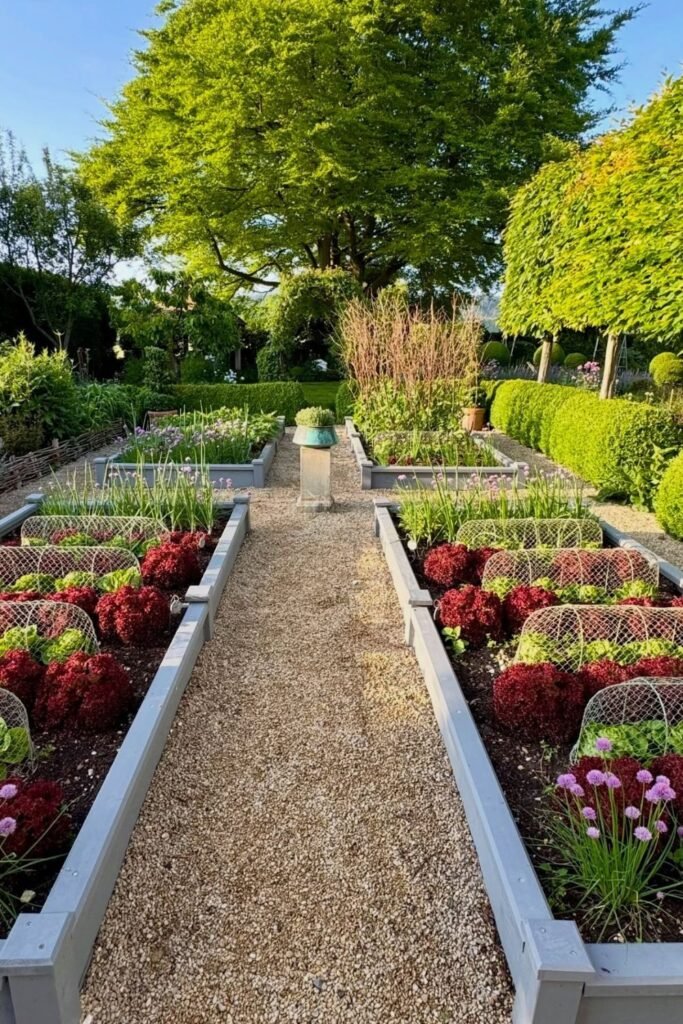
Order makes a vegetable garden feel just as satisfying as the harvest itself. Matching raised beds separated by wide gravel paths.
Plan a walk around, watering, working layout that won’t step on the soil. Add short edging to define each bed.
And soften the structural aspect with flowering chives or companion plants along the edges.
Lightweight crop covers protect immature veggies and keep the garden tidy instead of cluttered.
There is also enough of open space between beds to allow wheelbarrows and watering cans freedom to maneuver.
This design is a good choice for medium to large backyards where beauty and productivity need equal attention.
Brick Borders
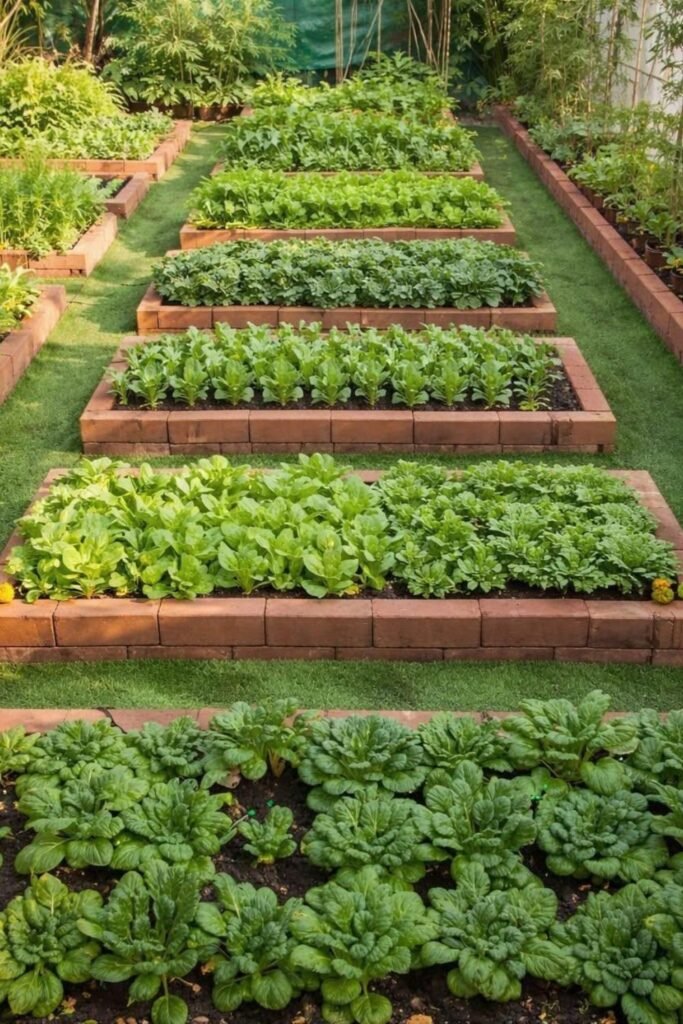
Every bed deserves a clear boundary if you want your garden to stay tidy through the growing season.
The vegetables are separated from the walkways by brick edging, which keeps soil in place and creates a neat, easy-to-maintain plan.
Try to plant only one variety of leafy vegetable in a bed or group plants with comparable water needs to make maintenance easier.
The garden is contrasted by fresh walks of soft grass or artificial turf and offers you comfortable access for harvesting.
Finish the design by adding climbing veggies around the edge to make use of the vertical area without taking away from the essential planting space.
Tunnel Trellis
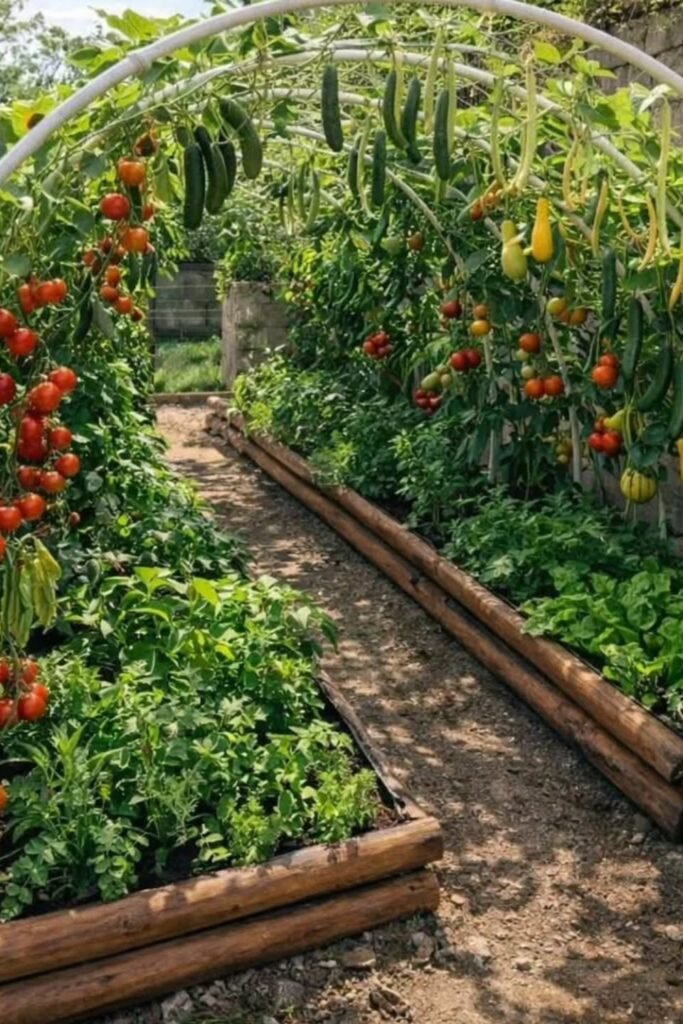
Walking through your harvest feels even better when every step sits beneath climbing vegetables instead of empty air.
Simple arch trellises over parallel raised beds can help cucumbers, beans, gourds or squash to grow vertically while leaving the ground open for tomatoes, peppers and herbs.
Gravel roads make it easy to get to the center even after rain, and wooden bed frames add a natural, rustic feel to the arrangement.
Tie the young vines to the arches at intervals and cut off the hanging veggies frequently to keep up a constant production.
This concept works well for large backyards where you need to save space but still want a garden that is as spectacular as it is productive.
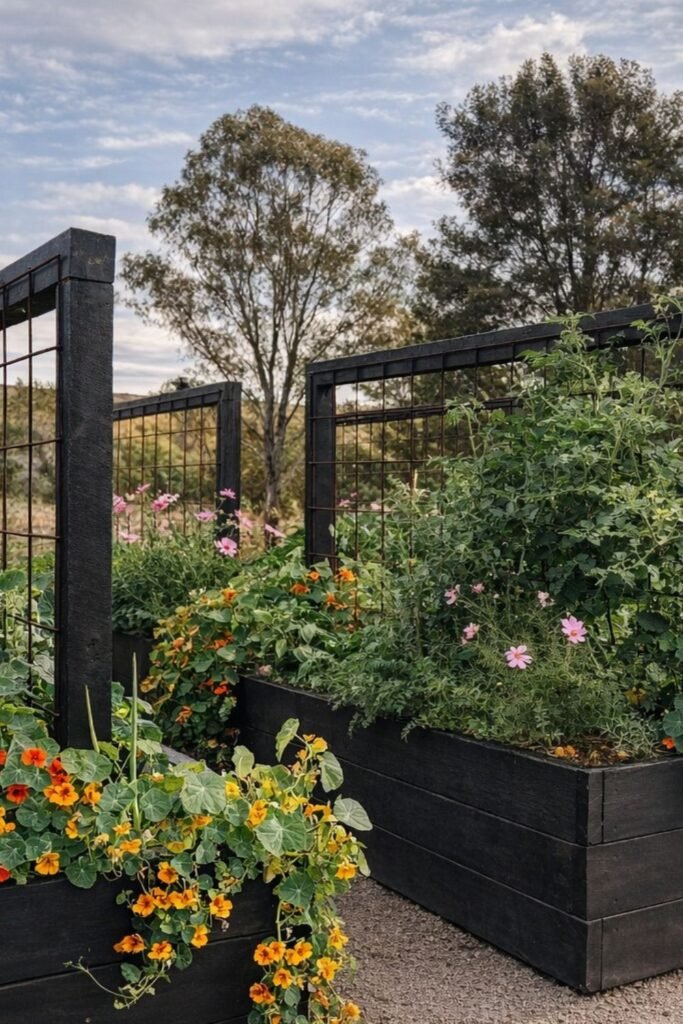
Modern Planters
Nothing catches the eye faster than crisp black planters filled with lush vegetables and colorful companion flowers.
Pair towering wire trellises with deep, raised beds for support of climbing crops and lots of growing space underneath for tomatoes and herbs.
Bright flowers such as nasturtiums and cosmos add color without taking up planting space and attract pollinators to soften the harsh construction.
Wide paths surrounding each planter make ordinary duties so much easier and keep harvesting comfortable.
Use this arrangement for modern homes or open backyards where you want your vegetable garden to seem as sophisticated as the rest of your environment.
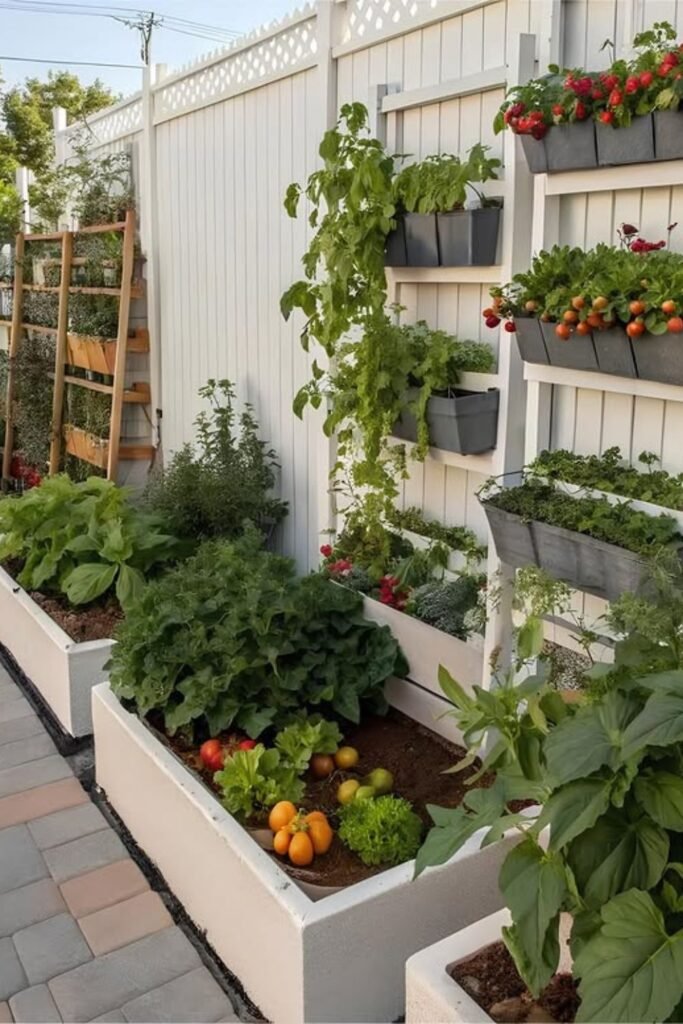
Fence Garden
Blank fences can become your most productive growing space with the right setup. Mount planter boxes at different heights to grow herbs, strawberries, lettuce.
And trailing vegetables, leaving the ground clear for larger crops in raised beds.
A pair of white planters with a matching fence creates a clean, orderly effect that makes even narrow side yards look bright and airy.
Leave enough space between wall planters for the plants to spread and for you to easily water them.
Finish the arrangement with a paved walkway for easy harvesting in all seasons.
This concept works especially well in small backyards as every vertical inch can help you grow more without cramping the space.
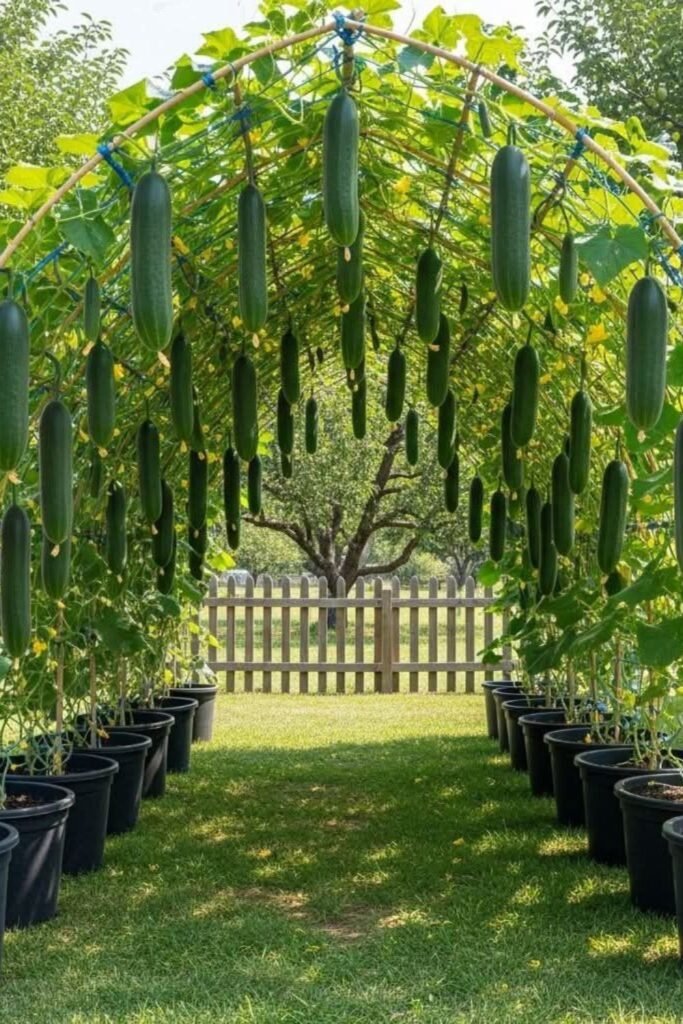
Cucumber Arch
Harvesting becomes much easier when cucumbers climb instead of sprawl across the ground.
Train vigorous vines over a solid arch made from bamboo poles or strong garden hoops.
Then let the fruit hang naturally for straighter development and improved airflow.
Large containers on both sides make this design easy to duplicate even if you don’t have raised beds, while the covered walkway underneath makes a lovely stroll through the garden.
Check the vines every few days, and tie fresh growth to the support so the arch fills evenly.
Spacious backyards or orchard gardens are excellent for this eye-catching layout that saves space and converts a modest vegetable patch into a striking feature.
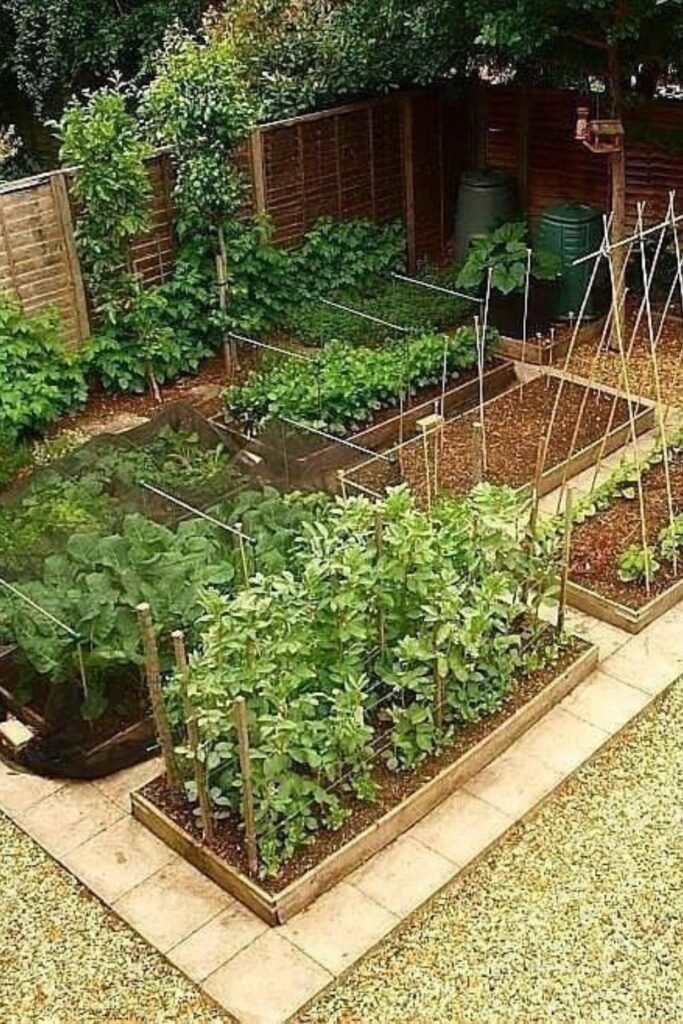
Garden Grid
Planning every bed before planting saves you from a crowded garden later. Divide your space into dedicated growing zone so leafy greens.
Climbing beans, root vegetables and higher crops all have their part to play.
Bamboo teepees provide solid support for peas and beans without shading neighboring plants, while protective netting keeps delicate crops protected from pests.
Wide gravel and asphalt roads make it easy to access each bed for watering and harvesting without compacting the soil.
This pattern is ideal for medium to big backyards that desire to have a profitable garden that stays structured, easy to maintain and ready to expand with each growing season’s new ideas.
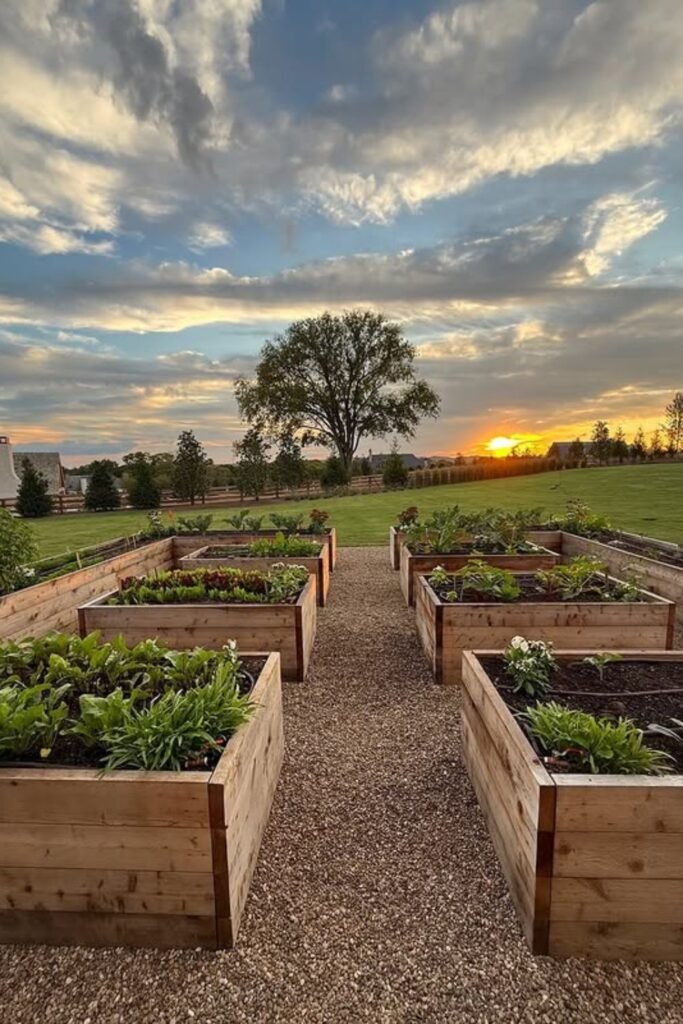
Cedar Beds
Building a few large raised beds often works better than filling your yard with many small ones.
Healthy roots have plenty of room in deep wood frames, and each planting area remains neatly delineated.
The wide gravel roads between the beds make it possible to water, weed and harvest from all sides without compacting the soil.
Leave adequate space between each bed to rotate crops each season and combine veggies with a few floral plants to attract pollinators.
This arrangement is ideal for open backyards since the symmetrical style is tidy, allows full sun to every bed, and enables room to extend your garden as your crop expands year after year.
Garden Lighting
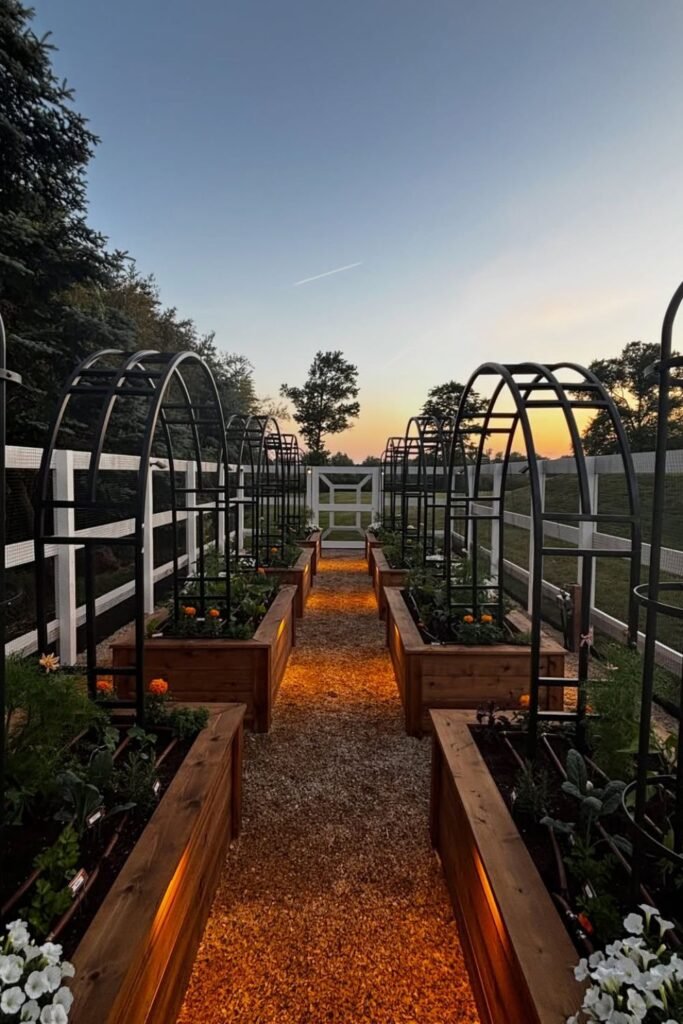
Evening hours deserve the same attention as daylight when you’re designing a vegetable garden.
Raised cedar beds are snuggled in beneath warm pathway lighting to create an inviting glow that makes late watering, harvesting or lounging outdoors much more enjoyable.
Pairing arch trellises with equally spaced planters creates balance and a sturdy structure for climbing veggies to climb on.
The gravel paths are neatly laid out and comfortably guide you through each phase.
Install a basic fence at the opening, and add some companion flowers around the beds to soften the structure.
This design is perfect for large backyards, combining productivity with a polished environment that looks great from sunup to sundown.
Ladder Planter
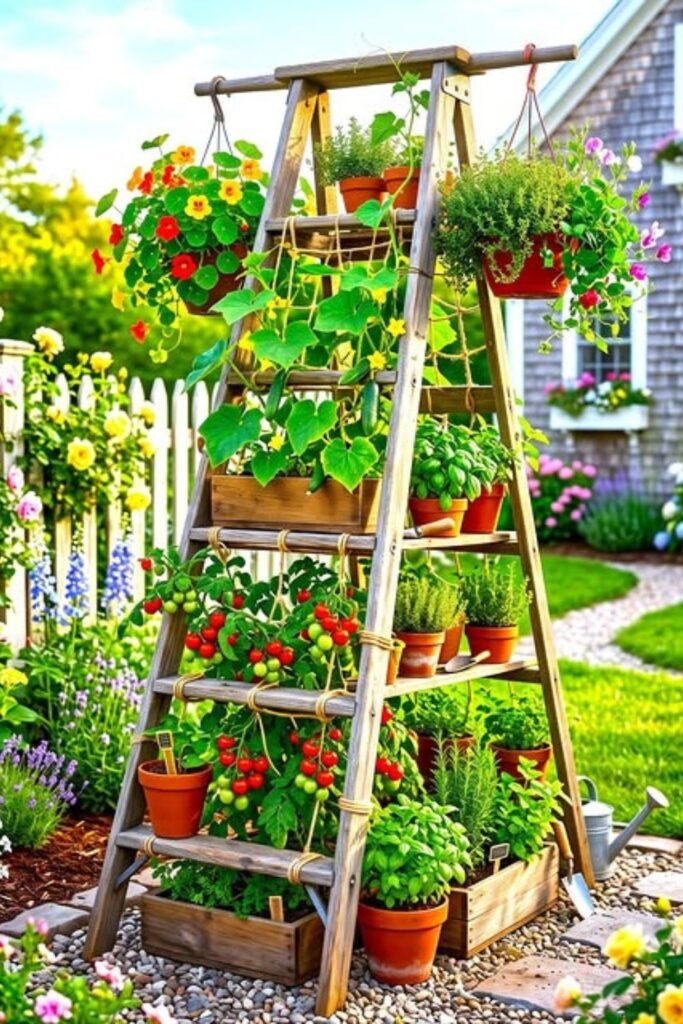
Growing upward can completely change a small garden without taking away valuable ground space.
Transform a basic wooden ladder into a multi-level planter. Place herbs, strawberries, cherry tomatoes and trailing veggies on each shelf.
Train cucumbers to climb up the middle. Plant flowering plants at the base to attract pollinators and soften the building so it look like it belongs in the landscape rather than standing alone.
Choose a sunny spot, ideally near a patio or pathway, where it will be simple to water and harvest from all sides.
The design will be best utilized in small backyards as it adds a lot of growing space and provides a stunning centerpiece combining beauty with fresh homegrown vegetables.
Elegant Arches
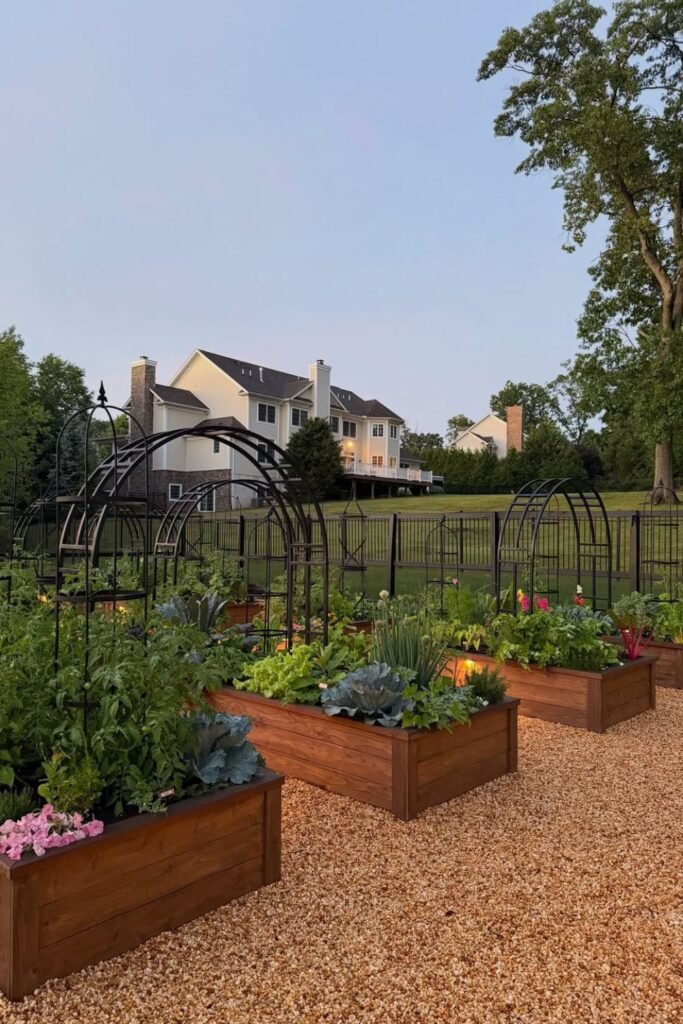
Careful planning turns a productive vegetable garden into a landscape feature you’ll enjoy every day.
Repeat matching cedar raised beds with metal arch trellises to establish rhythm and lead the eye throughout the entire space.
Gravel walks go to all beds and companion flowers planted amongst veggies entice pollinators and ease the formal design.
The beds are illuminated with warm landscape lighting buried underground, which adds attractiveness after sunset, and makes watering at night more fun.
This design works well in large backyards because the symmetrical plan gives lots of opportunity to produce diverse crops, yet maintains a clean, polished look all season long.
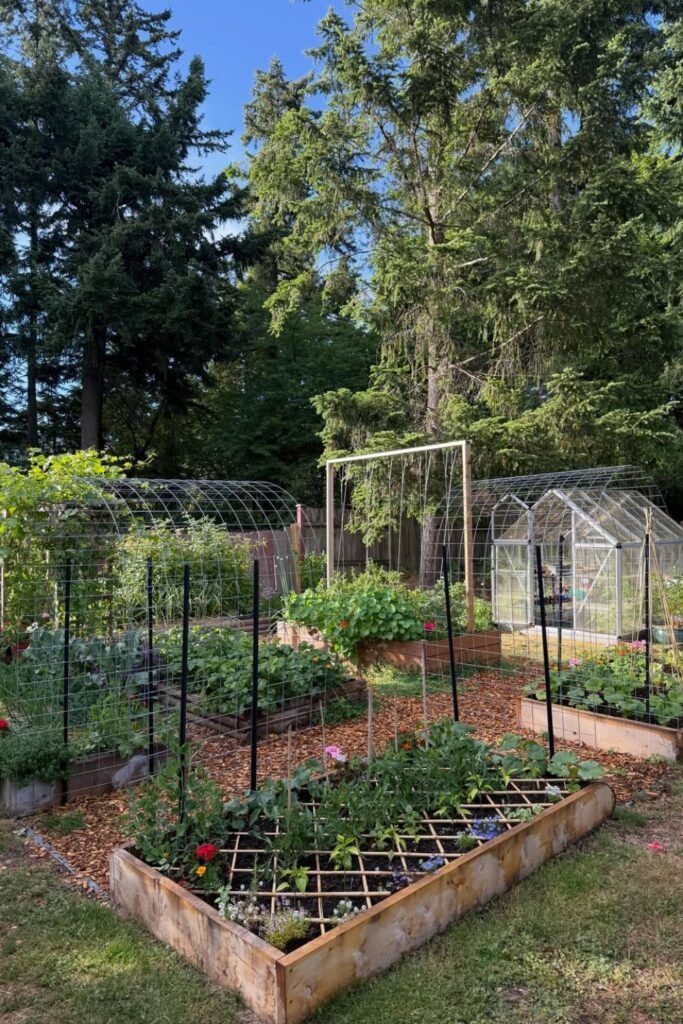
Greenhouse Hub
Planning your beds around a greenhouse keeps every part of the garden working together instead of feeling scattered.
Grow veggies that need to go outside in neighboring raised beds and start seedlings, lengthen the growing season or safeguard fragile crops in the greenhouse.
Wire tunnels, cattle panels and bamboo supports create plenty of room for climbing veggies and height throughout the scheme.
Wood chip trails prevent weeds and give nice walks between each segment.
The beds are bordered with mixed flowers to attract pollinators and add beauty to the environment.
This is a great design for larger backyards since it integrates propagation, growing and harvesting in one structured garden that is easy to maintain throughout the year.
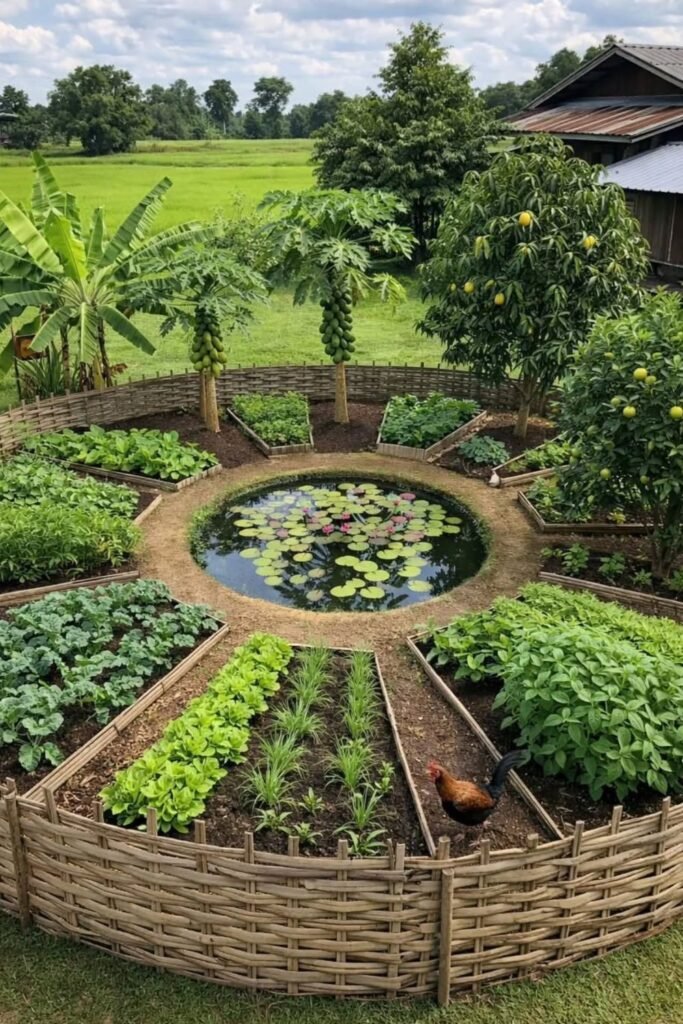
Circular Layout
Breaking away from straight rows can make your vegetable garden feel more inviting and easier to enjoy.
Plant raised beds in a circle around a small pond , birdbath or centerpiece to provide balance but provide easy access to all growing areas.
Woven fencing gives the room a rustic finish and fruit trees around the edge provide natural shade without overpowering the beds.
Leave curved walking trails between each unit so harvesting is straightforward from all angles.
This is a great arrangement for larger backyards or homestead gardens when you want to mix veggies, fruit and water into one eye-catching design that feels productive, tranquil and intelligently planned.
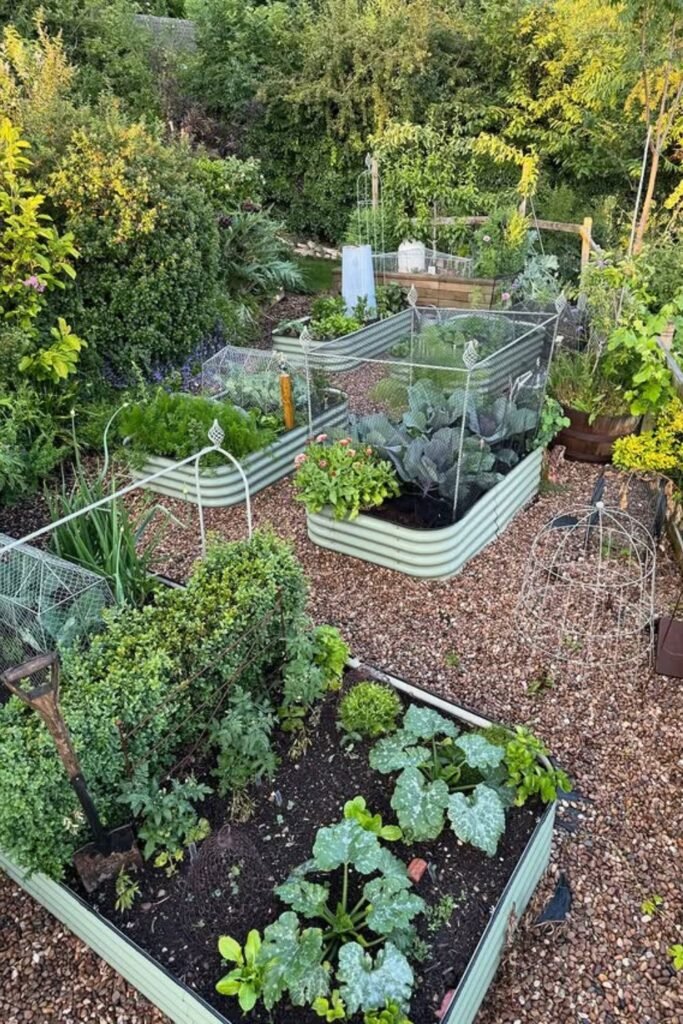
Metal Tubs
Unexpected containers can give your vegetable garden plenty of character without making it harder to maintain.
Galvanized stock tanks are a great choice for raised beds: they drain well, heat up rapidly in spring and have a clean modern-rustic aspect.
Plant each planter with veggies that need similar amounts of water, and then surround them with shrubs.
Herbs and floral plants to merge the garden seamlessly into the environment.
Curved gravel walks allow simple access to each bed and offer a gentler flow than straight walkways.
If you want a vegetable garden that is productive but also a nice feature in your outside space then this arrangement is great for smaller backyards, courtyard gardens or the area around a garden shed.
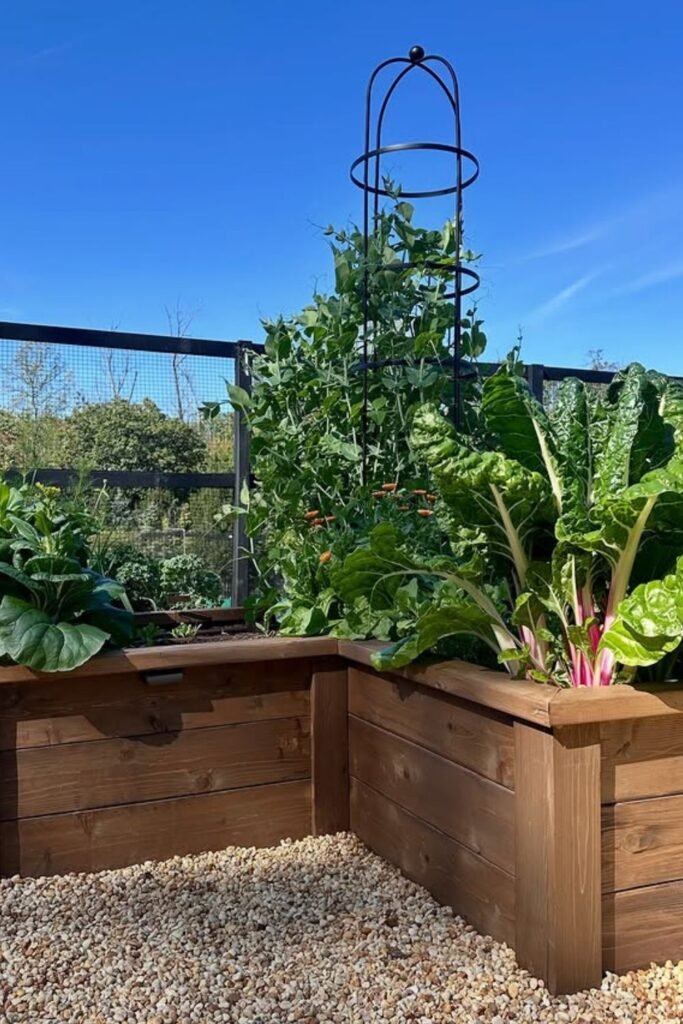
Corner Beds
Making use of every corner helps your garden produce more without feeling crowded.
An L-shaped raised bed creates distinct planting areas but has everything easily accessible from the gravel road.
Grow leafies around the edges for easy harvesting, then place a tall obelisk in the corner to support peas or beans without shading the lower crops.
Deep wooden beds allow plenty of room for roots and the whole garden is warm and completed.
Pair this design with a simple fence and open surrounds to allow maximum sunshine and breeze.
It’s a perfect arrangement for small to medium backyards, turning an ignored corner into one of the hardest working portions of the garden.
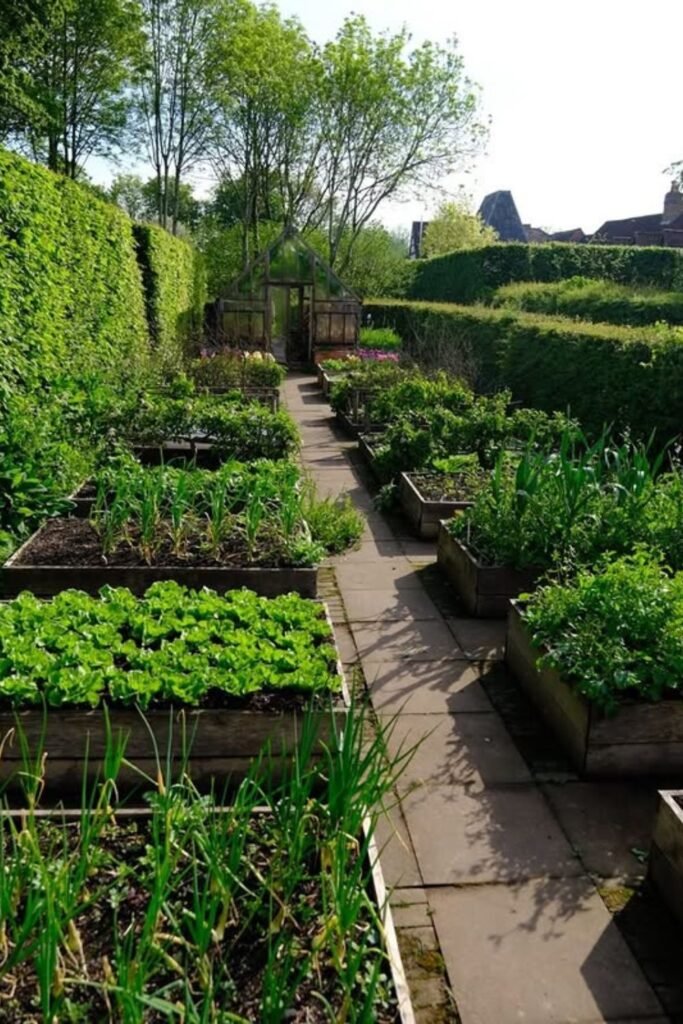
Kitchen Garden
Stepping into a garden with a clear destination makes the whole space feel more inviting.
Have raised beds on either side of a straight stone path leading to a tiny greenhouse or potting shed for a practical and elegant layout.
Trimmed hedges enclose the garden attractively and protect it from severe winds.
The beds are evenly placed so watering, harvesting and crop rotation are much easier through the season.
Group vegetables with similar growing patterns together to keep an organized and healthy bed.
This timeless design is great for larger backyards since it blends structure, productivity and classic appeal in a way that never goes out of style.
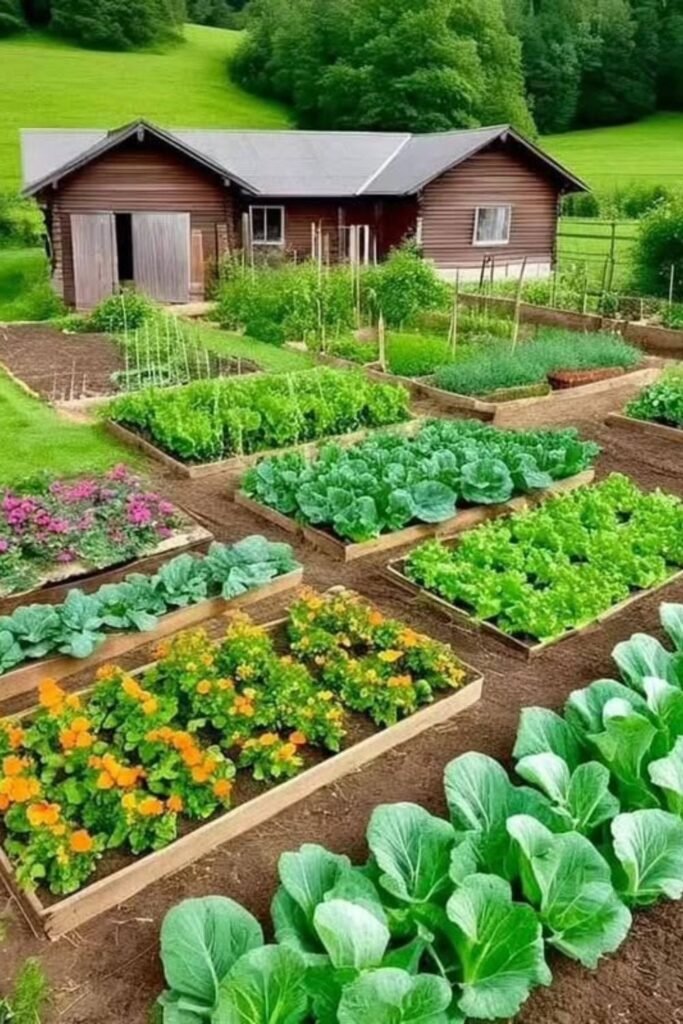
Farmhouse Beds
Growing vegetables becomes much more manageable when every crop has its own dedicated bed.
Set out rectangular raised beds with wide dirt trails between them so you may move around easily whether planting, weeding or harvesting.
Plant floral partners with your leafy greens and cabbage to attract pollinators and help minimize harmful pests organically (think: marigolds).
Use taller supports at the back for climbing vegetables that won’t shade lower-growing produce.
This concept is great for open rural properties and larger backyards as the simple grid easily allows for crop rotation.
Seasonal planting and potential development while giving the whole garden a tidy farmyard feel.
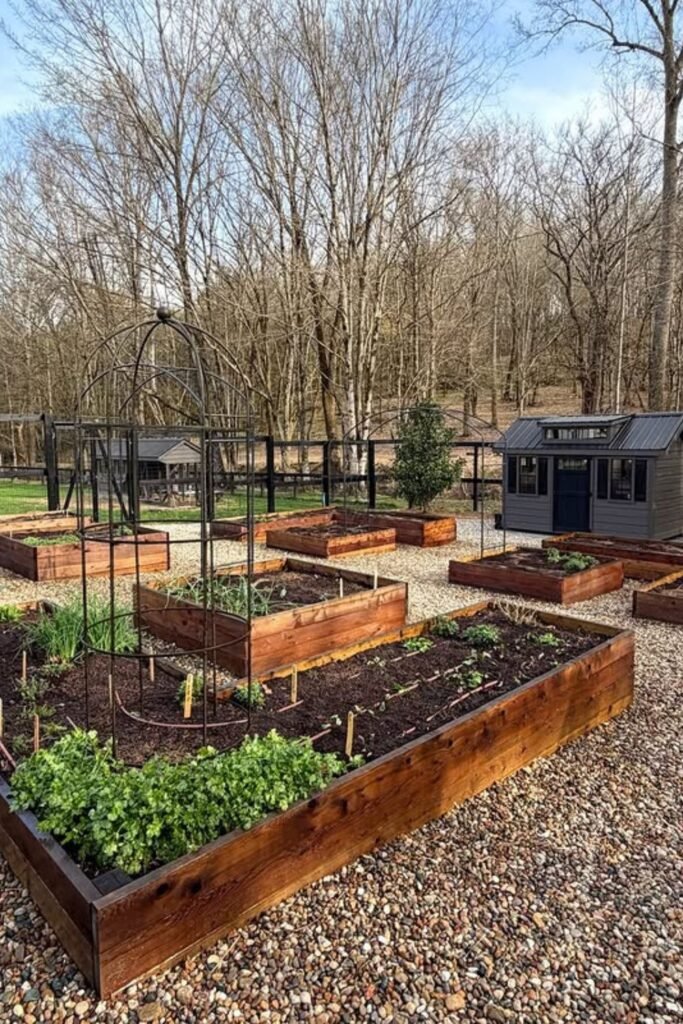
Gravel Paths
Walking comfortably between every bed makes garden chores feel much easier throughout the season.
Wide gravel roads help keep muck at bay after rain, enhance drainage, and allow easy access from any angle without compacting the earth.
Deep wooden raised beds with robust obelisks and arch trellises create specific areas for climbing vegetables, herbs and leafy greens, all while retaining an organised pattern.
Leave plenty of space between beds for a wheelbarrow or garden cart to make planting and harvesting easy.
This design is perfect for medium to big backyards. It has a clean structure, flexible growing regions and tons of opportunity to expand as your vegetable garden develops year after year.
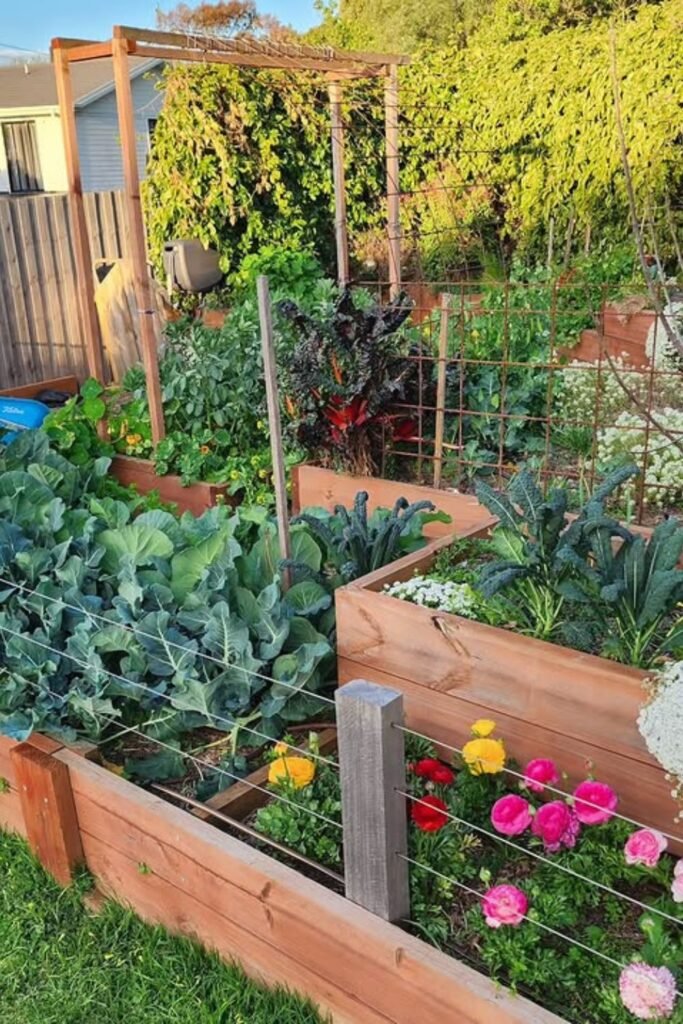
Pergola Frame
Giving climbing vegetables a dedicated structure keeps the entire garden more organized from day one.
A raised bed has a basic wooden pergola for beans, cucumbers, or gourds, and adjoining wire panels keep tomatoes and other tall vegetables from falling over.
Plant companion flowers around the fruitful beds to encourage pollinators and soften the crisp lines of the timber planters.
Leave passageways open between each area as plants mature so harvesting is never constrained.
This pattern is great for medium to large backyards since it blends vertical growing, raised beds and colorful planting into one practical design that is easy to care for and will look larger as the season goes.
Container Row
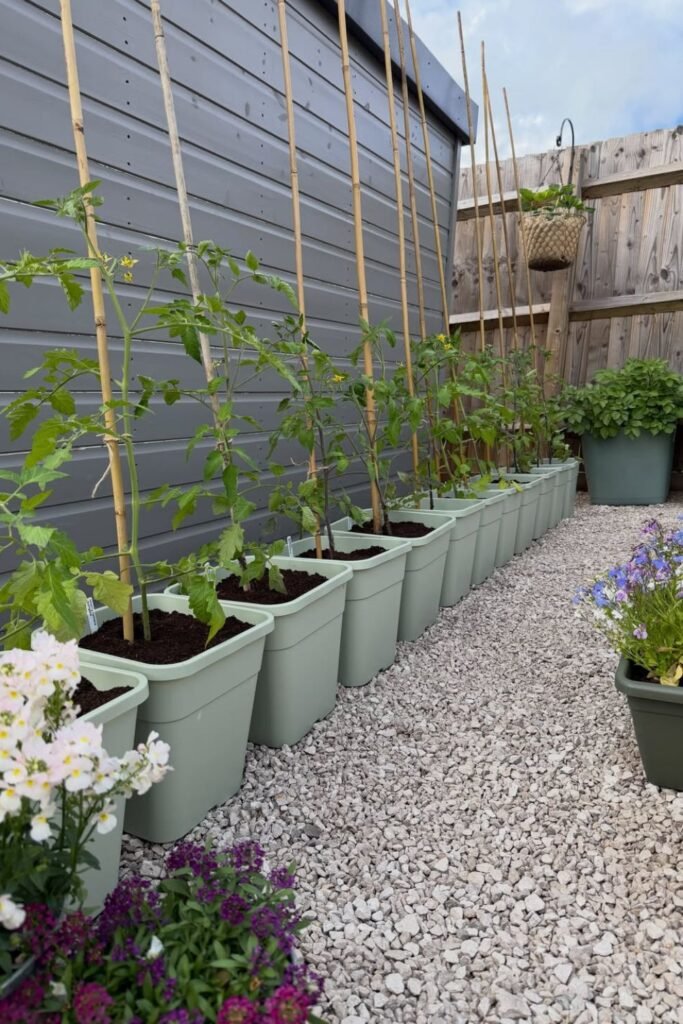
Limited space doesn’t have to limit your harvest if you use every wall wisely. Line matching containers along a sunny fence or shed.
then support tomatoes with tall bamboo sticks to keep plants standing and increase air circulation.
Walkways are less muddy and simpler to water when gravel is underfoot, and blooming pots on the perimeter attract pollinators and bring color to the restricted space.
Allow room between containers so that each plant receives enough light and air as it is growing.
This arrangement is perfect for side yards and small gardens, turning a forgotten strip into a productive vegetable producing area without taking over the rest of your backyard.
Stone Frames
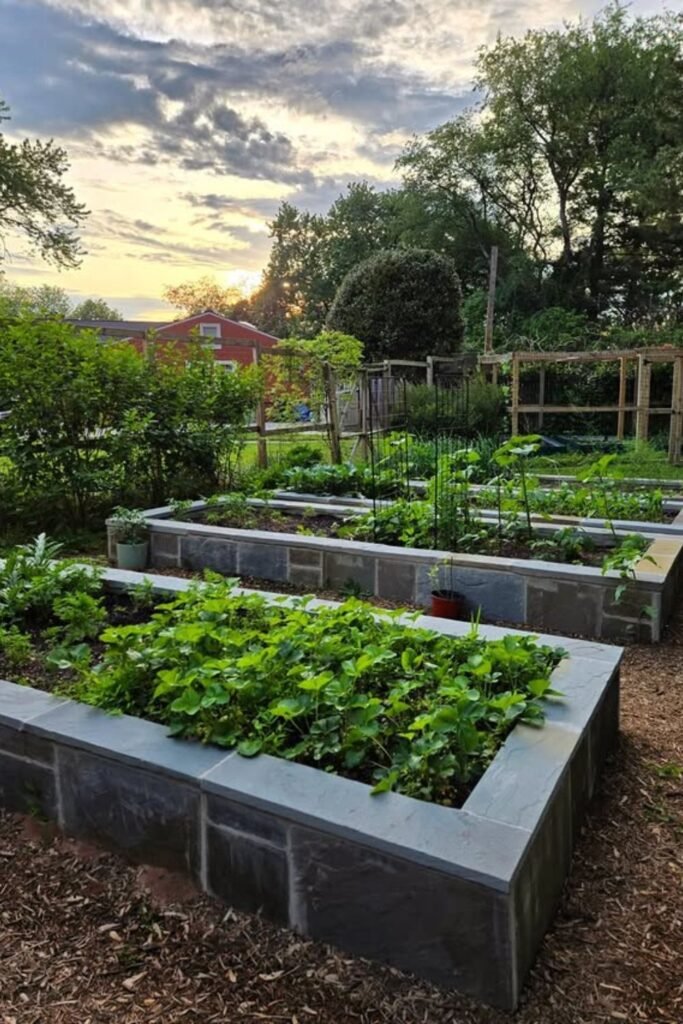
Strong borders give a vegetable garden a polished look while making every bed easier to manage.
Concrete block raised beds provide deep growing space for vegetables with extensive root systems and keep their shape season after season with relatively little maintenance.
Allow enough space between each bed for mulching, watering and harvesting.
Simple trellis systems can be erected at the back for climbing crops that will not shade lower-growing veggies.
Plant taller shrubs or fruit trees along the edges for privacy but leave the center open to full sun.
This layout is ideal for medium to big backyards since it is designed with durable materials and a neat, orderly look that only gets more lovely with age.
Bamboo Teepee
Natural materials can make a vegetable garden feel warm and productive at the same time.
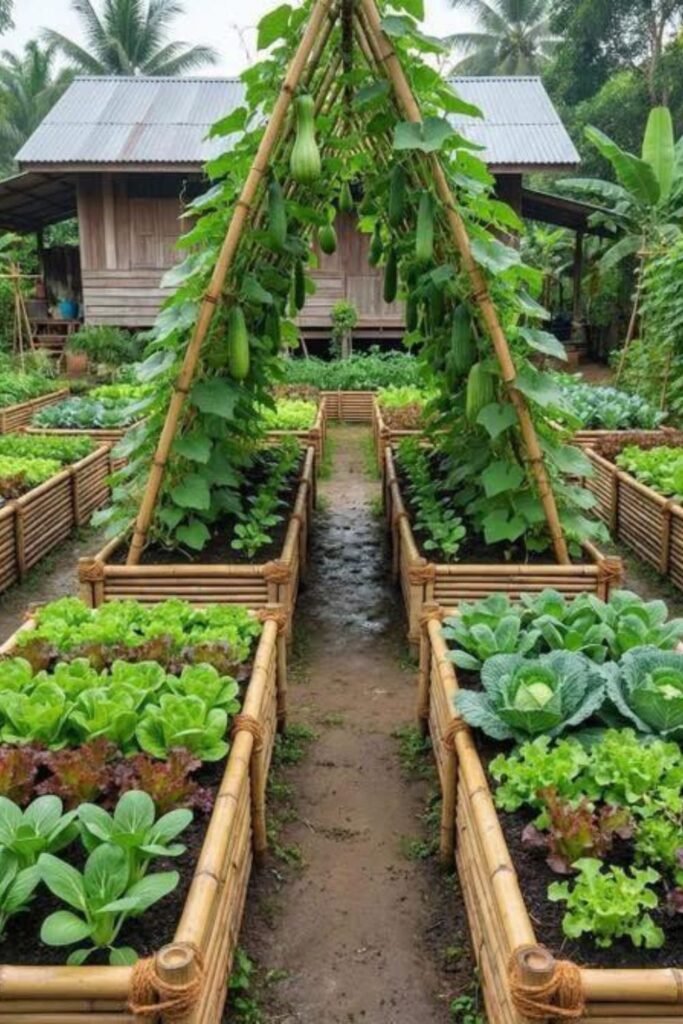
Make tall bamboo teepees in the center of raised beds for gourds, beans or climbing squash to grow up instead of sprawling over precious planting room.
Bamboo-framed beds keep the design light and inexpensive, while leafy greens and cabbage thrive in the sunny surrounding beds.
Create a straight path down the middle so you can water and harvest from either side with ease.
The design is ideal for rural gardens and tropical backyards, as the simple bamboo structure integrates wonderfully with the scenery while letting you grow more in an ordered setting.
Tank Planters
Creative supports can turn simple containers into a highly productive vegetable garden.
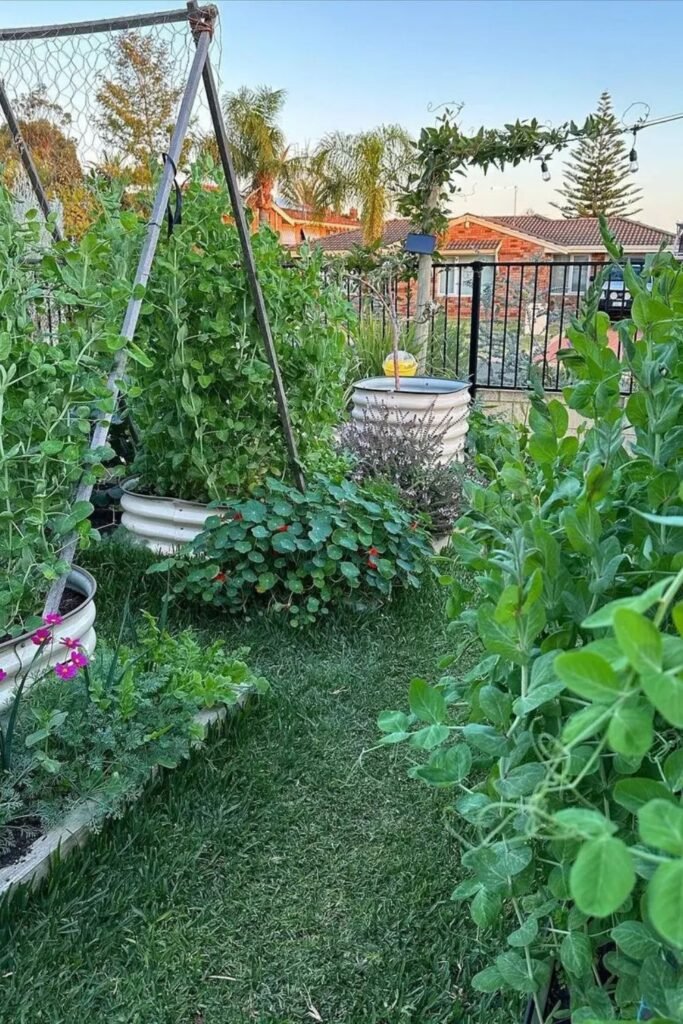
Pair galvanised stock tanks with durable A-frame trellises to encourage peas, beans and other climbing vegetables to grow up, leaving more place below for herbs and companion flowers.
The garden is easy to walk on with a smooth grass path separating the pots.
Flowering plants along the perimeter attract pollinators which help boost your yield.
Add some decorative lights in the background so the place feels inviting after the sun goes down too.
This concept is at its best in a tight backyard, marrying vertical growing, robust containers and sensible spacing without seeming cramped.
Garden Zones
Giving every crop its own dedicated section keeps a large vegetable garden productive and easy to manage.
A good start is raised beds with broad gravel walkways in between. You may then add arches, pergolas.
And trellises throughout the design so that climbing veggies can grow up instead of taking over neighboring beds.
Start with a greenhouse in the back for seedlings and to lengthen your growing season, leaving the sunniest spots for vegetables that need full light.
Grow crops with similar water needs together to make watering easier and maximize your harvest.
This is a great idea for large backyards or homestead gardens since the orderly design will give you lots of opportunity to expand while keeping the whole area tidy, useful, and pleasant to work in.
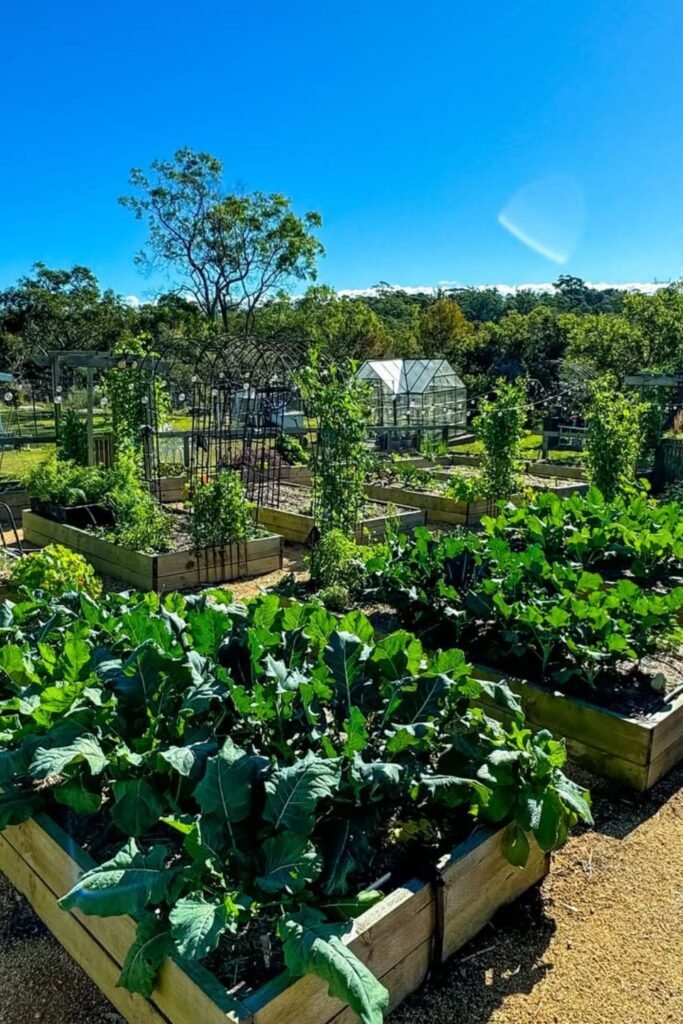
Potager Style
Stepping through a welcoming gate makes your vegetable garden feel like a destination instead of just a growing space.
Use straight gravel walks, properly spaced raised beds and a circular centerpiece, such as a birdbath or herb garden, to create a balanced arrangement that guides the eye around the design.
Combine beauty with everyday usefulness by surrounding your crops with flowery borders, arches and a greenhouse or garden shed.
The paths are lit with lantern-style lighting to keep the garden inviting even after sundown.
Climbing crops, leafy greens, and root vegetables are in specialized zones to make upkeep much easier.
This is a classic design, excellent for larger backyards, where all the parts combine to provide a productive garden that looks beautiful all year long.
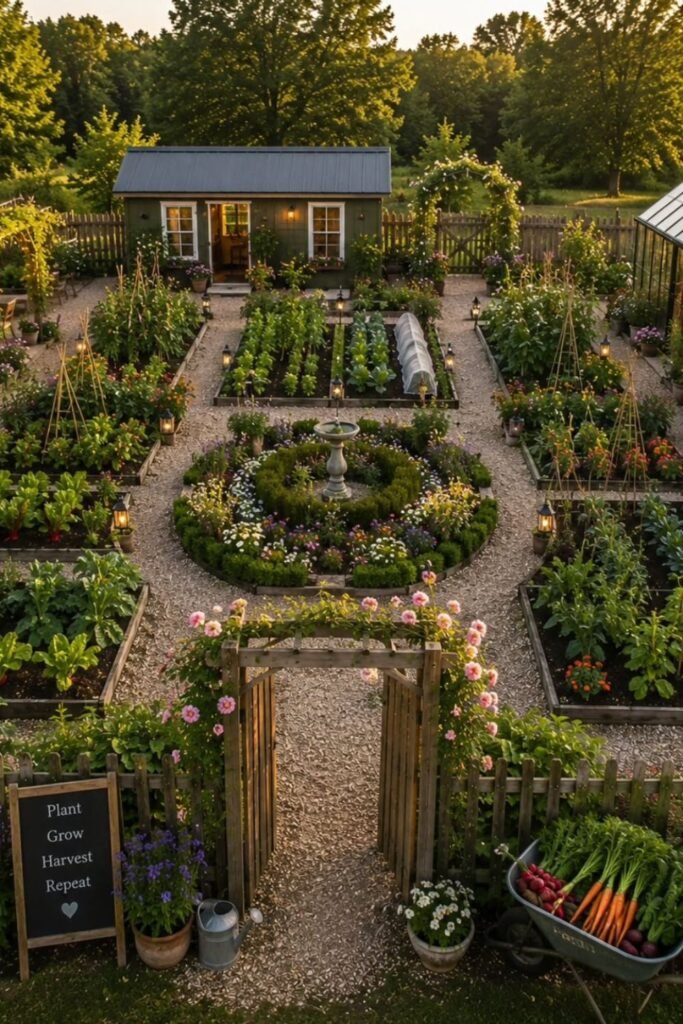
Stone Edging
Natural materials can make a vegetable garden feel established from the very first season.
Each planting bed is edged with stone to delineate the growing areas, and it is linked together with gravel roads that stay clean after rain and are very low maintenance.
The galvanized water feature or stock tank in the center is a nice centerpiece, and wooden obelisks support climbing beans or peas without overpowering the space.
Locate your greenhouse or potting area to the rear so that you have easy access to equipment and seedlings.
Mix in herbs with flowering plants to attract pollinators to the entire garden.
This design is great for medium to large backyards as it combines productive vegetable beds with old-fashioned cottage garden charm.
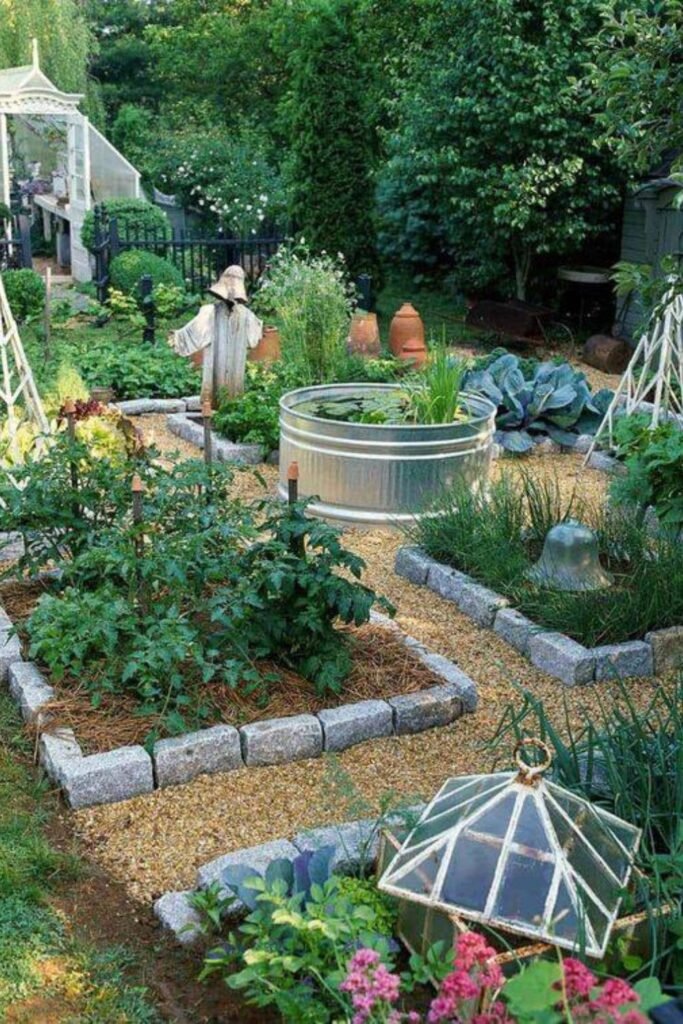
Crop Rows
Harvesting becomes much simpler when every vegetable has a dedicated row instead of competing for space.
Plant leafy greens, root crops, onions and tomatoes in separate areas, then put taller veggies in the middle or rear so they won’t shade lower-growing plants.
Strong bamboo pegs hold tomatoes erect and increase airflow, minimizing disease risk as plants age.
Water, weed, and select the fresh vegetables with comfort by spacing the rows adequately apart to allow for easy walking.
This conventional pattern is great for large backyards or homestead gardens and produces huge volumes of vegetables.
While keeping the entire space tidy, productive and easy to manage throughout the season.
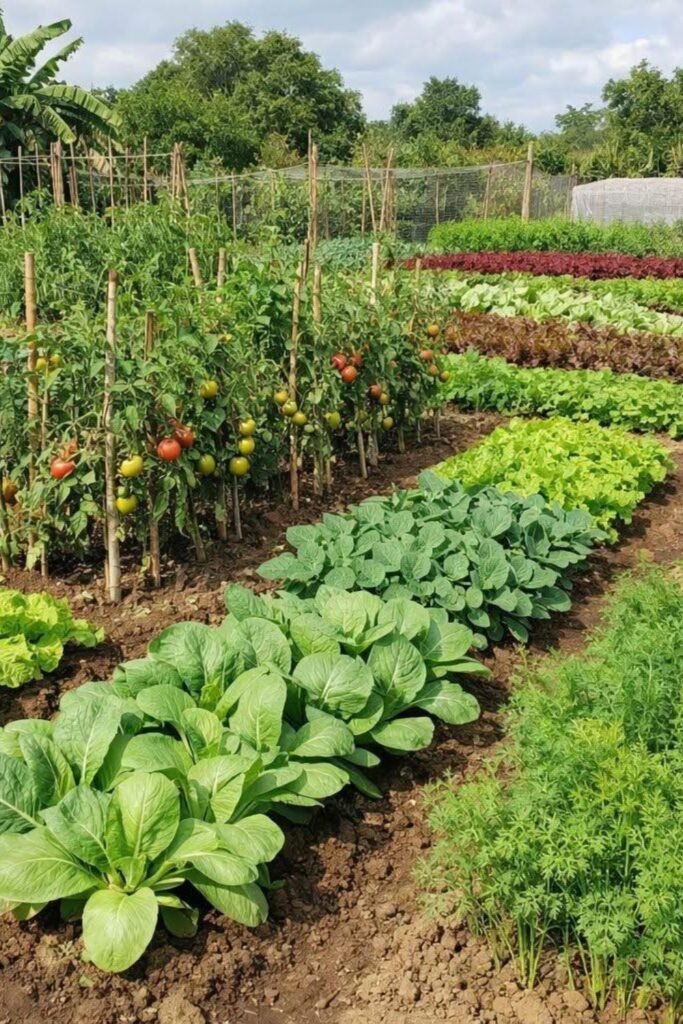
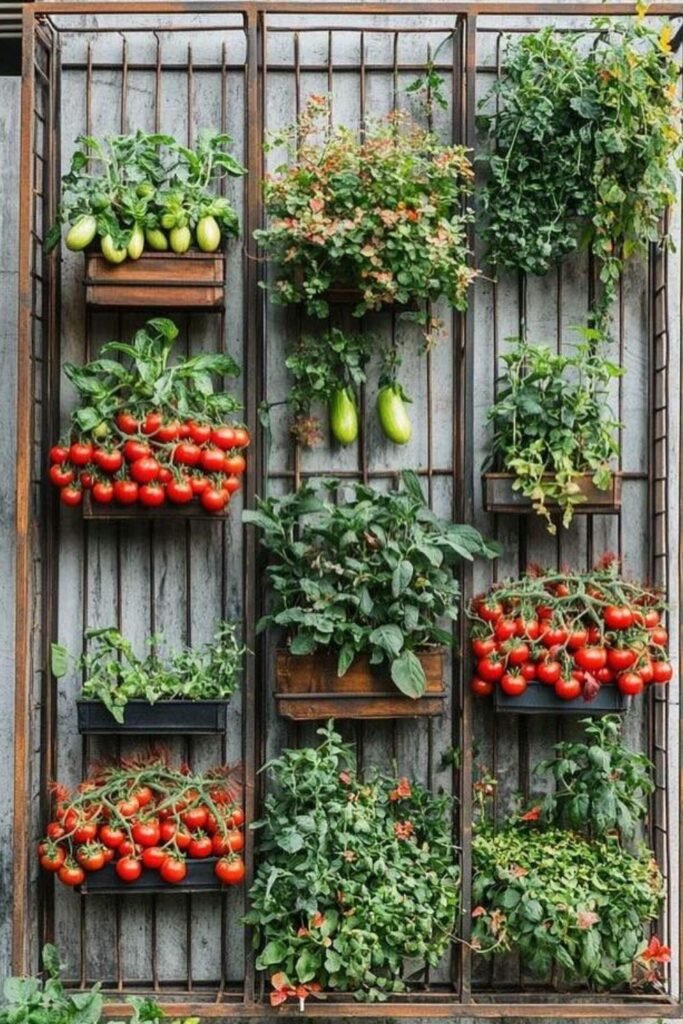
Wall Trellis
Bare walls can become productive growing space when you think vertically instead of horizontally.
Attach durable metal frames to a fence or outside wall and then add planter boxes packed with small tomatoes, peppers, herbs and trailing veggies to create a living food show.
Place the heavier crops on the lower levels and the lighter containers on the higher shelves to keep the structure balanced and easy to maintain.
Though the plants are close together, with regular pruning and watering, each will get ample light and air circulation.
This design is great for courtyards, patios and small urban backyards as it produces a great harvest with practically no ground space.
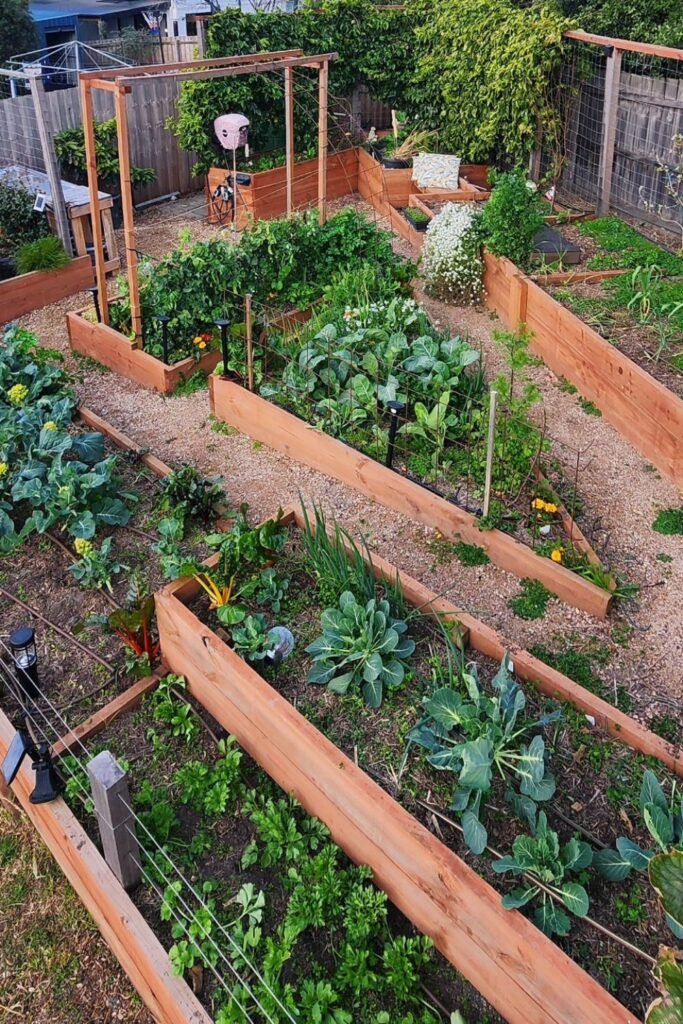
Garden Sections
Separating vegetables into dedicated growing zones keeps the entire garden easier to manage from planting day to harvest.
Long cedar raised beds connected by wide gravel paths create a clean layout where every crop gets enough space, sunlight and airflow.
Add a simple pergola or overhead frame for climbing beans and cucumbers, then tuck marigolds and white flowering plants along the edges to attract pollinators and brighten the beds.
Small solar lights make evening watering more convenient without overwhelming the space.
Medium-sized backyards are perfect for this design because it combines productive planting, comfortable walkways, and a cozy seating corner into one organized garden you’ll enjoy throughout the season.
FAQs
How can I make my vegetable garden look attractive without reducing the space for vegetables?
Focus on structure development not embellishment. Gravel walks raised bed and matching trellises.
And companion flowers give a polished look while giving plenty of area for veggies to flourish.
It also makes watering, harvesting, and seasonal maintenance much easier to keep the arrangement structured.
What is the easiest vegetable garden design to maintain throughout the year?
The least care is achieved by a basic plan of raised beds, wide walkways and crops grouped by comparable watering and sunlight needs.
Spacing the beds far enough apart, and adding vertical supports for climbing vegetables.
Increases air circulation, lowers disease problems and makes every part of the garden accessible.
