
23 Wild Flower Garden Ideas for 2026
You imagine a gentle mix of wildflowers blowing in the wind but the moment things start growing the garden can rapidly look more untidy.
Grass can grow taller than the smaller flowers, weeds can appear among the blossoms.
Wildflower gardens are by their nature loose, but even established meadows require some maintenance.
In this article, you’ll find 23 Wild Flower Garden Ideas to transforms your outdoor space into a beautiful, natural retreat.
Let’s jump in!
How Can I Keep Wildflowers Looking Natural Not Messy?
Start by giving the wildflowers something neat to grow on. Broken up by a neat lawn edge.
A gravel path, stepping stones, a fence or a short strip of grass, loose flowers seem thought out, not lost.
You may also mow paths through the taller grass to keep it an easy place to work with. Also see how the plants grow.
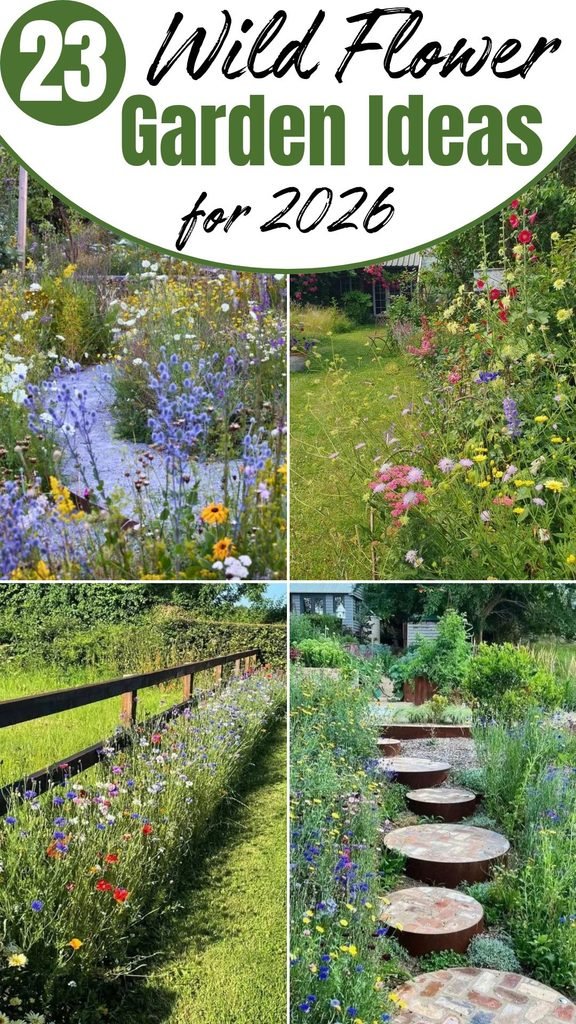
If you see a grass or flower is starting to take over, thin it out before it crowds off smaller blooms.
Keep the weeds down, and don’t just feed the area. Extra nutrients can develop aggressive grass rather than the flowers you want.
Plant the same species in small clusters rather than scattering every flower randomly to get a softer, more natural effect.
Meadow Border
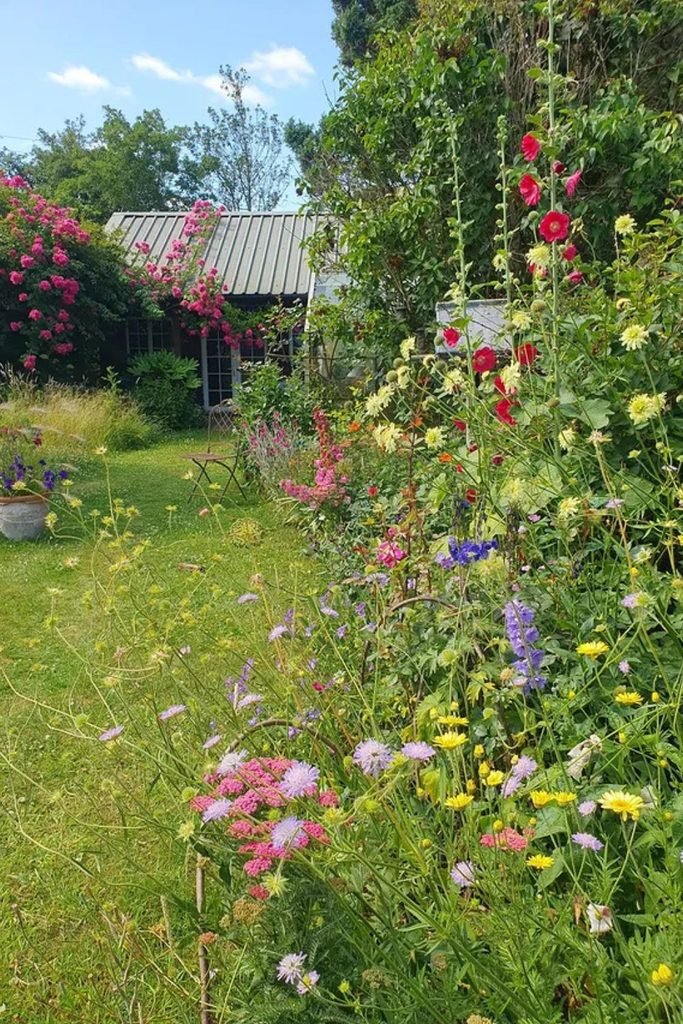
Turn the edge of an open lawn into the wildest part of your garden instead of spreading flowers across every inch.
Keep the grass short next to the planting, then create the border with low yellow and lavender blossoms near the front and taller pink, red and purple flowers.
Let some stems rest organically over the lawn so the edge is soft rather than precisely manicured.
Behind the flowers, shrubs and climbing plants provide the loose planting with a strong backdrop, which helps all those mixed heights.
Gravel Passage
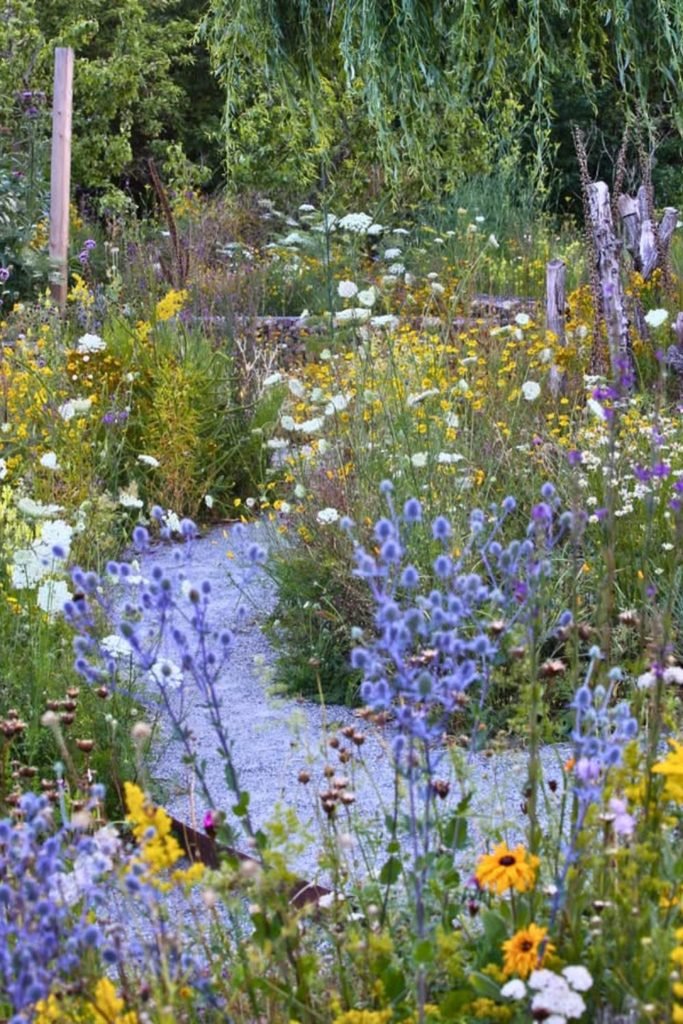
Carve a narrow gravel walkway through dense wildflowers when you want the garden to feel immersive without becoming difficult to navigate.
Let airy white blooms, yellow daisies, and taller blue-purple flowers mass on either side, but maintain the walking surface clear.
Rustic timber posts and worn wood can provide vertical structure without making the environment overly formal.
Instead of lining up every flower in a straight line, repeat a few of the colors in different spots along the path your attention will be drawn.
Fence Ribbon
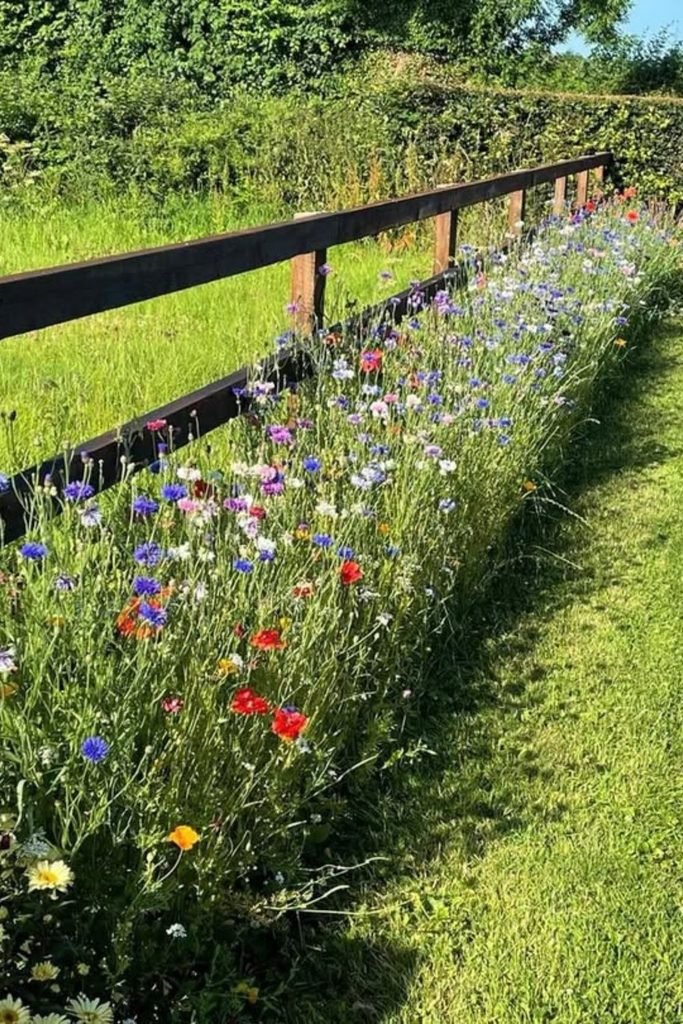
Use a long fence line as a ready-made frame for wildflowers instead of creating another wide garden bed.
Sow a thin strip of multicolored blossoms at the bottom, letting blue, purple, red, yellow and white flowers repeat loosely from end-to-end.
The striking contrast with the closely mown, nearby lawn makes the freely growing stems look purposeful.
This works especially well around large yards where you want to add color without sacrificing open grass areas.
Keep the plants fairly narrow and remove anything creeping into the lawn to keep that tidy ribbon impression.
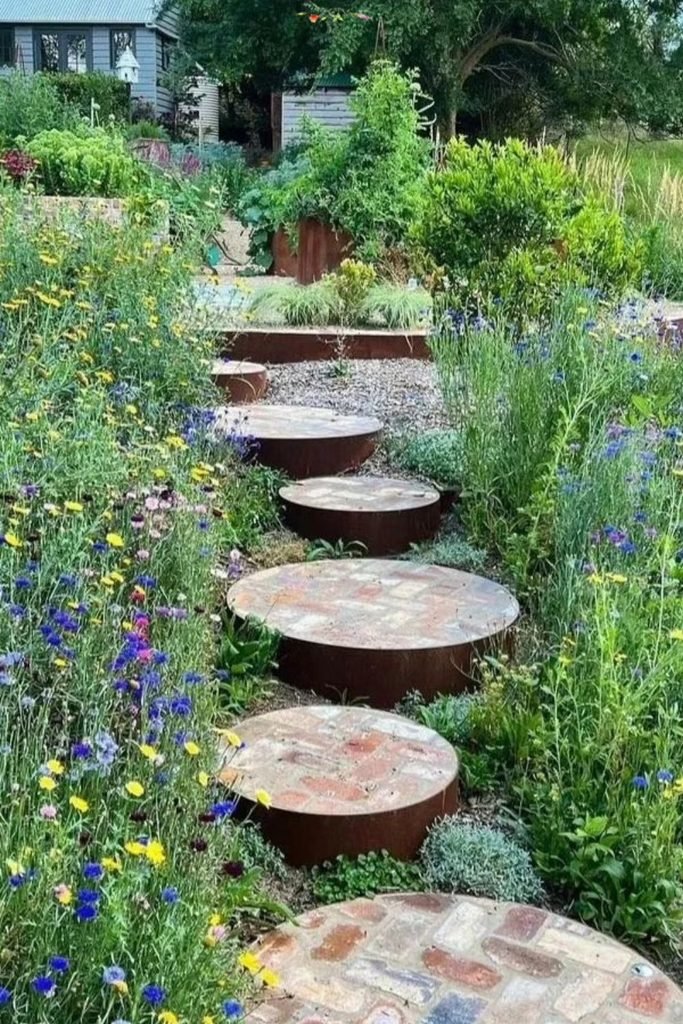
Meadow Steps
Break a sloped wildflower garden into an inviting route with oversized stepping pads instead of cutting a wide formal path through the flowers.
Allow space between each step to cushion the gaps with low plants, while taller blue, yellow and purple flowers rise at either side.
This arrangement is beautiful on mild slopes or between lower and upper garden spaces where the steps add structure without losing meadow nature.
Don’t allow flowers to overhang the walking surfaces too much, but don’t cut edges into fine lines; a little spillover helps the route feel naturally integrated.
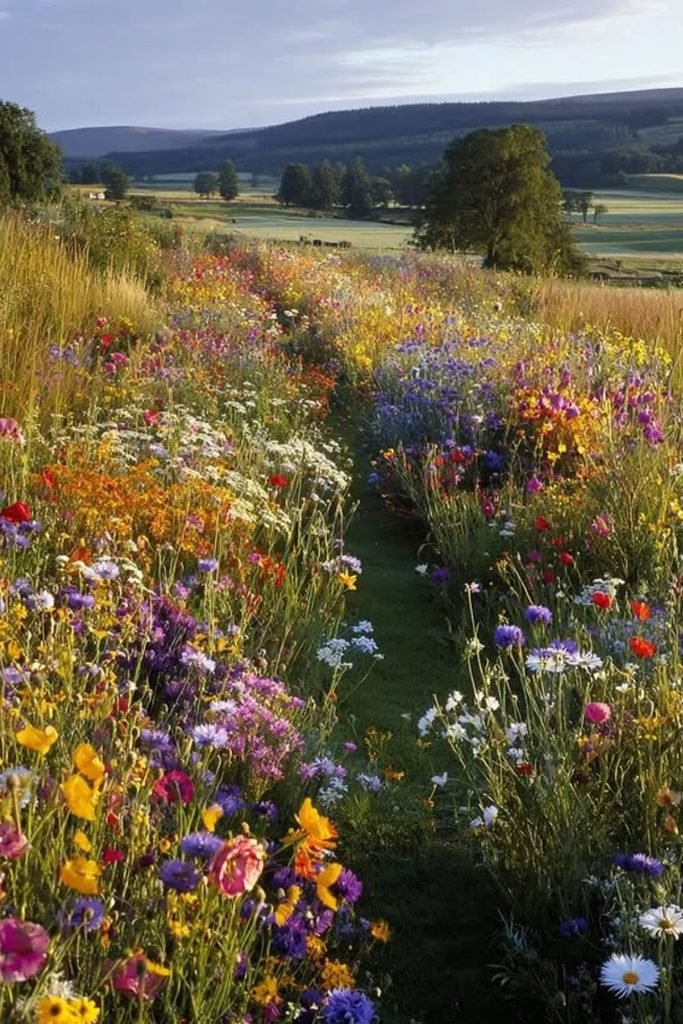
Meadow Corridor
Leave a slim green trail through a large wildflower planting when you want visitors to move inside the garden rather than simply view it from outside.
Keep the path narrow enough for flowers to lean toward each other, creating a soft corridor of purple, yellow, white, pink, and red blooms.
Taller grasses around the outer edges help the planting blend naturally into an open landscape, while the short grass underfoot gives your eye a clear break.
Mow only the walking route regularly and allow the surrounding flowers to keep their varied heights for a fuller meadow effect.
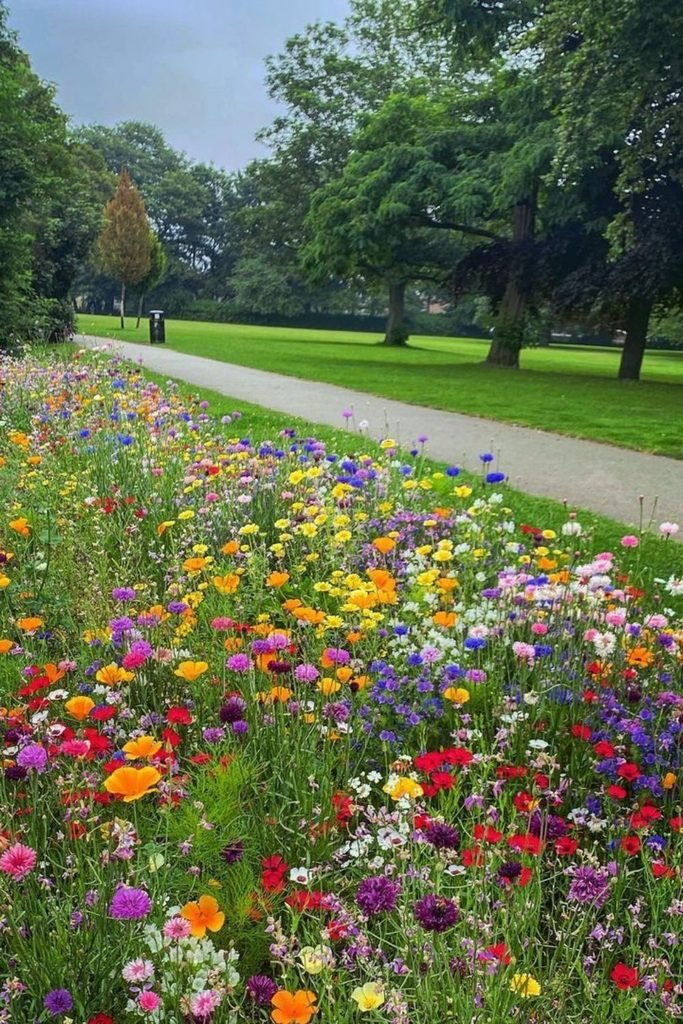
Parkside Meadow
Soften a wide stretch of open lawn by turning one outer edge into a concentrated band of wildflowers.
Plant the bed thickly with orange, red, yellow, blue, pink and purple flowers, and keep the grass around it short and plain.
Most of the design effort is in the contrast: Colorful vegetation is dynamic, but the tidy lawn and the neighboring sidewalk keep it from looking uncontrolled.
Try this along garden walks, wide lawns or front boundaries where you want bold seasonal color without changing the whole grassy area.
For a very neat finish keep a narrow green buffer between flowers and pavement.
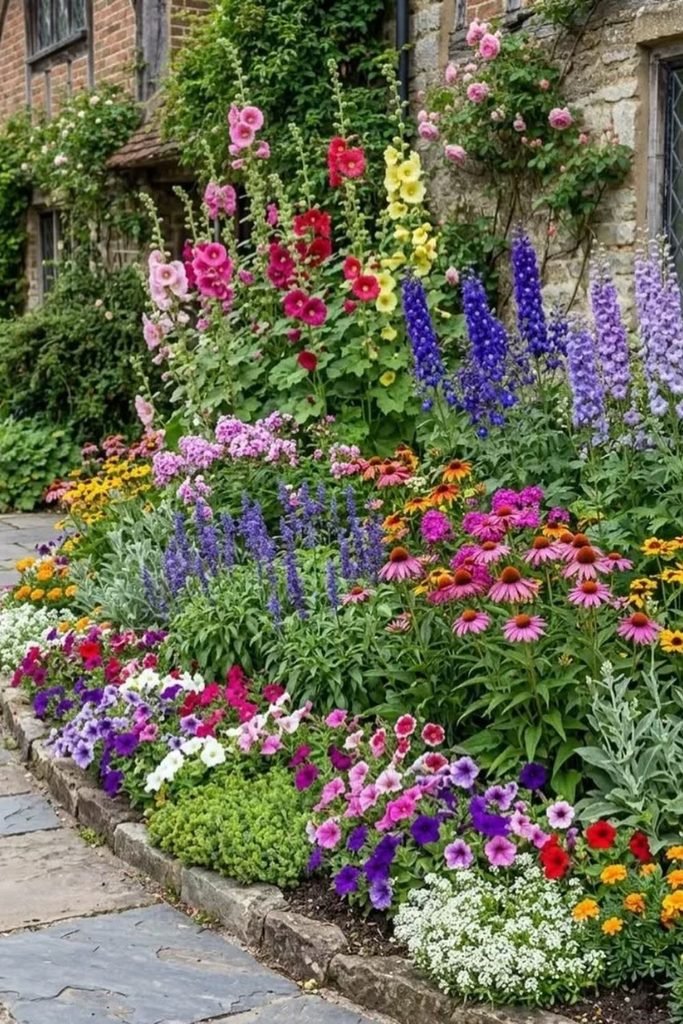
Cottage Layers
Build color upward when you want a wildflower border to feel full without letting taller blooms hide every thing behind them.
Hold small flowers and soft groundcovers near the stone edge, shift medium coneflowers and upright spikes along the middle.
This layered method works particularly well with cottages, walls and walks as every height is visible from the path.
Repeat the purple and pink on a few levels, but add some warmer yellow and orange flowers to prevent the border from looking too coordinated or formal.
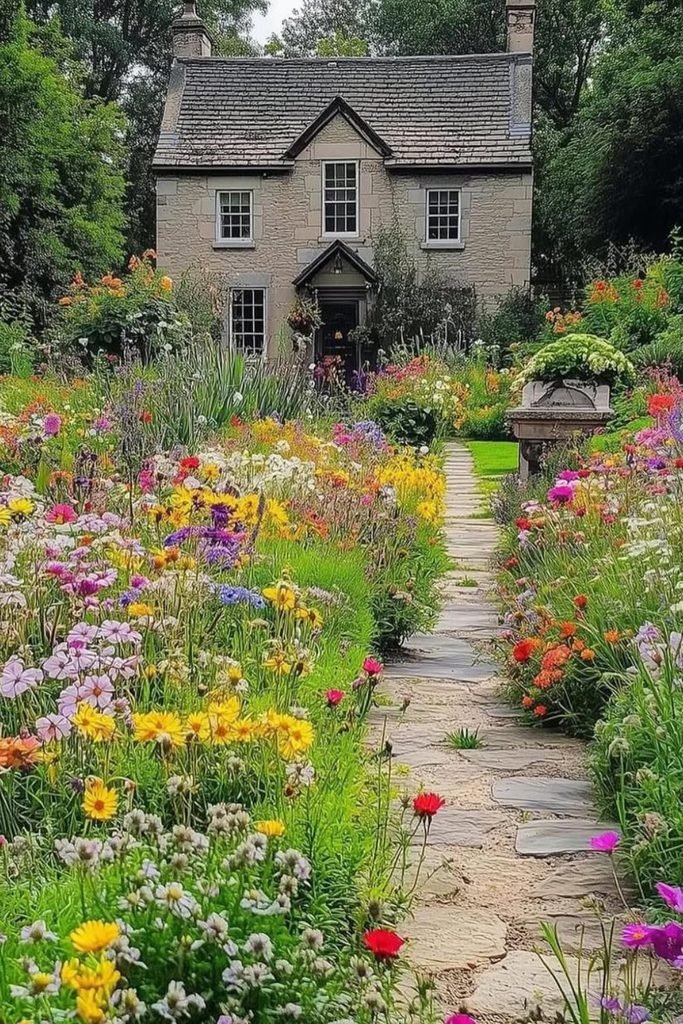
Cottage Walkway
Guide the eye toward a cottage entrance by letting wildflowers gather thickly along both sides of a simple stone path.
Make sure there’s sufficient height variation for movement but ensure the walkway is plainly seen so the garden never feels hard to access.
Loose clusters of yellow, pink, white, orange and purple blossoms might overlap spontaneously, rather than be arranged in precise rows.
save a few of the taller plants for deeper areas and soften the margins of the route with shorter flowers.
If you have a lot of planting space in your front garden, this idea turns an average route to the entrance into the major highlight.
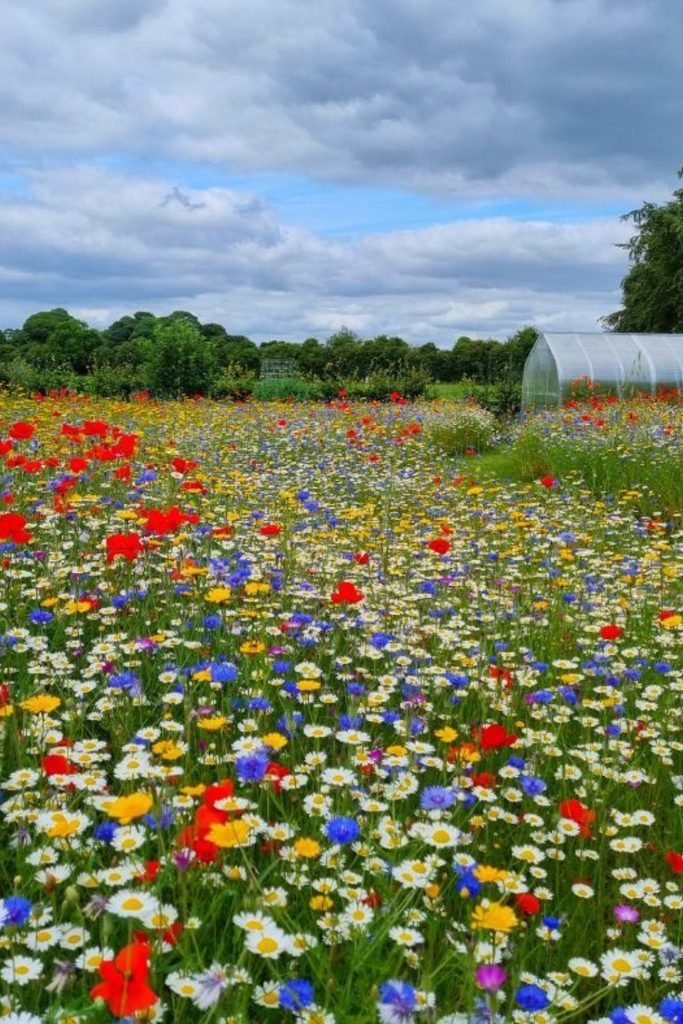
Field Meadow
Give a large open yard the feel of a flowering field by planting one broad sweep instead of breaking the space into separate beds.
Use a lot of little white and blue flowers as a base, then throw in bigger red and yellow blossoms so the brighter colors show up naturally.
This works best where you have space for a sunny part of the grass and want to have a stronger seasonal impact.
You can either leave a basic walking strip down the middle or around the outside; after the flowers are thickly growing.
That open route will make the meadow easier to explore and clearly identify where visitors should walk.
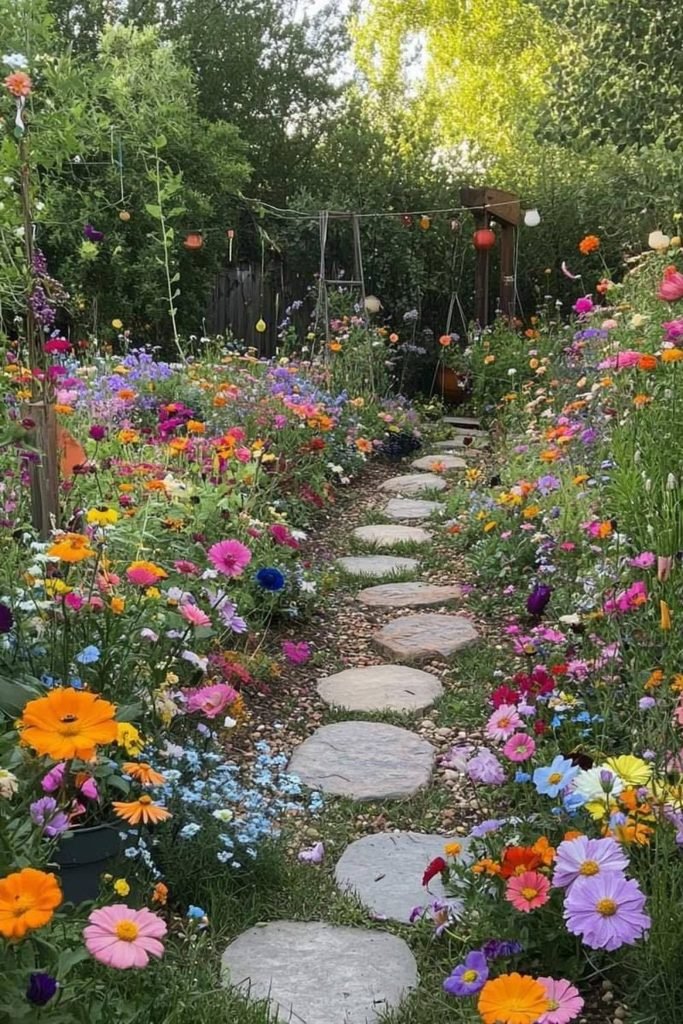
Stepping Trail
Thread individual stepping stones through a compact wildflower garden when a full-width path would take away too much planting space.
Leave little spaces between the stones; surround with low blue and pink flowers. Build upwards with orange, purple and taller airy blooms toward the sides.
A modest curve to the pathway will make even a small backyard look deeper, as you can’t see the full garden at once.
Expose enough stones for safe footing, but let a few softer branches spill toward their edges.
Add interest above the blooms with simple garden supports or string lights without over whelming the ground.
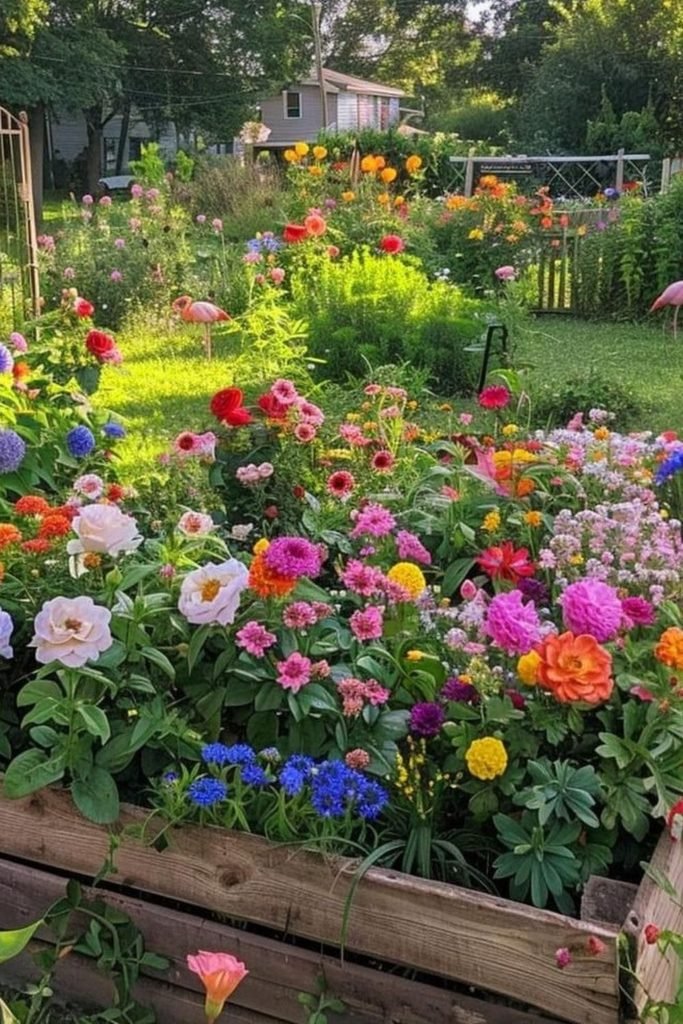
Raised Wildflowers
Lift a dense mix of blooms into a simple wooden bed when you want wildflower color without letting plants spread across the whole yard.
Mix rounder pink and orange flowers with blue bunches and softer white blooms in plenty of space so that no one type stands out.
The tall branches can stay toward the middle and compact plants can cover the outside edge and hide the bare soil.
This is especially helpful in a smaller backyard or garden, where you want more control over weeds and plants that spread.
Give the bed some breathing space by leaving a little open lawn around it. This will also help define its colorful contour.
Gravel Entry
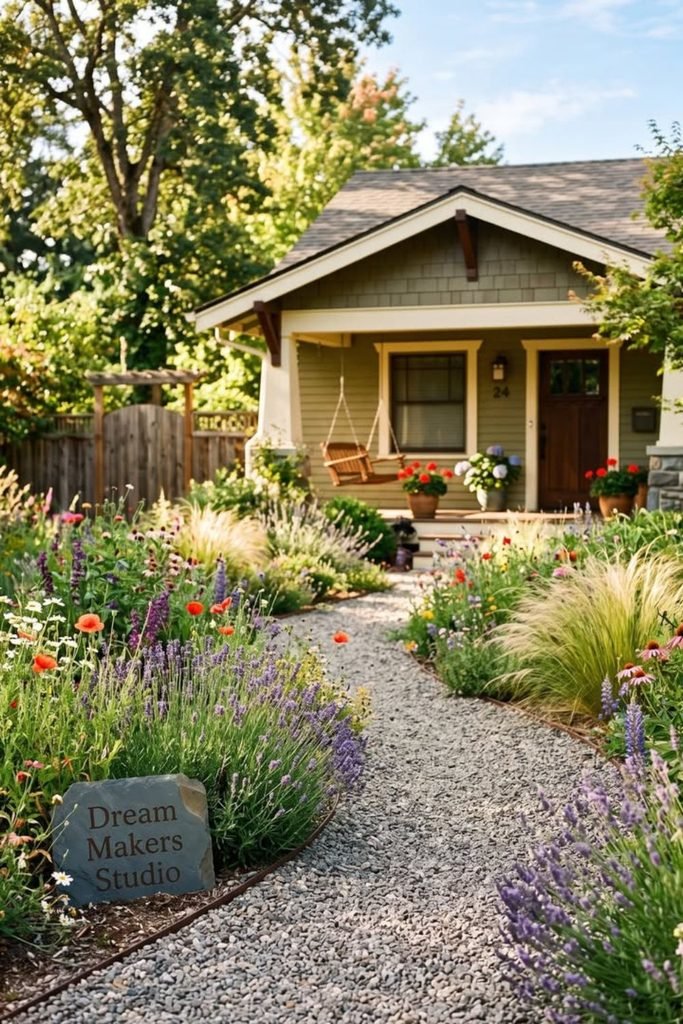
Replace the usual straight front walk with a gently curving gravel path so wildflowers can shape the approach to your home.
Plant lavender-like mounds and low daisies near the path, then work in taller coneflowers, scarlet blossoms, and beautiful grasses farther back.
Here grasses are particularly good, as their fine texture prevents the mixed flowers from becoming too busy.
Let the beds run along the line of the walk, not make stiff rectangles, and leave the margins of the gravel exposed.
There will still be lots of natural movement in your entry, but the defined path and clusters of repeating plants will give the whole thing a designed feel.
Spilled Pots
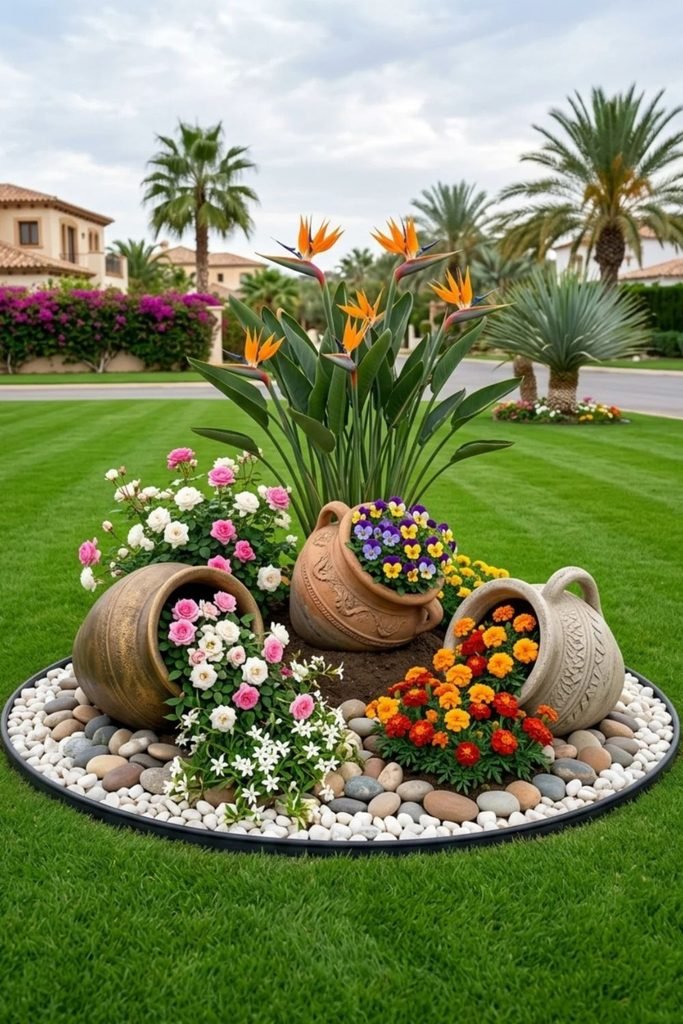
Turn a plain lawn into a small flower feature by tipping decorative pots sideways and letting compact blooms appear to spill onto the ground.
Cluster pink, white, purple, yellow, and orange flowers around the apertures and then insert one taller plant behind the cluster to provide height.
The planting is edged with smooth river stones to help distinguish it from the grass and to make mowing around the feature much easier.
This concept is especially useful when you want the colors of a wildflower but don’t have room for an entire border.
Coneflower Trail
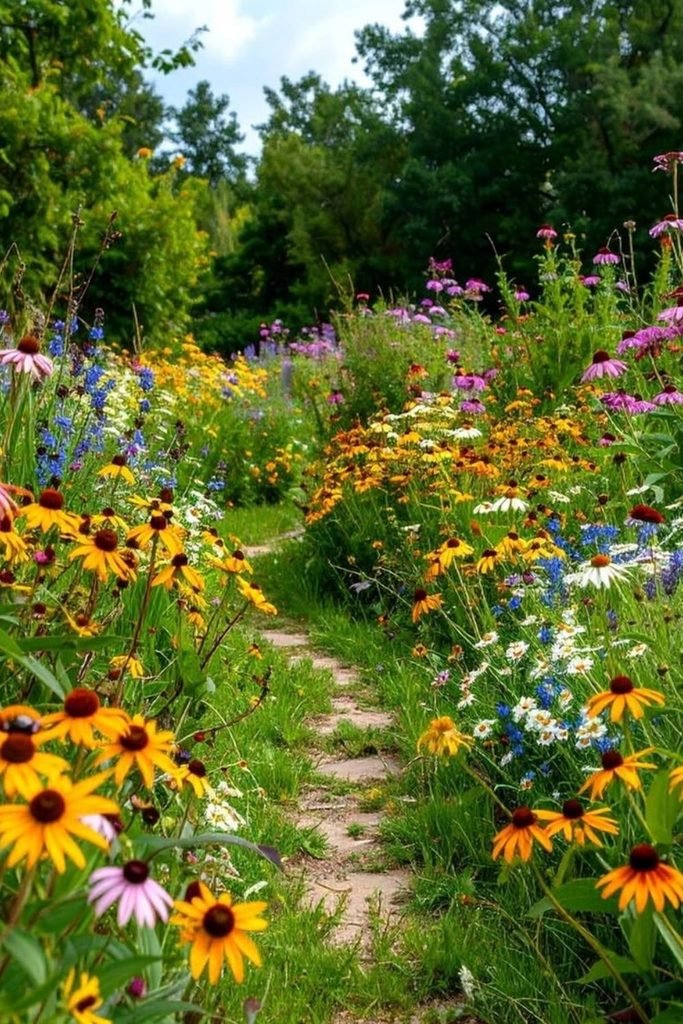
Choose a few recognizable flower shapes and repeat them along a narrow trail instead of filling the garden with dozens of unrelated varieties.
Coneflowers and black eyed Susans can set the main rhythm, and blue spikes and little white flowers break up the warmer colors.
Let the taller blooms rise toward the outside, and leave enough open ground through the middle for easy walking.
This method is ideal for sunny back yard borders when you like a meadow vibe but with a greater visual organization.
Repeating the same flowers further down the trail also pulls the eye forward and makes the planting feel connected instead of randomly scattered.
Mown Passage
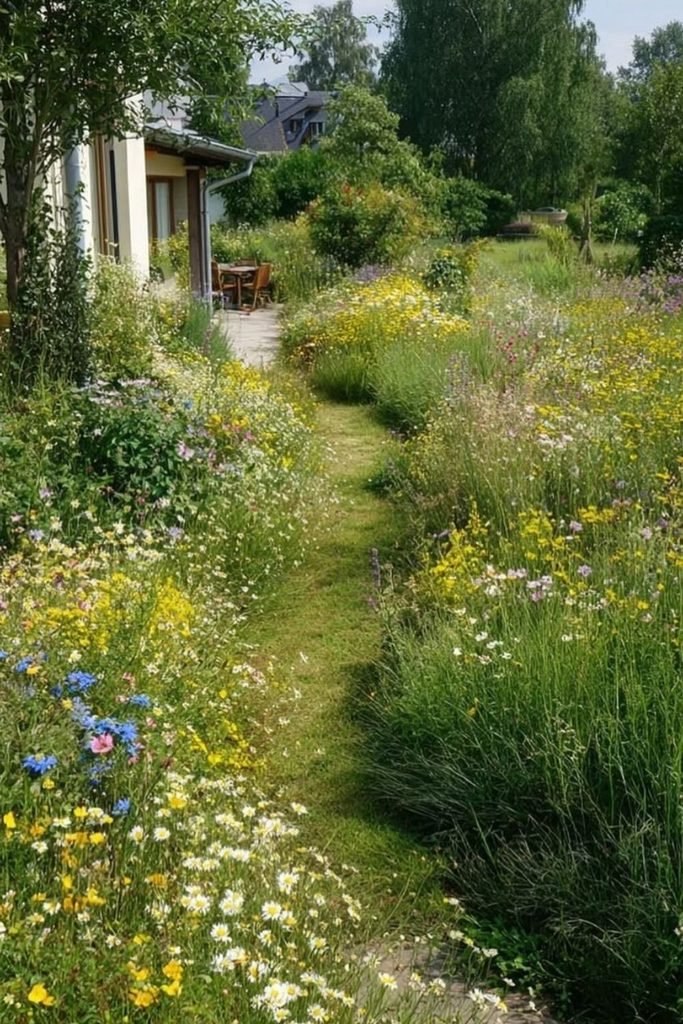
Keep one strip of grass closely cut through taller wildflowers when you want a practical walkway with out adding stone gravel edging.
Let yellow, white, blue and soft pink blossoms grow loosely on either side with thicker grasses to fill occasional sections for texture.
The mown center also separates the walking area from the meadow at once, so relaxed planting looks cared for.
This is particularly good next to houses or across larger backyards where a hard path could feel overly formal.
Rather than a precisely straight line, create a little bend and the path will fall more naturally into the surrounding flowers.
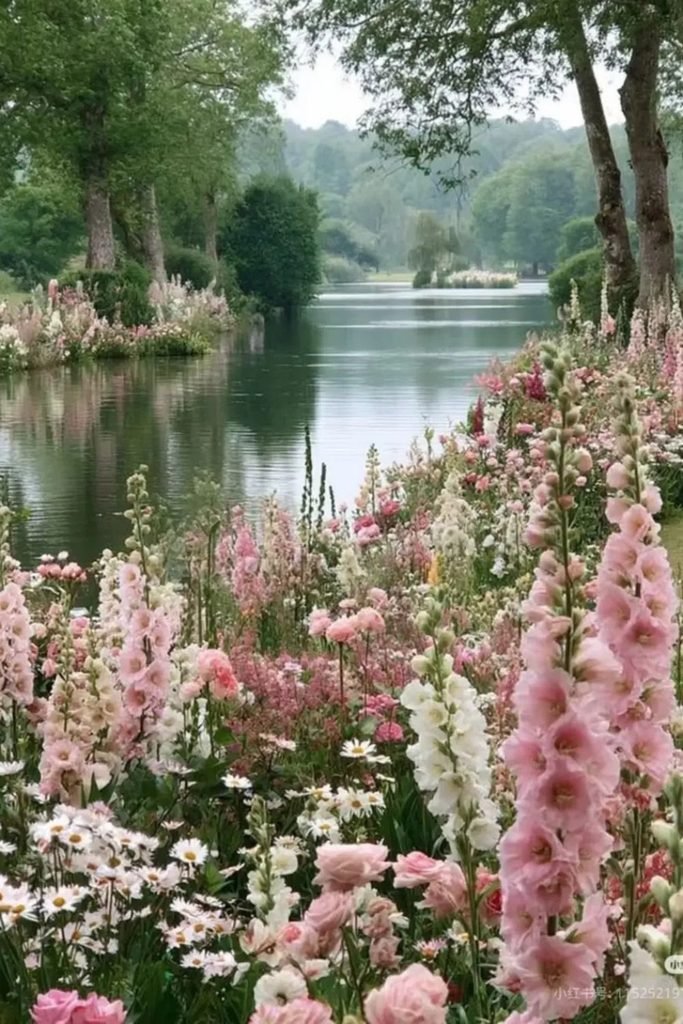
Waterside Blooms
Soften the edge of a pond with tall, airy flowers instead of leaving a hard line between water and lawn.
Keep pink and white blooms predominate for a more tranquil palette, then intersperse erect flower spikes with lower, daisy like plants.
The trees behind the plants provide shade and a natural framing for the space, which makes this design particularly suitable for use around ponds.
Don’t plant solidly along the bank, leave a few open spaces to retain the views across the lake and to keep the blooms from overpowering the scene.
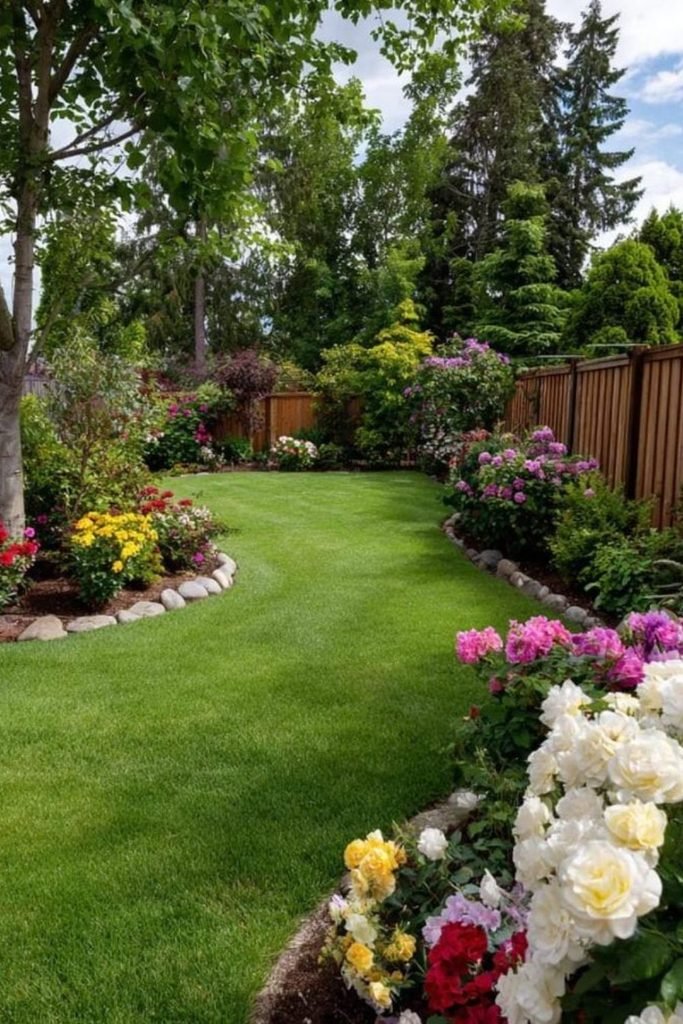
Lawn Islands
Keep most of your lawn open while turning the outer edges into curved flower islands for a cleaner take on wild planting.
Stone edging keeps each bed in form. Underneath, mix blooming shrubs with tiny red, yellow, pink and white blooms.
Trees can anchor the larger islands and the unbroken grass through the center provides the eye a place to rest.
This design is ideal if you like colorful, wildlife friendly plants but still require a lawn to walk on, or for children or outdoor activities.
Allow the beds to follow the natural contours of the yard and maintain the grass edge clipped so that each planting pocket remains well defined.
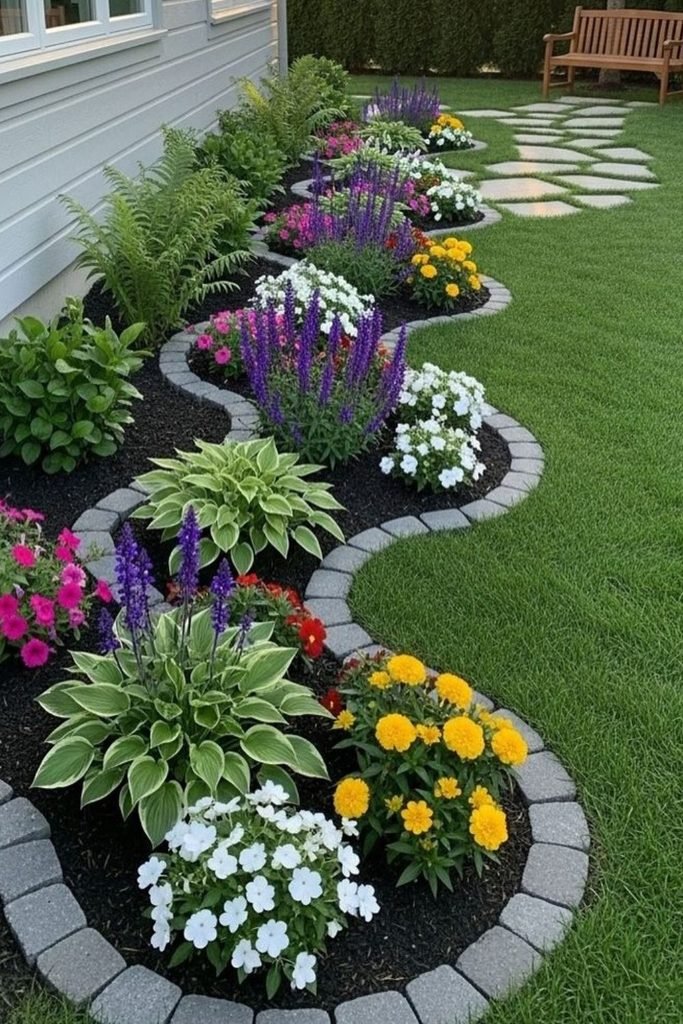
Curved Edging
Bring wildflower color closer to the house without letting the bed lose its shape by giving the planting a flowing stone edge.
But rather than squeezing every straight with various plants, repeat purple spikes, white mounds, pink blooms and little yellow flowers around the curves.
The broad leafy plants in between the flowers give soothing green gaps that enable the brighter colors pop, without feeling overcrowded.
This approach works well in side yards and foundation beds if you desire a more regulated version of a wild garden.
Top it up with black mulch and mow the lawn closely to the stones to keep the meandering border easy to maintain.
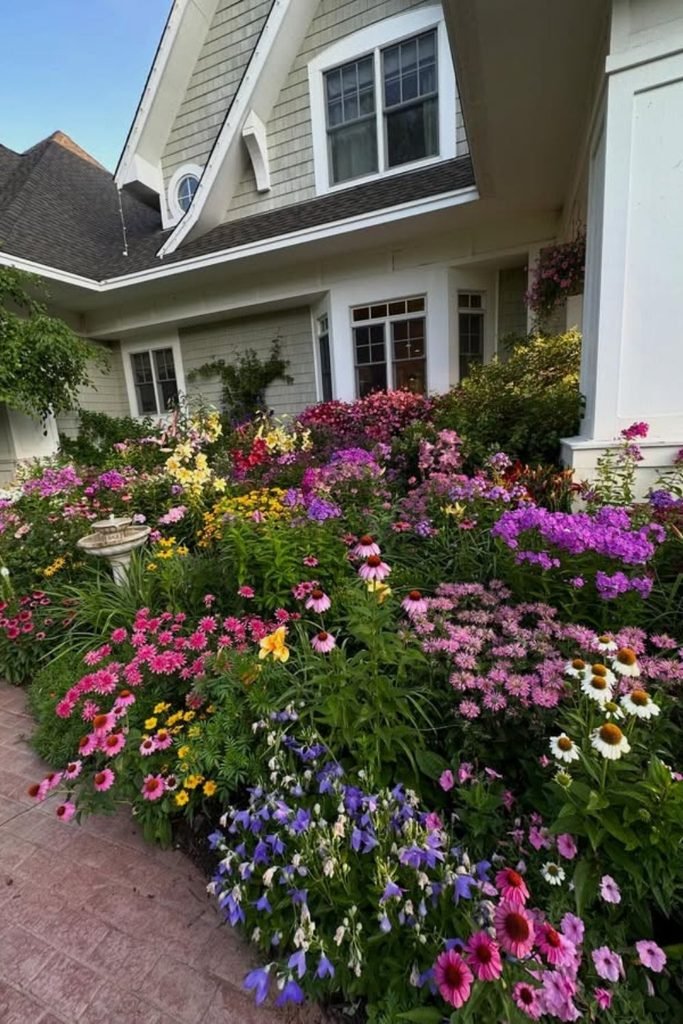
Foundation Meadow
Fill a deep foundation bed with overlapping flowers when you want the front of your home to feel established rather than lined with separate little plant groups.
Begin with small pink, blue and white blossoms along the walkway, then let coneflowers, lilies and larger purple flowers build height toward the home.
The rich mix is tied together with repeating pink and purple throughout the bed with little points of contrast provided by scattered yellow flowers.
Don’t plant so that you block windows and doorways. Place the tallest varieties along blank parts of wall, and trim anything that starts to lean over the walkway too far.
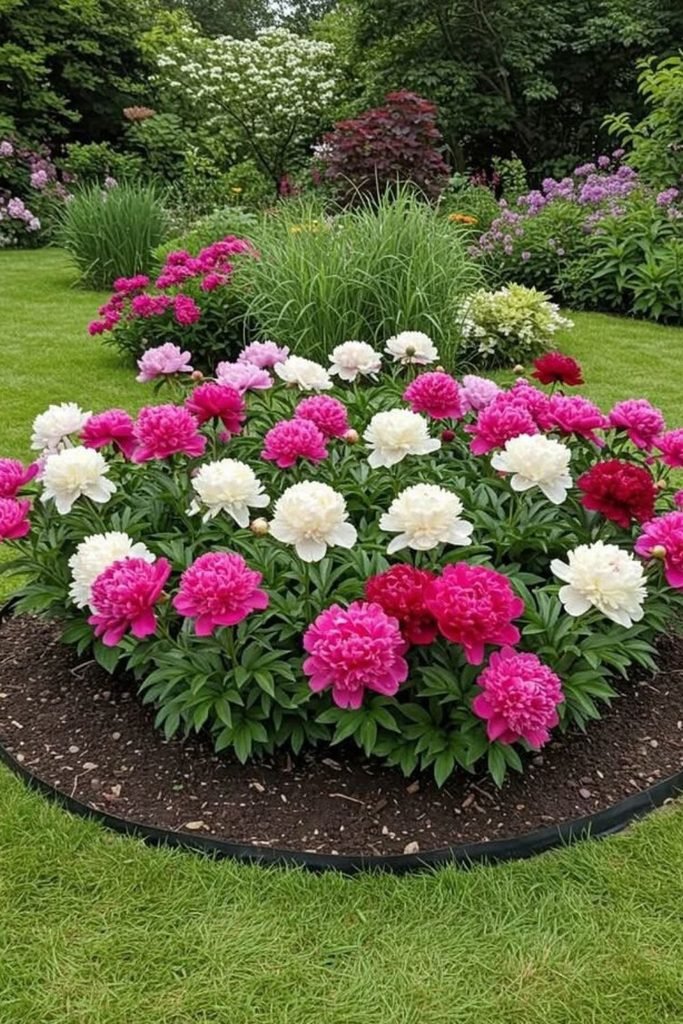
Peony Island
Create one bold flower island in the middle of an open lawn when you want strong color without filling every border.
Create peony-style blossoms in clusters of pink, white and darker reds so the bed reads as one clear feature, not scattered flowers.
A simple curved edge maintains the design clean, and dirt exposed around the outer plants gives each bloom room to stand out.
Position taller grasses, bushes or softer flowering groups further back to create depth.
This technique works great in larger yards where a colorful focal bed may break up a huge swath of boring grass.
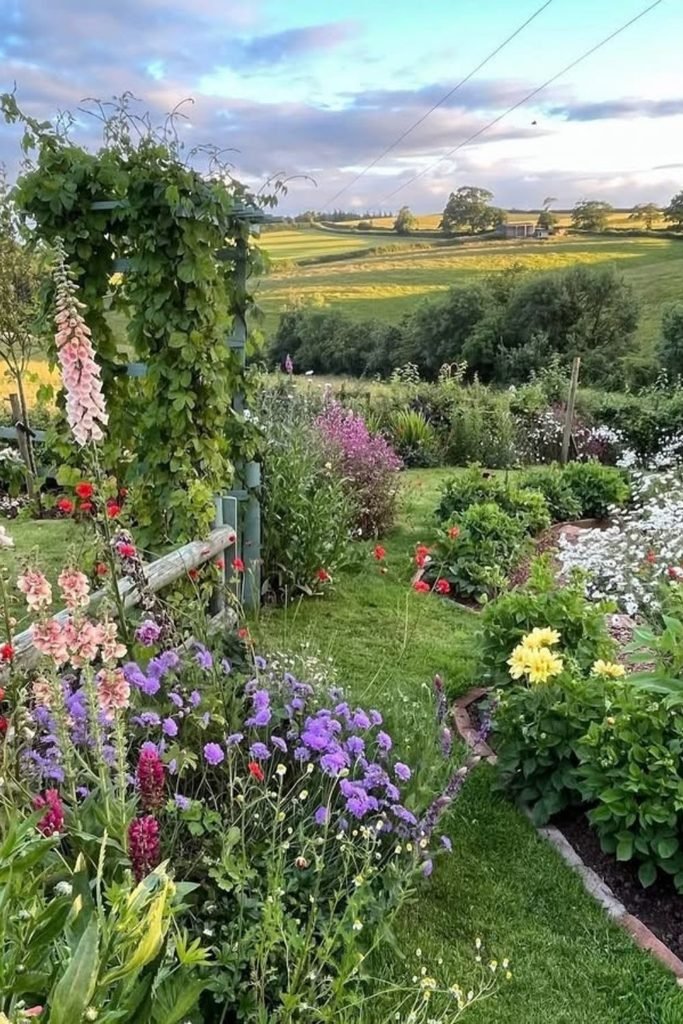
Arbor Border
Frame the entrance to a flower-filled garden with a climbing arbor so the loose planting has a clear starting point.
Train leafy vines up the structure and then flank the base with purple, pink, red and gentler filler blooms to tie it in naturally with the beds beyond.
A small grass path can run along the center, with brick-edged borders keeping more full plantings from spilling into the walkway.
This is particularly effective when your garden opens onto a wide view, since the arbor forms a powerful foreground feature without blocking off the scenery.
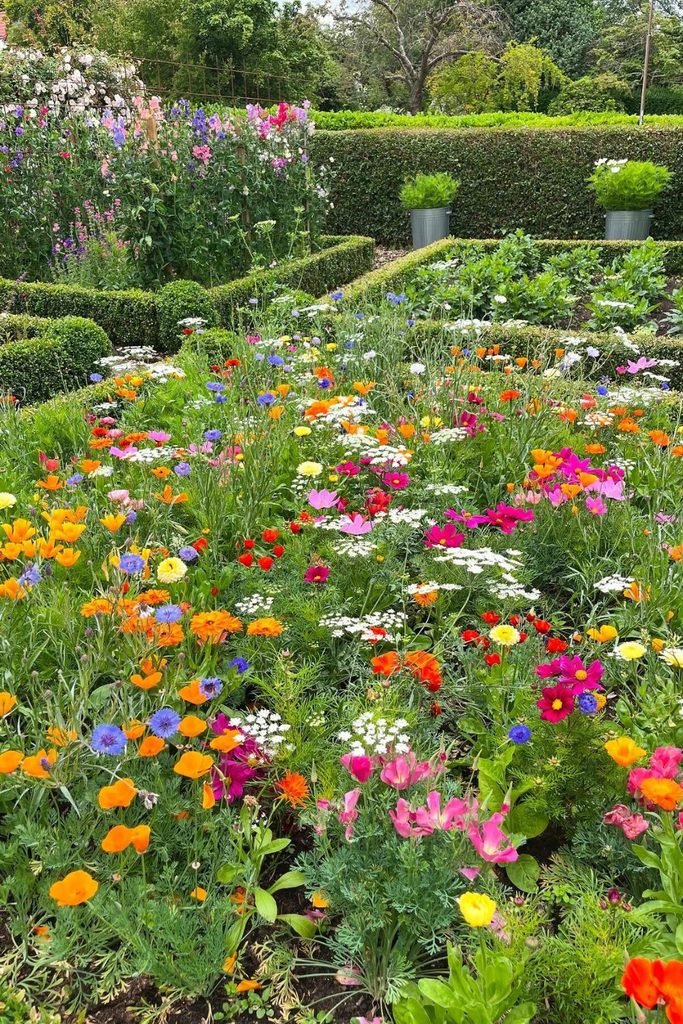
Formal Meadow
Mix loose wildflowers with clipped hedges when you want natural color without giving up a more organized garden style.
Plant the open area generously with orange, pink, blue, red, yellow and white flowers, then enclose the beds with low evergreen hedges.
Soft flowers against strong green lines prevent the colorful portion from becoming jumbled.
Taller climbing flowers can climb a basic support at the back and add another tier without cluttering the foreground.
This balance is particularly good in traditional gardens where you wish to ease in a wilder planting style.
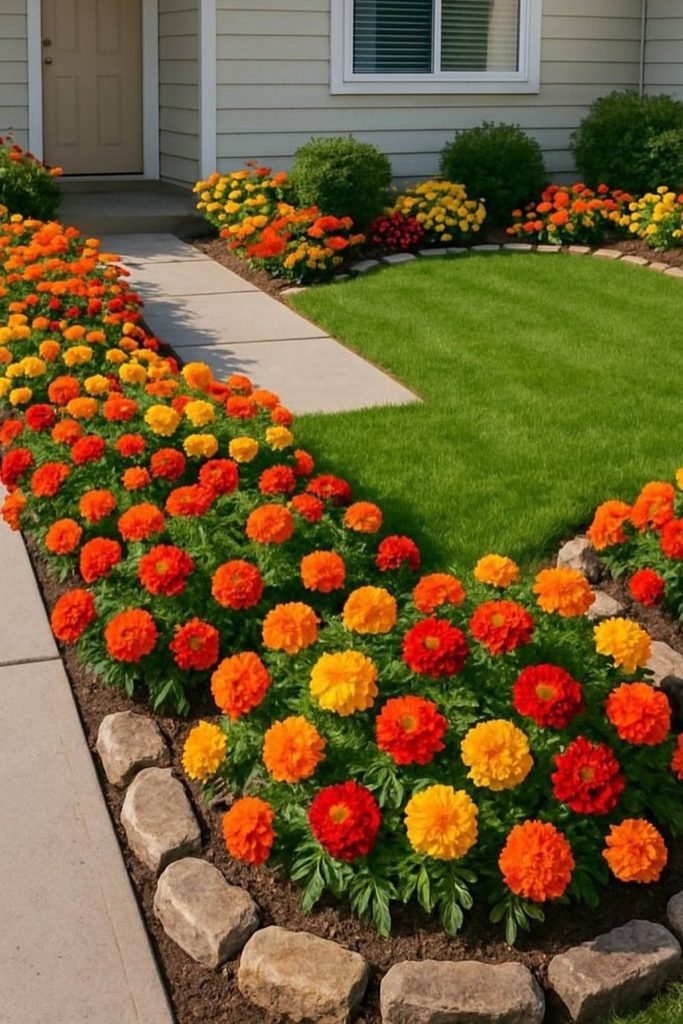
Marigold Border
Brighten a plain front walkway by repeating one flower type in several warm shades instead of mixing too many competing plants.
Run a mass of orange, red and yellow marigold-type flowers along the path and curve them around the grass so that the color flows naturally to the door.
Rounded evergreen bushes planted near the home add some permanent height to low flowers and help keep the show attractive after flowering slows.
This works nicely in small front yards because repeating flowers makes a big impact without making the space feel too cluttered.
Stone edging around the curved parts will help keep the soil and spreading vegetation out of the grass.
FAQs
How Can I Start A Wildflower Garden From Scratch?
Start with a sunny spot where you can clear away grass and weeds before sowing.
Go out and break up the top layer of soil, collect wildflowers that will grow well in your area and sprinkle the seed evenly, but not buried too deep.
Starting with a smaller area also makes it easier to keep weeds under control while you study which blooms do best in your yard.
How Do I Keep Wildflowers Blooming Through The Season?
Don’t just choose one bright seed mix, get variety of flower that will bloom at different times.
Plant early, midseason and later-flowering kinds so the fresh flowers show as others fade.
Don’t trim the whole garden back at once and allow some flowers to complete blossoming and seed if you want natural reseeding.
