
26 Zen Garden Ideas for 2026
You may rip out every lovely feature you see in a Zen garden gravel, rocks, moss, bamboo and still have a setting that feels cluttered rather than tranquil.
The problem is usually not what you added but how much you added and where you placed it.
Rocks need air, plants should be an addition to the arrangement and not the main feature, even a bare area of gravel has its uses.
In this article, you’ll find 26 Zen Garden Ideas to create a peaceful outdoor space you’ll love and recreate.
Let’s jump in!
How Can I Arrange Zen Garden Rocks More Naturally?
Start with your biggest rock. That big rock will establish the direction for everything else around it.
Don’t line them up evenly, offset them a little and have smaller supporting rocks at varied heights and angles.
Push part of each rock into the dirt or gravel so it looks like it’s nestled into the earth rather than dropped on top.
If every space is filled with stones, plants or ornaments the layout might rapidly look congested.
You might try stacking some boulders together and keeping other parts more open.
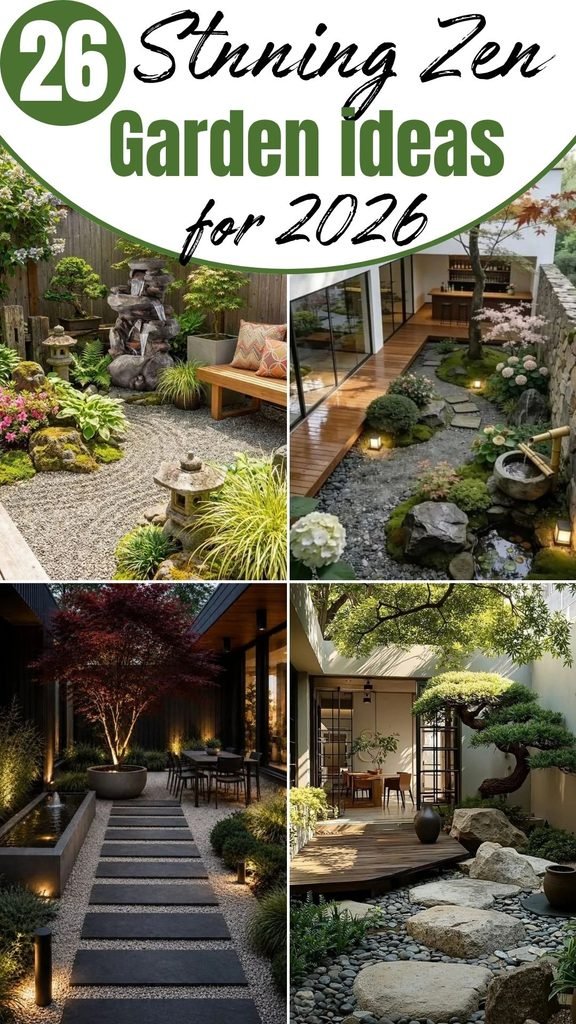
Waterfall Corner
Turn an overlooked backyard corner into a calming retreat by pairing a stacked-stone waterfall with gravel, mossy rocks, and layered greenery.
Locate the water feature near the fence, so it becomes a highlight, rather than taking up valuable floor space.
Ferns, tiny maples, hostas, and low grasses are good choices surrounding the rocks, because their softer shapes offset the rough stone.
Don’t plant every space leave some of the gravel exposed. This lets the whole corner feel tranquil rather than packed.
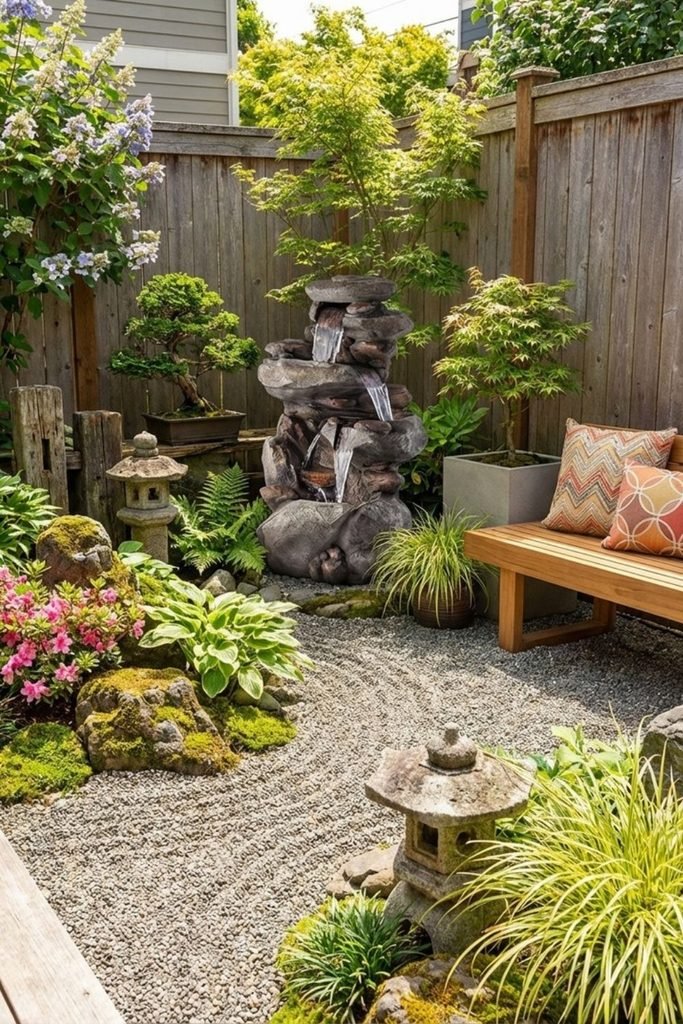
Courtyard Stream
Guide the eye through a narrow courtyard by running a shallow gravel stream between the deck and boundary wall instead of covering the whole space.
Irregular stepping stones soften the rigidity of the approach and mossy pebbles and a single mature tree offer the garden natural height.
Place a small water basin along the wall so you can enjoy its soothing movement from inside or the terrace.
Low garden lights can pick out the path after dark, but keep them widely spaced so that the courtyard remains soft and peaceful rather than excessively dazzling.
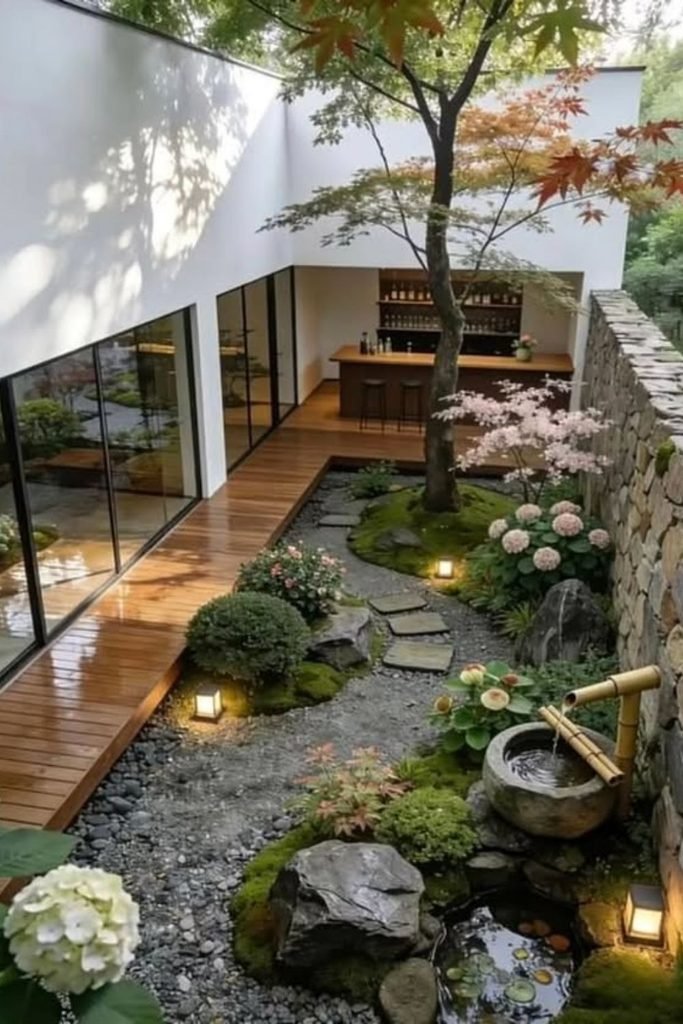
Illuminated Path
Bring a Zen garden to life after sunset by lighting a few key features instead of flooding the whole courtyard with brightness.
Wide stepping slabs through pale gravel make a clear walking route, then dim lights around grasses and bushes soften the hard edges.
One Japanese maple lit from below makes a strong centerpiece for the garden in the evening, especially in an enclosed courtyard.
Keep the water feature narrow and close to one side so you can still fit in dining or seating space without sacrificing the tranquil garden feel.
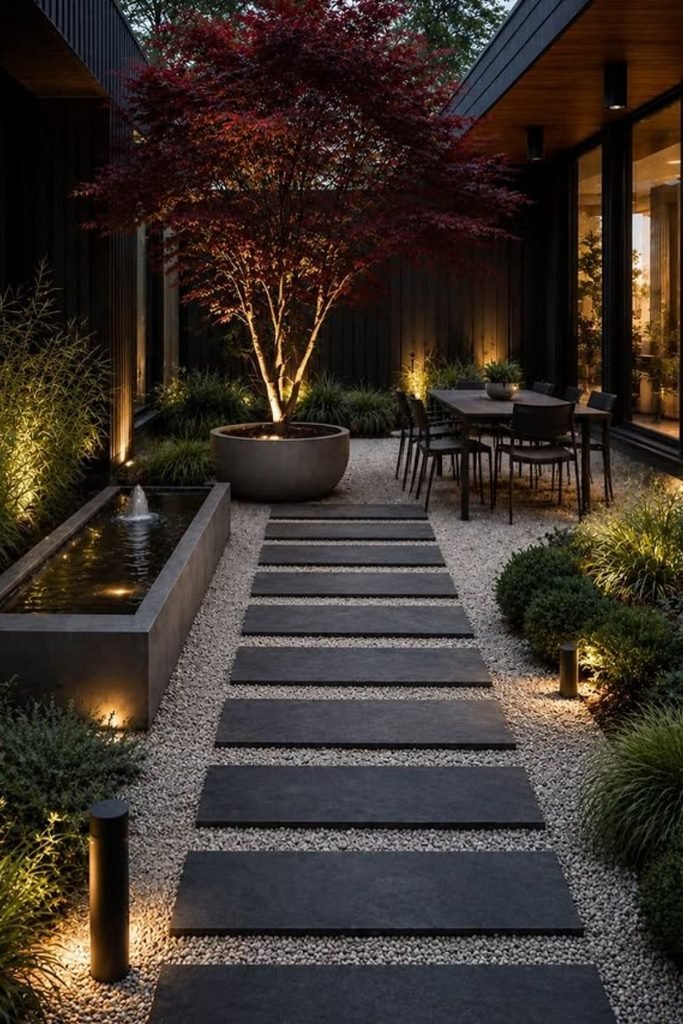
Boulder Walk
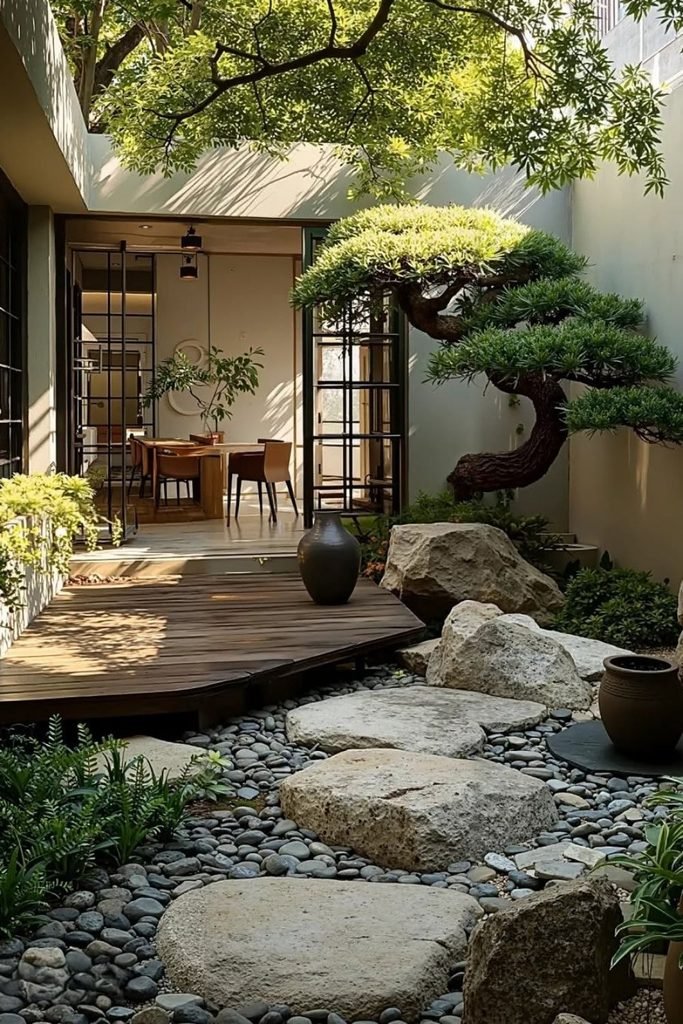
Let oversized stepping stones do more than create a path by using them to break up a narrow courtyard and make the route feel connected to the surrounding landscape.
Put each slab at a suitable walking distance, and bury it slightly into dark pebbles, so that the stones look like they are grounded rather than set on top.
Larger rocks on one side can maintain the rocky character, while a sculptural evergreen offers height without overwhelming the courtyard with plants.
Low foliage, mostly at the perimeter, leaves the middle open, and the natural stone shapes are the centerpiece.
Pebble River
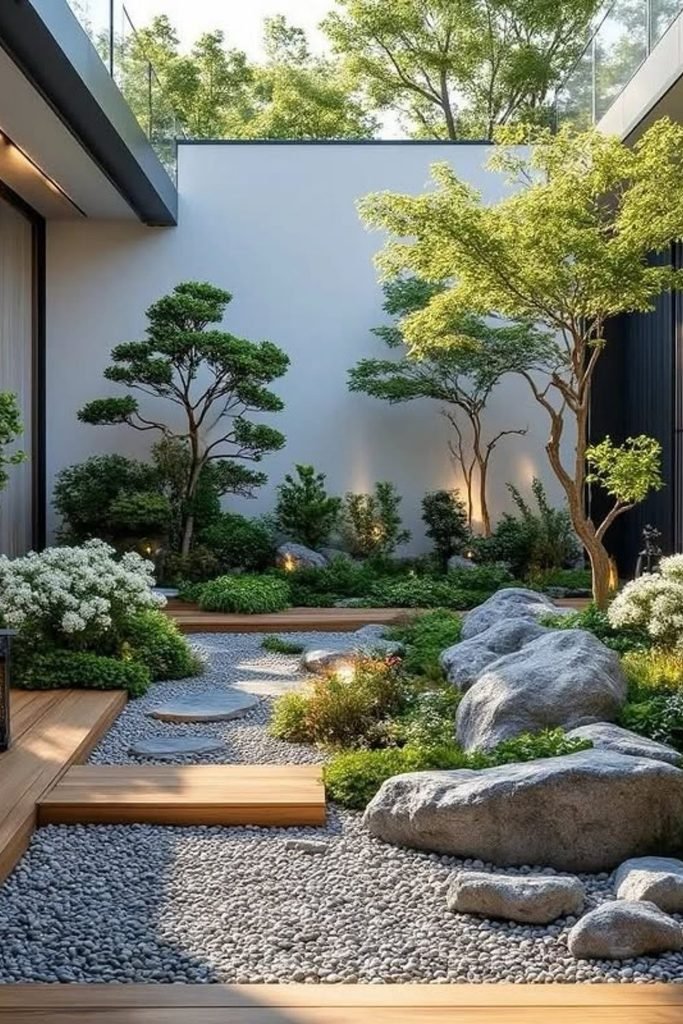
Use a winding bed of small gray pebbles to create the feeling of a dry river through an enclosed courtyard where a real pond would take up too room.
Let the gravel meander around big boulders, rather than run in a straight line.
Keep the stones partly surrounded by low ground cover so they feel nestled into the landscape.
If you need access between decks or doors, you can traverse gravel with small stepping slabs.
Gravel Lounge
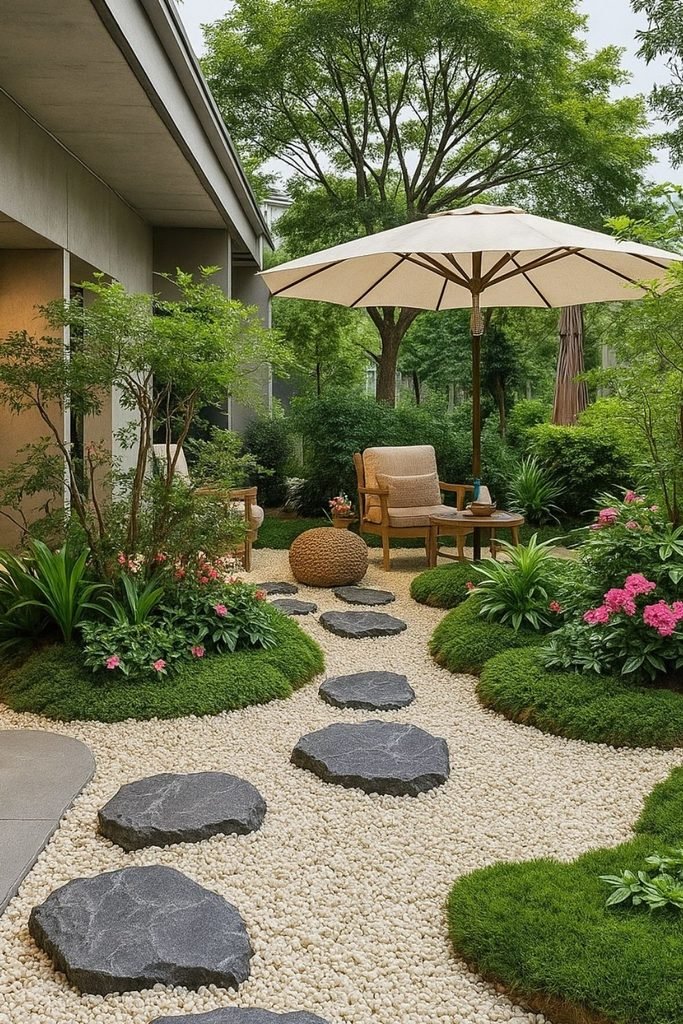
Carve out a quiet sitting spot inside the planting rather than keeping all your furniture on a separate patio.
Irregular dark stepping stones offer a simple way to cross a seated zone marked off by pale gravel.
Leave circular pockets of shrubs and modest ground cover around the boundaries so the space is surrounded by vegetation without being closed in.
For daily usage, an easy chair, a small table and an umbrella are plenty; too much furniture would spoil the simple garden arrangement.
Koi Retreat
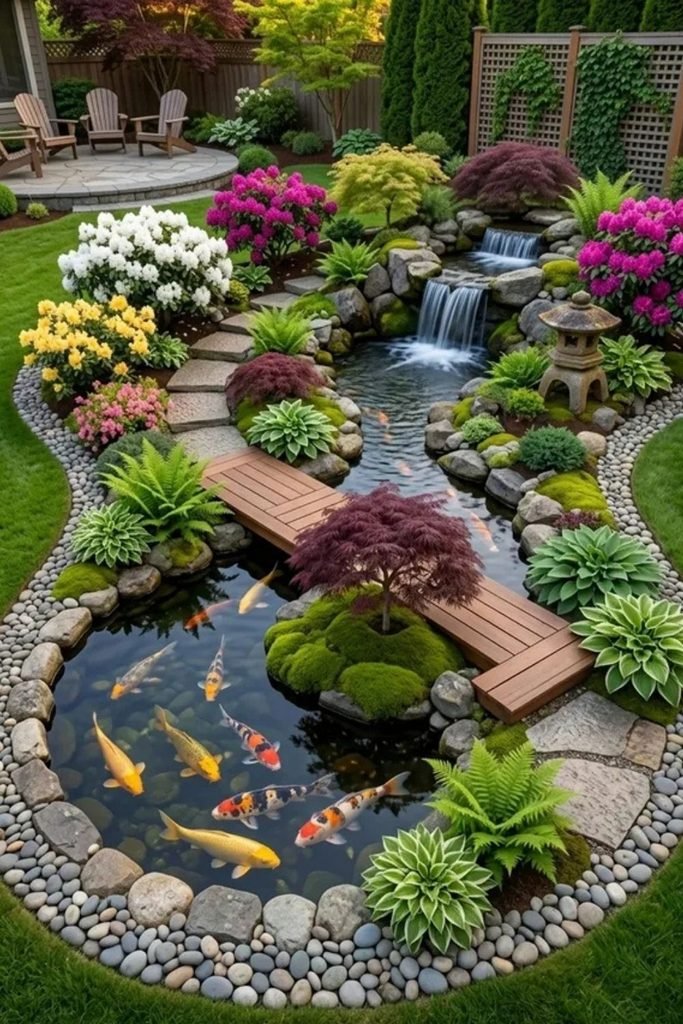
Give a larger backyard a stronger sense of movement by letting a koi pond curve through the planting instead of squeezing water into a small decorative basin.
Edge it with a variety of natural stone, softening it with moss, ferns, hostas and small maples to give the impression that the pond has been nestled.
Narrow wooden bridge connects opposite sides and also provides a peaceful spot to rest and watch the fish.
Put larger blooming plants toward the back, where their color can frame the water without covering it.
Pebble Steps
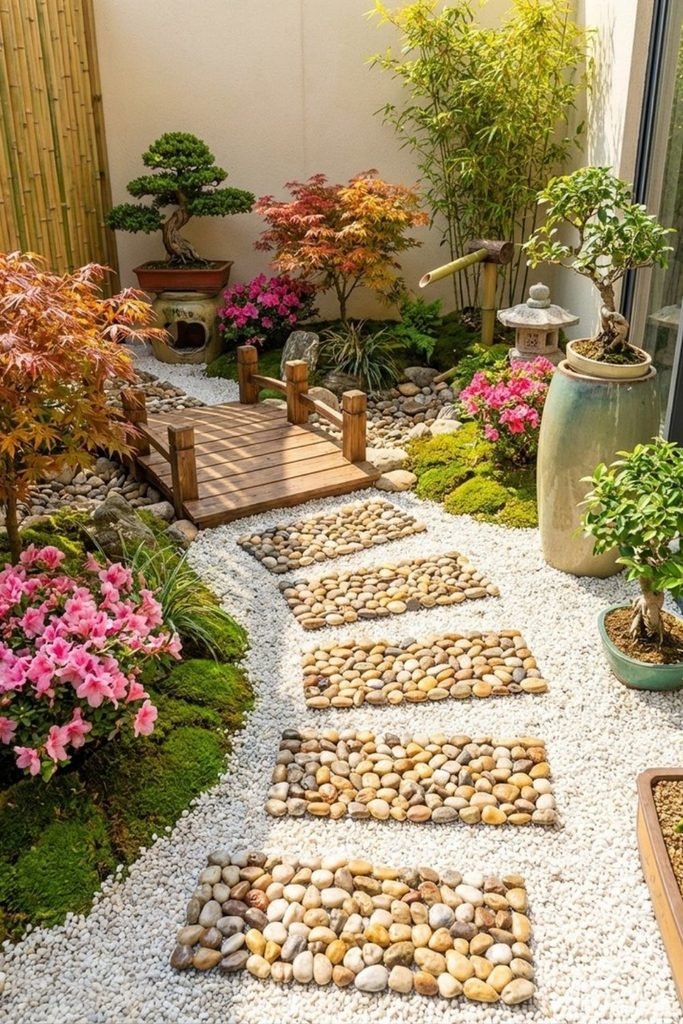
Mix smooth river pebbles into larger stepping pads when you want a pathway to feels softer than solid stone slabs.
Place each pebble piece firmly into strong base so stones remain level under foot then surround the path with finer light gravel for clear contrast.
Compact maples, moss, blooming shrubs and bonsai-style plants can frame the road without obstructing it, making the idea particularly suitable in courtyards.
Finish the route with a small wooden bridge or some other point of focus so the path.
Feels like a voyage through the garden, not just a walk way that was constructed for no reason at all.
Raked Courtyard
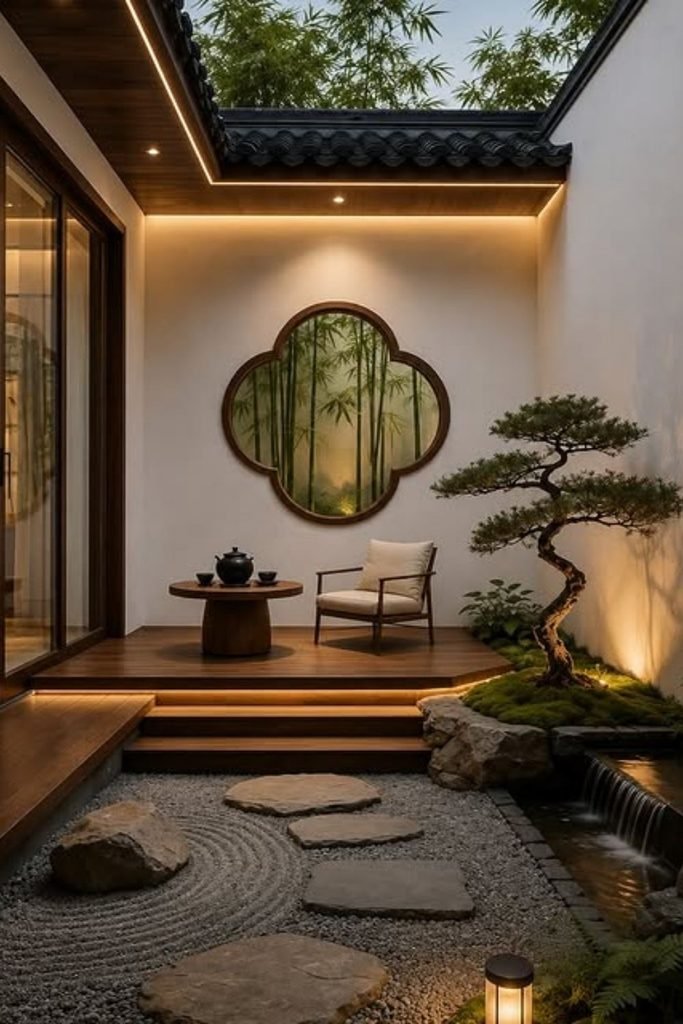
Make a compact courtyard feel intentional by treating the gravel itself as part of the design rather than just ground cover.
Rake curved lines around one large partially buried rock to suggest movement then interrupt the gravel with a few irregular stepping stones leading.
Keep planting concentrated along one edge where a sculptural pine and moss can soften the walls without hiding the open pattern.
A narrow water channel adds gentle sound if space allows while warm low lighting can bring out the tree trunk and stone textures after dark.
Garden Pavilion
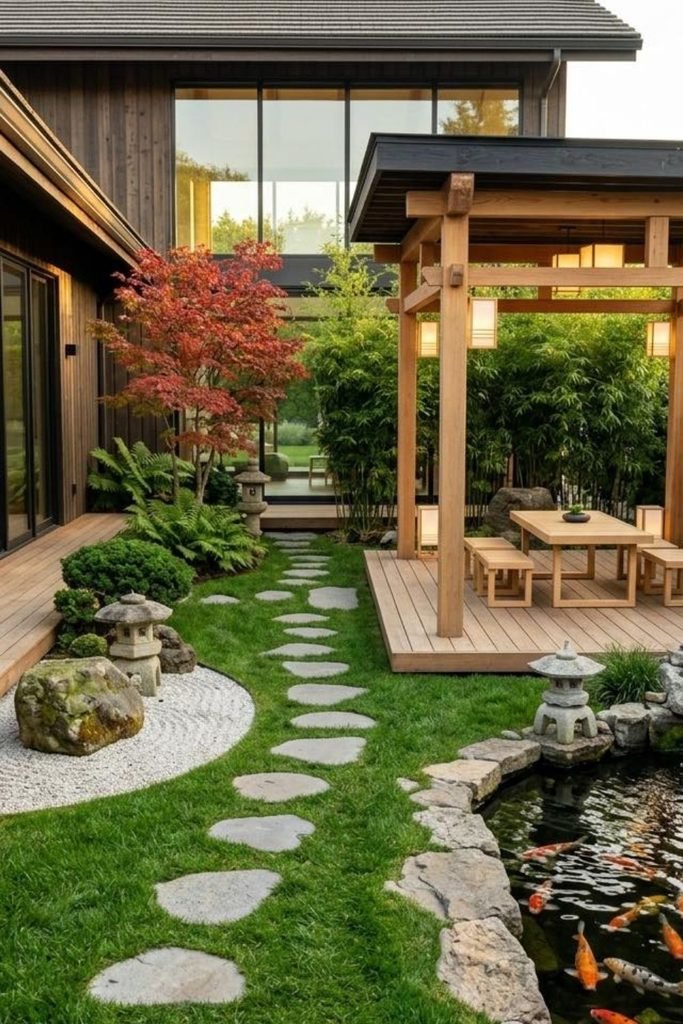
Set aside one sheltered spot for sitting, eating, or tea so the Zen garden becomes somewhere you can actually spend time rather than simply admire.
A timber pavilion works especially well in a big backyard because it may nestle between a koi pond and layered planting without overpowering either.
Lead to it via grass with irregular stepping stones, then use bamboo, ferns, maples and cut evergreens along the boundaries for privacy.
Leave larger areas of raked gravel and groups of rocks for other parts of the yard.
Reflecting Pool
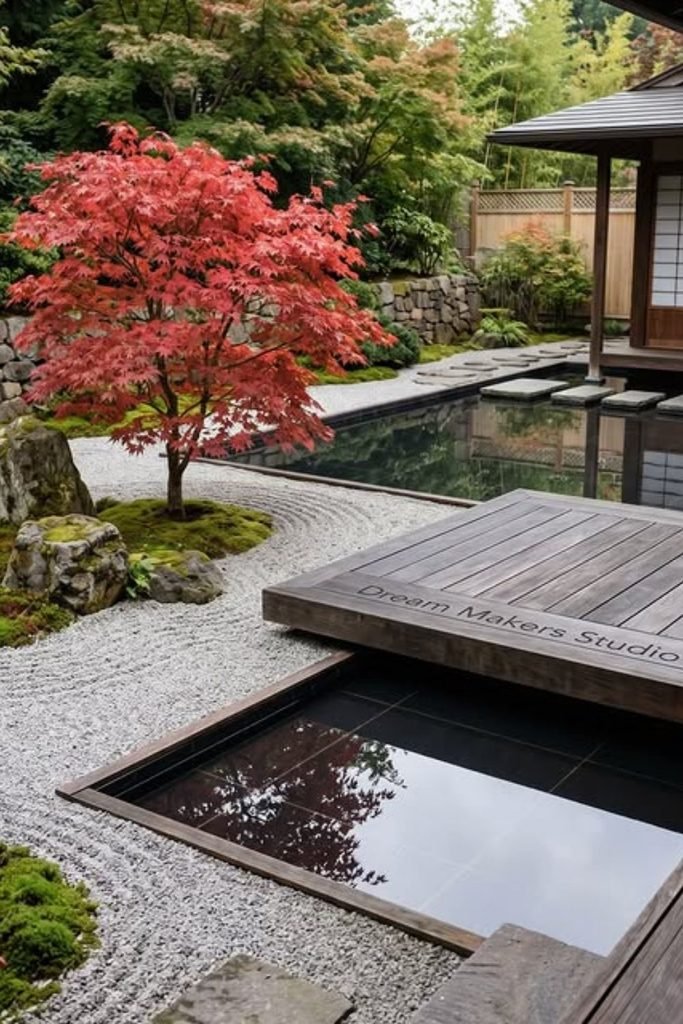
Pair still water with raked gravel when you want the garden to feel calm without relying on lots of decoration.
Keep the reflecting pool low and geometric, close to a deck or sitting area, where it will reflect surrounding trees and shifting light all day long.
Nearby, let curved rake lines flow around a Japanese maple and a tiny grouping of worn boulders to soften the straight lines of building.
The moss at the base of the tree serves to tie the planting to the stones and lots of gravel left exposed will keep the colorful maple from competing.
Basin Path
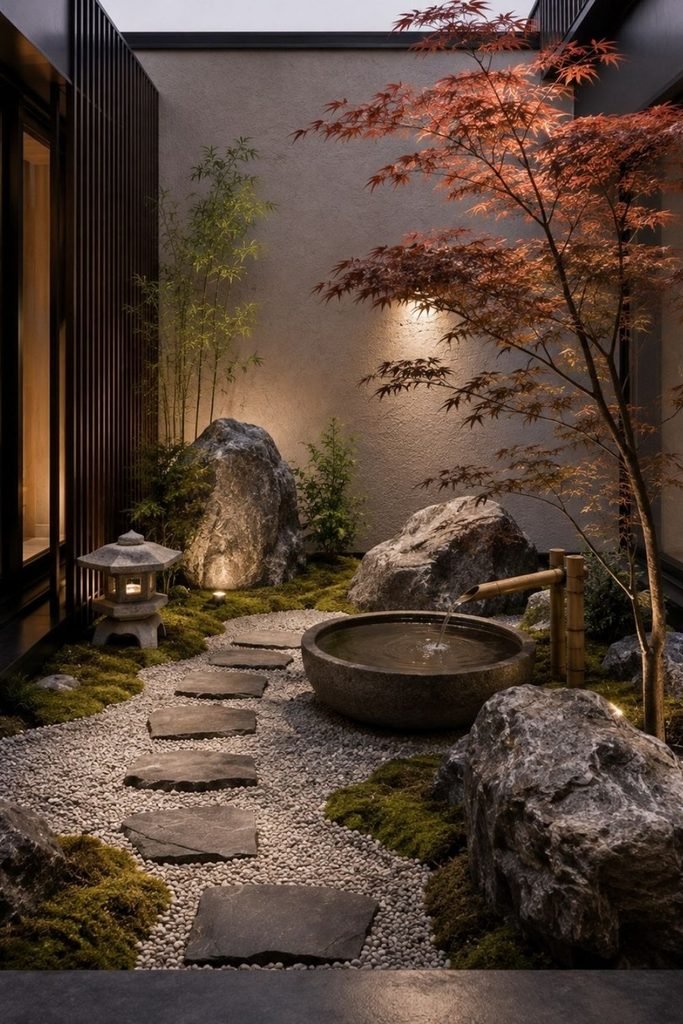
Bring water into a narrow courtyard without committing space to a pond by placing a simple stone basin beside the walking route.
Feed it a slender bamboo spout, so the gradual movement becomes evident but not overwhelming to the vegetation.
Irregular paving stones in pale gravel can guide around the space, while big rocks laid at varied depths keep the pathway from being overly linear or formal.
Use moss at the base and put taller plants, such as a Japanese maple or bamboo, out near the edges.
Soft ground lighting behind a few boulders can highlight their texture at nite without lighting up every area.
Staircase Garden
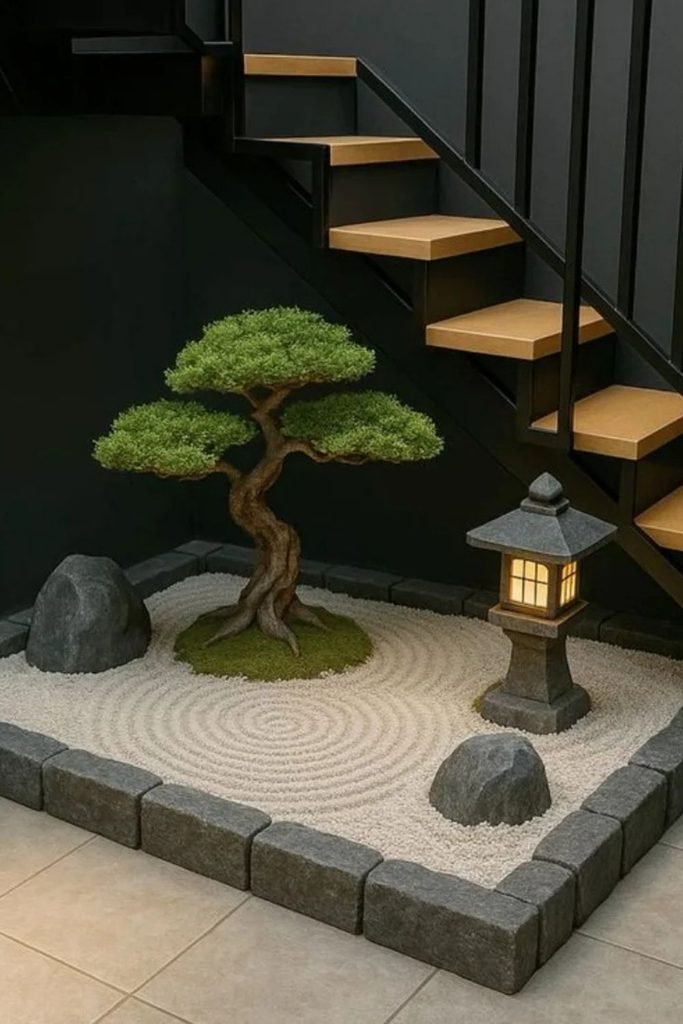
Put the unused floor beneath an outdoor staircase to work with a compact dry garden that needs very little planting.
Create a modest stone border around the area, fill with fine gravel, and rake circular patterns around two or three unevenly placed boulders.
One sculptural evergreen can add enough height to balance the stairs without crowding the limited footprint.
Use rocks of varied sizes and bury their bottoms into the gravel a little for a more natural look.
One lantern is enough to give some warm light in the evening. The black wall around makes the pale gravel and the simple shapes stand out clearly.
Evening Retreat
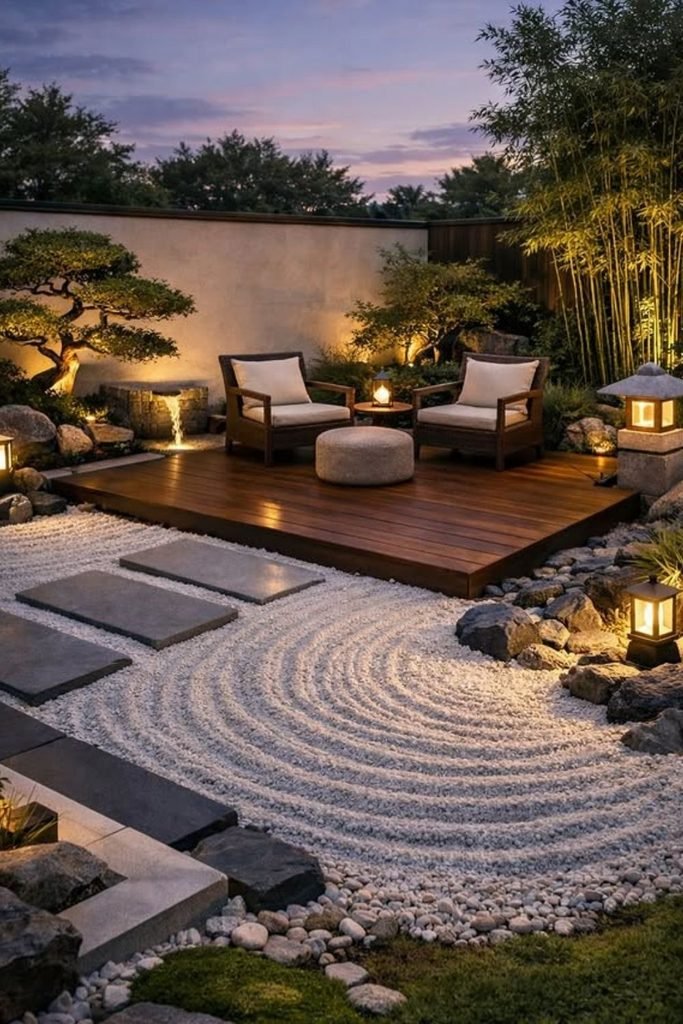
Reserve a gravel-side deck for evening relaxation when you want the garden to feel useful after daylight fades.
Put two modest chairs facing the raked gravel, not the house, so the stone patterns and surrounding vegetation are clearly seen.
Walking through can be eased by wide stepping slabs to get onto the deck without disturbing the gravel each time.
Illuminate selected tree trunks, bamboo and rock clusters from below using lighting, leaving the rest of the landscape darker.
A few low lighting near walkways make for safer travel, without washing off the shadows that give the room its depth.
Meandering Path
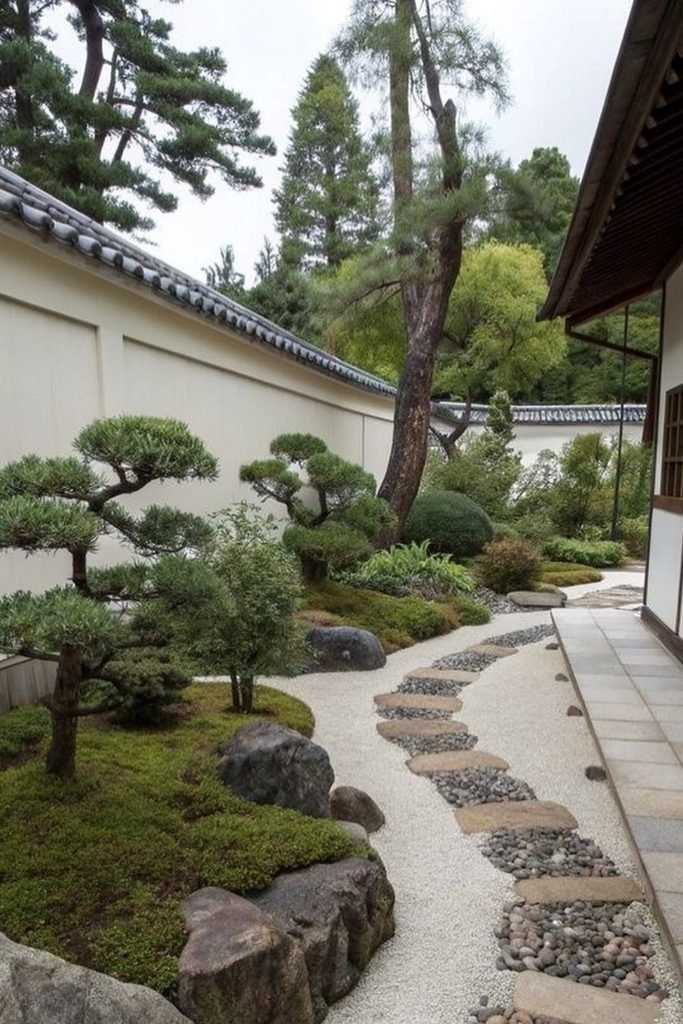
Break up a long, narrow garden with a gently curving route instead of running one straight path from end to end.
Use alternate flat stepping stones with small areas of darker river pebbles, then surround the walkway with pale gravel so every change in texture remains obvious.
Sculpted pines, mossy ground cover and partially concealed boulders work especially well in the outer curve.
Plant taller trees at the back and leave areas of gravel uncovered so that the eye may move slowly across the garden rather than seeing everything at once.
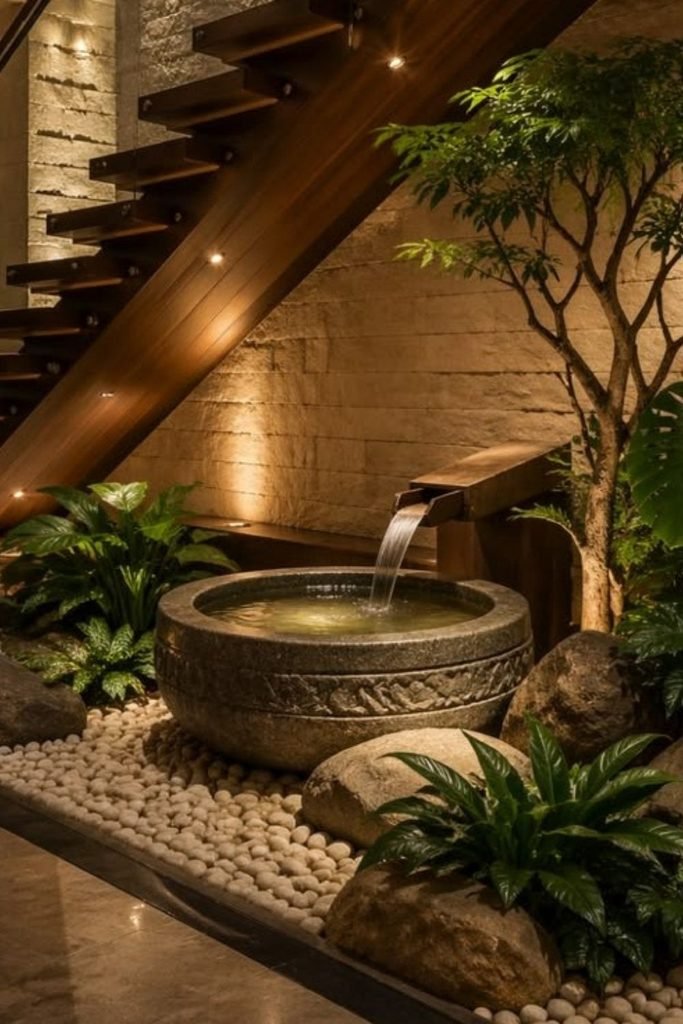
Indoor Basin
Use the space beneath an open staircase for a compact Zen feature when a full outdoor garden is not practical.
Center a broad stone basin where the falling water can become the main focus then surround it with smooth pebbles and a few larger rocks.
Ferns and other shade-tolerant foliage can soften the staircase and stone wall, while one small tree adds enough height to connect the garden.
Keep warm lights close to the ground and water so they highlight texture without making the area feel overly bright.
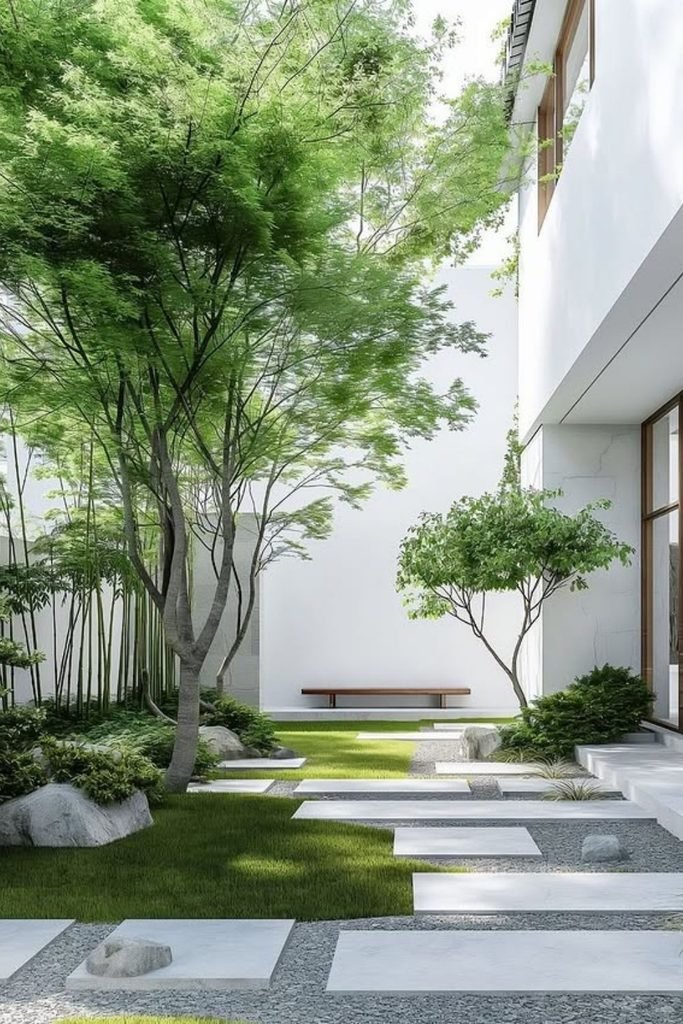
Floating Walkway
Keep a modern Zen garden open by using large rectangular slabs with narrow gravel gaps instead of building one continuous paved path.
Lay the slabs slightly staggered over the grass so the path feels casual but still fits with sleek contemporary design.
Mature trees might form the main canopy with low plants, bamboo and a few partly covered boulders providing the framework underneath.
This strategy works particularly well in side courtyards where you need clear access between doors but still want plenty of green space.
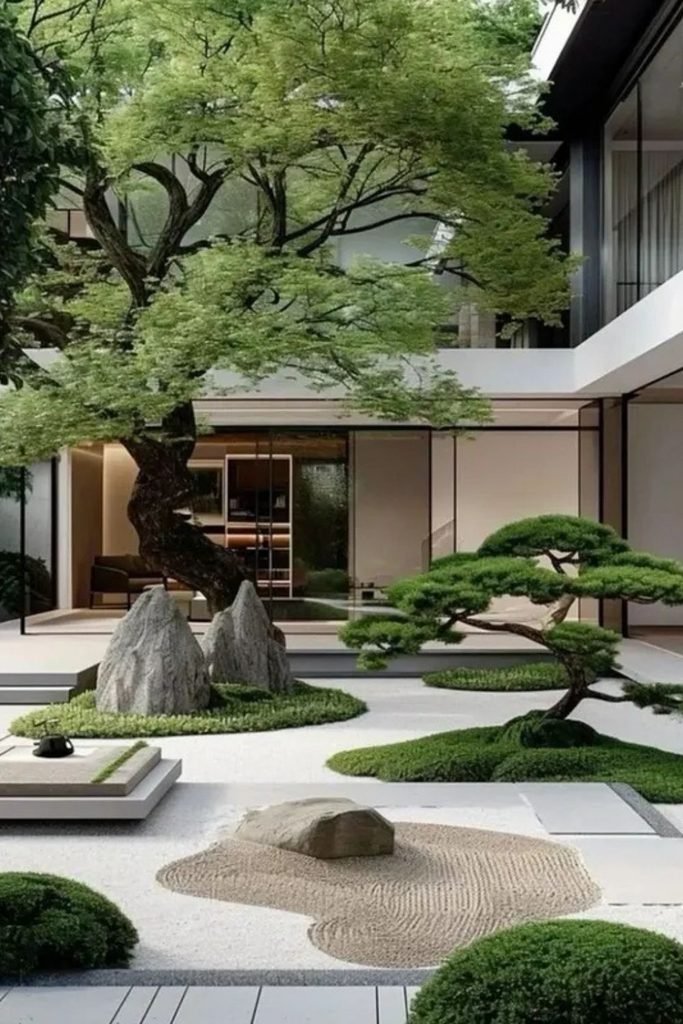
Sculpted Islands
Give each major tree its own patch of low greenery when you want several focal plants without making the courtyard feel packed.
Create loose islands of mound ground cover around a sculptural pine and mature maple and allow pale gravel flow between in open space.
The trees can be balanced by a cluster of upright rocks, and a single lower stone with raking lines around it creates interest lower down.
Avoid mirroring one side of the composition with another. Keep the compositions unequal in size and placement.
This works especially effectively in big modern courtyards where the robust building demands softer organic forms to soften straight lines.
Pond Passage
Let the walkway follow the water instead of forcing a straight route through the garden.
Flat stone slabs placed next to a small pond encourage a slower pace and are particularly effective in enclosed backyards.
Create the pond edge with uneven rocks and moss and low plants to hide the liner or hard edge.
Place a sculptural pine and Japanese maple farther apart to add height to opposite sides.
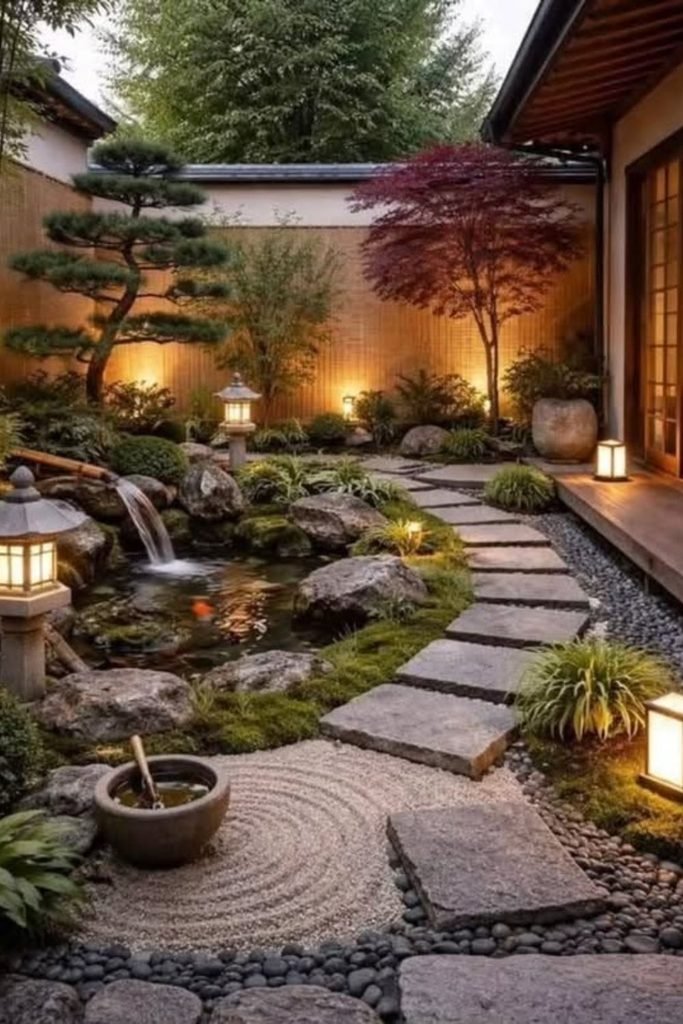
Fountain Walk
Soften a straight side-yard route by letting the stepping stones shift gently through pale gravel instead of lining them up edge to edge.
Place a wall fountain next to the walkway where you can hear the water as you walk or sit nearby, but keep the basin small so it doesn’t constrict the passage.
A Japanese maple and sculpted evergreens are stronger centers of attention and can be used at varying heights.
Keep gravel contained and distinct from planting beds by using black edging, which saves you from continuously putting loose stones back into position.
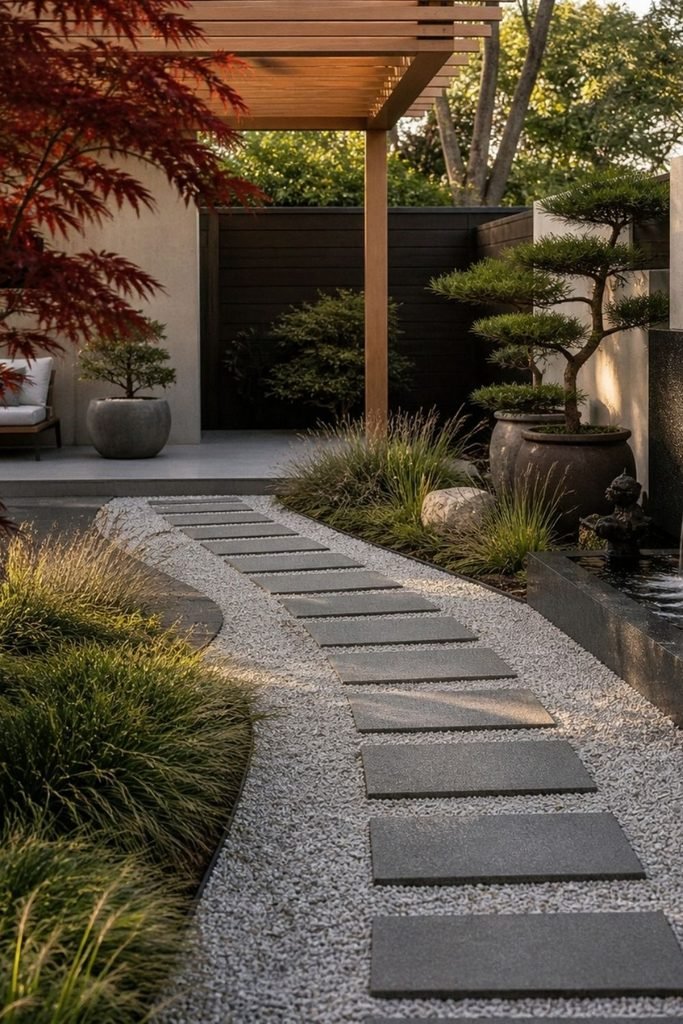
Raked Cove
Create a dedicated gravel pocket beside lush planting when you want traditional raked patterns without turning the entire garden into a dry landscape.
Define the area with a modest stone border, to keep the soil and mulch from creeping into the pale gravel.
Add a few irregular boulders, partly in the bed, to break up the flowing rake lines in a natural way.
Keep maples, carved pine, moss, hostas and flowering shrubs beyond the border where they can contrast with the open foreground with their lush foliage.
Put a bench nearby (not in the gravel) to sit and appreciate the composition without upsetting the patterns all the time.
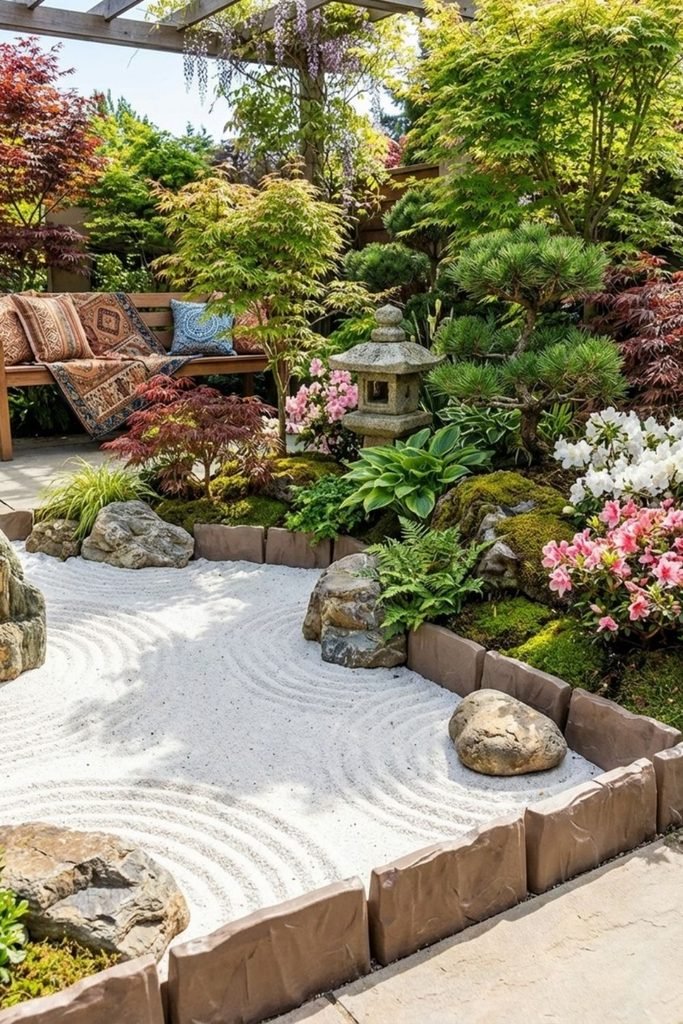
Bamboo Border
Use a narrow planting strip along a courtyard wall to bring in greenery without sacrificing the open floor you need for sitting or walking.
Tall bamboo can provide privacy up the top, and ferns, moss and low-lying flora around the base can stop the bottom level from looking naked.
Use two or three rough boulders to break up the plants and keep the border from looking like a straight hedge.
If you are planting bamboo in the ground, select a clumping variety that is appropriate for your environment.
Arrange for sufficient root containment for spreading types. The concrete middle makes it a lot easier to sweep up fallen leaves, too.
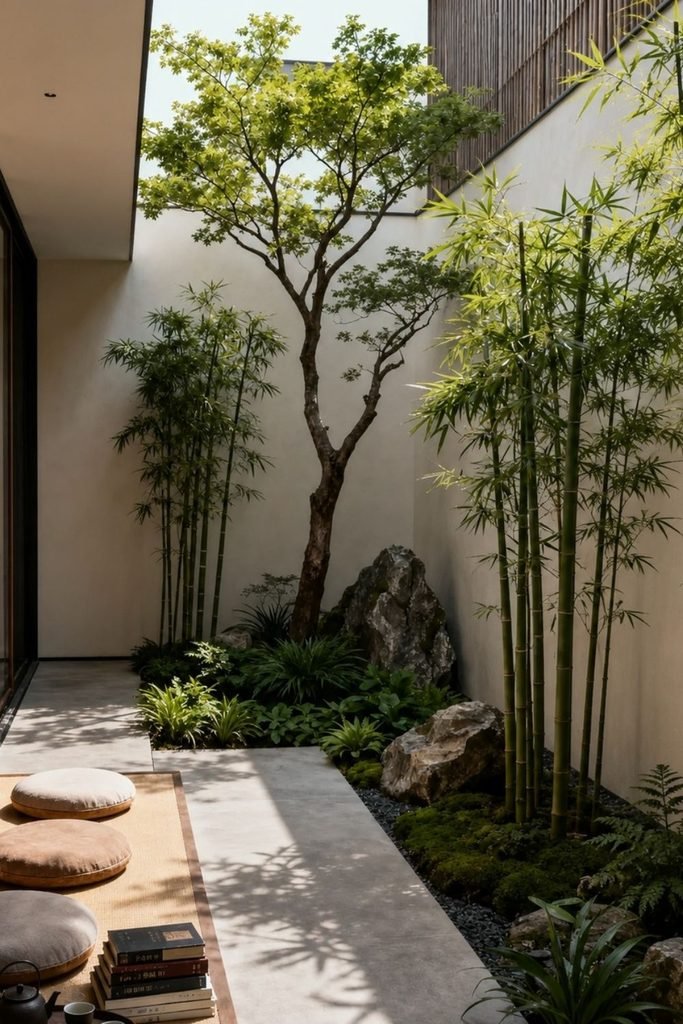
Black Gravel
Switching from pale gravel to black stone can give a modern courtyard stronger contrast while keeping the layout simple.
Lay irregular stepping slabs on gravel between two timber decks, the walkway to bend slightly rather than follow the architecture exactly.
Concentrate bamboo, a tiny tree, rocky boulders, low grasses, along the edge, so that the dark core is left open and easy to read.
This combination is especially good against light walls, since the gravel provides a clean backdrop for both stone and flora.
Use strong edging around the planting pockets to keep soil out of the black gravel and mar its clean appearance.
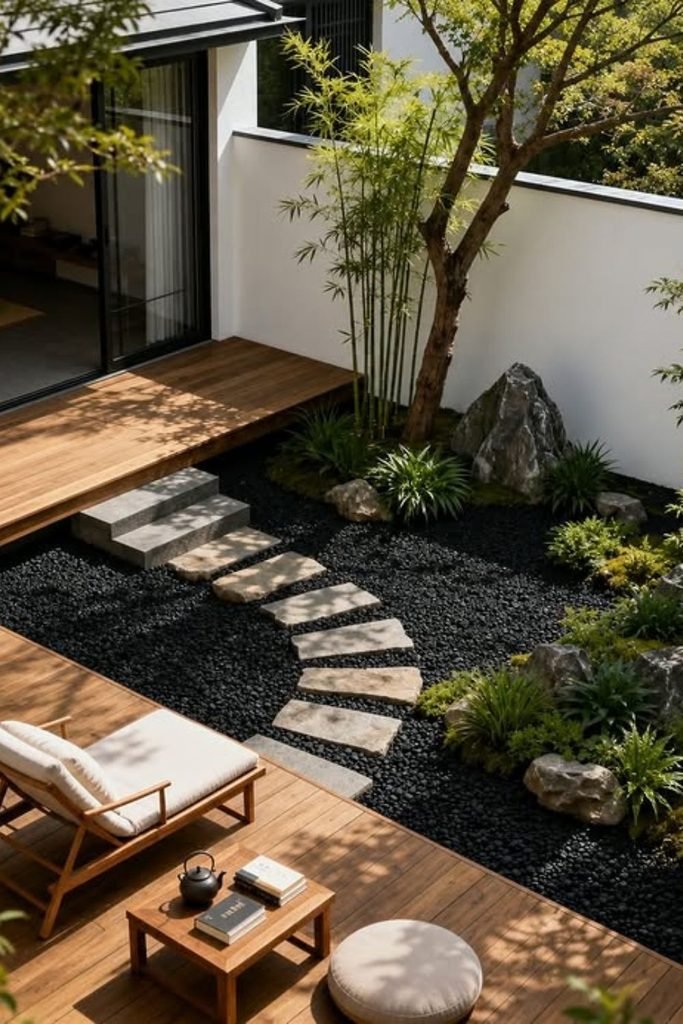
Maple Courtyard
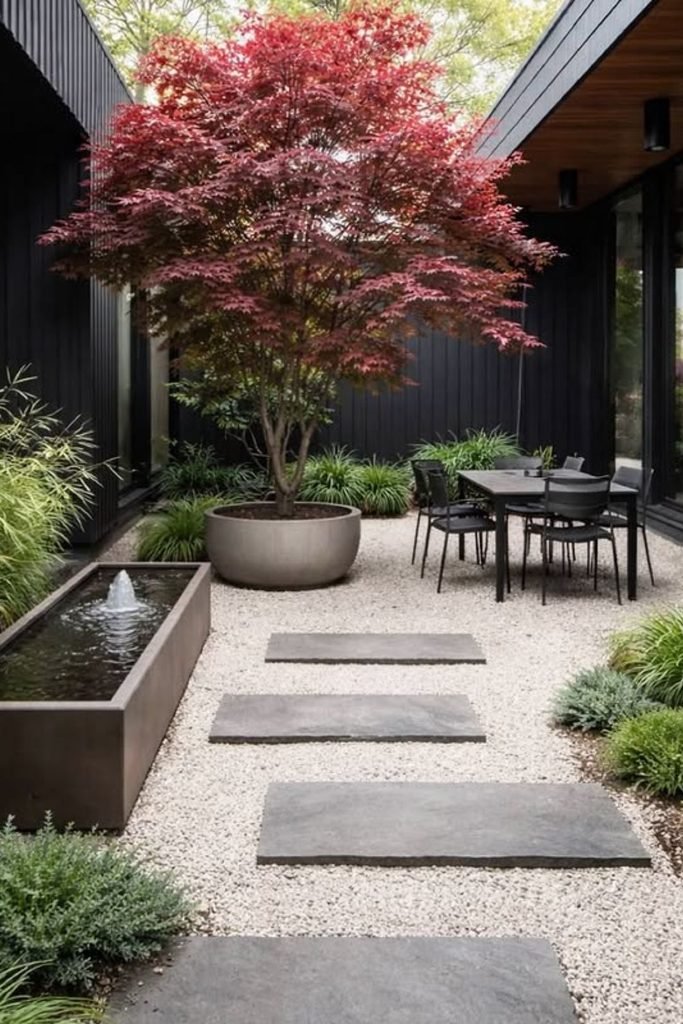
Let one Japanese maple carry most of the visual weight when you want color without filling compact courtyard with flowering plants.
Put it in huge container so you can control its location and soil conditions then surround it with pale gravel and broad stepping slabs to maintain the ground.
A thin fountain along one wall adds movement without competing with the tree, while low grasses and clipped plants soften the courtyard margins.
This scheme works particularly well against dark walls where the red foliage becomes more visible, and the restricted plant palette prevents the area.
Pond Border
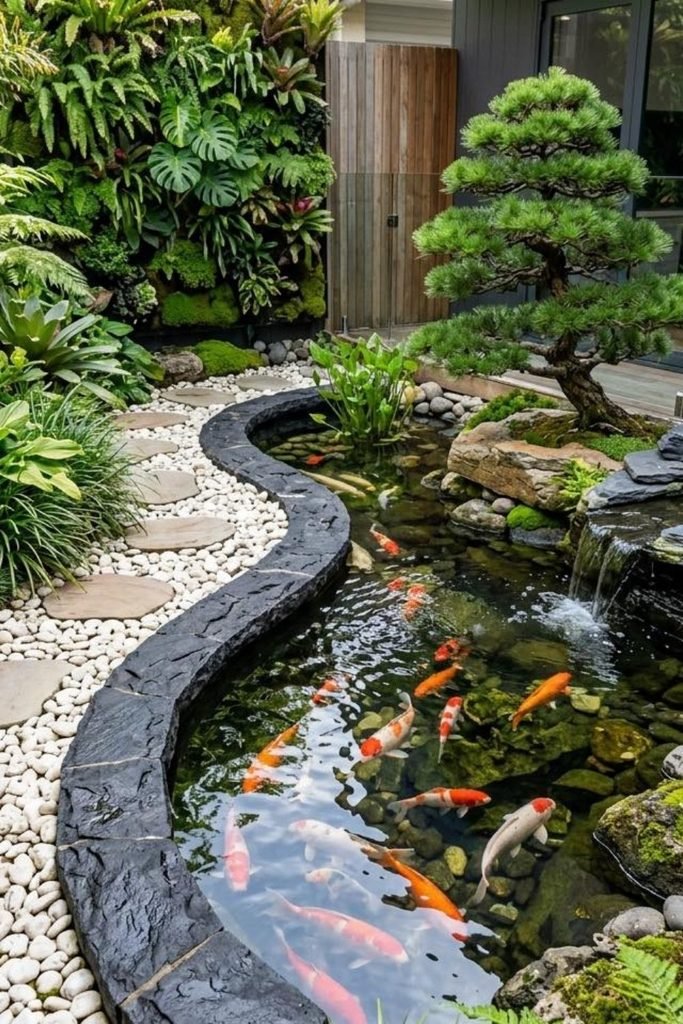
Keep a koi pond easy to enjoy by running a dry stepping-stone path directly beside the water instead of separating it with a wide planting bed.
The walkway is highlighted by pale pebbles, and flat stones give you a steady footing for feeding fish or tending the pond.
On the far bank, create height without hiding the river using a sculpted pine, mossy rocks and a little cascade.
Dense foliage can obscure a nearby wall or fence, which works particularly well in cramped urban gardens where seclusion is limited.
Give koi plenty of open water so the pond doesn’t feel crowded with plants and beautiful pebbles.
Reflective Basin
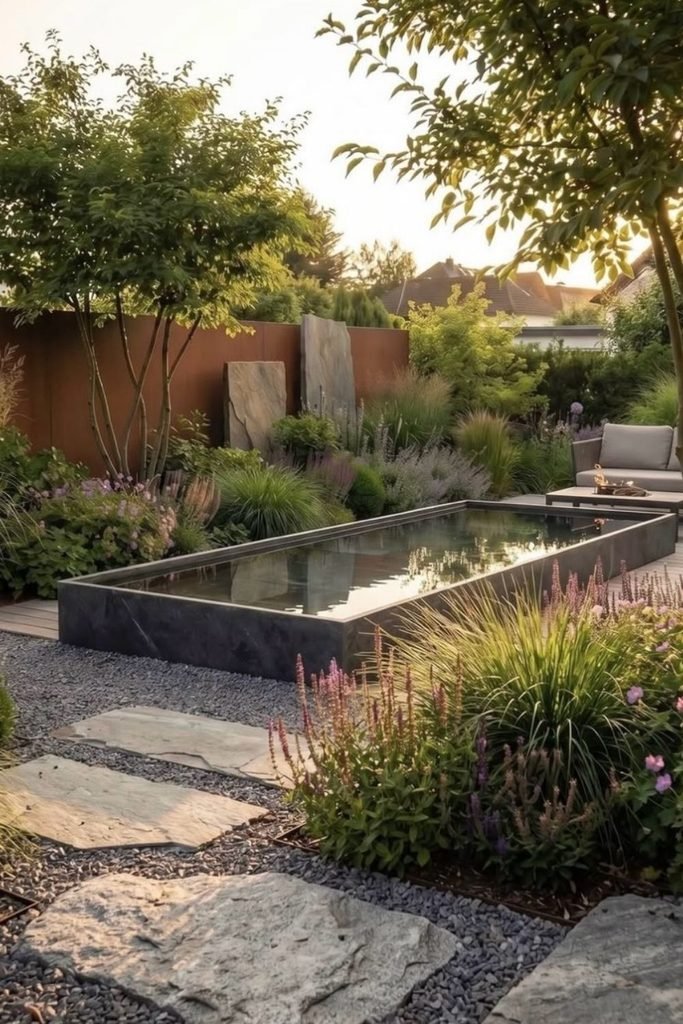
Balance a planting-heavy backyard with a long, still basin that gives the eye somewhere to rest between grasses, flowering perennials, and trees.
Make the water feature rectangular and simple, then soften the straight edges with loose vegetation rather than placing extra ornate stone around it.
Large flat slabs set through dark gravel naturally lead to the river and associated seating.
This is a great option for gardens where you want to add a Zen influence without getting rid of existing vibrant flora.
Place the basin where it will reflect light from trees and evening light for easy maintenance.
FAQs
How Often Should I Rake My Zen Garden Gravel?
There is no set time to do this but rake the gravel when the patterns are disturbed by footprints, fallen leaves, rain or wind.
First remove rubbish, then rake slowly around rocks to give back clean lines.
Gardens under deciduous trees will often require more frequent maintenance, especially in the autumn.
Can I Create A Zen Garden Without Using Bamboo?
Yep. Bamboo will add height and privacy, but is not essential to a Zen-inspired landscape.
Instead, think about sculpted evergreens, Japanese maples, ferns, attractive grasses, moss or climate-friendly plants from your area.
Keep plant choices limited and add enough empty space around rocks and gravel so the garden still feels balanced.
