
21 ZZ Plant Ideas for 2026
If you’ve got an empty corner, it might make the entire area appear unfinished, but adding a plant only works if the plant can tolerate the light.
ZZ plants are generally advised for darker environments, but low light doesn’t mean they can happily exist with no light at all.
Consider container size, height, furniture surrounding and how much room the stems will need to grow.
Get those things down and one ZZ plant may occupy an odd location without crowding the room.
In this article, you’ll find 21 ZZ Plant Ideas to refresh your space with stylish, easy-to-copy greenery you’ll love.
Let’s jump in!
How Can ZZ Plants Fill Dark Corners Without Struggling?
First, find out how much useable light actually reaches the corner during the day.
ZZ plants tolerate low light, but if placed in complete darkness, they will grow slower and become weaker over time.
If the corner gets some indirect light, place the pot where the leaves can catch it, but not in intense sun.
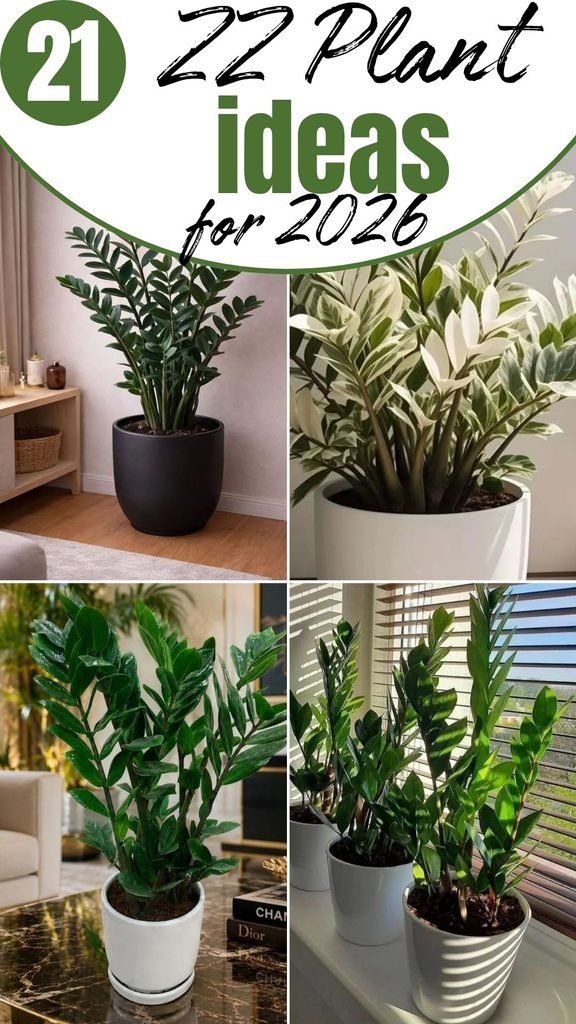
If the area is really dark, occasionally bring the plant closer to a window or add a simple grow light.
In low light, water less, the soil will take considerably longer to dry out. Water when the soil feels dry to the touch, and choose a pot with drainage.
Choose a plant that will fit in the corner now but allow for the stems to spread as it grows.
Corner Statement
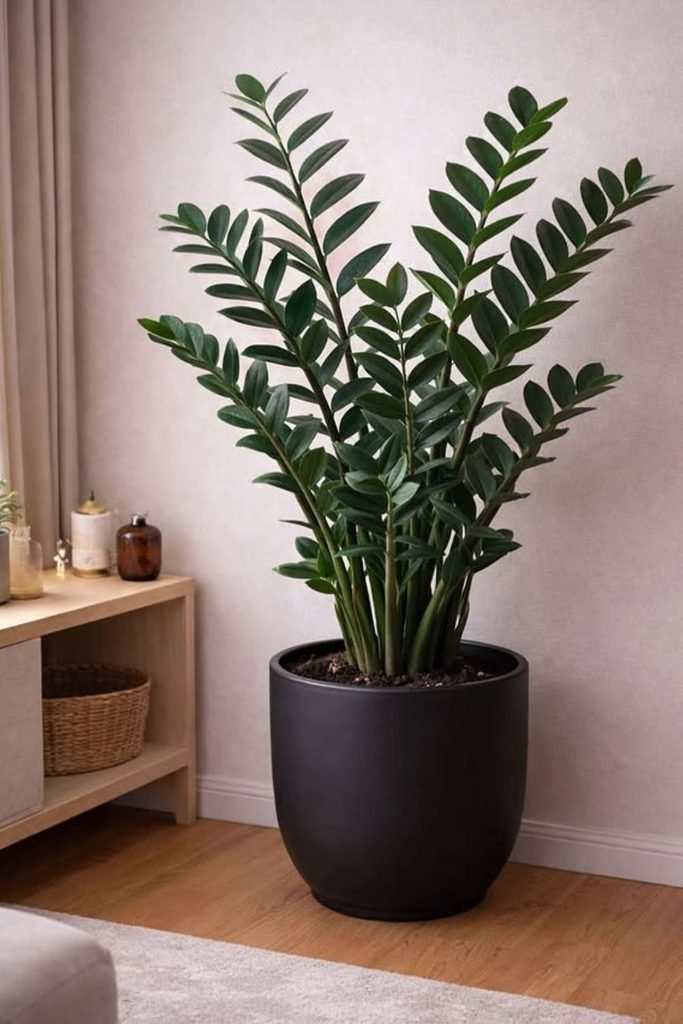
Give an empty living room or bedroom corner some weight with a mature ZZ plant placed directly on the floor.
Choose a broad, simple planter to match the height of the stems, and leave the surrounding space somewhat open so the foliage becomes the center of attention.
A black pot works wonders on light colored walls and warm toned wood furnishings.
Place it where the leaves will get soft indirect light and let the soil dry out well between waterings. Moisture may stay longer in a lower-light region.
Variegated Accent
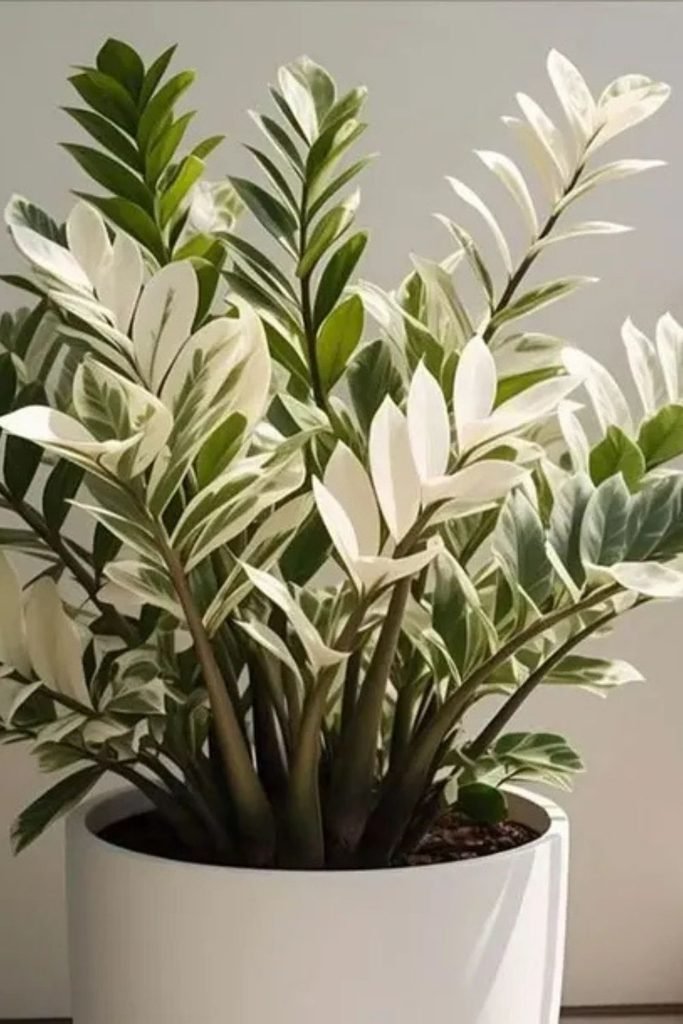
Bring more contrast into a bright indoor corner with a variegated ZZ plant, where creamy foliage can stand out without adding extra décor.
Give it bright filtered or indirect light and shade the pale leaves from severe afternoon sun to help keep the variegated development healthy.
A plain white planter draws the eye to the diverse flora and looks especially good next to neutral walls, balcony doors or huge windows.
Don’t put extremely variegated growth in your darkest area, because leaves with less green tissue usually need better light than the usual green ZZ.
Tabletop Height
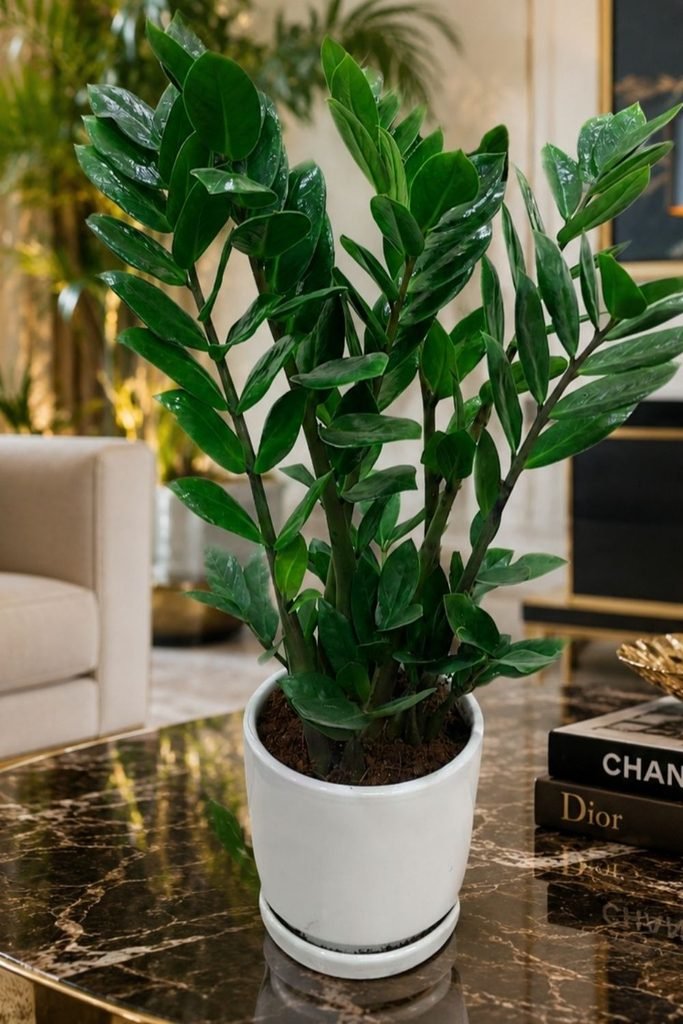
Use a medium ZZ plant on a coffee table when the room needs greenery but has no free floor corner.
Keep the planter simple and narrow enough to leave usable table space, then let the upright stem provide height without spreading across the surface.
Glossy green foliage pairs especially well with stone, marble, or dark wood tables because the contrast makes both materials stand out.
Place the table where the plant receives indirect daylight, and use a saucer or removable inner pot so watering never leaves moisture marks on the furniture.
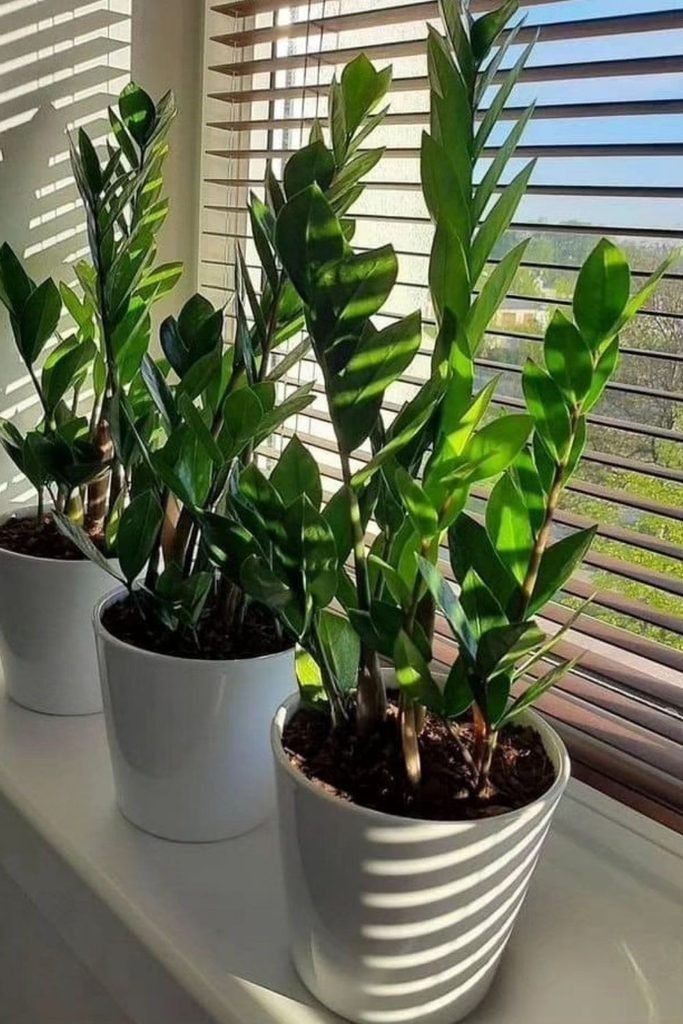
Window Trio
Turn a wide windowsill into a simple ZZ display by lining up three plants in matching pots instead of filling it with small accessories.
To achieve a relaxed rather than completely uniform look, vary the heights of the plants a little.
Adjustable shutters are ideal here as you can soften strong direct sun, but still give the plants plenty of bright indirect light.
Leave space between the foliage of each plant to allow for air circulation, and place each pot on its own saucer.
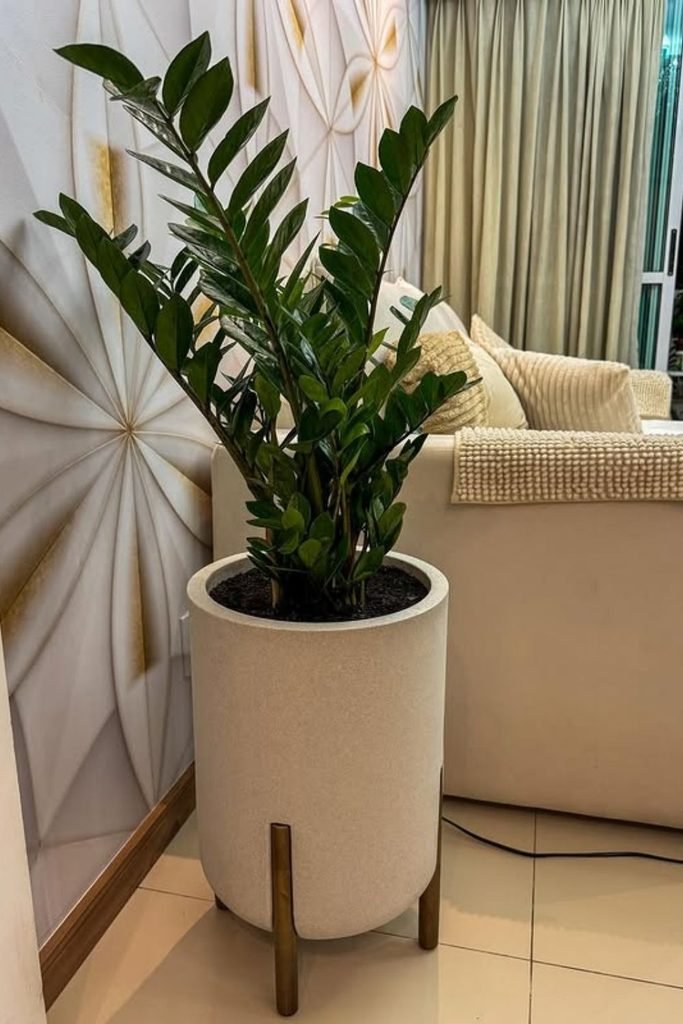
Elevated Planter
Raise a tall ZZ plant when you want greenery to connect visually with a sofa instead of sitting low and separate from the furniture.
Look for a narrow raised planter that has a wide base, and place it next to the arm of the sofa so the vertical stems may fill in the blank wall area.
By keeping the pot and surrounding furnishings in similar neutral tones, the dark foliage pops organically.
Leave some clearance behind the stems so they are not forced against the wall. Rotate the planter occasionally to create a more balanced structure.
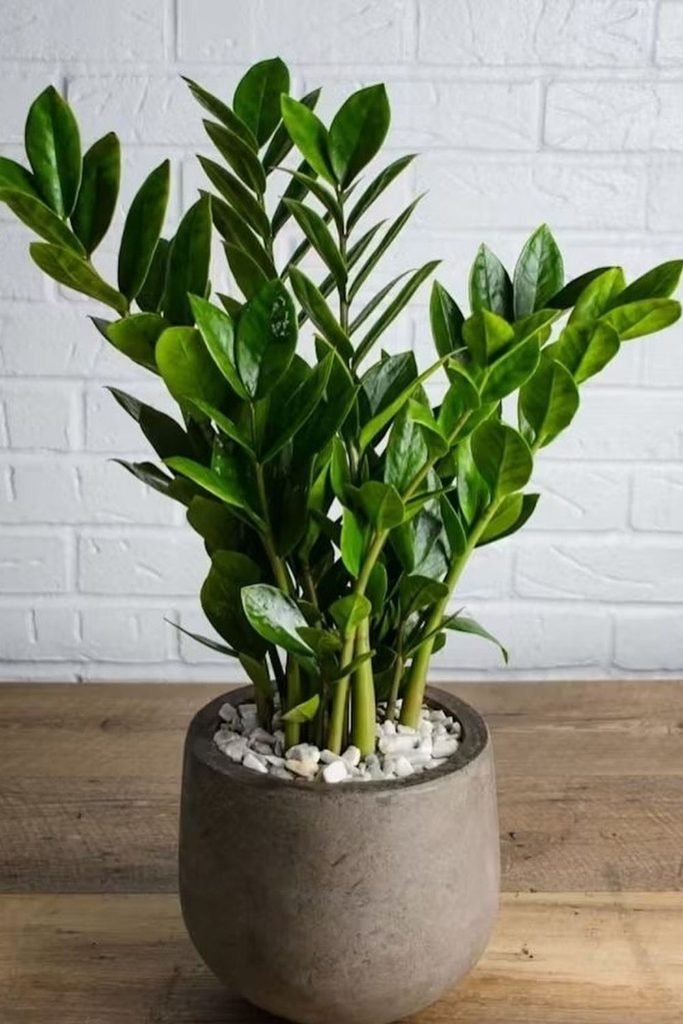
Pebble Finish
Give a tabletop ZZ plant a cleaner finish by covering the exposed soil with a light layer of decorative pebbles.
Pots with dark or concrete styles work exceptionally well, since the pale stones contrast with the glossy foliage providing the color.
Don’t pack the pebble layer hard but rather keep it thin so you can still see the soil beneath it before watering.
Test this out on console tables, sideboards, desktops or open shelving where you can see the top of the planter and unfinished soil.
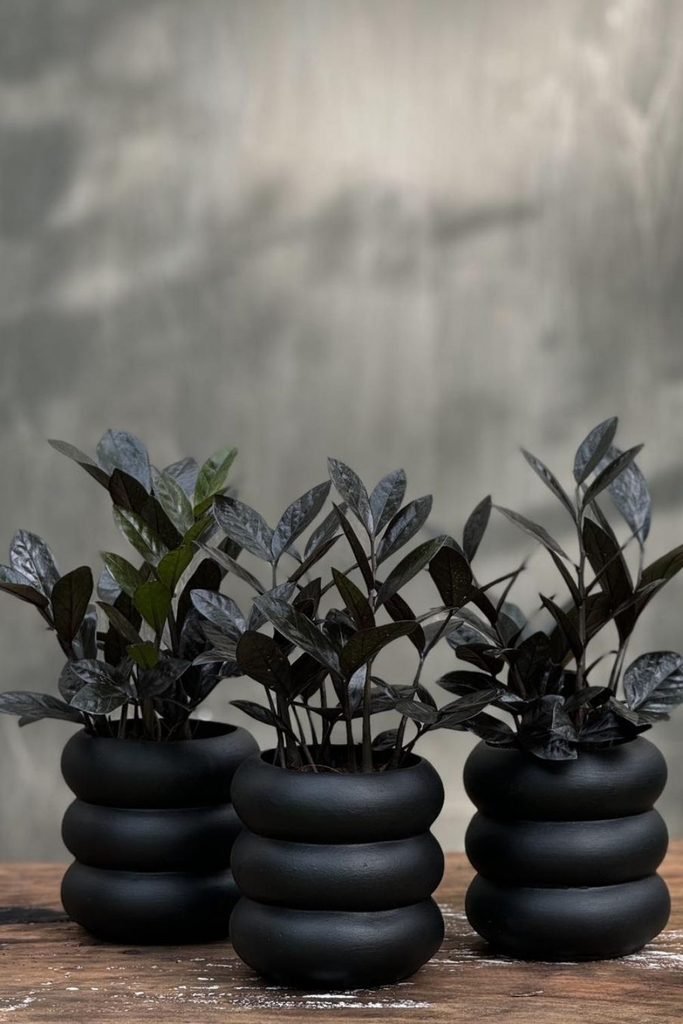
Raven Trio
Build a moodier plant display by grouping three Raven ZZ plants instead of relying on bright green foliage for contrast.
The deep, almost black leaves look good in sculptural black vessels, so this arrangement works well on a console, broad shelf or wooden sideboard.
Use plants at slightly various heights to create movement in the grouping instead of a solid mass.
Provide strong indirect light when feasible, especially if you want constant new growth.
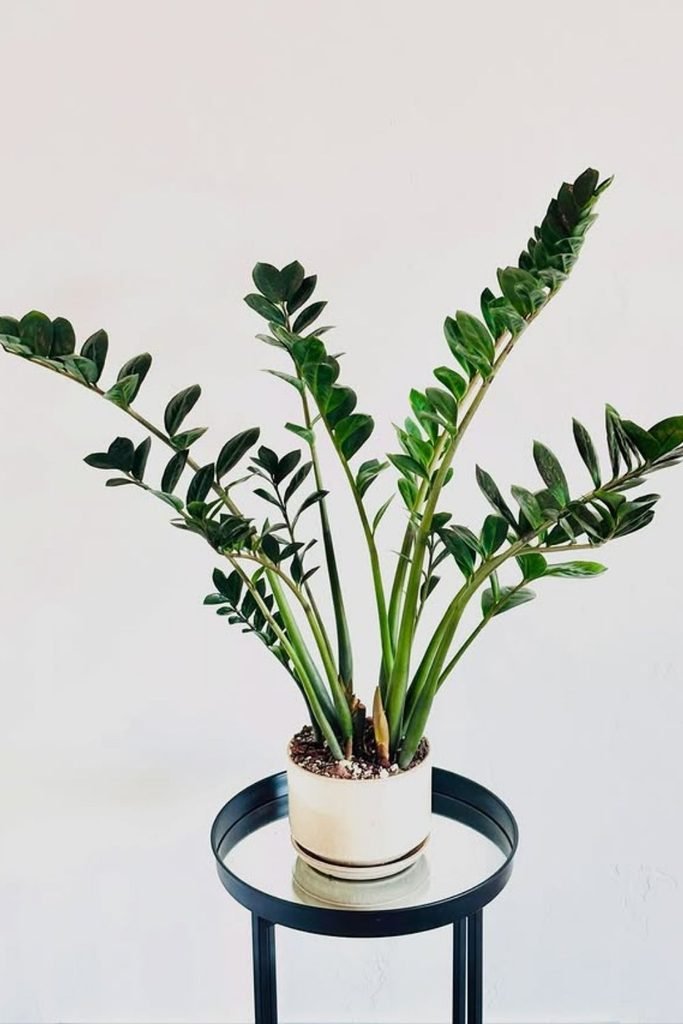
Pedestal Display
Lift a smaller ZZ plant to eye level when its long stems need more presence without upgrading to a larger floor planter.
A slender pedestal or round side table is a nice touch against an empty wall, reading chair or small living room corner, adding height.
Keep the décor around it to a minimum so that the spreading stems can take on their natural structure.
Choose a strong table bigger than the pot. Put a saucer underneath to protect the surface each time you water.
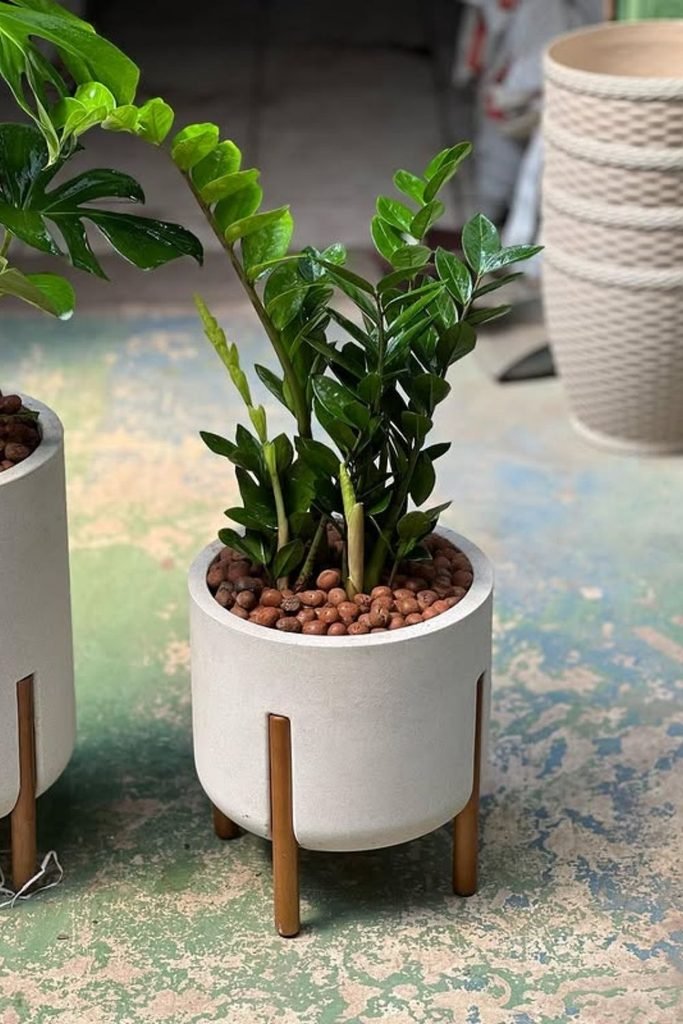
Raised Hydroponics
Try a semi-hydro setup when you want a cleaner ZZ display with less loose potting mix around the base.
Put the plant in an airy mineral media, such LECA, and use a planter meant for semi-hydro growth, instead of just filling a conventional pot with clay pebbles.
It looks good next to bigger plants or in a modern indoor plant corner. Short legs lift the pot slightly off the floor.
Ensure the water reservoir remains below the rhizomes so they are not always underwater.
Monitor the plant regularly as it adapts from the soil to the new technique of growth.
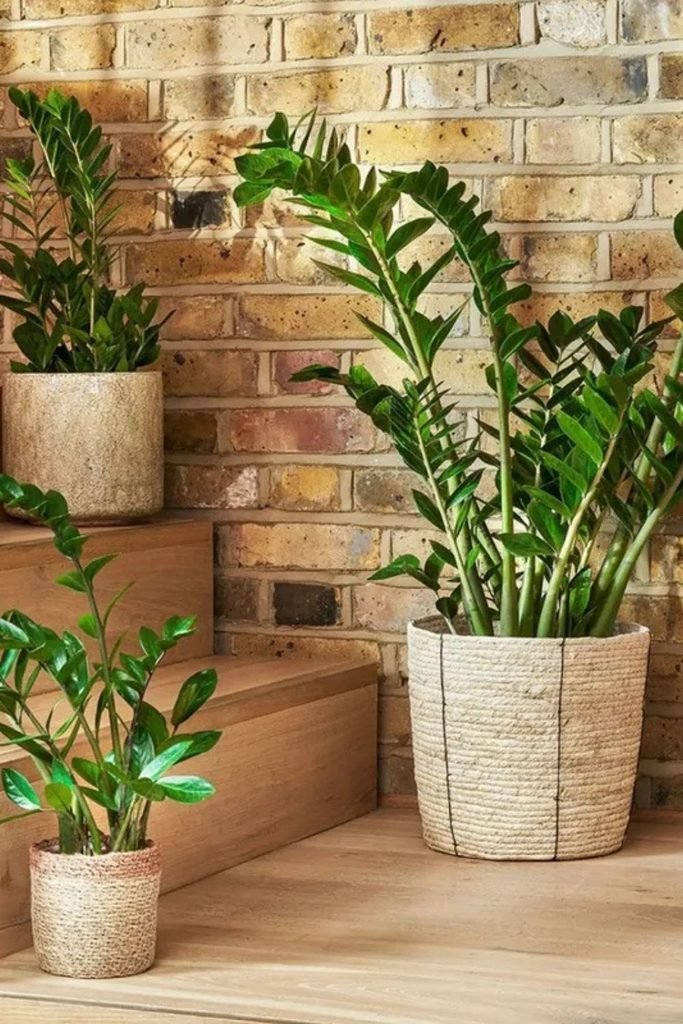
Stairway Grouping
Use different ZZ plant sizes along a wide staircase to turn unused step and landings into a layered green display.
Start with the biggest plant on the broadest lower section and position smaller pots higher up so your eye naturally follows the stairs.
Woven basket coverings soften rough brick and wood surfaces for a pleasant informal feeling to the arrangement.
Also, put draining inner containers in the baskets so excess water doesn’t reach the wooden steps.
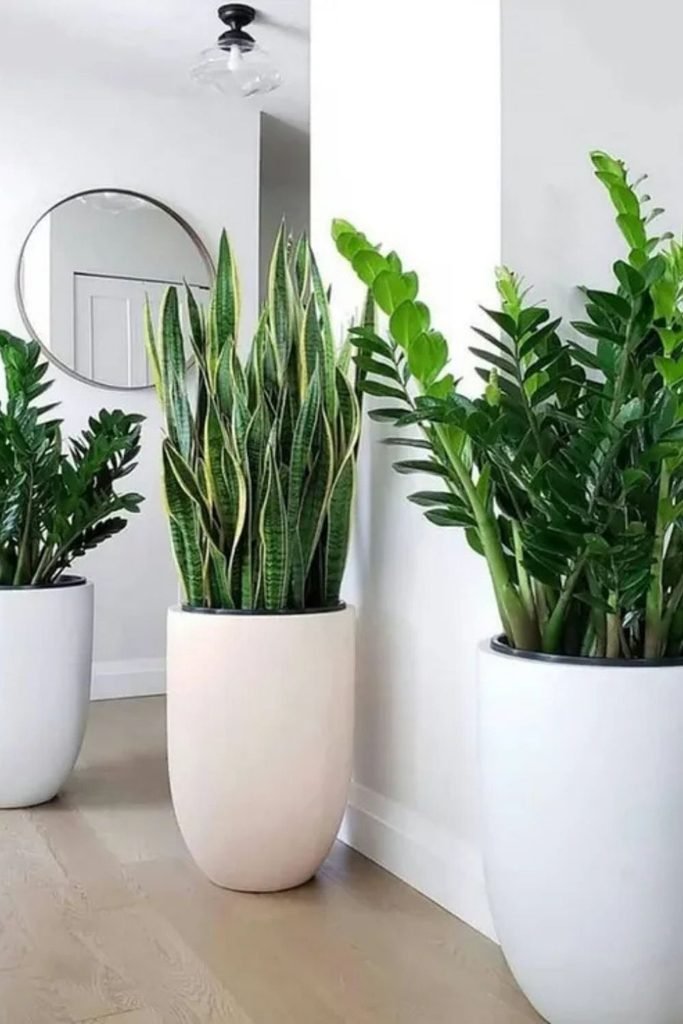
Mixed Pairing
Break up a row of matching planters by pairing ZZ plants with a tall snake plant instead of repeating one species throughout the space.
The many leaf styles generate contrast, but the matching white pots unify everything, making it ideal for broad halls, open living spaces.
Stagger the planters rather than pushing them in a straight line, and provide plenty of room for each plant to keep the walkway comfortable.
Place the grouping in indirect light and water each species based on its unique soil dryness, rather than watering each pot the same amount.
Terracotta Contrast
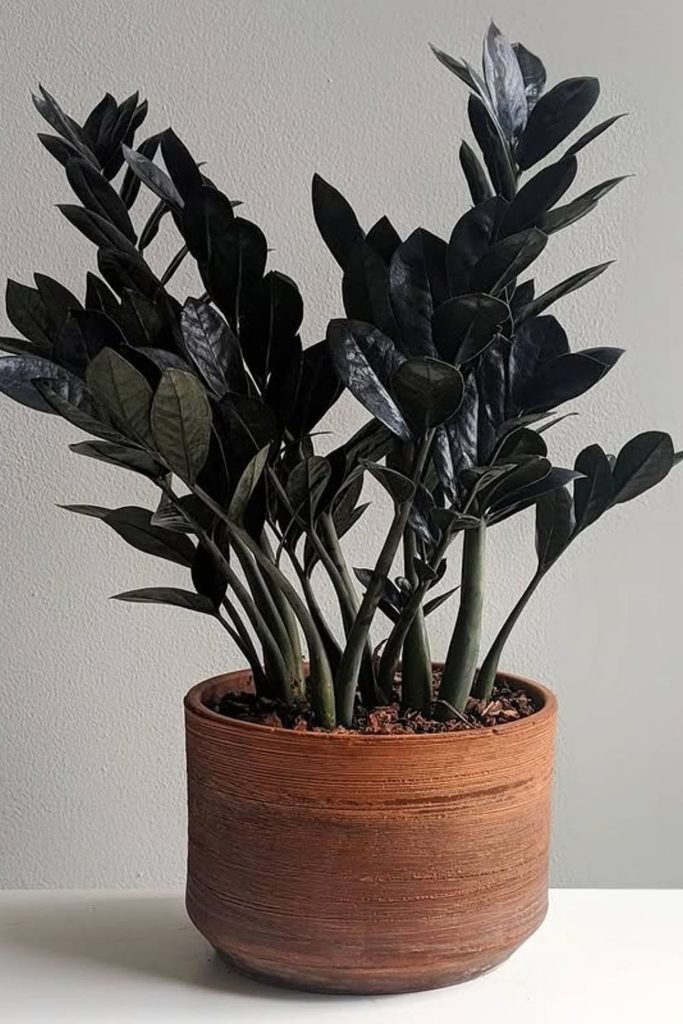
Warm up the dramatic foliage of a Raven ZZ with a simple terracotta planter instead of matching its dark leaves with another black surface.
The earthy container contrasts sufficiently to make the form of the plant quite evident.
This combination is ideal on light consoles, sideboards or shelves with neutral walls.
Keep the decorations around it to a minimum so the dark foliage can shine. If you’re using real terracotta, not a cosmetic cover.
Mixed Varieties
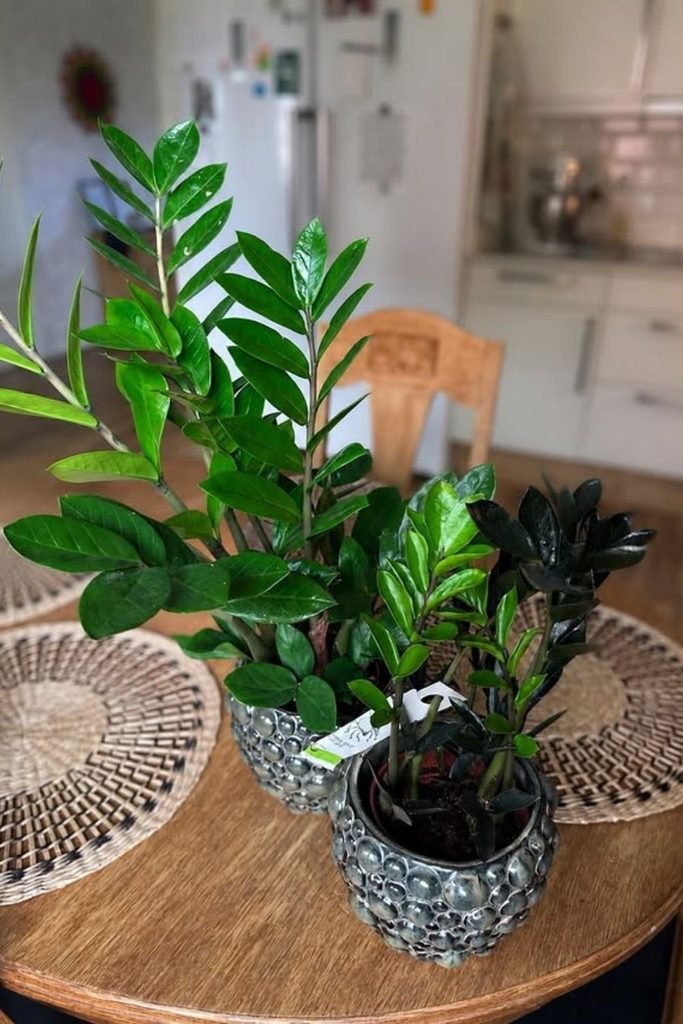
Combine green and Raven ZZ plants on a dining table when you want one arrangement to show several foliage tones without adding flowers.
Keep each variety in its own small nursery pot and nestle the pots in matching decorative containers so you can water and move them individually.
The cluster has a more complete impression with varied heights, while the dark Raven growth contrasts with fresh green leaves.
Make sure to give the display plenty of indirect light, and keep wide stems from spreading over place settings, or taking over the usable table surface.
Exposed Rhizomes
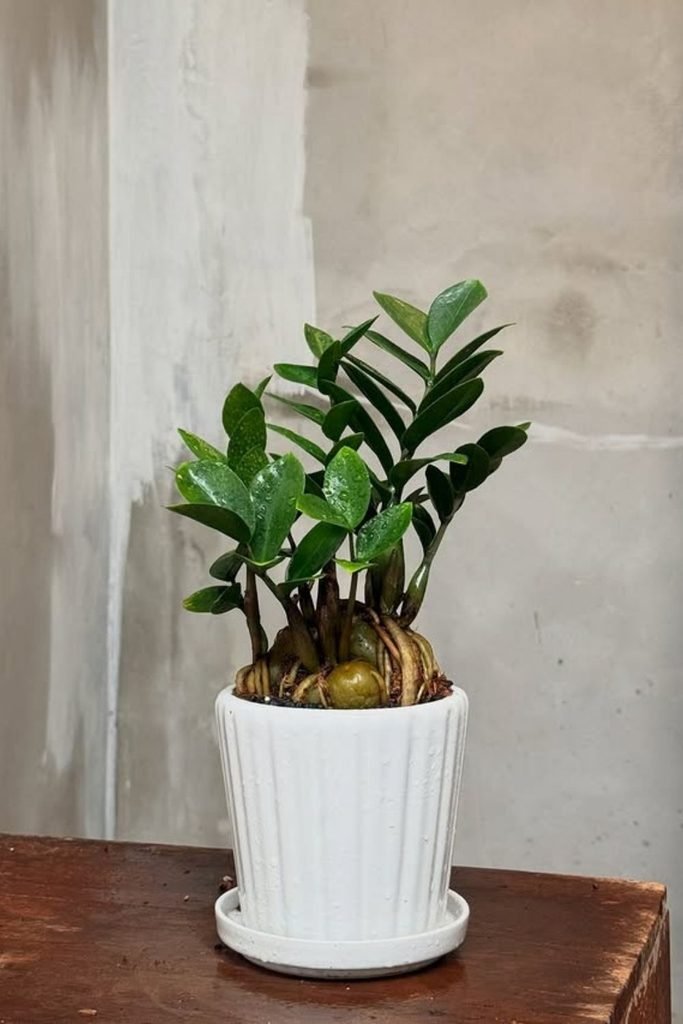
Show off the ZZ plant’s thick rhizomes when you want a small tabletop display to feel more unusual than a standard potted plant.
Do not bury the whole base thoroughly, but leave just the tops visible. Make sure the roots are supported in a loose, well-draining mixture.
A small ceramic pot is a good choice for desks, side tables or narrow shelves where you will see the plant closely.
Avoid using a pot that is too large, as excess moist soil around a little ZZ can stay wet longer and increase chances of rot.
Shelf Pairing
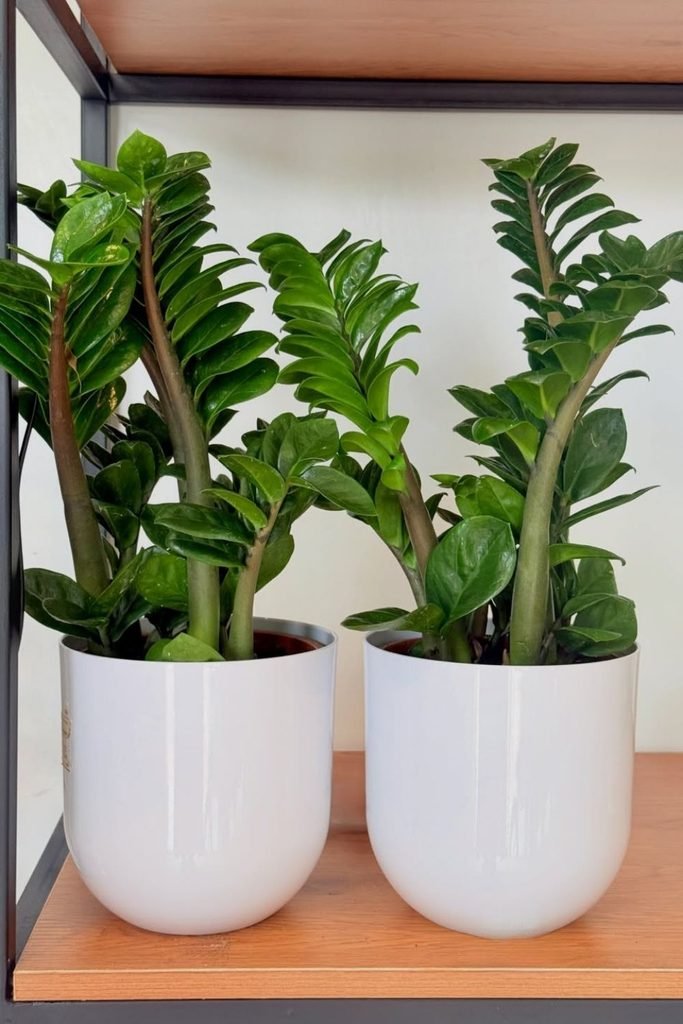
Double the impact of a wide shelf by placing two similar ZZ plants side by side instead of scattering several tiny plants across it.
The white pots match for a clean look, and the stem shapes are just different enough to keep the pair from being too symmetrical.
Try this on open shelves, a bookcase or a low cabinet with plenty of vertical space for development.
Leave some space between the pots for air circulation and rotate them occasionally to ensure that one side does not constantly leaning.
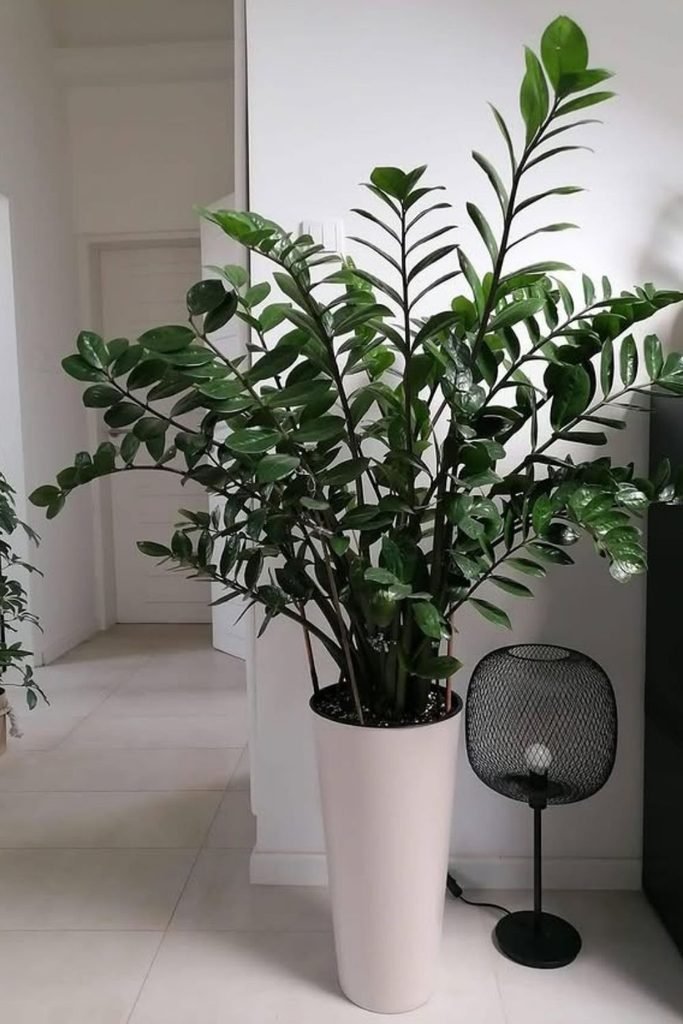
Hallway Anchor
Fill the end of a wide hallway with one mature ZZ plant when smaller décor would make the area feel scattered.
The tall, narrow planter raises the foliage and utilizes vertical space, while the spreading upper stems of the plant provide the illusion of fullness.
Keep it against the wall, but leave enough space so people can walk past it without brushing the leaves.
If the hallway is low in natural light, turn the plant sometimes to a brighter indirect-light position, and limit watering, as the soil will dry up more slowly.
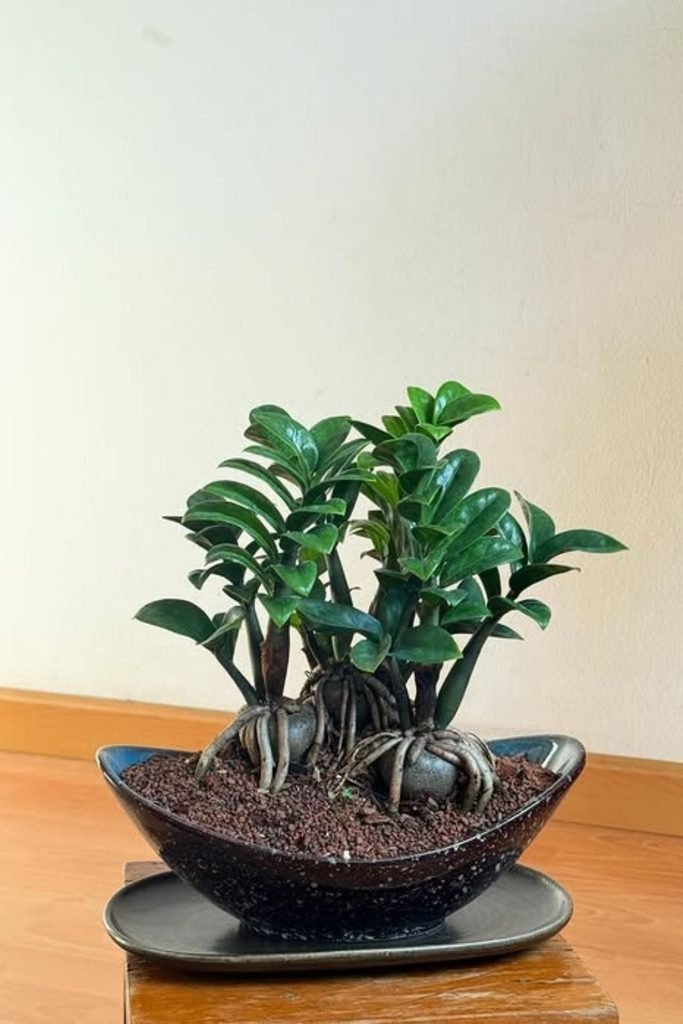
Bonsai Display
Turn a compact ZZ plant into a bonsai-style tabletop feature by using a shallow, wide planter that keeps the foliage low and spreads the composition horizontally.
Exposing some of the adult rhizomes and roots can add character but don’t be pushy about uncovering or injuring them only for looks.
Use a gritty potting mix that drains quickly, and make sure the shallow container has drainage holes.
This works well on a side table, console or plant bench where a tall ZZ would be too big and the open surface of the soil allows for the odd base to be seen.
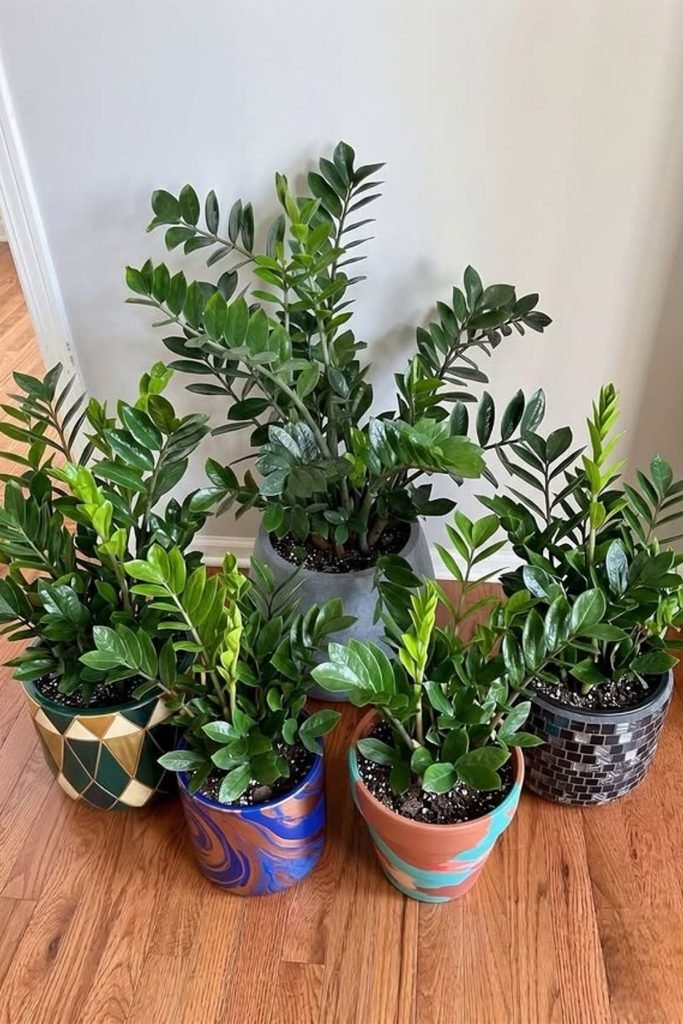
Colorful Cluster
Bring several ZZ plants together when you want a bare floor area to feel fuller without mixing lots of different plant species.
Vary the design and finish of the pots to give each plant its unique character, then position the tallest ZZ plant at the back, and shorter, bushier plants in front.
It works particularly well in a sunny foyer, sunroom, or open living-room corner with plenty of floor space.
Space the pots close enough so they will be read as a group, but far enough apart that you can reach each container to water and inspect the soil separately.
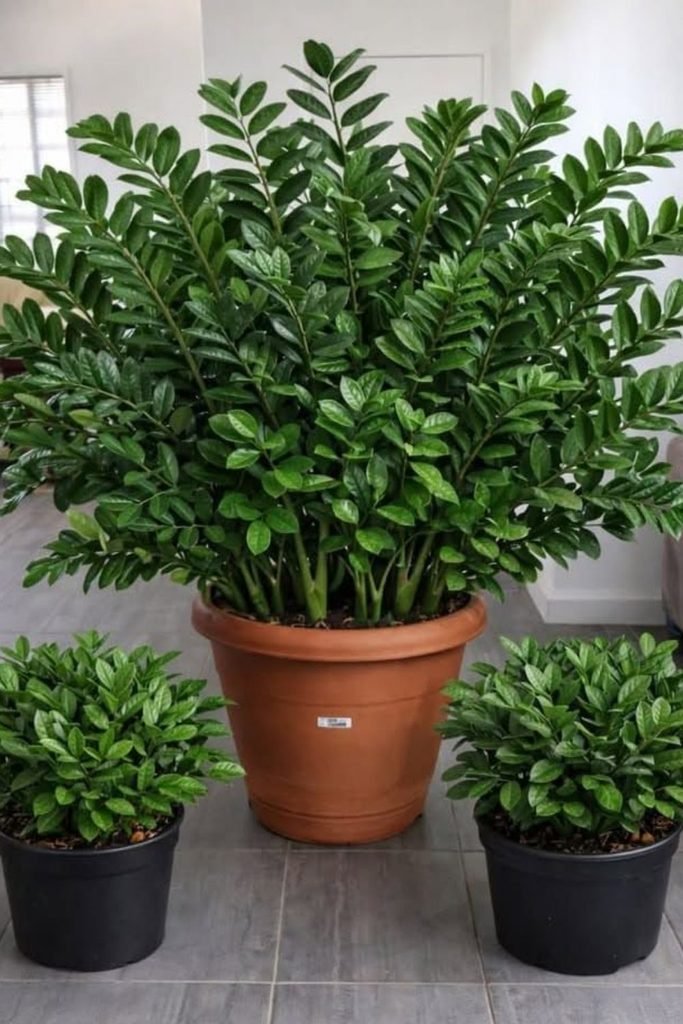
Size Contrast
Show how differently ZZ plants can fill a room by pairing one mature specimen with two compact plants nearby.
Put the tallest plant in the back to be the center of attention and utilize smaller ZZ plants in front of them for a progressive change in height.
It works nicely in large living rooms, entryways or corners of indoor gardens where one pot doesn’t feel complete.
Give the mature plant plenty of clearance for its wide stems and don’t move smaller plants into pots that are too big only to match its scale.
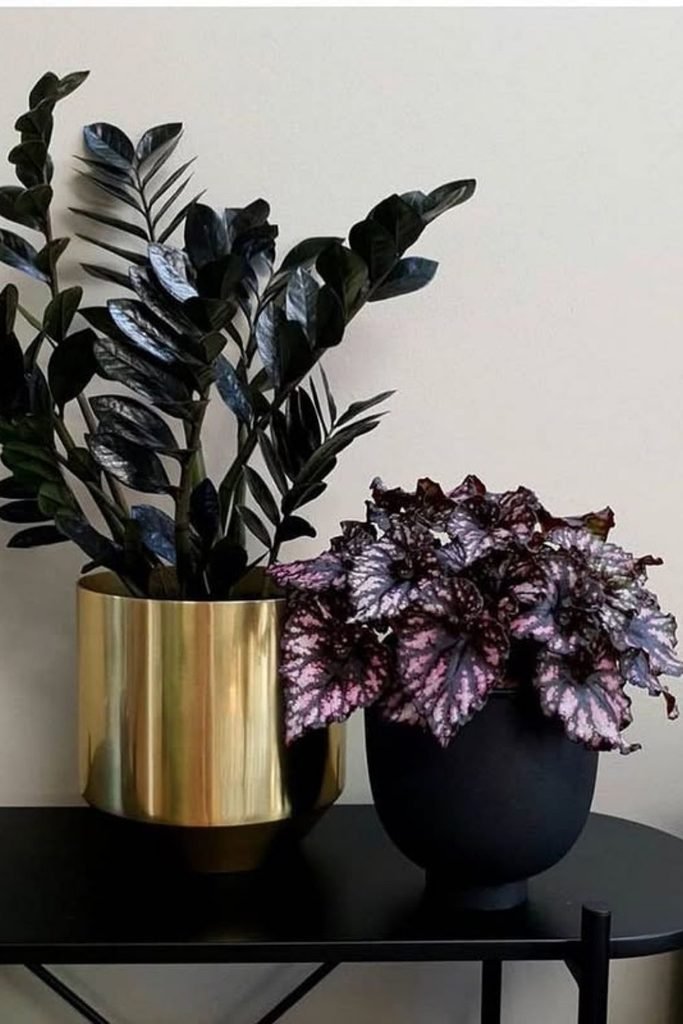
Metallic Pairing
Pair a Raven ZZ with a metallic planter when you want its nearly black foliage to feel polished rather than heavy.
Warmth is added by the gold or brass tones against the black leaves, and an adjacent plant with patterned leaf will give softness and prevent arrangement.
Test the pairing on a console, sideboard or entry table against a blank wall where both plants have room to shine.
Make the ZZ significantly taller than the other so they each have a distinct duty instead of vying at the same height.
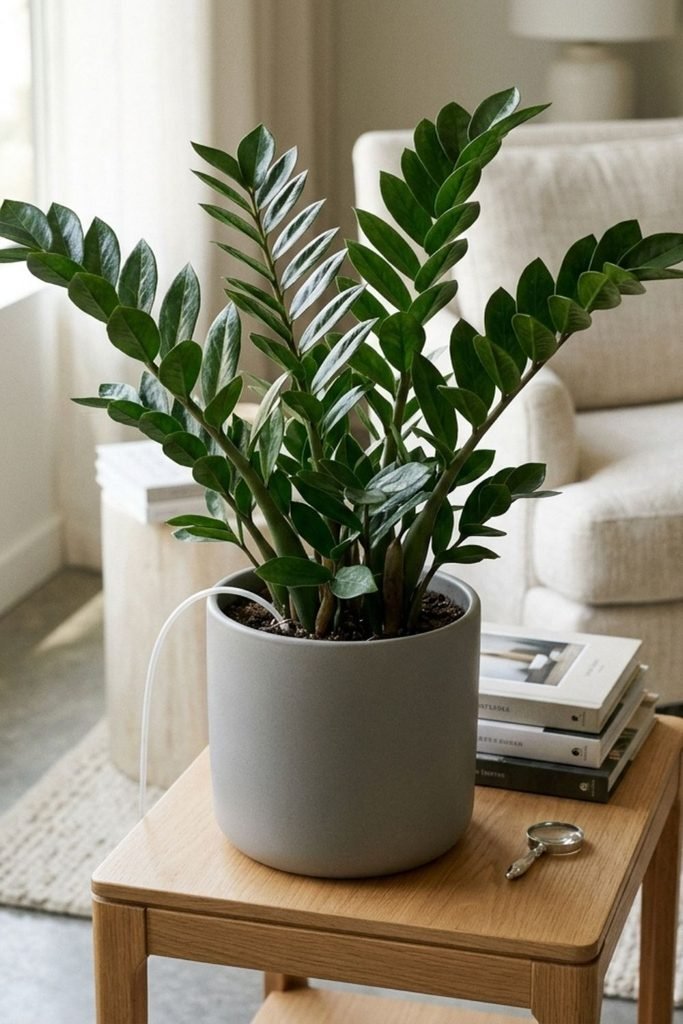
Reading Companion
Bring greenery into a reading corner by placing a medium ZZ plant on the side table beside your favorite chair.
Its erect stems give height without the hassle of additional floor planter and a simple neutral pot keeps the setup calm and uncomplicated.
Place the table near a window where it will receive mild indirect light, but move the plant away if the leaves are exposed for hours to strong afternoon sun.
Give the plant plenty of room on the table for books, a drink, or other daily objects so the plant adds to the corner rather than taking it over.
FAQs
Can ZZ Plants Grow Well Away From Windows?
ZZ plants are more tolerant of lower light levels than many houseplants, but they need useful light to be healthy.
If you choose a location away from a window, look for slow growth and soil that remains moist too long.
How Do I Keep My ZZ Plant Looking Full?
Keep your ZZ plant in bright, indirect light and rotate the container occasionally so that growth doesn’t lean one way.
Cut away any damaged or diseased older stems cleanly at the base, to keep the emphasis on healthy development.
