23 Charcuterie Board Ideas for Party
Nothing empties faster at a party than a charcuterie board packed with colorful bites guests can grab without slowing down the fun.
Between meats, cheeses, fruit, sweets, dips, and themed extras, the right mix can make your table feel generous instead of overcrowded.
In this article, you’ll find 23 charcuterie board ideas for party setups that suit different themes, budgets, and guest lists.
Let’s jump in!
What Is The 3-3-3 Rule For Charcuterie Board?
The 3-3-3 rule keeps a charcuterie board balanced by using three meats, three cheeses, and three complementary extras.
Popular meats include salami, prosciutto, and pepperoni, while cheddar, brie, and gouda give you an easy cheese mix.
Extras can cover crackers, fruit, nuts, olives, dips, or something sweet, depending on the kind of party you’re planning.
Keeping each category limited stops the board from getting overcrowded and makes shopping far easier, especially with a long party checklist.
Choose different textures and flavors rather than three nearly identical options, since variety makes even a smaller board feel more interesting.
Stick with the rule as a starting point, then add more food only if your guest count or serving time actually needs it.
Loaded Party Boards
Loaded snack boards work especially well for casual parties because guests can grab, dip, and build their own combinations without waiting.
Keep wet toppings and creamy dips separated from crunchy pieces until serving, otherwise texture disappears faster than expected.
1. Taco Cups
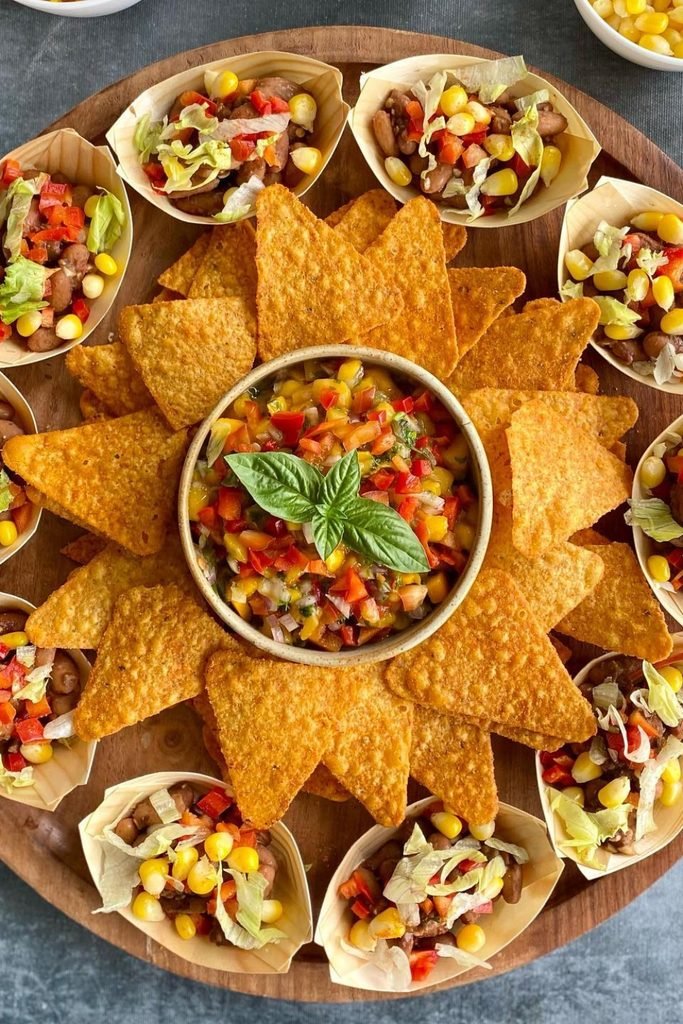
Mini taco cups keep beans, corn, lettuce, and peppers portioned neatly, which makes this setup far easier for guests to handle.
Place the salsa in the center and refill chips in smaller batches, since exposed tortilla chips can lose their crunch during longer parties.
Fresh lettuce should go into the cups close to serving time because assembling everything too early can leave the vegetables limp.
2. Dip Spread
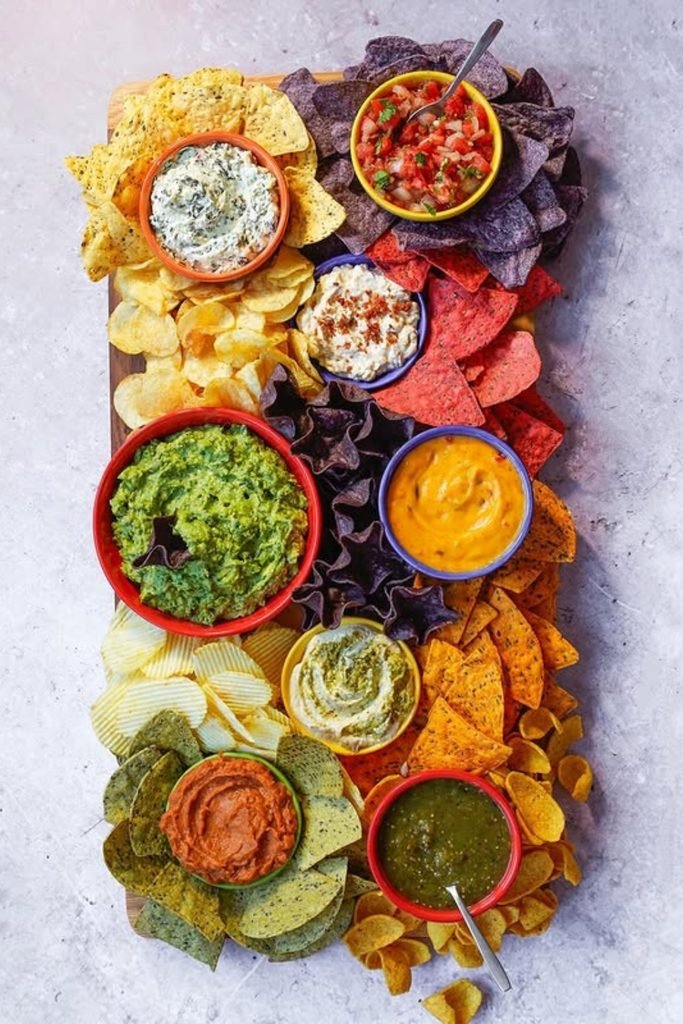
Several colorful dips make a chip board feel generous, but too many similar creamy options can quickly become repetitive rather than useful.
Choose contrasting choices such as guacamole, salsa, cheese dip, and a herby spread so every section gives guests something noticeably different.
Keep extra chips nearby instead of piling everything onto the board at once, especially since thin varieties can break beneath heavier pieces.
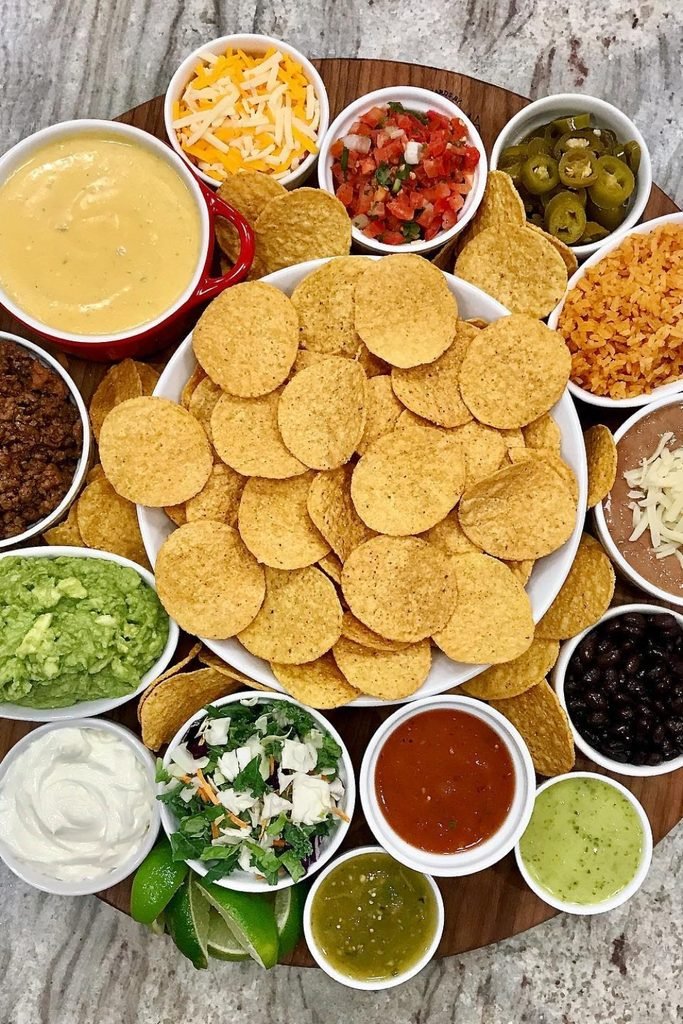
3. Nacho Platter
Separate bowls for queso, beef, beans, salsa, and guacamole let guests control every topping without turning the central chips soggy.
Warm queso needs attention during longer gatherings, so a small warming dish works better than letting one large bowl cool on the table.
Add guacamole shortly before guests arrive and keep backup portions chilled, since its fresh green color can dull as it sits exposed.
Savory Grazing Boards
Savory grazing boards work best when every bite feels easy to grab, especially once guests start standing, chatting, and moving around.
Keep hot foods separate from chilled fillings wherever possible, because mixed temperatures can make an otherwise beautiful board harder to serve safely.
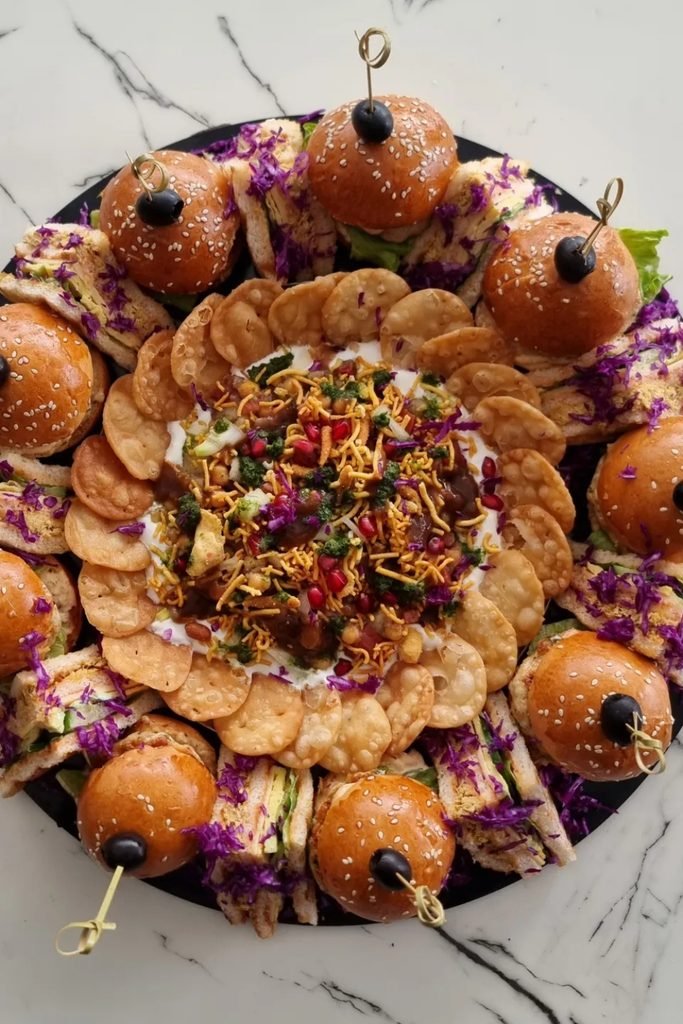
1. Chaat Platter
Mini burgers and sandwich triangles make the chaat center easier to share, but piling everything together can create a messy serving zone.
Keep extra papdi or crackers beside the platter rather than underneath wet toppings, since they soften quickly once yogurt and chutneys spread.
Serve the chaat mixture in a shallow bowl so guests can scoop cleanly without disturbing every slider and sandwich around the edge.
2. Finger Grazing
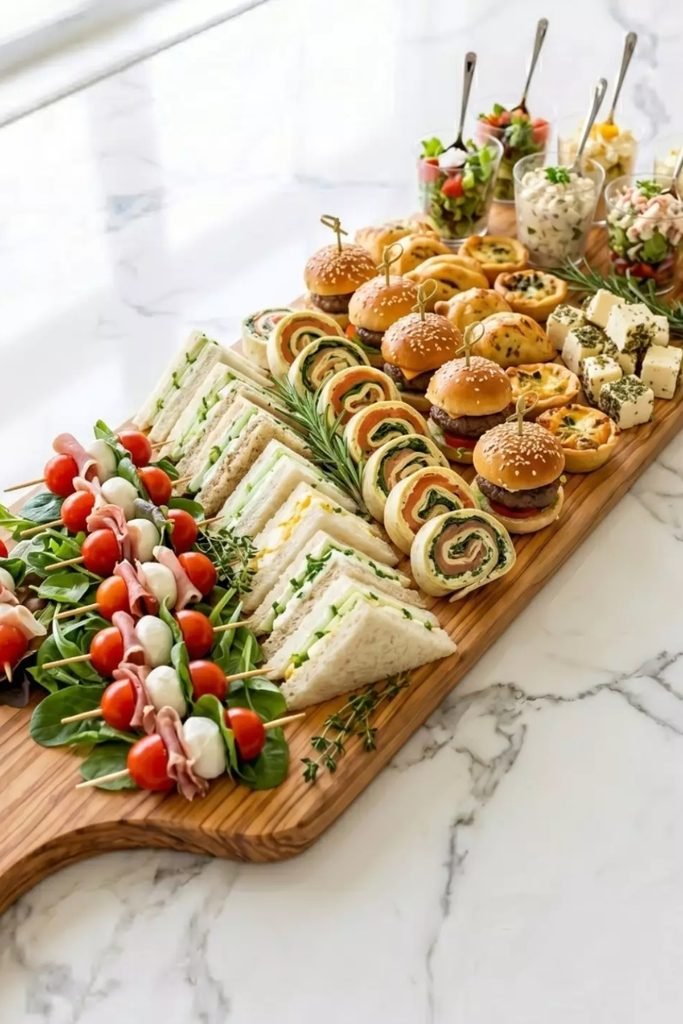
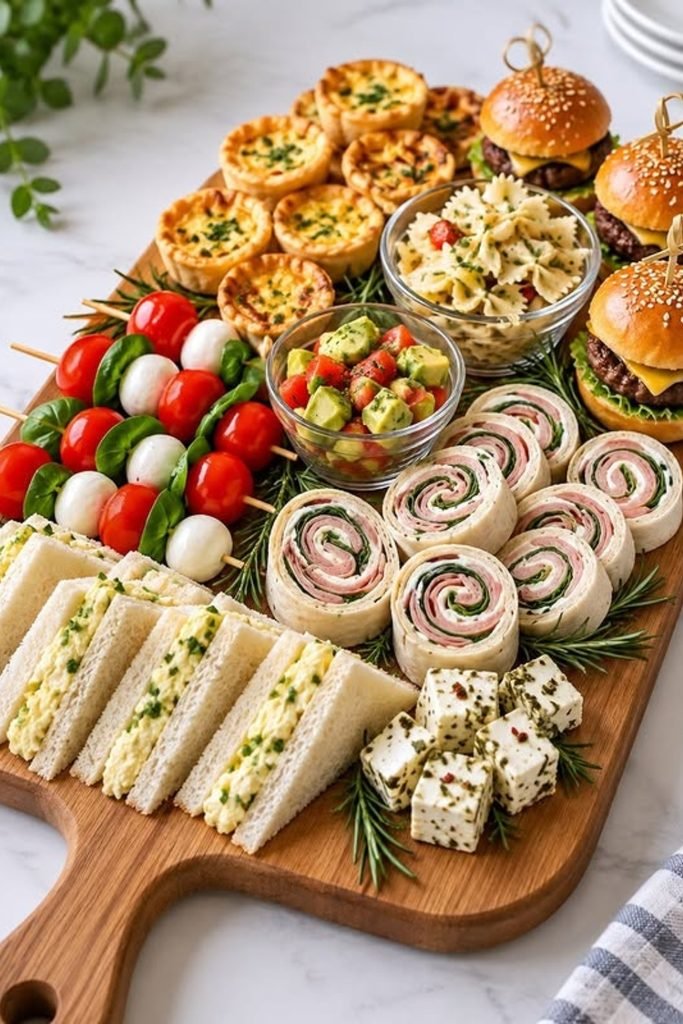
Sandwich triangles, pinwheels, skewers, sliders, and small cups give guests several one-handed choices, which suits mingling parties particularly well.
Prepare the cold sandwiches a few hours ahead, then cover them tightly so exposed bread edges don’t dry before guests arrive.
Skip oversized portions here because the board already offers plenty of variety, and smaller pieces encourage guests to sample more than one option.
3. Slider Feast
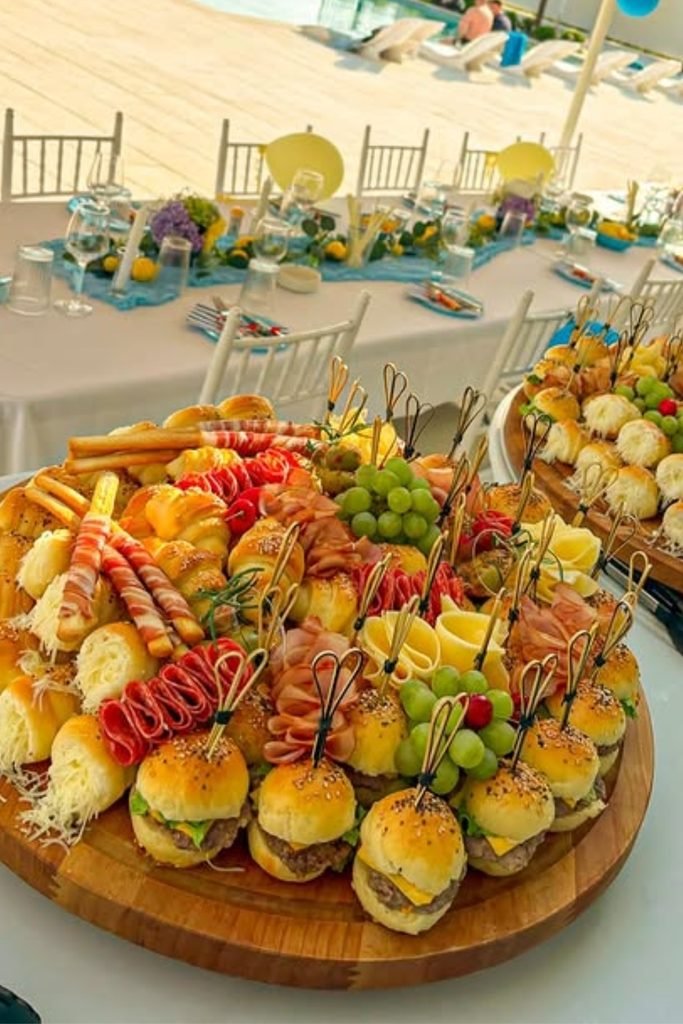
Mini cheeseburgers surrounded by meats, cheeses, fruit, and bread rolls create a filling board that works better for hungry crowds than light snacking.
Bring the sliders out close to serving time because warm buns and cooked fillings lose their appeal quickly once they sit uncovered.
Outdoor parties need extra care with meat and cheese, so keep backup platters chilled instead of placing the entire spread outside immediately.
Safety note: Perishable meats, cheeses, and cooked foods shouldn’t sit at room temperature for more than about two hours.
4. Brunch Board
Egg sandwiches, tortilla pinwheels, tomato skewers, mini quiches, pasta salad, and sliders give this board enough variety to replace several separate platters.
Keep creamy salads in small bowls rather than spreading them directly across the board, which makes refilling cleaner and prevents nearby bread getting soggy.
Choose this setup for brunches or daytime parties, but skip it for very small gatherings because several components require separate prep and storage.
Colorful Candy Boards
Candy-heavy boards bring instant color to a party table, but the smartest versions balance chewy, sour, soft, and crunchy textures instead of random piles.
Keep wrapped sweets near the edges and loose gummies toward the center so guests can grab favorites without scattering everything across the table.
1. Rainbow Candy
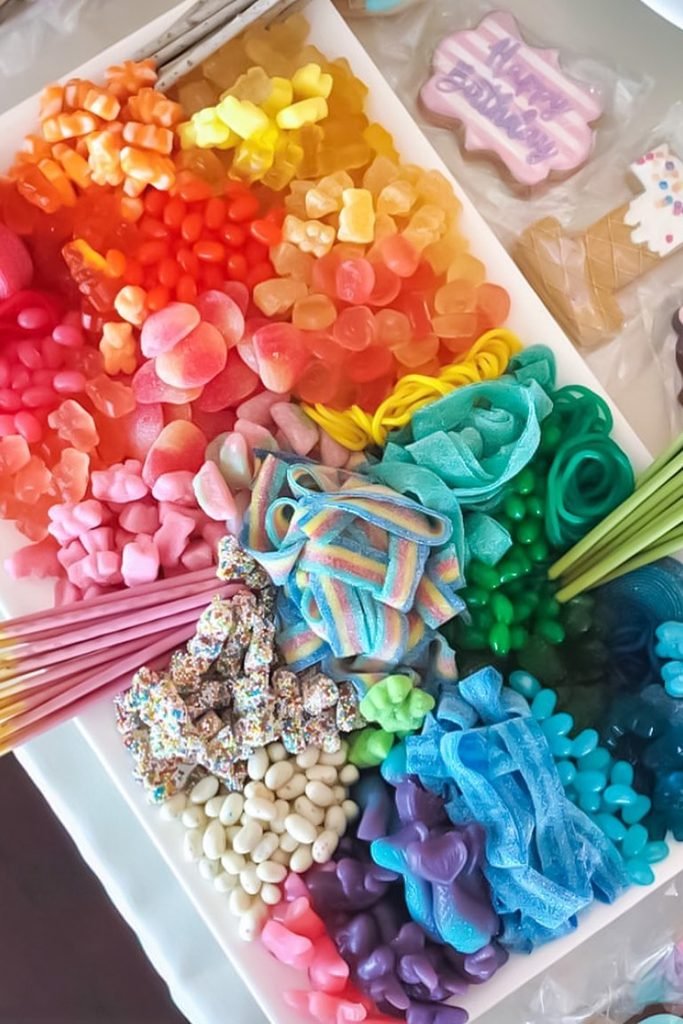
Color-blocked gummies and licorice look impressive, but separating similar shades with contrasting textures makes each section easier to recognize and refill.
Set aside backup candy by color before serving because rainbow sections lose their clean effect quickly once the most popular shades disappear.
Skip oversized lollipops here; slim sticks, ropes, and bite-size pieces give guests more choice without making the tray awkward to share.
2. Gummy Spectrum
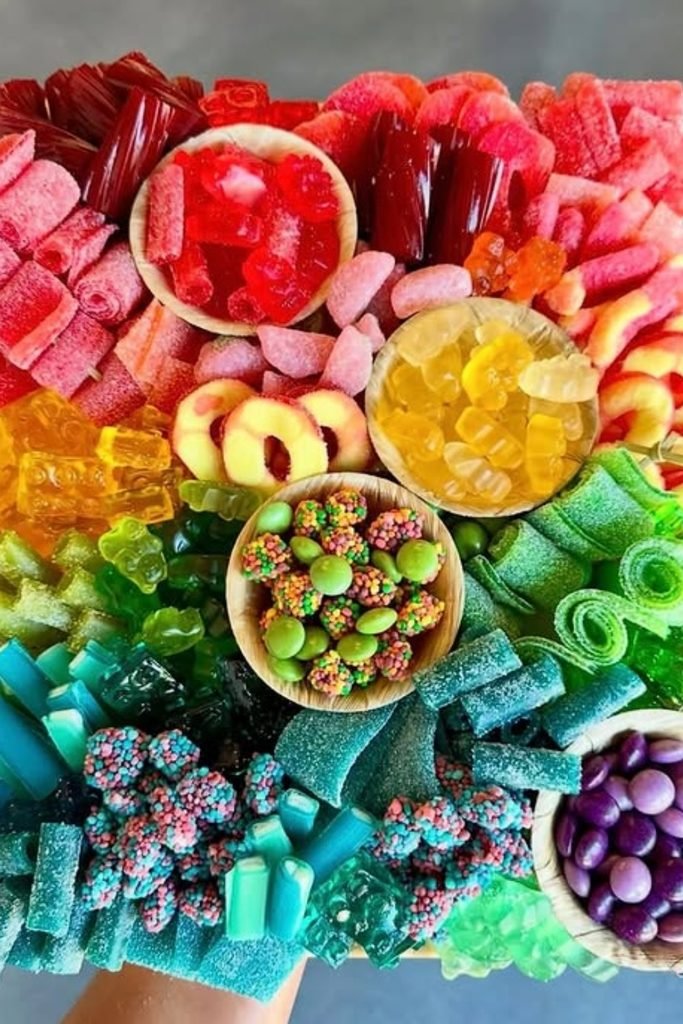
Sour belts, gummy bears, peach rings, and jelly pieces create strong variety, yet too much sugar coating can make fingers sticky fast.
Place small bowls beside the board for wrappers or rejected flavors, especially at kids’ parties where half-eaten sweets otherwise wander everywhere.
Choose around six to eight candy styles rather than fifteen similar gummies; fewer options make the color pattern cleaner and restocking simpler.
3. Ocean Candy
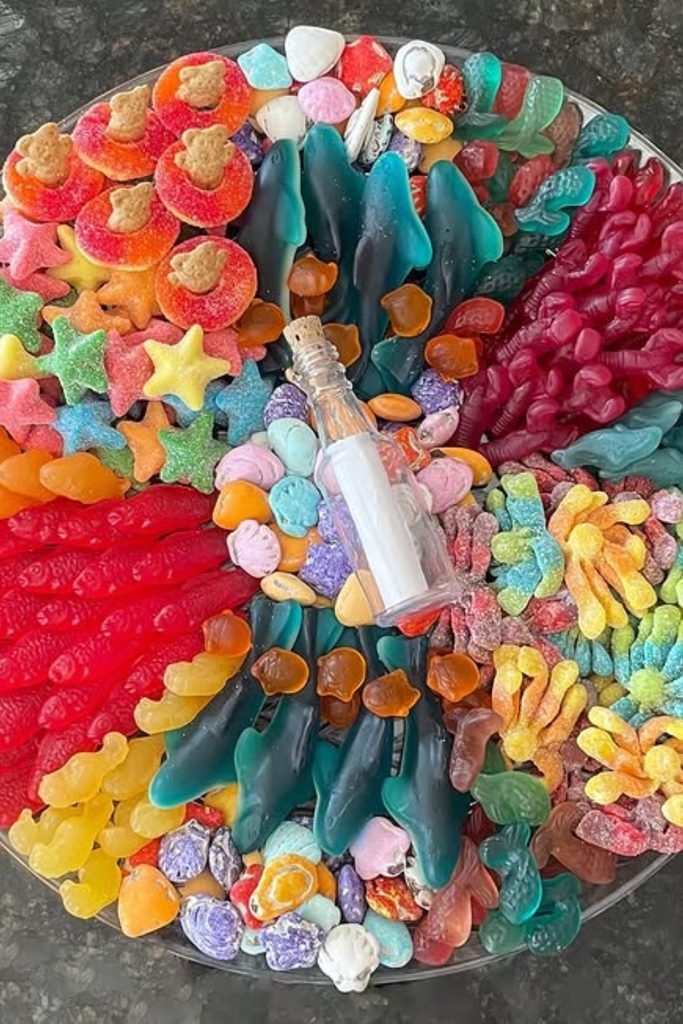
Shark gummies, star shapes, and blue sour pieces suit an ocean theme, but the novelty shapes should still taste noticeably different.
Use one central prop only if it’s food-safe and easy to remove, since decorative bottles can get sticky once guests start reaching.
Separate gummy fish from very young children who may struggle with chewy pieces, and offer softer alternatives in a separate bowl.
4. Mixed Candy
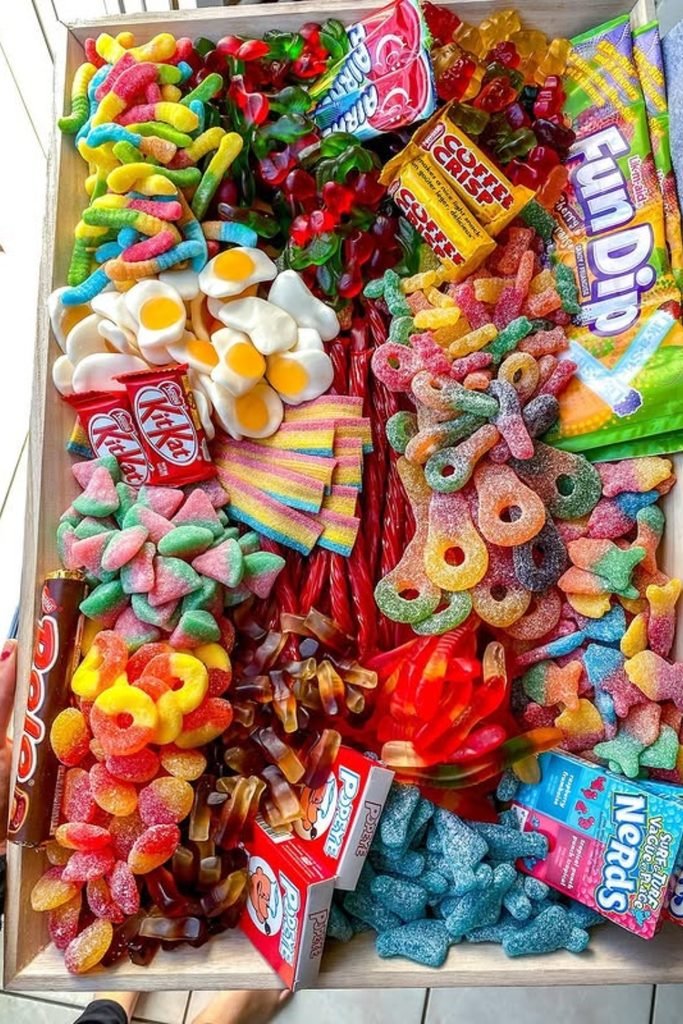
Branded chocolates, sour belts, gummy rings, and marshmallow eggs make a generous tray, though packaging can visually overpower the loose candy.
Tuck packaged bars along the edges and keep unwrapped sweets grouped by texture so guests don’t dig through sticky piles unnecessarily.
Pick this style for older kids or teen parties; the sugar load is heavy, so smaller scoops or treat bags make sense.
Classic Cheese Boards
Cheese-focused boards suit smaller gatherings especially well because a few strong varieties can carry the spread without needing dozens of extra snacks.
Balance creamy, firm, mild, and sharper cheeses with fruit, nuts, crackers, or preserves so every bite doesn’t start tasting identical.
1. Cheese Variety
Brie, cheddar, herb cheese, fruit, nuts, and pretzels give guests enough contrast without turning the round board into an overloaded buffet.
Cut firmer cheeses before serving, but leave soft cheese partly intact so it stays fresher and doesn’t dry around every exposed edge.
Place separate cheese knives nearby because using one utensil across flavored cheeses quickly mixes herbs, fruit residue, and stronger tastes together.
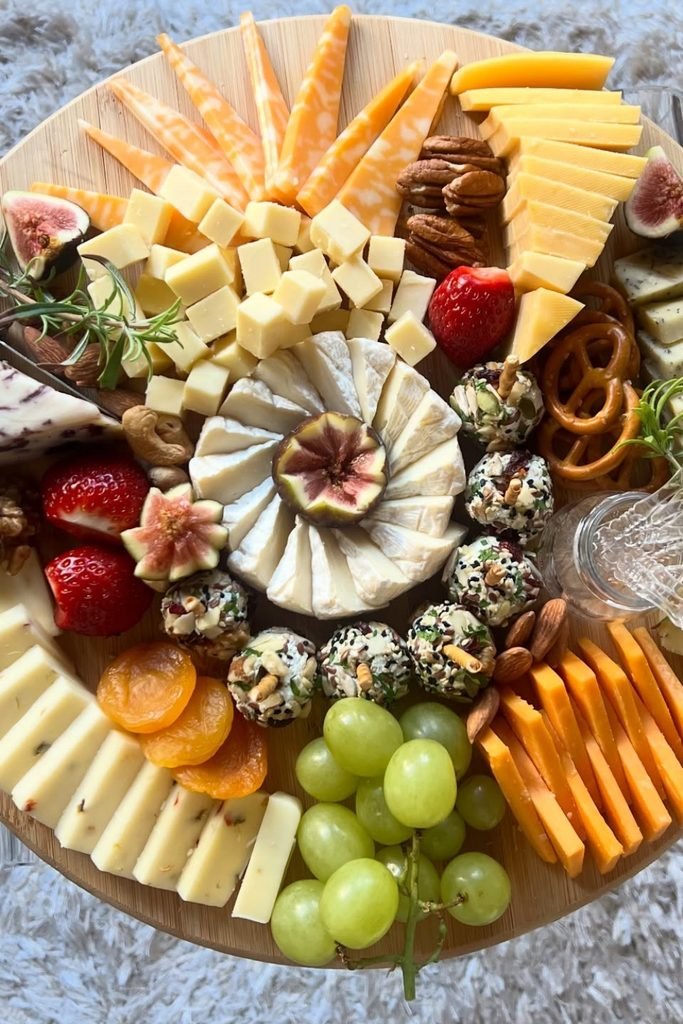
Prep ahead: Slice firm cheeses and portion nuts several hours early, but cut strawberries and figs closer to serving so they stay fresher.
2. Berry Pairing
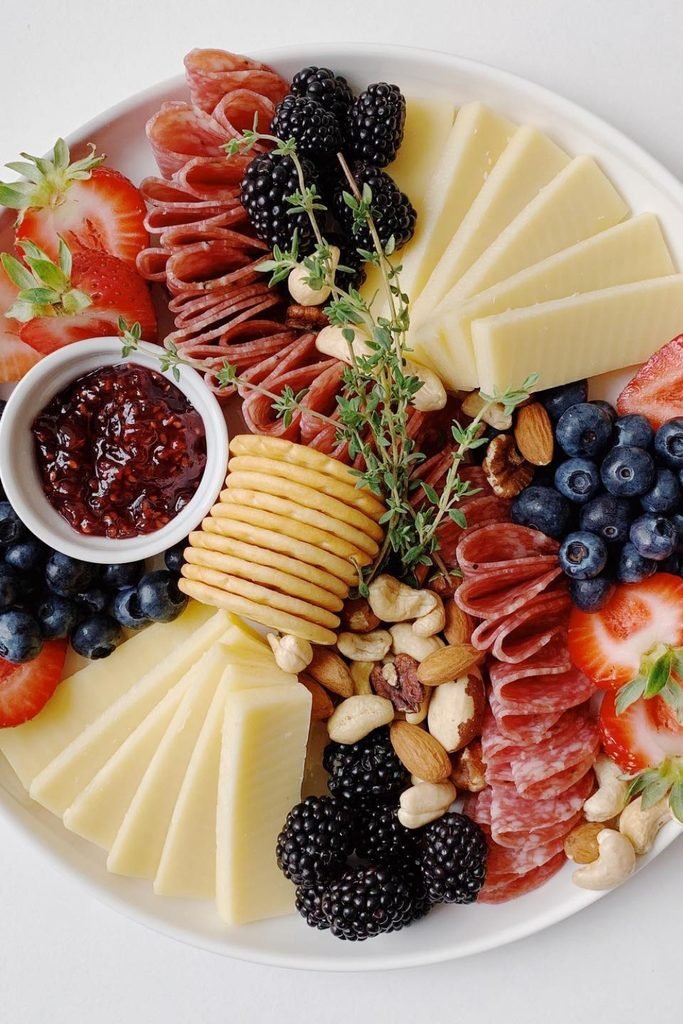
Salami folds, pale cheese wedges, berries, nuts, crackers, and jam create a simpler board that feels much easier to refill during parties.
Keep jam inside a small bowl rather than spooning it directly onto the board, since sticky preserves can soften nearby crackers surprisingly fast.
Choose this layout for smaller guest lists because repeating only a few ingredients looks intentional here rather than sparse or unfinished.
3. Savory Mix
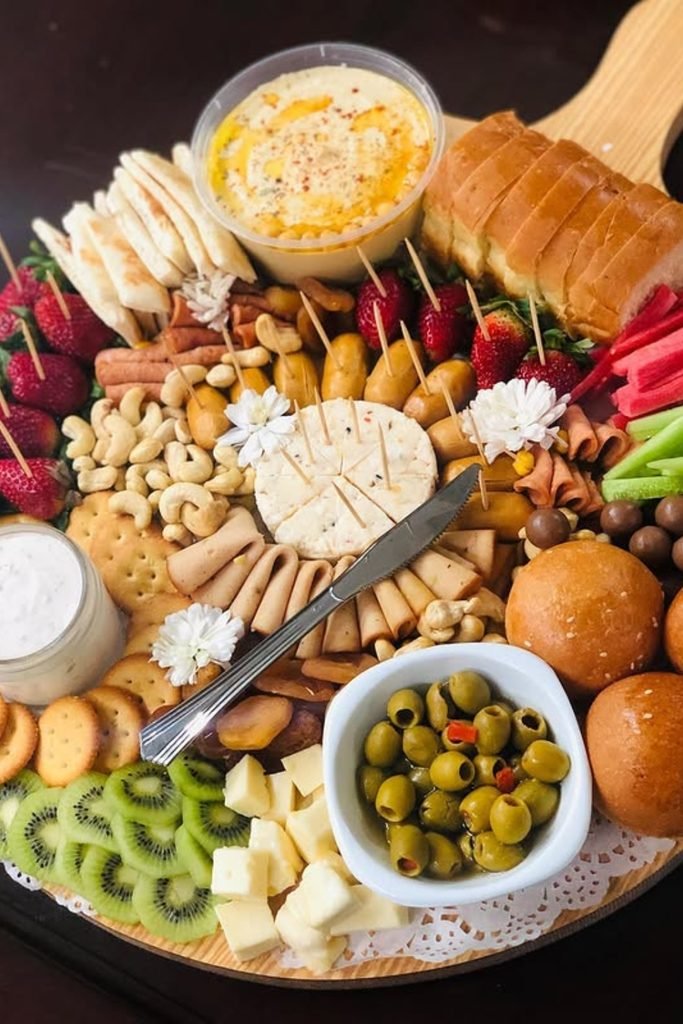
Hummus, olives, crackers, cheese cubes, fruit, bread, and mini buns make this board filling enough for guests expecting more than light bites.
Serve dips in separate bowls and refill crackers gradually, because surrounding everything with crackers early can leave broken pieces scattered through softer foods.
Skip decorative toothpicks in every ingredient unless guests genuinely need them; too many picks make a crowded board harder to reach comfortably.
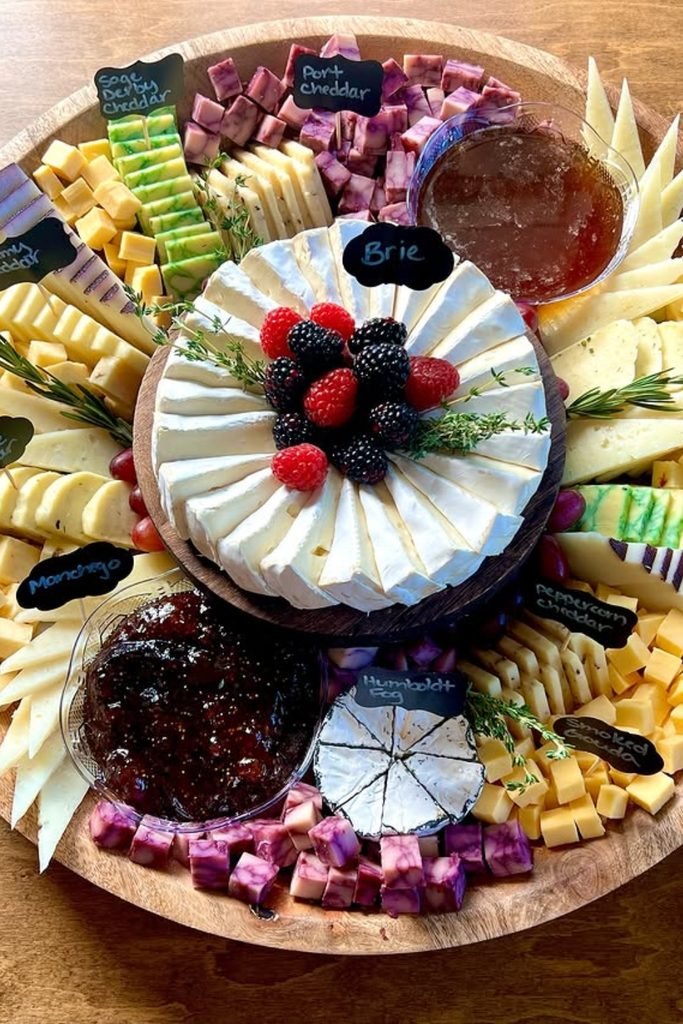
4. Cheese Showcase
Labeled cheddar, brie, smoked cheese, peppercorn varieties, berries, and preserves turn cheese tasting into the clear focus instead of background snacking.
Use labels when several cheeses look similar because guests can choose confidently without repeatedly asking what each wedge or cube contains.
Keep stronger smoked and peppered cheeses apart from mild varieties, since close contact can transfer aromas and flatten the differences between them.
Hearty Meat Boards
Meat-forward boards work best when the sides cut through the richness, so vegetables, fruit, dips, or pickles deserve real space too.
Balance hot and cold elements carefully, especially when steak, roasted vegetables, eggs, or warm bread share the same serving board.
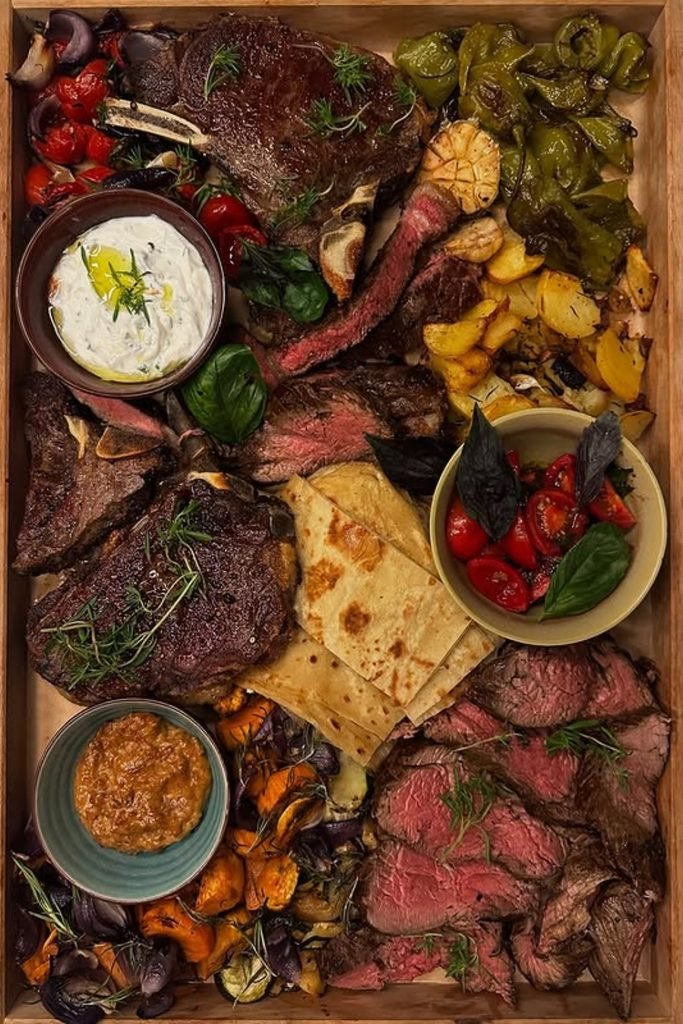
1. Steak Feast
Steak slices, roasted peppers, flatbread, potatoes, and creamy dip make this board substantial enough to function as dinner rather than grazing.
Serve sliced steak shortly after resting, then keep vegetables and sauces in separate zones so juices don’t soften the flatbread underneath.
Choose this setup for smaller adult gatherings because carving several steaks for a large crowd quickly turns an easy board into work.
2. Smokehouse Spread
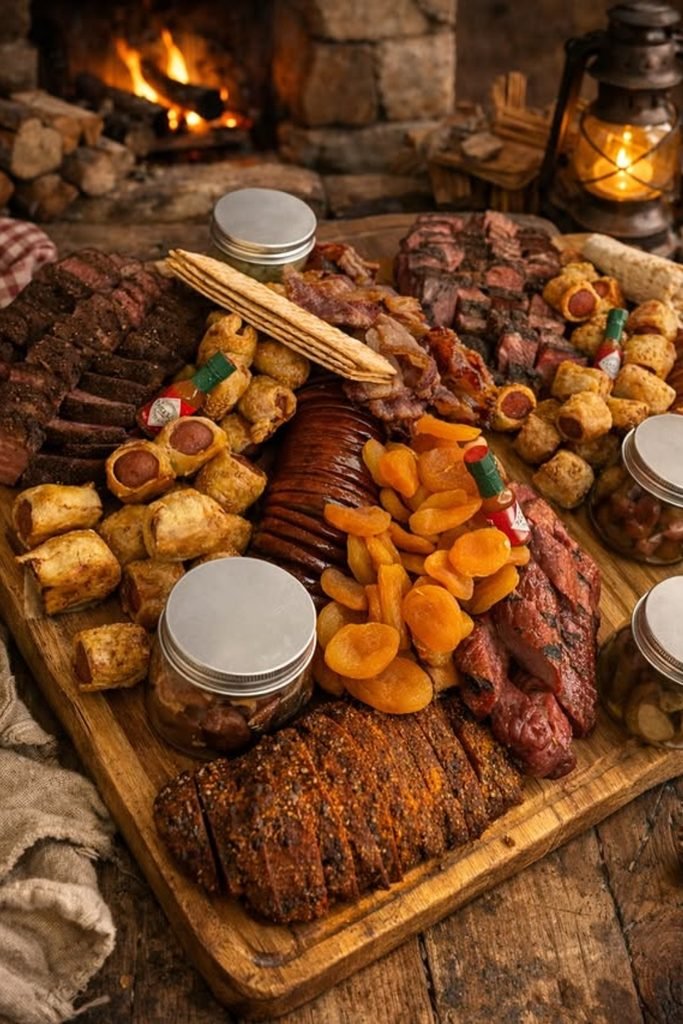
Smoked meats, bacon, sausage, dried apricots, crackers, and bite-size pastries create a heavy spread made for guests arriving genuinely hungry.
Layer dried fruit between richer meats to break up the heavier bites, while keeping crackers away from anything oily or saucy.
Skip this version for a light afternoon party because the amount of meat makes it feel closer to a full meal.
3. Steak Garden
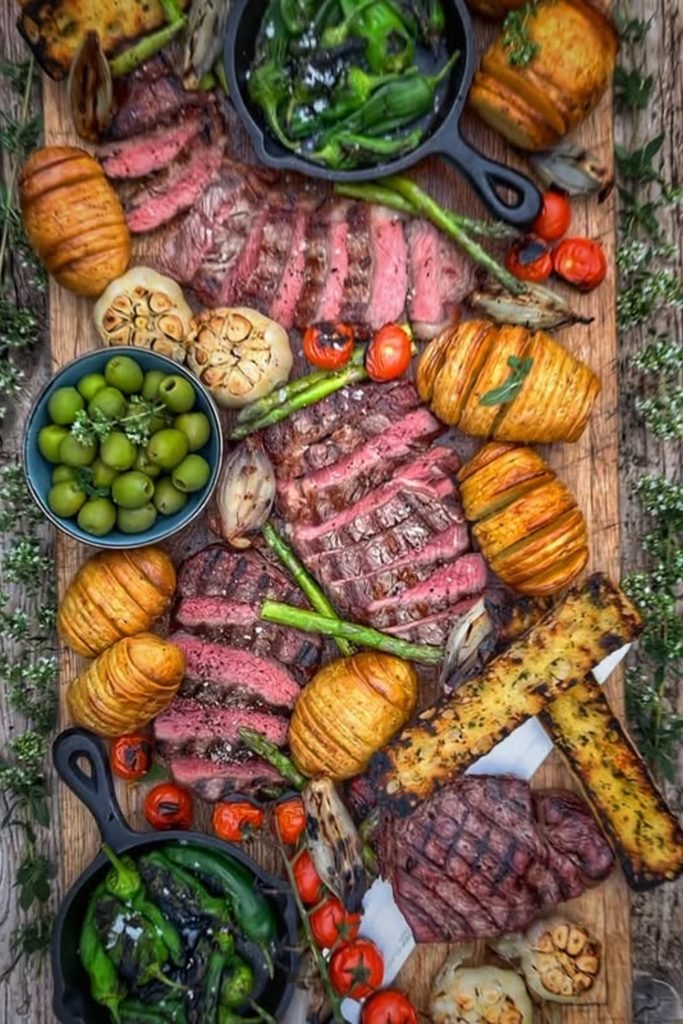
Grilled steak, hasselback potatoes, roasted garlic, tomatoes, olives, and green peppers make this one of the strongest dinner-style boards here.
Slice the steak before guests arrive, but leave the potatoes whole so fewer cut edges are exposed while everything waits.
Use small cast-iron dishes for vegetables only if the table can handle their weight and lingering heat without becoming awkward.
4. Protein Brunch
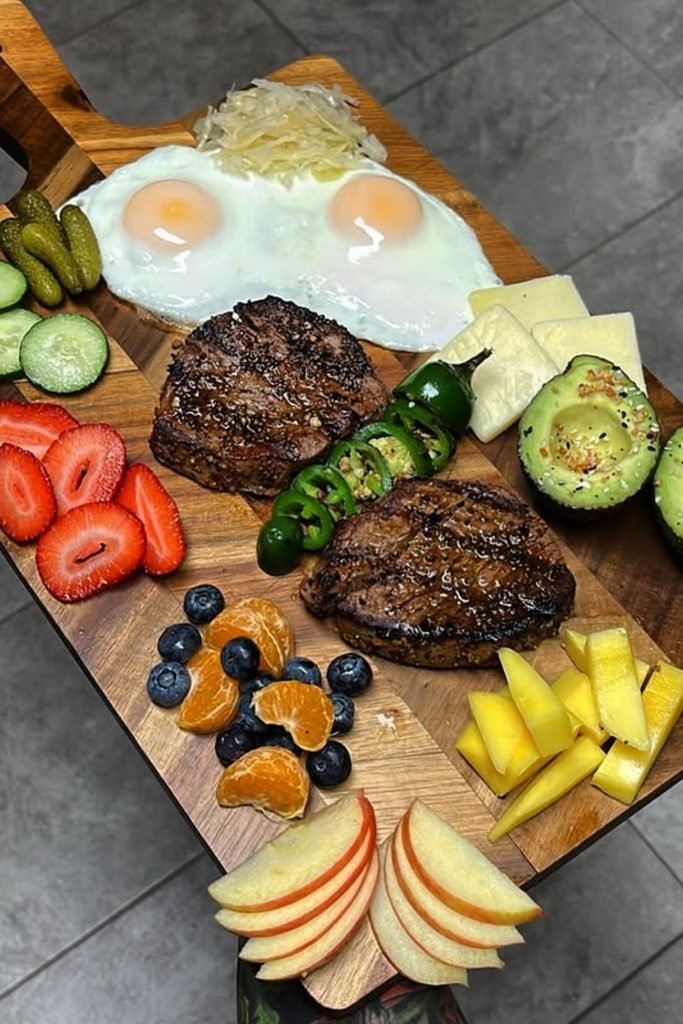
Seared steaks, fried eggs, avocado, cheese, fruit, and pickles push this board toward brunch rather than a classic charcuterie setup.
Add the eggs last because runny yolks can spread quickly, especially once guests start cutting around the crowded wooden board.
Reserve this idea for a small group; two steaks and two eggs won’t stretch far enough without doubling most of the board.
Fresh Fruit Boards
Fruit boards bring color without making the party table feel heavy, and they work especially well beside richer savory or dessert options.
Keep delicate berries and cut fruit chilled until close to serving, then refill smaller sections instead of exposing the entire batch at once.
1. Botanical Fruit
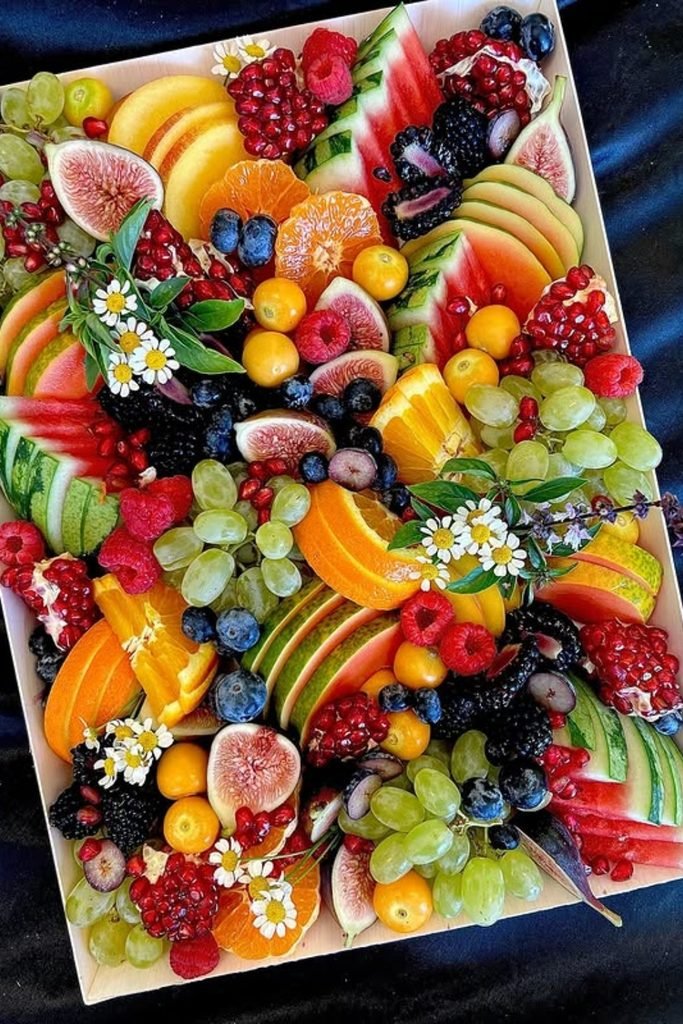
Figs, watermelon, citrus, grapes, berries, and pomegranate create enough contrast that decorative flowers should stay minimal rather than covering edible space.
Place softer raspberries and figs near the top instead of underneath heavier grapes, since pressure can quickly leave delicate fruit bruised or crushed.
Keep apple and pear slices for later preparation because exposed cut surfaces can brown and make an otherwise fresh-looking arrangement feel tired.
2. Rainbow Fruit
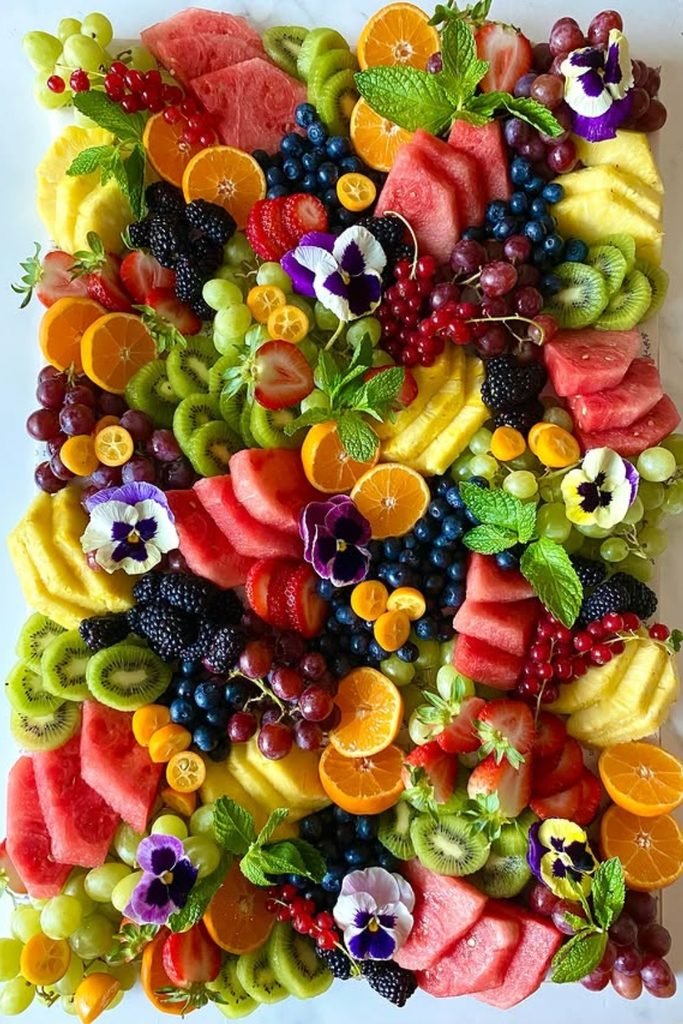
Watermelon, pineapple, kiwi, citrus, berries, and grapes already deliver strong color, so edible flowers work best as small accents between sections.
Choose fruit with different textures rather than repeating several soft options, giving guests crisp grapes, juicy melon, berries, and firmer pineapple together.
Save mint leaves for the final few minutes before serving because wilted greenery can make a fresh fruit board look older than it is.
3. Classic Fruit
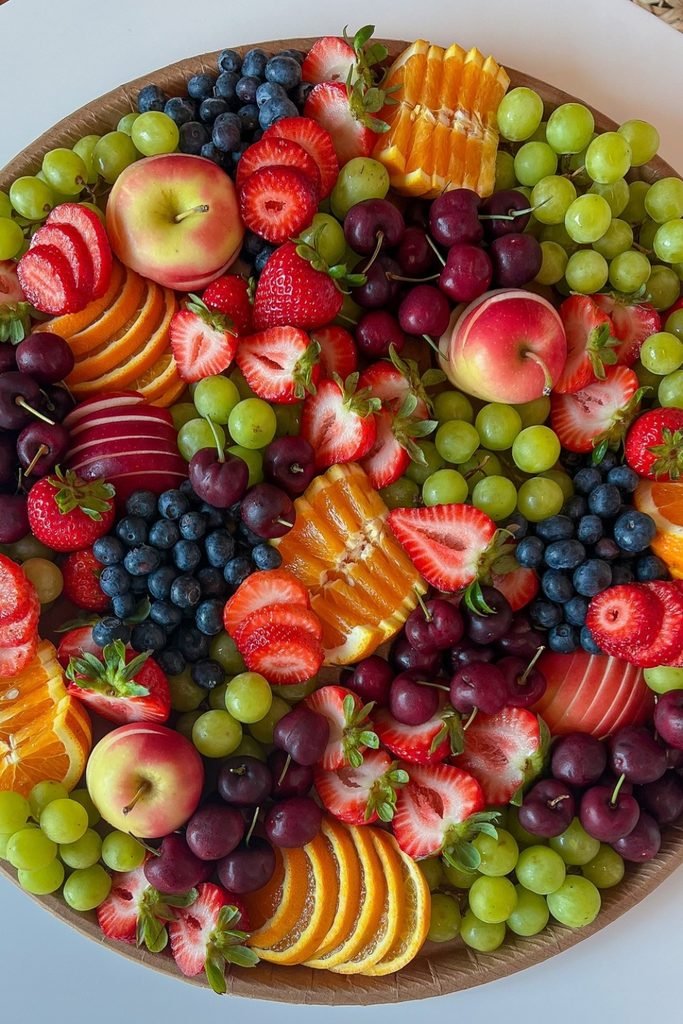
Grapes, strawberries, blueberries, cherries, apples, and oranges make this straightforward platter easier to shop for than boards using specialty tropical fruit.
Slice only some strawberries and apples, leaving plenty whole so the tray keeps its structure after guests begin removing individual pieces.
Skip complicated garnishes here because the familiar fruit mix already works well for family parties, brunches, and larger gatherings with mixed ages.
4. Carved Fruit
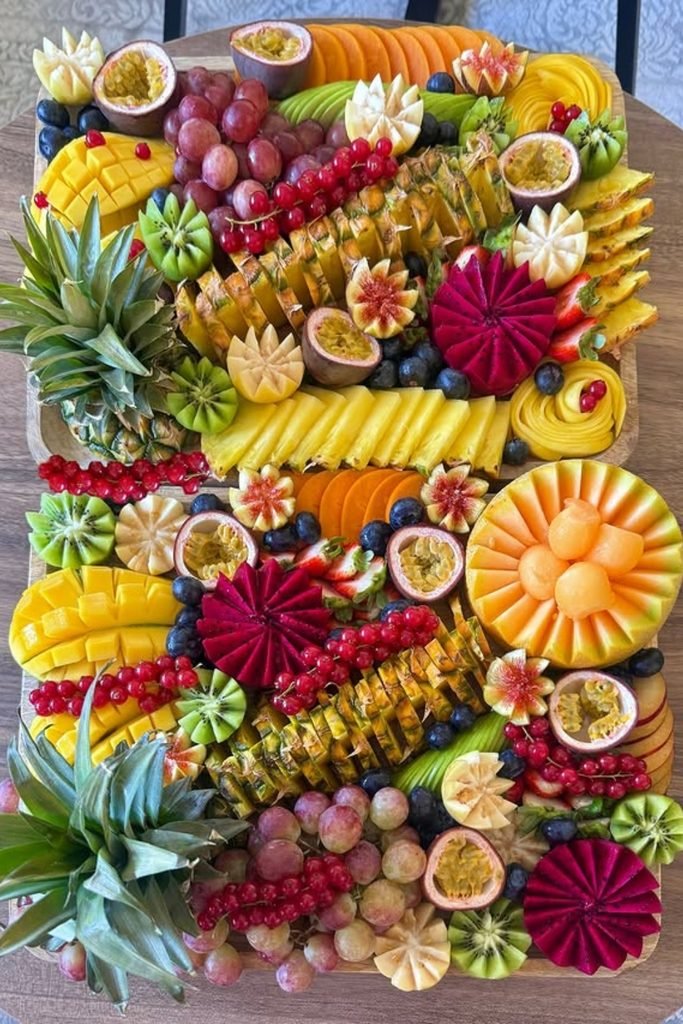
Pineapple, mango, passion fruit, kiwi, melon, grapes, and decorative cuts create impressive detail, but this version demands noticeably more prep than simpler boards.
Use carved pieces selectively instead of shaping every fruit, since too much knife work adds preparation without giving guests more variety to eat.
Reserve this style for celebrations where presentation matters most, and prepare sturdy pineapple or melon shapes before handling softer berries and figs.